Search:the draw

Styles
All
Milk & Honey - The Milky Way

Milk & Honey

The Milky Way

12inchCHUWANAGA016
Chuwanaga
16.09.2025

Parisian label Chuwanaga is thrilled to announce the upcoming release of "The Milky Way", the first EP from the dynamic Milk & Honey duo, comprised of producers Saint-James and Tour-Maubourg. Known for their raw sound reminiscent of the late nineties house sound, Milk & Honey bring a fresh yet nostalgic energy to the scene, blending vintage hardware with modern sensibilities. Available as Limited Vinyl 12" (300ex) and Digital.

This EP, is a testament to their musical chemistry and shared passion for the classic deep house. Composed in just two days at Tour-Maubourg's studio in Ixelles, Belgium, "The Milky Way" captures the essence of their creative synergy.

From peak-time club heaters like "Back in the Hood", "Lost and Found" and "Sour" — the latter tinged with a darker UK sound - to deeper, more introspective cuts like "Deeper and Deeper","Venus Effect" and "City Stabs" the EP is a rich and textured journey. It's also a testament to friendship: a story told through syncopated rhythms, hypnotic melodies, and intricate drum programming.

Milk & Honey have previously challenged the deep house scene with releases on Groovence Records, drawing inspiration from legends like Glenn Underground.

out of Stock

Order now and we will order the item for you at our supplier.

13,66

Last In: 4 months ago
BASSOLINO - POPOLI DEL MARE

Bassolino

POPOLI DEL MARE

7"-VinylJAKARTA195
JAKARTA
16.09.2025

Dario Bassolino is pianist, producer and composer born in Naples, where he currently resides. With an eclectic taste and an genre-defying musical ability, he has produced for and played alongside alt-R&B vocalist LNDFK, jazz-funk legend Nicola Conte, Early Sounds boss Pellegrino and has collaborated with Nu Genea, Kurtis Rosenwinkel and rapper Pink Siifu to name a few. Inspired by the Brazilian funk greats Hermeto Pascoal and Airto Moreira and their Italian counterparts such as Franco Califano, Lucio Battisti, Panella, Enzo di Domenico and Gennaro D'Auria. Bassolino’s live show has a very organic form and is inspired by jazz, funk and disco improvisation, having extensive experience playing to enthusiastic international audiences as a session musician at prestigious festivals Primavera Sound, Montreux Jazz festival, Dour Festival and We Out Here.

Bassolino's new release is located where the sea begins and the sky ends. Two tracks that carry the horizon drawing a straight line between Naples, Tunisi and Beirut. A thin but tangible line that unites the Mediterranean poles. Hence the concept of "Popoli del Mare", the multiform sound waves intertwine a composition with an incessant rhythm: the Afro contamination of Charif Megarbane finds a fit with the Italian and dreamy harmonies of Bassolino. Baid Alik is a song of love and hope. The sound, purely inspired by the research of Habibi Funk, evokes the memory of an ancestral past shared by Bassolino with the Tunisian singer Marzouk Mejri.
His voice, halfway between proto- rap and melodic, mix perfectly to the disco-cinematic instrumental.

out of Stock

Order now and we will order the item for you at our supplier.

12,56

Last In: 6 months ago
Kyoto Jazz Massive - KJM EOANDO LP

In 2024, Kyoto Jazz Massive released their third album as a digital-only project, 30 years after their debut. It now receives the honor of a special vinyl edition, featuring brand-new exclusive mixes by Young Pulse—elevating these already great tracks to even greater heights, for both your ears and your feet.
This marks the first and exclusive collaboration between KJM and Echoes Of A New Dawn Orchestra (aka Jéroboam), the unique Parisian band that has been performing live with KJM across Europe for the past three years. On this occasion, KJM recorded four new tracks with EOANDO, including three original songs ("Power", "Love Wars", and "Impulsive Procession") and a new rendition of “Stand Up”, a previously released composition. To complete the album, you'll also find a stunning cover of KJM’s iconic track "Substream" by EOANDO, as well as their signature piece, “EOANDO's Theme”.
"Power" and "Stand Up" were recorded with Vanessa Freeman, while "Love Wars" features Bembe Segue. This London-based duo has been singing live with KJM since 2004.
"Power" is a crossover anthem, blending jazz-funk and French disco with a gospel touch. Vanessa Freeman’s uplifting lyrics call for collective awareness and energize audiences. "Love Wars" is a live-band interpretation of broken beat with a boogie spirit, enhanced by Bembe Segue’s sharp and spiritual vocals. “EOANDO’s Theme” was specially composed by Echoes Of A New Dawn Orchestra for KJM, capturing the Okino Brothers' love for boogie-funk jams with Brazilian and Balearic influences reminiscent of Azymuth.
“Impulsive Procession” fuses Afro, funk, jazz, fusion, soul, rock, house, and techno—drawing inspiration from several of KJM’s most respected musical heroes. A brand-new version of “Stand Up”, originally released in 2008, was re-recorded live in the studio with EOANDO and fresh vocals by Vanessa Freeman.
The album closes with a reimagined version of “Substream”, one of KJM’s most beloved tracks, covered by EOANDO for the official Tokyo Crossover/Jazz Festival 2023 compilation. This new version was recorded as an organic disco interpretation at Danilo Plessow’s studio in Paris.

out of Stock

Order now and we will order the item for you at our supplier.

18,91

Last In: 4 months ago
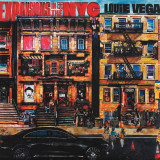
Louie Vega - Expansions In The NYC (LP) 4x12"

Limited repress!

What is it about New York City, that concrete jungle that continually inspires the creative spirit? From Warhol’s Factory to Larry Levan’s Paradise Garage to David Mancuso’s Loft, collectives that celebrate and nurture unfettered, organic artistry have been absolutely intrinsic to the story of this sprawling metropolis. Its latest chapter is being written at the hands of ‘The Maestro’, Grammy Award winner Louie Vega and his Expansions NYC parties, the sound documented in his latest album Expansions In The NYC (Nervous Records).

Starting in February 2019 in Manhattan and Brooklyn venues, Vega’s Expansions NYC parties have their origin not in his revered prowess as a DJ but rather his whole-hearted appreciation of the different elements of the dance floor surrounding him: the dancers, the musicians who bring their instruments to join him ad-hoc on the night, the small, dedicated crowd of clubbers whose ears to the ground keep them informed on the underground party information. The events included 6-hour DJ Sets with Louie under his select curation, and would usually end with 3 AM jam sessions involving keyboardists, guitar players and poets all performing in front of a jam packed crowd. In just a few short years the Expansions NYC events have evolved into an NYC-clubland institution, an intimate celebration of house, funk, disco, afro, R&B and more.

As with his parties, so goes his album. The collective vibe that forms the beating heart of Expansions NYC parties is absolutely front and centre in Expansions In The NYC, Vega drawing in one of the most comprehensive lists of collaborators in recent memory. House heavyweights Honey Dijon, Joe Claussell, Moodymann, Kerri Chandler and Anané rub up against legendary vocalists Bernard Fowler, Cindy Mizelle, Lisa Fischer, Audrey Wheeler and Tony Momrelle. Gospel royalty BeBe Winans and Debbie Winans, pop icon Robyn and rising star Karen Harding sit alongside disco-era champions Unlimited Touch, Cuban jazz pianist Axel Tosca, Nico Vega, Two Soul Fusion with Josh Milan and Vega and underground legend DJ Spinna. At the centre of it all, fingerprint on every beat, touch on every groove, sits a master at work, weaving the individual threads into a rich dance music tapestry.

"In the past few years I’ve found new inspiration both from the musicians I’m working with and the audiences coming to see me at my DJ shows,” Vega says. “So for me this album represents new beginnings, bringing together a beautiful mosaic of artistic perspectives to express musically what we call Expansions In The NYC."

At its heart, Expansions In The NYC is a love letter to New York, as much as melting pot as the city it represents, the scope of its line-up possible only because of the influence and reverence of Vega the artist, the DJ, the producer, the curator. In creating this album, Louie Vega has once again utterly enriched the lives and libraries of music lovers the world over, far beyond the hustling streets of NYC that have so indelibly left their mark on his work.

out of Stock

Order now and we will order the item for you at our supplier.

40,29

Last In: 7 days ago
LESLIE GRAVES & TOBY GOODSHANK - BETWEEN WORLDS
  • Chariot Year
  • To Belong
  • Solid Ground
  • Stay Long Enough
  • The Natural Way
  • Between Worlds
  • Baby Boy
  • Apple
  • Chubby's Song
  • Where Are We Going

Brooklyn-based artists Leslie Graves and Toby Goodshank have joined creative forces on their album Between Worlds (BB*ISLAND), Toby Goodshank (The Moldy Peaches, The Pizza Underground) of the OG New York Antifolk scene, is known for his precise and acrobatic vocals over nuanced acoustic guitar in songs that have been described as "a zesty thumb of the nose at domesticated bullshit." (Myles Manley) Leslie Graves (GOLD, Endless Arrows) is a performing songwriter and recording artist who takes folk subgenres into evocative and intriguing directions, including "sounding like something you could hear Donna Hayward dancing to at the Bang Bang Bar." (Ronan Conroy, "Hidden In the Days" album review) Her voice has been described as "darkwave-meets-folk" with comparisons to Lana Del Rey, Cat Powers, Mazzy Star and Julee Cruise. Acoustic guitar and vocal harmonies make up the core of their music. a slightly psychedelic, at times dream pop-like folkrock. It just draws from a variety of folk and rock. You might hear hints of Sybil Baer, Judee Sill, REM, Linda Perhacs, and Jessica Pratt, but the intersection of Toby and Leslie is truly a place of its own, warm and enchanting, or perhaps a glimmer from the spaces in between worlds. Many instrumental threads are interwoven throughout with the invaluable skills of Jake Nicoll (The Burning Hell) who lovingly engineered and embellished the recordings. Ariel Sharrat of The Burning Hell assisted him and is also featured on saxophone or bass or on some songs here. Speaking to their process, Leslie writes, "Toby is great at composing song structures quickly. It was fun to feel into the emotion of the chords and write from there. The process was like chiseling away at a stone to reveal the sculpture underneath. I like when songs come like that - when it feels that they are teaching us as they are revealed."

pre-order now12.09.2025

expected to be published on 12.09.2025

22,27
David Bowie - I Can’t Give Everything Away (2002 - 2016) 18x12" LP (Boxset)

David Bowie 6. I Can’t Give Everything Away (2002 - 2016) is the sixth in a series of box sets spanning Bowie’s career from 1969. The eighteen-piece vinyl box set is named after the closing track on ★ (BLACKSTAR), Bowie’s final studio album. The box sets include newly remastered versions (except ★ and No Plan), with input from David’s co-producer Tony Visconti.

Exclusive to each of the box sets are Montreux Jazz Festival and Re:Call 6. The former was recorded on the 18th of July 2002 at the prestigious Montreux Jazz Festival and among the 31 tracks features a full performance bar one song of one of Bowie’s most revered albums, Low.

Re:Call 6 features 41 non-album / alternative versions / b-sides and soundtrack songs, including tracks never previously available on vinyl.

An accompanying 84 page book features previously unseen notes, drawings and handwritten lyrics from Bowie and photos by Sukita (who took the set’s cover shot), Jimmy King, Frank W. Ockenfels 3, Markus Klinko, Mark ‘Blammo’ Adams and more as well as memorabilia, technical notes about the albums from co-producer Tony Visconti and design notes from Jonathan Barnbrook.

18 LP Box Set:
84-page hardback book
Heathen (Remastered) (1LP)
Montreux Jazz Festival (4LP) (Previously unreleased)*
Reality (Remastered) (1LP)
A Reality Tour (Remastered & Re-sequenced) (3LP)
The Next Day (Remastered) (2LP)
The Next Day Extra (Remastered) (1LP)
★ (Blackstar) (1LP)
No Plan (1LP)
Re:Call 6 (Non-album singles, edits, single versions, b-sides and soundtrack music) (Remastered) (4LP)*

pre-order now12.09.2025

expected to be published on 12.09.2025

409,20
Amtrac - Just (Remixes)

Crosstown Rebels reignites Amtrac’s ‘Just’ with fresh remix package, featuring Patrice Bäumel.
Landing 29th August 2025, the emotive 2019 track is reimagined with a powerful take from Bäumel plus a Club Mix from Amtrac himself.

Damian Lazarus welcomes Kentucky-born, Los Angeles-based artist Amtrac to Crosstown Rebels for a special revisit of his much-loved track ‘Just’, originally released in 2019 on his label OPENERS. The 2025 remix package brings fresh interpretations crafted for the dancefloor courtesy of acclaimed German-born, Lisbon-based producer Patrice Bäumel, alongside Amtrac’s own extended Club Mix.
Known for his fearless musical evolution, Amtrac, real name Caleb Cornett, has carved a reputation for bridging genres with emotion-led dance music that resonates both on and off the dancefloor. Revisiting ‘Just’ with Crosstown Rebels marks a new chapter in the track’s journey, opening it up to a new wave of club-ready reinterpretations.

As the original’s shimmering melodies meet fresh layers of rhythm and energy, the result is a record that resonates with both nostalgia and forward motion.
Leading the charge, Patrice Bäumel steps up with a stunning remix that transforms the original into a hypnotic, high-impact dancefloor weapon. Drawing on his storied history of creating euphoric moments on the world’s biggest stages with material on labels such as Kompakt and Cocoon, Patrice infuses his unmistakable, tension-building style, layering driving grooves with cinematic textures. Speaking on the remix,

Rounding out the package, Amtrac himself delivers his own Club Mix, reimagining ‘Just’ with extended energy and a refi ned arrangement built for peak-time sets, highlighting his ever-evolving approach to production and delivering his own vision for the record when transformed for dancefloors.

out of Stock

Order now and we will order the item for you at our supplier.

13,24

Last In: 7 days ago
Dao Strom - Tender Revolutions

Dao Strom

Tender Revolutions

12inchBNSD094/AF063
Beacon Sound
12.09.2025

Expansive and ambitious, Tender Revolutions is the latest from Vietnam-born, Portland, Oregon-based multimedia artist Dao Strom. A fluid album, existing between genres—part ambient folk, part sound collage, part spoken word, part post rock—it blurs the line between the work of an experimental composer and the work of an accomplished singer-songwriter. Instruments slip in and out (guitar, piano, synthesizer, strings, drums, percussion) amid field recordings and samples, all anchored by Strom’s singular voice.

The songs of Tender Revolutions reflect on and embody themes of “yellow subjectivities”—the Asian body as perceived; the Asian feminine body as reflection/catalyst/consort—offering their own forms of response to troubling representations of Asian women in popular media in the West. A “re-voicing” of the problematic hit song “China Girl” by David Bowie re-inhabits this song from a discomfiting silence at its center, and serves as a fulcrum point in the album’s sequencing. Other songs utilize voice as both texture and lyric-driven telling to deepen angles of interiority and thematics of voice/silence.

While Tender Revolutions stands alone as its own whole, it also exists as part of a larger multifaceted project, drawing from a four-part song-cycle (Nhạc Vàng 1-4) and accompanying a series of hybrid-genre literary chapbooks (Yellow Songs 1-4). Released in collaboration with The 3rd Thing, an interdisciplinary publisher in Olympia.


[a] tender variation i [what is tender?]
[b] tender variation ii [when was the first time u felt loved?]
[c] tender variation iii [associations of yellow]
[d] tender variation iv [love object treason]


[i] [hailing tender]

pre-order now12.09.2025

expected to be published on 12.09.2025

23,95
Artwork - Red E.P

Artwork

Red E.P

12inchBAM001RE
Big Apple Records
12.09.2025

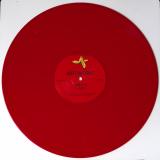
Dubstep, not Dubstep? Originally released in 2002, The Red EP was a bold fusion of Techno and Garage from the mind of Artwork. Drawing from his "Grain" techno project and the UKG sound he championed for years, this release laid the groundwork for what the world would soon call Dubstep — or did it? Broken beat/Bruk dons Bugz In The Attic were hammering Red in their sets, including this title on their “Fabriclive” mix CD in 2003 which shone further light on the EP, helping it soar in demand once again. “The Red EP” has never been repressed until now, with second hand copies exchanging hands for highs of £100 and lows of £40. Big Apple Records boss John Kennedy is blessing us with this repress which is a must have, even if you have the original, because now after Artwork found an unreleased gem on a DAT, we have added the find “RELIC”. It’s soooo punchy! You'll be hearing this all over the place all over again this summer. Limited edition Solid Red vinyl copies. DO NOT MISS OUT! BUY or CRY!

stock from19.05.2026

14,92

Last In: 3 months ago
LITTLE KIM - ADEMHALEN LP
  • A1: Niet Gezegd
  • A2: Dansen Doen We Niet
  • A3: Eenmaal, Andermaal, Verkocht
  • A4: Wikken En Wegen
  • A5: Vleugels
  • B1: Maar Niet Vandaag
  • B2: Bij Jou
  • B3: Ik Ging Voor Zilver
  • B4: Keren Van De Wind
  • B5: Ademhalen

Kimberly Claeys, known as Little Kim, has been pursuing her musical career for 20 years. She has performed with the Western Swing band Little Kim & The Alley Apple 3 in Belgium, the Netherlands, France, and Germany, and has released four albums. Since 2019, she has brought a breath of fresh air to the folk monument Kadril, with whom she released the album Jolie Flamande in 2022. Little Kim is also known as one of Guido Belcanto’s regular guest singers.

Her solo debut, Moederland (2022), was produced by Guido Belcanto, who also appears on several songs and lent her his band Het Broederschap. In addition to Belcanto, Bruno Deneckere and Lieven Tavernier wrote and interpreted songs for her, drawing from artists such as Gillian Welch, Nathalie Merchant, and Bob Dylan. The album was very well received by both the press and fans.

On 28 March 2025, her new album, Ademhalen, was released, featuring Dutch-language songs written especially for Little Kim by Bruno Deneckere, Lieven Tavernier, Lennaert Maes, and Wigbert.

Little Kim offers a mix of country, folk, roots, and Americana — you could call it Flandricana, or as record boss Felix Huybrechts describes it: “Country molded from Flemish clay.”

For the recording of Ademhalen, Kim was able to rely on her regular band and the support of Gianni Marzo (Marble Sounds, Isbells). Together, they created a new sound that can be abrasive at times and soothing at others, but always centered on the pure beauty of the song.

Her new single, Bij Jou, was featured on Radio 2's playlist for weeks.

Little Kim performs as a soloist, a trio, or with a full band.

LITTLE KIM & GROUP
With: Kimberly Claeys – vocals | Bruno Deneckere – vocals, guitar | Bart Vervaeck – pedal steel, guitar | Andries Boone – violin, mandolin, accordion | Jasper Hautekiet – double bass | Bert Huysentruyt – drums

pre-order now12.09.2025

expected to be published on 12.09.2025

23,95
JELLE VAN GIEL & CLOSE DISTANCE BAND - ALL I HEAR

Belgian drummer and composer Jelle Van Giel presents All I Hear, the first full-length album of his new band, Close Distance.

All I Hear unfolds in ten chapters - nine on vinyl, with an additional track on CD. Each track depicts its own world. Some burst to life, driven by energy that draws you in and melodies that linger. Others take their time, emerging like landscapes through morning mist, shaped by shifting textures and quiet detail.

Subtle soundscapes and cinematic colors blend with improvisation and groove, creating an immersive listening experience that speaks to both head and heart. This is music that paints with sound, drawing the listener deep into the world of Close Distance: a quartet in which Jelle invites his fellow musicians Roeland Celis (guitar), Ewout Pierreux (piano/rhodes) and Yannick Peeters (double bass) to join him on his journey and sometimes lead the way.

pre-order now12.09.2025

expected to be published on 12.09.2025

21,64
Various - Dolores: Salsa & Guaracha From 70's French West Indies

In Guadeloupe, many people think that jazz and ka music are like a ring and a finger. To some extent, the same could be said about so called Latin music and the music played in the French West Indies.

Both aesthetics were born in the Caribbean and bear so many connections that they can easily be considered cousins. In constant dialogue, there are lots of examples of their fruitful alliance and have been for a while. The English country dance that used to be practiced in European lounges came to be called kadrille in Martinique and contradanza in Cuba. They both featured additional percussion instruments inherited from the transatlantic deportation. Drawing from shared feelings about the same traumatized identity – later to be creolized – it would be hard not to assume that they were meant to inspire each other. The golden age of the orchestras that graced the Pigalle nights during the interwar period further proves the point. As soon as the 1930s, Havana-born Don Barreto naturally mixed danzón and biguine music in a combo based at Melody's Bar. In the following decade, Félix Valvert, a conductor who was born and raised in Basse-Terre in Guadelupe, also worked wonders in Montparnasse with La Coupole, which was an orchestra made up of eclectic musicians. Afro- Caribbean performers of various origins were often hired on rhythm and brass sections in jazz bands, which used to enliven the typical French balls of the capital. In the 1930s and onwards, Rico’s Creole Band was one of them.


Martinican violinist-clarinettist Ernest Léardée, who would become the king of biguine music as well as the main figure of French Uncle Ben's TV commercials (a dark stigma of post-colonial stereotypes), had musicians from the whole Caribbean sphere play at his Bal Blomet – and they all enchanted "ces Zazous-là" (according the words of Léardée's biguine-calypso piece). In les Antilles (French for French West Indies), music history started to speed up in the 1950s, when trade expanded and radio stations grew bigger. The Guadelupean and Martiniquais youth tuned in their old galena radio sets to South American and Caribbean music. As for the women traders, les pacotilleuses, they bought and sold goods across different islands (the "passing of items through various hands" was thought to be most pleasurable) and brought back countless sounds in their luggage. Such was the case of Madame Balthazar, who once returned from Puerto Rico with the first 45rpm and 33rpm to ever enter Martinique.

Out of this adventure was created the famous Martinican label La Maison des Merengues, a music business she opened and undertook with her husband and which proved to be a major landmark. At the end of the 1950s, in Puerto Rico, Marius Cultier competed in the Piano International Contest playing a version of Monk's Round 'Midnight. He won the first prize and this distinction foreshadowed everything that was to come. Cultier, the heretic Monk of jazz, was quickly praised for writing superb melodies, always tinged with a twist that conferred a unique sound to his music. It didn't take long for the gifted self-taught musician to get to play with Los Cubanos, making a name for himself thanks to his impressive maestria on merengues.

The rest is history. Besides, in the late 1950s, Frantz Charles-Denis, born into the upper middle class in Saint-Pierre and better known by his first name Francisco, went back home after working at La Cabane Cubaine – a club located rue Fontaine where he had caught the Latin fever. Francisco's music was therefore heavily marked by his Cuban cousins' influence, which gave the combos he led a specific style and also led to renewal. Things were swinging hard in La Savane, located in the main square in Fort-de-France. He set up the Shango club close by and tested out the biguine lélé there, a new music formula spiced up with Latin rhythms. Soon afterwards, fate had him fly to Puerto Rico and Venezuela.

As for percussionist Henri Guédon (percussions were only a part of his many talents), he was born in Fort-de-France in May 22nd 1944, the day marking the celebration of the abolition of slavery. As an old man, he could remember that in " his father's Teppaz, a lot of hectic 6/8 music was constantly playing...". In the opening lines of his Lettre à Dizzy, a small illustrated collection of writings published by Del Arco, he highlighted the huge impact that cubop had on him as a teenage boy, around 1960. He eventually turned out to be the lider maximo in La Contesta, a big band steeped in Latin jazz. He was also the one who originated the word zouk to describe music which brought the sound of the New York barrio to Paris. It was the culmination of a journey that started in Sainte-Marie: "a mythical place for bélé, the equivalent of Cuban guaguancó". In the early 1960s, the tertiary economy developed to the detriment of agriculture. Yet rural life was where roots music emerged in Martinique and in Guadeloupe.

Record companies played a major part in the process of Latin versions sweeping across the islands – before reaching everywhere else. Producer Célini, boss of the great Aux Ondes label, and Marcel Mavounzy, both the head of Émeraude records - a firm which was founded in 1953 - as well as the brother of famous saxophonist Robert Mavounzy, were big names to bear in mind. Although there were many of them - all of whom are featured on this record - Henri Debs was definitely the major figure in the recording adventure. He proved to be so influential that he even got compared to Berry Gordy. In the mid 1950s, when he acquired his first Teppaz, he worked on his first compositions: a bolero and a chachacha. Then, he became the one man who made people discover Caribbean music, from calypso to merengue. He was among the first ones to rush out to San Juan, Puerto Rico, to buy records and distribute them through a store run by one of his brothers in Fort-de-France. He had members of the Fania All Star come and perform there, which he was madly proud about. He was also the first one to pay attention to Haitian music, such as compas direct and various other rhythms which would soon flood the market. As a result, many of the combos hitting his legendary studio would end up boosted by widespread "Afro-Latin" rhythms. However, he never denied his identity: gwo ka drums were given a major role, although they were instruments which had long been banned from the "official" music spheres. The present selection bears witness to such a creative swarming. Here are fourteen tracks of untimely yet unprecedented cross-fertilization: all types of music rooted in the Creole archipelago have found their way, whatsoever, to the tracklisting. Whether originating from the city or being more rural, they all go back to what Edouard Glissant, in an interview about the place of West Indian music in the Afro-American scope, called "the trace of singing, the one which got erased by slavery." "It is so in jazz, but also in reggae, calypso, biguine, salsa... This trace also manifests through the drums, whether Guadelupean, Dominican, Jamaican or Cuban... None of them being quite the same. They all point to the idea of a trace, seeking it out and connecting to each other through it. This is the hallmark of the African diaspora: its ability to create something new, in relation to itself, out of a trace. It may be the memory of a rhythm, the crafting of a drum, a means of expression which doesn't resort to an old language but to the modalities of it." The opening track features one of the emblematic orchestras of this aesthetic identity, criscrossing many music types from the archipelago. The 1974 Ray Barretto guajira – Ray Barretto was a major New York drummer influenced by Charlie Parker and Chano Pozzo – is magnificently performed by Malavoi, a legendary Fayolais group (i.e from Fort-de-France). Additionally, the compilation ends on a piece by Los Martiniqueños de Francisco. It symbolically closes the circle as it is a genuine potomitan of Martinique culture which also functions as a tireless campaigner for Afro-Caribbean music. Practicing the danmyé rounds (a kind of capoeiria) to the rhythm of the bèlè drum, it delivers a terrific Caterete, a kind of champeta of Afro- Colombian obedience which was originally composed by Colombian Fabián Ramón Veloz Fernández for the group Wgenda Kenya. The icing on the cake is Brazilian Marku Ribas, who found refuge in Martinique in the early 1970s, bringing his singing to the last trance-inducing track. These two "versions" convey the whole tone of a selection composed of rarities and classics of the tropicalized genre, swarming with tonic accents and convoluted rhythms. It is the sort of cocktail that the West Indians never failed to spice up with their own ingredients. For instance, the Los Caraïbes cover of Dónde, a famous Cuban theme composed by producer Ernesto Duarte Brito, has a typical violin and features renowned Martinique singer Joby Valente and his piquant voice.


The track used to be – or so we think – their only existing 45rpm. The meaningful Amor en chachachá by L'Ensemble Tropicana, a band which included Haitian musicians among whom was composer and leader Michel Desgrotte, also recalls how Latin music was pervasive in the tropics in the mid-1960s. They were the ones keeping people dancing at Le Cocoteraie in Guadelupe and La Bananeraie in Martinique. Around the same time, another "foreign" band, Congolese Freddy Mars N'Kounkou's Ryco Jazz, achieved some success on both islands by covering Latin jazz classics – such as their adaptation of Wachi Wara, a "soul sauce" by Dizzy Gillespie and Chano Pozo whose interweaving of strings and percussions can have anyone hit the dancefloor. How can you resist Dap Pinian indeed, a powerful guaguancó by Eugene Balthazar, performed by the Tropicana Orchestra and published by the Martinique-founded La Maison des Merengues? It also acts as a symbol of the maelstrom at work. Going by the name Paco et L'orchestre Cachunga, Roger Jaffory used to play guaguancó too: his Fania-inspired Oye mi consejo is one example of his style. Baila!!!!! Dancing was also one of the Kings' focus points. Oriza is a Puerto Rican bomba and a "classic" originally composed by Nuevayorquino trumpeter Ernie Agosto, which reserves major space for brasses, giving it a special sheen.

Emerging from the New York barrios crucible was also La Perfecta, a Martinique group originating from Trinidad, whose name directly references the totemic Eddie Palmieri figure as well as his own band, also called La Perfecta. Here they borrow Toumbadora from Colombian producer and composer Efraín Lancheros and interpret it by emphasizing percussions, which set fire to the track even more than the wind instruments. The same goes for Martinique's Super Jaguars, who use Tatalibaba – a composition by Cuban guitarist Florencio "Picolo" Santana which was made famous by Celia Cruz & La Sonora Matencera – as a pretext for sending their cadences into a frenzy. In a more typically salsa vein, the Super Combo, a famous Guadelupean orchestra from Pointe-Noire that was formed around the Desplan family and had Roger Plonquitte and Elie Bianay on board, adapt Serana, a theme by Roberto Angleró Pepín, a Puerto Rican composer, singer and musician also known for his song Soy Boricua. Here again, their vision comes close to surpassing the original. In the 1970s, L'Ensemble Abricot provided a handful of tracks of different syles, hence reaching the pinnacle of the art of achieving variety and giving pleasure. They played boleros, biguines, compas direct, guaguancó and even a good old boogaloo - the type they wanted to keep close to their hearts for ever, "pour toujours", as they sang along together in one of their songs. Léon Bertide's Martinican ensemble excelled at the boogaloo which had been composed by Puerto Rican saxophonist Hector Santos for the legendary El Gran Combo.


Three years later, in 1972, Henri Guédon, with the help of Paul Rosine on the vibraphone, tackled the Bilongo made famous by Eddie Palmieri. Such a classic!!!!! And so were the Aiglons, the band from Guadelupe: choosing to execute Pensando en tí, a composition by Dominican Aniceto Batista, on a cooler tempo than the original, they noticeably used a wonderfully (un)tuned keyboard in place of the accordion. On the high-value collectible single – the first one released by Les Aiglons under the Duli Disc label – there is a sticker classifying the track under the generic name "Afro". Now that is what we call a symbol. Jacques Denis

out of Stock

Order now and we will order the item for you at our supplier.

21,43

Last In: 57 days ago
RICK ASIKPO & AFRO FUSION - Got To Be Me LP

Mythical soul/boogie record recorded in Louisiana by Nigerian multi instrumentalist Rick Asikpo when he was studying in Houston. Layers of synths wash over drawn out, Earth, Wind and Fire inspired grooves, moving from the uptempo “Disco Life” and “Jam” to the languid boogie and two step soul of “Love” and Donny Hathaway-esque “Let’s Get High”. The album is shot through a Texan/Nigerian filter that stands as a missing link between the dancefloor experiments of Houston and Lagos. As featured on Soundway’s seminal “Doing It In Lagos” compilation.

out of Stock

Order now and we will order the item for you at our supplier.

21,22

Last In: 8 months ago
YOU SAID STRANGE - THOUSAND SHADOWS VOL.2

YOU SAID STRANGE

THOUSAND SHADOWS VOL.2

12inchXAGLPW42
Exag Records
05.09.2025

Second part of second album! Originating from Normandy, France, psychedelic noise-pop quartet You Said Strange presents a unique blend of indie rock that incorporates elements of psych pop-rock, shoegaze, and proto-grunge. Thousand Shadows volume 2, a second chapter was needed to highlight the many shadows that still linger everywhere. The shadows that linger on the borders, hiding the violence of the fights for them. The shadows that time has on the relationships and their persistence, because the shadows move. Plato's cave, modern version, would be the one of toxic relationships, antidepressants and the acceptance of the regression of freedom and/or the vision of a dying world... Between shoegaze, noise pop and psychedelic rock, You Said Strange absorbs its time to incant a music in which melancholy, love and the search for plenitude meet. The band recorded their first album, Salvation Prayer, in 2018 in Portland (USA), with Peter G. Holmstrom from The Dandy Warhols, which saw release via Fuzz Club Recirds. In 2022, the band shared their LP Thousand Shadows Vol. 1. Mythomaniac kings, the Mediterranean, the colors of mourning _ these are the detailed subjects, described against a backdrop of psychedelic pop, proto grunge, and shoegaze. The first part of a powerful, reverberant, melodious second album, drawing its inspiration and production stem from encounters during their 2022 European and North American tours, between Normandy, New York, and Oregon. Most recently, You Said Strange shared the second part of their sophomore release, a follow-up to Vol. 1 entitled Thousand Shadows Vol. 2.

pre-order now05.09.2025

expected to be published on 05.09.2025

22,27
Faetooth - Labyrinthine LP 2x12"
  • 1: Iron Gate
  • 2: Death Of Day
  • 3: It Washes Over
  • 4: Hole
  • 5: White Noise
  • 6: Eviscerate
  • 7: October
  • 8: Mater Dolorosa
  • 9: The Well
  • 10: Meet Your Maker
also available

Sea Blue Vinyl[38,61 €]

Cassette[18,07 €]


Los Angeles trio Faetooth sophomore album Labyrinthine is a deeply felt exploration of emotional weight: grief, memory, uncertainty, and the quiet work of growing around your own wounds. Following the band's 2022 debut Remnants of the Vessel, which introduced the band’s signature blend of heaviness and mysticism, Labyrinthine pushes further inward. True to its name, the album winds through a maze of feeling and form, where meaning is never handed over easily. It’s rooted in self-discovery through disorientation, the idea that understanding comes not from escape, but from getting lost. Ari May (guitars and vocals), Jenna Garcia (bass and vocals), and Rah Kanan (drums) manage to stay grounded in the immediate in parallel with fantasy themes of the band's namesake. Labyrinthine holds space for this contradiction; tenderness and intensity, restraint and release. The band's self-branded “fairy doom” sound fits between shoegaze, doom, and grunge. It isn’t just texture; it’s a framework for navigating the unsaid. Like the myth that inspired its title, Labyrinthine doesn’t end in victory, but in confrontation—not with escape, but with the Minotaur. Only here, the Minotaur isn’t a monster. It’s something quiet and more familiar: unresolved feelings, old memories, and sadness that refuse to stay buried. The album winds like a maze, sometimes heavy, sometimes hushed, always intentional. Faetooth isn’t chasing catharsis. They’re creating space to reflect, to feel, and maybe to get a little lost along the way.
Artist quote: "White Noise" emerged from a diary entry, and is a relentless and intense reflection on inner turmoil. We’re often drawn to the familiar, even when we don’t realize we’re reaching out for it. It is an emotional upheaval, carrying harsh truths that weigh heavily on the heart. Guitarist, Ari May mentions, “Performing the song always takes me back to a specific place, even if just for a moment.”
“Riffs and melodies brimming with loneliness and longing… this band’s incantations affect my mood the whole day after listening.” — The Sleeping Shaman
“Bringing otherworldly hazy doom goodness… dreamy clean vocals, echoing harsh vocals, entrancing riffs, meditative shoegaze melodies.” — Nine Circles
“Slow, lumbering behemoths of great weight… couched in a melancholy atmosphere and explosions of crushing heaviness.” - Where Strides The Behemoth

pre-order now05.09.2025

expected to be published on 05.09.2025

35,25
Faetooth - Labyrinthine LP 2x12"

Faetooth

Labyrinthine LP 2x12"

2x12inchFR184LPX
Flenser Records
05.09.2025

Los Angeles trio Faetooth sophomore album Labyrinthine is a deeply felt exploration of emotional weight: grief, memory, uncertainty, and the quiet work of growing around your own wounds. Following the band's 2022 debut Remnants of the Vessel, which introduced the band’s signature blend of heaviness and mysticism, Labyrinthine pushes further inward. True to its name, the album winds through a maze of feeling and form, where meaning is never handed over easily. It’s rooted in self-discovery through disorientation, the idea that understanding comes not from escape, but from getting lost. Ari May (guitars and vocals), Jenna Garcia (bass and vocals), and Rah Kanan (drums) manage to stay grounded in the immediate in parallel with fantasy themes of the band's namesake. Labyrinthine holds space for this contradiction; tenderness and intensity, restraint and release. The band's self-branded “fairy doom” sound fits between shoegaze, doom, and grunge. It isn’t just texture; it’s a framework for navigating the unsaid. Like the myth that inspired its title, Labyrinthine doesn’t end in victory, but in confrontation—not with escape, but with the Minotaur. Only here, the Minotaur isn’t a monster. It’s something quiet and more familiar: unresolved feelings, old memories, and sadness that refuse to stay buried. The album winds like a maze, sometimes heavy, sometimes hushed, always intentional. Faetooth isn’t chasing catharsis. They’re creating space to reflect, to feel, and maybe to get a little lost along the way.
Artist quote: "White Noise" emerged from a diary entry, and is a relentless and intense reflection on inner turmoil. We’re often drawn to the familiar, even when we don’t realize we’re reaching out for it. It is an emotional upheaval, carrying harsh truths that weigh heavily on the heart. Guitarist, Ari May mentions, “Performing the song always takes me back to a specific place, even if just for a moment.”
“Riffs and melodies brimming with loneliness and longing… this band’s incantations affect my mood the whole day after listening.” — The Sleeping Shaman
“Bringing otherworldly hazy doom goodness… dreamy clean vocals, echoing harsh vocals, entrancing riffs, meditative shoegaze melodies.” — Nine Circles
“Slow, lumbering behemoths of great weight… couched in a melancholy atmosphere and explosions of crushing heaviness.” - Where Strides The Behemoth

pre-order now05.09.2025

expected to be published on 05.09.2025

38,61
Faetooth - Labyrinthine (TAPE)

Faetooth

Labyrinthine (TAPE)

CassetteFR184MC
Flenser Records
05.09.2025

Los Angeles trio Faetooth sophomore album Labyrinthine is a deeply felt exploration of emotional weight: grief, memory, uncertainty, and the quiet work of growing around your own wounds. Following the band's 2022 debut Remnants of the Vessel, which introduced the band’s signature blend of heaviness and mysticism, Labyrinthine pushes further inward. True to its name, the album winds through a maze of feeling and form, where meaning is never handed over easily. It’s rooted in self-discovery through disorientation, the idea that understanding comes not from escape, but from getting lost. Ari May (guitars and vocals), Jenna Garcia (bass and vocals), and Rah Kanan (drums) manage to stay grounded in the immediate in parallel with fantasy themes of the band's namesake. Labyrinthine holds space for this contradiction; tenderness and intensity, restraint and release. The band's self-branded “fairy doom” sound fits between shoegaze, doom, and grunge. It isn’t just texture; it’s a framework for navigating the unsaid. Like the myth that inspired its title, Labyrinthine doesn’t end in victory, but in confrontation—not with escape, but with the Minotaur. Only here, the Minotaur isn’t a monster. It’s something quiet and more familiar: unresolved feelings, old memories, and sadness that refuse to stay buried. The album winds like a maze, sometimes heavy, sometimes hushed, always intentional. Faetooth isn’t chasing catharsis. They’re creating space to reflect, to feel, and maybe to get a little lost along the way.
Artist quote: "White Noise" emerged from a diary entry, and is a relentless and intense reflection on inner turmoil. We’re often drawn to the familiar, even when we don’t realize we’re reaching out for it. It is an emotional upheaval, carrying harsh truths that weigh heavily on the heart. Guitarist, Ari May mentions, “Performing the song always takes me back to a specific place, even if just for a moment.”
“Riffs and melodies brimming with loneliness and longing… this band’s incantations affect my mood the whole day after listening.” — The Sleeping Shaman
“Bringing otherworldly hazy doom goodness… dreamy clean vocals, echoing harsh vocals, entrancing riffs, meditative shoegaze melodies.” — Nine Circles
“Slow, lumbering behemoths of great weight… couched in a melancholy atmosphere and explosions of crushing heaviness.” - Where Strides The Behemoth

pre-order now05.09.2025

expected to be published on 05.09.2025

18,07
Mel D - Young Bones (LP+CD)

Mel D

Young Bones (LP+CD)

12inchTWOGTL128-LP
TWO GENTLEMEN
05.09.2025

Within the nine carefully composed tracks of Young Bones, Mel D’s characteristic voice stands out in all its facets, varying from fragile to powerful, haunting to playful, but most of all soulful. With a voice that’s both extraordinarily clear and melancholic, Mel D is something surprisingly rare: a singer whose artistic expression goes beyond the mere use of her voice. On Young Bones, Mel D uses contemporary figures, rephrasing them into timeless formulas. Her unique musical language embodies references to genres like Indie or Alternative. In other moments, her sound leans baroque, then jazzy, soulful, and contemplative. Each song represents an ode to being connected: to the world, other people, and most of all to the beauty of music. Mel D draws her inspiration from struggles felt in the current world climate: “I have felt overwhelmed by the world we live in and its countless challenges,” said Mel D. “As if we’re all a bit directionless in our own lives.” Nevertheless, Mel D uses her musicality as a tool for resistance - using it to transform sadness and anger into creativity, and to give world-weariness a voice that seduces, comforts, and inspires. On Young Bones, Mel D sings us to a place where we might find hope - with songs rooted in concern, solidarity, humanness, and empowerment, inviting the listener to lean into those feelings. Bring the Witches Back, a hymn to witchcraft, is a quiet song that summons the return of witches with feminist urgency, for more love and magic to open ourselves towards each other and the world. Soft, a soulful song with a tender melody, gently lulls the listener into an in-between dimension, full of opportunities. Meanwhile, in the coming-of-age ballad, Slowly Growing, she raises questions about belonging and identity, pointing directly at our emotional core. Where Do You Look When It Hurts? speaks to the sensation of exhaustion and emptiness, offering musical warmth and a sense of community in moments of lethargy. Finally, listening to the album, one always feels in good company. Playfully working in folk and electro-pop elements, Mel D takes us on a ride toward love and a sense of belonging, particularly on the track We win. Young Bones was recorded in Zurich and Paris with two outstanding producers of our times: Renaud Letang, who has previously collaborated with Feist, Chilly Gonzales or Lianne La Havas, and Dino Brandão. The latter recognized Mel D’s artistic uniqueness during their first meeting, inviting her to a recording session in his studio and bringing her into the band of Swiss superstar, Faber. Mel D’s solo project was more a product of coincidence than planning, as she says, even though an undisputed talent and passion for music had always been apparent throughout her youth. During her studies in fine arts in Zurich, she founded the electronica-duo mischgewebe, and composed soundtracks for theater and movie productions, as well as for exhibitions. Long before forming her current artistic identity, she went by the nickname Mel D, in a humorous reference to the Spice Girls. Although her personality and musical language suggest thoughtfulness and a melancholy touch, Mel D acknowledges that an honest laugh is never out of place, making her sympathetic and approachable.

out of Stock

Order now and we will order the item for you at our supplier.

24,79

Last In: 8 months ago
AESOP ROCK - FREEDOM FINGER (MUSIC FROM THE GAME)
  • Play Dead
  • Kowp
  • Drums On The Wheel
  • Play Dead (Instrumental)
  • Kowp (Instrumental)
  • Drums On The Wheel (Instrumental)
  • Rat Skull
  • Snowmobile
  • Twice Fried
  • Frozen Caveman

Recently I was approached by my old friend Travis Millard to make some original music for Freedom Finger - a crazy space-shooter video game he had been developing with Jim Dirschberger and Wide Right Interactive game studio. I was able to land 6 instrumentals that pop up at various points throughout the gameplay.As the game was being rolled out, the idea arose to have me do 3 more tracks - this time fully fleshed out songs with lyrics mostly inspired by Freedom Finger's gameplay. These tracks would accompany some brand new levels that would be made available as downloadable content for the game.We have decided to release all of the music I have done for Freedom Finger as a 10" vinyl EP available through Rhymesayers Entertainment. This includes the 3 full length vocal tracks, as well as the 6 shorter beats that loop throughout the game. Some of these tracks also feature additional instrumentation from my friends and frequent collaborators, Grimace Federation.Furthermore, Jim has directed a video for the song Drums on the Wheel - featuring Freedom Finger gameplay, and some brand new visuals drawn by Travis and animated by Steven Gong.The game is an absolute blast, and I hope you enjoy this music. All relevant links below. <3Love,A.R.

pre-order now05.09.2025

expected to be published on 05.09.2025

15,92
Various - Nihon No Wave 2 2x12"

Various

Nihon No Wave 2 2x12"

2x12inchMEC099
Mecanica
05.09.2025

After the success of the first volume, “Nihon No Wave 2” continues to unearth the hidden history of Japan’s underground electronic scene from the ’80s. This second installment digs even deeper into the archives, showcasing more rare tracks from obscure artists who operated on the fringes of Japan’s independent music world.

Like its predecessor, “Nihon No Wave 2” captures the raw energy and experimental spirit of the "Nippon-wave" era—where lo-fi synths, minimal rhythms, and post-punk aesthetics converged into a uniquely Japanese take on global sounds. Many of these recordings, originally released on cassette compilations or small-run vinyl with no international reach, have remained virtually unknown outside Japan.

pre-order now05.09.2025

expected to be published on 05.09.2025

35,25
Items per Page:
N/ABPM
Vinyl