Hotly-tipped Glasgow duo Manakinz are next up on Jasper James’ budding imprint Mitchell Street Records with a vigorous three-track dispatch.
Behind the duo is Jasper’s father and house music legend, James ‘Harri’ Harrigan, and venerable selector Affi Koman. Both are steeped in Glasgow’s rich musical history, with Harri being one of the legendary faces behind Scottish institution Sub Club with its world-renowned flagship residency Subculture, and Affi Koman is known for his lauded Sunday Circus residency.
Established in late 2018, the duo’s productions have bagged support from a long list of respected artists, including Andrew Weatherall, The Black Madonna, Levon Vincent, Ashley Beadle and Bill Brewster.
“A week after I got these tracks, I dropped the A-side ‘Snakehips’ at a Boiler Room gig and the reaction was amazing. Approval doesn’t get much better than spinning it through a road test and I’m looking forward to kicking 2020 off with this killer EP. ” – Jasper James
The EP leads with ‘Snakehips’ a frisky peak-time brew loaded with propellant, tribalised drums and a soulful vocal cut set to stir. On the B side, ‘Yamaha Rumba’ runs with the headiness, amplifying the atmosphere with a maelstrom of synths and skittering keys, and it hits the spot with the release of a lustful, lascivious female vocal. ‘Partizan’ completes the package, giving listeners a robust, heavyweight club track.
quête:the drop
Edinburgh born Chris Braun, otherwise known as Duellist, is set to drop a hard-hitting new release on the immersive Wunderblock’s sub label Folgsamkeitfaktor, in partnership with Berlin-based Ready Made Distribution. Duellist has already surpassed a dedicated following with his forward-thinking industrial sound.
Known for breaking boundaries within the techno sphere, the primarily industrial and EBM influenced Folgsamkeitfaktor choose wisely with Duellist as the deliverer on their third release, a swarming industrial 7" EP titled Hereditary.
The Original Mix ‘Hereditary’ is energetic from the start, real industrial techno to sink your teeth into, the producer clearly pulling some unique textures from his love of grunge and metal. Truly powerful, the track takes you into another dimension from it's smoky beginning until locking you into a frenzy of kick drums and pounding bass.
The track is given an atmospheric remix by fellow friend and producer Swarm Intelligence, lowering the BPM and increasing the distortion on this dark and tense banger of a remix.
Not to be missed among the industrial underworld, the handle-with-care EP will be delivered on 27th of January; via Folgsamkeitfaktor.
Ever since dropping her critically-acclaimed debut LP Online Dating through Central Processing Unit back in 2017, Tryphème (Tiphaine Belin) has marked herself out as one of the more unique voices in contemporary electronica. We mean that literally - Belin's productions are characterised by frequent use of vocals, either processed to provide atmosphere or deployed high in the mix as passages of singing/spoken word. When these are wedded to her typically deft electronic productions the results are lush, atmospheric and moving.
Two years on from Online Dating and Tryphème has returned to CPU with the six-track Aluminia EP. While Online Dating leaned into a range of rave styles, Aluminia is more painterly, with Belin putting greater emphasis on timbre and texture. 'Lava', 'Fey' and 'Cry Silent Cry' are some of the most innovative tracks Belin has produced to date.
While another producer would allow listeners to luxuriate in such warm synth tones, Belin doesn't let you get comfortable, constantly surprising you with innovative structural choices or unexpected sounds. The way in which 'Lava' is agitated by chattering voices and processed singing recalls both the uncanniness of Holly Herndon and the maximalism of A. G. Cook, while the synth line that snakes through 'Cry Silent Cry' nods to Lorenzo Senni's recent trance deconstructions. Beats and bass take precedence in Aluminia's midsection.
This is the portion of the record which most closely recalls Online Dating - 'Eedyu' and 'X-Ray Mantra' are more settled than the other cuts on Aluminia, and it's here that the 90s electronica influences that so often inform CPU's output are most keenly felt. Those who enjoyed Bochum Welt's recent Seafire full-length - itself another CPU drop - will be able to get behind these tunes.
The two sides of Aluminia are combined in penultimate number 'In A Cyber Spiral'. The track's eerie beginning, with its ghostly vocals and nagging drums, is reminiscent of Hype Williams. Soon things morph into a leftfield digi-dub replete with speaker-crushing sub. Halfway through Belin wrong-foots us again, cleverly flipping the drums from half-time to a kind of fluttering breakbeat. It's the most diverse and unique production in a record full of them, drawing on everything from IDM to Eskibeat, and a track which furthers Tryphème's status as an exciting new artist on the European electronics scene.
When was the last time EDMX served you what you expected? Maybe you drop the needle down in anticipation of some slick boogie-inflected synth pop and get walloped in the face with hellfire techno. Perhaps you were itching for body-popping electro and got cerebrally hijacked by pagan coldwave.
On this latest magnum opus, his first on Queen Nanny. Ed Upton is in the mood to get down low in every sense of the word. On the frequency range, this is a record dripping with lard-fed bass at every turn. The arrangements too are devilishly low in channel count – raw riddims with just a few key ingredients to do the necessary damage. Then there are the tempos, which predominantly set cruise control at 90 BPM and glide.
It’s not hard to tell where EDMX’s inspiration has sparked from on this album – in the spirit of celebrating the compatability of oddball sonics from all corners of the globe, he’s patched his sound into a specific vibe and struck gold with some of the most distinctive riddims you’re likely to hear all year.
- A1: Innocent Bystander
- A2: Goodnight Old Friend
- A3: Drop Back
- A4: Silverbird
- A5: The Show Must Go On
- A6: The Dancer
- B1: Tomorrow
- B2: Don't Say It's Over
- B3: Slow Motion
- B4: Oh Wot A Life
- B5: Why Is Everybody Going Home
In a career spanning 45 years, Leo Sayer has sold more than 80 MILLION records worldwide. In a career spanning 45 years, Leo Sayer has sold more than 80 MILLION records worldwide. It was co-produced by former teen idol and actor, Adam Faith and his long-term writing partner David Courtney. It was co-produced by former teen idol and actor, Adam Faith and his long-term writing partner David Courtney.
unning Back Incantations present Yogtze!
A joint venture of Daniel Helmer - musician, producer (Mantra Mantra, Gudrun von Laxenburg)and filmmaker from Vienna and Daniel Meuzard - (Feater, Skymax, Vallay) and a headstrong trip deep into the tune-in-turn-on-drop-out-mentality of European minds outside of their natural environment. Helmer and Meuzard met around 2005 in Peru where they both participated in an ayahuasca ceremony.
After this experience they decided to travel and discover South America together for some weeks. During that journey, the idea of a musical project (Yogtze) was born.
Two years and many miles later, Helmer and Meuzard saw Alejandro Jodorowsky’s „Montana Sacra“ at a small film festival in Paris. The movie inspired them to create a musical composition that reflects its spirit and atmosphere. In order to do so, they decided to travel Morocco and record music on a small 8-track tape machine at a friend’s home studio in Essaouira. "The artistic process felt very natural. All we had to do was to open up to the cosmos and let the music flow through our bodies“, said Meuzard. Neither Meuzard nor Helmers intented to release those recordings, since the sessions were more of a personal nature and meant to create a musical experience for themselves.
A decade later, their moroccan friend, who stumbled upon the tapes while cleaning his storage, urged them to release their recordings so everyone could experience the same musical journey as they had back in 2007. "It would be a grand act of selfishness not to share this work of art with others“ he told them. Luckily for thew world, Helmer and Meuzard decided to finally edit, mix and master the rest of the material in 2018/2019 and named their project „YOGTZE“. Expect a record full of wondrous soundscapes, haunting melodies and capturing themes that would fit in many categories or definitions and none at the same time. Music from and for memories, tangerine dreams and chessboards.
After taking time out to search for the right blend of carefully curated tracks, Bristol-based dancefloor futurists Innate return with a third multi-artist EP - shot through with melody, warmth and soul.
A quartet of timeless-sounding tracks full of stargazing sounds, undulating acid lines, far-sighted electronics and crackling beats, the A side kicks off with Perseus Traxx's "Drifting In Space": a loose-limbed exercise in analogue house deepness that wraps slowly shifting pads, meandering melodies and pulsating TB-303 motifs around broken house drums.
Welcoming Australian scene stalwart Ewan Jansen to the fray with "Sinders", he effortlessly blurs the boundaries between far-sighted, Motor City style techno and the kind of head-in-the-clouds analogue sounds that have always been his forte.
On the flip, Reedale Rise adds his touch with "Coral". In keeping with the brilliance of his 2018 debut album "Luminous Air", he drops a colourful, picturesque voyage into deep electro territory rich in ear-catching melodies, engaging chord sequences and crunchy machine percussion. To round, label co-founder Owain K returns with "Teifi", another ultra-deep treat: an enveloping, dancefloor excursion rich in fluttering lead lines, slowly expanding chords, vintage bass and punchy drums. A fitting conclusion to Innate's latest immaculate, eyes-closed voyage."
Frank Hatchett was a legendary dance instructor and originator of VOP. VOP is not an abbreviation but, as he himself puts it: "VOP is a style". It's used to flavour the choreography and to communicate and translate emotions to the audience. The record produced by Don Alan Tipton is a wonderful complement of said VOP style. It features 11 tracks made for dancing that are produced and arranged in a moving and funky fashion.
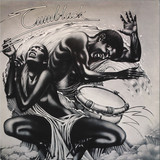
A truly special reissue of a fantastic and incredibly rare Afro-disco 12” from 1978, Tumblack - 'Caraiba/Invocation'. Originally released on the seminal French disco label Barclay, you'd be hard pressed to even find an original copy in the UK, let alone for a reasonable price, so it's high time an officially licensed, remastered reissue came around.
Taking the A side of this EP Stefano Ritteri provides a “Spaziale Version” of 'Caraiba' that seamlessly blends elements of African, Afrobeat, Funk and Disco styles, with segments that continually morph and evolve into new tracks. Irresistibly funky and percussive drumming patterns and melodies hypnotise the listener, with only the occasional outbreak of African chanting breaking up the grooves.
The B-side contains the original version of “Invocation” that is effectively one long drum track broken down into 7 segments that never drop a beat alongside the original version of 'Caraiba' in all it's glory. As EP's go, this really does take the listener on a journey to Africa, via 1978 New York, and is a true one of a kind. And for all those sample-spotters out there, there's no end of complex drum patterns and basslines to dive into.
Jay Clarke's masterful BLACKAXON imprint returns with a shapeshifting EP from Davide Piras.
What began as a sonic sketchbook for Clarke to express his expansive view of electronic music, is evolving. The label is opening up to artists who hold a shared passion for creating dynamic and interesting techno compositions, with a few surprises here and there. Following last October's superb contribution from rising talent Yant, experimental techno artist David Piras drops a quadruplet of cuts to join the BLACKAXON fold.
His BLACKAXON debut, "Beyond Our Reach", is a true all-rounder. It leads with the dusty slow bass monster "Radiation Belt", before the gritty electro noodlings of "Multipolar" enter the fore. The analogue-infused rave cut "System Cartesian" takes the EP into otherworldly realms, before atmosphere-heavy "Pangaea Heritage" closes out the work, evoking a hazy afterhours vibe.
"Davide's productions hold an air of Convextion about them, he's one of my favourite artists. I locked into that right away and knew I wanted to release his music. When I listen to Davide's tracks I feel as though I'm in the middle of a sci-fi movie, they're funky and futuristic tales from the deep. Amazing!" - Jay Clarke
Woods 786 is back. The alter ego of Roberto Bosco returns with “Exploration 01”, a live jam recording split in two tracks performed with Elektron Analog 4 and Analog RYTM. Last Drop Records and Sonorous Waves' founder has been for years both a producer and a DJ with dates all around the world, now takes another step forward into ambient music. His hypnotic textures invite the listener to travel without moving. Mastered at Mixmastering Studio, the first joint effort between Souterraine.org and Envlp_Imprint, “Exploration 01” is a dreamy continuum of twenty-five minutes or a way to escape from everyday chaotic life. Synthesizers brings you the sound of outer space.
‘I Want You To Be Mine’ has all the hallmarks of classic 1960’s Rocksteady, an era which many refer too as the Golden Age of Jamaican music. Over the top of a live one-drop beat, cool & deadly sax and warm analog guitar & bass Deemas J rides the riddim in a ‘old time style & fashion’ whilst Rachel Wallace provides the perfect accompaniment with her gorgeous vocal. On the B-Side we have the deeper cut ‘Questions’, where Deemas delivers a poignant poem over Adam Prescott’s moody instrumental in the style of Linton Kwesi Johnson. Featuring live instrumentation from Harry ‘Papa B’ Bradford (Sax), Clifford Junior (Guitar) & Guillaume Metenier (Hammond Organ). As an integral part of the Reggae Roast Soundsystem team Adam has established himself as one of the finest selectors in the world. Initially with some early support and guidance from Mark Iration (from the Leeds based Iration Steppas), Adam was quickly recognised as one of the key players in the re-emergence of British Reggae, producing first class original songs featuring the likes of Cornel Campbell, Macka B, Sugar Minott, Ranking Joe, Rod Taylor, Johnny Osbourne & Earl 16 to name but a few. Add to that consistent play on BBC Radio One & Rinse FM plus huge support from Sir David Rodigan, featuring Adam on his ‘Best Of British’ show on 1Xtra, Adam has become one of the hottest prospects in the revival of soundsystem music. Deemas J has built a formidable reputation as a go-to MC & vocalist with equally genre-busting credentials; His background in Reggae & Jungle means that his lyrical skills and style holds no bounds. He currently works with 3 of the top London Reggae Soundsystems, Unit 137, Reggae Roast & Solution Soundsystem as well as running his own Sound Limey Banton Bass in Guernsey. He has released music on some very well known labels such as Irie Ites, Irish Moss & Tru Thoughts, which released the cult LP ‘Wrongtom Meets Deemas J in East London’. More recently his latest release ‘Muhammed Ali’ received fantastic support from Don Letts, Sir David Rodigan & Ras Kwame. His virtually endless CV boasts collaborations with everyone across the worlds of Drum & Bass, Old School, Garage, Reggae and Hip hop, including High Contrast, Andy C, DJ EZ and Nick Manasseh to name just a few as well as touring the world with Manudigital
Ecke Records returns with its fourth release this November, the four-track ‘Grit’ EP coming courtesy of Xantrax with a remix from Addison Groove.
Taking the lead is ‘Tekline’, a murky, unfurling cut fuelled by off-kilter tribal drum work, bubbling bass delays and modulating synth flutters. Addison Groove steps up next on remix duties, reshaping ‘Tekline’ with choppy vocal cuts, dubbed out chord stabs and organic percussion floating atop the originals hypnotic groove.
‘Linetek’ opens the flip, as the name would suggest acting as a counterpart to the lead track, taking a 4/4 approach rhythmically while introducing a similar modulating bass line alongside chanting vocals.
‘0121’ then rounds out the package, an angsty, dynamically unfolding composition laid out over four and a half minutes with droplet synth delays, heady bass swells, spoken word vocals and crunchy broken drums.
Following on from their stunning debut collaboration - “Fragile” on GLOW/3; we announce a full release from Edlan & Djah.
Introducing the Melancholy EP: 4 uniquely intricate doses of futuristic and deep liquid filled with vibe, funk and soul. Proof this Dutch wonderduo are two of the most forward thinking and exciting new talents emerging on the scene.
Make sure you reserve your limited vinyl copy of Edlan & Djah’s new instalment now to avoid disappointment, dropping this November across all formats.
"The first series comprises six related movements, usually organised in pairs, electronic sounds with instrumental and more rarely, concrete sounds: Incidences/resonances brings into play controlled resonances akin to sounds of concrete origin in a process that helps to expand the variable electronic sound sources.
Here, 'incidents' are opposed to one-off 'accidents' in the second movement: Accidents/Harmoniques (Accidents/Harmonics). In the second movement, very short events of instrumental origin change the harmonic tone of the continuum they interrupt or overlap.
Moreover, the high notes are underplayed, which stimulates the attention given to other phenomena generally hidden by the melodic form applied to the instrumental play. Géologie sonore (Sound Geology) is similar to a flight over an area where different 'sound' layers come to the surface one after the other.
When seen from high above, instrumental and electronic sounds seem to fuse ... Dynamique de la resonance (Dynamics of Resonance) is a microphonic exploration of a single sound resonating through different forms of percussion. L'Etude élastique (Elastic Study) places together various sounds produced by 'touching' elastic or instrumental skins (baloons, doumbeks) or vibrating strings and a number of instrumental gestures close to this 'touch', using electronic processes to generate white noise.
Conjugaison du timbre (Conjugated Tone), the last movement in the series, uses the same substance to apply rhythmic forms onto a perpetually varying tone continuum. "The second series of movements draws its inspiration from concrete and electronic sources rather than instrumental ones. Incidences/battements (Incidences/Beatings) is a reminder of the first movement in the first series which then quickly moves into Natures éphémères (Ephemeral Natures): ephemeral play on instrumental and electronic sounds, singled out by their internal trajectory rather than by the material itself. Matières induites (Induced Matters): just as molecular effervescence triggers a changes of state, it seems that the different states of these sound materials can be generated by each other or through induction processes.
In Ondes croisées (Crossed Waves), the pizz vibrations interfere with somehow 'visible' water drops on the surface of a similar material. Pleins et déliés (Downstrokes and Upstrokes) can be listened to as the energies absorbed in the motion of bouncing bodies, while hollow 'bubbles' and points bring together some people's gravity and others' downwards movements. The work finishes with Points contre champs (Reverse Angle Points).
Here, the notion of perspective of the different sound threads weaving a kind of network, or field, traps the occasional iterative elements in the foreground and progressively absorbs them, giving more space for the angle - and the chanted sound - to grow." (B.P.).
Hoshina Anniversary is conquerer of the mind, creating the most beautiful sound, other than silence.
This is his first offering for the ESP Institute.
Side A’s 'Sagano' is fairly representative of the Hoshina sound — raw organic samples and instrumentation, of traditional Japanese origin, mercilessly bent and tweaked to suit the needs of his obsessively precise arrangement. Midway through the track, we’re bewildered by his demonic breakdown on the Rhodes, which daringly tags the bassline and strings into a synchronized trio of jazz-funk noodles, and he even throws in a key change before dropping us back into the main hook for the duration of the dance. It's a major flex, and indeed makes an impression.
On side B’s 'Haru Wa Akebono', Hoshina displays an alternate and equally significant side to his songwriting, merging optimistic twinkles and arpeggios with slightly detuned dry percussion for an overall uneasy vibe, not dissimilar to early video game aesthetics or circuit-bent toys. Across both sides, there lies an unhinged overtone, such that we feel one small step from spiraling deep into a demented quicksand, a freak-out where hallucinations get the better of us.
Initiating a breadth of releases planned with the ESP Institute, this single summarizes a few of Hoshina’s most compelling modes, and though there is a whole circus yet to unfold, we hold his cards close, no spoilers before the main act.
These two songs will have you drinking moon juice and dancing naked at the Mardi Gras.
Through the combined brilliant minds of Fabrice Lig, Kiko Navarro, Karim Sahraoui and Jean Vanesse, the new musical force known as Quadra 163 has arrived. Working together in Jean Vanesse's Belgium studio, their debut EP, "Spin Coaster EP" was born.
Through intense live collaboration over 3 full days, the results are these incredible original tracks and a remix from the American house legend, Osunlade (Yoruba Records). Belgium's Elypsia Records have an absolutely essential release here for those looking for proper club weapons - each track dreamt up by a crew of producers with decades of critical acclaim and club credibility.
Osunlade kicks off the release on A1 with his rework of 'Spin Coaster.' The remix is a late night machine jam saturated with sharp synth textures and a shuffling rhythm which will lock the dancefloor tightly in place. A perfect blend between House and Techno, it's a shining example of Osunlade's keen ability to capture imagination with function, tension with release.
'Ghetto Beat' steps up as the A2, with a drum heavy cut full of off-kilter hits and tones which twist and turn in frequency and timbre. It's the type of track that will get the crowds cheering and jackin' and dancing without a break. A proper tool to slam into the set whenever energy levels need to lift higher and things need to get slightly twisted.
Title track 'Spin Coaster' sets up the B-side with a master session of prime time techno making magic. A playfully thick bassline resonates in and out of the analog rhythms while a synth tone builds tension over the track's entire duration. A few breaks for the clubbers to catch their breath are placed in the perfect spots - but only for a brief moment before things kick back in.
Rounding out the release is 'Ghetto Train,' an absolutely mental banger designed to melt the minds of those fortunate enough to be on the dancefloor when it's dropped. Relentless rhythms, huge hand claps and a sharp staccato shuffle drive the tune whilst synth stabs grow filthier with each passing phrase. Clearly the results of an insane studio session from the crew.
Hamburg based Label Mantra Mantra drops its first EP by 11Schnull.
"IMPERIA" is not only the first release by 11Schnull, Hamburg-based Dj and producer, but also marks the birth of a new record and design label named MANTRA MANTRA. It will release electronic music from up-and-coming artists as well as handcrafted merchandising items, created specifically for each new output.
On this first EP the title track spans over an epic length of 10 minutes and combines an ecclesiastical sample field-recorded in the basilica of Imperia, Italy, with trippy choral soundscapes and hard crashing drums. The B side contains "Jam des Terrorglobus", a rough uncut session he held with his friend Baxmann, and a dark and quaky electro piece called "Roofies on fire", a harsh club banger that could potentially be the last track played at an illegal rave before the "Polizei" shows up. But this part of the story will be told on vinyl only.
When acclaimed South African musician Guy Buttery first sought out Dr. Kanada Narahari in late 2016, it was as his patient.
“It was a dark time.” Buttery recalls, “I had been bedridden for months and had been suffering from debilitating bouts of fatigue which no diagnosis or medication could help me get to the bottom of. When I first met Kanada, I was at the stage where even picking up my guitar to make music had become a joyless and taxing exercise.”
As Buttery’s searched for a cure, a family member recommended he see Kanada an Ayurvedic doctor who had relocated to South Africa from India and set up a practice in Durban. It was during this consultation, that the musician first experienced how Narahari infused the healing properties of Indian Classical music into his practice. Rather than treating him with a smorgasbord of pharmaceuticals, Narahari played his sitar and set Buttery on a strict daily diet of Raga’s to fast track his recovery.
Buttery was not only struck by his doctor’s musical talents but by the powerful healing properties inherent in his sitar compositions. When he left Narahari’s doctors room that afternoon, he asserts he was feeling decidedly clearer, lighter and stronger.
“Diving into Kanada’s music was definitely one of the reasons I'm still here today.” he admits. “The consistent tonal centre at the heart of Indian Classical Music, literally became my support pillar over this period. A central core of sorts in which to fall back on, strengthen and discover.”
Narahari as it turned out, was not only a prominent music therapist (and one of the only Ayurvedic doctors practicing in South Africa) but like Buttery, a highly accomplished musician with a devoted following back in his homeland.
Born in a small village along the Western Ghats in Karnataka, India, Narahari, at the age of nine, had enrolled to study Carnatic classical vocal and developed an interest in Hindustani Classical music with a particular passion for the sitar. While Buttery had secured his reputation as one of South Africa’s musical treasures, a multi-instrumentalist who commands sold-out performances both locally and internationally and more recently had been awarded the prestigious 2018 Standard Bank Young Artist for Music.
From this consultation, a friendship developed between the two musicians with Buttery soon inviting Narahari to join him in his studio. But it wasn’t all plain sailing in the beginning. While Buttery and Narahari’s sensibilities were very much aligned, there were a range of cultural and musical influences, nuances and inflections that first needed to be navigated and understood.
“I suppose we had to find a common ground.” Buttery says, before adding, “Which in the end turned out to be pretty "uncommon ground" for the both of us.”
It was after a few intensive sessions together that something exhilarating began to emerge. What began as a few idle improvisations soon evolved into feverish and lengthier jams. Whenever time permitted, the musicians would meet, descending deeper into the emerging sounds, while reimagining the realms that existed between their African and Indian heritages.
Over the next few months, the duo would rack up over fifteen hours of recordings in studio, and it was up to Buttery to shape the material into an album which they collectively titled Nāḍī, which Narahari translates from the Sanskrit as "The Channel" or "An Internal River".
During this period, Narahari bestowed upon Buttery, the moniker Guruji while Guy would refer to him, in affectionate return, as Panditji. Each time the musicians would meet, the studio space would be cleared by an impromptu ritual, with Guruji burning African Imphepho while Panditji would chant a Sanskrit mantra dusting Indian Agarbatti clouds over their instruments.
Once the room had been made hazy with this aromatic alchemy (with the ancestors welcomed in) the musicians would pick up their instruments and plunge into shimmering tides of sound. Reflecting on these sessions, Narahari recalls the immense creative freedom he felt throughout: “Guy and I tried to wander as much as possible, without any speculative, preoccupied ideologies or limitations. Love remained at the forefront of our journey together.”
“Those evenings we spent together in the studio” adds Buttery, “felt incredibly rich with purpose and a profound sense of freedom. While improvising, anything could happen and mostly did.”
On a first listen, the tracks on Nāḍī emerge as salty, humid invocations to the inscrutable depths and misty myths of the Indian ocean-- that vast body of water that stretches between, and laps the shorelines, of the artists’ respective homelands.
When asked to describe the sound him and Narahari refined, Buttery prefers to relay a series of evocative images.
“For me” he explains, “Nāḍī is a lighthouse, a beacon that resides at the bottom of the ocean.” As Buttery envisions it, “what once offered light to guide ships to safety, has been submerged and re-purposed by marine life as a coral-reef temple. Similarly, this sunken lighthouse exists as a concealed cenotaph, memorializing the ancient sea-routes and passages that once connected the two distant lands.”
On paper this may sound obscure but listening to the songs, it serves as an apt metaphor.
Across each meditative movement, listeners are able to relive the journey, immersing themselves in a series of incantations, replete with high dynamics, delicate African-Indian inflections and virtuoso string playing of an entirely new order. Further complimenting the fusion of musical dialects are a range of guest artists including Shane Cooper on bass, Thandi Ntuli on vocals, Chris Letcher on organ, Ronan Skillen on tabla and percussion and Julian Redpath on guitar, synth and backing vocals.
Now like the submerged lighthouse, the recordings stand as a monument, a marker and snapshot of this fortuitous meeting, a tribute to the healing gifts of Guruji and Panditji in performance. It’s a process that already, both musicians look back on with reverence and nostalgia.
Buttery ruminates in closing, that when he first met Kanada his illness correlated with the biggest drought South Africa had experienced in many years “…for whatever reason, whenever we would connect and make music together, the sky would tend to open. Even if it was just a few drops. This went on for months, until finally the drought dissipated and my health had been restored.”
By the time the heavens did open across the East Coast, a deep friendship had been forged and with it abundant musical offerings poured down. A treasured sample of which we able to share in every time we press play and immerse ourselves in the sacrosanct musical universe that is Nāḍī.