In the late 1980s, as techno and house made its way around Europe, mutating as it hopped from city to city, one young DJ from Curacao made a mistake that would inspire a brand new sound. While he was performing at Den Haag's Club Voltage, DJ Moortje accidentally dropped a dancehall track at 45RPM rather than 33, and let it play out. Thirsty for a hi-NRG sound, the crowd loved the squeaky vocals and rapid beat, and bubbling (or bubbling house) was born.For the next couple of decades, bubbling was a crucial part of Holland's Afro-diasporic club landscape. And as a new generation of wide-eyed young DJs and producers began to take the reins, it evolved accordingly. In the late-2000s, Den Haag-based teenage prodigy Guillermo Schuurman followed in the footsteps of his uncle DJ Chippie (one of the genre's co-founders) and cousins DJ Daycard, DJ Master-D, Stiko Jnr and DJ Justme, and began performing and writing beats. Using Fruityloops, he fused familiar bubbling rhythms with rap and R&B samples, trance synths and electro house wobbles, and his tracks quickly became a regular fixture on the Dutch circuit."Bubbling Inside" is a collection of Schuurman's most essential cuts from the era (2007-2009), with a couple of newer productions added for context. Crafted solely for the dance, most of these tracks were never properly released and have been painstakingly hunted down and collected by the Nyege Nyege Tapes together with Sascha Roth from Pantropical in Rotterdam and De Schuurman himself. Hearing them together highlights just how forward thinking the young producer was, steering a Dutch institution into the future.2008's 'First One' is a proto-Berghain belter, with booming bass-heavy kicks underpinning the kind of cheeky melodies that remain the calling card of the genre. 'Pier Je Bil!!' ratchets up the tempo, twisting bubbling's syncopated dancehall kicks into a rapid-fire club clatter and decorating them with steel-pan melodies. Elsewhere, 2019's 'Domina' shows how Schuurman's production style has developed as he mutates trap percussion, dubstep bass and eerie synth textures, while retaining the DNA of bubbling. "Bubbling Inside" is a testament to the evolution of the bubbling genre, as witnessed by one of its most visionary producers.
Buscar:the drop
- A1: Progetto Tribale - The Sweep
- A2: Onirico - Echo Giomini
- A3: Open Spaces - Artist In Wonderland
- B1: Alex Neri – The Wizard (Hot Funky Version)
- B2: M C.j. Feat. Sima - To Yourself Be Free - Instrumental Mix Energy Prod
- B3: Mato Grosso - Titanic Expande
- C1: Dreamatic - I Can Feel It (Part 1)
- C2: Carol Bailey - Understand Me Free Your Mind (Dream Piano Remix)
- C3: The True Underground Sound Of Rome - Secret Doctrine
- D1: Don Carlos - Boy
- D2: Lazy Bird – Jazzy Doll (Odyssey Dub)
Vol 2[28,99 €]
Volume 1 of this expertly curated project of 90s Italian House - put together by Don Carlos.
If Paradise was half as nice… by Fabio De Luca.
Googling “paradise house”, the first results to pop up are an endless list of European b&b’s with whitewashed lime façades, all of them promising “…an unmatched travel experience a few steps from the sea”. Next, a little further down, are the institutional websites of a few select semi-luxury retirement homes (no photos shown, but lots of stock images of smiling nurses with reassuring looks). To find the “paradise house” we’re after, we have to scroll even further down. Much further down.
It feels like yesterday, and at the same time it seems like a million years ago. The Eighties had just ended, and it was still unclear what to expect from the Nineties. Mobile phones that were not the size of a briefcase and did not cost as much as a car? A frightening economic crisis? The guitar-rock revival?! Certainly, the best place to observe that moment of transition was the dancefloor. Truly epochal transformations were happening there. From America, within a short distance one from the other, two revolutionary new musical styles had arrived: the first one sounded a bit like an “on a budget” version of the best Seventies disco-music – Philly sound made with a set of piano-bar keyboards! – the other was even more sparse, futuristic and extraterrestrial. It was a music with a quite distinct “physical” component, which at the same time, to be fully grasped, seemed to call for the knotty theories of certain French post-modern philosophers: Gilles Deleuze, Félix Guattari, Paul Virilio... Both those genres – we would learn shortly after – were born in the black communities of Chicago and Detroit, although listening to those vinyl 12” (often wrapped in generic white covers, and with little indication in the label) you could not easily guess whether behind them there was a black boy from somewhere in the Usa, or a girl from Berlin, or a pale kid from a Cornish coastal town.
Quickly, similar sounds began to show up from all corners of Europe. A thousand variations of the same intuition: leaner, less lean, happier, slightly less intoxicated, more broken, slower, faster, much faster... Boom! From the dancefloors – the London ones at least, whose chronicles we eagerly read every month in the pages of The Face and i-D – came tales of a new generation of clubbers who had completely stopped “dressing up” to go dancing; of hot tempered hooligans bursting into tears and hugging everyone under the strobe lights as the notes of Strings of Life rose up through the fumes of dry ice (certain “smiling” pills were also involved, sure). At this point, however, we must move on to Switzerland.
In Switzerland, in the quiet and diligent town of Lugano, between the 1980s and 1990s there was a club called “Morandi”. Its hot night was on Wednesdays, when the audience also came from Milan, Como, Varese and Zurich. Legend goes that, one night, none less than Prince and Sheila E were spotted hiding among the sofas, on a day-off of the Italian dates of the Nude Tour… The Wednesday resident and superstar was an Italian dj with an exotic name: Don Carlos. The soundtrack he devised was a mixture of Chicago, Detroit, the most progressive R&B and certain forgotten classics of old disco music: practically, what the Paradise Garage in New York might have sounded like had it not closed in 1987. In between, Don Carlos also managed to squeeze in some tracks he had worked on in his studio on Lago Maggiore. One in particular: a track that was rather slow compared to the BPM in fashion at the time, but which was a perfect bridge between house and R&B. The title was Alone: Don Carlos would explain years later that it had to be intended both in the English meaning of “by itself” and like the Italian word meaning “halo”. That wasn’t the only double entendre about the song, anyway. Its own very deep nature was, indeed, double. On the one hand, Alone was built around an angelic keyboard pattern and a romantic piano riff that took you straight to heaven; on the other, it showcased enough electronic squelches (plus a sax part that sounded like it had been dissolved by acid rain) to pigeonhole the tune into the “junk modernity” section, aka the hallmark of all the most innovative sounds of the time: music that sounded like it was hand-crafted from the scraps of glittering overground pop.
No one knows who was the first to call it “paradise house”, nor when it happened. Alternative definitions on the same topic one happened to hear included “ambient house”, “dream house”, “Mediterranean progressive”… but of course none were as good (and alluring) as “paradise house”. What is certain is that such inclination for sounds that were in equal measure angelic and neurotic, romantic and unaffective, quickly became the trademark of the second generation of Italian house. Music that seemed shyly equidistant from all the rhythmic and electronic revolutions that had happened up to that moment (“Music perfectly adept at going nowhere slowly” as noted by English journalist Craig McLean in a legendary field report for Blah Blah Blah magazine). Music that to a inattentive ear might have sounded as anonymous as a snapshot of a random group of passers-by at 10AM in the centre of any major city, but perfectly described the (slow) awakening in the real world after the universal love binge of the so-called Second Summer of Love.
For a brief but unforgettable season, in Italy “paradise house” was the official soundtrack of interminable weekends spent inside the car, darting from one club to another, cutting the peninsula from North to centre, from East to West coast in pursuit of the latest after-hours disco, trading kilometres per hour with beats per minute: practically, a new New Year’s Eve every Friday and Saturday night. This too was no small transformation, as well as a shock for an adult Italy that was encountering for the first time – thanks to its sons and daughters – the wild side of industrial modernity. The clubbers of the so-called “fuoriorario” scene were the balls gone mad in the pinball machine most feared by newspapers, magazines and TV pundits. What they did each and every weekend, apart from going crazy to the sound of the current white labels, was linking distant geographical points and non-places (thank you Marc Augé!) – old dance halls, farmhouses and business centres – transformed for one night into house music heaven. As Marco D’Eramo wrote in his 1995 essay on Chicago, Il maiale e il grattacielo: “Four-wheeled capitalism distorts our age-old image of the city, it allows the suburbs to be connected to each other, whereas before they were connected only by the centre (…) It makes possible a metropolitan area without a metropolis, without a city centre, without downtown. The periphery is no longer a periphery of any centre, but is self-centred”.
“Paradise house” perfectly understood all of this and turned it into a sort of cyber-blues that didn’t even need words, and unexpectedly brought back a drop of melancholic (post?)-humanity within a world that by then – as we would wholly realise in the decades to come – was fully inhuman and heartless. A world where we were all alone, and surrounded by a sinister yellowish halo, like a neon at the end of its life cycle. But, for one night at least, happy.
- A1: Kant Nobody (2 59)
- A2: Lollipop (5 01)
- A3: A Milli (3 27)
- A4: Bedrock (4 46)
- A5: 6 Foot 7 Foot (4 04)
- B1: How To Love (3 57)
- B2: Right Above It (4 29)
- B3: Drop The World (4 09)
- B4: She Will (4 25)
- B5: Mirror (3 52)
- C1: Mrs Officer (4 58)
- C2: Blunt Blowin (4 55)
- C3: Mona Lisa (5 21)
- C4: Uproar (3 17)
- D1: No Worries (3 32)
- D2: Fireman (4 25)
- D3: Go Dj (4 40)
- D4: Mr Carter (5 03)
Recorded in 1997, Mountain Top features the commanding vocals of Tony Roots, backed by the legendary Firehouse Crew and produced by the visionary Fada Waz (Clifton Carnegie). This record’s release was driven by the people, evidenced and encouraged by the countless wheel-ups and sing-alongs during King Original’s international tour dates over the last three years whenever this seminal recording was dropped in the set.
Tony Roots, known for his cultural and spiritual themes, delivers a powerful vocal performance, reminding us that life’s most important journey is overcoming obstacles to find ‘Jah Love on the Mountain Top.’ This message is as relevant in today’s fast-paced, easy-come-easy-go consumer culture as it was when recorded three decades ago.
The Firehouse Crew renowned for their work with iconic acts like Luciano and Sizzla—shine brightly on this riddim, with the MPC drum machine-centered sound of 90s Jamaican roots reggae. An up-tempo 4/4 steppers beat layered with rich analogue textures and soulful instrumentation defines this timeless recording.
The first of many collaborations between Studio 55, Before Zero Records, and Footsie, the King Original legacy continues into the future, honouring the enduring contributions of Fada Waz and his collaborators.
Clifton Carnegie aka Ras Wazair aka Fada Waz - Clifton Carnegie, known as Ras Wazair, founded King Original Sound System in 1973, establishing it as East London’s foremost reggae sound. Operating under his Studio 55 moniker, he collaborated with legends like Johnny Osbourne, Barry Brown, Michael Prophet, Cornell Campbell, and Frankie Paul through imprints such as Original Sounds, Studio 55, and Original International. A mentor to many of the UK’s top sound systems and a key figure in London’s RasTafari community, Ras Wazair’s connections with prominent Jamaican artists, bands, and producers like Fattis Burrell ensured that Jamaican music remained an influential force in the UK sound system scene.
King Original
Founded in 1973 by Fada Waz, King Original Sound System shaped East London’s reggae scene for over two decades. Fada Waz and his son Footsie—a UK Grime pioneer who in later years expanded the legacy through his KO LP series and sold-out King Original mixed-genre events at London’s top venues—worked together until Footsie assumed full control following Fada Waz’s passing in 2021. Having worked with artists such as Dizzee Rascal, Arctic Monkeys, The Prodigy, D-Double E, Wiley, and Skepta, Footsie’s dedication to King Original has reinvigorated the legacy that underpins all UK bass music—the reggae sound system. Joining Footsie is his brother, Wazair’s last born Ras D also Jah Model, and long-time collaborator Sir Spyro, producer of two UK number-one hits with Stormzy and son of UK reggae stalwart Nerious Joseph. Armed with cutting-edge QSS sound system technology, King Original continues to set trends, shaping the future of UK bass music.
Tony Roots
Hailing from Manchester, Jamaica, in the 1980s, Tony Roots emerged alongside iconic figures like Garnet Silk and Tony Rebel. While his peers remained in Jamaica, Tony moved to the UK, where he went on to release ten albums and numerous singles, including hits like Grow Your Natty Dread Locks and Hola Zion. A steadfast champion of Rastafari, Tony has collaborated with legends such as the Firehouse Crew, earning worldwide respect and a devoted following within both the reggae community and the UK sound system scene.
The Firehouse Crew
Formed in 1986, The Firehouse Crew became a cornerstone of the 1990s roots-reggae revival. Initially associated with King Tubby’s Firehouse label before establishing their own, the band rose to prominence through collaborations with producer Philip “Fattis” Burrell at Xterminator Records. Their contributions to timeless albums like Luciano’s Where There is Life highlight their extraordinary musicianship. Over the years, The Firehouse Crew has backed iconic artists such as Sizzla, Buju Banton, and Beres Hammond, cementing their legacy as masters of roots reggae.
Veyl is pleased to welcome Harlem back to the label with a new 8 track LP titled Cage. The Stockholm-based duo of Martin Thomasson and Johan Skugge last appeared on the imprint with 2021’s, Bait, and the project now returns diving deeper in to their infectious cocktail of menacing electronics.
Bringing with them a vast body of work, ranging from dub to minimal techno, with Harlem the pair fuse electro, no wave, post-punk, disco, proto-body, dub, hip-hop, and grime, creating a unique sound that cannot be categorized. Cage opens with “Shut Your Body”, a muscular piece which drills into the surface, setting the stage for what’s to come. Next up is “Fantasy Scan” a dance floor ready jam that picks up the pace and lures us into the pleasure dome. “Blow by Blow” brings a nihilistic energy to a fictional scenario that takes its cues from the past while remaining firmly in the now.
“Kiss The Steel” continues on the slow burning path, dropping us into a dream like state, blurring the lines of reality and plunging us into a surrealist nightmare or reverie? “Dummy Up” comes roaring back, injecting a dose of electro and body that sounds like a soundtrack to your favorite cult gathering. With “Sleuth”, we hear the repetitive grind of a man at work, searching for the unknown, unlocking new mysteries along the way. As we head toward the finale, “Contact High” brings back a seductive dance, ready to movie bodies and stir emotions. Closing things out is “Wiggle Walker”, returning us to a drifter’s journey, a wanderer’s melody that carries us to the end, or is it just the beginning?
- A1: No Right 2 Love
- A2: Wwwww?
- A3: U&I
- A4: Measure Me
- A5: U R Here
- B1: Tormentor
- B2: North
- B3: Empty
- B4: Nightworld
- B5: Pity
Coloured Vinyl[23,95 €]
Das Debütalbum des 2020 gegründeten Leedser Kollektivs um Kernmitglieder George Mitchell, Matt Peel, Josh Lewis und Imi Marston.
Mit Einflüssen, die von Mount Kimbie und My Bloody Valentine bis hin zu Björk und Burial reichen, steht 'U R HERE' für ein neues Gefühl des kreativen Ausdrucks inmitten einer Welt, die manchmal zu zerfallen scheint.
Die Songs auf 'U R HERE' sind eine fließende, mitreißende und einzigartig introspektive Interpretation von Clubmusik, die die psychologischen Auswirkungen des modernen Zeitalters in Töne fast und die Vitalität und Freiheit nutzt, die mit Neuanfängen einhergeht. 'U R HERE', genau jetzt, und nur das zählt.
In den vergangenen 12 Monaten haben sich HONESTY mit der Veröffentlichung ihrer ersten EP 'WHERE R U', dem experimentellen Mixtape 'BOX' und einer Reihe von Singles aus ihrem Debütalbum ein substantielles Publikum erspielt.
Die Gruppe erntete Lob von wichtigen Indie-Magazinen wie The Needle Drop, eine Erwähnung von Alexis Petridis von The Guardian und weitere Kritiken von Mixmag, Rolling Stone, Crack, NME und Brooklyn Vegan. Im Radio wurde die Band von BBC 6 Music und Apple Music 1 gespielt und erhielt viel Unterstützung von BBC Introducing. HONESTY hat kürzlich eine Live-Session für BBC Introducing aufgenommen und gefilmt, die Anfang Januar auf BBC Introducing Leeds und Sheffield ausgestrahlt wird.
HONESTYs hypnotisierende Live-A/V-Show ist einer der wichtigsten Faktoren für den bisherigen Erfolg der Band. Ihr vielschichtiges visuelles Erscheinungsbild und ihr ausgeklügeltes Live-Setup bringen die Textur und die Kraft der Aufnahmen voll zur Geltung, was Mixmag und Clash dazu veranlasste, die Band in ihren Beiträgen zu den besten Sets beim Eurosonic 2024 hervorzuheben.
- A1: No Right 2 Love
- A2: Wwwww?
- A3: U&I
- A4: Measure Me
- A5: U R Here
- B1: Tormentor
- B2: North
- B3: Empty
- B4: Nightworld
- B5: Pity
Black Vinyl[23,95 €]
Das Debütalbum des 2020 gegründeten Leedser Kollektivs um Kernmitglieder George Mitchell, Matt Peel, Josh Lewis und Imi Marston.
Mit Einflüssen, die von Mount Kimbie und My Bloody Valentine bis hin zu Björk und Burial reichen, steht 'U R HERE' für ein neues Gefühl des kreativen Ausdrucks inmitten einer Welt, die manchmal zu zerfallen scheint.
Die Songs auf 'U R HERE' sind eine fließende, mitreißende und einzigartig introspektive Interpretation von Clubmusik, die die psychologischen Auswirkungen des modernen Zeitalters in Töne fast und die Vitalität und Freiheit nutzt, die mit Neuanfängen einhergeht. 'U R HERE', genau jetzt, und nur das zählt.
In den vergangenen 12 Monaten haben sich HONESTY mit der Veröffentlichung ihrer ersten EP 'WHERE R U', dem experimentellen Mixtape 'BOX' und einer Reihe von Singles aus ihrem Debütalbum ein substantielles Publikum erspielt.
Die Gruppe erntete Lob von wichtigen Indie-Magazinen wie The Needle Drop, eine Erwähnung von Alexis Petridis von The Guardian und weitere Kritiken von Mixmag, Rolling Stone, Crack, NME und Brooklyn Vegan. Im Radio wurde die Band von BBC 6 Music und Apple Music 1 gespielt und erhielt viel Unterstützung von BBC Introducing. HONESTY hat kürzlich eine Live-Session für BBC Introducing aufgenommen und gefilmt, die Anfang Januar auf BBC Introducing Leeds und Sheffield ausgestrahlt wird.
HONESTYs hypnotisierende Live-A/V-Show ist einer der wichtigsten Faktoren für den bisherigen Erfolg der Band. Ihr vielschichtiges visuelles Erscheinungsbild und ihr ausgeklügeltes Live-Setup bringen die Textur und die Kraft der Aufnahmen voll zur Geltung, was Mixmag und Clash dazu veranlasste, die Band in ihren Beiträgen zu den besten Sets beim Eurosonic 2024 hervorzuheben.
QLine ...the railway to the underground... via Detroit
DRIVETRAIN/“Belle”
An dish of sliced vocal drops melted over smoldering rhythm.
DJ CENT/“Hold Out”
The uplifting and spirited melody of praiseworthy beats.
J.GARCIA/”Reflekt”
A tranquilizing vaccine of mesmerizing electronic flow.
BLAKTONY/“Eastern Market (shed 3)”
The one-stop shop for a militant, deep ambient groove.
QLine features an all Detroit artist lineup.
The follow up release to last years Times & Places Volume 1, which sold out in super quick time has the same four artists, each bringing their own style of old skool rave goodness to the table.
Gridzone gets us off and running with beautiful pads and an oh so familiar soothing female vocal sample. But don’t let this fool you, the harsh amens are just round the corner and when they drop, you will know about it.
Midlife Crisis has similar energy levels in their offering, the breaks are more chopped and more in a jungle vein.
On the flip is the highlight of this EP. NewKiller drops a jungle-techno stormer. 4/4 kicks with high speed breaks, hoover sounds and horror film samples. Its like 1993 all over again. Finally the EP ends with a ragga tinged rudeboy of a stepper from Gold Soundz.
Repress!
Fresh off the back of his Glitterbox remix of CamelPhat & Elderbrook's hit 'Cola', Mousse T. drops his first original release on the Glitterbox label, showing off the depth of his production skills in this sparkling genre-binding track 'Rock The Mic'.
Mousse T. enlists the help of artist TAZ, the man who became the first UK rapper to sign to hip hop mecca Def Jam, also earning a prestigious Ivor Novello award nomination for his writing skills. 'Rock The Mic' reunites Mousse with American song writer Inaya Day, best known for her unforgettable vocals on the German producer's biggest record, 'Horny'.
The catchy hook and toe-tapping groove of intertwine perfectly over smooth strings to make this an irresistible record. The killer collaboration combines hip hop with disco, giving us the best of both worlds. 'Rock The Mic' lives up to the hype, delivering six minutes of bliss alongside a percussive remix courtesy of Kon. Kon's Accapella and Instrumental versions round off this full rocking package.
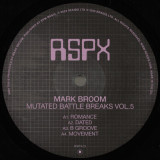
Mark Broom drops the fifth volume of ‘Mutated Battle Breaks’.
Mark Broom’s ‘Mutated Battle Breaks’ series on Radio Slave’s Rekids Special Projects dates back to 2021; since then, he’s released four volumes, with its next chapter arriving to mark the label’s first EP of 2025. Each ‘Mutated Battle Breaks’ EP consists of an extended runtime of eight tracks, supported by the likes of Robert Hood, Ben UFO, I.Jordan, Pariah, Carista, Mumdance, Lauren Flax, and many more.
Across volume 5 of ‘Mutated Battle Breaks’, Mark Broom primes eight more dancefloor-ready cuts complete with rugged grooves, punchy stabs, and wild Techno sequences. From the opener ‘Romance’ and its frenzied arrangement, through to the rolling bleep-infused ‘Ranger’, Broom once again shows his mastery of rhythm and the breath of his Techno productions - one thing is certain: he continues to be one of the most significant producers in Techno after more than three decades.
Techno, House, and rave, Mark Broom is one of UK dance music’s legends and has a myriad of production credits to his name dating back to 1989. Warp, M-Plant, Hardgroove, and his own Pure Plastic and Beardman imprints are just a handful of the labels he’s worked with, while studio collaborations with the likes of Baby Ford and James Ruskin have cemented his reputation as a storied and vital part of electronic music culture.
2024 Repress alert
Space Ghost is excited to announce the release of Dream Tool, a four track 12” EP produced by Space Ghost himself. Dream Tool offers up four spacious house tunes exploring Space Ghost’s signature style of dance music. Each track is equipped with groovin’ drums, atmospheric pads, catchy piano melodies, and bouncy basslines. Dream Tool is the debut release of Space Ghost’s new label, Peace World Records.
With the launch of Peace World Records, Space Ghost aims to harness his passion for music to create a unique platform for like-minded artists in the Bay Area and beyond. Since moving to Oakland in 2009, Space Ghost has been a consistent fixture in the Bay Area music scene, DJing regularly and refining his production skills. For Space Ghost, honing his craft and creating enduring, high-quality art is essential, making the establishment of his new label a natural progression in his artistic journey.
Space Ghost has garnered an international following over the years by steadily dropping a diverse array of LPs and EPs. He has collaborated with Danish label Tartelet Records for multiple projects and has also put out music with acclaimed labels such as Apron Records, Pacific Rhythm, and PPU. Across his releases, Space Ghost’s production style weaves between ambient and dance music, drawing inspiration from the underground scenes of the '80s and '90s while adding a contemporary touch.
The launch of Peace World Records and its debut release, Dream Tool, marks Space Ghost’s inaugural step towards his goal at a full-time music career. Embodying his journey, this debut release truly is his Dream Tool.
A1. WISER THAN BEFORE
This track new Jungle sound with a new rock synth keeping with the Jungle breaks with a nice kick to boot. Vocals by Black Slate.
A2. PEACE & LOVE
This track captures the reggae vibez with a one drop with Jungle breaks n rock synths. This choon is so appropriate for the times we're in. Vocals by Echo
AA1. WHO ARE WE
This track capturing the reggae vibez with a one drop n rock synths... A proppa festival choon. Vocals by Steven Marley
AA2. POWER
This formidable track captures the essence of reggae with rock synths n vocals by Matthew Bento.
Producer: NASTYRCK
Mike Parker returns to Samurai Music to apply his steely, rigorous approach to another EP navigating the 170BPM zone. As a widely celebrated pioneer of ice-cold wormhole techno, Parker finds profound depth in alien textures and ruthless repetition which he ably twists to the drum & bass template.
The A side of Envenomations leaps forward with urgent jump-up grooves as the driver for lean, rolling workouts. With his minimalist tendencies, 'Voc-1 Robot' and 'Ee-Yo' strike a cool and deadly mood similar to classic mid-90s Krust, swapping jazzy samples for atonal synthesis.
Parker was last spotted experimenting with this techno-D&B crossover on 2023's Sabre-Tooth, but the keen-eared may have already detected his interest in half-time on the Stinging Insects / Stages Of Metal digital single he dropped on his own Geophone label back in 2020. Both tracks make a welcome arrival on wax to form the B side of this release, channelling Parker's signature palette into more spacious surroundings.
Backed up by an additional pair of digital-only tracks, Envenomations is another standout exercise in the fertile synergy between techno and drum & bass, delivered by a true auteur with an unmistakable sound.
Tommaso Cappellato, the visionary behind Domanda Music and a respected figure in global jazz, leads Explorare - an ever-evolving ensemble of LA's finest jazz virtuosos. Launched in early 2022, Explorare's mission is to delve into music's rich landscape through improvisational performances, where persistent grooves are shaped by the unique vibes of the individual members in the present moment.
Their self-titled debut album, "Explorare" drops on October 13, 2023, on the homonymous record label Explorare, featuring pianist Diego Gaeta (Andre3000, Carlos Niño) and bassist Tony Martin (Brainstory). Explorare is more than just a musical project - it embodies the spirit of musical community through a transformative journey that invites listeners to delve into the depths of sonic exploration, guided by carefully crafted energy and passion.
- A1: The Reggae Panther
- B1: Panther Dub
A brand new collaboration between established saxophonist and flautist Sarah Tobias and veteran Jamaican producer, drummer and one-time member of the Cimarons.
`The Reggae Panther’ is a cover version of one of the most distinctive instrumentals and melodies of all time.
Dropping in a jazzy reggae style backed with a raw-to-the-bone stripped-down dub cut, mixed by Dougie Wardrop.
A continuation of the sonics the group established with their self-titled album, ††† (Crosses) are back with their debut EP on Warner records.
Combining Chino Moreno's (Deftones) vocals, lyrics and vocal textures with Shaun Lopez's (Far) production and sound design this 6 track collection features the single ‘Vivien’ and follows on from their singles ‘Initiation/Protection’ that dropped earlier in the year.
- The Whole Hundro
- Mortemir Milestone
- Smacked
- Dormin's
- My Double Trigger
- Disco Fever
- Could Be Worse
- Flag On The Play
- Jam Master J
- Indivisible
Detroit's Boldy James returned with the album called 'Mr. Ten08' It’s a collaboration with Toronto's Futurewave
After dropping 'Killing Nothing' with Real Bad Man last year and 'Fair Exchange', No Robbery' with Montreal's Nicholas Craven,
Limited "YAYO" Edition of 300 Copies on White Vinyl with 'Powder' Cover.
- A1: 4-11
- A2: A Space Love Affair
- A3: Acid Outpost (Album Version)
- A4: Archive 80 (Album Version)
- A5: Misty
- B1: 1981
- B2: Again (W/ Ammawhat) (Album Version)
- B3: I.c.c. (Inner City Children)
- B4: Nothing Broken (W/ Angel-A)
- B5: Reminisce (Sign Of The Times)
- C1: Herbie (Vick's Extended Time Traveler Mix)
- C2: Play (Vick's Jazz Playground Vamp Mix)
- D1: Flame (Vick's Extended Time Traveler Mix)
- D2: Rise I Rise (Vick's Extended Time Traveler Mix)