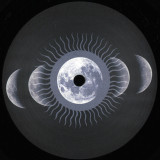
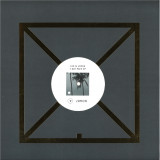
RNT drops their fourth installment of the beloved compilation series Family Affair with a diverse offering of vibes, and adds some fresh new faces to their ever expanding roster of artists. On the A side an Afro-electro secret weapon from label co-head JKriv’s DJ set is released into the wild, and German legend Vincenzo delivers a tune that harkens back to the lush deep house of his early 2000s glory era. The 3 songs of the B side bring even more variety, from the stomping hypnotic new disco of Ilija Rudman’s ‘Discoteka Parmida,’ to the head - nodding R&B groove of Yasmin’s ‘Real High’ and the modern live-arranged Afrobeat vibe of Arnau Obiols’ ‘Pagan Mambo.’ With ever gorgeous jacket art that is now the signature style of this series, this record is one for both the listening shelf and the bag!
Buscar:the drop
No Static / Automatic top off 2024 with ‘Are Hands Waterproof’ a vinyl EP from sci-fi electro futurist Second Storey. One of the first artists to release on fabric’s Houndstooth, he’s also released on respected electro labels Trust, Mechatronica and Frustrated Funk and is resident at London’s bastion of underground-grade techno and electro - Natural Selection. Storey takes his foundational love for electro and blends it with advanced level sound design, dropping 5 new intelligent and effective sound system tracks on this record.
As Odysee celebrates its 30th anniversary, the label’s original founder Atila Kemal (T-Mirage) steps up to deliver this jaw-dropping E.P.
In 1994, Tilla was just 17 years old, and an integral part of the original St Albans collective that comprised Jim Baker & Phil Aslett (Source Direct) and Rupert Parkes (Photek), when he set up the Odysee imprint and released the first Source Direct record (Future London/Shimmer). With a follow-up release from Photek (Phaze 1/Try A Style) and a second from Source Direct, the profile of the label began to grow exponentially.
It was the 3 Mirage releases however that really put the label on the map. These tracks were engineered by Jim Baker but heavily co-produced by Tilla himself with a major focus on his keen ear for dark 70’s Noire samples and eerie abstract electronica pitted against soulful R&B vocals. In hindsight, the impact of this rather different soundscape on the Source Direct material that followed is unmistakable.
The A side track Dark Rhodes is a showcase of T-Mirage’s production skillsets. From the opening atmosphere of utter menace and spacious percussion, to the trademark call and response between the different breaks and speaker shaking subs; this track will take the listener straight back to that infamous dark 1995/6 sound that emerged from both the Odysee & Source Direct studios. What is particularly noticeable is the distinctive pairing of sets of samples to form unique sections within the piece, whilst maintaining the consistent rolling energy of the drums & bass. This was a clear stylistic trait the earlier tracks like Feel My Dreams, and is very much on display in Dark Rhodes; leaving us in no doubt that we are listening to the work of one of the OG St Albans Jungle masters!
One of the most important aspects of each Odysee release was to demonstrate versatility on the B side tunes. As a label that was an important part of the mid 90’s Atmospheric scene, it would be remiss not to revisit that style on this seminal E.P. The first of the two B-side tracks is the incredible Existence.
Everything about this piece is a pure distillation of Tilla’s musical style; from the intricacy of the break work and the depth of the subs, to the masterful dovetailing of the 70’s Noire and Jazz samples that build a cohesive arrangement drawing the listener deeper into the tune’s narrative- “A piece of music that’s just a pure expression.... A celebration of existence!” There is no need to re-invent the wheel, or to force groundbreaking new tricks when the strength of this classic sound is so overwhelmingly persuasive!
With the final track Flawless, Tilla delivers an absolute heart-breaker of a tune that rivals the very best of the original Odysee & SD B-sides. Misty-eyed pads and Jazzy rides launch the crisp rolling Think breaks. The deep melodic sub line and haunting guitar riffs draw the listener in, then hold the listener in suspense for a moment before dropping down in the body of the track. The gorgeous guitar motifs are paired with achingly gorgeous vocal ad-libs and avant-garde electronica, emerging orchestral flutters with that unmistakable 70’s Noire flavour. Once again it is
Tilla’s ear for those ‘special sounds’ that really sets this track apart, and as if that wasn’t enough, some 4 minutes down the track Flawless nonchalantly unveils another primary motif; well worthy in of itself of being the tracks centrepiece!
Absolutely stunning heritage-style Atmospheric Jungle at its finest!
"This is the time that we, who have benefitted from the Last Poets shouldbe able to say, 'it's the Last Poets. It's them we should be honouring, because we did not honour them for so many years_"
KRS One wasn't just addressing the hip hop fraternity when he uttered
those words by way of introducing the video for Invocation - a poem
written thirty years ago, around the time of the Last Poets' last significant comeback. He was speaking to everyone who's been affected by the word, sound and power issuing from the most revolutionary poetry ever witnessed, and that the Last Poets had introduced to the world outside of Harlem at the dawn of the seventies.
In 2018 the two remaining Last Poets, Abiodun Oyewole and Umar Bin
Hassan, embarked on another memorable return with an album -
Understand What Black Is - that earned favourable comparison with theirseminal works of the past, whilst showcasing their undimmed passion andlyrical brilliance in an entirely new setting - that of reggae music. Trackslike Rain Of Terror ("America is a terrorist") and How Many Bullets demonstrated that they'd lost none of their fire or anger, and their essential raison d'etre remained the same.
"The Last Poets' mission was to pull the people out of the rubble o f their lives," wrote their biographer Kim Green. "They knew, deep down that poetry could save the people - that if black people could see and hear themselves and their struggles through the spoken word, they would be moved to change."
Several years later and the follow-up is now with us. The project started when Tony Allen, the Nigerian master drummer whose unique polyrhythms had driven much of Fela Kuti's best work, dropped by Prince Fatty's Brighton studio and laid down a selection of drum patterns to die for. That was back in 2019, but then the pandemic struck. Once it had passed, the label booked a studio in Brooklyn, where the two Poets voiced four tracks apiece and breathed fresh energy, fire and outrage into some of the most enduring landmarks of their career. Abiodun, who was one of the original Last Poets who'd gathered in East Harlem's Mount Morris Park to celebrate Malcolm X's birthday in May 1968, chose four poems that first appeared on the group's 1970 debut album, called simply The Last Poets. He'd written When The Revolution Comes aged twenty, whilst living in Jamaica, Queens. "We were getting ready for a revolution," he told Green. "There wasn't any question about whether there was going to be one or not. The truth was many of us still saw ourselves as "niggers" and slaves. This was a mindset that had to change if there was ever to be Black Power." He and writer Amiri Baraka were deep in conversation one day when Baraka became distracted by a pretty girl walking by. "You're a gash man," Abiodun told him. The poem inspired by that incident, Gash Man, is revisited on the new album, and exposes the heartless nature of sexual acts shorn of intimacy or affection. "Instead of the vagina being the entrance to heaven," he says, "it too often becomes a gash, an injury, a wound_" Two Little Boys meanwhile, was inspired after seeing two young boys aged around 11 or 12 "stuffing chicken and cornbread down their tasteless mouths, trying to revive shrinking lungs and a wasted mind." They'd walked into Sylvia's soul food restaurant in Harlem, ordered big meals, then bolted them down and run out the door. No one chased after them, knowing that they probably hadn't eaten in days. Fifty years later and children are still going hungry in major cities across America and elsewhere. Abiodun's poem hasn't lost any relevance at all, and neither has New York, New York, The Big Apple. "Although this was written in 1968, New York hasn't changed a bit," he admits, except "today, people just mistake her sickness for fashion." Umar is originally from Akron, Ohio, but had arrived in Harlem in early 1969 after seeing Abiodun and the other Last Poets at a Black Arts Festival in Cleveland. That's where he first witnessed what Amiri Baraka once called "the rhythmic animation of word, poem, image as word- music" - a creative force that redefined the concept of performance poetry and stripped it bare until it became a howl of rage, hurt and anger, saved from destruction by mockery and love for humanity. When Umar's father, who was a musician, was jailed for armed robbery he took to the streets from an early age where he shined shoes and raised whatever money he could to help feed his eight brothers and sisters. By the time he saw the Last Poets he'd joined the Black United Front and was ready to join the struggle. Once in Harlem, Abiodun asked him what he'd learnt in the few weeks since he'd got there. "Niggers are scared of revolution," Umar replied. "Write it down" urged Abiodun. That poem still gives off searing heat more than fifty years later. In Umar's own words, "it became a prayer, a call to arms, a spiritual pond to bathe and cleanse in because niggers are not just vile and disgusting and shiftless. Niggers are human beings lost in someone else's system of values and morals." And there you have it. It's not just race or religion that hold us back, but an economic system that keeps millions in poverty and living in fear - a system born from political choice and that's now become so entrenched, so bloated on its own success that it's put mankind in mortal danger. It was many black people's acceptance of the status quo that inspired Just Because, which like Niggers Are Scared Of Revolution, was included on that seminal first album. Along with their revolutionary rhetoric, it was the Last Poets' use of the "n word" that proved so shocking, but it would be wrong to suggest that they reclaimed it, since it never belonged to black people in the first place. There's never any hiding place when it comes to the Last Poets. They use words like weapons, and that force all who listen to decide who they are and where they stand. Umar's two remaining tracks find him revisiting poems first unleashed on the Poets' second album This Is Madness! Abiodun had left for North Carolina by then where he became more deeply enmeshed in revolutionary activities and spent almost four years in jail for armed robbery after attempting to seize funds related to the Klu Klux Klan. Meanwhile, the 21 year old Umar was squatting in Brooklyn and had developed close ties with the Dar-ul Islam Movement. A longing for purity and time-honoured spiritual values underpins Related to What, whilst This Is Madness is a call for freedom "by any means necessary," and that paints a feverish landscape peopled by prominent black leaders but that quickly descends into chaos. "All my dreams have been turned into psychedelic nightmares," he wails, over a groove now powered by Tony Allen's ferocious drumming. Those sessions lasted just two days, and we can only imagine the atmosphere in that room as the hip hop godfathers exchanged the conga drums of Harlem for the explosive sounds of authentic Afrobeat. Once they'd finished, the recordings and momentum returned to Prince Fatty's studio, since relocated from Brighton to SE London. This was stage three of the project, and who better to fill out the rhythm tracks than two key musicians from Seun Anikulapo Kuti's band Egypt 80? Enter guitarist Akinola Adio Oyebola and bassist Kunle Justice, who upon hearing Allen's trademark grooves exclaimed, "oh, the Father_ we are home!" Such joy and enthusiasm resulted in the perfect fusion of Nigerian Afrobeat and revolutionary poetry, but the vision for the album wasn't yet complete. He wanted to create a new kind of soundscape - one that reunited the Poets with the progressive jazz movement they'd once shared with musicians like Sun Ra and Pharoah Sanders. It was at that point they recruited exciting jazz talents based in the UK like Joe Armon Jones from Mercury Prize winners Ezra Collective, also widely acclaimed producer/remixer and keyboard player Kaidi Tatham, who's been likened to Herbie Hancock, and British jazz legend Courtney Pine, whose genius on the saxophone and influence on the UK's now vibrant jazz scene is beyond question. The instrumental tracks on Africanism are in many ways as revelatory and exciting as the Last Poets' own. It's important to remember that the kaleidoscope of styles and influences we're presented with here aren't the result of sampling but were played "live" by musicians responding to sounds made by other musicians. That's where the magic comes from, aided by Prince Fatty's peerless mixing which allows us to hear everything with such clarity. Music fans today have grown accustomed to listening to all kinds of different genres. Their tastes have never been so broad or all- encompassing, and so the music on this new Last Poets' album is as groundbreaking as their lyrics, and perfectly suited to the era that we're now living in. John Masouri

- 1: Peach Blossom Paradise
- 2: Demon Cicadas In The Night
- 3: The Cold Curve
- 4: Saying Yes To Everything
- 5: Lighthouse
- 6: Revisionist Mystery
- 7: The Meander
- 8: The Wheel Of Persuasion
- 9: Another Tomorrow
- 10: Common Exotic
Prairiewolf make easy listening music for an age of fracture. They almost do it in spite of themselves. No one can seriously question the head music bona fides of the members of this Colorado-based trio.
Guitarist Stefan Beck has already assembled a formidable discography of jewel-toned guitar zone-outs under his Golden Brown moniker. And keyboardist and guitarist Jeremy Erwin and bassist Tyler Wilcox have both made their reputations as chroniclers of the vast world of out-music. Erwin helms the indispensable Heat Warps blog, a performance-by-performance archive of Miles Davis’s labyrinthine electric period. And Wilcox has been covering the ragged edges of psychedelia and experimental rock at Aquarium Drunkard and other publications, not to mention his own virtual basement for heads, the great bootleg blog Doom and Gloom from the Tomb.
These guys come by it honestly. And yet, given their backgrounds, Prairiewolf’s self-titled debut last spring was remarkably free of face-melters, brown acid blowouts, and ascendant spiritual jazz odysseys. Instead, they dropped a record of beautiful, elegant, low-key cosmic groovers that sounded like the piped-in background music to a resort hotel on Jupiter. It was an unlikely psychedelia, brocaded with mid-twentieth century sonic threading from the hi-fi era: vintage synthesizers, smears of spaghetti western, luxe tropical details, the faint schmaltz of space age pop. Imagine something like a Harmonia residency in the airport lounge. And yet somehow it all worked brilliantly. Prairiewolf became last summer’s cool-down standard. After a year woodshedding around Colorado’s Front Range region, the Prairiewolf boys have fired up their trusty Korg SR-120 drum machine for another outstanding collection of suborbital exotica. The appropriately titled Deep Time operates in its own chronology, unspooling at its unhurried pace. All its incongruous period and stylistic references—the new age pulses, Hawaiian steel, shaggy hippie rambles, lysergic guitar spirals, and orchestral synthesizer flourishes—float atop the album’s own singular temporality. Deep Time makes its own time.
From the moment Beck folds his slide guitar, origami-like, into a sound resembling the call of gulls on the tranquil album opener, “Peach Blossom Paradise,” there is a sense of departure from everyday life. The shimmering “Lighthouse” has a similar sunbaked nonchalance, like an afternoon passed day-drinking in a seaside bar. That they named their lush, kaleidoscopic downtempo track “The Meander” pretty much says it all. The ranging, propulsive “Saying Yes to Everything” seems like a nod in the direction of Rose City Band’s brand of wookie krautrock. And the motorik noir of “Demon Cicadas in the Night” also goes hard. Beck and Erwin’s intertwined guitar jam on the eerie album standout “The Cold Curve” evolves into something that sounds like primitive computer music. A genteel bassline from Wilcox on another album highlight, “Revisionist Mystery,” sets the stage for a loopy space jazz turn from guest clarinettist Matt Loewen of Rayonism. The title of post-rock cowboy tune “Another Tomorrow” might refer to the alternative future that so many critics heard in the music of Prairiewolf’s first album. Or it might simply refer to the persistence of time, however deep. Either way,
I’m thankful for the way Prairiewolf make each of their tunes a little oasis or sanctuary, each subsisting according to its own crystalline little logic for a few minutes. It is no simple task to filter out the omnipresent anger and anxiety of everyday life these days. But Prairiewolf are out here making it seem easy.
Brent S. Sirota
- A1: International Girl's Not Here
- A2: The Crescents
- A3: From Behind Bandages
- A4: Don't Remember Leaving
- A5: The Night I Was A Booby Prize
- B1: Arturo's Attitude
- B2: And Then The Walls Fell
- B3: Compulsion
- B4: Live From Rotten Towers
- B5: Still My World
RSD 2024
First time ever release on vinyl format. 180 GRAM BLACK VINYL. After The Sabres of Paradise split in 1995 Andrew Weatherall underwent one of many reinventions. He began working with Keith Tenniswood as Two Lone Swordsmen which released several records on the Warp label, set up a new electronic imprint under the Rotters Golf Club banner and fully explored new DJ personas departing from his house-based sets into dub, electronica and rockabilly. Renowned for unconventional sets where he’d raise the roof dropping an unexpected but exactly right track into the mix, he’d push the audience to new heights by introducing them to music they’d never even thought of exploring. The experiments went down especially well in Japan where he’d tour playing solo sets as well as performing alongside pioneers like Underworld, Adrian Sherwood and The Orb. In 2003 his new label, Rotters Golf Club, was approached by the Italian fashion house Emigliano Zegna to create some music to help launch their first foray into Japan. Andrew always had a keen eye for quality and agreed to provide some music. At the time it wasn’t envisaged as an album. He’d just grabbed some tracks he and Keith had been working on, polished them up and swapped them for a small advance and a large raid on their Bond Street store. He then let them get on with the release and turned his attention to the next TLS album proper. This was Double Gone Chapel where rock and psychobilly were mixed in with electronica and controversially Andrew added his own vocals. The Zegna album ‘Still My World’ was sidelined by a live band and a whole new direction. Andrew’s untimely death refocused attention on his historical recordings and ‘Still My World’, previously only released on CD in Japan, now sees the light of day in the rest of the world.
- 1: More Fun
- 2: T.p.b.r. Combo
- 3: 455 Sd
- 4: Do The Movin' Change
- 5: I 94 6. Iskender Time
- 7: Burn My Eye '8
- 8: Time To Fall
- 9: Smith And Wesson Blues
- 10: Crying Sun
- 11: Breaks My Heart
- 12: Alone In The Endzone
- 13: Hanging On
Coloured[32,56 €]
**AVAILABLE ON VERY LIMITED CLEAR PURPLE VINYL / 100 COPIES ONLY** - This is the 1995 remix version of the album - Never before released on vinyl - Remastered and cut to lacquer - Same front cover as the original though the back has been altered - The inner sleeve contains liner notes explaining the genesis of the remix - FFO: MC5, The Stooges, The Saints Living Eyes was recorded at Rockfield Studios in Wales during a break in the band’s 1978 tour of Britain and Europe. Relations between members were falling apart and Sire had dropped the band prior to the start of recording. Their breakup soon followed. Initial releases of the album were cut from a tape dub of trial mixes as the band never received an official master. In 1994 the original tapes were retrieved from Rockfield and remixed in Australia for a CD only release. This is the first time the remix version has been released on vinyl. It has been remaster and cut to lacquer.
Bass music OG Jeremy Sylvester returns to Shall Not Fade sister label Time Is Now for his second full EP on the label.
Jeremy again shows on The Lights EP why is highly regarded as one of the OG's of bass music, having been a producer of non stop consistent releases for the last 20+ years. The Lights EP has everything from dreamy synths, bass warpers, choppy breaks and infectious vocals, all merging together to create a truly unique take on bass music. All topped off with a weighty remix from artist of the moment Soul Mass Transit System on the B-SIDE. BIG TIP!
The Lights EP drops December 6th via Time Is Now.
Meltface returns in “Melt In Unison,” another high-octane action comedy erotic thriller with four jaw-dropping scenes soundtracked by Rhyw. “Drool” is an underwater mutant-octopus romance that will change how you feel about tentacles forever. "Calippo" is a jungle romp that's part Apocalypse Now!, part Tropic Thunder, part Lethal Weapon 4, all white-knuckle intensity. “Greetings” is actually the intro but, for some reason appears as the third track.... don't worry about that. Main thing is it will rewire your DNA and change every fibre of your being in such a way that you'll actually pity the person you were in all the years you lived before you heard this track. This rollercoaster ride of thrills and chills ends with a bang: a face-off against the final boss, he whose name is said only in terrified whispers when it is said at all, the horrifying, twisted, slime/goo-coated final boss... “Lavalantula."
Some other stuff you should know about this record: this is the first time our guy Rhyw sang on his own music (initially), but then chopped up and pitched syllables from acapellas to match the recordings instead, if that makes sense. His actual voice features on the other three. Also two of the tracks came from his live set in case you care about that.
Rose Noir’s first beat tape, originally released on Daddy Kev’s label Alpha Pup, made a strong impression.
Alpha Pup has a history of groundbreaking releases, featuring key artists like Flying Lotus and Ras G, who helped shape the LA beat scene. Now, Rose Noir is dropping a very limited 7” record featuring the best beats from Beat Tape 01.
These are in short supply, so grab one while you can.
Pressed in a limited edition of 220 copies by Beastqueeze Records.1
Cameron Jack returns to Crosstown Rebels as he delivers his first EP on the label with ‘The Late Shift’. The release, set to drop on 6th December 2024, delivers a standout offering featuring two collaborations with vocalist Liz Cass and two solo productions from the fast-rising house music talent.
London-born, Ibiza-based DJ/producer Cameron Jack has quickly become a name on the up, having been championed heavily by Crosstown Rebels’ founder Damian Lazarus, as well Blond:ish and Lee Burridge. While still young in his musical journey, 2024 has seen him sharing stages with heavyweights such as Seth Troxler, Jamie Jones and DJ Tennis. His five-show residency at Hï Ibiza coupled with appearances at Extrema Outdoor, PHAEX Festival, Get Lost Mexico and Fabric London as well as an upcoming Asia tour to round off the year, has cemented his rise as one house music’s most in-demand up-and-comers. Having previously appeared on the label as part of Crosstown’s SPIRITS VA series, and adding to releases via Knee Deep In Sound, Abracadabra Music, and All Day I Dream, Cameron now returns to Lazarus’ brainchild with his first EP on the label as he unveils a refined exploration of his late-hours sound with ‘The Late Shift’.
The EP kicks off with two collaborations featuring singer/songwriter Liz Cass, whose vocal talents have graced tracks from Hot Since 82 to Nora En Pure. The opening track, ‘Dusk Till Dawn,’ pairs deep, rolling grooves with Liz's seductive spoken word vocals, setting the tone for the late-night atmospheres that define the release. ‘Move Your Body’ follows, with driving rhythms and infectious energy, inviting listeners to get lost in dancefloor moments. On the flip side, Cameron showcases his prowess further with ‘Get High And Dance’, bringing a captivating fusion of rolling percussion grooves and playful tones, before ‘Won’t You?’ rounds out the EP with another drum-led workout perfect for keeping dancers in motion.
James Johnson Jr AKA Kukri is one exceptionally talented electronic music producer, composer and DJ known across the world for his hard as nails techno sound. His calm demeanour belies the massive amounts of energy he creates in his highly technical DJ sets and from within the ethereal beauty of his live performances, with many top-flight DJs swearing by his output, dropping his tracks relentlessly throughout their sets.
Continuing with the ‘Limited As Fuck’ series of releases, on our fiercely independent techno label based in Scotland, we’ve got on our heavy duty high explosive under pants for this relentless detonator of a release comin’ at you all the way from across the pond in Ohio, USA. There’s more ruthless techno dynamite in this one release than if you strapped twelvty grenades to a set of decks and pulled all the pins out simultaneously, the roofs are all gonna blow off wherever this one goes KABOOM in clubland. And along-with the three original blast shattering tracks, Lee Holman, making his RIOT Radio Records debut, is on remix shenanigans for the fourth with an aggressively merciless Detroit infused mangling to ignite the crowds even further.
The full digital release also features the original version of ‘Detection’ which Lee Holman accepted an unceasingly intense RIOTous mission to reconstruct.
WARNING: AFTER DETONATION THE RIOT SENTINEL SHALL APPEAR
Eurorack tweaker, 8-bit master, king of carnival madness, Dutch producer Solo moderna is back with his female alter ego singer Krage, for some 80s flavored, chiptune infused, electro-latin bangers. Unofficial Electo-Funk anthems? Sweaty remakes from outta space? who knows.. the only unquestionable thing here is that loads of fun await the crowd when dropping this tasty 7” on the turntable. Certainly not your average tropical music, though.
This double sider stands as a foretaste for the album release in May 2024, that will unite this pair in a perfect fusion of Afro-Latin rhythms and modern synth pop.
Who is Isabelle Lewis, anyway?
What kind of music does she make? Is she an opera singer? Does she write pop songs? Does she compose ethereal ambient soundscapes? Does she play chamber music on the violin? Is she producing dark, electronic beats?
Well… yes. But Isabelle Lewis is not so much a person as a project. Isabelle’s debut album, Greetings, credits a trio of composer–performers at its heart: producer Valgeir Sigurðsson, vocalist Benjamin Abel Meirhaeghe, and violinist Elisabeth Klinck. The sound of the elusive Isabelle Lewis is heard most clearly in the push and pull between them, the three-way tension that gives the album its musical and emotional drive.
Each of the three brings more to the collaboration than those epithets might imply. Elisabeth’s solo performance practice incorporates composition, improvisation, live electronics, and a close command of bowing and fingering techniques that make her fiddle sing, whisper or whistle as required. Benjamin is a self-taught countertenor - keening, crooning, and swelling to a voluptuous sensuality—but also an interdisciplinary stage director and performer. Well known for his work as a producer and studio collaborator, and as a composer of scores for film and stage, Valgeir’s solo discography interweaves meticulously crafted electronics, drones, noise, and other digital elements with acoustic instruments and vocals recorded with naked, unflinching clarity.
But the extravagant theatricality Benjamin brings to the aptly titled “Drama”—also featuring a heroic violin solo from Elisabeth—grapples against the thudding bass of the implacable digital backdrop. On “Mother, Shelter Me” Valgeir’s austere and detailed production throws the hushed violin and vocals into stark relief. The result is an exquisitely uncanny juxtaposition of past and present, human and mechanical, like a Rococo treasure viewed under cold fluorescent lights, or an 18th-century automaton slowly opening its clockwork eyes.
Even the lyrics seem somehow out of time. On “O Solitude,” Benjamin goes so far as to quote an entire song by the first great English opera composer, Henry Purcell, verbatim. No stranger to Purcell’s music, which has made its way into Benjamin’s theatrical productions as well, here Isabelle Lewis removes Purcell’s melodies and harmonies and sets the text, Katherine Phillips’s 17th century translation of a poem by Antoine Girard de Saint-Amant, to new music whose heightened, archaic character nevertheless seems haunted by Baroque ghosts.
Throughout the album, the outsized emotions and timeless archetypes of Benjamin’s lyrics feel like relics from some half-forgotten past—from the neatly rhymed couplets of “Fisherman,” a seemingly straightforward (but still somewhat askew) character study, to the abstraction of “Moonshell,” whose words seem like the fragments of some ancient, lost lament. It is just another of many ways in which Isabelle Lewis carefully distorts the listener’s notions of time. On a more micro level, time can stop for a moment of weightless, drifting ambience, and then plunge forward as the cloud of harmonies suddenly lock into tempo with the drop of the bass or the change of a chord. Or else that weightless moment is allowed to be, as in the aptly named prologue and epilogue to these Greetings (“Voicemail”/“…and farewell”), or in the interstitial tracks that bind the album together, connecting its dramatic peaks with expanses of meditative stasis.
The album as a whole is elegantly shaped, swelling from an intimate, interpersonal statement into something deeper and more spacious. The first half of the album leans slightly towards self-contained pop songcraft and ticking beats, while side B jumps off from “O Solitude” into the almost symphonic grandeur of songs like “Moonshell” or the instrumental “Not the water, air, or the dirt.”
But as it progresses, the contrasts only grow more sublime: antique and postmodern, human and machinelike. The ominous weight of the droning sub-bass and trombone (guest player Helgi Hrafn Jónsson) only makes the interplay between vocals and violins (guest player Daniel Pioro joining Elisabeth) seem more delicate and vulnerable. The ethereal string tremolos of “Moonshell” seem to pull against the heavy, shuddering electronics and layers of crooning vocals.
And that, in short, is where you will find Isabelle Lewis. Like an ancient stone archway, or a delicate house of cards, the architecture of Greetings is held together by the tension between opposing forces. Not just in Elisabeth’s playing, Benjamin’s singing, or Valgeir’s arrangements and production but in the conflict and contrast that generates the synergy between them.
Oh—Isabelle says hi, by the way. She’s looking forward to meeting you.
Lex first grabbed our attention following his brilliant release on B2 Recordings which became a staple vibe setter in Jimpster’s DJ sets and Sofa Sessions streams in 2021. Gaining his deep musical knowledge through his own revered record store Radical Soundz, the Greek DJ and producer has been immersed in dance music for over 20 years and considered one of the key figures in the Athens underground house scene. With releases and remixes on labels such as Leng, Samosa, King Street and Black Riot, Lex is making waves internationally with a unique sound that fuses live elements and expansive arrangements taking influence from masters such as Ron Trent but adding a warm, cosmic glow. Fellow Greek artist Locke joins pro- ceedings for this EP bringing his own psychedelic sound garnered from his years playing crazy events taking in South American jungle parties, burning hot African desert raves, the underground clubs of Berlin to the sparkling coastal shores of Baja California. Locke is more than just a DJ. He is a connector, educator and traveler whose soulful music has the crowds chasing the sun as he brings love and celebra- tion to the events he plays.
On title track 7 Day Path we’re treated to a beautiful spacious jam which unfolds across 7 minutes, driving, live percussion keeping the energy high whilst Herbie- esque synth leads help to create a beautifully paced and dynamic arrangement.
Next up we have Italian legend DJ Rocca onboard for a remix of 7 Day Path. The prolific producer and DJ has been a tour de force since the late 90’s collaborating with the likes of Howie B, Dimitri From Paris, Chris Coco, Daniele Baldelli and Jazzanova producing singles, remixes and albums for labels such as Sonar Kollekt- iv, Compost, Classic, Rekids, Futureboogie, !K7, Tirk, International Feel, Defected, Rotters Golf Club and Faze Action Recordings. Here he adds his trademark dubby disco wiggle pushing the original in a jazzy direction with live flute. Definitely one to be heard under the stars on a Croatian beach for maximum Adriatica effect!
Flipping over, things head deeper and darker with See No Ball featuring Locomot- ives, a more straight-up heads-down stripped back club jam with a repeated vocal, funky guitar chops and a smattering of improvised synth and Hammond B3 keeping things jazzy and musical.
Closing out this brilliant EP we have Catch Up With The Sun which drops the BPM’s for a low-slung cosmic jam loaded with good vibes.
For Moxy Muzik’s 6th birthday, we’re excited to present Moxy Editions 008—a collection of tracks that perfectly encapsulates the label’s signature sound.
The first track comes from none other than Detroit techno pioneer Stacey Pullen. Darius Syrossian, Moxy's founder, has been a fan of Stacey since the '90s, and this track captures the essence of Moxy’s vibe: techno energy infused with disco and house influences. This track was a peak-time staple in Darius’s sets all summer, igniting dance floors from DC10 and Amnesia to festivals across the UK and Europe. The buzz is palpable, with daily requests flooding in for the track ID whenever a clip surfaces on Darius’s social media.
Next, Darius brings his own twist to Audiojack’s “Get Down,” capturing the spirit of DC10’s late 2000s terrace sound. Tribal percussion, a deep groove, and a massive drop make this remix a dance floor weapon. Videos of this track’s electric energy have surfaced from epic nights at KOKO London, Space Miami, and Solid Grooves DC10, showcasing its undeniable impact.
Kicking off the B side Vincent Caira contributes a refined US house and garage track that’s bound to resonate with purist house heads. This sophisticated production by the Canadian producer is as smooth as it is engaging—a true gem for those who appreciate the finer details of house music.
Rounding out the release is a track by Buckley, the legendary Back to Basics DJ from Leeds. This one’s a tribute to the old-school Todd Terry sound, perfect for fans of classic, raw house beats. If you’re into that vibe, this track is sure to hit the mark.
This collection brings together iconic artists and authentic sounds that will resonate with Moxy’s long-time fans and newcomers alike. Enjoy the journey!
This one is highly recommended for fans of Khruangbin, Lord Echo, Leon Bridges or Fat Freddy's Drop.
Open is the sixth studio album from acclaimed composer, producer, filmmaker and multi-instrumentalist, Kutiman. It is an addictive & irresistible twelve-track trip taking in elements of classic soul, Middle Eastern psychedelia, Afrobeat, Thai funk, jazz fusion, cosmic library soundscapes and more.
The uptempo “Vanishing Point” opens proceedings, recalling both Abstract Orchestra’s 2017 Dilla tribute and the lounge OST/library music flips of Tosca and DJ Vadim fame.
My Everything introduces prominent guest & frequent Kutiman collaborator, Dekel, whose soul-pop vocals coupled with jangly acoustic guitar riffs tip to contemporary indie artists such as Michael Kiwanuka and SAULT. “A Day Off passes through” Anatolian psych and Khruangbin-esque Thai funk whilst the afrobeat/jazz fusion “Confetti” pays tribute to Kutiman’s other namesake, Fela Kuti.
Dekel rejoins for the beatdown, lilting dub-soul “Believe In You” with hints of Lord Echo and the sun-inflected New Zealand dub-soul sound. The Tuareg-leaning guitar lines on “Canoe” travel across the Saharan desert easterly towards Sudan and Ethiopia by the end, whilst meditative and Coltrane-adjacent album closer “Ripples” provides a final moment of reflection from a truly global excursion of soundscapes.
Formed in 2019, Lawne is the result of a meeting of minds between old friends and self confessed music nerds Joe Nicklin and Joe Martin. Their sound draws upon myriad influences with dub, electronics, hip hop, psych, jazz, post-punk and Afrobeat all somehow ingrained within the mix.
It's something that evolved during at a time of change for both of them, as Joe Nicklin explains:
"The start of this project coincided with me moving onto a canal boat, which was a hugely rewarding time of my life but not without its challenges. You can hear some of my boating vents coming through in the lyrics of Beta Pan and Ame Tova.
Another challenge during this time was trying to figure out a way of still playing and recording drums that wasn't going to break the bank. I decided to start renting a tiny storage space near Caledonian Road in North London, that I would convert into a makeshift studio and soon learned that corrugated iron sheets aren't the best walls for a drum booth. My friend cut me some curtains and a few egg boxes later we were able to insulate the thing, sort of.
These limitations meant that we had to keep recordings pretty simple and I feel like this set the tone for the whole record. Whether it was digging out my childhood bass guitar for Joe to play, squeezing every last drop out of Logic presets or mumbling into a SM57 for the first time, we made do with what we had and I'm proud of the charming thing we were able to create. I felt like I was learning on the job at times for this album and I'm grateful for what it has taught me, whilst being excited for what we can do next. As I was moving off the water and out of my lockup, the album masters were also starting to trickle through. A fitting close to that chapter of my life and the making of our first album."
Joe Martin reflects more on how their unique sound came about:
"It's interesting thinking back to the sound we were exploring when we first started writing together, and how different much of the record is to that original sound. We didn't set out a clear musical direction and that meant we were rarely constrained stylistically, we could shift between genres and feels and grooves, take inspiration from the new and the old and it still sat comfortably with what we were trying to do. I think the eight tracks we landed on illustrates that nicely.
The record's named after the self storage unit we used as a studio for many years, there's something quite poetic about parting ways with the space within weeks of the album coming out; a final homage to the place it all started."