With a world in ruins, there comes a new sun. This is the evolution which "TAL" is all about. Intense and relentless, "TAL" is an immersive experience through sonic landscapes and contrasting atmospheres. On its third full length, GLARE OF THE SUN combine orchestral layers with heavy guitars and vocals, creating an emotional listening experience with lots of dynamics and details to discover. Guest vocals are provided by J.J. (Harakiri For The Sky, Karg) and Maffi (Collapse7, ex-Pungent Stench).
Поиск:the dynamics
Все
Reissue
'Find Me Finding You', the new album from the new organization called the Laetitia Sadier Source Ensemble, manages to strike new chords while touching familiar keys in the song of life.
From its percolating opening beat, 'Find Me Finding You' locates new systems within the sound-universe of Laetitia Sadier. This in itself isn't a surprise - Laetitia has relentlessly followed her music through different dynamics and into a variety of dimensions over the course of four solo albums since 2010 (not to forget her three albums with Monade and the long era of Stereolab) - but the nature of the construction here stands distinctly apart from her recent albums. Laetitia was inspired by a mind's-eye envisaging of geometric forms and their possible permutations. As she sought to replicate the shapes in music, this guided the process of assembly for the album.
Part of the freshness of 'Find Me Finding You' comes from working and playing within the Source Ensemble and exploring new sound combinations via a set of youthful and evolving musical relationships. Laetitia recognized the energy of the tracks in their initial form and sought to preserve their vitality by not retaking too many performances - instead, the rawness in the tracks was retained and refined at the mixing stage, maintaining an edge throughout. When we hear synth lines diving, lifting and drifting, unusual guitar textures, the plucked sound of flat wound bass strings or the bottomless pulsing of bass pedals stepping out of the mix with an exquisite vibrancy, this is the sound of the Source Ensemble.
A key to Laetitia's music is her use of vocal arrangements. Throughout 'Finding Me Finding You' the shifting accompaniment creates space to bring this element gloriously forward. Arranged by Laetitia with Joe Watson and Jeff Parker making string charts that were subsequently transposed to vocal parts for several songs, richly arranged choirs of voices provide depth along with the thrilling presence of extra breath in the sound. Laetitia's community-politic is well-served by the groups of voices lending support to the machining of the song craft, providing additional uplift to her quintessentially forward-facing viewpoint - as well as massed voices from three different countries sharing space in harmony.
Working in collaboration is Laetita's tradition and a key to this album's view on being free together. The designation of Source Collective implies a new togetherness phase, alongside long time collaborators Emmanuel Mario and Xavi Munoz, keyboard and flutes parts played by David Thayer (Little Tornados) were essential contributions, as well as further keys, synths and electronics from Phil M FU and several intense guitar sequences from Mason le Long. Chris A Cummings (aka Marker Starling, Laetitia's favourite composer) graciously wrote 'Deep Background' for her. The duet with Hot Chip's Alexis Taylor on 'Love Captive' (not to mention Rob Mazurek's distinctive coronet playing) gives voice to an ideological cornerstone of 'Find Me Finding You'
ELEINE return with their 4th full-length studio ”We Shall Remain” that breathes everything that is ELEINE. Heavy, chuggy riffs that draws your mind to thrash metal, drumming with death metal hints and vocals that empower, lift and move you. "This combined with our melodic choruses and overall dynamics we feel that "We Shall Remain" gives the listener that signature ELEINE sound in a new and fresh format. Allow yourself to experience ELEINE, allow yourself to join the Eleine Legion", comment Madeleine Liljestam & Rikard Ekberg. This brand new re-pressing comes with a beautiful orange-red opaque-black marbled vinyl!
An All-Time Jazz Audiophile Masterpiece - Now on UHQR!
200-gram 45 RPM 2LP release limited to 5,000 copies
Mastered by Kevin Gray at Cohearent Audio from the original analogue tapes
Set includes 8-page booklet with liner notes by renowned jazz critic Bob Blumenthal
Pressed on Clarity Vinyl at Quality Record Pressings
Purest possible pressing and most visually stunning presentation and packaging!
One of the most classic jazz albums and live recordings, a regular on most best-of jazz lists!
The fourth and final album by one of the most influential groups in jazz history, the Bill Evans Trio album Waltz For Debby was originally released in 1962 as a companion to Sunday At The Village Vanguard. It captures the mesmerizing and intimate live performances of Evans and his trio at the Village Vanguard in New York City. The album showcases Evans' unique approach to jazz piano, characterized by delicate touch, introspective improvisation, and profound musicality.
The title track, "Waltz for Debby," serves as the centrepiece of the album. It is a hauntingly beautiful composition penned by Evans himself as a tribute to his niece, Debby. The waltz unfolds with a graceful and melancholic melody, carried by Evans' masterful piano playing.
Throughout the album, Evans and his trio venture into other classic jazz standards, including "My Foolish Heart," "Detour Ahead," and "Milestones." With each performance, they delve deep into the heart of the music, exploring its nuances and improvising with a profound sense of lyricism. Evans' introspective style shines through, as he delicately navigates the harmonies, unveiling layers of emotion and introspection.
The beauty of "Waltz for Debby" lies not only in the musicianship but also in the intimate atmosphere it creates. The live recording captures the ambiance of the Village Vanguard, with the audience's presence adding an extra dimension to the music. The subtle clinks of glasses, the occasional applause, and the hushed whispers become a part of the experience, enhancing the authenticity and charm of the album.
Now Analogue Productions, the audiophile in-house reissue label of Acoustic Sounds, Inc., together with Quality Record Pressings, is creating the definitive Waltz For Debby reissue: the Ultra High Quality Record (UHQR) pressed on Clarity Vinyl with attention paid to every single detail of this one-of-a-kind reissue.
Four glorious sides of 200-gram Clarity Vinyl from QRP, the world's best pressing plant. Cut at 45 RPM to reduce distortion and high frequency loss as the wider-spaced grooves let your stereo cartridge track more accurately. UHQRs from Analogue Productions are the gold-standard in premium vinyl releases, with attention paid to every single detail. The proprietary vinyl compound enhances the sound quality, offering improved dynamics, detail, and tonal accuracy. The heavier vinyl minimizes resonance and warping, providing a stable and flat playing surface. And great care is taken to eliminate any surface noise or imperfections throughout the manufacturing process.
Overall, UHQR Clarity Vinyl from Analogue Productions is a sought-after format among audiophiles and collectors who value the highest possible audio fidelity from their vinyl records.
Waltz for Debby stands as a testament to Bill Evans' genius as a pianist and composer. It is a profound and evocative exploration of melody, harmony, and improvisation, revealing the depths of emotion and the artistry that Evans brought to his music. The album remains a beloved gem in the jazz canon, cherished by fans and musicians alike for its timeless beauty and the lasting impact it has had on the genre.
Rising UK label Human Worth proudly present TORPOR's third full length album Abscission. A fine tapestry of sludge metal, lumbering doom riffs, forward thinking post-rock dynamics, cerebral drone passages, ambient textures and stark spoken poetry. Recorded by producer Wayne Adams (whose credits include Wallowing, Green Lung, Possessor and more), 'Abscission' is a paean to earth shattering tones, subtle detailed textures, immersive sound design and most importantly... ABSOLUTELY CRUSHING HEAVINESS. For their third album, TORPOR were compelled to withdraw into the bleak and elemental vistas of rural Wales, embracing isolation and solitude in order to craft this autumnal sonic landscape. The trio brought producer and frequent collaborator Wayne Adams (Petbrick, Big Lad) out of his London city studio to work at Giant Wafer Studios.
TORPOR's excursions into the wilderness can really be felt across these lengthy songs. Bludgeoning riffs show a new found density and weight reminiscent of gallant trees standing tall amongst battering wind and rain. All of this sonic magnitude has been finely captured by Adams, with the final master by James Plotkin (Khanate) completing this all-encompassing experience – quite fittingly the trio were also invited to showcase the album in full at the 2023 Roadburn Festival, on the day that Khanate headlined! Abscission is the sound of Torpor fully realising their visceral and cinematic vision, turning an unflinching gaze towards the unrealised lives we all carry with us. Human Worth have pressed a limited edition of environmentally conscious Eco-Mix Vinyl in a stunning packaged designed by Jack Burley, featuring a 12" foldout insert, with 10% of all proceeds donated to charity Second Step – a leading mental health charity in Bristol and the South West.
Søren Skov Orbit's debut album, "Adrift," is at once subtle and profound. The saxophonist and his collaborators have created something quite special and consistently deep. This record may not easily be classifiable, but the most interesting music creeps between the lines
Danish tenor and soprano saxophonist Søren Skov (Debre Damo Dining Orchestra) and keyboardist Peder Vind co-founded the trippy quintet Søren Skov Orbit in 2016 to explore “more jazzy ideas,” as the saxophonist puts it. Joined by a rhythm section steeped in contemporary improvisation and psychedelia, bassist Casper Nyvang Rask, drummer Rune Lohse and percussionist Ayi Solomon of the legendary 80's Ghanaian roots/highlife band Classique Vibes, the Orbit belts out a richly focused helping of broadly African-inspired modern jazz with a hazy sheen.
On the opening “Notifications of Nothingness,” Skov digs in his heels, a steely but languid unspooling of burnished tenor lines atop condensed, quavering piano and the thick footfalls of bass and percussion. As a tenor player, Skov has done his homework and has a kinship with Albert Ayler, Archie Shepp, J.R. Monterose, and the Dutchman Hans Dulfer, but he clearly has got his own robust phraseology and expressiveness. He also cites multi-reedists John Gilmore, Yusef Lateef, and Bilal Abdurahman as, “some of the players I’ve been listening to the most for the last 10-15 years.”
A healthy dose of reverb is present throughout the album, echoing Alton Abraham’s studio wizardry with the Sun Ra Arkestra or the trance-inducing and compressed fidelity of certain Ethio-jazz and Mystic Revelations of Rastafari sessions. Skov notes that, “everything is recorded live at the same time in the same room. I wanted to do it that way in order to catch the dynamics and authenticity of the music.” There is, in fact, a complex teeter- totter between crisp and hazy execution, achieved by a delicately balanced mix that keeps the group’s sound simultaneously advancing and receding. Vind’s phrasing is terse and introspective, a vibrating echo that nudges and reflects on Skov’s brusque tenor in a dance of sonic displacement.
“Orbiting” pits a chunky backbeat and the teetering, taut hand-rhythms of Solomon against an infectious, almost microtonal piano riff, while Skov’s arpeggios are clean and florid as he patiently rises up from under a carpet of funky loops. Following the freer “Reflections of Rif,” “Naration” lilts with a wink at “Footprints” and tugs between up-tempo polyrhythmic drive, clanging keyboard accents, and the innately steadfast keenness of the bandleader. The coupling of Solomon and Lohse is a big part of the group’s detailed energy; as the leader puts it, “Ayi knows everything about regional differences in drum patterns. He is always listening and super responsive, and his and Rune’s dynamics are amazing.” The music both presents a “vibe” and keeps the door open for engaging well under the surface as repeated listens will be extremely rewarding.
"Following the resonating success of their initial collaboration, the TLF Trio—comprising Danish cellist Cæcilie Trier (CTM), pianist Jakob Littauer, and guitarist Mads Kristian Frøslev—reunites on Latency with electronic music legend Moritz von Oswald for the follow-up to their debut album, 'Sweet Harmony.'
TLF Trio, along with Moritz von Oswald, once again delves into the realm of chamber music, this time with two new songs further exploring the intricate acoustic dynamics of their instruments with electronics. As the second instalment in this musical journey, 'New Songs & Variations' builds upon the minimalistic, sculptural, and narrative qualities of its predecessor, weaving a tapestry of expressive and plural voices.
Moritz von Oswald, a central figure in the electronic music scene since the early '90s, brings his wealth of experience to the project, reinterpreting two of TLF Trio's previous works. From his early days as a classical percussionist to groundbreaking collaborations in the techno sphere, von Oswald's influence has left an indelible mark. His role in co-founding Basic Channel/Rhythm & Sound and contributions to the Berlin-Detroit-Chicago axis have defined various strains of modern music.
'New Songs & Variations' not only captures the rich history and influence of Moritz von Oswald but also showcases his ongoing exploration into classical, experimental, and improvisational contexts. From recomposing Ravel and Mussorgsky’s music for Deutsche Grammophon to acclaimed collaborations with jazz trumpeter Nils Petter Molvær, composer Laurel Halo, or Afrobeat pioneer Tony Allen, von Oswald's versatility continues to evolve.
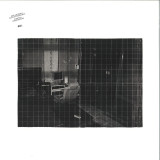
TLF Trio and Moritz von Oswald invite listeners to embark on a sonic journey that bridges the past and the present, mirroring the transformative essence of Louise Lawler's distorted image, which graces its cover—a testament to the delicate fluidity and shape-shifting nature of the music contained within.
Compossed by Moritz von Oswald, Cæcilie Trier, Claus Haxholm (beat on Chrome), Jakob Littauer and Mads Kristian Frøslev.
Mastered by Kassian Troyer at Dubplates & Mastering.
Artwork by Louise Lawler. Formica (adjusted to fit, distorted for the times, slippery slope 2), 2011/2012/2015/2017. Courtesy the artist and Sprüth Magers. As adjusted for Latency.
Legalize Lambada is back and there ain’t no moldy gorgonzola in this Italo homage! Legendary cosmic captain Albion returns to Lambada-land and starts this edit compilation with 'Nucleare', a robotic jam seasoned with Italian vocals which serves as a great intro to the release. Ric Piccolo’s 'Disco teacher' on A2 and 'Alright' on B1 are serious floor fillers, possibly ready to injure part of the Boston dynamics fleet after inducing uncontrollable dance moves. At the end it’s Hysteric’s 'Moment' on B2 that prompts a soulful side of italo for some deep machine learning.
Part 2[9,20 €]
The hypnotic folk music of the Ainu a cappella group Marewrew has received the first of two remix treatments by Pingipung artists. Part 01 is by Andi Otto and M.RUX.
Andi Otto was the curator of the Marewrew album for Pingipung, released earlier in 2024. He selected gems from their archive for the "Ukouk" LP. His remix pays homage to the frenetic vocal dynamics of the round canon Sikata Kuykuy. Beginning with a stubborn piano beat, it's the bass clarinets that sit in sync with the vocals that make this dance track so charming. Bonus fact: they're played by Pingipung co-founder Heiko Gogolin - his first outing on the instrument for his own label.
M.RUX's take on Etukuma Kara is playful and groovy. Many will remember his legendary 2018 remix of Umeko Ando (Iuta Upopo), which marked Pingipung's first involvement with Ainu traditional music from northern Japan. His reworking of Marewrew's vocal music blends elements of various tracks with his own percussion, and the result is nothing short of spectacular.
The two tracks will be released on 7" vinyl.
A record label is arguably the fullest possible expression of an email account; fecund with attachments, download links, and unhealthy power dynamics primed to bloom into lifelong parasitic relationships. And even a cursory glance at the roster of label founders reveals the full spectrum of our potential as a species, from the absolute dregs of humanity to successful touring DJs.
Backed by a used CD billionaire and an angel investment from Major League Baseball's "New Voices in Techno" initiative, Perel's new label Hits Hits Hits! is poised to thrive amid a landscape littered with rivals with names like Sidechain Addict and Heuristics Audio.
And Perel is ready to put her music where her mouth is with "1 Life" the inaugural single in the imprint's catalog. We're well beyond chuffed to say that it's gained early support from promo list veteran Liquid Cory:
"Will the title track make any self-respecting 10-year-old 'Do the Detention Dance'? I've been told my opinions are culturally worthless, that I am the fit arbiter of nothing at all. So I feel grateful that there's also an extended version so I have more time to decide. And the remix by Canadian taste-haver Jex Opolis made me forget that my ex believed a rumour that I had choked to death bobbing for apples. Respect."
Emerging from the shadows and plumes of smoke, Chicago, IL ensemble HUNTSMEN are set to make their return in 2024 with their third album, The Dry Land, set to be released via Prosthetic Records on June 7. On their first full-length in four years, HUNTSMEN’s The Dry Land traverses the liminal space between the living and the dead by lifting the veil of the abyss itself. Born of suffering and hardship, The Dry Land unifies the dark and light that resides in all of us through allegories of purgatorial strife and human spirit. Following the release of their sophomore full-length, Mandala of Fear, in 2020 and The Dying Pines EP in 2022 HUNTSMEN’s intervening years between studio albums were marked with devastatingly contrasting highs and lows. Whilst their body of studio work continued to garner acclaim from fans and critics alike, chronic illness would become a recurring uphill battle for the ensemble. As these jarring mixed fortunes reached their apex towards the end of 2022, the band reached towards each other outside of their craft as old friends. Taking stock of four years of tribulations led to a reevaluation of what it is to be creatives and, in turn, ushered in a collective rebirth. Writing sessions saw a number of artistic firsts for HUNTSMEN, most notably with the first full collaborative inclusion of vocalist Aimee Bueno-Knipe. The creative process soon saw HUNTSMEN adding more black metal influences into their Americana and folk tinged doom, evidenced most overtly on tracks such as This, Our Gospel and lead single In Time, All Things. Elsewhere, HUNTSMEN’s knack for finely crafted and richly layered melodies offer moments of resplendence on the slow burning Lean Times and closer The Herbsight. Mirroring the circumstances and environment that led to its creation, The Dry Land’s pacing is one rooted in the art of rise and fall dynamics both musically and lyrically. Tales of escaping religious violence, malevolent apparitions and death incarnate all play key roles throughout the album’s narrative thread. HUNTSMEN treat each tale as both exorcism and exaltation, adding a pervasively unsettling quality to The Dry Land that is sure to stick long after the runtime is over. The Dry Land was recorded and mixed by Pete Grossmann at Bricktop Studios before being placed in the hands of Brad Boatright for mastering, with the resulting sound adding a towering grandiosity to the album whilst simultaneously highlighting HUNTSMEN’s newfound corrosive qualities. The Dry Land’s striking cover art was created by Derek Setzer, depicting an immolating dancer in high contrast black and white amongst rusted gold. Through the fire, HUNTSMEN find themselves reborn on The Dry Land.
Frail Body is a three piece band from Rockford, IL. "Artificial Bouquet" is an eleven song album by Frail Body. Produced, engineered, and recorded by Pete Grossmann at Bricktop Recording, and mastered by Jack Shirley at The Atomic Garden (Deafheaven, Joyce Manor, Loma Prieta). Opening track "Scaffolding" explodes out of the gate with dizzying speed before descending into a wash of discordant melody. "Berth" and "Critique Programme" then inject pulse-pounding tempo shifts and unorthodox heavy riffing into the fray. "Devotion" plays as a stunning ebb and flow epic that shows method to their musical chaos. "Monolith" and "Refrain" then blur the lines between post-hardcore and melodic black metal in their frantic approach. These lead to "No Resolution" and "Runaway"; two slow build numbers that showcase the otherworldly dynamics Frail Body possess. "Horizon Line" follows this path as it builds to bone-shaking crescendo. Lastly "Another Year Removed" serves as an instrumental bridge to closer "A Capsule In The Sediment". A song that empties the emotional tank for all to bear witness. All of it so raw and beautifully out of control. Without question, "Artificial Bouquet" establishes Frail Body as leaders within the modern "screamo" movement. A shining example that the once dormant sub-genre continues to evolve and thrive for all the world to see.
For their fifth collaboration Marc Barreca and Kerry Leimer set aside their more abstract creative approaches to composition in favor of basing the music of Arrhythmian on beats. Using rhythm as texture, the tracks gravitate to concussive and bass voices, high bpm rates, and constantly evolving timbres shaped by granular synthesis, sampling, heavy processing, audio manipulation, rich distortion, with the maximum dynamic range vinyl can offer. “We’re always thinking about sound quality, about what’s possible in a recording for vinyl demands a very specific approach. Pitch, dynamics, layering, density all play a more significant role in analog recording and reproduction,” says Leimer, as Barreca continues, “Let’s just say it’s not music you can dance to...” Arrhythmian is released as a double disc vinyl set, produced to safely allow the grooves their maximum possible excursion while giving one’s stylus a rewarding and demanding workout. Marc Barreca and Kerry Leimer have worked on a nearly parallel musical course for more than forty years. Nearly parallel because their musical paths do occasionally cross. First in 1980 with “Four Pages From An Unfinished Novel” on K. Leimer’s first solo album Closed System Potentials. Again during the live performance of Music For Land And Water and for the massive loop piece “Heart Of Stillness” from The Neo-Realist (At Risk) by the virtual group Savant. K. Leimer founded Palace Of Lights in 1979 and has been actively producing music since the mid 1970s. Marc Barreca has created and performed electronic music since the mid-1970s. His 1980 vinyl album, Twilight, was among the first releases for Palace of Lights Records. Their work is part of the Collection of the British Library. With Steve Peters, Leimer and Barreca form the collaborative trio Three Point Circle
The long running vessel for Cameron Stallones' psychedelic excursions, Sun Araw, returns to Discrepant after last year's split with Tarzana via Keroxen sister label (KRXN033).
Without much precedent in his own - already wide-ranging - back-catalog, 'Cetacean Sensation' discards the dubby vibes, psych-rock sunburnt jams, tropical visions, or stalking sensibilities of such classic efforts as 'On Patrol' or 'Ancient Romans' towards a deeply focused and vivid solitary approach, while still retaining this Sun Araw blissed out escapist feeling.
Composed of hydrophone recordings of whales and dolphins sourced during a summer in Galicia, 'Cetacean Sensation' paints an impressionistic and sensory floating canvas that expertly escapes both academic-like documentarian purposes and any new-age spa vibrations one could associate with such subject matter. Processing those raw recordings into alluring collages that flow gracefully between moments of clear eco-location and submerged impressions of wildlife social dynamics. By the third track - Dance of the Minke - we're introduced to this ringing MIDI tone that evokes a CD-ROM era of mystic educational programs and click-and-deploy strategies that still feel very much like an unfulfilled future, conjured again by 'Spider Crab Elegy's sparse keyboard pads and sound effects that give way to this properly elegiac tentative melody. 'The Spider Crab Point' ends the album on a more uneasy vibe, with synth tones pointing towards no particular direction, confounding and strangely inviting at the same time. As sensations often do.
Music written and produced by Cameron Stallones using hydrophones and digital synthesisRecorded in 2019 in Galicia, ES
Mastering by Rashad Becker
Black Truffle is thrilled to present the first vinyl reissue of David Rosenboom’s unique Future Travel, originally released on the short-lived Detroit label Street Records in 1981 and here presented in an expanded edition with an additional LP of wild, previously unheard live and studio material from the same period.
Future Travel emerged from the confluence of two important streams in Rosenboom’s work at this time. First, his exploration of ‘propositional music’, defined as ‘complete cognitive models of music’ that start from the radical question, ‘What is music?’ In this case, the music belongs to the universe of Rosenboom’s In the Beginning (1978-1981), in which proportional relationships determine the material available to the composer in all musical parameters (harmonic relationships, melodic shapes, rhythmic subdivisions, dynamics, and so on). Second, the work documents a key moment in Rosenboom’s long collaboration with synthesizer pioneer Don Buchla. Having played a role in developing concepts for some of the modules of the Buchla 300 Series Electric Music Box (an innovative analogue modular system controlled by micro-processors), Rosenboom went on to write the software for Buchla’s hybrid analogue-digital keyboard synthesiser, the Touché, the instrument heard most prominently here.
In a way that no purely analogue synthesizer could, the 300 Series and Touché allowed Rosenboom to work with the In the Beginning algorithms in real time, the synthesizers becoming ‘intelligent instruments’ that actively collaborate with the performer. Developing the open structures of the electronic pieces from In the Beginning, Future Travel explored the possibilities of simply ‘playing the system’, recording live at Francis Ford Coppola’s Zoetrope studio in San Francisco. Working from loose sketches, Rosenboom added acoustic instruments to the electronic sounds and, on some pieces, the processed voice of Jacqueline Humbert. Like Rosenboom’s collaboration with Humbert on the abstracted synth-chanson of Daytime Viewing, this music set out deliberately to challenge the ‘stratified and illusorily coagulated identities in the musical culture of the time,’ refusing distinctions between ‘serious’ and popular music. But where Daytime Viewing achieves this in part through genre references, Future Travel is bracingly sui generis, existing in a unique universe where radical formalisation à la Xenakis spontaneously gives rise to expressive jazz harmonies and old-timey folk melodies.
The crystalline quality of many of the Touché sounds gives Future Travel a sparkling, immediately enticing surface, its layers of shifting ostinato patterns pulsating outside conventional meter, rippling like waves on the surface of water. On opener ‘Station Oaxaca’, ping-ponging synth arpeggios and hand percussion accompany a sentimental violin melody, abruptly overtaken by layered keyboard runs, before the entry of tinkling marimba-like sounds reframe the scene as sci-fi Martin Denny exotica. ‘Time Arroyo’ begins as an austere study in staccato synth sounds in multiple overlapping tempi, reminiscent of Ligeti’s famous ‘clock’ rhythmic effects. Before long, it opens up into a melodic passage with the gentle heroism of classic Roedelius, which proves to be only a brief interlude before the layers of rhythmically distinct synthesiser patterns begin to build and accelerate into an increasingly dense cacophony. The wildest twists and turns are saved for the epic closer ‘Nova Wind’, where the arrangement focuses on Rosenboom’s virtuoso piano playing, perfectly embodying the project’s radical disregard of stylistic orthodoxies as he moves from hyperactive pointillistic flurries to a kind of space-age gospel.
At several points throughout the record, the distinctive voice of Jacqueline Humbert is heard reading passages from the text component of In the Beginning, a dialogue between The Double (an embodiment of humanity’s timeless desire to replicate itself in spiritual and technological copies) and two Spirit Characters. Fittingly, as all are conceived as embodiments of a future form of techno-human collective consciousness, distinctions between the three characters are not immediately evident in Humbert’s delivery, just as the music blurs the boundaries between intelligent computing and human spontaneity. Adorned with a striking retro-futurist cover (and here accompanied by extensive new liner notes and archival images), Future Travel is a time capsule of radical imaginings at the birth of our digital age, reminding us of utopian possibilities of which our own present seems so often to fall short.
Black[27,69 €]
House of Harm are proud to announce the forthcoming release of their new album Playground, out December 1st, 2023. The new record builds and expands upon the three-piece’s enthralling shadow-pop sound, a mix of midnight atmospherics, 90s era jangle pop, and contagious synth drenched hooks that further elevate the transcendent vocals of lead singer Michael Rocheford. Rounded out by Cooper Leardi (guitar / synths) and Tyler Kershaw (guitar / synth), House of Harm have amassed an impressive following as something of a best kept secret among their growing fanbase, leading to sold out shows on both coasts by the power of word of mouth alone. The band members have been drawn to music for as long as any of them can remember, and the drive to be around like-minded artists and make their own noise drew them all to Boston after high school. There they all quickly enmeshed themselves, playing in other bands before meeting each other. Ever since, House of Harm have been quietly making a name for themselves among music fans with darker pop persuasions via a steady stream of releases in single, ep and album form. That attention to detail and workmanlike approach at the expense of chasing instant gratification seems to be paying dividends after years of steady effort. The journey of their new album Playground saw House of Harm stay true to that ethos. The band painstakingly narrowed the record down to an efficient 10 tracks that they felt made the most sense, both standing on their own as well as fitting into an LP that built a cohesive world for the listener to get lost in. The album’s name also reflects the experimentation and happy accidents that came about during the writing and recording process. On “The Face of Grace” they set out to explore different dynamics by writing a song entirely without drums, but couldn't help themselves from putting emphasis on the song’s 6/8 waltz time signature. “Two Kinds” is another first for House Of Harm in that it’s predominantly driven by acoustic guitar. That aforementioned vulnerability shows up in other areas of the songwriting process as well with “Two Kinds”, one of their most revealing songs to date from a lyrical standpoint, written from a place of reflection and weakness and tackling feelings uneasy to be put on display for public consumption. Taken as a whole, the end result is an album representing a collection of the band’s most raw and expressive songs yet.
*Jamaican artist Peter ‘Roots’ Lewis recorded various tracks with his brother Paul Lewis, for Lee Perry in the mid 1970’s at Black Ark studio JA, most notable track: ‘Ethiopian Land’. Here he features on an observational Roots Vocal track. The tracks date from the late 90’s and have previously been released on vinyl, now deleted. Alternate versions of the tracks can be found on the ISR Rootspective CD album, (IRONCD 05). Also available: 7” Peter Roots Lewis-It’s A Roadblock / Alien Dread–Dub Vs ((IRON 010-07).
The tracks have been re-mixed by Alien Dread and the B side features a different Dub Version. Rhythm is by the Hi-Tech Roots Dynamics, courtesy of Martin Campbell (Channel One Uk).
Missing out on that super-chill, uber-jittery minimal groove thing? Let"s get real, real Ghosted again. Oren Ambarchi has been collaborating with the Fire! trio (Mats Gustafsson, Johan Berthling and Andreas Werliin) for over a decade - and both Johan and Andreas played on Oren"s Live Hubris as well. Oren and Johan began music-making together back in the early aughts - but it wasn"t until 2021 that the three of them got together to record music. That became the first Ghosted album. When they were done, it was clear they had founded a new group. A music of sustained tension and deep atmosphere marked by subtle, shifting dynamics, Ghosted was released in May of 2022 to psyched response everywhere; the trio embarked upon an ongoing series of concert bookings around Europe, with loads of other people in the world still hoping to have the chance to be in the room at the next show. Two years on, Ghosted has gone through several represses, now it"s time for the "dreaded follow up album"! Rather than go back to the well, the guys decided to tear everything down and start all over again, reimagining themselves from scratch. Just kidding! As we"ve noted, Oren, Johan and Andreas have been playing together for years and years, developing an essential telepathy within their shared space. They get each other and feed each other"s music processes on an elemental level. Why change that? What made the most sense was to go back to Daneil Bengtsson at Studio Rymden in Stockholm for a couple days, then have Oren and Joe Talia mix and Joe master it at Good Mixture in Melbourne again, then get Pål Dybwik to do some well-distinctive cover art, and once more, call it a record. That"s just what they did - and it should be no surprise at all that the new Ambarchi/ Berthling/Werliin album looks and sounds as engrossing as their debut, if not more so! Ghosted II has a definitively fresh quality radiating throughout. The mutual feeling among the three players goes deep, allowing for lots more to say every time they get together - a further recombination of elements, a new expedition through alternative angles... there"s always more, and incredibly, it"s all improvised, with next-to-nothing prepared going in and minimal overdubs after they"ve laid things down. References are shared in shorthand, with just a single word, like "Santana," or "Police" acting as working titles for certain pieces on this record (have a guess!). It"s a disservice to call them jams: above and beyond the innate feel of the songs, there"s a strong sense of structure, informed by the band"s communal aesthetic, and edified immeasurably by their time spent in concert the last couple years. As noted at the top, these guys balance their music improbably between a relaxed feel and a nervy resolve, as each member holds down their corner in an open sound field. Making Ghosted II, the band found that there"s a different kind of tension making something for an established project rather than the kind one feels making something for the first time - and they used this new variety, as before, as a kind of fuel - driving their terse minimalism fruit-fully through the process of succumbing to and then transcending guilty pleasures. Finding fresh territory in funk sketches, jazzy heads, ambient pastorals and droning soundtrack pieces, Ambarchi, Berthling and Werliin compellingly haunt a mad variety of spaces, leaving us wanting to get Ghosted II.
The mercurial talent that is SW. back in the building with a new album, and if it weren’t already apparent, OYSTER45 goes some way to assert his place in the pantheon of pioneering producers. In fact, nobody can question his position right at the vanguard of forward-facing dancefloor dynamics.
myDEFINITION part II catches the SUED co-founder as vital as ever. Keeping it on that dusty, low-key flex that has long been his trademark, it harnesses ingenuity to conjure some of the most intriguing gear you’re likely to hear from a limited studio setup. Gone are the hi-tek jazz and ambient flourishes of the near-mythical ‘Untiled’ album, opting, instead, for pure dancefloor headiness. Precision-tooled breakbeats, opulent IDM cybernetics, tuff bleep n’ bass and late nite electro across 10 distinct trax.
Side quests into more abstract realms are fleeting. Dappled melodies evoke warmth in hues of pink and orange but any ambient-dub ephemera quickly dissipates into the peripheries in favour of club-ready pressure. The spectre of mid-‘90s dance music looms large but the SW. blueprint, with its captivating free-form approach, spins those vintage tropes into a distinct sound unto itself. Masterful, cinematic and hallucinatory.
Often drawing comparisons with B12’s seminal brand of ambient techno, SW. will surely be a stylistic reference point in his own right for years to come. Such is the indelible influence he has cast on contemporary electronic music.
Released only eight months after his exhilarating debut, Bruce Springsteen's The Wild, the Innocent & the E Street Shuffle contains rousing dispatches from the boardwalk, the street, the beach, and the bedroom. It explodes with energy, dares to dream, teases with humour, crackles with tragedy, clings to hope, and overflows with discovery, youthfulness, and personality. It features an unforgettable cast of characters — corner boys, teenage hustlers, doomed lovers, jazz men, junk men, factory girls, fortune tellers, alley cats, pimps, escorts, and more — illuminated by vivid colour, breathtaking detail, and poetic action.
Musically, the heartfelt 1973 record is inhabited by sympathetic vignettes and cinematic arrangements steeped in rock 'n' roll, soul, jazz, and R&B. It finds the New Jersey native looking beyond the parameters of his preceding record and seeking to move on from environments he knows well (and chronicles here) by rushing headlong toward unknown territories, adventures, and people. Underpinned by the singer-guitarist's ambitious poetic enterprise and will to succeed, The Wild, the Innocent & the E Street Shuffle is the album on which Springsteen becomes the Boss.
Mastered on Mobile Fidelity's renowned mastering system, pressed at RTI on MoFi SuperVinyl, and strictly limited to 7,500 numbered copies, Mobile Fidelity's UltraDisc One-Step 180g 33RPM LP set is the definitive-sounding version of Springsteen's sophomore record. Benefitting from SuperVinyl’s nearly non-existent noise floor, superb groove definition, and dead-quiet surfaces, The Wild, the Innocent & the E Street Shuffle plays with a clarity, energy, presence, and openness that complement the expressiveness, dynamics, and scope of the seven restless songs that comprise a work Rolling Stone ranked the 345th Greatest Album of All Time.
Beyond the audiophile sonics that practically place you behind the console at 914 Sound Studios — listen to the separation between the instruments, natural decay of the notes, interplay within the widescreen soundstaging, and nothing-to-lose youthfulness of Springsteen’s voice — this reissue takes seriously this record’s influential merit by presenting it in packaging that underlines its status. Tucked in a beautiful slipcase, the LP is housed in a special foil-stamped jacket with faithful-to-the-original graphics. This reissue is made for listeners who prize sound quality and who want to engage themselves in everything involved with the invigorating set that busted Springsteen loose from the club circuit and landed him on the radio
Determined to liberate anyone within earshot and unafraid to come on strong, The Wild, the Innocent & the E Street Shuffle serves as the debut of the E Street Band — not only heard but seen for the first time by most of the public courtesy of the back-cover photograph. This is where saxophonist Clarence Clemons, organist-accordionist Danny Federici, and pianist David Sancious step out of the shadows — and drummer Vini Lopez and bassist Garry Tallent again stoke a fiery rhythmic engine that helps drive the untamed, reimagined big-band swing of “Kitty’s Back,” breathless R&B thrust of “Rosalita (Come Out Tonight),” and carefree dance steps of the funky “The E Street Shuffle.”
Of course, the main attraction remains a then-24-year-old visionary on the precipice of becoming a sensation and turning a then-bloated rock scene on its head. Recorded over three months while Springsteen and company were busy touring his debut LP, The Wild, the Innocent & the E Street Shuffle reflects the high-octane approach the vocalist embraced onstage and drifts away from the label-dictated acoustic-based frameworks of his debut. The set also witnesses Springsteen deepening his observational skills, with narratives such as the romantically tinged “4th of July, Asbury Park (Sandy)” and redemptive epic “Incident on 57th Street” mirroring changes taking place in the singer’s own life, small towns, and America at large.
A thrilling collision of memories, reflections, and composites — Sandy, Rosalita, and the latter’s parents are all based on actual people Springsteen knew, as is the community depicted in the opening track — the aptly titled The Wild, the Innocent & the E Street Shuffle resonates decades on due to its truths, authenticity, and spirit. Those characteristics — as well as the fact that many of its lengthy songs come on as the equivalent of sweaty, feverish soul revue that won’t stop until you’ve been exhausted — also explain how this now-iconic album triumphed over the reservations of industry “experts” that both demanded Springsteen re-record it and instructed deejays not to play it.
Yet there’d be no stopping a record that saw the past, present, and future, a band whose will would not be denied, and a phenomenon who was born to run. A never-ending invitation to act real cool and stay up all night, The Wild, the Innocent & the E Street Shuffle always feels alright.
A landmark recording and masterful symphony of performance, composition, and execution, Miles Davis' E.S.P. established the template jazz would follow for the following decade. The 1965 record splits the gap between accessible hard-bop and the cutting-edge approach Davis increasingly pursued into the 1970s. Adventurous, sophisticated, and yet altogether cohesive, E.S.P. stands out not only due to its elastic compositions but via its chemistry, interplay, and feeling attained by the instrumentalists. The first album Davis' classic second quintet made together, it's also very arguably the group's best. Never before has the effort been experienced in such transformational sound.
Pressed at RTI, this 180g 45RPM 2LP set of E.S.P. renders the music's dynamics, pitch, colors, and textures with lifelike realism and proper scale. Reference-caliber separation, wall-to-wall soundstages, and distinct images magnify the intensity and beauty of Davis and Co.'s creations. Whether it's the distinctive snap of Tony Williams' drum sticks against the snare head, air moving through Davis' trumpet, acoustic thrum of Ron Carter's bass, or upper register of Herbie Hancock's piano, the sound is better than you'd even hear in the most intimate jazz clubs. Prepare to be swayed on every level.
For many, E.S.P. looms among the decade's best albums if only because of the significance of Davis' line-up. While Hancock, Williams, and Carter are holdovers that began playing with one another on 1963's Seven Steps to Heaven, Wayne Shorter functions as the secret weapon and key addition responsible for this ensemble hitting a new peak. Indeed, the saxophonist helped pen two of the seven compositions here – notably, E.S.P. is entirely comprised originals and clocked in as one of the longest-running jazz LPs issued at the time – and, more importantly, grants Davis the confidence and leeway necessary for the eruption of enigma, steadiness, and tension.
As he did with John Coltrane year earlier, Davis hangs back and picks his moments to solo, with Shorter stepping up to supply the churn. Their bandmates respond in kind, itching to take off into new stratospheres all the while keeping their improvisations grounded and connected to the piece at hand. Guided by Davis' visions and inspired by current boundary-pushing works by the likes of Ornette Coleman, Cecil Taylor, and Coltrane, the magnificent results spark with variation, harmony, emotion, energy, and brilliant movement.
Interlocking lines drive "Little One," alternating rhythms pulse through the funky "Eighty-One," melodies soar on the balladic "Iris," the aptly titled "Mood" broods over minor-key structures, and "Agitation" – goosed by a two-minute percussive introduction by Williams – delivers on its promise. No record – and no group of musicians – have ever balanced coherent themes and exploratory playing in better fashion than Davis' quintet on E.S.P. It's the avant-garde record even jazz traditionalists love, and essential on every level.
- The Witch
- Make It
- Long Green
- Bent Scepter
- There's Something On Your Mind
- Tall Cool One
- Straight Scepter
- Big Big Knight (On A Big White Horse)
- Little Sally Tease
- I'm Real
- Hey There Mary Mae
- Stagger Lee
- Blue Turns To Grey
- Louie Louie
- Turn On
- Money
- Jolly Green Giant
- Little Latin Lupe Lu
- You Were Just A Child
- Running Not Walking
- Lip Service
- You Did It Before
- High Heel Sneakers
- And It's So Good
- I Could Be So Good To You
"Rave-up & turn on! Fueled by a classy high-stepping image and hot instrumental licks born of old R&B and Northwest stalwarts the Kingsmen, Wailers and Sonics, this collection shows their always excellent material ranging from '60s punk to sunshine pop. Includes their debut single!
In many ways they were one of the quintessential Northwest bands. Their credentials were impeccable - leader Don Gallucci was a classically trained pianist who, as a younger teenager, played keyboards for the Kingsmen on "Louie, Louie." Early guitarist Pete Oulette had been in the Raiders and his replacement, Jim Valley, had founded the white hot Seattle band the Viceroys. When Valley got the call to become "Harpo," his slot was filled by Charlie Coe, who had played with the Raiders and Jack Ely and the Courtmen. And the last Goodtime guitarist was Joey Newman, who had made his mark with the Enchanters and Merrilee Rush and the Turnabouts.
Their only hit single, "I Could Be So Good to You," a Jack Nitzsche song, was their only national hit (#56) in spring 1967. Their Nitzsche-produced Epic album So Good was a curious amalgam of Overman originals and British Invasion covers.
Their earlier sound is much more raw – "You Were Just a Child" could have been a national hit. The dynamics and bridge in this are killer, as is the pulverizing fuzz bass. "I'm Real" may be the punkiest Don and the Goodtimes got; Note the cool reference to LA disc jockey "The Real" Don Steele. Other cuts like like "Make It" are as Northwest as they come. Rough and raunchy, this hot instrumental was the B side of their first single."
Belgian industrial, post-rock collective THOT have announced their forthcoming fourth full-length album, `Delta', set for release in May 2024. A band existing in constant flux, THOT seem to thrive in the tumult of modern life and `Delta', their first long form release since 2017's breathtaking `FLEUVE', is an even more ambitious musical melting pot of the people, places, spaces and times that have helped define the band to date. Written, arranged, recorded and documented between late 2019 and 2023 by Fray alongside THOT collaborators Lukas Melville, Gil Chevingné, Stéphane Fedele, Anaïs Elba, Michael Thiel and Juliette Mauduit; `Delta' is as much a product of the band's past as it is their present, also featuring a true collaboration with the women of `Le Mystère des Voix Bulgares', an iconic Bulgarian traditional polyphonic choir previously sampled by THOT as well as the voice of award-winning Czech singer-songwriter Lenka Dusilová, who Fray met by chance through friends on the road. The album is a shifting collage of people, places, past and present, all stirred by THOT's renowned grasp of cinematic, post-rock dynamics and cold-wave electronic orchestration. Boundary-breaking by nature, THOT delivered a powerful, post-rock document of hope and perseverance against all odds.
Odopt is back on Especial and this time is in collaborative mode with Sebastian Hoyos aka Sano, who is a regular on the likes of Matias Aguayo's Comeme and Munich's Public Possession. The pair cook up a fine globally-minded club trip that comes with another label return, this time from remixer Jamie Paton.
The original 'Picha' first started as a sketch in 2016 then became a demo in 2019 now finally arrives on wax. It's a raw percussive workout with razor-sharp snares and plenty of cowbells. Next to an instrumental comes the Paton remix and it is a trademark deep and dubwise piece of work with widescreen dynamics.
UK jazz ensemble The Jazz Defenders release their third album "Memory In Motion" in April on Haggis Records (home of The Haggis Horns and Malcolm Strachan). The Bristol jazz boppers deliver another quality release of original material that takes in their usual diverse mix of influences and genres, from timeless acoustic jazz referencing the classic sounds of Blue Note Records, to a more contemporary fusion where jazz meets soul, funk and hip-hop.
Although they love to mix things up, their roots are in the classic acoustic jazz quintet sound of the late 1950s/early 1960s, back when hard bop and modal jazz ruled. They have already explored this musical path well on their previous albums but they still deliver a couple of classic inspired jazz cuts here. "Chasing Fantasies" and "Fuffle Kerfuffle" both give the band some space to cut loose on solos over swing jazz beats that will keep their original jazz audience happy. The latter bubbles away with a jazz shuffle beat that would make drum legend Art Blakey smile.
"Meanderthal" and "Snakebite Playfight" bring soul to this jazz party. Exactly like jazz legends Lee Morgan/Herbie Hancock/Freddie Hubbard etc did back in the early-mid 1960s. The first is a feel-good, toe-tapping gem that's heavy on the backbeat and short and snappy on the solos, the exact reasons that made it the perfect opening single from the album. "Snakebite Playfight" comes with a jaunty New Orleans shuffle before transforming into a heavy psychedelic soul jazz burner, flipping back with ease to the NOLA shuffle for the Mardi Gras meets bebop piano solo by band leader George Cooper.
"Rolling On A High" is a hip-hop/jazz banger that sees the band continue their collaborations with UK rapper Doc Brown, a perfect combination that began on their second album "King Phoenix''. This time, the Doc spits some old-school block party-style bars over a bouncy uptempo funky beat with the band cooking up some soul stew behind him. Definitely dancefloor material.
Another uptempo jam is the heavy jazz fusion jam "Net Zero". It kicks off with some live broken beat kit playing and piano/bass staccato vamping before taking off into Headhunters territory on the solos, sounding both contemporary and classic at the same time. This is The Jazz Defenders at their fiercest and toughest and delivering a track that will have jazz dancers worldwide in an utter frenzy.
It's not all uptempo numbers or dancefloor-oriented compositions on this album. Two tracks take the musical dynamics right down to give a temporary break from the high-energy numbers. "Take A Minute" has a rolling double bass line locked into the groove while the horns play a lazy and laid-back theme with vibes embellishment, sounding like some trippy independent film soundtrack. Another recurring musical reference point for this band over the years.
The album finishes on a poignant and introspective note with a beautiful piano and double bass feature for George Cooper and bassist Will Harris. It's called "Enigma", it was recorded live in Paris and it closes the album on a peaceful note evoking the music and playing of Bill Evans. The perfect way to close this brilliant third album from The Jazz Defenders.
With Memory In Motion, pianist George Cooper and his band undoubtedly pay great homage to a golden era of jazz music that they love, but also elaborate on this influence with a wealth of modern musical experience, to create their own raw and vibrant compositions. The result is an enthrallingly unique sound that is as danceable as it is listenable.
Cathartic avant-rock, literate DIY folk & experimental composition exploring displacement, love, climate change, belonging & the places we call home - RIYL Jim O’Rourke, Richard Youngs, This Heat, Richard Dawson, Flying Nun. ‘Real Home’ is the new album by the Manchester-born, London-based artist Kiran Leonard. His sixth album proper (not including innumerable tour-only CD-Rs and short-run cassettes), since his precocious debut in 2013, ‘Real Home’ finds Leonard invigorated by inspiration and experience, making passionate, literate, and mercurial music that explores displacement, love, memory, climate change, connections to home and more. Encompassing songs recorded after moving to South London, ‘Real Home’ reflects on ideas of belonging and domesticity through folkloric, stream-of-consciousness songwriting. Across nine tracks, Leonard traces lived impressions of the household and the city, expressing sentiments of dislocation, alienation and stasis, but contentment too. Infusing the avant-rock effervescence, terraced dynamics and visionary lyricism of his music with what he defines as a greater sense of openness, Leonard is as versatile, fervent and imaginative as ever on ‘Real Home’, yet his music is somehow more intimate, affecting, and acutely expressive. Shaped by dual considerations of simplicity and formalism, ‘Real Home’ is by turns beautiful, allusive, and ruminative, an album on which Leonard considers what his songs have resembled in the past and what they mean now. In recent years, Leonard has crafted eloquent chamber music inspired by the likes of James Joyce and Clarice Lispector (‘Derevaun Seraun’), responded to contemporary politics and communication breakdown in the digital age (‘Western Culture’), and compiled solo works and ensemble recordings for a longform ode to Jonas Mekas and to one of Leonard’s enduring themes; home (‘Trespass On Foot’). On ‘Real Home’, Leonard reiterates this abiding thematic focus yet ascends to new, different heights, in music of cathartic delicacy and dissonance where all the myriad dimensions of his work to date seem to crystallize. There are sinuous songs about struggle and defying the pace of city life through drift and diversion (‘Pass Between Houses’), stirring songs of intense feeling and crescendo, described as a form of speculative detective fiction (‘Theatre for Change’). There are touching solo piano ballads (the title track), symbolic contentions with carbon capture and climate change (‘Utopia of Bog’), modes of experimental minimalism (‘Void Attentive’), and other profuse feats of compositional range, embroidered with wild tendrils of narrative and lyrical depth. A record to pore over, and get lost in. Exemplifying the vast aesthetic scope of Leonard’s music, lead single ‘My Love, Let’s Take The Stage Tonight’ is inspired by country lodestar Hank Williams, Russian poetry and a late period love poem by William Carlos Williams. Yet for Leonard, the song signals a sense of accessible materiality, and is the product of a more linear approach to writing songs: “My imitation of the great Hank Williams, in spirit if not in substance…This is one of the best efforts on Real Home at a song-as-object. Looking at it now I realise I was trying to write a song that made itself known as a song to the listener, and I wonder whether that’s crucial if you want a song to transcend its context. And that this is either accomplished through a total openness – by being inviting, by laying the tricks of the song out plain to see, as Williams and his many ghostwriters did so well – or by adopting a knowing aloofness, positioning oneself against the listener but letting it be known that that’s what it’s doing. In this song I try both, but mostly the former: as in, I wanted to write a song where every line follows on from the next.” Imbuing the endlessly elaborate and inventive qualities of his music with a newfound streak of candid, clear-cut melodicism, Leonard has reached a special place in his artistry, on a record that feels familial, and expresses closeness. Assembled with affiliates including Lauren Auder, Otto Willberg, Jasper Llewellyn (caroline), Tom Hardwick-Allan (Shovel Dance Collective), Magda McLean (caroline, The Umlauts), Alex Mckenzie (caroline, Shovel Dance Collective), Isabelle Thorn (Dear Laika) & more, the recording process had a significant influence on the subject matter of ‘Real Home’, in sessions defined by close-knit camaraderie and artistic eccentricity: “The theme of the home obviously recurs throughout the record; the album was mostly recorded in domestic spaces with friends, and the name of the album is Real Home. I like the qualifier ‘real’, like you’re getting past the cloak of the word and towards the thing-itself…also nearly all the percussion in this record was recorded on items from my dad’s shed (jam jars, sandpaper, blocks of wood, etc). Real home record!” ‘Real Home’, like anything by Kiran Leonard, is a record of dazzling multiplicity. Yet it’s a companionable prospect with a central premise; a collection of songs where listeners old and new can find a home. An album led by a scene; of Leonard standing at the threshold, ready to welcome you inside. “Exceptional songs that linger” - The Guardian // “An autodidact of amazing talent & energy” – Pitchfork // “A ridiculous amount of talent…confrontational, celebratory, provocative or perverse – he manages all of these emotions & more” - The Quietus /
Finnish deep techno maestro Kaspiann makes his Mantis debut with four densely packed depth charges of dancefloor meditation. The Helsinki-based artist has been entrenched in the city's underground scene for a long time, organising official and unofficial parties, DJing prolifically and performing live. Since establishing his VALA label in 2021 via a split release with regular collaborator Multicast Dynamics, his sound has refined towards an elegant, heads-down sound which is represented perfectly on this four-track excursion. From the even-tempered mantra of 'Satakieli' to the aqueous, lightly dubbed electro of 'Tuiskussa Langennut', the warm after hours synth bath of 'Havinavalssi' and the pensive percussive of 'Solina', Kaspiann demonstrates a keen balance between richly layered detail and an overall subtlety - heavyweight music that feels light on the ears.
New Heaven, INTER ARMA’s latest album, is a compelling testament to perseverance, top to bottom. Its thicket of ever-dense layers of doom, death, and black metal occasionally let bits of light slip in, fleeting reminders to keep going amid the tumult. New Heaven marks a sharp turn for the band, showcasing some of the most extreme and angular songwriting INTER ARMA has ever laid bare. Known for their cinematic take on sludgy, extremely cavernous, and borderline psychedelic Metal, the Richmond band broadens their dynamics by seesawing between piledriving momentum and swirling oblivion. New Heaven crushers and conquers, and illustrates what INTER ARMA can truly be. Take the title track, with its hair-raising lead riff stemming from drummer/songwriter TJ Childers’ challenge to himself to write a nonsensically dissonant part that he ended up loving. The song spirals upward into a punishing Death-Metal march, Meanwhile, vocalist Mike Paparo’s stentorian bellows the bludgeon, above an impossibly complicated web of riffs and rhythms. From the get go, New Heaven and the opening title track eschews any restraint - INTER ARMA is completely unchained. Paparo’s keen and empathetic lyrics about innocent victims of war, addiction, and social apathy affirm that feeling, as a survivor grimaces at the carnage behind him and presses ahead best he can. “You stared into the brutish jaws of strife’s heartless device,” he growls into a chthonic blitz during “The Children the Bombs Overlooked,” a late-album powerhouse. “And you turned your back to hell.” That forward march out of madness is New Heaven in an armor-plated nutshell. Though this is indeed another INTER ARMA triumph, it is not a triumphant album, meant to offer some glib or naïve assurance that everything will be fine. What evidence is there for that, really, either on a record where friends are forced into submission, addiction, suicide, or retreat to a world where suffering remains the lingua franca? No, INTER ARMA and New Heaven are too realistic and experienced for that. This is, instead, a record about enduring brambles and curses and lasting long enough to make something profound, honest, and even affirming about it all every now and again—exactly as INTER ARMA has on New Heaven. FFO: Amenra, Neurosis, Full of Hell, Cult of Luna, Yob, Primitive Man, Thou, Ulcerate, Mastodon, The Body, Panopticon
Dettinger’s Intershop and Oasis have long been held, by many fans of ambient and electronic music, to be some of the finest albums in their field. Produced by the mysterious Olaf Dettinger, about whom not much is publicly known, they were some of the earliest full-lengths released by the then-nascent Kompakt, and in many ways, they both articulated and defined the sound that would come to be known as Pop Ambient, while also existing, somehow, to the leftfield of any clearly recognisable genre.
Beautiful, sui generis works, it is a rare pleasure to see them being reissued on vinyl for a new generation of listeners to embrace. Originally released on CD only in 1999, Intershop was Kompakt’s first artist full-length. The music here simmers and broods, with opulent banks of tone marking out territory for rhythms that seem to be built from the clacking detritus of technology – hisses, thunks, knocks. Bass is deployed carefully, each drop a dubbed-out depth charge; drones spin and spiral, warping and weaving between the beats.
Oasis, released in 2000, refined the palette that Dettinger had explored on its predecessor. A blurred crusade of ambient texturology, its unassuming patterns, and subtle, incremental dynamics, admit to real beauty, and a kind of abstract sensuality that you don’t often experience with music that is, perhaps, similarly tooled, but not as poetic. Through seemingly simple gestures – whether lushly expansive repetitions, hyper-acute tremolo tones, or ear-tickling rhythms – it builds complex emotional resonance. It’s no surprise to discover Oasis is held in high esteem by artists like Panda Bear of Animal Collective, who once said of Dettinger, “For us, he was the dude.”
There is, of course, other music to know Dettinger by, too – his three excellent EPs for Kompakt, Blond (1998), Puma and Totentanz (1999), the latter of which, Michael Mayer once argued, “invented dubstep.” There is also a small, yet graceful run of compilation contributions, many of which can be found on Kompakt’s Total and Pop Ambient series. All this music has plenty to recommend it, sharing a clarity of purpose, and a rare, human warmth and depth. But Intershop and Oasis are the releases that distil Dettinger’s singular vision, and allow him, should he wish, to claim his place as a modern master of ambient and electronic music.
Dettingers Intershop und Oasis werden von vielen Fans von Ambient und elektronischer Musik seit langem als einige der besten Alben in diesem Bereich angesehen. Produziert von dem mysteriösen Olaf Dettinger, über den nicht viel bekannt ist, gehörten sie zu den ersten Alben, die von der damals aufstrebenden Plattenfirma Kompakt veröffentlicht wurden. In vielerlei Hinsicht formulierten und definierten sie den Sound, der später als Pop-Ambient bekannt werden sollte, während sie gleichzeitig irgendwie links von jedem klar erkennbaren Genre existierten.
Es ist eine seltene Freude zu sehen, dass diese wunderschönen Werke auf Vinyl wiederveröffentlicht werden, um sie einer neuen Generation von Hörern zugänglich zu machen. Ursprünglich wurde Intershop 1999 nur auf CD veröffentlicht und war Kompakts erstes komplettes Künstleralbum. Die Musik hier brodelt und brütet, mit opulenten Klangbänken, die das Territorium für Rhythmen abstecken, die aus dem klappernden Gerümpel der Technik gebaut zu sein scheinen – Zischen, Klopfen, Schaben. Der Bass wird sorgfältig eingesetzt, jeder Drop ist eine synchronisierte Tiefenladung; Drones drehen und winden sich spiralförmig und verflechten sich zwischen den Beats.
Oasis, das im Jahr 2000 erschien, verfeinerte die Palette, die Dettinger auf seinem Vorgänger erkundet hatte. Ein verschwommener Kreuzzug der Ambient-Texturologie, dessen unaufdringliche Muster und subtile, schrittweise Dynamik echte Schönheit und eine Art abstrakter Sinnlichkeit zulassen, die man nicht oft bei Musik erlebt, die vielleicht ähnlich ausgestattet, aber nicht so poetisch ist. Durch scheinbar einfache Gesten – seien es üppig ausladende Wiederholungen, hyperakute Tremolotöne oder ohrenbetäubende Rhythmen – baut sie eine komplexe emotionale Resonanz auf. Es ist keine Überraschung, dass Oasis von Künstlern wie Panda Bear von Animal Collective hoch geschätzt wird, der einmal über Dettinger sagte: “Für uns war er DER Typ”.
Es gibt natürlich auch noch andere Musik, die Dettinger bekannt macht – seine drei ausgezeichneten EPs für Kompakt, Blond (1998), Puma und Totentanz (1999), von denen letztere, wie Michael Mayer einmal kühn behauptete, “den Dubstep erfand”. Es gibt auch eine kleine, aber feine Reihe von Compilation-Beiträgen, von denen viele auf Kompakts Total- und Pop-Ambient-Serien zu finden sind. All diese Musik ist sehr empfehlenswert und zeichnet sich durch eine klare Zielsetzung und eine seltene, menschliche Wärme und Tiefe aus. Aber Intershop und Oasis sind die Veröffentlichungen, die Dettingers einzigartige Vision destillieren und es ihm ermöglichen, seinen Platz als moderner Meister der Ambient- und elektronischen Musik zu behaupten, sollte er dies wünschen.
Dettinger’s Intershop and Oasis have long been held, by many fans of ambient and electronic music, to be some of the finest albums in their field. Produced by the mysterious Olaf Dettinger, about whom not much is publicly known, they were some of the earliest full-lengths released by the then-nascent Kompakt, and in many ways, they both articulated and defined the sound that would come to be known as Pop Ambient, while also existing, somehow, to the leftfield of any clearly recognisable genre.
Beautiful, sui generis works, it is a rare pleasure to see them being reissued on vinyl for a new generation of listeners to embrace. Originally released on CD only in 1999, Intershop was Kompakt’s first artist full-length. The music here simmers and broods, with opulent banks of tone marking out territory for rhythms that seem to be built from the clacking detritus of technology – hisses, thunks, knocks. Bass is deployed carefully, each drop a dubbed-out depth charge; drones spin and spiral, warping and weaving between the beats.
Oasis, released in 2000, refined the palette that Dettinger had explored on its predecessor. A blurred crusade of ambient texturology, its unassuming patterns, and subtle, incremental dynamics, admit to real beauty, and a kind of abstract sensuality that you don’t often experience with music that is, perhaps, similarly tooled, but not as poetic. Through seemingly simple gestures – whether lushly expansive repetitions, hyper-acute tremolo tones, or ear-tickling rhythms – it builds complex emotional resonance. It’s no surprise to discover Oasis is held in high esteem by artists like Panda Bear of Animal Collective, who once said of Dettinger, “For us, he was the dude.”
There is, of course, other music to know Dettinger by, too – his three excellent EPs for Kompakt, Blond (1998), Puma and Totentanz (1999), the latter of which, Michael Mayer once argued, “invented dubstep.” There is also a small, yet graceful run of compilation contributions, many of which can be found on Kompakt’s Total and Pop Ambient series. All this music has plenty to recommend it, sharing a clarity of purpose, and a rare, human warmth and depth. But Intershop and Oasis are the releases that distil Dettinger’s singular vision, and allow him, should he wish, to claim his place as a modern master of ambient and electronic music.
Dettingers Intershop und Oasis werden von vielen Fans von Ambient und elektronischer Musik seit langem als einige der besten Alben in diesem Bereich angesehen. Produziert von dem mysteriösen Olaf Dettinger, über den nicht viel bekannt ist, gehörten sie zu den ersten Alben, die von der damals aufstrebenden Plattenfirma Kompakt veröffentlicht wurden. In vielerlei Hinsicht formulierten und definierten sie den Sound, der später als Pop-Ambient bekannt werden sollte, während sie gleichzeitig irgendwie links von jedem klar erkennbaren Genre existierten.
Es ist eine seltene Freude zu sehen, dass diese wunderschönen Werke auf Vinyl wiederveröffentlicht werden, um sie einer neuen Generation von Hörern zugänglich zu machen. Ursprünglich wurde Intershop 1999 nur auf CD veröffentlicht und war Kompakts erstes komplettes Künstleralbum. Die Musik hier brodelt und brütet, mit opulenten Klangbänken, die das Territorium für Rhythmen abstecken, die aus dem klappernden Gerümpel der Technik gebaut zu sein scheinen – Zischen, Klopfen, Schaben. Der Bass wird sorgfältig eingesetzt, jeder Drop ist eine synchronisierte Tiefenladung; Drones drehen und winden sich spiralförmig und verflechten sich zwischen den Beats.
Oasis, das im Jahr 2000 erschien, verfeinerte die Palette, die Dettinger auf seinem Vorgänger erkundet hatte. Ein verschwommener Kreuzzug der Ambient-Texturologie, dessen unaufdringliche Muster und subtile, schrittweise Dynamik echte Schönheit und eine Art abstrakter Sinnlichkeit zulassen, die man nicht oft bei Musik erlebt, die vielleicht ähnlich ausgestattet, aber nicht so poetisch ist. Durch scheinbar einfache Gesten – seien es üppig ausladende Wiederholungen, hyperakute Tremolotöne oder ohrenbetäubende Rhythmen – baut sie eine komplexe emotionale Resonanz auf. Es ist keine Überraschung, dass Oasis von Künstlern wie Panda Bear von Animal Collective hoch geschätzt wird, der einmal über Dettinger sagte: “Für uns war er DER Typ”.
Es gibt natürlich auch noch andere Musik, die Dettinger bekannt macht – seine drei ausgezeichneten EPs für Kompakt, Blond (1998), Puma und Totentanz (1999), von denen letztere, wie Michael Mayer einmal kühn behauptete, “den Dubstep erfand”. Es gibt auch eine kleine, aber feine Reihe von Compilation-Beiträgen, von denen viele auf Kompakts Total- und Pop-Ambient-Serien zu finden sind. All diese Musik ist sehr empfehlenswert und zeichnet sich durch eine klare Zielsetzung und eine seltene, menschliche Wärme und Tiefe aus. Aber Intershop und Oasis sind die Veröffentlichungen, die Dettingers einzigartige Vision destillieren und es ihm ermöglichen, seinen Platz als moderner Meister der Ambient- und elektronischen Musik zu behaupten, sollte er dies wünschen.
Japanese emo rockers nim have released their latest EP "Mushy" via Austin, TX label Shifting Sounds Records (Magnet School, Startographers, Gentlemen Rogues, Swallow The Rat). The style of nim is based in emo-rock, but the songs are unconventional and full of melodies. The band mixes male and female vocals to perform a gentle but overwhelming live performance with their sound. nim has grown in harmony with the independent scene both domestically and internationally. So far, they have released 3 full-length albums and many other singles, and have also conducted large-scale overseas tours in Australia, China, and South Korea. Their new EP "Mushy" is being released by Shifting Sounds on 10" Classic Black Vinyl. On their new EP "Mushy" the band further their emotionally charged alternative rock with a melodic and dreamy landscape. The songs are driven by chiming layered guitars and clean vocal harmonies under an indie pop song structure with lots of quiet to loud dynamics, often ending in climatic guitar explosions while sounding beautiful all at once. The band clearly draws inspiration from 90s sounding emo, shoegaze, dream pop, and jangly indie/emo rock are are not afraid to showcase these influences in their songwriting on the new EP. Japan has a number of up and coming bands paying homage to 90s emo, shoegaze and dream pop and nim should definitely be in the discussion.
- A1: Flesh Ribbons Streaming Water Spiders
- A2: Solo French Horn In Stuffetta
- A3: Giger’s Bust Of Mantegna
- A4: Grotesqueries Metallic Wallpaper
- B1: Giger’s Venusian Chestburster
- B2: A Movement In The Cenobytes Journey To 15Th Century Verona
- B3: Giger’s Balinese Green Vaults
- C1: (Salla D'arco, Mantua) On Automated Feather In Salla Zodiaco
- C2: (Salla D'arco, Mantua) Giger’s Zodiac Fountains
- D1: (Salla D'arco, Mantua) A Nymphs Posture In Azzure
- D2: (Salla D'arco, Mantua) Zodiac Sign Fish
- D3: (Salla D'arco, Mantua) Aquatic Flush Of Harpishord Vacui
An edit-reissue of this gargantuan double cassette released back in 2014 under the Typhonian Highlife moniker, 'H.R. Giger's Studiolo' finds netherworld voyagerSpencer Clark at a particularlybeguiling conjunction of his labyrinthine-esque soundworld. With complete disregard for linear timelines and trajectories, 'H.R. Giger's Studiolo' finds both inspiration in the swiss master's vision and the Cenobite iconographypreviously exploredby Clark on Fourth World Magazine's 'Pinhead in Fantasia'. The CD Head Cenobite picture adorning the cover makes the connection more than apparent.
A sprawling, two and half hour excursion on the tape version, here properly edited down to the wax container, the first two volumes of 'H.R. Giger's Studiolo' are some of Clark's most mystifying recordings. A baroque odyssey through an hermetic maze of alien voices, warping sound effects, oneiric keyboards and a quasi-orchestral sense of space and dynamics, 'H.R. Giger's Studiolo' feels like an hallucinatory fever dream still unlike everything else, either from before or after. Time doesn't apply here, anyway.
Mastered by Rashad Becker
Artwork by Spencer Clark
Toe is a Japanese music group long revered in post-rock circles, while their song structures and dynamics have taken on elements from all styles of music, ranging from math-rock, jazz, pop, and R&B. toe is composed of Kashikura Takashi on drums, Mino Takaaki on guitar, Yamane Satoshi on bass guitar, and Yamazaki Hirokazu on guitar. The band has formally played with this lineup since their inception in 1998. The vast majority of the music is instrumental and features the swift, agile drumming of Takashi. The band is also known for melodic, clean guitar, often employing the juxtaposition of electric and acoustic. While the compositions feature the repetition of typical rock motifs, the subtle changes in beat and rhythm form a unique rhythmic dialect. The band has consistently expanded their sound throughout their musical tenure by incorporating singing, rhodes piano, mallet percussion, and electronic production elements.
toe is a Japanese music group long revered in post-rock circles, while their song structures and dynamics have taken on elements from all styles of music, ranging from math-rock, jazz, pop, and R&B. toe is composed of Kashikura Takashi on drums, Mino Takaaki on guitar, Yamane Satoshi on bass guitar, and Yamazaki Hirokazu on guitar. The band has formally played with this lineup since their inception in 1998. The vast majority of the music is instrumental and features the swift, agile drumming of Takashi. The band is also known for melodic, clean guitar, often employing the juxtaposition of electric and acoustic. While the compositions feature the repetition of typical rock motifs, the subtle changes in beat and rhythm form a unique rhythmic dialect. The band has consistently expanded their sound throughout their musical tenure by incorporating singing, rhodes piano, mallet percussion, and electronic production elements.
This release comes with a Poster & Insert & Sticker & Download Code.
The vinyl is pressed as a colour in colour, green & yellow disc.
toe is a Japanese music group long revered in post-rock circles, while their song structures and dynamics have taken on elements from all styles of music, ranging from math-rock, jazz, pop, and R&B. toe is composed of Kashikura Takashi on drums, Mino Takaaki on guitar, Yamane Satoshi on bass guitar, and Yamazaki Hirokazu on guitar. The band has formally played with this lineup since their inception in 1998. The vast majority of the music is instrumental and features the swift, agile drumming of Takashi. The band is also known for melodic, clean guitar, often employing the juxtaposition of electric and acoustic. While the compositions feature the repetition of typical rock motifs, the subtle changes in beat and rhythm form a unique rhythmic dialect. The band has consistently expanded their sound throughout their musical tenure by incorporating singing, rhodes piano, mallet percussion, and electronic production elements.
A Chaos Of Flowers is an album that builds on their ferocious 2023 album nature morte. BIG|BRAVE"s music has been described as massive minimalism. Their fusillades of textural distortion and feedback emphasize their music"s frayed edges as much as its all-encompassing weight. The potency of the trio"s work is their singular artistry combining elements of traditional folk techniques and a modern deconstruction of guitar music. Gain, feedback, and amplitude are essential. For A Chaos Of Flowers guitarist/vocalist Robin Wattie drew heavily on the poems of artists whom Wattie found kinship in, their words resonant with experiences of those often sidelined by cultural norms. "I discovered that most poems from folk traditions or in the public domain seem to be by men - to which I could not quite relate. In my search, I rediscovered some of my favorite works and poets," says Wattie. Guitarist Mathieu Ball and drummer Tasy Hudson help Wattie shape poetry into pieces as dense and impenetrable as they are vulnerable. BIG|BRAVE achieve their colossal sound through minimalist approaches, a deft understanding of dynamics and an inventive employment of percussion and distortion. The trio reconceptualize what it is to be heavy or minimal, challenging perceptions with their illumination of painfully overlooked perspectives. Guest guitarist Marisa Anderson lends earthen, blues-inflected atmospheres to the album, where guitarist Tashi Dorji and saxophonist Patrick Shiroishi amplify the squall. Working closely with frequent collaborator and producer/engineer Seth Manchester, the internal tumult of Wattie"s voice rings out in warbles, haunting echoes, and unearthly harmonies across bold immense walls of distortion. BIG|BRAVE have collaborated with metal monsters The Body on a previous Thrill Jockey release, Leaving None But Small Birds, and have toured internationally with bands like SUMAC, Godspeed You! Black Emperor, SUNN O))), and Lingua Ignota. As they continue to ascend in their journey as pioneers in the contemporary metal scene, it"s safe to say that BIG|BRAVE are here to stay.
Blue Bendy are kicking off 2024 with news of their highly anticipated debut album ‘So Medieval’ which is being released via state51 on 12 April. Alongside this big announcement the band are sharing the latest new track from the record, ‘Come On Baby, Dig!’, and dates for their UK tour including their largest headline show to date at The Garage in London on 9 May and a special Album Launch Show in the band’s hometown of Scunthorpe to celebrate the release.
‘So Medieval’ captures all the musical foibles, idiosyncrasies and departures from the norm which Blue Bendy have displayed across their previous releases. Expressing their sound over the course of a full record for the first time, ‘So Medieval’ is an explosive mix of genre, atmosphere and emotions. The end result is something rare for a new band: a debut album which is as experimental as it is confident and assured, as tender as it is visceral, as quiet as it is loud, as bloody as it is teary.
Released 25th January, new single ‘Come On Baby, Dig!’ follows on from previously released album tracks ‘Cloudy’ and ‘Mr. Bubblegum’. Simmering down the tempo and darkening the mood, the track stacks forlorn lyrics against an assortment of riffs, tones and textures. The music video, directed by Michael Julings, depicts an unnamed character locked in an existential battle with an immovable black fridge. Starring Laura Schuller, a performance artist recently cast in the Marina Abramović retrospective at the RA, the video also features the band coming together to conjure supernatural powers at the video's climax.
Singer and lyricist Arthur Nolan explains that “Dig is dedicated to an old flame and a city break. I was eat pray loving, digging around for some culture in the wake of breaking up. The wheels came off the trip quickly, and now I won’t go back to Bologna, I’m banned.”
Building on the momentum of their 2022 EP ‘Motorbike’ Blue Bendy are stretching out into vast new sonic terrain. Their following two singles ‘Mr Bubblegum’ - a joyously intricate piece of experimental guitar pop - and the frenetic, propulsive yet incredibly deft sprawl of ‘Cloudy’, saw the band reach new heights creatively. Of the former, The Guardian enthused: “indie is riddled with addled, verbose frontmen right now, but none so rapturous as Blue Bendy’s Arthur Nolan: here he dances all over splayed post-rock and micro-cataclysms.”
Having toured as main support for Squid and Cola as well as playing packed out tents at festivals like End Of The Road and Green Man, Blue Bendy have struck a balance between being obviously skilled musicians, writing complex, layered, overlapping and ambitious compositions, while also utilising space, breadth, and restraint. Their music is bursting with dynamism, exploring push-pull dynamics that results in something ceaselessly unpredictable.
2024 Repress
Steve Rachmad's richly melodic strain of techno has resulted in a huge body of work he has been growing since the early 90s. His sound is the perfect distillation of machine soul - dubby atmospherics and crisp, danceable dynamics balanced in perfect unison. Amsterdam's Delsin Records gathers together some of the Dutch techno figurehead's most important, sought-after works in a new EP series, all remastered from the original DAT tapes from Steve's archives. His flagship Sterac project is present - most notably the Asphyx EP, with a long-standing titling mistake now rectified on the iconic 'X-Tracks' comes first. Four absolute classic Sterac works dating from 1995. The Delsin Sterac series will focus on long-awaited represses and hard-to-find deep cuts from the Rachmad archives. Adding to the weight of this series, the accompanying artwork is being created by Boris Tellegen, aka legendary graffiti artist Delta who first began designing sleeves with Secret Life Of Machines. Since then he created many works for labels including Delsin.
Dwell Time II is the second part of a three-part project on Past Inside The Present from T.R. Jordan. Each of the albums was made using the same material in the same time frame, and they are all part of one overarching and coherent suite that he refers to as "musical composting." This is the cassette tape version and it is full of grainy, fluttering howls, soft warbling pads, pastoral references like flowing streams and mossy rocks and plenty of grand spatial elegance that harks back to the likes of Hiroshi Yoshimura and early Brian Eno experiments. Another immersive offering from this fine label, then.