This is the eponymous debut studio album by the American Rock band the Modern Lovers, originally released in 1976. Six tracks (“Roadrunner”, “Astral Plane”, “Old World”, “Pablo Picasso”, “She Cracked” and “Someone I Care About”) were produced by John Cale.
The Modern Lovers were formed in 1970 by teenage singer, songwriter, guitarist Jonathan Richman, augmented with Jerry Harrison (keyboards) -later of Talking Heads-, Ernie Brooks (bass) and David Robinson (drums) -later of The Cars-, with Richman’s friend and original band member John Felice joining them occasionally.
The Modern Lovers influenced numerous aspiring punk rock musicians on both sides of the Atlantic, including the Sex Pistols, whose early cover of “Roadrunner” was placed on The Great Rock ‘n’ Roll Swindle. The album was included in Robert Dimery’s 1001 Albums You Must Hear Before You Die. In 2003, the album was listed on Rolling Stone magazine’s list of the 500 greatest albums of all time.
The Modern Lovers is available as a Limited numbered edition of 4000 copies on “Cool Blue” coloured vinyl
quête:the earl
Brother II is an incredible synth boogie band from the early 80's made up of brothers J. and M. Soso. The title You was born is a true masterpiece of the original boogie funk sound of the 80s when synths dominated the sound of the music scene. The excellence and flow of the bass line that moves all the atoms in the hips paired with the present and dominant synth electronic atmosphere makes this title as one of the first three letters of the boogie alphabet. So fans of the original synth boogie genre, don't waste time and order this forgotten boogie gem right away.
- Allads For Autumn Eyes
- First Snowfall
- Sherry's Song
- Gathering
- Secret She
- We Free
- Seasons
- A Gina Theme
- Him Sometimes
Gary Marks ‘ Gathering’ is exactly what you would call a miracle. Self-produced in 1974 and engineered at Vitra Sonic Recording Studios in New York, the album introduced the crispy talent of the guitarist/pianist and producer. A genuine blend of folksy harmonies and jazzy arrangements, the record could have been possibly the missing link between Tim Buckley ‘Starsailor’ and some early seventies Impulse ! session. Now it’s about time to get a hold of this masterpiece
”Gathering includes guitar legend John Scofield, the amazing jazz pianist Michael Cochrane, and one the of the top vibraphonists in the world, David Samuels. But at the time none of them were known to the general public. In fact, Gathering was the recording debut for all of us.” (from Gary Marks liner notes)
Black vinyl / 505mcn paper / 30 x 60 cm Insert with Liner Notes by Tony Higgins printed on 250 mcn Lenza Top Recycling Paper / Condensed interview to Spata Sisters and exclusive pictures.
Personnel:
Enzo Randisi - Musser Percussion Keyboards
Riccardo Randisi - Acoustic Piano, Rhodes, ARP & Korg Keyboards
Marcello Pellitteri - Drums
Giuseppe Costa - Acoustic Bass & Electric Bass Guitar
Mimmo Cafiero - Congas & Percussions
Sandro Palacino - Tenor and Soprano Saxes
Loredana Spada - Vocalist
Cinzia Spata - Vocalist
Mary Lo Giudice - Vocalist
Mariella Gueli - Vocalist
Notes:
Did someone say Summer? Sicily is what Cuba is to the Caribbean, sun, sea, easy and friendly people with lots of troubles! You won't find anything better around that identifies the summer more than this album by Enzo Randisi who at the beginning of the 80s put together a Swing Ensemble as a tribute to that "cheerful" movement of Jazz music. But Enzo and his fellas just couldn't stay on track and put in the best that the alternative Palermo area could offer in that historical period, like the sisters Cinzia and Loredana Spata, who brought the production to a next level in the vocal version of All Blues or in Chic Corea's Spain. But what really struck us was Charles Cables' version of "Quite Fire" (here missspelled as "Quite Fair"), released a few months earlier only in Japan and which would only become famous in the 90s with the Acid Jazz movement, and this tells us a lot about how hungry Enzo and Riccardo were of musical knowle, to be able to find some pearls in a city with basically no record shops and isolated...well...it's on an island! For this re-press we enlisted Tony Higgins, who recently finished a very long commitment and greenlight to delight us with his polished English...Welcome back Tony!
TRANSLUCENT RED/ BLACK MARBLED VINYL[31,89 €]
Ungod is the debut album by industrial rock band Stabbing Westward, released in 1994. The album blends aggressive guitar riffs with dark, brooding electronic elements, capturing the angst and intensity of the early 90s alternative scene. Produced by John Fryer, known for his work with Nine Inch Nails and Depeche Mode, Ungod features standout tracks like "Violent Mood Swings" and "Nothing," showcasing Christopher Hall's raw, emotive vocals and the band's gritty, atmospheric sound. Although it didn't achieve mainstream success, Ungod gained a cult following, establishing Stabbing Westward as a significant force in the industrial rock genre. The album's dark, introspective themes and innovative production remain influential in the industrial rock landscape. Ungod is available on black vinyl and includes an insert.
Clystre's debut album 'Arpichelago' is reminiscent of Kraut, early synth pop, psychedelic and electronica. Carefully crafted synth voices, rhythms and textures form this joyous yet compelling sonic menu. With his album Carsten Rochow invites us to the eastern German countryside where we witness how a multitude of electronic music gear and natural surroundings can lead to detailed compositions whose repetitive but multifaceted structures provide a sense of timelesness and immersiveness. 'Arpichelago' is a ticket to a sonic vacation including the four seasons:
After days with '15 Inches of Snow', vernal gardening sessions do follow in 'Gartentraum'. While the title track of the album reminds of hot, summery moments, 'Cutting Wind' reminds of a long autumn walk out in the Fields of the Altmark. Includes our 'Eggplant Kraut Salad' recipe - a ¬avorful starter/side dish for your next asian-in¬uenced tapas night.
- A1: You're Driving Me Crazy
- A2: I Can't Help It
- A3: By The Bend Of The River
- A4: Babe's Blues
- A5: Foul Play
- A6: You're Getting To Be A Habit
- B1: On The Isle Of May
- B2: But Beautiful
- B3: All I've Got
- B4: Make It Last
- B5: Blue Bird Of Happiness
- B6: Something Wonderful
Originally released through Peacock Records in 1958 after her stint with Lionel Hampton’s band, Out There is a snapshot and early gem in Betty Carter’s broad career. Supported by a quality cast including Benny Golson (tenor saxophone), Wynton Kelly (piano) and Kenny Dorham (trumpet) among others, Carter glides through standards such as “Something Wonderful” as well as her first-penned track “I Can’t Help It” which would go on to become a performance staple. This Verve By Request title is pressed on 180-gram vinyl at Third Man in Detroit.
Somewhat incredibly, this four-piece vocal Soul act are still performing today after 56 years of harmonising, without anything they recorded achieving a physical release until a few years ago. What began as four guys singing together for fun after basketball practice in Portland, took until early 1977 to realise as actual recordings – and that lone tape of four original songs lay unreleased until 2020. From that set we've pulled a bright and lively gem ripe for plays on the Modern Soul scene, backed with stunning, polished slow-jam.
First time ever on 7" 45rpm vinyl, dinked centre hole with picture sleeve, 500 numbered copies only.
Icelandic dub techno legend Yagya returns to his own Small Plastic Animals label with Vor, an album of dreamy dub techno indebted to seasonal differences. After exploring vocal-led composition on Faded Photographs, this new album finds Aalsteinn Gumundsson returning to the purely electronic sound he first forged in the early 2000s. It's an album split between the distinct moods of Spring ('Vor') and Autumn ('Haust'), four tracks apiece. Steeped in the pristine dub techno pulses and broad synthstrokes which made his early albums like Rigning and Sleepygirls instant classics, Gumundsson delivers a widescreen masterpiece true to his long-standing legacy in Iceland's lauded dub techno scene.
- A1: B-Rock & Mono Junk - My Mind Is Going
- A2: Orchestra Guacamole & Mika Vainio - Theme For The Lost Diamonds
- A3: Mr Velcro Fastener& Mesak - Robotic Appliances (Original Demo)
- B1: Jori Hulkkonen - Whispers (Extended Dance Version)
- B2: Markus & Kristian - Hän Malli On
- B3: Spektor - Rubic`s Cube
- C1: Imatran Voima - It`s Time To Testify
- C2: Decepticons - We Are The Decepticons
- C3: Dr Robotnik - Own Commands
- D1: Feng Shui - Hao Hao (I`m Back)
- D2: Brothomstates - Naeae Eletrok
- D3: Tero - Music
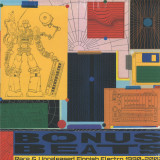
Cold Blow proudly presents Bonus Beats: Rare & Unreleased Finnish Electro 1990–2002, a landmark compilation capturing Finland's underground electro scene from the late 1990s and early 2000s. This double-LP features 9 rare and 3 previously unreleased tracks from pioneering Finnish artists, showcasing a distinctly Nordic approach to the genre. With contributions from notable names such as Jori Hulkkonen, Mr. Velcro Fastener, Mono Junk, and the late Mika Vainio, this release highlights the experimental and DIY ethos that defined Finland's electronic music scene during this period.
Carefully curated by Erkko Lehtinen, a key figure in Finland's electro scene as a DJ and promoter, the compilation explores a broad sonic palette, spanning early techno influences, robotic allure, and dark, bass-heavy tracks. Standout contributions include Decepticons and Dr. Robotnik's unreleased dark electro cuts, with the latter veering into minimal wave territory. Feng Shui feat. Monsieur delivers a striking collaboration that fuses a trance-like lead with raw, industrial beats, uniting members of Huoratron, Nu Science, Polytron, and Op:l Bastards. Keeping alive the legacy of Perttu Häkkinen (aka Randy Barracuda), this release wouldn't be complete without Imatran Voima's bass-driven anthem from their debut EP. Also featured are Spektor's retro synth experiments, Tero's Commodore 64-based creations, Brothomstates' (later a Warp signee) futuristic soundscapes, and a rare cover of Kraftwerk's The Model by the anonymous duo Markus & Kristian. Erkko's extensive liner notes provide additional insight into this culturally and musically significant era. Available in double-LP, this collection is a must-have for electronic music aficionados and vinyl collectors.
j 10: Feng Shui - Hao Hao (I`m Back) feat. Monsieur
The influence of the UK’s Steel City on electronic music is well documented and undisputed and continues to push the envelope with key figures such as Winston Hazel (Forgemasters, The Step), DJ Parrot/Crooked Man, Richard Benson (RAC, SWAG, Altern 8), Chris Duckenfield (RAC, Popular Peoples Front, SWAG, All Ears Distribution), a thriving underground club scene and the likes of Synaptic Voyager reinforcing the city’s rich musical legacy.
Matt White and Paul Baines have been making off-kilter, emotive, late night electronic jams since meeting in the early 90’s and while life took them on different paths for a while, they have recently blown the thick layer of dust from their synths and drum machines and got busy in the studio to create some amazing new music which draws influence from that classic UK techno sound which played such an important part in the development of dance music culture around the world. With recent releases on Frame Of Mind, Acquit and Telomere Plastic the duo are clearly on a roll, wearing the heritage of their city on their sleeve and delivering what can only be described as heartfelt, authentic machine music made with love and soul.
From the opening beats of lead track Dawn Till Dusk we are drawn in to another place which feels comfortably familiar yet organic, fluid and loose in a way that tugs on the heartstrings. A million miles from cookie-cutter tech house, this is two guys in a bedroom studio, digging deep on hardware machines to create a sound to get completely lost in. Lonely Promontory takes things deeper still with immersive pads, taught electro beats and blissed-out melodic lines which give just hint of optimism and recall those beloved sounds of B12, Redcell and Likemind.
Flipping over we have Stellar Engine which goes a littler heavier on the beats and bass whilst still retaining a floating quality, once again highlighting the hardware jam workflow that Synaptic Voyager utilise in their studio. Once Exposed takes us back to those heady days of the early 90’s when techno, house and ambient electronics combined to create a heady blend of deep atmospherics and driving beats which could work on both dance floors and car stereos alike. Rounding off the EP we have Cognitive Network which goes for a straighter four on the floor techno groove and a killer bassline to lose yourself in. These recordings were delivered to the label in unedited long form (some tracks totalling 15 minutes or more in length!) which Jimpster lovingly edited into the versions which you hear on this release.
- A1: Progetto Tribale - The Sweep
- A2: Onirico - Echo Giomini
- A3: Open Spaces - Artist In Wonderland
- B1: Alex Neri – The Wizard (Hot Funky Version)
- B2: M C.j. Feat. Sima - To Yourself Be Free - Instrumental Mix Energy Prod
- B3: Mato Grosso - Titanic Expande
- C1: Dreamatic - I Can Feel It (Part 1)
- C2: Carol Bailey - Understand Me Free Your Mind (Dream Piano Remix)
- C3: The True Underground Sound Of Rome - Secret Doctrine
- D1: Don Carlos - Boy
- D2: Lazy Bird – Jazzy Doll (Odyssey Dub)
Vol 2[28,99 €]
Volume 1 of this expertly curated project of 90s Italian House - put together by Don Carlos.
If Paradise was half as nice… by Fabio De Luca.
Googling “paradise house”, the first results to pop up are an endless list of European b&b’s with whitewashed lime façades, all of them promising “…an unmatched travel experience a few steps from the sea”. Next, a little further down, are the institutional websites of a few select semi-luxury retirement homes (no photos shown, but lots of stock images of smiling nurses with reassuring looks). To find the “paradise house” we’re after, we have to scroll even further down. Much further down.
It feels like yesterday, and at the same time it seems like a million years ago. The Eighties had just ended, and it was still unclear what to expect from the Nineties. Mobile phones that were not the size of a briefcase and did not cost as much as a car? A frightening economic crisis? The guitar-rock revival?! Certainly, the best place to observe that moment of transition was the dancefloor. Truly epochal transformations were happening there. From America, within a short distance one from the other, two revolutionary new musical styles had arrived: the first one sounded a bit like an “on a budget” version of the best Seventies disco-music – Philly sound made with a set of piano-bar keyboards! – the other was even more sparse, futuristic and extraterrestrial. It was a music with a quite distinct “physical” component, which at the same time, to be fully grasped, seemed to call for the knotty theories of certain French post-modern philosophers: Gilles Deleuze, Félix Guattari, Paul Virilio... Both those genres – we would learn shortly after – were born in the black communities of Chicago and Detroit, although listening to those vinyl 12” (often wrapped in generic white covers, and with little indication in the label) you could not easily guess whether behind them there was a black boy from somewhere in the Usa, or a girl from Berlin, or a pale kid from a Cornish coastal town.
Quickly, similar sounds began to show up from all corners of Europe. A thousand variations of the same intuition: leaner, less lean, happier, slightly less intoxicated, more broken, slower, faster, much faster... Boom! From the dancefloors – the London ones at least, whose chronicles we eagerly read every month in the pages of The Face and i-D – came tales of a new generation of clubbers who had completely stopped “dressing up” to go dancing; of hot tempered hooligans bursting into tears and hugging everyone under the strobe lights as the notes of Strings of Life rose up through the fumes of dry ice (certain “smiling” pills were also involved, sure). At this point, however, we must move on to Switzerland.
In Switzerland, in the quiet and diligent town of Lugano, between the 1980s and 1990s there was a club called “Morandi”. Its hot night was on Wednesdays, when the audience also came from Milan, Como, Varese and Zurich. Legend goes that, one night, none less than Prince and Sheila E were spotted hiding among the sofas, on a day-off of the Italian dates of the Nude Tour… The Wednesday resident and superstar was an Italian dj with an exotic name: Don Carlos. The soundtrack he devised was a mixture of Chicago, Detroit, the most progressive R&B and certain forgotten classics of old disco music: practically, what the Paradise Garage in New York might have sounded like had it not closed in 1987. In between, Don Carlos also managed to squeeze in some tracks he had worked on in his studio on Lago Maggiore. One in particular: a track that was rather slow compared to the BPM in fashion at the time, but which was a perfect bridge between house and R&B. The title was Alone: Don Carlos would explain years later that it had to be intended both in the English meaning of “by itself” and like the Italian word meaning “halo”. That wasn’t the only double entendre about the song, anyway. Its own very deep nature was, indeed, double. On the one hand, Alone was built around an angelic keyboard pattern and a romantic piano riff that took you straight to heaven; on the other, it showcased enough electronic squelches (plus a sax part that sounded like it had been dissolved by acid rain) to pigeonhole the tune into the “junk modernity” section, aka the hallmark of all the most innovative sounds of the time: music that sounded like it was hand-crafted from the scraps of glittering overground pop.
No one knows who was the first to call it “paradise house”, nor when it happened. Alternative definitions on the same topic one happened to hear included “ambient house”, “dream house”, “Mediterranean progressive”… but of course none were as good (and alluring) as “paradise house”. What is certain is that such inclination for sounds that were in equal measure angelic and neurotic, romantic and unaffective, quickly became the trademark of the second generation of Italian house. Music that seemed shyly equidistant from all the rhythmic and electronic revolutions that had happened up to that moment (“Music perfectly adept at going nowhere slowly” as noted by English journalist Craig McLean in a legendary field report for Blah Blah Blah magazine). Music that to a inattentive ear might have sounded as anonymous as a snapshot of a random group of passers-by at 10AM in the centre of any major city, but perfectly described the (slow) awakening in the real world after the universal love binge of the so-called Second Summer of Love.
For a brief but unforgettable season, in Italy “paradise house” was the official soundtrack of interminable weekends spent inside the car, darting from one club to another, cutting the peninsula from North to centre, from East to West coast in pursuit of the latest after-hours disco, trading kilometres per hour with beats per minute: practically, a new New Year’s Eve every Friday and Saturday night. This too was no small transformation, as well as a shock for an adult Italy that was encountering for the first time – thanks to its sons and daughters – the wild side of industrial modernity. The clubbers of the so-called “fuoriorario” scene were the balls gone mad in the pinball machine most feared by newspapers, magazines and TV pundits. What they did each and every weekend, apart from going crazy to the sound of the current white labels, was linking distant geographical points and non-places (thank you Marc Augé!) – old dance halls, farmhouses and business centres – transformed for one night into house music heaven. As Marco D’Eramo wrote in his 1995 essay on Chicago, Il maiale e il grattacielo: “Four-wheeled capitalism distorts our age-old image of the city, it allows the suburbs to be connected to each other, whereas before they were connected only by the centre (…) It makes possible a metropolitan area without a metropolis, without a city centre, without downtown. The periphery is no longer a periphery of any centre, but is self-centred”.
“Paradise house” perfectly understood all of this and turned it into a sort of cyber-blues that didn’t even need words, and unexpectedly brought back a drop of melancholic (post?)-humanity within a world that by then – as we would wholly realise in the decades to come – was fully inhuman and heartless. A world where we were all alone, and surrounded by a sinister yellowish halo, like a neon at the end of its life cycle. But, for one night at least, happy.
2024 was a big year for Regulate Recordings and their sister club night “Shake Your Rump”. DJ Deviant’s “The Rhythm” & “Make Em Bounce” burned up dance floors in spring, “Summer Jam” saw Atomphunk & Deviant team up with Seattle MCs Mugs and Pockets to devastating effect. “Summer Jam” lit up the second half of the year with support from the Allergies, Boca45 and 6 Music and was included in Craig Charles’s “Funkiest Tracks of 2024”.
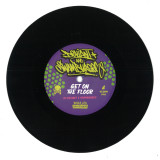
Regulate move into the new year by setting off two certified bangers. Master of the decks DJ Deviant is back on production duties; lead track “Get On The Floor” sees him once again collaborating with Swamburger (Mugs and Pockets) for a full force party starter. The production pulls influences from the earliest days when hip hop and disco were joined at the hip, with nods to The Sugar Hill Gang and The Furious Five, as well as the Golden Age and artists like Chubb Rock and Big Daddy Kane. Swamburger’s machine gun delivery and Deviant’s sharp cuts pull the track right into 2025 for maximum impact.
Flip side “Where’s The Party Clap” is a big trunk of cut and paste funk with a popping bass line, horns, claps, cuts and a groove that just doesn’t quit.
- A1: Driving On The Wrong Side Of The Road
- A2: Square Pegs In Round Holes
- A3: Space Between Us
- A4: Bloodlines
- A5: Going Through The Motions
- B1: Chewing The Fat
- B2: Henges (Interlude)
- B3: Pressure Makes Diamonds
- B4: Swallertrip
- B5: Can’t Find The Words
- B6: The Light You Bring
Black[25,00 €]
"Chewing The Fat" marks a new chapter for Franc Moody.
This album delves into the duo's creative depths, breaking away from traditional norms and
showcasing a more refined sound than their earlier work.
Partially recorded at LA 64 Sounds Studio and Damon Albarn’s Studio 13 in West London,
the album’s sonic landscape is significantly shaped by Albarn’s collection of synthesizers,
especially some Russian models.
Drawing inspiration from live performances by Massive Attack and LCD Soundsystem,
the result is a sound that leans less toward disco,
embracing a grungier, more gritty attitude.
- 1: St Boom
- Nxt Msg
- 2: Nd Boom
- Conversion Theory
- Time To
- 3: Rd Boom
- So Ridiculous
- Collection Plate
- 4: Th Boom
- Mind Of
- Push On
Grammy-nominated artist, producer and label-head TOKiMONSTA and prolific composer, producer and songwriter, Suzi Analogue have officially released their collaborative mini-album, Analogue Monsta: BOOM via Young Art Records. Originally released in limited quantities exclusively on vinyl in 2012, the 11-track project has now been remastered. Analogue Monsta: BOOM serves as a time capsule to the eclectic sound of the early 2010’s beat scene, which both TOKi and Suzi’s futuristic production styles helped champion out to a broader audience outside of the world of “bedroom producers.” Suzi Analogue's smooth R&B vocals pair perfectly with TOKiMONSTA's glitchy beats and pulsating bass, demonstrating their versatility and flair for pushing sonic boundaries. The album lays one of the early foundations to the fusion of future bass, alternative R&B and electronica, highlighting the pioneering spirit of two acclaimed female artists.
Analogue Monsta: BOOM marks an important milestone for the two as they reflect on the prescient nature of their early collaboration. “This special project with Suzi Analogue is one of my favorites. It never had a formal release so it feels right to share it with the world a decade later with fresh ears,” states TOKiMONSTA. Both Suzi and TOKi’s journeys converged early in their careers as the two paved the way for a groundbreaking era of femme-identifying producers and songwriters within the music industry. Speaking on the project’s significance Suzi Analogue adds, “The Analogue Monsta project was truly ahead of its time. We felt a strong calling to propel it into the future, recognizing the trailblazing potential it held. It provided a vital space for femme-identifying producers and songwriters to fearlessly explore beats, lyrics and tempos with us. This experimental journey not only influenced the current musical landscape but is poised to leave a lasting mark on the soundscape of the future."
The result is a record that very much is its own world. Where chaos is carefully organized, where being able to ever actually chill out is totally illusory, a trick mirror.
- 1: Kurt Cobain's Cardigan
- 2: Come Saturday ('Searching For The Now' Version)
- 3: Ramona
- 4: The Pains Of Being Pure At Heart
- 5: Side Ponytail
- 6: Higher Than The Stars
- 7 10: 3
- 8: Falling Over
- 9: Twins
- 10: Say No To Love
The Pains of Being Pure At Heart exploded out of the late 00s Brooklyn indie scene with a bright, distinctive sound that paid tribute to everything from C86 to early Slumberland, Sarah and Creation label pop, but with a distinct American flavor drawn from groups like Smashing Pumpkins and The Exploding Hearts. Their 2009 self-titled debut is rightly considered a classic, ins of Being Pure At Heart exploded out of the late 00s Brooklyn indie scene with a bright, and with Perfect Right Now we're thrilled to round out the story of The Pains' early years.
- 1: Talking Haunted
- 2: Ordinary Voices
- 3: Wish Defense
- 4: A Room
- 5: Desire Path
- 6: Sometimes Only
- 7: You Future
Limited Indies “white split vinyl variant while supplies last. RIYL: Unwound, MBV, The Jesus Lizard, SUUNS, Preoccupations, METZ, Les Rallizes Denudes, The Dead C, Echo & The Bunnymen, Liars, This Heat, PIL. Sixth studio album from the Chicago trio. Features newly-rejoined original member Jonathan Van Herik. Recorded at Electrical Audio May 6 & 7, 2024 - final album recorded by Steve Albini. The duality of “man” is a subject that has been explored in art for centuries, from writings of the Bible to Descartes, all the way up to filmmakers like Lynch, Cronenberg, & Carpenter. Who is your “true self” & what do they want? With their sixth studio album “Wish Defense” (again for longtime home Trouble In Mind Records), Chicago trio FACS take a good, long look in the mirror to face themselves. The return of original member Jonathan Van Herik - who stepped away from the group just before their debut album “Negative Houses” was released in 2018 - replacing longtime bassist Alianna Kalaba brings renewed vigor & a marked angularity from the band’s more recent output. The songs still hit hard, but the approach is sideways - the roles have changed since Van Herik’s original tenure & his previous time with Case & powerhouse drummer Noah Leger in Disappears; now on bass, Van Herik was originally the group’s guitar player and features on the debut, while current guitarist Brian Case played bass. This role reversal has helped the band’s dynamic, offering up a different musical perspective than before, now revisiting the trio’s long-going collaboration with some distance and time. Case notes that the lyrics on “Wish Defense” revolve around doppelgängers or "doubles”, tackling the idea of facing yourself and observing your ideas and motivations. Look no further than the album’s title track; “Enter the mirror / Double walker / An intimate / Wish defense / Is it real? / You beside me / The detail / Terrifying / Abject self / Your grief / A public / Performance”. Case lays out the entire album’s theme in one stanza; Are your actions & emotions your true self? Or are they a performative aspect of that “other” person you put forward? Case says that ultimately the sentiment is “...don’t let the bastards get you down, there’s something beyond this moment, like hope - but not in the naive belief that ultimately people are good”. “Wish Defense”s artwork is also a subtle reference to “Negative Houses”’ art, returning to that album’s black & white starkness & minimalism. The album’s checkerboards everywhere are offset reflections of themselves, mirrored with the album’s lyrics printed front & center on the cover. Everything is out in the open. A final note; “Wish Defense” is the last album engineered by Steve Albini. Two days were recorded at Electrical Audio in early May of 2024 before Steve’s untimely passing, with renowned engineer & friend Sanford Parker stepping in to finish the session 24 hours later, tracking the last bits of vocals and overdubs. Longtime collaborator John Congleton mixed the album as Albini would have; in Electrical Audio’s A room, off the tape, using Albini’s notes about the session.