Almost two years on from his last EP offering, Veerus returns for another double shot of groove-inflected techno power.
The Italian artist has been a stellar contributor to Drumcode since his debut in 2019 with the outstanding ‘Hypnosis’ EP. From the ‘System’, to ‘Recovery’ and his most recent EP offering ‘Yard’ in early 2022, we’ve been given a sense of his deft touch for crafting dramatic techno, that’s equal parts exquisite and dynamic.
His latest work ‘Cycle’ reinforces the passion he imbues each production with. “These two tracks perfectly express my vision of techno nowadays,” he shares. “Not fast, groovy, with researched sounds and a crazy impact on the dancefloor.”
The title track balances tension and release on a knife’s edge, as it builds deliciously via a menacing array of synths, before dropping down into an all-out laser-focused march. A powerful cut that’s been a go-to for Adam Beyer at Awakenings, Loveland and Resistance Ultra in Croatia, among others.
‘It’s Funky’ was two months in the making and bring bags of energy and atmosphere as it explores funky terrain, not in the bottom end, but rather Veerus’ colourful approach to writing melodies. A great track for building excitement throughout a set.
Cerca:the earl
2024 Repress
Finally the official remastered reissue of one of the rarest and sought after italo-disco record from early 80's. You'll be hard pushed to hear anything like this ever again... this is an epic out there electronic production that's one of a kind. In the same period of other italo-disco classics like REM, STOPP, Klein & MBO, GANG previously reissued by Best Italy, they representing the roots of chicago sound played by the pioneers like Ron Hardy!
Repress!
10 years since the consumerist musings of Tesco, Matthew Herbert reanimates his Wishmountain project and heads deep underground to find the source material for Stonework: 1000 metres down.
Like many of Herbert’s projects, Wishmountain releases revolve around specific, material sound palettes, and for this latest album he’s drawn from a sample library created as a commission for the Stone Techno festival, which took place at the UNESCO World Heritage Zollverein mine in Essen, Germany. Working with sound recordist Lorenzo Dal Ri, Herbert and Dan Pollard captured a varied and wide variety of hits, tones, textures and one-shots from the frozen-in-time remnants of the Ruhr region’s coal-mining industry and from specific materials in the nearby Ruhr Museum and Mineralien-Museum. A sample library created by Matthew and Dan of the recordings was also used for the Stone Techno series, from which tracks have been commissioned by the likes of Luke Slater, Megan Leber, Ben Sims and KiNK drawing from the same sounds heard on this album.
These stone-cast sounds lend themselves to the Wishmountain framework – skeletal, quasi-industrial techno with an angular impulse and a subtle swing. Much like the breakthrough hit, 1996’s ‘Radio’ (made using samples of a broken radio), the limitations on the source material sharpen the focus of the music. What started out as a practical hardware restriction in the early 90s became a purposeful way of working for Herbert – one which carried through the 1999 album Wishmountainisdead to 2012’s Tesco with its sampling of the British supermarket chain’s 10 most popular products.
Musically, Stonework is consistent terrain for Wishmountain – austere and forbidding in one sense, playful and irreverent in another. But from a club music perspective, which Wishmountain absolutely is, it offers DJs a variety of rhythmic formations within the tool-like minimalism of the arrangements, opening up intriguing possibilities for mixing into, out of, or somewhere in between. For every 4/4 thrust and jerk there is a fractured, snaking meditation pivoting around other time signatures.
Crystal clear in its creative intention and simultaneously successful as surface-level club music, Stonework: 1000 Metres Down is a natural continuation for one of Herbert’s most celebrated, albeit intermittent, aliases.
On Natura Morta, Sven Wunder is exploring art as a bridge between nature and the human ability to judge and observe in eleven musical compositions with brightly colored textures and an emphasis on vibrant melodies.
Throughout human history, we have depicted the world we live in through art. By reworking what we see in the world, the simplest things have helped us understand the beauty of nature and to evaluate the material world that we have created around us, as a window to a constantly changing reality, through our own perception. It is that absolute reality that appears in the seam of human and nature and that can be revealed through art.
Still life painting, also referred to as Natura Morta (”dead nature”) in Italian, stretches back to ancient times. Some of the earliest works, found in Pompeii, depict commonplace objects such as fresh autumn fruits alongside man-made objects such as a small amphora and a small terracotta heap with dried fruits. These two-thousand-year-old paintings give a snapshot of Roman life, and also creates a link to time and space. A slice of life has been created by binding the earth’s pigments with extracts of oil, made from nuts and seeds, painted with brushes, made from a variety of fibers, such as trees and hair from animals. While life wanes with each brushstroke, by shifting reality into the past, art exists to make us come alive, being a living image of a dead thing, a surface and a symbol with symbolic powers of its own. Still life works celebrate material and ephemeral pleasures by returning to nature as the ultimate source for our standards in art as well as in life itself.
Natura Morta collects pieces from a continuous variety of melodies — supported by a decisive rhythm section — creating a musical kaleidoscope of ever-changing colors. Sven Wunder brings life into this rich assortment of musical implications by fusing and combining melodic instruments with each other in a setting that spans from a classical to a modern idiom. The author evokes this panoramic portrait by articulating an instrumental dialog between a chamber orchestra and a jazz ensemble. The result is a musical celebration of material pleasures that also serves as a reminder of the brevity of human life. This album was produced with financial support from the Swedish Arts Council.
Recorded over a four-week period in early 2022, Freedom Lapse is the debut solo release of Australian multi-instrumentalist and composer Adam Halliwell. A versatile improviser and lover of performance, Halliwell has been an active contributor to numerous musical communities in recent years. The release of Freedom Lapse marks an exciting stage in Halliwell’s journey as an artist with the culmination of several important musical facets that are now becoming foundational to his practice.
As Halliwell tells us, Freedom Lapse owes its genesis to an epiphanic moment experienced whilst traversing a mountainous passage in Mexico, a place where ‘the past present and future stretch out in one place’. Entranced by this environment, its colours, the villages and local life, Halliwell listened to music that inspires him (he cites Jon Hassell here). The result: ‘complete aural, visual and spiritual completeness’, a moment of discovery, he explains. Shortly after, the material that now comprises Freedom Lapse was recorded, distilling this powerful sensorial experience into a body of music that he has now invited the world to share with him.
Throughout these recordings restrained improvised phrases and melodic ideas feature, often appearing as long refrains that soar above idiosyncratic beds of fractured percussion and junkyard bass-work. This use of contrast, which is central to the work, allows Freedom Lapse to tap the lucidity-chaos juxtapositional-style that lies at the heart of all good music in the ‘fourth-world’ idiom. Halliwell’s sensitivity to dynamics, form and narrative is potent on these recordings, which allow his winding, free-improvisations the space to unfold and extend patiently. All instruments on Freedom Lapse were written and recorded by Haliwell, with additional trumpet on Cygon Dance supplied by regular-collaborator Reuben Lewis. Freedom Lapse was mixed and produced by Halliwell and Jim Rindfleish.
Gudu Records label continues a 2023 for the books with Dream Universe, a new four-track EP by Italian duo Hiver.
Based in Milan, Giuseppe Albrizio and Sergio Caio have spent the last decade honing a very special take on electro and machine funk, driven by the duo’s trademark basslines, glossy strings that drip with emotion and an overall utopian nature.
On Dream Universe, a “tribute to early ‘90s house and trance”, built around trance elements, acid bass and Detroit-inspired rhythms made on iconic synthesizers like the Alpha Juno, Juno 106 and the Roland 303, 909 and D-550, they pack more energy and emotion into their music than ever before, from the high-emotional vocal that defines the EP’s title track, to the raw bass hits that drive ‘Lodash’.
At this point, Hiver’s sound is so distinctive that you know one of their tracks the minute you hear it, but Dream Universe feels like the high water mark of their work to date; a duo in complete control of their craft.
*Limited to 150 copies worldwide*
Dave Wallace and Shaun O’Hara created Mad Dog as their first collaboration project back in 1992, later to go on and also form Fugitive – both projects being released in the early 90’s by Bournemouth based Underdog Recordings.
In 2018 Vinyl Fanatiks repressed their first EP and in 2019 Mad Dog 2 was re-released. This 7” is the 7” edits of Mad Dog 2 – a huge release back in the day and more recently for us, selling out in a few months.
This jukebox holed release is one for the collectors and those who like to drop 7” selections in their sets.
King of the mini platters…
Calm, introspective and minimal music for pondering and reflection. Inspired by
giants like Earth, early Santana and Bohren & der Club of Gore, their single-song,
self-titled debut lifts up its listeners onto divine rays of grandeur into infinity.
Gilded Form is founded by members of internationally acclaimed underground
bands such as Desertion Trio, Dead Neanderthals, Many Arms, MNHM, Plague
Organ, Cryptae and Imperial Cult.
FFO: later period Earth
Nick Millevoi: guitar
Otto Kokke: synthesizer
Rene Aquarius: drums
An autumnal treasure, East Village’s Drop Out has spent the past thirty years finding new ears to bewitch and new hearts to melt. The only album from this British four-piece, recorded and released in the early nineties, it’s long been considered one of the hidden jewels of its time, and is talked of with hushed reverence by people who know. Bob Stanley of Saint Etienne once called it “an elegy for a particular brand of eighties guitar music, sweet minor chords and Dylanesque lyrics”, which captures what makes it so special; in summarising its era, though, it also effortlessly transcends it.
Like all great guitar gangs, East Village fell together as a four-piece; having relocated from High Wycombe to London in mid ‘80s, brothers Martin and Paul Kelly on bass and guitar, set on forming a group together, were joined by John Wood (guitar) and Spencer Smith (drums). Wood and the Kellys shared writing and vocal duties; it was an ideal combination, and one of the many charms of East Village is their various song writing voices, a tip of the hat, seemingly, to the 60s folk-rock groups who influenced them.
Originally influenced by garage-rock and freakbeat, the band eventually came through via the same scene as groups like Felt, The Go-Betweens, The Weather Prophets, and Primal Scream. They’d formed as Episode Four, releasing an EP, Strike Up Matches, in 1986, which has gone on to become one of most sought after releases of the C86 era. Their first two singles as East Village, ‘Cubans In The Bluefields’ (1987) and ‘Back Between Places’ (1988), were released on Jeff Barrett’s Sub Aqua label.
When it came time to record Drop Out, East Village found a supporter in Bob Stanley, who bankrolled the album sessions until Barrett re-signed the band to his new imprint Heavenly Recordings in 1990. The album that took shape is dusky, heartfelt, lamplit, full of chiming minor chords, close harmonies, rattling organs, all buoyed by a rhythm section that moves as one, steady and elegant. There’s melancholy here, certainly, on songs like ‘What Kind Of Friend Is This’, but also pleasure and freedom, on ‘When I Wake Tomorrow’ and ‘Silver Train’. The group were obsessed with Dylan’s Eat The Document at the time, and the album’s rich with references to the film; Drop Out’s character is also somehow close to the thin wild mercury sound of Blonde On Blonde, and the lambent light of the Byrds’ Notorious Byrd Brothers.
In one of life’s gentler surprises, ‘Silver Train’ became an unexpected radio hit in Australia when released there as a single in 1993. The story of East Village seems marked by such unexpected turns and surprising events. None was more surprising for their fans at the time, though, than their onstage split in 1991, leaving an unreleased album in the can. Encouraged by Jeff Barrett the band revisited the tapes two years on and while mixing the album for its posthumous release in 1993 invited Debsey Wykes (Dolly Mixture, Coming Up Roses, Saint Etienne, Birdie) to sing the quietly devastating album closer, “Everybody Knows”, a perfect, sad-eyed sign-off.
Listening now to Drop Out, its timelessness is clear. It could have been recorded by young folk-pop hopefuls in the late sixties, taking their shot at the big time; but it could just as easily have been recorded yesterday, by a group that’s both reverent to music’s past, but forward looking in spirit and temperament. It’s that kind of album. Drop Out’s pop poetry is fully formed, with a singular charm that takes in wistfulness, romance, and good times, and a clutch of deeply moving songs that are overflowing with melody and gracefulness. It’s pretty much everything you’d want from a guitar pop record.
It's also an album that’s slowly accrued its own legend. From its stunning cover art, photographed by Juergen Teller originally for a Katherine Hammett campaign, to the ten perfectly formed songs within, Drop Out’s significance in the scheme of things is such that, a decade ago, it was given a rare 10/10 rating in Uncut magazine, who called the album “the lost classic of its era”. Drop Out comes round every decade or so, each edition introducing new fans to its understated beauty, and this latest reissue is its most elegant and deluxe yet.
The 30th anniversary edition of Drop Out lands in two formats: an LP with tip-on style jacket and four-page insert, designed to partner with the 2019 vinyl reissue of their singles and rarities compilation, Hot Rod Hotel; and a double CD, featuring an extra disc compiling the group’s early singles and alternative versions. This CD edition previously has only been available in Japan, though it now features a new, superior mix of their second single, ‘Back Between Places’. Both feature new, typically eloquent liner notes from writer Jon Savage.
The members of East Village have all gone on to do inspired things: Martin Kelly joined Jeff Barrett at Heavenly and has managed label mainstays Saint Etienne since 1993; Paul Kelly formed Birdie with Debsey Wykes, and is now a renowned film director and graphic designer; both Paul and Spencer Smith played in Saint Etienne’s live band; John Wood moved to China to teach, and released a lovely, understated folk album, Quiet Storm, in Japan in 2006. But with the hazy perfection of Drop Out, they’ve all already etched their names in the firmament.
* Lou Reed's final solo album finally available again * First time on vinyl * Produced in partnership with Laurie Anderson and the Lou Reed Archive * Booklet features unseen photography by Lou, Q&A with Laurie Anderson & Jonathan Cott, essay by Eddie Stern, and archival interviews with Lou and Hal Willner * Remastered by GRAMMYr-nominated engineer John Baldwin * Package designed by multi-GRAMMYr-winning artist Masaki Koike // "I first composed this music for myself as an adjunct to meditation, Tai Chi, and bodywork, and as music to play in the background of life, to replace the everyday cacophony with new and ordered sounds of an unpredictable nature. New sounds freed from preconception. ...over time, friends who heard the music asked if I could make them copies. I then wrote two more pieces with the same intent: to relax the body, mind, and spirit and facilitate meditation." - Lou Reed Light in the Attic Records in cooperation with Laurie Anderson and the Lou Reed Archive, proudly announces a definitive re-release of Hudson River Wind Meditations, the pioneering artist's final solo album. Originally released in 2007, the deeply personal project combines Reed's love of creating drone music with his passion for Tai Chi, yoga and meditation. The album's ambient soundscapes have been described as a counterpoint to his intense Metal Machine Music album-but they are similar outliers in Reed's 40+ year exploration of drone music and feedback harmonics. The album has been remastered by the GRAMMYr-nominated engineer John Baldwin with vinyl pressed at Record Technology Inc. (RTI). The Double LP set is presented in a gatefold jacket designed by GRAMMYr-winning artist, Masaki Koike and features new liner notes by renowned Yoga instructor and author, Eddie Stern, who guided Reed's practice for years. Also included in the physical editions is a fascinating conversation conducted earlier this year between author/journalist Jonathan Cott (Rolling Stone, The New Yorker) and Reed's wife, artist Laurie Anderson, who discusses the album, as well as her husband's devotion to Tai Chi - one of the album's primary inspirations. Hudson River Wind Meditations marks the latest release in LITA's Lou Reed Archival Series. Launched in 2022 in tandem with the late artist's 80th birthday, the ongoing series has celebrated one of America's most influential songwriters through such acclaimed collections as Words & Music, May 1965 featuring many of Reed's earliest (and previously-unreleased) recordings, including the earliest-known versions of "I'm Waiting for the Man" and "Pale Blue Eyes."
The first bunch of remixes for Kito Jempere's Green Monster. The album itself was a versatile journey thought all music styles and patterns you can imagine, remixes are keeping the same direction.
EP opens with a remix from multi-talented and prolific studio genius Ewan Pearson, the man behind hundreds of remixes, production and studio engineering duties for artists like Tracey Thorn, Pet Shop Boys, Depeche Mode, The Chemical Brothers and many many more. And Mr Pearson is taking Kabwato on a journey! Originally recorded as two and half minutes as some say mid-album filler, this boat (kabwato in chewa language) is going deep down the tropical river and through breezy morning rainforest valleys. A perfect trip for your midday staying home alone errands or for your early morning ray of light at the bar with a beautiful panorama.
Same track is getting treatment from the mighty Cable Toy! Unmistakable peak time euphoria manifest - going back to my roots-esque piano meets 90s cable tv dance show house party!
On the flip is the remix by The Dawless. The Dawless are Ramil' Goddeem from LAUD and Sergey Gol'd, producer and owner of GoldxFish Music studio. They recently released their debut album "Broken Aux" on System 108, got remixed by DMX Crew and became residents of LOUD BOYZ label. The project has simple ethics: computers not allowed, only real gear and vibes. The duo has created a true rage rave anthem for Kito Jempere now. Having already been played in a lot of DJ-sets blasting through packed warehouses, now it became available to everyone.
EP closing opus is by Kito's frequent collaborator - UK born and Japan based producer Max Essa. Every Kito's album was accompanied by Max's remixes and this time he's delivering pure beauty again. Creating some Golden-era "8 1/2 weeks" vibes, Max transforms the track into a post-summer voyage anthem.
This album was originally only released for the Japanese market and is now
available worldwide for the first time.
In the early 1990s, Makoto Kimata repeatedly asked Eugen to record the lullaby
"Berceuse" by the French composer Benjamin Godard (1849-1895) for his
grandson. This is how the 'Lullabies' project started. Since it was not possible to
record in Japan, Eugen Cicero rented the radio studio of the former SWF in Mainz,
Germany.
Here, he recorded twelve lullabies within three days together with Ringo Hirth on
drums and Decebal Badila on bass. It was to become the last studio recording of
his career. However, the 'Lullabies' were only produced for the Japanese market.
Eugen Cicero enjoyed cult status in Japan. The Japanese love jazz and classical
music equally, and do not tend to differentiate, as is the case in Europe, especially
in Germany.
When one speaks of lullabies, jazz enthusiasts immediately think of "Lullaby Of
Birdland" by George Shearing. The classically educated music lover, however, will
have the songs of Brahms, Mozart and Schubert in mind. Well, you may find both
genres combined on this album.
While many people do find their nightly rest with sleeping pills, head phones or
iPhone in hand these days, this music gives you an attractive alternative.
red marbled vinyl
After early work with Lady Gaga, Lady Starlight immediately entered techno's upper echelons playing live alongside Surgeon, earning the respect of one of the genre's most legendary hard asses, no small feat for an artist only then emerging. Forming a strong alliance with Len Faki's Figure reinforced her upward trajectory, so it's with considerable stature we introduce 'Choose', her first full solo EP since 2020.
'Choose' makes its choice from the beginning when the mutated, squealing vocal sample and insistent percussion command dancers to the floor. She adds sophistication with melodic ideas, quick breakdowns, and constantly shifting drums, the instability maintaining momentum. 'Permian-Triassic' could refer to earlier eras of techno Lady Starlight seeks to bury, although droning pads poke out of her deep soundscapes like fossils from the 90s framed elegantly. Excited like its title, 'In a Tizzy' centers its nervous energy around a seesawing motif until it breaks apart halfway through, then rides it into oblivion on top of rapid-fire drum fills and a return of the theme. The title track closes in the darkest mode, its tricked-out breakbeat evading dancer's expectations and the heavily-processed noises squalling in the background providing no respite.
Clear Vinyl
The fourth Exposure Series release is upon us. If you have not heard, the Exposure series is our signature compilation series that features multiple artists and is pressed on vinyl for the most discerning DJs and collectors. 'Linear Radiance' gathers together 4 extremely hot artists in the scene for one special 12'.
The EP begins with 'Raizel' by the hot newcomer Grush. This early set builder is smooth in the constraint it has rolling along in the sweet spot. A beautiful jaunt that is rich and fluid.
Next, is the amazing Philipp Priebe. 'So Glad' is another Priebe heater. A very talented producer, you can always count on him for great dancefloor business. The melody sneaks up on you as it builds from deep within. A sublime and subdued corker!
'Sonic Shadows' starts out on the B-side from skillful Nicolas Barnes. His contribution is a combination of a big club techno sound and a melodic flow that is almost reminiscent of some prime late 1990's progressive house.
Finally, is 'Grey Rythem' by Cirkel Square. Riding a catchy micro dub sound that is clever, fun, and surprisingly deeper than we could have ever hoped! All four tracks make for a healthy, well-balanced piece of wax!
Linear Radiance is lovingly pressed and shared on crystal clear 180- gram vinyl. Act quick while copies are in stock. This compilation is sure to get picked up by DJs, collectors, and fans.
EP compilation of essential UK house cuts recorded between 1987 - 1990. TIP!
Before British house and techno found its’ distinctive groove at the turn of the 1990s, one act led the way: Bang The Party, a trio who emerged from London’s vibrant underground party scene in the mid 1980s and proved, beyond any doubt, that UK producers could make music every bit as magical as the pioneering productions put forward by their counterparts in Chicago, Detroit and New York.
By the time long-running DJs and party promoters Kid Batchelor and Leslie Lawrence joined forces with trained engineer Keith Franklin at legendary North-West London reggae studio Addis Ababa in 1987, they’d spent years as DIY dance music activists in Britain’s capital city. They channelled these experiences and their love of imported house and techno sounds into a new project, Bang The Party, in the process becoming the first British act to appear on Transmat, a reflection of the quality and authenticity of their music.
The latest Rush Hour Reissue Series release offers a snapshot of some of the numerous gems nestled in the Bang The Party catalogue, delivering a much-deserved celebration of one of Britain’s most significant early acid house collectives. It features four fully remastered cuts recorded and released between 1987 and 1990 – on-point and far-sighted club workouts that sound as fresh and timeless now as they did when Britain was sweltering under its infamous ‘second summer of love’.
Fittingly, the EP begins with ‘I Feel Good All Over’, the group’s ground-breaking debut single. Dedicated to their home city and one of the earliest UK interpretations of house music, the track exists in the grey area between Chicago house and New York ‘garage house’ – all jaunty organ stabs, jacking Windy City beats, restless bass and soulful vocalizations. ‘Jacques Theme’, which follows, originally nestled on the B-side of that single release. An early, acid-flecked expression of hip-house with a British twist, breakdance-friendly bongo patterns and a dose of Larry Heard-inspired deep house dreaminess, the track remains an under-appreciated classic whose rap verses reflect the popularity of hip-hop in London at the time.
1988’s ‘Release Your Body’, Bang The Party’s most celebrated early release, was reissued in the United States by Transmat, reflecting the strong working relationship between Derrick May and Kool Kat Records’ Neil Rushton. A hypnotising affair propelled forwards by sweat-soaked drum machine beats, jacking fills and an addictive bassline, the track offers another near perfect distillation of the band’s Black American musical influences while delivering something genuinely new and fresh.
Rounding off the EP is a choice cut from Bang The Party’s sought after 1990 album Back To Prison. Doused in the star-lit synth sounds of the Motor City with jaunty organ stabs inspired by the kind of New Jersey jams championed at East Orange institution Club Zanzibar, ‘Let It Rip’ is a superb slice of deep house soul featuring a lead vocal every bit as emotive as anything laid down by Robert Owens. Like the rest of Bang The Party’s output, it has stood the time better than anything laid down by their London contemporaries.
Driving weirdo techno, warm melodic acid and daring sound experiments - Killekill welcomes a new duo on board: SKEW & SATIRIST are Max Cooper and Gareth Williams who met in the Not- tingham, UK club scene in the early 00s, living together for a number of years, leading to an effec- tive collaboration.
Max learnt production from sitting and watching Gareth in the studio, Max helped show Gareth the way with his DJing. Both became successful in their solo projects, Max as a regular guest
on stages all over the world, Gareth starting a music technology business with partners such as Richie Hawtin, John Acquaviva or Daniel Miller.
Over the years the musical collaboration between the two friends has continued in the background and they've finally found the time to bring it to fruition and start this project for their darker, more extreme and twisted techno which has been lying dormant over the years.
SPRINTS' debut album ‘Letter to Self' embodies their substantial evolution over the past 3 years. Transforming pain into truth, passion into purpose and perseverance into strength, the Dublin four-piece have steadily grown in stature, releasing two acclaimed EPs and building a fearsome live reputation.
'Letter to Self' is the sound of SPRINTS consolidating and levelling up. Exhibiting their most vulnerable moments and imbuing their visceral garage-punk with a palpable sense of catharsis that we can all benefit from.
Inspired by Savages, their sound matured into energetic and abrasive garage-punk, synthesising influences ranging from early Pixies, Bauhaus, Siouxsie Sioux, IDLES and LCD Soundsystem.
Four dazzling, extended engagements with mbalax master-drumming.
The contribution from Holy Tongue is chase-the-devil steppers — thumping, clangorous, reverberating — super-charged with energy and atmosphere. From the off drummer Valentina Magaletti detonates a hard rain of small bombs, rounds of fire, ticking fuses. Musical co-ordinates are somewhere between classic On-U Sound crew like African Head Charge, The Mothmen, and Creation Rebel, and the experimental funk of the Pop Group and 23 Skidoo, at their funkiest. Thrillingly, the two dubs are increasingly deranged.
Adjusting the same wavelengths as her superb Workaround LP, Beatrice Dillon plays spaced-out, abstract synth-work against the bodily physicality of the ancient, shifting mbalax rhythms. The music is poised, mindful, tentative; but also limber, fleet, and magical.
Phantasmagorical and efflorescent, Lamin Fofana’s one-two is simply stunning. Both excursions are wide-open, beautiful, epic, and propulsive — the first mix is banging and headlong, the second more syncopated and serpentine — teeming with freshly sublime, funkdafied updates on Jon Hassell’s Fourth World possible musics.
The two parts of LABOUR’s Etu Keur Gui engage the same sequence of drum patterns (called bakks) from different perspectives. The duo performed portions of this piece at the opening ceremony of the Dakar Biennial in 2022, at the Grand National Theater, with thirty sabar players from the family of Doudou Ndiaye Rose. This Wolof phrase for the inner-court of a home — a meeting-place — doubles here as a metaphor for inner space on a metaphysical level; and Pan Sonic, Muslimgauze, Zoviet France, early Shackleton… all ghost across the threshold.
Repress!
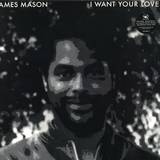
Proto-house classic 'Nightgruv' gets a re-release and includes a longer unreleased edit!
James Mason is mostly known for his late 70's album 'Rhythm Of Life', which is a soul-jazz classic. Soon after music trends shifted to (electronic) disco and James' music became out of fashion, leaving 'Rhythm Of Life' to be the only album he released to date. The early early 80s saw him have a few studio sessions from which more electronic output like Wuf Ticket's 'The Key (Prelude Records) resulted. James also produced various disco acts like Disco 3, Earl Flint and Brenda Bayton.