“Murderock - Uccide a passi di danza” (internationally released as “Murder Rock”) is a thriller/horror 1984 film directed by legendary
Lucio Fulci about a dance school in which a mysterious murderer kills female students with a long pin.
Its soundtrack was entrusted by the producers to Keith Emerson, In those early 1980s,
having temporarily shelved the prog-rock experience of Emerson, Lake & Palmer,
Keith Emerson launched a solo career that led him to compose a number of soundtracks
“Murderock”: an energetic mix of 80s pop/rock anthems, perfectly in line with the sounds of the time,dressed up with typically extravagant Keith Emerson arrangements.
“Murderock” has become a cult title among genre film fans over the years, and is here reissued on the occasion of
Black Friday 2023 in a new clear blue vinyl version with gatefold sleeve and audio remastered by Claudio Fuiano.
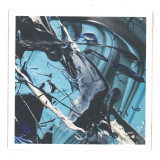
The last four tracks - Murderock (Part 1-4) - are released on vinyl for the first time ever. Artwork by Eric Adrian Lee.
Search:the earl
- A1: Iron Man
- A2: Mandrake
- A3: Come Sunday
- B1: Burning Spear
- B2: Ode To C.p
Iron Man (aka the Eric Dolphy Record) originally released in 1968 is known as an extraordinary complex and
challenging recording. Dolphy was a Jazz multi-instrumentalist who gain prominence in the 1960’s. He extended the
vocabulary and boundaries of the alto saxophone and was among the earliest significant jazz flute soloists. ALL
MUSIC review - “This is ESSENTIAL”. Vinyl has been out of print and unavailable.
Founded in 2016, Belleville Boogie is a DJ collective inspired by the vibrant energy of Belleville's nightlife. The collective’s soul feeds on bringing people to bounce on an eclectic curation of vinyl. Belleville Boogie’s debut release is the brainchild of Lemon McWright and Jan Decent.
Born from the depths of lockdown, "Le Pacifique" is a balearic slow burner that captures the longing for the dance floor, while "Grateful" takes us on a jazz-infused journey featuring the talents of FredMelosax, Charif Megarbane, and Rafael Powell. For those who remember the early days of the French House scene, "J'aime Danser" is a playful nod to the scene that shaped us, while "Bella Belleville" lures you into a hypnotic, downtempo trance that's perfect for intimate gatherings or solo listening.
Crafted with the same heartiness as our parties, we're excited to spread the Belleville Boogie spirit with this vinyl. Be sure to check out our upcoming events to see when we'll be bringing the dance floor to your city. Let's keep the good times rolling!
Malian and French pairing Siraba return to Secret Teachings with a third superb single, ‘Nase’, from their forthcoming debut album, accompanied by US talent Joeski on remix duties.
Malian hunter Boubacar Samake and Damien Vandesande, one half of the French electronic band dOP, use their Siraba project to bring the traditional sound of the Wassoulou - a river valley of West Africa - to the electronic world. They have been friends for 20 years and look to fuse Mali’s rich musical traditions with cutting-edge electronic music, always with an underlying message of love and respect for all. Their stunning work has found a perfect home on Damian Lazarus’ Secret Teachings imprint, a left-of-centre and experimental alternative to his club-focussed Crosstown Rebels, and the pair return in excellent fashion once again to drop the penultimate single ahead of their debut album release.
Joining the package is US house legend Joeski, whose roots in the scene date back to the early 90s. A founding member of The Chocolate Factory DJ collective, he has been a vital part of the scene ever since with releases on Crosstown Rebels, Relief and an array of other heavyweight labels. His sympathetic remix elongates the groove into immersive, deep house sounds richly layered with elegant synths and soul-rousing chords that are delicate yet impactful.
Powerfully epic breaky sound hailing from the UK during the early 90s. Beautiful tempo juxtaposition of fast passed driving beats pushed by low ph bass lines under slower piano riffs and patient vocal elements making it a hard one to forget.
Low end elements clearly carved from primordial UK Bass aesthetics taking the amen break to new plateaus already very much overlapping with Drum & Bass territory.
Ultra dreamy vocals on some kind of The Mamas and The Papas reincarnation, UK dreaming all the way. Heavy ending track vibes. In addition, Juan Ramos' masterful half tempo remix offers the listener a completely different experience with full respect for the original, what else to expect from someone with this caliber of dance floor education <3 meticulously remastered.
- A1: James & Bobby Purify – My Adorable One
- A2: Arthur Alexander – I Need You Baby
- A3: Walter Jackson – It´s Hard To Believe
- A4: Maxine Brown – Don´t Leave Me Baby
- A5: Shirley Brown – When You Really Love Somebody
- A6: Dream Machine – All My Love
- A7: Soul Children – Midnight Sunshine
- B1: The Isley Brothers – Here We Go Again
- B2: Johnnie Taylor – You´re The Best In The World
- B3: Gladys Knight & The Pips – More, More, More
- B4: Gil Scott-Heron – Your Daddy Loves You (For Gia Louise)
- B5: Aretha Franklin – The Wind
Whatever condition your condition is in, Soul4Real have huddled together a team of the finest soul physicians to make you feel good.
We scoured all the shelves in the soul pharmacy and discovered some potions that were only just through the trial stage. Just one listen to the brilliant Aretha, Gladys, Walter Jackson and the Purify’s tracks convinced us not to wait for FDA approval, so we took the plunge and shared them with the world on vinyl for the very first time.
Recorded in 1968, Arthur Alexander‘s magnificent “I Need You Baby” reached legendary status during the tape-swapping epidemic of the late 70s/early 80s. The first traces of Alexanderitus were linked back to a tape dispensed by a north London mod by the name of Randy Cozens, which went viral. Even today, the mere mention of the title to any of those C60-swap-survivors can cause severe heart palpitations.
Down in Memphis, they tend to practice the holistic approach to heartaches. Southern folk understand it’s about the voice and its natural healing powers, especially when it’s being administered by the likes of the Soul Children and Shirley Brown, who instinctively inject the perfect amount of ache, warmth and emotion to hit just the right spot. May we prescribe at least two listens a day, taken with or without food.
Helping with recovery we have included tracks by our care team Maxine, Gil Scott-Heron and the Isleys, whose gentle grooves will help nurse you back onto the dance floor in record time.
And finally, my personal favourite, Dr Johnnie Taylor. Frankly, it beats me how someone who delivers the lines "she don’t break no records when it comes to good looks” and “she burns up the food when she cooks" to his girlfriend manages to avoid a trip to A&E. We decided such foolish bravery should be rewarded by having his picture on the album cover.
12 tracks, all great examples of real soul music, a mix of well known classics, overlooked gems, and 4 original unreleased songs.
Easy Listening Recordings is here, and to kick things off we've got a new three-track EP from Vancouver's Teen Daze.
We begin with the title track, Quiet City, and immediately conjure up images of late night drives through anonymous city streets. Brimming with emotion, and a gentle energy, this one could find itself at home in a warmup set, early in the night, or one of those aforementioned late night drives. No matter where you hear it, this is one of Teen Daze’s most beautiful tunes.
Life Style brings us out of the car, and onto the sidewalks of that once quiet city. Now there’s a bustling energy from crowds of people, steam rising from the sewers below. You’re navigating it all in stride, with Life Style in your headphones. This is City Music.
We start Side B with an ode to Vancouver, BC, aka The Glass City: Night Club. The soft, swung drums, the walking bassline, the dubbed out bongos; this one feels at home across the entire Lower Mainland. Maybe you’re taking a stroll along the Sea Wall, maybe you’re watching the sun set while sipping on something at Juice Bar, maybe you’re walking up to Paradise at 12 am. No matter how you might experience Vancouver, Night Club has got your soundtrack covered.
Finally, we wrap up this first disc for Easy Listening Recordings with a special vinyl-only track, called New Mood. Pulsating percussion lead this dream-like track through 4 ½ minutes of Balearic Bliss. A beautiful way to finish this first release.
Early support from:
Paula Tape, NIKS, Eug (Public Records), Pleasure Voyage, Masha Mar, Massimiliano Pagliara, Loz Goddard
Soundscape Versions presents the 4th release on sub-label Analog Versions and welcomes Laslo, DJ and Producer from Hungary. On this record he explores the lower tempo territories in a minimalistic way, fusing jazz influences with dub music and downtempo. The release was influenced by early electronic music released on the infamous hungarian label, UGAR and early nu-jazz records. Musically the main goal was to have a human, imperfect feel to the drums. As usual, everything was recorded live on the mixing desk. Instead of sequencing most of the synth parts were played live and additional guitar atmospheres were dubbed over some sections.
Edition Hawara’s third 7“ release is a slow-moving synth gem from 1983. Its producer, Chris Duchatschek or just “Chris”, is hardly a household name in Austrian pop music. But Duchatschek was not only an early member of Drahdiwaberl, the legendary anarchist band that was headed by Falco before his global breakthrough.
He also produced a string of almost-forgotten hits, not least José Feliciano’s “The Sound of Vienna”. “San Francisco Night” is one of Duchatschek’s few solo productions. It’s the soundtrack for a party in a dark, smoke-filled basement in early 1980s Vienna, but it should work just fine in today’s smoke-free basements too. Or in your living room, as long as you turn the lights off.
Grand River and Sofie Birch are set to unveil their collaborative EP, titled “Our Circadian,” on November 24, through Melantónia.
The two-track release follows Grand River’s final release under the now-discontinued Editions Mego label earlier this year, and Sofie Birch’s two solo albums from 2022. Our Circadian represents the second collaborative release on Melantónia, a platform founded by Hanna Maria & Mattia Onori in 2021, dedicated to music for non-dance environments, featuring early contributions from artists like Polygonia, Plants Army Revolver, and Melantónia co-founders Hanna Maria & Mattia Onori themselves, amongst others.
“Our Circadian” was conceived remotely in 2021 during the lockdown, with the aim of encapsulating two distinct moments of those days – early morning and late afternoon – along with their subtle emotional nuances. The first track of the release – 7PM – conveys dreamy atmospheres that flow into colorful rhythms, recalling the electroacoustic nature of the label’s melancholic sounds. The gloomier 3AM, on the other side of a 7“ record, offers a timeless introspection of a gently intensifying synth sound’s fling.
Grand River, a composer and sound designer, brings her background in linguistics to her work. She draws inspiration from minimalism and ambient music, resulting in atmospheric and rhythmically intricate compositions. Her artistic pursuits traverse the realms of art and electronic music, exploring forms of communication that transcend language, often influenced by nature, scale, and movement. Grand River’s impressive portfolio includes sound installations at 4DSOUND/Monom and Terraforma’s Il Pianeta, as well as performances at prestigious venues like Barbican, Rewire, MUTEK, Le Guess Who?, CTM, Draaimolen, and Atonal’s Kraftwerk. She has also worked on remixes for notable acts like Tangerine Dream. Since 2016, she has curated the label One Instrument, offering a unique creative challenge to artists: creating music using only a single instrument.
Sofie Birch, a celebrated sound artist and producer, is known for her lush ambient releases, art installations, live performances, DJ sets, and her NTS show “Ambient Abracadabra.” Her sonic creations can manipulate space, infuse it with a profound sense of calm, and invite listeners to engage in meditation and introspection through the healing qualities of sound and vibrations. Her music acts as a conduit for understanding the complexities of the mind and body through artistic expression, characterized by a distinct emphasis on stillness, suspension, and sustain. Sofie’s soundscapes open gateways to dream-like states of perception and heightened presence, providing a transcendental journey into an alchemical biosphere. Her extensive repertoire includes performances at renowned events such as Barbican, Roskilde Festival, MUTEK, Unsound, CTM, Rewire, Monom, and Terraforma, as well as award-winning compositions for VR experiences and animated films, in collaboration with artists like Baum & Leahy and animation director Pernille Kjaer.
As Our Circadian takes its final form, it promises a narrative of resilience, creativity, and the indomitable human spirit guided by the artistic mastery of Grand River and Sofie Birch.
180g virgin vinyl pressing, limited edition of 750 copies only - the complete album + 2 bonus tracks A superb performer with a real knack for the blues, Debby Moore (1924-2017) only recorded one LP. She sang with the bands of Earl Hines, Rex Stewart, and Count Basie, and mentored by none other than Louis Armstrong. On 'My Kind of Blues', the pinnacle of Debby Moore's career, she is backed by brilliant jazz soloists, including Harry "Sweets" Edison, Jimmy Jones, Barry Galbraith, and Elvin Jones. "As its title promises, My Kind of Blues captures a distinctly personal interpretation of familiar blues and jazz standards - Debby Moore's uncommonly warm and gentle vocals soften the blow delivered by some lyrics transforming their melancholy into profound compassion and understanding. Nuanced contributions from trumpeter Harry 'Sweets' Edison, pianist Jimmy Jones, guitarist Barry Galbraith, bassist George Duvivier, and drummer Elvin Jones further underscore the session's feather- light beauty." - **** Jason Ankeny, AllMusic
Rounding up 2023 Emm Gryner releases her version of Bobby Caldwell's classic "What You Won't Do For Love" on 7inch vinyl and digital formats. "A jazzy throwback to Bobby Caldwell's biggest hit," Emm Gryner says. "I've loved so many versions of this song and now, thrilled to release my own version."
The 7inch version is backed by "Valencia", one of the favourites from her latest album "Business & Pleasure". Emm Gryner is an award winning singer, songwriter, actor and best-selling author. "Business & Pleasure" is a celebration of the Steely Dan, Fleetwood Mac and Doobie Brothers softrock era, infused with the sunshine soul and stellar playing of the late 70s and early 80s.
Most of Gen X-ers who grew up in the mid-1980s Indonesia must have seen Soedjarwoto Soemarsono, known with his nom de guerre “Gombloh” performing on a state-run television station, playing some of his biggest hits from that era, pop gems like “Kugadaikan Cintaku (I Pawn Off My Love)”, “Setengah Gila (Half-Crazy).”
But of course, it is not fair to judge Gombloh only from these hits. Dig deeper and you will find buried treasure in his early stuff from Indra Records, and there are many of them.
His album with the band Lemon Tree’s Anno ‘69 (yes, that’s the name of the band) is all remarkable, but what he did for Chandra Records was no less spectacular. How can you go wrong with songs like “Kebyar-Kebyar”, the unofficial national anthem for Indonesia, dan “Berita Cuaca” one of the better epic songs in a catalogue full of epochal songs? These were all long out of print and in our journey to source the original master for these albums we met Bob Djumara of Nirwana Records, the Surabaya, East Java-based label which broke Gombloh into the mainstream in the mid-1980s. Almost all albums Gombloh recorded for his early labels, Indra Records and Chandra Records were critically acclaimed, but commercially they bombed, big time. Nirwana Records came up with an ingenious plan. What if they recorded Gombloh performing live and release it as is. After all, the first song in Gombloh debut record Nadia & Atmospheer is him strumming on his guitar backed by the cheering of a crowd, who could be heard going wild when he hurled that epithet “bastard” at the end of the song
The end result is a brilliant recording which despite being recorded live the sound quality so pristine leading many to doubt the claim of being live. Regardless, Nirwana shipped a decent number of units and Gombloh could buy his first car, a Katana Jeep, with money from the royalty.
One of the best things about Live Gila is its perfect sequencing, beginning with Gombloh’s social commentary on the rich’s debauched lifestyle of preying on young boys and girls, one of the most popular subjects allowed by the censoring machine of the New Order authoritarian government. The second song “Untuk Persada” is a soaring ode to the nation. For this song, Gombloh could be heard drawing his inspiration from The Police, which was undoubtedly popular in the early 1980s, even in a faraway port city like Surabaya.
Listening to this record as a whole (we omitted the last song from the original master tape “Bagimu Negeri” which sounds too jingoistic), we could not help but point to some of similarities it has with Bob Dylan’s Blood on the Tracks. Not a single composition in this record sound indigenous (the Malay-influenced rock of Panbers or Koes Plus come to mind); they all sound modern and effortlessly catchy, and had it not been for the language, this album could be mistaken for a musical output from someone growing up in Laurel Canyon or Southern France.
There are only limited copies of vinyl records in the second-hand market today available for Gombloh music, if at all. For his ardent fans, they have to scavenge for old cassettes to continue to be able to enjoy his music and have to pay top dollar for that. In Indonesia, where he was a superstar in the early 1980s, Gombloh was largely forgotten. With this project, we can only hope that the time is ripe for Gombloh to reemerge and now, more than ever, his music could speak to a bigger audience.
- A1: So May I Introduce You
- A2: The Platform
- A3: No Retreat
- A4: Guaranteed
- B1: Right On
- B2: The Main Event
- B3: Service
- B4: Ear Drums Pop
- C1: Years In The Making
- C2: Annihilation
- C3: Expanding Man
- C4: The Last Line Of Defense
- D1: Triple Optics
- D2: The Shape Of Things To Come
- D3: Work The Angles
- D4: Ear Drums Pop (Remix)
2023 Repress
On the West Coast, gangsta rap held sway in hip-hop as the 21st century began. The alternative and conscious rap music of the early-to-mid-90s had all but faded into the underground. The scene was set for a comeback, perhaps as a backlash to the perceived violence and misogyny of gangsta rap's content. Leading the resurgence of alternative hip-hop were groups like Jurassic 5, and recentsignees to Capitol Records, a West coast trio that had been building steam underground since the early 90s called Dilated Peoples. Anticipation was high for the release of the debut album from Evidence, Rakaa, and DJ Babu. (Of the influential turntablist collective Beat Junkies.) When The Platform arrived in May of 2000 it was met with critical and underground acclaim, as well as affording Dilated Peoples their first Billboard chartings. It featured a back-to-basics sound with a heavy debt to the old-school hip-hop ethos, the kind of sound that harkened back to the early days of legends like De La Soul & A Tribe Called Quest. Hits like "No Retreat" and "The Platform" were bolstered by Evidence & Rakaa's subtle, abstract wit, and swift, adroit wordplay, while DJ Babu provided production chops and dextrous scratches. On The Platform the trio were joined by the likes of B-Real, Tha Alkoholiks, Everlast, Planet Asia, and many more providing guest vocals, while boasting guest production from The Alchemist & Kut Masta Kurt, among others. Since its 2000 release this influential record, which heralded the return of alternative hip-hop, has never seen a vinyl reissue. With that, Get On Down-always on top of giving the greatest hip-hop albums their due-is proud to present this re-release of The Platform. The rhymes are still fresh, the production is still pristine, and the album is now back on vinyl for the first time in 17 years.
Gombloh’s forgotten masterpiece
What if you have Brian Wilson and Bruce Springsteen rolled into one? And what if he came of age as an poor buskers in in Surabaya, Indonesia, but then summoned enough strength to record six albums that flew in the face of everyone in the country’s rock scene back in the early 1980s?
Genius, be they Brian Wilson or Soedjarwoto “Soemarsono” Gombloh, don’t conform to rules written for us mere mortals. They have their own way of doing things and in the case of Gombloh, writing music, conducting recording session and spending cash from his music, must be conducted on his own terms and his terms only. Studio time was expensive back in the early 1980s, yet Gombloh could be three-hour late for his session, and while engineers, session musicians and producers were jittery about the prospect of another botched session, Gombloh took his time for a nap before the recording begun.
Yet, some of his greatest works came into being in the wake of this napping session. Recording session for Sekar Mayang is no exception, despite the fact there’s foreboding sense of doom with Gombloh being unsure about the possibility of selling enough units to help his label break even. This is, after all, this is his last record with his band Lemon Tree’s. No one knew that Gombloh was operating with all his cylinders running and what came out of this Indra Record session, in the waning days of 1980, were some of the best compositions ever committed to magnetic tapes (to wax, if now you’re holding this on vinyl).
This is Gombloh at the peak of his creative genius. You can argue that his debut album Nadia & Atmospheer (what’s with the spelling mistake?) is the most sprawling and complex album (both sonically and thematically), but Sekar Mayang certainly had the best songs and I can make the argument that this album’s 10 songs are strong contenders for biggest hits in blues, country, psychedelic rock charts. “Prahoro & Prahoro” is one of those impossible song which appears to have sprung from a bottomless well of inspiration, encompassing King Crimson’s sprawling epic, Deep Purple’s deepest blues and Genesis’ most progressive tendencies. Or “Sekaring Jagat”, which begins as Lennon-McCartney lullaby before launching a thousand ships traveling to the end of the rainbow with children choir singing heavenly melodies backed by droning harpsichord and synclavier, while a buzzing Hammond B3 tightly locks with Gombloh’s guitar strumming.
For many of his fans, Gombloh is known as generous man of the people. A Robin Hood type if you please. He spent his royalty checks to buy foods for beggars and buskers and dish out some more to buy undergarments for Surabaya’s prostitutes. In Sekar Mayang, Gombloh went full Springsteen mode in “Mitra Becakan,” a social commentary that cut so deep you can end up with tears in your eyes and lump in your throat (even if you don’t understand any of its Javanese language lyrics). This is one the most devastating social commentary ever recorded for a pop song, and even if you discount the greatness of its musical composition, you chalk this up as a great social-realism poetry. His years of hanging out with pedicab drivers, street vendors and street-bound prostitutes certainly gave him enough insight into their (in)human condition.
Yet, a record this stellar was largely forgotten. First, this record was a flop upon its release in 1981. Indra Records reportedly only did one pressing on cassette tape and be done with it. For those who were lucky enough to have come across one of songs from this album on the radio were likely growing up in East Java, where Gombloh had a massive cult following early in the 1980s. Nothing was heard from this record again.
There were only a handful of cassette tapes from the first pressing found on second-hand market and I recently stumbled upon one online with a price tag of Rp 50 million (US$3,500). It’s no longer available now.
In Sekar Mayang, Gombloh harbours an obsession for a long-lost utopia, Java’s distant past, where farmers have their barn full of rice and corn, where blacksmith working around the clock making tools and children singing and dancing in their seminaries. Or the fact that he opens the song with stanza from Serat Weddhatama, arguably the most monumental poem in neo-classic Javanese literature, could be his pledge of allegiance. The question for him is should a modern-day Indonesia, rife with poverty, corruption and environmental degradation not be an anathema to that utopia?
In the end, you don’t need to be someone fluent in Javanese to enjoy this majestic record. And if this record turns out to be the last in Elevation Records catalogue and we shut down this label tomorrow, we will be very happy. Mission accomplished!
Reissue
''Early" brought together a series of formative recordings from the late 70s and early 80s, for an America-only vinyl release in 2005. The collection, accompanied by sleeve notes from Green Gartside, included the band"s debut single "Skank Bloc Bologna", along with seminal tracks including The "Sweetest Girl", "27/8/78" and "Lions After Slumber", and offered a stunning chance to enjoy the long-overlooked musical foundations of Scritti Politti again. Emerging from the scene around Leeds Art School, with fellow travellers The Mekons and The Gang Of Four, and recorded while the band were residing in a Camden squat organised along Marxist principles, these post-punk rallying cries which prefigured Green and co"s pop-leaning rebirth several years later, were the songs that grabbed the attention of John Peel, Rough Trade founder Geoff Travis and a generation of music fans who helped bring the indie music scene - and the labels that accompanied it - into existence. A musical community in which Scritti Politti played an influential and formative role.
The debut album of soul singer, Maiiah is also the third full-length by Hamburg collective, Angels of Libra, following on from the success of their collaboration with Irish singer, Nathan Johnston.
Maiiah is a singer with roots in the Balkans but residing in Düsseldorf, the city of the legendary Unique Club and the label of the same name. Soul left its mark on her early on, and when she met Hamburg producer, musician and composer Dennis Rux (Hamburg Spinners/Yeah! Yeah! Yeah! Studios) during the pandemic, the two realized they shared a similar musical vision. Their common love of soul music and old rhythm & blues brought them together, and they started recording music together in Hamburg with the Angels of Libra. Lo and behold, their first single together "Obey" got into rotation at tastemaker station Radioeins and confirmed them as a winning team.
Following in the footsteps of many a classic soul tune, second single, "No No No (I'm So Broke)" is a social critique and commentary. In it Maiiah literally wears her heart on her sleeve, as she sings about the back- breaking job she was working at the time and the poor earnings as a hotel service employee.
But naturally life has more to offer than just work and so a large part of the songs on this record revolve around love. Maiiah gives her own spin to the classic "I'm A Good Woman", which the spirited singer has performed live many times. The story goes that the late DJ and Unique Records label owner Henry Storch sent Maiiah the original song by Barbara Lynn to comfort her after a heavy heartbreak. The song thus holds a very important place in Maiiah's heart, and it was released as the third advance single, recorded during her tour with Nathan Johnston at Bekegg Studios in Rastede, Lower Saxony.
With Dennis Rux at her side and the powerful arrangements of the Angels of Libra, Maiiah has found the right partners for her personal debut. On "Kava" & "Plenty of Life", Hamburg's jack-of-all-trades Carsten Meyer aka Erobique is featured as a guest on the keyboards, so here the rhythm section of the Hamburg Spinners comes together again. The love for old soul, rhythm & blues and the analog sound of the sixties is also fully expressed on this album. The longings and deep feelings in Maiiah's lyrics are carefully picked up musically, whether as a classic R&B song as in "Please Come Home" or in boogaloo party mode as in the Croatian-sung "Kava", the fourth single. "Plenty of Life" is a song for self-cheering and a call to open up to the beautiful sides of life despite all adversity. In "I wanna go", on the other hand, Maiiah longs for her Croatian homeland. The crowning finale of the album is the intense "Infinity" about life's phases and the recurring ups and downs as the essence of human existence.
The ingredients of Maiiah and the Angels of Libra's recipe are authentic lyrics, to the point arrangements, tight horns, rousing background vocals and the spirit of the golden age of soul music, as it was shaped by labels like Motown and Stax. Recorded in part with original equipment from the 50s. Producer Dennis Rux says, "We wanted to create a record that people would go dance to at the Komet" (a neighborhood club on St. Pauli in Hamburg, the band's second home). The joint album combines the Hamburg soul of the Angels of Libra with the passion of Maiiah, who can fully live out her temperament on the mic.
Frozen reeds presents the only recorded duo playing of two legendary musical figures. Derek Bailey and Paul Motian – two longstanding pioneers of distinct strains of improvised music – came together for a brief period of collaboration in the early 1990s. Tapes of their two known live performances (one at Groningen’s JazzMarathon festival in the Netherlands, the other a year later at New Music Cafe, NYC) were recently unearthed in the Incus archives, and their contents will surprise and delight fans of both supremely idiosyncratic musicians.
The Groningen concert (1990) is released on vinyl, while the New York date (1991) is included with the digital download, free of charge for all purchasers. A conversation between Bill Frisell and Henry Kaiser on Bailey, Motian, their intertwined backgrounds, and the significance of these recordings is included as sleeve-note insert.
“This is one of those moments that we’re always hoping for, and it's so rare. And it's so hard to talk about, because it's so beautiful. It's like you're seeing some new species of plant that you never knew existed or something.” – Bill Frisell
Each player bringing decades of crucial experience to their encounters – with histories taking in vast swathes of the development of jazz and free improvisation – these fleeting shared moments provide some of the most riveting playing in the career of either.
There is precious little recorded evidence of Motian as a free improviser, but his mastery is beyond any doubt in these recordings. From knife-edge precision to textural haze, Motian’s palette is astounding, but perhaps even more impressive is his confidence in the non-idiomatic conversation itself. Pushing far beyond the established vocabulary of free percussion, his playing allows a measured degree of repetition to take form, giving rise to almost song-like structures. The covert influence of the drummer’s work on the post-rock genre (just taking its first nascent steps in the early 1990s) is made overt here.
In turn, Bailey allows some of his most unashamedly melodic passages to unfold without a mote of his trademark contrariness or antagonism. Patterns that would be acerbically disrupted elsewhere are allowed to settle, with variations of note and timbre introduced more gradually than is typical of his playing. When forceful changes in dynamics or tone do arrive, they do so in such close tandem with Motian’s rhythmic and textural transitions as to beggar belief. The guitarist’s duos with percussionists (Jamie Muir, Han Bennink, John Stevens…) arguably provide some of the highlights of his discography. ‘Duo in Concert’ represents a strong addition to the list.
An elegant sense of construction pervades the sets, as the duo ably fulfil the promise of free improvisation: carving out hugely compelling, expertly balanced, and thrillingly paced music as if from thin air.
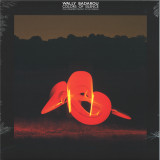
Synth pioneer and musical polymath, Wally Badarou is a genius. But you know that already. A vinyl version of his majestic Colors Of Silence has been craved by the Balearic cognoscenti ever since its low-key 2001 release. Indeed, when we first started work on Be With, we asked some pals with exquisite taste what their dream release would be. We asked Balearic legend Moonboots and, without hesitation, he said Colors Of Silence by Wally Badarou. We didn't know Wally had made this album. And most still don't. But that's about to change.
Colors Of Silence is ostensibly a new age album. As ever though, Wally's sophisticated synth textures and expressive keyboard runs are so full of character, so full of life, that this work of art transcends any easy genre categorisation. It's simply stunning, throughout. It sounds like A.r.t. Wilson or Suzanne Kraft, with traces of CFCF and Jonny Nash. But it was made a good decade earlier than the work of these modern giants. Sometimes, it doesn't seem far from some Larry Heard albums.
Island Records founder Chris Blackwell's friend Nathalie Delon asked Wally to provide music for the yoga DVD she was to release. Lack of time on both sides made them agree on using "quality demos" Wally had in his ideas bank. It's understandable why Colors Of Silence remains somewhat of a lost gem. As Wally explains: "Total lack of promotion made it an 'intimate' release, which was exactly what I was looking for: just a buzz-maker and time-buyer that would allow me to concentrate on the real thing as soon as I'd have time, which could also turn into a rare collecting item later, once the final versions made their way to success. You never know."
Over the years, Colors Of Silence has become a true cult record for the ambient/Balearic heads.
The beguiling but brief "Dance In The Dust" is the shuffling, hyper-percussive, hypnotic opener. It gives way to the deep serenity of "Amber Whispers". It's a gliding, divine, mini melodic masterpiece. It'll make you swoon in its extreme beauty. The bright and breezy "Where Were We" follows, a tropical, reggae-tinged bounce through the islands.
The uptempo groove is maintained on the keys-drizzled soca-funk of "The Lights Of Kinshasa" before Side A is rounded out with "Pictures Of You". It starts with stately, melancholic, unadorned piano and this alone would make for a beautiful song. But Wally always gives us that bit extra and he effortlessly introduces warm, dreamy pads and minimal, slo-mo percussion to augment a frankly stunning piece of work.
Ushering in Side B, Wally's mesmeric piano playing is to the fore again, in the intro to uber-chilled "Serendipity For Two". The playing becomes more mellifluous as the track progresses and adds warmth through exotic percussion, woodwind, sweeping synths and digi-drums. It has echoes of, er, Echoes. It segues seamlessly into the more propulsive, wavy "Smiles By The Millions". If you're not nodding and grinning along widely to the gently throbbing bassline underpinning this, we can't help you. The meditative "Higher Still" follows, cinematic in feel and ever so slightly sinister with the strings. It sounds particularly Badalamenti-esque, if you ask us.
That unmistakable, almost peculiar Badarou funk - so lyrical, so texturally rich and so rhythmically spacious - is all over "Oriental". Next up, "Days To Wonder" brings the serenity back, insistent yet melodic keys, as if played in a place of worship, coupled with birdsong, conjure a kind of instant nostalgia for halcyon days of youth. The contemplative "Dawn Of Europa" is a sombre, beatless, ambient journey whilst the glorious, too-brief "Crystal Falls" features soft percussion and sparkle before fully glistening with some gentle head-nod beats. Wally brings this incredible collection to a mellow, tender close with the graceful "Purple Lines".
There can be few artists more under-appreciated given their vast influence than Wally Badarou. His solo work practically defined the sound of the Balearic DJs of the 1980s, and thus the more sophisticated sound of dance culture thereafter. A synth specialist, Badarou was the long-time associate of Level 42. He was one of the Compass Point All Stars (with Sly and Robbie, Barry Reynolds, Mikey Chung and Uziah "Sticky" Thompson), the in-house recording team of Compass Point Studios responsible for a series of albums in the 1980s recorded by Grace Jones, Tom Tom Club, Mick Jagger, Black Uhuru, Gwen Guthrie, Jimmy Cliff and Gregory Isaacs. Badarou's keyboard playing could also be heard on albums by Robert Palmer, Marianne Faithfull, Herbie Hancock, M (Pop Muzik), Talking Heads, Manu Dibango and Miriam Makeba. He also produced Fela Kuti. Phew!
Meticulously remastered and cut by both Simon Francis and Cicely Balston respectively, it has been pressed to the highest possibly quality at Record Industry in Holland. Special thanks must go to Apiento from Test Pressing who first introduced us to Wally and facilitated all those early zoom meetings. It couldn't have happened without his help. Not least on pulling the art together, too, which features striking original photography by Mads Perch. Benji Roebuck of Roebuck Press did his thing brilliantly in art working the whole package to completion. All in all: essential.