INDEPENDENT RECORD SHOP AND LABEL KLANG TONE RECORDS RE-ISSUE DEBUT ALBUM BY 8 PIECE INSTRUMENTAL EHTIOPIAN JAZZ/AFRO-BEAT/PROG COLLECTIVE;
TEZETA
“Absolutley gorgeous from start to finish…”
- Deb Grant, BBC 6 Music
“An instant obsession. Impeccable rhythms and hypnotic melodies—Tezeta crafts a spellbinding fusion of Addis and Avon that takes you on a journey."
- Don Leisure
“Gorgeous mood music with more than a nod to Addis. Lovely tapestries and textures”
- Matt Temple, Matsuli Music
'Formed in Bristol back in2014 Tezeta were an experimental 8 piece instrumental group effortlessly combining Ethiopian jazz, Afrobeat, prog and improvisation. The band spawned out of the much loved Bloom Collective - a collective of musicians and friends from an experimental corner of the city’s buzzing music scene.
Led by composer, pianist and bandleader Daniel Inzani (Spindle Ensemble, Cosmo Sheldrake) the band also featured tenor saxophonists Andrew Neil Hayes (Run Logan Run) and Lorenzo Prati (Count Bobo, the Evil Usses, Itchigo Evil), Harriet Riley (Spindle Ensemble, Paraorchestra) on Marimba, vibraphone and percussion, Pete Gibbs (Count Bobo) on bass, Conrad Singh (Alabaster dePlume, the Evil Usses) on electric guitar and finally two(!) drummers Matthew Jones (The Brackish, Slate Trio) and Daniel Truen (Yama Warashi, The Evil Usses, Rozi Plain, Count Bobo).
They initially got together to play music from ‘The Ethiopiques Volumes’, in particular, the work of Mulatu Astatke, hence the name Tezeta (Ethiopian for nostalgia) but quickly evolved into their own style with all original material, incorporating many other influences along the way. Their much loved, debut album 'Seventh Place' was released in Sept 2016.
“We at Klang Tone have been admirers of Daniel Inzani’s work with Spindle Ensemble and I was fortunate to catch Tezeta perform before they disbanded. I bought one of the last available copies of their home released cdr at their gig at local Stroud venue The Prince Albert. It became a firm favourite - a recording I keep playing and never got tired of. It’s such a beguiling mix of styles - always evolving and resolving in different ways to what you might expect - some thrilling ensemble playing rhythmically propelled by two drummers and a percussionist with Daniel’s evocative melodies at the centre. I was convinced this was a recording that deserved a bigger audience and felt it needed to be heard on vinyl so I started a conversation with Daniel about releasing it on Klang Tone as it perfectly encapsulated the raison d'être of the shop and label. We didn’t want this recording to languish online barely listened to - I felt it was in danger of becoming a lost classic. I hope that this vinyl release is a worthy testament to this great band and helps draw attention to the creative genius of composer Daniel Inzani and the talented ensemble of players featured on the recording.” - Sean Roe, Klang Tone Records
Tezeta had a cult following among other musicians and were known for their wild group solo wig outs, virtuoso musicianship and creative use of unusual rhythm, harmony and melody. They toured across the UK at various venues and festivals including Glastonbury, Shambala and Green Man, and subsequently released an EP named ‘Curious Bubble’ in 2020.
In 2023 Tezeta performed a sold out final show at Strange Brew, Bristol as Inzani decided to pursue solo releases, notably his critically acclaimed triple vinyl album ‘Selected Worlds’ released on Hidden Notes Records which landed in the Guardian Top 10 Contemporary Albums of the Year in 20204. The third disc ‘Play’ was a clear continuation and development of the music Inzani had developed with Tezeta and featured many of the same musicians.'
The cover image is from ‘Project Rewind’, a double exposure photography collaboration between Karen Dews and Paul Blakemore.
Graphic design by Adam Hinks.
quête:the electric
- A1: I Can Never Say Goodbye (Paul Oakenfold ‘Cinematic’ Remix)
- A2: Endsong (Orbital Remix)
- A3: Drone Nodrone (Daniel Avery Remix)
- A4: All I Ever Am (Meera Remix)
- B1: A Fragile Thing (Âme Remix)
- B2: And Nothing Is Forever (Danny Briottet & Rico Conning Remix)
- B3: Warsong (Daybreakers Remix)
- B4: Alone (Four Tet Remix)
- C1: I Can Never Say Goodbye (Mental Overdrive Remix)
- C2: And Nothing Is Forever (Cosmodelica Electric Eden Remix)
- C3: A Fragile Thing (Sally C Remix)
- C4: Endsong (Gregor Tresher Remix)
- D1: Warsong (Omid 16B Remix)
- D2: Drone Nodrone (Anja Schneider Remix)
- D3: Alone (Shanti Celeste ‘February Blues’ Remix)
- D4: All I Ever Am (Mura Masa Remix)
- E1: I Can Never Say Goodbye (Craven Faults Rework)
- E2: Drone Nodrone (Joycut ‘Anti-Gravitational’ Remix)
- E3: And Nothing Is Forever (Trentemøller Rework)
- E4: Warsong (Chino Moreno Remix)
- F1: Alone (Ex-Easter Island Head Remix)
- F2: All I Ever Am (65Daysofstatic Remix)
- F3: A Fragile Thing (The Twilight Sad Remix)
- F4: Endsong (Mogwai Remix)
2x12" Vinyl[29,62 €]
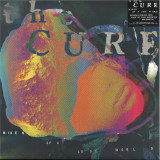
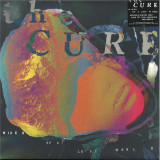
"Mixes Of A Lost World", konzipiert und zusammengetragen von Robert Smith, ist eine neue Remix-Sammlung von Tracks aus The Cure's gefeiertem #1 Album "Songs Of A Lost World", das im November 2024 erschien. Das neue Set enthält 16 brandneue Remixe von Künstlern wie Four Tet, Paul Oakenfold, Orbital und vielen anderen. Die Deluxe-Edition enthält zusätzlich Remixe und Reworks von Chino Moreno (Deftones), Mogwai, 65daysofstatic und vielen mehr. Bei den Künstlern handelt es sich um Freunde von Robert, die die Songs in einer atmosphärischen und stimmungsvollen Art und Weise kreiert haben. Sie sind es, die diesem unglaublichen Album ihre Tiefe verleihen. Die meisten von ihnen stammen selbst aus Bands und begeben sich mit ihren Kreationen auf einen neuen Weg der Entdeckung.
- A1: I Can Never Say Goodbye (Paul Oakenfold ‘Cinematic’ Remix)
- A2: Endsong (Orbital Remix)
- A3: Drone Nodrone (Daniel Avery Remix)
- A4: All I Ever Am (Meera Remix)
- B1: A Fragile Thing (Âme Remix)
- B2: And Nothing Is Forever (Danny Briottet & Rico Conning Remix)
- B3: Warsong (Daybreakers Remix)
- B4: Alone (Four Tet Remix)
- C1: I Can Never Say Goodbye (Mental Overdrive Remix)
- C2: And Nothing Is Forever (Cosmodelica Electric Eden Remix)
- C3: A Fragile Thing (Sally C Remix)
- C4: Endsong (Gregor Tresher Remix)
- D1: Warsong (Omid 16B Remix)
- D2: Drone Nodrone (Anja Schneider Remix)
- D3: Alone (Shanti Celeste ‘February Blues’ Remix)
- D4: All I Ever Am (Mura Masa Remix)
3x12" Vinyl[41,98 €]
"Mixes Of A Lost World", konzipiert und zusammengetragen von Robert Smith, ist eine neue Remix-Sammlung von Tracks aus The Cure's gefeiertem #1 Album "Songs Of A Lost World", das im November 2024 erschien. Das neue Set enthält 16 brandneue Remixe von Künstlern wie Four Tet, Paul Oakenfold, Orbital und vielen anderen. Die Deluxe-Edition enthält zusätzlich Remixe und Reworks von Chino Moreno (Deftones), Mogwai, 65daysofstatic und vielen mehr. Bei den Künstlern handelt es sich um Freunde von Robert, die die Songs in einer atmosphärischen und stimmungsvollen Art und Weise kreiert haben. Sie sind es, die diesem unglaublichen Album ihre Tiefe verleihen. Die meisten von ihnen stammen selbst aus Bands und begeben sich mit ihren Kreationen auf einen neuen Weg der Entdeckung.
Azzurro 80's new album—his first ever on LP—is a beautifully faded Polaroid that, like a true flashback, plunges listeners into the heart of the 1980s. It's a sonic journey that captures the essence of a decade, distant yet vividly etched in our collective memory.
The Roman producer unleashes his sonic vision with even greater intensity than before, weaving through dreamy italo-disco, electric atmospheres, soundtrack-worthy synth-pop, and boogie-funk grooves.
Each track opens a window onto an era the artist experienced only fleetingly as a child, yet he evokes it with a powerful and refreshingly original touch. Much like a classic library music record, these tracks conjure a wealth of images, scenes, and visual sequences—perfect soundtracks for imagined films or evocative advertising campaigns: as seductive as a perfume ad, as desirable as a car commercial, and brimming with the bright future the 80s promised.
It's no surprise that cinematic references spring to mind even before musical ones. The album echoes the dreamy atmospheres of early 80s Italian cinema, particularly films like Carlo Verdone's "Acqua e Sapone" (1983) and Carlo Vanzina's "Amarsi Un Po'" (1984). Meanwhile, flashes of New Romantic aesthetics and hints of electro-funk transport you to a neon-lit dance floor where a DJ is spinning the vinyl copy of Flashback.
Azzurro 80's new album is a vibrant, energetic work, balancing groove and emotion in equal measure and infused with a sense of nostalgia that feels remarkably contemporary.
Available May 9th on LP and Digital from Four Flies Records!
Mary Yuzovskaya unveils the 'The More You Know' remix EP on her vinyl-only Monday Off imprint, releasing 6th June 2025. Featuring reworks from Spain's ORBE, 90s US Techno legend Mike Parker, Judas Records' JUDAS, and Duna founder CONCEPTUAL.
First up, Token and Mote-Evolver artist and Orbe Records boss ORBE remixes 'Ittiologia', maintaining the original's hypnotism by amplifying its eerie soundscapes for a loopy, deep space trip. JUDAS, shrouded in mystery yet known for his self-released EPs on his eponymous label and releases on ARTS, then revisits 'Micologia', completely reworking its tripped-out sequences into short bursts of droning synth work.
Tresor, Semantica, and Prologue's Mike Parker also provides a version of 'Micologia', with the US Techno lynchpin slowing down its rhythm while its weighted synthlines bubble up between its kicks and rides. Closing out this remix package, Italy's CONCEPTUAL reworks 'Ittiologia', building tension via the original's dark and shadowy atmospheres but switching up its low-end for an electric, late-night feel.
Mary Yuzovskaya is a storyteller. Through delicate, masterful curation and a deep knowledge of experimental, trippy Techno, she weaves together sonic journeys - with 'The More You Know - Remixes' making for another excellent addition to her Monday Off label.
In an ever-expanding musical universe, Azymuth have long existed as a celestial giant, drawing countless artists, musicians and followers into their orbit. Marking fifty years since their 1975 debut album Azimuth, their new album Marca Passo proves that the band’s alchemic brew of Brazilian jazz-funk and cosmic samba soul remains as vital as ever, as the group honours the profound legacy of their departed founders.
Recorded in Rio de Janeiro, Marca Passo is the first full-length release since the passing of founding drummer Ivan "Mamão" Conti in 2023, following the earlier loss of keyboardist José Roberto Bertrami in 2012. Alex Malheiros, the sole remaining original member, sees his stewardship of the band’s musical legacy as his spiritual duty. He is joined by the equally devoted Kiko Continentino (Milton Nascimento, Djavan) on keyboards, who has been with the group since 2016, and new recruit Renato Massa (Marcos Valle, Ed Motta) on drums.
Yet since their earliest recorded music, Azymuth have always been far greater than the sum of their parts. The "three-man orchestra’s" unmistakable sound is rooted in Brazil's MPB studio scene of the 1970s and early 1980s—a time when artists blended traditional Brazilian rhythms with global jazz, rock, and emerging psychedelic and progressive elements. Marca Passo continues this legacy, seamlessly fusing Brazilian musical traditions with global influences while showcasing the exceptional musicianship that powers Azymuth's distinctive, multi-dimensional sound.
The album is produced by studio mastermind Daniel Maunick, responsible for Azymuth’s two previous studio albums, Fênix in 2016 and Aurora in 2011. Daniel’s credits also include albums by Marcos Valle, Sabrina Malheiros and Terry Callier. Azymuth also invited Daniel’s father, British jazz-funk royalty Jean Paul “Bluey” Maunick, of Incognito, to play guitar on a new version of Azymuth’s eighties classic “Last Summer In Rio”, in tribute to the song’s composer, José Roberto Bertrami. Equally, “Samba Pro Mamao” is a new composition dedicated to Azymuth’s beloved original drummer, Ivan “Mamão” Conti.
Credits:
Alex Malheiros - Bass, Acoustic Guitar & Vocals: 1,2, 3, 4, 5, 6, 7, 8, 9, 10
Kiko Continentino - Keyboards, Organ, Vocoder & Vocals: 2, 3, 4, 5, 6, 7, 8, 9, 10
Renato Massa - Drums & Vocals: : 2, 3, 4, 5, 6, 8, 9, 10
Ian Moreira - Percussion: 1, 2, 3, 4, 5, 6, 8, 9, 10
Sidinho Moreira - Percussion: 1, 2, 3, 4, 5, 7, 8, 9, 10
Dudu Viana - Keyboards & Vocals: 1
Victor Bertrami - Drums: 1
Mangueirinha - Repinique: 3
Jean Paul ‘Bluey’ Maunick - Electric Guitar: 5
Jose Carlos Bigorna - Soprano Sax: 9
Daniel Maunick: Additional Percussion, Synths & EFX: 1, 2, 3, 4, 5, 6, 7, 8, 9
Produced, Engineered, Mixed & Arranged by Daniel Maunick
Co-Produced & Arranged by Alex Malheiros
Executive Producer: Joe Davis
Recorded by:
Daniel Maunick & Leonardo Vieira @ Estúdio Nos Trilhos, Santa Teresa, Rio, Brazil
Daniel Maunick & Amadeu Signorelli @ Sigstudio, Niterói, Rio, Brazil
Daniel Maunick & Alex Malheiros @ Estúdio Basslab, Piratininga, Rio, Brazil
Mixed by Daniel Maunick @ The Sugar Shack, Carluke, Scotland
Artwork & Design: Tyler Askew
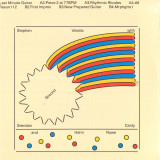
When you’re running a label, a demo occasionally comes across your desk that makes you reconsider everything you thought your label was all about. For Balmat, such was the case with this stunning album from Stephen Vitiello, Brendan Canty, and Hahn Rowe. It sounds like nothing we’ve released so far—and that very otherness opened up a whole new world of possibilities for us.
Fans of ambient, experimental electronic music, and sound art will be familiar with Vitiello, a New York native, long based in Virginia, who has collaborated with a cross-generational list of greats: Taylor Deupree, Steve Roden, Lawrence English, Tetsu Inoue, Nam June Paik, Ryuichi Sakamoto, Pauline Oliveros, and many more. On labels like 12k, Room40, and Sub Rosa, he has explored a wide range of minimalism, microsound, lowercase, ambient, improv, and other styles. But this album is something different. It may begin in ambient-adjacent territory, but it quickly veers off, and it just keeps zigzagging, taking on elements of krautrock, post-punk, dub, and the groove-heavy interplay of groups like Natural Information Society and 75 Dollar Bill.
This stylistic turn is thanks in large part to Vitiello’s choice of collaborators. “We’re coming from three different schools,” Vitiello says: “sound art, art rock, and punk rock.”
Active since the early 1980s, Rowe—a violinist, guitarist, and producer/engineer—has played with, or manned the boards for, a frankly jaw-dropping list of musicians: Herbie Hancock, Gil Scott-Heron, the Last Poets, Roy Ayers, John Zorn, Glenn Branca, Swans, Live Skull, Brian Eno, David Byrne, Anohni, R.E.M., Yoko Ono, and many more. But he might be most closely associated with Hugo Largo, a one-of-a-kind New York quartet—two basses, vocals, and Rowe’s violin—that in the late 1980s helped lay the groundwork for what would eventually become known as post-rock.
Canty, of course, is the legendary drummer of Fugazi, the visionary DC post-hardcore group, as well as Rites of Spring before them, and, currently, the Messthetics, a Dischord-signed instrumental trio with guitarist Anthony Pirog and Fugazi bassist Joe Lally.
Vitiello’s trio first collaborated on First, a 17-minute piece released on the Longform Editions label in 2023. Second picks up where the freeform drift of First left off, channeling the trio’s exploratory energies into more intentionally structured tracks and—in a real first for Balmat—some almost shockingly muscular grooves. “Sometimes my projects are more conceptually driven,” Vitiello says, “but I think this was more musically geared. I just wanted to open up the references and bring in an incredible drummer, bring in some melodies, and I’m sort of the center.” But his collaborators, he stresses, are “vastly creative in making anything I might suggest better.”
Like its predecessor, Second took shape in phases, shifting between improvisation and collage. Vitiello laid down the skeleton of the music at home, sketching out initial ideas on Rhodes keyboard and acoustic and electric guitar; he then fed the parts through samplers and his modular system, recording 10- or 20-minute jams. Once he had edited them into more structured forms, he hit the studio with Canty, who added not just drums but also bass and piano; finally, Vitiello took the results of those sessions to Rowe, who played violin, viola, electric bass, and 12-string acoustic and bowed electric guitar, and assisted in some of the final structuring and mixdown.
A few more surprises along the way: Reanimator’s Don Godwin, the studio engineer where Vitiello recorded with Canty, contributed what he calls “resonant dustpan”; and none other than Animal Collective’s Geologist, who just happened to be in the studio that day, sits in on hurdy gurdy on “Mrphgtrs1,” the album’s gorgeous, stunningly atmospheric drone closer. “I love these chance encounters,” Vitiello says. “Somebody I admire, a group I admire—that was an unexpected gift.”
An unexpected gift is a great way of describing Second as a whole: three veteran musicians venturing outside their usual zones and finding a new collaborative language together. The results can’t be neatly slotted into any given genre; they belong not to any given category, but to the spirit of conversation itself.
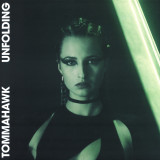
I’m thrilled to welcome Tommahawk to the Electric Ballroom family. Tomma is a standout among the new wave of DJs and producers from Germany, carrying forward the rich tradition of classic Techno. From the moment I heard Unfolding and its stunning choir melody, I was hooked. Remixing this gem was an absolute pleasure.
AN ATLAS OF LOSS
Do minerals dream of becoming semiconductors? Do they yearn to carry charges, amplify, switch, and convert energy into emotions comprehensible to humans? And what if, from the darkness of the underground, they had been listening to us sing in caves before the emergence of the first flute? Could they have guided us, through the course of history, to find them, extract them, and create new sounds through sinusoidal waves, to form valves and bend circuits?
If so, minerals would transition from what philosopher Eugene Thacker defines as the ‘planet’—that virginal and unreachable realm for humans that we study through geology, paleontology, and environmental sciences—to the ‘world,’ the space we inhabit, interpret, and synthesise in our daily lives. Sadly, we only remember the world when it erupts violently, through climate catastrophes or when a new virus emerges. Sometimes a tsunami collides with a nuclear plant, or viruses are cultivated as biological weapons in high-security laboratories, provoking a deep biological anxiety, hard to quell, which we all feel beneath our skin.
There exists a third realm, disconnected from both the world and the planet: the ‘earth’, an immense, dense rock floating in space alongside other planets, situated in the cosmological dimension. Relating to the earth is so complex that we only do so through theoretical speculations of a scientific nature or through science fiction, interweaving until one becomes the prophecy of the other, in an infinite, pendular dance. Beyond the darkness of space and Lovecraft’s cosmic horror, the fantasy of human extinction is the most recurrent: to reach a collapse so devastating that we do not survive it, even though the earth does, without us.
In a world where we quantify everything through body sensors, financial algorithms, nanometre-scale robots, and surveillance drones—a world in which everything that can be domesticated and controlled can also be commodified—a superior artificial intelligence would survive the collapse of the species (some speculate it might even cause it) and learn from our mistakes, thanks to our obsessive gathering of data.
Long after our voices fade, minerals will persist in the darkness of screens, in the silicon of chips, and in their pure form, still unexploited underground. Over the millennia, this intelligence might piece together fragments of our reasoning, as if an alien civilization finally connected with one of our spacecrafts loaded with messages cast into the void. It would sort through endless streams of data, unable to grasp the depths of emotion behind what it quantified, recreating simulations of our past, stripped of the nuance that once defined us and conducting experiments in sandboxes.
Some remnants of our existence—faint echoes of forgotten beauty—would be pieced together in an atlas of loss, buried beneath layers of numbers, decayed bots, and corroded hard drives. What will follow? Perhaps bison will once again roam—trotting to the strange pulse of techno, their ancient forms framed by the ruins of our cities.
Buildings will crumble, slowly dissolving under the soft touch of ambient music, and a thousand flowers will bloom with that ancient music created through electrical signals and computation. 7 songs for a future both improbable and inevitable—a final message from a world lost to itself, from planet Earth to planet Earth.
Alfons Pich, 2025
Marking his first EP on Damian Lazarus’s revered Crosstown Rebels, OMRI. (pronounced “OMRI dot”) steps into the spotlight with ‘Nothing Wrong’—an infectious, immersive dive that traverses well beyond the dancefloor, laced with rhythm, tension, and soul. Dropping in June, the EP brings together a shimmering original, a hypnotic club-focused cut, and a peak-time remix from fast-rising US talent AYYBO.
Having already left his mark on the label with his remix of Jessica Brankka’s ‘Musk’, OMRI. now arrives with a statement of his own. The ‘Love Mix’ of ‘Nothing Wrong’ leads the release as a full-blown vocal anthem, layering captivating vocals over sweeping melodies and crisp percussion to create a powerful record destined for both club rooms and open-air settings. The ‘Club Mix’ takes a more experimental route—glitchy, stripped-back, and built for locked-in dancefloors and after-hours sessions.
AYYBO adds his own bold interpretation to the mix, injecting a darker, punchier energy that’s become synonymous with his releases on the likes of Experts Only, Insomniac, and HARD Recs. It’s a remix that captures the raw electricity of his sets while reimagining OMRI.’s original through a distinctly West Coast lens. An in-demand name, OMRI. has quickly carved a reputation for transcendental performances at some of the world’s most revered institutions. His sound, shaped across labels such as Hot Creations, Disco Halal, Haccabi House, and more recently through his own imprint Collecting Dots Records, blends deep psychedelia and hypnotic grooves with a forward-thinking approach, with past collaborations alongside Adam Ten, Moscoman, Yamagucci, and more. Set to feature regularly at Lazarus’ Hï Ibiza residency throughout the summer, expect standout sets that reflect his genre-blurring style and connection to the Crosstown Rebels sound as he serves up one of the label's most essential cuts of the year to open the summer in style.
Producer powerhouse duo Crate Classics release their electric debut album, Green Lanes. With a plethora of features from fresh talent to dance music veterans, Crate Classics are working with the likes of Pesolife, Liam Bailey, Bay-C, Jodian Natty, LA Salami, Omar+, Nia Chennai, Not3s, Cres, Joe Cain, Tills & Aphrah. Green Lanes brings an eclectic mix, from dancefloor bangers to sweet melodic bops, spanning the rich practices of Jungle, RnB, Afrobeats and Reggae.
This vinyl includes a sample of tracks from Green Lanes, remixes from the likes of Missing, Potential Badboy & Tyke, and 2 exclusive bonus tracks. Featuring an exclusive Congo Natty Remix of Crate Classics & Jodian Natty's 'Anything'.
For customers of the Rush Hour shop, this item ships for its may 23rd release date. Any items ordered along with this will ship then also
After five years spent largely confined to the United States, Ron Trent is set to return to global touring in 2025. To mark the occasion, he’s partnered with Rush Hour to release Lift Off, a brand-new album of music recorded at different points over the last decade.
Arriving almost 35 years since he wowed the world with his game-changing debut, the Afterlife EP, Lift Off was inspired by Trent’s desire to ‘let the imagination speak for itself’ while exploring the diverse influences that have shaped his unique musical perspective. A departure from his previous album, 2022’s downtempo masterpiece as Warm, What Do The Stars Say To You, the 10-track set features a mixture of epic instrumentals, inspired collaborations and vocal cuts whose music was written with certain singers in mind.
While it features music that ripples with the experienced producer’s familiar aural trademarks – rich rhythms, warm chords, impeccable instrumentation, inspired arrangements, and lashings of heady hand percussion – it also consciously explores a variety of sounds and tempos, in the process blurring the lines between dance music’s past, present and future. It’s a vision, in his words, of what dance music can become.
For proof, check the five impeccable cuts on part one. There’s the tactile, Wally Badarou-inspired wonder ‘Hot Ice’, the mind-soothing chords, lilting synth-strings and samba-soaked percussion of ‘Woman of Color’, the warming deep house jazziness of ‘Jazz Funk’ and the restless, far-sighted brilliance of ‘Sexstrology’, where relaxed electric piano solos dance atop an infectious, locked-in dancefloor groove.
Best of all though is Leroy Burgess collaboration ‘Let Me See You Shining’ – an inspired musical meeting of minds that cannily fuses Trent’s signature deep house sound with the soulful, vocal-driven brilliance of the New Yorker’s iconic boogie-era work. Even by the two artists’ dizzyingly high standards, it’s a very special song.
Miles Away Records are proud to introduce a brand-new, never before released piece of music.
In September 2024, Rob J Madin reached out to us with a collection of instrumental covers he had created. Immediately drawn in, we loved both the musical approach to these covers and the fact he tastefully selected these tracks to cover. Following up, we asked Rob, an accomplished musician, if he had any original compositions in a similar style.
The result is "MONSTRO", six instrumental slabs of jazz-funk heat! Produced primarily in Rob's attic studio in Sheffield. Rob showcases his talents on guitar, bass, keys, and percussion, with each track built around iconic drum samples. Listeners can expect spacey synths, silky electric pianos, and irresistible hooks. Think BADBADNOTGOOD meets Mildlife with a side plate of Herbie Hancock.
From the kick-your-door-down energy of "Callisto Disco" to the slow-burning allure of "Heartbreaker" and optimistic sunny day feel of "Cherryade" to the fully grown earworm synth lines of "Bouquet Garni". In addition to four original songs, the collection features two cover versions from that initial SoundCloud link: Michael Miglio's "Never Gonna Let You Go" and Rupa's "Ayee Morshume Be-Reham Duniya." Both are rare early-80s gems, wonderfully reimagined by Rob.
"MONSTRO" will be officially released on May 16th, 2025 on digital and physical formats. The 12" EP comes with printed inner sleeves and is pressed at 45rpm for maximum audio depth.
Sababa 5 collaborate with India born singer Sophia Solomon on their most exciting double A-side to date, merging Bollywood-style songs with their signature blend of Middle Eastern grooves.
Renowned for their instrumental releases that fuse traditional and contemporary Middle Eastern music with psychedelic rock, funk, and disco, Sababa 5 have also pushed boundaries in collaborations with vocalists such as Shiran Tzfira, Yurika Hanashima, and Inbal Nur Dekel. These efforts have won them support from the likes of Gilles Peterson, Cerys Matthews, and Jeremy Sole, on BBC Radio 6 Music and KCRW. Now, the band joins forces with Sophia Solomon for their latest musical exploration.
Born in Bengaluru, South India, and trained in Hindustani classical music in Mumbai, Sophia Solomon is a versatile, multilingual singer, recording artist, and live performer, drawing inspiration from Bollywood legend Asha Bhosle. A standout moment early in her career - a global tribute to Mahatma Gandhi - ignited her passion for bridging musical traditions across cultures.
“Shehzadi” (“Princess”) is an Indo-disco delight. Solomon’s Hindi vocals soar effortlessly across Sababa 5’s finely balanced arrangement of hypnotic drums, pulsing electric bass, fanning electric guitar, and sparkling synths in a beguiling minor key. There’s a strong hint of 80s nostalgia with a contemporary shine, evoking a Stranger Things meets Bollywood charm.
“Ranjha” (“Lover”) takes on a more Middle Eastern feel, with synth notes that undulate with longing and emotion, reminiscent of traditional instruments like the saz or baglama. The upbeat groove pairs seamlessly with Solomon’s dynamic, hope-filled vocals. Well-timed pauses add dramatic flair, while Sophia’s performance allows space for an exuberant synth solo.
This exciting collaboration marks another bold turn for Sababa 5, infused with new life through Sophia Solomon's artistry. “Shehzadi” and “Ranjha” represent a fruitful exchange of cross-cultural musical exploration, destined to be played on repeat far and wide.
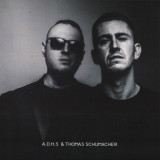
After the success of Mirazh, Thomas Schumacher and A.D.H.S. reunite for another high-impact release. This follow-up delivers three raw, driving and highly addictive tracks, staying true to the tradition of Berlin’s techno legacy - a city the duo not only calls home but holds close to their hearts.
Marie-Pierre Rixain and David Fenech form an unexpected and captivating duo, pushing the boundaries of alternative music. Together, they embark on an unclassifiable sonic journey, blending industrial downtempo, steady kicks, cold percussion, field recordings, and electric guitar feedback. Their music, often dark, carries flashes of warmth inspired by British dub—like an imaginary collaboration between The Bug and This Heat. At times, it echoes the world of La Perversita by Hector Zazou & Co.
Their debut album, Insane Ghosts, due out in spring 2025 on the Parisian label Hublotone, was recorded in 2024 in the intimate privacy of the bedroom. Mixed by David Fenech, it also benefits from the participation of Alexandre Berly (La Mverte) on the track ‘Toi en Moi’, adding a sub and experimental touch. The mastering was handled by the legendary Noel Summerville, whose sonic signature graces iconic albums by The Clash, My Bloody Valentine, Kraftwerk, Aphex Twin, and Nick Cave and the Bad Seeds.
The album cover features a striking work by French photographer and filmmaker Antoine d’Agata (Magnum Photos). His poetic and abstract image adds another layer to Insane Ghosts, a project already shaping up to be a must-have for fans of introspective, dark and cold music. Like if Lost in Highway from David Lynch had a new soundtrack.
180 G. BLACK VINYL WITH LINER NOTES IN CREOLE, FRENCH, ENGLISH
Originally released in 1979, "Spiritual Sound" lives up to its name, a soaring, triumphant album, six tracks of spirit magic from Guadeloupe.
Telluric, intense, terribly alive, the gwoka drums of Guadeloupe carry the identity of a painful and fervent island. Marked forever by the crime of slavery, Guadeloupe's créolité cherishes the ka drums and their natural environment: the low-pitched boula drum with male goatskin, the high-pitched soloist makè drum with female goatskin, the chacha, ti bwa, triangle, calabash and other percussion instruments that surround them, and the voices - the fiery, proud, timbred, urgent voices of the gwoka.
This album is also a legend for its voices: in his then dazzling youth, singer Lukuber Séjor was one of the first gwoka artists to largely feminize the chorus of répondè, who converse with his text delivered in a straight and powerful voice.
And everything here sets new standards. In 1979, Mizik Filamonik - Spiritual Sound proclaimed a spiritual patriotism of ferocious intensity. The album by Lukuber Séjor - whose spelling alone is a battle - sets out to give Guadeloupe the intangible weapons of self-respect and self-knowledge, through a singular practice of traditional music.
The genesis of gwoka music is less straightforward than one might imagine... The drums performed the servile task of accompanying the work of slaves in the fields and during the “corvées” imposed by the administration, before being freely practiced by the common people after the abolition of 1848. At the heart of the conviviality of the Guadeloupeans furthest from the cities - geographically and socially - the gwoka drums come out for carnival, funeral wakes and neighborhood celebrations, but also during strikes, fits of anger and armed vigils of the riots and revolts that have punctuated the island's history. For generations, governors of the colony and then the prefects of the overseas department of Guadeloupe have been viewing the gwoka as a potential for turbulence and a threat to public order.
But as the Beatlesmania, “chanson engagée” and rock revolutions unfolded in Europe, young people turned to the drums of mizik a vié nèg (“bad negro music”, in Creole), which Guadeloupeans had learned to despise by following the “assimilation” process advocated by the school system and most of the political class. At the end of the sixties, in a Guadeloupe mourning the deadly repression of the May 1967 social movement, they played traditional music, refusing to wrap it up in tourist prettiness and madras folk costumes. Instinctively, they played a rough and contemporary gwoka, led by the incendiary Guy Konkèt. This was the era of decisive 45 rpm records such as Robert Loyson's Kann a la richès, which brought to light the fieriest words of union rallies.
At his home in Sainte-Anne, Lukuber Séjor played with flautist Olivier Vamur and his brother Claude Vamur, who cobbled together a drum kit from tin crockery and became, a few years later, the most influential drummer in Kassav'.
These were the years of the Bumidom program, when young Guadeloupeans were encouraged to emigrate to mainland France. At the age of twenty, Lukuber Séjor embarked on the liner Irpinia, disembarking at Le Havre and taking the train to the Gare Saint-Lazare - the route taken by thousands of young West Indians who went on to study or looked for work, all the while trying to maintain a link with their homeland. In this case, it's at the Antony university residence, where Lukuber played the drum and participated in a thousand gwoka updates and aggiornamentos, while exile reinforced the need for a spiritual link with the native land.
In 1978, Guy Konkèt played at the Salle Wagram, a historic event for West Indian music. After serving as répondè - i.e. backing vocalist - on one of his home-recorded albums, Lukuber joined his live band. Little by little, he became one of the key artists on a circuit parallel to French show business. At a student party in Caen, he met a young woman from Martinique who, at the time, was more motivated by her ambitions as a visual artist than by her vocation as a musician. Her name was Jocelyne Béroard and, a few years before she plunged into the Kassav' adventure and became the greatest West Indian singer of her generation, she designed the cover of Lukuber Séjor's LP.
This ambition was obvious and imposed its will. A more or less regular band was formed, with Roger Raspail, Rudy Mompière and Éric Danquin on ka drums, Claude Vamur on ti bwa, Olivier Vamur and Françoise Lancréot on flutes and Annick Noël on keyboards. Lukuber Séjor is set on wanting to extend the gwoka palette to other instruments, as the jazz-rock revolution opens a thousand new doors. Annick Noël will play a wide range of timbres and textures on electric piano and synthesizer. Another novelty: the répondè are two men and two women, Roger Raspail, Olivier Vamur, Françoise Lancréot and Maryann Mathéus ...
Mizik Filamonik - Spiritual Sound is a self-production in which the singer and leader sank all his savings, allowing him no more than a single day in the studio. The first side is more of a musical manifesto, with the first two tracks, Éritage and Penn é plézi, being instrumentals. The third, Son, forcefully celebrates the need for Guadeloupeans to connect with the gwoka. In fact, Jocelyne Béroard's cover shows a tambouyé in the shadow of a cloudy sky, against which a radiant sun is rising and whose light will soon flood the entire landscape. The silhouette and face of this man strongly evoke the immense Vélo, master of the ka, rejected at the time on the fringes of society.
The second side of the LP is surprising. Formally, three tracks are explicitly linked like the three parts of a triptych. Primyé voyaj evokes the appalling tribulation of Africans deported as slaves to Guadeloupe; dézyèm voyaj speaks of the Bumidom program and the economic, political and social forces driving young Guadeloupeans towards the mirage of prosperity in France; twazyèm voyaj closes the cycle with the emigrants' return from Europe after years away from their island...
This gwoka, obsessed with the need to save Guadeloupe spiritually, appeals far beyond the politicized audience. Mizik Filamonik - Spiritual Sound instantly became a classic, although Lukuber Séjor never really made a career for himself as a musician.
After all, the album was released in 1980, with no promotional resources in France or Guadeloupe - and therefore no concerts. The thirty-two-year-old author, composer and performer made his own third trip back to Guadeloupe. He set up a small woodworking business, which he lost in Hurricane Hugo in 1989. His other activity, teaching in a medical-educational institute, became the core of his professional life. He continued to be an active campaigner - a campaigner for the Creole language, a campaigner for the reawakening of identity, a campaigner for special education, a campaigner for a thousand causes that he ignited with his generous and perceptive enthusiasm, such as the defense of breadfruit fries...
The echoes of his 1979 album have not died down. Of course, the use of Penn é plézi as the theme tune for Radio Guadeloupe's funeral notices from 1980 to 1992 kept him in the collective memory, but he continues to sing and compose sporadically, as with his all-female
vocal group Vwapoulouéka... Still convinced that music is a means of liberating the spirit, he continues the journey of a young man eager to deploy the power of Creole music and language.
Bertrand Dicale
We all remember with mixed feelings the past two years of domestic isolation: a temporary anomaly in which the world had to adjust to a new routine, a new rhythm. In these daunting yet precious circumstances, Italian producer Markeno has found his rhythm back, dusting off old records and re-approaching his past musical love affairs that he believed to be long forgotten. Here, in the fertile limbo that connects past and future, “Dock lown (exploring)” is born: a 3-tracker release with a chameleonic nature and an undeniable groove, in which Markeno is able to tactfully combine different genres such as indie, post-rock, African mu- sic, electro and funk.
In the contemporary music scene, overly saturated with catchy melodies and seductive lyrics, it is refreshing to encounter a composition like “Fase 01”, which starts from a purely percussive structure. Just when the ear is settled and well inserted into the tangle of drums, here comes the melodic twist, no less than at the fourth minute, injecting an unexpected groove and chalking out the contours of a track with multiple personalities: a little esoteric, a little synth-wave, quirky and badass. The temperature rises with “Zona Ros- sa”, in which the electro hint sketched in “Fase 01” becomes more pronounced, opening the doors to a dense psychedelic scenario. A shamanic loop accompanies the electric bass and escorts us through the smoke of the bonfire, veils swayed by the wind and colored lights that sparkle in the night. The ritualistic humming of ‘’Zona Rossa”’ is still hearable, floating in the rarefied atmosphere, while the last track “Limbo” makes its entrance and confirms once again the poliedric but congruous essence of this release, whose percussive attitude lures you in and whose hypnotic and groovy body makes you stay. At least for one more dance.
Sara Berton
Repress
In 1998 the release of Final Fantasy left an incredible mark on the electronic music scene. As a DJ I vividly recall the euphoria it sparked on dancefloors with its complex yet catchy Trance melodies - igniting a frenzy of hands-in-the-air moments. Fast forward to today and I've had the incredible opportunity to reimagine this timeless classic. My version pays homage to the original while infusing it with my Techno signature style, resulting in a track that's been met with overwhelming acclaim. (Thomas Schumacher)
From the same recording sessions as Bézier's first EP on Körperspannung records 'Negative Velocity', 'Contraption' channels a few moods and scenarios.
On the a-side 'Contraption' is an insignificant droplet darting through the sky. Soon it joins a disarray of objects positioned above the atmosphere, maneuvers in formation to reveal randomized, decentralized nodes packed for mayhem.
On the b-side Bézier shows a slice of his lived experience. Back in 2004 he used to go to house parties around East LA with friends they grew up with every weekend to listen to music. Winding through the Southern Californian roadway sprawl they'd drive 1/2 an hour to 1 hour on the I-10 (sometimes diverting to Route 60 if gridlock is expected) to get to the location, usually in a residential neighborhood. Being respectful of the communities and the struggle of the progenitors of this music, Bézier presents 'Blue Halo' as an homage to that sound with a twist: Cumbia-Synth to provide a little sauce for your ears. Dave Easlick joins the milieu to provide a percussive framework for this tune.
Lastly, 'Bit by an Electric Wire' showcases Easlick's drumming with an overlay from Bézier. As Dave rips and shreds through his drum kit the OCD machine living inside Yang's brain switches on and organizes, collates and files that dataset into a hardcore rhythm track.
- A1: Astras Theme
- A2: Clearly Packing
- A3: Inspire (Draft)
- A4: Celebrate Some Time
- B1: Just One Bump
- B2: Inspire (Afterthought)
- B3: Whos The Kid ?
- B4: Radicalise
- B5: Living In The Future
- C1: Shine Your Light
- C2: Cyberfunk
- C3: Inspire (Deluxe)
- C4: Lifestyles Of The Hip And The Crazy
- C5: Radicalise (Urself)
- D1: Wavy
- D2: Baby Its U
- D3: Sylvester
- D4: Midas Touch
At the heart of this double album, and amid the intense internal struggle between creative instinct an artistic reasoning, Ziggy has identified two key themes: Inspire and Radicalise. It is within this duality that the 15 tracks of this new work, recorded between Berlin and London throughout January 2024, take shape. Throughout its creation, the crew enlisted a familiar pallet of materials, seeking those obscure and vintage music-making machines, meeting a myriad of percussion and drums with the new addition of electric guitar as the band ventures into disco / highlife inspired territories. bring this ambitious project to life, Ziggy enlisted a team of forward thinking musicians across Europe and the UK alongside old friends and collaborators from the grassroots in Melbourne, Australia: Lewis Moody (Energy Exchange Records), Szabolcs Bognar (Abase), Eric Owusu (Jemba Groove), and Tom Varrall (Jamie Cullum) form the core rhythm section alongside a hefty list of guest appearances (from the likes of Oscar Jerome & Tom Driessler) making this truly the most ambitious and diverse incarnation of ZFEX to date.
Introducing Griffith’s debut release, "Nineteen EP" by Romanian artist Mihai Pol. Known for his instinctive approach to groove and atmosphere, Mihai crafts music that feels organic and immersive, drawing subtle influence from the world around him.
At the heart of the release is "Nineteen", a long-awaited gem produced in 2020. Defined by a hypnotic groove and a striking synth that almost sings like a human voice, the track has become one of Mihai’s most anticipated cuts, impossible to forget once heard. Alongside it, three equally refined productions complete the EP, each carrying his signature rolling energy and deep, immersive flow.
A great first step for Griffith, with plenty more to come.
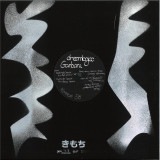
Following his acclaimed collaboration with Sw., Dreamlogicc is back on Kimochi, this time having his work remixed by some tasteful producers from across the electric spectrum. K-rAd is first up with a sharp, punchy rework of 'Fleetingly Jazzis' which then also gets reworked by Brendon Moeller & Todd Gys with their Eho Kates project. It's a gritty, stomping house cut and on the flip, Merix (formerly Midnight Circuitry) delivers a deconstructed breaks interpretation, while Shielding crafts a hypnotic re-edit of 'I'll Hausen You'. Shine Grooves wraps up with a slinky dub house remix which is perfect for early evening warm ups or late night wig outs.
At the start of the 1980’s X-Plode’s dad had a second-hand colour TV business in Bolton, Lancashire where he would buy, sell, repair and trade TVs. He would come back home with all kinds of things he had traded for a TV but the most memorable, to a 10 year old kid at that time, were the keyboards. He use to watch his dad play songs from the 1960’s on these keyboards and when his dad had gone out, Lee X-Plode would sneak on them and start messing about, experimenting with the drum programs and fiddling with the buttons, trying out ideas. He had to move fast though because these keyboards didn’t stay in the house for long as his dad would trade them again for something else; one time that was an old analogue echo chamber, which Lee also messed about with when his dad was out. That echo chamber was a revelation to Lee and opened up the possibilities of what was possible with sound. So by the time Lee was 16, he decided he wanted his own keyboard and started saving. When his 17th birthday came around he had saved up £200 and visited his local Argos where he bought himself a Yamaha PSS 680, an FM synthesizer with memory banks and a basic drum machine incorporated. ‘It was shit quality like, but I didn’t mind. I just wanted it for the programmable drum machine, the synth and the memory banks that came with it” Lee recalls. The year was 1987 and by this time in Lee’s life he was into reggae and hip hop, the latter he first embraced in 1983 by the way of breakdancing and listening to electro, so all he wanted to do when he got his gear was make reggae and electro sounding beats. Recalling his youth and the fun he had with the echo chamber, the next edition to his home set up was to acquire one of those, which he did via a mate of his. But by the time he got his minimal set up sorted in 1988, his musical tastes had changed. House music had landed here in UK and this was Lee’s new passion, so from that point on wards he started experimenting, trying to nail a decent house groove. ‘I wanted 808 sounds, but I didn’t know what one was!’ Lee explains.
Around late 1990 or early 1991, Lee started to improve upon his set up, purchasing an Atari STE, a Cheetah MS6 , a 6 voice polyphonic/multi-timbre analogue rack mounted synth that linked up to his Yamaha – “It wasn’t a great bit of kit, I kept getting electric shocks from it. Eventually it just blew up!” Lee had acquired a cracked copy of Cubase on floppy disk from his local computer game shop but struggled with it. “It was so complicated to understand and took me ages to get used to it. I was stoned a lot back then and I just couldn’t concentrate on anything for long” Lee laughs, continuing “I also picked up a 4 channel sampler/sequencer which plugged into the side of the Atari and that’s when I first started sampling, I think this would have been late 1991. I had the Simon Harris ‘Breaks, Beats and Scratches’ vinyl that he put out on Music for Life which were a godsend back then. I was also sampling a lot from cassette tapes, especially reggae. I would also record the Stu Allan show on Key 103FM, one of the main stations broadcasting out of Manchester. He would do a 3 hour show with hip hop and house, and then hardcore house came along. Eventually he dropped the hip hop altogether and it was just house and hardcore. I recorded the shows onto cassette most weeks and started to learn more about how house and hardcore was put together by listening to those shows.”
Written and recorded in singer-poet Karsyn Henderson, guitarist-banjoist Paul Lecours and percussionist Ryley Klima’s basement alongside bassist Chris Clegg, then mixed and mastered by longtime collaborator Noah Baxter, this self-produced introductory effort from the Montréal four-piece stylishly amalgamates elements from hardcore, punk, shoegaze, sludge, and folk.
Violence is a brazenly poetic homage to small town roots, a mashing of modern Western Canadian hardcore and folk. Extensive in scope, this debut full-length by Truck Violence takes the listener through wide-ranging dynamics, from solemn acoustic ballads to wrathful electric anthems. Deftly fractured rhythms and breakdowns, complex harmonic entanglements, emphatic screams of discontent, are met with hopeful, melodic tracks musing about the steady grip of a tight-knit community.
From somber, deceivingly happy banjo sequences to crashing noise and cries, Violence uses expression as a mirror, looking upon oneself with clarity, aiming to attain a sense of unadulterated truth of the matter. There is little modern music taking an honest look at the Western Canadian countryside, tackling themes such as addiction, abuse and dysfunction.
Truck Violence’s first album does just that, uniquely capturing this involuted setting through a wide lens to both contextualize and emphasize what it means to be overwhelmed, to feel shame, to struggle with self-destructive ways, to thrust oneself into art as an escape.
- A1: Queen - A Kind Of Magic (Highlander)
- A2: Survivor - Eye Of The Tiger (Rocky Iii)
- A3: Bonnie Tyler - Holding Out For A Hero (Footloose)
- A4: Simple Minds - Don't You (Forget About Me) (The Breakfast Club)
- A5: Tina Turner - We Don't Need Another Hero (Thunderdome) (Mad Max Beyond The Thunderdome)
- A6: Gladys Knight - Licence To Kill (Licence To Kill)
- A7: Lionel Richie & Diana Ross - Endless Love (Endless Love)
- B1: Ray Parker Jr. - Ghostbusters (Ghostbusters)
- B2: Blondie - Call Me (American Gigolo)
- B3: Michael Sembello - Maniac (Flashdance)
- B4: Harold Faltermeyer - Axle F (Beverly Hills Cop)
- B5: A-Ha - The Living Daylights (The Living Daylights)
- B6: The Psychedelic Furs - Pretty In Pink (Pretty In Pinkl
- B7: Echo & The Bunnymen - People Are Strange (The Lost Boys)
- B8: The Bangles - Hazy Shade Of Winter (Less Than Zero)
- C1: Kenny Loggins - Footloose (Footloose)
- C2: Huey Lewis & The News - The Power Of Love (Back To The Future)
- C3: Dan Hartman - I Can Dream About You (Streets Of Fire)
- C4: Philip Oakey & Giorgio Moroder - Together In Electric Dreams (Electric Dreams)
- C5: Limahl - Never Ending Story (The Never Ending Story)
- C6: The Beach Boys - Kokomo (Cocktail)
- C7: Christopher Cross - Arthur's Theme (Best That You Can Do) (Arthur)
- C8: Neil Diamond - Love On The Rocks (The Jazz Singer)
- D1: Bill Medley & Jennifer Warnes - (I've Had) The Time Of My Life (Dirty Dancing)
- D4: Deniece Williams - Let's Hear It For The Boy (Footloose)
- D5: Olivia Newton-John - Magic (Xanadu)
- D6: Stephen Bishop - It Might Be You (Tootsie)
- D7: Joe Cocker & Jennifer Warnes - Up Where We Belong (An Officer And A Gentleman)
- D2: Billy Ocean - When The Going Gets Tough, The Tough Get Going (The Jewel Of The Nile)
- D3: James Brown - Living In America (Rocky Iv)
"30 unforgettable hits from the decade that brought movie classics from The Breakfast Club to Back To The Future.
There was no greater era for movie soundtracks than the 80s! Featuring some of the most iconic and memorable soundtrack moments including the title track from Ghostbusters, ‘Holding Out for a Hero’ from Footloose, ‘I’ve Had The Time Of My Life’ from Dirty Dancing, ‘A Kind Of Magic’ from Highlander, ‘Eye Of The Tiger’ from Rocky III, Gladys Knight’s classic Bond theme from Licence To Kill plus many more. This epic double vinyl will have you reminiscing on those beloved 80s film classics and their amazing music."
Special thanks to Joern Wilkens for his didgeridoo performance on Yarra.
A scorched expanse, the air thick, sand shifting in slow waves. Didgeridoo rises from the dust, circling in dry spirals. The earth cracks open, voices calling from below. Drums roll, electric currents move like eels. Sunlight bleeds through the haze.
From arid to humid, SDM006 unfolds in four movements-ritualistic, tactile, lost between fire and flood. Percussive, club-ready heat.
An imperial phase Actress commits a lushly amorphous installation piece made for the Berliner Festspiele to vinyl, rendering a post-industrial symphony full of iridescent shifts in gyring, OOBE-like spatial coordinates landing somewhere between nutopian ambient, kankyō ongaku and sawn-off bass science.
‘Grey Interiors’ was made in collaboration with Actual Objects and is an absorbing animation and navigation of those post-human ideals that have prompted Darren J. Cunningham to his best work across the preceding two decades. In its hypnagogic symphony of the elements, he short-circuits distinctions of classical music’s metric freedoms and the hyperspatial sensuality of concrète/electro-acoustic and ambient musics with an artistic license that has come to distinguish his work in the contemporary field, and arguably identified him as this generation’s most vital electronic abstractionist.
The first half of the album is bewitchingly airless, materialised in a twinkling vacuum. Naturalistic environmental recordings and a half-heard piano swirl around nauseous airlock whooshes and eerie bass drones. It's all pulverised to a powdery, shimmering residue; if Actress's music is defined by its character and texture - that sweet spot between the bedroom and the soundsystem - then this one advances the narrative without losing its backbone. And like a lot of his best work, it comes into its own on the back of zonked eyelids, conjuring a play of shifting geometric patterns within its imaginary physics and nuanced narration of ephemeral melodic phrasing and vaporous textures.
At about the halfway point, that dissociated piano finds its groove, coalescing into a jerky drum machine rhythm popping like bubbles in the stifling atmosphere. We can draw some intersecting lines here thru electronic music lore - traces of vintage AE, Push Button Objects, UR - but Actress always leaves an indelible fingerprint on anything he touches. Even when he's rubbing against the gallery-industrial complex, he manages to fill a stagnant space with electricity and wit; look at the title itself: is it a reference to the "landscape beyond man" as the installation's press release might have us believe, or the institutions themselves?
DR MYSTERY marks her debut release with Ono. ‘Far From Home’ is an eight-track album that glides across the dreamscape of another world. DR MYSTERY’s world, set in the future, exploring sounds that excite the mind and body, underpinning an eclectic take on leftfield techno.
DR MYSTERY’s talent to traverse the intersections between dreams and reality through sonics, positions her as an electric producer who is only just at the beginning of her journey. Ono wishes to capture this moment in a way that feels special, they have handmade 300 sleeves for the ‘Far From Home’ vinyl out of old record sleeves and screen-printed the artwork onto them. Therefore each sleeve is bespoke and one of a kind.
Uhlmann Johnson Wilkes is the debut album from Gregory Uhlmann (SML, Anna Butterss, Duffy x Uhlmann, Perfume Genius), Josh Johnson (SML, Jeff Parker ETA IVtet & New Breed, Meshell Ndegeocello, Anna Butterss, Leon Bridges), and Sam Wilkes (Sam Gendel, Louis Cole, Chaka Khan). The three improviser/arranger/producers' impressive individual credits encompass such a wide stylistic pendulum swing that a collection of group music from the trio could mine any number of musical territories with masterful results. I n these 11 instrumental songs, the trio explores a spacious lyrical curiosity that could b e described as a jazz-informed take o n progressive electro-acoustic chamber music.
Conceived during two live shows at ETA and a session at Uhlmann's house in Los Angeles, the album maintains a focus on beauty, melody, and rhythm as the pieces unfold, with the trio pushing their instruments and highly-dialed effects to sculpt otherworldly sounds with the collective sensibility o f a rhythm section. The ethos of these instant compositions is arrangement-minded improvisation that showcases the mournful beauty of Uhlmann's fingerpicked electric guitar, the hybrid rhythm-lead of Wilkes' bass chording, and the textural harmonic worldbuilding of Johnson's effect-laden alto saxophone.
- A1: Forget About You
- A2: Believe In Me
- A3: Down This Road (Feat. Highway Superstar)
- B1: Sad City
- B2: Dulcinea
- B3: Falling Clouds
- B4: Love In Slow Motion (Feat. Electric Youth)
- C1: Million Ways
- C2: Tell Me How (Feat. Tommy ’86)
- C3: Christmas Escape
- D1: Fading Away
- D2: Holiday
- D3: Why Did I Say Goodbye (Feat. Tommy ’86)
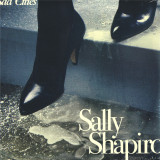
Iconic Swedish duo Sally Shapiro’s 4th studio album is finally here. Sad Cities enters our atmosphere & we couldn’t be more excited to share it tonight.
15 years ago, their breakout debut 12” “Disco Romance” was released on Diskokaine by our dear friend Wolfram. No one was even close to doing what they were doing back then & the world quickly took notice. Two years later, Johan reached out to Johnny to remix Glass Candy’s After Dark classic “The Chameleon” & the two stayed in touch.
Emerging like a phoenix from a 5 year hiatus, the duo worked in deep seclusion & recorded a gorgeous bouquet of pure electronic bliss. Mixed by Johan Agebjörn & Johnny Jewel, the album includes features from Highway Superstar, Electric Youth, Tommy ’86 & our very own Jorja Chalmers.
360 mcn white-white light cardboard paper / one side only hand plasticization / 2 separated parts prints / hand gluing / PVC outers / original artwork / gatefold sleeve / Bandcamp limited edition 30x60 cm insert with extended liner notes by Tony Higgins and Interview with Babs Robert and Sébastien Gorlé with exclusive pictures and self-portrait by Babs Robert himself printed on GF Smith "Takeo Tant Select" Canvas Paper tip-on left jacket panel / Exclusive never released Memorabilia from Babs Robert's vault.
Personnel:
Babs Robert - alt sax, tenor-sax, electric tenor-sax, Bin Recorder, Acme siren, Chinese-bell, sleigh-bells, maracas, tambourine,hand-rattle,claves)
John Van Rymenant - baritone-sax, fluegelhorn, Bala, tambourine, sleight-bells, cowbell, triangle, claves
Johnny Peret - vibes, bongo's, cowbell, maracas, castanets, rattle-snakes, tambourine, drums, woodclock, trinagle
Johnny Brouwers - piano, prepared-piano, triangle, cowbell, sleigh-bells, maracas, caves,hand-rattle, guiro, woodblock, tambourine
Paul Dubois - bass, triangle, cowbell, claves, rattlesnakes, hand-rattle, woodblock, tambourine
Michel Gobbe - bass,Chinese-bell, claves
Robert Pernet - drum, tambourine, seven-notes M'Bichi, guiro, alarm-siren, home-made metal xylophone, African telephone-drum, triangle, sleigh-bells, Siku
Notes:
Despite its modest role on the world stage, Belgium has produced a number of internationally renowned musicians and composers. There is the iconic gypsy jazz guitar maestro Django Reinhardt, whose position remains unassailable, and guitarist/harmonica player Toots Thielemans, who became an internationally renowned artist performing and recording with Bill Evans, Oscar Peterson, Ella Fitzgerald, Peggy Lee, Shirley Horn and Quincy Jones. The other key Belgian figure is composer/arranger Francy Boland, co-leader with US bebop drumming legend Kenny Clarke of Europe's leading big band of the 60s, the Clarke-Boland Big Band.
The Love Planet performed in the main clubs of Brussels, such as Blue Note, Pol's Jazz Place, and Smog as well as in major musical events throughout Belgium including to big festivals in 1969 - the Avant-Garde Festival in Ghent and the First International Jazz Event in Liege – where the Love Planet shared the bill with Miles Davis - and the Bilzen Jazz Festival in 1970. The contrast between the musical architecture of the themes and sonic freedom in the improvised playing perfectly illustrated the polymorphism – an order within disorder – which the Love Planet aimed for.
The initial original quartet line-up was Babs Robert (sax), Paul Dubois (bass), Johnny Brouwers (piano), and Johnny Peret / Robert Pernet (dru- ms). On the album session, the quartet was augmented with the addition of John Van Rjimenant (saxes) and Michel Gobbe (bass). As well as their main instruments, the band members also played an array of unusual instruments, principally percussion. This is the first official re-release
of the 'Babs Robert and the Love Planet'. Original copies of the album fetch many hundreds of Euros on the collecting circuit and it remains a curious and fascinating window into a moment in time that still resona- tes some fifty years later. Come with us to the Love Planet. (Tony Higgins)
The third internatonal release by the legendary Malian singer and guitarist is many fan's favourite. 'The Source' established Ali Farka Touré on the internatonal stage and paved the way for his legendary collaboraton with Ry Cooder on the GRAMMY award winning album 'Talking Timbuktu'.
Available for the frst tme on vinyl, the album has been re-mixed from the original master tapes and includes a previously unreleased track from the same sessions.
The album is presented in a gatefold sleeve containing double 180g vinyl and large format 28 page booklet with lyrics.
'The Source' features Farka Touré's frst recordings with his home town band Group Asco, with vocalist Afel Bocoum and percussionists Hamma Sankare (calabash) and Oumar Touré (congas). Touré's trademark acoustc and electric guitar (as well his njarka violin) playing are highlighted on some of his best loved and most sophistcated compositons.
The father of the desert blues unleashes a set of driving small group performances, intmate love songs, mesmerising guitar solos and two unique duets with the great American bluesman Taj Mahal.
Marbles is the legendary 1970 proto punk / dance classic from John McLaughlin’s US debut album 'De?otion', recorded at the time in which he played on Miles Davis' Bitches Brew and taped the Record Plant session with Jimi Hendrix.
Marbles didn't just deliver jazz rock's most danceable 4/4 beat, played by Band of Gypsies / Electric Flag drummer Buddy Miles. It is also centered with a once-in-ageneration bass line performed by Billy Rich. Larry Young's otherworldly Hammond textures predate a lot of what synthesizers were about to do much later, and the blowtorch energy emanating from John McLaughlin's cranked amp went beyond what most would had dared during the defining era of heavy rock guitar. An apex achievement at the intersection of jazz rock, guitar rock and dance music without parallel, before or since.
Background: John McLaughlin arrived in New York in 1969 to join Tony Williams' new group Lifetime which also featured Larry Young and eventually Jack Bruce (of Cream). On the second day in town he found himself in the studio with Miles Davis, recording 'In a Silent Way.' His playing would also take center stage in Bitches Brew, Jack Johnson, On The Corner and several other Davis key works of his much beloved first electric era. In between a busy schedule with Lifetime and Davis, McLaughlin also recorded two solo albums in 1970, 'De?otion' with an all-electric group and ‚'My Goa|’s B?y?nd' as its acoustic counterpart. By the time he formed his group Mahavishnu Orchestra in 1972, John McLaughlin was firmly established as the most important practitioner of his instrument of his generation within and well beyond the emerging jazz rock / fusion genre, and he has continued to evolve and surprise until today.
Here, a thorough remaster is supplemented by a new and throbbing techno version by Stefan Goldmann.
Source of an all-time 'Breaks and Beats' classic, Mr Bongo reissue Herman Kelly’s timeless 1978 album Percussion Explosion!. Immortalised in hip-hop folklore, when the anthemic 'Dance To The Drummer's Beat’ was featured on the influential Ultimate Breaks & Beats compilation series in 1986.
Percussion Explosion! was the brainchild of drummer, percussionist, producer and arranger, Herman Kelly and his percussive disco-funk group from Miami, 'Life', that featured Aaron McCarthy, Oliver Well, John DeMonica, Michal Cordoza and Travis Biggs. The album houses a collection of disco, funk and Latin-inspired cuts that were destined for greatness. Nestled within the grooves is the B-Boy and B-Girl’s anthem, 'Dance To The Drummer's Beat’, which contains a now legendary break. A cursory glance at Whosampled will show that it has been sampled in over 125+ songs. These include Double Dee & Steinski on their groundbreaking 1985 production 'Lesson 3 (History Of Hip Hop Mix)', as well as by DJ Shadow, N.W.A, Masters At Work, Run D.M.C. and a whole host of heavyweights across hip-hop, dance and pop music.
When the album was released in 1978 it came out on two different labels, Alston Records and Electric Cat. Each label pressed different versions of 'Dance To The Drummer's Beat’, with the former featuring a 4:12 version and the latter a longer 5:09 version that has a different structure, crowd noise at the start and overdubbed percussion.
For this Mr Bongo reissue, we have chosen the classic 4:12 version from the Alston Records release, which would later find its way on to the illustrious Ultimate Breaks & Beats compilation. To make matters even more confusing the Alston version art on the back cover also states the track length as 5:09, whilst the centre label lists it correctly as 4:12.
Aside from the much celebrated 'Dance To The Drummer's Beat’, the album includes a range of other fantastic overlooked cuts. From the percussive soul stepper 'Share Your Love', to the beautiful Latin-flavoured 'A Refreshing Love' or the party disco-funk groover 'Who's The Funky D.J.?'.
This wonderful and inspirational record features an important piece of hip-hop heritage and deserves a place in every collection.