
pre-order now04 Sep
expected to be published on 04 Sep
27,10 €
expected to be published on 04 Sep

Tape[16,60 €]
The compositions recorded here are a product of work with computers in synthetic speech, song and vocal sounds and were created between 1972 and 1975. The music was realized on two different computer music systems and takes advantage of, and attempts to extend and explore their features. The system employed to realize speech songs was created at the Bell Telephone Laboratories for research in synthetic speech and speech communication. Since the system was not designed for musical purposes, its limitations were severe and its musical use a great (and often rewarding) challenge. The system used for In Celebration and The Story of Our Lives was designed with the expressed purpose of creating synthetic musical voices, and was therefore much better suited to the task at hand. As with any high technology project, there was extensive collaboration in the production of the works.
The works on this disk are called computer music because the sounds were created numerically in a computer before reaching magnetic tape and loudspeakers. The computer did not compose the music. However, it was only used as a sound synthesis and analysis medium. In order to hear the sounds which are represented in the computer as successions of numbers it was necessary to attach a digital-to-analogue converter to the computer. The converter transformed the succession of numbers into a fluctuating voltage which was recorded directly on to audio tape.
The technique used to create the synthetic voices is called speech synthesis-by-analysis. For this method of speech synthesis, only those words, phrases and sentences which have been spoken into the computer previously (via an analogue-to-digital converter) may be synthesized. First the digitally-recorded speech is analyzed by programs which extract the attributes (parameters) of the speech for short time segments (.01 sec.). From these parameters the speech may be recreated in a form which resembles the original recording very closely. But for musical purposes the parameters are most often altered before synthesis. It is possible, for example, to change the natural pitch contour of the speech into a melodic line or to change the speech speed without altering the natural pitch level.
The variety of musical patterns which may be created from the analytic parameters is limited only by the composer's imagination. Most of the speech sounds on the recording were created by changing the pitch and duration attributes of the original on resynthesis, but for a few, the resonances (the formants) of the speech were altered as well. The voice of the book in The Story of Our Lives was created by replacing the program which simulates the sound of the human vocal cords with one consisting of 64 sine tones glissandoing at different rates. All the textures in which more than one voice is heard were obtained by mixing the synthetic voices together digitally.
expected to be published on 28 Aug
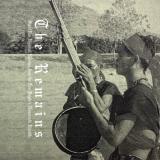
Gary Sullivan's Bodega Pop project returns to DINTE with a cassette-only collection of traditional sounds plucked from CDRs found in the night-markets of Savannakhet, Vientiane, and Luang Prabang.
"In Lao PDR, music was seemingly everywhere. Walking through an open field outside Savannakhet to the sound of someone playing a khaen on a distant porch, the bracing rush of electronic molam from of one of Vientiane’s many aging malls, the awkward blending of the blind so u player’s voice with the bustling sounds of Luang Prabang’s night market.
It was in that UNESCO World Heritage Site that I found most of the CDs and CD-Rs from which I’ve ripped the tracks for this compilation. I’m almost certain I picked up a thumb drive at the night market that held many hours of additional music that could have been included, but if so, I’ve misplaced it, lost it for good, or simply misremember purchasing it in the first place. What I do remember is that these discs were literally the last copies in the cafe, museum, bookstore, and night market where I bought them, and not all of them played all the way through without sonic deterioration.
The sounds compiled here play in stark contrast to the more contemporary recordings I found in Laos, most of which featured some form of upbeat digital workstation molam or children’s songs. In addition to the ever-present khaen, this collection includes recordings of the sanai, a single-reed instrument fashioned from a water buffalo horn, the ceremonial khong nyai gong, the pi and similar free-reeds, and at least a dozen more traditional instruments played by Lao and ethnic minority artists. While some of these tracks were laid down in Vientiane or Luang Prabang, most were recorded near where the artists lived, from the legendary Vat Phou in the far south to the former Pathet Lao capital Xam Neua in the northeast.
Unlike Laurent Jeanneau’s more focused Lao collections for Akuphone and Sublime Frequencies, which remain among my favorite albums of all time, the present cassette-only selection is literally all over the PDR map. The sequencing is entirely in response to rhythm and texture and includes recordings from the 1970s, 80s, 90s, and early aughts. This may frustrate those with more of an ethnomusicology bent, but my hope is that the listener experiences something akin to wandering for the first time through this majestic country, encountering the last copies of forgotten recordings one after another, and hearing in these remains fragments of the past and a living musical landscape."
expected to be published on 14 Aug
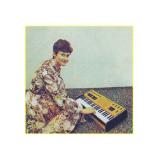
qorakitobchi aka Anvar Kalandarov is a music archaeologist, musician and producer from Tashkent, Uzbekistan whose work is dedicated to uncovering forgotten sounds from across Central Asia. In recent years he has emerged as a singular voice documenting the region’s musical heritage, co-compiling Synthesizing the Silk Roads for Ostinato Records and curating Digging Central Asia: Musical Archaeology Along the Silk Road split release for Death Is Not The End, alongside presenting his own Maqom Soul imprint.
For this mixtape, Kalandarov turns his attention to the synth-pop, disco and electronic music that flourished across Central Asia during the 1980s and 1990s. Drawn from rare vinyl records & private archives, this selection explores a period when Soviet modernity, regional traditions and emerging synthesiser sounds merged to create a uniquely Central Asian vision of the future. From Uzbek disco and Tajik synth-pop to lesser-known oddities, the mix offers a glimpse into a musical world that remains largely unexplored outside the region.
expected to be published on 07 Aug

Recorded April 17 and 18, 1993, at the Union Grove Baptist Church, Ozark, Alabama.
The Wiregrass Singers' Dewey Williams began learning the shape-note tradition in his childhood. He studied under Judge Jackson, who authored the landmark 1934 hymnbook The Colored Sacred Harp. In 1971, Williams formally organized The Wiregrass Sacred Harp Singers to preserve the music full-time. This unified troupe began touring nationally and leading workshops, which ultimately launched them onto stages at the Smithsonian and Newport folk festivals up until Williams' passing in 1995 when the group disbanded. The African-American Sacred Harp tradition in the Wiregrass region has steeply declined since the start of the 21st century, due to an aging generation of singers, and today it is largely sustained through archival preservation and occasional multi-book singing meetups.
This raw recording, made at the Union Grove Baptist Church, Ozark in mid-April 1993 finds the group singing from B. F. White’s The Sacred Harp (1844), which together with his brother-in-law William Walker’s Southern Harmony (1835) formed the musical backbone of generations of Southern music and Southern musical styles.
"On almost any Sunday between the months of March and October, the season most conducive to travel and outdoor dinner-on-the- grounds, Sacred Harp devotés join with fellow songsters at the County Line Church in Slocomb, or the Mount Sinai Church in Henry County, or the Union Grove Baptist Church in Dale County, or at any one of a dozen or so churches in the southeast Alabama counties of Barbour, Coffee, Dale, Geneva, Houston and Pike, to form the square and sing fa-sol-la. Approximately fifteen African-American Sacred Harp singings occur annually in the Wiregrass region of southeast Alabama. A singing tradition characteristically associated with white culture in the Deep South, southeast Alabama has enjoyed a vibrant African-American Sacred Harp tradition for well over a century.
On a day of a typical African-American Sacred Harp Singing, the participants arrive casually in the late morning, seat themselves in the square according to voice part, and begin to sing. A dinner break occurs in the early afternoon, and the singers enjoy a covered-dish "dinner-on-the-grounds" (or in the church basement) prepared by the women. The most intense and emotional singing typically occurs after the dinner break. Each singer takes a turn leading the song of his choice. He walks to the middle of the square, calls out the song's page number and waits for the designated tuner to key the song. Singers are discouraged by the other singers from repeating a song that has already been sung, or "used." This proscription is often dispensed with, however, if the singer is particularly young, particularly old, or if the song has special significance to the individual song leader (perhaps the favorite song of a recently deceased relative).
Every singer is given an opportunity to lead a song. Often, older or more infirm singers will request younger singers to lead their songs for them. The motions of the song leaders are highly stylistic and often emotional. Young children are taught in singing school to mark time with their right arm while holding the book in their left. Typically, a singer will stand in place at the center of the square while leading the singing of the notes. When he begins to lead the lyrics portion of the song, he will often begin to "walk time," rhythmically pacing from one side of the square to the other, being careful never to turn his back on the tenor section. This "walking time" is unique to the African-American tradition. As a singer grows more confident he develops his own distinctive leading style. During fuguing songs in particular, he may gesture to each section of the square as its part joins in. Skilled song leaders often elicit applause or other emotional responses from the group. Occasionally a singer may fall into a state of spiritual ecstasy and "get happy." The episode might include a personal testimonial followed by a repeat of the last verse or refrain from the previous song. The singings break up around 5 P.M."
—Henry Willett, 1997 credits
expected to be published on 07 Aug

Death Is Not The End issue 15 heartbreaking archival fado recordings from Ercilia Costa - made in Madrid in 1930, accompanied by seminal guitarist Armandinho. One of the early stars of fado, Ercilia Costa was the first to take the music overseas to emigrant Portgugese communities.
expected to be published on 31 Jul

Consolidated, the political dance/industrial music band from the early 90ties joined again for a studio session in San Francisco last summer, resulting in a new album. 'We're Already There'. The first release on Consolidated's own label 'The End Of Records'. What else to expect, the new recordings are an innovating mix of industrial, to hip-hop, to rock and funk with mixtures of live instruments and electronics. Topped with left political activism and politically radical lyrics address issues such as America, Covid and ecocide with song The Flood, demand *'Free Music, Stop America'* with Musica Sin Frontieras & welcome guest vocalist GRETA THUNBERG on the track The 'ol Mass Extinction Blues. The album starts in 'traditional Consolidatedgroove' with the song 'Capitalism A.F.', a mix of beats, industrial sounds and hiphop. Followed by funkypop songs, danceable industrial jams, techno beats, reggae and blues influences plus a remarkable noise track. Main musicians are Adam Sherburne (guitar/vocals) and Mark Pistel (synths/beats) backed by Lynn Farmer (Meat Beat Manifesto) on drums, who replaces the original drummer Phil Steir. The complete album is recorded, mixed and mastered by Mark Pistel at 'Room 5' in San Francisco. The cover shows art paintings from Ayelet Hay (front) and William Kendall (back). On 'We're Already There' Consolidated plays more music than ever. "I have zero interest in being in a band, especially my own_" "I had to develop a different way to be involved with music for aesthetic and mental health reasons_" "FREE MUSIC! is not to the detriment of artists, it's literally the end of artists-as anyone perceives them in the last 500 years" -Adam Sherburne - Consolidated are known for their live performances, in which a microphone is passed among audience members to discuss, rebut, argue or elaborate on song topics. Consolidated: Adam Sherburne & Mark Pistel.
expected to be published on 24 Jul
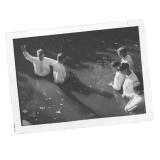
LP edition now available!
Death Is Not The End present a collection of recordings of Sacred Harp singing (a traditional sacred choral music with origins in the American South) taken from the late 1920s through to the late 1930s.
expected to be published on 03 Jul

expected to be published on 03 Jul

Manchester-based poet, writer and producer Antony Szmierek has announced the release of his debut album, Service Station At The End Of The Universe. The past few years have been a wild ride for the artist. Cutting his teeth on the Manchester spoken word scene and gaining notoriety for his seamless flow skewering everything from the hardships of contemporary British life to finding the unexpected beauty in the everyday, it was the 2023 release of his single ‘The Hitchhiker’s Guide To The Fallacy’ that kicked off his meteoric ascent.
Last delivered 3 months ago
available to reorder, subject to availability

Tape[16,39 €]
expected to be published on 26 Jun
Vinyl[22,65 €]
expected to be published on 26 Jun

"Chance animates the smallest parts of the universe: the scintillation of the stars is its power, a wildflower its incantation."
—Georges Bataille, Le Petit
"Even on my way to the gambling hall, as soon as I hear, two rooms away, the clink of the scattered money I almost go into convulsions." —Fyodor Dostoevsky, The Gambler
Video gambling addicts, academic researchers, and industry professionals alike describe the trancelike state into which problem gamblers suspend themselves with remarkable consistency: they unanimously call it the machine “zone,” a kind of inner experience during which the rhythmic flow of human-machine collusion borders on mysticism. Time is abolished in the act of contemporary video gambling —simulated slot reels roll, virtual poker decks deal, and all worldly concerns are lost—leaving only the aura of total zone immersion in its wake. Sometimes characterized as the crack cocaine of gambling, the intensity of the machine zone is a symptom of casino ergonomics: emotionally manipulative fragrance-saturation, mesmerizing lights, subtly controlling walkways and, as captured here, meticulously engineered sonic environments all play a role in evoking the timeless void of the zone.
Although I was not yet aware of the extent to which casinos tailor their environments for maximum comfort (and, correspondingly, profit), I did know as I crossed the threshold of my first casino floor last year that I would be back for more. Hit by a cornucopia of slot machine tones, triggering aleatorically and coalescing into shimmering masses, I was struck by the need to return and record the sounds that so entranced me. It wouldn't prove to be easy—casino security is intense—and due to the clandestine nature of the operation, my recording techniques were by no means sophisticated. Equipped with nothing but an Olympus LS-11 recorder's internal microphone stashed in a sweaty coat pocket, I allowed the lure of the zone to guide me through a series of ambling recording sessions, the best of which are included here.
I learned a lot about casino sonics in the process: game designers, for example, once tuned all their machines to the key of C major in order to optimize harmonic cohesion (strict adherence to the key is no more but C still dominates the game floor); one team of designers, the story goes, even spent a month perfecting a single 'ding' sound on one machine. In the interest of preserving the true ambient sounds of the casino these recordings are untreated, but lost in the sea of chance I did exert some affirmative control by means of meandering intent and my actual playing of the machines. And by participating in the games myself I got a taste of the financially debilitating consequences that accompany the enchantment of video gambling. The cassette in your hands represents my endeavor to bring you the zone experience without the harsh comedown of its unfortunate reality.
—Adrian Rew
expected to be published on 19 Jun

Vinyl LP[22,65 €]
A collection of spellbinding, melismatic vocal improvisations taken from 78s cut between the mid 1920s to mid '30s - a period defined by the aftermath of the Ottoman Empire’s partition, the Greco-Turkish War and the compulsory population exchange that followed.
This same period also represented a time of intense efforts, following the establishment of the Republic, to westernise the new nation's music - coupled with a ban on traditional music education in schools, and later a complete ban on broadcasting Ottoman-Turkish classical music on the radio. As such these performances seem shrouded in an even more distant past, and feel quite intimately connected with forms of Greek amanes and rebetiko - having stemmed from the same Ottoman makam system, both with a subject-matter focussed on heartbreak, yearning, and pain.
expected to be published on 12 Jun

Tape[16,39 €]
A collection of spellbinding, melismatic vocal improvisations taken from 78s cut between the mid 1920s to mid '30s - a period defined by the aftermath of the Ottoman Empire’s partition, the Greco-Turkish War and the compulsory population exchange that followed.
This same period also represented a time of intense efforts, following the establishment of the Republic, to westernise the new nation's music - coupled with a ban on traditional music education in schools, and later a complete ban on broadcasting Ottoman-Turkish classical music on the radio. As such these performances seem shrouded in an even more distant past, and feel quite intimately connected with forms of Greek amanes and rebetiko - having stemmed from the same Ottoman makam system, both with a subject-matter focussed on heartbreak, yearning, and pain.
expected to be published on 12 Jun

Neu remasterte Neuauflage auf 180-g-Vinyl von Don Henleys klassischem, mit 6-fach Platin ausgezeichnetem dritten Solo-Studioalbum, erstmals auf 2 LPs. Enthält die Hits „The End of the Innocence“, „The
Last Worthless Evening“, „The Heart of the Matter“ und „New York Minute“.
expected to be published on 05 Jun

Death Is Not The End issue a 14-track tape of vintage and archival Cajun ft. tracks from Segura Brothers, Amede Ardoin, Blind Uncle Gaspard, Sydney Landry & more.
expected to be published on 05 Jun

Tape[19,96 €]
expected to be published on 05 Jun

DINTE present a 14-track tape pulling together rural Greek demotika recordings from the late 1930s to the mid-1950s. Soaring pentatonic improvisations, odd-metered rhythms, and vocal performances oscillate between heartbreaking laments and ecstatic celebrations.
Artwork adapted from Edward Lear's Agia Paraskevi, Epirus, Greece (1857)
expected to be published on 05 Jun
