Having started out throwing DIY raves in Toronto Canada, the Forth collective became influenced by the city's hunger for self-expression. Various Artists Vol. 2 is the second instalment in a series of compilations that gives Toronto artists a chance to realise their ideas on the local and international stage.
Cerca:the express
Two sizzling South African boogie tracks from Kabasa's Tata Sibeko. A killer producer, arranger and bass wizard, Tata channels the gloomy current affairs landscape of 1985 into a glimmering Afro-synth nugget. As South African pop embraced 1980s synth sounds, Maxi Singles on 12-inch vinyl became a new canvas of expression with wider grooves for fat beats and extended mixes that suited dancefloors.
.
The supergroups of the 1970s fragmented into solo recording artists with the likes of Harari's Sipho 'Hotstix' Mabuse releasing his seminal 'Burnout' single in 1984. Former Kabasa frontman Tata Sibeko dropped 'It's A Mess' in 1985, addressing the world's Cold War climate with an appeal to 'learn to love each other' and 'save ourselves from catastrophe.' The B-side 'Afro Breakdance' marked the evolution of Tata's Afro-global sensibilities from 'Afro Funkin'' that had appeared five years earlier on Kabasa's self-titled debut in 1980. Tata Sibeko (RIP) passed away in 2017 after approving the restoration and reissue of this single. This release is dedicated to his kindness, charm and creative zeal.
The record you are holding in your hands is a previously unheard masterpiece of Israeli multimedia artist Ami Shavit. As a professor of both philosophy and art and established kinetic artist in the 1970s Shavit was fascinated with new and interactive technologies. While mostly focusing on visual art and mixed-media installations, a trip to New York in 1972 introduced him to synthesizers and triggered his curiosity to do some explorations into the world of music or "sound" as he preferred to call it.
Ami's research was focused on the concept of meditative music that would help people to relax and create a cosy mood associated to the alpha brain waves and biofeedback. Before starting his artistic career, like all Israeli citizens, he had to serve in the army to his personal regret. Shavit had an operational position, which meant a high probability to get involved in a so called 'hot situation'. When in 1973 the Yom Kippur war broke out, Ami was enlisted again and got the unfortunate opportunity to encounter, in Hanoch Levin's words 'the dead'. Being an operation officer he was in charge of evacuating Israeli wounded officers from battlefields to hospitals. Some 6000 injured men passed through us during that war, he recalled one year later in a newspaper interview.
'I witnessed some sights that I can hardly forget. On the one hand I felt that as an artist I had to express the war events, on the other hand I felt that this is an almost impossible mission. Only Goya and Picasso, in his Guernica, addressed this topic successfully.'
Yom Kippur is the final and seminal of Shavit's sound experiments ever recorded and now finally available to the world. We believe that this is an extraordinary strong piece in which the hectic moods and terrific experiences of war are deeply transmitted to the listener. May all soldiers, who are often forced to go through traumatic experiences beyond their own will, find ways to artistically digest and process the unwanted memories.
Ami Shavit was born in 1934 in Tel Aviv-Jaffa. Known as visual artist, his work involves in creating virtual environments with optic and kinetic art, including structures worked by electricity, moving tubular configurations illuminated by colored lights. He published In Alpha Mood in 1977 on Amis records, his own record company, at 500 copies, republished by Finders Keepers Records in 2015 and Neural Oscillations And Alpha Rhythms in 2018. Yom Kippur is his ultime recordings.
TUTTI is comprised of eight soundscapes: an audio self portrait comprising of manipulated sound recordings from Cosey's life, music and art:
'It's the only album I've made that is an all encompassing statement expressing the totality of my being. A sense of the past in relation to the present and everything in between.'
These eight pieces were originally conceived as the soundtrack to the autobiographical film 'Harmonic Coumaction', and performed live in February 2017, part of a series of events that accompanied the COUM Transmissions retrospective which opened Hull UK City of Culture 2017. Later that year, 'Harmonic Coumaction' was presented as an audio-visual installation for Cosey Fanni Tutti's solo exhibition at Cabinet Gallery, London.
Cosey Fanni Tutti explains: 'Working on the COUM Transmissions exhibition also coincided with writing my autobiography - collating archive material and re engaging with my past. My work is a continuum, the past feeding the present and vice versa. The album is an interpretation of my past and present, of my understanding the shifting perceptions of how they inform one another. One form creating another through a metamorphic process.'
On TUTTI, the music has been updated and enhanced with elements of the original tracks re-recorded and further processed specifically to create a unique stand-alone document, separate to the live performance and installation. Recorded at Cosey Fanni Tutti's studio in Norfolk, the album, as on her debut release, Time To Tell, merges Cosey's art activities with her exploration of sound: The album's autobiographical theme is not locked into any specific time or place, the 'voices', instruments and sounds together span decades of my life, music and art. In this context my name 'TUTTI' shifts from its role as a noun to perfectly represent the concept of the album, also acting as sign for me the artist.
TUTTI is Cosey Fanni Tutti's only solo album release since 1982's Time To Tell. Time To Tell was recently given its first release on vinyl, on a long awaited official deluxe edition. The interim years between solo releases has seen a blisteringly prolific output as an artist and musician. Renowned for her art, her work in the sex industry, as co-founder of Industrial music and Throbbing Gristle, and her pioneering electronic music solo and as Chris & Cosey, Carter Tutti and Carter Tutti Void, she has created throughout with the motto 'my life is my art, my art is my life'.
Cosey's autobiography ART SEX MUSIC was published to worldwide acclaim by Faber & Faber in 2017, a Japanese edition has just been published with further translations and an audio book to follow. TUTTI
It took a while before it was this. It was a place to find clothes made by people lost in a minefield of ideas who liked to party. It was a place for temporary visions that turned out to happen and were then forgotten. It was always a place to find a new circle of friends. A place for expression where the throttle had been loosened and we all careered into the next day and the day after that. We all need to meet in the flesh away from the pixels and connect our first thoughts. Somewhere to ruffle our own feathers and take off on a phantom flight. It has been all this and it still is. Only now there is a record label to try and actually document a little of all of that. Welcome to Sameheads.
This record is a morsel from the community. Novo Line, Twoonky, Kruton, Kris Baha and Antoni Maovvi and Balance Crew aka Dane Close & L. Zylberberg. Six acts whose sweat is in the carpet and who all owe more than seven euros to the place for one reason or another. Six songs that electrify a new way to no wave. Don't forget, this a mince based dish. Enjoy.
J R Seaton aka Call Super
After their highly acclaimed debut album »Decadent yet Depraved«, Berlin and LA-based producers Belief Defect invited a variety of artists to join their »Remixed« project. The following 12' EP is a first four-track release of this project. The original tracks of the album are only an approximate starting point for »Remixed«. In contrast to »Decadent yet Depraved«, largely conceived in song structures, this EP is about transferring the pieces back into abstract space, and each remixer does it in his very own way. Alessandro Cortini's one-take live recording is a lesson in classical ambient music. Telefon Tel Aviv's remix is timelessly modern and extremely delicate sound design. Rather opposite concepts are coming from Surachai's brutal pattern design and Kangding Ray's expressive and analogously saturated repetitions for the dance floor.
Gaijin Blues is Naphta and band mate PlaystationYoga Music's tribute to Japanese pop culture, manga and video games. This EP is the result of tours to different regions of Japan and spending time in record shops, as well as playing classic RPGs. Gaijin Blues is a blend between Japanese and Western music with live studio instruments. It's a feeling, an expression and a time and space vehicle.
Secret of Mana explores live percussion and bass with strings, live flute and dreamy vocals, whilst Cafe LeBlanc references a peaceful location in JRPG Persona 5 and features more soothing strings and is inspired by manga soundtracks.
Metal Gear Rex is string-lead and features complex melodies and vocal chops. Another tribute to Japanese gaming culture, this one has a driving, hypnotic bassline and an eye on the dance floor.Guardia Castle opens with a 4/4 disco beat before introducing unexpected layers of blissful, melodic female vocals, acoustic guitars and flutes.
Martina Lussi's second album fuses together disparate sound sources with a disorienting
quality that reflects the modern climate of dispersion and distraction. The Lucerne, Switzerland- based sound artist released her debut album 'Selected Ambient' on Hallow Ground in 2017, and now comes to Latency with a bold new set of themes and processes.
The range of tools at her disposal spans field recordings, processed instrumentation, synthesised elements and snatches of human expression. The guitar is a recurring figure, subjected to a variety of treatments from heavy, sustained distortion to clean, pealing notes. Elsewhere the sound of sports crowds and choral singing merge, and patient beds of drones and noise melt into the sounds of industry and mechanics. The track titles manifest as a compositional game of deception complete with innuendos, empty phrases and claims - flirtations with perfume names and ironic assertions.
From the volatile geopolitical climate to the changing nature of music consumption in the face of streaming and digital access, 'Diffusion is a Force' is a reflection on fractured times where familiar modes and models change their meaning with the ever-quickening pace of communication.
"It's been nearly five decades since Joe McPhee assembled a group of musicians to perform the weekend concerts that would become Nation Time, his debut LP. It was December 1970, thirty-one-year-old McPhee was inspired by Amiri Baraka's poem 'It's Nation Time,' and the students at Vassar College didn't know what hit them. 'What time is it?' shouted the bandleader. 'C'mon, you can do better than that. What time is it?!'
"The music on Nation Time came out of the fertile, but little-known creative jazz scene in Poughkeepsie, New York, McPhee's home base. Two bands were deployed, one with a funky free foundation featuring guitar and organ, the other consisting of a more standard jazz formation with two drummers and the brilliant Mike Kull at the piano. Across the concert and the next afternoon's audience-less recording session, the band was ignited by McPhee's passion and his gorgeous post-Coltrane / post-Pharoah tenor. On 'Shakey Jake,' they hit a James Brown groove filtered through Archie Shepp, while the sidelong title track is as searching and poignant today as it was during its heyday.
"Originally released in 1971 on CjR, an imprint started expressly to document McPhee's music, Nation Time has a sense of urgency and inspiration. Additional material from those December days would later appear on Black Magic Man, Hat Hut's first release. In fact, the first four records on this seminal Swiss label all featured McPhee.
"Nation Time was largely unknown a quarter century or so later, when it was first issued on CD through Atavistic's Unheard Music Series. On Corbett vs. Dempsey, we reissued the album along with all known tapes leading up to and around it as a deluxe box set, but the standalone LP has long remained incredibly rare. Now is the time for a new generation of freaks to lose their shit when settling into the cushy beat of 'Shakey Jake' and answer McPhee's call with the only appropriate response: It's NATION TIME."
– John Corbett
In folklore, the witching hour or devil's hour is a time of night associated with supernatural events. Creatures such as witches, demons and ghosts are thought to appear and to be at their most powerful and magic is thought to be most effective at this time.
It is also the time when we are at Underground parties, this is considered the main time of the party before it tapers off into the ethereal realm of translucent soundscapes and marionette dance moves. This is when we feast on sound intoxication and our parallel daywalker skins are shed into ancient dances and rites of sacred drums.
The witching Hour takes our souls back to our ancient pagan rituals of music and dance till the cleansing of dawn, this is where revelations happen and where groups of like minded people form a coven of sorts and bond in non verbal communications thru the expression of movement.
This is a new label project from Jay Tripwire and TJ Mc Au, they will be presenting underground minimal sounds specifically designed for the dancefloor and for the DJ.
This EP features Creepshow and Klangtone. Creepshow is a dark bassy roller with an eerie underground atmosphere that holds the groove but it also designed for mixing and layering. Klangtone features a percussive groove, voices from the Tikuna rainforest tribe and a haunting modular flute line with a massive sub bass that is sure to rattle bassbins. This is classic Tripwire with modern production but still keeping the his roots of his trademark sound.
Chapter five. London based Teffa returns to Cue Line Records with a large five track EP. The piece has been crafted with a clear mission that evolves throughout the tracks by a well-balanced progressive expression. The style is raw and dirty yet with a rich profoundness. The EP features a collaborative track with Berrik (US) and a remix of the title track by Gaze ill (DK), both bringing an extra touch to Teffa's brilliant Faulty Line EP. An outstanding piece, made as a heavyweight 180 grams 12" vinyl.
Zodiak Commune Records presents the first TRIP release. This is a new series pressed on 10 inch containing long, deep and storytelling acid tracks one on each side.
On the A-side u can find the young common player Vikkei. His alternative downtempo style got our attention immediately. The B-side is dedicated to Yakh, known from his debut release ZC013 "The Earwig EP from the Insectum serie.
Vikkei - 808 In The Sand
It is in this moment when you are desperate in need of water in the desert. Frustration is building up, the sun is getting hotter and hotter, crawling with your 808 in the sand.
Yakh - Expression Army
Completely lost in a world that doesn't exist anymore. Once you are aware of that, the only thing you can do is adapt.
Zodiak Commune Records presents the first TRIP release. This is a new series pressed on 10 inch containing long, deep and storytelling acid tracks one on each side.
On the A-side u can find the young common player Vikkei. His alternative downtempo style got our attention immediately. The B-side is dedicated to Yakh, known from his debut release ZC013 "The Earwig EP from the Insectum serie.
Vikkei - 808 In The Sand
It is in this moment when you are desperate in need of water in the desert. Frustration is building up, the sun is getting hotter and hotter, crawling with your 808 in the sand.
Yakh - Expression Army
Completely lost in a world that doesn't exist anymore. Once you are aware of that, the only thing you can do is adapt.
If you read the name Shankar you may right away think of Ravi Shankar, the grand master of contemporary Indian folk music who was very popular in the 60s due to his connection with the music industry in the United States despite staying away from the pure pop music by maintaining his classic sitar and tabla style ragas to express himself musically. Ananda Shankar used to be his nephew who also made a journey to the USA to gather inspirations from rock artists like Jimi Hendrix among others. His first album from 1970, a conglomerate of classic Indian folk tunes and instrumental versions of the hottest rock songs of the day clothed in a veil of sitar melodies and backed up with tabla drum grooves, was an attempt to combine the spiritual approach of his cultural origins with the light minded blissful attitude of western psychedelic pop music. It worked well in the sense that it is still, nearly fifty years later on, a groovy little album that leaves nobody sitting around at any random hippie party. He took a five year break from recording to create what should become his second album and this is what I am about to present to you now. The cover-tunes were replaced by all original compositions with a lush instrumentation that features the typical sitar, tabla and bowed string instruments such as sarong and sera arrangements mixed with sounds that have a definite western origin such as rock guitars, Hammond organ and moog synthesizers plus full drum kits that take care to enhance the actual groove. Psychedelic rock, raga, fusion-jazz and funk flow into each other quite naturally giving birth to something fresh and exciting I would label as Bengali pop'. The borders between eastern and western music get abrogated here. If it was not for a few deeply mythical chants on a bed of drones here and there you could not even tell this was a record by an Indian artist. This album is quite accessible most of the time and comes with a certain slickness that makes it easy for the listener to understand and appreciate what is going on. Still there is the other side of the coin, the depth pop music often lacks. So in the end this might have been too far out for the average western mainstream fanatic back in 1975 when disco began to rule but it is an awesome sound trip for fans of psychedelic dance music like INCREDIBLE BONGO BAND and all eastern influenced popular rock.
The Lemonheads' first record in 10 years!
Covers album - Includes versions of Nick Cave, Yo La Tengo, The Bevis Frond, Eagles and more.
Extensive world tour over the 12 months, including Europe, USA and Asia. Banana scented scratch & sniff vinyl sleeve!
'The Lemonheads are no strangers to a cover, the grunge-pop heroes perfect the art.' NME
The Lemonheads follow up the critically acclaimed 'Varshons' from nearly ten years ago with another eclectic collection of covers.
Produced by director Matthew Cullen and mastered by Howie Weinberg (Beastie Boys, Nirvana, The Ramones), their tenth studio album brims with the slowly-matured vocal of Evan Dando as he lures a host of personal faves to his melodic lair. He really has become one of the great expressive singers of our time.
What they said about Varshons:
'Gram Parsons, Wire, and GG Allin: You'd be hard pressed to find three more disparate rock acts, yet on 'Varshons' they all sound like the Lemonheads - boppy, overcast alt-rock delivered at a fast clip and sung in a whiskey tenor.' Pitchfork
'Varshons 2' is a hokey jukebox filled with unique versions of Yo La Tengo, Nick Cave, The Bevis Frond, NRBQ, The Eagles, Paul Westerberg, The Jayhawks, Lucinda Williams and John Prine.
Like Hank Williams slumped in his car between gigs, strumming and hollering, reasoning and weeping, humming it on over, Evan and his Lemonheads make every tune their own.
To throw a CANDELA is a popular expression for hosting an impromptu encounter revolving around tobacco, fire and music. CANDELA and fire are used as metaphors of passion, warmth and love, and this is what CANDELEROS transmit in their live performances, delivering their very own unique Afro-Caribbean vibes with a strong identity: folklore and psychedelia given a modern twist in a ritual of catchy drums, surf guitar riffs and South American percussions.
Infusing punk energy into their remarkable interpretation of traditions, the six-piece band embarks on a journey through the vibrant and immensely rich musical culture of the Caribbean, fusing merengue, champeta, salsa, and son, with bullerengue and cumbia; constantly reinventing themselves.
William, Fernando, Urko, Sergio, Alex and Andrés, come from different regions of Colombia and Venezuela. Their paths crossed in Madrid, Spain, where the Latin American family comes together through art and culture, gathering in diverse groups that focus on bringing their common cultural heritage to the world.
Their passion for endless musical improvisation, always crossing the thin line between genres, can be felt in these two tracks selected by Galletas Calientes Records .
A-Side 'La Cumbia Del Chinche' is an experimental, mind-bending cumbia, driven by a heavy mix of electronic and acoustic drums, hissing guacharacas and hallucinogenic guitars.
B-side 'El Boleta' is a totally freaked-out, uptempo merengue; a clever blend of subtle electronic drums, organic and hard-hitting percussions, psychedelic guitars and keys with the iconic ghostly tremolo and trippy reverb of seventies Peruvian cumbia.
Lost Futures is a new label that explores experimental and often radical approaches to dance music from the past. In a musical landscape that increasingly claims to seek and reward new forms and ideas, Lost Futures delves into the recent past to revisit forward-thinking, optimistic projects that, owing to the social, musical or outright political climate, perhaps struggled to find an audience. Allowing only time to re-contextualise these leftfield, sometimes misunderstood and ultimately human bodies of work, Lost Futures taps into the inherent idealism of rave.
LF001 trips back until the early nineties to revisit the alternative scene emerging from the Dutch city of Utrecht. Here, three young men - DJ Zero One (Sander Friedeman), TJ Tape TV (Arno Peeters) and DJ White Delight (Richard van der Giessen) - joined forces to form 'The Awax Foundation'. Inspired by the transcendent and revolutionary electronic music arriving on their shores imported from Chicago and Detroit, combining their knowledge, gear and ever-expanding vinyl collection allowed additional freedom in paying sincere tribute to these intoxicating sounds, while also developing their tastes in a more personal, eclectic direction.
The musical flavours of Awax initially leaned toward acid house and the roots of techno. However, with three different mindsets in the mix, their tastes were rarely fixed. One thing each shared in common was a devotion to collecting rare sounds, specifically more adventurous and international samples than those emanating from the increasingly-hard, masculine dance music emerging from the Netherlands during the period. Inspired by the cross-over global sound of bands like Suns of Arqa, or 'World Music', as it was perhaps patronisingly termed at the time, the trio became interested in the idea of making techno with 'ethnic instruments'.
Of course, this being 1992, none of The Awax Foundation had access to such instruments, instead, they had a vast, collective library of samples from all over the world. There were no collaborations and no clear plan. Instead, they set to work using a Yamaha TX16W sampler, the legendary Atari 1040ST computer, a cheap mixing desk and a couple of low-end synths and FX machines. When Richard mentioned the project to his friend, Akin Fernandez, the London DJ and owner of cult label Irdial Discs, Fernandez was intrigued enough to invite the trio to record a one-hour show for his 'Monster Music Radio' series on London's then-burgeoning Kiss FM.
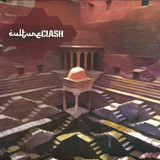
Forced to come up with a name, 'CultureClash' seemed like the obvious choice, even if the members of Awax were only creatively sparring among themselves. Along with the term 'ethno-techno', slightly dubious to a hopefully more conscious Western audience in 2017, these were the only guiding principles to the quietly ambitious project that soon combined cutting-edge machine rhythms with samples sourced from everywhere from Bolivia to Togo, and inspired by everything from Ravi Shankar's epic soundtrack to the Oscar-winning movie Ghandi, to the technical limits of their own setup requiring a dazzling degree of cut-and-paste work. Some tracks even emerged out of academic studies within the ethnomusicology department at The University of Amsterdam.
The show aired on October 2nd, 1992, recorded in one blistering take and without any rehearsals, traversing a huge variety of tempos and styles. If the performance wasn't seamless, it was undeniably thrilling, fresh and ambitious. As such, several labels, including Fernandez's aforementioned Irdial Discs expressed an interesting in commercially releasing CultureClash, while another imprint proposed a series of twelve-inches and an album. But the sheer complexity of the project meant that it never saw the light of day, while the trio embarked on different journeys ahead, both creative and personal.
Twenty five years later, and the original CultureClash lineup and founding members of The Awax Foundation provide the sound of the first release from Lost Futures. An otherworldly, ambitious and optimistic compilation, accompanied by extensive sleeve notes from the trio, CultureClash is a timeless ode to experimentation in dance music's ever-overlapping culture.
D-Leria returns to the scene more than a year after debuting on Berlin-based label Delirio, releasing a collection of work produced between 2014 and 2018; ten tracks which mark a new beginning for this young Italian producer, sweeping between heavy ambient excursions to hypnotic/ tribal techno, modernized and polished off in his own way.'Driving to Nowhere' is the summation of an extended journey; a year-long hiatus due to unforeseen health concerns allowed time to meditate and consider his past experiences in Italy's various underground electronic music scenes, and the potential directions inspired by thriving Berlin.
From 2014 to 2017 he released several EP's, each developing upon this new style, until joining the young label Delirio as both a musician and a manager. With Delirio he has hosted artists such as Stanislav Tolkackev, Roberto Bosco, Plaster, Retina.it and more, with a unique agenda to record precisely produced music live, instead of laboring in the studio to achieve over-polished audio. His first album inaugurates the beginning of the new DLP catalog, which will be dedicated to LPs, albums and other projects released on 12-inch vinyl. Through these 10 tracks D-Leria experiments with various production methods, as in 'Makumba' where he precisely combines the kick drum with a tight bass line in a 12-step sequence, making the track fluid and never predictable. 'Reborn' is an even more ambitious undertaking, initially recorded on tape before being sent back to the mixer via Hi Fi stereo, D-Leria modulated the cassette coil with a bic pen to create a unique 'detune' effect. 'From the Ground' and 'Driving to Nowhere', both made through the same setup, combine tribal voices and moans, combining an ethereal ambience with drums and analog percussion, connecting the rhythm directly to the soul. The opening track 'Libero' is dedicated to himself, while 'Her Smile' and 'Uragano' are both dedicated to the person that was closest to him in his last period of stop and realization of the album, where he expresses his most deep moments in the first, and more difficult in the second.
Just like in most of the EP already released on Delirio, Giuseppe Tillieci aka Neel took care of the mastering of the tracks, while the artist has taken care of the smallest details from the production, to the mixing, to the graphics and also to the titles of the tracks, which refer to personal thoughts and events that happened during this long journey to nowhere.
Sunda Arc are brothers Nick Smart and Jordan Smart. Best known as key members of Norwich based alternate-jazz trio Mammal Hands, Sunda Arc channels the duos love of electronic and dance music, without losing any of their deep musicality. Drawing on techno, electronica, neo-classical and post-rock influences, Sunda Arc compose and perform using both electronic and acoustic instruments, including analogue synthesisers, home-made software patches, piano, saxophones and bass clarinet - all finessed and channelled through their own unique creative strategies. Integrating electronic elements and experimentation with the expressiveness and energy of acoustic instruments and live performance, Sunda Arcs music is expansive, compelling and fun in equal parts.