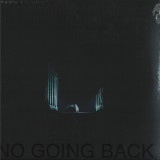
Following a four-year hiatus from solo releases, the British musician Matt Karmil returns with the soft-focus gentle beauty and subtly stealthy beats of new LP, ‘No Going Back’.
With inspired moments of creation happening incrementally, the album came together amidst a busy mixing/remixing/ mastering/co-production schedule. Artists who’ve enlisted his^multiple skills includes Bicep, Underworld, Mall Grab, Jayda G, DJ Koze, Neneh Cherry, Sofia Kourtesis, DJ Fett Burger, Matias Aguayo and Carmen Villain.
Feeling the benefits of this new approach, ‘No Going Back’ is the strongest expression of Matt's artistic vision to date, honing the spectrum of styles for which he’s renowned, all smudged together by a warm, gauzy haze. The microhouse anthem ‘SFP’ is followed by the broken tech science of ‘No Going Back’, the spectral dub techno spookiness of ‘Old Haunts’ and the sublime misty shimmer of ‘The Last Time’.
Further switching things up is the oddball dancefloor experimentalism of ‘Still Something There,’ the washed-out electroid balm of ‘Things Really Happen’, and the epic dark ambient closer ’15 mins’.
Search:the express
On FORGIVENESS, SLIM0 sets the scene with a scream tearing apart the silence. “Stars! I’m Coming!” introduces the Danish/Montegrinian/Iranian trio's debut album in mere 1:11 mins; it’s disruptive, energetic, almost scornful. The stage is filled with a multitude of characters at high pace, but are we witnessing a comedy or a tragedy? The opening soon gives way to a much gloomier mood throughout, revealing a full body of work conveyed through personal takes on classic rock tropes with SLIM0 as the omniscient narrator.
FORGIVENESS came to life through long live session jams and recordings melted into their rawest essence by the enigmatic artist and producer Aase Nielsen, who has closely collaborated with the group in forming their first full length release. Urgency, noise and desire characterise the musical and artistic expression on the record, where hardcore rock lives side by side with pop cultural references. On previous releases, SLIM0 have drawn upon choir, alternative indie, prog rock and grunge (EPs ‘sol i øjet’ and ‘lifespan’ as well as multiple singles). FORGIVENESS sees them cultivating all of these elements while stepping into an even meaner space, and which better place to go to for this than the world of punk, rock, doom.
- Killing Floor
- Monolith
- Out Of Existence
- Ancestral Recall
- Magickal Cost
- Into Being
- The Valley
"May Our Chambers Be Full" ist das erste aufgezeichnete Dokument der Zusammenarbeit zwischen Emma Ruth Rundle und dem experimentellen Doom Metal Sextett Thou. Roadburn Festival-Organisator Walter Hoeijmakers wusste von der gemeinsamen Liebe für das Schaffen der jeweils anderen und führte beide zusammen. Während ihre Musik recht unterschiedlich erscheint, haben sowohl Emma Ruth Rundle als auch Thou ihre jeweiligen Karrieren damit verbracht, an den äußeren Rändern der Heavy-Metal-Szene zu lauern, wobei beide mehr dem DIY-Punk und seinem spirituellen Nachfolger, Grunge, nahestehen. "May Our Chambers Be Full" bewegt sich sowohl musikalisch als auch thematisch auf einer ähnlichen, sehr feinen Linie. Während das Solo-Material von Emma Ruth Rundle eine Mischung aus Post-Rock und Folk ist und Thou typischerweise für ihre heruntergekommene, doomige Schlammschlacke bekannt sind, hat die Verbindung der beiden eine Platte geschaffen, die mehr in die Richtung des Seattle-Grunge-Sounds und dem davon beeinflussten Alternative Rock aus den 1990er Jahren geht, wobei die Kernidentitäten der KünstlerInnen weitgehend erhalten geblieben sind. Ebenso ist der lyrische Inhalt des Albums eine Mischung aus mentalem Trauma, existenziellen Krisen und der ekstatischen Tradition der expressionistischen Tanzbewegung. "Excessive sorrow laughs. Excessive joy weeps." Melodisch, melancholisch, schwer, viszeral. Für Fans von: Alice in Chains, The Cranberries, Eyehategod, Nirvana, Crowbar
- A1: Introduction To Orient Express
- A2: Orient Express
- A3: Madagascar
- B1: Scarlet Woman
- B2: Zansa Ii
- B3: Café Andalusia
- C1: Fast City / Two Lines
- C2: Badia / Boogie Woogie Waltz
- D1: Happy Birthday
- D2: In A Silent Way
- D3: Hymn
- A1: I Will Be Your Only One (Monika Werkstatt Version)
- A2: Paradise (Monika Werkstatt Version)
- A3: Radiator (Monika Werkstatt Version)
- A4: Komm Darling Lass Uns Tanzen Gehen (Monika Werkstatt Version)
- A5: You You (Monika Werkstatt Version)
- A6: Schreiender Tag (Monika Werkstatt Version)
- B1: Geld (Monika Werkstatt Version)
- B2: Mother (Monika Werkstatt Version)
- B3: White Sky White Sea (Monika Werkstatt Version)
- B4: Herzschlag (Monika Werkstatt Version)
- B5: Zukunft (Monika Werkstatt Version)
- B6: Nite Time (Monika Werkstatt Version)
M_Sessions - Reworks is offering a contemporary version of Mania D., Malaria and Matador’s music for the 40th anniversary. Bringing the past into the now and into the future.
Monika Werkstatt seemed the perfect choice for new interpretations. Founded in 2015, comprising female electronic musicians and producers from the entourage of Monika Enterprise and Moabit Musik. The loose collective played dozens of improvised concerts around Europe and released a studio album and live recordings in everchanging artist constellations. The M_Sessions involved Pilocka Krach, Beate Bartel, Midori Hirano, Mommo G, Lucrecia Dalt, Antye Greie-Ripatti, Natalie Beridze, Annika Henderson and myself. Here the form of interpretation is focussing on keeping the freedom of their improvised work and adapting it to the collective appropriation of songs. I cannot imagine a better reinterpretation of the material with its real life ups and downs and with its enthusiasm. (G.Gut)
"The three, reunited: Malaria, Matador and Mania D, unter einem Dach, but gutted, replaced with electronic hearts, new beats, new beasts, the time has changed, yet the politics, the problems, the heartache remains the same. 2021 sees the anniversary of the 3 M’s and therewith the production of an album of songs, covering a selection of the bands’ finest output, this time assembled by a new set of feminist misfits; producers, fangirls, instrumentalists, under the strict guidance of original members Gudrun Gut and Beate Bartel. M-Sessions features: AGF, Lucrecia Dalt, Sonae, Midori Hirano, Islaja, Natalie Beridze, Pilocka Krach, Annika Henderson (Anika), Lupe, Gudrun Gut and Beate Bartel. Beginning in West Berlin, in 1979, with the inception of Mania D, spawning Malaria! and later Matador; in a time when music was essential to movement, to escape, to space, to the scene and to the rebellion of the people; three bands stood for trial and error, trial and terror, anti- conformity, and anti-consumerism, for girl power and sticking it to the man, and for just doing whatever the hell they wanted. The three, their existence slightly staggered, with different members, different grudges, different heartbreaks, different instrumental expressions, were joined by a string of barbed wire, piecing pigeon hearts, within the playground that was the desolate ex-capital, now again capital, Berlin; a place where artists and freaks could run free amongst the wrinklies and army dodgers; no microscopes, no rules, no property developers." (ANNIKA HENDERSON)
Coloured[25,17 €]
Ben Lukas Boysen’s new album, Alta Ripa, signifies a seismic shift in his artistic journey. It revisits the foundational impulses of his youth, shaped amidst the serene beauty of rural Germany—a bucolic backdrop where his creative palette flourished. However, it was his move to Berlin in the early 2000s that electrified his sound, infusing it with the city’s pulsating energy and diverse cultural influences. Alta Ripa captures this transformative experience, blending the introspective melodies of his rural beginnings with the bold, experimental tones born from Berlin’s vibrant electronic music scene. This album is a testament to Boysen’s evolution, showcasing how geographical shifts can profoundly shape artistic expression.
Boysen’s fourth studio album under his own name, Alta Ripa is a nod to his beginnings as much as a hint to his future, and as a work, it’s almost contradictory in its boldness and humility. He invites the listener on a journey of self-discovery; both for himself and for them, describing the music as “something the 15-year-old in me would have liked to hear but only the grown-up version of myself can write.”
His last two albums involved working closely with other musicians, including cellist Anne Müller, flugelhorn player Steffen Zimmer, and drummer Achim Färber. However, inspired in part by a recent return to live performance, Alta Ripa sees Boysen circling back to his passion for pure computer music.
For Boysen, the return to his youthful musical language marks a major turning point in his career. It represents a departure from his roots in classical music – his mother was an opera singer and his father an actor with an appreciation for Wagner, Arvo Pärt, Keith Jarrett, and Stockhausen. Although these are still important influences, Alta Ripa encapsulates a new, exploratory interplay between Boysen’s careful craft and his ability to let go of some of the process.
The album’s title comes from the original Roman name of the town that Boysen grew up in, Altrip, where he lived until his early twenties. This formative period is central to the ideas behind this album, from Boysen’s parental ‘schooling’ in classical music through to his sonic journeys through drum and bass, Aphex Twin, and Autechre — all of which changed his idea of what music could be. The extreme energy of tracks like ‘Acperience 1’ by Hardfloor, ‘Tracks & Fragment’ by Cari Lekebusch, ‘Focus2 Implan’ by Jiri.Ceiver, and ‘Low On Ice’ by Alec Empire are also pivotal influences.
For Boysen, this time of his musical development also involved knocking down the pillars that he previously thought had carried his world. A key moment for Boysen was being given a precious (pre-internet) club cassette at school that featured artists like Source Direct, Photek and Goldie. Excited by this new discovery, he introduced his father to the song ‘Dred Bass’ by Dead Dred. After the song finished, Boysen Sr. turned off the tape and proclaimed it was “the end of all music”. This heated exchange sparked a new, and more mature dialogue between the two that involved them sharing and discussing music on a regular basis.
Boysen’s classical and jazz music upbringing might not be easily noticeable from the electronic palette that he uses. But it can be found in its bones; the structure of the tracks and their dynamic shifts. On Alta Ripa, he intentionally embraces a spirit of controlled chaos, churning out sonic ideas to see what sticks.
One of Brian Eno’s Oblique Strategy cards contains the phrase “gardening, not architecture”, and the trajectory of Boysen’s creative path reflects this metaphor. In much of his previous work he followed a sort of Brutalist architect’s approach; here, he was fully responsible for the tracks’ austere structures and planned them with deliberate care. But by sacrificing some of that control on Alta Ripa, he sets the right conditions for a dark and unpredictable, organic growth. It’s a push forward into a new world.
As Odysee celebrates its 30th anniversary, the label’s original founder Atila Kemal (T-Mirage) steps up to deliver this jaw-dropping E.P.
In 1994, Tilla was just 17 years old, and an integral part of the original St Albans collective that comprised Jim Baker & Phil Aslett (Source Direct) and Rupert Parkes (Photek), when he set up the Odysee imprint and released the first Source Direct record (Future London/Shimmer). With a follow-up release from Photek (Phaze 1/Try A Style) and a second from Source Direct, the profile of the label began to grow exponentially.
It was the 3 Mirage releases however that really put the label on the map. These tracks were engineered by Jim Baker but heavily co-produced by Tilla himself with a major focus on his keen ear for dark 70’s Noire samples and eerie abstract electronica pitted against soulful R&B vocals. In hindsight, the impact of this rather different soundscape on the Source Direct material that followed is unmistakable.
The A side track Dark Rhodes is a showcase of T-Mirage’s production skillsets. From the opening atmosphere of utter menace and spacious percussion, to the trademark call and response between the different breaks and speaker shaking subs; this track will take the listener straight back to that infamous dark 1995/6 sound that emerged from both the Odysee & Source Direct studios. What is particularly noticeable is the distinctive pairing of sets of samples to form unique sections within the piece, whilst maintaining the consistent rolling energy of the drums & bass. This was a clear stylistic trait the earlier tracks like Feel My Dreams, and is very much on display in Dark Rhodes; leaving us in no doubt that we are listening to the work of one of the OG St Albans Jungle masters!
One of the most important aspects of each Odysee release was to demonstrate versatility on the B side tunes. As a label that was an important part of the mid 90’s Atmospheric scene, it would be remiss not to revisit that style on this seminal E.P. The first of the two B-side tracks is the incredible Existence.
Everything about this piece is a pure distillation of Tilla’s musical style; from the intricacy of the break work and the depth of the subs, to the masterful dovetailing of the 70’s Noire and Jazz samples that build a cohesive arrangement drawing the listener deeper into the tune’s narrative- “A piece of music that’s just a pure expression.... A celebration of existence!” There is no need to re-invent the wheel, or to force groundbreaking new tricks when the strength of this classic sound is so overwhelmingly persuasive!
With the final track Flawless, Tilla delivers an absolute heart-breaker of a tune that rivals the very best of the original Odysee & SD B-sides. Misty-eyed pads and Jazzy rides launch the crisp rolling Think breaks. The deep melodic sub line and haunting guitar riffs draw the listener in, then hold the listener in suspense for a moment before dropping down in the body of the track. The gorgeous guitar motifs are paired with achingly gorgeous vocal ad-libs and avant-garde electronica, emerging orchestral flutters with that unmistakable 70’s Noire flavour. Once again it is
Tilla’s ear for those ‘special sounds’ that really sets this track apart, and as if that wasn’t enough, some 4 minutes down the track Flawless nonchalantly unveils another primary motif; well worthy in of itself of being the tracks centrepiece!
Absolutely stunning heritage-style Atmospheric Jungle at its finest!
Mischievous festa punk meets astral steppas, kalaedoscopic free ambient meets harsh noise, scattered amen breaks with IDM and free jazz trumpets meets the earthly plod of digidub. It can only be Felinto from Sao Paulo.
UTOPIA MILHÃO honors the life forces that allow us to transform the darkness where dreams reside. The album brings a new moment of intimacy for Felinto's musical expression flowing through dirty, raw, dense and brilliant dub fractals, ready to transform unexpectedly into a new shape then another, and another, and another... featuring collaborations with magical people: Sarine (Deafkids), Douglas Leal (Deafkids), Guizado (Afrobombas), Sandra X, Paula Rebellato (Rakta), Lorena Hollander, Yao Bobby, Kiko Dinucci, Paulo Papaleo, Cint Murphy, Rodrigo Lima.
Felinto is a political agitator and musician at the heart of the São Paulo underground - a movement that confronts the various effects of the capitalist system of racial, sexual, ,,,,, and 22222 lawand material oppression.
His provocations range from yoga for children and parenting studies (SACYOGA), theatre (PROJETO CRIOULOS and PROJETO JAMES BALDWIN), web series highlighting the black presence in electronic music in São Paulo (MODULAÇÃO PRETA), reflective groups on gender violence and masculinities, occupation of public spaces for political art q(Coletivo Sistema Negro), artistic curatorship (Residência SOMSOCOSMOS) and studies with sound as a tool in conflict mediation practices. Felinto composes for film, theatre and immersive installations such as MEGACITIES presented at the National Gallery of Victoria, Canada in 2023.
He is currently researching - as part of a masters project in clinical psychology - the collectivised dream realities of black people. A field of action that contemporary anthropology, psychoanalysis and psychology call ONIROPOLITICA.
His interest in affinity groups, autonomous networks of micro-political articulation and penal abolitionism led him to the questions: what do black people dream about within the permanent context of civil war and state violence (like the one in Brazil)? How does this experience create dreams and how does the dream affect the construction of identities beyond the boundaries established by the capitalist unconscious?
- 1: Tourniquet
- 2: Hype
- 3: Years On Me
- 4: Clinging To The Wreckage
- 5: Better Made
- 6: Wishing I Was Naïve
- 7: Old Angel Midnight
- 8: Holy Ghost
- 9: Burnt Out Shell Of Bliss
- 10: Devil In My Palm
- 11: Moving On
- 12: Brother
- 13: Black Car (Bonus Track)
- 14: Last Subway Coma (Bonus Track)
- 15: Recovery Position (Bonus Track)
- 16: The Seed (Bonus Track)
- 17: Plagued (Bonus Track)
- 18: Tourniquet With Strings
Flood LP 2x12"[31,30 €]
Trapped Animal records is proud to announce the release of Despite Yourself Deluxe from 90’s legends Headswim, which has never been available on vinyl before.
For the first time, Headswim’s iconic second album is available on double gatefold vinyl, featuring 7 bonus tracks, including an unreleased version of their hit 'Tourniquet'! Lovingly released on double vinyl in a gatefold sleeve, this deluxe re-issue features seven bonus tracks including previously un-released tracks, including a previously unheard version of their biggest hit, Tourniquet featuring a string orchestra recorded at Abbey Road Studios!
The bonus material was collated by scouring through Sony's DAT tape archives, in this process the band and label found some wonderful lost recordings. The record will be available on either limited edition blue or back 180 gram vinyl. Despite Yourself, featuring the singles "Tourniquet" and "Better Made”, was Headswim’s sophomore album and documents the development of the band maturing as songwriters. “We were aiming for longevity and believed we had written a collection of songs honestly expressing who we were, where we’d been and where we wanted to go. The album was a declaration of intent, an expression of our lived experience, a light in the dark.” Originally released on 2nd September 1997 Despite Yourself reached 24 in the UK charts and would see the band tour the USA and Europe, make “several TV appearances (including Top of The Pops), film a couple of glossy music videos and get some mainstream media attention. We’d been given a chance and we’d grasped it with both hands.
Classic free jazz album reissued for the first time since the 70s. Old-style gatefold sleeve LP, with liner notes by Ed Hazell.
Noah Howard, an alto saxophonist and composer, was known for weaving intricate and innovative musical patterns, often likening his work to "sound paintings." His 1971 album Patterns, the first LP he self-produced on his Altsax label, stands as a testament to his experimental and spiritual approach to music. In interviews, Howard frequently used visual terms like "patterns" and "shapes" to describe his compositions, emphasizing the importance of melody and structure even in highly improvisational settings. For Howard, patterns and melodies were essential to guiding listeners through his explorations without alienating them, maintaining a balance between innovation and accessibility. Howard's quest for an original sound was deeply influenced by jazz greats like Charlie Parker, Ornette Coleman, and Jackie McLean. While he admired these legends, Howard avoided imitation, striving instead to develop his own distinct voice. His sound was unmistakably his own, and he felt a deep obligation to carry the jazz tradition forward through personal expression, not by mimicking others. His music was also rooted in spirituality, a legacy he traced to his upbringing in the Black Baptist Church. He believed jazz had always contained a spiritual essence, from Louis Armstrong to John Coltrane, and his work aimed to channel this cosmic, spiritual energy.
Patterns was recorded in the Netherlands during Howard's second stint in Europe, where he found a more open, less racially charged environment compared to the U.S. For the album, Howard collaborated with Dutch musicians such as Misha Mengelberg (piano), Han Bennink (drums), and Earl Freeman (bass). Despite the challenges faced by guitarist Jaap Schoonhoven, who felt out of place in the session, the album came together as a powerful mix of blues, jazz, and classical elements.
The music on Patterns is a high-energy fusion of American free jazz and Dutch improvisation. Howard's saxophone work alternates between leading with passionate, lyrical lines and blending into the collective improvisation. The album’s dynamic interplay, particularly between Mengelberg’s dissonant piano clusters and Bennink’s thunderous drumming, creates a vivid "sound painting" full of contrasting forms and colors. Patterns remains one of Howard’s most unique and celebrated recordings, showcasing his visionary approach to jazz.
- A1: The Moon - Autumn In Winter
- A2: Venus - Inherent 69
- A3: Saturn - Either/Or
- A4: Mars - Speaking In Tongues
- B1: Uranus (Hershel) - Demented Augminished
- B2: Mercury - Blues For Trees Ii
- B3: Jupiter - Ying Yang
In 2016, the Walter Anderson Museum of Art and Luther Dickinson (North Mississippi All-Stars) set out to interpret the breathtaking Community Center Murals of American Regionalist, Walter Inglis Anderson through music - This venture followed in the footsteps of the adventurous artist who once wrote "all movement is to invisible music although few people hear it" Dickinson teamed up with John Medeski, Johnny Vidacovich and Dominic Davis to create these improvisational soundscapes on the spot - The result is a gorgeous tableau of sonic expression worthy of Anderson's iconic murals.
Repertoire presents the Thieves EP, marking Modal’s debut vinyl release on the label. This four-track collection features collaborations with Jaise—celebrated for his work with Metalheadz—and Double O of Rupture LDN, bringing together a range of styles that showcase Modal’s artistry.
Opening with the title track, "Thieves" sets a dark, intense tone with a pounding beat that utilises the classic Tighten Up break to great effect. Double O’s remix of "Thieves" brings a heavy amen jungle twist. "Expressions," a collaboration with Jaise, is a halftime, percussive roller driven by huge mid-range bass growls, creating a rich, atmospheric soundscape. "Heads or Tails" brings a more emotive sound, influenced by classic Blue Note styles and blended with a modern, reflective edge.
Coyote release the second instalment of their continuing journey into all things Dub. 2 heavyweight tracks with their own unique expression of Dubness. Always ever-present in Coyote productions in some form or another here its front and centre.For big speakers and squidgy black.'Light like a feather-heavy as lead'
Roman Flügel returns to Phantasy with his second release of 2024 on Erol Alkan’s beloved London label, ‘No Solutions EP’. Following on from ‘Hotel Kathargo / Energies’, which garnered a summer of support from a typically diverse array of DJs including Gerd Janson, Jamie Jones and Saoirse, ‘No Solutions’ expands Flügel’s contributions to Phantasy into a triple track delight, another generous expression of his lifelong immersion in electronic music culture.
Transporting the zeitgeist of future-facing, eighties pop production onto modern dance floors, the title track ‘No Solutions’ is a fizzy, escalating ode to some of Flügel’s very earliest musical influences. Playfully channeling the wide-eyed electronics pioneered by The Human League or Soft Cell, it accelerates into a contemporary funhouse of wild oscillations and dreamy melodies.
‘Sapphire’ shifts this sound palette forward, a steady acid-not-acid bubbler that maintains maximum intrigue and pressure, occasionally breaking through its hazy clouds with pillowy breakdowns and a sense of space-age whimsy. Flügel takes the same palette in a different, more exacting direction on ‘Dragged’, spinning a creeping, Krautrock-esque groove that pays homage to the steady, lifting pulse of German kosmische traditions. Lift off!
Black[23,49 €]
Ben Lukas Boysen’s new album, Alta Ripa, signifies a seismic shift in his artistic journey. It revisits the foundational impulses of his youth, shaped amidst the serene beauty of rural Germany—a bucolic backdrop where his creative palette flourished. However, it was his move to Berlin in the early 2000s that electrified his sound, infusing it with the city’s pulsating energy and diverse cultural influences. Alta Ripa captures this transformative experience, blending the introspective melodies of his rural beginnings with the bold, experimental tones born from Berlin’s vibrant electronic music scene. This album is a testament to Boysen’s evolution, showcasing how geographical shifts can profoundly shape artistic expression.
Boysen’s fourth studio album under his own name, Alta Ripa is a nod to his beginnings as much as a hint to his future, and as a work, it’s almost contradictory in its boldness and humility. He invites the listener on a journey of self-discovery; both for himself and for them, describing the music as “something the 15-year-old in me would have liked to hear but only the grown-up version of myself can write.”
His last two albums involved working closely with other musicians, including cellist Anne Müller, flugelhorn player Steffen Zimmer, and drummer Achim Färber. However, inspired in part by a recent return to live performance, Alta Ripa sees Boysen circling back to his passion for pure computer music.
For Boysen, the return to his youthful musical language marks a major turning point in his career. It represents a departure from his roots in classical music – his mother was an opera singer and his father an actor with an appreciation for Wagner, Arvo Pärt, Keith Jarrett, and Stockhausen. Although these are still important influences, Alta Ripa encapsulates a new, exploratory interplay between Boysen’s careful craft and his ability to let go of some of the process.
The album’s title comes from the original Roman name of the town that Boysen grew up in, Altrip, where he lived until his early twenties. This formative period is central to the ideas behind this album, from Boysen’s parental ‘schooling’ in classical music through to his sonic journeys through drum and bass, Aphex Twin, and Autechre — all of which changed his idea of what music could be. The extreme energy of tracks like ‘Acperience 1’ by Hardfloor, ‘Tracks & Fragment’ by Cari Lekebusch, ‘Focus2 Implan’ by Jiri.Ceiver, and ‘Low On Ice’ by Alec Empire are also pivotal influences.
For Boysen, this time of his musical development also involved knocking down the pillars that he previously thought had carried his world. A key moment for Boysen was being given a precious (pre-internet) club cassette at school that featured artists like Source Direct, Photek and Goldie. Excited by this new discovery, he introduced his father to the song ‘Dred Bass’ by Dead Dred. After the song finished, Boysen Sr. turned off the tape and proclaimed it was “the end of all music”. This heated exchange sparked a new, and more mature dialogue between the two that involved them sharing and discussing music on a regular basis.
Boysen’s classical and jazz music upbringing might not be easily noticeable from the electronic palette that he uses. But it can be found in its bones; the structure of the tracks and their dynamic shifts. On Alta Ripa, he intentionally embraces a spirit of controlled chaos, churning out sonic ideas to see what sticks.
One of Brian Eno’s Oblique Strategy cards contains the phrase “gardening, not architecture”, and the trajectory of Boysen’s creative path reflects this metaphor. In much of his previous work he followed a sort of Brutalist architect’s approach; here, he was fully responsible for the tracks’ austere structures and planned them with deliberate care. But by sacrificing some of that control on Alta Ripa, he sets the right conditions for a dark and unpredictable, organic growth. It’s a push forward into a new world.
When dub and dope beats entered into an open relationship in the mid-nineties and created a casual hybrid with trip hop, Jean-Yves Prieur aka Kid Loco was one of the first French people to be there. With singles like "She"s My Lover" and "Love Me Sweet" and the album A Grand Love Story, the producer proved himself to be a loverman indeed, with a knack for bedroom moods, charming little melodies and a comforting balance between minimalism and lush arrangements . As a keyboard all-rounder, Guillaume Méténier aka Soul Sugar has been featured on numerous Kid Loco productions for more than twenty years. From the synthesizer to the clavinet, from the Fender Rhodes to the Leslie organ, the "Funky Frenchman" is no stranger to any keyboard instrument. The Hamburg label Echo Beach, which has already issued dub commissions for a number of pop and new wave classics, thought it was time to change that. Dub masters such as Rob Smith, Noiseshaper, Dubmatix, Paolo Baldini and many others remixed for the label. Songs by Martha & The Muffins, The Police, David Bowie, Grace Jones and Robert Palmer, among others. In order to honor the music of Florian Schneider, Ralf Hütter and their respective fellow Kraftwerkers with a dub set, they turned to Kid Loco, who has now established himself as a musical all-rounder, and who immediately invited his long-time accomplice Soul Sugar brought on board. The calculation really worked out.
Alton Ellis is one the finest soulful voices to come out of Jamaica. As well as writing hit singles himself, he could make a cover version known as a foreign tune sound like a Jamaican reggae tune with the greatest of ease.
As the more upbeat rhythms of the earlier 'Ska' period began to slow down around the turn of 1966 some say due to the extreme heatwave that hit the island of Jamaica that year, slower rhythms suited the people to groove to at the various sound systems and dances. This also allowed the singers to express themselves more and allow the song to shrine through. No one did this better than Alton Ellis.
Alton Ellis (b.1944, Kingston, Jamaica) started off singing at an early stage as part of a duo with singer Eddie Perkins and recorded for both Studio One and Randy's as 'Alton and Eddy' and had a massive hit with the song 'Muriel'. The singing pair went their separate ways with Alton going solo with Studio One and being a much in demand voice also recorded with Duke Reid's Treasure Isle Studio as 'Alton Ellis and The Flames'. As we stated earlier as the beat slowed down the top singers shined through and Alton Ellis reigned supreme. One of his tunes that we feature on this set 'Get Ready(Do the Rocksteady') even gave this period in reggae's history its name 'Rocksteady'. It's this fantastic period Rocksteady 1966-1968 that we feature on this release. This set carries all the big hits 'Ain't That Loving You', 'Girl I've Got A Date', 'Cry Tuff' alongside many more classics. All the cut at Treasure Isle songs that really defined the era.
So sit back and enjoy the Rocksteady sound it's finest....
We hope you enjoy the set....
Naoki Zushi. Perhaps best known for his stellar guitar contributions to psych folk group, Nagisa Ni Te, Zushi has had a parallel career, for several decades, slowly releasing solo albums that spotlight his exultant guitar playing. Originally released to CD only by Shinji Shibayama of Nagisa Ni Te’s Org imprint in 2018, IV has Zushi playing and writing at a peak, its six songs slowly unfurling with a kind of paradoxical understated grandeur. This is psychedelic guitar music at its most paced and considered, yet given to flights of inspiration, and in this respect, Zushi sits within a lineage of guitarists who’ve used their instrument both as textural anchor and improvisatory tool – think of figures like Phil Manzanera and Robert Fripp, but also Roy Montgomery, Liz Harris of Grouper, even Tom Verlaine on his instrumental solo albums. Like those artists, Zushi locates moments of deep emotional resonance amidst luxuriant textural and melodic exploration. Zushi’s history stretches back to the mid 1970s. While for many, he first appeared on the scene as a founding member of noise legends Hijokaidan, alongside Jojo Hiroshige, his musical contributions predate that encounter. He started out playing progressive rock and improvised music, making home recordings of when he was in high school. He was a member of Rasenkaidan (Spiral Staircase) alongside Hiroshige and Idiot (Kenichi Takayama), the group that soon mutated into Hijokaidan (Emergency Staircase). Zushi and Takayama would soon form Idiot O’Clock, in 1982; Zushi also led his own Naoki Zushi Unit, starting in 1983. But for many, Zushi’s first significant appearance on record was as a member of Shinji Shibayama’s mid-eighties psych-pop group, Hallelujahs, whose sole album was recently reissued on vinyl. That group mutated into Nagisa Ni Te, and Zushi has played a significant role as their lead guitarist for several decades. His own solo music has appeared sporadically – Paradise (1987), Phenomenal Luciferin (1998), III (2005) and IV, with a few recent, meditative offerings, For My Friends’ Sleep (2021) and Nocturnes (2022). With IV, though, Zushi achieved something remarkable, a kind of extended exploration of the time-altering properties of echoplexed, hypnotically spiralling guitar interplay. The opening ‘Mirror’, “a song about the mirror inside me,” Zushi explains, starts out as a lush psych-folk song, slow and gentle, but soon takes to the skies with a cat’s cradle of Fripp-esque guitars, before thick, droning chords sweep the song to a drowsy coda. ‘Nocturne’ weaves silver skeins of guitar melody around a cyclical chord pattern; it gathers energy and quiet intensity through insistent repetition. The rest of the album explores the nuance Zushi can draw out of simple elements, building on what ‘Mirror’ and ‘Nocturne’ offer – the profundity of a chord change; the melancholy of a few quietly sighed words; the exhilaration of a guitar solo bursting out of the speakers; the subtle shifts in emotional register offered by tone and touch. Throughout, there’s something quiet, yet ineffable, shading the contours of the songs, such that it makes perfect sense when Zushi says, “What I want to express through music may be ‘sense of mystery’.” A few of the songs had their basic parts recorded at LM Studio and Studio Nemu with Shibayama and Masako Takeda joining on bass and drums, respectively; much of the album, however, was tracked at Zushi’s home studio. That seems appropriate for a collection of songs that are expansive in their intimacy. Asked what drove the sessions, Zushi answers, “I thought I’d make IV an album that particularly focuses on the guitar play.” And focus it does, as Zushi’s sky-scraping, soaring, elemental tone is front and centre throughout. But these are no guitar heroics; rather, Zushi uses the guitar as conduit and diviner, a tool for spirit location, and IV is his most eloquent expression yet of such singular magic.
As we all know, reggae music was created in the Ghettos and has helped many people in their struggle & creating many opportunities for those who worked hard for it. In Brasil, with the rise of sound systems inspired by the UK and JA scene, Monkey Jhayam was one of the first artists to express his art and also build a solid and prominent career alongside many sound systems in his country. Out of São Mateus, Monkey broke barriers and has been collaborating with producers from all over the world.
Monkey Jhayam features on an interpretation of the Johnny Osbourne Roots Reggae Classic, “Truths & Rights” / Inst Vs on the A side and a re-mix Vs of “Great Old Men”/Vs (AA side). All tracks also feature Alvin Davis (Horns), Asha B (Congos & Percussion) with Rhythm/Lead Guitar from Steven ‘Marley’ Wright.
Daniel Dumile, better known as the late, great and always mysteriously masked MC MF Doom was one of a kind. His legend lives on through his work which here gets served up on new label Doom in instrumental form. 'Saffron' (MF instrumental) is a silky late-night sound with warm melancholic chords and subtle boom-bap beats. On the flip, things get more jazzy with the expressive trumpets and more raw broken beat patterns of 'Arrow Root' (MF instrumental). It's a timeless and sophisticated sound that will woo any listener into a calming mood and comes on a limited 7".