Produced by Jonathan Wilson (Dawes, Father John Misty, Conor Oberst), Erin Rae's highly anticipated new album Lighten Up is a timeless amalgam of classic pop, cosmic country and indie rock, recorded earlier this year in California’s Topanga Canyon. Three years have passed since the release of her critically acclaimed debut Putting On Airs, which drew high praise from publications from Rolling Stone to NPR Music. She mostly spent her time on the road, performing at Newport Folk and Red Rocks, sharing stages with Iron & Wine, Jason Isbell, Jenny Lewis, Hiss Golden Messenger and Father John Misty, before her touring came to a sharp halt at the start of the pandemic. The solitude of the road and then the pandemic created space for Rae to undergo a sonic and philosophical shift where she found personal catharsis in creating an album that reflected on her newfound lessons of self acceptance, alongside finding the confidence to offer social commentary on the environment, gender identity and equality. “My last record was a lot of self-assessment and criticism, and trying to kick old habits and ways of relating and not relating to people,” Rae acknowledges. “This one is about blossoming, opening up, and living a little more in the present moment. Fully experiencing what it is to be human.” With a renewed sense of agency, Rae also took a more active role in creating the kaleidoscopic soundscape that became Lighten Up, setting out to reflect a sound she calls, “an emotional pallet, I could get lost in.” Alongside Erin and Jonathan Wilson, who contributed various instruments, the album also features guest appearances from fellow rising star singer songwriters, Meg Duffy, Ny Oh, and Kevin Morby.
Cerca:the father
A quick introduction to the soulful recording artist Al Lindsey.
Al Lindsey was born in a small town in Gordonsville, Virginia. He moved to Detroit at the age of eleven. He found a voice for singing at the age of twelve and as a young lad at the age of fourteen he was to sing lead in the adult church choir. Al was performing in nightclubs at the tender age of sixteen.
As a Detroiter it is only reasonable he would be influenced by the sounds of Motown, with David Ruffin and Marvin Gaye as his childhood idols. Back in the day, Al was to perform with the current Four Top Lawrence Payton Jr prior to pursuing a solo career. His first recording was Always on my mind, a Northern soul classic. Followed by three albums, Al has since released his best work ever, Versatility.
In search of a new sound, he teamed with J&J2 Productions out of Saginaw. This production team consist of the dynamic father and son team, James Owens Sr and James Jr. There’s a strong message in this work, as was with Marvin Gaye’s classic “What’s Going On”. Versatility is the featured song on the cd, with it’s primary message addressing the beauty of diversity. Cotton Candy is a blazing dance track with the influence of Maze. Changed is a personal testimony, a must for his gospel fans. Midsummer Dream and Heavy Thoughts represent his trademark balladeer sound.
Al has shared the stage with some of the more prolific entertainers and musicians in the business. This soulful artist is destined for greatness.
This track got picked up on its digital release by any radio station and modern fans and a big than you must go to Mark Turner for introducing Al to MD Records.
Abhoria was created by guitarist Vor (aka, Trevor Portz of Ashen Horde) as a way to satiate his appetite to play classic, aggressive black metal. Recruiting some top-notch players from the L.A. metal underground to join him, he rounded out the band with vocalist Walthrax (ex- Catheter) and bassist Koszmar (Vimana). The band quickly got to work on their debut album with engineer Shane Howard (Vale of Pnath, Martriden, Helleborus), and the result is a black metal album that harks back to the 90s black metal scene, but with modern production. While rooted in the more brutal side of black metal, the album blends the requisite blast beats and tremolo picked guitars with many melodic passages, doom-inspired detours and a variety of tempos. While “Mountebank” is a relentless blitz of high-speed black metal, closing track “Sunless” is a seven-minute epic that incorporates mid-paced, atmospheric grooves and clean vocals. Though the energy never relents, the album is not relentless. Abhoria is hellbent on carrying on the musical torch of the genre’s founding fathers Immortal, Dark Funeral and Emperor.
Sleep Researchers is about a journey, which I haven't finished yet so I don't know what it sounds like. My father reads a few lines, betsy sings into a walkman and over the microphone of a toy casio. I bought a new Portastudio which has the buttons stuck, so when I get it running I record it in ableton. I like the way the sounds blend together on that old machine. I like to think of these tracks as sounds that will accompany moments. audio photos. a man held up in the body the words are worn out He came for me in the early morning but I was sleeping. a man tied to the ground with roots in the desert a man delayed in the body -- Francisco Sonur
- A1: Stay Gold (Performed By Stevie Wonder)
- A2: Fate Theme
- A3: Country Suite
- A4: Cherry Says Goodbye
- A5: Incidental Music 1
- B1: Fight In The Park
- B2: Bob Is Dead
- B3: Deserted Church Suite
- B4: Sunrise
- C1: Fire At The Church
- C2: Incidental Music 2
- C3: Rumble Variation / Dallas’ Death
- C4: Brothers Together
- D1: Rumble
- D2: Stay Gold (Alternate - Performed By Stevie Wonder)
- D3: The Outside In
- D4: Stay Gold (Performed By Bill Hughes)
Francis Ford Coppola’s coming-of-age drama The Outsiders (1983) adapted S.E. Hinton’s successful 1967 novel of the same name, using a young cast of rising stars (C. Thomas Howell, Tom Cruise, Matt Dillon, Rob Lowe, Emilio Estevez, Patrick Swayze, Ralph Macchio and Diane Lane) many of whom came to be known as the Brat Pack, defining a genre of 80’s films. The plot focuses on the rivalry between two gangs of teenagers in Tulsa, Oklahoma, one poor (Greasers), the other wealthier (Socs).
Coppola’s ambition was to achieve the widescreen scope ‘of a teen Gone with the Wind’, and he asked his father, Carmine Coppola, to score the soundtrack. The result is epic and romantic, a return to a golden age of Hollywood film composing which suits the stylised and epic cinematography, becoming darker as the characters fulfil their tragic destinies. Stevie Wonder co-wrote and performed the song that plays over the credits, ‘Stay Gold’, which is included on this release.
The inner sleeves feature extensive notes by Daniel Schweiger on the history of the film, the soundtrack and an insight into the Coppola father and son partnership.
- A1: Nanbu Ushioi-Uta (Feat Kifu Mitsuhashi)
- A2: Isohama Bon-Uta (Feat Toshiko Yonekawa)
- A3: Hohai-Bushi (Feat Kifu Mitsuhashi)
- A4: Otemoyan (Feat Toshiko Yonekawa)
- A5: Aizu Bandaisan (Feat Kifu Mitsuhashi)
- B1: Saitaro-Bushi (Feat Toshiko Yonekawa)
- B2: Soma Nagareyama (Feat Kifu Mitsuhashi)
- B3: Yagi-Bushi (Feat Toshiko Yonekawa)
- B4: Asadoya Yunta (Feat Kifu Mitsuhashi)
- B5: Konpira Fune Fune (Feat Toshiko Yonekawa)
Following the already classic Wamono A to Z trilogy, 180g presents an exceptional collection of jazz funk / rare groove tunes recorded in the mid-seventies at the Nippon Columbia studios by three giants of Japanese music: arranger Kiyoshi Yamaya, koto legend Toshiko Yonekawa and shakuhachi master Kifu Mitsuhashi.
- 180g heavy vinyl pressing, reverse board jacket
- Fully licensed Nippon Columbia masters available for the first time outside of Japan
- Mastering and lacquer cut by Jukka Sarapää at Timmion Cutting Lab, Helsinki, Finland
- Artwork by Nker
---
Born in 1932 in Tokyo, Kiyoshi Yamaya started his musical career in 1953 when he played in various jazz bands in town. In 1957, Yamaya joined Nobuo Hara's famous jazz big band Sharps & Flats as a baritone saxophone player and started composing, arranging, and recording for them and other big bands. He became a key jazz figure in Japan in the sixties together with Norio Maeda and Keitaro Miho, both jazz pianists, composers and arrangers, by forming the Modern Jazz Three Association – which aimed at improving the level of Japanese jazz composition and arrangement. In the mid-seventies, his Contemporary Sound Orchestra explored jazz funk fusions with traditional Japanese melodies and instruments such as the shakuhachi, koto, biwa, and shamisen. These works were recorded for a series of panoramic Japanese albums released domestically on Denon and Nippon Columbia, from which the tracks on this compilation are taken from.
Toshiko Yonekawa, born 1913 in the city of Himeji, not so far from Osaka, is the eldest daughter of koto and shamisen master Kin'o Yonekawa. She started studying both instruments with her talented father from the age of 3, played in her first concert at 8, and was only 12 years old when she first appeared on national radio. Her unique style of koto playing is widely recognized due to the extreme accuracy of the intonation and rhythm, as well as the unequaled beauty of the instrument's sonority. After a life decorated with awards and prizes, Toshiko Yonekawa was named a Living National Treasure in 1996.
Born in Tokyo in 1950, Kifu Mitsuhashi is a great master of Koto style shakuhachi. After completing the NHK Hōgaku Training Program in 1972, Mitsuhashi became a member of Pro Musica Nipponia, a group of leading composers and top-ranking musicians devoted to performing a wide-ranging repertoire of classical and contemporary compositions from both Japan and the West – in which all music is performed by traditional Japanese musical instruments. Mitsuhashi has toured the world for hundreds of recitals, also as a soloist, and has performed his art with the greatest ensembles such as the BBC Symphony Orchestra and the Berliner Philharmoniker. In 2020, Kifu Mitsuhashi was awarded the Order of the Rising Sun.
---
All tracks selected and compiled by Greg Gouty and Maxime Brottes, with the assistance of Ryohei "Nitchiku-kun" Tanaka.
All tracks licensed by Nippon Columbia, Japan.
Mastering and lacquer cut by Jukka Sarapää at Timmion Cutting Lab, Helsinki, Finland.
Artwork by Nicolas Kerembellec (Nker.fr).
Proofreading by Brian Durr (Diskotopia).
Executive producers: Greg Gouty and Maxime Brottes.
180GWALP04 - Manufactured and distributed by 180g.
EELS release their fourteenth studio album, ‘Extreme
Witchcraft’, via PIAS and the band’s own E Works
Records.
EELS leader Mark Oliver Everett, aka E, co-produced the
record with PJ Harvey producer and guitarist John Parish,
marking the first time the two have recorded together since
2001’s ‘Souljacker’ album.
EELS have had one of the most consistently acclaimed
careers in music. The ever-changing project of principal
singer / songwriter E (Mark Oliver Everett), EELS have
released 13 studio albums since their 1996 debut,
‘Beautiful Freak’. In 2008, E published his highly acclaimed
book ‘Things the Grandchildren Should Know’ and starred
in the award-winning ‘Parallel Worlds, Parallel Lives’
documentary about the search to understand his quantum
physicist father, Hugh Everett III. 2020’s ‘Earth To Dora’
album, received extensive critical praise, and was
described as “their sweetest natured album ever” by The
Independent and awarded four stars in MOJO and NME.
Deluxe box set features 45rpm 180g translucent yellow
double vinyl LP in heavy cardboard packaging, lenticular
print, custom EELS Ouija board, CD with booklet and an
A5 sticker sheet.
Single LP format pressed on 180g vinyl with screen printed
poster and digital download.
Tourdates - March 11 Telegraph Building Belfast, 12 Olympia
Theatre Dublin, 14 Roundhouse London, 15 Albert Hall
Manchester, 16 Barrowland Glasgow, 17 Rock City Nottingham,
18 O2 Guildhall Southampton.
EELS release their fourteenth studio album, ‘Extreme
Witchcraft’, via PIAS and the band’s own E Works
Records.
EELS leader Mark Oliver Everett, aka E, co-produced the
record with PJ Harvey producer and guitarist John Parish,
marking the first time the two have recorded together since
2001’s ‘Souljacker’ album.
EELS have had one of the most consistently acclaimed
careers in music. The ever-changing project of principal
singer / songwriter E (Mark Oliver Everett), EELS have
released 13 studio albums since their 1996 debut,
‘Beautiful Freak’. In 2008, E published his highly acclaimed
book ‘Things the Grandchildren Should Know’ and starred
in the award-winning ‘Parallel Worlds, Parallel Lives’
documentary about the search to understand his quantum
physicist father, Hugh Everett III. 2020’s ‘Earth To Dora’
album, received extensive critical praise, and was
described as “their sweetest natured album ever” by The
Independent and awarded four stars in MOJO and NME.
Deluxe box set features 45rpm 180g translucent yellow
double vinyl LP in heavy cardboard packaging, lenticular
print, custom EELS Ouija board, CD with booklet and an
A5 sticker sheet.
Single LP format pressed on 180g vinyl with screen printed
poster and digital download.
Tourdates - March 11 Telegraph Building Belfast, 12 Olympia
Theatre Dublin, 14 Roundhouse London, 15 Albert Hall
Manchester, 16 Barrowland Glasgow, 17 Rock City Nottingham,
18 O2 Guildhall Southampton.
Pinegrove’s new album, ‘11:11’, is an unqualified triumph, an
album that seizes listeners with hook-filled songs imbuing
feelings of warmth, urgency and poetic beauty, even as it
asks some of life’s big and difficult questions.
On previous Pinegrove recordings, band member Sam
Skinner usually oversees mixing duties, but this time out,
noted producer and former Death Cab for Cutie member
Chris Walla has assumed the role. Calling previous album
‘Marigold’’s production “crisp and contained,” Hall, who coproduced ‘11:11’ with Sam, sought more of a “messier” feel
for these new songs. Most of the recording took place at two
Hudson Valley facilities (Levon Helm Studios in Woodstock
and The Building in Marlboro) with the final touches done
side by side with Walla in Seattle.
‘11:11’ features lush soundscapes, organs, Megan
Benavente’s melodic and adventurous bass playing, Josh
Marre’s signature guitar work and a special guest - Doug
Hall, Evan’s father- playing piano on many tracks. The record
sounds intimate, yet expansive.
“It spends equal time on optimism, community, reaffirming
what we are and how it’s our duty to look out for one
another,” says singer Evan Stephens Hall. “There’s anger,
love, hope and grief. The record has all of that.”
The opening mini epic track, ‘Habitat’, is a two-part
masterpiece of texturalism, brimming with robust, percussive
guitars and driven by unsettling shifts. Another key track is
‘Alaska’, a happy-go-lucky romp of dense, bracing guitar
rock, lurching out of the gate with tectonic force and boasting
hooks at every turn. Later, the breezy, pastoral folk-tinged
‘Iodine’ glistens with exquisite vocal harmonies, and ‘Flora’ is
a beautifully appointed apology to nature, its luxurious
country rock feels connected to past masters like the Flying
Burrito Brothers or early Wilco.
In 1976 the Chicago based blues artist Muddy Waters started recording his album Hard Again. It is the first album that was produced by Johnny Winter. Its official release date is set in 1977. Waters opens up the album with the one song that cemented Muddy’s place in Rock & Roll heaven: “Mannish Boy”, on which Winter’s ecstatic ‘Yeah!’s can be heard on. Hard Again features Muddy Waters’ trademark blues sound: rugged, raw and full of energy. The album was very well received and to this day, is seen as one of Waters’ best efforts. Hard Again peaked at #143 on the Billboard 200, which was his first chart appearance since Fathers and Sons in 1969. It also won the Grammy Award for Best Ethnic or Traditional Folk Recording.
- A1: Willie Ninja - I’m Hot (Louie Vega & Josh Milan Remix)
- A2: Willie Ninja - I’m Hot (Expansions Nyc Dub)
- B1: Willie Ninja - Hot (Louie Vega’s Why Because I’m Hot Original Mix)
- C1: Ralph Falcon - Break You (Radio Slave Remix)
- D1: Ralph Falcon - Break You (Original Mix)
- E1: The Messenger - End This Hate (Tensnake Remix)
- E2: The Messenger - End This Hate (Todd Edwards Original Mix)
- F1: Beltram Presents Phuture Trax - Future Groove (Agent Orange Dj Rework)
- F2: Beltram Presents Phuture Trax - Future Groove (Maxed Out Original Mix)
- G1: Kim English - Unspeakable Joy (Dr Packer Remix)
- G2: Kim English - Unspeakable Joy (Maurice Joshua Original Mix)
- H1: Byron Stingily - You Make Me Feel Mighty Real (Kevin Mckay Remix)
- H2: Look Out - Let Your Body Go (Franky Rizardo Remix)
part 2[37,77 €]
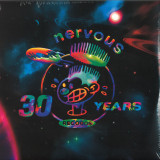
Nervous Records, the iconic label synonymous with the rise of house from the streets of New York City, will mark 30 years in the music industry by releasing the celebratory compilation LP ‘Nervous Records: 30 Years’ on October 1st (Part 1) and October 15th (Part 2).
Featuring original mixes of the label’s biggest tracks, plus remixes by some of its most celebrated acts, ‘Nervous Records: 30 Years’ is both a celebration of the past and of the future. Featuring a who’s who of electronic dance music, the long player sees names including Louie Vega, David Morales Darius Syrossian, Tensnake, Monki, Franky Rizardo, Danny Howard and more take on iconic Nervous cuts: ‘You Make Me Feel Mighty Real’, ‘Treat Me Right’, ‘Future Groove’, ‘Feel Like Singing’, ‘Get Up Everybody’, ‘Break You’, ‘Hot’, ‘End This Hate’, ‘Unspeakable Joy’, ‘Can Ya Tell Me’, ‘Jerk It’, ‘The Anthem’, ‘It Makes A Difference’, ‘Learn 2 Luv’ and ‘Don’t You Ever Give Up’.
The album marks one of the most enduring, extraordinary legacies to grace America’s illustrious music history, not just in electronica but far beyond. Founded in 1991 by Michael and his father Sam Weiss, and recognizable immediately by its distinctive character logo, the label grew rapidly, in no small part due to Michael Weiss’ practically unmatched passion for discovering new music.
“Louie Vega and Kenny Dope woke me at 4am on Tuesday night, Wednesday morning from their studio telling me they had something really different that I needed to hear,” Michael recollects. “I asked if they could play it over the phone. They said if I wanted to hear it I had to come to the studio. So of course I got myself up, got dressed and went there. That “really different track” ended up being ‘The Nervous Track’, a tune that became our signature release and was also highly instrumental in the emergency of London’s ‘Broken Beat’ movement.”
The label’s willingness to take chances on fresh sounds and innovative concepts rising up from the melting pot sidewalks of NYC ensured a body of work that has become a living musical history of the city. House cuts ‘Unspeakable Joy’ and ‘Nitelife’ (Kim English), ‘Get Up (Everybody)’ (Byron Stingily) and ‘Feel Like Singing’ (Sandy B) bump up against hip-hop anthems like ‘Who Got Da Props’ (Black Moon) and “Bucktown” (Smif-n-Wessun) and reggae cut ‘Take It Easy’ (Mad Lion); soulful flows from Mood II Swing (Kim English ‘Learn 2 Luv’, Loni Clark “Rushing”), Armand Van Helden (‘The Anthem’) and Nuyorican Soul (‘Mind Fluid’) sit alongside seminal techno singles like Winx’ ‘Don’t Laugh’. The young artists and producers who joined the Nervous Records’ family have gone on to become some of the most hallowed and celebrated dance acts of all time: Louie Vega, Kenny Dope, David Morales, Tony Humphries, Roger Sanchez, Armand Van Helden, Kerri Chandler, Kim English, Byron Stingily, Josh Wink, to name just a handful.
“We did a release with Josh Wink under his Winx alias entitled ‘Nervous Build-Up’,” Michael said. “It did well and it was obvious how talented Josh was. Subsequent to that release I was pretty persistent in asking him to continue to play me his new demos. During one phone conversation he said, “Mike I’m gonna play you something over the phone but don’t laugh when you hear it.” That demo ended up being ‘Don’t Laugh’, which became one of our biggest international hits and still to this day is one of America’s earliest and most impactful techno hits.”
As much a celebration of the label’s future as it is of their past, Nervous Records: 30 Years is but a marker in the imprints’ history, a clear sign of where they’ve been and also where they’re going. With 30 years behind them, the label’s determination to unearth new raw diamonds in the rough is as unwavering as ever.
“I’ve always been one to look at what others are doing (the industry at large) and think, “ok, are they doing this specific thing for a reason, or doing it because everyone else is doing the same thing” and make my decision based on that,” says Nervous Records’ General Manager Andrew Salsano. “In an age where data metrics and analytics reign supreme, I remain steadfast that they should be complementary to your decision and not the sole indicator to make one. So many songs today are written with 15 second hooks in mind for social media, and while there’s nothing wrong with that business model you will always be chasing the wave instead of carving out your own path and identity.
“My primary focus for the sound of the label has and will continue to revolve around signing good songs and music that has the ability to react at the street level first. The best results come from artists that are firstly given a bit of local love that grows into a global impact. Fresh ideas that express child-like curiosity and artists showing vulnerability in their music are also something I look for, artists and producers that are not making music with certain markets in mind, but rather their own style and signature that is unique but able to straddle the fine line of underground and overground.”
Still as raw, as underground and as finely tuned to the dance floor as they ever have been, perhaps the secret to the success - and the longevity - of Nervous Records has something to do with that hard, dogged, no-holds-barred NYC edge that runs through the veins of the label. With the next generation of producers rising from the clubs of New York, one thing is certain; Nervous Records will be there to find them, nurture them and bring them to the world at large, over the next decade and beyond.
Dinah Washington has been cited as “the most popular black female recording artist of the 1950s”. The jazz vocalist passed away in December 1963 at the age of 39. Just a few months after, in February 1964, Aretha Franklin released her fifth studio album Unforgettable - A Tribute to Dinah Washington. Aretha never personally met Dinah, but she was a good friend of Aretha’s father. Washington always had a major influence of the blossoming style of Aretha. Several covers are, to this day, considered as some of her greatest hits due to Franklin’s timeless voice.
The album was recorded at New York’s Columbia Studios. The recordings were made with the assistance of a small and sympathetic accompanying group for which producer Bob Mersey supplied minimal written guidance.
Mammoth WVH is the debut, self-titled album of Mammoth WVH – the band created by Wolfgang Van Halen. This collection includes the chart topping and now Grammy nominated "Distance” as well as “Don’t Back Down,” “Epiphany,” “Mammoth” and more.
This stunning debut is one of hands down one of our highlights of the year and is still available on a lovely Black Ice Transluscent vinyl.
Wolf began to embrace his voice, inspired by everyone from his father, to bands like AC/DC, Foo Fighters, Nine Inch Nails, TOOL, and Jimmy Eat World. In addition to writing and singing every song on the self-title debut album, remarkably Wolfgang plays every instrument.
Mammoth WVH will be touring Europe extensively in 2022 supporting Scorpions in Germany and headlining shows in Paris, London or Zurich.
Triumph breeds confidence, and with confidence comes an expansion of ambition, a focus of ability, an emboldening of audacity. De-Loused In The Comatorium had risked everything Omar and Cedric possessed on the wildest of gambits, the most impossible of dreams: making sense of the riot of influences ricocheting about Omar’s head, and memorialising their departed friend Julio Venegas through Cedric’s magical realist roman-a-clef. It Clouds Hill shouldn’t have worked. But it did, and with that fiendish tightrope act successfully accomplished, the duo stretched the wire even further and higher, over a figurative fiery pit peopled with lions, crocodiles, piranha and other sharp-toothed beasts not yet known to man. Because how do you make great art without taking great risks? Frances The Mute was no De-Loused Part Two. For one thing, the band’s configuration had changed, in the most painful way. Shortly before the release of De- Loused, sound manipulator and founder member Jeremy Michael Ward passed away, a wound Omar says the group never recovered from. But even though his inspired fucking- with-the-sonic-parameters is absent from Frances The Mute, his spirit and influence can still be determined, the album’s concept derived from a diary Ward had encountered in his day-job in repossession. “Jeremy picked up lots of interesting stuff when he was a repo man,” remembers Cedric. “Weird things, including this diary, He let us read it a bunch of times. It was by a guy who’d been adopted and was searching to find his real parents. It was very surreal, it didn’t make much sense – the guy might’ve been schizophrenic – but it was very inspiring. It felt like how certain music helps you escape your boring every-day life. The names and scenes in the diary directly inspired these songs.” Some of the tracks pre-dated De-Loused, having their origins in early demos Omar recorded at the duo’s Long Beach home Anikulapo, songs such as The Widow and Miranda The Ghost Just Isn’t Holy Anymore. Cedric had heard these jams in their embryonic state and began working in his mind on what he could bring to them. “I was attracted to The Widow like you would be to a lover, right?” Cedric remembers. “I sang over it with Omar while we were touring De-Loused in Australia on the Big Day Out, like, ‘Okay, I’ve got something for this.’” A potent ballad, laden with emotional crescendos and evoking the epic drama of Ennio Morricone – an effect aided by an elegiac trumpet part performed by Flea – The Widow would become The Mars Volta’s first song to chart on the Billboard Top 100, capturing the album’s potent sorrow and widescreen sprawl in miniature. Indeed, the lush sound of the album, the depth of detail and breadth of instrumentation, belies its grungy roots. Having tasted the luxury of Rick Rubin’s mansion, Omar veered in the opposite direction when recording Frances, cutting the album in what he describes as “a shithole... Basically a warehouse with one little air conditioner on its last legs, awful wiring and a console you couldn’t rely on. We were there night and day – I would literally lock engineer Jon DeBaun in there. He slept on a mattress in the vocal booth.” A considerably more complex and ambitious album than its predecessor – four of its five tracks lasted over ten minutes in length, with its closing epic Cassandra Gemini spanning over half an hour – Frances The Mute wasn’t recorded “live” by an ensemble, but with the individual musicians coming into the “shithole” and recording the parts Omar had scripted for them separately. “They had to have absolute trust in me,” Omar remembers, “Like actors trust their director.” In addition to the core band – now fleshed out with incoming bassist Juan Alderete, and Omar’s brother Marcel on keyboards and percussion – the album featured guitar solos from John Frusciante, saxophone and flute by future member Adrian Terrazas-Gonzales, a full string section, and piano played by Omar’s hero, salsa legend Larry Harlow. “It was a childhood dream come true,” Omar says. “We recorded with him in my hometown in Puerto Rico, and my father flew in to watch the session. Larry was a perfect gentleman, and a very lively spirit.” The album’s fevered intensity infected even the staid string section, Cedric remembers. “When they performed the part on Cassandra Gemini, ’25 wives in the lake tonight’, one of the guys in the orchestra played so hard he broke his bow, this real old, antique bow. And you could see his ‘classical’ side come out – like, ‘I broke this playing a fuckin’ rock song??’ He was pissed off. But I was like, ‘Fuck yeah, man, that’s on the record! You’ve got to realise things like that are cool.’” The album also features field recordings of “the coqui of Puerto Rico” during the opening minutes of Miranda That Ghost Just Isn’t Holy Anymore. “We took a page out of the Grateful Dead’s book there,” laughs Cedric. “They recorded air. We recorded fuckin’ frogs in Puerto Rico.”
The Lauded Krautrocking, Global Groove Ensemble’s First Album On Maverick Producer Madlib’s Label. The late Christian Burchard, who founded the Embryo ensemble in 1969, loved the slogan Auf Auf, German for Up, Up, or Keep On Going. Anyone with anything more than a passing interest in the German Krautock scene of the 1970s and 1980s knows that Burchard followed that intent, all around the world, tirelessly seeking out new sounds and inspirations and creating a catalog of music unlike most anything else the world has ever heard. Madlib has often said Embryo is his favorite rock band. Of course the hip-hop-producer-with-the-deepest-musical-knowledge knows Embryo is more than just a rock band – but, for the purposes of these notes, let’s keep it simple. When Marja Burchard, Christan’s daughter, who grew up with Embryo and toured with them for years, took the reins of the ensemble after Christian’s death in 2018, she started recording what would become this album, over the course of two years, finishing it in the throes of the Covid pandemic in 2020. She approached Madlib and Egon, who had, years back, visited and jammed with Christian Burchard, and Embryo musicians Uve Mullrich, Roman Bunka and Jan Weissenfeldt, in a Bavarian wine cellar, with the idea to issue Auf Auf on Madlib Invazion. The reply was a resounding, definitive “yes.” So here is Marja’s take on the Embryo ethos, continuing with her father’s intrepid style, and leading the band in her own style. Auf Auf ranges from the deep, free-form jazz of “Alphorn Prayer” to modal music from Afghanistan on “Baran” to psychedelic-tinged jazz-rock of the title track Joining Marja are those like Embryo veterans Bunka, on oud and guitar, and Karl Hector and the Malcouns/Whitefield Brothers/Poets of Rhythm producer and guitarist Jan Weissenfeldt and others, including important players on the global scene from Afghanistan and Morocco
Believed to have been recorded in 1983, ‘O Filho Do Homem’ is a newly discovered and previously unreleased single by the late Brazilian composer and keyboardist Ana Mazzotti. Though it’s her only known studio recording of the decade, ‘O Filho Do Homem’ is one of several unreleased compositions Mazzotti and her band performed on TV Cultura and Programa MPB during the 80s.*
These performances showed Mazzotti had transitioned towards a harder edged and more daringly experimental sound in this period, while keeping the core components of samba, jazz and funk that characterised her two studio albums from the 1970s, Ninguem Vai Me Segurar (1974) and the self titled Ana Mazzotti (1977). This evolved 80s sound had evidently taken a similar path to that of her contemporaries and mentors, like Azymuth, whose keyboardist José Roberto Bertrami arranged her debut album, and Hermeto Pascoal who described her as “a super musician.”
Following the resurgence in appreciation for Ana’s music that arose from the 2019 reissues of her two studio albums, her son Toni Mazzotti was compelled to re-examine the archive of artefacts he’d inherited from his parents. Amongst the LPs, chord sheets, photos and VHS recordings, Toni stumbled upon a mysterious reel of tape, which he swiftly dispatched to the Far Out office in London. Toni and the Far Out team were delighted to discover the mystery tape was a hazy jazz-funk gem recorded by his mother (and father, drummer Romildo Santos) during the twilight of her short career; Ana Mazzotti sadly passed away in 1988 from lung cancer at the age of just 37. Aside from Ana on keyboards and vocals and Romildo who produced and played drums on all of Ana’s recordings, the line-up for the quartet is unknown.
“O Filho Do Homem” will be released on 7” vinyl and digitally on the 10th December 2021 via Far Out Recordings.
Acclaimed US DJ and producer Maceo Plex has announced the release of his long awaited studio album ‘Solar’. The climax to a lead up that included last year’s 7-track ‘Journey to Solar’, and 2015’s 2 track ‘Solar Sampler’, ‘Solar’ is due for release on his brand new label Lone Romantic on the 16th June.
Lone Romantic is a new electronica based label; it will focus on albums and will also open its doors to releasing more avant guard and leftfield singles.
Meanwhile, the ‘Solar’ album allows Maceo to utilise the long format to explore and expose his less explicitly club leaning and more reflective side, taking the listener on a journey through shades of electronica, techno, breakbeats, dub and more. Named after his son Solar, the album also chronicles his new found fatherhood; “the ups and downs in the first few years and its effects on life, marriage and more”.
There’s still dancefloor suitable music within the album; opener ‘Sparks of Light’’s propulsive drums make for an attention grabbing first track, just as the driving 4/4 bassline of closing track ‘The Tesseract’ is a memorable climax. ’Polygon Pulse’ also features the hefty low end that Maceo has become known for, yet underneath breakbeat style drums and sighing vocal snippets.
Vocals are a prominent defining feature of ‘Solar’ that mark it out as a departure towards more of a home listening, experimental album. ‘Indigo’ marries Maceo’s characteristic signature sounds with a slower tempo and gritty male vocals for a stirring, downbeat piece of indie electronica, whilst following track ‘Separation’s breathy vocals and subtle DnB cymbals feel more relaxed.
‘Kepler’s Journey’ marks a stylistic break midway through the album, before the vocoded vocals of ‘Solar Wind’ and ‘Wash Away My Tears’ (the 12” mix of which was included in the Solar Sampler) bring to mind a forward thinking, indie take on French touch. Elsewhere, the lilting, dub techno influenced ‘Swan Dive’ sees this effect take on a more eery, thoughtful tone.
The release of ‘Solar’ sees Maceo Plex enter a new, more developed chapter of his long career - taking the sounds that have made him so popular and building upon them to push himself forward artistically, the album is a very personal use of the long format and an education in the producer’s musical influences.
Hot on the heels of their landmark remix of ‘Lost My Love’ by Kenny Cox, DJ Amir and Re.decay return to BBE Music with a rework of Maulawi’s ‘Street Rap’, plus a new version of Fito Foster’s ‘Salsa’ by DJ Dez (aka Andrés) featuring Amp Fiddler. Originally issued as the opening track on Maulawi’s self-titled 1974 album by Detroit’s Strata Records, ‘Street Rap’ is a slept-on jazz/funk classic. As part of his role as curator and archivist of the Strata catalogue, DJ Amir discovered the original stems for the track and was happy to discover they had survived the years well. “I thought we could really do something different with this song” say Amir. “Like making it more of a mid-tempo ‘four to the floor’ groover. Also, I wanted us to play with the original vocals a bit for the updated version. This is by far our favourite remix!” Previously serving as DJ for Slum Village and releasing on Moodymann’s Mahogani Music simply as Andrés, DJ Dez Andrez is part of the fabric of Detroit’s unique and eclectic music scene. But few people know that Dez’s father is Cuban music hero Humberto “Nengue” Hernandez, a highly respected percussionist and vocalist who starred in the 1988 motion picture ‘Salsa’. “So I reached out to Dez because I knew his father sang and played on the Fito Foster song “Salsa’” says Amir. “I have had the stems of the song since the beginning of my license deal with Strata. I thought it would be a great homage to have Dez remix his father’s music. Plus, Dez was definitely excited to do so!” For his remix, Dez called upon Detroit legend Amp Fiddler to play additional keys and piano on the remix, while Dez also added additional percussion to compliment his father’s, like a time-travelling jam session going back almost 50 years. Staying true to his Cuban roots, Dez’s remix brings a contemporary twist to this timeless track.
‘The Alienist: Angel Of Darkness (Original Series
Soundtrack)’ is now available on vinyl.
The album features music by Ivor Novello Awardwinning composer Bobby Krlic (The Haxan Cloak).
The album is pressed on blue vinyl, with a deluxe
spined sleeve with deboss artwork and the vinyl itself
housed in its own double sided inner sleeve. Digital
download card included.
Bobby Krlic is an award-winning British artist,
composer and music producer based in Los Angeles.
Over the past decade, Krlic has created music under
the The Haxan Cloak, releasing two critically
acclaimed full-length albums (2011’s ‘The Haxan
Cloak’ and 2013’s ‘Excavation’) and touring
extensively as a solo artist building a devout fanbase.
As a producer, Krlic has worked with artists including
Björk, Khalid, Troye Sivan, Goldfrapp, serpentwithfeet,
The Body and noise-rock band HEALTH.
Krlic scored Ari Aster’s 2019 horror film ‘Midsommar’,
earning him an Ivor Novello Award for Best Original
Film Score. Last year, he made new music for ‘Red
Dead Online’ and also co-produced Father John
Misty’s ‘To S.’ and ‘To R.’.
An unflinching, gripping, turn-of-the-century murder
mystery that traverses both New York’s wealthy elite
and the struggling underbelly of the city’s ‘Gilded Age’,
‘The Alienist’ follows Dr. Laszlo Kreizler (Daniel Brühl),
a brilliant and obsessive ‘alienist’ in the controversial
new field of treating mental pathologies.
- Song From The Valley (Traditional)
- Calling The Goats (Traditional)
- Kauk (Traditional)
- Kristallen (Traditional)
- Mattmar (Traditional)
- Lakk (Traditional)
- Höpsi (Traditional)
- Calling The Cows (Traditional)
- Lullaby (Traditional)
- Simple Song (Traditional)
- Layers Of Light (Svensson, Esbjörn)
- Lonely At The Lakeside (Traditional)
- Norwegian Fox Trot (Traditional)
- Nils Walksong (Traditional)
- The Farewell (Wallin, Bengt-Arne)
Nils Landgren was born in 1956 and grew up with the music of his
father, a jazz cornetist, and the church music of his grandfather, a
pastor. He never lost his strong affinity for his own musical heritage.
Esbjörn Svensson, born in 1964, didn’t want to play folk music at first.
At home with the music of Chopin, Ellington, or disco-pop groups
such as The Sweet, the pianist had first found his place in the
competitive music scene in Sweden. His trio was a success and in his
homeland, he was voted Jazz Musician Of The Year in 1995 and
1996. The first sprinkling of jobs became a steady flow. Svensson
proved himself in the bands of his friend Nils Landgren. The music
was about funk and soul, occasionally pop and, in the main, classic
jazz. But not folklore.
It was through the influence of Landgren and Svensson’s former
teacher Bengt-Arne Wallin, who recorded the landmark album ‘Old
Folklore In Swedish Modern’ back in 1962, that Svensson and
Landgren were inspired to make a duo album centred around folk
songs. In August 1997, both went into the studio and, with only
trombone and piano, recorded ‘Swedish Folk Modern’. Their
improvised treatments of the classic songs of the folk culture not only
impressed the public; it brought praise from the press. Svensson and
Landgren had created more than just a few impressions in duo.
Discarding any sort of large conceptual superstructure, they had
continued what Jan Johansson’s Jazz på Svenska and Bengt-Arne
Wallin had begun in the early Sixties and what has since become a
major force within the inner workings of European jazz.
The time after ‘Swedish Folk Modern’ was hectic and exciting. Nils
Landgren’s Funk Unit advanced to the position of a celebrated festival
act. Svensson’s own trio, E.S.T., expanded beyond Scandinavia’s
borders, where the band’s fortunes skyrocketed. Inundated with jobs,
the musicians finally found the time to once again get together, in
December 1999 in Oslo’s Rainbow Studio. It would be a meeting full
of exceptional jazz energy. Even more than the first time, they would
rely on the force of reduction. Moods would be suggested, left open.
Melodies worked out in simple clarity. Delicate variations
supplemented and amplified both the original and traditional motifs of
the central musical im- pressions. ‘Layers Of Light’ is an affair of the
hearts of two artists who went back to their roots. That makes their
music truthful, direct and authentic in a wondrous way.