Video Age make breezy and timeless songs that are so ineable, they can only be the result of a decades-long friendship and songwriting partnership. Across four albums, Ross Farbe and Ray Micarelli have gleefully worn their influences on their sleeve, writing inviting tunes that reference sounds ranging from disco to pop and indie rock. On their latest LP, Away From The Castle, the New Orleans duo have strayed from nostalgia and instead have honed their own unique musicality, making songs that sound like themselves with a taste of inspiration from classic singer-songwriters of the 60s and 70s. The album is a testament to the possibilities that come from getting out of your comfort zone, the freedom of writing vulnerably and unselfconsciously, and the joys of getting to work with your closest companions. After releasing and eventually touring their critically-acclaimed third album Pleasure Line in 2020, Farbe and Micarelli sought inspiration for their next project through collaboration. They worked with Drugdealer on his album Hiding In Plain Sight, Micarelli gigged throughout New Orleans' jazz and blues scenes, and Farbe recorded local artists at his home studio, most recently producing Esther Rose's new album Safe to Run. Feeling refreshed, they rented a cabin in Eunice, Louisiana with touring members Nick Corson and Duncan Troast, where they spent eight days in August 2022 jamming, cooking and writing together. Through this process, Video Age have made their best collection of tracks to date by perfectly alchemizing their influences and experiences into a record still tinged with nostalgia, but moving towards a more succinct and authentic voice. Away From The Castle is a document of a band having fun and rediscovering their love for making music together, but it's also their most honest and personal work yet-Video Age distilled to its purest form.
Buscar:the form breaks
Video Age make breezy and timeless songs that are so ineable, they can only be the result of a decades-long friendship and songwriting partnership. Across four albums, Ross Farbe and Ray Micarelli have gleefully worn their influences on their sleeve, writing inviting tunes that reference sounds ranging from disco to pop and indie rock. On their latest LP, Away From The Castle, the New Orleans duo have strayed from nostalgia and instead have honed their own unique musicality, making songs that sound like themselves with a taste of inspiration from classic singer-songwriters of the 60s and 70s. The album is a testament to the possibilities that come from getting out of your comfort zone, the freedom of writing vulnerably and unselfconsciously, and the joys of getting to work with your closest companions. After releasing and eventually touring their critically-acclaimed third album Pleasure Line in 2020, Farbe and Micarelli sought inspiration for their next project through collaboration. They worked with Drugdealer on his album Hiding In Plain Sight, Micarelli gigged throughout New Orleans' jazz and blues scenes, and Farbe recorded local artists at his home studio, most recently producing Esther Rose's new album Safe to Run. Feeling refreshed, they rented a cabin in Eunice, Louisiana with touring members Nick Corson and Duncan Troast, where they spent eight days in August 2022 jamming, cooking and writing together. Through this process, Video Age have made their best collection of tracks to date by perfectly alchemizing their influences and experiences into a record still tinged with nostalgia, but moving towards a more succinct and authentic voice. Away From The Castle is a document of a band having fun and rediscovering their love for making music together, but it's also their most honest and personal work yet-Video Age distilled to its purest form.
The sixth UFOs outing is another intergalactic adventure in sonic form and this time at the buttons it's New Balaance, a Mexican artist at the heart of a new wave.
Space Jungle though is an apt title for this EP, which kicks off with some stylish breaks and nimble basslines overlaid with lush cosmic arps. 'Space Jungle' (feat Parallax Modulators brings a more pensive mood thanks to the sustained chords and deeper grooves, but subtle acid and chattery perc bring it to life.
'Grantourismo' is a lively and dynamic cut with more swirling synth work while 'Redemption' closes down this quartet of excellent explorations with a mix of 90s prog, techno and breakbeats all imbued with plenty of colour.
Surya is a project from Rome formed by Joe Casagrande, Matthew Mountford and Roberto Lycke. Born in 1995 with consistent dub roots influenced with breaks and ethnic music samples.
The duo was quite active in the Roman scene in the late '90s, collaborating with clubs like GOA, Brancaleone, MCA and playing with seminal groups like ORB and Loop Guru.
"Wide Tuning" is Surya's first record, an extremely unique debut that goes beyond dance music boundaries. Self-produced in 1997 and released only on cd until now.
It’s been a hot moment, so we can’t wait to finally announce the next EP on our Awkwardly label, “a hack is a foul“ by dadan karambolo.
Safe to say he’s been on our radar for a while, so we’re mighty excited to welcome the Wroclaw-based producer on AWK005. After a strong debut release on his co-owned SPLOT imprint, an equally solid LP on Regime Brigade as well as contributions to various compilations, dadan is back with his signature moody, bass-bin shaking sound.
Hitting the sweet spot somewhere between dubstep, grime, breaks and ambient techno, these 4 tracks provide a somber yet seductive quality that invite the listener to get lost in a hazy amalgamation of stylistic elements. Rest assured, this combination of low end and rhythm heavy explorations contains the right formula to cause some damage on the dance floor.
DJ picks ups and plays by: DJ Voices, EMA, Ehua, Kassian, HAAi, Ila Brugal, Jaye Ward, Mani Festo, mi-el, Nala Brown, Om Unit, Peder Mannerfelt, Pinch, Stenny, Sybil, Tom Ravenscroft, Toumba et al.
Bell Curve's new EP Obelisk for Berlin's SSPB provides a daring evolution of her soundworld, channeling the bristling intensity of her previous work into a more expansive headspace. Alongside six mesmerising new tracks from Bell Curve, the EP features a remix from Hessle Audio rising star Toumba. Obelisk compiles Bell Curve's most compelling and enthralling work to date. Reveling in dazzling repetition and delicate sonic nuance, it is a cathartic and defiant statement in an industry that increasingly demands hollow immediacy and caters to short attention spans - an homage to struggles and affirmation of strength and self-belief, while equally offering euphoric escape for those willing to spend time inside its mystic whorl. Club sonics are here plucked from their original contexts and expanded outwards - icy rave stabs on "Staircase" ascending into the heavens or the astral breaks and springy bass of "Hope It Gets Better".
Subtle shifts in tone and texture guide the listener through the trip, reverb tails slowly extending into lysergic drift or rippling grain and feedback rising from pulsing bass tones. Jordanian producer Toumba amps up the tempo on his remix of "Staircase" while maintaining the original's emotional core, bolstering the track's dextrous rhythms with distinctive Levantine timbres. Obelisk captures a constant push and pull between emotional states - from anxiety and melancholy to joy and euphoria, working through turmoil to find transcendence.
Tracks like "Dance Skeleton Dance" particularly invoke this duality, drawing catharsis from darker sonics, reconfiguring bass pressure and anxious percussion into a humid dancehall stepper. "Without U" contains emotional struggle as part of the very circumstances of its making - written while working through heartbreak, its delicate repetitions and searching tone reflecting the process of reconnecting with oneself. Title track "Obelisk" forms the emotional core of the EP, coalescing from weightless vapors into dramatic synthesizer motifs, evoking euphoric memories of complete immersion on the dancefloor and our ability to find ecstatic experience even in the contemporary hellscape.
EP opener ‘Scary Movies’, is a wickedly euphoric slice of driving techno that rushes the bassbins and dials up the serotonin levels to the max. A true mutant roller that’s guaranteed to drain the smoke machine dry. Following that is ‘Getting’ a snarling and unpredictable masterclass that traverses through jagged techno and twisted breaks. A proper hard working number, loaded with attitude and built specifically for all night sessions.
‘Esvedra’ kicks off the B-side and keeps things moving at a blistering pace. A laser-focussed club cut that is guaranteed to run amok through every space it graces. A razor sharp face melter stacked with hammering percussion and lethal drum work. Rounding off the release is Yushh’s brooding and expertly restructured remix of ‘Getting’. A heady cocktail of UK Bass in its most sinister form and a heavy dose of the more off-kilter and forward-thinking sounds coming out of not just Bristol but the UK as a whole. This is proper lights down and sound system up material at its finest.
‘Scary Movies’ unequivocally displays Dawn Razor’s skills as an increasingly confident producer and one of the most important artists emerging out of the Russian scene. While simultaneously showcasing Yushh’s inherent ability to think well outside of the box each and every time. Blue Vinyl Edition.
It's time to clock up more Air Miles here as the small but well-formed label invites Supreems for another excursion into emotional yet robust breakbeats. 'Being' floats above the dancefloor on perfect frictionless drum loops that lurch to and fro and 'Touch' is a deep space trip with pensive cosmic pads and delightfully delicate but dynamic breaks. There is more weight and crispy texture to the zoned out sounds of 'Running Back', then 'Soft Spring' brings a heart aching female vocal to a loose cluster of beats, breaks, hits and churchy chords. 'Yunnan' shuts things down with a dark yet alluring energy. There is great craft in these cuts as well as plenty of dancefloor clout.
Proper full-length outing from Naarm quartet and venerable live show Polito! Though prior associations with Butter Sessions have birthed EP's and compilation appearances, Collapse Phase gathers the most cohesive body of work from the group to date. Self-described as "a meeting of improvised contemporary dance and live improvised techno music, working together to create entrancing performance experiences", the project translates impressively to the long-player format. Holding no pretence with its title, opening cut 'Chuggalug' swirls around the stereo field building upon sustained synth warbles with low-key basslines and breaks propelling the track. As the album progresses from the chug into gridlocked, Mills-ian loops and fast, extra-terrestrial sound design (all swinging 909s + decay), we're also treated to contrasting downtempo acid cuts and dubwise, day-time festival vibes ('Fortune Teller'). 'Nine Lines' layers various patterns in a classy exercise of dancefloor tension building, with an undoubtedly in-the-moment feeling evidencing Polito's live show foundations. Across the board the group showcase their mastering of a kind of addition/subtraction push and pull, but the varying influences in sound design provide an extra layer of depth to the whole thing and cement the Polito brand. On both 'Inside The Sphere' and 'The Sphere Is Collapsing', the dreamier, more reflective edges of 90s IDM are given a nod and these two strike as up there with the best on the album. Head for 'Mercado Waltz' for a super interesting fusion of loopy techno and modular dubstep.
Polito is a collaboration between musicians Robert Downie and Finnian Langham, and dancers Arabella Frahn-Starkie and Hillary Goldsmith.
A long-in-the-works project of ours, here comes A Tribe Called Kotori's first foray into full-length territories, as the immensely talented Rampue takes us on a melancholy-riddled ride across his phantasmatic mindscapes. A true sound explorer, deftly steering his ship down the junction of electronica, abstract and balearic-infused prog house, the Berlin-based vibist has us transfixed and elevated throughout the twelve cuts that form the backbone to this lushly textured promenade in sound - at times understatedly euphoric, at others rivetingly exotic.
Of the creative process that lead to 'Bubblebath Trance', Rampue explains "It all started and ended in the same moment: my cherished feline companion, my laptop awash with an unintended bath, and alas, a dearth of backups. The resultant calamity, an echo of chaotic tranquility." Under the generous layer of irony lies some unaltered truth about Rampue's debut long-player for A Tribe Called Kotori: this sense of serenity that goes with stepping into this warm and bubbling primitive chaos of sorts infuses the listening experience far and wide. Distantly emulating the "euphonious strains" of iconic PS1 video games soundtracks from his youth days, the album has us surfing a constant paradox of emotions, wistful but not abandoning itself to sorrow, dynamic yet suspended in some sort of mind-expanding stasis. As if you were looking at the world beneath you in exploded view, conscious of all thing, slowly moving up the many layers of our atmosphere towards uncharted skies.
A paragon of Rampue's most poignant take on classic electronica tropes, 'Harmonie' blazes with a poetic fire that engulfs about everything in its wake. Just figure yourself riding a chocobo across the sand-covered expanse of North Corel (toasting to the FFVII nerds here) as this blasts out in the distance. From this trancey bubblebath emerge lots of musical shades and nuances, from the nicely dubbed-out, brass-heavy coastal jazz of 'Schattenschranz' to the choppy, trip-hop-adjacent future electronics of 'Inside', via the exuberantly joyous mess of faux-organic number 'Tripomatic' and cinematic charisma of 'Ich hasse Sonne' high-flying orchestrations.
Connecting the dots between that trance-indebted ebullience and further downtempo-friendly attraction, 'Verfahren' perhaps encompasses best what 'Bubblebath Trance' is about: gracefully walking the tightrope in-limbo nostalgia-soaked inner movements and a powerful outward thrust, burning to let the feelings ooze out from the shell that holds them.Clad in purely 90s-compatible breaksy motion, 'Salz' is another attempt to reconcile emotional and physical dissonance, like kneading all states - solid, liquid and vaporous - into an impossible mega-vibe of its own; malleable, strong and enveloping in equal measure. Borrowing from two-step and UK garage, 'Take Away' is a definite high in Rampue's master unfolding of musical twists and turns, summoning a Boarder Community-esque atmosphere and clashing it alongside floor-ready footwork motifs to fascinating effect.
An ode to his studio companion, 'Buchla Trip' finds Rampue's exploring his machinic friend's quirky yet soulful array of electronic potentialities - making it sound like a conversation you'd have with R2-D2 in the heart of a Sandcrawler, whereas 'Kajal' beams us up to a fragmented headspace, halfway altered PC-Pop and arps-loaded electronica on amphetamines. Effusive and transporting, the title-track 'Bubblebath Trance' could well figure as the album's no.1 medley in essence: a bountiful lucid dream of dancing forms, colours and sentiments to wrap your head around, confidently drifting from a liminal state of consciousness down the rapids of one's troubled inner workings.
Rounding off the package, the languid ambient finale of 'Die Leiden des hungrigen Fruehstuecks' rubber-stamps the feeling that 'Bubblebath Trance' belongs to that rare category of albums. The ones that mint their own alphabet aside from typical norms and expectations, teaching you the ropes of their new language as it unreels between your ears - real and unreal, elusive to any other meaning than the one your guts and brains will be inclined to give it to, in real time. A crystal-pure object if you will, that shall not reveal its secrets, even after a thousand listens and just as many wowing moments.
Love Love continues the LOVLTD series with a follow up from Bristol based producer Ben Pest. In a similar vein to his previous 12" on Love Love, 'On The Three', it's an all out techno affair with 4 high powered tracks geared for destroying peak-time dancefloors.
DJ support from:
Tariq Ziyad (Life Support Machine), Doc Scott, TMSN, Alland Byallo, Vell (Boiled Wonderland Records), Manfred Reckers, Shcuro, Hassan Abou Alam, Miley Serious, Zoltan Balla, Jensen Interceptor, Luke Sanger, Mumdance, Clouds, Piezo, Elena Rioboo, Jossy Mitsu, Yorobi, Blutch, NVST, Snuffo, Om Unit, Black Cadmium, Kreggo, Prettybwoy, Gene Farris, Timothy Clerkin, Danielle Moore, Sun People, JVK, Mad Miran, Stillhead, Nala, Brown, Monotronique, Syz, Appleblim, SDR, Wes Baggaley, Hrdvsion, Marco Zenker, Hooverian Blur, Roi, Mamiko Motto, Fear E, Giant Swan, Minor Science, Extrawelt, Second Storey, Toshiki Ohta, Hudson Mohawke, Nachtbraker, Mani Festo, Radioactiveman, Formally Unknown
“Mr Pest never ceases to bring the dirt.. Always top notch and 1 step ahead.. :) Proper”
Pierre-Alain Dahan & Slim Pezin's Neo Rythmiques is an absolute KILLER Tele Music library classic from 1976. It's absolutely sensational throughout, all scorching, uptempo jazzy soul funk that Mr James Brown himself would've been envious of. This is serious business with breaks for days. French drummer, percussionist and composer Pierre-Alain Dahan was a key member of the legendary Arpadys, Disco & Co, Voyage, Tumblack (with Wally Badarou, Mallia et al!) and Jef Gilson Septet. With Neo Rhythmiques, he's joined by his eternal guitar colleague Slim Pezin (Voyage, Manu Dibango, Nino Ferrer), so you know this Be With reissue is fundamentally vital.
Opener "Soul Car" is a swaggering, horn-drenched jazz-funk beast whilst the slick JBs funk of "Happy Penalty" is just plain irresistible. Definitely influenced by American funk flavours, it stands alone on its own right as a brilliant piece of music, no question about that. The blazing "Kuzi-Kuza" is again horn-fuelled but has a more exotic, Latino feel, all loose grooves and bastard blues with funky organ and shredding guitars. The stomping, proto-disco of "Mercy Boa" is a guitar-sizzled Bohannon-esque hypno-groove for adventurous dance floors the world over. Outstanding. And if all that wasn't enough from one half of a 70s French library LP, the A side ends with the monumental, stratospheric "Slim Bertha"! I mean, what can you even say about this absolute monster?! Slo-motion, deep drama funk breaks with jazzy guitar and gleaming percussion. Just sensational.
Side B opens with "Country + Country", a rather forgettable slice of piano driven bluegrass funk (?!) Aaaaannyway, "Super Airship" follows and is a driving fuzz-guitar psych-rock workout of the highest order. We're back on track now. The brilliantly titled "Electronic Mutation" is a total highlight, the funk most definitely returning and, indeed, strong in this one with its deep clean breaks (with some particularly ace hi-hats), echoey effects and funky clavs. "Africa Semper" follows, all funky percussion, trippy echo and distorted, psychy guitar licks. To close out the set, "Neo Rythmiques 1 and 2" form a great salvo of top-tier, percussion-heavy synthy-funk-fusion. For our money, the bugged-out echoey space-soul of "N° 2" just about edges it.
One of the very best French drummers ever, Pierre-Alain Dahan began his career at the Blue Note in Paris with Sonny Stitt, Dexter Gordon and Daniel Humair. Some start, eh?! He also participated in the recording of Serge Gainsbourg's cult album 'La Ballade de Melody Nelson' before going on to make countless KILLER library funk records and be a key member - alongside his partner here, Slim Pezin - in the legendary Arpadys, Disco & Co and Voyage. Dahan also featured in Tumblack (with Wally Badarou, Sauveur Mallia et al) and Jef Gilson Septet (alongside Henri Texier), whilst the CCCP Pezin backed, among others, Manu Dibango and Nino Ferrer. Some pedigree.
The audio for Neo Rythmiques has been remastered by Be With regular Simon Francis, ensuring this release sounds better than ever. Cicely Balston's expert skills have made sure nothing is lost in the cut whilst the original, iconic Tele Music house sleeve has been restored here at Be With HQ as the finishing touch to this long overdue re-issue.
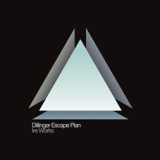
After Miss Machine, Dillinger Escape Plan fans were divided. Many of the folks who were attached to the screaming mathematical metal of Calculating Infinity bailed on the band, disapproving of the experimental musical direction and the meathead appearance of new singer/screamer Greg Puciato. Open-minded listeners were excited about the progressive journey they were taking and many critics hailed the group as a true innovator of metalcore. Ire Works succeeds in many of the same ways that their previous album did, while branching out creatively. They continue to toy with technical metal, blistering hardcore, jazz breaks, and post-punk, but here they evolve again by adding more twists and turns with additional electronic elements. While the merging of too many styles in hardcore can make for a convoluted result (see Avenged Sevenfold's self-titled release), the added instruments and genre changeups enhance the result rather than acting as ornamental distractions. Edgy Aphex Twin-style drill'n'bass drum breaks and stretched and squeezed electro blips feel strangely at home next to the psychotic time-signature changes and manic riffs, especially on the tracks "Sick on Sunday," "Dead as History," and "When Acting as a Wave." Violins, pianos, and trumpets sit nicely in the mix, and the group's willingness to take chances leads to stunning artistic endeavors rather than stale attempts at crossing genres just for the sake of being clever. Original vocalist Dimitri Minakakis makes an appearance, as does Mastodon guitarist Brent Hinds, but the most notable inclusion is drummer Gil Sharone, who proves himself an expert at picking up the slack after the departure of founding member Chris Pennie to play in Coheed and Cambria. Undoubtedly, this act added anger to fuel the fire of their heavier numbers. "82588," "Fix Your Face," and "Party Smasher" are as wicked and manic as their most difficult earlier stuff; conversely, the melodic hooks and falsetto of "Black Bubblegum" and the watery ambience of "Mouth of Ghosts" balance out the album nicely. It can be inaccessible and terrifying all at once, but in a genre overly saturated with formulaic groups, Ire Works is a true standout. If DEP aren't careful and continue down this innovative path, they could easily be labeled the Radiohead of metalcore
For Fans Of... El Michels Affair, Adrian Younge, Roy Ayers, Karriem Riggins, The Roots, Khruangbin. Producer "Grimez" has been making music for 20 years deep. Grimez has ghost produced tracks for 50 cent, Hi-Tek, Kool Keith, Stick man (DEAD PREZ), Killah Priest, Sadat X, MOOD & Talib Kweli, and Mighty Diamonds to name a few. Gritty & raw analog instrumentals Deep, Hard Hitting Soul-Jazz Meets Dub Instrumental Analog Grooves For Your Psyche. In few words, Doctor Bionic can be described as Instrumental b-movie psych-hop. But that doesn't tell the whole story. Doctor Bionic is the brainchild of Cincinnati's Jason Grimes, formerly the producer of the hip-hop group MOOD (with emcees Main Flow & Donte). Having grown up in the Scribble Jam scene here in Cincy, and running in circles that included artists like Hi-Tek & Talib Kweli, Grimes' music has continued to evolve from sample-based loops, to live instrumentation with deep layering; provided by a revolving door of local musicians. The common thread in most Doctor Bionic tracks are the neck snapping drum breaks, but the tempo adjustments and varying instrumentation lends itself to a collection of non-genre specific songs - held together in unity by the flawless drums, often provided by Josiah Wolf (of indie-rock band Why?). The result of these recording sessions are a masterclass in musical juxtaposition. Spacious yet clustered. Futuristic nostalgia. Ideal for long car rides or setting the vibe during a laid back gathering of friends. Also Available From Doctor Bionic: Animal Totem LP, The Invisible Hand LP
Phoenix Breaks is a physical record label based in the UK specialising in modern breakbeat hardcore, jungle and drum n' bass. The label began in 2021 and the first release was released in December of the first year in the form of a vinyl ep entitled 'The Rising'.
The EP sports 4 tracks of varying styles ranging from breakbeat hardcore to jungle and also drum n' bass. Staying true to the sounds of the 90's, each track has been carefully produced to fully capture that sound and has received raving reviews so far. Strictly limited edition and housed in a sturdy stickered cover, this is a must buy for anyone who has any kind of interest in the oldskool 90's rave sounds.across 4 huge dancefloor tracks.
After taking time out from working together to focus on separate musical projects, maverick composer Alan Roberts (Jim Noir) and crowd-rousing vocalist Leonore Wheatley (International Teachers of Pop / The Soundcarriers) have re-joined forces to introduce Co-Pilot. Each the other’s wing person, they’re plotting an escape through Manchester’s claustrophobic grey skies with the pencil case colour of a hand-sewn multi-coloured primary school patchwork quilt. “We are both the creators in charge of navigating Co-Pilot’s overall sound which changes from track to track,” Leonore hints at what to expect. “There are about 6 different genres on one album, it's a pick n mix record!”
Happy in the haze of many boozy hours the album was recorded over just a few months whilst holed up and hanging out in Al’s city centre Dookstereo studio. The former Mill allowed the pair to relax, laugh and create without constraint. Armed with their original demos and vocal recordings from Al’s flat, they’d nip by the offie to pick up some Dutch courage before setting to work: building arrangements from a drum beat and basic chord pattern, the pair were so in tune they rarely spoke, allowing only the music to lead the way. “We’d communicate through nods of agreement or grimaces of dismay,” Leonore recalls. “Using the instruments with Al in production mode, we let the sound dictate the process whilst being drunk enough to follow it.”
The sound of life coming full circle after honing their separate crafts, Leonore had previously played keys and vocals in Jim Noir’s live band before moving on to front International Teachers of Pop for two critically lauded albums of joyous dancefloor filling bangers - their self-titled debut (2019) and Pop Gossip (2020). During that time Al would further expand Jim Noir’s universe with AM Jazz, which was celebrated as the no.1 album in Piccadilly Records’ ‘End of Year Review’ (2020), followed by the Deep View Blue E.P. (2021) cementing his status as one of Manchester’s finest songwriters.
As Leonore added her vocal magic to Al’s early demos of what would eventually become Co-Pilot’s ‘Spring Beach’ and a crooked original version of closing track ‘Corner House’, the vibe was prophetic “like the ending of Grease as Danny and Sandy take flight through the clouds”, letting their imaginations fly. The songs were the catalyst to spark a new phase of the pair working together, picking up where they left off. “From messing about with sounds during rehearsals in the very beginning it was always clear we liked the combination of sounds we made,” Leonore recalls.
Powered by a ‘try anything’ approach, Co-Pilot blends the musical DNA of what you’ve come to expect from each of the pair’s previous flight paths. “Whatever is switched on or nearby gets used. There's no 'correct' for us. If it sounds good, record it,” Al tells. United through typically turbulent wonky pop and lurking samples, whether culled from 70s TV themes or recreations of past and found sounds (see Al’s 60s tropicalia guitar on ‘Brick’, or the innocent ‘Swim to Sweden’ which opens with an ice cream van jingle Al recorded from his bedroom window) their process offers up a bucket load of Easter eggs. The album even features snippets from dearly departed pal Batfinks whilst ‘Motosaka’ is perhaps the most expensive 2-minutes on the album, featuring a Columbia Records Japan-cleared sample of Ryuichi Sakamoto’s ‘Thousand Knives’. Its synth squelches and Tom Tom Club funk also received the blessing of Haroumi Hosono, Godfather of Japanese Electronica, who agreed to being sampled in an original version of the song. “We just kept listening back and hitting gold,” Al recalls. “I was thinking ‘yeah, not sure what this is but I like it! We were buzzing with what we had made.”
But the sound wouldn’t come without self-imposed instrumental challenges. Thanks to an old mellotron sample on ‘Move To It,’ the moog riff and nautical accordion breaks on ‘Swim To Sweden’ and the 6/8 and 7/8 jaunt of ‘Brick’, time signatures were lovingly skewed to create Co-Pilot’s unique mood. “It was a bastard getting the drums right,” Leonore reveals, “but I like the wonkiness”. Levelling up through the lyrics, the words of smoky and evocative ‘She Walks In Beauty’ are based on a Lord Byron poem, with the sentiment of remembering Leonore’s late grandparents. “I wanted to see how much I could get away with just singing on one note, and how I could harmonically change everything else around it vocally,” she says. Elsewhere ‘Can You See’ was written from the perspective of a concerned sister to a brother which tells of keeping someone safe. “The lyrics are quite metaphorical about day-to-day happenings, people loved and lost. Others are rhythmic nonsense! It’s up to the listener to figure out what’s true.”
It’s clear from Al’s productive production techniques and Leonore’s knack for vocals and lyricism, Co-Pilot’s course is engineered by two aeronautically adept sonic storytellers. “We share a pretty similar sense of humour,” Al tells, “It is funny listening to this quite serious album but knowing we were giggling as we recorded it all. It’s been great to have another brain to bounce off.” Their destination might be unknown, but the clouds are about to part for a sound that is light years ahead. “You'll like at least one song,” Leonore suggests, “and hopefully them all.”
MARMO, a collaborative project between Christian Duka (Vādin / Amoenus) and Marco Maldarella (Sinestesie), was born out of friendship and shared passion for music-making. Starting off respectively as the electric guitarist and singer in a metal band nearly a decade ago, the pair have worked their way through various flavours of electronic music inhabiting someplace between ambient and dance music, arriving at their singular aesthetic on this, their second album and first for Utter.
'Epistolae' - Latin for 'written letters' - was created between London and Bologna during the COVID-19 pandemic, an ode to friendship and as a way to keep connected during a time of isolated separation. The album is conceived as one continuous musical experience, with each track flowing effortlessly into each other in sequence as is heard on the final cut you are listening to now. A veritable sonic journey, as one might say.
The outcome is an undulating collage carrying emotion as its common thread, with rich ambient textures giving way to bursts of percussion, simmering with shrouded whispers and spoken word, embossed with rhythms and borrowing influences from downtempo, dub, breaks, techno and tribal electronica.
'Epistolae' is available on limited vinyl and digital formats, mastered & Cut by Anne Taegert at D&M. Artwork by Marco Maldarella.
Marc Richter aka Black To Comm released his debut record 20 years ago. In 2023 he is still busy releasing music under various disguises and is currently signed to the Thrill Jockey label. To celebrate this anniversary his own Cellule 75 label is re-releasing some classic out-of-print vinyl albums that originally came out on the defunct Type and De Stijl labels. The LP will feature a full-colour lyric sheet / poster exclusive to this edition.
After releasing the critically acclaimed Alphabet 1968 on the seminal Type label (Grouper, Jóhann Jóhannsson, Yellow Swans), Richter chose De Stijl for this 2012 album, an American label that had just put out future classics by the likes of Circuit Des Yeux, Hype Williams and Wolf Eyes.
EARTH is a 2009 silent film by Ho Tzu Nyen, one of Singapore's foremost visual artists. After hearing Black To Comm's Alphabet 1968 Ho Tzu Nyen invited Richter to accompany the film at Berlin's Asian Film Festival, Unsound in Krakow and several other art biennals and music festivals around the world.
In his own words: "Most of the music was composed under the influence of heavy pain killers while recovering from a broken leg (the recordings literally took place in bed). The music (like the film) is about slowness and decay, states of unconsciousness, sleeping and waking up, dying and being reborn. The film is a post-apocalyptic collage based on paintings by classical European painters (Caravaggio, Delacroix, Rembrandt, Gericault) -- the music translates this concept employing corresponding collage-based sampling techniques using loops made from vintage vinyl and shellac records combined with acoustic and electronic instrumentation and voice."
From the original De Stijl one-sheet:
"Richter’s already formidable expressive power stretches over all of EARTH. Reflecting the countless cyclical forces that make up, oh, more or less everything we know and are, the music on EARTH is bracing, lovely, bustling and still, and at times bittersweet, a commingling of sensations and emotions that can’t be neatly separated from one another. (EARTH is complex, as you know.) Guests on EARTH include David Aird, a.k.a Vindicatrix (on the Mordant Music label), contributing startling vocal work; Renate Nikolaus on an array of instruments and noise devices; Rutger Zuydervelt (singing bowls); and Christopher Kline (singing saw). EARTH is Black to Comm’s seventh album and his debut for De Stijl, following the acclaimed Alphabet 1968 (on Type) and last year’s vinyl-only collaboration with Mike Kelley of Destroy All Monsters (on the En/Of label)."
Alex Neilson in The Wire:
"The most marked aspect of Earth is the voice of David Aird, aka Vindicatrix. Imperious and dolorous, he has the gravity of post-Climate Of Hunter Scott Walker, David Sylvain or Klaus Nomi stripped of the pathetic ritz. This is something that's easy to do badly, but Aird pulls it off with aplomb. On "The Children" he breaks into a morose yodel, rolling the words around his palate and colouring each syllable black before gifting them to the air. The meaning isn't understood verbally as much as viscerally. Beneath Aird's ululations, Richter casts handfuls of angelic debris from keyboards and digital devices, generating a celestial electronic tapestry reminiscent of Japanese musician Nobukazu Takemura. Sounds vie and twist at frequencies you can't so much hear as feel in the bridge of your nose, and the variety and full-bloodedness of the accompaniment is what prevents Aird's vocal from occassionally lapsing into shtick."
Sharing a mutual love for Dance Music in all its shapes and forms please welcome Philipp Lauer & Johannes Albert for the first time together. These Bucketheads overcame the franko-hessian border and give us a 3-Tracker on the A side that is "Based On Boss". The title track swims in 909 Drums, vocal samples shine through, and organ chords lead the way. You will be moving your feet with "Four 44", still all about a basement, a red light and lots of feeling. Rounding things up with the loopy powers of "Posh-O-Rama", if you are in need of soft breaks with a lovely twist. Now who's the boss?
Speaking B sides: Hamburg-Moenchengladbach-London? Probably not your everyday route. Three pillars in their own leagues team up for "Survivor": Boris Dlugosch, Marc Romboy and C.A.R. on vocal duties. Created in times of lockdowns and standstills "Survivor" is a midtempo stomper, slightly dark yet extra moving. Clocking in at 110 BPM a percussive beat is haunted by C.A.R.'s voice and a hypnotic robot bassline. Occuring melodies and pads do the rest. Remix time? Oh yes! Spicing and speeding things up a little the Johannes Albert remix arrives with additional chords, gated snare drums and maybe even happiness.
Third in a trilogy of LPs of Library Music miniatures from composer and multi-instrumentalist Daniel O’Sullivan (Æthenor, Ulver, This is Not This Heat, etc) following 2020’s Electric Māyā and 2021’s Fourth Density. For heads, the term “Library Music” in 2021 might evoke dodgy Italian gray market LPs and crate diggers hunting for “funky breaks” - but London’s venerable KPM Music is working with groundbreakers like Daniel to open up new avenues for composers to experiment. The 15 tracks on “The Physic Garden” are fully-formed and orchestrated compositions, which would be highlights on anyone’s LP, never mind as incidental music. Of the music, Dan says: “The Physic Garden is an album of diverse instrumentals inspired by a swathe of verdant vistas from manicured gardens and follies to urban common land, overgrown and forgotten. Convalescent memories in the shape of psychedelic auditory botanics.”
Key tracks include the droning acoustic folk of the title song; the Canterbury-esque rolling horn and woodwind melody of “Return the Heart” (with expert drum kit from Frank Byng); The prog-ish odd meter interlude “Buttercup Tea”; The quiet ambience and delicate melody of “Dusty Feather:”; and the Eno-like drift of “Vapourer Larvae.”
“Library music. Akasha. Here you accept that music behaves like a thing to accentuate another thing, seemingly unrelated. A beautiful, shining blankness. Not passive. An opportunity to wade. A brief encounter with an open-ended destiny. As in, you never know who or what it will be partnered with. With library music the emphasis tends to be on functionality and less on sonic self-portraiture. So it compels you to be concise, like what is the function of this work? The distance is liberating. It’s less “What Am I? and more “What Is This?”. It compels you to be brief, each little cell is a world of its own in an assemblage of miniatures all vibrating in their collective identity. Then there is the occult nature of library music which is fetishized by many for its ability to induce time travel, often to send us back to some televisual memory. However, despite its broad-brush strokes, the library can be so profoundly alien, especially when experienced independently of the televisual realm; an unruly chimera of genre mutations, compositional curiosities and the deepest wallpaper you ever laid ears on. Perhaps the observances of library music can help unshackle us from our artistic insecurities and delusions, where one is drawn to the shape of music as a whole instrument unto itself; as a vehicle carrying our intention and consisting of everything we have to give at that moment; so things that are seemingly unrelated are ultimately connected.” – Daniel O’Sullivan