Following the instant success and subsequent repress of its inaugural release, Stones Taro’s self-release experiment "Foglore" returns with its second installment, further expanding the captivating universe built in Part 1. Rooted in the same core concept—a seamless blend of dubby, fog-laden sound design and a timeless aura reminiscent of ancient folklore—this four-track EP solidifies the very definition of "Foglore." On the A-side, "Weather Wheel" sets an energetic tone as masterfully mixed, chopped breakbeats seamlessly dissolve into hazy, atmospheric pad sounds. It is followed by "Moss Pulse," a track whose precise sound design acts as a natural hub bridging the worlds of Dub Techno and Dubstep. On the flip, "Whorls Of Smoke" delivers a fresh, hypnotic dance cut driven by an intricate interplay between a half-step groove and tam strikes. Closing the EP, "Acid Fog Ritual" combines sticky acid basslines with a deliberate, low-tempo beat to generate a deeply immersive psychdelia. Expanding on its predecessor while boldly redefining its own boundaries, Foglore#2 stands as a brilliant testament to Stones Taro’s evolving sonic vision.
out of Stock
Last delivered 2 days ago available to reorder, subject to availability
Mystica Tribe and Scopeotaku have formed an international dub alliance. Taking their sounds into melodic experimental electronic dub territory. Previously, both have fused their own cultures and personalities into numerous dub releases. Now they are expanding their parameters by collaborating on a project that encompasses both their love for psychedelic and electronic audio combined with heavyweight dub reggae rhythms.
Mystica Tribe is the musical alias of Tokyo, Japan based producer Taka Noda. Drawing on a wide range of influences from dub, soul, bass and rhythm & blues. Mystica Tribe has been developing a very distinctive sound that exists in a weird freaked out zone, between dub and techno. Noda is especially interested in deep psychedelic music and this is reflected in his productions. Which are equally suited for late night listening sessions or on bent broken dancefloors.
Scopeotaku is the alter ego of Scott Prentice, a Glasgow, Scotland based artist. Scopeotaku has experimented with audio since purchasing a sampler and a four track cassette deck many many moons ago. His love for left-field dub and eccentric sounds have led him to create a variety of output, from industrial ambient, illbent electronics to mutant dub.
Blueprint ARchives presents a reissue of Dark Llama?s Tuned In E.P., originally released in the UK by Aura Surround Sounds in 1993. Four direct techno cuts: The Ghost, Circular Motion, Certified and Force 4.
'Quiet Pieces' initiates Abul Mogard’s personal imprint Soft Echoes with a definitive self-portrait of calm, contemplative, and discreet inner landscapes made audible. It is the first solo album on vinyl in four years. RIYL Alessandro Cortini, William Basinski, The Caretaker.
While sifting through archived material left idle from earlier projects, a chance encounter with a late uncle’s trove of beloved 78rpm classical and opera records prompted the reworking and completion of what would eventually become the album. Spinning dusty records at 33 and 45rpm, Abul Mogard recombined their enduring spectres with unfinished sketches from his archive. The resulting soundscape blurs distinctions between his memories and those of another, exquisitely short-circuiting the senses with its waking, dream-like lucidity.
This was a process I hadn’t explored in my earlier works. I began sampling brief moments from these records, altering them with studio effects and playing them at slower speeds. In many cases, I wasn’t entirely sure how the original music sounded. These fragments, once further processed, became a source of inspiration for my new compositions. Over time, I realised that the old pieces from the archive and the new material derived from the samples naturally complemented each other.”
The resulting pieces hover over a threshold, a liminal space that harmonises the old and older material. Voluminous waves of quiet and loud undulate between consonance and dissonance, conjuring imagery of a decaying grandeur that humanity’s decadence has surrendered to the elements. Abul Mogard’s seemingly abandoned yet vast landscapes are nevertheless intimate with timbral frissons of red-lined distortion. Elusive, yet as tangible as sea spray or smog, they affect the olfactory senses with a rarified, synesthetic quality that modestly engages one’s emotional register – a hypnotic, distinguishing feature long hailed as one of the hallmarks of his work. A fidelity to memory and dream recall is sensitively probed in the journey from the stately symphonic stasis of 'Following a dream' to the almost industrial, untethered brutality evoked by a looming silhouette that’s never fully visible in 'Constantly slipping away', culminating in the foreboding coda of 'Like a bird'. Those pieces appear to shield the album’s sentimental core, where the tempestuous play of light and shadow of 'In a studded procession' escalates to breathtaking, panoramic climax, while 'Through whispers' evokes an out-of-body-like experience encountered with visceral poignancy.
Looking back, Mogard notes an unexpected influence: “I realise being inspired by Phill Niblock, whose work I had barely known at the time but explored after his passing in 2024. His album 'Boston Tenor Index' changed the way I approached dissonance. It encouraged me to push my sound further, to the edge of a space where I began to feel uncomfortable.”
The album artwork, created by longtime collaborator Marja de Sanctis, features a photograph taken at the Temple of Jupiter Anxur, an archaeological site overlooking the Mediterranean Sea. Captured with an iPhone, the image traces the residual presence of construction techniques and architectural forms of the Romans, where material history is transcribed through contemporary tools. The convergence of ancient and modern technology aims to reverberate the site’s lasting spiritual presence – an echo persisting in what is now perceived as a quiet, emptied space. The spiral gestures towards infinity and light. Past and present dissolve into one another, reflecting 'Quiet Pieces' meditation on sound, memory, and time.
RIYL Alessandro Cortini, William Basinski, The Caretaker
out of Stock
Last delivered 9 months ago available to reorder, subject to availability
First Principles marks the debut release on Groove Disciples Series, a new DJ-focused vinyl catalogue from 80147, created as a natural extension of the Groove Disciples Podcast. While the podcast has connected DJs and selectors from local scenes across Europe through guest mixes and conversations, the new series continues that mission through carefully curated vinyl releases from artists who are both DJs and producers.
Opening the catalogue, Bloody G delivers four dancefloor-oriented cuts that explore the space between deep house and Detroit-inspired techno edges. From the melodic and melanchonic "Message in the Sound" to the driving "Regroup Reclaim Rebuild" and "Machine Funk" with a reinterpretation by Southbound Sounds, the EP is built with club functionality at its core, favouring groove, analogue warmth and musical restraint over passing trends.
First Principles establishes the philosophy behind the series: music first, DJs at the centre, and vinyl as the medium that continues to connect local clubbing scenes through music, collaboration and community.
out of Stock
Last delivered 16 days ago available to reorder, subject to availability
There are some first times you never forget. The first time one hears Syd Matters’ captivating voice is one of them.
From “End & Start Again”, his first single in 2003, Jonathan Morali’s warm, soulful vocals and timeless melodies revealed an artist in a league of his own. Success in France and abroad was immediate and has never waned.
Four albums followed between 2004 and 2011, along with a host of unforgettable songs: “Black & White Eyes”, “Obstacles”, “To All Of You” or “I Might Float” left their mark on an entire generation, racking up nearly 200 million streams and 100,000 physical sales. Drawing equally from the songwriting of the 60s, the creativity of the 70s and the modern synthetic era, Syd Matters has developed a unique musical universe, building a loyal and ever-growing audience over the years.
On stage, accompanied by his band, audiences recall intense concerts where the artist and his musicians deliver performances that were at once epic and intimate. Lush and spectacular on stage, their music never lost its center of gravity, gaining even in depth. Syd Matters toured France and Europe (England, Germany, Scandinavia...) for nearly ten years, as well as in the United States and Latin America. In 2011, the tour for his album Brother Ocean culminated in Paris at the mythical venue l’Olympia.
Jonathan Morali then took a step back from the spotlight but remained just as prolific, writing for film, theater, radio, and television and collaborating over the years with directors such Éric Rochant, Rémi Chayé, Thomas Litli, Patrick Mille, and Mélanie Laurent to name but a few. When scoring for films, the musician gives free rein to his desires and intuitions. He works with the very fabric of sounds and their underlying emotions, as if freed from the constraints imposed by the song format.
Between 2015 and 2019, he also composed the soundtracks for the remarkable video games Life Is Strange and Life Is Strange 2, which were massive global hits. Several Syd Matters tracks appeared in the game, and the success was such that it revived the band’s career, introducing their music to a new audience.
After an extended hiatus, Syd Matters will make a major comeback with a new album - their fifth - set for release in September 2026 on Créature - also home to Flora Fishbach and Chassol. They will then tour France and Europe, returning to the legendary stage of the Olympia on November 17, 2026, where they will perform their new songs. And others that we know by heart and haven’t forgotten.
For the third instalment of our wax series, we welcome the regional talent Bood on board with a gorgeous four-tracker that perfectly defines our sound.
This EP was produced from the heart with some sounds from the analog and early era 16-bit digital domains, and a sprinkle of wild imagination.
In it are deeper house tones for a variety of dancefloors, and different times of the day.
out of Stock
Last delivered 2 days ago available to reorder, subject to availability
For her new and most radical album »Electroacoustic Works for Halldorophone«, Martina Bertoni used the electronic instrument at EMS Stockholm to create four pieces that are massive in scale and incredibly intimate, sonically restrained and emotionally overwhelming—almost ambient and always demanding your full attention.
Martina Bertoni returns to Karlrecords with »Electroacoustic Works for Halldorophone,« her most radical album yet. The foundation for the four electroacoustic pieces was laid during a residency at Stockholm’s legendary Elektronmusikstudion (EMS) that the Berlin-based cellist and composer used to explore the curious instrument, originally designed by Halldór Úlfarsson in 2008, as an algorithmic system in order to examine tunings and the mathematical relationships between Aiming to analyse and understand their interaction beyond the composer’s control, Bertoni sought to engage more deeply with the concepts of time, tuning, and, most importantly, control. Accordingly, her four »Electroacoustic Works for Halldorophone« seem both massive in scale and incredibly intimate, sonically restrained and emotionally overwhelming— almost ambient and always demanding your full attention.
While the halldorophone—famously used by Hildur Guðnadóttir for her »Joker« score—roughly resembles a cello and can be played like one, it is an electronic instrument. The vibration of its strings is being picked up, amplified, and then routed through a speaker. This creates a feedback loop that becomes increasingly complex depending on how much gain is added to individual strings. Úlfarsson gave Bertoni a carte blanche for how to handle the instrument, but she stresses that she relied on »minimal interventions—some string strumming and plucking« that set the interactions of different sounds and frequencies into motion. »I decided to not approach it like a cellist would,« she explains. »Instead I used it as a kind of generative organ by turning it into a feedback machine, with tuned feedback triggering more feedback depending on the tuning, which was based on tetraphonic scales that I could apply on the four main strings as well as the sympathetic group of strings.«
Bertoni recorded the material in the EMS studio, later composing and arranging the four complex pieces in her home in Berlin, after which they were mixed and mastered by Ciaran O’Shea. While this can be considered a compositional abstraction process, traces of her concrete work as a performer are firmly ingrained in the music. »The halldorophone doesn’t have a line output, just a double set of speakers, which is why I recorded all sounds with two microphones in the EMS studio,« she explains. »That’s why there’s plenty of breathing sounds here and there—label owner Thomas Herbst and I jokingly refer to the album as my ›chamber music record‹.« And indeed, there is a striking sense of intimacy to these four pieces throughout which individual sounds, harmonic frequencies, and even subtle rhythmic figures seem to move both on their own accord but also according to a underlying vision that steers their interplay.
Indeed, »Electroacoustic Works for Halldorophone« is an album built on and marked by contrasts. The soothing polylogue of single sounds in the higher register on opener »Omen in G« is counterpointed by massive bass drones, while the second piece, »Nominal in D,« plays a cunning game of repetition and difference by combining thick textures with all kinds of rhythmic elements. »Fades in C«—the longest of the four pieces, clocking in at 17 minutes—unlocks the emotional potentials of the sonic qualities of the halldorophone, sounding at once serene and anthemic, and »Organon in D« closes the album by underscoring how Bertoni’s unconventional approach allows her to seamlessly transform simple, quiet tones into complex, towering walls of sound.
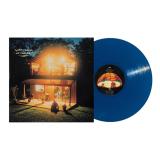
Shaped in the shadows and sounds of the legendary Topanga Canyon, California. The debut album from Biita Houdei is buoyed by a magic that feels wildly and beautifully untamed; wild-hearted sentiments that are shaped by the world around it, fascinated by the enchantment of it all, and delivered via a collective (harmony layered) voice that understands the complex nature of what it means to be alive in the here and now.
Produced by Haley Heynderickx, 'This Bed Was Made For Me' is a striking collection of stirring, signature folk songs animated by subtle instrumentation and orchestral flourishes. It feels lived in: vocals weave together in a beautiful harmonic dance, seasons shift, sunshine appears and bold psychedelic colours warm the horizon.
In the early stages of making her debut album, Biita Houdei knew two things: that she wanted the recordings to feel distinctly and palpably warm, and that she would sew a unique patch for every song on the album. The first of those things is subjective, though brightness pours in from all corners of This Bed Was Made For Me. The second became a laborious task she undertook throughout the process, the completion of which is testament to the slow process of it all, to the physical commitment and patience required to make a full work of art.
The patches she crafted during the making of This Bed Was Made For Me became a full quilt, one that now adorns the album’s front cover. Beneath it sits a striking collection of Houdei’s stirring, signature folk songs, brought into fruition with the help of fellow songwriter Haley Heynderickx, in her first lead production role, and the album’s producer/engineer Sahil Ansari. It’s also the first release Biita (pronounced “bee-tah”) is releasing under her newly-taken name, one that was gifted to her by her auntie and means "unique" in the Farsi language. “I proudly take this name,” Biita says of the change. “It makes me feel that much closer to my Persian heritage.”
Recorded across ten back-to-back and full days, the album touches on themes of love and heritage, of taking chances, the preciousness of time and the impact we all have on the world around us. A number of the songs were written in Topanga, California, while Biita settled into a new home as wild fires raged, and as she adjusted to a life which no longer held distinct seasonal changes, far from the Ozark Mountain home she felt so attached to. Such themes reveal themselves in a variety of ways across the album’s fourteen songs, that key sense of warmth retained in the bones of the album whether they are stepping into darkness or seeking out light.
The album feels lived in and alive; dust swirls, seasons shift, sunshine appears and is held. Biita calls it ‘psychedelic’ and there is indeed a sense of that in the world building, in the way the bold colours are always shifting. Formed of fourteen songs, and filling nearly forty-five minutes, This Bed Was Made For Me not only builds a whole world for listeners to inhabit but also implores you to stay a while. This was deliberate, indeed it’s Biita’s wish that listeners give the album dedicated time; to learn its shape, to explore it fully, away from the instant grab of playlists and skewed algorithms.
“Many of my favourite albums didn’t reveal themselves instantly to me,” Biita, now based in the Catskill Mountains of New York, explains. “Some did, of course, but I had to work to understand the full scope of the piece as a whole. I encourage people to dive deeper into everything that they choose to consume. It is not my intention to sound pretentious, but instead, I am trying harder to explain the gratitude I have for being able to craft every part of this album— using my hands, my brain, my voice, my visions. To me, it is an all encompassing work of art,” she continues. “Making the quilt was laborious. Taking the cover photo was laborious. No shortcuts, but rather a manual and tangible approach. I am thankful for the time it took.”
My fourth album begins and ends in nature, a space that has continually shaped and inspired my artistic work. I spend much of my time in forests and landscapes, listening, observing, and absorbing the subtle rhythms and structures of the natural environment. These impressions do more than accompany my music; they become an integral part of it, influencing its atmosphere, form, and sonic character. As a result, this has become my most emotional and profound album to date. The journey begins with captured moments from a Mediterranean island. Fragments of distant church bells, the ticking of a clock, and the hum of insects in the sun are gently joined by my piano... In this way, the opening piece, “Time,” serves as an introduction to the central idea behind Ellipsis. The term derives from the Ancient Greek word λλειψις (élleipsis) and refers to the deliberate omission of ἔ words or parts of a sentence.
What remains unsaid can carry just as much meaning as what is spoken. This idea runs like a thread throughout the entire album. A reduction to the essential, yet enriched with the necessary details that continually create space for imagination, personal interpretation, and those emotions that are not prescribed but emerge through the act of listening. Ellipsis exists within this tension between presence and absence, between acoustic and electronic sounds, between nature and the studio, between memory and perception. It is a place where meaning arises not only from what is audible, but also from what remains unspoken.
Windy & Carl Meet Optigan Conservatory is a purposefully misleading title for the first collaborative work from four friends who met close to thirty years prior. All active participants in Michigan independent music circles since the early ’90s, Windy & Carl are well-known for their foundational contributions to drift and guitar-born ambient sounds, with songs characterized by deep connections to the natural world and a hard to pin down yet impossible to miss emotional vulnerability.
Optigan Conservatory is another duo, made up of Frank Rotondo (leader of Detroit area free music ensemble Laughing Gas) and Fred Thomas (songwriter and producer most often associated with his band Saturday Looks Good To Me), who have been making minimalistic and time-defiant electro-acoustic sounds since 2016. The album came together almost effortlessly in a very short timeframe, but the idea had been building steam for many a year.
In the last days of 2024, Windy & Carl and Optigan Conservatory got together, falling into a mode of sound creation that was almost hyper-natural. Without any discussion outside of the usual stream of jokes and chatter, the quartet set up and started communicating. Added to Windy & Carl’s hovering augmented chord voicings and vaporous guitar drones were electric piano and synth bedding from Frank & Fred. After the initial sessions, all involved parties took time to consider what they’d made, adding new layers and editing the pieces into more definitive articulations.
A beautiful and hermetic energy larger than the sum of its parts is captured in the process. There are echoes of the earliest releases from Windy & Carl as well as refractions of the same opacity that surfaced in the early kranky catalogue.
out of Stock
Last delivered 2 days ago available to reorder, subject to availability
Frazer Ray lands on Time Is Now with Masha EP. Four tracks of killer, stripped back FWD facing proto/future garage effortlessly pushing the sound into a new direction.
FACTS:
1. Frazer Ray knows how to make a dance. IYKYK…. Recently he’s been shelling Live UKG cooked right in front of you on a custom modular rig. Mad energy. 100% party business.
2. Frazer Ray knows a thing or two about making UK soundsystem music. The artist FKA Soundbwoy Killah is now a decade deep in his discography. And first as ‘Soundbwoy Killah’ and now as ‘Frazer Ray’ he is 2 for 2 with aliases that never miss.
3. New Frazer Ray is always something to get excited about. For 10+ years he’s kept it super tight. Quality over quantity. Always holding dubplates. When releases have landed they drop on only the best labels; including both Rinse and Rinse’s new INGRAM imprint, Ninja Tune’s Technicolour imprint, Sneaker Social Club, Interplanetary Criminal’s Locked On and IPC & Main Phase’s ATW Records. (side note - his Soundbowy Killah - ‘Halcyon Daze’ LP on Sneaker is IMO an all time classic - do not sleep on that one). Aaaannd… if the dubplates got too heavy he’s also occasionally dropped weight on his own U-Phorix label.
Also…..what has always struck me about Frazer’s music is that it’s simultaneously integral in the hardcode continuum while also pushing it forward. It’s always complete. Fully formed. You never bristle. There’s no failed experiments. Just a firm nod to the future for anyone looking.
OK… Run the tracks.
Masha’s vocal licks tell it straight, this one is “Fire”. Proper club business to test the stacks. The drums roll steady in front of a wall of sub bass. A killer mix of post dubstep era goodness, techno sound design and the shuffle & swing of proto dubstep.
Settle Down There’s something 90’s tek step about this one. Dark and moody with a wall of bass. It bristles with texture and atmosphere before – a moment of reprieve in this absolute weapon – Frazer opens up into a dubwise oasis before skittering back into the darkness.
Syren Song is exactly what it says on the tin, alluring Dancehall vocals chatter and roll. Who knew auto-tune and Garage paired so well… Frazer did that’s who.
No Reasons Left is an ethereal closer for the end of the night / start of the morning after. Gliding warm & introspective dubwise breaks with a Reese bassline that hangs in the space between garage and hardcore.
Frazer says…
“This EP feels like I've finally nailed integrating my modular setup (and VCV rack for all you nerds out there) into my productions. I wanted to create deeper production while still ensuring the tracks translate well in the club.”
If this is only the beginning then strap in.
out of Stock
Last delivered 33 days ago available to reorder, subject to availability
There is a pivotal scene in “August in the Water” (dir. Sōgo Ishii, 1995) where the surface of a pool turns into a stone wall. The water that gave the protagonist's life its meaning becomes a threat. As you fall through this stone wall, you appear in a set of underwater coral-reef corridors, and one of the most beautiful musical themes begins to play: Aquatic Ambience, composed by David Wise for Donkey Kong Country (1994). It's a theme that represents the weightless vibe of your new deep-sea life, where you go about your mundane errands, collecting bananas while driving on a swordfish, or, as HerzMayhem put it: "Poor monkey... always swimming, never going anywhere..."
Synthetic Water Music is the second of three compilations, following Synthetic Bird Music and timed to mappa's 10th anniversary. As with the birds, it gathers friends of the label, artists who have released with mappa or played our shows. Most of the music is new, made to measure for this compilation, much of it from Central and Eastern European hands. Birds and water mix well, so please feel invited to play them together, creating your own environments.
Where the birds were in one flock, water is dispersed across four chapters. You live your life as a droppity drop: vapour in the heavens, condensing in clouds, falling into a swamp, trickling into the deepest sea.
Tlālōcān (Cassette 1, Side A)
A place of eternal spring, of aquatic energy that nourishes everything and allows all things to bloom. Bubbly and splishy-sploshy, it is full of dripping sounds and moist caverns (“Emerald Pool” by Pauline Anna Strom), a landscape filled with living fountains (“Oh, to be a Fountain” by Eva Sajanová) and winding streams that flow through the area, forming part of its organic architecture. It is also a paradise reserved for those whose deaths were water-related, where the aquatic and terrestrial beings live in symbiosis and perspectives shift rapidly, from observing a single droplet (Shakali, Lau Nau) to dew (Feronia Wennborg & Lucy Duncombe) and on to flowing currents (Visible Cloaks) that gradually transform into river music (Ursula K. Le Guin & Todd Barton).
Nephelora (Cassette 1, Side B)
A celestial anti-gravity sound world made of evaporation, steam and the formation of clouds, as if looking at “The Sky At The Bottom of the Well” (by Natalia Beylis) or at “The Cloud That Never Rains” (by Henrique Vaz).
If a cloud never rains,
it is not a cloud at all, but a veil that parches the earth with its gaze.
It generates only its own shadow —
a looming mass of suspended longing,
a sky that hoards but never yields,
a reservoir that swallows every river and returns nothing but echoes.
The water in this world is often invisible but sometimes all the more present, as Bint Mbareh describes it: “Recently been obsessed with invisible waters because I come from a place where you have to imagine the water is there even though you cannot see a river, a sea, usually no rain, so water is in the air, the voice and the imaginal realm, drought is imagined to be negotiable.”
Žaboglach Zha-bo-glahch (Cassette 2, Side A)
A fusion of Scottish lochs and Slovak ponds: a misty, foul-smelling, swampy realm, the kind of place that swallowed Artax from The NeverEnding Story. Stagnant waters full of decay become a blooming habitat for sirens (“thereby losing the weightless delight of being swept along with it” by Adam Badí Donoval) and beings straddling the line between fauna and flora, inventing their own communication systems (“Water-lily phase” by Action Pyramid).
R'lyeh (Cassette 2, Side B)
A brooding sunken city at the bottom of the ocean. It’s a journey to get there. Let this chapter guide you, from the shore down to the depths, to the gates of an unexplored world that is inherently dark, unfathomable, and beyond the limits of human perception: starting with seasickness ("Seasick" by Nikolaienko), passing through a classic Poe-esque maelstrom ("Flurry at the Whirl-pull" by Atte Elias Kantonen), a gateway into the darkness and emptiness of the ocean floor, and finally traversing the city itself (“last waves of 2025” by Jules Reidy).
But what is pulling you to a place like this that only a few explore and even fewer leave? Maybe “the darkness that water can contain, the expanse of things we don't know and that can trigger fear instincts even as we try to rationalise them and think we are in control of the rest of nature” (“supercritical fluids” by Diane Barbé).
Dive in and surface wherever you like. Always swimming, never going anywhere. Just don’t forget to take water breaks.
P.S. Birds, then water, can you guess what comes next? Synthetic Soil Music, an elegy for insects and worms? Synthetic Glaciers, or maybe Pollinators? Which sounds would you miss the most if they disappeared? Or what if the third one never comes at all, and somebody, or something, makes Synthetic mappa Music instead. Don't you worry, with the right training data, it can all be replicated, better than the real thing.
The acclaimed compilation series returns with volume 4! Fourteen tracks showcasing the most exciting emerging voices in Belgian jazz, ready to claim a permanent spot on your turntable.
The latest instalment in the celebrated compilation series once again shines a spotlight on the most adventurous and forward-thinking artists emerging from Belgium's jazz scene. Curated by Belgian tastemaker, DJ and broadcaster Lefto Early Bird, the collection continues a tradition of uncovering hidden gems and introducing them to a wider audience of dedicated diggers.
Over the years, the Jazz Cats series has become a trusted barometer of Belgium's ever-evolving jazz landscape. Long before many artists gained international recognition, they first appeared on these compilations, making the series both a discovery platform and a snapshot of one of Europe's most exciting musical ecosystems.
Jazz Cats Volume 4 captures a scene bursting with creativity, diversity and ambition. Across fourteen carefully selected tracks, the compilation explores the many directions contemporary Belgian jazz is taking today. Jazz, hip-hop, electronic music, afrobeat, spiritual jazz and experimental sounds coexist effortlessly throughout the collection.
The opening stretch of the compilation, led by Brussels-based Irreversible Entanglements band member Aquiles Navarro, Ola Tunji and HelenaCasella, offers an early glimpse into a scene that rarely stands still. Their music moves freely between traditions and contemporary influences, reflecting less concern with preserving genres than expanding them. Artists such as Lupo Spaccaro and Kunde, joined here by the raw soul voice of Fred Gata, draw inspiration from hip-hop and contemporary beat culture, yet neither approaches these influences in a conventional way. Instead, they reveal how naturally these sounds have become part of the vocabulary of a new generation of jazz musicians.
Experimentation emerges as another defining thread. KVR and BREAD FOR PIGEONS embrace unpredictability through unexpected textures, shifting atmospheres and confident compositional choices, creating music that constantly challenges expectations. Elsewhere, artists like Gaiko and VLIEGWERK favor immersive soundscapes that reward repeated listening. Whether there's a connection between musical adventurousness and a preference for capital letters remains a question for future research.
At the heart of the compilation lies a strong sense of movement and groove. Ragini Trio and Foutloos approach that rhythm from different angles, yet both build their music around powerful, pulsating foundations. Their tracks need close attention, revealing layers of detail and low-end richness that practically demand to be experienced on a proper sound system.
By the time it reaches its closing chapter, Lucid Lucia, SLAGADER and Kuna Maze bring the focus back to forward motion. Jazz and funk-infused grooves provide a fitting finale, reminding us that however far these artists push the jazz genre, they never lose sight of its ability to connect, uplift and move people.
The result is a body of work that feels remarkably cohesive despite its diversity: a portrait of a scene that continues to evolve through curiosity, collaborationand constant reinvention.
Over the course of more than four decades, Andrew Chalk has created one of ambient and experimental music's most distinctive, influential, and enduring bodies of work. Though his recordings have taken many forms—from the raw, post-Industrial sounds of Ferial Confine in the 1980s to the fragile guitar meditations, blurred keyboard studies, and richly textured collages that populate the Faraway Press catalogue—they remain united by a singular sensibility: an uncommon attentiveness to atmosphere, nostalgia, and the power of restraint.
Mystical Obscurant offers a rare opportunity to encounter the expansive character of that oeuvre in miniature. Rather than documenting a single period or methodology, it functions almost like a survey of Chalk's musical language—a collection of new music that illuminates the breadth of his practice while distilling the singular vision that unites it.
“The Sea of Sorrow” and “Peacemaker” feel cut from the same cloth as the sacred guitar minimalism of The River That Flows Into the Sands, while “Against the Tide” would sit naturally alongside the smudged and distant keys of Blue Eyes of the March. Other pieces draw upon environmental sound and loop-based constructions, hallmarks of Chalk's more recent, vignette-like compositions. Though these recordings emerge from different moments in his long creative journey, each inhabits a recognizable world: one where melodies drift in diffuse, unhurried forms and sound gathers with painterly grace.
What is most striking when these pieces are heard together is not their difference but their coherence. Across changing instruments, collaborators, and approaches, Chalk has consistently pursued a subjunctive music of suggestion rather than declaration, creating spaces where memory and imagination are allowed to unfold at their own pace.
For 10 years, the Austin, Texas- based experimental avant- pop/ electronic musician, born Roger Sellers, has been creating atmospheric soundscapes brimming with layers, texture, and deep emotional resonance. On his fourth and most immersive album to date, 'Filters', Sellers picks up where he left us on 2023's mournful yet popminded 'Temporary Time'. With its elegantly constructed melodies, silken synth-work, a sprinkle of field recordings, and an upbeat yet blissful blend of piano and percussion, Filters finds Sellers entering a new phase of existence as he works through the grief around losing his father and into a place of acceptance.
Justin James has been turning out ambient, electro and techno soundscapes as Dreamlogicc for a quarter of a century. There have been six albums and 23 EPs in that time and plenty of it has come on Main Drain Studios, where he returns now with four more intricate and immersive tunes. 'Unincorporated Township' is sombre IDM rewired as a dusty techno cut, while 'Land Ho Live' is a jumbled blend of warped bass and half-time rhythms, broken beats and busted bass. 'Tu Long Live' has a bright synth glow and more gritty and glitchy details in the foreground that create an unsettling tension, and 'Snip Ette' is a similar contrast of synth wonder and textural anxiety. Beguiling stuff, for sure.
When Leon Michels and El Michels Affair released their rst record, Sounding Out The City, in 2005, it was hard to guess what was next for Michels and his then-introduced, now-patented "cinematic soul" sound. Now, four EMA studio albums and scores of tribute and remix projects later - all while producing for some of the biggest names in the industry - Michels has trademarked his sound, with each project taking audiences somewhere new and pushing the boundaries of what he is known for. The man is a river, not a lake and this time he takes his golden touch into the realm of hip-hop laying down a musical bed for one of the greatest to ever rhyme into a microphone: Black Thought of The Roots crew. Releasing on Big Crown Records, the LP is called Glorious Game and it is a remarkable debut partnership in more ways than one. Michels provides his bottom-heavy, soul-tinged production for Black Thought who gives us some of the more personal and transparent verses we've ever heard from him. Michels and Black Thought have been in each other's orbit for a while now. The two first met in the 2000s when Thought was first getting familiar with the contemporary soul scene. "Out of that whole world, Menahan Street Band was probably my favorite," recalling the funk and soul group Michels was a founding member of back in 2007. Fast forward a few years and musicians from that collective - Dave Guy on trumpet and Ian Hendrickson-Smith on sax - are now full time players with The Roots. This connection eventually led Leon and Thought to doing a few fundraising events around NYC and Philly together. "Before long, Black Thought was coming around the studio and would jam with us from time to time," Michels explains. "Then, fast forward to 2020 and COVID lockdowns, he just hit me up out of the blue, wanting me to send him stuff to write to. We both were looking to stay busy" Being that Black Thought is the co-founder and emcee for, hands down, the best live-band group in hip-hop. Michels took a decidedly different approach to this project and instead of sending recorded tracks of live compositions, he pulled out the sampler and sampled himself and some records from his collection. "I'm a big fan of soul music," as if Michels has to remind us. "And part of hip-hop's appeal to me has always been the sample-based production" For Glorious Game, Michels would make wholly composed and recorded soul songs in his studio, sample himself, then chop and/or loop up his sounds and create instrumentals for Black Thought. On some tracks he took a more traditional hip-hop approach, starting from samples of other people's music but then adding live instrumentation on top. But for the most part, it's him reinterpreting his own compositions into something new. The result is an organic feel of loop-based tracks that breathe and uctuate enough for Black Thought to ex on. "What I write about is determined by the equation of the producer's energy and my energy," Black Thought says. "It's about where we meet." So armed with Michels sampled and re-sampled soul cinematics, Black Thought rhymes through personal memories.
out of Stock
Last delivered 45 days ago available to reorder, subject to availability
'Channel Zero is a new release produced by the London-based Brazilian artist Protocol. It is made up of 4 unprocessed live jam recordings of heavy, stripped-down techno. Composed over a period of 2 years, the artist focuses on experimenting on the far edges of techno, inspired by early avant-garde music, drone, and Musique Concrete. It comes in a hand-numbered limited edition of 180g black labels, in a 3mm inside-out cover with a black inner-sleeve.
'The work is a confirmation that techno still thinks forwardly, but pays homage to its mostly overlooked origins. The titles come from one of the early Cybernetic Culture Research Unit essays, also named Channel Zero.
'Lost Signal (Noise) opens up the EP with reverberated static noise, followed up by a deep bass with more layers of percussion and atmospheric noise patterns, slowly evolving into unexpected rhythms. The second track, Blind Belief, is composed of a deconstructed kick sequence, with machinic-like sound structures in the background and a hi-hat that morphs with various envelopes, together with a nostalgic 909 rim-shot. Turning to the B side, Electromagnetic Shadow is an atmospheric four-to-the-floor techno track, where deep kick drums and polyrhythmic noise soundscapes move into industrial noise pattern. Closing Protocol's debut EP, Black Snow Cult brings together the EP's sound palette into aggressive patterns of Birmingham-esque industrial percussions, where synthetic sounds are put together in primitive sounding sequences together with high pitched frequencies.'
Big Crown Records is proud to present the debut full length offering from Les Imprimés, Rêverie. The stirring and ethereal sounds of Les Imprimés have been making fans of anyone who hears them since their first 7" single hit the speakers. Morten Martens is the man behind the band. Born, raised, and working in Kristiansand, Norway, he keeps a low prole while making his heart felt, highly infectious, and unique music. This album is a long time coming for Martens and it is sure to make him a name to be reckoned with. The first thing you notice listening to Les Imprimés is the high level of musician-ship. Martens plays nearly every instrument on the recordings and handles the production and arranging. He has been making records for decades, winning a Spellemann Award (aka, the Norwegian Grammy) in 2006 for producing a HipHop album as well as getting nominations across three other genres. While awards and accolades speak to the level of his talent, this new album really shows who he is an artist on his own terms. Moving away from being a hired gun on the touring scene naturally led him to start doing more studio work. Slowly collecting gear and getting more experi-ence behind the boards he built his own studio on the island of Odderoya and was making a living playing with and recording other people's music. As the story goes, after those sessions would end he would work on his own project into the wee hours of the night. From these late night sessions, Les Imprimés was born and Rêverie began to take shape. However, "it wasn't until COVID, when things locked down, that I was really able to nd the time to focus on Les Imprimés" Morten says about creating and leading his own solo project. "It was a scary time. But I knew I had to do something with it." He took the sum of his inuences, combined them with his own vibe and got busy writing the music, playing the instruments, and singing the songs. "It's soul music, but I don't exactly have the soul voice," Morten explains humbly. "But I do it my own way, in a way that's mine. "It is his sound, his fingerprint, his sensibility, that makes his music hard to put in a box. The album showcases both Martens' range and his ability to make a cohesive album. The lead single "Falling Away" starts with a raw drum break and turns into a lushly arranged tune that paints the picture of love when it slips away. On "Still Here" he professes his resilience through life's twists and turns over a thundering track that puts a new spin on the B side ballad genre. Songs like "You" and "Our Love" mix tones from 60s and 70s Soul with arrangement nods to Doo Wop records while Martens' lyrics and delivery leave you singing the melodies long after they finish. "Love & Flowers" finds Martens in a moment of clarity with a song that ts the niche sub genre of happy break up tunes, the four on the floor track will move the dancefloor or while the message will resonate with anyone who put too much effort into the wrong situation in their lives. However, it is songs like "Muse" and "Chess" that really encapsulate the uniqueness of Les Imprimés as they push the boundaries of genre, one a profession of love for music and the other a cover of an electronic record respectively. Martens' lyrics, emotion, and delivery truly make the whole thing come together and stand out from any of his peers. There's an infectiousness and a pop sensibility in the writing that is done with the utmost class and taste giving Les Imprimés the rare quality of immediate attraction that only deepens the more you listen.
Eighteen months on from the runaway success of The Only Place I Know — the debut that crashed in at #1 on the ARIA charts and #2 on the ARIA Vinyl Chart — Lake Macquarie's Surf Trash are back, and they're not watering it down. Their sophomore album No Chaser lands neat, on the rocks, no apologies: ten tracks of melodic surf-pop-punk hammered out by a band that has clearly spent the last year sharpening every edge.
It's a record you can hear the kilometres in. Between The Only Place I Know and now, Andrew Scott, Lachlan Jackson, Patrick Russell and Nick Scott have torn through a sold-out national run, criss-crossed the UK and Europe, and made a habit of leaving rooms louder than they found them. No Chaser carries the dust from all of it — bigger choruses, leaner production, a touch more bruise underneath the gloss. There's still that windows-down, salt-on-the-windscreen feel that made the debut impossible to ignore, but it's wired into songs that swing harder and cut deeper. Less wistful afternoon, more last-light drive home with the volume creeping up.
The four-piece make melodic surf-pop-punk that sounds great turned up loud — driving in your mate's car on the way back to the beach. Their debut, The Fire Note wrote, "delivers a dynamic debut… blending raw energy, introspective depth, and timeless indie rock flair." Manchester World called their first show on UK soil "epic… high energy and great song after great song," and the live reputation has only grown since: a band that's earned every inch of the ceiling it now hits.
No Chaser is the sound of them no longer waiting for permission. Singalong harmonies, fast tempo changes, good old-fashioned rock 'n' roll with a sense of urgency.
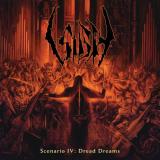
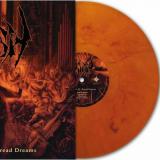
Euronymous’ Deathlike Silence Productions in 1993, & with each subsequent release, Sigh grew to become one of the country’s greatest & most revered metal exports. With a journey through the strange & the psychedelic, incorporating a whole eclectic mix of genre styles & experimentation throughout their career, Sigh has remained a vital creative force in the avantgarde field whilst maintaining their old school roots, as witnessed with the stellar 2022 album, ‘Shiki’. 2025 also saw Sigh remaking their ‘Hangman’s Hymn’ album for a release on Peaceville as part of the band’s 35th anniversary celebrations, in the shape of ‘I Saw The World’s End: Hangman’s Hymn MMXXV’.
With the ongoing early line-up of Mirai Kawashima, Shinichi Ishikawa, & Satoshi Fujinami, ‘Scenario IV: Dread Dreams’ was the band’s fourth studio album, originally surfacing in 1999. This was also notably the final title in partnership with Sigh’s then-label, Cacophonous Records. Delving evermore into the experimental side of music to conjure an interlinked gallery of twisted soundscapes; ‘Dread Dreams’ became more of a journey into the realm of psychedelia & rock over black metal, with this Zappa-inspired odyssey acting as somewhat of a direct pre-cursor to what was to follow with the celebrated ‘Imaginary Sonicscape’ opus.
‘Dread Dreams’ was once more recorded at Shinjuku On Air Studio with J. Yamada, with a selection of guests including Damian Montgomery of Ritual Carnage lending lyrics plus guest vocals, along with King Fowley (Deceased), & Killjoy (Necrophagia) supplying additional song lyrics. Cover art came courtesy of renowned artist Joe Petagno (Motörhead, Autopsy).
Continuing with Peaceville’s re-issues of Sigh’s classic works, this edition of ‘Dread Dreams’ contains a new master created by Patrick Engel at Temple of Disharmony.
The release also includes a new interview with main-man Mirai Kawashima conducted by Dayal Patterson of Cult Never Dies, with his thoughts, influences & reflections on the album & its challenges.
In 2023 we began our hugely successful 80s 12” series on CD – a year-by-year journey through the greatest 12” singles from the decade, and in 2024 we presented a selection of tracks from 1980-1982 as the first volume in our collectible vinyl boxset series, followed by Volume Two celebrating 1983-1984 in 2025.
This year, Now Music is proud to announce the third instalment in this essential collection, NOW Presents…12" 80s: Volume Three: 1985-1986, as a stunning 5-LP boxset. A limited edition and numbered set with each of the 5-LPs pressed on a different colour vinyl – red, yellow, blue, hot pink and lime green – to be released on July 17th, 2026, and for many of these tracks this marks the first time back on vinyl since their original 12” release!
Opening with one of the decade’s most powerful rock anthems, Queen’s ‘One Vision’ appears in its Extended Version, ahead of Eurythmics’ euphoric ‘There Must Be An Angel (Playing With My Heart)’ in the Special Dance Mix and Dead Or Alive’s irresistible ‘You Spin Me Round (Like A Record)’. Side A closes with Frankie Goes To Hollywood and the epic ‘Welcome To The Pleasuredome (An Alternative To Reality)’. Flip the LP over for more iconic 12” versions from 1985, beginning with Tears For Fears and the UK Extended Version of ‘Shout’, alongside Go West’s ‘We Close Our Eyes (The Total Overhang Mix)’, the massive soundtrack hit ‘Don’t You (Forget About Me)’ from Simple Minds and Arcadia’s sophisticated ‘Election Day (Consensus Mix)’.
LP2 opens with four defining tracks that perfectly capture the electronic and cinematic sound of the mid-80s. Paul Hardcastle’s groundbreaking hit ‘19 (The Destruction Mix)’ leads into two instrumental classics: Harold Faltermeyer’s ‘Axel F’ and Jan Hammer’s ‘Miami Vice Theme’, both featured in their Extended Versions, before Propaganda’s peerless ‘Duel (Bitter-Sweet)’ closes the side. Side B showcases some of the era’s biggest dancefloor favourites, from Mel & Kim’s ‘Showing Out (Get Fresh At The Weekend)’ and Gwen Guthrie’s enduring club anthem ‘Ain’t Nothin’ Goin’ On But The Rent’, to Aretha Franklin’s ‘Who’s Zoomin’ Who?’ in its Dance Mix and the soul-pop brilliance of Loose Ends’ ‘Hangin’ On A String (Extended Dance Mix)’.
LP3 brings together some of the decade’s most beloved pop and rock crossover hits. Side A opens with the powerhouse pairing of Philip Bailey and Phil Collins on ‘Easy Lover (Extended Dance Remix)’, followed by Bonnie Tyler’s dramatic ‘Holding Out For A Hero (Club Mix)’ and Pat Benatar’s classic ‘Love Is A Battlefield (Extended Version)’. Stephen Duffy’s infectious ‘Kiss Me (Mixe Plural)’ precedes The Human League’s U.S. #1 ‘Human (Extended Version)’. Over on Side B, Duran Duran lead with the ‘Extended Mix’ of ‘Notorious’ before a run of timeless dance-pop including Sly Fox’s ‘Let’s Go All The Way’, Jellybean’s ‘Sidewalk Talk’ and Maria Vidal’s ‘Body Rock’, culminating with Ashford & Simpson’s club classic ear-worm ‘Solid (Special Club Mix)’.
LP4 opens with huge examples of sophisticated synth-pop and dance-floor innovation from 1986. Pet Shop Boys’ era-defining ‘West End Girls (Dance Mix)’ is joined by New Order’s influential ‘Bizarre Love Triangle (Extended Dance Mix)’. Up next, Red Box’s pure-pop of ‘For America (Bazooka Mix)’ and Nick Kamen’s breakthrough hit ‘Each Time You Break My Heart (Extended Version)’. The reverse side celebrates some of the biggest floor-fillers of 1986 – all in their 12” Versions, beginning with The Communards with Sarah Jane Morris and their unforgettable #1 version of ‘Don’t Leave Me This Way’, alongside Bronski Beat’s ‘Hit That Perfect Beat’, Bananarama’s global smash ‘Venus’ and Five Star’s ‘Can’t Wait Another Minute’ in its ‘M&M New York Remix’ form.
The final LP opens with a side packed with some of the most enduring dance-pop and of the era. Whitney Houston’s ‘How Will I Know (Dance Remix)’ is followed by Steve Winwood’s uplifting ‘Remix’ of his massive hit ‘Higher Love’, the celebrated ‘Shep Pettibone Remix’ of Level 42’s ‘Lessons In Love’ and Bryan Ferry’s elegant and atmospheric ‘Slave To Love (12" Remix)’, whilst over on the final side some of the years’ most distinctive and innovative sounds are showcased: Big Audio Dynamite’s genre-blending ‘E=MC2 (12 Inch Remix)’ and Furniture’s cult classic ‘Brilliant Mind (12" Mix)’ feature alongside Talk Talk’s majestic ‘Extended Mix’ of ‘Life’s What You Make It’, and to close this superb collection, the full ‘Extended Version’ of Spandau Ballet’s powerful ‘Through The Barricades’ provides a fitting finale, bringing together 42 essential 12” versions from 1985 and 1986 across five superb LPs.
out of Stock
Last delivered 52 days ago available to reorder, subject to availability
Japanese black metal legends Sigh formed in 1989/1990. The genre-classic debut ‘Scorn Defeat’ followed on Euronymous’ Deathlike Silence Productions in 1993, & with each subsequent release, Sigh grew to become one of the country’s greatest & most revered metal exports. With a journey through the strange & the psychedelic, incorporating a whole eclectic mix of genre styles & experimentation throughout their career, Sigh has remained a vital creative force in the avantgarde field whilst maintaining their old school roots, as witnessed with the stellar 2022 album, ‘Shiki’. 2025 also saw Sigh remaking their ‘Hangman’s Hymn’ album for a release on Peaceville as part of the band’s 35th anniversary celebrations, in the shape of ‘I Saw The World’s End: Hangman’s Hymn MMXXV’.
With the ongoing early line-up of Mirai Kawashima, Shinichi Ishikawa, & Satoshi Fujinami, ‘Scenario IV: Dread Dreams’ was the band’s fourth studio album, originally surfacing in 1999. This was also notably the final title in partnership with Sigh’s then-label, Cacophonous Records. Delving evermore into the experimental side of music to conjure an interlinked gallery of twisted soundscapes; ‘Dread Dreams’ became more of a journey into the realm of psychedelia & rock over black metal, with this Zappa-inspired odyssey acting as somewhat of a direct pre-cursor to what was to follow with the celebrated ‘Imaginary Sonicscape’ opus.
‘Dread Dreams’ was once more recorded at Shinjuku On Air Studio with J. Yamada, with a selection of guests including Damian Montgomery of Ritual Carnage lending lyrics plus guest vocals, along with King Fowley (Deceased), & Killjoy (Necrophagia) supplying additional song lyrics. Cover art came courtesy of renowned artist Joe Petagno (Motörhead, Autopsy).
Continuing with Peaceville’s re-issues of Sigh’s classic works, this edition of ‘Dread Dreams’ contains a new master created by Patrick Engel at Temple of Disharmony.
The release also includes a new interview with main-man Mirai Kawashima conducted by Dayal Patterson of Cult Never Dies, with his thoughts, influences & reflections on the album & its challenges.
Originally released in 1989 as an early milestone for the label, this landmark session teams the legendary alto saxophonist - then at the absolute peak of his powers at age 57 - with the incomparable Tommy Flanagan Trio . A titan of the genre for over 60 years, Woods masterfully combined a lush, beautiful tone with a complete command of the bebop vocabulary. Backed by veteran pianist Tommy Flanagan, former Oscar Peterson Trio bassist George Mraz, and a young, up-and-coming Kenny Washington on drums, the quartet delivers a timeless set of acoustic jazz that sounds as vital and vibrant today as it did nearly four decades ago.
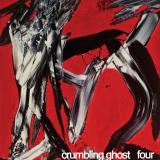
Within the broad church of metal and its many offshoots – rock, doom, stoner and all the rest – it remains a minor thrill to stumble across a group who seem to exist at a slight tangent to everything else. Crumbling Ghost is one such anomaly. Crumbling Ghost are not newcomers. They've been operating for some time, releasing records sporadically, Four' is in fact their fourth release. Along the way they've accumulated a fervent coterie of followers, not to mention the occasional nod of approval from tastemakers such as Stuart Maconie, Stewart Lee and Tom Ravenscroft. And though they've appeared at Roadburn, shared stages with Hawkwind and even Damo Suzuki, they remain (possibly by design) curiously under the radar.
The group's core idea is deceptively simple: traditional folk material refracted through the haze and heft of heavy, fuzzy stoner rock with a chunk of psyche and a smattering of doom. But crucially, this is done without the costumery and theatrical tics that often accompany such collisions. No mock pagan pageantry, no graveyard cosplay, no cartoon Satanism.
What Crumbling Ghost latch onto is not folk as a museum piece, but as a lived experience, the dramas rooted in the culture, stories, and daily lives of ordinary people, the folklore, the tales of love and death, murder and adultery, freedom and oppression. Singer Katie Harnett says. "Doting mothers, possessive, violent partners, vulnerable women, seasonal workers and Royal scandals this album is our representation of the trials and tribulations of human existence and universal experiences that still feel relevant today.
Guitarist John adds. "Themes of murder, betrayal, loss, jealousy, and love are found across the record. In particular, the songs of Martin Carthy have been a particular source of inspiration".
The result is a set of murder ballads, supernatural reckonings and cautionary tales, all wrapped in slabs of heavy, thumping fuzz and atmospheric sonics. Harnett's voice sits at the centre: unmistakably folk rooted, but shorn of prettification, melodic yet capable of real bite.
The album opener 'Bows Of London' is a murder ballad of sisterly hatred and grim sibling rivalry, centred on a haunted fiddle fashioned from a dead sister's bones. The loping relentless, hypnotic backing chillingly and perfectly accompanies the narrative. Of course, the story doesn't end well. 'Bill Norrie' follows, a hooky melody propelled by an insistent bassline and a haunting psych tinged haze punctured with sheets of noise.. The story of young Bill Norrie who sends a token to a married woman, whose jealous husband beheads him, without knowing he was his wife's son from an earlier affair. An instrumental palate cleanser arrives in the shape of 'Valtz Efter Tor Lohne' a Norwegian traditional the band jokingly describe as a "banger".
Then we have 'Lovely Joan' which offers a rare note of sly triumph: a quick witted woman outmanoeuvres a predatory nobleman, escaping with his ring and his horse. Muscular riffs give this tale of empowerment a welcome sense of teeth. 'Gower Wassail' is a traditional Welsh folk tune that captures the raucous spirit of communal ritual, noise making and drink fuelled hope for a good harvest. Captured perfectly here by CG complete with wah wah guitar and a drunken groove catching the song's celebratory chaos. Then we have a little gem in 'Last Of All Sleep' , an original band composition and a genuine highlight: a heavy lidded, shoegaze tinged folk reverie, equal parts distortion and delicacy. It's a drop-dead gorgeous shoegaze-tastic psychedelic grunge mini epic. The album closer 'The Unquiet Grave' is a very apt place to finish. It's about a young man whose constant grief at the death of his true love disturbs her eternal sleep so she cannot rest. Even though the playout on this track, complete with a demonic repeated riff and feedback feels suitably bleak, even this song allows a glimmer of release ... we think.
And there we have it, 7 songs, 7 worlds, all honed to perfection by producer Wayne Adams (Green Lung/Big Lad) that will reward every repeated listen.
Folk and metal/heavy rock do have a connection of course, just look at Green Lung and their 'folk horror' infused musical universe, but Crumbling Ghost are a very different beast.
'Four' amply and beautifully demonstrates that when it comes to 'folk horror' there's nothing quite as horrible as folk ... Here, the horror such as it is, and it must be said, the moments of light, comes not from theatrics, but from the songs themselves – which, after all, is where it's always lived.
Crumbling Ghost are John Mosley – Guitar / Donny Hopkins – Guitar / Ruth O’Loughlin – Bass / Katie Harnett – Vocals / Matthew Atkins- Drums.
320 page, beautifully written, designed and printed, hardback book
ISBN: 978-1-0687642-2-6
“Keep the books coming, keep the music coming, keep the art coming. When you think you know everything, you can miss out on a lot. When you realise you don’t know everything the floodgates come down a bit and you start following literary links and musical links that you might not have made before. It’s a whole new parallel universe.” Andrew Weatherall, 2015 Today Disco Pogo is delighted to announce A Disco Pogo Tribute To Andrew Weatherall, a 320-page hardback that gathers everything we love about the man and his music. It is the fourth in our hardback Tribute series – following Daft Punk, Aphex Twin and LCD Soundsystem – and the long-overdue successor to the sold-out and hard to find Jockey Slut Tribute To Andrew Weatherall from 2020. Inside you’ll find the best of that original Jockey Slut book, plus more than 200 pages of brand new material – fresh essays, oral histories, interviews and photography from the writers, photographers, musicians, producers, DJs, designers and friends who knew Andrew best.
The book is being published with the full blessing, approval and cooperation of the Weatherall estate, who will also receive a share of the profits from the book. From the fanzine kid at Boy’s Own to the producer who rewired Primal Scream and made ‘Screamadelica’ sound like the future; through The Sabres Of Paradise, Two Lone Swordsmen, The Asphodells and the much-loved A Love From Outer Space night and Convenanza festival, Weatherall left behind a body of work, a sensibility and a way of carrying yourself that is still being unpacked six years on. This is the book that tries to do all of it justice.
Highlights include: an interview with Bobby Gillespie that goes beyond ‘Screamadelica’, essays on ‘Sabresonic’, ‘Haunted Dancehall’, the Two Lone Swordsmen and his solo releases, plus a look into his many remixes. In addition: oral histories on his early years, A Love From Outer Space and Convenanza, an interview with Timothy J. Fairplay on The Asphodells and a celebration of his art work and his NTS radio shows. And then there’s the Disco Pogo Tribute regulars: a timeline, family tree, a studio gear deep dive, discography and more… Featuring interviews with Sean Johnston, David Holmes, Jagz Kooner, Leftfield, Shaun Ryder, Chemical Brothers, Terry Farley, Dot Allison, Beth Orton, Irvine Welsh, Daniel Avery, HAAi, Tia Cousins, Steve Mason, Richard Fearless and many more.
White Vinyl. Having balanced tradition and innovation for over three decades, Taake remains fiercely independent while continually pushing its own creative boundaries. That uncompromising vision finds new expression on the ninth full-length album, En Skog av Nidstang. Past years of increasing isolation, detached from contemporary trends and largely removed from the influence of other music, the creative drive of songwriter Hoest has only intensified, resulting in four expansive compositions that flow naturally from the inspired mindset behind 2023's critically acclaimed Et Hav av Avstand. The recordings for En Skog av Nidstang were completed south of Bergen, in the moss-covered forests around the island of Borgoy. In the surroundings depicted by the ill-fated Norwegian painter Lars Hertervig, Taake embraced the focused seclusion of the landscape, relying less on modern technology or studio excess, but on intuition, confinement, creativity, and a mastery of the rudimentary tools of the trade. And it sounds unmistakably like Taake. Reckless thrashing riffs mix with brooding gloom, chilling melodies emerge from violent intensity, and moments of desolate reflection give way to untamed aggression. The result is an album that celebrates the enduring power of an unyielding artistic vision; proof that, after 33 years, Taake remains as vital, distinctive and relevant as ever.
White Vinyl. Having balanced tradition and innovation for over three decades, Taake remains fiercely independent while continually pushing its own creative boundaries. That uncompromising vision finds new expression on the ninth full-length album, En Skog av Nidstang. Past years of increasing isolation, detached from contemporary trends and largely removed from the influence of other music, the creative drive of songwriter Hoest has only intensified, resulting in four expansive compositions that flow naturally from the inspired mindset behind 2023's critically acclaimed Et Hav av Avstand. The recordings for En Skog av Nidstang were completed south of Bergen, in the moss-covered forests around the island of Borgoy. In the surroundings depicted by the ill-fated Norwegian painter Lars Hertervig, Taake embraced the focused seclusion of the landscape, relying less on modern technology or studio excess, but on intuition, confinement, creativity, and a mastery of the rudimentary tools of the trade. And it sounds unmistakably like Taake. Reckless thrashing riffs mix with brooding gloom, chilling melodies emerge from violent intensity, and moments of desolate reflection give way to untamed aggression. The result is an album that celebrates the enduring power of an unyielding artistic vision; proof that, after 33 years, Taake remains as vital, distinctive and relevant as ever.
Four years near the beginning of the last decade, William Cashion and Bruce Willen created quietly radiant instrumental music from two tessellated guitars, a few modest synths, and a slew of percussive and noisy toys, like walkie-talkies or the things that gave the pair their handle, bells. This 2016 live recording is taken from the band"s next-to-last show, cut in an artist-run space called The Compound in their hometown of Baltimore. Peals is the project of two bassists known best for their other livewire and loud Baltimore bands: Future Islands for Cashion, Double Dagger for Willen. This recording does not feel at all out-of-time, like some overlooked gem that was simply swallowed by its moment. It sounds relevant, welcoming, welcome. These 38 seamless minutes have clear predecessors: Manuel Göttsching"s E2-E4, Cluster and Eno"s Cologne dalliances, the way Midwest Emo could sound smarter than its lyrics read.
Red Dwarf Star emerges as a striking new chapter for Coley Taylor of famous US/CH based MASERATI, a new project that captures a deeply personal arc that spans continents, relationships, and creative reinvention. Working largely alone, Taylor embraced a deliberately stripped-down approach, navigating unfamiliar technology with joyously unpolished determination. Much of the material was recorded in a modest, direct manner that prioritizes feeling over finesse. This DIY ethos is balanced by key collaborations that elevate the record's sonic depth. Drums were recorded in Los Angeles by Kellii Scott, whose distinctive style adds weight and clarity, while contributions from Allen Epley and Jenna Fournier introduce subtle vocal textures that expand the emotional range of the songs. Despite its introspective origins, Red Dwarf Star is not intended to remain a solitary endeavor. What began as a personal outlet is evolving into a fully realised band, with a lineup assembled to bring these songs into a more expansive, dynamic setting. This shift signals not only a new phase for the project, but also a broader artistic trajectory. Taylor is known best for his work with Maserati, a legendary outfit that leans into collaborative, rhythm-driven expanses rooted in krautrock and electronic psych. Through Red Dwarf Star Taylor's lineage of influence is felt, echoing the raw emotional immediacy of `90s alternative, post-hardcore, and the textured atmospheres of jagged dream-pop that bleeds. These are sounds that have lingered in Taylor's creative subconscious for decades, now resurfacing with renewed urgency. For fans of MASERATI, FAILURE, SLOWDIVE, QUICKSAND, SHINER, HUM Black or coloured vinyl LP or CD available
Super-cosmic Dub album by bass & keys wizard Slim Levy, full of song writing magic and it’s very own cassette tape mojo.
Fourteen beautifully messy dub tracks, psychedelic floor movers and short curveball riddims, inspired by Lee Perry’s radical mixing desk treatment on “Dub Revolution” but infused with the musicality of the “Pet Sounds” album by the Beach Boys.
Initially a professional bassist, Slim Levy fell in love with the golden age of Jamaican music of the 60s and 70s after a formative tour alongside the legendary Lee “Scratch” Perry.
In 2020 he launched his career as a producer. At his home studio in Strasbourg / France he is always on the search for sound artifacts and magic imperfections, shaping his distinct sound.
out of Stock
Last delivered 85 days ago available to reorder, subject to availability
Among the projects that helped redefine European electro and EBM at the turn of the millennium, Electronic Corporation and heimelektronik remain essential references. Blending machine-driven rhythms, melancholic synth work and an instinctive understanding of the dancefloor, their productions captured a unique moment where classic body music was reimagined for a new era.
The A-side features "Illuminate" and "We Got Velocity", originally released under the Electronic Corporation moniker, while the B-side collects "My Darkest Sounds" and "Nothing But My Beat" from heimelektronik's sought-after Electronic Lifeforms EP.
Collecting four timeless recordings that move effortlessly between electro and EBM, this 12" is driven by sharp sequencing, uncompromising drum programming and a singular vision of electronic music. TIP!!!
out of Stock
Last delivered 85 days ago available to reorder, subject to availability
Nickodemus is a traveler at heart—a connecter of worlds, scenes, and people since the mid-90s. Over his extensive career as a touring DJ and producer, including five albums, hundreds of remixes in his “Remix Machine” and two dozen compilations of cutting edge up incoming producers from around the World, remains one of the most important leaders of global fusion and the heavy beats we yearn for in the club. His music has long thrived on the close relationships and mutual respect of friends he’s built across the continents, felt through the worldly potions he cooks up in the studio, and spanning electronic sounds rooted in Latin, African, and Eastern instrumentation. His latest album, Soul & Science is a collaborative effort between old and new friends, recorded in several countries while touring as well as his home studio / record room / memorabilia museum.
This limited 7” pairs two standout remixes from Nickodemus’ 2023 album Soul & Science, bridging deep-rooted collaboration with modern dancefloor energy. On the A-side, Ben Gomori reimagines “Rumba Tobacco y Ron”—a trans-Caribbean production born between Puerto Rico and Cuba, featuring contributions from Tempo & The Candela All-Stars and Haydee Soul—into a chopped, electronic club cut that retains its original horns, piano, and vocal spirit. On the B-side, Tigerbalm delivers a driving, four-on-the-floor remix of “Mama Tchipp (Follow Me),” flipping the Afro-disco anthem with steady basslines, punchy drums, and Pat Kalla’s infectious vocals primed for peak-time play.
With a career spanning over 25 years, Nickodemus remains a globally recognized force in eclectic, genre-blurring dance music, boasting 60k+ Spotify followers, 811k+ monthly listeners, and over 350 million streams across his catalog, alongside more than 20,000 physical records sold worldwide. His breakout collaboration with Quantic and Candela All-Stars, “Mi Swing Es Tropical,” became a bona fide international hit with over 75 million cumulative streams and a key placement in the Chef soundtrack directed by Jon Favreau. On remix duties, Ben Gomori—founder of the UK-based Monologues Records—brings his signature touch, having previously reworked artists including Oby Onyioha, Segun Adewale, Dawda Jobarteh, and Amadou Balaké. The release is already receiving strong international radio support, with airplay and tastemaker backing from Gilles Peterson, BBC Radio 6 Music, FIP, RFI, Radio 3 (Generación Ya), 2SER, KCRW (Top Tune of the Day), and KEXP, signaling strong demand and cross-market appeal for DJs, collectors, and global music audiences alike.
a A1: Rumba Tobacco y Ron (ft. Haydèe Soul) Ben Gomori Remix
b B1: Mama Tchipp (Follow Me) [Tigerbalm Remix] [feat. Pat Kalla]
[a] A1: Rumba Tobacco y Ron (ft. Haydèe Soul) [Ben Gomori Remix]
[b] B1: Mama Tchipp (Follow Me) [Tigerbalm Remix] [feat. Pat Kalla]
[a] A1 | Rumba Tobacco y Ron (ft Haydèe Soul) [Ben Gomori Remix]
[b] B1 | Mama Tchipp (Follow Me) [Tigerbalm Remix] [feat Pat Kalla]
[a] A1 | Rumba Tobacco y Ron (ft Haydèe Soul) [Ben Gomori Remix]
[b] B1 | Mama Tchipp (Follow Me) [Tigerbalm Remix] [feat Pat Kalla]
out of Stock
Last delivered 47 days ago available to reorder, subject to availability
If you have kept a keen eye on what is going on in German thrash these days, you cannot have missed the comeback of Protector, legendary thrash/death outfit from Wolfsburg, Lower Saxony. Formed in 1986, Protector first called it a day in 2003, only to return in 2011 and releasing their “Reanimated Homunculus” on High Roller Records in 2013. Protector are widely regarded as one of the most underrated outfits from the prolific German thrash/death scene of the Eighties. Their debut-EP “Misanthropy” from 1987 is a thorny gem of uncompromising thrash metal, raw and fast, and with a strong feel of evil blackness. This first official release laid the base for Protector's reputation as “Germany’s most brutal band”, as some people called them. Protector? Really? Some band from some far out place in Lower Saxony? It’s true, Protector never rose to the same heights of fame as Kreator, Sodom and the likes, but back in the days, they made a name for themselves by playing not only fierce and sharp thrash metal, but always being extremely harsh, brutal and very very evil. “Misanthropy” is a perfect testimony for this: In its six-tracks-brevity, Protector’s debut-EP is a violent attack on the listener, giving you six razor sharp cuts and leaving you behind, crushed and bleeding. “Misanthropy” was recorded in the summer of 1987 at the White Lines Studio in Braunschweig. While the band's main influences at that time were Slayer’s “Reign in Blood”, Possessed’s “Seven Churches” and Exodus' “Bonded by Blood”, “Misanthropy” actually sounds like none of these albums – but very unique; In part this is due to Martin Missy's extraordinary extreme vocal performance, which always bordered on the verge of death metal growls and thus added a lot to Protector’s very own way of evil. The reactions to “Misanthropy” were mixed: Fans and the underground media celebrated the release, while the bigger magazines were sceptical about Protector's brutal and aggressive style and sound. Anyway: “Misanthropy” made people aware of this four-piece who lived in the shadow of the then still intact German Wall, far away from the Ruhr-Area, the heart of Teutonic thrash. For the High Roller re-release, nothing will be changed about the sound, which makes total sense, given that “Misanthropy” is great just as it is. Instead, “Misanthropy” comes with a very special feature: To make the release as complete as possible, High Roller includes the two songs from the demo from 1986, “Protector of Death” and “Apocalyptic Revolution”, something Martin Missy totally appreciates: “I think this is a great thing to do. That way the fans get an idea about what Protector sounded like before the EP was recorded.” One thing is already clear: Protector never got any more aggressive, sharp and shattering than on „Misanthropy”.
The A side opens with two ambient pieces: "Inception," gritty and haunting, built from field recordings and layered chords, and the dreamier "Regulator Dial." "Air Lock" and "DFtB" turn breaky and low-tempo, evoking early electronica. The flip moves through "Waterproof's" downtempo electro and "Make Right," the LP's most club-ready cut. Title track "Bean Soup" channels early Four Tet: bleepy, minimal, emotional, while "Sunlight" closes with blissful, calming sounds, rounding out a beautifully balanced record.
Tudor Gheorghe, aka Romansoff, is a Bucharest DJ, producer and vinyl collector with over 13 years on the capital's underground scene. Inspired by small local parties in the 2000s, he started collecting vinyl, then DJing, quickly becoming a key figure in the Bucharest club scene. Since founding his imprint Raw Tools in 2013, he's released on Lobster Theremin's Mork, Creme Organization, Les Yeux Orange and Solar Phenomena.
In 2018 he co-founded venue Platforma Wolff, a full club by 2021, as booker and resident, hosting headliners like Prosumer, Paramida and Tornado Wallace. Versatile and creative, he stays a fixture at Bucharest's best nights. His debut LP lands this year on Bar Ton's vinyl label.
out of Stock
Last delivered 3 months ago available to reorder, subject to availability
Für sein treffend betiteltes Solo-Debütalbum "Introducing..." hat Aaron Frazer mit Dan Auerbach von The Black Keys zusammengearbeitet. Soft spoken und mit dem Aussehen eines leicht unzufriedenen Matinee-Idols aus den 1950er Jahren gesegnet, besitzt Frazer eine einzigartige Stimme, die sowohl zeitgemäß als auch zeitlos klingt. Der in Baltimore aufgewachsene, zurzeit in Brooklyn lebende Songwriter wurde als Schlagzeuger und Co-Vokalist von Durand Jones & The Indications bekannt. Jetzt tritt er mit "Introducing..." als Solist hinter dem Drumkit hervor und demonstriert nicht nur seine beeindruckenden stimmlichen Qualitäten, sondern auch sein Können als hochklassiger Songschreiber. Schon die erste Single "Bad News" sorgte für Aufsehen ("a gorgeous piece of vintage R&B" - CLASH), die sich anschließende Lead-Single "Over You" ist inspiriert von elektrisierenden Northern Soul 45s der 60er Jahre. Nur zwei Belege der erfolgreichen Zusammenarbeit zwischen Frazer und Auerbach. Die zwölf Songs auf "Introducing..." verbinden gekonnt den Soul der 70er Jahre mit Dan Auerbachs besonderer Sensibilität für Vintage-Sounds im neuen Gewand. "Introducing..." enthält klassische Message-Songs im Stil von Künstlern wie Gil Scott-Heron sowie motivierende Liebeslieder, die von Disco-, Gospel- und Doo-Wop-Einflüssen durchzogen sind. Das gesamte Album wurde innerhalb nur einer Woche in Auerbachs berühmten Nashville-Studio nach einer schnellen und produktiven Songwriting-Session aufgenommen. Auerbach holte auch den legendären Songwriter und Falsettspezialisten L. Russell Brown (schrieb früher Hits für Frankie Valli von The Four Seasons) an Bord, der den wunderschönen Opener "You Don't Wanna Be My Baby" auf dem Album mitkopmponierte. Für "Introducing..." rekrutierte Frazer eine beeindruckende Schar alteingesessener Session-Musiker aus Nashville. Darunter Mitglieder der legendären Memphis Boys (die in Dusty Springfields "Son of A Preacher Man" und Aretha Franklins "You Make Me Feel Like A Natural Woman" mitspielten), den Perkussionisten Sam Bacco sowie diverse Musiker aus dem Daptone/Big Crown Records-Umfeld.
Tywi steps forward on People & Places with Suspended Memories. Pulling together years of studio exploration, the four-track EP offers the most complete reflection of the Welsh producer’s sound to date.
Drawing on dub soundscapes and a spectrum of progressive influences, each track tells a different story. The title track, Suspended Memories, brings together murky atmospherics and an infectious bassline, drawing the listener deeper with an understated sense of tension. Off Axis leans into a more driving energy, offsetting the EP’s introspective core, while Night Seeker settles into a subtler groove, capturing those early dancefloor moments as tension begins to build. Closing track Onko adds weight and resolution, its name nodding to the Japanese concept of learning from the past – an idea that runs through the release as a whole.
out of Stock
Last delivered 50 days ago available to reorder, subject to availability