Legendary Italian musician Sergio Messina serves up his 13 track Sensual Musicology on Hell Yeah this March. It comes a couple of years after he first released on the label's Buena Onda compilation and takes in everything from demented waltz to grown-up jazz, groovy beach music to heart-aching melancholia with artwork by virtuoso Italian AD DeeMo.
Now based in Lombardy, Sergio was there at the birth of pirate radio in the mid-seventies and eventually produced Radio art for national broadcaster Rai. At the same time, his DJ career took off and he helped establish Hip hop in Rome before taking his own live show to the stage with a mix of PCs, samplers and tape recorders as early as 1989. Frank Zappa declared himself a fan and in the years since Sergio has done everything from radio art to producing Neapolitan reggae and hip hop band 99 Posse, producing his own solo albums and writing for monthly music magazine Rumore. On top of this, he has both written books about and delivered lectures on the digital porno revolution, as well as teaching History of Pop Culture at the Istituto Europeo di Design in Milan. All this makes him a truly original creative thinking who has long been immersed in many niche facets of popular culture.
Sensual Musicology took several years and four different locations to happen. Its release has been delayed by the pandemic, during which Sergio lost many friends and relatives close to him. As a result, the album is dedicated to all of them. It is a record that addresses many topics from economic migration to jazz piano, 60s blues motifs to corruption, pollution and racism via Michael Jackson covers, odes to West Coast guitar albums and spaced-out pieces of electronica.
Opening with the beautifully delicate Mingus melodies of 'Goodbye Porkpie Hat' the album roams through the bluesy Italo-American-Jamaican groove of 'Amara,' slow melancholy of 'Sometimes Remember' with classy vocals from chanteuse Valeria Rossi and 'The Way You Make Me Feel', an acoustic rebuild of Michael Jackson's hit song. Then comes the serenade that is 'Just Because You're Dead,' and ‘Sono Stufa di Tutto’ which is based around a protest speech recorded from the radio in the 1980s. Jon Hassell Beach Bar' is a musical hybridisation for dancing pleasure.
The second half of the album takes in 'Ouana Di lambo' which is the Four Twenties taking you to a cocktail bar in the tropics, 'Benjamino Placido' which is a melody for a man who inspired Sergio to start writing his columns, and 'Nowhere Special' which is a tribute to West Coast guitar albums. Closer ‘Switchblade Bolero' has a Zappaesque theme.
Sensual Musicology is a rich and diverse musical world that is as thought-provoking and deep as it is emotionally rewarding.
Early DJ Support:
Leo Mas, Phat Phil Cooper, Calm, Chris Coco, Andy (We are The Sunset), Severino (Horse Meat Disco)
Search:the four twenties
- 1
Allison and Katie Crutchfield have formed a new band called Snocaps. Their 13-track debut album, released digitally as a surprise, will be made available on April 17, 2026 in vinyl & CD formats. An indie-rock record that recalls Allison"s band Swearin" and Katie"s early records as Waxahatchee, Snocaps was born out of the twin sisters" desire to work on music together as they had in their teens and twenties. Allison and Katie are backed by friends and close collaborators Brad Cook and MJ Lenderman. The album was produced and almost entirely engineered by Cook, and all four musicians play multiple instruments across the record. After a handful of shows at the end of 2025, Snocaps will be put on ice for the foreseeable future, although, as Katie says, "Allison and I have been, in some way, shape or form, doing this together for over 20 years," so it is practically a given that they will work together on music at some point again in the future.
- Coast
- Heathcliff
- Wasteland
- Brand New City
- Hide
- Cherry Hard Candy
- Avalanche
- Doom
- Over Our Heads
- Angel Wings
- Don't Want To
- You In Rehab
- Coast Ii
BLUE COLOURED EDIT[24,79 €]
Allison and Katie Crutchfield have formed a new band called Snocaps. Their 13-track debut album, released digitally as a surprise, will be made available on April 17, 2026 in vinyl & CD formats. An indie-rock record that recalls Allison"s band Swearin" and Katie"s early records as Waxahatchee, Snocaps was born out of the twin sisters" desire to work on music together as they had in their teens and twenties. Allison and Katie are backed by friends and close collaborators Brad Cook and MJ Lenderman. The album was produced and almost entirely engineered by Cook, and all four musicians play multiple instruments across the record. After a handful of shows at the end of 2025, Snocaps will be put on ice for the foreseeable future, although, as Katie says, "Allison and I have been, in some way, shape or form, doing this together for over 20 years," so it is practically a given that they will work together on music at some point again in the future.
- 1: Slab
- 2: Thirty-Seven Forever
- 3: How You Gonna Get Even
- 4: Someone You Forgot
- 5: Lonely Heart Pyramid Scheme
- 6: Soulseeker
- 7: Jukebox Weepie
- 8: Casio
- 9: High Hopes (Ballad Of Rural France)
- 10: Electrical Tape
Much like the duo’s music, the story of Rural France is both mundane and magical. Tom Brown (also of transatlantic janglepunks Teenage Tom Petties) and Rob Fawkes moved to London in their mid-twenties. Despite living under the same roof, they never picked up a guitar – except for one drunken, failed attempt at writing a Spoon song (“Big Chops” …don’t ask). It was only after both separately relocating to Wiltshire and starting families that they began assembling songs as a way of meeting up. Tom had amassed a pile of sprightly slacker jams that were calling out for Fawkes’ messily melodic guitar lines. Rural France was born.
After a debut album on their hero, ex-Lemonhead Nic Dalton’s Half-a-Cow Records, they retreated to a garage to record their next two albums: RF (2021) and Exacamondo! (2024), both released on much-respected jangle label Meritorio Records. Despite being lo-fi in the truest GbV sense, both records were warmly received by the DIY indie blogosphere, with their short, scrappy, but supremely melodic songs landing on numerous AOTY lists. RF even won Album of the Year at Janglepop Hub.
Raven Sings The Blues probably summed up the sound best: “With drunken visions of Beach Boys harmonies playing in the back of their heads and hooks that consume Teenage Fanclub cheeriness with the same beautiful brevity that drives Tony Molina, the pair have knocked out eleven rumpled classics.” Album four, SLOTHS, arrives via Meritorio Records and Safe Suburban Home Records on 08/05, and is a slightly different beast. For one, it’s been mixed by a professional – Rob Slater (Westside Cowboy, Yard Act, Thank) – giving the guitars and drums room to breathe. It’s easily their most high-fidelity record to date. It’s also their jangliest, most baroque and thoughtful album yet. But alongside added organ, horns and mellotron – and drums from Tom’s Teenage Tom Petties bandmate Jeff Hamm – it still retains the buzzes, hums and little freak-outs that stick to the duo’s original “Pavement playing Teenage Fanclub” mission statement. “Rob and I both wanted to do something a little slower and a little more melancholy,” says Tom. “We resisted our usual urge to hit the distortion pedal and made something that fitted where we are now and celebrates how we still listen to Meatloaf when we get drunk.”
SLOTHS is also the most thematically consistent Rural France record to date. While it wouldn’t be right to call it grown-up, it definitely has homeowners’ insurance. From the Silver Jews-esque Americana of “Slab” and mid-life rallying cry of “Thirty Seven Forever”, to the horn-embossed loser anthem “Lonely Heart Pyramid Scheme,” the songs celebrate (and rail against) the absurdities of getting older, forming a band in your thirties, and the strange phenomenon of time passing. Because no matter how slow you move, everything else goes fast. SLOTHS.
- A1: Csn
- A2: D Istractions
- A3: Carry The Lie
- A4: All But The Flame
- A5: Vacant Days
- B1: The Furthest Place
- B2: Long Goodbye
- B3: Morning All The Time
- B4: Following The Ghost
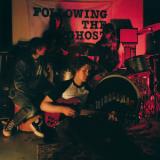
“It’s hard to find your way, following the ghost,” sings Noah Alves on the title track from Middleman’s debut album, as the band explores ideas of how being chained to the past can hinder your forward momentum into the future. This creates a thrilling duality to the debut LP from the London DIY four-piece made up of Alves, Harper Maury, Rory White and Ted Foster. They are all young, in their early-to-mid-twenties, and very much focused in the now, harnessing an energy, urgency and rawness that feels fresh, alive and viscerally present. However, it’s also clear there’s a deep love of music that was made before they were born: the taut, wiry assault of Mission of Burma; the raspy yet melodic charge of The Replacements; the pioneering punk of Wipers, fleshed out via the more restrained and tender moments of Big Star or Neil Young. The result is a beautiful dichotomy of a record that both pays tribute to a rich musical lineage that the band are a part of, while also resisting the urge to get sucked into a dead end of nostalgia, mythology and recycling past glories.
- Creative Director Blues
- Dog Race
- Jukebox
- Six Music Dads
- Twenty Year Cycle
- Shout
- Get Clean
- Modern Love
- Get Clean (Live)
- Birkenstocks (Live)
- Six Music Dads (Live)
- Creative Director Blues (Live)
- Modern Love (Live)
After leading the cult performance art collective Lazarus Kane, Ben Hambro took a more introspective, lyrically driven approach with Vegas Water Taxi. Their debut album, Things Are Gonna Be Alright, was self-released in November 2023a beautiful yet jarring collection of songs capturing the chaos and contradictions of your twenties. Now, the album is getting reissued, along with its first-ever vinyl release via PNKSLM Recordings (ShitKid, Clutter, Chemtrails), featuring four exclusive bonus tracks recorded live at The Windmill. Hambro, who's also collaborated with artists such as Katy J Pearson, continues to craft music that resonates and surprises. RIYL: Stephen Malkmus, Townes Van Zandt, Courtney Barnett
Hermon Mehari and Tony Tixier first met in 2010, in their early twenties, in a club on Paris's Rue des Lombards for a concert with saxophonist Rodolphe Lauretta. Over the next decade, the two musicians took opposite paths, while continuing to collaborate on two continents. The American trumpeter moved to France to discover European culture and the world cultures that coexist there, while the Parisian pianist of Martinican origin spent several years in the USA, immersing himself in the roots of jazz and Afro-American music.
In June 2024, the two musicians, who had been working for fifteen years on numerous albums and collaborations, and whose musical understanding had continued to be forged in clubs, festivals, and on recordings, met again for a duet at the TOC-TOC festival in the Puisaye region, where Antoine Rajon was a collaborator. Enthusiastic about the idea, the artistic director of the KOMOS label invited them back to his home in this corner of Burgundy to record this Fender Rhodes/trumpet formula. He called on sound engineer Christian Hierro, who traveled with his mobile studio for the album recording, then mixed and produced the master in his studio in Lyon, using the best analog equipment and his expert ear.
At dusk on November 12, 2024, the duo played eight tracks in a single, direct take on a 33-minute magnetic tape.
Four unusual cover versions were carefully chosen. "Maimoun" is a composition emblematic of pianist Stanley Cowell's style, also recorded by Marion Brown. George Duke's "The Black Messiah" was captured live by Cannonball Adderley's band on an album of the same name but has never been released as a studio version. "Hello To The Wind" was created by Bobby Hutcherson in 1969, sung by Eugene McDaniels. Finally, "Laini," dedicated by the great Martinican pianist Marius Cultier to one of his daughters, is a mazurka dear to Tony's heart.
Each of the musicians also contributed a composition: Hermon with "This Is Our Fantasy," written especially for the session, and Tony with "Poem For The Oppressed," a moving composition with an explicit title. Lastly, the duo improvised two tracks, without repetition, in mutual symbiosis and echo.
SOUL SONG captures a moment without enhancement, transformation, or additives, far removed from contemporary virtual technologies.
Coloured[25,17 €]
Ben Lukas Boysen’s new album, Alta Ripa, signifies a seismic shift in his artistic journey. It revisits the foundational impulses of his youth, shaped amidst the serene beauty of rural Germany—a bucolic backdrop where his creative palette flourished. However, it was his move to Berlin in the early 2000s that electrified his sound, infusing it with the city’s pulsating energy and diverse cultural influences. Alta Ripa captures this transformative experience, blending the introspective melodies of his rural beginnings with the bold, experimental tones born from Berlin’s vibrant electronic music scene. This album is a testament to Boysen’s evolution, showcasing how geographical shifts can profoundly shape artistic expression.
Boysen’s fourth studio album under his own name, Alta Ripa is a nod to his beginnings as much as a hint to his future, and as a work, it’s almost contradictory in its boldness and humility. He invites the listener on a journey of self-discovery; both for himself and for them, describing the music as “something the 15-year-old in me would have liked to hear but only the grown-up version of myself can write.”
His last two albums involved working closely with other musicians, including cellist Anne Müller, flugelhorn player Steffen Zimmer, and drummer Achim Färber. However, inspired in part by a recent return to live performance, Alta Ripa sees Boysen circling back to his passion for pure computer music.
For Boysen, the return to his youthful musical language marks a major turning point in his career. It represents a departure from his roots in classical music – his mother was an opera singer and his father an actor with an appreciation for Wagner, Arvo Pärt, Keith Jarrett, and Stockhausen. Although these are still important influences, Alta Ripa encapsulates a new, exploratory interplay between Boysen’s careful craft and his ability to let go of some of the process.
The album’s title comes from the original Roman name of the town that Boysen grew up in, Altrip, where he lived until his early twenties. This formative period is central to the ideas behind this album, from Boysen’s parental ‘schooling’ in classical music through to his sonic journeys through drum and bass, Aphex Twin, and Autechre — all of which changed his idea of what music could be. The extreme energy of tracks like ‘Acperience 1’ by Hardfloor, ‘Tracks & Fragment’ by Cari Lekebusch, ‘Focus2 Implan’ by Jiri.Ceiver, and ‘Low On Ice’ by Alec Empire are also pivotal influences.
For Boysen, this time of his musical development also involved knocking down the pillars that he previously thought had carried his world. A key moment for Boysen was being given a precious (pre-internet) club cassette at school that featured artists like Source Direct, Photek and Goldie. Excited by this new discovery, he introduced his father to the song ‘Dred Bass’ by Dead Dred. After the song finished, Boysen Sr. turned off the tape and proclaimed it was “the end of all music”. This heated exchange sparked a new, and more mature dialogue between the two that involved them sharing and discussing music on a regular basis.
Boysen’s classical and jazz music upbringing might not be easily noticeable from the electronic palette that he uses. But it can be found in its bones; the structure of the tracks and their dynamic shifts. On Alta Ripa, he intentionally embraces a spirit of controlled chaos, churning out sonic ideas to see what sticks.
One of Brian Eno’s Oblique Strategy cards contains the phrase “gardening, not architecture”, and the trajectory of Boysen’s creative path reflects this metaphor. In much of his previous work he followed a sort of Brutalist architect’s approach; here, he was fully responsible for the tracks’ austere structures and planned them with deliberate care. But by sacrificing some of that control on Alta Ripa, he sets the right conditions for a dark and unpredictable, organic growth. It’s a push forward into a new world.
Black[23,49 €]
Ben Lukas Boysen’s new album, Alta Ripa, signifies a seismic shift in his artistic journey. It revisits the foundational impulses of his youth, shaped amidst the serene beauty of rural Germany—a bucolic backdrop where his creative palette flourished. However, it was his move to Berlin in the early 2000s that electrified his sound, infusing it with the city’s pulsating energy and diverse cultural influences. Alta Ripa captures this transformative experience, blending the introspective melodies of his rural beginnings with the bold, experimental tones born from Berlin’s vibrant electronic music scene. This album is a testament to Boysen’s evolution, showcasing how geographical shifts can profoundly shape artistic expression.
Boysen’s fourth studio album under his own name, Alta Ripa is a nod to his beginnings as much as a hint to his future, and as a work, it’s almost contradictory in its boldness and humility. He invites the listener on a journey of self-discovery; both for himself and for them, describing the music as “something the 15-year-old in me would have liked to hear but only the grown-up version of myself can write.”
His last two albums involved working closely with other musicians, including cellist Anne Müller, flugelhorn player Steffen Zimmer, and drummer Achim Färber. However, inspired in part by a recent return to live performance, Alta Ripa sees Boysen circling back to his passion for pure computer music.
For Boysen, the return to his youthful musical language marks a major turning point in his career. It represents a departure from his roots in classical music – his mother was an opera singer and his father an actor with an appreciation for Wagner, Arvo Pärt, Keith Jarrett, and Stockhausen. Although these are still important influences, Alta Ripa encapsulates a new, exploratory interplay between Boysen’s careful craft and his ability to let go of some of the process.
The album’s title comes from the original Roman name of the town that Boysen grew up in, Altrip, where he lived until his early twenties. This formative period is central to the ideas behind this album, from Boysen’s parental ‘schooling’ in classical music through to his sonic journeys through drum and bass, Aphex Twin, and Autechre — all of which changed his idea of what music could be. The extreme energy of tracks like ‘Acperience 1’ by Hardfloor, ‘Tracks & Fragment’ by Cari Lekebusch, ‘Focus2 Implan’ by Jiri.Ceiver, and ‘Low On Ice’ by Alec Empire are also pivotal influences.
For Boysen, this time of his musical development also involved knocking down the pillars that he previously thought had carried his world. A key moment for Boysen was being given a precious (pre-internet) club cassette at school that featured artists like Source Direct, Photek and Goldie. Excited by this new discovery, he introduced his father to the song ‘Dred Bass’ by Dead Dred. After the song finished, Boysen Sr. turned off the tape and proclaimed it was “the end of all music”. This heated exchange sparked a new, and more mature dialogue between the two that involved them sharing and discussing music on a regular basis.
Boysen’s classical and jazz music upbringing might not be easily noticeable from the electronic palette that he uses. But it can be found in its bones; the structure of the tracks and their dynamic shifts. On Alta Ripa, he intentionally embraces a spirit of controlled chaos, churning out sonic ideas to see what sticks.
One of Brian Eno’s Oblique Strategy cards contains the phrase “gardening, not architecture”, and the trajectory of Boysen’s creative path reflects this metaphor. In much of his previous work he followed a sort of Brutalist architect’s approach; here, he was fully responsible for the tracks’ austere structures and planned them with deliberate care. But by sacrificing some of that control on Alta Ripa, he sets the right conditions for a dark and unpredictable, organic growth. It’s a push forward into a new world.
- 1: Summer Bodies
- 2: That Thing You Did
- 3: Canines
- 4: Back From Tour
- 5: Yearning And Pining
- 6: Banger #7
- 7: No Souvenirs
- 8: Inferno
- 9: My Best Me
- 10: Eating For Two
- 11: Paddling Pool 12. 30
12” paddling pool blue vinyl, is an edition of 500. CD Digifile. Following the runaway success of their critically acclaimed 2021 second album Contender, the question for fast-rising London four-piece Fightmilk was always going to be “what next?” With a tight indie-pop sound that defined their early recordings, the answer was obvious to a band who seem hellbent on the notion of evolve or die… The band originally formed in 2015 in a Brixton pub garden by Lily and Alex, who had both, separately, just been dumped and thought being in an angry punk band would cheer them up. Then they found Nick and Healey to hold the rhythm down and make them sound good. With three albums under their belt, they’ve perfected their chaotic, melodic brand of joy and rage-filled pop with full-throated yelling and sparkling guitar riffs as their trademark. They’ve graduated from angsty whippersnappers in their mid-twenties to overgrown teenage 30-somethings with mild ongoing back and shoulder pain. Their previous 2 albums Not With That Attitude (2018) & Contender (2021) marked them out as an ambitious and rising prospect, and now on their forthcoming new album No Souvenirs the band eschew their former Britpop ties and edge further into DIY punk and heavier rock influences to reveal a leaner, meaner, more abrasive side to their cathartic lo-fi anthems. Whilst collectively diving into their passion for Jimmy Eat World, frontwoman Lily Rae made a conscious decision to strengthen her “big loud yell” with influence from Alicia Bognanno (Bully), Nat Foster (Press Club), and Missy Dabice (Mannequin Pussy). “My voice is the biggest it’s ever been and I’m constantly thrilled when people are surprised at how loud I am, considering I’m so small in stature,” she grins. “Lyrically I always look to Bruce Springsteen for inspiration but I also really enjoyed the angsty candour of Sour by Olivia Rodrigo, and Kacey Musgraves’ impeccable one-liners.” There are a few genre experiments on the record—Yo La Tengo in ‘Paddling Pool’, ‘Canines’ is part The Strokes and part Neu!, and ‘Back From Tour’ was heavily influenced by long term friends Johnny Foreigner. “You could probably make a case for ‘Inferno’ having a bit of Counting Crows to it, but we were never writing to emulate,” explains guitarist Alex. “The references and touchstones just happened along the way. As far as we’re concerned, they just sound like Fightmilk - and that’s a really nice place to be nearly a decade in.” “That said, we’ve also been REALLY picky with the songs that made it onto the album - there’s probably an-other album’s worth of songs that didn’t feel right, even if we loved them. We got really good at finding the “magic thing” in each song that made it work.” Spilling over with candid lyrics about death, doomed love, and dog bites, framed by endless punk energy and the kind of full-throated riff-rock that sounds just at home in a giant stadium as it does in a sticky-floored toilet bar, No Souvenirs is a triumphant return from the band, who are equally enthused by the album. “I only realised after we put the songs together how personal to me this album was,” explains Lily. “Not just because I’m writing about extremely specific sitcom episodes in my life (getting fired from bridesmaid duty, being bitten on the arse by a dog, being relentlessly asked when I’m going to have kids), but because whilst we were making it, I turned 30. It’s a significant age for women, especially in music, because aside from being something called a ‘geriatric millennial’, there’s an unspoken rule that there’s a cut-off point for you to have ‘made it’ and after that you have to settle down and be normal.” For Lily, writing for the album also aligned with the 10th anniversary of the death of a close friend, with the resulting track ‘No Souvenirs’ lending its title to the album as a whole. “It had taken me that long to write about it in a way I felt ok with. But I realised that I couldn’t have written it before,” she explains. “I needed that distance, and that maturity, to be able to articulate those feelings. It feels to me now like the album is about scorched earth, moving on, taking nothing with you for the next ‘thing’ - and realising that getting older is a privilege.” Bringing a huge amount of energy and joy with them whenever and wherever they hit a stage, interacting with the audience is a vital part of the Fightmilk live experience. “Without people singing and dancing at us we wouldn’t have gigs at all, so we want everyone to get involved!” says Lily of the band’s future tour plans
2024 coloured (violet) vinyl repress for this year's Sonic Cathedral's 20th anniversary! Hull/Leeds based five-piece bdrmm release their much anticipated debut Bedroom on July 3, via Sonic Cathedral. The 10-track album was recorded late last year at The Nave studio in Leeds by Alex Greaves (Working Mens Club, Bo Ningen) and mastered in Brooklyn by Heba Kadry (Slowdive, Beach House). It's a hugely accomplished debut and a real step up both sonically and lyrically from their early singles, which were rounded up on last year's If Not, When? EP. Musically, there are nods to The Cure's Disintegration, Deerhunter and DIIV, while the band reference RIDE and Radiohead. There are also echoes of krautrock and post-punk, from The Chameleons to Protomartyr, plus the proto shoegaze of the Pale Saints' The Comforts Of Madness, not least in the cross fading of some tracks, meaning the album is an almost seamless listen. As a result, Bedroom becomes an unexpected and unintentional concept album, running through the different stages of a break-up set against the backdrop of the ups and downs of your early twenties. "The subject matter spans mental health, alcohol abuse, unplanned pregnancy, drugs_ basically every cliché topic that you could think of," reveals frontman Ryan Smith. "But that doesn't mean they ever stop being relevant. It's a fucker growing up, but I'm lucky enough to have been able to project my feelings in the form of this band, surrounded by four of the best people I've ever met." And that band name, in case it needs explaining, is pronounced the same way as the album title. "I never thought I'd get to the stage where I would have to explain it so much," says Ryan. "We have been pronounced as Boredom, Bdum and my old boss thought we were a ska band called Bad Riddim. We're all sarcastic cunts, so Bedroom spelt correctly seemed like the perfect title." He's right. The perfect title for the perfect debut album. "A modern day shoegaze classic" - NME "The general roller coaster of being twenty-somethings in post-Brexit England who find themselves awash with a shimmering soundscape that recalls Oshin-era DIIV, Deerhunter's Microcastle, or even The Cure at their most ambiently grandiose" - Under The Radar
Members of The Chats, second LP in anticipation of their debut Euro Tour, FFO Cosmic Psychos, The Saints, Stiff Richards. Australia never misses. European release of The Unknowns second LP, released on Bargain Bin Records in Australia. "There have already been some monster LPs released in 2023, and the sophomore album from The Unknowns just might be the best of the lot. The Brisbane-based then-trio released one of the greatest punk albums of the roaring twenties (so far) with Nothing Will Ever Stop back in late 2020. Now a foursome following the addition of The Chats' Eamon Sandwich on guitar, The Unknowns have returned with an even better follow-up. East Coast Low manages to take most of the musical genres I hold dear and mash them together in the most delightful way. Basically the sound is classic punk rock with a ton of energy and catchy tunes (what else would you expect from Australia?). Yet at the same time, this album aligns beautifully with modern-day garage punk, power pop, and straight-up rock n' roll. East Coast Low packs ten tracks of punchy sing-along punk rock into 23 and a half minutes of pure fun. Songs like "Dianne," "Rid of You," "Thinking About You," and "I Don't Know" prove once again that there's a certain kind of itch that only old school punk rock n' roll can scratch. These guys are doing nothing new. But man, they do it so freaking well! If we're talking about the cream of the contemporary Aussie punk crop, The Unknowns have earned a place in the conversation." Josh/ Faster and Loude.
Emerging from the depths of Cardiff’s burgeoning music scene, heirs to their country’s lineage of storytellers, are Slate. Formed by frontman Jack Shephard and drummer Raychi Bryant, the four-piece band are barely touching their twenties, but together, they have command of post-punk which rings with the gravitas of a death knell; a grasp of atmosphere and melody which touches on the ethereal.
With the addition of bassist Lauren Edwards and guitarist Elis Penri who completed the band at the end of 2021, the four bonded over the written word playing poetry games over pints. Together, they found an affinity with the surreal works of Arthur Rimbaud and the Welsh poets R. S. Thomas and Dylan Thomas, whose reverence for their country and its people bleeds into Slate’s own lyrics.
The 7" collects Slate's stunning 1-2 of debut singles 'Tabernacl' and 'St Agatha', which were both produced by Buzzard Buzzard Buzzard's Tom Rees. Both songs come loaded with frontman Jack Shephard's distinctive, poetic drawl, blistering yet gothic and ornate guitars and rollicking, road-ready drums. Together they offer a snapshot of a band born fully-formed and prove a statement of intent that's hard to ignore.
Of the track, Shephard explains: "'St Agatha' is the first song we wrote about being Welsh. Though, living in in the south, we each converge at the forefront of anglicisation. At the time of writing, we were indulging in literature, landscapes as well as each another, in an attempt to re-connect with much of our disregarded national identity. So much was left unrevealed to us in school. We read about a churchyard on the border, where some people are buried with their heads in Wales and their feet in England. It was the perfect place to tell the story of a conflicted protagonist. Severed at St Agatha’s, between there and the homeland
File Under Balearic Gabba EP is the first in a new series of serious DJ tools that will encompass remixes, edits, originals and licenses, all with artwork that is a twist on the original Balearic Gabba logo by PlanetLuke. Up first is a new selection of music from core Hell Yeah artists that is unruly, impossible to define, and sure to twist dance floors inside out.
First up is Daniel Klein better known as SIRS, a Berlin-based mainstay with releases on the likes of Live At Robert Johnson. His cut of 'Super Rapido' is a dubbed-out blend of kosmiche chug and tropical percussion. Tumbling synth sequences bring extra colour as the groove builds over nine irresistible minutes.
Then comes Japanese downtempo master Calm with his Mellow Mellow Acid Dub of Sergio Messina & The Four Twenties's 'Sometimes' which is a nostalgic acid daydream and the perfect sunset soundtrack. Melancholic moods and lazy drums sink you in deep as the gentle acoustic guitars keep you afloat.
Label regular and Internasjonal and International Feel associate Feel Fly then comes through with an Estatico Danzante Remix of Pedro Bertho's 'Tornei' feat Mariana Gehring and takes us to the stars on twinkling keys, dusty breakbeats and steamy, worldly vocals that glow as warm as a setting sun.
Last of all is New York maestro and Loose Control Band member DJ Spun with his It's Rong Remix of My Friend Dario's 'Acid Mosquito in a Summer Night'. It finds him serving up a nine-minute excursion into jungle humidity with tribal percussion and jumbled bongos all run through with a spooky and primeval lead synth over lurching drum breaks.
The File Under Balearic Gabba EP brings a whole new dimension to wonky dance floor workouts.
You can't claim to know anything about Danish jazz unless you're familiar with the great and beloved tenor saxophonist Jakob Dinesen - aka Dino.
Dinesen's reputation as a versatile and virtuosic saxophonist has brought him all over the world and has cemented him as one of Denmark's most
sought-after musicians, performing with jazz, rock, pop and world music elite for the past 30 years. Now, at the age of 54, he is a fully-formed,
dynamic tenor titan with an instantly recognisable voice. His sound on tenor has a tenderness that's totally his own, and his phrases glide and soar
with a seemingly effortless technical command of the instrument.
In early December 2021, Dino travelled to the United States to record with one of his heroes - legendary American drummeer Jeff 'Tain' Watts - who
at 62 years old is considered by many to be the most prominent and influential drummer of his generation. In addition to Dino and Tain, this
resultant album also features two young virtuosos from Denmark - guitarist Jacob Artved and bassist Felix Moseholm - both still in their twenties but
making waves with their incredible talent, drive and taste.
The result is a recording that takes listeners on a journey offering plenty of room for each of the four musicians to shine brighter than ever before.
Jakob Dinesen - tenor saxophone; Jeff 'Tain' Watts - drums; Jacob Artved - guitar; Felix Moseholm - bass.
A limited edition 180g vinyl release.
To confuse parts for the whole is inevitable with Palm. Drummer Hugo Stanley, bassist Gerasimos Livitsanos and guitarists/vocalists/high school sweethearts Eve Alpert and Kasra Kurt started making music together as teenagers, and spent much of their twenties in the kind of proximity unusual for adults, outside of touring bands and the International Space Station. For a number of years the band consumed the lives of its members to a point of exhaustion: “To be honest I think we got a little burnt out. There were times where it wasn’t clear if we’d make another record,” says Alpert. It was only after multiple freak injuries followed by a pandemic, forced a pause - from touring but also from writing, rehearsing, even seeing each other- that the four were able to regroup and see a way forward again.
On their latest effort, Nicks and Grazes, Palm embrace discordance to dazzling effect. “We wanted to reconcile two potentially opposing aesthetics,” Kurt says. “To capture the spontaneous, free energy of our live shows while integrating elements from the traditionally gridded palette of electronic music.” In order to avoid what Kurt refers to as “Palm goes electro,” the musicians spent years educating themselves on the ins and outs of production by learning Ableton while also experimenting with “the percussive, textural, and gestural potential” of their instruments. To this end, the band continued the age-old tradition of instrument-preparation, augmenting guitars with drumsticks, metal rods and, at the suggestion of Charles Bullen (This Heat, Lifetones), coiling rubber-coated gardening wire around the strings. The unruliness of the prepared guitar on songs like “Mirror Mirror” and “Eager Copy” contrasts with the steadfast reproducibility of the album’s electronic elements.
While Palm cite Japanese pop music, dub, and footwork as influences on this album’s sonic palette, they found themselves returning time and again to the artists who inspired them to start the group over a decade ago. “When we were first starting out as a band, we bonded over an appreciation of heavy, aggressive, noisy music,” Alpert reflects. “We wrote parts that were just straight-up metal.” Kurt adds, “I found myself rediscovering and re–falling in love with the visceral, jagged quality of guitars in the music of Glenn Branca, The Fall, Beefheart, and Sonic Youth, all important early Palm influences.” Returning to the fundamentals gave Palm a strong foundation upon which they could experiment freely, resulting in their most ambitious and revelatory album to date.
Next on Extra Soul Perception, we're very proud to welcome a new artist to the label, Paddy Fred, with three tracks of antipodean psych soul for his 'Spells' 7".
Paddy Fred is a musician based on the south coast of Wellington, New Zealand, where he grew up. He's played guitar since he was a teen, and went on to study music performance, and toured with a number of bands throughout his twenties. When these bands dissolved in 2011, he began beat making and music production of his own, losing himself in the freedom of making music on his terms.
Inspired after hanging with Flying Lotus & the Brainfeeder crew and clubbing at Low End Theory in Los Angeles, Paddy created his first release, 'Laminate', which dropped in 2013; the same year Paddy entered fatherhood.
After emerging from the "survival zone" of the first five years of parenting, Paddy emerged a little lost, separated from the momentum of his musical career. There then followed a period of self-reflection. As he ran up and over the same coastal path repeatedly, he slowly but surely rekindled his passion for music making, and the work began again…
Paddy came to the attention of the Extra Soul Perception crew courtesy of fellow New Zealander, Mara TK (who provided the label's highly acclaimed 2021 album 'Bad Meditation'). When the guys heard the demos, they signed him on sight.
The lead track 'Spells' consists of big sludgy drums, a growling synth bass, ethereal guitars and spacey vocals, mixing the washed-out slow-mo beat construction of Toro Y Moi with the heady psychedelic soul of Tame Impala and Mildlife. On the flipside 'Found You' is a more tranquil affair, with languorous drums befitting DJ's Khruangbin rhythm section, whilst closer 'Kids' (digital only) offers a robust yet airy finish with an uptempo instrumental akin to the sound palette of late 00s Four Tet.
'Spells' is the first taste of Paddy's new material. Inspired by lost love, babies feet, social fatigue and universes held within rock-pools, this is Paddy Fred at his most true to self, and just a small sample of what's to come.
To confuse parts for the whole is inevitable with Palm. Drummer Hugo Stanley, bassist Gerasimos Livitsanos and guitarists/vocalists/high school sweethearts Eve Alpert and Kasra Kurt started making music together as teenagers, and spent much of their twenties in the kind of proximity unusual for adults, outside of touring bands and the International Space Station. For a number of years the band consumed the lives of its members to a point of exhaustion: “To be honest I think we got a little burnt out. There were times where it wasn’t clear if we’d make another record,” says Alpert. It was only after multiple freak injuries followed by a pandemic, forced a pause - from touring but also from writing, rehearsing, even seeing each other- that the four were able to regroup and see a way forward again.
On their latest effort, Nicks and Grazes, Palm embrace discordance to dazzling effect. “We wanted to reconcile two potentially opposing aesthetics,” Kurt says. “To capture the spontaneous, free energy of our live shows while integrating elements from the traditionally gridded palette of electronic music.” In order to avoid what Kurt refers to as “Palm goes electro,” the musicians spent years educating themselves on the ins and outs of production by learning Ableton while also experimenting with “the percussive, textural, and gestural potential” of their instruments. To this end, the band continued the age-old tradition of instrument-preparation, augmenting guitars with drumsticks, metal rods and, at the suggestion of Charles Bullen (This Heat, Lifetones), coiling rubber-coated gardening wire around the strings. The unruliness of the prepared guitar on songs like “Mirror Mirror” and “Eager Copy” contrasts with the steadfast reproducibility of the album’s electronic elements.
While Palm cite Japanese pop music, dub, and footwork as influences on this album’s sonic palette, they found themselves returning time and again to the artists who inspired them to start the group over a decade ago. “When we were first starting out as a band, we bonded over an appreciation of heavy, aggressive, noisy music,” Alpert reflects. “We wrote parts that were just straight-up metal.” Kurt adds, “I found myself rediscovering and re–falling in love with the visceral, jagged quality of guitars in the music of Glenn Branca, The Fall, Beefheart, and Sonic Youth, all important early Palm influences.” Returning to the fundamentals gave Palm a strong foundation upon which they could experiment freely, resulting in their most ambitious and revelatory album to date.
THE KILIMANJARO DARKJAZZ ENSEMBLE are a project which has always been tied to films. Films are luxurious because they dispose of all these boring, unimportant, and trivial parts of our lives. This allows them to fully control our sensations, to put us in a very specific mood. Joy and sadness are occasionally OK, endless joy or endless sadness are clinical. But there is one sensation which can be persistent and unconditionally bearable at the same time. In the absence of a better alternative, let's call it "the mood". The mood is what TKDE are aiming at. The mood.
The mood is infinite and illimitable, but not uniform and unique. On "From The Stairwell", TKDE deliver eight new incarnations of the mood. Stairwells have always been intriguing. They appear to unavoidably lead you to your destination, but they only disclose the path bit by bit. What lies far ahead of you and far beyond you is hidden in the shadows. The stairwell could just as well be infinite. You climb up this murky stairwell, passing by many doors. Every door contains a variation of the mood, a short film, a song. You open the first one, "All Is One". The evaporating mist discloses a large and empty room with a barstool in the middle. On the barstool, a chanteuse from the roaring twenties. Her voice starts to trigger vibrations of the ground, the walls start spiralling around her, but she remains untouched in the eye of the storm. Second room, "Giallo". Sly guy, telling smile, nice suit. Walking down the streets in the dusk. The ambience starts to get out of phase, the guy stumbles in horror while blending with the surrounding to a brown soup. Fourth room. "Cocaine". Naked people with pig heads crawl on the floor, on the walls, on the ceiling. They try to hopelessly suck up the white dust which covers every single piece of this room and is constantly spit out by tubes coming out of the walls. Dissonant sounds accompany the work of this desperate hive. As the people manage to counteract the tubes, fragile melodies start to overpower the dissonances. Sixth room, "Cotard Delusion". Baby morphing into a black fluid morphing into an old man which turns his eyes inwards and finds his inside to be completely empty. The journey up the stairwell, down the stairwell, continues. The pictures fill your head and make you forget where you wanted to go in the first place.
"From The Stairwell" is a surprise and a logical step at the same time. It is a surprise because the songs are far less beat-driven in comparison to TKDE's earlier works, and even contain a few hopeful tints here and there. It is a logical step because in the end each song turns to have a very diverse dramaturgic flow. This could raise the conjecture that TKDE, initially started out to make music for existing and non-existing films, wanted to incorporate the audiovisual impression completely into songs, making the films superfluous. At times, "From The Stairwell" makes you think of 60's soundtracks, but the organic feeling of those is always interwoven with mechanical elements. Altogether, every single of the numerous details present in TKDE's new songs feels to be at the right place and you can either just dive into the mood or pick one of the many aspects and enjoy it on its own - be it Gideon Kiers' beats & fx, Jason Köhnen's bass & piano, Hilary Jeffery's trombone, Charlotte Cegarra's voice & piano, Eelco Bosman's guitar, Nina Hitz' cello, Sarah Anderson's violin, or - appearing as guest musicians - Eiríkur Óli Ólafsson's trumpet and Coen Kaldeway's saxophone & bass clarinet.
Buena Onda - Balearic Beats is a lovingly compiled collection of exciting music from the new Balearic generation that captures the essence and eclecticism of their Berlin party oasis, Buena Onda. It takes in 12 tracks of fast and slow, acid and downtempo, lush and dreamy sounds to transport you to a place of beauty, warmth and soul. It has been compiled by Hell Yeah label boss Marco with Buena Onda 's resident DJ and co-owner Gallo, and arrives later this summer as a 12" sampler, limited cassette, download, stream and original t-shirt. This first sampler features four tracks from it with artists Lucas Croon, Sergio Messina & The Four Twenties, Gallo, and Black Spuma all featuring.
First Up, Lucas Croon takes us on an epic 10 minute trip with his head-in-the-clouds sounds, long legged drums and summery pad work. Next, Sergio Messina & The Four Twenties mix vocodered vocals with lush acoustics on the dreamy 'Fly Away' while on the flip, Gallo's Tropical Hinterhof Remix of J-Walk layers up lush chords with new age hand drums and synth gorgeousness that is soothing and cleansing. Last of all, Phillip Lauer and Fabrizio Mammarella aka Black Spuma's mid tempo drums sink you into a groove that is embellished with heavenly chords and plenty of oceanic breezes all carrying you away. This is a fine taster of the full length compilation to come.
Repressed in 2023, limited!
Hull/Leeds based five-piece bdrmm release their much anticipated debut Bedroom on July 3, via Sonic Cathedral. The 10-track album was recorded late last year at The Nave studio in Leeds by Alex Greaves (Working Mens Club, Bo Ningen) and mastered in Brooklyn by Heba Kadry (Slowdive, Beach House). It's a hugely accomplished debut and a real step up both sonically and lyrically from their early singles, which were rounded up on last year's If Not, When? EP. Musically, there are nods to The Cure's Disintegration, Deerhunter and DIIV, while the band reference RIDE and Radiohead. There are also echoes of krautrock and post-punk, from The Chameleons to Protomartyr, plus the proto shoegaze of the Pale Saints' The Comforts Of Madness, not least in the cross fading of some tracks, meaning the album is an almost seamless listen. As a result, Bedroom becomes an unexpected and unintentional concept album, running through the different stages of a break-up set against the backdrop of the ups and downs of your early twenties. "The subject matter spans mental health, alcohol abuse, unplanned pregnancy, drugs_ basically every cliché topic that you could think of," reveals frontman Ryan Smith. "But that doesn't mean they ever stop being relevant. It's a fucker growing up, but I'm lucky enough to have been able to project my feelings in the form of this band, surrounded by four of the best people I've ever met." And that band name, in case it needs explaining, is pronounced the same way as the album title. "I never thought I'd get to the stage where I would have to explain it so much," says Ryan. "We have been pronounced as Boredom, Bdum and my old boss thought we were a ska band called Bad Riddim. We're all sarcastic cunts, so Bedroom spelt correctly seemed like the perfect title." He's right. The perfect title for the perfect debut album.
»Alchemy« is the debut album from 22-year old singer-songwriter Tara Nome Doyle, following the singles »Heathens«, »Neon Woods« and »Mercury«. Doyle’s 2018 EP »Dandelion«, featuring her breakthrough-hit »Down with You«, has so far amassed nearly two million streams. Recently, two of her songs featured in Sophie Kluge’s feature film »Golden Twenties«. Doyle is a member of Kat Frankie’s choir on whose a capella EP she features.
»Alchemy« deals, in two songs each, with the four phases of development of the pre-modern natural philosophy, the alchemy. The album can be read psychologically or as a portrait of someone coming of age. Experience and reflection are closely entwined which is as beautiful as it’s threatening.
Doyle, whose middle name is pronounced just like »Naomi«, is from Berlin-Kreuzberg, her parents are from Ireland and Norway. She speaks (and sings) both languages without accent. Is it permissible to recognize the biographical background of these landscapes in her art? The stored heat and the fog from the Irish peat bogs, the magic of the the Norwegian forests?
The concept album was recorded in large parts with David Specht (bass player and producer of Isolation Berlin) and Doyle's newly founded band in Berlin. Specht remains reserved, keeping the band in check. It’s the interiors that we should hear – acoustically, but also thematically. The drums sound more like a knock on the window pane than the city noise outside the door, the guitar controls the harmony and not the power supply. The first instrument remains Doyle’s voice, which is always working and is looking for a way. Inward, outward. All songs were written by Doyle, for the arrangement for »Neon Woods« she worked with Max Rieger (Die Nerven, producer for e.g. Drangsal and Ilgen-Nur).
Wanubalé - nine guys from Berlin, inspired by the city's fresh Jazz scene and distinct club culture. Wanubalé met at school. Five of the nine in the band went to the same musical high school in Berlin.
Heavy influences from Jazz, Neo Soul and Funk shape their compositions. However, electronic sounds are just as important to Wanubalé. All of the nine are in their early twenties. All of them are into Dub, Bass Music and Broken Beats. And several members are DJs, as well. The Wanubalés are first rate musicians. They tend to take their time writing arrangements, yet they are careful not to overly emphasize their Jazz skills. Songwriting is a collaborative affaire, everything is developed organically.
Just like the band name, which dates back to the days of fooling around in the schoolyard, playing with syllables ("nuba" came first). Sound was crucial. Some say "Wanubalé" means "brother" in Swahili. Wanubalé: four horns, two drummers, guitar, bass, keyboards. Nine musicians with a knack for funky breaks, mighty brass sounds and great melodies. The musicians don't hide their influences: Snarky Puppy, Fat Freddy's Drop, plus younger acts like Hiatus Kaiyote. But Wanubalé do their own thing.
Wanubalé: four horns, two drummers, guitar, bass, keyboards. Nine musicians with a knack for funky breaks, mighty brass sounds and great melodies. All songs are written, produced and arranged by Wanubalé. Recorded at Jazzanova Studio, Berlin.
- A1: La Tuna Club (S. Mantequilla' Font)
- A2: Azul Trompeta (S. Mantequilla' Font)
- A3: Whisky Jazz (S. Mantequilla' Font)
- A4: Jamboree (S. Mantequilla' Font)
- A5: Blue Note (S. Mantequilla' Font)
- A6: Full De Ases (S. Mantequilla' Font)
- B1: Moanin' (Timmons)
- B2: Not Problem (Marray)
- B3: Blues 3/4 (S. Mantequilla' Font)
- B4: Atmosfera (S. Mantequilla' Font)
- B5: Vat 69 (S. Mantequilla' Font)
- B6: Balada (S. Mantequilla' Font)
Salvador Font studied violin, clarinet, composition and harmony at the Conservatori Municipal de Barcelona, but very soon started to gain notoriety as a saxophonist in the rich jazz scene of 1940s Barcelona. Font would soon be playing tenor sax and clarinet in the Orquesta Gran Casino. He was in his early twenties and his hot swing technique was already praised through the citiy's scene, he would grow to be considered the best saxophonist in Spain by playing in many orchestras and combos, among them: José Puertas', Antonio Vilá's Virgina, Bonet de San Pedro's band, Pierre Michel, El Lirio Campestre, Los Marios, Luis Rovira y su orquesta, Orquesta brasileña Fon-Fon, Jaime Camino, Los Embajadores, Italo Leone's... With these and others, Font toured constantly, visiting many countries and even staying on some for long seasons: Mexico, Morocco, Switzerland, Egypt... Hungarian violinst of Turkish ancestry Kurt Dogan gave him the "Mantequilla" surname - he felt "Mantequilla" (which means "butter") fit Font's mellow yet swinging improvisation style.
Mantequilla y su conjunto
In the early sixties, "Mantequilla" had the chance to lead his own combo, Mantequilla y su conjunto, with which he was to record the three splendid EPs that are compiled on the present album. All these 7" have become elusive collector pieces in the record market, with sellers demanding from 200 to as much as 950 euros per copy.
In 1961 "Mantequilla" was at his best moment, his gigs at the Jamboree Jazz Cava had brought him back to the first line of Barcelona's jazzmen after he had been working abroad for a long time, and was approached by the Belter label to record an EP. On the sessions he was accompanied by Manolo Mercedes on trumpet, Pedro Ferré on piano, Rafael Lizandra on double bass and Rafael Verdura on Drums. The material chosen for the disc were four original compositions by Salvador Font which had a high West Coast flavour all over: "La Tuna Club", "Whisky Jazz" and "Jamboree" named after famous jazz clubs and "Azul Trompeta", dedicated to Manolo Mercedes.
In late 1962, after spending some time in Madrid working as members of the Italo Leone combo, "Mantequilla" and pianist Manuel Gas came back to Barcelona for the recording of the second "Mantequilla" EP, also on Belter. We find again Manolo Mercedes on trumpet, Pedro Ferré on piano and Rafael Lizandra on double bass, the drummer this time was José Farreras. Another news is that Manuel Gas also sat on piano and vibraphone. The songs chosen for the occasion were two tunes from the Art Blakey Jazz Messengers repertoire: Bobby Timmons' classic "Moanin'" and the Jacques Marray track "No Problem" from the soundtrack of the Les liaisons dangereuses film (mispelled "Not Problem" on the sleeve and label), plus the Salvador Font penned "Blue Note" and "Full de ases" - on "Full de ases" "Mantequilla" trades his sax for the violin, which he also mastered under high influence from Stephane Grapelli. The record was released on Belter in early 1963 and showed "Mantequilla" adding a certain aggressivity to his sound, in a soloist style which has been compared to that of tenor saxophonists Barney Wilen or Benny Golson.
1965 was the year of release of Mantequilla y su conjunto's third EP, now on the Discophon label. Mercedes and Farreras are again present in the recording sessions, joined by Ricardo Miralles on piano and Enrique Ponsa on double bass. Four original Font compositions make up the fantastic EP: "Blues 3/4", "Atmósfera", "Vat 69" and "Balada".
There would be a further EP on Belter, released in 1971 as Mantequilla Group it was a cash-in operation to take some redits of the ye-yé discothèque phenomenon, it gets quite afar in style from the jazz works of Mantequilla y su conjunto, so we just left it aside for the present edition.
"Mantequilla"'s career would continue, in 1968 he would settle in Majorca and form a swing band with Bonet de San Pedro and Manuel Bolao. He played in local orquestras and also with first class world acts like Gerry Mulligan, Tete Montoliu, Errol Gardner, a.o. He was even approached by Henry Mancini to play sax on The Pink Panther Theme in a gig Mancini did with his orchestra in Palma de Mallorca in 1975, He also joined his son Salvador Font (a demanded drummer himself who has played with Máquina!, Orquestra Mirasol, Música Urbana, Gary Burton Quartet, Georgie Fame, and many others) and his peers Carles Benavent, Emili Baleriola, Josep Mas 'Kitflus' and Jordi Bonell with whom he recorded his acclaimed "Mantequilla" album in 1987.
Now, for the first time ever, the legendary three ultra rare and imposible to find EPs by Mantequilla y su conjunto are compiled in a lavish vinyl LP with remastered sound, featuring liner notes and photos and a fantastic period inspired, three backflaped, front laminated sleeve. It is a stricly limited edition of only 500 copies and they are expected to sell out very soon, do not miss your chance of getting yours - it may be the last chance of chasing the Mantequilla sound on vinyl at a reasonable price!
l
- 1