Cluster was the pioneering German duo of Hans-Joachim Roedelius and Dieter Moebius. Formed on the cusp of the 1970s, they were a part of West Germany's nascent Kosmische Musik scene. The group would use restrained improvisational techniques similar to Gruppo Nuova Consonanza, working with both electric and acoustic instruments (organ, guitar, tone generators, cello, etc.) to create a singular sound that Julian Cope called "a huge beating heart, planet-sized and awesome."
Originally released in 1972 on Brain, Cluster II features six pieces of atmospheric, proto-ambient drones – a step forward from Cluster's 1971 self-titled debut, which had all untitled songs. On "Im Suden," hypnotic bass pulsations and repetitive guitar patterns flow serenely, while side two opener "Live In Der Fabrik" dives deep into Roedelius and Moebius' foreboding industrial soundscapes and synergistic textural interplay.
As Roedelius told Uncut magazine in 2022, "This feels like a breakthrough? Well, we were just getting more into it, and getting more experienced at being able to elaborate it. Conny (Plank) was working with us again – as well as being a multi-talented artist, he was a very experienced sound master and great human being. He contributed as a fellow musician, adding sounds with his mixing table such as reverb, delay and other effects enriching the whole pieces so that they finally became somehow unique."
It's no surprise that when Neu! guitarist Michael Rother first heard Cluster II, he suggested a collaboration with the band – resulting in the supergroup Harmonia who would make their first album together the following year.
Поиск:the generator
Все
Since the late aughts, Helsinki-based multi-instrumentalist, linguist, and skateboarder Olli Aarni has released a steady stream of diverse and remarkably consistent recordings via labels such as Mappa, Longform Editions, Cotton Goods, Laaps and Superpang. “Koko maailma” constitutes a major new work in his discography, finding a fertile middle ground between what might be understood as his two primary compositional modes: organic/chaotic/aleatoric music and rule-based, longform works of minimalism. The source material for these compositions was recorded exclusively using the Serge system at EMS Stockholm, but the timbres that Aarni arrives at do not recall archetypal Serge music as most know it. Meticulous editing and processing of the material with an array of digital tools has resulted in music that preserves the erratic and cybernetic character of the Serge system but sounds totally unique unto itself. The first piece, “Ylhäällä,” has the sonic character of fireflies at dusk or ants in the dirt — mercurial, hypnotic, flittering, and scattering tones presented in the spirit of the best environmental music. “Alhaalla” functions almost like a zoomed out impression of what precedes it, with just intonation tuning applied to sine wave generators to create grid-like, harmonically rich, and surprisingly emotive drone music. Micro and macro — two pieces of music, two perspectives of a world.
A matter of pace, an analog memory…
Feel safe: like newborn, take your first careful steps on a clean slate while Maayan is your supervisor. Naïve and happy, you leave carbonbon footprints on your way into the positives. Then a faster pace: some tribal folk music from a tiny world, where people dance around an LED fire, commands a gallop to the one and ollam. Latinfection guaranteed.
Your nonplus motion interferes with environmental geometry. A memory from an analog past flashes like a daydream. Upward and rising, your smile workout succeeds while scintillating waves say “hello!”. Having grown up to a motorik being, the determined goal however never appears. The journey into a perfect storm is the reward. Maayan sends you some motivating words.
Then have a break and jump on the light train of thoughts to enjoy blurred reflections: on the water and in your mind. Sing your body beautiful and free. Words come in bubbles, a heart-throb away from a light tower. Feel like stumbling into new adventures on a pathless terrain.
Slowly and cautious, the novemberme, which is the one that approaches dawn, celebrates tristesse with a funny accent. Kick the blues with a beat. Somewhere lost but regenerated, find sisyphos’ generator of vitality. A nascent religious mood at the Autobahn service station fades into the fog.
Finally, the circle of pace is almost closed. After laughter of amazement, Maayan leaves you with a soothing mantra of confidence: an everyday ritual fun you should indulge yourself in. It comes in waves.
This 40 year anniversary collection traces Brother Culture's career and includes some of his biggest hits, with remastered versions of these classics. The album includes his hits Jump Up Pon It (25 million streams), Supanova (15 million streams), My Selecta (2 million streams), and some of his most listened-to tracks ever released on vinyl.
A composition simply means things being put together. In music, we usually think of composition as a classical idea. But in recent years, the possibilities of what ‘composing’ can be, have dramatically increased. Based in Oslo, Norway, Deathprod (aka Helge Sten) has been making his own forms of music with no compromise since the early 90s. His specialty is a deeply atmospheric, grainy minimalism that slows time down and explores the very particles of sound itself. This music can sound forbidding and alien at first, but compared to his more brutal output, it’s an extraordinarily close and intimate experience. The first new Deathprod studio project since 2019’s OCCULTING DISK, Compositions is the result of an intense period at his legendary Audio Virus Lab studio in central Oslo. All tracks are released in chronological order – in other words, the order in which they were recorded. Helge used a personal, unique combination of obsolete digital audio processors and sound generators, combined with his own secret-sauce tuning system. Like gazing at the wonders revealed by an electron microscope with Helge compositional control directs your attention to a succession of ever more spellbinding details and textures. Helge adopted the Deathprod alias in 1991. A complex array of homemade electronics, samplers, sound processing and analogue effects – cumulatively known as the ‘Audio Virus’ – combined with obsolete samplers and playback devices, to distort and transform sounds into unrecognizable relatives of their former selves. On the new album Compositions, the virus has evolved into even more fascinating and kaleidoscopic new strains. Electronically generated sounds vibrate and tremble like undiscovered metals ringing and resonating together. Sonic forms attract or repel each other as if under the influence of a strange magnetism. None of the tracks are over four minutes, but no way are these ‘miniatures’. Each one contains its own fully-formed galaxy of tones and clusters, while all tracks audibly belong in the same universe. These are 17 compositions in search of a sonic ideal. His off-grid audio control centre created a parallel acoustic universe which he filled with mutated samples and electronic textures. Even the gaps between the tracks are part of that universe. Helge left the almost silent, twitching crackles of his snoozing analogue gear intact, ensuring a smoother transition between them. Helge is continually striving to find new parameters and possibilities for what music can be – what you can affect with the medium of sound. From the intricate homemade miniatures of Treetop Drive to the bonecrushing electronic barrage of Morals and Dogma and OCCULTING DISK, the different sides of Deathprod are all products of the same obsessive focus and self-discipline in pursuit of sonic exploration. His Compositions are private rather than public music: like introspective chamber or solo compositions instead of the more strident, outward-looking tones of a symphony. Helge is a founder of Norwegian improvising group Supersilent and has produced records by Motorpsycho, Susanna, Jenny Hval, Arve Henriksen and others. He recently composed music for Harry Partch’s legendary instruments, which can be heard on Sow Your Gold in the White Foliated Earth, released in 2022 on Smalltown Supersound.
- 1: J.b. Banfi - Gang (For The Rock Industry)
- 1: 2 Michael Garrison - To The Other Side Of The Sky
- 1: 3 Iasos - Lueena Coast
- 1: 4 Carl Matthews - As Above, So Below
- 1: 5 Tim Blake - Midnight
- 2: 1 Stratis - By Water
- 2: Laurie Spiegel - Improvisation On A 'Concerto Generator
- 2: 3 Mother Mallard's Portable Masterpiece Company - Ceres M
- 2: 4 Michael Stearns - In The Beginning
- 2: 5 Beverly Glenn-Copeland - Ever New
- 3: 1 Richard Pinhas - Variations Vii Sur Le Thème Des Bene G
- 3: 2 Tod Dockstader - Piece #
- 3: Kevin Braheny - Ancient Stars
- 3: 4 Steven Halpern - Starborn Suite (Part 1)
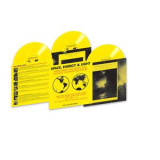
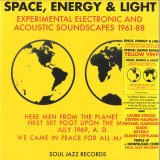
New edition of this Soul Jazz Records out-of-print classic album available now as a new limited-edition one-off pressing triple yellow vinyl album (plus download code), and limited-edition one-off pressing special yellow CD edition. Soul Jazz Records" Space, Energy and Light is a collection of music by early electronic and synthesizer pioneers (from the 1960s through the 1970s), mid-1970s proto-new age gurus and 1980s guerrilla D-I-Y cassette-era electronic artists, spanning in total over a near 30-year time frame. All of these artists used electronic advancements in music technology as a means of exploring not only space and the idea of the future, but also of looking inwards to the soul and of creating music in harmony with the natural world.
- A1: Jb Banfi - Gang (For Rock Industry) (For Rock Industry)
- A2: Michael Garrison - To The Other Side Of The Sky
- B1: Iasos - Lueena Coast
- B2: Carl Matthews - As Above, So Below
- B3: Tim Blake - Midnight
- C1: Stratis - By Water
- C2: Steven Halpern - Starborn Suite (Part 1)
- C3: Laurie Spiegel - Improvisation On A 'Concerto Generator
- D1: Mother Mallard's Portable Masterpiece Company - Ceres Motion
- E1: Michael Stearns - In The Beginning
- E2: Beverly Glenn-Copeland - Ever New
- F1: Richard Pinhas - Variations Vii Sur Le Theme Des Bene Gesserit
- F2: Tod Dockstader - Piece #1
- F3: Kevin Braheny - Ancient Stars
New edition of this Soul Jazz Records out-of-print classic album available now as a new limited-edition one-off pressing triple yellow vinyl album (plus download code), and limited-edition one-off pressing special yellow CD edition.
Soul Jazz Records’ Space, Energy and Light is a collection of music by early electronic and synthesizer pioneers (from the 1960s through the 1970s), mid-1970s proto-new age gurus and 1980s guerrilla D-I-Y cassette-era electronic artists, spanning in total over a near 30-year time frame. All of these artists used electronic advancements in music technology as a means of exploring not only space and the idea of the future, but also of looking inwards to the soul and of creating music in harmony with the natural world.
From computer software and hardware experimentalists and sound pioneers such as Laurie Spiegel and Kevin Braheny, as well as Mother Mallard’s Portable Masterpiece Company – the first synthesizer ensemble created in collaboration with Robert Moog – through to musique concrète experimentation, the album shows how technological advancements and creative artistic expression often went hand in hand.
In the mid-1970s artists Steven Halpern and Iaxos were instrumental in creating proto-new age music, experimenting in both the healing properties of sound and its relationship with the natural world. These artists also pioneered a new self-contained and underground D-I-Y approach to music, creating their own record labels, forming new distribution networks (with albums sold in meditation centres, health food stores and ashrams) far away from the commercialism of the mainstream music industry. In the early 1980s after the revolution of punk, these D-I-Y attitudes and ideas appeared once more in the growth of the distinctly anti-commercial and underground cassette-only careers of artists such as Germany’s Stratis and Carl Matthews in Britain.
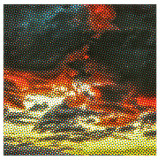
Artwork includes some of the earliest photography of the Plieades star cluster dating from the 1880s.
"Listening to Space, Energy & Light in one sitting is a bit like experiencing constellations exploding within constellations inside your brain." Record Collector
"Incredible collection of spacey electronics and meditative soundscapes dating from the early 60s to the late 80s here, lovingly assembled by the Soul Jazz team. This compilation has it all if you like your music deep. Big names such as Iasos and Laurie Spiegel feature, but even if you think yourself a bit of a nerd in this field, there are some lesser known pearls to be found." Bleep
"Quite simply an amazing mix of some quite bizarre and interesting pieces of music, no way to describe it other than to buy it, put on some headphones and drift off to inner space.” Amazon
"New compilation charting almost three decades of experimental
electronic and synthesizer music from the most influential and often
unsung composers of their generation. Beginning and 1961 and
following the story until 1988, Space, Energy and Light connects
proto-new age gurus and DIY tape vigilantes who were equally
inspired by the advancements of new technology and its potential to
unlock utopian futures in both the music and the soul." Vinyl Factory
The WAEVE - composed of Graham Coxon and
Rose Elinor Dougall – release their eponymous
debut album on Transgressive Records.
Produced by The WAEVE and James Ford (Arctic
Monkeys, Florence & The Machine, Foals, HAIM)
and recorded in London earlier this year, ‘The
WAEVE’ is a collection of 10 new tracks from
songwriters Graham Coxon and Rose Elinor
Dougall.
Joining creative forces in The WAEVE gave the
duo the opportunity to push past their instrumental
comfort zones. Many tracks feature Graham on
saxophone, one of the first instruments he played
as a young musician back in the 80s.
First single, ‘Can I Call You’, starts as a ballad then
morphs into a Krautrock-style motorik number with
a sprawling Coxon guitar solo. ‘All Along’ features
Graham on cittern, a medieval folk lute. Rose plays
piano and an ARP 2000 modular synth.
The heavy weather all over ‘The WAEVE’ recalls
the blustery folk rock of Sandy Denny or John &
Beverly Martyn, while tracks such as ‘Kill Me
Again‘ and ‘Over and Over’ recall the 70s rock of
Kevin Ayers or Van der Graaf Generator, almost
industrial in places.
Red Vinyl
Adrian Borland and Graham Bailey might be better known as members of legendary post-punk group The Sound, but the two were childhood friends and had been playing together even earlier in The Outsiders, and continued their deep musical rapport as a duo, creating these intense and engaging songs as Second Layer at the same time as their higher profile band output.
Combining their early recordings, including the 1979 Flesh As Property EP and 1980 State Of Emergency EP, Courts Or Wars takes its title from the first song that served as the pair’s introduction to listeners. Right from the beginning you are enveloped in what The Quietus described as, “a monochrome worldview morbidly obsessed with the dehumanizing effect of war, nuclear weapon annihilation, and the fracturing and negation of the self within an increasingly distorted and technologically mediated society.” Where The Sound fit snugly next to Echo And The Bunnymen, Second Layer had far more in common with the pulsing menace of Suicide.
Borland’s familiar vocals and sense of melody hold a connection to his other songwriting, but within these songs he takes far more risks in his guitar work to suit the subject matter. What really drives everything is Bailey’s propulsive bedrock, formed by his homemade pre-drum machine rhythm generators, creating an innovative mechanical approach that somehow inserts a jittery neurotic touch that merges perfectly with his electronic layers driven by the wasp synth, various unique effects boxes or tape loops. Adding in Bailey’s own distinctive bass playing, the results feel personal and experimental, pointed and harsh, while also bracingly accessible and covered in dark manic energy.
Over forty years later, these recordings feel shockingly appropriate. In painting a bleak reality and frightening future, there is real desperate beauty here.
Featuring what may be his only recordings on the Prophet keyboard,
these once lost performances expand the omniverse of Ra across a
stellar set of lengthy cuts! All recorded in a single day and finally making
their terrestrial debut, pressed on colored vinyl and packaged with a
Prophet keyboard brochure plus notes from Ranthropologist Brother
Cleve!What happens when a Prophet meets a Prophet? The answer lies
within these grooves
Amongst the hundreds of recordings issued by Sun Ra and his Arkestra, under
their various guises, the majority were recorded in concert or in makeshift studios
such as their early 1960s set- up at NYC's Choreographer's Workshop. Beyond
those, roughly 22 albums were recorded at Variety Recording Studio in New
York's Times Square. However, on August 25, 1986, Sun Ra and cohorts entered
Mission Control, a state- of- the- art 24- track studio north of Boston, which was
teeming with electronic keyboards and otherworldly sound generators. Nestled
within that arsenal was a brand- new digital ultra keyboard — the Prophet VS
("Vector Synthesizer").Of all the keyboards Ra played throughout his half-century
career, the Prophet was one of the most sophisticated. There's no evidence that
he had played either of the instrument's earlier incarnations, the Sequential
Circuits Prophet-5 and Prophet-10. Created using microprocessors, a then- new
technological advance, under the auspices of engineer Dave Smith in 1978, the
Prophet-5 revolutionized electronic music as the first polyphonic and, most
importantly, programmable synthesizer.Ra was intrigued by the Prophet (surely by
the instrument as well as by the name). Recorded during a single day, it's about
time that these once lost performances have now been found.It was a joy and a
thrill to be sitting at the console hearing this music for the first time, especially
with my fingers on the faders and knobs of the mixing desk. We watched the
oxide fly off the 2" tapes during playback, making this our one chance to digitize
before they metamorphosed into dust. Welcome to the new Sun Ra album….35+
years after it was recorded. The Omniverse has expanded once again.— Brother
Cleve (1955 - 2022)
Sky Blue Vinyl[35,25 €]
Ltd edition Double Sky Blue Vinyl, Gatefold sleeve w/ spot gloss, liner notes + DL card. Classic Double Black vinyl, Gatefold sleeve w/ spot gloss, liner notes + DL card. Bending scuzzy boundaries, ‘Good Bad Not Evil’ is a coming-of-age garage rock classic record. Full of hedonistic delinquent anthems, the fourth studio album from Atlanta punks Black Lips reaches it’s 15 year anniversary. This deluxe edition includes unearthed photos and new liner notes from Jared Swilley and King Khan. The second disc features B-sides and rarities including ‘Cruising’, ‘I Wanna Dance With You’ and ‘Leroy Faster’. ‘Good Bad Not Evil’ perfectly encapsulates the disillusionment of the mid-00s America, slammed between warehouse parties, DIY generator shows and scattered party pics, which was recorded in a little house in Atlanta that had been converted into a studio called the Living Room. Referencing Shangri-Las in the title, this is where their knack for garage gems met Motown; with bass heavy grooves (later remixed by Diplo), a certified country twang and unabashed bravado. Instant hits like ‘Veni Vidi Vici’, ‘Cold Hands’, ‘Bad Kids’ and ‘O Katrina!’ immediately became Black Lips staples. This was a band caught in the eye of the storm, the touring continued, the parties didn’t stop, this was a band bending the scuzzy boundaries of their chosen genre. The record was hailed by the likes of Pitchfork, who proclaimed, “Black Lips are a go-to band for vintage lo-fi freaks, and their raucous live shows have helped them cross over outside of crusty dive bars. ‘Good Bad Not Evil’, however, is the record where naysayers, disinterested friends and acquaintances, people on the street, and anyone else within earshot has to sit up, shut up, and listen.” …and, shut up and listen they did. “A perfect tapestry of sordid pleasure.” NME // “The same rapturous energy as the Sonics and the 13th Floor Elevators.” The Guardian // Track List: Disc One – Good Bad Not Evil. A1 I Saw A Ghost (Lean) A2 O Katrina! A3 Veni Vidi Vici A4 It Feels Alright A5 Navajo A6 Lock and Key A7 How Do You Tell a Child That Someone Has Died B1 Bad Kids B2 Step Right Up B3 Cold Hands B4 Off The Block B5 Slime and Oxygen B6 Transcendental Light… Disc Two - B-Sides & Rarities. C1 Cruising C2 Make It C3 I Wanna Dance With You D1 Best Napkin I Ever Had D2 My Trouble D3 Leroy Faster D4 Buried Alive
Black Vinyl[31,72 €]
Ltd edition Double Sky Blue Vinyl, Gatefold sleeve w/ spot gloss, liner notes + DL card. Classic Double Black vinyl, Gatefold sleeve w/ spot gloss, liner notes + DL card. Bending scuzzy boundaries, ‘Good Bad Not Evil’ is a coming-of-age garage rock classic record. Full of hedonistic delinquent anthems, the fourth studio album from Atlanta punks Black Lips reaches it’s 15 year anniversary. This deluxe edition includes unearthed photos and new liner notes from Jared Swilley and King Khan. The second disc features B-sides and rarities including ‘Cruising’, ‘I Wanna Dance With You’ and ‘Leroy Faster’. ‘Good Bad Not Evil’ perfectly encapsulates the disillusionment of the mid-00s America, slammed between warehouse parties, DIY generator shows and scattered party pics, which was recorded in a little house in Atlanta that had been converted into a studio called the Living Room. Referencing Shangri-Las in the title, this is where their knack for garage gems met Motown; with bass heavy grooves (later remixed by Diplo), a certified country twang and unabashed bravado. Instant hits like ‘Veni Vidi Vici’, ‘Cold Hands’, ‘Bad Kids’ and ‘O Katrina!’ immediately became Black Lips staples. This was a band caught in the eye of the storm, the touring continued, the parties didn’t stop, this was a band bending the scuzzy boundaries of their chosen genre. The record was hailed by the likes of Pitchfork, who proclaimed, “Black Lips are a go-to band for vintage lo-fi freaks, and their raucous live shows have helped them cross over outside of crusty dive bars. ‘Good Bad Not Evil’, however, is the record where naysayers, disinterested friends and acquaintances, people on the street, and anyone else within earshot has to sit up, shut up, and listen.” …and, shut up and listen they did. “A perfect tapestry of sordid pleasure.” NME // “The same rapturous energy as the Sonics and the 13th Floor Elevators.” The Guardian // Track List: Disc One – Good Bad Not Evil. A1 I Saw A Ghost (Lean) A2 O Katrina! A3 Veni Vidi Vici A4 It Feels Alright A5 Navajo A6 Lock and Key A7 How Do You Tell a Child That Someone Has Died B1 Bad Kids B2 Step Right Up B3 Cold Hands B4 Off The Block B5 Slime and Oxygen B6 Transcendental Light… Disc Two - B-Sides & Rarities. C1 Cruising C2 Make It C3 I Wanna Dance With You D1 Best Napkin I Ever Had D2 My Trouble D3 Leroy Faster D4 Buried Alive
To celebrate the 10th anniversary of Recital, we present Autumn Fair: A group LP comprised of 44 guest players (full list below), curated and edited together by Sean McCann.
Autumn Fair aptly embodies the feeling of Recital as a record label; the infusion of abstract sound art and sentimental beauty – performed by both younger and older generations of artists.
Oren Ambarchi - guitar, Ed Atkins - paper shredder, Jason Bannon - family, Derek Baron - keyboard, Karla Borecky - upright piano, Andrew Chalk - guitar, crys cole - birds, Loren Connors - guitar, Philip Corner - grand piano, Maxwell August Croy - whistle, Sarah Davachi - electronics, Aaron Dilloway - SFX, Delphine Dora - voice, Giovanni Fontana - voice, Scott Foust - trumpet, Peter Friel - impression, Malcolm Green - camera, Judith Hamann - cello / voice, Mark Harwood - speech, Forest Juziuk - voice, Johnny Kay - tapping, Kajsa Lindgren - hydrophone, Rob Magill - guitar, Lia Mazzari - whip, Molly McCann - flute, Sean McCann - editing / voice, Nour Mobarak - voice sampler, Azikiwe Mohammed - interview, Charlie Morrow - MIDI piano, Kiera Mulhern - SFX, Zachary Paul - violin, claire rousay - SFX, Michel Samson - violin, Troy Schafer - strings, Eric Schmid - tone generator, Ben Schumacher - SFX, Tom James Scott - keyboard / SFX, Asha Sheshadri - reading, Patrick Shiroishi - winds, Sydney Spann - voice, Matthew Sullivan - instruments, Flora Sullivan-Kelly - percussion, Connor Tomaka - SFX / synth, Alex Twomey - upright piano.
I won't go into too much detail on the album itself, but after many twists and turns, the album concludes with “Recital Program,” an intense track that manically collages two-second excerpts from every Recital album to date.
I extend a sincere ‘thank you’ for all the incredible support for Recital over the past decade.
Ltd. LP Edition of 350 copies on 175gram black vinyl, gold foil printing, incl. program notes, comes with printed ticket, mechanically numbered.
Black Vinyl[28,36 €]
Blue Splatter Vinyl[30,88 €]
Smokey Purple Vinyl[30,88 €]
Gold / Green Splatter Vinyl[29,79 €]
Debüt auf Bad Omen Records!! - BIRTH entwickelte sich aus ASTRA, dessen zwei Alben - 'The Weirding' von 2009 und 'The Black Chord' von 2012 - bereits Klassiker im Rise Above-Katalog sind. Mitglieder von Sacri Monte, Psicomagia, Joy und Monarch sind auf dem kaleidoskopischen Trip mit an Bord. Musikalisch sind zwar auch Spuren von King Crimson von (ca. 'Red') sowie frühe Yes und Van Der Graaf Generator zu erkennen, aber eine ganze Reihe von Einflüssen wie Aphrodites Child, Premiata Formeria Marconi und Area bis hin zu Robbie Basho und die symphonische Soundtrack-Arbeit von Osanna eben auch! Alchemistische Kräfte haben mit 'Born' ihre beachtliche Arbeit geleistet, indem sie ein erhabenes Album geschaffen haben. 42 Minuten, in denen Vergangenheit, Gegenwart und Zukunft verschwommen sind; ein Album, das von irdischen Sorgen heimgesucht wird, während seine Klänge nach den Sternen streben.
Black Vinyl[28,36 €]
Blue Splatter Vinyl[30,88 €]
Smokey Purple Vinyl[30,88 €]
Ultra Clear Vinyl[29,79 €]
Debüt auf Bad Omen Records!! - BIRTH entwickelte sich aus ASTRA, dessen zwei Alben - 'The Weirding' von 2009 und 'The Black Chord' von 2012 - bereits Klassiker im Rise Above-Katalog sind. Mitglieder von Sacri Monte, Psicomagia, Joy und Monarch sind auf dem kaleidoskopischen Trip mit an Bord. Musikalisch sind zwar auch Spuren von King Crimson von (ca. 'Red') sowie frühe Yes und Van Der Graaf Generator zu erkennen, aber eine ganze Reihe von Einflüssen wie Aphrodites Child, Premiata Formeria Marconi und Area bis hin zu Robbie Basho und die symphonische Soundtrack-Arbeit von Osanna eben auch! Alchemistische Kräfte haben mit 'Born' ihre beachtliche Arbeit geleistet, indem sie ein erhabenes Album geschaffen haben. 42 Minuten, in denen Vergangenheit, Gegenwart und Zukunft verschwommen sind; ein Album, das von irdischen Sorgen heimgesucht wird, während seine Klänge nach den Sternen streben.
“If you can imagine a late 1960s folk-rock approach allied to a doomy atmosphere with added touches of lo-fi psychedelia, then you’re getting close to the timbre of Finland’s Hexvessel. There are clearly nods towards King Crimson, Black Sabbath, the Beatles, HP Lovecraft and The Doors, but what the band have managed to do is create something that belongs specifically to them.” – Malcolm Dome, Prog Magazine Hexvessel’s fan-favorite album from 2012, No Holier Temple, gets a luxury 10-year anniversary reissue via Svart Records! No Holier Temple was Psychedelic Forest Folk band Hexvessel’s second full-length album, released to critical acclaim, cult status and some of their biggest sales figures to date. The Finnish “mushroom-devouring pixies” follow up to 2011’s critically acclaimed debut album, Dawnbearer, was described by Roadburn Festival as “a passionate, urgent and gorgeously strange musical spell.” Hexvessel’s break-through album No Holier Temple reached new heights for the band with two Emma Gala (Finnish Grammy Awards) nominations. No Holier Tample also won two Femma awards, which is the Alternative Finnish Grammy Awards. Hexvessel played the prestigious Roadburn Festival in The Netherlands for the first time that year in the church venue of Het Patronaat. The festival sold out in 7 minutes. No Holier Temple also landed in the Main Finnish Charts at #20 and in Alternative charts at #7. No Holier Temple fuses the acoustic 70s folk vibe of its predecessor into a more psychedelic, electric, doom-folk sound with Manzarek-like keys, screeching rhythmic Velvet Underground violins, Miles Davis trumpets and hypnotic freakouts. Weaving the uncanny songs together are the narrative vocals of Mat McNerney, who on this album has matured into the bastard child of Burke Shelley, young Jon Anderson and Paul Simon. Inspired by the progressive, spaced-out haze of bands like Amon Düül II, Van Der Graaf Generator and Ultimate Spinach, whose song “Your Head Is Reeling” they cover with religious abandon. Their sound now expands outward from their eerie, signature, ritual-esque intros into a genre-twisting cauldron of otherworldly rock and the late-night, dreamy spoken-word of artists such as Jim Morrison (An American Prayer) and Ken Nordine.
Keith Fullerton Whitman brings his 3-part Generators series for Japan’s NAKID label to a close with a third and final instalment that ravishes the senses with hybrid analogue/digital systems tekkerz.
Hazing into a solemn start of floating organ and slurred drums, the first part fizzes into action with pranging irregularities, tentatively allowing the system to voice varying pitches and nimble rhythms that resemble balletic footwork plies as much as classically-trained instrumentalist flurries. It’s deeply trance-inducing, meditative gear that over the course of 25 minutes slowly gains momentium and complexity, first adding robust arps to complicate the structure, treading the finest line of chaos and discipline. In time, those arps turn themselves into a rhythm track, landing somewhere between Whitman's earliest junglist works as Hrvatski and a sort of plucked rhythmic minimalism that reminds us of Mark Fell’s Sensate Focus, gliding on natural, brownian motion and flux of texture, punctuated by what sound likes a plucking of a drum machine from the inside-out.
In part 2 the mood pools and diffracts in slow-fast meter, bristling ruptures of atonality that send limbs flailing one way and then another, adding subs for a dimensional shift that’s rhythmically fractured but always grounded at the low registers. The wavy embroidery of Whitman's machines trigger each other in endlessly fascinating forms of gyring workshop ballistics and dub reverberations.
A special bonus piece ‘Meakusma (Generators, Soundcheck)’ is the most curious of the lot, with a lone clarinet heard in the air, perhaps a serendipitous inclusion form someone else’s soundcheck, lending an enchanting depth perception to his frolicking bleeps.
[a] 1 | MEAKUSMA [Generators] (190606) Part 1
[b] 2 | MEAKUSMA [Generators, Redactions] (190606) Part 2
[c] 3 | MEAKUSMA [Generators, Soundcheck] (190606)
Compilation of singles recorded for Glass Records. Pressed on Yellow vinyl with orange & black splatter. Includes printed inner sleeve with posters and postcards
Religious Overdose formed in 1979 and alongside the likes of PIL, Joy Division and Bauhaus helped forge the sound that became to be known as post-punk. In just 2 years their experimental songs were pushing boundaries. From the hypnotizing drum machine led debut “25 minutes” and the krautrock influenced “I said go” to the synth infused new wave of “Blow The Back Off” and their final single. The sprawling 7 minute “The Girl With The Disappearing Head” This is a celebration of the much underrated and important Religious Overdose.
Formed in Barby (near Rugby) in 1979, original vocalist left, ALEX NOVAK joined in 1980, producing three singles for GLASS RECORDS. Initially used a rhythm generator then replaced by drummer PETE BROWNJOHN. Played with WHERES LISSE / FALL / EYELESS IN GAZA / TRANCE / MYSTERY GUESTS / BAUHAUS / DANCE CHAPTER / SKI PATROL /ENGLISH SUBTITLES / ATTRITION / THEATRE OF HATE... the last gig was in Northampton 1982, recorded and released as a tape by ADVENTURES IN REALITY label and fanzine from Coventry.
The Cast
ALEX NOVAK Vox before ISAWS after TEMPEST / ATTRITION now VENUS FLY TRAP , RICHARD FORMBY Guitar after JAZZ BUTCHER / IN EMBRACE / SPECTRUM, DAVE HYNES Keyboards, ADY TILLEY Bass before WHERES LISSE, PETE BROWNJOHN Drums before ISAWS , ALARIC NEVILLE Guitar, FILIPE FIGUERA Bass
- 1: Say Your Goodbyes, Pt
- 2: Always The Stranger
- 3: It's Easier To Love
- 4: We Feel
- 5: Lost Player
- 6: Only A Fool
- 7: After The Stranger
- 8: Glitter Fades
- 9: About The Light That Hits The Forest Floor
- 10: Dark Nevada Dream
- 11: Say Your Goodbyes, Pt. 2
- 1: Say Your Goodbyes, Pt. Alt
- 2: Always The Stranger Alt
- 3: It's Easier To Love Alt
- 4: We Feel Alt
- 5: Lost Player Alt
- 6: Only A Fool Alt
- 7: After The Stranger Alt / Extended Version
- 8: Glitter Fades Alt
- 9: About The Light That Hits The Forest Floor Alt
- 10: Dark Nevada Dream Alt
- 11: Say Your Goodbyes, Pt. 2 Alt
- 12: Clearing Houses
- 13: Always The Stranger Raw
- 14: Lost Player Primitive
Coming 40 years after he first started performing in bands in his native North West of England, Butterfly Mind is the most surprising release yet from Tim Bowness. From the short, sharp shocks of Always The Stranger and Only A Fool to the long-form ambition of the sensuous Dark Nevada Dream, the cinematic Electro-Ballroom of Glitter Fades and the dystopian paranoia of Say Your Goodbyes Parts 1 and 2, Butterfly Mind delivers a thrilling fusion of Art Rock invention, Post-Punk energy and epic soulful ballads. Tim’s seventh solo album features the stellar rhythm section of Richard Jupp (in his first major session since leaving Elbow) and Nick Beggs alongside a spectacular guest list including Ian Anderson (Jethro Tull), Dave Formula (Magazine), Peter Hammill (Van Der Graaf Generator), Martha Goddard (The Hushtones), Gregory Spawton (Big Big Train), Mark Tranmer (The Montgolfier Brothers / GNAC), Saro Cosentino (Franco Battiato), Italian Jazz musician Nicola Alesini, US singer Devon Dunaway (Ganga), Stephen W Tayler (Kate Bush) and, marking his first studio work with Tim for nearly three decades, former No-Man violinist Ben Coleman. Produced by Tim Bowness and Brian Hulse (Plenty), the album was mixed and mastered by Steven Wilson. Available as Limited 2CD Edition (featuring alternate mixes and bonus material), and a Limited 180g LP + CD edition featuring special die-cut artwork by Carl Glover. Also available as Digital Album.
- 1: Say Your Goodbyes, Pt
- 2: Always The Stranger
- 3: It's Easier To Love
- 4: We Feel
- 5: Lost Player
- 6: Only A Fool
- 7: After The Stranger
- 8: Glitter Fades
- 9: About The Light That Hits The Forest Floor
- 10: Dark Nevada Dream
- 11: Say Your Goodbyes, Pt. 2
- 1: Say Your Goodbyes, Pt. Alt
- 2: Always The Stranger Alt
- 3: It's Easier To Love Alt
- 4: We Feel Alt
- 5: Lost Player Alt
- 6: Only A Fool Alt
- 7: After The Stranger Alt / Extended Version
- 8: Glitter Fades Alt
- 9: About The Light That Hits The Forest Floor Alt
- 10: Dark Nevada Dream Alt
- 11: Say Your Goodbyes, Pt. 2 Alt
- 12: Clearing Houses
- 13: Always The Stranger Raw
- 14: Lost Player Primitive
Coming 40 years after he first started performing in bands in his native North West of England, Butterfly Mind is the most surprising release yet from Tim Bowness. From the short, sharp shocks of Always The Stranger and Only A Fool to the long-form ambition of the sensuous Dark Nevada Dream, the cinematic Electro-Ballroom of Glitter Fades and the dystopian paranoia of Say Your Goodbyes Parts 1 and 2, Butterfly Mind delivers a thrilling fusion of Art Rock invention, Post-Punk energy and epic soulful ballads. Tim’s seventh solo album features the stellar rhythm section of Richard Jupp (in his first major session since leaving Elbow) and Nick Beggs alongside a spectacular guest list including Ian Anderson (Jethro Tull), Dave Formula (Magazine), Peter Hammill (Van Der Graaf Generator), Martha Goddard (The Hushtones), Gregory Spawton (Big Big Train), Mark Tranmer (The Montgolfier Brothers / GNAC), Saro Cosentino (Franco Battiato), Italian Jazz musician Nicola Alesini, US singer Devon Dunaway (Ganga), Stephen W Tayler (Kate Bush) and, marking his first studio work with Tim for nearly three decades, former No-Man violinist Ben Coleman. Produced by Tim Bowness and Brian Hulse (Plenty), the album was mixed and mastered by Steven Wilson. Available as Limited 2CD Edition (featuring alternate mixes and bonus material), and a Limited 180g LP + CD edition featuring special die-cut artwork by Carl Glover. Also available as Digital Album.
Fractal head rearrangement from Keith Fullerton Whitman on his first vinyl release in what feels like years, here blessing Japan’s NAKID label with a new instalment in his forever-evolving Generators project, arcing from bleeping post-Kosmische sounds into completely unexpected drum mutations in footwork and grime modes. It’s properly head melting gear that links the algorithmic mind-fukkery of Laurie Spiegel with the floor-bending rhythmic experimentation of Mark Fell, Rian Treanor or Jana Rush, and the first in a three part series that offers some of the strongest gear we’ve heard from one of the very best in the game.
Modular synth scientist, critic and historian Keith Fullerton Whitman first debuted his »Generators« set in 2009, using a modular setup to create non-repeating melodic patterns that basically came close to generating themselves. Over the course of hundreds of live shows (and a handful of releases on Root Strata, Editions Mego and other labels), Whitman glacially honed his process and allowed the concept to slither down different avenues, mutating as it picked energy from the various venues it was situated in. His rigorous method meant ‘Generators’ was never played out the same way twice, veering from psychedelic Kosmische experimentation to obliterated, off-grid Techno.
In 2019, on the tenth anniversary of the project, Whitman was invited by the GRM in Paris to set up in Studio C, where he avoided the arsenal of pristine, museum-worthy modular synthesizers and instead reprogrammed his classic ‘Generators’ patch. Recorded in a single take using luxe analog- to-digital convertors, the result is a 45-minute durational piece, split into two distinct sides for this release.“Very little manual interaction happened,” Whitman explains. The music is, as its title suggests, generative, and at this point basically sounds as if it reached its most advanced, final form. The first few minutes of the opening side mine the original theme, with clocked LFO shapes triggering oscillator blips in mind-expanding non-looping patterns. Soon, percussion enters the matrix, at first wrong-footing us with a 4/4 fake-out - possibly nodding to the piece’s 2010 Root Strata iteration - before splitting into staccato polyrhythmic abstractions of the most loose- limbed and deadly variety.
General MIDI drums can sound almost hilariously boxed-in, but handled by Whitman they show off a plastic cultural sheen to piercing effect, deployed in a way that re-draws the rhythmic bass music of someone like Jlin while nodding to Mark Fell and Rian Treanor’s quasi-generative dance explorations. These comparisons take on even more weight on the second side, where Whitman opens up his filters to allow the synth bleeps to sing even more loudly, introducing that all- important clap/hat interplay that dialogues with Atlanta and Chicago simultaneously.