Luther Dickinson, 10-time Grammy nominated North Mississippi All Star, joins up with noted Bay Area mensch David Katznelson to chase the spirits and get weird. World Boogie is Coming! This is the debut project from Luther Dickinson and David Katznelson, who famously signed The Flaming Lips. It also features the last known audio of Jim Dickinson and is limited to 400 foil stamped numbered vinyl copies.
Buscar:the glass
Jon Hopkins 2nd album 'Contact Note' on standard double black vinyl. Divided in three distinct movements, 'Contact Note' slowly evolves into a deep, compelling musical experience concluding with the stunning third part where Jon masters to perfection his skills as a classically trained musician, to give his most abstract work delicate impressionist touches. Classical piano contrasts with drifting atmospheres and twisted rhythms on the dark, edgy and gripping 'Black And Red' - to culminate with the waving synths and sumptuous vocals of the blissful 'Luna Moth', the perfect end of a glorious sonic adventure.
“…a surprisingly cohesive atmospheric soundtrack to a movie that does not yet exist.” LONER is the stunning album from cult auteur DAVID J (Bauhaus, Love & Rockets) featuring Mia Doi Todd and Tim Newman. U.K. Edition in orange vinyl with gatefold sleeve. Limited edition of 500. Former Bauhaus and current Love and Rockets bass man returns via Dakota Records with a series of deconstructions of an original twenty some year old demo. Originally streamed as part of his 2007 series of unreleased stash ‘Tracks from the Attic,’ a precursor to the now hugely successful platform: Patreon. David’s original demo titled ‘Albino Dog’ alongside singer/songwriter Mia Doi Todd’s sublime studio version both appeared via that platform in 2015; only the latter appears amongst this new series of arrangements. David’s premonition of Mia’s voice on this song is one to be applauded – perfectly suited creating a ghostly sepulchral aura. Here the Colonel is aided by a series of foot soldiers varying in rank. Veteran comrade Joyce Rooks adds texture with her trademark cello to Mia’s ‘Albino Dog’, whilst privates’ Nigel Gwennap (‘The Day that David Bowie Died’) and Whitehall Rec’s Joel Baldwin contribute electric guitar and drum programming respectively. But it’s the work of the captain that captivates this whole package. Tim Newman (Love is a Ghost), arranger, sound alchemist, mixer and lunatic. Tim’s work with David is best savoured via their ‘Analogue Excavations & Dream Excavations’ 2002 Glass Modern set. ‘Loner’ offers the listener a kaleidoscope of sounds best experienced with headphones, the journey from David’s simple ‘Albino Dog’ strummed acoustic demo to ‘Crescendo’ is quite staggering. Joel’s synth on ‘Cold, Cold, Cold’ and the glitch added to Mia’s vocal (‘Loner on the Range’) for example take the song into an altogether different direction. But it’s ‘Crescendo’ though that sits atop the apex. Building, as the title suggests, into a blistering array of guitars, bass and drums with a gorgeous, ethereal repeating low vocal motif from Mia wrapping itself around the cacophony.
"Raise a glass to the latest entry in Bloodshot’s Barrel Select Series!
Barrel Select exists to highlight the best of Bloodshot’s cask-strength catalog. Robbie Fulks has made some of the finest records we can claim as our own, but if there’s only room for one on that sacred shelf at the top, it’s Gone Away Backward.
“At a time when modern country feels like bloated spandex-and-Aquanetted pop-metal, Fulks defiantly embraces an unflinching traditionalism.” Paste’s words, not ours, but we’re not gonna argue the point they made when Gone Away Backward hit their doorstep 11 years back. They also called this “a tour du force of bluegrass-derived spare country,” which we’ll also let stand. Magnet said it was “the best album Fulks has ever made, period,” and out of respect for the wonderful work Robbie has done in the past decade, we’ll simply point out that this too is an 11-year-old review.
With Steve Albini at the board, Robbie was able to break his songs down to their core and fire his characters, his chops, his band, and his amazing voice directly at listener’s souls. “We recorded it pretty fast, in a couple of days. People are always bragging that they did it without overdubs, but that’s the way we did it.” The results are everything we ever wanted from Robbie and a high-water mark of folk or bluegrass or alt-country or whatever genre bucket you want to pour his gifts into.
Recorded by Steve Albini
10th Anniversary Barrel Select edition on Bloodshot Red vinyl
“Stunning” —Saving Country Music
“a work of great, accomplished craft . . . vivid and moving” —Ken Tucker, NPR
“The level of artistry is so complete that it suggests a world in which Fulks isn’t a household name is somehow upside down.” —Wall Street Journal"
A 2024 edition of Terry Riley's »Descending Moonshine Dervishes,« originally recorded live in Berlin in 1975 and released by Kuckuck in 1982. This will be the first time the remastered album has been available since 2016.
Using just intonation and a modified organ, Riley conjures forth a rich and layered sound that challenges the Western ear, reflecting his associations with Indian classical singer Pandit Pran Nath and La Monte Young, whose Well Tuned Piano was well underway. »Descending Moonshine Dervishes« is a virtuosic and kaleidoscopic performance, standing as one of the finest works of a revolutionary composer and musician at the height of his powers.
»Descending Moonshine Dervishes« dates from 1975 and it belongs to a larger Dervish series of compositions whose origins predate Riley’s two signature works of minimalism, »In C« (1968) and »A Rainbow In Curved Air« (1969)… the piece is structured around just intonation, which stretches the listening experience into new areas. Played on a Yamaha organ with a bit of tape delay that allows Riley to duet with himself, the music of »Descending Moonshine Dervishes« is an ear expansion that goes through skittering arpeggios and long, droning notes that indicate something of the many levels that it operates on. – Louise Gray, The Wire Magazine (March 2017)
California composer Terry Riley launched what is now known as the Minimalist movement with his revolutionary classic 'In C' in 1964. This seminal work provided a new concept in musical form based on interlocking repetitive patterns. It's impact was to change the course of 20th century music and it's influence has been heard in the works of prominent composers such as Steve Reich, Philip Glass and John Adams and in the music of rock groups such as The Who, The Soft Machine, Tangerine Dream, and many others. His hypnotic, multi-layered, polymetric, brightly orchestrated eastern flavored improvisations and compositions set the stage for the prevailing interest in a new tonality. Riley has worked with Kronos Quartet, La Monte Young, members of Fluxus, Chet Baker, Pandit Pran Nath, his son Gyan Riley, choreographer Anna Halperin, and many others over the years.
- A1: Mama Africa
- A2: Glass House
- A3: Not Gonna Give It Up
- A4: Stop That Train
- B1: Johnny B. Goode
- B2: Where You Gonna Run
- B3: Peace Treaty
- B4: Feel No Way
- B5: Maga Dog
Red Recycled[31,51 €]
"Mama Africa," released in 1983 is now available on 1LP Red Recycled, is a celebration of African heritage and a call for unity and liberation. This album features a mix of upbeat tracks and heartfelt tributes to the African continent. The title track, "Mama Africa," is a poignant ode to the motherland, while songs like "Glass House" and "Not Gonna Give It Up" convey messages of resilience and determination. "Mama Africa" highlights Peter Tosh's ability to blend social consciousness with melodic reggae rhythms, reaffirming his role as a powerful voice for the African diaspora and global justice.
Caroline Says' haunting new album, The Lucky One, is a poignant exploration of how the ghosts of past relationships linger, sometimes holding more sway over our hearts and minds than our current connections. We revisit these ghosts through evocative landscapes of our memories - hometown bars, road trips, and late-night swims. Through a series of fractured and persistent memories these songs capture the bittersweet realization that the past, though imperfect, can sometimes be a more comforting and meaningful companion than the present. Opening track, "The Lucky One," confronts death's role in shaping our memories head-on, as it ponders the way death freezes a person in time, forcing us to confront the complexities of grief and its lasting impact on our relationship with the one we lost. Other tracks delve into the complexities of relationships that naturally grow apart as life takes us in different directions. For example, "Faded and Golden" reflects on the bittersweet nature of reunions with old friends, where the idealized memories of youth can clash with the realities of the present. Then, "Actors" takes this a step further, acknowledging the influence of perception and desire in friendships, and the idea that in many ways "all friendships are imaginary friendships," as it confronts the disappointment of inauthentic connections, and the facades we sometimes put on in relationships. "Roses" began when Caroline was looking through her grandma's collection of commemorative Kentucky Derby glasses, each one etched with the name of a winner. The song delves into the story of "Sunday Silence," the horse that won the year Caroline was born. Researching the horse's journey from near-Triple Crown glory to retirement in Japan sparked a metaphor - a pressured being (the horse) desperately trying to please but ultimately disappointing. The owners eventually selling the horse becomes a relatable symbol of unmet expectations, and the sting of falling short despite our best efforts. Album closer, "Something Good," revisits Caroline's Alabama childhood. Lost on a recent trip to Birmingham, unable to find the familiar path to a riverside hangout, the experience becomes a powerful metaphor; we can't always retrace the paths in our memories, but those memories, however unreliable, continue to shape us. In the end, The Lucky One celebrates this enduring power, acknowledging how past relationships and experiences, even those lost to the haze of time, continue to inform the stories we tell ourselves, and the way we navigate the present.
- 1: Parallelograms (6.42)
- 2: The Transcendentalist (3.18)
- 3: Glass Teeth (4.5)
- 4: Galadali (2.20)
- 5: Traumzeit (4.18)
- 6: Salpêtrière (4.19)
- 7: Nereides (3.52)
- 8: A Forest In The Sky (4.23)
- 9: Yourcelium (3.16)
- 10: The Oneironaut (3.47)
Hawksmoor’s new album ‘Oneironautic’ on Soul Jazz Records follows on from last year’s critically acclaimed ‘Telepathic Heights’, as well as a re-release of his album ‘Saturnalia’ on the Library of the Occult label earlier this year.
James McKeown, AKA Hawksmoor, continues his fascination with the sounds and sensibilities of 70s/80s German electronic groups – think early CLUSTER, HARMONIA, CAN, NEU!, HANS-JOACHIM ROEDELIUS and MICHAEL ROTHER.
On this new album ‘Oneironautic’, he successfully combines these pulsating ripples of Germanic electronica with a number of decidedly English references: the soaring, hypnotic and pastoral qualities of BRIAN ENO, circa ‘Another Green World’; the long, sustained lines of ROBERT FRIPP’S FRIPPERTONICS; and the poetic feel of early DURUTTI COLUMN.
McKeown combines all of these elements while also remaining with one foot firmly in the British melodic hauntological modular synth aesthetic of hauntology – Ghost Box, Mount Vernon Arts Lab, Focus Group et al.
Once again using strictly modular synths, electronic drum rhythms, and guitars, Hawksmoor has created an electronic landscaped music world that is both new and old, immediately identifiable and yet utterly unique.
Spiral In A Straight Line ist das sechste Studioalbum der beliebten Post-Hardcore-Band Touché Amoré.
Produziert von Ross Robinson (Korn, Glassjaw, Slipknot) und mit Features von Lou Barlow und Julien
Baker.
Leadsänger Jeremy Bolm sagt, dies sei eine „Platte über Vorwärtsbewegung, während alles um einen herum
destabilisiert wird.“
Spiral In A Straight Line ist das sechste Studioalbum der beliebten Post-Hardcore-Band Touché Amoré.
Produziert von Ross Robinson (Korn, Glassjaw, Slipknot) und mit Features von Lou Barlow und Julien
Baker.
Leadsänger Jeremy Bolm sagt, dies sei eine „Platte über Vorwärtsbewegung, während alles um einen herum
destabilisiert wird.“
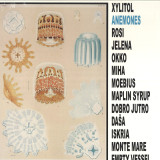
Xylitol is the alias of Catherine Backhouse, producer and DJ under the name DJ Bunnyhausen. She was a resident DJ at Kosmische, the now dormant Krautrock club and is a fan of jungle and hardcore. She currently co-hosts the radio show Slav To The Rhythm, which focuses on vintage central and eastern European pop and electronica and she's also co-writing a book on Yugoslavian pop culture. 'Anemones' is a total project from the cover to the music. Backhouse is fascinated by early botanical illustrations of anemones and other aquatic fauna, and how the act of taxonomy reveals as much about human psychology, desire and sublimation as it does about the organic specimen as a thing in itself. Each track is a microcosm of this 'other life', an allegory for the extraordinary potential latent within bodies that the dancefloor has the power to activate. Using early jungle and garage as starting points to connect dots and open up contrasts between dance music and vintage electronics, Backhouse finds a sweet spot which, in her words "feels like something that's simultaneously still and ancient yet propulsive and ecstatic." Not afraid of letting the the hiss and flutter of the music show, 'Anemones' holds attention with ancient bubbling synths and gracefully drifting arpeggiations, occasionally brought to heel by charming melodies, all accompanied by breakbeats that explode like fireworks. 'Anemones' has a lively and unpolished aesthetic that's a kindred spirit to Nondi_'s 2023 album of smeary, water-damaged footwork, 'Flood City Trax'. 'Moebius' pits the spaced out neon chords of the track's namesake against absolutely tearing breaks, allowing time for this almost overwhelming combination to become near enough transcendental, while the bleeping melody and sad slavic chorus motif in 'Okko' feels like an artifact from an alternative future. The Drexciya meets 2-step garage of 'Dobro Jutro' creates a welcome respite at the album's midpoint before the flow builds up again to 'Daša' with its glassy sounds from a lost radiophonic workshop miniature meeting bruising kicks and snares. Meanwhile 'Iskria' has purring synth chords and 8-bit melodies evoking the cosmonaut age. The subliminal influence of the Yugo era is felt in DIY synthesis and Mitteleuropean melody and seen in song titles such as 'Jelena', 'Miha', 'Daša' (named after novelist Daša Drndič) and 'Iskria' (taken from the fictitious Balkan region in Ottessa Moshfegh's bleak fable 'Lapvona'). 'Anemones' very effectively folds experimental genres from different times and places into a very enjoyable new sound.
Mark William Lewis’ acclaimed ‘Pleasure Is Everything’ & ‘God Complex’ receives a limited vinyl press on tastemaker London label Scenic Route Records.
Scenic Route Records is proud to announce the first vinyl press of Mark William Lewis's critically acclaimed EPs Pleasure Is Everything and God Complex. These releases, which have collectively amassed nearly 3 million Spotify streams, capture the raw and evocative sound that has earned Mark a dedicated following within London’s underground music scene. Influenced by left-field pop, ambient, and indie rock, is deeply personal, reflecting his experiences and the unique perspective gained from living on the 18th floor of a tower block in London.
Mark's music has been widely praised for its emotional depth and innovative songwriting, with support from publications such as Pitchfork and The Fader praising his ability to create atmospheric soundscapes that resonate with listeners on a profound level. This vinyl press offers fans a chance to experience these early EPs in a format that enhances the warmth and texture of his music.
As Mark continues to build his presence with sold-out shows at Cafe Oto & and international tours alongside NYC rapper MIKE, this pressing serves as both a celebration of his early achievements and a milestone in his artistic journey. Whether you're a long-time fan or new to his music, the repress of Pleasure Is Everything and God Complex is an essential addition to your collection, offering a deeper connection to the intricate, emotive world of Mark William Lewis.
The London-based electronic musician Luke J Murray aka Stonecirclesampler and the award-winning writer Travis Elborough have combined forces on a new collaboration to be released on The Tapeworm label under the title 'Memorex'.
Luke J Murray is a man of many musical aliases, releasing and performing variously as: Superior Grime London Blue DNB-like South Sand Dynamics Luke Marblex The In 2.5G Label White Dark Rainfall J Escape NCR London The From Cracks In Concrete 900Cold Liquid DJ Pulp Grime Murray The endorphin Old 0161 Conflicting 2 Solo Widens Damage Ambient Glow Electronics and Stonecirclesampler.
Described by The Guardian as 'one of the country's finest pop culture historians', Travis Elborough's books include 'Wish You Were Here: England on Sea', 'The Long-Player Goodbye', a hymn to vinyl records that inspired the BBC4 documentary 'When Albums Ruled the World', in which he also appeared, 'Through the Looking Glasses: The Spectacular Life of Spectacles' and 'Atlas of Vanishing Places', winner of Edward Stanford Travel Book Award in 2020.
- Cristal, Cristal Bass, S.a.d. Et Zagreb
- Crapauds Aux Cordes Étouffées Et Ressorts Sans Cône
- Chandelier, Cristal Et Croix
- Sept Croix Dont Deux Pitchées
- Douze Accords Simples De Sifflants Aux Attaques Coupées, Dont 2 Pitchés
- Croix, Sifflants Sans Attaque Et Ressorts Sans Cône
- Quatre Accords De Cristal Bass
After a triptych released by Un je-ne-sais-quoi, in barely 3 years, under the name Tachycardie, Jean-Baptiste Geoffroy, musician, composer but also visual artist, continues his very singular journey to the heart of sound matter, with an album composed on Baschet sound structures.
From the 1950s, the Baschet brothers created a truly innovative set of instruments which has since fascinated musicians seeking new sound experiences.
Both sculptures of glass, metal and instruments of great acoustic sharpness, these sound structures have made rare but remarkable forays into recordings of contemporary music (Bernard Baschet, Jacques Lasry, Luc Ferrari, Toru Takemitsu, Jonathan Fitoussi…).
The Baschet brothers were also keen to use these instruments for educational purposes in the form of workshops, cultural action projects or simply by inviting the public to try these instruments at the end of concerts. It is in the Ateliers Baschet, a place aimed at preserving and transmitting the work of the brothers (workshops, conferences, residencies) that Tachycardie recorded this new album.
After having combined on his previous albums, analog synthesis, audio-naturalism and percussion in an overwhelming balance, he explored here all the sonic variety of Baschet structures. He then just sculpted this sound material in his studio, using simple effects: editing and pitch.
The result is a new path to explore in Tachycardie’s world, made of subtle percussive crackles, beneficial chaos and restorative oscillations.
For a few years until 2014, Indirect’s rehearsal studio was located at the abandoned Odesa drugstore “Аптека No326”, whose stained glass window is depicted on the album cover. The many hours spent there practicing and recording have ended up as a 7” Walts and a digital LP Ab Pharmacy in 2014 on Muscut and Diskultura labels.
Indirect:
Hennadii Boichenko: compositions, organ, keyboards, synth, programming, guitar, bass guitar Anton Ostromezkii: compositions, drums
Taras Panteleichuk: compositions, bass guitar, guitar
Oleksii Volusunov: compositions, guitar
Nadiia Shoshina: flute
Vasyl Notkin: additional guitars
Composed and recorded by Indirect in Odesa Mastered by Kassian Troyer
Produced by Dmytro Nikolaienko and DJ Mavr Cover illustration by Anna Makarchuk (Waltz, 7”) Cover photo by Taras Panteleichuk
(P)(C) Muscut / Diskultura, 2014 Muscut 2C, 2024
- A1: Orphée (Arr For Piano Duet), Act I I. Le Café
- A2: Orphée (Arr For Piano Duet), Act I Ii. La Route
- A3: Orphée (Arr For Piano Duet), Act I Iii. La Chambre D'orphée
- A4: Orphée (Arr For Piano Duet), Act Ii Iv. Chez Orphée
- A5: Orphée (Arr For Piano Duet), Act Ii V. Le Voyage Aux Enfers
- A6: Orphée (Arr For Piano Duet), Act Ii Vi. Orphée Et La Princesse
- B1: Orphée (Arr For Piano Duet), Act Ii Vii. Interlude Musical - Le Retour Chez Orphée
- B2: Orphée (Arr For Piano Duet), Act Ii Viii. Le Studio D'orphée
- B3: Orphée (Arr For Piano Duet), Act Ii Ix. Le Retour D'orphée
- B4: Orphée (Arr For Piano Duet), Act Ii X. La Chambre D'orphée
- C1: La Belle Et La Bête (Arr For Piano Duet) I. Ouverture
- C2: La Belle Et La Bête (Arr For Piano Duet) Ii. Les Soeurs
- C3: La Belle Et La Bête (Arr For Piano Duet) Iii. Le Dîner
- C4: La Belle Et La Bête (Arr For Piano Duet) Iv. Promenade Dans Le Jardin
- C5: La Belle Et La Bête (Arr For Piano Duet) V. La Saisie Des Meubles
- D1: La Belle Et La Bête (Arr For Piano Duet) Vi. La Confiance De La Bête
- D2: La Belle Et La Bête (Arr For Piano Duet) Vii. Le Miroir
- D3: La Belle Et La Bête (Arr For Piano Duet) Viii. Le Pavillon
- D4: La Belle Et La Bête (Arr For Piano Duet) Ix. La Métamorphose
- E1: Les Enfants Terribles (Arr For Piano Duet) I. Overture
- E2: Les Enfants Terribles (Arr For Piano Duet) Ii. Paul Is Dying
- E3: Les Enfants Terribles (Arr For Piano Duet) Iii. The Somnambulist
- E4: Les Enfants Terribles (Arr For Piano Duet) Iv. She Slapped Me
- E5: Les Enfants Terribles (Arr For Piano Duet) V. They Lived Their Dream
- F1: Les Enfants Terribles (Arr For Piano Duet) Vi. Terrible Interlude
- F2: Les Enfants Terribles (Arr For Piano Duet) Vii. Cocoon Of Shawls
- F3: Les Enfants Terribles (Arr For Piano Duet) Viii. Lost
- F4: Les Enfants Terribles (Arr For Piano Duet) Ix. Are You In Love, Agathe?
- F5: Les Enfants Terribles (Arr For Piano Duet) X. She Took The Path
- F6: Les Enfants Terribles (Arr For Piano Duet) Xi. Paul’s End
Katia und Marielle Labèque, das berühmte Klavier-Schwestern-Duo mit mehr als fünfzigjähriger Karriere,
veröffentlichen ihr neues Album, das der Musik von Philip Glass gewidmet ist als umfangreiche 3-LP Box.
Mit Begleittexten von Philip Glass und Fotos von der Aufführung in der Pariser Philharmonie.
Sein zwischen 1993 und 1996 komponiertes Triptychon, das auf den Filmen von Jean Cocteau basiert, wird
hier vervollständigt. Nach ihrer viel beachteten Aufnahme von ”Les Enfants Terribles”, die hier enthalten
ist, präsentieren die Pianistinnen nun zusätzlich auch die beiden verbleibenden Werke der Cocteau-Trilogie:
”Orphée” und ”La Belle et la Bête”, arrangiert von Glass’ Musikdirektor Michael Riesman.
Nach seiner Porträttrilogie (Einstein, Gandhi und Echnaton) wandte sich Philip Glass für seine Opern
den Werken von Jean Cocteau zu. So greift er den Mythos von ”Orphée” (Orpheus) und ”La Belle et la
Bête” (Die Schöne und das Biest) wieder auf. Er schließt seine Trilogie mit ”Les Enfants Terribles” (Die
schrecklichen Kinder) ab, einem ebenso tragischen wie erschreckend leichten Roman, in dem zwei Kinder
in den vier Wänden ihres Zimmers eine imaginäre und grenzenlose Freiheit erlangen. Dies sind Themen,
die Glass’ hypnotische, unendliche Musik unter den Fingern von Katia und Marielle Labèque aufs Schönste
beschwört.
- A1: Volta Semantron (Inre Kretsen Grupp & Prins Emanuel)
- A2: Athos Dub (Holy Tongue)
- A3: Garden Of Kibele (Esma & Murat Ertel)
- A4: Doxology (Daniel Paleodimos)
- B1: Idän Kuoromiehet (Jimi Tenor)
- B2: Synaptic Riddles (Jay Glass Dubs)
- B3: L'île Météore (Gilb'r)
- B4: I Swim In Your Dreams (Organza Ray)
- C1: Vatopedi Semantron Vespers (Gregoriou Monastery)
- C2: Axion Estin, Mode Plagal B (Daniilaioi Brotherhood Choir)
- C3: Christos Anesti, Mode Plagal A ((Daniilaioi Brotherhood Choir)
- C4: Theoteke Parthene, Mode Plagal A (Daniilaioi Brotherhood Choir)
- C5: Doxologia Chourmouzioy, Mode Varys (Daniilaioi Brotherhood Choir)
- C6: Osoi Eis Christon, Mode Plagal A (Daniilaioi Brotherhood Choir)
- C7: Tas Esprinas Manouel Chrysafis, Mode Plagal A (Daniilaioi Brotherhood Choir)
- D1: Doxastikon Idiomelon, Mode Plagal A (Father Lazaros Of Gregoriou Monastery)
- D2: Anoixantos Sou; Koukouzelis, Mode Plagal D (Father Germanos Of Vatopedi Monastery)
- D3: Cherouvical Hymn, Third Mode (Iviron Monastery Choir)
- D4: Axion Estin, Seventh Mode (Father Antipas)
- D5: Koinonikon, Mode Plagal A (Simonopetra Monastery Choir)
Mount Athos, known as the «Holy Mountain,» is a monastic peninsula in northeastern Greece, central to Eastern Orthodox monasticism for over a millennium. Its twenty monasteries house around 2,000 monks dedicated to prayer and worship, which songs have echoed across the Aegean Sea for centuries, heard only by visiting pilgrims, isolated from conventional time and global events.
After several years of research, and several visits to the retired community, we are happy to present our new project «Athos : Echoes from the Holy Mountain» dedicated to this liturgic music and repertoire that seems to be evolving outside the usual boundaries of time and space. Rooted in Byzantine chant, this a cappella tradition essential to monastic life featuring intricate yet serene melodies designed to facilitate prayer and contemplation, using a system of modes and scales to create a meditative atmosphere.
Trans-disciplinary, this effort of documentation also comprehends an artistic re-interpretation aspect inviting contemporary Greek and foreign artists to reflect on the subject.
A musical compilation which captures original field recordings from the 1960s and from today capturing the essence of liturgical music on Mount Athos, but also new compositions inspired by them by artists such as Holy Tongue (UK), Jay Glass Dubs (GR), Prins Emanuel & Inre Kresten Grupp (SWE), Jimi Tenor (FI), Gilb’r (FR), Daniel Paleodimos (GR), Esma & Murat Ertel (TUR) and Organza Ray (GR/US).
A trilingual book in English, Greek and French, featuring essays, articles, photographs and artistic comissions reflecting around the theme giving a voice to contributors such as , Stratos Kalafatis, Theodore Psychoyos, Tefra90, Father Damaskinos Ulkinuora, Prof. Thomas Apostolopoulos, Makar Tereshin, Phaedra Douzina-Bakalaki, Michelangelo Paganopoulos and Alberto Cameroni.
The release of the book and the record will be followed by a cycle of exhibitions and conferences, deploying FLEE’s year-long research on Mount Athos, as well as its numerous commissioned artworks.
- Milan Knízák - (Maybe) Sonata (1971)
- Henning Christiansen - Mond-Glass-Fiber-Rohr (1986)
- Milan Knízák - Novelties (From The Cycle Processes Mainly For The Space Of Mind) (1978)
- La Monte Young - Piano Piece For David Tudor #2 (1960)
- Philip Corner - Cello Walking - I. Walk The Walk (2017)
- Philip Corner - Cello Walking - Præludium: Cello Slow Drag (2017)
- Bengt Af Klintberg - Triad No. 2 (2021)
- George Maciunas - Solo For Violin (For Sylvano Bussotti) (1962)
- Milan Knízák - Negations (From Cycle Processes Mainly For The Space Of Mind) (1978)
- Takako Saito - Untitled (2018)
- Toshi Ichiyanagi - In Memoriam Of John Cage (1992-93)
- George Maciunas - Solo For Sick Man (1962)
- Milan Knízák - Destroyed Händel & Chopin (1981)
- Philip Corner - Good Jew, After A Listen To Julius Eastman's Evil Nigger Version Iii
- Philip Corner - Man In Field (Sound As "Hero") (2020)
- John Cage - Mozart Mix (Edit) (1991)
- Geoffrey Hendricks - Sky Music V. Ii (1985)
- Nam June Paik - Video Flag (1985)
- Sara Miyamoto - Peck And Plunk (2022)
- Ken Friedman - Rational Music (1987)
- Yoko Ono - Voice Piece For Soprano (Scream Against The Sky) (1961)
- Yoko Ono - Voice Piece For Soprano (Scream Against The Wall) (1961)
- Yoko Ono - Voice Piece For Soprano (Scream Against The Wind) (1961)
- Josef Anton Riedl - Tabchiernchau (Für Sprechen) (1998)
- Giancarlo Cardini - Foglie D'autunno Lentamente Trascolorano (1983)
- Ay-O - Ha He Fu Hi Ho (1976)
- Milan Knízák - Tramp Sonate (2021)
- George Brecht - Water (1963)
- Philip Corner - Good Jew, After A Listen To Julius Eastman's Evil Nigger Version I (2021)
- Jen Friedman - Zen For Record (1966)
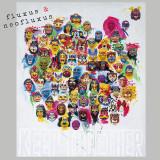
In April 2023, there was released the first part of the Fluxus edition called Stolen Symphony. The year has come and gone and there is the second part of the Fluxus edition called Keep Together. At the centre of both parts of this edition was a broken piano, acquired by the Opening Performance Orchestra for the purpose of making live and studio recordings. During this time other new works for this broken piano were written by diverse Fluxus and non-Fluxus composers. In the spring of 2022, the Opening Performance Orchestra and broken piano participated in an event hosted by Mieko Shiomi. This was a new version of her early work Spatial Poem, documentation of which was presented at the 2022 Aichi Triennale in Tokyo. At present, broken piano lies in the open air in Prague and is subject to gradual decay.
These both parts of this edition contain 73 new and old pieces, live and studio recordings, finished pieces and scores to be performed, solos and pieces for ensemble, using classical and special instruments from 33 Fluxus artists, which have been played by 10 soloists and 4 ensembles. There are new essays and articles from 15 writers on the theme Fluxus, original photos and other documentation in the booklets.
Jamaican roots reggae master, and frequent collaborator with British trip hop group Massive Attack,
teams up with former PiL bassist Jah Wobble for a
brand new set of studio recordings!
•Andy’s voice is one of the most distinguished and
inimitable in reggae and thoroughly shines on such
classics as Stevie Wonder’s “Superstition” The Beatles’
“Come Together,” and America’s “A Horse With No
Name” PLUS new versions of Andy’s own classics
“Skylarking” and “Natty Dread A Weh She Want” and
more!
Wobble’s production blends reggae with modern
dub and world music for one of the richest reggae
albums likely to be relased this year!