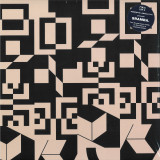
Turnend Tapes first vinyl offering beyond the realms of the club emerges Peculiar Glow Vol.1. An EP of radiant atmospherics from multiple artists prescribing sonic esoterism.
Shell Company introduce the record with ‘Pearl’, an exhibition of their indelible sound, nurtured by the Manchester underground; inducing intoxication through twang of guitar and stunning spoken word whilst grimy, glitched-out soundscapes modulate and vaporise.
Sailingwing follows with ‘Splendid Isolation’. A kaleidoscopic dream sequence sounding like a distant relative to Talk Talk’s Spirit of Eden. One that is voltaic and woozy drifting with spectral timbre.
Bringing side A to a close with their track ‘I Might’ is Infant, another artist flourishing in Manchester’s fertile scene. A soft and hopeful slice of blissed out synth pop showcasing Infant’s mesmerising instrumentation, voice and lyricism.
Das Wettbüro’s ‘Abendtarif’ opens side B with an auditory bath of cool electronics intersecting the styles of different eras and geographies. Ultra kinetic and slick, the group make a visionary contribution to the rich lineage of Krautrock before it.
Zoe Couppe & sigh nova offer up a sublime composition of glistening electronics and granular field recordings that mirror the spoken musings of aquatic motion amongst other abstractions. With mythic air, ‘Memoria Fluida’ guides this collection of music to its conclusion.
Peculiar Glow’s first volume is a touchstone for endeavours to follow under this project and we are delighted to share the result of what has been a lengthy but exceptionally rewarding process.
Buscar:the group modul
Founded in 2012, the Kid Colling Cartel (named in reference to the Colombian origins of the frontman) consists of Kid Colling (vocals and guitar), Alex Logel (organ and keyboard), David Franco (bass), and Florian Pons (drums). Describing their style as "Alternative Rock Blues," the band primarily performs Colling"s compositions and draws inspiration from various genres such as groove, funk, and especially rock-never abandoning its blues roots. The harmony and musical camaraderie of the group on stage are undeniable, with Kid Colling, primarily a guitarist, standing out for his charisma and a recognizable voice that he can modulate at will. It is important to him not to confine the Cartel to a specific style but to address a broad audience that can easily appreciate their music without necessarily being devoted to pure blues. In 2017, the Kid Colling Cartel released its first album, "In the Devil"s Court," and the upcoming album titled "Living on the Wild Side" is scheduled for February 2023.
Band Of Nowhere is a new constellation project by Juanjo Sánchez, together with other collaborators with whom he had previously worked. It is worth mentioning Bob Drake on drums, former member of the legendary formation Thinking Plague (also on Hail, 5UU's, The Science Group) who has also mastered the project from their studio in the Midi-Pyrénées and also to mention the guitarist Jordi Cabayol (Camino al Desván) both Juanjo and Jordi began their career in a significant band of Barcelona of the early eighties, such as Entr'acte.
The becoming of Juanjo Sánchez would take him to other latitudes as a member of Alondra Satori and without losing the lighthouse of his city, he would collaborate with other outstanding musicians such as Quicu Samsó (Koniec, Macromassa).
The fluidity and chromaticism of his previous album Gonza Magilla is still perceived in here, but in a much more electrified way with guitars that are sometimes expansive, other times exuberant wrapped up with contagious synthesizer modulations and very marked rhythms. The production and especially the arrangements are fantastic with those special presences of synthesizers that are not common around here.
Its original improvisation and experimentation is skilfully adjusted by Juanjo Sánchez, giving a much more playful result with unexpected combinations, very much in continuity with a certain European Art Rock such as Aksak Maboul, Etron Fou, Zamla,The Work or the mischievous resonances of The League of Gentlemen; all this mapping the sound transit, to an unpredictable and vibrant non-place.
Housed in it's original hand made artwork with the little upgrade twist of silk-screen printing textured grey cardboard and including a insert colour with photos and text provided by Juanjo Sánchez.
Housed in it's original hand made artwork with the little upgrade twist of silk-screen printing in Plastic clear cover and including a insert colour with photos and text provided by Juanjo Sánchez.
Javier Hernando
a1 Calling All Beginners
a2 Fleeing To the Poles
a3 Ashes
a4 Rouler ma Bosse
a5 Sunday Machinery
b1 lucid Dreams
b2 Twisted Maze
b3 Rolla Bolla
b4 Chinese Forecast
Heels & Souls Recordings roll into reissue number eight with a double dose of early '90s UK street soul magic, splitting the sides between two sought-after cuts from Elaine Vassell and 3rd Zone.
Step back to 1993, house music has hit, UK Soul is in full flow and its rawer, DIY street soul sibling is making its mark across the UK’s underground. Fuelled by accessible, affordable production gear and ignited through enthusiasm and an influx of ideas and sounds, two acts drew inspiration from a melting pot of genres they were exposed to, providing their take on soul as they saw it.
Up first, Elaine Vassell - ‘Never Give Up’. A rough breakbeat-driven, mid-tempo groover from a North West London production triple threat, made up of Longsy D, Pinky and Murray. Utilising Pinky’s home studio with its DX7, Juno 106, LinnDrum and 808, they masterminded a track that sits at the intersection between soulful house, hip hop and R&B. Its crunching drum loop, chest-rattling low-end and serene synth lines, lay the foundation for Elaine’s powerful yet emotive voice to take centre stage. ‘Never Give Up’ should have been a future classic, but never quite found its feet.
On the flip side another 1993 gem, as Sansel Ali and twin brothers Mark and Stephen Anglin joined forces to form 3rd Zone. Conceived in Mark’s makeshift bedroom studio, the trio laid down their first foray into recorded music, ‘You Stole My Heart’. Originally promoed as a limited whitelabel in 1991, it officially landed on the group's one and only EP ‘No Real Reason' in '93.
Armed with a handful of synth modules, a drum machine and a Korg M1, Mark, Stephen and Sansel hit with a tough but tender, underground triumph. Part dance, part romance, layering synth strings, chunky breaks and M1 stabs underneath Sansel’s heartstrung vocals and Stephen’s hip house rap interlude, it provides another perfect example of house seen through the street soul prism.
Two timeless tracks that fly the flag for the fact that big studios and big budgets aren't necessary to create songs that really resonate. Each side also contains an alternate version, with the A housing a beatless reprise of ‘Never Give Up’ and the B a tougher, bassier remix of ‘You Stole My Heart’.
Licensed from Pinky Music and 3rd Zone respectively and remastered from the original DATs by Justin Drake.
- 1: We Said
- 2: Different Rings
- 3: Unbeknownst
- 4: Predestined Confessions
- 5: How Prophetic
- 6: A Caged Dance
- 7: I Have Long Been Fascinated
- 8: Enthralled Not By Her Curious Blend
- 9: No Way Chastened
- 10: But I Never Heard A Sound So Long
- 11: The Promise
- 12: Shake My Bones
- 13: A(Way) Is Not An Option
- 14: For They Do Not Know
- 15: Others Each
- 16: Ain't I...your Mystery Is Our History
Celebrated composer, performer, saxophonist, soloist, band leader, educator, activist, and mixed-media artist Matana Roberts returns with a new installment of their acclaimed Coin Coin series. For over a decade, Coin Coin has been the central artistic project for Roberts, a remarkable exploration of American ancestry and the nature of memory through "sound quilting": modern composition that draws on a wide range of musical sources and traditions, along with research-driven historical and genealogical narratives that yield prose and poetry both spoken and sung, field recordings, and graphic scores. The Quietus declares "when the 12-album cycle is complete, it will be regarded as a singular masterpiece of 21st century sonic and narrative art" and Pitchfork calls it "one of the most provocative ongoing bodies of work by any American musician." Coin Coin Chapter Five: In the garden... is the first new recorded audio chapter since 2019 and centers upon reproductive rights, summoning the story of a family ancestor who died in early adulthood, from a cause kept obfuscated and hushed, shrouded in disinformation and shame. Roberts reimagines diaristic and oral narratives, delivered in strident streams of spoken word that punctuate the hour-long work, with recurring musical themes frequently accompanied by the declarative refrain "my name is your name / our name is their name / we are named / we remember / they forget." As Roberts writes in the accompanying liner notes essay: I find it absolutely disgusting that the same trauma my grand ancestor, whose story we are telling in this chapter, is closely mirroring the experiences of some poor soul today as I write this... Our aforementioned grand, who perished at a young age, leaving her growing children motherless, did not have to die. The negative consequences of her death have reverberated down through generations in my family line, in the same way that a similar resounding might happen for someone else's ancestral line generations from today. While often jazz-adjacent, and with Matana's inimitable saxophone and indomitable voice at the core, Roberts situates Coin Coin outside the Jazz genre and within heterodox pathways of post-modern composition, electroacoustic music, sound collage, experimental voice, and sound art. In the garden... undeniably continues to express and expand upon the project's magnificent iconoclasm, nonetheless being the most jazz-inflected chapter since Coin Coin Chapter Two: Mississippi Moonchile(2013). Recorded in Brooklyn with a stellar acoustic ensemble that includes Stuart Bogie, Gitanjali Jain, Darius Jones, Matt Lavelle, Mike Pride, Ryan Sawyer, Corey Smythe, and Mazz Swift, abetted by some sparkling pieces featuring modular synthesis courtesy of album producer Kyp Malone (Bent Arcana, TV On The Radio), In the garden... traverses a vivid stylistic array of thematic overtures, excursions and set pieces, ranging from spacious textural invocations to gorgeously tempered horn-led compositions to driving free jazz and exhilarating through composed bursts of cacophony. With storytelling spoken-word lead vocals by Roberts channeled recurringly throughout, alongside various other deployments of layered and group voices, the album is alternately a meditation and fever dream of narrative potency. This is some of the most intense and intensive music Roberts has composed and captured to date, richly conceived and deeply felt, restless yet focused, unflinchingly substantive and unique. Coin Coin Chapter Five: In the garden... channels epigenetic trauma and tragedy with teeming complexity and fierce beauty _ a eulogy, testimony, and celebration, melding music and language in a stunning polychromatic flow of vernaculars and poetics. A powerful work of subjective commemoration and historical-cultural communion that speaks indelibly to the present moment.
2x10” in 350 gsm widespine jacket w/interior colour flood + 300 gsm printed inners + 20”x 10” fold-out insert + DL card
Proper full-length outing from Naarm quartet and venerable live show Polito! Though prior associations with Butter Sessions have birthed EP's and compilation appearances, Collapse Phase gathers the most cohesive body of work from the group to date. Self-described as "a meeting of improvised contemporary dance and live improvised techno music, working together to create entrancing performance experiences", the project translates impressively to the long-player format. Holding no pretence with its title, opening cut 'Chuggalug' swirls around the stereo field building upon sustained synth warbles with low-key basslines and breaks propelling the track. As the album progresses from the chug into gridlocked, Mills-ian loops and fast, extra-terrestrial sound design (all swinging 909s + decay), we're also treated to contrasting downtempo acid cuts and dubwise, day-time festival vibes ('Fortune Teller'). 'Nine Lines' layers various patterns in a classy exercise of dancefloor tension building, with an undoubtedly in-the-moment feeling evidencing Polito's live show foundations. Across the board the group showcase their mastering of a kind of addition/subtraction push and pull, but the varying influences in sound design provide an extra layer of depth to the whole thing and cement the Polito brand. On both 'Inside The Sphere' and 'The Sphere Is Collapsing', the dreamier, more reflective edges of 90s IDM are given a nod and these two strike as up there with the best on the album. Head for 'Mercado Waltz' for a super interesting fusion of loopy techno and modular dubstep.
Polito is a collaboration between musicians Robert Downie and Finnian Langham, and dancers Arabella Frahn-Starkie and Hillary Goldsmith.
Der in Texas aufgewachsene Singer-Songwriter und Big Thief-Gitarrist Buck Meek kündigt sein neues Album "Haunted Mountain" für den 25. August an. Seine erste Solo-Veröffentlichung bei 4AD folgt auf das 2021er Album "Two Saviors" und handelt von der Liebe...und etwas anderem. Etwas Größerem, etwas, dass Liebe nicht wirklich herausfordert, eher im direkten Kontrast dazu steht. Eine völlige Erfüllung der Seele. Meek gesteht ein, dass Liebeslieder für ihn die am schwersten zu schreibenden sind. Vielleicht holte sich Meek auch deshalb beim Schreiben Verstärkung in Form der Freundin und langjährigen Heldin Jolie Holland, die bei fünf von elf Songs des Albums Co-Autoren-Credits hat. Die ersten zwei Verse und der Chorus von "Haunted Mountain" stammen von der Texanerin, die diese als Liebeslied für Mount Shasta in Nord-Kalifornien geschrieben hat. Meek fügte den finalen Vers hinzu, in der gemeinsamen Suche nach dem Austausch mit der Natur. "It"s about being humbled by the thing you"re drawing power from only at which point an actual, fair relationship begins", erklärt er. Seit seinem selbstbetitelten Solo-Debüt sind Meeks Band-Kollegen die gleichen: Adam Brisbin (Gitarre), Austin Vaughn (Schlagzeug) und Mat Davidson (Pedel Steel, Bass). Für "Haunted Mountain" stießen noch Ken Woodward (Bass) und Meeks Bruder Dylan (Klavier, Synths) zu diesem eingeschworenen Haufen dazu. Davidson übernahm die Produktion, während Adrian Olsen, der auch die Sound Manipulation mit einem Modular Synthesizer übernahm, das Album innerhalb von zwei Wochen mixte. Der Ansatz war ein hi-fi-Album als Gegensatz zum lo-fi-Ansatz des Vorgängers zu erschaffen, während die Intimität erhalten bleiben sollte. Meek glaubt selbst daran, dass alle großen Liebeslieder noch nicht geschrieben wurden. Zwischen den Zeilen von "Haunted Mountain" hört man, dass Liebe in jeglicher Form die Erschaffung eines Zuhauses ist, von innen - für immer auf der Suche nach dem anderen.
REPRESS
Codek is the brainchild of Jean-Marie Salaun who grew up in Paris influenced by the folklore of the inner city. In 1978 he joined art rock group SpionS alongside Gregory Davidow and recorded two singles. Diving into the Paris post punk scene he met Claude Arto and designed the artwork for Claude's single on Celluloid Kwai Systeme / Betty Boop.' Robin Scott (M Pop Music') had produced the SpionS first single and wanted to collaborate further. With Claude, Jean-Marie wrote Me Me Me', intended for a choir, for M. Then SpionS split and Robin was off to Switzerland to record an album to follow-up his hit single. That left Jean-Marie alone in London, where he began working as Codek, a play on the brand name Kodak The Me Me Me' single was released by MCA Records in 1980. Back in Paris, now with some studio experience, Celluloid Records hired Jean-Marie to produce records for Artefact and Les Orphelins. Over the next 2 years he began working on ideas for the next Codek single Closer / Tam Tam'
Closer' started its life as an electric baseline played by Jean-Marie. Claude Arto sequenced the floating synthesizers. Laurent Grangier and Frédéric Lapierre of reggae band Immigration Act played the horns. The lyrics Hard to say. Easy to do. We don't need to say what we do' were a statement on creation as narration expressed Jean-Marie's ennui, I'm tired with it.' Tam Tam' was inspired by Burundi drummers playing on the plaza in front of Beaubourg where the song was recorded. Jean-Marie enlisted one of the drummers from the circle, Georges Atta Dikalo, to lay down percussion for the song. The female singers were from the French Caribbean and added falsetto tribal chants. JM was part of the the African night scene in Paris, remixing Xalam's Kanu' and Touré Kunda's Salaly Muhamed.' Claude achieved complex rhythmic patterns using a modular synthesizer and heavy processing. Jean-Marie recorded himself beating his chest for the thump noises. The recording of Tam Tam' and Closer' spanned over two years. They started on 16-track in Studio d'Auteuil, where JM blew the woofers, before resuming in Studio Centre Georges Pompidou with an added 8-track recorder. Jean-Marie was producing other bands, and a lot of this was recorded on "borrowed" studio time. The single was released in 1981 on West African Music, a tiny label from the Ivory Coast, and was re-released a year later by Island Records in the UK (where the B-side was re-named Tim Toum'). Both tracks were staples in the DJ sets of Beppe Loda and Daniele Baldelli, finding a spiritual home in the Cosmic scene of Italy.
Both songs have been remastered for vinyl by George Horn at Fantasy Studios in Berkeley. The jacket is an exact replica of the 1981 edition with artwork by Angela Boy, inspired by primitive electronics and African paintings. Each copy includes an doubles-sided insert with photos and liner notes by Jean-Marie Salaun.
Codek is the brainchild of Jean-Marie Salaun who grew up in Paris influenced by the folklore of the inner city. In 1978 he joined art rock group SpionS and collaborated with Robin Scott (M 'Pop Music'). He began working as Codek, a play on the brand name Kodak with the 'Me Me Me' single released in 1980. In 1981 the 'Tam Tam'/'Closer' single was released on West African Music, a tiny label from the Ivory Coast, and re-released a year later by Island Records in the UK (where the B-side was re-named 'Tim Toum'). 'Tam Tam' was inspired by Burundi drummers playing in the plaza in front of Beaubourg where the song was recorded. Jean-Marie enlisted one of the drummers from the circle, Georges Atta Dikalo, to lay down percussion for the song. The female singers were from the French Caribbean and added falsetto tribal chants. Claude Arto achieved complex rhythmic patterns using a modular synthesizer and heavy processing. Jean-Marie recorded himself beating his chest for the thump noises. The recording of spanned over two years. They started on 16-track in Studio d'Auteuil, where Jean-Marie blew the woofers, before resuming in Studio Centre Georges Pompidou with an added 8-track recorder.
In 2017 we reissued the 'Tam Tam'/ 'Closer' single and shortly after the 24-track master tapes were discovered in Paris by original engineer Gérard Chiron. We arranged for graphic designer Maycec to pick up the tapes and immediately began to think of remixers for this project. First up is producer and DJ Daniele Baldelli who gave the original single a spiritual home in the Cosmic 80s scene of Italy. Here he's teamed up with Marco Dionigi for two remixes. Remix A goes full on funky disco baseline while Remix B a more balearic affair. We remember Justin sharing a memory of DJing the original Island Records promo at the Mudd Club in 1981 so we had to ask him for remix. He teamed up with his Whatever/Whatever production partner Bryan Mette and delivered an hypnotic pulsing house remix and an extended edit. All songs have been mastered for vinyl by George Horn at Fantasy Studios in Berkeley. The jacket is new twist designed by Eloise Leigh on the 1981 edition artwork by Angela Boy, inspired by primitive electronics and African paintings.
Carl Finlow keeps on keepin' on. Not only is Finlow one of the most respected names in electro, a producer who boasts a sprawling catalogue that takes in a wide variety of aliases, but he's also spent recent years establishing himself as a mainstay for Sheffield's Central Processing Unit label. Soft Robotics, the new EP from Finlow's Silicon Scally project, is the fifth Silicon Scally release in five years to boast one of CPU's instantly-recognisable black-and-white covers.
The reason that Silicon Scally and CPU keep linking up is simple; they're a perfect fit for one another. Central Processing Unit has established itself as a haven for post-Drexciya producers since launching in 2012, and there are few artists better than Finlow at building on the Detroit group's sound. The union bears fruit once more on Soft Robotics, an EP of lithe machine-funk jams that will both do damage in the dance and also reward more concentrated home listening.
Things begin at a steadier speed than one might expect. Rather than barrelling off with the kind of sinewy roller one associates with the CPU name, Soft Robotics' title-track takes things at mid-pace. The groove reveals itself without hurry, Silicon Scally adding or subtracting elements - twitchy modular loops, pensive pads, the occasional blurt of low-end - atop the chugging bass/drums groove. It's a track which wins you over with guile rather than force.
As the name of subsequent cut 'Jitters' intimates, this one picks things up a little after 'Soft Robotics'. The tempo is higher here, the central beat more nervy. At their cores, though, 'Jitters' and 'Soft Robotics' are kindred spirits. Here, another slyly insistent bit of drum programming comes swirled up with all sorts of extraterrestrial tones, from little nuggets of melody supplied by the keys to electrifying synth stabs and percussive squelches.
Things limber up further still on first B-side 'Spin Ratio'. The track's 808 kicks are punchier than those of the A-side jams, and there's a dizziness to the bass tone which gives 'Spin Ratio' an intriguingly off-kilter feel. Atop the booming beat we find ourselves hypnotised by cells of melody and harmony interlocking or moving apart - particularly the staccato module at the track's heart. Sure enough, 'Spin Ratio' is the Soft Robotics joint which cleaves closest to Drexciya, invoking other Detroit disciples like Jensen Interceptor in the process.
After Soft Robotics picks up speed in the middle, closer 'Super Fluid Tones' brings us back to where we started. This track returns to the more measured delivery of the record's opener - there's a steady pulse to the drums, and once again Silicon Scally packs the mix with so many intriguing whizzes, bangs, blips and blurts that it's impossible not be won over by this tune's construction. 'Soft Robotics' and 'Super Fluid Tones' bookend Soft Robotics very nicely, and Silicon Scally's smart pacing gives the EP a lovely ebb and flow.
The ever-excellent Carl Finlow drops a Silicon Scally release via Central Processing Unit for the fifth year running. Like its predecessors, Soft Robotics is an excellent and deftly-crafted collection of modern machine-funk.
RIYL: Drexciya, Jensen Interceptor, Fleck E.S.C., The Advent
While Duster went into hibernation in the year 2000, Clay Parton's four-track never stopped rolling. Recorded alone at home over several years, Birds In The Ground is an album of 30-something, post-9/11 malaise. Under his Eiafuawn (Everything Is All Fucked Up And What Not) acronym, Parton hides beneath layers of fuzzy and clean guitars, his hesitant, cottony vocal disappear into noise. This deluxe pressing is packaged in a gorgeous tip on sleeve and includes the complete lyrics for this cryptic entry of the Dusterverse.
Bunny White Vinyl! While Duster went into hibernation in the year 2000, Clay Parton's four-track never stopped rolling. Recorded alone at home over several years, Birds In The Ground is an album of 30-something, post-9/11 malaise. Under his Eiafuawn (Everything Is All Fucked Up And What Not) acronym, Parton hides beneath layers of fuzzy and clean guitars, his hesitant, cottony vocal disappear into noise. This deluxe pressing is packaged in a gorgeous tip on sleeve and includes the complete lyrics for this cryptic entry of the Dusterverse.
Ex Wiish is a fleeting dream. The new musical project of Ben Shirken, a sound artist and composer based in New York City.
Shirken is the founder of record label & performance series 29 Speedway which features improvisational electronic music, 4-point guerrilla sound installations, live multimedia performances and has hosted Robert Aiki Aubrey Lowe, Poncili Creación, Debit, Pent, James K and various other New York-based artists. Shirken also produces for and plays modular synths in acclaimed free jazz group ‘Nu Jazz’ with Dan Orlowski of electronic hardcore staple Deli Girls.
Their debut record, “Shards of Axel'', is out on Incienso June 23, 2023. Born from a story-based video game composition; the listener finds themselves as the disoriented main player respawned into a harrowing, metallic landscape, wandering through cable ridden labyrinths, caught in progress traps as digital noises grind past submerged cityscapes.
Tom Zé and Faust collide in Domenico Lancellotti's "machine samba"
Domenico Lancellotti's SRAMBA reaches back to the roots of samba whilst completely revamping its blueprint, indoctrinating guitar and percussion-led rhythms with analogue synthesisers, courtesy of album producer Ricardo Dias Gomes.
The majority of SRAMBA was recorded over two months in The Cave - Domenico's home studio in Lisbon, the city both Brazilian ex-pats reside in, where the arrival of a couple of Russian-designed synths purchased by Ricardo influenced the direction of their initial experimentation: "Ricardo had these instruments, modular machines" remembers Domenico, "and I had my guitar, some percussion instruments. On the first day we started making sounds and recording them, and songs started to appear, sambas started to appear."
The son of a renowned samba songwriter, at home Domenico would watch his father play and compose. At parties, the adults would hand his father a tamborim (a small tambourine) and ask him to play along. "I grew up inside samba, it's my roots", he says. "For me, everything is samba, I bring it into whatever style of music I am making".
Domenico and Ricardo instantly saw how the synthesisers were not at odds with the sambas they were playing, instead they had a similar sound to its typical percussion instruments (ganza, repinique, surdo, tarol). What's more, they saw a connection with roots samba, the samba that existed before bossa nova and samba jazz came along. This was rhythmic samba, with grooves that could go on ad infinitum. "It's samba de clave, geometrically structured" says Domenico. "It's ostinato samba", adds Ricardo.
"Diga" is a great example of what their proposal is capable of, as what begins as a glitchy machine whirring into action soon turns into a glorious samba in which the gurgles and scratchy beats coming from the analogue equipment only add to the arrangement. Likewise, on "Tá Brabo" it's an aching melody from one of the synths that gives the guitar rhythm its needed counterpoint, and shows how the duo's greatest accomplishment is not in invention alone, but in creating a great samba album. It's an album that can go from the opening track "Ere" with its reverberant bass thud, mantra-like vocals and staccato rhythms to the string-accompanied "Nada Sera de Outra Maneira", a swooning samba that pays tribute to the Brazilian ensemble Tamba Trio, who along with Tom Zé's Estudando O Samba, Domenico names as the biggest influence on their treatment of samba.
Other important reference points are made clear on "Um Abraço No Faust". One of three instrumentals on the album its title riffs off a JoãoGilberto song, "Um Abraço no Bonfá", but whereas JoãoGilberto was giving a hug (um abraço) to bossa nova guitarist Luiz Bonfá, Domenico and Ricardo are giving theirs to the German avant-gardists Faust. "Quem Samba", with its horn section and dramatic melody give a whiff of Domenico's Italian ancestry, while "Descomunal" is devoid of rhythm whatsoever, guest vocalist Tori singing over a bed of electronic drums, cello and swirling synths, that highlights the duo's unwillingness to stick to a particular formula.
Both Domenico Lancellotti and Ricardo Dias Gomes are revered names within Brazilian music over the past 20 years. As a member of the +2's, with Moreno Veloso and Kassin, Domenico released a trio of albums on Luaka Bop in the early 00s that pioneered a new Rio samba sound with elements of funk and psychedelia. With Veloso and Kassin he would later form Orquestra Imperial, a big band intent on reviving ballroom (gafieira) samba, and that has worked with guest vocalists such as Seu Jorge, Elza Soares and Ed Motta. SRAMBA is his fourth solo album. Multi-instrumentalist Ricardo Dias Gomes first came to notice as a member of Caetano Veloso's band Cê which helped reinvigorate Caetano's career with a sound influenced by British new wave. As well as collaborations with Lucas Santtana, Negro Leo and Thiago Nassif, and work with his own group Do Amor, he has released a series of acclaimed solo albums that reveal a restless music-maker.
SRAMBA is a glorious showcase of the duo's style, uniting Domenico's playful lyrics and rhythmic, samba-rooted songs with with Ricardo's assured accompaniment of unorthodox textures and instrumentations. It may be a new language for samba, machine samba (samba de máquina), but as Domenico says, "samba da máquina is samba".
Eco Coloured Edition
Elena Tonra ist zwar keine passionierte Schwimmerin, aber der Sound auf dem neuen Daughter Album "Stereo Mind Game" klingt wie ein Ozean, in den man eintauchen möchte. Das dritte Album der britischen Band, gleichzeitig das erste Studioalbum seit sieben Jahren, setzt sich damit auseinander, was es bedeutet, von geliebten Menschen und auch von sich selbst getrennt zu sein - ein komplexes Thema. Daughter, das Trio bestehend aus Elena Tonra, Igor Haefeli und Remi Aguilella - wurde 2010 gegründet. Nach der Veröffentlichung von zwei Studioalben, "If You Leave" (2013) und "Not to Disappear" (2016), und dem Videospiel-Soundtrack Music "From Before the Storm" (2017), beschlossen sie, eine Auszeit voneinander zu nehmen. Kurz zuvor jammten sie allerdings noch gemeinsam in Los Angeles, zwischen einer Support-Tour für The National und ihren ersten Headline-Shows in Südamerika. Hier begann die Arbeit am neuen Album. Danach herrschte erst einmal Stille - als Band und untereinander. In den nächsten Jahren, in denen die Mitglieder an ihren eigenen Projekten arbeiteten, darunter auch Tonras Soloplatte als Ex:Re, trafen sich Daughter gelegentlich zum gemeinsamen Schreiben in Studios in London, Portland und San Diego, wo Haefeli 2019 für sechs Monate lebte. Die zentrale romantische Figur der Platte ist jemand, den Tonra dort kennengelernt hat, als sie aus London zu Besuch kam. Sie teilten eine bedeutende Verbindung, aber sie wusste, dass der Atlantik zwischen ihnen liegt. Daughter begann 2021 konkret mit den Aufnahmen für die zwölf Songs des Albums. Haefeli, der in Bristol lebt, traf sich mit Tonra in den Middle Farm Studios in Devon. Aguilella, der in Portland, Oregon, lebt, nahm seine Schlagzeugparts im Bocce Studio in Vancouver, Washington, auf. Haefeli produzierte eine Reihe der Songs, während Tonra "Junkmail" produzierte. Den Rest haben sie gemeinsam produziert. Die Sehnsucht, physische Entfernungen zu überwinden, ein Gefühl, das sich während der Pandemie noch verstärkt hat, ist in viele dieser Stücke eingeflossen. Auf "Wish I Could Cross the Sea" hören wir Sprachnotizen von Tonras junger Nichte und ihrem Neffen, die in Italien leben. "(Missed Calls)" enthält eine weitere Sprachnotiz, in der ein Freund einen Traum beschreibt. Gefüttert mit einigen modularen Effekten, klingt er geisterhaft eindringlich. Diese Nachrichten, Versuche einer Verbindung von geliebten Menschen, die man nicht sehen kann, "können einen aus dem Brunnen ziehen", sagt Tonra - aber nur, wenn man den Hörer abnimmt. Wenn man andere hereinlässt, kann Schönheit entstehen. Tiefes Gefühl kommt von den Bögen des 12 Ensemble, dem in London ansässigen Streichorchester, das bei vielen Stücken des Albums zu hören ist. Die von Haefeli und Tonra arrangierten und von Josephine Stephenson orchestrierten Stücke wurden, passenderweise, im The Pool aufgenommen, einem Raum in Bermondsey im Süden Londons, der eine ehemalige Badeanstalt war. Ein Blechbläserquartett verleiht auch "Neptune" und "To Rage" eine wohlig klangliche Wärme. Während Daughters frühere Arbeiten ihre Kraft in ihrer entwaffneten und emotionalen Ehrlichkeit fanden, handelt "Stereo Mind Game" von gegensätzlichen Gefühlen. "Es geht darum, nicht in absoluten Kategorien zu arbeiten", sagt Haefeli. Nach mehr als einem Jahrzehnt, in dem sie die dunkelsten Emotionen darstellten, haben Daughter ihr bisher optimistischstes und ein fast schon strahlendes Album aufgenommen.
YoshimiOizumikiYoshiduO"s debut album To The Forest To Live A Truer Life combines the thrill and precision of masterful improvised music practitioners unearthing new sonic possibilities. Yoshimi P-We, now known as YoshimiO, is best known for her work as one of the founders and drummer in the Japanese rock band Boredoms alongside IzumikiYoshi (synthesizer, sampler, and programmed midi instruments on Vision Creation Newsun and Super æ), and multi-instrumental work in the all female group OOIOO. She has worked as a session player and vocalist on Yoshimi Battles the Pink Robots by The Flaming Lips. A balance of YoshimiO"s live improvisations and IzumikiYoshi"s correlated processed sounds give the pieces a sense of grounding and weightlessness in tandem. Being described by Wayne Coyne (The Flaming Lips) as "one of those strange genius musicians", YoshimiO uses the piano as her primary instrument in addition to her singular voice- every move is bent, stretched, and mutated by IzumikiYoshi"s modular synthesizer into cascades of brightly colored waves and dotted constellations of sound. Rather than taming YoshimiO"s spirited performances, IzumikiYoshi adorns every unique flutter with complementary otherworldly textures. Recorded primarily in a cafe nestled in a forest in Japan, To The Forest To Live A Truer Life is a celebration of pure potential, of music born of the moment expanding in every direction. YoshimiO has collaborated with and worked on numerous projects, most notably a raga band called SAICOBAB, an ambient project called Yoshimi and Yuka, the tribal drum OLAibi, and indie supergroup Free Kitten.
The album serves as the recorded introduction of ex-Last Chance To Reason vocalist Michael Lessard to The Contortionist fold, ‘though he’s taken the stage live with his new band mates for well over a year already. Lessard lends his voice to the signature song craft developed by the original core of the band, guitarist Cameron Maynard and the brotherly duo of Robby and Joey Baca, on guitar and drums, respectively. They’re joined by new additions Jordan Eberhardt(bass) and Eric Guenther (keyboards).
“I can say that Mike is the most talented vocalist we've had in the band,” Robby declares unequivocally. “We’ve progressed, which has been a real, organic process. It will be cool
for people to hear the kind of songwriting and music we are creating with The Contortionist enhanced by a vocalist who is totally up to par.”
A different producer was drafted each time The Contortionist has made an album. Language was created together at North Carolina’s The Basement Recording with producer Jamie King(Between The Buried And Me, The Human Abstract, He Is Legend). As taste maker blog MetalSucks noted in a post with the headline, “Drop What You’re Doing and Listen to the New Contortionist Single Right Now!,” Language embraces the spacey adventurous flourishes of Intrinsic, with concise and streamlined certainty.
The album’s first single, “Language I,” was also the first song the group crafted for the album. The product of much time and deliberation,every moment transitions seamlessly to the next. “Primordial Sound” boasts an emphasis on chord progressions with key signature modulations, and yet it has an accessible rock n’ roll vibe and swing. “Thrive” is a wicked blend of the atmospheric heft of Deftones and The Contortionist’s own well established progressive attack.
The next release on Phase Group is a truly singular and original album from Rotterdam-based producer Ayaz.
With ‘Unpinned’ Ayaz presents a window into a uniquely crafted and highly personal sonic environment, where intercepted radio broadcasts tune in and out of focus, modulating drones echo through cavernous space and the sound of experimental synth explorations are layered over heady dub-laden beat work, deep bass lines and expertly programmed traditional sampled artefacts from the music of his native Azerbaijan.
This is an uncanny and evocative sound universe both cinematic and driving, music that would work equally scoring science fiction cinema as in the most avant-garde club environments. Mind-bending and visionary music for those that explore.
- 01: Music For Hen Meditation Movement 1
- 02: Music For Hen Meditation Movement 2
- 03: Music For Hen Meditation Movement 3
- 04: Music For Hen Meditation Movement 4
- 05: Music For Hen Meditation Movement 5
- 06: Music For Hen Meditation Movement 6
- 07: Music For Hen Meditation Movement 7
- 08: Music For Hen Meditation Movement 8
- 09: Music For Hen Meditation Movement 9
- 10: Music For Excited Sauces Movement 1
- 11: Music For Excited Sauces Movement 2
- 12: Music For Excited Sauces Movement 3
- 13: Music For Excited Sauces Movement 4
Though severely cut, Red Circle doesn't exactly sweep along. It has a deliberate pace as Kallabris sets up the score of thirteen chance acquaintances who plan and carry out the sacking of our acoustic consciousness... Understatement is the method of these compositions for a small modular synthesizer. If there ever was something like heist music, this here surely is. (Vincent Canby, with a few minor changes and adaptions).
Kallabris is a musical project that was begun in the mid 1980ies out of the scene around Coitra's Clan. Since ist inception Kallabris has persistently neglected any usage of advanced recording technology. Ever since not technical or compositonal innovation is at the core of the group’s work but, the active engagement with the limitations and the objects of every day life. This sound positivism can result in stylistically varied outputs ranging from chanson or country blues to musique concrète – while all musics live by their surfaces. Save the surface and you save all.
- A1: I Love, Love, Love, Love It 03 22
- A2: Postcard Dimension 03 52
- A3: The Science (Behind Shoes) 04 18
- A4: It's Not Just Country Birds That Are Attracted (To This Blue Glass Bird Bath) 04 02
- A5: Incredibly Comfortable Slippers 04 13
- B6: Not Your Ordinary Blanket 07 44
- B7: Music For A Plank Press 04 38
- B8: Something Is Going To Happen (Bolt, Bonk, Bound, Bowl) 03 02
- B9: Memory Foam 03 57
Faitiche presents Groupshow’s Greatest Hits: The ten tracks on this first vinyl album by Groupshow (Hanno Leichtmann, Andrew Pekler, Jan Jelinek), recorded between 2005 and 2018, document concert recordings and studio improvisations by the trio.
In improvisation there are no mistakes, only missed opportunities. Groupshow found their first opportunity in the routines of live performance and they used this opportunity to break with these routines. The trio consisting of Jan Jelinek, Hanno Leichtmann and Andrew Pekler came together in the context of Kosmischer Pitch, playing live versions of the music from Jelinek’s 2005 studio album of that name. During this project, the musical interaction between the three participants quickly emancipated itself from the original programme, departing from fixed roles and finding a distinct form in constant change.
Groupshow sessions – rehearsal, concert or recording – are always improvised. The interplay of the various sound sources, converging from the directions of “electronics”, “percussion” and “guitar”, does not follow the Krautrock wave logic of crescendo and morendo. Jelinek, Leichtmann and Pekler have established a method of transparent density in which links and breaks are not concealed but remain audible. The music works through attraction and repulsion, with a loosely organized structure that always leaves enough room for the next intervention.
The principle here, repeated even in the smallest units, is that of duration. Groupshow think of their music in terms of an installation: no starting point, no dramaturgy, and ideally no end. Concerts take place not raised up on a podium, but in the middle of the room on a level with the audience, who only enter the space with the musicians and instruments once their interaction is already underway. In 2008, Groupshow used this approach to create a live soundtrack for Andy Warhol’s film Empire, over the full length of eight hours and five minutes.
Recordings in general and the “Greatest Hits” format in particular are another key aspect of this ongoing work on a collectively modulated continuum. The ten tracks on this first vinyl album by Groupshow, recorded between 2005 and 2018, document the ephemeral capturing of opportunities that were not missed. Extracts and essences of an endless movement of searching. The sprawling form of the whole, suspended in succinct, separate units.
To paraphrase Lao Tzu and Roland Barthes, one might say: Once their work is done, they are no longer attached to it. And because they’re not attached to it, it will remain.
Arno Raffeiner, 2022