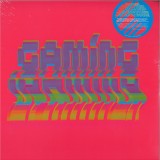
Following January’s acclaimed vinyl debut from Exterior and summer’s much-loved Kota Motomura EP, Edinburgh’s Hobbes Music label ends 2019 with its first album release, also a debut, from GAMING, a fresh new braindance electronica project straight outta Glasgow, from producer and musician Alan Bryden.
GAMING is a new solo outing that brings together a lifelong love of music and technology and creating left field, rhythmic electronica. It’s the sound of IDM, nineties techno and mensch maschine computer music that is as spontaneous as it is programmed.
“Scenes From A Deserted City is a collection of tracks that started as a set of riffs, loops, rhythms and grooves and unfurled around a sense of growing unease about the future of the urban environment around me.
It’s an album that started out as sound…and ended up as a way of telling stories about the age of anxiety we live in, how our world is changing, and how we find a way through that.
This is DIY electronica from Glasgow – it was made on a growing collection of digital and analogue synths and FX units, including a bunch of modular racks, each with its own idiosyncrasies and character that belies the assumption of the binary.
The studio where it was recorded – an abandoned, and often very cold, school building reclaimed by the community some twenty years ago – offered up stories of resilience, even when all seems lost. (I’m not sure what the mice contributed but they definitely climbed in and out of some synths).
This album is ultimately about my changing relationship with Glasgow, a city I’ve lived in for more than 25 years. It’s about how I feel now about the increasing sense of urban decay and how the city can be a very isolating place. It’s about how I reflect on my younger creative self trying to find a direction but mainly feeling a sense of dislocation and not fitting in. And it’s about the questions I have about how that relationship is changing, how it will be forced to move forward.
The result is a soundtrack for walking home on your own, in that headphone bubble when it’s just you focusing on that music that makes sense to you alone. It’s for early in the morning, after the night before, or going to work with the memories of that slipping and sliding inside your head. It’s about how it feels to be both elated and lonely, to be lost in the familiar, despairingly hopeful.”
ALAN BRYDEN (Glasgow, August ‘19)
Поиск:the h men
Все
Seven years after its inception, Eaux is proud to announce the first solo release by an artist other than Rrose. As a member of the Sandwell District collective, David Sumner aka Function was instrumental incultivating the Rrose project. After releasing the first three EPs and album by Rrose between 2012 and 2013, Sandwell District terminated their mission abruptly, prompting Rrose to start a new label (Eaux) for solo projects andcollaborations. This EP brings history full circle.
Following closely on the heels of Function's mammoth 3LP/17 track album "Existenz" for Tresor Records, this EP takes similar themes as a departure point, but moves into more mysterious, yet also heavily dancefloor-focused terrain. "Binaural" encapsulates the timeless essence of the Function sound with menacing bleeps, cavernous stabs, and a sense that it could go on forever without losing its grip on the listener. "Desire and Memory" is a broken beat track drenched in modulated drones that feels like an infinite spiral, moving simultaneously forward and backward in time. Function's early Sandwell District records defined the "hypnotic" techno sound that has influenced countless artists (including Rrose), and this release plants those roots in new, fertile ground.
Recorded at Inanimate Objects, Berlin
Mixed by Tobias Freund at Non-Standard Studios
Mastered by Beau at Ten Eight Seven
The globe-trotting Robert Millis returns to Helen Scarsdale for this beautifully fragile album of dissolved glass rendered as a collage of recontextualized minimalism. To astute listeners, Millis should be a household name due to his work in the unpredictably diverse Climax Golden Twins as well as his impeccable curations for Sublime Frequencies (collections include the Deben Bhattacharya: Men and Music on the Desert Road and Indian Talking Machine books). Hie previous solo work include Relief (released here on The Helen Scarsdale Agency in 2013) and The Lonesome High for the Sun City Girls’ Abduction Records in 2016. His scholarship into the hidden corners of music across the world has also earned him Guggenheim and Fulbright fellowships.
Related Ephemera is an album composed mostly from the hiss, the crackle, the surface noise of 78rpm shellacs and wax cylinders. “Horrifying,” Millis explains “is the concept to record collectors that vinyl degrades and can be easily damaged. however, initially records were considered ephemeral, especially 78rpm records. They were novelties. Fleeting. Entertainment.” Millis intends for the album to be a feedback loop whereby the patina of handling, playing, living with the record will circle back to the original source material. Furthering that metaphor, Millis amplifies and dilates feedback tones generated from his collection of vintage gramophones.
That said, Millis does cite the intrusion of exactly one field recording, a broken toy, and a few notes from a cello. But the construction of these rarified tones, crispy textures, ghostly rattles, and fluid resonance that ripples through all of Related Ephemera has its origins in the tactile nature of the vinyl medium. It’s hardly the stuff of sentimental nostalgia though. Related Ephemera is more an act of time travel, slipping backwards and forwards with the scratch of a needle (Watch out! What pre-recorded needle jump sound is not your turntable going haywire!). The emotional core to the album is that of a resigned melancholy, almost Bergman-esque in its starkness but not without a brief moment of dark humor.
Here is an album that aligns itself aesthetically with Nurse With Wound’s Soliloquy For Lilith, Philip Jeck’s more languid collages, and even some of Harry Bertoia’s sculptural atmospherics.
The vinyl was mastered and cut by Helmut Ehler at D&M Berlin, whose expertise was necessary given that part of the original compositions from Millis’ reworked surface noise were exceedingly problematic to cut. The D&M cut does temper the composition into a mysterious, diaphanous cloud; where the digital-only mastering provides a cascade of insects gnawing within your inner ear. Two facets. One piece of music.
Repressed in 2023, limited!
Hull/Leeds based five-piece bdrmm release their much anticipated debut Bedroom on July 3, via Sonic Cathedral. The 10-track album was recorded late last year at The Nave studio in Leeds by Alex Greaves (Working Mens Club, Bo Ningen) and mastered in Brooklyn by Heba Kadry (Slowdive, Beach House). It's a hugely accomplished debut and a real step up both sonically and lyrically from their early singles, which were rounded up on last year's If Not, When? EP. Musically, there are nods to The Cure's Disintegration, Deerhunter and DIIV, while the band reference RIDE and Radiohead. There are also echoes of krautrock and post-punk, from The Chameleons to Protomartyr, plus the proto shoegaze of the Pale Saints' The Comforts Of Madness, not least in the cross fading of some tracks, meaning the album is an almost seamless listen. As a result, Bedroom becomes an unexpected and unintentional concept album, running through the different stages of a break-up set against the backdrop of the ups and downs of your early twenties. "The subject matter spans mental health, alcohol abuse, unplanned pregnancy, drugs_ basically every cliché topic that you could think of," reveals frontman Ryan Smith. "But that doesn't mean they ever stop being relevant. It's a fucker growing up, but I'm lucky enough to have been able to project my feelings in the form of this band, surrounded by four of the best people I've ever met." And that band name, in case it needs explaining, is pronounced the same way as the album title. "I never thought I'd get to the stage where I would have to explain it so much," says Ryan. "We have been pronounced as Boredom, Bdum and my old boss thought we were a ska band called Bad Riddim. We're all sarcastic cunts, so Bedroom spelt correctly seemed like the perfect title." He's right. The perfect title for the perfect debut album.
- A1: Tanukichi - Bass Fxxkers
- A2: A-Kriv, Sirio - Nate Diaz
- A3: Invaã¯ssor - Oppo Hymn
- B1: Menthalquake, Jn Winzer - Resistance
- B2: Jkll - 1 000.000%
- B3: Pattern J - Playing With Your Mind
- C1: Dj Lem-X - Embrace The Dark
- C2: Andy Wolf - My Fuckin Life
- C3: Rebel Girls - Back Girls
- D1: Roughsketch - Media Lynch
- D2: Hysta - Bloody Hell (Rmx)
- D3: Imperia, Dj Antikillah - Biscuits (Radio Edit)
- E1: Dj Lx, Dj Jaak - The Frustration
- E2: Unit - Harder And Faster
- E3: Hellsystem - Burn This City
- F1: Psiko - Speed Drive
- F2: Negative A - Hard On Dub
- F3: Wakizashi - High As Hell
Der Multi-Instrumentalist und Produzent hat sich mit fein strukturierten und enthusiastischen Kompositionen bereits einen Namen gemacht. Sein 2016 erschienenes Album „Forms“ zog mit seiner spielerischen Verwebung von Rhythmen und Samples die Aufmerk-samkeit der elektronischen Musikszene auf sich. In diesem Jahr veröffentlicht The Micronaut nun Olympia (Summer Games) – ein Album, das seinen sorgfältigen Produktionsstil weiterführt und dem Geist der Olympischen Sommerspiele gewidmet ist. Denn auch wenn diese abgesagt wurden, so sind die damit verbundenen Tugenden wie Durchhaltevermögen und Zusammenhalt zeitlos und gerade in diesen Wochen um so wichtiger. Solch grundlegende Prinzipien, die den Geist der Olympischen Spiele ausmachen, sind es auch, die The Micronaut umgetrieben haben. Und so war es kein Zufall, dass Summer Games entstanden ist: „Ich habe bisher immer Konzept-Alben veröffentlicht. Dieses Mal habe ich Olympia gewählt, weil es nicht nur Wettkampf, sondern auch eine Friedensbewegung ist, bei der es um die Menschen geht, ganz egal welcher Nation sie angehören.“ Diesen vielfältigen und stets vitalen, lebhaften Geist spiegelt das Album wider: Das verspielt-zarte Uneven Bars oder das träumerisch-sphärische Table Tennis, sie alle erzählen von den besonderen Momenten, von Siegen und Niederlagen und all den Facetten, die dem Sport innewohnen. Dadurch ist eine Reise entstanden, eine schwungvolle, aber auch turbulente Achterbahnfahrt, die den künstlerischen Anspruch The Micronauts abbildet: „Lebhaft, expressiv, dramatisch, manchmal ruhig, manchmal kraftvoll – ich versuche immer die Vibes von Wanderlust, Hoffnung und individuellen Momenten in meiner Musik einzufangen“ – erzählt der in Leipzig lebende Künstler. Und dieses Mal liegt das Spannungsfeld zwischen sportlichen Disziplinen – in dem sich The Micronaut musikalisch ausdrückt. Wobei seine Musik keinesfalls zum Sich-Messen anregt, vielmehr sind viele Tracks mit ihrem übermütigen, optimistischen Vibe für die Tanzflächen der Clubs geeignet, um sich die Anspannung der zuweilen olympischen Herausforderungen des Alltags von der Seele zu tanzen. Dazu hat The Micronaut anspruchsvolle Arrangements mit fließenden Melodien und unaufgeregtem Gesang kombiniert und den Weg für ein neues, collagenartiges musikalisches Genre geebnet. Bisweilen dreht Summer Games sogar in Richtung Elektro-Pop ab, dann wieder ist es inspiriert von old-schooligem Hip Hop and in anderen Momenten mündet und explodiert es förmlich in intelligent gesetzten musikalischen Hochsprüngen. Die Messlatte liegt hoch – doch bei allem Auf und Ab scheint immer durch, dass The Micronaut ein begeisterter Musikliebhaber ist, der Ideen und Inspirationen von überall her sammelt und sie unter Einsatz seines ganz eigenen emotionalen Prismas übersetzt.
Following up Batozsek’s four slices on Vol 2, Ecdisis Vol 3 is fresh and ready to wreak some havoc.
Some familiar names from the first volume of these series return for the third instalment as well as an otherworldly figure in the electronic music world.
Up first is Vinilette, returning after her excellent appearance on Ecdisis Vol 1. A brood of beats take hold for Vinilette’s rework of Flux of Pink Indians’ “Nothing Is Not Done.” Tribal, this rhythmic romp is inspired by the 1986 piece on Uncarved Block. Layers of kick drums, bongos and toms echo and
judder as a cold line circles and closes ever tighter. Following we have the head honcho, Juanpablo with his extended edit of Mac Blackout’s “Do The Dance In Your Head” which original version came out in Valencia’s imprint B.F.E. in 2011. The original song with its guttering guitar strings and nicotine
stained vocals, proves ample ground for the Frigio boss to work with. The intro is given room, adopting a doom disco march, before the fearsome crash of strings. The lyrics, a lurid tale brimming with menace, are sweetened with twirling notes in this grisly stomper. The final attack sequence comes care of Mick Wills with his amazing cut of an unreleased track by Argentina’s great producer NGLY. Dark and looming this distortion streaked encounter will leave bodies and speaker cones raw. Three edits with one central vision. This is music that cuts to the bone, these are tracks that continue
that intent first established by Ecdisis Vol 1. A collection with a serious impact, no doubt.
Ambient and environmental Japanese scene has flourished stronger than ever in the last years. The pioneers of this sound and the creators of an innovative way of making and understanding ambient music, such as Hiroshi Yoshimura, Yoshio Ojima, Toshifumi Hinata or Takashi Kokubo have been championed and their works have been successfully unearthed by reissue labels.
Continuing in this endless path, Glossy Mistakes adds Takashi Kokubo’s brilliant “Volk Von Bauhaus” to its catalogue, with the Japanese masterpiece as the third official release of the Spanish label.
As most of 80’s Japanese ambient and environmental music, “Volk Von Bauhaus” is an audio impression designed to give a multi-sensory experience to the listener. An effort to make things audible, an exercise of understanding and soundtracking objects or situations. The main objective of this sound is to create an iconic musical landscape to accompany a specific place.
Though his name might be unfamiliar to many, Kokubo has crafted music that has impacted virtually all of Japan, from national mobile phone earthquake alerts to contactless card payment jingles. He was one of the first artists to create ambient music strictly through loops. As he mentioned when release this album, "this recording used no keyboard players, no multitrack tape recording techniques, no analog sounds”. A shift on the process of imagining sound.
“Volk Von Haus” is and ode to this ambient, new age and environmental music created in Japan throughout the 80’s. Throughout 9 cuts, Kokubo handcrafts his own sound and immerses the listener in a peaceful yet challenging adventure. The record is the first piece of his Digital Soundology series, and arguably his most interesting work due to the groundbreaking techniques he used.
"A revolutionary musical expression that shatters the old values”, explains Kokubo about this piece. And its just what we can hear when we play “Volk Von Haus”.
The album includes an unheard exclusive track by Takashi Kokubo an insert with an interview made by Takashi Kokubo. A true gem that must land in every ambient head’s musical library.
Remastered from master tapes by Frederic Stader.
Opening with a drumstep acidcore track, drustrated 4/4 of a tribe kind... exploring new horizons, new evolutions...
The A2 from Degrader is a 4/4 reward, quiet classic in it style, reminding the new generation of Solid dark Hardtek...
Negative Glitch opens the flip with a breakcore frontier track, acid as well, hidding a tyrue broken (hard)tek experience.
Last tune from Mr Gasmask is a minimal precise electro tune, threatening to turn Core but gently carressing the trance...
A creative opus ! Witch is rare in the mental tribe world i recogn ! BIG UP é SUPPORT !
Black Sheep – and their 1991 ‘A Wolf in Sheep’s Clothing’ album - were definitely an outlier in the Native Tongues fold. They were raunchier and more playful than their peers which, given that those peers were A Tribe Called Quest, De La Soul and Jungle Brothers, is really saying something.
‘Strobelite Honey’ catches that difference perfectly, leaning heavily on a pair of 1980 disco samples rather than the jazz of their brethren, and taking a somewhat less chivalrous approach to women. ‘Strobelite’s slender but fun narrative sees rapper Dres up in the club and fooled by the lights – approaching a girl he likes the look off but backing off when they reveal she’s not what he expected. Charmed, we’re sure.
Dres and his partner Mr. Lawnge were always willing to push boundaries, and that extends to the often confusing labelling of the various remixes of this choice single. 12”s dropped with the ‘No We Didn’t Mix’, ‘Yes We Did Mix’ and ‘Maybe We Did Mix’ (not to mention a separate 12” of House mixes).
The last and best of these accompanied the original version on the now-rare 1991 7”, as it does here. The ‘Maybe We Did Mix’ adds urgent horns - almost like the buzzing of a bee - and a new beat to completely reconfigure the sound into something much more of its era. It’s a reminder of when remixes were about much more than the same beat with different rappers.
Die erste Neuauflage vom offiziellen "Die Ärzte" Debut seit vielen Jahren in guter Austattung ( LP, black, 180 gram + DLC )
Gitarre, Schlagzeug, Bass. Drei junge Menschen, die eben noch im Besetzereck ihr erstes Konzert gegeben haben. die Ärzte sind aus Berlin (aus Berlin!). Viele, die BelaFarinRod in letzter Zeit im kleinen Club ihres Vertrauens live gesehen haben, schwören darauf, dass wir hier das Nächste Große Ding haben. Quasi die Beste Band der Welt in the making: Spontan, unberechenbar, witzig, aus Versehen tiefsinnig an den richtigen Stellen und auch sonst ganz einfach wahnsinnig. Nur halt in gut. Acht Tage waren sie im Studio, die dreizehn Tracks ihres Debütalbums klingen standesgemäß rau, laut und so unkonventionell frisch als hätten wir gerade 1984. Mit potenziellen Klassikern wie „Mädchen“ oder „Zu spät“, zukünftigen Lieblingsliedern à la „Schlaflied“ und „Roter Minirock“ sowie einem ganzen Haufen weiterer Songperlen, die man sich auch in dreißig oder vierzig Jahren noch ganz unpeinlich berührt wird anhören können. Und mit „Claudia hat ’nen Schäferhund“. „Debil“ erscheint nun als Vinylalbum (mit Downloadcode)!
A focal point for the unique punk-funk that was coming together in Bristol as the bridge from the 70s to the 80s arrived, Maximum Joy was formed by Glaxo Babies multi-instrumentalist Tony Wrafter and 18 year old vocalist Janine Rainforth. Soon they drafted in additional Glaxo Babies in the form of drummer Charlie Llewellin and bassist Dan Catsis, along with guitarist John Waddington, fresh from The Pop Group. The group set about making a one-of-a-kind mix of funk, punk, pop, jazz, dub, soul, afrobeat and reggae; creating a brilliant burst of danceable tunes wrapped around elastic basslines and complex percussion, punctuated by melodic horns and stabs of guitar, all of it highlighting Rainforth’s naturally enthusiastic vocal style. They immediately took their place on the rosters of influential labels like Y and 99 with iconic debut single Stretch, as the band had clearly captured something special.
Entering 1982, Kevin Evans had replaced Catsis as Maximum Joy set out to make what would be their only full length LP. Recording at Berry Street and The Lodge with producers Adrian Sherwood (On-U-Sound legend), Dave Hunt (Flying Lizards, Pigbag, This Heat) and Pete Wooliscroft (Kate Bush, Talk Talk, Peter Gabriel, OMD, This Heat) the band would mix practiced grooves with imaginative improvisation. The results were absolutely jaw-dropping.
Station M.X.J.Y. kicks things off with Dancing On My Boomerangand promptly sets forth the blueprint for bands like !!! and The Rapture to capitalize on nearly twenty years later. In fact, those bands can only dream of the mix of driving percussion and spectral shards of guitar that Maximum Joy has clearly already mastered. Do It Todayannounces itself immediately with Rainforth delivering a looping and infectious vocal melody that the others dance around playfully, as handclaps keep the stomping groove intact, leaving a dancehall hit for outer space circling your turntable.
If you ever wondered what it would sound like if ESG and The Slits combined forces, Let It Take You There has the answer for you. Llewellin periodically delivers a cascade of marching band percussion while Waddington’s classic R&B riffs are transformed into a slithering snake trying to keep pace with Evans locked in groove as Rainforth’s singsong vocals are reduced to whispered echoes. They close out side one with the delicious slab of pop that is Searching For A Feeling. Clearly pronouncing the band’s intention to find the positives in a dire time for England, they look to rally those around them to focus on making real change in the face of opposing voices via one of Rainforth’s most delightful deliveries.
Side two sees Wrafter stretching out on Where’s Deke?, showcasing what had already been obvious, as he is the band’s secret weapon, often coloring each tune with his horns, sometimes in several styles just seconds apart. He underlines that feeling with the raucous and bouncy Temple Bomb Twist, before they hit a straight groove in Mouse An’ Me, like a dub infected Train In Vain. Well, if The Clash had ever allowed themselves to properly lose their minds on the dancefloor.
A funky afrobeat flute and guitar battle breaks out (way cooler than it sounds) before Rainforth rallies the troops to not only fill up the disco, but also the surrounding streets in political resistance to Thatcherism via All Wrapped Up. It is entirely genuine and their activism has none of the menace of the others in their scene, but rather a feeling of sharp optimism amongst this danceable masterpiece. It is that optimism that always set Maximum Joy apart, and makes their grooves all the more irresistible today.
Sadly, the upward trajectory of the band was cut short as Rainforth left the group, and soon afterwards seemed to stop making music altogether. The reasoning seemed destined to remain a mystery, until earlier this year when she gave a brave interview to The Guardian where she revealed that an assault by someone in the industry caused her to retreat entirely from music for nearly three decades. Luckily, Janine has embraced music once again, and she refuses to let the magic that was Station M.X.J.Y. be lost as well.
For the second instalment of Subaltern’s 2020 program, we welcome one of the scene’s best-kept secrets – Imajika. The three hard-hitting tracks take listeners on a sonic journey through tribal rhythms, punchy drums and immaculate sound design. Calling upon ancient forces, Imajika makes a powerful statement with the Stagger EP.
Stagger
Ethereal glass chimes sing in the distance underneath an airy pulse to create an eerie intro until the groove enters to break the tension. We are offered a moment to breathe before being submerged by staggering drums driven by powerfully persistent bass-waves. Playful dubby FXs, gritty wobbles and naughty drum fills keep the head nodding throughout this stomper. After offering one last breath, the second drop hits with a relentless grunt that leaves us gobsmacked and then proceeds to devastate any sub to cross its path.
Unti Pundi
Mystical textures set a ghostly tone, overlaid by the meditative ‘Unti Pundi’. We are whisked through the caverns of time - space is created through reverbs and echoes of snares and droplets. A sinister pitch-oscillating synth takes your hand and as Imajika takes you deeper down the rabbit hole. Evolving basslines and masterfully placed drum fills add new depth to this monstrous beat before a shattering second drop wreaks havoc - Imajika shows no mercy.
Inside the Sycamore Root
Foreboding voices whisper in a secret language, seemingly summoning ancient spirits in a circular tree-based ritual. A cataclysmic drop fused with a tribal rhythm and propels us deep Inside the Sycamore Root. The spirits have been awoken. A gnarly bass pulsates as calls of the wild and menacing laser-synth stabs respond to the ancestral voices. The summoning continues and takes us even deeper into the wilderness as rumbling bass and tribal percussion take over - the descent into the great unknown continues.
May 1990 The Brand New Heavies released ‘that blue album’ and with it came a winning formula which would go on to earn them 16 top 40 hits and three million worldwide album sales not to mention two UK Platinum albums. Emerging at the heart of the Acid Jazz scene, their self-titled 1990 debut made an instant impact with audiences on both sides of the Atlantic and over the last three decades the band have not let up releasing enduring classics such as You Are The Universe, Midnight At The Oasis & Dream Come True to name but a few. To celebrate these thirty years we’re releasing a limited edition 7-inch vinyl, the first 7-inch release since Stay This Way came out in 1992. The 7-inch will contain the vocal performances of both Beverley Knight and N’Dea Davenport on Beautiful and Getaway respectively.
‘Reality Tunnels’ is a concept that was originally introduced by Robert Anton Wilson in his 1983 book ‘Prometheus Rising’. In essence, the concept of a reality tunnel relates to an idea on how we create our own perspective – the subjective filter that we each apply to the world around us; the things we perceive and what our consciousness deems worthy of attention, IE what we see and hear is entirely relative to what we do not.
At points angular and uncompromising with levels in the red, frequencies pushed out and EQ curves stretched into strange new shapes, Pinch mixes both low and hi fi on this boldly distinct sonic statement. It sees him flexing years of production skills – but unconventionally so – knowing well that safe predictability and rounded polish don’t get the most interesting results.
Dark trip hop Bristolia segues into blistering jungle on album opener ‘Entangled Particles’, before planet-hopping onto the spiky insidious grimestep of ‘All Man Got’, featuring the rugged rasp of OG warhorse Trim.
Beginning a triptych of future techno, ‘Accelerated Culture’ offers the album’s most relatively straightforward moment, albeit one of scorching, anthemic dancefloor heat. Delving deeper into the vortex is the synapse sparking wobbler ‘Returnity’, before ‘Finding Space’ reaches to the cosmos’ far-flung, glowing outlands.
Back to an urban reality is ‘Party’, where a subtly menacing sense of dread is ignited by Killa P’s incremental flow, which ramps-up and pairs-back the intensity in unexpected ways. Still moving freely between different realities, ‘Back To Beyond’ is beautiful gloaming ambience, executed with equal fine-tuned grace as the genre’s masters.
Jamaican vocalist Inezi lends sweet tones to the slow burning, roots-meets-modern-bass spiritual ‘Change Is A Must’, and on ‘Non-Terrestrial Forms’ an atmospheric, misty steppers intro segues stealthily into fiercely dystopian, amen-fuelled jungle tekno; marking one of several surprise attacks on the album, where a subtle-slight-of hand shoots the intensity level dynamically up.Closing as it begins, the album is bookended by a piece that recalls the dark, intricate soundscapes of Massive Attack’s ‘Mezzanine’ and Tricky’s ‘Maxinquaye’ – found here in ‘The Last One’s scorched, smoky rocker.
Hit the vinyl double pack for an exclusive and quite unique sounding 120bpm glitchy techno roller featuring man like Trim once again and live cello recordings.
‘Reality Tunnels’ is a concept that was originally introduced by Robert Anton Wilson in his 1983 book ‘Prometheus Rising’. In essence, the concept of a reality tunnel relates to an idea on how we create our own perspective – the subjective filter that we each apply to the world around us; the things we perceive and what our consciousness deems worthy of attention, IE what we see and hear is entirely relative to what we do not.
At points angular and uncompromising with levels in the red, frequencies pushed out and EQ curves stretched into strange new shapes, Pinch mixes both low and hi fi on this boldly distinct sonic statement. It sees him flexing years of production skills – but unconventionally so – knowing well that safe predictability and rounded polish don’t get the most interesting results.
Dark trip hop Bristolia segues into blistering jungle on album opener ‘Entangled Particles’, before planet-hopping onto the spiky insidious grimestep of ‘All Man Got’, featuring the rugged rasp of OG warhorse Trim.
Beginning a triptych of future techno, ‘Accelerated Culture’ offers the album’s most relatively straightforward moment, albeit one of scorching, anthemic dancefloor heat. Delving deeper into the vortex is the synapse sparking wobbler ‘Returnity’, before ‘Finding Space’ reaches to the cosmos’ far-flung, glowing outlands.
Back to an urban reality is ‘Party’, where a subtly menacing sense of dread is ignited by Killa P’s incremental flow, which ramps-up and pairs-back the intensity in unexpected ways. Still moving freely between different realities, ‘Back To Beyond’ is beautiful gloaming ambience, executed with equal fine-tuned grace as the genre’s masters.
Jamaican vocalist Inezi lends sweet tones to the slow burning, roots-meets-modern-bass spiritual ‘Change Is A Must’, and on ‘Non-Terrestrial Forms’ an atmospheric, misty steppers intro segues stealthily into fiercely dystopian, amen-fuelled jungle tekno; marking one of several surprise attacks on the album, where a subtle-slight-of hand shoots the intensity level dynamically up.Closing as it begins, the album is bookended by a piece that recalls the dark, intricate soundscapes of Massive Attack’s ‘Mezzanine’ and Tricky’s ‘Maxinquaye’ – found here in ‘The Last One’s scorched, smoky rocker.
Hit the vinyl double pack for an exclusive and quite unique sounding 120bpm glitchy techno roller featuring man like Trim once again and live cello recordings.
- A1: Arrival
- A2: Only Thing We Know Feat Younotus & Kelvin Jones
- A3: Facing Feat Ilira
- A4: Comfort Zone Feat Quarterhead
- A5: Different For Us Feat Jordan Powers
- B1: Sticker On My Suitcase
- B2: Littly Hollywood Feat Janieck
- B3: Without You Feat H. Kenneth
- B4: The Sad Cat
- B5: Never Too Late Feat Sam Gray
- B6: What Was I Drinking
- C1: Double In Love Feat Martin Gallup
- C2: H O.l.y. Feat. Rhodes
- C3: Walk Away Feat James Blunt
- C4: Remember Feat Lahos
- D1: Sramanora
- D2: We Were On Fire Feat Will Matta
Gigs vor 60.000 Menschen, 2,5 Millionen verkaufte Singles, vier Mal für die 1LIVE Krone nominiert, drei Mal für den Echo, 2017 den Echo in der Kategorie Dance National gewonnen, dreimal am Stück die Pole-Position der Airplaycharts: Die Karriere des international erfolgreichen DJs Alle Farben hat ihren Zenit noch längst nicht erreicht. Doch wie legt man einen solchen Senkrechtstart hin und schafft es, dass die Flamme immer weiter brennt?
Alle Farben ist ein Künstler, der vielleicht in Farben denkt. Ganz sicher aber nicht in Grenzen. Verschiedene Genres, Live-Musiker, Sänger, Orte: es gibt nichts, dass er sich nicht vorstellen kann. Er hat Shows im Dschungel von Thailand gespielt oder im Flugzeug über den Wolken. Ebenso legendär sind seine 6 Stunden Sessions. Der Name ist ein Versprechen: 8000 Menschen tanzen, während Alle Farben sechs Stunden ohne Unterbrechung auflegt. Unterstützung bekommt er von verschiedenen Künstlern, die er sich stündlich auf die Bühne holt: ob Sänger, klassisch ausgebildete Musiker oder unerwartete Instrumente Alle Farben liebt es, sein Publikum zu überraschen. Alles kann, nichts muss, aber eines wird es sicher nie: langweilig.
Überraschen wird Alle Farben auch mit seinem dritten Studioalbum. Sticker On My Suitcase zeigt einen großen, und inzwischen auch wichtigen Aspekt in seinem Leben: das Reisen. In den letzten Jahren immer on tour hat er gelernt, dass nicht immer das Ziel das Ziel ist. Und Reisen mehr als nur Fortbewegung. Unterwegs zu sein, ist genauso mein Leben, wie irgendwo anzukommen. Das Video seiner neuesten Single Fading drehten Alle Farben und sein Team in einer aufwendigen Produktion in Los Angeles. Wieder ein Sticker mehr auf dem Koffer, wieder eine Reise, die zeigt: Das Ziel ist die Reise selbst auf der Route Richtung Erfolg.
Porridge Radio grew out of Dana Margolin's bedroom, where she started making music in private. Living in the seaside town of Brighton, she recorded songs and slowly started playing them at open mic nights to rooms of old men who stared at her quietly as she screamed in their faces. Though she eventually grew out of them, for Margolin these open mic nights unlocked a love of performing and songwriting, as well as a new way to express herself. She decided to form a band through which to channel it all, and be noisier while she was at it - so Porridge Radio was born. Inspired by interpersonal relationships, her environment - in particular the sea - and her growing friendships with her new bandmates (bassist Maddie Ryall, keyboardist Georgie Stott, and drummer Sam Yardley) Margolin's distinctive, indie-pop-butmake-it-existentialist style soon started to crystallise. Quickly, the band self-released a load of demos and a garden-shed-recorded collection on Memorials of Distinction, while tireless touring cemented their firm reputation as one of UK DIY's most beloved and compelling live bands. The band's sound - bright pop-rock instrumentation blended with Margolin's tender, open-ended lyrics - has developed and refined. Now, they are taking that development a step further, as they put out their label debut, Every Bad.
Parisian "Geo Balasta" pulls an extra-lucid extra techno from the earth's surface that has allowed him to open for Salut C'est Cool. His unexpected productions, bordering on derision, constitute the DNA of an acidic shiver which finds its sources in Green Velvet, the Horrorist or Gigi d'Agostino and which will soon be released on the 'Johnkôôl Records' label.


