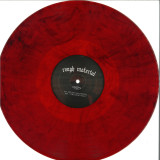
LTD PICTURE DISC
This 2016 vinyl edition comes in Picture Disc LP with Gatefold Jacket, limited to 400 copies. Reissue on picture disc of the second studio album from the classic American thrashers Forbidden. The band released five albums and, though never sufficiently recognised worldwide as their peers, gained status among die-hard fans through the years. If you never get the chance of approaching Forbidden, tracks like "Infinite" or "Step By Step" will make it for you from the first listen.
Поиск:the hard way
Все
CoOp Presents is incredibly proud to present an all-new compilation album put together by Allysha Joy. This 14-track LP gives us a solid glimpse into the current wave of Antipodean bruk / broken beat artists.
Allysha explains "the connection began with a guest mix for CoOp Presents Worldwide FM radio show. I was asked to guest on the show, so pulled together some heavy unreleased and unmastered "Australian" broken sounds. I immediately called Horatio, Close Counters and Setwun, some of my nearest and dearest inspirations and collaborators to get them in the mix! Within 24 hours I had a brand new beat from Setwun called 'H.B.Y', I ran up some vocals on a Close Counters track and landed a wild jazz-bruk collaboration called 'Fly' from Horatio Luna and Nikodimos! We all felt really blessed to be linking in with some of the innovators of the sound we love!
Also in the mix, I played a track by Lanu a.k.a Lance Ferguson, one of "Australia's" funkiest songwriters and producers. Mike Gurrieri and Chris Gill over at Northside Records had already been scheming to set Lance and I up on a music date for weeks, which turned into writing 'Rewind' . Lanu, along with Ennio Styles, have been integral in the broken beat sound down here from the early 2000s and they connected Jonny Faith in to bring 'Southern Stepper'.
After linking in over the music and working on some collaborations, Alex Phountzi and IG Culture asked me to put together this compilation. The first person that came to mind was Sampology. A wild ride of shifting harmony and incredible vocals, Sam delivered 'Sunny', featuring Maia. Also of Middle Name Dance Band acclaim and a beaming light of creative energy, Kuzko created 'Immunity' for the comp — their debut solo release!
Also up in Meanjin, Special Feelings and Squidgenini were making their own style of jazzy house music and we absolutely knew that they would kill it on the broken beat tip. They sent through 'On Heat' and 'Prophecy' respectively, and inspired me to write and produce 'Listen'. A track about the struggle to be heard as female and non-binary artists. A hard-hitter mixed by co-collaborator Yelderbert of our new duo project, Totek.
As my brother and the one that first introduced me to Agent K, I knew we had to get Ziggy Zeitgeist up in the mix! He immediately sent over a bunch of tunes, and from alongside all of the 30/70 Collective demo drum loops and fresh Z.F.E.X sounds, we selected 'Bruk Samba' featuring Cody Curry, the CC Dance Orchestra.
I had managed to pull together a bunch of tunes for the compilation and after a studio session one afternoon I was walking down Sydney Road and bumped into Silent Jay, Alien and A.KID a.k.a. ACID SLOP at their new spot, the Mandarin Dreams HQ. We were just chatting and above Jay's head I spotted the New Sector Movements record, 'Download This'! To see that they'd just been spinning this record felt so serendipitous, so I had to ask them to be on it! Acid Slop sent me through a tune literally the next day, called 'Everything Falls Apart' and within the week we got 'Walk Away', from Lori and Silent Jay. It felt complete.
The way that this music just effortlessly and lyrically fell together, is a testament to the broken beat undercurrent that runs within the jazz and dance music scene down-under. 'They're Energised' connects a scene of deeply talented and inspired musicians, collectively shaping the new wave of uniquely "Australian" bruk and broken beat music!"
'They're Energised' is released mid-November 2022 on double vinyl and digital worldwide via CoOp Presents.
A potentially surprising release on Editions Mego. Another planned prior to the untimely passing of Peter Rehberg in 2021.
Melvin Gibbs is the renowned bass player and producer from Brooklyn who’s vast resume includes playing with Sonny Sharrock, John Zorn, The Rollins Band, Dead Prez, Caetano Veloso and Femi Kuti amongst others. A solid resume, no doubt, but what is Gibbs doing on Editions Mego?
Behind the scenes, those who know Gibbs knew that amongst all this he was also tinkering away at another form of music, one which skirts around the border between music and sound design. The Wave is the first release that reveals this side of Gibbs’ creative output to those outside his inner circle.
The driving force for this output is Gibbs’ multi-decade friendship with acclaimed American video artist and cinematographer Arthur Jafa. Over the course of time Gibbs and Jafa have had many conversations about music and the connection between film and music. Jafa’s desire to make film that worked the way Black (as in Black/African-American/ Afro-diasporic peoples) music worked inspired Gibbs to study the filmmakers Serge Eisenstein and Dziga Vertov and incorporate their philosophies and tactics when recording his own music. The two discussed sound design which directly informed Gibbs’ choice of music making tools and led to him acquiring Symbolic Systems Kyma software and hardware, incorporating this as a composition tool and sound design and component in his work. These conversations bore concrete fruit through Gibbs’ work for TNEG, the film studio Jafa ran with filmmakers Malik Sayeed and Elissa Blount Moorhead. Gibbs created the soundtrack for their very first project, the short film “Deshotten 1.0” (2009 - directed by Jafa and Sayeed) as well as their Martin Luther King-inspired meditation on Black life “Dreams Are Colder Than Death” (2013, directed by Jafa)
The bass-forward music, or ‘sonics’ as Gibbs calls it, emerged from an alternative mode of contemplation, a mode that he sees as closer to the mindset of a rootworker, an African-American herbal doctor who cures psychic ailments using means derived from African spiritual practice, entering a forest to find the right plants for a suffering client than a mediator attempting to invoke mindfulness. Gibbs says this practice yields results that suggest an aural form of creation akin to coagulation, a formal movement that gives the sense that a flow of sounds can emit something bearing resemblance to solidifying objects.
In 2020 Jafa asked Gibbs to work on the soundtrack for a work in progress called “The Wave''. When they got together to work on the soundtrack, Jafa played Gibbs a selection of sounds that included random moments of (probably unwanted) feedback on 70's Miles Davis records, Pop Smoke's Brooklyn drill, the music of Bernard Gunter and Darmstadt-style compositions made with test equipment. Those sounds, filtered through years of conversation with Jafa about Black creativity and the possible evolution of Black music, formed the sonic vocabulary of “The Wave”.
Hailing from Queens, NY, the original members of Onyx were discovered by the legendary Jam Master Jay of Run-D.M.C Onyx released their ninth studio album, Onyx Versus Everybody. Almost 30 years since their debut, Onyx still have raw energy, undeniable boldness and their pulse on the culture. The 10-track LP is a cohesive body of work that is full of street tales featuring appearances by Big Twin, Ricky Bats, Harrd Luck and Termanology. If you're a diehard fan of Onyx, this is one of the group's best projects in their legendary career. According to Sticky Fingaz, the album was completed in just two weeks thanks, in part, to the group's new songwriting process. "We didn't really write anything," he recalls. "We wrote a little bit but you know, we got a new technique where we just vibe and get on it. We recorded everything in the Batcave. That's Fredro's studio." Fredro says their classic "Last Dayz" from their sophomore album, was the inspiration behind the production on their new album. "'Last Dayz' is a Hip Hop classic beat you know? It was in 8 Mile and that made it even more legendary so I wanted to get the vibe on the album," he says. "I know what I know when it comes to making beats and my style never changed. That's why it sounds like 1996 because I didn't change the way I make my beats. When it comes to producing, Fredro claims to have the hardest tracks in the game and he brought that same energy to the new album. "I don't get nothing from a beat machine," he added. "I don't even use a hi-hat. I got my own drums. I play my own drums. My shit is dirty. I need it to be dirty. My shit is filthy. I got the nastiest, grimest, beats in Hip Hop." With their signature hardcore lyricism and gritty production, Onyx Vs Everybody makes a strong case for being named among the best albums of 2022 so far, but that isn't the recognition they seek. "Onyx Vs Everybody is the hottest, grimmest, dirtiest album of the year," Sticky Fingaz boasts. "I don't want the best album of the year. They can have that. This is the grimmest album of the year." Coming off a Versuz beating Cypress Hill at the forum in LA and now on a international tour, for fans of Cypress Hill, Public Enemy, Run DMC
LP including booklet with extended liner notes. Channeling wild seventies Impulse vibes, even resonating the guts of early Art Ensemble of Chicago and the tempering spirit of Max Roach's 'We Insist' era: BRAHJA is soul searching their spirit on 'Watermelancholia'.
Devin Brahja Waldman is a New York saxophonist, drummer, synthesizer player and composer who leads the group BRAHJA. Waldman has accompanied his aunt, poet Anne Waldman, since the age of ten. Waldman is a co-founding member of Radical Reversal, Diva of Deva Loka, and Notable Deaths. He has performed with Patti Smith, William Parker, Nadah El Shazly, Malcolm Mooney, Thurston Moore, Godspeed! You Black Emperor, Charles Hayward, Luke Stewart and Yoshiko Chuma. Waldman is also a member of NYC's Heroes Are Gang Leaders (led by poet Thomas Sayers Ellis and saxophonist James Brandon Lewis), of Sam Shalabi's Land of Kush, and of the Norwegian hardcore group MoE.
As a youngster, Waldman was taken under the wing of avant-garde giant Paul Bley. Along with Anne Waldman and cousin Ambrose Bye, Waldman is a co-producer for Fast Speaking Music -a NYC poetry and music label which has released recordings with Amiri Baraka, Meredith Monk, William Parker, Laurie Anderson, Eileen Myles, CAConrad, Fred Moten, Daniel Carter, Clark Coolidge, Thurston Moore, Joanne Kyger and many others.
Ancient to the future 2.0
Watermelancholia is about the law of Karma:
a law so obvious that it often goes unspecified and ignored.
Neglecting this law invites a world of chaos.
It's been articulated in endless ways.
Some have called it Cosmic Law or Natural Law.
Others translate it as Do No Harm.
(liner notes excerpt)
The moment the first bass note of Luke Stewart kicks in on 'Watermelancholia', followed by the swelling drum roll of Malick Koly and the lush leading voice of Janice Lowe you feel Devin Brahja will take you on a deep mind-blowing spiritual journey.
Channeling wild seventies Impulse vibes on 'O.P.K' or, could we say, even resonating the guts of early Art Ensemble of Chicago and the tempering spirit of Max Roach's 'We Insist' era: BRAHJA is soul searching their spirit on 'Watermelancholia'.
A poetic stream of consciousness, backboned by top-notch musicians, transcending the cosmic universe, trying to find answers and musically connecting.
Watermelancholia is a meditation on healing the inner schism between the sense of self - the ego - and the inner being. It is about bringing the ego to justice; putting it on trial, as it were.
Reissued double vinyl album of first part of THIS IMMORTAL COIL's Coil homage in gatefold sleeve with new artwork! "Brilliantly versatile tribute album to British-based avant garde and experimental group, Coil." More than a tribute to cult dark ambient band COIL, This Immortal Coil is a project of re-interpretations by Ici d'Ailleurs' artists and more: Yael Naim, Bonnie Prince Billy, Matt Elliott, Yann Tiersen, DAUU, Christine Ott, Chapelier Fou, Sylvain Chauveau, Deadverse. Mixed by OKTOPUS of DÄLEK. Peter Christopherson himself immediately put it up for sale on the Coil website at the time, cherrishing the work as "The Most extra-ordinary, beautiful and moving re-interpretations of Coil I have ever heard." "On November 13th 2004, John Balance passed away, He was, along with Peter Christopherson, the founding member of the group Coil. His brutal death marked the end of over twenty years of activism and musical genius. I have then decided to work on a project that would pay tribute to them. I didn't want another compilation that would pile up pieces, without any link. My wish was to transpose this unique musical mood to another one, more classical and more accessible to everyone. The whole idea was to pay tribute to the music for what was beyond it, just the way COIL underlined it: « Coil is more than music »I got my inspiration from the project This Mortal Coil, started in the eighties by the English label 4AD. Its label manager had then grouped some of its own artists together in order to play some standards of rock and pop music. Most of those who participated in this work hardly knew COIL. My purpose wasn't to go towards those artists who had a conscious connection with the music of the group, let alone musicians who claimed to be the heirs to this seminal work.
RUN-D.M.C.'S PATH-BREAKING SELF-TITLED DEBUT BENEFITS FROM DEFINITIVE RESTORATIVE TREATMENT
Mastering Source to Be Determined Closer to Production Date
The impact, influence, and importance of Run-D.M.C.'s self-titled debut – the album that invented hardcore hip-hop and bridged rap, rock, and funk in then-unparalleled ways – cannot be measured. The first full-length record released by Profile Records, the 1984 set permanently changed the sound of music, broadcast streetwise wisdom to every corner of the country, and made the notion of a one-man band a distinct reality. Produced by Russell Simmons and Larry Smith – and bolstered by an incendiary blend of staccato deliveries, stark beats, aggressive exchanges, evocative hooks, and socially conscious messages – Run-D.M.C. still hits listeners in the jaw with the same intensity it did nearly 40 years ago when it could be heard booming from ghetto blasters carried around city blocks nationwide.
Sourced from the original master tapes and pressed on MoFi SuperVinyl, Mobile Fidelity's numbered-edition 180g SuperVinyl 33RPM LP is the definitive-sounding version of this groundbreaking work.
"Meat. The story needs meat. (And blood ... coagulated blood (Gore)). The substance we are seeking here lies beyond the bare bones of fact, thewhen and the where (founded in 1988, Mülheim an der Ruhr) or personneland instruments (a trio since 2016, built around keyboards, saxophone, bass & drums). The story is more than the sum of its facts. Mysteries may very well lurk here or there along the way. What keeps the final two foundermembers going after all this time Do Morten Gass and Robin Rodenberg have skeletons locked in their closets How dearly we would we love to know the answer to that one, alas the most beautiful puzzles tend to remain unsolved.Including their debut Gore Motel' (1994), BOHREN & DER CLUB OF GORE have amassed an impressive eight longplayers. Four album titles allude to the night - their debut was followed by Midnight Radio' (1995), Sunset Mission' (2000), and Black Earth' (2002), whilst the most recent instalment carried the name Piano Nights' (2014). The nocturnal quartet was punctuated by Geisterfaust' (2005), Dolores' (2008) and a mini-album entitled Beileid' (2011), adding rather eerie overtones to the after hours ambience. The BOHREN & DER CLUB OF GORE legend has grown stronger both at home and abroad with every record they have released and every show they have played. Strange as it may seem, there is a uniform consistency to their reception. Whatever the band does, critiques are unfailingly positive, yet repetitious. References, links and associations recur almost word for word. Consider the arrival of Christoph Clöser in 1997, by way of illustration. When he joined the group, his saxophone replaced the departing Reiner Henseleit's guitar as one of the defining instruments in the band. This was arguably the sharpest break in their sound to this day and a significant marker in terms of the band's reverence for Dutch instrumentalists GORE (the clue is in the name), whose repetitive riffs paved the way for how the guitar would be deployed in a post-everything future. Nevertheless, this fissure in the BOHREN continuum has barely merits a mention in the greater scheme of things. Similarly conspicious by their absence in the BOHREN chronicles are the numerous instruments which they added to the mix - vibraphone, organ, tuba, bass trombone to name just a few. The introduction of choirs at least had a clear visual impact. Since Thorsten Benning left at the end of 2015, the band has continued as a trio, sharing shifts on the drums (although they have equipped themselves with mechanical brushes). A decrease in personnel was conversely accompanied by quantum leaps forward in the group's musical development - or more precisely, minor adjustments triggered major effects. Such changes may not get any easier to spot in the future, such is the intensity of internal imagery sparked by the music, a maelstrom of distractions so powerful that its promises are too sweet and too dangerous in equal measure. The music of BOHREN & DER CLUB OF GORE opens up remarkable rooms of association, from a warm burrow to a pristine secret lodge, from a
dusky woodland tavern to a smoky quayside dive. Individual and collective floods of images rush forth irresistibly. Loneliness is not at all problematic: empty multi-storey car parks, nighttime drives, remote bridges to nowhere. All in your mind. This is the temptation, a sweet, guilt-free addiction. It's all in your mind - and only there. These sinister crackling songs are invitations to secrete oneself in darkness. With track titles such as 'Maximum Black', 'Zombies Never Die' or 'Dandys Lungern Durch Die Nacht', the mind wanders inexorably into filmic spaces.
Echoing the masters of midnight cinema, stories evolve all by themselves. As the American Film Noir Foundation observed so smartly: 'the vivid co-mingling of lost innocence, doomed romanticism, hard-edged cynicism, desperate desire, and shadowy sexuality.' Their definition of Film Noir serves just as well as an appraisal of the group, 'Bohren For Beginners'.
Which says it all really, doesn't it A final word of warning! Sources close to the band describe the double CD
released in October 2016 as a gateway drug to the Bohren universe. Enter at your own risk, some have never found their way out again."(by Lars Brinkmann)
- A1: Aaway Axdigii Aynu Isku Ogeyn? (Where Is Our Promise?)
- A2: War Wayneey (Great News)
- A3: Umaayey Iyo Abo (Mother & Father)
- A4: Deriskaagi Waa Kugu Jahowareeray (Your Neighbor Is Confused About You)
- B1: Hobolada Hooyibo (Feat Dr. Rafi)
- B2: Xiriirkaagii Aan Kusoo Xarakeeyee (Let's Celebrate Our Relationship)
- B3: Wiilkii Aan Ku Waashee (The Boy Who Drives Me Crazy)
- C1: Ruuney (Feat Sahra Azura Xasan & Malow Aw Dinle)
- C2: Haba Ley Habaaree (Let Me Be Cursed)
- C3: Shaydan Buulow (Dancing Devil)
- C4: Sig Sig Nima (Come Closer)
- D1: Iisoo Buub (Give It To Me)
- D2: Kurbo Jaceyl (Love & Pain)
- D3: Imtaxaanka Dunida (The Test Of Life)
The official retrospective on one of Somalia's most famous and beloved private bands, Iftin, and a companion compilation to our Grammy-nominated "Sweet As Broken Dates". Digitized from cassettes recorded between 1982 and 1987 at the legendary Al-Uruba hotel's secret studio and the jams for the masses performed in the basement of Somalia's national theater. Banaadiri rhythms from Somalia's south, Mogadishu's finest vocalists, Dhaanto reggae-like guitar licks, and smoldering brass blend seamlessly with the sounds of Asia, the Middle East, and Africa to form one of rawest, most cosmopolitan eras of music anywhere. Iftin's Mogadishu is where the world's sounds begin and end.
Double LP gatefold with a 12" x 12" poster. Hardcover bookcase CD with 12 page booklet.
Limited edition reissue of this legendary, rare and dreamy electronic ambient new age album.
Originally created and released in a small edition in Japan back in 1987 by the mysterious musician/ magician Shiho. The album features floating shimmering synthesizer textures. It's unique and extra ordinarily serene with shifting tone colors and spatial textures bringing the listener to a special magic place. It's as beautiful as it captivating. There's also a haunting edge to parts of the album sounding like what could originally have influenced David Lynch and Angelo Badalamenti when they composed the soundtrack to the original Twin Peaks series. Shiho who loves to make improvisational music began studying classic piano at the age of five. She says she gets inspiration from the celestial realms but she never considers melody. She draws a musical picture. Creativity is the unfolding of the unknown realms within the self. Through our chosen ways of expression, each of us is daily creating a unique universe, a unique environment.
The universe created by each and every being in endless repetition are messages of the universe. The breath of this music, expressed from my present environment, flowing through a myriad of places as environmental music is my expression of The Body Is A Message Of The Universe. Part of the album also saw a limited US CD release in the late 1980s which is hard to come by today.
Although Shiho Yabuki continued her career in Japan, both as a musician and magician and became a pioneer of healing music in Asia, for most western listeners it was like Shiho was one of those mysterious artists who puts out an album and then is never heard from again.
Tracks: Tomoshibi / Samadhi / Winterland / Tenshingoso (Earth, Wind, Fire, Water and Spirit) / Forestland / Tawamure/Cosmic Dance / Energy Flow/Ki No Nagare (The Way Of The Energy Flow)
Comprehensive box of 6 LPs / EPs and the band's first rare 7inch.
Aroma Di Amore is/was Belgian’s premier cult band. Since the early eighties ADA innovatively combined electronics with rock. With a mix of razor-sharp Flemish lyrics and unconventional song structures the group earned a cult status in Belgium and abroad. 40 years later they conclude their career with a few last concerts and a vinyl box set spanning the years 1983-1987.
At the notorious Rock Rally of 1982 Aroma Di Amore stands out with their wonderful handling of the Flemish language, a deep bass, typical cold new wave drums, biting guitar riffs with the occasional flavor of absolute madness. Frontman Jos Verlooy adopts the stage name Elvis Peeters. The explanation for this remarkable pseudonym choice: in 1977 – the period of the singer's musical awakening – one of the two famous rocking Elvises (not Costello, but Presley) succumbs to his pill addiction. So, dixit Verlooy, there is an Elvis vacant. A banal surname belongs next to that exotic first name. A combination that breathes rock 'n' roll, according to the singer.
His companion Gerry Vergult – who very much determines the sound with his metallic riffs, somewhat indebted to Jean-Marie Aerts – adopts the stage name Fred Angst. Completely in line with the depressing zeitgeist of the 1980s. Gerry eats and breathes music. Besides composing most of ADA’s songs, he records & self-produces a few fantastic dark en loner solo minimal wave tracks as Fred Angst. He is still musically active, more towards the electronic leftfield nowadays under the moniker Zool.
It is clear from an early age that companion Elvis Peeters possesses the gift of the word. As an adolescent he published the punkzine “Dus”. The punk spirit stimulates Peeters. He begins to transform the poetry that he has been entrusting to paper for some time into song lyrics. It is on a whim and without any stage experience that punk friends Peeters and Angst register for the Rock Rally as Aroma di Amore. On a bed of post-punk and cold wave (Joy Division, Wire and Sisters of Mercy are the main influences), they initially let out playful, minimalist and nonsensical slogans such as "Doe De Mafia" (1982) and "Gorilla Dans De Samba" (1983). Later on, the tone becomes more serious, although Peeters' choice of words continues to show a penchant for absurdism and sarcasm. No one in Dutch songwriting imitates this verbal elasticity, certainly at that time.
The numerous songs about war are downright horrifying. In the 1980s, an arms race is underway. When the Belgian government decides to install nuclear missiles in 1981, Aroma di Amore asks for one minute of silence in the hall during performances. In "Lauwe Oorlog" (1983), Peeters exposes the core of his unrest: “paraat voor de parade / de vrede wordt begraven / met militaire eer”. To this day, the frontman of AdA still proudly wears his at least 30 year old 'atomic energy, no thanks!' button.
In 1984 Aroma releases Koude Oorlog on the new and independent Brussels label Play It Again Sam. The traditional press and radio ignore the record, but in the alternative circuits the mini-album does not go unnoticed, and the group starts to build a solid fan base, resulting in more and more offers for gigs. There's also interest in the Netherlands, and due to the international contacts of PIAS, the record also ends up in France, Switzerland, Spain and Canada.
Encouraged by this modest success, the group returns to the studio for a 12" single. With new group member Frits De Cauter on sax, they record "Voor De Dood". To this day, Voor De Dood remains the most popular AdA song, as evidenced by the countless compilations on which the song has appeared.
AdA goes to the Netherlands to record their next album “De Sfeer Van Grote Dagen”. The people from Nasmak have built a new studio in Eindhoven and one of the members, Theo Van Eenbergen (later Henry Rollins), will be the producer. “De Sfeer Van Grote Dagen” is the group's most adventurous album, and the reviews are again unanimously favorable. However, sales are disappointing and PIAS proposes to recruit Chris Reed of Red Lorry Yellow Lorry and record a new single with him. "Zonder Omzien" is recorded at the prestigious Pyramid Studio. However, PIAS is waiting to release the album and in the meantime AdA is recording a number of extra tracks with producer Ludo Camberlin, including "Koekoek In De Stad". Towards the end of the year, Lo and Elvis travel to Africa for a few months and as a result the group comes to a standstill. In this period, Zonder Omzien is released.
At the beginning of 1986, Peeters and Meulen return, and Andrea Smits leaves the group. Luc Pillards is hired as a replacement, and when Ludo Camberlin presents himself as a new label boss and producer (Anything But Records), they start recording their first full album for the label. “Harde Feiten" kicks in immediately, and the group is back up to cruising speed. In the first week of release, the record even appears in the bestseller list of the record stores.
At the beginning of 1987 the recordings for the second album start, this time in a production by Peeters and Angst themselves. Shortly after the shooting, AdA goes to Switzerland for a short but successful tour, with Men 2nd and Cas & Organized Crime as support act. "Koudvuur" is published in the autumn and considered to be their strongest record so far by the group, the reactions are rather low. Both the reviews in the press and the sales are disappointing and put a damper on the joy. Nevertheless, the group is invited to perform in Valencia, Spain, where they have an unexpected success.
MUTANT SOUNDS BLOG
Aroma Di Amore have always been outsiders, even within the confinement of the alternative rock circuit. Their peculiar blend of raw guitars, electronics, Dutch lyrics and unconventional song structures was too hybrid for many. Those howewer who, without prejudice, would lend an ear to the band's music, discovered an energetic, authentic and uncompromising collective that stood above all trends. While so many Belgian "connaisseurs" had their doubts about the possibilities of international recognition for a band singing in Dutch, Aroma Di Amore toured France, Switzerland and Spain; their records figured in alternative charts from Poland to Canada.
From beginning to end the nucleus of Aroma Di Amore consisted of Elvis PEETERS, who in a inimitable, possessed way delivered his highly original lyrics, and Fred ANGST, guitarist mastering the heaviest riffs as well as refined tapestries of sound. Furthermore, the line-up varied throughout the band's carreer with:- H.K. (Guitarist from 1982 until 1983)- Andrea SMITS (Organ from 1982 until 1985)- Luc PILLARDS (Synthsizer in 1986)- Jan WANDELAAR (Guitar and synthesizer in 1986)- Pulcherie (Saxophone in 1983)- Wout DOCKX (Bass from 1987 until 1988)and especially- Lo MEULEN (Bass from 1983 until 1987)and the late Frits DE CAUTER (Saxophone from 1984 until 1986) contributing to the music.
Box Set includes: Gorilla Dans De Samba 7" (1983), Voor De Dood 12" (1984), Koude Oorlog LP (1984), De Sfeer Van Grote Dagen 12" (1985), Zonder Omzien 12" (1986), Harde Feiten LP (1986), Koudvuur LP (1987)
First-time reissue of Aroma Di Amore's 2nd album, originally released in 1986.
Aroma Di Amore is/was Belgian’s premier cult band. Since the early eighties ADA innovatively combined electronics with rock. With a mix of razor-sharp Flemish lyrics and unconventional song structures the group earned a cult status in Belgium and abroad. 40 years later they conclude their career with a few last concerts and a vinyl box set spanning the years 1983-1987.
At the notorious Rock Rally of 1982 Aroma Di Amore stands out with their wonderful handling of the Flemish language, a deep bass, typical cold new wave drums, biting guitar riffs with the occasional flavor of absolute madness. Frontman Jos Verlooy adopts the stage name Elvis Peeters. The explanation for this remarkable pseudonym choice: in 1977 – the period of the singer's musical awakening – one of the two famous rocking Elvises (not Costello, but Presley) succumbs to his pill addiction. So, dixit Verlooy, there is an Elvis vacant. A banal surname belongs next to that exotic first name. A combination that breathes rock 'n' roll, according to the singer.
His companion Gerry Vergult – who very much determines the sound with his metallic riffs, somewhat indebted to Jean-Marie Aerts – adopts the stage name Fred Angst. Completely in line with the depressing zeitgeist of the 1980s. Gerry eats and breathes music. Besides composing most of ADA’s songs, he records & self-produces a few fantastic dark en loner solo minimal wave tracks as Fred Angst. He is still musically active, more towards the electronic leftfield nowadays under the moniker Zool.
It is clear from an early age that companion Elvis Peeters possesses the gift of the word. As an adolescent he published the punkzine “Dus”. The punk spirit stimulates Peeters. He begins to transform the poetry that he has been entrusting to paper for some time into song lyrics. It is on a whim and without any stage experience that punk friends Peeters and Angst register for the Rock Rally as Aroma di Amore. On a bed of post-punk and cold wave (Joy Division, Wire and Sisters of Mercy are the main influences), they initially let out playful, minimalist and nonsensical slogans such as "Doe De Mafia" (1982) and "Gorilla Dans De Samba" (1983). Later on, the tone becomes more serious, although Peeters' choice of words continues to show a penchant for absurdism and sarcasm. No one in Dutch songwriting imitates this verbal elasticity, certainly at that time.
The numerous songs about war are downright horrifying. In the 1980s, an arms race is underway. When the Belgian government decides to install nuclear missiles in 1981, Aroma di Amore asks for one minute of silence in the hall during performances. In "Lauwe Oorlog" (1983), Peeters exposes the core of his unrest: “paraat voor de parade / de vrede wordt begraven / met militaire eer”. To this day, the frontman of AdA still proudly wears his at least 30 year old 'atomic energy, no thanks!' button.
In 1984 Aroma releases Koude Oorlog on the new and independent Brussels label Play It Again Sam. The traditional press and radio ignore the record, but in the alternative circuits the mini-album does not go unnoticed, and the group starts to build a solid fan base, resulting in more and more offers for gigs. There's also interest in the Netherlands, and due to the international contacts of PIAS, the record also ends up in France, Switzerland, Spain and Canada.
Encouraged by this modest success, the group returns to the studio for a 12" single. With new group member Frits De Cauter on sax, they record "Voor De Dood". To this day, Voor De Dood remains the most popular AdA song, as evidenced by the countless compilations on which the song has appeared.
AdA goes to the Netherlands to record their next album “De Sfeer Van Grote Dagen”. The people from Nasmak have built a new studio in Eindhoven and one of the members, Theo Van Eenbergen (later Henry Rollins), will be the producer. “De Sfeer Van Grote Dagen” is the group's most adventurous album, and the reviews are again unanimously favorable. However, sales are disappointing and PIAS proposes to recruit Chris Reed of Red Lorry Yellow Lorry and record a new single with him. "Zonder Omzien" is recorded at the prestigious Pyramid Studio. However, PIAS is waiting to release the album and in the meantime AdA is recording a number of extra tracks with producer Ludo Camberlin, including "Koekoek In De Stad". Towards the end of the year, Lo and Elvis travel to Africa for a few months and as a result the group comes to a standstill. In this period, Zonder Omzien is released.
At the beginning of 1986, Peeters and Meulen return, and Andrea Smits leaves the group. Luc Pillards is hired as a replacement, and when Ludo Camberlin presents himself as a new label boss and producer (Anything But Records), they start recording their first full album for the label. “Harde Feiten" kicks in immediately, and the group is back up to cruising speed. In the first week of release, the record even appears in the bestseller list of the record stores.
At the beginning of 1987 the recordings for the second album start, this time in a production by Peeters and Angst themselves. Shortly after the shooting, AdA goes to Switzerland for a short but successful tour, with Men 2nd and Cas & Organized Crime as support act. "Koudvuur" is published in the autumn and considered to be their strongest record so far by the group, the reactions are rather low. Both the reviews in the press and the sales are disappointing and put a damper on the joy. Nevertheless, the group is invited to perform in Valencia, Spain, where they have an unexpected success.
MUTANT SOUNDS BLOG
Aroma Di Amore have always been outsiders, even within the confinement of the alternative rock circuit. Their peculiar blend of raw guitars, electronics, Dutch lyrics and unconventional song structures was too hybrid for many. Those howewer who, without prejudice, would lend an ear to the band's music, discovered an energetic, authentic and uncompromising collective that stood above all trends. While so many Belgian "connaisseurs" had their doubts about the possibilities of international recognition for a band singing in Dutch, Aroma Di Amore toured France, Switzerland and Spain; their records figured in alternative charts from Poland to Canada.
From beginning to end the nucleus of Aroma Di Amore consisted of Elvis PEETERS, who in a inimitable, possessed way delivered his highly original lyrics, and Fred ANGST, guitarist mastering the heaviest riffs as well as refined tapestries of sound. Furthermore, the line-up varied throughout the band's carreer with:- H.K. (Guitarist from 1982 until 1983)- Andrea SMITS (Organ from 1982 until 1985)- Luc PILLARDS (Synthsizer in 1986)- Jan WANDELAAR (Guitar and synthesizer in 1986)- Pulcherie (Saxophone in 1983)- Wout DOCKX (Bass from 1987 until 1988)and especially- Lo MEULEN (Bass from 1983 until 1987)and the late Frits DE CAUTER (Saxophone from 1984 until 1986)contributing to the music.
“A rather gorgeous and engrossing collection, that borrows stealthily from a rich history of sound effect and soundtrack to build a tender poem to the night time.” - CLASH
“The plan was to make twenty 90-second tracks designed as TV themes,” says Arab Strap’s Aidan Moffat, of the initial thought behind his new instrumental album as Nyx Nótt “But it wasn't a satisfying listen, it was too gimmicky and silly.”
So instead, Moffat decided to stretch the idea out, plunge deeper, and expand the music into full tracks, “making some of them quite long and dramatic, with the odd swift turn here and there.” In fleshing these tracks out into more fully realised songs he began sourcing samples from professional TV and film music libraries. “The focus then turned to making a proper album out of these modern library sounds,” he says. “I decided to stick with the Themes From title and named the tracks after the sorts of shows they made me think of when I listened back.”
The result is a record that explores genre themes such as: ‘Thriller, ‘Porno’, ‘Caper’ and Swashbuckler’, and acts as an audio equivalent of channel hopping through a unique TV station programmed by Moffat. “I still wasn't sure about all this until I did the album cover, which brought it all together,” he says, of the artwork that places an old smashed TV unit front and centre with a woman perched on top. “It has echoes of old TV compilations but is pretty cheeky and slightly sexy in that old 70s compilation style. I wanted this one to look a bit more fun than the last one, as well as hopefully sound a bit more fun too.”
Aside from being a fun experience, it is also a stirring and immersive listen, one that allows the listener to imagine their own accompanying visual scenarios to each musical theme. The opening ‘Docudrama’ marries a gently creeping beat with strings that glide from tense to sweeping, while ‘Porno’ is all seedy smoky jazz that feels plucked right out of Travis Bickle’s late night trips to porn cinemas in Taxi Driver.
Touches of jazz pop up in other places too, on ‘Hardboiled’ this merges with subtle pulses and gargles of electronics that build to a rousing crescendo of horns and bleeps, and on ‘Caper’ there’s a vivacious full jazz band skip to the lively swinging rhythms. “There's a few more jazzy elements here,” Moffat says. “Although I'm not quite sure where that came from. Although, like everyone else, I've had plenty of time to be introspective recently, so I decided the next Nyx Nótt album should be more upbeat and encourage some occasional foot-tapping.”
However, what becomes apparent, the longer you spend in the world of Themes From, is how singular and unique the tone of each composition is. “Each track has its own individual feel,” says Moffat. “The idea was to sound like a different composer and band throughout.” It’s a stylistic leap that continues Nyx Nótt’s trajectory as one that shares no direct link to Moffat’s other projects. “I approach them in completely different ways and with a different purpose in mind,” says Moffat. “I don't think Nyx has ever heard of Arab Strap, and certainly doesn't own any of their albums.” It’s also a notable shift from the debut album under this moniker, and suitably given the theme, Moffat has created a visual comparison between these two sonic worlds. “If the first Nyx Nótt album was like looking out on dark prairies before dawn, this is more like a walk through a neon Soho after a few cocktails.”
The elusive SW. returns to Avenue 66 with okALGORYTHM. His third LP for the label is a semi-opaque wandering through the shadowy byways of memory, driven by tough-yet-supple production and his unmistakable, unerringly original voice. Inspired by all night electronic radio shows of the '90s, okALGORYTHM pulses with rich imagination and a sense of purposeful meandering. Speaking in cryptic fragments, the artist hints at elusive reminiscences "back then on the autobahn, to Berlin, with friends" while also noting that some recollections are "of things that didn't happen that way."
To this end, the album drifts from the knotty synth spirals of opener "WHAtADAY" through the tense, technoid tropics of "stepCLASSixMOtor," the brightly melancholic Larry Heard-isms of "TROPyCALLhytsrIA" to the stately skronk of closer "What endingENDs." The rhythmic undergirding never lets up, suggesting a limitless night drive tinted in deep greens and refracted reds. Each of the album's ten tracks comes alive with warm, analog finesse and a palpable atmosphere, though they play out by turns urgent or unhurried, coaxing or inscrutable. Yet throughout, there's a consistently hypnotic quality which draws the listener deeper into the album's unique balancing act.
If listeners are trained to expect throwback anthems every time the '90s are referenced, here they might find a more apt touchstone in the wilder, left-of-center corners of Chicago's foundational epoch. Throughout the album, the spirit of jacking house is absorbed, metabolized and transmuted. Drawing on lineages of taut, nervy synth-and-drum machine workouts, SW. manipulates his hardware with the delicate, considered touch of a painter. Perhaps the memory that lingers longest from that bygone era is the sense of profound possibility that dawns before forms become rigidly calificed and commodified. Either way, adventurous listeners will find that okALGORYTHM blooms with a uniquely affecting grace and SW.'s inimitably obscure loveliness, infused with a somber glow and marked by shimmering, untraceable contours.
First-time reissue of Aroma Di Amore's debut album, originally released in 1984.
Aroma Di Amore is/was Belgian’s premier cult band. Since the early eighties ADA innovatively combined electronics with rock. With a mix of razor-sharp Flemish lyrics and unconventional song structures the group earned a cult status in Belgium and abroad. 40 years later they conclude their career with a few last concerts and a vinyl box set spanning the years 1983-1987.
At the notorious Rock Rally of 1982 Aroma Di Amore stands out with their wonderful handling of the Flemish language, a deep bass, typical cold new wave drums, biting guitar riffs with the occasional flavor of absolute madness. Frontman Jos Verlooy adopts the stage name Elvis Peeters. The explanation for this remarkable pseudonym choice: in 1977 – the period of the singer's musical awakening – one of the two famous rocking Elvises (not Costello, but Presley) succumbs to his pill addiction. So, dixit Verlooy, there is an Elvis vacant. A banal surname belongs next to that exotic first name. A combination that breathes rock 'n' roll, according to the singer.
His companion Gerry Vergult – who very much determines the sound with his metallic riffs, somewhat indebted to Jean-Marie Aerts – adopts the stage name Fred Angst. Completely in line with the depressing zeitgeist of the 1980s. Gerry eats and breathes music. Besides composing most of ADA’s songs, he records & self-produces a few fantastic dark en loner solo minimal wave tracks as Fred Angst. He is still musically active, more towards the electronic leftfield nowadays under the moniker Zool.
It is clear from an early age that companion Elvis Peeters possesses the gift of the word. As an adolescent he published the punkzine “Dus”. The punk spirit stimulates Peeters. He begins to transform the poetry that he has been entrusting to paper for some time into song lyrics. It is on a whim and without any stage experience that punk friends Peeters and Angst register for the Rock Rally as Aroma di Amore. On a bed of post-punk and cold wave (Joy Division, Wire and Sisters of Mercy are the main influences), they initially let out playful, minimalist and nonsensical slogans such as "Doe De Mafia" (1982) and "Gorilla Dans De Samba" (1983). Later on, the tone becomes more serious, although Peeters' choice of words continues to show a penchant for absurdism and sarcasm. No one in Dutch songwriting imitates this verbal elasticity, certainly at that time.
The numerous songs about war are downright horrifying. In the 1980s, an arms race is underway. When the Belgian government decides to install nuclear missiles in 1981, Aroma di Amore asks for one minute of silence in the hall during performances. In "Lauwe Oorlog" (1983), Peeters exposes the core of his unrest: “paraat voor de parade / de vrede wordt begraven / met militaire eer”. To this day, the frontman of AdA still proudly wears his at least 30 year old 'atomic energy, no thanks!' button.
In 1984 Aroma releases Koude Oorlog on the new and independent Brussels label Play It Again Sam. The traditional press and radio ignore the record, but in the alternative circuits the mini-album does not go unnoticed, and the group starts to build a solid fan base, resulting in more and more offers for gigs. There's also interest in the Netherlands, and due to the international contacts of PIAS, the record also ends up in France, Switzerland, Spain and Canada.
Encouraged by this modest success, the group returns to the studio for a 12" single. With new group member Frits De Cauter on sax, they record "Voor De Dood". To this day, Voor De Dood remains the most popular AdA song, as evidenced by the countless compilations on which the song has appeared.
AdA goes to the Netherlands to record their next album “De Sfeer Van Grote Dagen”. The people from Nasmak have built a new studio in Eindhoven and one of the members, Theo Van Eenbergen (later Henry Rollins), will be the producer. “De Sfeer Van Grote Dagen” is the group's most adventurous album, and the reviews are again unanimously favorable. However, sales are disappointing and PIAS proposes to recruit Chris Reed of Red Lorry Yellow Lorry and record a new single with him. "Zonder Omzien" is recorded at the prestigious Pyramid Studio. However, PIAS is waiting to release the album and in the meantime AdA is recording a number of extra tracks with producer Ludo Camberlin, including "Koekoek In De Stad". Towards the end of the year, Lo and Elvis travel to Africa for a few months and as a result the group comes to a standstill. In this period, Zonder Omzien is released.
At the beginning of 1986, Peeters and Meulen return, and Andrea Smits leaves the group. Luc Pillards is hired as a replacement, and when Ludo Camberlin presents himself as a new label boss and producer (Anything But Records), they start recording their first full album for the label. “Harde Feiten" kicks in immediately, and the group is back up to cruising speed. In the first week of release, the record even appears in the bestseller list of the record stores.
At the beginning of 1987 the recordings for the second album start, this time in a production by Peeters and Angst themselves. Shortly after the shooting, AdA goes to Switzerland for a short but successful tour, with Men 2nd and Cas & Organized Crime as support act. "Koudvuur" is published in the autumn and considered to be their strongest record so far by the group, the reactions are rather low. Both the reviews in the press and the sales are disappointing and put a damper on the joy. Nevertheless, the group is invited to perform in Valencia, Spain, where they have an unexpected success.
MUTANT SOUNDS BLOG
Aroma Di Amore have always been outsiders, even within the confinement of the alternative rock circuit. Their peculiar blend of raw guitars, electronics, Dutch lyrics and unconventional song structures was too hybrid for many. Those howewer who, without prejudice, would lend an ear to the band's music, discovered an energetic, authentic and uncompromising collective that stood above all trends. While so many Belgian "connaisseurs" had their doubts about the possibilities of international recognition for a band singing in Dutch, Aroma Di Amore toured France, Switzerland and Spain; their records figured in alternative charts from Poland to Canada.
From beginning to end the nucleus of Aroma Di Amore consisted of Elvis PEETERS, who in a inimitable, possessed way delivered his highly original lyrics, and Fred ANGST, guitarist mastering the heaviest riffs as well as refined tapestries of sound. Furthermore, the line-up varied throughout the band's carreer with:- H.K. (Guitarist from 1982 until 1983)- Andrea SMITS (Organ from 1982 until 1985)- Luc PILLARDS (Synthsizer in 1986)- Jan WANDELAAR (Guitar and synthesizer in 1986)- Pulcherie (Saxophone in 1983)- Wout DOCKX (Bass from 1987 until 1988)and especially- Lo MEULEN (Bass from 1983 until 1987)and the late Frits DE CAUTER (Saxophone from 1984 until 1986)contributing to the music.
First-time reissue of Aroma Di Amore's 3rd album, originally released in 1987.
Aroma Di Amore is/was Belgian’s premier cult band. Since the early eighties ADA innovatively combined electronics with rock. With a mix of razor-sharp Flemish lyrics and unconventional song structures the group earned a cult status in Belgium and abroad. 40 years later they conclude their career with a few last concerts and a vinyl box set spanning the years 1983-1987.
At the notorious Rock Rally of 1982 Aroma Di Amore stands out with their wonderful handling of the Flemish language, a deep bass, typical cold new wave drums, biting guitar riffs with the occasional flavor of absolute madness. Frontman Jos Verlooy adopts the stage name Elvis Peeters. The explanation for this remarkable pseudonym choice: in 1977 – the period of the singer's musical awakening – one of the two famous rocking Elvises (not Costello, but Presley) succumbs to his pill addiction. So, dixit Verlooy, there is an Elvis vacant. A banal surname belongs next to that exotic first name. A combination that breathes rock 'n' roll, according to the singer.
His companion Gerry Vergult – who very much determines the sound with his metallic riffs, somewhat indebted to Jean-Marie Aerts – adopts the stage name Fred Angst. Completely in line with the depressing zeitgeist of the 1980s. Gerry eats and breathes music. Besides composing most of ADA’s songs, he records & self-produces a few fantastic dark en loner solo minimal wave tracks as Fred Angst. He is still musically active, more towards the electronic leftfield nowadays under the moniker Zool.
It is clear from an early age that companion Elvis Peeters possesses the gift of the word. As an adolescent he published the punkzine “Dus”. The punk spirit stimulates Peeters. He begins to transform the poetry that he has been entrusting to paper for some time into song lyrics. It is on a whim and without any stage experience that punk friends Peeters and Angst register for the Rock Rally as Aroma di Amore. On a bed of post-punk and cold wave (Joy Division, Wire and Sisters of Mercy are the main influences), they initially let out playful, minimalist and nonsensical slogans such as "Doe De Mafia" (1982) and "Gorilla Dans De Samba" (1983). Later on, the tone becomes more serious, although Peeters' choice of words continues to show a penchant for absurdism and sarcasm. No one in Dutch songwriting imitates this verbal elasticity, certainly at that time.
The numerous songs about war are downright horrifying. In the 1980s, an arms race is underway. When the Belgian government decides to install nuclear missiles in 1981, Aroma di Amore asks for one minute of silence in the hall during performances. In "Lauwe Oorlog" (1983), Peeters exposes the core of his unrest: “paraat voor de parade / de vrede wordt begraven / met militaire eer”. To this day, the frontman of AdA still proudly wears his at least 30 year old 'atomic energy, no thanks!' button.
In 1984 Aroma releases Koude Oorlog on the new and independent Brussels label Play It Again Sam. The traditional press and radio ignore the record, but in the alternative circuits the mini-album does not go unnoticed, and the group starts to build a solid fan base, resulting in more and more offers for gigs. There's also interest in the Netherlands, and due to the international contacts of PIAS, the record also ends up in France, Switzerland, Spain and Canada.
Encouraged by this modest success, the group returns to the studio for a 12" single. With new group member Frits De Cauter on sax, they record "Voor De Dood". To this day, Voor De Dood remains the most popular AdA song, as evidenced by the countless compilations on which the song has appeared.
AdA goes to the Netherlands to record their next album “De Sfeer Van Grote Dagen”. The people from Nasmak have built a new studio in Eindhoven and one of the members, Theo Van Eenbergen (later Henry Rollins), will be the producer. “De Sfeer Van Grote Dagen” is the group's most adventurous album, and the reviews are again unanimously favorable. However, sales are disappointing and PIAS proposes to recruit Chris Reed of Red Lorry Yellow Lorry and record a new single with him. "Zonder Omzien" is recorded at the prestigious Pyramid Studio. However, PIAS is waiting to release the album and in the meantime AdA is recording a number of extra tracks with producer Ludo Camberlin, including "Koekoek In De Stad". Towards the end of the year, Lo and Elvis travel to Africa for a few months and as a result the group comes to a standstill. In this period, Zonder Omzien is released.
At the beginning of 1986, Peeters and Meulen return, and Andrea Smits leaves the group. Luc Pillards is hired as a replacement, and when Ludo Camberlin presents himself as a new label boss and producer (Anything But Records), they start recording their first full album for the label. “Harde Feiten" kicks in immediately, and the group is back up to cruising speed. In the first week of release, the record even appears in the bestseller list of the record stores.
At the beginning of 1987 the recordings for the second album start, this time in a production by Peeters and Angst themselves. Shortly after the shooting, AdA goes to Switzerland for a short but successful tour, with Men 2nd and Cas & Organized Crime as support act. "Koudvuur" is published in the autumn and considered to be their strongest record so far by the group, the reactions are rather low. Both the reviews in the press and the sales are disappointing and put a damper on the joy. Nevertheless, the group is invited to perform in Valencia, Spain, where they have an unexpected success.
MUTANT SOUNDS BLOG
Aroma Di Amore have always been outsiders, even within the confinement of the alternative rock circuit. Their peculiar blend of raw guitars, electronics, Dutch lyrics and unconventional song structures was too hybrid for many. Those howewer who, without prejudice, would lend an ear to the band's music, discovered an energetic, authentic and uncompromising collective that stood above all trends. While so many Belgian "connaisseurs" had their doubts about the possibilities of international recognition for a band singing in Dutch, Aroma Di Amore toured France, Switzerland and Spain; their records figured in alternative charts from Poland to Canada.
From beginning to end the nucleus of Aroma Di Amore consisted of Elvis PEETERS, who in a inimitable, possessed way delivered his highly original lyrics, and Fred ANGST, guitarist mastering the heaviest riffs as well as refined tapestries of sound. Furthermore, the line-up varied throughout the band's carreer with:- H.K. (Guitarist from 1982 until 1983)- Andrea SMITS (Organ from 1982 until 1985)- Luc PILLARDS (Synthsizer in 1986)- Jan WANDELAAR (Guitar and synthesizer in 1986)- Pulcherie (Saxophone in 1983)- Wout DOCKX (Bass from 1987 until 1988)and especially- Lo MEULEN (Bass from 1983 until 1987)and the late Frits DE CAUTER (Saxophone from 1984 until 1986)contributing to the music.
First-time reissue of Aroma Di Amore's 3rd EP, originally released in 1985.
Aroma Di Amore is/was Belgian’s premier cult band. Since the early eighties ADA innovatively combined electronics with rock. With a mix of razor-sharp Flemish lyrics and unconventional song structures the group earned a cult status in Belgium and abroad. 40 years later they conclude their career with a few last concerts and a vinyl box set spanning the years 1983-1987.
At the notorious Rock Rally of 1982 Aroma Di Amore stands out with their wonderful handling of the Flemish language, a deep bass, typical cold new wave drums, biting guitar riffs with the occasional flavor of absolute madness. Frontman Jos Verlooy adopts the stage name Elvis Peeters. The explanation for this remarkable pseudonym choice: in 1977 – the period of the singer's musical awakening – one of the two famous rocking Elvises (not Costello, but Presley) succumbs to his pill addiction. So, dixit Verlooy, there is an Elvis vacant. A banal surname belongs next to that exotic first name. A combination that breathes rock 'n' roll, according to the singer.
His companion Gerry Vergult – who very much determines the sound with his metallic riffs, somewhat indebted to Jean-Marie Aerts – adopts the stage name Fred Angst. Completely in line with the depressing zeitgeist of the 1980s. Gerry eats and breathes music. Besides composing most of ADA’s songs, he records & self-produces a few fantastic dark en loner solo minimal wave tracks as Fred Angst. He is still musically active, more towards the electronic leftfield nowadays under the moniker Zool.
It is clear from an early age that companion Elvis Peeters possesses the gift of the word. As an adolescent he published the punkzine “Dus”. The punk spirit stimulates Peeters. He begins to transform the poetry that he has been entrusting to paper for some time into song lyrics. It is on a whim and without any stage experience that punk friends Peeters and Angst register for the Rock Rally as Aroma di Amore. On a bed of post-punk and cold wave (Joy Division, Wire and Sisters of Mercy are the main influences), they initially let out playful, minimalist and nonsensical slogans such as "Doe De Mafia" (1982) and "Gorilla Dans De Samba" (1983). Later on, the tone becomes more serious, although Peeters' choice of words continues to show a penchant for absurdism and sarcasm. No one in Dutch songwriting imitates this verbal elasticity, certainly at that time.
The numerous songs about war are downright horrifying. In the 1980s, an arms race is underway. When the Belgian government decides to install nuclear missiles in 1981, Aroma di Amore asks for one minute of silence in the hall during performances. In "Lauwe Oorlog" (1983), Peeters exposes the core of his unrest: “paraat voor de parade / de vrede wordt begraven / met militaire eer”. To this day, the frontman of AdA still proudly wears his at least 30 year old 'atomic energy, no thanks!' button.
In 1984 Aroma releases Koude Oorlog on the new and independent Brussels label Play It Again Sam. The traditional press and radio ignore the record, but in the alternative circuits the mini-album does not go unnoticed, and the group starts to build a solid fan base, resulting in more and more offers for gigs. There's also interest in the Netherlands, and due to the international contacts of PIAS, the record also ends up in France, Switzerland, Spain and Canada.
Encouraged by this modest success, the group returns to the studio for a 12" single. With new group member Frits De Cauter on sax, they record "Voor De Dood". To this day, Voor De Dood remains the most popular AdA song, as evidenced by the countless compilations on which the song has appeared.
AdA goes to the Netherlands to record their next album “De Sfeer Van Grote Dagen”. The people from Nasmak have built a new studio in Eindhoven and one of the members, Theo Van Eenbergen (later Henry Rollins), will be the producer. “De Sfeer Van Grote Dagen” is the group's most adventurous album, and the reviews are again unanimously favorable. However, sales are disappointing and PIAS proposes to recruit Chris Reed of Red Lorry Yellow Lorry and record a new single with him. "Zonder Omzien" is recorded at the prestigious Pyramid Studio. However, PIAS is waiting to release the album and in the meantime AdA is recording a number of extra tracks with producer Ludo Camberlin, including "Koekoek In De Stad". Towards the end of the year, Lo and Elvis travel to Africa for a few months and as a result the group comes to a standstill. In this period, Zonder Omzien is released.
At the beginning of 1986, Peeters and Meulen return, and Andrea Smits leaves the group. Luc Pillards is hired as a replacement, and when Ludo Camberlin presents himself as a new label boss and producer (Anything But Records), they start recording their first full album for the label. “Harde Feiten" kicks in immediately, and the group is back up to cruising speed. In the first week of release, the record even appears in the bestseller list of the record stores.
At the beginning of 1987 the recordings for the second album start, this time in a production by Peeters and Angst themselves. Shortly after the shooting, AdA goes to Switzerland for a short but successful tour, with Men 2nd and Cas & Organized Crime as support act. "Koudvuur" is published in the autumn and considered to be their strongest record so far by the group, the reactions are rather low. Both the reviews in the press and the sales are disappointing and put a damper on the joy. Nevertheless, the group is invited to perform in Valencia, Spain, where they have an unexpected success.
MUTANT SOUNDS BLOG
Aroma Di Amore have always been outsiders, even within the confinement of the alternative rock circuit. Their peculiar blend of raw guitars, electronics, Dutch lyrics and unconventional song structures was too hybrid for many. Those howewer who, without prejudice, would lend an ear to the band's music, discovered an energetic, authentic and uncompromising collective that stood above all trends. While so many Belgian "connaisseurs" had their doubts about the possibilities of international recognition for a band singing in Dutch, Aroma Di Amore toured France, Switzerland and Spain; their records figured in alternative charts from Poland to Canada.
From beginning to end the nucleus of Aroma Di Amore consisted of Elvis PEETERS, who in a inimitable, possessed way delivered his highly original lyrics, and Fred ANGST, guitarist mastering the heaviest riffs as well as refined tapestries of sound. Furthermore, the line-up varied throughout the band's carreer with:- H.K. (Guitarist from 1982 until 1983)- Andrea SMITS (Organ from 1982 until 1985)- Luc PILLARDS (Synthsizer in 1986)- Jan WANDELAAR (Guitar and synthesizer in 1986)- Pulcherie (Saxophone in 1983)- Wout DOCKX (Bass from 1987 until 1988)and especially- Lo MEULEN (Bass from 1983 until 1987)and the late Frits DE CAUTER (Saxophone from 1984 until 1986)contributing to the music
First-time reissue of Aroma Di Amore's 4th EP, originally released in 1986.
Aroma Di Amore is/was Belgian’s premier cult band. Since the early eighties ADA innovatively combined electronics with rock. With a mix of razor-sharp Flemish lyrics and unconventional song structures the group earned a cult status in Belgium and abroad. 40 years later they conclude their career with a few last concerts and a vinyl box set spanning the years 1983-1987.
At the notorious Rock Rally of 1982 Aroma Di Amore stands out with their wonderful handling of the Flemish language, a deep bass, typical cold new wave drums, biting guitar riffs with the occasional flavor of absolute madness. Frontman Jos Verlooy adopts the stage name Elvis Peeters. The explanation for this remarkable pseudonym choice: in 1977 – the period of the singer's musical awakening – one of the two famous rocking Elvises (not Costello, but Presley) succumbs to his pill addiction. So, dixit Verlooy, there is an Elvis vacant. A banal surname belongs next to that exotic first name. A combination that breathes rock 'n' roll, according to the singer.
His companion Gerry Vergult – who very much determines the sound with his metallic riffs, somewhat indebted to Jean-Marie Aerts – adopts the stage name Fred Angst. Completely in line with the depressing zeitgeist of the 1980s. Gerry eats and breathes music. Besides composing most of ADA’s songs, he records & self-produces a few fantastic dark en loner solo minimal wave tracks as Fred Angst. He is still musically active, more towards the electronic leftfield nowadays under the moniker Zool.
It is clear from an early age that companion Elvis Peeters possesses the gift of the word. As an adolescent he published the punkzine “Dus”. The punk spirit stimulates Peeters. He begins to transform the poetry that he has been entrusting to paper for some time into song lyrics. It is on a whim and without any stage experience that punk friends Peeters and Angst register for the Rock Rally as Aroma di Amore. On a bed of post-punk and cold wave (Joy Division, Wire and Sisters of Mercy are the main influences), they initially let out playful, minimalist and nonsensical slogans such as "Doe De Mafia" (1982) and "Gorilla Dans De Samba" (1983). Later on, the tone becomes more serious, although Peeters' choice of words continues to show a penchant for absurdism and sarcasm. No one in Dutch songwriting imitates this verbal elasticity, certainly at that time.
The numerous songs about war are downright horrifying. In the 1980s, an arms race is underway. When the Belgian government decides to install nuclear missiles in 1981, Aroma di Amore asks for one minute of silence in the hall during performances. In "Lauwe Oorlog" (1983), Peeters exposes the core of his unrest: “paraat voor de parade / de vrede wordt begraven / met militaire eer”. To this day, the frontman of AdA still proudly wears his at least 30 year old 'atomic energy, no thanks!' button.
In 1984 Aroma releases Koude Oorlog on the new and independent Brussels label Play It Again Sam. The traditional press and radio ignore the record, but in the alternative circuits the mini-album does not go unnoticed, and the group starts to build a solid fan base, resulting in more and more offers for gigs. There's also interest in the Netherlands, and due to the international contacts of PIAS, the record also ends up in France, Switzerland, Spain and Canada.
Encouraged by this modest success, the group returns to the studio for a 12" single. With new group member Frits De Cauter on sax, they record "Voor De Dood". To this day, Voor De Dood remains the most popular AdA song, as evidenced by the countless compilations on which the song has appeared.
AdA goes to the Netherlands to record their next album “De Sfeer Van Grote Dagen”. The people from Nasmak have built a new studio in Eindhoven and one of the members, Theo Van Eenbergen (later Henry Rollins), will be the producer. “De Sfeer Van Grote Dagen” is the group's most adventurous album, and the reviews are again unanimously favorable. However, sales are disappointing and PIAS proposes to recruit Chris Reed of Red Lorry Yellow Lorry and record a new single with him. "Zonder Omzien" is recorded at the prestigious Pyramid Studio. However, PIAS is waiting to release the album and in the meantime AdA is recording a number of extra tracks with producer Ludo Camberlin, including "Koekoek In De Stad". Towards the end of the year, Lo and Elvis travel to Africa for a few months and as a result the group comes to a standstill. In this period, Zonder Omzien is released.
At the beginning of 1986, Peeters and Meulen return, and Andrea Smits leaves the group. Luc Pillards is hired as a replacement, and when Ludo Camberlin presents himself as a new label boss and producer (Anything But Records), they start recording their first full album for the label. “Harde Feiten" kicks in immediately, and the group is back up to cruising speed. In the first week of release, the record even appears in the bestseller list of the record stores.
At the beginning of 1987 the recordings for the second album start, this time in a production by Peeters and Angst themselves. Shortly after the shooting, AdA goes to Switzerland for a short but successful tour, with Men 2nd and Cas & Organized Crime as support act. "Koudvuur" is published in the autumn and considered to be their strongest record so far by the group, the reactions are rather low. Both the reviews in the press and the sales are disappointing and put a damper on the joy. Nevertheless, the group is invited to perform in Valencia, Spain, where they have an unexpected success.
MUTANT SOUNDS BLOG
Aroma Di Amore have always been outsiders, even within the confinement of the alternative rock circuit. Their peculiar blend of raw guitars, electronics, Dutch lyrics and unconventional song structures was too hybrid for many. Those howewer who, without prejudice, would lend an ear to the band's music, discovered an energetic, authentic and uncompromising collective that stood above all trends. While so many Belgian "connaisseurs" had their doubts about the possibilities of international recognition for a band singing in Dutch, Aroma Di Amore toured France, Switzerland and Spain; their records figured in alternative charts from Poland to Canada.
From beginning to end the nucleus of Aroma Di Amore consisted of Elvis PEETERS, who in a inimitable, possessed way delivered his highly original lyrics, and Fred ANGST, guitarist mastering the heaviest riffs as well as refined tapestries of sound. Furthermore, the line-up varied throughout the band's carreer with:- H.K. (Guitarist from 1982 until 1983)- Andrea SMITS (Organ from 1982 until 1985)- Luc PILLARDS (Synthsizer in 1986)- Jan WANDELAAR (Guitar and synthesizer in 1986)- Pulcherie (Saxophone in 1983)- Wout DOCKX (Bass from 1987 until 1988)and especially- Lo MEULEN (Bass from 1983 until 1987)and the late Frits DE CAUTER (Saxophone from 1984 until 1986)contributing to the music.
Originally released in 2014, “Instruction Booklet N. 1232” marks the first cassette release on Dauw for Tatersall under his The Humble Bee moniker. Taking advantage of the format, each side on “Instruction Booklet N. 1232” is reserved for a single piece nearing the 20-minute mark.
“Exploding View” (aka Side A) swells into existence with a very grand sounding synth-driven melody. Of course the other thing that’s present is the decaying sound of the tape loop that’s working to bring that music to life. At first, the melody grows and grows, fairly undisturbed, but eventually the sound of so-much tape warble threatens the rising nature of the piece until it sounds as though it is one loop away from total decay and simply fluttering out of existence.
But of course that’s the point. There’s a tension between that grand melody that opens these moments and that warble. It’s a lesson in opposites: the mechanics of a tape loop, guaranteed to break down, placed in contrast with those signature Tatersall melodies, which somehow seem eternal. And just as that tension seems too much to bear — the melody dies to be replaced by something altogether new. What comes next is something much quieter, driven by a sub-aquatic bassline, some rhythmic tape hiss and some gentle piano.
It’s a very dramatic and sudden break. The technical elements of that could be attributed to Tattersall’s understanding of how far a melody can be pushed before it succumbs to the abuse of being processed out of existence — perhaps the tape had been looped and processed to its breaking point. Regardless of whether it was a technical or artistic choice, that hard break serves an important narrative function. Frequently in instrumental music, musicians play with opposites (quiet-loud, clean-distorted) to create a narrative to their work since they don’t have words/lyrics as a tool. In the case of The Humble Bee’s use of tape loops, one set of opposites in tension is always driven by the fragility of the melodies and the limitations of a machine guaranteed to inevitably decay the media it is designed to support. And where one thrives, the other takes a backseat. As side A winds down, the melodies are much more sparse — appropriate for en ending, yes; but it also gives more space for those hisses and crackles to claim their moment.
Side B is filled out by “Manual with Foot Pedal” and it begins as gently as its predecessor ended. Slowly eking outing it existence – it’s as if watching Tatersall set the board, showing his players on opposite sides of the table before really setting them in motion to do their thing. By the piece’s midpoint, melody has taken centre stage as a glitchy, piano-led rhythm marches its way forward, clearly carving out its space and claiming its territory. And almost immediately following that: the decay takes over again and those tape loops seem processed to near death — the melody almost barely decipherable as it flutters under the weight of the history of being looped/played ad nauseum. And in the very final moments, the melodies are sparse again, giving the tape hiss room to play its part — it’s as if Tatersall is giving both players enough space to take their final bows.