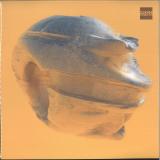
Revered Danish producer and live performer KÖLSCH follows his 2013 hit album "1977" (KOMPAKT 276 CD 107) with the new full-length "1983", again chaining up heroic techno tracks for a grandiose sonic journey to the vibrant heart of today's dance floor. PRIORITY RELEASE
Coupling contemporary production pizzaz with nostalgia-tinged soundscapes and sweeping melodies, this opus acts as both a skilfully composed portfolio of personal memories and a sublime collection of crowd-charming cuts - a modern classic in the making, coming from a master of his craft.
1983 features collaborations with Gregor Schwellenbach, Waa Industry and WhoMadeWho's Tomas Høffding.
Hot on the heels of SPEICHER 84 (KOMPAKT EXTRA 84), featuring club crackers DERDIEDAS and TWO BIRDS, the latest full-length offering from KÖLSCH is very much a travel album: "When I was a kid in 1983, we used to drive through Europe every summer on the way to the south of France", he explains. "A lot of my early music memories stem from these long travels, as we would listen to all my father's favorite records on the cassette deck. After getting a walkman, I would make up my own soundtrack for travelling, with early electro and hip hop creeping into my life. My father of course did not like it, and it never grace the official cassette deck of the car, obviously"
These trips became a primary source of inspiration to a hungry young mind forced to sit on the backseat of a car for several days: "they were also journeys through the seasons. In Denmark, it would be spring time, so I could nearly see us driving through spring into the summer. The scenery would change, and so would the mood in the car." Informed by the symbolic quality of these slightly gauzy childhood memories, KÖLSCH's unique melange of emotional and functional elements works exceptionally well for the full-length format - a seamless transition of musing introspection and explosve expression, where catharsis never seems far away in dance-ready techno vignettes like MOONFACE, UNTERWEGS or PACER.
From beatless opener and title track 1983 to the filigreed piano banger DIE ANDEREN or the bleep-infused synth-fest E45, each cut operates as its own little time capsule, storing bits and pieces of recollection and then magically transforming them into epic, beat-driven soundscapes. Confronted with other producers' input (and other memories), these traits find themselves extended in the most interesting ways - TALBOT, THE ROAD and CASSIOPEIA (also featured on KOMPAKT EXTRA 79) make excellent use of GREGOR SCHWELLENBACH's emotive orchestral flourishes, while BLOODLINE's lyrics come to life thanks to the distinct timbre of TOMAS HØFFDING of WHOMADEWHO fame. A new powerful take on an earlier collaboration, PAPAGENO 30 YEARS LATER not only rejoins WAA INDUSTRY on vocal duty, but also ends the album on a wonderfully elegiac, yet hopeful note - basically turning water into wine, as we've come to expect from KÖLSCH.
Suche:the in crowd
Anané Electrifies With New Version of Dancefloor Classic “Get On The Funk Train”
Known worldwide as one of the New York City’s most vibrant, charismatic and talented producer / DJs, Anané is uniquely positioned to bring light to the 1977 Number 1 Disco Hit “Get On The Funk Train,” originally released by the Munich Machine and produced by the renowned Giorgio Moroder
In addition to being a singer Anané is also DJ with residencies in New York, Ibiza and Naples. She knows how to move the dancefloor and how to elevate the mood of the room from first creating the vibe to getting the crowd into a groove; ultimately taking the dancefloor into full fledged party mode. Her strong and distinctive character can be traced to her experiences growing up in Cabo Verde’s capital city of Praia located on the island of Santiago during a time of extreme political strife, and to her many years of working hard to establish herself in the always competitive music industry. It takes a lot to tackle a classic and make it uniquely your own, but that’s exactly what Anané has accomplished with this fresh and vibrant new version of “Get On The Funk Train.”
With her wealth of talent as a performer, Anané is also highly accomplished as a record label owner. Her Nulu and Nulu Electric imprints over many years have been the source of some of the most played and sought after club bombs in the Afro House genre that is currently in vogue with DJs around the world. Her Nulu Movement line of merchandise represents the stylish, cutting edge fashion vibe of her NYC residency at Le Bain in the Standard Hotel, with designs created by Anané herself.
As befitting an artist so well respected and admired in the community, the producer and remixer team behind this project consists of several of the most legendary and successful producers in the industry. The recording was originally produced by Grammy Award winning producer / artist Louie Vega, one of the world’s premier producers who has the rare distinctive of attaining massive success in multiple genres including House, Freestyle, R&B and just recently he has been focusing on revitalizing the great musical genre known as Disco. The production includes live strings arranged by two of the most highly accomplished members of NYC’s storied musical history Patrick Adams & Leroy Burgess, and electric guitar by Carlos Alomar, formerly David Bowie’s music director. Remixes were supplied by Todd Terry, a man who is known as one of the original New York City based producers who help create the House Music genre that we know today, and by the recently formed production team of Michael Gray and Mark Knight, two of England’s most respected and successful producer / DJs. These two stars of the industry have generated a uniquely groove focused remixer style that has had DJ’s worldwide eagerly waiting each new production.
Neotnas feat. Philosopher is a new collab of electronic music producers from Russia (Chelyabinsk and Moscow accordingly). As the environment of the cities mentioned as well as social milieu vary significantly a profound personal reflection of the artists results in a very specific outlook sculpted by both history and presence of Russia – a surprisingly nice stuff inspired mainly by jazz, ambient and trip-hop. Four new tracks give a deep insight into the way the artists feel the groove and associate it within a dancefloor culture regarding its roots and worldwide influence. Two of them (Jazz Engine and You're Mine) – are 124 BPM house party cuts place all the emphasis on intensively syncopated TR-808 hi-hats layered with properly selected percussive jazz elements and flavored with brass licks and reverbed chords, catchy vox and driving by a grit kick and pumping low bass patterns. Another one (Spirits Of A Dawn) cautiously takes a listener to a personal journey to the edge of an imaginary big city, leaving its downtown, and moving out of the night shade slowly, coming near a sleepy morning glimmering focusing on a light sparks of a new day. The last but not the least track (Traffic Love) is a dense powerful banger galvanizes trip-hop beats and house chords with a lush and mystic 90`s female vocal all together aimed to stir up a crowd on a dancefloor and make them wet and happy. This release – fresh and diverse – will definitely hits it off with a large audience and joins a marketplace properly.
Hidden in a world of anonymity we are craving for intimacy.
AI. The second output in the MAT editions series on CLIKNO is a double 12" separated into "Anonymity" and "Intimacy". The digital world and social media in particular change our perception and behavior; our values and morals undergo a transformation and
shift. How much are we still anonymous? How much are we still intimate (with us/with others)? What does anonymity and intimacy mean to us today?
MUSIC. Dr.Nojoke shows on AI his deeper, darker and trippier side.
A. Petar Plet Plete is a Bulgarian tongue twister sung by anonymous voices, which hypnotize through endless repetitions over a straight Maurizio-esque groove with odd melodic percussion. Nivin grooves elegantly with typical Dr.Nojoke clicks and sophisticated loops of a mysterious female voice reminding slightly to Kraftwerk's Man-machine era.
I. EOW and Nuknot are both intimate orgies of thick textures of reverberations and reflections as if space is folding in itself and time is on hold. EOW seduces with a heavy kick-drum groove and a triplet bassline underneath crawling through unconscious memories. Woe! Nuknot is carried by transcending atmospheres, a dubby low end bassline and a repetitious glassy sound, that can drive a crowd into madness - inspired by Moritz von Oswald and Deadbeat. Nuknot ends with an ambient lock groove.
ART. CLIKNO curates artworks from living artists. On MAT ed.02 CLIKNO is proud to present digital artist Lucas Gutierrez and his work "Your Mesh.sgl", originally part of the exhibition - Knowledge Of - at Aperto Raum Berlin, 2017. An exhibition and dialogue exploring the term "knowledge" and the manner in which self-studies are structured within contemporary artistic approach.
TEXT. MAT02 comes with writings to anonymity and intimacy from the Danish philosopher, actress and choreographer Marianne Kjaer Klausen.
The album celebrates also the 15th CLIKNOversary of Dr.Nojoke.
Rocko Garoni knows what a techno dance floor wants. He’s learned it through countless hours spent on the floor himself as a punter, and through DJing at some of the best clubs and festivals in his hometown Berlin and all over the world. He knows exactly the type of productions that thrill crowds, and he brings this wealth of knowledge and experience to his third EP for Second State, Ammoniak.
The title and first track ‘Ammoniak’ drags you straight into the zone; a pounding, take no prisoners cut laced with stormy synths creating a vague sense of paranoia. ‘Gece‘ cranks the energy up with trancey, bouncing synths and a cool, clipped female vocal. Instantly, you’re pulled into the very sort of club that Garoni knows so well. ‘No Border‘ is the kind of expansive track that seems destined for huge warehouses or vast festival dancefloors. There’s an insistent, brooding bassline, robotic repeated vocals and a mid-track shift in tone that will send the crowd to a heightened state of reverie. The blend of post-punk vocals and eerie beats on ‘It’s All Yours‘, a track featuring Cook Strummer on the vocals, is at once highly unusual and completely compelling. It’s the track to play when the crowd are losing themselves in the best possible way. Closing the EP is ‘Helio‘, another completely different track that showcases the extent of Garoni’s range. Faint, echoed chanting lends the track an almost holy atmosphere. Combined with tunnelling synths and spindly percussion FX, the effect is euphoric, acting as a delicious palate cleanser between heavier tracks.
Put simply, Ammoniak is another first-class EP from a dynamic act who’s fast becoming a Second State star.
For the first time ever repressed on FullTime Production the iconic disco record "Easy Going" by Easy Going!
That's a brand-new great landmark for the label as "Easy Going" set a milestone in the italian Disco culture.
If at the end of the Seventies you were at Piazza Barberini in Rome at night, you would have come across a small but crowded club half-hidden in the ascent of Via della Purificazione, a trendy gay club with elegant Fassbinderian furniture, but also a night crossroads for many prominent characters of the cultural and artistic life of the eternal city and a regular stop for the most popular national DJs at the time. Easy Going creature was founded by Claudio Simonetti (Goblin), as a homage to the place mentioned above.
The homonymous 33 rpm debut of 1978 is remastered and repressed on a glossy white vinyl and due next December 13th on FullTime Production!
It features the original LP cover highlighting the mosaic of masculine struggle between a sailor and a strictly naked policeman , photographed in the Roman club.
The music explodes with the piece that will define the group par excellence: "Baby I Love You" also released as the first single, sung by a very filtered voice on a hypnotic rug of keyboards and a captivating melody that define a real masterpiece of italian disco and beyond. The same goes for the remaining three tracks of the album, which are also set to set the dance floor on fire: "Do It Again" is pure dance from Studio 54 and on the flip side, Creedence Clearwater Revival's cover "Suzie Q" and the ballad "Little Fairy".
Classic jazz/funk/disco cut that became an instant anthem on all discerning dance floorswhen it was originally released, and for decades to follow. Includes the previously commercially unreleased Sax Mix of 'Journey', cut loud at 45rpm.
Championed by DJs including Francois Kevorkian, David Mancuso, Larry Levan and more, it's a record that, alongside tracks like Atmosfear's 'Dancing In Outer Space', become synonymous with the UK influence on US club music at the time.A sound that many forward thinking DJs in New York, Chicago etc. embraced to stand out from the crowd and bring depth to the dance floor.
Driving jazz/funk, legato bass, grooving beats, subtle keys, dubbed out percussion and guitar licks that bring you to a simple but infectious piano melody.
A collaboration between Andy Sodjka and Jerry Pike, mastered by Herb Powers.
Enzo Siragusa rounds off another incredible summer with a highly anticipated project, a collaborative FUSE EP with Martin Buttrich. Striking a perfect balance between Enzo's UK rave roots and Martin's matured finesse, the 'Three Squared' EP nestles neatly within FUSE's distinct sonic palette.
Part of the FUSE family from the very beginning and held in high regard by Enzo, the two solidified their watertight bond via the line ups and studio sessions they have enjoyed together over the years, a bond that shines throughout this release.
When Enzo produces music for his label he always has the FUSE dancefloor in mind, aiming to create those immersive experiences for the crowd that he had as a youngster, across many London raves in the mid 90's.
The 'Three Squared' EP deftly encapsulates this approach, from 'Dangerman', a track that melds Jungle's original elements with the sound of today's house scene, via 'Lifted Spirits' adorned with touches of old school Martin Buttrich, to the darker and engulfing 'Apache', a vinyl only exclusive for the wax heads.
This release also marks FUSE's largest London collaboration to date, as they take over Tobacco Dock's Car Park, where these tracks will be doing some serious damage. At this point the two collaborators will meet again, as Enzo invites Martin to play a live set.
Music has always coursed through Roman Lindau's blood. Even if he weren't the accomplished producer and respected DJ he is today, the German audiophile would still be spending all his money on the stuff; giving over all his time to the art form. ''I'm a music junkie. I need music to live'' he states matter-of-factly. ''For me it's the elixir of life.''
Good job, then, that he gets to spend his ..
Roman Lindau is a German techno DJ, artists and producer, as well as being a core member of the infamous Fachwerk Records from Berlin.
Music has always coursed through Roman's veins ever since he was a young boy so it is no suprise that he became the accomplished producer and highly respected DJ that he is today.
In the late 2000´s Lindau became active in the Berlin electronic music scene, beginning to play music in clubs as well as producing his own music.
The first track he released in 2008 on his home label Fachwerk Records appeared in one the world famous Berghain Mix Compilations, mixed by Len Faki.
Following from this Berghain invited Roman to contribute an exclusive Track for Ben Klock´s Berghain Mix in 2009. After this success the gates opened for him to play regularly as a DJ at Berghain.
At the same time he continued to work on music for Fachwerk Records. He produced dance floor smashers like ´Crasse´ in 2011 and ´Rave on´ in 2014, which were charted by the likes of Ben Klock, Sven Väth & Chris Liebing, afirming his deserved place amongst the techno elite.
More recently in 2015 the well known Victor Calderone from NYC invited Roman to release on his label Matter+.
The reason why Roman is such a great DJ is because of the fact he knows what the people want! ''I love to dance and that's very important: as DJ you need to feel what the crowd want so you can help them to party and have fun.''
Combining a varied selection of raw house and techno in his sets, recent bookings have taken Roman across the world; from the hallowed techno Mecca that is Berghain to dark underground clubs as part of the recent Fachwerk label tour.
He has performed at every legendary Berlin venue, past and present from Tresor to Berghain, and it is this that gives Roman the edge above the rest. If you can do it there, you can do it anywhere!
From 2014 Till the closing he was a resident DJ at Stattbad, one of Berlins findest adress for Electronic Music.
Not one to be pigeonholed, highly respected DJ and producer WILL SAUL has always run the gamut of electronic dance music: from deep house to techno and UK bass, his sets and tracks like to rock the boat of any given genre, taking in contemporary impulses as well as classic inspirations. As label honcho for iconic imprints like Simple or Aus Music, he further honed his ear for the perfect groove and was invited to bring his expert selection to the revered DJ Kicks mix series in 2014. A remix collaboration with fellow UK producer October for Michael Mayer's MANTASY REMIXE 2 (KOMPAKT 272) turned out to be a fine first foray into Kompakt territory - now to be succeded by the LOST IN TIME EP, for which he teamed up with Bristol-based soundsmith KOMON. Komon & Will have been collaborating for many years, resulting in tracks on Will's DJ Kicks and remixes for labels such as Ninja Tunes (Kelis) and Houndstooth (Throwing Snow). Komon has been a mainstay on Will's Aus Music imprint, with solo releases and regular collaborations with Appleblim. For Kompakt, they turn in a swooping trio of floor-versed cuts that are no strangers to atmosphere and experimentation, but like to keep the crowd in check with outbursts of pressurized funk. Leading the pack is the title cut featuring quality vocals from BEN WESTBEECH (aka Breach), flanked by the introspective DRONE and immersive mover DIGITAL PARADISE - a versatile and powerful outing from two artists that know perfectly well how to set the scene.
(de) Als einer, der sich nie leicht kategorisieren ließ, hat der hochrespektierte DJ und Produzent WILL SAUL stets die gesamte Bandbreite der elektronischen Tanzmusik zum Thema gemacht: von Deep House zu Techno und UK Bass findet alles den Weg in seine Sets und Tracks, jenseits von Genregrenzen und gerne inspiriert von zeitgenössischen wie klassischen Impulsen. Der Macher hinter gefeierten Labels wie Simple oder Aus Music ist bekannt für sein feines Ohr am Groove der Zeit und hat seine Expertise in 2014 für die berühmte DJ Kicks Mix-Reihe zum Einsatz gebracht. Eine Remix-Kollaboration mit dem befreundeten Klangschmied October für Michael Mayer's MANTASY REMIXE 2 (KOMPAKT 272) entpuppte sich als grossartiger erster Ausflug in Kompakt-Gefilde - nun der Schritt zum eigenen Release mit der LOST IN TIME EP, für die er sich mit dem Bristol-Produzenten KOMON zusammengetan hat. Komon & Will arbeiten seit vielen Jahren zusammen, was bereits zu Tracks auf Will's DJ Kicks and Remixen für Labels wie Ninja Tunes (Kelis) und Houndstooth (Throwing Sbow) geführt hat. Dank seiner Solo-Releases und der Kollaborationen mit Applebim ist Komon ein gern gesehener Gast auf Will's Aus Music. Für Kompakt liefern die beiden ein bissfestes, tanzflur-erprobtes Track-trio ab, das gerne in experimenteller Atmosphähre badet, den Tänzern aber auch gerne mit Hochdruck-Funk Beine macht. Der Titeltrack brilliert mit wundervollen Vocals von BEN WESTBEECH (aka Breach), flankiert vom introspektiven DRONE und dem mitreissenden Schieber DIGITAL PARADISE - eine vielschichtige und kraftvolle Darbietung von zwei Künstlern, die ganz genau wissen wie man den Beat in Szene setzt.
Having been a fan of Reelow for, well, as long as we care to remember, we are really proud to present you his new outstanding EP on Cellaa Music. Now residing on Ibiza, Reelow has enjoyed yet another successful year. With the talent taking a back seat, its the music hogging the spotlight and rightly so. Two new Tracks and two massive Remixes that look to the past whilst sitting firmly in the present.
- Leave Me Alone' riding on massive percussion and a tough house beat, with this tough Drums and drunken, wubby Sounds it is running right through its core. Plenty of sonic details flesh out the languorous but slightly groove and you'd imagine this Track is to be the sort of many Artits will love.
- Your Crowd' is again about little tiny details and how they evolve with time. This one take you on a voyage of natural rhythms and big Drums. Developing from harmonic FX Sounds and a infectious groove, the track is full of surprises as it twists and turns into different sounds that come and go to take it further than the dancefloor.
The first of the remixes comes from the in form, Massimo Cassini. He team up with a hypnotic rework of - Leave Me Alone' that demonstrates just why he is one to keep a close eye on as he gears up on the production front. Massimo is delivering a muscular house bomb, carefully placed FXs and a nice and catchy line to make this a dancefloor mover.
Next we have Cellaa Music Co Founder Martin Heyder providing a soulful tech house surrogate to the original of - Your Crowd'. His remix has a deeper houseier twist with a smooth 303 pad sound and a concrete percussive arrangement to convey a fantastic production.
We'll meet you on the Dance Floor!!!
2026 Repress in generic white sleeve!
It's been quite a wait for new &ME material here on Keinemusik. But these two new cuts, adding to our catalogue number KM046, sure have been worth waiting for. The EP starts with „The Rapture Pt.II“ and as the title already suggests, it coherently takes up where his last original material had left us, in a stirred state of sweet, harmony-kissed affection. Known as a virtuoso of sound-details, &ME lives up to that reputation, implementing fine synth-elements and temperately rattling percussions, all conjoined by shimmering layers and, of course, an ultimately heart-melting Piano improvisation that at some point will play along to the rhythm of its synthetic brother to a finale that will leave no crowd untouched.
"Solaris" on the flipside adds indeed a futuristic note to the arrangement, opening up with a broken beat and propelling claps. A cut that, as much as its predecessor, is relying on flow and organic shifts rather than forced and peaktime formatted gimmickry, adding a synth arpeggio, white noise, vocal chants and
harmonies in a rather subtle way. Nevertheless, it unfolds a compelling strength to heat the dancefloor gradually through its playtime.
- 1: I Need Her
- 2: Bendita Ilusin
- 3: Una Traicin
- 4: Amor Perdido
- 5: Juliana
- 6: Phoenix
- 7: La Bendicin
- 8: La Realidad
Joe Bataan's Ghetto Records released Joe Acosta's "The Power of Love" LP in 1971. It is now beloved among both salsa dura fans for the tough uptempo numbers and with the lowrider "souldies" crowd for its sweet and slow Latin soul track 'I Need Her.' There are a number of funky mid-tempo son montunos, as well as three super hard guaguancos enough variety to make for a solid dancing-and listening experience. Reissued once again thanks to our collaboration with Now-Again Records. Our release includes an insert with liner notes.
Longtime friend of the label Eraserhead returns after over a decade away from producing music due to his surreal MS Paint work as 'Jim'll Paint It' becoming an unexpected cultural phenomenon. With his debut full-length, 'Violence', Eraserhead presents a truly eclectic electronic LP featuring collaborations with established producers such as Om Unit, Enduser, and Brain Rays, as well as the vocal talents of Nadia Rose, Beans (of Antipop Consortium), and Cadence Weapon. An album held together by theme and tone rather than style or tempo, 'Violence' is the culmination of a bitter wave of inspiration, initially conceived in the wake of a personal tragedy that quickly grew into a broader polemic about the state of the world.
Originally linking up with Love Love in its breakcore netlabel infancy with his refined, breaks-heavy breakcore/gabba, Eraserhead's flair for tight, intricate productions was evident in his finely tuned tracks of controlled chaos. This time around, his work is a darker, more expansive evolution of his sound, with the scale upsized and the stylistic scope massively broadened, remaining unfaithful to any single genre, but with firm nods to Breakcore, Grime, Drum & Bass, Techno, Rave, Dubstep, and Footwork, all chewed up with a hard industrial edge and cinematically framed by a backdrop of apocalyptic synths.
Opening with the cold tech-noir of 'Shining Brainless Beacon' to set the tone, the album quickly locks in with the blistering spoken-word headrush of 'Hurricane With Teeth' alongside rapper Beans, before Om Unit lends his expertise on the sharp groove and clinical bass blasts of 'Operation Hardtack'. The album shifts and morphs constantly throughout the runtime, moving from the raw and urgent acid techno of 'Crowd Control' to the crunching military march of the Gore Tech collaboration 'No More Worlds' and the tribal sci-fi footwork of the Brain Rays collaboration 'Night Visions'. 'Monolith' provides a final burst of catharsis, channelling Underworld by way of Nine Inch Nails, complete with writhing screams from Amée Chanter of sludge-punk-noise-rock duo Human Leather, before the heart of the album is laid bare with the painfully bleak closing dirge of 'Animal'. In its final moments, 'Violence' leaves the listener suspended between devastation and awe - an unflinching portrait of an uncaring world.
Let's see now – you just love that hugely fertile foundation period of Jamaican pop music from the birth of ska, through the spectacularly brief two year heyday of rocksteady up to and including the arrival of the first incarnation of reggae a.k.a. early or 'boss' reggae. But you're also aware that the pioneers of these sounds (including The Pioneers!) won't be creating music in these styles or touring forever – so what do you do?
Well, if you're Neil Anderson, owner of Original Gravity Records, the creation bit isn't a problem. You put forth period-authentic style material from a 'roster' of acts – such as Junior Dell & The D-Lites - that in reality consist mostly of yourself (you are a multi-instrumentalist and lyricist after all!) and whichever extra musicians and session singer you rope in for a given track. In the case of Junior Dell & The D-Lites that singer was Adrian Dell – soon to be dubbed (no pun intended) 'Junior' - first appearing on 2021's uptempo ska tribute to Salvadoran retro-dancing internet sensation Aranivah, entitled Miss Aranivah. And you keep putting out stuff so profusely and effectively that there are clamours for you to tour 'the band' which - er - doesn't really exist. What a botheration! Still, maybe your session singer could become – well - a permanent singer? Maybe you can rustle up assorted bredren to become the rest of the band and...you know what? That might just work!
And so, in the blink of an eye, Junior Dell & The D-Lites becomes a bona fide actual live band fronted by a young Jamaican singer playing fresh 60s/70s-style Jamaican music with an energy last seen and heard in, well, the 1960s and 70s. And it tours so effectively that there are clamours for 'the band' – or more accurately, now – the band - to release an album. Wait...what now? And, by the way, you've got a European tour coming up in April wouldn't it be great if the album was ready to tour by then? Pressure drop? Pressure rise more like!
Then again, Junior Dell & The D-Lites have done so many sure-shot singles to date that assembling them along with a new cut, an extended version of one of the singles and re-recordings of two of the label's previous singles that were originally by 'label mates' The Regulators should be a cinch. So expect all the hits: bluebeat banger 20 Flight Ska, the euphoric ska bounce of the aforementioned Miss Aranivah and the title track, a de rigueur smattering of covers (opener Jump Around, midway markers Praise You and Just Can't Get Enough, and one of the re-recordings, closer Don't Look Back In Anger), early reggae groovers Cool Right Down, Last Night Reggay, Can't Stop The Reggae (in a new extended form) and crowd-pleasing new one Mi Try along with the other Junior Dell re-recording - the gorgeous Why Why Why which nods to the period of reggae between the sound of '69 and the arrival of roots.
Don't you brag and don't you boast but that's a Whole Lotta Skankin' going on! Do the ska, do the rocksteady, do the reggay, why– it's another scorcher!
UILTY RAZORS, BONA FIDE PUNKS.
Writings on the topic that go off in all directions, mind-numbing lectures given by academics, and testimonies, most of them heavily doctored, from those who “lived through that era”: so many people today fantasize about the early days of punk in our country… This blessed moment when no one had yet thought of flaunting a ridiculous green mohawk, taking Sid Vicious as a hero, or – even worse – making the so-called alternative scene both festive and boorish. There was no such thing in 1976 or 1977, when it wasn’t easy to get hold of the first 45s by the Pistols or the Clash. Few people were aware of what was happening on the fringes of the fringes at the time. Malcolm McLaren was virtually unknown, and having short hair made you seem strange. Who knew then that rock music, which had taken a very bad turn since the early 1970s, would once again become an essential element of liberation? That, thanks to short and fast songs, it would once again rediscover that primitive, social side that was so hated by older generations? Who knew that, besides a few loners who read the music press (it was even better if they read it in English) and frequented the right record stores? Many of these formed bands, because it was impossible to do otherwise. We quickly went from listening to the Velvet Underground to trying to play the Stooges’ intros. It’s a somewhat collective story, even though there weren’t many people to start it.
The Guilty Razors were among those who took part in this initial upheaval in Paris. They were far from being the worst. They had something special and even released a single that was well above the national average. They also had enough songs to fill an album, the one you’re holding. In everyone’s opinion, they were definitely not among the punk impostors that followed in their wake. They were, at least, genuine and credible.
Guilty Razors, Parisian punk band (1975-1978). To understand something about their somewhat linear but very energetic sound, we might need to talk about the context in which it was born and, more broadly, recall the boredom (a theme that would become capital in punk songs) coupled with the desire to blow everything off, which were the basis for the formation of bands playing a rejuvenated rock music ; about the passion for a few records by the Kinks or the early Who, by the Stooges, by the Velvet mostly, which set you apart from the crowd.
And of course, we should remember this new wave, which was promoted by a few articles in the specialized press and some cutting-edge record stores, coming from New York or London, whose small but powerful influence could be felt in Paris and in a handful of isolated places in the provinces, lulled to sleep by so many appalling things, from Tangerine Dream to President Giscard d’Estaing...
In 1975-76, French music was, as almost always, in a sorry state ; it was still dominated by Johnny Hallyday and Sylvie Vartan. Local rock music was also rather bleak, apart from Bijou and Little Bob who tried to revive this small scene with poorly sound-engineered gigs played to almost no one.
In the working class suburbs at the time, it was mainly hard rock music played to 11 that helped people forget about their gruelling shifts at the factory. Here and there, on the outskirts of major cities, you still could find a few rockers with sideburns wearing black armbands since the death of Gene Vincent, but it wasn’t a proper mass movement, just a source of real danger to anyone they came across who wasn't like them. In August 1976, a festival unlike any other took place in Mont-de-Marsan – the First European Punk Festival as the poster said – with almost as many people on stage as in the audience. Yet, on that day, a quasi historical event happened, when, under the blazing afternoon sun, a band of unknowns called The Damned made an unprecedented noise in the arena, reminiscent of the chaotic Stooges in their early adolescence. They were the first genuine punk band to perform in our country: from then on, anything was possible, almost anything seemed permissible.
It makes sense that the four+1 members of Guilty Razors, who initially amplified acoustic guitars with crappy tape recorder microphones, would adopt punk music (pronounced paink in French) naturally and instinctively, since it combines liberating noise with speed of execution and – crucially – a very healthy sense of rebellion (the protesters of May 1968 proclaimed, and it was even a slogan, that they weren’t against old people, but against what had made them grow old. In the mid-1970s, it seemed normal and obvious that old people should now ALSO be targeted!!!).
At the time, the desire to fight back, and break down authority and apathy, was either red or black, often taking the form of leafleting, tumultuous general assemblies in the schoolyard, and massive or shabby demonstrations, most of the time overflowing with an exciting vitality that sometimes turned into fights with the riot police. Indeed, soon after the end of the Vietnam War and following Pinochet’s coup in Chile, all over France, Trotskyist and anarcho-libertarian fervour was firmly entrenched among parts of the educated youth population, who were equally rebellious and troublemakers whenever they had the chance. It should also be noted that when the single "Anarchy in the UK" was first heard, even though not many of us had access to it, both the title and its explosive sound immediately resonated with some of those troublemakers crying out for ANARCHY!!! Meanwhile, the left-wing majority still equated punks with reckless young neo-Nazis. Of course, the widely circulated photos in the mainstream press of Siouxsie Sioux with her swastikas didn’t necessarily help to win over the theorists of the Great Revolution. It took Joe Strummer to introduce The Clash as an anti-racist, anti-fascist and anti-ignorance band for the rejection of old-school revolutionaries to fade a little.
The Lycée Jean-Baptiste Say at Porte d’Auteuil, despite being located in the very posh and very exclusive 16th arrondissement of Paris, didn’t escape these "committed" upheavals, which doubled as the perfect outlet for the less timid members of this generation.
“Back then, politics were fun,” says Tristam Nada, who studied there and went on to become Guilty Razors’ frontman. “Jean-Baptiste was the leftist high-school in the neighbourhood. When the far right guys from the GUD came down there, the Communist League guys from elsewhere helped us fight them off.”
Anything that could challenge authority was fair game and of course, strikes for just about any reason would lead to increasingly frequent truancy (with a definitive farewell to education that would soon follow). Tristam Nada spent his 10th and 11th unfinished grades with José Perez, who had come from Spain, where his father, a janitor, had been sentenced to death by Franco. “José steered my tastes towards solid acts such as The Who. Like most teenagers, I had previously absorbed just about everything that came my way, from Yes to Led Zeppelin to Genesis. I was exploring… And then one day, he told me that he and his brother Carlos wanted to start a rock band.” The Perez brothers already played guitar. “Of course, they were Spanish!”, jokes their singer. “Then, somewhat reluctantly, José took up the bass and we were soon joined by Jano – who called himself Jano Homicid – who took up the rhythm guitar.” Several drummers would later join this core of not easily intimidated young guys who didn’t let adversity get the better of them.
The first rehearsals of the newly named Guilty Razors took place in the bedroom of a Perez aunt. There, the three rookies tried to cover a few standards, songs that often were an integral part of their lives. During a first, short gig, in front of a bewildered audience of tough old-school rockers, they launched into a clunky version of the Velvet Underground's “Heroin”. Challenge or recklessness? A bit of both, probably… And then, step by step, their limited repertoire expanded as they decided to write their own songs, sung in a not always very accurate or academic English, but who cared about proper grammar or the right vocabulary, since what truly mattered was to make the words sound as good as possible while playing very, very fast music? And spitting out those words in a language that left no doubt as to what it conveyed mattered as well.
Trying their hand a the kind of rock music disliked by most of the neighbourhood, making noise, being fiercely provocative: they still belonged to a tiny clique who, at this very moment, had chosen to impose this difference. And there were very few places in France or elsewhere, where one could witness the first stirrings of something that wasn’t a trend yet, let alone a movement.
In the provinces, in late 1976 or early 1977, there couldn’t be more than thirty record stores that were a bit more discerning than average, where you could hear this new kind of short-haired rock music called “punk”. The old clientele, who previously had no problem coming in to buy the latest McCartney or Aerosmith LP, now felt a little less comfortable there…
In Paris, these enlightened places were quite rare and often located nex to what would become the Forum des Halles, a big shopping mall. Between three aging sex workers, a couple of second-hand clothes shops, sellers of hippie paraphernalia and small fashion designers, the good word was loudly spread in two pioneering places – propagators of what was still only a new underground movement. Historically, the first one was the Open Market, a kind of poorly, but tastefully stocked cave. Speakers blasted out the sound of sixties garage bands from the Nuggets compilation (a crucial reference for José Perez) or the badly dressed English kids of Eddie and the Hot Rods. This black-painted den was opened a few years earlier by Marc Zermati, a character who wasn’t always in a sunny disposition, but always quite radical in his (good) choices and his opinions. He founded the independent label Skydog and was one of the promoters of the Mont-de-Marsan punk festivals. Not far from there was Harry Cover, another store more in tune with the new New York scene, which was amply covered in the house fanzine, Rock News (even though it was in it that the photos of the Sex Pistols were first published in France).
It was a favorite hang-out of the Perez brothers and Tristam Nada, as the latter explained. “It’s at Harry Cover’s that we first heard the Pistols and Clash’s 45s, and after that, we decided to start writing our first songs. If they could do it, so could we!”
The sonic shocks that were “Anarchy in the UK”, “White Riot” or the Buzzcocks’s EP, “Spiral Scratch” – which Guilty Razors' sound is reminiscent of – were soon to be amplified by an unparalleled visual shock. In April 1977, right after the release of their first LP, The Clash performed at the Palais des Glaces in Paris, during a punk night organised by Marc Zermati. For many who were there, it was the gig of a lifetime…
Of course, Guilty Razors and Tristam were in the audience: “That concert was fabulous… We Parisian punks were almost all dressed in black and white, with white shirts, skinny leather ties, bikers jackets or light jackets, etc. The Clash, on the other hand, wore colourful clothes. Well, the next day, at the Gibus, you’d spot everyone who had been at this concert, but they weren’t wearing anything black, they were all wearing colours.”
It makes sense to mention the Gibus club, as Guilty Razors often played there (sometimes in front of a hostile audience). It was also the only place in Paris that regularly scheduled new Parisian or Anglo-Saxon acts, such as Generation X, Siouxsie and the Banshees, the Slits, and Johnny Thunders who would become a kind of messed-up mascot for the venue. A little later, in 1978, the Rose Bonbon – formerly the Nashville – also attracted nightly owls in search of electric thrills… In 1977, the iconic but not necessarily excellent Asphalt Jungle often played at the Gibus, sometimes sharing the bill with Metal Urbain, the only band whose aura would later transcend the French borders (“I saw them as the French Sex Pistols,” said Geoff Travis, head of their British label Rough Trade). Already established in this small scene, Metal Urbain helped the young and restless Guilty Razors who had just arrived. Guitarist for Metal Urbain Hermann Schwartz remembers it: “They were younger than us, we were a bit like their mentors even if it’s too strong a word… At least they were credible. We thought they were good, and they had good songs which reminded of the Buzzcocks that I liked a lot. But at some point, they started hanging out with the Hells Angels. That’s when we stopped following them.”
The break-up was mutual, since, Guilty Razors, for their part, were shocked when they saw a fringe element of the audience at Metal Urbain concerts who repeatedly shouted “Sieg Heil” and gave Nazi salutes. These provocations, even still minor (the bulk of the skinhead crowd would later make their presence felt during concerts), weren’t really to the liking of the Perez brothers, whose anti-fascist convictions were firmly rooted. Some things are non-negotiable.
A few months earlier (in July 1978), Guilty Razors had nevertheless opened very successfully for Metal Urbain at the Bus Palladium, a more traditonally old-school rock night-club. But, as was sometimes the case back then, the night turned into a mass brawl when suburban rockers came to “beat up punks”.
Back then, Parisian nights weren’t always sweet and serene.
So, after opening as best as they could for The Jam (their sound having been ruined by the PA system), our local heroes were – once again – met outside by a horde of greasers out to get them. “Thankfully,” says Tristam, “we were with our roadies, motorless bikers who acted as a protective barrier. We were chased in the neighbouring streets and the whole thing ended in front of a bar, with the owner coming out with a rifle…”
Although Tristam and the Perez brothers narrowly escaped various, potentially bloody, incidents, they weren’t completely innocent of wrongdoing either. They still find amusing their mugging of two strangers in the street for example (“We were broke and we simply wanted to buy tickets for the Heartbreakers concert that night,” says Tristam). It so happened that their victims were two key figures in the rock business at the time: radio presenter Alain Manneval and music publisher Philippe Constantin. They filed a complaint and sought monetary compensation, but somehow the band’s manager, the skilful but very controversial Alexis, managed to get the complaint withdrawn and Guilty Razors ended up signing with Constantin with a substantial advance.
They also signed with Polydor and the label released in 1978 their only three-track 45, featuring “I Don't Wanna be A Rich”, “Hurts and Noises” and “Provocate” (songs that exuded perpetual rebellion and an unquenchable desire for “class” confrontation). It was a very good record, but due to a lack of promotion (radio stations didn’t play French artists singing in English), it didn’t sell very well. Only 800 copies were allegedly sold and the rest of the stock was pulped… Initially, the three tracks were to be included on a LP that never came to be, since they were dropped by Polydor (“Let’s say we sometimes caused a ruckus in their offices!” laughs Tristam.) In order to perfect the long-awaited LP, the band recorded demos of other tracks. There was a cover of Pink Floyd's “Lucifer Sam” from the Syd Barrett era – proof of an enduring love for the sixties’ greats –, “Wake Up” a hangover tale and “Bad Heart” about the Baader-Meinhof gang, whose actions had a profound impact on the era and on a generation seeking extreme dissent... On the album you’re now discovering, you can also hear five previously unreleased tracks recorded a bit later during an extended and freezing stay in Madrid, in a makeshift studio with the invaluable help of a drummer also acting as sound engineer. He was both an enthusiastic old hippie and a proper whizz at sound engineering. Here too, certain influences from the fifties and sixties (Link Wray, the Troggs) are more than obvious in the band’s music.
Shortly after a final stormy and rather barbaric (on the audience’s side) “Punk night” at the Olympia in June 1978, Tristam left the band ; his bandmates continued without him for a short while.
But like most pioneering punk bands of the era, Guilty Razors eventually split up for good after three years (besides once in Spain, they’d only played in Paris). The reason for ceasing business activities were more or less the same for everyone: there were no venues outside one’s small circuit to play this kind of rock music, which was still frightening, unknown, or of little interest to most people. The chances of recording an LP were virtually null, since major labels were only signing unoriginal but reassuring sub-Téléphone clones, and the smaller ones were only interested in progressive rock or French chanson for youth clubs. And what about self-production? No one in our small safety-pinned world had thought about it yet. There wasn’t enough money to embark on that sort of venture anyway.
So yes, the early days of punk in France were truly No Future!
The culmination of an incredible six months of touring the new ‘Aria’ live show, Marsh shares his ‘Aria EP’.
Originally birthed as an audio-visual live concept designed to showcase Marsh’s growing catalogue and the many talented vocalists he has worked with, ‘Aria’ began as two UK shows - the first at London’s premium new venue, HERE at Outernet, followed by a night at New Century in Manchester.
More recently the EP has been supported by a run of eight North American shows including dates at New York’s Webster Hall, Los Angeles’ Fonda Theatre, and a set at Montreal’s Piknic Électronik festival. The ‘Aria’ live show reached its final stop at iconic Colorado venue Red Rocks Amphitheatre for Anjunadeep Open Air - a particularly snowy and enchanting performance for all those lucky enough to be there.
The full EP features two brand new Marsh tracks; ‘Mercy’, a hard-hitting club record known for getting the crowd moving on ‘Aria’ tour dates, and ‘Hope’, a softer track with uplifting vocal samples.
The ‘Aria EP’ is out November 15 on Anjunadeep.
Sorry We Play Vinyl are once again not at all sorry to play vinyl and good, frankly, because what they serve up on wax is always going to be well received. 'EDIT7' kicks off this latest with a tightly worked 90s sample woven into a loopy groove that is going to get crowds into a funky lather. 'EDIT8' follows with retro-slanted raver era breakbeats and opulent synth oozing, the odd bleep and a bubbling bass thrown in for good measure. 'EDIT9' completes a varied EP with some smooth and succulent deep house with a US warmth to it. The soulful vocals are smeared through soft drums and it's a perfect late-night tool.
A deeply hypnotic and beautifully crafted statement from one of the true masters of subtle groove and atmosphere. Playedby‘s label boss himself, returns to his very own imprint Tripsi Records with a stunning new vinyl release. Pure hypnotic brilliance, essential for selectors, collectors, and lovers of deeply crafted electronic music.
Tripsi Records is more than just a label. It is an audio-visual world created by Cristi Klebleev, where sound and image come from the same hand. Every release features only his own music, accompanied by original artworks painted by Cristi himself on canvas, making each record a fully personal expression, both sonically and visually. A perfect example of why Tripsi Records continues to stand out in a crowded world. Finest mastering and Cut, 180g Vinyl!