The now legendary show that started the teuchter rock trio’s sold out UK tour at the beginning of 2020 at Glasgow’s favourite venue, The Barrowland Ballroom. Features live versions of all their favourites from their first two albums “Uptown Fank” and “Light my Byre”. Having recently won album of the year and live at of the year at the Na Trads awards and recently showcased their music on BBC2’s show “the misadventures of romesh ranganathan”.
From the band:
Peat and Diesel – Live at the Barrowlands
The year 2020 started out fine but as the year went on it has changed the way we live dramatically.
Remember when thousands of strangers would all pile into a gig, jammed in like sheep at the fank, not a care in the world, just there to feel the buzz and magic of live music. It was crazy. Are these days gone forever??
Let’s go back to January 2020, the first time Peat & Diesel arrived in Glasgow, to play the famous Barrowlands Ballroom (aka The Barras). There were an army of 2000 true P&D fans waiting to have the craziest night both the band and the crowd had ever seen and if you don’t believe it… this album will prove it!!!
“Peat & Diesel - Live at the Barrowlands 2020” is an album which was recorded to capture the
incredible sound of the crowd (not the band!) and the atmosphere they brought with them that special night. It is not in any way recorded with any fancy tools to sort any mistakes or nonsense, its 100% raw, just the way Peat & Diesel wanted it.
Search:the in crowd
In a time where everyone from Whitney Houston to Frank Zappa have been re-created in hologram form, where Grimes recently suggested in an interview that “we were at the end of human art”; there could scarcely be a better time for genre-shifting Leeds-based six-piece Team Picture to bring forth the thrillingly expansive synth-pop opus of their debut album The Menace of Mechanical Music.
Inspired by an early 20th century essay under the same name by American marching band leader John Philip Sousa, Team Picture take a look at the automation of creativity on this, their first record with a fully settled line up. Themes centre around the value of creative identity in an automated age, the increasingly disposable nature of art and where that leaves its creators. At twelve songs split into a three-part suite; The Menace of Mechanical Music is emphatically maximalist.
Tracks like the breathy, twinkling Flowerpots, Electric Beds and Handsome Machines’ Icarus-like striving for the sun are an antidote to a music world awash with digital production manipulation and songs written to algorithm. In debating the loosening of the human grip on creativity, Team Picture have poured every last drop of emotion into the recording process.
The group’s now trademark three-way vocal delivery and blurring of textures takes on new structure and purpose. They’ve always had a self-awareness to themselves, too. Initially grouped in with the guitar psych crowd, thanks to their fledgling repeato-rock, they were quick to disassociate themselves from that on 2018's mini-album Recital. With The Menace of Mechanical Music, they expand their sound further still, pirouetting from the likes of Sleeptype Auction – which glimmers like a late 80’s 4AD artefact – through various FX-laden dreamscapes, to the squelchy post-punk of closer Quit Reading. Yet the group were as much influenced by the work of the Early Netherlandish painter Hieronymus Bosch, and his triptych The Garden of Earthly Delights, as they were music touchstones ranging from Kate Bush, Cass McCombs and The Cure.
It’s Sousa words that resonate most deeply within the record however: “The fears of Sousa echo the fears of today's musician,” says Lewis of the late band leader’s 1907 text. “The re-appropriation of funds and support that the artist needs to survive, the gradual erosion of musicianship and self-improvement, that art will become disposable, and that our cultural identity will disappear.”
Recorded with producer Matt Peel (W.H Lung, Eagulls), half the group were unemployed during the session and a daily routine would see them undertake universal credit meetings and job interviews in the morning, before heading to the studio to work into the night. “It was an anxious process but an enjoyable one” says the band’s guitarist Josh Lewis. Indeed, beyond the increasingly golden gated idea of ‘making it’ as an artist, this new album is simply about surviving as one.
Sousa’s vision of a society that had deferred to automation, where babies were rocked to sleep by wheels and pulleys, and people no longer played piano with their own hands. Well over 100 years later and on the precipice of a technological shift never seen before, The Menace of Mechanical Music is the most human response that Team Picture could have given.
- A1: Samba Negra - Eberebijara
- A2: King Somalie - Monkey 'S Dance
- A3: El Grupo Folclórico - Tamba
- A4: Los Viajeros Siderales - El Campanero
- A5: Rio Latino - Ayu
- B1: Aníbal Velásquez - La Mazamorra Del Diablo
- B2: La Francachela - Mosquita Muerta
- B3: El Grupo Folclórico - Juipiti
- B4: King Somalie - Le Mongui
- C1: El Grupo Folclórico - El Tornillito
- C2: Samba Negra - Long Life Africa
- C3: La Banda Africana - Te Clavo La... Mano
- C4: Myrian Makenwa - El Platano
- D1: El Grupo Folclórico - Tucutru
- D2: Grupo Bola Roja - Caracol
- D3: El Grupo D'abelard - Otro Perro Con Ese Hueso
- D4: Conjunto Barbacoa - Wabali
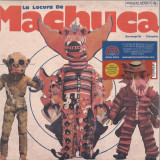
La Locura de Machuca is the story of one man’s bizarre odyssey into Colombia’s coastal music underground, and the wild, hypnotic sounds he helped bring up to the surface.
One night in 1975, a successful tax lawyer named Rafael Machuca had his mind blown in Barranquilla’s ‘Plaza de los Musicos’. Overnight he went from a high ranking position in the Columbian revenue authority to visionary production guru of the newly formed record label that bore his name, Discos Machuca, and for the next six years he devoted his life to releasing some of the strangest, most experimental Afro Psychedelia Cumbias ever produced. La Locura de Machuca is the story of one man’s bizarre odyssey into Colombia’s coastal music underground, and the wild, hypnotic sounds he helped bring up to the surface.
The Colombian music industry was thriving in the mid-seventies, but while homegrown bolero and vallenato tunes were doing well on the charts, it was imported African records that were setting crowds on fire at the picos – the sound-systems that fuelled neighbourhood parties – and wherever those records were played there were always a handful of groups who were inspired to plug traditional Cumbia directly into the electric currents coming from across the Atlantic.
It was these obscure bands, who fused Colombian and African rhythms with the swirling organs and psychedelic guitars of underground rock, that fired Machuca’s imagination. While the label made its money releasing popular hits by legends such as Alejandro Durán and Aníbal Velásquez, that money was poured back into a unique run of experimental releases by fringe artists such as La Banda Africana, King Somalie, Conjunto Barbacoa, and Abelardo Carbono, one of the godfathers of Champeta Criolla.
When Machuca couldn’t find groups to realise his particular vision, he simply created them himself. Drawing on a fearsome roster of musicians associated with the label, he assembled bands that lasted only as long as it took to record an album ,and unleashed the results – complete with arrestingly unusual album covers – under a series of different names such as Samba Negra or El Grupo Folclórico. This unorthodox approach led his longtime recording engineer, Eduardo Dávila, to describes Machuca’s productions as the “B-Movies of Colombian music.”
The story of Doctor Machuca and his eccentric exploits tells of one of Colombia’s most atypical and peculiar record companies; a defining pillar of Afro-Caribbean psychedelia. His productions have come to represent the roots of Champeta and set the pedigree standards for Afro and Costeño avant-garde. The seventeen tracks on La Locura de Machuca, harvested from the darkest, strangest corners of the Discos Machuca catalogue, sound like little else recorded before or since.
Tappa Zukie (David Sinclair) born 1955 Kingston,Jamaica actually cut his first record in England,after being sent there aged 17.
He was breaking from his troublesome past that found him running with the rough crowd on the streets of Kingston. On his arrival in sunny Ladbroke Grove London, producer Bunny Lee called him up on stage at a local dance to sing a tune. Impressed with the results fellow producer Larry Lawrence got the young Tappa in the studio the very next day and cyt 'Jump and Twist'.
This led to cutting his 'Man I Warrior' album,but somewhat disillusioned and homesick he returned to Jmaica shortly afterwards.
But this venture in the Uk was to pay dividends,seeing his 'I Man Warrior' album receive great reviews on its release.
We have collected together some great lost treasures and some alternative cuts to some of Tappa'sbetter known releases.
Mr Zukie, DJ/Toaster/Producer Roll the tape one more time if you please.......
- Track 1 Rub-A-Dub Style - Shorty The President
- Track 2 Gorgon Style - U Roy
- Track 3 Greedy Girl - Jah Stitch
- Track 4 Babylon Dub – Dillinger
- Track 5 Dub Dunza - U Brown
- Track 6 Stick By Dub - Dennis Alcapone
- Track 7 Dub To The Lonely - Prince Jazzbo
- Track 8 Control Dub - Shorty The President
- Track 9 3 Wisemen In Dub - I Roy
- Track 10 Yu Nuh Here Dub - U Brown
- Track 11 Dub Chalice - Prince Jazzbo
- Track 12 Rebel Dub Skank - Shorty The President
- Track 13 Don’t Touch The Dub - I Roy
- Track 14 Hard Time Dub - U Brown
One of the two great chapters in reggaes history was the DJ phenomenon that conquered the Sound Systems in and around Kingston town in those heady 1970's, the other was the dub plates specials that allowed the DJ's to explore a tune in the first place. Giving some fine question and answers to its original vocal, emphasising its meaning or taking it into another subject matter altogether. When you have these two styles and add to it that original vocal, dubbed in at various points you get a fantastic melting pot that lifts a tune and can take it almost anywhere it likes.
Although DJ's were operating in Jamaica in the 1950's and 1960's with the likes of Count Matchuki and Sir Lord Comic, their role was that of mainly selector with a few vocal embellishments to instrumental tracks to gee up the crowd. 1969 saw the art form broaden with the likes of DJ King Stitt (Winston Spark) who scored a couple of hits for producer Clancy Eccles with 'Fire Corner' and 'Herbsman Shuffle'. But it was Clancy Eccles next releases with a certain U Roy (Ewart Beckfort) in the same year that saw the style explode. When hearing the DJ holding the crowd’s attention on King Tubby's Home Town Hi - Fi Sound System, the producer rushed the DJ into the studio and cut 'Wake the Town' and 'Rule The Nation'. Which would top the Jamaican charts in the soon to follow 1970.
In true Jamaican musical style when a new sound hits on the radio waves, many would soon follow. With an abundance of already tried and tested hits, producers would get the new
toasters of which there were many and revamp and breathe new life into their back catalogues.
But what makes this set of cuts, chosen for this release that little bit more interesting, are the working of the dub plates and effects alongside these vocal talents. Adding another layer to this musical cake.
A fine selection of tunes worked over by the cream of the 1970's DJ circuit.U Roy, I Roy. Jah Stitch, U Brown, Dillinger, Prince Jazzbo, Dennis Alcapone and the vastly underrated Shorty the President alongside some classic King Tubby dubs surely a match made in heaven...
Hope you enjoy ride…….
- A1: Brian May - Too Much Love Will Kill You
- A2: Iggy Pop - Candy
- A3: Crowded House - Weather With You
- A4: Ub40 - Kingston Town
- A5: Manic Street Preachers - Motorcycle Emptiness
- A6: Elvis Costello - She
- B1: Lenny Kravitz - Are You Gonna Go My Way
- B2: Live - Lightning Crashes
- B3: The Cranberries - Linger
- B4: Jeff Buckley - Hallelujah
- B5: Portishead - Glory Box
- B6: Scorpions - Wind Of Change
- C1: Oasis - Wonderwall
- C2: Nick Cave & The Bad Seeds - Into My Arms
- C3: K's Choice - Not An Addict
- C4: Soundgarden - Black Hole Sun
- C5: Liquido - Narcotic
- C6: Paul Weller - You Do Something To Me
- D1: The Cure - Friday I'm In Love
- D2: Therapy? - Diane
- D3: Robbie Williams - Let Me Entertain You
- D4: Faithless - Insomnia
- D5: Ronan Keating - When You Say Nothing At All
- D6: Rem - Find The River
- A1: If I Could See Heaven Without Dying Feat Scott Burton
- A2: Ce-Les-Tial
- A3: Sunwalkers Part Two And Three Feat Bill Summers
- A4: Just A Little While Longer
- A5: African Bahia Sol Feat Dr Who Dat?
- B1: Viberian Waves 1 & 2 Feat Capitol Peoples
- B2: Broken Arted
- B3: Banana Peel (Cáscara De Plátano) Featuring Masauko Chipembere
- B4: Trop-Pics
- B5: Let The Cuica Play Feat Café And Micröclimate
In 2018 Far Out Recordings signed a record deal with Brooklyn born, nomadic producer Jneiro Jarel. Having just put the finishing touches to the recordings, Jarel suffered an ischemic stroke while living and working in Costa Rica and his wife Indigo was forced to set up a crowd fund to cover special medical transport back to the states to receive treatment. The release was put on hold, but thanks to the generosity of friends and fans around the world, Jarel was able to get the care he needed and is now on the long road to recovery. We’re overjoyed to finally announce that Jneiro Jarel’s After A Thousand Years is now set for an October 2020 release.
Throughout a career that has spanned over twenty years and seen collaborations with MF DOOM, Thom Yorke, Damon Albarn, BadBadNotGood, Portishead’s Beth Gibbons, Kimbra and Khujo Goodie (Dungeon Family), Jneiro Jarel’s consistently distinctive, forward thinking productions, as well as his love for the music of Brazil, made his partnership with Far Out a perfect fit.
Recorded between New York, New Orleans, Miami and Costa Rica, After A Thousand Years features legendary multi-instrumentalist Bill Summers, famed for his work with Herbie Hancock, Quincy Jones and Eddie Henderson. The album also features Malawian-American guitarist Masauko Chipembere who has worked with the likes of RZA from Wu-Tang Clan and Ladybug Mecca from Digable Planets.
For Jarel, After A Thousand Years is “a culmination of the longstanding musical contributions of the African diaspora.” Permeating the Brazilian music and Latin jazz Jarel has loved and drawn inspiration from, as well as the stateside jazz, soul and funk Jarel grew up around, the influence of Africa and its musical history, on both North and South America, is key to the album’s sound.
On lead single “Banana Peel”, Jarel’s outernational perspective makes for a track that is almost impossible to place geographically: you can hear the swing of Jarel’s native New Orleans jazz, the vibrance of Costa Rican rainforests as well as the influence of Jarel’s vast collection of Brazilian records. “Viberian Waves 1&2” is equally nonconformist, morphing from funky baroque-flavoured instrumental hip hop into a bossa inspired, percussive jam.
Taking its inspiration from the biblical prophecies found in the books of Isaiah, Daniel, and Revelation, foretelling the fully realized, physical and spiritual restoration of the earth and mankind after the thousand year reign of the Messianic Kingdom, After A Thousand Years contemplates and celebrates a world where everlasting love, peace, and harmony abound under a sovereign, divine rulership.
After A Thousand Years will be released on Vinyl LP and CD on the 30th October 2020 via Far Out Recordings.
FEEDBACK
“great release. Really like this!” Antal (Rush Hour)
“Banana Peel is exactly what we need now. Visionary Jneiro Jerel at his finest channelling healing sounds and rhythms from Mother Earth. A much-anticipated lens through Jneiro’s third eye. Thank you!” King Britt
“Sounding real good!” Errol Anderson (Touching Bass)
“I love it!!!!!!!” Raffaele Costantino (RAI RADIO 2)
“Sounds great. Congratulations. Will play it on my radio shows.” Batida
“Will pitch album to my editors” Dean Van Nguyen
“Please send me the full album once it's finished.” Francisco Noronha (Publico PT)
“Beautiful man. So happy that he's ok” King Hippo (WLPN-LP / Worldwide FM)
“cracking tune. already lined up to add to playlist. might go into radio show too.. love it” Oli Brunetti (Collectivo Futuro / Olindo Records)
“Amazing! Ive not heard anything from JJ for a long time but a welcome return, this is a cracking track. Looking forward to hearing more new material.” Mickey Jukes (1BTN FM)
“Very vibrant, fresh release! It gets better every time I am listening to it.” Shantisan (Superfly FM Vienna)
“This is a pretty special track , unique sound but very accessible , like it a lot and will play in my show Look forward to hearing the LP” Andy Wilson (Ibiza Sonica Radio)
“So good to hear Jneiro again, loving this cut. Thanks!” Chris Knight (Astrojazz)
“sublime !!!! will definitely play !!!” Mark Milz (Radio Corax)
“I-Robots approved!” Thanks for sharing...” I-Robots
Frans Zwartjes is famous for his art-house films (look him up on YouTube). A Dutch underground auteur, his prolific output dates from 1968. A unique talent, Zwartjes produced, directed and edited his own films (his last work was in 1991), but more importantly he created and improvised the soundtracks too. Zwartjes and his large body of work is only now being recognised by a wider, more international crowd, with screenings at the NFT and other important art-house cinemas across the world. The recordings on Tapes 2 were mixed directly from the Zwartjes soundtrack tape archive. They were assembled directly and in real time by Zwartjes archivist Stanley Schtinter and have never been issued before.
The music and sound have been put together as two long, seamless sequences; they are dreamlike, unsettling, peculiar, plugged-in, prescient and unlike any other soundtrack we have heard.
"Who is this guy? Who is this insane fucking guy? A guy who produced Trap tracks on his last EP and is now paying homage to Neue Deutsche Welle, as if he has never done anything else before and in a way that we never want to hear anything else ever again? To whom the crowds are devoted to in Paris, a guy who sleeps naked in the woods in the middle of Germany, who sings of the shimmering
girls („Schimmerndes Mädchen") and who doesn’t only embrace sadness but takes it to the club and goes wild with it?
I am telling you: It’s the guy who we desperately need right now: He is making music for, as he is putting it „young hipsters with Apple AirPods who wear big white sneakers but also for the 40 year old Goths who are still listening to El Deux“. He is making music for you, you and for you, too. He makes music for German Schlager fans, for the raver descending into the endless night and for next Sunday afternoon’s come down.
Luis Ake is the guy, and he is from Stuttgart of all places, where Germany basically invented its Germanness. And he is releasing this album that's as cold as the winter in which he recorded it. Of course „Bitte Lass Mich Frei“ was born in winter, in a backyard without heating – how could it be any different? Who needs? heating when your heart is broken, shattered even? Yes, the album was written
after a breakup. Obviously it was. And so it describes all forms of that special kind of insanity that comes with a broken heart: Loneliness, shallow sex, blame, longing, all of that, and more.
Vinyl tastes better ...
By 1995 Kwaito was already a well established and distinguishable sound compared to the International House Remixes that preceded. The tempo was slowed down, Soulful vocal samples were replaced by catchy and repetitive hooks and versus sang in vernacular. The new hit sound had a template and studios worked around the clock to pump fresh releases into the demanding market.
After the successful 1995 release of Import mixes Vol 4, The Groove City team behind the productions now decided to venture into the territory of Mid Tempo. They would craft an album for a young frontman with the help of Kwaito pioneer Oscar Warona, and without much trouble, the team had their first hit on their hands. Filling the boots of their cars with copies of the cassettes and taking the stock to various townships around Johannesburg the tape quickly circulated and sold out every new batch that was printed. Demand was high for the release but as with much of the music at the time, the fast paced demand for the music moved on. Without a follow up release Scotch failed to ride the momentum built by the debut and remained largely unknown although he is still in the music industry to this day.
Even with their first artist release being a success, the following years proved more difficult in reaching such a large audience for the Kaleidosound studio. With popularity for the genre growing, the simple templates for early classics were changing as Kwaito fused with hip hop. Rapping took over as the preferred vocals for the masses. Mysterious production teams and labels that served as guides for music lovers were eclipsed by frontmen and groups that could draw crowds. The fight for fresh sounds continued as the airwaves became the main battleground for artists and the more club oriented music was pushed back underground, eventually evolving into some of the earliest examples of Deep House seen on the continent. The Kaleidosound production team would finally strike gold again in 1997 when reviving Groove City for vol. 5 which acted as the debut for the newly formed group Chiskop. The group would become superstars of the new commercial era that followed, sparking solo careers for the members and creating some of the biggest hits the genre knew.
To this day Scotch remains one of the best albums to come out of the golden era of Kwaito. Although it was outperformed by other groups from the time it has a special place for those who knew it and can still be found as a treasured piece in many collections. The various people involved created a one off fusion of sound that has remained fresh for 25 years. Playful lyrics over floaty grooves resulted in favourites like “Jam Alley” which uses catch phrases from the beloved TV show and “Bafana Bafana” guaranteed to get the boys on the dance floor. Here you have these two tracks taken from the album pressed on a club ready Maxi Single for the Deejays
3 x LP - Live in Sharjah Box Set + Booklet. designed by Lorenzo Mason Studio.
If you’ve ever travelled to Egypt and wandered through its crowded streets, you probably ended up buying a cassette or a CDR of popular synth based music heard in most cabs, cabarets, or alleys around town: the almighty Shaabi.Raed Yassin and Paed Conca based their project PRAED on research between Shaabi and Mouled (traditional trance music from Egypt) and the hypnotic structures of both these genres. Repetitive beats, loud Mizmar and loads of energy, with a strong influence from psychedelic rock, free jazz and electronica.
During the years in which the duo produced 4 albums and performed on an endless number of stages around the globe, PRAED started working on anambitious expansive project: an orchestra that could transpose this study of rural and popular culture into an immense, iconic work. In autumn 2018, supported by the Sharjah Art Foundation, PRAED Orchestra! premiered “Live in Sharjah”, interpreting new material merged with some of the band’s iconic pieces. The composition process started with the choice of musicians: the line-up consisted of some of the most innovative artists coming from a wide spectrum of musical practices. Each musician was chosen for a defined role, and the common denominator was their capacity to interpret written material, and their ability to improvise effortlessly. Each role was clearly set to work in unison with the rest of the group, while simultaneously sustaining a centrality in the choir. Solo parts masterfully drawn over the structure as a fil rouge connecting every piece of the entire concert; massive and powerful orchestral sections leading to a breathtaking trance-like state of mind; all of this material ultimately coalescing into an Egyptian Operette that narrates the sorrow, love, and deeply rooted culture of this urban music called Shaabi.
Paed Conca: Clarinet, Electric Bass, Electronics
Raed Yassin: Synthesizers, Vocals, Electronics
Alan Bishop: Alto Saxophone, Vocals
Nadah El Shazly: Vocals, keyboard, Electronics
Christine Kazarian: Electric Harp
Hans Koch: Bass Clarinet, Soprano Sax
Martin Kuchen: Tenor Saxophone, Baritone Sax
Maurice Louca: Keyboard, Organ
Radwan Ghazi Moumneh: Buzuk, Vocals, Modular Synthesizer
Sam Shalabi: Electric Guitar, Oud
Ute Wassermann: Vocals, Mouth Harp, Whistles
Khaled Yassine: Drums, Percussion, Darbuka
Michael Zerang: Drums, Percussion
Recorded live at Calligraphy Square on November 3rd, 2018 in Sharjah, UAE by: Sudish Suman & Shuaib Ahmad Poonthala
Edited by: Rabih Beaini at Morphine Studio, Berlin, Germany
Mixed by: Radwan Ghazi Moumneh at Hotel2Tango Studio, Montreal, Canada. Mastered by: Harris Newman at Grey Market Studio, Montreal, Canada.
Artwork by Lorenzo Mason Studio.
Project manager : Simsara Music
On December 26th, 2018, Emily Cross received an excited email from a friend: Brian Eno was talking about her band on BBC radio. “At first I didn’t think it was real,” she admits. But then she heard a recording: Eno was praising ‘Black Willow’ from Loma’s self-titled debut. He said he’d had it on repeat.
At the time, a second Loma album seemed unlikely. The band began as a serendipitous collaboration between Cross, the multi-talented musician and recording engineer Dan Duszynski and Shearwater frontman Jonathan Meiburg, who wanted to play a supporting role after years at the microphone. They’d capped a gruelling tour
with a standout performance on a packed beach at Sub Pop’s SPF 30 festival, in which Cross leapt into the crowd and then into the sea, while the band carried on from the stage - an emotional peak that also felt like a natural ending. “It was the biggest audience we’d ever had,” she says. “We thought, why not stop here?” Following the tour, Cross went to rural Mexico to work on visual art and a solo record, while Meiburg began a new Shearwater effort. But after a few months apart
(and Eno’s encouraging words), the trio changed their minds and reconvened at Duszynski’s home in rural Texas, where they began to develop songs that would become ‘Don’t Shy Away’. Loma writes by consensus and, though Cross is always the singer, she, Duszynski and Meiburg often trade instruments. Meiburg compares their process to using an Ouija Board and says the songs revealed themselves slowly, over many months. “Each of us is a very strong flavor,” he says, “but in Loma, nobody wears the crown, so we have to trust each other - and we end up in places none of us would have gone on our own. I think we all wanted to experience that again.” The album that emerged is gently spectacular - a vivid work whose light touch belies
its timely themes of solitude, impermanence and finding light in deep darkness. “Stuck / beneath / a rock,” Cross begins, as if noticing her predicament for the first time. Then she adds: “I begin to see / the beauty in it.” A series of guests contributed to the absorbing soundscapes of ‘Don’t Shy Away’, including touring members Emily Lee (piano, violin) and Matt Schuessler (bass), Flock of Dimes/Wye Oak’s Jenn Wasner and a surprisingly bass-heavy horn section.
And then there’s Brian Eno. Loma invited him to participate in the mantra-like ‘Homing’, which concludes the album and sent him stems to interact with in any way he liked. He never spoke directly with the band but his completed mix arrived via email late one night, without warning and they gathered to listen in the converted bedroom Duszynski uses as a control room. “I was a little worried,” says Cross.
“What if we didn’t like it?” But it was all they’d hoped for: minimal but enveloping, friendly but enigmatic, as much Loma as Eno - a perfect ending to an album about finding a new home inside an old one. “I am somewhere that you know,” Cross sings, above a chorus of her bandmates’ blended voices. “I am right behind your eyes.”
First LP pressing on dark green vinyl.
Complete with more gorgeous artwork from our favourite graphic designer, Animisiewasz, DP number 28 pops up offering four dance floor ready edits from one of our favourite young producers.
London based producer, multi-instrumentalist and artist Hoffy brings us five explosive disco/house monsters tailor made for when the clubs re-open and everyone goes ever so slightly nuts. With a couple of ridiculously uplifting releases on Forgot Records and a remix or two for Wah Wah 45s, of course, he knows how to move a crowd. His productions illustrate his deep love of classic (but never cheesy) disco, and an ability to create surges of energy even on the most docile of dance floors.
We hope you enjoy this craftily concocted quintet of soulful stunners that could easily sit alongside O'Flynn, early Romare and Dave Lee on your shelves. Another essential slab of foot friendly heat courtesy of your favourite Dubplate provider!
The 20th anniversary year of Dial Records couldn’t have been more exciting for us so far! After the extraordinary well-received release of Soela’s debut-album Genuine Silk and steady excitement around our ongoing series of digital anniversary compilations, we are more than thrilled to announce the second album release of this our very special year: XDB - Inspiron. As a longtime companion and true inspiration throughout the label’s twenty-year history, Kosta Athanassiadis aka XDB enriched our lives with his brilliant productions in the form of countless 12”s and legendary remixes. His long-overdue full-length debut album Inspiron in hand, we find ourselves unpacking the most beautiful jubilee present we could have ever imagined. For almost three decades now Kosta Athanassiadis aka XDB has been involved in the constantly changing world of dance music. His curiosity and dedication to electronic music spiral deep into the depth of House Music and Techno and where ever he appears he generously shares his unique knowledge in this field with equally dedicated crowds. Whether you follow his bloggish “Tracks I do really LOVE”, a collection of club essentials and a library of taste, or you witness one of his remarkable DJ sets from Panorama Bar to Freerotation Festival - XDB will elevate you to one of those unforgettably magical music moments. In 1993 Kosta Athanassiadis started his DJ career in the medieval hometown of Goettingen. To find what he was really looking for, namely, the newest and most exciting new records he frequently had to leave this picturesque city, that is most popular for inventing the traditional Baumkuchen pastry, but has not been on the maps of music connoisseurs necessarily. Frequent trips to visit records stores and clubs around Germany built a network of likely minded people. Some of his favorite and most thought after record labels of the time like the Chicago imprint Relief, or UK's Mosaic, are still fundamental to his very specific musical taste. By the turn of the century, XDB hosted a series of nights at Goettingen's Eletroosho, where he invited Dial’s own Lawrence and Carsten Jost in 2002- the beginning of a still ongoing friendship. He had established himself as a sought after and internationally active DJ and started his fist endeavors into music production as well. Later on XDB founded his own Label Metrolux and released on iconic labels like Sistrum and Wave to be followed by countless remixes for legends like Aaron Carl, Norm Talley and Patrice Scott. An extraordinary stream of gravity connects both, his productions and DJ sets. Once breaking through a seemingly transparent surface, one get’s lost in the beauty and depth of forms and figures. There’s barely DJs and producers who keep searching for this hidden formula in such a microscopically detailed way to pass a lifetime in House Music and Techno on to the world. XDB's Inspiron embraces this unique approach, filters and develops inspirations in an entirely delicate way, and magically emphasizes the desires of the most dedicated listeners and dancers.
- A3: James Ocampo - One One Six Bee
- A4: Thabiso Makhetha - Coogan Radio
- A5: Rashid Al Balushi - Micro-Sister (Al'ukht Alsaghira) (Al'ukht Alsaghira)
- B1: Liv Jacobsen - Mond
- B2: Eteroa Apinelu - Sansobavo Mix
- B3: Zzodiakk - Sans Titre (Fumee V 3) (Fumee V 3)
- A1: Giuseppe Moretti - Ragazza Raddrizza (Live Excerpt)
- A2: Daryana Jean - Scvb
- B4: Alima Akmatova - Below The Rainbow
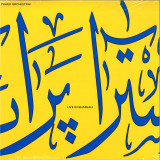
GRITTY, ODD & GOOD is a new weird, pseudo-music compilation curated by avant-garde experimental composer and audio artist Francisco López.
As far as creation itself is concerned, big cities do not manifest anymore as the catalytic cultural centers they used to be. Their iconic status as hip locations seems more symbolic than real. The combined mighty forces of neocapitalist gentrification and telecommunication / information decentralization might have generated a substantially different landscape of geographical cultural distribution. And so unlikely places are also sources of physically-isolated, but culturally-interconnected, new creation. This is just but one more example of the larger phenomenon of techno-cultural atomisation (not to be confused with the more restricted so-called “democratisation”) that allows millions of people to create and share, pre- and post-internet. The amateur is the new potential master; and that is decided by the crowd in the circus and the stadium, not at the academy. With all of this comes the potential for new aesthetics, or at least the open-ended evolution of the previous ones, –far better than the current confusion between ethics and aesthetics- from the uninformed and the unknown. Atomization of this kind also brings for some the desire and the right to anonymity. And so it is for the unknown obscure artists of this compilation of weird experimental music –“gritty, odd & good”, with drones, glitches, cut-ups and more- who won’t reveal anything beyond their unlikely locations: San Marino, French Guiana, Philippines, Lesotho, Oman, Faroe Islands, Tuvalu, Liechtenstein, Kyrgyzstan. An innovative compilation presenting a world of unusual experimental de-constructed and recombined music casting a strong and exciting light into the unusual corners of our world. Dive in.
Compiled and Mastered by Francisco López
Vinyl mastered by Rashad Becker
a 1 Ragazza Raddrizza (Live Excerpt) - Giuseppe Moretti San Marino 3:00
b 2 SCVB - Daryana Jean French Guiana 4:39
[c] 3 One One Six Bee - James Ocampo [Philippines] 5:37
[d] 4 Coogan Radio - Thabiso Makhetha [Lesotho] 3:18
[e] 5 micro-Sister (Al'ukht Alsaghira) - Rashid Al Balushi [Oman] 3:59
[f] 6 Mond - Lív Jacobsen [Faroe Islands] 3:10
[g] 7 Sansobavo Mix - Eteroa Apinelu [Tuvalu] 8:38
[h] 8 Sans Titre (Fumée v.3) - Zzodiakk [Liechtenstein] 6:38
[Kyrgyzstan] 1:17
After his acclaimed debut EP « Cotonou » on Alma Negra’s record label, James Stewart comes back with his new EP Atlantic River Drive for Mawimbi Records, featuring two collaborations with Ghanaian kologo musician Ayuune Sule as well as two remixes from Simbad aka SMBD.
James Stewart met Ghanaian kologo musician Ayuune Sule, after booking several shows of kologo music star King Ayisoba in Lyon. Stewart was quick to witness the bluesy tone of Ayuune’s voice and his kindness as a musician, despite his impressive stature. Quite logically, Stewart invited Sule to record vocals on two of his ongoing demos at Bruno Patchworks’ recording studio (Voilaaa, Mr. President, Da Break), with the idea of making a rather unheard crossover between traditional kologo music and contemporary styles that would both appeal to Ghanaian crowds and a Western audience. Stewart then had a number of his arrangement ideas re-recorded by a talented cast of musicians, resulting in a brilliant mix of acoustic and electronic textures, sounding both vintage and modern.
Nodding to Eddie Palmieri’s landmark record “Harlem River Drive”, “Atlantic River Drive” is a stomping dancefloor track, drawing from the 6/8 feel of kologo music and the energy of contemporary club music. The track can be read as a tribute to the musical cross-pollinations between the African continent and its many diasporas, which Stewart has dedicated a long part of his life to, but also as a more intimate story about his life and family. All words were written by Stewart and then translated by Sule in his native Fra fra language from Northern Ghana.
“Where Are We Going?” is a two-part journey that reminds us that we should care about each other, about our communities while we don’t know what the future is made of. An important and much welcome message to navigate through these troubled, uncertain times. Referencing congolese N’dombolo tracks, the track has two parts and rich arrangements, with its first part going deep with syncopated clarinet hooks and playful percussion parts, and its second part moving to a four-on-the-floor pattern and an entrancing baritone saxophone solo.
The EP also features Worldwide FM and Brownswood maestro Simbad, who delivers two dancefloor-ready reworks of the track “Where Are We Going?” under his SMBD moniker, turning it into a spiritual, dubby journey, as well as an emotional house music track.
- 1: The Mabon Dawud Quintet - Abeba
- 2: Thomas Meloncon - Ain't Gonna Wait Too Long
- 3: Al Williams Quintet Plus One - Sandance
- 4: Deep Jazz - Mystic Sky
- 5: Sheila Landis - Leigh Ann's Dance
- 6: Sal Nistico - Beautiful Black Casanova
- 7: Roy Hytower - Song Of Deliverance, Pt. 1 (Feat. The Crowd Pleasers)
- 8: Now - Easy Tune For Dancing
From 1963 to 2014: "Peace Chant - raw deep and spiritual jazz" exhibits 51 years of music. A well matched anthology with sounds to dive into, hard rhythms to dance to and vocals to meditate on.
The Tramp Records crew has compiled 8 tracks in nice order and dramaturgy. Some tunes you might have never heard before unless you own one of the rare original vintage vinyl records. Peace Chant is released on two separate LPs with own catalogue numbers and on one CD. Some songs I can't get out of my mind.
These days Mabon Dawud Quintet from Ethiopia is on the trail of Mulatu Astatke. Tramp Records provides the first release of "Abeba" - a funky and stoic track in Amharic mother tongue sung by a high male lamenting voice.
Even more haunting is "Ain't Gonna Wait Too Long" by Thomas Meloncon. The self-taught guitar player recorded this protest song at the age of 20. Voice, guitar, congas and double bass are plenty enough for a heavily pushing song complaining that black man's slavery isn't gone after 400 years. Artist, poet and civil right activist Meloncon (alias Muntu Mwaminifu) wrote and directed theatre and radio plays. His works are collected at Texas Southern University in Houston. "Ain't gonna wait too long" probably is his earliest artistic outing, he just had left school in 1968.
The compilation concludes with a song by Now, a band no one outside Munich might know. "Easy Tune for Dancing" can be found on a record of cultural and concert location Feierwerk form 1990. It really was a surprise to hear the quintet of trumpeter Konstantin Kern and Klaus Pfister on sax playing Afro-Cuban jazz that easily and nonchalant. If Dizzy Gillespie turned up with his bent trumpet and Lalo Schifrin sat in like he did on "Gillespiana Suite" I wouldn't be astonished!
JAM CITY (Chicago, USA) & IZIPHO SOUL RECORDS (Surrey, UK) collaborate to bring you one of the finest discoveries of the year, tracked down and first played on Starpoint Radio’s Soul Sermon Show. Blown away on first listen, we knew what we had to do and quickly got to work with producer and writer Al Wordlaw. Back in the late 80s, the singer simply known as ‘RUSHING’ was a local sensation, performing to sold out crowds whenever he was booked for Chicagoland performances; no surprise when you hear these incredible vocals!
Both songs were recorded in 1987, but never released. Thankfully the original reels were kept and have been restored, transferred and mastered for a vinyl release thirty three years later!
You have reached the Infolines. Tonight, we send you on a journey packin’ east to play in the magnificent halls where thespians and rock & roll once played. ‘The Theatre’ features a compilation of cuts that inspire those who listen to sweat in the soon to be humid weather of Detroit.
Bendersnatch is back again, this time with their funky groove ‘Vice Versa’, tooled as a call to the dance floor with a kick that cuts, and bleeps reminiscent of the second wave of techno. Remote Viewing Party brings us a break beat rhythm joined by instrumentalists Ezuch & Bcota with ‘Outpost’. The duo brings shows us their depth creating an atmosphere that will bring you chills, and tears that you will probably think is sweat running down your face. Newcomer Dev-Lish is joined by Maxlow with their head banger ‘Faith In The Machine, in a collaboration inspired by the Detroit birthed genre ‘sludge’. Evil grinding tones with huge bass and dark vocals will make you want to breath. Last, but not certainly least is Francois Dillinger. This artist has been churning out his art and making waves in the electro and techno communities. He brings to the table ‘Lost Loops’ with nothing short of huge bass, large spatial tones designed to hit all frequency ranges leaving room for the crowd to breath while being taken on a journey.
As always, keep an eye on this space and be sure to call in for the waypoint to the party.
Nas has had a career of generally consistent excellence, punctuated with a few lulls. He’s an incredibly skilled rapper sometimes accused of having a tin ear when it comes to choosing beats – especially on albums (and the entirety of ‘Illmatic’ aside, obviously).
‘Made You Look’ was a shot in the arm for Nas at a time when he’d shed some of his core, street fanbase. After the unfocussed ‘Nastradamus’ and ‘I Am…’ albums he’d had a return to some kind of form with ‘Stillmatic’, but many felt he came off second best in the ensuing battle with Jay-Z.
This single, a club and street classic almost from the moment it dropped, is exactly what he needed to reconnect with his fans and to show he could still throw down. Lyrically, it’s hardcore bragging 101, delivered with panache and numerous quotables that themselves would go on to be sampled.
Key to it all, however, is that beat. Salaam Remi was no stranger to resurrections, having almost single-handedly turned The Fugees from forgettable also-rans to major-players. The beat here is deceptively simple, one of hundreds of records to chop up Incredible Bongo Band’s ‘Apache’ but doing so in a way that felt instantly fresh. Nearly 20 years later it still has the power to get a stationary crowd moving, an empty dancefloor to fill, a still head to nod.
This original version has never been on 7” before. It’s presented with full artwork.