Label boss Carlo rallies the troops again. This time for his own new collaborative EP, ‘VERSUS’.
Aterral regular, firm family favourite and one of the labels founding artists, Black Loops, steps up on the gorgeously groovy ‘Hungover’. No cloudy heads or slow steps on this collab. Woozy keys yes, but these are kept true by the spritely xylophone melody and warm rolling bass. A perfect opener from this pairing.
Following his popular DOS despatch, ‘Be Pe Em’, much was expected of Emanuele Barilli’s new adventure alongside Carlo. ‘Lelazo’ doesn’t disappoint. Sharp shuffle, filtered keys and popping bassline, all make for a perfect beach-bound soundtrack. Close your eyes, feel the sun on your skin.
From Hungover to another victim of the session, as Carlo teams up with German producer Hauke Freer on ‘Maison.’ Deep, low slung vibes on this ode to the sound we all love. Beautifully constructed, from its patient creamy bassline to its bright rimshots and tender vocal. This is our house. Our home. Come on in.
The most personal of Carlo’s new tracks brings things to a close as he teams up with his young son on ‘Einhorn Poops’. The sun’s warmth is felt again on this beautifully crafted slice of balearic house that matches O's vocals to the equally innocent chimes and bird song to create a fitting and sublime finale.
Cerca:the innocent
- A1: Centuras - Tokyo
- A2: Bandulu & Amaranth - Love Lies Beneath
- B1: Strontium 90 - Rave On The Congo
- B2: Orr-Some - We Can Make It
- C1: Biff'um Baff'um Boys - Bombing
- C2: Epoch 90 - Vlsi Heaven (Zone Mix)
- C3: Mind Over Rhythm - Kubital Footstorm (Global Beatmix)
- D1: Dream Frequency - Dream The Dream
- D2: As One - Isatai
- D3: Uvx - Elevator (Trancefloor Transporter) (Trancefloor Transporter)
From 1989 onwards, Richard was an obsessive collector of house and techno music, frequenting legendary London record shops such as Fat Cat, Silverfish, Trax and Red Records. He took record buying trips to NewYork to find second-hand disco, house and techno 12”s, which were lying around in bargain bins. The selection for this compilation are his own personal favourites from that era.
Back then, electronic dance music was young, innocent and fun; it hadn’t been analysed, theorised and fragmented into the multi-genre industry it is today.
What you hear on this compilation reflects what he was playing at that time; joining the dots between ambient, techno, tribal house, breakbeat and early trance productions from the UK.
Much house and techno from the US, Belgium, Germany and Holland has been well documented, but some of the more obscure British productions are lesser known and need to be showcased.
Hopefully, these tracks will inspire and educate a new generation of electronic music fans who weren’t born then and also trigger some acid flashbacks for the older,ravers as they take a trip down memory lane.
Wirski’s debut on MISBHV Recordings offers a nuanced narrative operating in its own genre of Eastern European rough-edged club melancholy.
MISBHV004 opens with Inside The Dark Echo – a claustrophobic, stifling, relentless, sensual dance with desire. Darkroom complexity with heavy surface tension built on an EBM undercurrent flirt with subtle psychedelia and traces of acid that slowly firm up their multi-layered grip through its running time of six and a half minutes.
Warszawa paints a stripped-back, tantalizing picture. Opening with a brutalist, militant drum programming and surprisingly spacious, warm bassline, its rigid rhythm, tightened up by a repetitive, cold breath mantra eventually opens up to bright, shimmering synth flickers evoking olibanum – the sacred scent of altar candles. Warszawa is looking at the multilayered melody of its landscape – from eerie Soc-realist blockhouses, through neon-lit, seedy strip clubs of the 90s to opulent sacral architecture.
Warm Waters Of Eternity subtly weave a cinematic, Carpenteresque soundscape with a sense of overpowering, ecstatic innocent euphoria that invokes a dream of an early 1990s rave deep in the dark woods of Poland.
Take a look at the cover of Rodney Crowell's brilliant new album, The
Chicago Sessions, and you might recognize a familiar callback to the
legendary songwriter's 1978 debut "In a lot of ways, this album feels like that very first record to me," Crowell reflects.
"When my daughter Chelsea suggested we lay the artwork out similarly, the connection made perfect sense. There's something very simple, very innocent about it. It's just me and the band in a room together, loose and live and having fun." Produced by Wilco's Jeff Tweedy, The Chicago Sessions is indeed a throwback to Crowell's early days of making records, but it's no nostalgia trip. The
songs here are vital and timely, touching on everything from love and mortality to race and religion, and the performances are nothing short of intoxicating, fueled by raw guitars, honky-tonk piano, and tight, punchy drums. Tweedy wields a light touch as a producer, his influence subtle yet unmistakable, and engineer Tom Schick's mixes are dynamic and alive, alternately lush and spacious in all the right
places with a spotlight fixed firmly on Crowell's warm, weathered vocals throughout. Put it all together and you've got a masterful, cross- generational collaboration that manages to feel both fresh and familiar all at once, an incisive, engaging collection that balances careful craftsmanship with joyful liberation at every turn
Lele Sacchi & Asian Fake’s Stolen Goods Records return with the third instalment of Black Loops & Innocent Soul’s ‘High Cutz’ series, accompanied by a remix from Italian house legends Pastaboys.
After a debut compilation featuring the likes of Bawrut, Elisa Bee, Ruff Stuff & label head Lele Sacchi, Stolen Goods Records amassed a following of Dixon, Harvey, DJ Seinfeld, Dam Swindle & many more. The Italian imprint returns this December, dropping two tracks from deep house mainstays Black Loops & Innocent Soul. Black Loops trawls the depths of his record bag in revered clubs around the world while tallying up releases on labels such as Madhouse, Shall Not Fade and Freerange. Additionally, Strictly Street Sound label boss Innocent Soul has made a name for himself for his energetic deep house music.
Together, they join forces for their collaborative ‘High Cutz’ series, which has previously been released via Toy Tonics and Rough Limited. Robust beats form the backbone of ‘Believe In U’, a plucked bassline brings the funk and passionate vocals provide the soul. They warp its earworm bassline deep into the jacking zone, closing out the first in a series of EP’s on Stolen Goods Records featuring established artists and talented newcomers.
Robocop Kraus wurden 1998 in Hersbruck, Deutschland, gegründet. Sie haben mehr als 800 Shows in Clubs, Kneipen, Konzerthallen und auf Festivalbühnen in ganz Europa, in den USA, Großbritannien, Japan und Russland gespielt. Sie haben 5 Alben auf L'Age d'Or, Epitaph, Anti und Day After Records veröffentlicht.
Robocop Kraus sind zurück! „Smile“ heißt das erste neue Album der „Robos“ seit unglaublichen 15 Jahren. Produziert wurde das Ganze von Jan Philipp Janzen (Die Sterne, von Spar etc.) und es klingt wie ... tja … unverkennbar nach Robocop Kraus! Können wir das ein für alle Mal festhalten, dass die Band, die wahlweise als deutsche „The Make Up / Franz Ferdinand / Talking Heads / The Rapture / Devo“ bezeichnet wurden, einfach einen ganz eigenen Sound haben? Das muss man erstmal schaffen. Apropos Schaffen? Wie haben wir das eigentlich so lange ohne Robocop Kraus ausgehalten? Und wie kann es sein, dass die Band 25 Jahre nach ihrer ersten Show in einem Hersbrucker Jugendzentrum nun das beste Alben ihrer Karriere veröffentlicht? Ein Album, das an einer komplett erfolgsoptimierten, blutleeren Indieszene vorbei auch eines der erfrischendsten Alben des Jahres 2023 sein wird?
Clear Vinyl
Robocop Kraus wurden 1998 in Hersbruck, Deutschland, gegründet. Sie haben mehr als 800 Shows in Clubs, Kneipen, Konzerthallen und auf Festivalbühnen in ganz Europa, in den USA, Großbritannien, Japan und Russland gespielt. Sie haben 5 Alben auf L'Age d'Or, Epitaph, Anti und Day After Records veröffentlicht.
Robocop Kraus sind zurück! „Smile“ heißt das erste neue Album der „Robos“ seit unglaublichen 15 Jahren. Produziert wurde das Ganze von Jan Philipp Janzen (Die Sterne, von Spar etc.) und es klingt wie ... tja … unverkennbar nach Robocop Kraus! Können wir das ein für alle Mal festhalten, dass die Band, die wahlweise als deutsche „The Make Up / Franz Ferdinand / Talking Heads / The Rapture / Devo“ bezeichnet wurden, einfach einen ganz eigenen Sound haben? Das muss man erstmal schaffen. Apropos Schaffen? Wie haben wir das eigentlich so lange ohne Robocop Kraus ausgehalten? Und wie kann es sein, dass die Band 25 Jahre nach ihrer ersten Show in einem Hersbrucker Jugendzentrum nun das beste Alben ihrer Karriere veröffentlicht? Ein Album, das an einer komplett erfolgsoptimierten, blutleeren Indieszene vorbei auch eines der erfrischendsten Alben des Jahres 2023 sein wird?
Languid yacht-soul from the mind of LA native AJ
Greene and his Greenflow collective. Originally issued as a QCA-custom job in 1977, the group’s lone album appeared after years of
performing their brand of Sausalito-friendly, seafood AOR up and down the West Coast.
The LP’s standout track is ‘I Got’Cha’, with
Greene’s sister Eleanor providing innocent “doodoo-doo-doo-doo”s around funky keys, muted trombone, and come-hither whispers.
Australian vocalist-guitarist Daevid Allen was a part of the highly experimental Canterbury scene, alongside the likes of drummers Robert Wyatt and Pip Pyle, before he relocated to Paris in the late ‘60s, formed Gong and made music that had a rare blend of on the fly creativity and off the wall humour. However, Banana Moon was a solo effort by Allen that saw him reunite with the aforementioned British kindred spirits as well as bassist Archie Legget and vocalist Maggie Bell, among others. The nine songs on the record run from interludes of just under a minute to epic suites that exceed ten, making it clear that Allen, as his work with Gong suggested, gave full vent to his imagination whether he was writing songs with a quasi-Beatles pop appeal or engaging in unrestrained sonic flights of fancy. With lyrical curveballs being thrown on every track, none more so than ‘Fred The Fish And The Chip On His Shoulder’, the music has a wry charm to match the performance skills of the band. This re-mastered version of Banana Moon brings Allen’s uncommon musical vision back in to view and serves as a reminder of the feverish and fearless energy that spurred on an artist whose work has lost none of its seductive shock value.
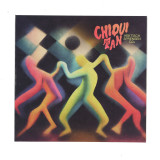
Terra Magica Rec. first 7’’ release „Chiqui Tan“ by the label heads Hektisch Sprengen DJs will be limited to 250 copies. The A-side hits the listener with some 1980s early Electronic-Downtempo-Cumbia-Colombian-Venezuelan-Tablemountain-Dub-Grooves. This reminiscence is leading to an extra full blown up 21st century Bass-Queen alert. And these HSDJ dials hit you into a stripped naked sample of Nigerian-Swedish DJ-dentist-mainstream-star Dr. Alban and his Eurotrash-90s-Pophouse-anthem “No Hash Hash, No Cocaine”. This is for sure no “Ottonormal”-90s-revival thing!
On the flip side Hektisch’s haptic wood razzle move covers the classic 1994-Liquid-Deep-Netherlands-Trance-House-Track “Paper Moon” by 51 Days which back then sampled the rare 1972-MPB-Funk-Cover-Version of Carol Kings “Corazón”. Guess what! It drops like a late 1990s-Ed-DMX-London-classic gone Electroboogie-Miamibass-Break with a SH101-baseline and Sprengen’s take on Spanish-90s-Trance-Vocals. Watch out 4 TERRAMs “Asi me gusta” title caps series as well! Trigger warning: That hidden Sequential Circuit Sixtrack loves you like a windy horse on Acid. Loads to experience on this little innocent wax disc!
Le Motel and Bruce Wijn met at school, during a school art trip to Munich. They went separate ways for a long time.
Hailing from Brussels, Le Motel's world is a vortex of sight and sound that takes in the many and varied corners of the planet. As a music producer and film composer his versatility has taken him to festivals and clubs in every direction as naturally as he has ventured out to the less accessible areas of the globe as a field recordist. It's somewhere in between these spaces that Le Motel operates, gathering unique experiences and sounds to channel through his studio.
Bruce Wijn is a Brussels-based guitarist who played in several postrock kind projects such as Sound Film, 52 Commercial Road, or more shoegaze Lazy Sin. These collaborations gave him the opportunity to perform in various locations in Belgium, France, England, and the USA. As a musician, his focus has always been attracted by progressively built rhythmic melodies, which would eventually turn into long reverberated or distorted swells, or the otherway round.
All these experiences brought them both to the idea of scoring movies with different yet similar approaches.
That's how their first collaboration happened as Le Motel was working on the soundtrack of the movie Binti, and invited Bruce Wijn for the track Exode, in 2018. Since then, they've been working on other scoring projects, such as the feature film 'Aller Retour' more recently.
Alongside the movie scoring activities another audiovisual live project was born, in collaboration with Antoine de Schuyter and his mesmerizing images.
This one is more focusing on tape textures, field recordings and glitchy effects in order to build atmospheric tracks that they decided to bring together in a first E.P. 'MAAR'.
'MAAR' is elaborated as a soundtrack for an imaginary journey between cold seas and volcanoes explorations.
From the first echoing sounds of playing kids on the shoreside in the opening track 'La Perche' Le Motel & Bruce Wijn let you slide in a technicolor dreamworld, reverbing slowly innocent childhood memories into a chilled, out of range, future.
'MAAR' dives deep into a kaleidoscopic microcosmos watching Nautilus playing hide and seek with 'Captain Ahab' floating on sonic breaking waves, while seagulls gently spread their wings flying through the breezy and misty clouds of Blankenberge.
Lava vulcanica slowly melts in the sad euphorica of the cold North Sea, crystallizing sounds only Le Motel and Bruce Wijn can deliver.
- 1: Margaret Murie 02 46
- 2: Crux 04 07
- 3: Nameless 0 6
- 4: Eidetic 01 36
- 5: Thursday Night 03 09
- 6: Halve 03 12
- 7: Osco Drug 01 19
- 8: Lillian Isola 02 3
- 9: Safn 01 10
- 10: Maple Seed 02 21
- 11: Viridiana 03 29
- 12: Tet 01 51
- 13: God Innocent Controller 01 36
- 14: The Void 03 17
- 15: Alces 01 06
- 16: Pastel Dust 03 30
- 17: Where To 04 02
Dark Green Vinyl[24,33 €]
American singer-songwriter, poet, and photographer Thomas Meluch, known musically as Benoît Pioulard, returns with his most structured and vocal release to date. Titled »Eidetic,« a word denoting the ability to recall mental images with extraordinarily rich precision, the album presents unprecedented clarity and vitality for Benoît Pioulard. To access its thematic ground, Meluch looked inward with an affinity towards the people he loves during a period marked by his move from Seattle to Brooklyn in 2019. The resulting work engages with the universe's unflinching mortality and, as he says, »the ways it has modified and improved my relationships, especially with family.« Embodied by the creek, leaves, and ferns of the cover photography — taken in Michigan’s Burchfield Park, where he and his dad used to hike and »muse on existence« — the music glistens and unfurls with the flow of life he’s come to know. »Eidetic« is the culmination of Meluch's craft both as a producer and writer. An evocative sonic vocabulary meets deft lyrical introspection, articulated with the nuance, vulnerability, and confidence of a longtime artist hitting a stride.
Meluch has continually refined, redefined, and adjusted the focus of his gentle pop project over the last 20 years. Recorded primarily with guitar, tapes, and voice — and spanning labels with albums for Kranky, Morr Music, Beacon Sound, and Past Inside the Present — his catalog flows seamlessly between ambient improvisation and pop composition. Much like the analog photos that often accompany his releases, songs can feel dreamily softened and distant, and others beautifully vivid and detailed. 2021 full-length »Bloodless« found Meluch deep in droning decay, expressive yet wordless. With »Eidetic,« he swings back to sharpened forms. Lush banks of treated guitar and synth brush against hushed percussion; there is mist in the distance, but everything up close is intricately constructed and radiant. Meluch's voice is notably forward in the mix — a warm and calming tenor, a harmonic coo more than a whisper — ever-observant and actively processing.
To record much of the album, Meluch filled a cabin in rural Maine with his usual setup of simple percussion, a couple of Fender electrics, and a parlor guitar made by his friend who does bespoke luthier work. The modest utility is what he knows best, and here he pushes the output to its most pristine potential.
»Eidetic« opens in a swirl of familiar haze; »Margaret Murie« eases listeners in, as lush and verdant as the landscapes conserved by its famed namesake. With the setting established, Meluch, the narrator, enters the foreground with »Crux,« a tender piece written about finding new motivations in a new city. »We covet this rare green hue / Here at the farthest point from home,« he sings above a reassuring pattern of strums and percussion. Meluch's prose shines on the swiftly-moving »Nameless,« inspired by the neurological effects that came with the antiquated practice of manufacturing mercury mirrors; »folks would slowly go insane while looking into their own reflections every day,« he adds. The idea informs a series of surreal abstractions before everything drops out in the final minute, and we are left free-floating in eerie nothingness.
Across the album, labyrinthine lyrical ponderings scatter with dazzling imagery, artfully blurring scenes from world history with Meluch's more personal, present-day. The propulsive and earnest »Thursday Night« catches his mind overly active and too stoned, riffing on black holes and songwriting itself. »Halve« references the splitting of the atom, what he considers »the beginning of man's downfall,« and the unrealized initiative proposed by the US government that would have created 'nuclear refuges' in its national parks. Meluch's loved ones weave throughout; »Tet« holds his father's experience in Vietnam and its lasting effects. »Lillian Isola« touches on his maternal grandmother's spinal curvature, and »Pastel Dust« navigates the wake of his cat, who died on New Year's Eve 2020.
At first blush, Meluch's atmospheric and melodic sensibilities resonate purely in their own right. Upon closer meditation, his ability to render stories — many of which surround human tragedy, misfortune, and understanding — through the prism of his poetry makes »Eidetic« even more rewarding.
- 1: Margaret Murie 02 46
- 2: Crux 04 07
- 3: Nameless 0 6
- 4: Eidetic 01 36
- 5: Thursday Night 03 09
- 6: Halve 03 12
- 7: Osco Drug 01 19
- 8: Lillian Isola 02 3
- 9: Safn 01 10
- 10: Maple Seed 02 21
- 11: Viridiana 03 29
- 12: Tet 01 51
- 13: God Innocent Controller 01 36
- 14: The Void 03 17
- 15: Alces 01 06
- 16: Pastel Dust 03 30
- 17: Where To 04 02
Black Vinyl[24,33 €]
Dark Green Vinyl
American singer-songwriter, poet, and photographer Thomas Meluch, known musically as Benoît Pioulard, returns with his most structured and vocal release to date. Titled »Eidetic,« a word denoting the ability to recall mental images with extraordinarily rich precision, the album presents unprecedented clarity and vitality for Benoît Pioulard. To access its thematic ground, Meluch looked inward with an affinity towards the people he loves during a period marked by his move from Seattle to Brooklyn in 2019. The resulting work engages with the universe's unflinching mortality and, as he says, »the ways it has modified and improved my relationships, especially with family.« Embodied by the creek, leaves, and ferns of the cover photography — taken in Michigan’s Burchfield Park, where he and his dad used to hike and »muse on existence« — the music glistens and unfurls with the flow of life he’s come to know. »Eidetic« is the culmination of Meluch's craft both as a producer and writer. An evocative sonic vocabulary meets deft lyrical introspection, articulated with the nuance, vulnerability, and confidence of a longtime artist hitting a stride.
Meluch has continually refined, redefined, and adjusted the focus of his gentle pop project over the last 20 years. Recorded primarily with guitar, tapes, and voice — and spanning labels with albums for Kranky, Morr Music, Beacon Sound, and Past Inside the Present — his catalog flows seamlessly between ambient improvisation and pop composition. Much like the analog photos that often accompany his releases, songs can feel dreamily softened and distant, and others beautifully vivid and detailed. 2021 full-length »Bloodless« found Meluch deep in droning decay, expressive yet wordless. With »Eidetic,« he swings back to sharpened forms. Lush banks of treated guitar and synth brush against hushed percussion; there is mist in the distance, but everything up close is intricately constructed and radiant. Meluch's voice is notably forward in the mix — a warm and calming tenor, a harmonic coo more than a whisper — ever-observant and actively processing.
To record much of the album, Meluch filled a cabin in rural Maine with his usual setup of simple percussion, a couple of Fender electrics, and a parlor guitar made by his friend who does bespoke luthier work. The modest utility is what he knows best, and here he pushes the output to its most pristine potential.
»Eidetic« opens in a swirl of familiar haze; »Margaret Murie« eases listeners in, as lush and verdant as the landscapes conserved by its famed namesake. With the setting established, Meluch, the narrator, enters the foreground with »Crux,« a tender piece written about finding new motivations in a new city. »We covet this rare green hue / Here at the farthest point from home,« he sings above a reassuring pattern of strums and percussion. Meluch's prose shines on the swiftly-moving »Nameless,« inspired by the neurological effects that came with the antiquated practice of manufacturing mercury mirrors; »folks would slowly go insane while looking into their own reflections every day,« he adds. The idea informs a series of surreal abstractions before everything drops out in the final minute, and we are left free-floating in eerie nothingness.
Across the album, labyrinthine lyrical ponderings scatter with dazzling imagery, artfully blurring scenes from world history with Meluch's more personal, present-day. The propulsive and earnest »Thursday Night« catches his mind overly active and too stoned, riffing on black holes and songwriting itself. »Halve« references the splitting of the atom, what he considers »the beginning of man's downfall,« and the unrealized initiative proposed by the US government that would have created 'nuclear refuges' in its national parks. Meluch's loved ones weave throughout; »Tet« holds his father's experience in Vietnam and its lasting effects. »Lillian Isola« touches on his maternal grandmother's spinal curvature, and »Pastel Dust« navigates the wake of his cat, who died on New Year's Eve 2020.
At first blush, Meluch's atmospheric and melodic sensibilities resonate purely in their own right. Upon closer meditation, his ability to render stories — many of which surround human tragedy, misfortune, and understanding — through the prism of his poetry makes »Eidetic« even more rewarding.
- A1: Marie Knight And Sister Rosetta Tharpe - Calvary
- A2: The Dundees - Evil One
- A3: The Heartbreakers - Wanda
- A4: Helene Polite - Love For Sale
- A5: Oscar Pettiford - Oscalypse
- A6: Bixie Crawford - Go Away Blues
- B1: Preston Love - Ali Baba's Boogie
- B2: Mamie Ree - I Wake Up Early In The Morning
- B3: Monchito - Caldonia
- B4: Betty Mattson - What Is This Thing Called Love
- B5: Effie Smith & Johnny Criner - Mambo Blues
- B6: Titus Turner - Big Mary's
- C1: The Blasts - Canaveral Rock
- C2: The Royals - I Want You To Be My Baby
- C3: Eunice Davis - My Beat Is 125Th St
- C4: Frank Butler - Girl Of My Dreams
- C5: Mr Bo - Heartache & Troubles
- C6: Otis Smith - You're So Good Looking
- D1: The Dukes Of Rhythm - Buddah's Boogie
- D2: Innocentay - Voodoo Shango
- D3: Lawrence Stone - Dark Of Night
- D4: Lawrence Peel And The Filatones - Song Of Sadar
- D5: Kiki Williams - When Love Is New
Ten years after our initial survey of Afro-Latin accented rhythm & blues from the mid-century, Jazzman proudly presents a fourth installment, packed with as many musical surprises as the first. With music plucked from an era spanning the late 1940s into the early 60s, Jukebox Mambo IV highlights yet again the unparalleled musical creativity of the post war era, and shows how the infusion of afro-latin rhythms was key to these revolutions.
Lovingly and painstakingly researched and curated, the album boasts 23 tracks, many previously uncompiled, touching on jazz, blues, doo wop, calypso, rock & roll, gospel and more. Featuring individual track notes for every song along with some never seen before photographs of the artists, Jukebox Mambo Vol IV maintains the same high production values of each previous volume, and indeed the wider Jazzman catalogue.
repress, blue marbled limited version
The label imprint of the beloved Berlin based club Paloma delivers its eighth release, and it was created by none other than a vogueing encyclopedia of musical and club culture knowledge (plus a cherished Paloma resident DJ). The disco professor: Daniel Wang.
It is his first original production under his own name in many years, and you can easily tell that this is not a tool to join in with dancefloor conformity (after all, his first album was called Idealism for a reason). Daniel Wang had already evolved from innocently enthusiastic sampling to synth wizardry during the heyday of his legendary Balihu label, and while studying the masters, he became one himself.
DSDN is an ode to nocturnal Berlin and its party community, a city that never left the centre of international attention for its vital and influential scene. Daniel Wang is a part of it since twenty years, and he was influenced by what he experienced as much as he left his mark on many nights, both as a DJ, and as a producer.
Of course, this release follows the traditional structure of a Disco EP by using a main tune DSDN with complementing dubs and instrumentals. Four to be exact, because four is the magic number with this format. DSDN reflects the internationality of the clubs across town in English and German words and pays homage to all the districts, and it effortlessly manages to unite sounds of both 80s NYC and Italo disco, 90s NYC and Italo house, synthpop and rap before it became too successful, balearic vibes before they became a mere excuse, and then it just majestically unfolds into both a charming summer hit and a complex opus magnum, but all an aural sunbeam that blows a kiss to those who emerge from recent sensations in clubs, bars, parks, and streets. Alone or together, happy or sad, resolute or irresolute, tired or energized, or all at once.
RAWAX welcomes YATE aka Analotiy Borodin & Yaroslav Oleyskerfrom Ukraine to the artist family! We are very happy to present you "Electric Gravity EP" which was signed almost 2 years ago.
Unfortunately our former pressing plant kicked us and many other underground labels out and we've had to do the whole production again while long delays in every other pressing plant grew constantly.
The biggest tragedy happened early 2022 when Russia started the war against the souvereign Ukraine, killing innocent people day by day..
Our artists insist to mention that this ain't another release to be focused on this situation, but all income from this RAWX029 will be donated to the volunteers organisation
in Odessa which is runned by Yate's close friends and Port teammates who feed daily many hungry people.
- A1: I Sing My Song
- A2: Sea Of Tears
- A3: Foolish Times
- A4: And We're One
- A5: Let You Know
- A6: The Bird (Didn't Die)
- A7: To Touch Upon The Light
- A8: The Essence
- A9: It’s Not Worth It At All
- A10: Love Is (Demo)
- A11: Baby's Blues (Demo)
- B1: Sometimes Happy Times
- B2: Magic Carpet Ride
- B3: Pickin' Daisies
- B4: When The Wind Blows (Demo)
- B5: Love, Love (Demo)
- B6: Visualize (Demo)
- A1: Ringa Ringa (The Old Pandemic Folk Song) (Feat. The Mediaeval Baebes)
- A2: Day One (Feat. Dina Ipavic)
- A3: Are You Alive? (Feat. Penelope Isles)
- B1: You Are The Frequency (Feat. The Little Pest)
- B2: The New Abnormal
- C1: Home (Feat. Anna B Savage)
- C2: Dirty Rat
- C3: Requiem For The Pre-Apocalypse
- D1: What A Surprise (Feat. The Little Pest)
- D2: Moon Princess (Feat. Coppe)
White Vinyl[33,24 €]
DOUBLE BLACK LP : 2 x 140 G Black Vinyl , Sleeve & 2 x Heavy Weight Printed Inner with UV Gloss Finish
Legendary electronic music duo Orbital return Early 2023 with new album “Optical Delusion”, the Hartnoll brothers first studio album since 2018’s Monster’s Exist. Recorded in Orbital’s Brighton studio, “Optical Delusion” includes contributions from Sleaford Mods, Penelope Isles, Anna B Savage, The Little Pest, Dina Ipavic, Coppe, and perhaps most surprisingly, The Medieval Baebes.
Earlier this year, Orbital celebrated their storied history with “30 Something” which, unlike other Best Of’s, contains reworks, remakes, remixes and re-imaginings of landmark Orbital tracks including “Chime”, “Belfast”, “Halcyon”, “Satan”, and “The Box”
SHORT BIOG:
“A human being experiences himself, his thoughts and feelings as something separate from the rest of humanity – a kind of optical delusion of his consciousness. This delusion is a kind of prison for us, restricting us to our personal desires and to affection for a few persons nearest to us. Our task must be to free ourselves from this prison…”
You many have seen this quote attributed to Albert Einstein on social media, the archetypal Smartest Guy Ever apparently having an out-of-character religious epiphany. It certainly leapt out at Paul Hartnoll of Orbital who spotted it in Michael Pollan’s 2018 book How to Change Your Mind: What the New Science of Psychedelics Teaches Us About Consciousness, Dying, Addiction, Depression and Transcendence.
“As soon as I saw ‘optical delusion’ I thought Oh hey, that’s the album title,” says Paul. “It just seemed to say so much about how people construct their own realities, how we see patterns that aren’t there, how we see what we want to see.
“But it’s actually a misquote. He never quite said that. In the German original what he’s really saying is that human experience is as relative as physics. Wouldn’t it be good if we could accept that, and find a kind of universal theory of everything for the human race? Then you look at everything from history to art to your Twitter feed and you think yeah, that’s what we’re all trying to do all of the time…”
Hence ‘Optical Delusion’, the tenth original Orbital album and the latest in a burst of renewed post-pandemic creativity for two brothers who’ve stayed at the top of their game longer than anyone from the post-1988 Class of Acid House.
Now with ‘Optical Delusion’ the Hartnolls dig deeper into the unquiet psyche of our increasingly surreal and disordered world. Sketched out partly during lockdown but fully recorded in the uncertain After Times, the album summons up conflicting emotions and sometimes beguiling images from years when the science fiction doomsdays that the Hartnolls watched on TV as kids finally came true. There are mesmeric tracks with names like ‘The New Abnormal’ and ‘Requiem For The Pre-Apocalypse’ and ‘Day One’. But there are also straight-up bangers and ethereal cosmic dreams, abstract sound wars and deeply human songs of separation and loss.
And it all starts with a bang. Lead single ‘Dirty Rat’, an outright Fall-meets-Front-242 class rant with vocals by Sleaford Mods mob orator Jason Williamson, harks right back to the Hartnolls’ days of politicised anarcho-squatpunk. It began as a remix swap (Orbital did the Sleafords’ ‘I Don’t Rate You’) and morphed into a comic, brutal, bass-driven harangue not so much against our rulers but at the petty, mean-spirited, frightened, Mail-reading voters who put them there: the people who are “blaming everyone in hospital/blaming everyone at the bottom of the English Channel/blaming everyone who doesn’t look like a fried animal.”
Also key to the album is opening track ‘Ringa Ringa (The Old Pandemic Folk Song)’ which returns to an Orbital truism, that time always becomes a loop. This chugging, cyclical Orbital groove gives way to an unnerving past-meets-present timeslip fit for ‘Sapphire And Steel’ as goth maenads The Mediaeval Baebes materialise to sing ‘Ring O’Roses’ – the innocent nursery rhyme whose roots are in the Black Death.
“I’ve always liked folk music and mediaeval sounds,” says Paul, himself an occasional Morris dancer. “I had the basis of that track and I wanted to spin it off somehow.” Trawling his archives he stumbled on The Mediaeval Baebes’ version of ‘Ring O’Roses’ “and my hackles just went up. I was like, my God, this is the original pandemic folk song.”
?his being Orbital, there are collaborations galore on the album, the roles once played by Alison Goldfrapp, Lady Leshurr or David Gray now filled by new talents. London singer-songwriter Anna B Savage contributes a compellingly fragile, Anohni-like vocal to ‘Home’, in which nature reclaims the scorched and vacant mega-cities. ‘Day One’ is a pulsing techno track featuring the singer Dina Ipavic. Paul got in touch with her after working on a score for a sculpture show of giant robotic installations by his friend Giles Walker during the pandemic. First Paul cut up his own score and Ipavic’s vocals on the track The Crane, which appears on the deluxe version of the album. Then he thought, Why not work with her for real? The result is school of ‘Belfast’, a bassy dreamscape with vocalised clouds billowing above.
The pensive ‘Are You ?live?’ adds to the Orbital product range of existential questions (‘Are We Here?’, ‘Where Is It Going?’) in collaboration Bella Union signings Penelope Isles, AKA brother and sister act Lily and Jack Wolter. “They’re our studio mates, they work upstairs!” says Paul happily. “And they’ve both got amazing voices.”
But Orbital are Orbital and never far from the dancefloor. “Eventually the more abrasive bits came back into the fold…” ‘You Are The Frequency’, first of two tracks to feature mysterious vocalist The Little Pest, surrounds the listener with warped voices ordering you to the dancefloor (Phil: “we wanted the idea that the music is kind of absorbing you”). And the second, the sinister ‘What A Surprise’, traps you in a paranoid electronic hall of mirrors.
In another nod to Orbital’s resurgent past the cover artwork once again comes from fine art painter John Greenwood, creator of fantastical grotesques for the covers of ‘Snivilisation’, ‘In Sides’ and Orbital’s most recent album, 2018’s ‘Monsters Exist’. Orbital had just had a slick Mark Farrow cover for ‘30 Something’ – this is a return to the overripe and bulbous techno-organic constructions that somehow express Orbital’s own uncontrollably fertile sound.
There are gaps in the future that Orbital are desperate to fill too; there will be tours and festivals and rooms and fields full of people. Those long paralysed months when we had little to look forward to but a Zoom DJ set made Paul and Phil appreciate the things that make life worth living.
- A1: Ringa Ringa (The Old Pandemic Folk Song) (Feat. The Mediaeval Baebes)
- A2: Day One (Feat. Dina Ipavic)
- A3: Are You Alive? (Feat. Penelope Isles)
- B1: You Are The Frequency (Feat. The Little Pest)
- B2: The New Abnormal
- C1: Home (Feat. Anna B Savage)
- C2: Dirty Rat
- C3: Requiem For The Pre-Apocalypse
- D1: What A Surprise (Feat. The Little Pest)
- D2: Moon Princess (Feat. Coppe)
Black Vinyl[31,05 €]
2 x Solid White LP, 5mm spine Sleeve UV Gloss Finish, 2x Heavy Weight Printed Inner Sleeve UV Gloss finish, marketing sticker.
Legendary electronic music duo Orbital return Early 2023 with new album “Optical Delusion”, the Hartnoll brothers first studio album since 2018’s Monster’s Exist. Recorded in Orbital’s Brighton studio, “Optical Delusion” includes contributions from Sleaford Mods, Penelope Isles, Anna B Savage, The Little Pest, Dina Ipavic, Coppe, and perhaps most surprisingly, The Medieval Baebes.
Earlier this year, Orbital celebrated their storied history with “30 Something” which, unlike other Best Of’s, contains reworks, remakes, remixes and re-imaginings of landmark Orbital tracks including “Chime”, “Belfast”, “Halcyon”, “Satan”, and “The Box”
SHORT BIOG:
“A human being experiences himself, his thoughts and feelings as something separate from the rest of humanity – a kind of optical delusion of his consciousness. This delusion is a kind of prison for us, restricting us to our personal desires and to affection for a few persons nearest to us. Our task must be to free ourselves from this prison…”
You many have seen this quote attributed to Albert Einstein on social media, the archetypal Smartest Guy Ever apparently having an out-of-character religious epiphany. It certainly leapt out at Paul Hartnoll of Orbital who spotted it in Michael Pollan’s 2018 book How to Change Your Mind: What the New Science of Psychedelics Teaches Us About Consciousness, Dying, Addiction, Depression and Transcendence.
“As soon as I saw ‘optical delusion’ I thought Oh hey, that’s the album title,” says Paul. “It just seemed to say so much about how people construct their own realities, how we see patterns that aren’t there, how we see what we want to see.
“But it’s actually a misquote. He never quite said that. In the German original what he’s really saying is that human experience is as relative as physics. Wouldn’t it be good if we could accept that, and find a kind of universal theory of everything for the human race? Then you look at everything from history to art to your Twitter feed and you think yeah, that’s what we’re all trying to do all of the time…”
Hence ‘Optical Delusion’, the tenth original Orbital album and the latest in a burst of renewed post-pandemic creativity for two brothers who’ve stayed at the top of their game longer than anyone from the post-1988 Class of Acid House.
Now with ‘Optical Delusion’ the Hartnolls dig deeper into the unquiet psyche of our increasingly surreal and disordered world. Sketched out partly during lockdown but fully recorded in the uncertain After Times, the album summons up conflicting emotions and sometimes beguiling images from years when the science fiction doomsdays that the Hartnolls watched on TV as kids finally came true. There are mesmeric tracks with names like ‘The New Abnormal’ and ‘Requiem For The Pre-Apocalypse’ and ‘Day One’. But there are also straight-up bangers and ethereal cosmic dreams, abstract sound wars and deeply human songs of separation and loss.
And it all starts with a bang. Lead single ‘Dirty Rat’, an outright Fall-meets-Front-242 class rant with vocals by Sleaford Mods mob orator Jason Williamson, harks right back to the Hartnolls’ days of politicised anarcho-squatpunk. It began as a remix swap (Orbital did the Sleafords’ ‘I Don’t Rate You’) and morphed into a comic, brutal, bass-driven harangue not so much against our rulers but at the petty, mean-spirited, frightened, Mail-reading voters who put them there: the people who are “blaming everyone in hospital/blaming everyone at the bottom of the English Channel/blaming everyone who doesn’t look like a fried animal.”
Also key to the album is opening track ‘Ringa Ringa (The Old Pandemic Folk Song)’ which returns to an Orbital truism, that time always becomes a loop. This chugging, cyclical Orbital groove gives way to an unnerving past-meets-present timeslip fit for ‘Sapphire And Steel’ as goth maenads The Mediaeval Baebes materialise to sing ‘Ring O’Roses’ – the innocent nursery rhyme whose roots are in the Black Death.
“I’ve always liked folk music and mediaeval sounds,” says Paul, himself an occasional Morris dancer. “I had the basis of that track and I wanted to spin it off somehow.” Trawling his archives he stumbled on The Mediaeval Baebes’ version of ‘Ring O’Roses’ “and my hackles just went up. I was like, my God, this is the original pandemic folk song.”
?his being Orbital, there are collaborations galore on the album, the roles once played by Alison Goldfrapp, Lady Leshurr or David Gray now filled by new talents. London singer-songwriter Anna B Savage contributes a compellingly fragile, Anohni-like vocal to ‘Home’, in which nature reclaims the scorched and vacant mega-cities. ‘Day One’ is a pulsing techno track featuring the singer Dina Ipavic. Paul got in touch with her after working on a score for a sculpture show of giant robotic installations by his friend Giles Walker during the pandemic. First Paul cut up his own score and Ipavic’s vocals on the track The Crane, which appears on the deluxe version of the album. Then he thought, Why not work with her for real? The result is school of ‘Belfast’, a bassy dreamscape with vocalised clouds billowing above.
The pensive ‘Are You ?live?’ adds to the Orbital product range of existential questions (‘Are We Here?’, ‘Where Is It Going?’) in collaboration Bella Union signings Penelope Isles, AKA brother and sister act Lily and Jack Wolter. “They’re our studio mates, they work upstairs!” says Paul happily. “And they’ve both got amazing voices.”
But Orbital are Orbital and never far from the dancefloor. “Eventually the more abrasive bits came back into the fold…” ‘You Are The Frequency’, first of two tracks to feature mysterious vocalist The Little Pest, surrounds the listener with warped voices ordering you to the dancefloor (Phil: “we wanted the idea that the music is kind of absorbing you”). And the second, the sinister ‘What A Surprise’, traps you in a paranoid electronic hall of mirrors.
In another nod to Orbital’s resurgent past the cover artwork once again comes from fine art painter John Greenwood, creator of fantastical grotesques for the covers of ‘Snivilisation’, ‘In Sides’ and Orbital’s most recent album, 2018’s ‘Monsters Exist’. Orbital had just had a slick Mark Farrow cover for ‘30 Something’ – this is a return to the overripe and bulbous techno-organic constructions that somehow express Orbital’s own uncontrollably fertile sound.
There are gaps in the future that Orbital are desperate to fill too; there will be tours and festivals and rooms and fields full of people. Those long paralysed months when we had little to look forward to but a Zoom DJ set made Paul and Phil appreciate the things that make life worth living.
Tresa Leigh is the reflection of St. Simons Island, Georgia teenager Teresa Laxamanna (né Leggett).
Wooed by a classifieds listing to audition for Philly funk and soul imprint Lyndell Records, the aspiring 15 year old dragged her father, guitar, fender amplifier and microphone to perform her convincingly mature folk tales of first time heartbreak. Winning the support of label owner Walter L Rayfield, the fresh recruit cut two originals in a makeshift motel studio on the neighbouring Jekyll Island, backed by a band of unhurried session players. The 1970 recording yielded her debut 45, pairing I Remember’s endearing juvenile jangle with the heartsick Ghost Riders cornerstone Until Then.
After a car accident prevented Mr. Rayfield from fulfilling his release plans, an unswayed Tresa responded to Great World Of Sound’s newspaper advert, baiting the prospect of gold records, major label connections and sales of a million copies. With family and friends crowdfunding the $1,200 that the company required to produce a follow-up 7”, she jetted to Nashville, recording a slicker, emotionally elevated update on Until Then, and the symphonic slow dancer I Miss You. In another unfortunate career misfire, the dubious label failed to deliver on any of their promises, with the artist volunteering the only surviving copy for restoration.
Collating all four recordings, this brief anthology immortalises the innocent small town dreams of a genuine original, inadvertently echoing the likes of Nora Guthrie, Bonnie Dobson and Patti Whipp.