After touring the globe showcasing their A/V moshpit-inducing live show, they are revealing their new musical creations to an unsuspecting public. Never Sleep are proud to present a landmark moment in the Japanese hardcore new rave scene. The blinding lights of DEATH RAVE point to an untraveled journey, a sci-fi fusion of black metal, gabber, cyberpunk, performance art and techno. It’s their first for the Berlin label (founded by Gabber Eleganza) following 2021’s EP Principle of Light Speed Variance. Full description VMO aka Violent Magic Orchestra break through the darkness and herald a spectacular mould-melting sound on their forthcoming album DEATH RAVE. After touring the globe showcasing their A/V moshpit-inducing live show, they are revealing their new musical creations to an unsuspecting public. Never Sleep are proud to present a landmark moment in the Japanese hardcore new rave scene. The blinding lights of DEATH RAVE point to an untraveled journey, a sci-fi fusion of black metal, gabber, cyberpunk, performance art and techno. It’s their first for the Berlin label (founded by Gabber Eleganza) following 2021’s EP Principle of Light Speed Variance. Ahead of the release VMO have brought their digital harcore to festivals around the globe, including Roadburn Festival, BANG FACE Weekender, Brutal Assault extreme music festival, Le Guess Who?, CTM Berlin and Dark Mofo. Their performance is the ultimate extreme visual music project in which techno, black metal, and industrial unite to create a ritual from the near future, 2099. All visual art and stage setting is provided by non-touring member, artist and programmer Kezzardrix (who has been visual director for millennium parade and BABYMETAL previously).The power consumption of a VMO show is equivalent to 56 guitar amplifiers, 5000W, a mind-expanding supreme noise and light experience. The band members all go by the names of classic black metal bands rendered in the Japanese katakana script; “ダークスローン”; “メイヘム”, and “エンペラー”. Their new LP is the first to feature lead vocalist ザスター. The record features guest vocals from extreme metal icon Attila Csihar, known for singing with Mayhem and Sunn O))). Other featured artists include Dylan Walker, singer of Full of Hell, punk-techno artist Infinity Division (aka Ash Luk), Icelandic darkwavers Kælan Mikla and Ican Harem of Gabber Modus Operandi. The result is a leap forward from their 2016 debut, where they have found a singularity where death metal meets Kraftwerk, or Rephlex goes black. Dressed in corpse paint and other hell-raising looks, onstage they are like “Shinigami (death gods) from the Death Note manga”. Singles Venom, Supergaze and Martello Mosh Pit featuring Gabber Eleganza have been released in the lead up to the record and have been shocking techno dance floors too with their hi-NRG-symphonic doom-gaze. They have shared their video for Planet Helvetech (here), created by Berlin-based Patrick Defasten. Helvetech combines the Norwegian word for hell (hevlete) with techno and is a reference to the infamous black metal shop founded by Mayhem’s Euronymous. It’s a song that imagines time travel from 2099 on the planet Helvetech (where VMO comes from) to 1990s Oslo. In 2023, they performed at the CTM festival in Berlin, as well as at Berghain, receiving rave reviews. At Sydney’s leading multi-sensory SOFT CENTER festival they drove the crowd into a frenzy on the 17 metre X 30 metre jumbo screen. They have also collaborated with artists, performing at the two day installation by the trailblazing Tianzhuo Chen - The Shepherd - at the Kyoto International Performing Arts Festival in 2021 here. At Sónar 2023, VMO provided the music for Taiwanese visual artist Yuen Hsieh’s work about virtual life after death DIGITAL AFTERLIFE AGENCY here. VMO will tour the world again for the new record, with appearances at ROSKILDE and media art and music fest Sónar 2024 announced so far and the DEATH RAVE experience getting bigger and bigger.
quête:the j note orch
OPUS is a fusion of visual brilliance and pulsating beats that transcends the boundaries of traditional experiences. This emerging project is the epitome of synergy between art and electronic music, where every stroke of the brush and every sonic pulse are meticulously orchestrated to create an immersive journey. OPUS invites you to step into a world where each note resonates with the vibrant strokes of artistic expression. Join us in this extraordinary celebration of the interconnected realms of art and electronic music, where every moment turns into piece of art.
- A1: The Soul Scratchers - Scratch My Back (Pt. 1 & 2)
- A2: Francis Coppieters - Funky Chimes
- A3: S.s.o. - Faded Lady (Instrumental)
- A4: The Flying Guitar - Barabajagal
- B1: The Sumos - My Chinese Girl Likes Kung Fu Fighting
- B2: Bud Hunga And His Diplomatic Music - Travelling On Rhythms
- B3: Experience - Pink Movement
- B4: The Peter Laine Orchestra - Tiger Walk
- C1: Kandahar - The Fancy Model
- C2: Kiosk - Mona Call
- C3: Guido Carnagy - Free Way Exit
- C4: André Brasseur - X
- D1: Electronic System Iii - Skylab
Normal, Part 2[22,90 €]
2LP gatefold with liner notes, 180gr vinyl. 'Funky Chimes' is a two-hour collection of excellent and unique grooves. It contains 27 of the most interesting yet long forgotten Belgian dance tracks from the seventies.
'Funky Chimes' is a two-hour collection of excellent and unique grooves. It contains 27 of the most interesting yet long forgotten Belgian dance tracks from the seventies, when a generation of extremely gifted and versatile musicians experimented with funk, jazz, latin and other grooves.
'Funky Chimes' is in many ways the logical follow up to 2014's highly acclaimed compilation 'Funky Chicken'. Uncovering a blind spot in Belgium's musical heritage and unearthing a diverse collection of hidden treasures. 'Funky Chicken' has induced a renewed interest in Belgium's rare grooves from the seventies, which until then had never been regarded a genre worth mentioning. Having said that, this second instalment is much more than just a fast sequel or a batch of leftovers. The music's quality matches that of its predecessor, but the treasure hunt was even more adventurous, and the stories behind some of the nuggets even more gripping.
A veteran of the great Malian orchestra, the Super Biton de Ségou, Mama Sissoko is an accomplished musician. His music traverses Mandingo, Bambara, Sarakolé, Songhai, Bobo, Peul, Malinke and Bozo traditions, all while flirting with jazz. On stage, Mama Sissoko is a purist who engages with the audience bringing his energy, urgent vocals and truly inspired guitar solos throughout the concert. ‘Live' brings together recordings from a concert given in Paris at La Villette in 1998 and takes us back to a high point in Mama Sissoko's career.
In ‘Live’, we find tracks from Mama Sissoko's second solo album 'Soleil de Minuit', which was released in 1999 by Buda Music. As on the album, the different guitars overlap without compromising the unity of the music, rendering an earthy atmosphere despite being very complex. The recording of this concert was superb. We can hear every note, every nuance, every instrument and voice in the many-layered compositions.
As on the album ‘Soleil de Minuit’, this live recording opens the session with ‘Diarabi’, followed by ‘Safiatou’. Both are up-tempo love songs in which Mama Sissoko's powerful voice sings with all of the passion that such love songs deserve over a clean rhythm driven by the percussion of several guitars. The heavy bassline of ‘Safiatou’ adds to the urgency of the song. After these two beautiful renditions, the energy continues with the guitar-driven ’Fisiriwale’ and then a surprisingly original version of Super Biton’s famous song, ‘Iri’. We are then treated to a lively version of his ‘Soleil de Minuit’, called out by the artist as a ‘salsa Africana’ with a shout out given to Cuban salsa mid-way through when he calls the song ‘El Sol de Medianoche’ in perfect Spanish.
Throughout this concert, Mama Sissoko’s deep and melodic voice seems to emanate effortlessly from his body and soul. Multiple guitars back up his signature solos adding depth to the music that harkens back to the traditional music of Mali. Perfect examples of this are given in the songs ‘Douga’, ‘Manssane’ and ‘Hommage a K’. The last song, before a rousing second version of ‘Soleil de Minuit’, is ‘Boma Ma’, a truly modern rendition of a traditional Malian hunters’ song with multiple guitars, shakers, lively djembe and an outstanding vocal duet with Toussaint Sainé, Mama Sissoko’s long time musical collaborator.
Accompanied by incredible musicians, including Toussaint Sainé, his partner in the Super Biton orchestra, "Live" plays in the timeless way of Malian music. What's more, it gives us the gift of its most direct and powerful dimension, that of live music, as if 20 years hadn't passed.
- A1: The Indian Sound Of... Black Foot - Smoke Signal
- A2: Hearts Of Soul & Shampoo - We Love The Policeman
- A3: Roland Thyssen - Riff For Peggy
- A4: R. Dero - Soul Melody
- B1: Philip Catherine - Give It Up Or Turn It Aloose
- B2: Skleroptak - Punktowiec
- B3: Etta Cameron - Guess We'd Better Break Up Now
- C1: Selectasound '88 & The Bob Boon Singers - Tabou
- C2: Hugo Raspoet - Spuitje Op, Laat Je Rijden
- C3: Leslie Kent - Inner City Blues
- C4: Patricia Burns - Paddock
- C5: Georges Hayes And His Philarpopic Orchestra - Concerto For Right Foot And Orchestra
- D1: The Free Pop Electronic Concept - Chewing Gum Delirium
- D2: Lieven - Akkerwinde
Part 1[22,90 €]
2024 Repress
2LP gatefold with liner notes, 180gr vinyl. 'Funky Chimes' is a two-hour collection of excellent and unique grooves. It contains 27 of the most interesting yet long forgotten Belgian dance tracks from the seventies.
'Funky Chimes' is a two-hour collection of excellent and unique grooves. It contains 27 of the most interesting yet long forgotten Belgian dance tracks from the seventies, when a generation of extremely gifted and versatile musicians experimented with funk, jazz, latin and other grooves.
'Funky Chimes' is in many ways the logical follow up to 2014's highly acclaimed compilation 'Funky Chicken'. Uncovering a blind spot in Belgium's musical heritage and unearthing a diverse collection of hidden treasures. 'Funky Chicken' has induced a renewed interest in Belgium's rare grooves from the seventies, which until then had never been regarded a genre worth mentioning. Having said that, this second instalment is much more than just a fast sequel or a batch of leftovers. The music's quality matches that of its predecessor, but the treasure hunt was even more adventurous, and the stories behind some of the nuggets even more gripping.
In 1967, Disperú commissioned trumpeter Toño Reyes to form a band and record an album with a series of songs that reflected the latest tropical music trends, in his own inimitable style. “Mister Boogaloo” combines the influences received from the likes of Mexican drummer Leo Acosta and the emerging Nuyorican boogaloo scene. First time reissue, including its original striking psychedelic artwork and remastered sound. In the few years that the Disperú record label was operative, it managed to open its doors to emerging artists, who were often ignored by the major labels but would go on to leave their mark on Peruvian popular music. In 1967, Disperú commissioned trumpeter Toño Reyes to form a band he called Toño y sus Sicodélicos. During the recording sessions for this album they performed a series of songs that reflected the latest tropical music trends, in his inimitable style. Instrumentals such as 'Mr. Boogaloo', 'El Guayacol', 'La Anticuchera', 'La Peinadora' and 'La Fiesta es Mañana' are versions that follow the lines traced by the Mexican composer and drummer Leo Acosta. In the early sixties, based in Los Angeles, Acosta played with the orchestras of Harry James, Sammy Davis Jr, Tony Bennett, Herb Alpert, and Dámaso Pérez Prado. Mid-decade, Acosta turned to the novel sounds of boogaloo, which immediately caught the attention of young South Americans. The song 'Borinque Bella' is another cover version, originally recorded by The TNT Band, based in New York. Another noteworthy influence on the album is the blind Venezuelan organist Tulio Enrique León, who performed cumbias and guarachas enhanced by his Hammond organ, as is the case of 'Chin chin'. Songs in vogue at the time complete the album. The best known is perhaps 'Es la Lluvia que cae', popularized in Spanish in 1967 by Los Iracundos. ‘Tequila' and 'No te bote', by The Champs and
Sonora Matancera, respectively, were also classics on Lima's radio stations. 'Las hojas secas', by the Mexicans Los Zignos, was so popular that it was even covered by Peruvian rock groups such as Los Steivos and Los 007. The success reaped by Toño y sus Sicodélicos took them straight to another record company, and the group’s records were also re-released in neighboring countries, always with striking psychedelic cover illustrations. First time reissue!
- A1: The Second Dreams (Theme From House On The Sand)
- A2: The Torture (Theme From Time Of Heroes)
- A3: Motorcycle (Theme From The Exile)
- A4: The Opening Night (Theme From Ljuba Par Lui Meme)
- A5: In The Beaubourg Gallery (Theme From Ljuba Par Lui Meme)
- A6: All And Nothing At All (Main Theme From All And Nothing At All)
- A7: All And Nothing At All (Unused Theme From All And Nothing At All)
- A8: Jere And Marija In The Room (Theme From Marjuca Or Death)
- A9: The Bitter Tears Of Petra Von Kant I (Theme From The Bitter Tears Of Petra Von Kant)
- A10: The Bitter Tears Of Petra Von Kant Ii (Theme From The Bitter Tears Of Petra Von Kant)
- B1: Cassandra (Theme From The Trojan War Will Not Take Place)
- B2: Peace (Theme From The Trojan War Will Not Take Place)
- B3: Fourth Choir - Sun Ray (Theme From Biedermann Und Die Brandstifter)
- B4: Second Choir - Marching Step (Theme From Biedermann Und Die Brandstifter)
- B5: The Beginning Before The Beginning (Theme From Fool For Love - Savage Love)
- B6: She Runs Away (Theme From Fool For Love - Savage Love)
- B7: Eddie Enters (Theme From Fool For Love - Savage Love)
- B8: A Jerk (Theme From Fear And Hope Of The German Federal Republic)
- B9: Song 3 (Theme From Fear And Hope Of The German Federal Republic)
- B10: Chernobyl (Theme From Fear And Hope Of The German Federal Republic
A collection of music for the various films and theatre plays by Mirko Krsticevic, Croatian and Yugoslavian composer and musician active since 1970s. All and Nothing at All (Film and Theatre Music 1978 - 1988) focuses on his work for the underground and avantgarde cinema from the era: directors Ivan Martinac, Svemir Pavic, Lordan Zafranovic, Aleksandar F. Stasenko and Vanca Kljakovic are all part of the Split Cinema Club association; their work explores art, death, sexuality and eroticism. Pavic's portrait of surrealist painter Ljuba Popovic, made in the same year as its counterpart by Walerian Borowczyk, features scenes form Beaubourg Gallery in Paris and Udo Kier as a guest. Side B of the record is all about theatre: plays by Sam Shepard, Rainer Werner Fassbinder and Jean Giraudoux were all produced in Sarajevo and Split in the 1980s, with the rare electronic takes by Mirko Krsticevic and his subtle minimalist soundings of the themes from the Cold War era. This unique and diverse compositions by founder of the rock band Metak and sound studio Tetrapak from Split, are document of the time that is, especially in the closing Chernobyl theme, relevant again. Composer, musician and musical arranger Mirko Krsticevic was born in 1948 in Sibenik. He graduated in music theory at the Pedagogical Academy in Split and then at the Music Academy in Sarajevo. He studied composition with Josip Magdic, Mladen Pozajic and Miroslav Spiler. He is the co-founder of the Tetrapak music studio in Split, where numerous performers and musicians have recorded (Animatori, D'Boys, Haustor, Oliver Mandic, Gibonni, Srdjan Marjanovic, Stil, Trotakt Projekt and others). The first group he founded was the rock group Che, which performed his own songs, in which he played bass guitar. It was founded in the summer of 1969. Together with Ranko Boban and Momcilo Popadic, he founded the Metak group in the spring of 1978 in Prigradica on Korcula. In the group, he is the author of songs and lyrics, and he also plays the bass guitar. "Da mi je biti morski pas" is the group's most successful single, which in 1980 became one of the most played songs on radio and television. Metak performed in Belgrade in front of 70,000 people, and the media declared them the best group along with Macedonian Leb i sol. In compositional work and arrangements for other pop and rock artists, Krsticevic had high commercial success with Tutti Frutti Balkan Band, Biljana Petrovic, Seid Memic Vajta, Pepel in kri, Osmi putnik, Oliver Dragojevic , Djordji Peruzovic, Henda and others. Parallel to his pop and rock career, Krsticevic composed stage and film music for 45 films, mostly collaborating with the circle of experimental and amateur directors of the Split Cinema Club (Kino klub Split) as well as the rest of the local underground scene. He is the author of stage music for 130 theatre plays, and also records his own compositions in the field of contemporary music. He wrote over 30 works for solo instruments, chamber and symphonic music. At the end of 2007, he founded the Split society for contemporary music and the contemporary music ensemble Splithesis. In 2015, he founded his own orchestra The Highway to Well Family, composed of fourteen musicians and three singers. In 2021, he founded Arthesis, an artistic organization for contemporary music and visual arts. He is the author of four operas: "Krvava svadba" (1997), "Halugica" (1999), "Atlantida - Legenda o Dan'zoru" (2018) i "Atlantida II - Lu'blis Kaoamos" (2020). He is the winner of numerous awards, lives and works in Split. Gatefold LP with extensive liner notes, Direct Metal Mastering (DMM) from original tapes, pressed at Record Industry. File under: Soundtrack, Stage, Electronica
- A1: Posjet Iz Svemira (A Visit From Space) (1964)
- A2: Cudna Ptica (Strange Bird) (1969)
- A3: Astromati I (Astromutts I) (1963)
- A4: Astromati Ii (Astromutts Ii) (1963)
- A5: Surogat (Ersatz - The Substitute) (1961)
- A61: Klizi-Puzi (Twidle-Twidle) (1969)
- B1: Zacarani Princ (The Enchanted Prince) (1978)
- B2: Medvjedja Romansa (Grin And Bear It) (1978)
- B3: Zid (The Wall) (1965)
- B4: Dnevnik (Diary) (1974)
- B5: Gubecziana (The Serfs Uprising) (1974)
- C1: Plemeniti Soj (The Noble Strain) (1971)
- C2: Homo Augens (1972)
- C3: Idu Dani (Passing Days) (1969)
- C4: Opera Cordis (1968)
- D1: San (The Dream) (1982)
- D2: Kugina Kuca (The House Of The Plague) (1980)
- D3: Utopia (1973)
- D4: Dan Kad Sam Prestao Pusiti (The Day I Stopped Smoking) (1982)
A collection of unreleased themes and scores from 18 short animated films from the world famous Zagreb School Of Animated Film. Includes Oscar winning short cartoon Ersatz / Surogat by Dusan Vukotic (1961) and many other jazz, electronica and experimental scores by composer Tomislav Simovic. Coined by the famed film theorist Georges Sadoul at the 1959 Cannes Festival, The Zagreb School of Animated Film(s) or The Zagreb School of Animation, was defined as an artistic and philosophical world-view that set its mark on the history of animation in the 60's and 70's. The key feature of the Zagreb School (not educational facility in any kind), was commitment to stylization in contrast with the Disney-style canon of realistic animation. Among many composers that worked in Zagreb Film productions, the name of Tomislav Simovic (1931 - 2014) stands out. In his oeuvre of 300+ film scores (not counting compositions and arrangements for pop singers and jazz orchestras), many were made exclusively for Zagreb film documentaries, fiction shorts, features and animation. Simovic was particularly adept at writing music for cartoons. He skillfully synchronized movement and sound and mixed different musical genres, although, like his peers at the time, he leaned towards jazz. 'The Zagreb School of Animated Film (Original Soundtracks 1961-1982)' is compiled by Leri Ahel (Mutant Disco Radio Show) and Zeljko Luketic (Electronic Jugoton, Ex-Yu Electronica III). Master tapes were considered lost, now found and restored for this epic 2 x LP release celebrating Yugoslavia's animated art shorts. Double vinyl gatefold with extensive liner notes, photographs from the films and exclusive cover artwork by Dejan Krsic (NEP / Nova Evropa).
Repress
Part 2 of the Needs (not wants) retrospective, comes with an insert with a collage of archival photo's and liner notes by Gerd Janson. Re-mastered by François Kevorkian.
Sometimes, three words are enough to tell it all. Accordingly, the core story of Needs – the musical adventure of brothers Lars and Marek Bartkuhn and their partner Jan “Yannick” Elverfeld – can be understood from the inspiration behind this compilation’s title. Paying homage to the title of a lesser-known Marshall Jefferson and Ce Ce Rogers production for Strictly Rhythm, Needs (Not Wants) typifies their aesthetic, ethos, innovations and modus operandi.
Materializing in this collection of some of the outfits’ best takes (from 1999 to 2006), moments of glory and predictive flashes of genius paint a beautiful picture of what can happen if devotion and imagination are paired with moxie and skill.
- A1: Door Opens
- A2: Millionaire
- A3: No Witch At All
- A4: Taken Alive
- B1: The Soul That I Had
- B2: Entrance To Hell
- B3: The Orchestrator
- B4: Hell Demonic Possession
- C1: Sinister Minister
- C2: Jay Time
- C3: Time Gambler
- C4: Fortunes Told
- C5: Jam (The Rock)
- D1: Monster In Paradise
- D2: Mr. Longevity
- D3: Door Slams
- D4: Jam (The Taker)
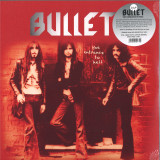
Top notch hard-rock / proto metal by post-Atomic Rooster and pre-Hard Stuff band BULLET, featuring the explosive guitar & vocals of JOHN DU CANN (The Attack, Andromeda, Atomic Rooster) plus bass player John Gustafson (Quatermass, Roxy Music, Ian Gillan Band) and PAUL HAMMOND (Atomic Rooster) on drums.
Their legendary studio recordings from 1970-71, now for the first time on vinyl.
*Gatefold sleeve with detailed liner notes and photos.
RIYL: HARD STUFF, CAPTAIN BEYOND, URIAH HEEP, DUST…
“…gritty sounding, blues based power trio built around John Du Cann’s unlimited arsenal of crunchy guitar riffs and scorching solos…”
Ryan Sparks (Sea Of Tranquility)
"We find ourselves venturing into the depths of a rugged terrain. In our hands, we hold stones and minerals, each possessing its own distinct texture, weight, and sonic potential. It is through the artistic touch and through the musical instruments that these earthly treasures, once dormant, are awaken to life." — Sara Oswald + Feldermelder
The 3rd collaboration of prolific cellist Sara Oswald and electronic musician Feldermelder evokes captivating sensations that oscillate between impending doom and hope. The albums' sonic journey is highly immersive, transporting the listener from one cerebral landscape to another. The transformative nature of metallic elements being integrated in sustained orchestral tones weaves the sonic tapestry, resulting in a captivating experience for the listeners. The organic sounding — reminiscent of minerals' timbres — brings a touch of brightness and a distinctive edge, while the orchestral harmonic structures lend a sense of grandeur and continuity. The origins of this music remain enigmatic, while the tracks of the album gradually unveil concealed aspects and the hidden truth.
One can step into a realm where melodies are reborn, as Sara Oswald's cello spins tales and emotions burst forth. Nature's eternal splendor intertwines with the essence of music, as she infuses harmonies with the soul of mountains. Vibrant hues come alive with delicate strokes, and cascading notes resonate with a select few. Feldermelder conjures profound echoes that swirl like ancient whispers of the earth's primordial past. He sculpts textures, from fragmented glitches to expansive atmospheres, that warp the fabric of reality. The two musicians merge together harmoniously, blending the acoustic and electronic worlds into a transcendent unity. This fusion of contrasting elements adds a unique and intriguing quality to the music. The cello's warmth merges with pulsating electronic beats, creating a symphony of contrasts and sonic upheaval. Each composition is woven in intricate layers, combining electroacoustic architecture with delicate precision. A subtle balance of chaos and control permeates the music as it meanders through the labyrinth of the mind. The soundscape unfolds like a grand tapestry, distant echoes murmuring like grains of sand.
Trained in baroque cello and advocating improvised music, Sara Oswald is the perfect match for sound artist and electronic musician Feldermelder. She plays solo, composes for film and theatre and collaborates with musicians like The Young Gods, Pascal Auberson, Sophie Hunger and Julian Sartorius. Feldermelder is a polymathic creative whose artistry spans composition, sound design, installation and code. He is co-founders of -OUS and part of Encor.studio, a collective of artists who specialise in creating immersive audio-visual installations. Through his work, he explores the idea of secrecy and its impact on our lives, using music and sound to create a thought-provoking and immersive experience for his audience.
In 1975, under the oppressive air of military dictatorship in Brazil, brothers Lelo and Zé Eduardo Nazario invited bassist Zeca Assumpção to join their musical experiments in a basement under Sao Paulo’s Teodoro Sampaio Street. As teenagers, the trio had already been playing together in Hermeto Pascoal’s Grupo, alongside guitarist Toninho Horta and saxophonist Nivaldo Ornelas, and it was while working together under Hermeto’s direction that the Paulista rhythm section (as they were then known) began to realise their own potential.
With many nightclubs and venues closed in the mid-70s and government censors dictating the output of radio, TV and art galleries, many Brazilian artists fled during the years of dictatorship. But underground, Grupo Um were fusing avant garde ideals with contemporary jazz and Afro Brazilian rhythm; making phenomenally free and expressive music - in stark contrast to the sterile, conservative conditions being imposed above ground.
Just like Hermeto Pascoal’s Viajando Com O Som from the following year, Starting Point was recorded over two days at Vice-Versa Studios, by revered engineer Renato Viola. The studio was one of the best in Sao Paulo and musicians communicated with engineers through cameras and a monitor, allowing the group complete immersion in the process. They also made use of the studio’s hemispherical tiled room, which served as an acoustic reverberation chamber.
The album begins with Zé Eduardo Nazario’s thunderous drum solo on “Porão da Teodoro”, before clearing the clouds with the lone Berimbau which opens “Onze Por Oito”. Built around a hypnotic electric bass line, heady Fender Rhodes improvisations, and more rip-roaring drums, it’s a rapturous, electrifying freak-jam in 11/8.
Like some invertebrate deep-sea curiosity, the free-form “Organica” is made up of Lelo Nazario’s playfully eerie prepared piano, with Zé Eduardo’s percussion flurries darting around Assumpçao’s double bass. The equally non-conformist, percussion-only piece “Jardim Candida” features many of Zé Eduardo’s home-made instruments, including a long saw blade played with vibraphone sticks and violin bow. While working with Hermeto, Zé Eduardo famously built his own all-in-one percussion set-up known as the “Barraca de Percussão” (Percussion Tent) - the first of its kind in Brazil, which he would also use on Hermeto Pascoal’s Viajando Com O Som and throughout his career.
“Suite Orquidea Negra'' (Black Orchid Suite) was written by Lelo Nazario as the score for an imaginary movie - the story of a rare, black orchid which produced a substance meant to cure all diseases, but which had mysteriously disappeared from the laboratory… “As a screenplay it’s not very good” reflects Lelo in jest, “but the music ended up being very interesting, the way its parts are chained to one another carries a little of the mystery I imagined for the movie.”
The album closes with the triumphant “Cortejo dos Reis Negros” (Procession of Black Kings) - a groovy variation on the Maracatu rhythm, with a two-note bassline underpinning piano improvisations, exultant wordless vocals, cuicas, slide-whistles and a very special guest appearance from Zé’s dog Bolinha.
Starting Point was to mark the inception of one of Brazil’s most daring instrumental groups. Their debut now sits in the lofty echelon of otherworldly 70s Brazilian music, alongside the likes of Marcos Resende & Index’s self-titled debut, Cesar Mariano & Cia’s Sao Paulo Brasil, Azymuth’s debut and indeed Hermeto Pascoal’s Viajando Com O Som. But just like all of those titles, which were either shelved or largely ignored at the time, Grupo Um - so radically ahead of their time - struggled to find a label to release their debut album. So Lelo kept the tapes safe in his archives, which is where they sat for almost half a century. Finally, almost fifty years later, this mesmerising piece of history is here, and it was only the beginning...
Grupo Um’s Starting Point will be released by Far Out Recordings, on vinyl LP, with an insert featuring unseen photos and liner notes by the Nazario brothers, as well as a CD on 17th February 2023.
British musician, multi-instrumentalist, producer and DJ cktrl returns with the release of his new EP ‘Yield’. Born from a desire to change the narrative around contemporary Black British music, the boundary-pushing musician aims with this project to prioritise the art of bonafide musicianship. A stark departure from cktrl’s previous work, ‘Yield’ is a celestial and palpably more inward body of work that harkens back to the pre-electric age of modal jazz while simultaneously pulling in elements from the disciplines of classical and baroque music. Speaking on the project’s sonic identity, cktrl says: “I want to be able to show that you can make things from scratch again that have that feeling and beauty without having to sample an old record. Even though that’s an art-form within itself, I want to show raw orchestration and instrumentation can be the sole source” The origins of the title came from a period where cktrl was looking to find solace in himself after an introspective period of grief and heartbreak. As an intentionally instrumental project with minimal vocals, cktrl wants prospective listeners to see these new songs as guided meditations where they can wholly insert themselves in it. Eliciting and reaping whatever feelings come to the fore. Speaking on what ‘Yield’ means to him as a concept, cktrl explains: “Some people who I've asked to define the word ‘yield’ have looked at it from a harvest point of view, whereas others have seen it as something to submit to, to render, like you're giving up yourself. I see it as a barometer for how you feel - no matter if you're at your lowest or your highest vibration, you still need to show up for yourself. You still have to be present. It’s about getting the best from yourself no matter where you are in life” The new project is the follow up to last year’s ‘Zero’ which featured collaborations with esteemed contemporaries like the GRAMMY-nominated Mereba and anaiis. Upon the project’s release, it was met with a plethora of critical acclaim from highly regarded publications and platform such as British Vogue, Dazed, CRACK Magazine, Resident Advisor, NOTION, Harper's Bazaar and ES Magazine for its sprawling and experimental scope, spanning avant-garde jazz, classical music, alternative R&B and electronica. cktrl has a tune for every occasion: as content making beats by himself at home in Lewisham as he is amongst this generation’s fashion and cultural vanguards. Music has been a part of his life for as long as he can remember: from clarinet lessons throughout his school life to fond memories from his NTS days. Moulded by a unique blend of his West Indian heritage, years of classical training in both the clarinet and saxophone, cktrl strives to do what hasn’t been done before. His approach to creation is decidedly wide-ranging and broad. In fact, where sonic descriptions might fail to encompass the breadth of cktrl’s scope, three words surface when he unpacks his musical aims: freedom, range and feeling. Elsewhere, throughout his career, cktrl has been recognised and heralded by fashion and film VIPs as he firmly embeds himself within the black cultural renaissance emerging here in Britain. Acquiring a global network of creatives that include the late Virgil Abloh, Bianca Saunders, Tremaine Emory, Saul Nash, Maximilian Davis, Ahluwalia, Stephen Isaac Wilson, Sean Frank, Campbell Addy, Ib Kamara and Jenn Nkiru who secured him a cameo in Beyoncé’s ground-breaking film ‘Black Is King’.
Luuk van Dijk has unveiled his hotly-anticipated debut album First Contact, out 11th November on his own Dark Side Of The Sun label. The Dutch DJ and producer’s maiden LP is the end result of a long and intense voyage of discovery.
Years in the making, it’s a project that Luuk can fully stand behind and be proud of. Next to a search for his own identity and his own place in music, it has also become a passage
through time.
By far his largest body of work to date, the 13-track release kicks off with the suitably-titled ‘Cosmiq’, a deep, grooving sonic exploration that immediately sets the tone. “Because of this
track I wanted to make an album to showcase my other kind of music that people won’t maybe expect of me,” Luuk explains.
Next up is the shimmering, ethereal sounds of ‘Love You’, a track that features the irresistible vocals of US singer-songwriter Dawn Richard and will be released as a single in October. “She really brought this track to a whole new level,” says Luuk. “I couldn’t be more happy with the result.”
Further collaborations come in the form of ‘Wolf’, a majestic, strings-led house cut featuring Steve Burton of oneofmanysteves; ‘Master Plug’, a deep, jackin’ number with Chicago artist
Kid Enigma; and the Detroit-indebted ‘Together We Rise’, punctuated by the spiritual vocals of MC Roga. “I tried making a track the way they used to make music,” Luuk says of the latter.
“With as few machines as possible, just a mixer, sampler and some synths.” Additional highlights include the enchanting ‘Let The Bass Kick’, orchestral ‘Lightning
Striking’ and hypnotic ‘Hot Stuff’, before ‘Knowing How To Love’ closes things out on a peculiarly wistful note. “The last track of the album, also a track that started as an interlude and
ended up being a full song,” says Luuk.
“This song basically sums up how I’ve been feeling the years 2020 and 2021, very emotional, sad, but also hopeful. Everything will be alright.”
One of the hottest new names coming out of Amsterdam’s bustling club scene, Luuk van Dijk is currently making waves in international waters with his infectious take on spirited house
music.
He has already released on labels like Hot Creations, Cuttin’ Headz, Solid Grooves Records and Eastenderz have established his name as a house music prodigy.
He launched Dark Side Of The Sun in 2020 with the aim of exploring a broader approach to his signature style.
First Contact represents a vivid sonic snapshot of one of electronic music’s brightest young talents.
Early DJ Support :
Jamie Jones
Marco Faraone
Carl Craig
Yuksek
Sasch BBC
CamelPhat
Paco Osuna
Stacey Pullen
Tocadisco
Revered Danish producer and live performer KÖLSCH follows his 2013 hit album "1977" (KOMPAKT 276 CD 107) with the new full-length "1983", again chaining up heroic techno tracks for a grandiose sonic journey to the vibrant heart of today's dance floor. PRIORITY RELEASE
Coupling contemporary production pizzaz with nostalgia-tinged soundscapes and sweeping melodies, this opus acts as both a skilfully composed portfolio of personal memories and a sublime collection of crowd-charming cuts - a modern classic in the making, coming from a master of his craft.
1983 features collaborations with Gregor Schwellenbach, Waa Industry and WhoMadeWho's Tomas Høffding.
Hot on the heels of SPEICHER 84 (KOMPAKT EXTRA 84), featuring club crackers DERDIEDAS and TWO BIRDS, the latest full-length offering from KÖLSCH is very much a travel album: "When I was a kid in 1983, we used to drive through Europe every summer on the way to the south of France", he explains. "A lot of my early music memories stem from these long travels, as we would listen to all my father's favorite records on the cassette deck. After getting a walkman, I would make up my own soundtrack for travelling, with early electro and hip hop creeping into my life. My father of course did not like it, and it never grace the official cassette deck of the car, obviously"
These trips became a primary source of inspiration to a hungry young mind forced to sit on the backseat of a car for several days: "they were also journeys through the seasons. In Denmark, it would be spring time, so I could nearly see us driving through spring into the summer. The scenery would change, and so would the mood in the car." Informed by the symbolic quality of these slightly gauzy childhood memories, KÖLSCH's unique melange of emotional and functional elements works exceptionally well for the full-length format - a seamless transition of musing introspection and explosve expression, where catharsis never seems far away in dance-ready techno vignettes like MOONFACE, UNTERWEGS or PACER.
From beatless opener and title track 1983 to the filigreed piano banger DIE ANDEREN or the bleep-infused synth-fest E45, each cut operates as its own little time capsule, storing bits and pieces of recollection and then magically transforming them into epic, beat-driven soundscapes. Confronted with other producers' input (and other memories), these traits find themselves extended in the most interesting ways - TALBOT, THE ROAD and CASSIOPEIA (also featured on KOMPAKT EXTRA 79) make excellent use of GREGOR SCHWELLENBACH's emotive orchestral flourishes, while BLOODLINE's lyrics come to life thanks to the distinct timbre of TOMAS HØFFDING of WHOMADEWHO fame. A new powerful take on an earlier collaboration, PAPAGENO 30 YEARS LATER not only rejoins WAA INDUSTRY on vocal duty, but also ends the album on a wonderfully elegiac, yet hopeful note - basically turning water into wine, as we've come to expect from KÖLSCH.
- The First Song
- Wicked Gil
- Our Swords
- The Funeral
- Part One
- The Great Salt Lake
- Weed Party
- I Go To The Barn Because I Like The
- Monsters
- St. Augustine
- (Biding Time Is A) Boat To Row
- Part Two
- Coal Mine
- Worry Song
- The End's Not Near
- The Funeral (Demo Version)
- Wicked Gil (Demo Version)
- Our Swords (Demo Version)
- I Go To The Barn Because I Like The / Monsters (Live At The Crocodile)
20-jähriges Jubiläum: Erweiterte und remasterte Vinyl-Neuauflage des epochalen Debüts von Band of Horses, dem Indie-Rock-Klassiker "Everything All The Time" aus dem Jahr 2006. Diese erweiterte Ausgabe kommt im Klappcover und einer Bonus-LP mit seltenem und unveröffentlichtem Material, alles frisch gemastert von JJ Golden und gepresst auf opakem gelbem Vinyl. Musikalische Transzendenz zu erreichen, ist echt schwierig. Wenn es klappt - ein großes ,wenn" -, dann passiert das ganz natürlich, und vielleicht weiß das niemand besser als Band of Horses, deren bahnbrechendes Debütalbum ,Everything All The Time" auch nach zwanzig Jahren noch genauso lebendig und, wenn man so sagen darf, transzendent wirkt wie bei seiner Veröffentlichung im Jahr 2006. Gitarrist und Sänger Ben Bridwell gründete Band of Horses 2004 in Seattle, nachdem er fast zehn Jahre lang bei Carissa's Wierd, den melancholischen Lieblingen des Nordwestens, gespielt hatte. Carissa's Wierd machten wunderschönen orchestralen Pop, dessen Songs unerschrockene Geschichten von Herzschmerz und Verlust erzählten, gewürzt mit defätistischem Humor. Band of Horses entstand aus den Überresten dieser beliebten Band, getragen von Bridwells warmer, halliger Stimme und seinen holzigen, verträumten Songs, die vor Spannung, Sehnsucht und Hoffnung nur so strotzen. Mit einem neuen Vertrag bei Sub Pop und einer Reihe großartiger Songs im Gepäck nahm die Band ihr Debütalbum "Everything All the Time" mit Produzent Phil Ek in den Avast Studios in Seattle auf. Mal rau und episch (,The Great Salt Lake"), mal zart und nachdenklich (,St. Augustine", ,Monsters") - "Everything All The Time" ist ein Album, das wunderschön von zerbrechlichen Höhen und Tiefen geprägt ist. Das ist Teil des Genies von Band of Horses: Sie schaffen intelligente, klassische Bewegungen innerhalb ihrer Songs und meistern dabei eine perfekte Balance zwischen Verzweiflung und Hoffnung, Ruhe und Manie, Liebe und Angst. Und natürlich gibt es da noch die massive Single ,The Funeral", die zu einem prägenden Song dieser Ära wurde und weiterhin neue Generationen von Fans und Künstlern gleichermaßen inspiriert. Neben unzähligen Film- und TV-Platzierungen wurde der Song von Kid Cudi gesampelt und vom renommierten Produzenten und Multi-Instrumentalisten Gryffin in einen 2025 Dance Edit verwandelt, der allein in kürzester Zeit 2,5 Millionen Streams ergattert hat. Anlässlich des 20-jährigen Jubiläums des Albums präsentieren Sub Pop und Band of Horses nun die definitive Momentaufnahme der Band zur Zeit von "Everything All The Time". Für diese Jubiläumsveröffentlichung wurde das Album komplett remastered, das Artwork überarbeitet und zu einer Gatefold-Hülle mit Liner Notes von Phil Ek erweitert. Begleitet wird das Album von einer zusätzlichen LP mit Bonustracks, darunter die Tour-EP von 2005, eine Fundgrube bisher unveröffentlichter Studio- und Live-Tracks sowie Raritäten wie ,The End's Not Near" (zu hören in The O.C.) und eine Demoversion von ,The Funeral".
- African Sunrise
- The Last Day
- Portrait Of Vivian
- Blue Moses
- African Sunrise
- The Last Day
- Portrait Of Vivian
- Blue Moses
- African Cookbook
- Hi Fly
- Blues For Strayhorn/Portrait Of F.e. Weston
- African Sunrise
- Congolese Children
- C- Jam Blues
- African Cookbook
- Hi Fly
- Blues For Strayhorn
- Portrait Of F.e. Weston
- African Sunrise
- Congolese Children
- C-Jam Blues
- Hi Fly
- Blue Moses
- Caravan
- Hi Fly
- Blue Monk
- St Thomas
- Blues Moses
- Hi Fly
- Blue Moses
- Caravan
- Hi Fly
- Blue Monk
- St Thomas
- Blue Moses
The box set includes:
Randy Weston & African Rhythm Orchestra - Brooklyn Acadamy Of Music 1985
(180g gatefold LP / CD)
Randy Weston Big Band - Montreux Jazz Festival 1985 (180g gatefold 2LP / CD)
Randy Weston & Monty Alexander - Montreux, Zaragoza, Ratatuelle Jazz Festivals
1988 (180g gatefold 2LP / CD)
4-page LP sized booklet
liner notes by producer Jacques Muyal
hand signed by Jacques Muyal
embedded brass med
- 1: Melantroduction
- 2: Without
- 3: Adorer And Somebody
- 4: A Summer's End
- 5: Solicitude, Silence
- 6 2: Sec. And A Tear
- 7: Lastdance
- 8: Morning... Gray
- 9: Diotima
- 10: Re-Silence
For here lies one of the most influential bands in the realm of gothic metal, a group with doom and death metal roots that has flourished for over three decades, boasting thirteen albums that have garnered devoted acclaim. This injustice is now being set right by The Circle Music , beginning with the vinyl release of the classic album "Burning: A Wish", which emerged twenty-four years ago. "Burning: A Wish", released in the twilight of the year 2001, stands as a dark reliquary of dreams lost to the velvet fog of melancholy. To revisit it now, two dozen years later, is to unseal a time capsule of gothic ache, doom- laced longing, and the tormented tenderness that only Lacrimas Profundere could conjure at their creative height. It was a candle-lit corridor between worlds. A slow fall into velvet shadows. A scream muffled by rain.
By the time "Burning: A Wish" was released, Lacrimas Profundere had already begun to evolve from their early death- doom origins, shaping their identity with the sophistication of seasoned mourners. The death growls had receded, replaced by the haunted, baritone croon of Christopher Schmid, whose voice is an echo from a chapel ruined by time. Yet, while the growls faded, the emotional gravitas remained intact, transmuted into melody, into baroque gloom, into something more sorrowfully refined. Produced with lush, theatrical clarity, the album never drowns in its own atmosphere, it breathes with it, moves with it. The soundscape is dominated by somber guitar textures, languid tempos, and subtle orchestral touches. From the very first notes, it is clear that this is music for ruined lovers and moon-drenched graveyards.
This is the hallmark of Lacrimas Profundere 's style: an emotional minimalism that does not explain or elaborate, but merely opens wounds and lets them breathe. That this album has remained, until now, absent from the warm embrace of vinyl is both tragic and oddly poetic. For what format better suits a record such as this than the one that cracks and hisses like an old seance? Vinyl is tactile, intimate. It requires attention, reverence. To place Burning: A Wish on a turntable is to light a candle in the dark.
There’s an alternate reality where everyone makes a living wage and the cleanest buses you’ve ever seen arrive every other minute. Where the most intense songs are about confessing your love to a crush at the apple orchard, and where gentle feelings and chaotic energy are inseparable best friends. This is the timeline where Cootie Catcher is right at home. This Toronto based four-piece exudes both vulnerability and unbridled excitement, creating a sound that hypercharges the open-hearted tenderness of twee pop with spiraling synths and giddy electronics. New album Something We All Got is the clearest and most vibrant reading of Cootie Catcher’s vision yet, with songs of sweetness, nervousness, and expectancy that beam out unguarded.
After releasing music made primarily in basement recording environments, Something We All Got is the band’s first flirtation with studio recording. The edges are still sharp, however, with some parts assembled from time-honored lo-fi methods and fun, personally-sourced samples seeping into the production. The sound is explosive and upbeat, with euphoric guitars, bubbly synth lines, speedy drums both played and programmed, and all other manner of sound constantly colliding. Cootie Catcher has three songwriters, Sophia Chavez, Anita Fowl, and Nolan Jakupovski, all of whom have distinctive voices but still manage to overlap in their writing on shared concerns like navigating the lines of romantic and platonic relationships, their city’s social scenes, and struggles in both the microcosmic experience of playing in a band and the zoomed-out challenges of living through late-stage capitalism.
Joy still touches every surface of Something We All Got. “Quarter Note Rock” bounces around the room in a fit of jangling guitar chords, scratched samples, and interplay between breakbeat loops and somersaulting live drums. It’s a blast of positivity even with lyrics about how disappointing it can be to meet your heroes. A smiling electro pop instrumental supports lyrics about having to step painfully away from an almost realized love on “Gingham Dress,” a song that subverts themes of domesticity as a backdrop for the dashed wilt of hopeless devotion.
Cootie Catcher rolls down hills and jumps through flaming hoops throughout Something We All Got without ever dumbing down the visceral emotions that drive these songs. There’s a palpable tension between the band’s exhilarating sonics and the raw, often uneasy sentiments expressed, but it’s an integral part of what makes them unique. Rather than hide behind the kind of calculated vagueness that plagues so much of the indie rock landscape in the time of cursed algorithms, Cootie Catcher runs full-speed toward every confusion and excitement, fearlessly direct and embracing the reality they’re in.
Experimental musician Greg Stasiw presents his debut album of radiant, free-flowing electronics ‘Guesswork’. Music for psychoactive exploration made over a four year period, incorporating ambient, minimalism, intricate sound design & Japanese environmental music. An exceptional listening experience of wonder, tranquility, melancholy & discovery, contemplating the relationship between sound & space.
Greg Stasiw is an experimental musician, visual artist and writer from New England, Northeastern USA. An itinerant polymath, Stasiw has spent time living, working and traveling in New York, Tokyo, Toronto, Paris, Boston, and Bratislava. As well as studying anthropology, animation and illustration, Stasiw has always had a close connection with music.
His earliest musical involvements started with ambient music on Sunday drives, microcassettes, the Windows 98 Sound Recorder and free play with Casio keyboards. Then came a formative procession of piano lessons, orchestras, choirs, taiko, metal, indie rock, tinnitus, and ultimately; the acquisition of music production software.
With his debut album ‘Guesswork’, the aural and visual inspirations that underpin Stasiw's creative life intersect, in a pure, radiant soundworld of space, depth and immaculate clarity. Futuristic, pellucid soundscapes incorporating ambient, minimalism, intricate sound design, and Japanese environmental music are deftly arranged with evanescent chimes, serene tone float, suspended organ notes and curious sci-fi resonances.
Like stepping into some space age meditation garden, if soundtracked by the likes of Hiroshi Yoshimura, Harold Budd, Norman McLaren, and Pauline Anna Strom, the thirteen tracks of ‘Guesswork’ create an exceptional listening experience of wide-eyed wonder, sleek tranquility, gentle melancholy, and singular discovery.
- 1: Of Willows And Shadows
- 2: Symphonia Arcana
- 3: Child Of Twilight
- 4: Elixir Of Night
- 5: Blackthorn Winter
- 6: Lady Of Light
- 7: Dawn Of Avatars
- 8: Forest Of Forgetting
- 9: The Buried Well
- 10: The Mirror
- 11: Nepenthe
- 12: Tears Of The Dragon
"EYE OF MELIAN open the gates to a different world with their new album Forest Of Forgetting, out February 20th, 2026 via Napalm Records. Named after a powerful primordial singing spirit from the world of J. R. R. Tolkien, EYE OF MELIAN draws inspiration from the master of fantasy and expands on his ethereal concept. Created by Delain’s Martijn Westerholt and featuring Auri’s Johanna Kurkela as a lead vocalist, EYE OF MELIAN’s Forest Of Forgetting is a masterclass in symphonic songwriting so whimsical the real world fades away. Completing the all-star lineup on their debut with Napalm Records are orchestral arranger Mikko P. Mustonen and backing vocalist and lyricist Robin La Joy, blessing twelve lush compositions with immortal life. Mesmerizing from the first gentle notes of opening track “Of Willows And Shadows”, Forest Of Forgetting weaves otherworldly piano melodies and epic strings around angelic vocals worthy of the powerful Valar themselves. “Child Of Twilight” deepens EYE OF MELIAN’s dreamy and bombastic Hollywood movie score approach, carefully building up an exceptionally enchanting atmosphere that carries on into the equally cinematic “Blackthorn Winter”, ever so elegantly broadening the view into the alluring realms the band is melodizing. “Dawn Of Avatars” features Nightwish multi-instrumentalist Troy Donockley on flute and uilleann pipes, as well as hurdy-gurdy fairy Patty Gurdy, before EYE OF MELIAN turns in the direction of heavy metal with a charming rendition of Bruce Dickinson’s anthem “Tears Of The Dragon” (originally released on Balls To Picasso in 1994 after the singer had left Iron Maiden). Forest Of Forgetting also comes with all its tracks as instrumental versions to dwell in the impressive orchestrals alone. With this opulent album, EYE OF MELIAN extends an invitation to faraway lands full of wonder. Forest Of Forgetting unfolds as quite the opposite of its title: utterly unforgettable."
- Elegia
- Voce In Xy
- Canti Delle Sfere
- Frammenti Di Sonno
- Movimenti E Silenzi Per Spazi Bianchi
- Antico Adagio
- Ondulazione Melodica
- Motus
- Frammenti Di Suono
- Vocis
- E Echi Armonici Part 1
- F Echi Armonici Part 2
For the first time, all the 1978 recording sessions of Lino Capra Vaccina's legendary Antico Adagio - including Frammenti da Antico Adagio and Echi Armonici da Antico Adagio - collected in one definitive deluxe edition. Minimalism, and so much more. Sheets of resonance, stunning harmonic interplay, intricate rhythms rising as one. Sidelong works of pulsing, hypnotic, ritualistic drone built from vibraphones, marimbas, gongs, bells, and cymbals, threaded by the sustained vocal tones of Juri Camisasca and Dana Matus. A trance-inducing, meditative, cosmic world of sonic interplay - the world beyond, joined with that which lays within.
Before an aberrant idea of progress ludicrously sped up our daily lives, even in hectic Milan it was possible to "play slowly" - with no pressure, simply following the path your art was showing you. This music moves between modal fascinations, ritual evocations, and states of hypnotic trance, evoking the acoustic environment of Tibetan and Zen Buddhist ceremonies and the temporal structures of Noh theatre, from which Vaccina took the name of his original label, Nō. Now, fittingly, this complete collection appears on Ubi Kū, the label of the Italian Buddhist Union.
Lino Vaccina (1953) first gained note as a member of Aktuala, creating a hybrid of rock, avant-garde, and ancient musics while incorporating sonic traditions from across the globe. After leaving in 1974, he studied at Milano's Civica Scuola di Musica, collaborating with Franco Battiato and Juri Camisasca, and forming Telaio Magnetico in 1975. In 1978 he self-released Antico Adagio in a tiny edition and wouldn't be heard from again until 1992. From 1979 to 1985 he was percussionist with the Orchestra of Teatro alla Scala under maestros such as Abbado and Ozawa. His career has been marked by an incredibly high bar of quality and a tragically slim recorded output - a rigorous and sensual language fusing Oriental, Mediterranean, and African influences with ritual elements and a cosmic sense of time.
As Massimo Torrigiani writes: "Lino Vaccina's music captivates through its internal coherence and its ability to generate states of suspension and deep listening - through undulations, small melodic fragments, dialogues between acoustic instruments and resonances that seem to evoke a phantom orchestra. An example of personal exploration, discipline and openness that speaks across time to anyone willing to be drawn into its sound."
Frammenti da Antico Adagio and Echi Armonici da Antico Adagio contain material from the original sessions, restored and issued by Die Schachtel in 2014 and 2017. The new masters, prepared by Giuseppe Ielasi, are based on those restorations and the original material. The package includes previously unpublished photographs from the May 1978 sessions and liner notes by Mauro Radice in Italian, English, and French. Cover art by Dana Matus. Printed by Legno, Milano & Mother Tongue, Verona.
Personnel: Lino Capra Vaccina (vibraphone, marimba, tablas, wooden drums, darbuka, cymbals, gong, metal sheets, bells, bass drum, tom, snare drum, piano, voice), Dana Matus (voice, percussion, cetra), Juri Camisasca (voice), Mario Garuti (violin), Roberto Mazza (oboe). Original production by Massimo Villa & Lino Vaccina with Piero Cannizzaro. Recorded May 1978 at Circle Studios, Milano.
The heights of the Italian avant-garde, at their very best.
- Top Gear
- Yorkville
- The Hunter
- Summer Girl
- Free And Easy
- Blue Bird
- Big Game
- Heat Haze
- Hot Pants
- Shady Blues
- Bootsie
Wewantsounds is delighted to announce the reissue of Music By Lee Mason, the cult classic from the Chappell Recorded Music Library, originally released in the UK in 1971. Credited to Lee Mason & His Orchestra, the album is in fact the work of renowned British composer and arranger Pete Moore - best known for producing the iconic "Asteroid" theme in 1968 for the Pearl & Dean cinema advertising company. One of the funkiest library albums of its era, blending cinematic tension, funky grooves, and jazzy undertones, Music By Lee Mason features the track "Shady Blues," famously sampled by Madlib. Newly remastered and featuring liner notes by Kevin Le Gendre, this long-overdue reissue brings a lost classic back to vinyl for the first time since 1971.
We Jazz Records kicks off their new series of archival 7" releases with Esa Pethman "In Belgium 1967" released 23 September 2022. The two-tracker is licensed from the Belgian VRT radio archives and both of the pieces are previously unreleased. Finnish jazz legend Pethman, heard here on alto flute and tenor sax, joins forces with European jazz greats such as Heinz Bigler, Uffe Karskov and Jean Fanis. This is a small but valuable piece of unheard European jazz history from the early heyday of modern jazz. The physical release is a quality "inside-out"-styled EP with 3mm spine and small center hole on the 45rpm vinyl.
An excerpt from the liner notes by Mikko Mattlar:
"Esa Pethman (b. 1938) was one of the key figures of modern Finnish jazz in the 1960s. His album The Modern Sound Of Finland was the first Finnish modern jazz album and his composition "The Flame" a true modern Fenno-jazz evergreen.
Pethman was born in Kuusankoski, 135 kilometres from Helsinki in the Kymenlaakso area. The jazz scene was active even though it was an area of rural landscapes and paper mills. Pethman discovered jazz when he heard a Charlie Parker record being played at a local music shop in the late 1940s. Following Parker, bebop became his favourite style of jazz.
Young Pethman played flute and saxophone in local bands who accompanied schlager singers. They played tangos and waltzes for dancers, but usually started a typical dance event with an hour of jazz. In 1959 Pethman moved to Helsinki to study music at the Sibelius Academy. Back then it was a strictly classical music academy, but Pethman later described the studies as crucial for his development and career. He quickly made his way to studio sessions and into the best orchestras in Helsinki.
As a student of composition, Pethman also began writing his own music. "The Flame" was a melody he just got on his mind one night, and he decided to write it down. The catchy composition was released as a 7" single in 1964, a year before Pethman's debut album. Both records stand as benchmarks for modern Finnish jazz. The album consisted entirely of Pethman's compositions, not versions of jazz standards like a lot of the Finnish jazz released until then.
In the mid 1960s, Finnish jazz was also taking its first international steps. Pethman's quintet took part in the first Montreux Jazz Festival in Switzerland in June 1967. At the Montreux jazz band competition, the quintet came in fourth of the twelve contestants. Despite not winning the competition, the band got an honourable mention, and Pethman was now recognized outside Finland.
In December 1967 Pethman travelled to Brussels. His visit was organised by the national Finnish broadcasting company Yleisradio and their jazz program producer Matti Konttinen. Konttinen was supposed to go to Brussels with Pethman, but the musician ended up traveling alone.
In the Decca recording studios Pethman played two songs. He recorded a version of his most famous composition "The Flame", where he played the alto flute and was accompanied by Belgian musicians. On Swiss saxophonist Heinz Bigler's composition "Like Steel", Pethman played the tenor saxophone. The band was now more international, consisting of Bigler, the Italian Francesco Santucci, the Dane Uffe Karskov, a Belgian rhythm section and Pethman. After 55 years, Pethman still remembers Bigler's remarkable skills as a saxophonist.
The two-day visit included the recording session, a dinner and a concert. Pethman and the other non-Belgian musicians came to Brussels mainly to play at a jazz concert organised by the European Broadcasting Union EBU. They played at the studio first, and the concert was held the following day. Pethman and all the other soloists played as members of an international big band. The studio and live session were produced by the Belgian Radio and Television jazz section leader Elias Gistelinck."
- Tomcat Disposables
- Becoming The Lastnames
- Cicada Days
- Euthanasia
- Falling Up
- That's Enough, Let's Get You Home
- Um, I Mean, It's Kind Of A Lot
- Half-Decade Hangover
- Vampire Reference In A Minor Key
- You Liked This (Okay, Computer!)
- The Main Character
- Against The Kitchen Floor
- Sex, Drugs, Rock 'N' Roll
- Big Fat Bitchie's Blueberry Pie, Christmas Tree, And Recreational
- Willard!
- White Noise
A pandemic album of songs of heartbreak, virality, and dead rats, which Wood called "goodbye cruel world: the musical." The revealing chamber pop/folk album "In Case I Make it" (ICIMI), which Will Wood playfully dubbed "Goodbye Cruel World: The Musical," turned out to be a surprisingly strong followup to his chaotic and sardonic previous release, "The Normal Album." While divisive among some fans due to its gentler sounds and more traditional vocal stylings than most of his last work, ICIMI attracted new, older audiences and showed a more personal side that provided a new context to his discography. Widely considered to be some of his most powerfully emotional work, both the harshly introspective and humorous songwriting, as well as its unique delivery, are still distinctly Will Wood in their experimental nature and uncompromising unwillingness to conform to the expectations of both die-hard fans and audiences at large. In 2021, the underground singer-songwriter was suddenly the subject of unexpected online attention, which, in tandem with mental health struggles, inspired him to put out a "musical suicide note," intended to express parts of his artistic and personal identity that had gone largely unseen by a fanbase he felt misunderstood. Leading the album with intentionally algorithm-unfriendly singles and putting an eight-minute love ballad as the second track on the LP, Wood aggressively redefined himself as being more than just a handful of wacky, unwitting viral pops. Ironically, the surprise viral success of the deep cut "The Main Character," a relentless satire of online culture, drew attention to the album and its second biggest hit, the angst-ridden yet danceable "Against the Kitchen Floor." However, the immense orchestration and vulnerable writing have kept audiences coming back. Songs like "Euthanasia" and "Tomcat Disposables" have developed reputations as tearjerkers, and songs like "Cicada Days" and "White Noise" have become fan anthems in the years since.
- Then A Valley
- Graze The Bell
- No Deeper
- Offering
- Will We Be There
- All This Has To Give
- Rush Creek
- Being Flowers
0747742387647[30,88 €]
"Graze the Bell" ist eine Sammlung von bewegenden, faszinierenden Solo-Klavierstücken und das bisher reinste Werk von David Moore. Bekannt für seine atmosphärischen Kompositionen mit Bing & Ruth sowie seine Zusammenarbeit mit dem Gitarristen Steve Gunn und Cowboy Sadness, ist dies Moores erstes weit verbreitetes Solo-Klavieralbum. Wie das Albumcover - ein Foto, das Moore von Hand bestickt hat - abstrahiert die Musik persönliche Erfahrungen zu transzendenten Eindrücken. Moore nutzt sein Klavier, um meditativ die Conditio Humana zu erforschen, und macht "Graze the Bell" zu einem Zufluchtsort des Klangs. Im Laufe ihrer zahlreichen Veröffentlichungen haben Bing & Ruth häufig ihre Form und ihren Sound verändert, sich zu einer fünfzehnköpfigen Gruppe entwickelt und sind schließlich zu einer Trio-Konfiguration gelangt. Ihr jüngstes Album ,Species" stellte Moores Farfisa-Spiel in den Vordergrund, während eine nachfolgende EP mit dem gleichen Namen seine Solointerpretationen des Albums enthielt. Dieser lange Prozess der Destillation konzentrierte sich stets auf Moores Kompositionen für das Klavier und sein Verständnis davon. Nach zwei Jahrzehnten gefeierter Ensemblearbeit ist das Erscheinen von ,Graze the Bell" ein Moment, in dem sich der Kreis schließt, eine Heimkehr - nicht einfach zu einem Ort oder einer Zeit, sondern zu einem leuchtenden Zentrum, das beides übersteigt. Einige der Stücke auf ,Graze the Bell" waren ursprünglich für ein Album von Bing & Ruth geplant, wurden aber schließlich als Soloprojekt neu konzipiert. Moore nutzte nur das Klavier und versuchte, die bewährten Methoden, die er im Laufe der Jahre entwickelt hatte, weiter auszubauen. ,Ich möchte mich weiterentwickeln", sagt er, ,und dogmatische Denkweisen hinterfragen." Er öffnete sich aktiv für Experimente und suchte nach einer tieferen Präsenz in seinem Spiel, wobei er seine Beziehung zum Klavier und zum Leben neu bewertete. Moores Musik basiert zwar auf komponierten Noten und schöpft aus Lebenserfahrungen, doch die Quelle seiner Inspiration bleibt eher unbeschreiblich. Indem er Letzteres bewusst pflegte, entwickelte er eine natürliche Fähigkeit, sich in einen tranceähnlichen Zustand zu versetzen. Moore kann sich mit dieser Absicht hinsetzen und ist ,innerhalb weniger Sekunden" ,vollkommen dort". Von der ersten bis zur letzten Note basiert das Album auf dem atemberaubenden Klang eines ,bestialischen" Steinway Model D aus Hamburg von 1987. Dies hängt zum Teil mit seinem subtilen Spielstil zusammen, der manchmal an Stille grenzt. Moores anmutige Herangehensweise gibt dem Klang Raum und offenbart Nuancen des Klaviers, die viele Spieler gewöhnlich ignorieren würden. Solche Nuancen wurden während der Aufnahmen des Albums im renommierten Oktaven Audio in Mt. Vernon, New York, gepflegt. Der Klang des Steinway-Flügels des Studios wurde unter der Produktionsleitung des Grammy-Gewinners Ben Kane mit Unterstützung von Owen Mulholland lebhaft eingefangen. Um Moores experimentellen Ansatz zu unterstreichen, setzten sie Pitch-Correcting-Software kreativ ein, um die verschiedenen Register des Klangprofils des Klaviers zu orchestrieren. Der Ausdruck ,graze the bell" (die Glocke streifen) kam Moore vor Jahren aus heiterem Himmel in den Sinn. Er fand ihn poetisch und blieb ihm im Gedächtnis haften. Moore, der lange Zeit daran geglaubt hatte, dass das Leben eine Reise ist, an deren Ende man etwas erreicht oder ankommt, und dies zunehmend in Frage gestellt hatte, fand zunehmend mehr Sicherheit darin, einfach da zu sein, wo er ist. ,Es gibt keinen Gipfel - und keinen Weg dorthin", schreibt er. ,Nur die Hoffnung, dass wir, wenn wir Glück haben, gelegentlich die Glocke streifen." Und diese Erkenntnis hat er in sein Klavierspiel einfließen lassen. Mit diesem Album hat er sich bewusst dafür entschieden, Eigenheiten, sowohl seine eigenen als auch die des Instruments, voll und ganz anzunehmen. Anmut, subtile Klänge, rohe Gesten und glückliche Zufälle werden hier geschätzt. Die Stickerei auf dem Cover zeigt seine Frau beim Drachensteigen an der Küste von North Carolina. Sie wurde während der Abmischung des Albums über zehn Monate hinweg methodisch mit Kreuzstich gestickt, und viele persönliche Lebensereignisse - traurige und hoffnungsvolle - sind in seine Handwerkskunst eingewoben. Da Moore selbst mit einer bipolaren Störung zu kämpfen hat, dienten sowohl das Album als auch die Stickerei als kathartische Mittel der Meditation für ihn. Moores Klavierspiel enthält eine versteckte Karte persönlicher Erfahrungen, die bezaubernde Wiederholung seiner Melodien navigiert seinen Weg und unseren durch die Skalen des Raums. Moores Musik weckt verborgene Gefühle, erweckt uns und erinnert uns an unser gemeinsames Zentrum. In einer Zeit, in der unsere Menschlichkeit regelmäßig abgelenkt und beeinträchtigt wird, lässt ,Graze the Bell" das Herz erklingen, das wir als unser wahres Zuhause kennen. David Moores "Graze the Bell" wird über RVNG Intl. veröffentlicht - eine spirituelle Heimkehr, wenn man so will.
- A1: The Color Purple: Main Title Theme
- A2: Scent Of A Woman: Tango (Por Una Cabeza)
- A3: Yentl: Papa, Can You Hear Me?
- A4: Il Postino: Theme
- A5: The Age Of Innocence: Theme
- A6: Far And Away: Theme
- B1: The Umbrellas Of Cherbourg: I Will Wait For You
- B2: Four Horsemen Of The Apocalypse: Theme
- B3: Sabrina: Theme
- B4: Out Of Africa: Main Title Theme
- B5: Black Orpheus: Manha De Carnaval
- B6: Schindler's List: Main Theme
- B7: Cinema Paradiso: Love Theme
Cinema Serenade is an album by John Williams and Itzhak Perlman, featuring orchestral performances of famous and notable film themes,
with Perlman's violin at the forefront.. Amongst others, it features work by Michel Legrand, Elmer Bernstein, John Barry, André Previn and John Williams himself.
All the work on this album is conducted by Williams and performed by the Pittsburgh Symphony Orchestra. It also features exclusive liner notes from well-known film critic,
musicologist and professor Royal S. Brown,
Cinema Serenade is available as a limited edition of 500 numbered copies on aquamarine coloured vinyl.
**2010 Grammy Award Winner: Best Traditional Folk Album **
‘Marvelous…exuberant’ - Rolling Stone
Nonesuch Records releases a fifteenth anniversary edition of Carolina Chocolate Drop’s 2010 Grammy Award-winning album Genuine Negro Jig, featuring founding band members Dom Flemons, Rhiannon Giddens, and Justin Robinson. The reissue includes the original album and nine bonus tracks: seven previously unreleased tracks plus a 2025 remaster of ‘City of Refuge’ and a 2025 mix of ‘Memphis Shakedown’. This release marks the album’s first time on vinyl since its original pressing in 2010.
Genuine Negro Jig was released on February 16, 2010, reaching the top ten on the Billboard Folk chart and the top of the Bluegrass chart. It won the 2011 Grammy Award for Best Traditional Folk Album. Produced by Joe Henry, it was the first of three releases on Nonesuch followed by The Carolina Chocolate Drops/ Luminescent Orchestrii EP (2011) and the Grammy nominated album Leaving Eden (2012), produced by Buddy Miller. Widely acclaimed as one of 2010’s best, Genuine Negro Jig appeared in year-end lists of NPR, Paste, and more, and was featured in Rolling Stone’s 25 Best Country-Soul Albums in 2024.
“Genuine Negro Jig remains fresh fifteen years later not only because of the Carolina Chocolate Drops’ influence on American popular culture but also because it’s an excellent record in itself,” says Dr. Dwandalyn Reece and Dr. Steven Lewis of the Smithsonian National Museum of African American History and Culture in the album’s liner notes.
Carolina Chocolate Drops formed after band members Dom Flemons, Rhiannon Giddens, and Justin Robinson met at the Black Banjo Gathering in Boone, NC in 2005. All three trained in the Piedmont banjo and fiddle musical tradition under the tutelage of Joe Thompson, who was one of the last musicians of his era and his community to carry on the southern Black string band tradition. While old-time Southern string music is often associated with Caucasian musicians from Appalachia, Giddens pointed out in an NPR interview that “it seems that two things get left out of the history books. One, that there was string band music in the Piedmont, period. And that Black folk was such a huge part of string tradition.” Carolina Chocolate Drops sought to not only correct this misunderstanding but also to keep the centuries-old string music tradition alive and developing.
The members of Carolina Chocolate Drops, who came from diverse musical backgrounds, shared singing duties and swapped instruments throughout their sets. The band recently reunited for a single show at Rhiannon Giddens’ Biscuits and Banjos festival in Durham, North Carolina in April 2025. In celebration of the 20th Anniversary of the Black Banjo Gathering, the documentary Don’t Get Trouble In Your Mind: The Carolina Chocolate Drops’ Story by Filmmaker John Whitehead was released on Amazon Prime, Apple TV, and YouTube Free4all streaming platforms.
- Kris P. (The Christmas Elf)
- Hitch A Ride With Santa
- Everytime When Christmas Comes Around
- (Will You Be) Gone By Christmas Night
- Hang Your Lights
- The Old Songs
- Stay For Christmas (Ft. Lucy Woodward)
- Last Christmas
- Driving Home For Christmas
- Santa’s Crazy North Pole Orchestra
- The Joy That’s In Your Heart
- Christmas When You’re Here
- Wonderful Christmastime
- This Time Of Year
- Until Next Christmas
„Weihnachten ist wirklich die schönste Zeit des Jahres“! „Im Laufe der Jahre habe ich viele originelle Weihnachtslieder geschrieben und ich hatte das Gefühl, dass es jetzt an der Zeit ist, die besten davon auf einem Album zu bündeln. Und hier ist es: Ein wundervolles Weihnachtsalbum mit einer Vielzahl von Liedern, von denen jedes ein wesentliches Element der Weihnachtsstimmung enthält, jetzt in einer Deluxe-Edition. 15 Songs, die ich sorgfältig ausgewählt habe. Ich habe 9 der 11 Originale mit den Amerikanern Jeff Franzel und Maria Christensen geschrieben und die anderen 2 Originalsongs mit den niederländischen Songwritern Simon Gitsels und Karel Schepers. Die Cover auf diesem Album sind Songs, die ich so sehr liebe, dass ich ihnen meine eigene Note geben und ihnen einen Platz auf dem Album geben wollte.“ Vier erfolgreiche Studioalben, mehreren Theatertourneen in den Niederlanden und erste internationale Shows, die allesamt ausverkauft waren. Es folgten bereits zahlreiche Auszeichnungen, darunter eine Goldene Schallplatte und bereits zweimal der renommierte Edison Jazz Award (der Holländische Grammy). Keine alltägliche Errungenschaft im Jazzbereich oder wie „Crooner“ Dennis es lieber nennt, im Swing, einem Stil, der für ihn unvergleichlich ist.
- A1: Eldbjørg Hemsing & Norwegian String Quintet & Tim Bach Partita Variation (After Violin Partita No. 3 In E Major, Bwv 100: I. Preludio)
- A2: Eldbjørg Hemsing & Norwegian String Quintet & Tim Ertönt Uns Durch Dein Güte Variation (After Jesus Nahm Zu Sich Die Zwölfe, Bwv 22, No. 5: Ertöt Uns Durch Dein Güte)
- A3: Eldbjørg Hemsing & Norwegian String Quintet & Tim Ave Maria Variation (After The Well-Tempered Clavier I: Prelude And Fugue No. 1 In C Major, Bwv 846: I. Prelude)
- A4: Eldbjørg Hemsing & Norwegian String Quintet & Tim Minuet In G Major Variation (After Notebook For Anna Magdalena Bach, Bwv Anh.116, No. 7: Menuet In G Major)
- A5: Eldbjørg Hemsing & Norwegian String Quintet & Tim Concerto In A Minor Variation (After Violin Concerto No. 1 In A Minor, Bwv 1041: Ii. Andante)
- A6: Eldbjørg Hemsing & Martynas & Norwegian String Qui Melancholy Variation (After Concerto For Violin & Oboe In C Minor, Bwv 1060R: Iii. Allegro)
- A7: Eldbjørg Hemsing & Norwegian String Quintet & Tim Herz Und Mund Und Tat Und Leben Variation (After Herz Und Mund Und Tat Und Leben, Bwv 147: Vi. Wohl Mir, Daß Ich Jesum Habe)
- A8: Eldbjørg Hemsing & Norwegian String Quintet Air Variation (After Orchestral Suite No. 3, Bwv 1068: Ii. Air)
- A9: Eldbjørg Hemsing & Norwegian String Quintet & Tim Bach Brandenburg Concerto Revisited (After Brandenburg Concerto No.1 In F Major, Bwv 1046: I. Allegro)
- B1: Eldbjørg Hemsing & Norwegian String Quintet & Tim Ich Steh An Deiner Krippen Hier, Bwv 469 (Arr. For Violin, String Quintet & Piano By Jan-Peter Klöpfel) 2:30
- B2: Eldbjørg Hemsing & Norwegian String Quintet & Tim Aria Goldberg Variation (After Goldberg Variations, Bvw 988: Aria)
- B3: Eldbjørg Hemsing & Norwegian String Quintet & Tim Prelude In C Major Variation (After Prelude And Fugue In C Major, Bwv 553: I. Prelude)
- B4: Eldbjørg Hemsing & Norwegian String Quintet & Tim Es Ist Gewisslich An Der Zeit Variation (After Nun Freut Euch, Lieben Christen Gmein, Bwv 734)
- B5: Eldbjørg Hemsing & Norwegian String Quintet Invention In F Major Variation (After Invention In F Major, Bwv 779)
- B6: Eldbjørg Hemsing & Norwegian String Quintet Organ Sonata Variation (After Organ Sonata No. 4 In E Minor, Bwv 528: Ii. Andante)
- B7: Eldbjørg Hemsing & Norwegian String Quintet Befiehl Du Deine Wege Variation (After Matthäuspassion, Bwv 244, No. 53: Befiehl Du Deine Wege)
- B8: Eldbjørg Hemsing & Norwegian String Quintet & Tim Erbarme Dich, Mein Gott Variation (After Matthäuspassion, Bwv 244, No. 47: Erbarme Dich, Mein Gott)
- B9: Eldbjørg Hemsing & Louisa Tuck & Tim Allhoff Ich Ruf Zu Dir, Herr Jesu Christ Variation (After Ich Ruf Zu Dir, Herr Jesu Christ, Bwv 639)
- B10: Eldbjørg Hemsing & Norwegian String Quintet Concerto In D Minor Variation (After Concerto In D Minor, Bwv 974: Iii. Presto)
- B11: Eldbjørg Hemsing & Norwegian String Quintet Choral Aria Variation (After Widerstehe Doch Der Sünde, Bwv 54: I. Aria)
COLORS OF BACH: Violinistin Eldbjørg Hemsing lässt die Musik von Bach in völlig neuen Klangfarben leuchten Auf ihrem neuen Album COLORS OF BACH lässt Violinistin Eldbjørg Hemsing die ausdrucksstarke Musik von Johann Sebastian Bachs in völlig neuen Arrangements erklingen und eröffnet zeitgenössische Perspektiven auf sein Werk.Vielschichtig, fein nuanciert und mit ungezügelter Spielfreude, schöpft das Album seine Inspiration aus der strukturellen Raffinesse und der expressiven Schönheit von zwanzig ausgewählten Werken. Die renommierten Arrangeure Tim Allhoff, Jan-Peter Klöpfel und Jarkko Riihimäki rücken bekannte Meisterwerke durch buchstäblich neue "Farben", die in Bachs Musik eingeführt werden - durch Klang, Harmonie und Emotion - in neues Licht.Im Zentrum des Projekts steht eine gemeinsame künstlerische Philosophie: Bachs Musik zu erweitern, neu zu denken und zu formen - ohne sie zu verfälschen. Die Arrangeure schöpfen ihre Inspiration aus der positiven und universellen Kraft seiner Themen und Harmonien und bewahren dabei die innere Zuversicht, die Bachs Werk so einzigartig macht.Von der verspielten Brillanz der Partita Variation bis zur tief berührenden Neuinterpretation von Bachs Brandenburgischem Konzert - ikonische Melodien erhalten neue Vitalität, eröffnen emotionale Dimensionen, bewahren aber zugleich größten Respekt vor den originalen Meisterwerken. Die dichte, melodische Gestaltung des Orgelpräludiums in C-Dur geht nahtlos in eine virtuose Fassung für Solovioline und Streichorchester über und schafft ein fesselndes Hörerlebnis. Air nimmt die Eleganz eines italienischen Konzerts an, während das geliebte Erbarme Dich aus der Matthäuspassion als intime instrumentale Ballade neu erstrahlt. Gemeinsam zeigen diese kreativen Arrangements die Wandlungsfähigkeit und Zeitlosigkeit von Bachs Musik - und entfalten ein eindrucksvolles Kaleidoskop musikalischer Farben."Bach ist so ein genialer Komponist", reflektiert Eldbjørg Hemsing, "dass es unendlich viele Möglichkeiten gibt, seine Formen und Strukturen zu betrachten. Jede Melodie, die er geschrieben hat, vereint auf faszinierende Weise technische Präzision und tiefes Gefühl - und genau darin liegt die unerschöpfliche Vielfalt seiner Musik." COLORS OF BACH ist eine Hommage an diese zeitlose Musikalität - eine Einladung an die Hörerinnen und Hörer, Bachs Werke auf spielerische Weise neu zu entdecken. Im Herzen des Albums stehen Freude, Hoffnung und ein Sinn für Leichtigkeit. "Wir wollten dem Publikum die Möglichkeit geben, sich mit diesen bedeutenden Werken der Musikgeschichte neu zu verbinden", sagt Eldbjørg. "Und vielleicht dabei auch ihre ganz persönliche Interpretation zu entdecken."Eines der emotionalsten Arrangements des Albums ist Air. Das Stück, das oft mit Abschied und Trauer in Verbindung gebracht wird, hat für Eldbjørg eine tief persönliche Bedeutung: "Dieses Werk ist eines der wichtigsten, die ich je gespielt habe", erzählt sie. "Es wurde bei der Beerdigung meines Vaters aufgeführt, und ich habe es lange mit dem Schmerz des Verlustes verbunden. Aber so wollte ich ihn nicht in Erinnerung behalten. Musik hat die Kraft, unsere Emotionen zu lenken - und indem ich diesem Stück eine neue Perspektive gebe, kann ich selbst entscheiden, wie ich mich damit verbinden möchte. Genau das ist der Geist dieses Albums."COLORS OF BACH bildet eine Brücke zwischen Vergangenheit und Gegenwart. Mit seinen überraschenden Momenten, facettenreichen Klangbildern und tief empfundenen Arrangements lädt das Album sowohl neue als auch erfahrene Hörerinnen und Hörer ein, die unendlichen Farben in Bachs Musik neu zu entdecken.
[a] a1 Eldbjørg Hemsing & Norwegian String Quintet & Tim Bach Partita Variation (After Violin Partita No. 3 in E Major, BWV 100: I. Preludio) [Arr. for Violin, String Quintet & Piano by Tim Allhoff] 2:18
[b] a2 Eldbjørg Hemsing & Norwegian String Quintet & Tim Ertönt uns durch dein Güte Variation (After Jesus nahm zu sich die Zwölfe, BWV 22, No. 5: Ertöt uns durch dein Güte) [Arr. for Violin, String Quintet & Piano by Jan-Peter Klöpfel] 2:58
[c] a3 Eldbjørg Hemsing & Norwegian String Quintet & Tim Ave Maria Variation (After The Well-Tempered Clavier I: Prelude and Fugue No. 1 in C Major, BWV 846: I. Prelude) [Arr. for Violin, String Quintet and Piano by Tim Allhoff] 2:08
[d] a4 Eldbjørg Hemsing & Norwegian String Quintet & Tim Minuet in G Major Variation (After Notebook for Anna Magdalena Bach, BWV Anh.116, No. 7: Menuet in G Major) [Arr. for Violin, String Quintet & Piano by Jan-Peter Klöpfel] 2:12
[e] a5 Eldbjørg Hemsing & Norwegian String Quintet & Tim Concerto in A Minor Variation (After Violin Concerto No. 1 in A Minor, BWV 1041: II. Andante) [Arr. for Violin, String Quintet & Piano by Jan-Peter Klöpfel] 2:30
[f] a6 Eldbjørg Hemsing & Martynas & Norwegian String Qui Melancholy Variation (After Concerto for Violin & Oboe in C Minor, BWV 1060R: III. Allegro) [Arr. for Violin, Accordion, String Quintet & Piano by Jan-Peter Klöpfel] 3:11
[g] a7 Eldbjørg Hemsing & Norwegian String Quintet & Tim Herz und Mund und Tat und Leben Variation (After Herz und Mund und Tat und Leben, BWV 147: VI. Wohl mir, daß ich Jesum habe) [Arr. for Violin, String Quintet & Piano by Jan-Peter Klöpfel] 2:42
[h] a8 Eldbjørg Hemsing & Norwegian String Quintet Air Variation (After Orchestral Suite No. 3, BWV 1068: II. Air) [Arr. for Violin & String Quintet by Tim Allhoff] 2:37
[i] a9 Eldbjørg Hemsing & Norwegian String Quintet & Tim Bach Brandenburg Concerto Revisited (After Brandenburg Concerto No.1 in F Major, BWV 1046: I. Allegro) [Arr. for Violin, String Quintet & Piano by Jarkko Riihimäki] 2:11
[k] b2 Eldbjørg Hemsing & Norwegian String Quintet & Tim Aria Goldberg Variation (After Goldberg Variations, BVW 988: Aria) [Arr. for Violin, String Quintet & Piano by Tim Allhoff] 1:48
[l] b3 Eldbjørg Hemsing & Norwegian String Quintet & Tim Prelude in C Major Variation (After Prelude and Fugue in C Major, BWV 553: I. Prelude) [Arr. for Violin, String Quintet & Piano by Tim Allhoff] 1:57
[m] b4 Eldbjørg Hemsing & Norwegian String Quintet & Tim Es ist gewisslich an der Zeit Variation (After Nun freut euch, lieben Christen gmein, BWV 734) [Arr. for Violin, String Quintet & Piano by Jarkko Riihimäki] 1:27
[n] b5 Eldbjørg Hemsing & Norwegian String Quintet Invention in F Major Variation (After Invention in F Major, BWV 779) [Arr. for Violin & String Quintet by Jan-Peter Klöpfel] 1:57
[o] b6 Eldbjørg Hemsing & Norwegian String Quintet Organ Sonata Variation (After Organ Sonata No. 4 in E Minor, BWV 528: II. Andante) [Arr. for Violin & String Quintet by Tim Allhoff] 2:42
[p] b7 Eldbjørg Hemsing & Norwegian String Quintet Befiehl du deine Wege Variation (After Matthäuspassion, BWV 244, No. 53: Befiehl du deine Wege) [Arr. for Violin & String Quintet by Tim Allhoff] 1:33
[q] b8 Eldbjørg Hemsing & Norwegian String Quintet & Tim Erbarme dich, mein Gott Variation (After Matthäuspassion, BWV 244, No. 47: Erbarme dich, mein Gott) [Arr. for Violin, String Quintet & Piano by Tim Allhoff] 2:08
[r] b9 Eldbjørg Hemsing & Louisa Tuck & Tim Allhoff Ich ruf zu dir, Herr Jesu Christ Variation (After Ich ruf zu dir, Herr Jesu Christ, BWV 639) [Arr. for Violin, Cello & Piano by Tim Allhoff] 2:39
[s] b10 Eldbjørg Hemsing & Norwegian String Quintet Concerto in D Minor Variation (After Concerto in D Minor, BWV 974: III. Presto) [Arr. for Violin & String Quintet by Jan-Peter Klöpfel] 2:06
[t] b11 Eldbjørg Hemsing & Norwegian String Quintet Choral Aria Variation (After Widerstehe doch der Sünde, BWV 54: I. Aria) [Arr. for Violin & String Quintet by Tim Allhoff] 3:37
- A1: Tonic
- A2: Murmuration
- A3: Orange
- B1: Cascade
- B2: Sun
- B3: Tapestry
- B4: Ensō
‘No Fixed Point In Space’, the third full-length album by Jack Cooper’s Modern Nature, takes the palette of sound and themes that were honed on 2021’s ‘Island Of Noise’ and launches them into an expansive world of openness and vivid technicolour.
It’s a music that hasn’t been heard before; as melodic as anything Cooper has produced but framed by rhythms and instrumentation that reflect the chaos, unpredictability and colour of the natural world.
Certain moorings - woodwind, percussion, strings and Cooper’s lambent voice - are still present and recognisable from No Fixed Point In Space’s predecessor, ‘Island Of Noise’, but the new record marks a shift to utilising musical notation as a point of departure, from which the group explore the space around suggested notes and rhythms to create a semiimprovised, semi-composed ensemble performance.
These explorations of partly organised chance were recorded live and directly to tape.
This approach gives the music a remarkably fresh feel; songs pulse and evolve. The changes between movements, verse and choruses are almost all ambiguous. During the album’s opener, ‘Tonic’, a verse of hushed brevity washes away into a passage of overwhelmingly vibrant orchestration.
CD in four-panel digisleeve with 10-panel booklet with lyrics. LP pressed on 140g black vinyl with printed inner
sleeve and stamped postcard.
- 01: Black Power (Feat. Donna Summer)
- 02: Mao (Feat. Joe Ki Und Die P.t.s.g.)
- 03: Lesbische Nummer
- 04: Tabarin Soul Shake
- 05: I Have No Friends (Feat. Joe Quick)
- 06: The World Has Gone (Feat. Joe Quick)
- 07: Haschkeller
- 08: Jazz-Kater
- 09: Soul Food (Feat. Joe Quick)
- 10: Night Trip
- 11: Moonflower Q 70
- 12: Karthago Ist Grün (Feat. Joe Ki Und Die P.t.s.g)
- 13: Beat-Schuppen Suite (Feat. Joe Quick)
- 14: Pozzolico
- 15: Midnight Love
- 16: Otran Limited Respettivo (Ii)
- 17: Snake Dance
- 18: Foreign Music Limited Alpha 80
- 19: Sphinx
- 20: Bal-Tha-Sar
Vol.1[28,99 €]
The second installment of The Tape Masters series by German film music maestro Peter Thomas. Audiophile pressing in deluxe 2x10" vinyl set, limited to 500 copies.
While volume one of the series compiled Thomas' dopest library music cuts, this album dives deep into the soulful side of the Peter Thomas Sound Orchester, featuring the mystique house band of Afro-American Munich GI club Tabarin Bar, Donna Summer's first solo recordings, stunning cinematic funk instrumentals and a healthy amount of breaks and beats.
Out of the 20 scorching tunes on this compilation, only three were released at the time of their recording and are nearly impossible to find on the 2ndhand market, ten have never been released anywhere before, others celebrate their first outing on vinyl or in stereo.
Peter Thomas is widely acknowledged as Germany's most inventive film music composer of the 1960s and 1970s, best known for his iconic soundtracks. Today, his work is cherished not least for its incredible groove factor. The story of this compilation traces the origins of the Peter Thomas Sound Orchester's rhythm section and its soul music background, shines a light on unsung heroes like singer Joe Quick and unearthes nuggets that have been lying dormant on tape for decades.
All music was carefully transferred from Peter Thomas' private master tapes and cut in full dynamics, housed in a beautiful fold-out cover with liner notes and private pictures. The compilation is released in cooperation with Peter Thomas' son Philip who represents the Peter Thomas Sound Orchester catalogue since his father's passing in 2020.
Limited Edition Eric Kupper Mix Of This Lost Classic From The Vaults Of America, Fully Licensed 100 Demos Only
The musical cream of the crop (MFSB / The Salsoul Orchestra) behind the soulful Sound of Philadelphia - Earl Young (drums), Ron Baker (bass), Norman Harris (guitar), Lenny Pakula (organ), Larry Washington (percussion), Vince Montana, Jr. (vibes) - joined forces with powerhouse vocalists David Simmons, Joe Freeman, Ron Tyson and Bobby Love at Philadelphia's historic Virtue Studios in 1982 to record some of the genre's biggest hits. This small, but sensational set of lush recordings, which were mixed at Alpha Studios - ensuring that every note and nuance was captured with the highest fidelity, recently caught the attention of the famed producer and remixer Eric Kupper. Kupper cut his teeth working as a keyboardist and guitarist for such producer/remixers as David Morales, Frankie Knuckles, Arthur Baker, Peter auhofer, and Richie Jones to name a few. Since 1986, he has performed on, remixed, and/or produced over 1400 records for artists spanning all contemporary musical genres. Presented here is "The Love I Lost"
- Haranjit Singh: Pyar Chahiye Keh Paisa
- R.d. Burman: Dance Music
- Sapan & Jagmohan: Giraffe Trapping Music
- Raghunath Seth: Orchestral Music
- Chic Chocolate: Contessa
- S. D. Burman: Dance Music
- Van Shipley: Mahbooba Mehbooba
- Kalyanji-Anandji: Bairaag Dance Music
- O.p. Nayyar: Title Music
- Govind - Naresh: Dance Music
- Usha Khanna: Hotel Incidental Music
- S. Hazarasingh: Chhedo Na Dekho Na
- Babla & His Orchestra: Awara Sadiyon Se
- Laxmikant-Pyarelal: Soul Of Bobby
The second volume of Bollywood Nuggets is a 14-track collection of instrumental gems spanning three decades, blending legendary composers with hidden talents for a rich musical journey. Volume 2 of this series focused on the amazing sonic treasures Bollywood music has to offer. This second volume is centered on the incredible instrumental gems that populate Hindi cinema soundtracks. 14 tracks of pure Bollywood instrumental genius to continue the dive into the mind-blowing world of Hindi cinema music. Covering a time span of 3 decades, this compilation mixes well-known names (like S.D. and R.d. Burman or O.P. Nayyar), with lesser-known talents from the endlessly thrilling vaults of Hindi movie soundtracks and throws a couple of delicious covers for a truly unforgettable sonic experience. Includes liner notes.
Wewantsounds is delighted to reissue Fairuz"s classic album Chat Iskandaria released on Relax-in in 1987. The album sees The Lebanese Diva going back to her roots and interpreting classic songs by the Rahbani Brothers in her own style accompanied by hypnotic traditional orchestral arrangements. Coming with its original deluxe gatefold sleeve, The album - curated by Mario Choueiry from Institut du Monde Arabe (Paris), who also wrote the liner notes (Fr/En) - has been newly remastered by Colorsound Studio in Paris.
Sonetos del Amor Oscuro is an ode performed by four enchanted souls who have intertwined their hearts and conjured harmonies and rhythms that wander endlessly among the spellbinding words of a poet from Granada... Federico García Lorca;
He wrung, pushed and vibrated words like tectonic plates, transforming plains into poetic mountain landscapes. He then covered them with a Moorish carpet of snow crystals and had them reflected by the dark locks of hair of a gypsy girl from Albaicín who, with a voice forged in gold and silver, sings her little sister to sleep with a soothing lullaby.
Helena Casella – vocals
Myrddin De Cauter – flamenco guitar
Stijn Kuppens – cello
Stefan Bracaval – flute, bass flute
Helena Casella, the Belgian-Brazilian vocalist with a deep, soft and warm voice, translates her multicultural background and personal thoughts into music in a passionate, soulful and refined way. With her roots in an exceptionally musical family, her music exudes this unique heritage. She effortlessly interweaves genres such as R&B, soul, hip hop and modern jazz, while remaining true to the vibrant sounds of Brazil, an essential part of her roots.
Her debut album was released earlier this year on W.E.R.F. records.
Myrddin De Cauter's music is deeply moving, complex, passionately rhythmic and deeply emotional. He has mastered the compás of flamenco, which gives him the freedom to converse with elements from jazz or classical music. His speed sometimes seems otherworldly, but those who take the time to listen closely to his music will quickly discover an immense world of pure emotion, beauty and tranquillity. After six albums and countless concerts, Myrddin proves that great virtuosos do not necessarily have to come from Spain. At the tender age of eleven, his father taught him to play the clarinet in jazz and gypsy swing style; he became part of the family orchestra and gained his first experiences on stage. A classical melody composed on the guitar prompted him to ask his father to teach him the basics of flamenco guitar. Soon after, Myrddin seemed ready for the real thing and went to Andalusia to learn from Manolo Sanlucar and Gerardo Núñez. This inspired him to compose in his own unique language, deeply rooted in the pure flamenco tradition but enriched by boundless creativity.
Stijn Kuppens is a cellist, composer and producer. In his own genre, which he describes as non-classical cello, he uses the cello in his own unique way. His profound knowledge of the complex history and techniques of the style is clearly audible: Kuppens' mastery of classical music is evident in every note he plays, whether he is performing solo or collaborating with other musicians. His skill as a musician and ambition to explore the boundaries of conventional classical music is evident in his ability to seamlessly blend different genres.
Stefan Bracaval is a classically trained flutist who graduated from the Royal Conservatory of Antwerp. His fascination with the expressive potential of improvisation led him to jazz, where he became a self-taught jazz flutist. Bracaval has collaborated on projects with prominent jazz figures such as Charles Loos, Bert Joris and the Brussels Jazz Orchestra. In addition, he worked as a soloist and arranger with the VRT Radio Choir in 2016. Bracaval leads the Stefan Bracaval QU4RTET, which emphasises the flute as a central jazz instrument and brings new repertoire rooted in jazz traditions.
Live
31/10/2025 – Café Silverio, Gent (BE)
15/01/2026 – Kloosterkapel Diepenbeek (BE)
16/01/2026 – ‘t Ey, Belsele (BE)
17/01/2026 – Sint-Luciakerk (kerkconcerten Merode), Engsbergen (BE)
23/01/2026 – Muziekcentrum Dranouter (BE)
- 01: Grotesque (Chapter 2)
- 02: Duo + 1
- 03: Night Out (Theme From Early Snow In Munich)
- 04: Paraphrase Sw (Theme For Stevie Wonder)
- 05: Feat. Zdenka Kovacicek - Peep Show (Theme From Early Snow In Munich)
- 06: Love Experiment (End Credits From Whatever You Can Spare)
- 07: Video Games (Theme From Early Snow In Munich)
- 08: Whatever You Can Spare (Orchestral Version)
- 09: Early Snow In Munich (Opening Credits)
- 10: The Forrest Date (Theme From Whatever You Can Spare)
- 11: The Graduates (Theme From The Graduates)
- 12: Oberhausen (Theme From Way To Your Neighbour)
- 13: Winter's Wish (Theme From Winter's Wish)
A new release from Fox & His Friends Records, Chapters (Screen & Stage Dancefloor Jazz from Yugoslavia 1971-1984) by Ozren Depolo brings to light a trove of previously unreleased music spanning more than a decade of his work in film, theater and television. This gatefold audiophile 180g LP, including a 12-page booklet with archival photos and detailed liner notes, offers for the first time a full album composed exclusively of Depolo's own authorship, drawn from master tapes held in private and institutional archives. Mastering and cutting was done by Frank Merritt from The Carvery Ozren Depolo rarely pursued opportunities to record original material, in part due to a general lack of interest among local publishers in jazz discography. Yet he was more than a gifted composer: he was also an accomplished saxophonist, clarinettist, flutist, pianist, arranger and occasionally, a jazz journalist who contributed articles to specialized programs on Radio Zagreb. Depolo also played in international big bands alongside jazz greats such as Clark Terry, Oliver Nelson and Gerry Mulligan, as well as in formations led by Bosko Petrovic, including the Nonconvertible All Stars and the B.P. Convention Big Band. He was a member of ensembles including The Alfi Kabiljo Orchestra, The Dragutin Diklic Ensemble, Jugoslovenska Pop Selekcija, The Stipica Kalogjera Octet, Vaclav Zahradnik & His East All Stars Band and the Zagreb Jazz Quintet. As both composer and arranger, he produced a significant body of work for large jazz orchestras and small ensembles. He was deeply engaged in jazz improvisation and avant-garde classical music, recording numerous chamber pieces for saxophone. A long-standing member of Acezantez, Zagreb's renowned contemporary music ensemble, he also collaborated with international figures such as Ted Curson, John Lewis, Johnny Griffin, Art Farmer, Leo Wright, Art Taylor, Slide Hampton and Lucky Thompson. This selection also includes his collaboration with Igor Savin and jazz vocalist Zdenka Kovacicek who were played on Karl Lagerfeld's fashion shows. The release demonstrates how Depolo was able to shift fluidly between idioms: from driving big-band passages to intimate chamber-like arrangements, from funk-tinged motifs to lyrical, impressionistic soundscapes. This stylistic breadth, always anchored in his deep jazz and funk sensibility, gave his music an adaptability perfectly suited to the hybrid world of stage and screen. The LP highlights that versatility while also presenting the coherence of his artistic voice, one that had gone unrecognized precisely because it was dispersed across so many contexts.
- The Free Design - Listen
- Evelyn Pope - Surround Yourself In Sound
- James Kirk & Warren Mcintyre - Iron Star
- Frank Schmiechen - Irgendein Französischer Film
- The Kingfishers - Long Lost Friend
- Brent Cash - Good Morning Sunshine
- David Scott - The Last Great American Dynasty
- Shack - Carousel
- Michel Van Dyke - Ich Find Dich Gut
- Marina Unlimited Orchestra - Vermont Snowflakes
- The Bathers - No Risk No Glory
- Fascinator - Mississippi Mud
- The Tall Poppies - The Return Of The Snow Lamb
- Ashby - You Can Have It All
- Norman Blake & David Scott - Hammond Song
- Oscar In Venice - Michael Joseph Scott
- Dislocation Dance - It's A Long Way Down
- The Pearlfishers - Limelight
- Colin Steele Quartet - The Vampires Of Camelon
- Malcolm Ross - Heartbroken All Over Again
- Van Dyke Parks - Chateau Marmont
"Viva Marina" celebrates the 100th release of Marina Records. The label was founded in Hamburg in 1993 by Stefan Kassel and Frank Lähnemann. Over the years the label released many outstanding albums by artists like The Pearlfishers, Shack, Brent Cash, The Bathers, James Kirk, The Free Design, Malcolm Ross, Ashby, Paul Quinn & The Independent Group, Der Plan, and many many more - incl. the best-selling Beach Boys/ Brian Wilson tribute album "Caroline Now!". "Viva Marina" is the 4th of the label"s acclaimed compilations - following in the footsteps of "In Bed With Marina", "Ave Marina" and "Goosebumps". These compilations have all been elaborate classy affairs with lots of attention to detail (packaging / design / liner notes / photography / mastering). Artefacts of beautifully curated Pop Art. The new compilation continues in that tradition. It features 21 tracks from the Marina roster and kindred spirits like Van Dyke Parks, The Kingfishers, Frank Schmiechen and Michel van Dyke. Featuring many exclusive and previously unissued contributions. Enjoy 21 tracks / 75 minutes of pure aural pop pleasure. Viva Marina!
Wewantsounds is delighted to announce the release of Akiko Yano"s cult 1979 album 7 O"Clock in Tokyo, recorded live in September 1978 at a pivotal moment in Japanese music history, just as Yellow Magic Orchestra was about to take the world by storm (Yano would tour the world with the group in 1979). Featuring a very funky Yano performance accompanied by Haruomi Hosono, Ryuichi Sakamoto and Yukihiro Takahashi, plus Tatsuro Yamashita and Minako Yoshida, the album is presented outside Japan for the first time, with remastered audio, original artwork, and a four-page insert including new liner notes by Paul Bowler.
- A1: Day In The Life
- A2: George Bruno Money
- A3: Far Horizon
- A4: John Brown's Body
- B1: Red Beans And Rice
- B2: Bumpin' On Sunset
- B3: If You Live
- B4: Definitely What!
Recorded during that unique period in the late ‘60s when jazz, blues and rock musicians found common ground in London’s vibrant subterranean clubs, 1968s Definitely What! was the second of the run of the four ground-breaking Trinity albums. Showcasing Auger's open-minded approach and his masterful organ & piano skills, the album whips up a rich blend of jazz, R&B, psychedelic touches and soulful grooves, complemented by the tight, dynamic rhythm section of Dave Ambrose (bass) and Clive Thacker (drums).
After the previous year’s Open (1967) with its 'Summer of Love' feel and its melting pot of Mod R&B, cover versions of US soul hits led by Julie Driscoll’s inimitable vocals, Auger considered Definitely What! as his first solo album, and so he travelled deeper into jazz territory, balancing original pieces with audacious covers. Tracks include versions of Mose Allison's 'If You Live' and of Wes Montgomery’s ‘Bumpin’ On Sunset’. “I got a letter from Wes's wife,” recalls Auger, “saying that it was Wes' favourite version. Can you believe that, Wes's wife wrote to me!”
Elsewhere, we find a dramatic re-arrangement of The Beatles’ ‘A Day In The Life’ complete with orchestral strings and a punchy horn section, alongside a supercharged version of Booker T & The MGs’ ‘Red Beans & Rice’ . 'George Bruno Money' was dedicated to Auger's drinking pal of the era, Zoot Money, and 'John Browns Body' both combine prime Hammond jazz with the very British surrealist humour that was in vogue at the time. The title track goes further “out” in a sprawling instrumental piece rooted in experimentation. Brian himself specifically states in his sleeve notes that his concept “lies along a straight line drawn between pop and jazz and aims at the 'fusion' of both elements” - ‘fusion’ at that time was not even a recognised musical term, further reinforcing Auger’s credentials as an innovator.
That forward-thinking approach was developed in Open and Definitely What! would come to fruition a year later with the release of Streetnoise (1969) featuring the Trinity and Julie Driscoll. At the time, the move to bring together jazz, rhythm & blues, folk, gospel and pop into a progressive new sound may have annoyed the purists and confused the less open- minded, but these albums stand today as a testament to Auger’s unique position within British music, foreshadowing his future 1970s explorations with the Oblivion Express and beyond. Definitely What! remains a fascinating snapshot of 1960s musical experimentation - raw, eclectic, and unapologetically Auger!
This new Strut reissue is curated by Impressive Collective’s Greg Boraman in partnership with Brian and Karma Auger. The album is remastered by Cosmic Audio from the original tapes, and is packaged in Brian's favourite version of the 3 different sleeves the album was originally issued in.