Buscar:the jazz workshop

Estilos
Todo
Horace Tapscott With The Pan-Afrikan People's Arkestra - Flight 17

Available on vinyl for the first time in 40 years, Outernational Sounds proudly presents a cornerstone document from the Los Angeles jazz underground, Flight 17 – the first appearance on record of the legendary Pan-Afrikan Peoples Arkestra, led by their founder and mastermind, Horace Tapscott.

"The Arkestra would allow the creativity in the community to come together, would allow people to recognize each other as one people and ask, “Now what can we do to make this community better? What can we do for this community together?”...That’s how the Pan-Afrikan Peoples Arkestra – the Ark – began, with the knowledge that we wanted to preserve the black arts in the community."
Horace Tapscott

Horace Tapscott’s Pan-Afrikan Peoples Arkestra (P.A.P.A.) was one of the most transformative, forward-thinking and straight-up heavy big bands to have played jazz in the 1960s and 1970s. Countless musicians passed through its ranks, and in Tapscott it was led by a musical visionary who should be ranked with the very greatest names in the music. If P.A.P.A. doesn’t have the interstellar rep of that other famous Arkestra, and if the name Tapscott doesn’t ring bells like Monk or Tyner, there’s a reason why: in an industry dominated by record labels, a band that doesn’t record doesn’t count. And the Pan-Afrikan Peoples Arkestra didn’t record for nearly twenty years. But recording success was never their concern – they weren’t about that.

First formed as the Underground Musicians Association in the early 1960s, Tapscott always wanted his group to be a community project. From their base in Watts, UGMA got down at the grassroots. They played for the people, organising fundraisers in parks and coffee houses, hosting teach-ins and workshops for young and old, and mixing it with radical theatre groups, firebrand poets, political radicals, Black separatists, community groups and churches. They lived communally, supporting each other and their people, and built an ark for the Black arts in the heart of the city. The group was renamed the Pan-Afrikan Peoples Arkestra in 1971, and soon after they established a monthly residency at the Immanuel United Church of Christ which ran for over a decade, while still playing all over LA and beyond. But through all this, they never released a note of music.

It was the intervention of Tom Albach, a fan of Tapscott and the group, that finally got them on wax. Determined that their work should be documented, Albach founded Nimbus Records specifically to release the music of Tapscott, the Arkestra, and the individuals that comprised it. The first recording sessions in early 1978 yielded enough material for two albums, and the first release was Flight 17. From the surging avant-gardism of Herbie Baker’s title track to the laid- back summertime groove of Kamonta Lawrence Polk’s ‘Maui’, or Roberto Miranda’s uptempo Latin jam ‘Horacio’, Flight 17 showcased the radical voices of the Arkestra’s members. Led out by Tapscott’s hard-swinging piano, this is the first flight on wax of the West Coasts’ foundational community big band – energised, hip and together. Open up the gates and prepare for departure!

This edition of Flight 17 contains two tracks previously only available on the 1997 CD edition: ‘Coltrane Medley’ and ‘Village Dance’, recorded live at the Immanuel United Church of Christ. It is released as a limited vinyl-only edition on a 180g pressing by Pallas. Fully licensed from Nimbus West founder Tom Albach.

No en stock

Haga su pedido ahora y le encargaremos el artículo en nuestro proveedor.

Ültimo hace: 7 Años
29,03 €
Paxton Fettel - Night Waves EP

Warehouse Find!

Danish producer Paxton Fettel joins Delusions for his debut EP for the label entitled Night Waves. Despite his youth, he has notched up an enviable catalogue of original, eclectic releases including two LP's for Greta Cottage Workshop as well as EP's for Plumage, Kolour LTD and Apersonal. Paxton's unique sound and audiophile approach to production has led to remixes for Uffe on Tartelet, Chocky on Secret Reels and most recently Sunrom on edgling vinyl-only label The Bricks.

For his Night Waves EP we get a snapshot of the mans diversity across three original tracks. The opener sees Paxton in his most raw, jacking, dance oor focussed mood to date and the result is a high energy house track which punches hard on a big system. Featuring his own bass playing, snipped and squeezed through the sonic mangle, Night Waves steams along with big bold pianos, swinging hats and just the right amount of oating synths. Simple elements which combine to be so much more than the sum of its parts and one of those stand-out cuts that will be stuck in your head long after you've left the danceoor.

Flipping over we have Paxton going full-on jazz mode in Pacica 399 To Freedom. A track which once again has his beloved Sandberg California live bass part pushed to the fore, pianos, strings and synths building around the driving disco groove. Feel-good sunshine vibes oozing from the speakers as little melodies dance around the sizzling hi hats and encompassing pulse of the kick drum.

Finally we have a deeper note to close on with It's Clear. A repeating vocal hook runs throughout the intro while intricate drum programming gives a nod to the sounds of broken beat and live jazz sensibilities. The end result is a warm, loose and dubby jam which completes the package in ne style and leaves us looking forward to hearing more from this talented young producer from Copenhagen.

No en stock

Haga su pedido ahora y le encargaremos el artículo en nuestro proveedor.
12,56 €
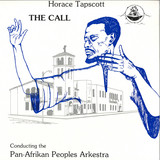
Horace Tapscott - The Call

Available on vinyl for the first time in 40 years, Outernational Sounds is proud to present a masterpiece from the Los Angeles jazz underground - Horace Tapscott's burning, spiritualised 1978 set, The Call.

One of the unsung giants of jazz music, the composer, bandleader, arranger, pianist and community activist Horace Tapscott was the undisputed keystone in the grassroots Los Angeles jazz scene. Throughout the 1960s and 1970s, his radical community arts and music formations the UGMA (Underground Musicians Association, later changed to UGMAA - Union of God's Musicians and Artists Ascension), and his protean big band, the Pan Afrikan Peoples Arkestra, were at the epicentre of music, culture and politics in the Los Angeles area.

From their 1960s base at the Watt's Happening Coffee House on 103rd St, to their decade-plus- long 1970s residency at the Immanuel United Church of Christ on 85thE St and Holmes Ave, Tapscott's groups were the beating heart of underground music in LA. Hundreds of musicians passed through and played their part. Major figures in LA jazz such as Arthur Blythe, Azar Lawrence, Jimmy Woods, John Carter, Bobby Bradford, Sonny Criss, Ndugu Chancler and dozens of others all paid dues or just got down with Tapscott, not to mention the core Arkestra regulars who have since become celebrated names - Nate Morgan, Jesse Sharps, Adele Sebastian, Dadisi Komolafe, Gary Bias, to mention only a few.

Tapscott and the Arkestra were down on the ground - playing fundraisers in park and street, organising teach-ins and workshops for young and old, mixing it with radical theatre groups, firebrand poets, political radicals, Black separatists, community groups and churches. They lived communally, and built an ark for the Black arts in the heart of the city. But as a result of this grassroots community focus and Tapscott's antipathy to the music industry, the Arkestra didn't record for nearly two decades. That only changed when long-time jazz fan Tom Albach started Nimbus Records. The label was initiated specifically in order to document Tapscott and his circle, and the first three records showcased Horace and the Arkestra.

The Call was put together from two studio sessions in April 1978, one at Hollywood Sage and Sound, one at United Western - the latter session had the addition of a string section, who can be heard on the moody Cal Massey composition 'Nakatini Suite' and Jesse Sharps' swinging modal trip, 'Peyote Song No. III', with its swirling soprano solo. In keeping with the communal nature of the Arkestra, the other two compositions, 'The Call' and 'Quagmire Manor at Five A.M.' are also by Arkestra members. But at the centre of the music is the builder of the Ark, the visionary whose original call to action started a movement whose legacy continues to this day - Horace Tapscott.
Heed The Call!

No en stock

Haga su pedido ahora y le encargaremos el artículo en nuestro proveedor.

20,13 €
Hatis Noit - Illogical Dance

Hatis Noit

Illogical Dance

12inchERATP108LP
Erased Tapes
08.05.2018

Japanese vocal performer Hatis Noit will release her enigmatic EP Illogical Dance via Erased Tapes worldwide on 23rd March 2018.
The arresting 4-track record creates unique song-worlds with transcendent vocal interpretations that at once deconstruct and recombine Western Classical, Japanese folk and nature's own ambience atmosphere. Illogical Dance also features Björk-collaborators Matmos, who were so impressed with Hatis Noit's recordings, they volunteered to edit the lead track Illogical Lullaby.

Hailing from the distant Shiretoko, a small town in Hokkaido, which is the largest island in north Japan, Hatis Noit's accomplished range is astonishingly self-taught, inspired by everything she could find from Gagaku — Japanese classical music — and operatic styles, Bulgarian and Gregorian chanting, to avant-garde and pop vocalists. The sounds she created on Illogical Dance, co-produced by Haruhisa Tanaka and Matmos, bring to mind the experimental vocal patterns of Meredith Monk with the attentive production of Holly Herndon.

It was at the age of 16, during a trek in Nepal to the Buddha's birthplace, when she realised singing was her calling. While staying at a women's temple in Lumbini, one morning on a walk Hatis Noit heard someone singing. On further investigation it was a female monk singing Buddhist chants, alone. The sound moved her so intensely she was instantly aware of the visceral power of the human voice, a primal and instinctive instrument that connects us to the very essence of humanity, nature and our universe.

The name Hatis Noit itself is taken from Japanese folklore, meaning the stem of the lotus flower. The lotus represents the living world, while its root the spirit world, therefore Hatis Noit is what connects the two. For Hatis Noit, music represents the same netherworld with its ability to move and transport us to the other side, the past, a memory, our subconscious. It is the same for Illogical Dance, a set of transformative songs that taps into our most primal instincts.

The human voice is our oldest, most primal yet most powerful instrument. I use it to describe nature's many sounds, a language that isn't logical. Yet it forms a beautiful conversation that isn't restricted to words like the human language is. I want my music to remind us of that.' — Hatis Noit

Wanting to interpret and mimic the sounds Hatis Noit hears in nature, Illogical Dance is as unpredictable, beautiful and mysterious as the world around us. Each track is made up from multi layers of vocals, all improvised and without words, before being carefully pieced together. Astonishingly no samples are used throughout, even the sound of crushing leaves came from Hatis Noit's own vocal chords.

The result is a stunning array of sound sculptures that see her switching between multiple styles with great ease. From the sweet operatics on Illogical Lullaby, the manipulated vocal loops duplicating electronic production on Anagram c.i.y. to the primordial chanting call to arms of Angelus Novus, a 10-minute odyssey that features whispering and leaves crunching, it showcases Hatis Noit's full range and introduces a truly original artist.

Previously only available in Japan, Illogical Dance will receive a worldwide release on 23rd March 2018 including a first edition on 12' vinyl. After participating in a ceremony for memorial and appreciation tailored to the withdrawal of the evacuation area in Fukushima on 31st March 2017, Hatis Noit collaborated with renowned visual artist Nobumichi Asai on a project titled INORI (prayer) which they premiered live as part of an Erased Tapes showcase at Mutek Japan in Tokyo.

Having recently moved to London and performed a first string of UK shows, followed by a special live performance at the Milan Fashion Week and Mutek Japan appearance, Peter Broderick has invited Hatis Noit to support him at the Jazz Cafe on April 15th. She's also been announced as part of this year's Sea Change Festival line-up, and asked to participate in a workshop with the London Contemporary Orchestra.

No en stock

Haga su pedido ahora y le encargaremos el artículo en nuestro proveedor.

15,34 €
Giovanni Cristiani - Alpha Percussion

"Alpha percussion", recorded in 1985, is a cult groovy ambient album of acoustic percussion, pleasant to listen to and full of samples and break known very well by Djs and artists likes Danny Brown (which uses a sample in "Really Doe", a song of his latest album on Warp Records).
Giovanni Cristiani is one of the most prepared and complete Italian percussionists. Born in Rome in 1952 he graduated in percussion in young age and began playing professionally in Italy and abroad. In 1979, after years of activity at the side of the most popular jazz musicians, constitutes the Music Workshop A.D.E.L., playing drums and percussion courses. Pentaflowers (BEAT Records sub-label and publisher) asked him to make a solo percussion library music album in full artistic freedom that was pressed in limited edition for insiders; so was born "Alpha Percussion", a gem now finally accessible to all thanks to Mondo Groove label.

No en stock

Haga su pedido ahora y le encargaremos el artículo en nuestro proveedor.
16,93 €
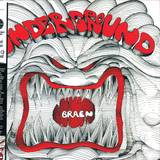
The Braen's Machine - Underground

During the '70s, work days at Umiliani's Sound Workshop Studios were hectic; thousands of sessions were held in order to keep up with a very busy Italian movie industry: Hundreds of soundtracks alongside with music library were recorded and released on vinyl in very limited quantities for TV and film production use only. Those LPs are now proper collectors' items, extremely hard to find.

Filled with hypnotic bass lines, heavy drums and screaming fuzz guitars "Underground", the first LP of the fictitious group known as Braen's Machine, is one of the rarest and the most expensive of them all, always "reaching" sky high prices throughout the second hand vinyl market. A fast-beat jam with hammond scales and a twin lead guitar theme ("Flying") opens the A Side soon followed by "Imphormal", a classicfunk-beat-meetsfender- rhodes-and-psychedelic-guitar number. The music then switch to "thriller territories" with "Murder" which is based on prepared piano swells and a deeply hypnotic walking bass, reminiscent of the best Morricone's soundtracks for Dario Argento's movies. Two highly percussive songs complete the A Side: "Gap" is an improvised song with guitar and keyboards dwelling over an infectious drum rhythm while a marching snare and a vibraslap effect are the special features on "Militar Police".

The mood relaxes slightly on the opening of the B Side with a lazy jazz groove on "New Experience" but the rock influences are soon brought back on the following track "Fall Out". "Obstinacy" is all about keyboards with syncopated rhodes themes and distorted hammond sustained notes whilst the fuzz guitar is back again screaming through the left channel on the last song of the album, "Description". We could happly say that that was the golden age of the Italian music library. But who's behind the name "Braen's Machine" On the original cover the songs are credited to the composers Braen and Gisteri. Braen was a pseudonym often used by Alessandro Alessandroni, an extremely skilled and versatile musician, and one of Umiliani's closestcollaborators. He could write, conduct and arrange, he could sing (ever heard "Mah Na Mah Na"), he could whistle (ever heard Morricone's "For a fistful of dollars") and he could play almost anything: guitar, bass tuba, accordion, sitar and the list grows..... His first album "Alessandro Alessandroni e il suo complesso" (Sermi, 1969), had transformed the Italian library music from orchestral sound beds into the psychedelia we all love; the extremely fuzzy guitars are very "present" on "Underground" too. For a long time Gisteri's real identity was rather mysterious; often wrongly attributed to Umiliani. Gisteri was the pseudonym of Oronzo De Filippi, art name of Rino De Filippi, music supervisor to the Italian public broadcast company (RAI) between the '60s and the '70s. De Filippi composed other notable pieces such as "Riflessi" (Edipan, 1975) and "Nel mondo del lavoro" (Sermi, 1972).

De Filippi passed away few years ago but we were able to contact Alessandroni to talk about this LP. Remembering "Underground" recording session as one of the thousands he took part of, Alessandroni told us that this record was produced very quickly, in two days maximum. This was made possible by a team of wonderfully capable session musicians and the creative genius behind the mixing desk; this incredible combination helped to focus on the mood of each track even more. Unfortunately there are no liner notes but Alessandroni's memories and speculations, based on other music tracked in the same period at Soundworkshop by resident engineer Claudio Batussi, led us to identify this as the most probable lineup: Munari on drums, Majorana on bass, Vannucchi on keyboards and Alessandroni himself on guitar. For this reissue the sound has been restored and the cover art reproduced exactly as it was.

No en stock

Haga su pedido ahora y le encargaremos el artículo en nuestro proveedor.

28,53 €
Artículos por página

Language

N/ABPM
Vinyl