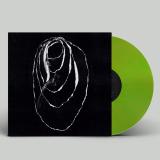
Stop playing games and get your hands on this new 6-track Various Artists EP. From Electro-Wave in Dutch, to rolling synths in the club (anthem alert!), to Breakbeats that are hard to tame, to a contemporary version of the Moonlight Sonata, to a guided Tryp by Varum and Hayter's freezing cold Fortune Four. What you want is what we got.
quête:the k system
Francesco Skip's debut EP delivers a focused, club-ready sound that draws from contemporary UK club music while embracing the simplicity and raw energy of early 2000s techno and dubstep. Each track explores a different underground electronic direction and highlights include 'Ocean Explorer' with late-90s techno vibes and swingy dub stabs, 'Kronplatz', which is a dark, bouncy bass journey, 'Hondra B' a stripped-down jungle and drum & bass tool, and 'Wrong Glidez', a post-dubstep homage with 2-step drums. This great debut is also well mastered with bass depth and mid and high texture for loud deployment on peak-time systems.
We are excited to continue our work with Art P / Art Programming by finally offering the first full-length work from this Bremen-based electronic group. Originally released only on cassette in 1983, the self-titled album has now been fully restored and remastered, complete with bonus tracks and unreleased mixes unearthed from a rare demo.
The LP opens with "Wesen vom anderen Stern" ("Beings from Another Planet"), a downtempo, 808-driven electro synth wave track with German lyrics telling a story of aliens capturing earth, becoming the new "Herren" (lords), while humans are reduced to mere "objects." Art Programming founding member Jens-Markus Wegener notes that this track has always been a favorite during live performances, and it's easy to imagine how the futuristic sounds would have blown people away at the time.
Next is the electro/proto-techno title track "Art Programming," which we previously issued on a limited 12" in its full-length form. With its straightforward Roland 808 rhythms, catchy synth lines, and vocoder vocals, it's a classic example of German electro, and one of the earliest proto-techno tracks - long before Cybotron claimed the techno mantle. Its extensive break and electronic twist make it an early precursor to the genre. Wegener recalls that this track was created exclusively by him and Grotelüschen, with Grotelüschen contributing most of the melodic elements, while Wegener focused on drum machine programming and vocoder vocals.
On "That's Me," the album welcomes back singer Claudia Roebke. Although it's an electronic composition, Roebke adds a rock-infused, almost psychedelic vibe to the song. The lyrics, written by Wegener, depict a person obsessed with their appearance, using irony to critique societal beauty norms, questioning the obsession with perfection and attraction.
The album continues with a series of uptempo electro tracks: "Videoscreen," "La Gare," and "Genscher Pull 'N' Push." The first two feature slightly different mixes from an earlier demo that we personally prefered over the versions that were available on the final cassette release. "Videoscreen" expands on the theme of social isolation, with lyrics reflecting on a world obsessed with watching video all day - a topic that resonates strongly with today's culture of doom scrolling and social media addiction.
Next up, "Genscher Pull 'N' Push" is an incredible electro/wave/proto-techno track recorded in October 1982 with a political edge. Originally omitted from the album, it was only available on the demo cassette we mentioned earlier. The song takes aim at German politics, with lyrics that shout "bitte geh nach links / bitte geh nach rechts" ("please go to the left" and "please go to the right"), referencing the shifting political allegiances during the 1982 coalition change, when Genscher's party, the FDP, left the Helmut Schmidt cabinet to join the CDU/CSU opposition. The track was never released as the political topic had become outdated just a few months later.
The album closes with "Light and Fire," which originally served as the album's opening track. Its quirky, upbeat vibe now makes for a fitting outro.
The gear used on this album reads like a dream list for early 80s electronic music production: Roland Jupiter 4, TR 808, TB 303, System 100, SVC 350, Korg Mono/Poly, Moog Prodigy, FRICKE-Sequenzer, Roland CSQ-100 Sequenzer, Coron DS-8, MM 12/2, Sony TC 399, TEAC-244 Portastudio, Ibanez DM 1000, EH-Electric Mistress, EV-Micro. This unique lineup of equipment sets the album apart from NDW releases of the era, lending it a distinct sound with heavy proto-techno leanings and that straightforward electro vibe we all love.
The album is being released as a very limited edition of 300 copies on transparent red vinyl, complete with a full picture sleeve and lyrics inlay. This is yet another rediscovered and restored 80s gem on our label that you definitely don't want to miss!
Joe Fujinoki centered the compositions of his latest album Glass Torso round the idea of the fragility of the human body. Fujinoki described the narrative thread of the album as that of “holding the shape of a human body as if it might shatter like glass”. The precariousness of the body, the essence of the body as defined by Fujinoki as the torso, and the object relations between the boundaries of dialectical exercises pack themselves into his creative process.
Fujinoki recorded Glass Torso exclusively with analog synthesizers, stumbling in and out of structural loops to find space for accidental discoveries. The ten pieces of recorded material feel somewhere on the edge of typified form, feeling like a vascular system pumping in and out its undulating liquidities. Maybe this is the hollowed space held together by Fujinoki’s notion of the torso where you hear a microscopic world, dubby and generative. Fujinoki is adept at organizing this realm of subtle sound sources, giving proper considerations of shared tonal space. Seemingly, this handling of the precarity of sonic material elucidates Fujinoki’s mature attention to detail.
Ambient music genre tropes often affirm the listeners vessel for escape and dissociation. It provides an intoxicating allure by respite from an overwhelming exterior reality far outside the listeners controls. Here this space becomes apolitical, or its protest vocabulary softer and subtle. Fujinoki does not aim to tackle hyperobject topics on how to course correct the world, but he does something increasingly rarer to come across. On Glass Torso an alternative space is created not as shelter, but as a meditation on negotiation and compromise. This twenty eight minutes of audio lays down a foundation for imagination, for imagining how to negotiate the fragility of the self. Zoomed out, the implications of his negotiative sonics can be a playground for broader reflections on distributive care and attention.
Fujinoki says he feels “alert” to his physicality and placement in the world amidst vast digital cultures creating impositions on him and his surroundings. On Glass Torso he creates a concretized space on a vinyl record, where the virtual and the tangible antagonize one another that create the spectacle of the listening experience. This spectacle is a soft one, a considered one, and an utmost enjoyable one. Fujinoki juggles opposing forces brilliantly, and formulates an exquisite palette of soft passing music so he can also help the listener with the exquisite burden of their own Glass Torso.”
- Nick Klein, January 2026
A deliberate sonic and emotional architecture that doubles down on intensity to shatter and rebuild the listener in one unrelenting wave.
Third album from System Olympia, following acclaimed releases like New Erotica Collection LP (2023) and Delta Of Venus LP (2020), solidifying her as a bold, self-produced voice in electronic and italo-disco-inspired music.
Releases on Okay Nature Records (her own independent label), with digital out now (March 6, 2026) via Bandcamp/Spotify and limited-edition black vinyl 12" LP shipping from April 6, 2026-fully written, recorded, produced, and mastered by System Olympia herself.
Extended tour in the months ahead, kicking off with confirmed live events including a Double Climax Listening Party, plus performances at The Cause (60 Dock Road, Outside) in London on April 3, 2026, and Burgess Park in London on August 2, 2026-expect further dates to build momentum through spring/summer 2026.
Gute Neuigkeiten für Good Riddance-Fans! Nach sehr limitierter Verfügbarkeit der Erstauflage (schwarzes Vinyl) gibt es noch eine Nachpressung. Die zweitauflage kommt als Apple Red Vinyl. Die aus Santa Cruz, Kalifornien, stammende Band ist eine feste Größe in der Punkszene und bekannt dafür, die Lücke zwischen rasantem Skate-Punk und der rohen Intensität des Hardcore zu schließen. Sie werden für ihre ,intellektuelle Aggression" gefeiert, einen einzigartigen Sound, der rasante Drum-Geschwindigkeiten und scharfe Gitarrenriffs mit überraschend eingängigen Melodien verbindet. Für neue Hörer repräsentiert die Band den Goldstandard des Genres und beweist, dass Punk unglaublich schnell und aggressiv sein kann, während er gleichzeitig musikalisch ausgefeilt und technisch präzise bleibt. Über ihre klangliche Strahlkraft hinaus dient die Band als wichtige Einführung in die aktivistischen Wurzeln des Punkrocks. Unter der Leitung von Sänger Russ Rankin tauchen ihre Texte tief in Themen wie soziale Gerechtigkeit, Tierrechte und politische Kritik ein und bieten eine viel tiefgründigere Perspektive als typischer Alternative Rock. Durch die Auseinandersetzung mit klassischen Alben wie "A Comprehensive Guide to Moderne Rebellion" können Fans genau hören, wie Punk als kraftvolle Stimme für Marginalisierte und als engagierte Plattform für die Infragestellung des Status quo dient. Die Relevanz der Band ist nach wie vor ungebrochen, seit 2015 ungebrochen zurück, das letzte Album kam 2019, 2024 veröffentlichten sie "No More System to Believe In", eine melodische Punk-Hymne, die moderne Desillusionierung in einen kraftvollen Aufruf zum Handeln kanalisiert. Nach einem strapaziösen Tourplan für 2025, bei dem sie neben ausverkauften Clubkonzerten in Europa und Nordamerika auch auf großen Festivals wie dem Hellfest und der Warped Tour Orlando auftraten, zeigen sie keine Anzeichen einer Verlangsamung. Im Jahr 2026 wird Good Riddance diese globale Dynamik mit umfangreichen Auftritten auf Festivals in der EU und insbesondere in Deutschland fortsetzen. Aufgenommen mit Bill Stevenson (Descendents) im The Blasting Room.
XKatedral Anthology Series II (An Anthology Of Slowly Evolving Timbral Music), featuring exclusive music from Kali Malone, Jessica Ekomane, Mats Erlandsson, Theodor Kentros, Wilma Hultén, and Maria W Horn.
"XKatedral Anthology II is the second instalment in a series of archival releases dedicated to presenting music by composers affiliated with XKatedral working within the realm of slowly evolving harmonic and timbral music. This double-vinyl set contains an array of pieces dating from 2018 - 2020. This collection of pieces focuses on the use of synthetic sound and algorithmic composition languages as tools for precise work within the realm of spectral exploration. In addition to this, the electronic instrumentation in many of the pieces is augmented by acoustic instruments.
The first piece on side A is Kali Malone’s Music for Low Quartet. This piece is an adaptation of the composition “Rose Wreath Crown” originally released on The Sacrificial Code in 2019. In this iteration, the music is scored for two double basses played by Vilhelm Bromander and Zach Rowden, and sine tone electronics performed by Malone herself. The recording of this piece was made at EMS in 2019.
Closing side A is Jessica Ekomane’s ‘First Light’. This computer music piece focuses exclusively on digital sound, layering razor sharp synthetic textures into an otherworldly dynamic weave. The music heard here is a reworked version of a piece originally commissioned by Semibreve in 2020.
Side B contains the work ‘Hands Melt In The Sun’ by Mats Erlandsson. This composition is built from electronically processed tuned zithers and synthetically generated tones arranged in a series of chordal inversions over a sustained fundamental tone. This music, written as a love-letter to the localized drone tradition of Stockholm in the years 2008-2012, was composed and recorded in seven days while in residence at Ställbergs Gruva in Bergslagen, in the summer of 2018.
Opening the second half of the collection is Rough Draft v.7 by Theodor Kentros. Kentros’ compositional practice usually combines acoustic and electronic source material and in this piece he molds the sound of the Buchla 200 and a collection of recorded wind instruments into a molten mass of sound. In its original form, this music was presented as a multichannel immersive work and even in the current stereo configuration it retains some of that enveloping sense of depth.
The second piece on side B, Inertia, is by Wilma Hultén, who makes her debut on record here. An exclusively synthetic piece, Inertia utilizes internal digital feedback in a sealed synthetic system to manifest a harmonic field that swells and abates throughout the length of the piece, interspersed by small gestural elements.
Closing Anthology II is Maria W Horn's work ‘Dies Irae’ for female vocal quartet, pitched glass and synthesis. ‘Dies Irae’ uses a modified form of traditional tonal harmonic language to invoke an uncanny and restless middle ground between the classical western polyphonic vocal tradition and contemporary electronic music. The version heard here is a live recording from Eric Ericssonhallen in Stockholm on May 30th 2020. Performing the piece here are the vocalists Katarina Henryson, Lisa Holmgren, Vilma Ogenblad and Paula Wegmann, as well as Maria herself on glass and electronics."
In discotheques and dark rooms across Europe, Boys’ Shorts have earned the trust of the queer and wider clubbing communities as generous stewards of a timeless sound that, like themselves, never stops moving forward. The duo of Vangelis and Tareq initially met at an underground club in their native Greece. Sensing a rare sonic connection, the pair became friends, forming Boys’ Shorts to meet again and again, travelling from their adopted cities of Thessaloniki and London to appear as far afield as Berlin’s Panorama Bar and New York’s Le Bain, as well as supporting Goldfrapp and Hot Chip on tour. Their motivation? In their own words, “we make people dance!”
Following years of gradual, thoughtful studio sessions, and EP releases on tastemaking electronic labels including Phantasy Sound and Live At Robert Johnson, Boys’ Shorts establish their own imprint, ALL SORTS, in order to deliver a fantastically ambitious debut album, ‘What Does It Take To Make These Men Happy?’
The LP opens with the grandiose, cosmic vista of ‘The Space Between Us’, a classic passage of strings and synthesis, before the shared Boys’ Shorts vision falls back to earthier territory with deep groove of ‘Let’s Fall In Love’, mixing universal sentiment with a patient vision of human potential and the voice of Greek electronic pioneer, K.BHTA. ‘Come’ aligns with NYC’s Michael Cignarale, offering an excitable invitation to the mind and body sculpted by the way of a throbbing, warehouse-sized statement of nineties house sensuality. Channeling heroes Lowe and Tennant at their most introspective, ‘Short Life’ maintains the dance, yet dares to ask, “what if the parties aren’t enough anymore… Can you ask for something more?”
Out of the pet shop and straight into the strobe lights, ‘Disco Romantica’ makes true on the promise of its title, a lovelorn monologue giving way and slipping into rave stabs and whirring synthesis that looks forward to a memorable, emotionally-charged night ahead. Underpinning this feeling of anticipation, ‘Going Out Hoping To See You’ introduces the voice of Justin Strauss to Boys’ Shorts' musical world. A certified icon of club culture, spinning from The Mudd Club to modern day DJ booths, Strauss’s generation spanning experience of nightlife leans into the fundamentals of human connection and the pleasure of musical discovery, wrapped in irresistible chug.
Another transformative figure in club music, Fischerspooner’s own Casey Spooner dips into French for the Motorik cyber sleaze of ‘MECANIMAUX’, their own vocals pitching up and down with playful EBM abandon. ‘Montage’ offers a different kind of composition, conjuring an ecstatic club banger that finds inspiration in nineties indie rock motifs alongside the rave scene, while ‘Run’ promises to blow out sound systems before its weighty electro bassline succumbs to waves of glistening synths.
Such bombast into beauty perfectly sets up the record’s blissful conclusion; ‘The Stars Are Out For You’ is electro-pop so delicate as to heal aching feet (and mend broken hearts), while offering the final tender moments of the album as a form of tribute on ‘Untitled (For Mitsi)’. It’s a thoughtful ending to a thrilling trip through a shared passion for electronic and pop music in all its glorious potential. What does it take to make these men happy? It’s a pleasure to find out.
Splatter Vinyl[23,74 €]
Baby T is a space away from her work as B.Traits in which Brianna Price can lean more into the junglist, drum ‘n’ bass and hardcore sounds which she loves so dearly. With BSHEE02, the second drop on Price’s own Banshee label, Baby T delivers a darkside masterclass of an EP. This record is a quartet of system blowers which doesn’t let up for a single second from start to finish.
Opener ‘Times Up’ is urgent from the off - the initial strains of this joint find sirens wailing in the monitors over a twitchy kick/drum/hats combo. From here on it’s distilled raver perfection, the drums taking us on a wild Wipeout-style ride as the subbiest of bass skulks at the bottom of the mix. Imagine a more technoid take on the classic breakbeat freerides of Skanna and you’re not far off the ‘Times Up’ sound.
A remix of ‘Times Up’ from man like Aloka leans with devilish glee into the murky underworld that lurks beneath Baby T’s original. Aloka’s version is extremely eerie in a manner which makes you think of the darkest corners of a DMZ party. When things really kick into gear, driven by an irresistible kick dembow, the effect is hypnotic - think the dubwise junglism of the UVB-76 cohort.
BSHEE02’s B-side kicks off with ‘Coercive Control’. This is a cut which delivers on its title in spades, putting the listener in a trance with an interplay of low-slung bass, whirligig synth tones and more of those perfectly executed broken beats. The acid starts to kick in around the minute mark, and it turns out to herald a total earworm of a lead melody.
There’s plenty of dimly-lit malevolence to BHSEE02 closer ‘Dense Dickwood’s grinding atmospherics and gurgling bass throbs. However, Baby T opting for a half-time drum break here gives the cut a vibe not dissimilar to the weightiest jams of classic Massive Attack - that is, until an absolutely remorseless switch-up occurs halfway through, delivering volley after volley of intense drum hits.
Neon Green Vinyl[16,39 €]
Baby T is a space away from her work as B.Traits in which Brianna Price can lean more into the junglist, drum ‘n’ bass and hardcore sounds which she loves so dearly. With BSHEE02, the second drop on Price’s own Banshee label, Baby T delivers a darkside masterclass of an EP. This record is a quartet of system blowers which doesn’t let up for a single second from start to finish.
Opener ‘Times Up’ is urgent from the off - the initial strains of this joint find sirens wailing in the monitors over a twitchy kick/drum/hats combo. From here on it’s distilled raver perfection, the drums taking us on a wild Wipeout-style ride as the subbiest of bass skulks at the bottom of the mix. Imagine a more technoid take on the classic breakbeat freerides of Skanna and you’re not far off the ‘Times Up’ sound.
A remix of ‘Times Up’ from man like Aloka leans with devilish glee into the murky underworld that lurks beneath Baby T’s original. Aloka’s version is extremely eerie in a manner which makes you think of the darkest corners of a DMZ party. When things really kick into gear, driven by an irresistible kick dembow, the effect is hypnotic - think the dubwise junglism of the UVB-76 cohort.
BSHEE02’s B-side kicks off with ‘Coercive Control’. This is a cut which delivers on its title in spades, putting the listener in a trance with an interplay of low-slung bass, whirligig synth tones and more of those perfectly executed broken beats. The acid starts to kick in around the minute mark, and it turns out to herald a total earworm of a lead melody.
There’s plenty of dimly-lit malevolence to BHSEE02 closer ‘Dense Dickwood’s grinding atmospherics and gurgling bass throbs. However, Baby T opting for a half-time drum break here gives the cut a vibe not dissimilar to the weightiest jams of classic Massive Attack - that is, until an absolutely remorseless switch-up occurs halfway through, delivering volley after volley of intense drum hits.
- A1: Micah Shemaiah, The 18Th Parallel - To Be Free
- A2: Micah Shemaiah, The 18Th Parallel - Freedom Dub
- A3: Rod Taylor, The 18Th Parallel - Guiding Star
- A4: Rod Taylor, The 18Th Parallel - Shooting Dub
- A5: Var, The 18Th Parallel - Let Thy Kingdom Come
- A6: Var, The 18Th Parallel - Kingdom Dub
- B1: Keith Rowe, The 18Th Parallel - Love Gets Sweeter
- B2: Keith Rowe, The 18Th Parallel - Dub Gets Harder
- B3: Itral Ites, The 18Th Parallel - No More Will I Roam
- B4: Itral Ites, The 18Th Parallel - Roaming Dub
- B5: Hezron, The 18Th Parallel - Keep On Keeping On (Extended Mix)
Swiss powerhouse The 18th Parallel presents another slice of fine modern roots reggae! All Fruits Ripe is a heavyweight showcase album rooted in the foundations of reggae while firmly anchored in the present. Recorded between 2015 and 2025, the project brings together a powerful lineup of Jamaican vocalists — Micah Shemaiah, Keith Rowe (from rocksteady duet Keith & Tex), Rod Taylor, Var (Inna De Yard, Pentateuch), Hezron, and Itral Ites — each representing a different generation of conscious reggae music.
The album features six vocal cuts and five dub versions, highlighting both lyrical strength and sound system culture. Carefully mixed by master engineer Roberto Sánchez, All Fruits Ripe stands as a transnational reggae statement: Jamaican voices carried by a European band deeply connected to the roots with a profound respect for the culture that gave birth to reggae and dub. It features legendary guest Jamaican musicians Leroy ‘Horsemouth’ Wallace, Scully Simms, Dalton Browne, or Errol ‘Blacksteel’ Nicholson.
A mature and carefully crafted release where every track feels essential — like fruit finally ready to be harvested.
- 01: Dancelwerk - Back To Eighties
- 02: Dancelwerk - Breikaut
- 03: Cmos34 - Cem3340
- 04: Cmos34 - Lm13700
- 05: Jorganes - Spirits
- 06: Jorganes - Beds
- 07: Sunday German Flowers - Don’t You Know I’m The Devil (He Said)
- 08: Sunday German Flowers - Amor Sin Gluten
- 09: Nico Hernández - Rdk-Lz 1
- 10: Nico Hernández - Rdk-Lz 2
- 11: Nico Hernández - Rdk-Lz 3
Yearly compilation series RADAR KEROXEN return with its sixth volume of theme-driven releases, continuing to chart the fractured sonic terrain of the Canary Islands’ undergrowth.
After digging through indie, psychedelia, shoegaze, and site-specific drone, Vol. 6 dives headfirst into the after-hours circuitry of the islas afortunadas, assembling a hand-picked selection of underground club mutations from five long-standing operators within the local electronic ecosystem.
If Vol. 5 was shaped by the cavernous resonance of Santa Cruz’s obsolete gasoline tank, Vol. 6 is fuelled by late-night club aesthetics and mid-90s hardware obsession. Opening the record, Dancelwerk — one of the archipelago’s early modular practitioners — delivers tightly wound structures nodding to Warp-era golden agefuturism and southern Tenerife’s rave boom. Cmos34 follow with their first-ever published material, injecting instability into the system through improvised techno rituals built on friction and feedback.
Jorganes drags the narrative deeper into hypnotic territory, stripping club music down to its skeletal pulse and channeling disciplined repetition and late-90s minimalism into austere, trance-inducing momentum. From Gran Canaria, Sunday German Flowers bends the mood toward cinematic dub: heavy low-end pressure, spoken word, and nocturnal atmospheres stitched into slow-burning club noir.
Closing the circle, Nico Hernández pulls the compilation back to volcanic ground with ambient compositions shaped by Lanzarote’s raw geological landscape — basalt echoes, tectonic silence, and island isolation rendered in sound.
As always, the release is housed in a post-tropical collage artwork by Pura Márquez.
Master by Daniel García
Artwork by Pura Marquéz
With acute focus on dance floor hypnotism and percussive pressure, SIDEB003 offers German collaboration IGLO and Paul Hauck's debut vinyl release. A third project for this duo, 'Stable Fusion' plays to the producers strengths as biting sound design unfolds through reliable groove.
'Stable Fusion' - and, in turn, its title track - presents as an uncompromising dance floor record, complete with pressing arrangements and powerful tension shifts. The infectious nature of club music comes largely from the power and insistence of its minimal elements and IGLO & Paul Hauck put chisel to stone to showcase just that. To add soul to skill, 'Neustadt' claims the A2 with added color and a silver lining in the its mood. Festive chord stabs stutter along with percussion riding up and down the spectrum, maintaining energy without losing impact. Flipping sides, 'Initiator' returns to minimalism and spaced out sequences. Dub chords boom through a low lying swing, complete with unfolding ambient textures. The track is focused and its intentions aren't shy, the slow creep to the EP's conclusion 'Celestis' is met with intrigue. Warbly synth work warms up a pulsating core, creating a more tonal sound system experience than any of its predecessors. Here, ferocity hides behind humility, and 'Celestis' is a crowd pusher with deceptive arrangement to close out 'Stable Fusion' with confirmation of quality and effect.
Words by Noah Hocker
Roland Leesker reimagines a House Classic with Vinyl-Only Cover of ‘What You Need’.
Definitive Recordings presents a special vinyl-only release as Roland Leesker delivers his cover version of ‘What You Need’, the seminal house anthem originally released in 1990 by Soft House Company. This release is a respectful homage to one of house music’s defining records, crafted for DJs and collectors alike.
On the Original Mix, Leesker stays close to the spirit of Soft House Company’s classic, faithfully honoring the original arrangement but properly pumping.
On the flip, Leesker presents his ‘Mysterious Eastern Force Edit’, an expansive, eleven-minute journey designed for deep dancefloor moments. While retaining the essence of the original, this version introduces a more energetic bassline before weaving in a subtle 303 acid line, bridging different eras of house music history into one hypnotic, evolving arrangement.
This vinyl-only release is a tribute to the legacy of house music — respectful, powerful, and made to be played loud on a proper sound system.
- A1: Derfor Tok Det Aldri Slutt
- A2: Til Noens Dype Muskelvev
- A3: Skal Jeg Følge Deg Til Havet
- B1: Muskelminner Fra Arkanoidepoken
- B2: Venus Er I Håret
Venus er i håret is the third solo record from Norwegian multi-instrumentalist, composer and singer Espen Reinertsen and it arrives about ten years after his second solo record was released via Susanna Wallumrød’s SusannaSonata label. Simultaneously tender and powerful, Venus gives the impression of being, in itself, a complete system –– full of beautiful digressions and compositional trustfalls. Melancholic in the truest sense of the word, Reinertsen’s songs are ruminative, enveloping and uncanny. Venus er i håret seems to glow, gently. Espen Reinertsen is deeply embedded in the creative music scene in Norway, performing as a member of Christian Wallumrød Ensemble and Streifenjunko. As a saxophonist and collaborator, he a mainstay in Oslo’s experimental scene, performing with artists like Jennifer Walshe, Jenny Hval, Toshimaru Nakamura, Christian Wallumrød, and many more, in addition to offering his own exploratory pop compositions both solo and in collaboration.
Guidelines launches its 2026 schedule with a heavyweight two-tracker from Toby Ross, pairing two cuts built for very different corners of the dance.
On the A-side, “Can’t Do It” lands as a straight-up dancefloor heater rolling low-end pressure, clipped vocal stabs and a hook that locks in quickly and refuses to let go. Built with peak-time intent, it’s direct, physical and engineered to hit hard on proper systems.
Flip it over and “Interruption” dives headfirst into classic amen territory. Chopped, urgent and restless, the track drives forward on tight edits and raw break energy, balancing precision programming with that unmistakable rough-edge jungle feel.
Together the two tracks showcase Ross’ approach: future-focused jungle rooted in foundation sounds — modern production, classic DNA, and zero filler.
Sekhem opens a new portal. We are pleased to welcome Multivoq’s debut as Omega Tribe. He delivers four cuts engineered for the dancefloor, driven by razor-sharp grooves and strong basslines, with every element precisely tuned. Analog machines bring warmth, sequences pulse like coded transmissions, vocals drift through the mix as signals from space... Each detail shapes a journey built for powerful sound systems.
Three years after the release of Volume 1, Innershades returns to home turf with a second entry in his Heritage series. The New Beat territory that its predecessor tackled serves as the starting point for the A-side of Volume 2 as well. The glistening arpeggios and choir patches on "Mind State", alongside the unyielding kicks, alarm-like synth lines and plodding tempo of "System Breakdown," reaffirm how the genre's hallmarks smoothly align with the artist's own inclinations. The B-side draws from the broad spectrum of styles that emerged a bit later, in the beginning of the nineties, when it seemed the dance floor would move unimpeded between and bridge genres, its boundaries often not as firmly established. "Fuse Memory" nudges the pace forward, driven by the 909 and a staple hypnotic lead. When the drums come to a halt, a 303 emerges to flesh out the break. "Rhythm Composer" continues in a similar early techno vein, but pulls the track into outer space via its formant-heavy leads and Detroit-tinged sci-fi sweeps. On ALT023 Innershades appears in fine fettle, providing another batch of up-front club tracks that approach history as motion rather than memory, translating the past into forward momentum.