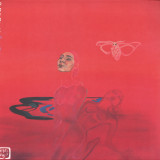
The earth rotates, seasons change_there is but one long day_ Time is a beguiling, indistinct entity_sometimes standing still, sometimes bending back upon itself with premonitions or memories of the future. Growing out of a pen pal style correspondence that took place over the course of a year, separated by the Atlantic Ocean, Gloria de Oliveira and Dean Hurley passed thoughts and music back and forth that would eventually form their collaborative album, Oceans of Time. The result is an aural tapestry of that exchange: woven from conceptual threads of the celestial within, mortality and the realm beyond stars. The duo's partnership is an effortless merge, yet it's the steady presence of de Oliveira's vocals that endows the record with its sense of potency. Throughout the album, there is an innate understanding of how a lyric across a chordal color can sharpen an emotional truth. Much like a sunbeam that pierces a spiderweb to reveal its intricacy, her lyric and melody are purposely aimed in order to illuminate the truths deep within oneself_a process that ties us all to the universal. The Danish philosopher Soren Kierkegaard, a professed influence, wrote about the truth as something that was inherently subjective, less about the concrete reality of what is believed and more about how it is experienced by the believer. Frequent David Lynch collaborator Dean Hurley sets the tonal and sonic landscape of each track on the album, lending a layered ether that envelops, frames and holds de Oliveira's vocals. With its impressionistic synths, shimmering guitars, and ethereal sonics, Oceans of Time at moments recalls the foundational dreampop of 4AD acts like Cocteau Twins and Lush. The album feels especially attuned to the connections between the physical and transcendental realms, and the best dreampop has a way of making the veil between two worlds feel just a little bit thinner. Oceans of Time is a key that has the power to release its listener from the handcuffs of reality, however briefly_
Cerca:the key
The earth rotates, seasons change_there is but one long day_ Time is a beguiling, indistinct entity_sometimes standing still, sometimes bending back upon itself with premonitions or memories of the future. Growing out of a pen pal style correspondence that took place over the course of a year, separated by the Atlantic Ocean, Gloria de Oliveira and Dean Hurley passed thoughts and music back and forth that would eventually form their collaborative album, Oceans of Time. The result is an aural tapestry of that exchange: woven from conceptual threads of the celestial within, mortality and the realm beyond stars. The duo's partnership is an effortless merge, yet it's the steady presence of de Oliveira's vocals that endows the record with its sense of potency. Throughout the album, there is an innate understanding of how a lyric across a chordal color can sharpen an emotional truth. Much like a sunbeam that pierces a spiderweb to reveal its intricacy, her lyric and melody are purposely aimed in order to illuminate the truths deep within oneself_a process that ties us all to the universal. The Danish philosopher Soren Kierkegaard, a professed influence, wrote about the truth as something that was inherently subjective, less about the concrete reality of what is believed and more about how it is experienced by the believer. Frequent David Lynch collaborator Dean Hurley sets the tonal and sonic landscape of each track on the album, lending a layered ether that envelops, frames and holds de Oliveira's vocals. With its impressionistic synths, shimmering guitars, and ethereal sonics, Oceans of Time at moments recalls the foundational dreampop of 4AD acts like Cocteau Twins and Lush. The album feels especially attuned to the connections between the physical and transcendental realms, and the best dreampop has a way of making the veil between two worlds feel just a little bit thinner. Oceans of Time is a key that has the power to release its listener from the handcuffs of reality, however briefly_
Born in Roma in 1959, Guiseppe “Peps” Cotumaccio arrived in South Africa when he was two years old. He was the mastermind behind the band “Sweet Reaction”, singing and playing keyboards.
In the early 80’s, the group used to back various artists including one of the South African top singer “Neville Nash”. Both artists were on the same record label: Music Team. Throughout his lengthy career, Peps has collaborated with Johnny Clegg, Ronnie Joyce, Sipho "Hotstix" Mabuse, P.J. Powers, Mark Alex, Neville Nash, and Mara Louw just to name a few.
The lead singer of the band, Dion Williamson, started performing in Johannesburg’s nightclubs and got quickly very successful, always in demand! People loved his gravel and sensual voice as he used to sing some of Joe Cocker’s popular songs. Unfortunately, during the Apartheid, the South African Government were not allowing black and white audiences, and the band split.
On this BIG5 Boogie#2, Enoch Ndlela produced 2 Modern Soul killer tracks.
Recorded in 1981, "Take it easy", where the music is evidently influenced by Willie Hutch (Easy does it - 1978) offers Dion a way to fully explain himself doing his own version of the tune. And what an explosive result!
On the same side of this 12”, our 2 Frenchies in Cape Town aka Simbad & Fred Spider enjoyed delivering us a fat broken beat version of the track, while the very “En Vogue” Aroop Roy from London turned it into a funky house summer hit.
Side B starts with a superb composition from the band: “African Sunrise” where Dion Williamson is on top, this tune is a bomb!
To finish this E.P, the well-known Kid Fonque from Johannesburg, who freshly moved to London working for the glorious house record label Defected, couldn’t wait to produce a super groove deep house refix. The result is a second essential dancefloor release from Voom Voom Records!
Record producer and electric bassist Dan Horne returns to his Lone Palm a.k.a. Liberty Hair Farm studio in Echo Park, Los Angeles for the vinyl release of his debut full-length studio album, Count The Clouds. Recorded in 2020 - 2021 before his touring schedule kicked back into high gear with Circles Around the Sun and Grateful Shred, Horne unveils Count The Clouds, featuring eight songs with the multiinstrumentalist vibin’ out on all the guitars, drums, pedal steel, and keys. A flashback to mid-1960s psychedelic folk, Count The Clouds includes special guests Ny Oh from Harry Styles’ band, Raze Regal, and Frank LoCrasto. Horne is gaining recognition on the Echo Park scene as a producer at Lone Palm a.k.a. Liberty Hair Farm working with artists Mapache, Chapin Sisters, Pacific Range, AllahLas, and others. On the national live music circuit, he’s a founding member of Circles Around The Sun, the Dead tribute band Grateful Shred (who’s selling out venues all across the country), and a key player with bandleaders Jonathan Wilson, Ben Kweller and Conor Oberst
- A1: Willie Williams & The Sound Dimension – Jah Righteous Plan
- A2: Al Campbell – Take A Ride
- A3: Cedric 'Im' Brooks – Satta
- A4: Ken Boothe & Joe Higgs – A Message Of Old
- A5: Jackie Bernard – Jah Jah Way
- B1: Devon Russell – Jah Hold The Key
- B2: Zoot Sims – Small Garden
- B3: The Saints – Sleeping Trees
- B4: Larry Marshall – Run Babylon
- B5: 5. Vin Gorden – Babylon Rock
- C1: The Gladiators – Talawah
- C2: Prince Francis – African Skank
- C3: Cedric 'Im' Brooks – Full Time
- C4: Prince Lincoln – True Experience
- C5: Joseph Hill – Behold The Land
- D1: Winston Matthews – Sun Is Shining
- D2: Karl Bryan – Lk Strut
- D3: Count Ossie & The Zion All Stars – Holy Mount Zion
- D4: Tommy Mccook & The Discosonics – Tenor On The Call
New one-off press limited edition transparent green double vinyl edition of Soul
Jazz Records long unavailable Studio One Roots 2, featuring classic tracks recorded
at Studio One.
Studio Roots Vol. 2 delves deep into the vaults of the legendary Jamaican Reggae
label and features rare and classic roots as well as an unprecedented seven
unreleased tracks that up till now had never seen the light of day.
Roots and rastafarian music was being recorded at Studio One by Clement "Sir
Coxsone" Dodd from the early 1960s onwards to the 1990s and this album reflects
the depth and diversity of roots music at the label.
From the slow-ska of Dudley Sibbley, to the deep instrumental jazz cuts of Cedric Im
Brooks over classic roots rhythms such as "Satta Massagana" to Winston Mathews
stunning eerie version of Bob Marley and the Wailers "Sun Is Shining". The Zion All
Stars features the Burro rastafarian drumming of Count Ossie and the Mystic
Revelation of Rastafari.
This album features many of the classic Studio One artists – Willie Williams, Tommy
McCook, Cedric Brooks, The Gladiators, Vin Gordon – as well as many less wellknown artists – all who produced classic roots music under the guidance of producer
Clement "Sir Coxsone" Dodd and recorded at the legendary Studio One Records.
Keyboardist Hilton Felton's 'The Power Of Love (It's In My Heart)' has never been available on standalone 7", until now. It has been newly remastered for the occasion and finds the talented Felton at his best as he lays down his signature mellow grooves. For proof look no further than the groovy soul of 'The Power Of Love (It's In My Heart)' has Angela Winbush as a youth on vocals and features great musical depth, while s 'The Power Of Love (It's In My Heart)', which has never been released as a single, and 'Spreading Fever (Part 1)' is as smooth as they come with its silky and seductive lead sax.
“‘Bashed Out’... will also likely be her breakout... get ready to hear a lot more from her.” - Stereogum This Is The Kit is the much beloved musical project of Kate Stables, born in England and based in Paris. ‘Bashed Out’ was produced Aaron Dessner, a member of The National known for both minting indie icons (Sharon Van Etten, Local Natives) and, more recently, becoming a producer to stars like Taylor Swift and Ed Sheeran. Dessner’s former client Sharon Van Etten called This Is The Kit her “favorite new artist” in Pitchfork. The backing band gathered for ‘Bashed Out’ combines the talents of This Is The Kit’s touring members alongside session players drawn from the Brooklyn music scene: Bryce Dessner, Thomas Bartlett (Doveman, The Gloaming), Matt Barrick (The Walkmen) and Ben Lanz (Beirut, The National) made key contributions. Since this LP’s initial release Kate made significant contributions to The National’s 2019 album/film ‘I Am Easy To Find’ and became a touring member on subsequent live dates. In 2020, ‘Bashed Out’’s title track became a streaming hit after an impactful needle drop in a key episode of Netflix’s ‘Sex Education’ series. This music is honest, human and humane - a folky-lovely slowrumble. It’s rock but of the groovy, hangover-friendly, stoner variety. Stables’ voice hearkens back to the singer-songwriter era - her distinctive, cutting vocals up front in the mix. The Line of Best Fit has the band as an “essential fixture of British folk music for the past 10 years… one of a handful of truly innovate songwriters working with the British folk template today.” For fans of Joni Mitchell, Bon Iver, Sharon Van Etten, Father John Misty, Gillian Welch, Laura Marling, Natalie Prass, Jose Gonzalez. This is the first time ‘Bashed Out’ has been widely available on vinyl since 2019. ‘Green Eyed Muddy Puddle’ eco-vinyl variant. Heavy touring in UK, Europe and North American to support the June 2023 release on Rough Trade, ‘Careful Of Your Keepers’.
- A1: Wipe′Out″ Intro
- A2: Hakapik Murder
- A3: Messij
- A4: Canada
- A5: Tenation
- B1: Doh-T
- B2: Trancevaal
- B3: Surgeon
- B4: Cairodrome
- C1: Body In Motion
- C2: Cardinal Dancer
- C3: Cold Comfort
- C4: Kinkong
- D1: Operatique
- D2: Plasticity
- D3: Messij Extended
- D4: Argon
- D5: Phloem
- D6: Xenon
- D7: Xylem
- E1: Wipeout Intro (Μ-Ziq Remix)
- E2: Doh-T (Wordcolour Remix)
- E3: Xylem (Brainwaltzera Remix)
- E4: Canada (James Shinra Remix)
- E7: Cairodrome (Surgeons Girl Remix)
- E8: Messij (Datassette Remix)
- E5: Messij (Kode9 Remix)
- E6: Trancevaal (Simo Cell Remix)
Back in the 1990s video games were still largely seen as nerdy: fun, sure, but basically a guilty pleasure that you’d soon grow out of. The release in 1995 of wipE'out'', a lightning-fast, razor-sharp, futuristic racing game that helped to launch the PlayStation in Europe and North America, changed all that. This was a game that looked and sounded both adult and cool, the kind of game you would put on display in your living room, rather than hide away under your bed. Key to this was the fact that wipE'out'' borrowed unashamedly from the clubbing experience and electronic music, in a way that put it at the heart of progressive mid 90s culture. It soon became a phenomenon.
wipE'out'' looked sensational, with Sheffield agency The Designers Republic - known for their work with Warp - creating the visuals, packaging and manual for the game, drawing heavily on the bright colours and excitable geometric shapes of the rave and club flyers of the early 90s.
wipE'out'' also sounded like a new rave dream. The European version of the game included music from The Chemical Brothers, Leftfield and Orbital, the kind of fashionable game syncs that were almost unheard of at the time. Equally striking was the game’s original music, which came from Welsh musician Tim Wright, aka CoLD SToRAGE, by this point already a veteran in the video games world, having worked on the music for Amiga titles such as Lemmings and Shadow of the Beast 2. His music for wipE'out'' was, if anything, even more extreme than the big-name syncs, mixing the accelerated beats of drum & bass with the pure synth rush of trance to make music that sounded as breathlessly exciting as playing the game felt.
These tracks were burned into the brains of millions of gamers; the soundtrack to a generation of late-night anti-gravity racing, as the sun gingerly rose beyond the curtains. But they haven’t, perhaps, quite got the respect they deserve, something that this release will address. In 2023, video game music is finally getting its dues; here, remastered and repackaged –and also remixed by cutting edge producers such as Kode9, μ-Ziq, Brainwaltzera, Simo Cell, Wordcolour, James Shinra, Surgeons Girl and Dattassette– are some of the most important, thrilling, innovative and most fun songs ever committed to game release.
‘Double Pink’ is the debut album by And Is Phi (Andrea Isabelle Phillips), a multidisciplinary artist from Norway and the Philippines now based in South East London. ‘Double Pink’ is a nuanced world that draws on colours and texture; with influences of Joni Mitchell and Frank Zappa, 90's R&B and Madlib’s ‘Shades Of Blue’ blending languidly to produce a base for uncovering layers of self, a deep release, and fragile new form.
Written by Andrea and co-produced with Fiona Roberts and Lorenz Okello over a nine month period; ‘Double Pink’ thematically explores the many movements of internal change, speaking from a deep inner voice inside the body. The title track is an invitation to be as unapologetically hungry as you please after a long absence of life giving passion and trust in oneself. ‘White Noise’ is a recovery song playing in your soul the first time you made it back out to the dance floor after a heart break so massive it laid rest to the person you used to be. Songs like ‘Working’ and ‘Staaar’ come from a candid and contemplative aspect. Stages of grief and resilience and wonder and wisdom are all touched upon.
“The album explores metamorphosis, liminal spaces, and the multiple faces of love”, says Andrea. “I mention love as a key ingredient, because anyone who has had to push and pull and hold and yield themselves through great loss and transformation knows it ain’t gonna happen without love. Tough times ask for double love, a stronger heart, something like a double pink”.
Andrea’s story dots between periods spent living in Norway, the Philippines and England - experiencing joy and beauty battling corruption and violence in Manila, DJing in Oslo, losing her sizable record collection in a warehouse fire before making friends and family in the jazz scene in London. Every story needs a scene, a landscape, an environment; all things Andrea visualises when writing songs.
“At my heart I am emotional and imaginative, searching for freedom for my spirit. What grounds it all is coming from a family of storytellers. My father played drums and percussion, he was a great dancer and a true collector and connoisseur of music from everywhere. My wise mother instilled in me a sense of faith and grace”.
Andrea is far from new to the scene, having performed with Steamdown, Emma Jean Thackray, Hector Plimmer, Scrimshire, William Florelle and many more as a valuable and inspiring creative force within the South London music scene. Andrea also created the album’s artwork and music videos: musicality and painting evolved from her initial creative languages of drawing and dance. All aspects are dialects of her common language: singing what can’t be painted and painting what can’t be sung.
Dub-Stuy’s riddim series is a nod to tradition with a modern twist, with the label teaming up a producer with different vocalists to voice a single riddim.
The latest entry in the series comes from French producer Von D who crafted the Saga riddim exclusively for this occasion, a weighty steppers piece featuring guitar, keys, and horns. The riddim is paired with vocal turns from reggae singers Chukki Starr, Chezidek, and Jah Mason who each bring their own unique stylings to the riddim, riffing on uplifting messages of unity in the face of oppression.
As always the release includes the instrumental version, this time with a dub twist from Von D. Mastered by Bristol legend Joker.
An EP based on nostalgic feelings of bygone days. Deep electronic grooves and melodies are mixed with intense emotional musicality that transports you to the past… Resulting in a 'hands up in the air' feeling, where the rush of music bathes you in warmth and remembrance, showcasing Wink’s diverse range of production and artistry on each cut.
"12 months of Longing" begins with a pounding 909 kick that soon gets flooded with funky percussion building up to the 1st break of lush keys and swirling beats. The production continues leading into bouncing bass and a serious groove, that evolves into a rhythmic pause where soaring strings, and melodies build and build leading to an intense crescendo that will blow the roof off.
"Sexy Bot” is a title which suits this sexy tune. It’s journey begins with latin rhythms and is quickly joined with repetitive stabs and ascending pads, that spirals around you, directing the path of music that unfolds into a Detroit inspired musical progression. Symphonic string plucks leads you into a break of serious sexy melodies that explodes into a rolling bassline that will elevate any listener into another sexy feel good echelon.
“Used to Be” quickly guides you to a signature wink acid bassline, that writhes its way to an infectious groove that is soon complimented by a hauntingly smooth analog synth, advancing into a sensual musical progression. Wink then adds his voice to the song, with simple and effective contemplative words “The way I used to be”, endorsing the overall nostalgic feeling of this unique and diverse EP.
New Robohands LP 'Palms' is the fifth album from the London based instrumentalist and producer Andy Baxter. Moving towards different genres and arrangements from his previous albums, 'Palms' features duelling harp parts, tape echo, double bass and draws inspiration from artists such as Dorothy Ashby, Azimuth, Alice Coltrane and Toquinho.
In parts tropical and synth drenched, and in others stripped back and acoustic, 'Palms' is a journey back to saturated analog recordings of the late 60s and 70s, with a subtle modern layer of glitch FX and pitch control experimentation in places. The album makes also reference to classic releases from jazz fusion that feature the legendary Arp Odyssey synthesiser, used by artists such as Herbie Hancock and George Duke.
The seventeen track album features performances from multiple session musicians including Jim Piela on saxophone and Marco Cremaschini on Rhodes, with Baxter taking on drums, guitar, bass, keys and also mixing duties. 'Palms' is a new direction for his project and a record that thematically journeys into modern reinterpretations of jazz, downtempo, acoustic and ambient music.
Chicago born & Detroit bred ALTON MILLER is a vessel of musical vibrations. Since his first release as a remixer on KEVIN SAUNDERSON'S 1987 "KEYNOTES," ALTON'S creative journey has remained consistent. The four tracks on this EP all feature low slung basslines, dirty synths & deep rhythms.
incl Kai Alcé Mix + Emanuele Inglese Rmx
GIM Records is back from the Moon bringing a new release "In The Music" signed by the Italian team "Groove In Mind" aka GIM Productions (Onda Records).
The original track is a dancefloor oriented anthem with a groovy bassline and a House vibe feeling, fueled by magnetic Rhodes keys and flute.
Included are a couple of very hot remixes by the well-renowned Kai Alcé (NDATL Muzik) and the Italian Dj Emanuele Inglese (Cocoon Rec).
Limited Edition 12 Inch - 140 grams standard black vinyl with generic jackets
New Robohands LP 'Palms' is the fifth album from the London based instrumentalist and producer Andy Baxter. Moving towards different genres and arrangements from his previous albums, 'Palms' features duelling harp parts, tape echo, double bass and draws inspiration from artists such as Dorothy Ashby, Azimuth, Alice Coltrane and Toquinho.
In parts tropical and synth drenched, and in others stripped back and acoustic, 'Palms' is a journey back to saturated analog recordings of the late 60s and 70s, with a subtle modern layer of glitch FX and pitch control experimentation in places. The album makes also reference to classic releases from jazz fusion that feature the legendary Arp Odyssey synthesiser, used by artists such as Herbie Hancock and George Duke.
The seventeen track album features performances from multiple session musicians including Jim Piela on saxophone and Marco Cremaschini on Rhodes, with Baxter taking on drums, guitar, bass, keys and also mixing duties. 'Palms' is a new direction for his project and a record that thematically journeys into modern reinterpretations of jazz, downtempo, acoustic and ambient music.
Repress!
Following his versatile Alone With Everybody EP, FD returns to The North Quarter with a stunning 16 track debut album: Better Days.
Largely written in a three month window, FDs (real name Freddie Dixon) new long player on The NQ undoubtedly brings the best of the Zurich-based/London-born producer. Better Days is an album that delivers a rare synergy of drive, harmony between subtle & raw and just sheer fun. A versatile yet coherent project drawn from a large pool of sketches, finalised in intricate detail with focused studio dedication.
Drawing influences from Dub, Jazz, Hip Hop, Soul and the Mid 90's Drum & Bass “GoldenAge”, Better Days bridges the gap between genres, as FD enlists carefully considered vocal collaborations. Manchester donny Fox shines on the dubbed out Better Man and Washington DC soul diva Cecily shows shades of Minnie Riperton on Sycamore. Meanwhile Ribs is lifted to one of the album's stand out tracks with Maverick Soul on the keys and the enigmatic Issac Rosie on the boards.
For some the better days in life are in their childhood memories: nostalgia-infused wonderings of the mind to a care-free time without today's online distractions. Although FD’s debut album 'Better Days' is inspired and informed by a period earlier in life, his best days musically are definitely in the present. To put it into the man's own words:
"I’ve been wanting to do an album for quite a while now, but the circumstance never felt right. Once I started working with The North Quarter that all changed – it feels like being part of a team all pushing in the same direction, all supporting one another, all wanting to do the best for each other. Once we’d done the first EP together, for me, it was only a question of when."
LP SHIPPING ONLY / CD DELAYED “This is definitely the most honest and mature record Deathchant has ever made.” That’s Deathchant vocalist and guitarist T.J. Lemieux talking about the band’s third and latest album, Thrones. Think of it as not just the follow-up to 2021’s Waste, but the other side of the coin. “While Waste and our self-titled album touched on similar themes, they were sort of from a problem standpoint,” he explains. “Thrones is full of reflection, self-realization, and solutions for moving forward and conquering those problems.” Which isn’t to say that Deathchant have gone soft. Far from it, dude. In fact, Thrones just might be their heaviest record thus far. The band’s seamless swirl of classic rock guitar harmonies, syrupy sludge, blues boogie and psych bombast has reached a thrilling new apex as Lemieux spins high-powered tales of reckoning from beyond the wall of sanity. Thematically, Lemieux and his bandmates—bassist George Camacho, guitarist Doug Stuckey and drummer Joe Herzog—peel back the veneer of self-delusion to expose the fork in the road. “Thrones is meant to represent things that rule you, things you worship, things you rely on or think you need,” Lemieux says. “Sometimes those things make you feel in control, safe, on top of the world like you're in power—which over time often proves untrue.” Witness lead single “Mirror”: Kicking off with gleaming Lizzy-isms, the song rumbles into a thick groove overlaid with lysergic fireworks that conjure the shaggy European movers of decades past. “‘Mirror’ is the key to the whole Thrones theme,” Lemieux explains. “It’s about looking inward to realize what's ruling you, what's consuming you, and how delusional you've been about those things. Your sense of self is so damn important, and fully facing your truths is not an easy thing to do. It’s admitting that you’ve intentionally dulled and quieted your mind to distract, avoid and run from yourself, from memory, from loss and truth. At some point, you have to face that shit.” The languid and dreamy “Mother Mary” is also crucial to Thrones’ trajectory. “If the album was a book, ‘Mirror’ would be the first chapter and ‘Mother Mary’ would be the last chapter, though they’re not the first and last track for sonic reasons,” Lemieux explains. “‘Mirror’ is saying, ‘I’m looking inward because some things need to change,’ while ‘Mother Mary’ is saying, ‘Okay, things are fucked and have gone way too far but now we have this understanding—and acknowledging things is key to overcoming.’” Thrones was recorded live in a cabin in the remote mountain community of Frazier Park, CA, with trusty engineer Steve Schroeder (a.k.a. Schroeds). “We moved in for a week, rehearsed a bit and went for it,” Lemieux says. “Each tune got three or so takes, but we nailed ‘Mother Mary’ and ‘Canyon’ right away.” Overdubs were done at the cabin, Schroeder’s Studio 3, and Lemieux’s place. The album was produced by Lemieux and Schroeder. “Overall, it’s a pretty dark record,” Lemieux says. “It's serious and leans into heavy themes, sometimes using metaphor and imagery to soften those blows, but sometimes it hits direct. It’s positive, though—and cathartic. Forever riding on the line of total insanity and flirting with mental degradation. It’s our most realized and ambitious record to date.”
Five groups, one mythical studio - documenting the emergence of a generation!
The initial postulate was simple: five groups, one emblematic studio and 24 hours for each to imagine and record two unreleased tracks with one objective - the will to document a French jazz scene in the midst of renewal.
In these last few years, several innovative currents have shaken up the world of jazz and attracted new fans. They have bubbled up from Los Angeles, impregnated with hip-hop culture (Kamasi Washington, Terrace Martin, Thundercat), or from London, tinged with African rhythms (Nubya Garcia, Kokoroko, Ezra Collective). Meanwhile, in France, a new scene is emerging, carrying with it more of a dancefloor-oriented sound influenced by electronic music - an obvious kinship with the French Touch explosion of the late 90s.
Historically, every movement has been assimilated to a certain neighbourhood, to specific clubs where late at night, young guns stayed up to imagine the jazz of tomorrow - the Cotton Club for the jazz of the 20s, Minton’s Playhouse in Harlem for Be-Bop, the Black Hawk in San Francisco for West Coast jazz, Birdland in New York for Hard-Bop or a lot more recently, the Total Refreshment Centre which has been the playing field for the new London scene.
In Paris too, this new sound is associated with actual venues, places which have allowed these groups to form, create a repertoire and forge an aesthetic - Le Baiser Salé for Monsieur Mâlâ, La Gare/Le Gore for Photon, La Pêche in Montreuil for Ishkero, La Petite Halle for Underground Canopy and also le Duc des Lombards and le 38 Riv’ for Alex Monfort; it’s in a live context that this music will always continue to evolve.
Keeping this “live” spirit, with all its spontaneity, was actually the guiding line for the elaboration of this Studio Pigalle compilation. Each take was recorded in the most organic way possible, bringing all the musicians together in the same room to limit post-production alterations before the final cut was assembled, in just one day, by studio in-house sound engineer, Felix Rémy.
A feeling of urgency permeates a record guided by an artistic production taking care to crystalise the essence of this artistically free-range generation whose childhoods were rocked just as much by Bill Evans and Roy Hargrove as by J Dilla and Jeff Mills. One of the two tracks recorded is geared towards the dancefloor, and the other, more cosmic/ambient gives freer rein to individual interpretation.
There were therefore many possible ways of interpreting these guidelines for the five formations which number among the most distinctive on the current French musical landscape, and the occasion, for some, to rummage through their archives! With Transe (Mbappé) and Da Verdere (Vella), Monsieur
Mâlâ present us with two unreleased tracks issued from the very first rehearsals of the quintet reworked especially for this compilation. “Seen the aesthetic range of this group, it all worked out very naturally in the studio”, recounts keyboardist Nicholas Vella “Recording like they did in the sixties with all the channels live and working with small imperfections was a very interesting task, even when it came to the mix, we had to make do with the takes we had... “
“Our group is very recent, and with this session, in just two tracks, we had the opportunity to present the entirety of our musical universe,” says Photons pianist Gauthier Toux. “All too often, we assimilate this fusion between jazz and dance music to computers and post-production modifications. For “Dessine”, we kept the first take, and we must have recorded just three or four for the other track with more of a techno bent. In one day, we understood that we could play our entire repertoire live, from A to Z”.
“When the Komos label offered me this project, it immediately spoke to me”, remembers Alex Monfort “Straight away, I thought of “Since I Met You”, a track with a nine/four time signature which really is reminiscent of a new- soul groove, but with this extra cosmic vibe! I wrote the words to the chorus and Nina Tonji placed her voice on the track, adding her own verses. For “Tonight”, the up-tempo track, I wanted to head off in more of a hybrid direction inspired by Kaytranada or the Black Radio series by Robert Glasper. A cross-over between jazz and hip-hop which really does represent my world, and I also tried to place vocals centre stage (Emcee Agora)”.
“We truly resonated with the way Antoine Rajon imagined this compilation and the recording session”, confide Warren Dongué and Jérémy Tallon from Underground Canopy. “When arriving in this studio we felt as if we had gone backtothe70s! Inkeepingwiththespiritofthisera,heknewhowtoletus keep our spontaneity, without recording in too many takes, and that’s how we like to work”.
“We managed to adhere to the themes of the compilation without changing our instrumentation, we wanted to remain faithful to the sound of Ishkero on these new compositions and take them somewhere else” – says drummer TaoEhrlich -“Withoutaddinganyelectronics.Thesessionwassupervisedin a truly subtle and benevolent manner. From a human perspective, it was also a wonderful experience”.
Whether turned towards hip-hop, ethnic or electronic music, the artists featured on this Studio Pigalle compilation represent the eclecticism of a new generation in the process of writing the first chapters of its history. Open to experimentation, these artists continue to hold high an immutable love for improvisation and creation in the moment... another definition of the word Jazz!
Black Truffle is thrilled to present a previously unheard performance by rudra veena master Ustad Zia Mohiuddin Dagar, recorded in the North Indian city of Vrindavan at the Druhpad Samaroh festival in 1982. Z.M. Dagar was a nineteenth-generation descendant of the Dagar family of musicians, famed for their profoundly meditative approach to the tradition of Hindustani court music. Perhaps the most revered members of the family were the brothers Mohinuddin and Aminuddin Dagar, who played a key role in reawakening interest in dhrupad in the mid-20th century. The great exponents of the tradition from whom Z.M. Dagar descended were all singers, and dhrupad is essentially vocal music. However, as Z.M. Dagar explained, the veena family of instruments plays an important role in the education and practice of dhrupad singers, especially as an aid to mastering the fine microtonal nuances of pitch essential to the genre. Introduced as a child by his father to the rudra veena, a large and low-pitched veena amplified by two enormous gourds, Z.M. Dagar became the first modern dhrupad musician to perform with it as an instrumental soloist, giving his first recital at the age of 16. Devoted to the instrument throughout his life, he made innovations to its design and materials, as well as introducing novel techniques (such as playing without the use of the traditional wire plectrum, resulting in the remarkable warmth of his tone). In the great Dagar family tradition, his approach to the various ragas that make up the dhrupad repertoire was stately, slow, and considered, with a great emphasis on the alap, the heavily improvised exposition section. True to form, in this recording of Dagar performing the night raga Yaman Kalyan, the alap section stretches out to more than forty minutes of slow-motion bliss, a frozen tanpura drone hovering above Dagar’s gracefully bent notes and elegantly twisting phrases. In the alap’s first half, Dagar’s figures are so intently focused on the lower reaches of the rudra veena’s range that they register more as shudders and moans than melodic patterns. As the performance continues, he slowly climbs in pitch, though continuing with the same intent focus on the articulation of single notes and subtle microtonal variations. This leads to the jod section of the performance, which, though still accompanied only by the tanpura, gradually takes on a more rhythmic character. Developing almost imperceptibly over the course of nearly thirty minutes, the jod moves from the stillness of the opening alap to a rapid pulse that announces the closing section of the piece, where Dagar is joined by Shrikant Mishra on the pakhawaj (a double headed hand drum). Where many performers use the final section of the raga as an exercise in unrestrained virtuosity, Dagar and Mishra subtly weave a web of finely shifting accents and hypnotic melodic variations, bringing the recording to a fitting conclusion while remaining within the meditative space occupied by the performance as a whole. Adorned with beautiful archival photographs of Dagar taken by Swedish percussion legend Bengt Berger and accompanied by detailed notes from Bradford Bailey, Vrindavan 1982 is a stunning document of music unmatched in its patient focus and mysterious emotional depth. .