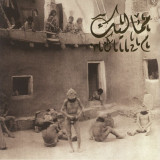
Active from the late 1980s through to the present day Contrastate have released several critically acclaimed albums. Their early experiments in music were heavily influenced by the industrial and experimental music and art scene of the 70’s and 80’s. Contrastate’s idiosyncratic take on challenging, industrial tinged music has certainly changed and evolved through the years. Their current sound insinuates itself inside the dark ritual ambience of the electronic avant-garde shot through with a vein of experimental noise and stentorian vocals that are strewn amongst touches of industrial surrealism and sonic soundtracks. “Contrastate achieve an amazing equilibrium between organic sound and brooding electronics.” – Heathen Harvest “Contrastate covers a bit of everything in their sound, and that black humor component…makes for a project that I can never predict what they will sound like next, but I know it will be fascinating no matter what” – Brainwashed
Bear’s Den have today announced the release of their eagerly anticipated fourth studio album, Blue Hours.
Set for release on May 13th via Communion Records, the album sees the much-loved folk-rock duo – made up of Andrew Davie and Kevin Jones – once again team up with producer Ian Grimble on what is one of their most personal records to date.
Speaking about the new album, Davie says: “Blue Hours is a kind of imaginary space you get into at night, a place where you process difficult things or where you try to figure everything out.”
Themes on the album include both self-reflection and mental health after both struggled with the latter in recent years. “It’s the main over-arching theme with this record,” Davie explains. The group, who have worked with mental health charity CALM (Campaign Against Living Miserably) previously added: “It probably speaks to our struggles and hopefully many other people’s too. Men are not very good at talking. We’re not really taught how to – men have no idea how to talk about this stuff, certainly to each other.”
The pair describe the conceptual blue hours headspace that gives the new album its title as being “somewhere between a hotel, a mental health hospital, a bar that stays open later than anywhere else, a paradise, a dream, a nightmare and an endless sea of corridors and staircases leading you to rooms that represent memories – good, bad, happy or difficult.”
Despite the album’s challenging themes, it’s an album drenched in hope too. “We wanted this to be a celebration of music,” Jones continues. “I think that informed some of the bolder decision making on this record. At a time when music was so distant, it felt important to make an album that sounded hopeful, celebratory, ambitious and beautiful in spite of the heavy subject matter in some of the songs.” Jones adds: “It was almost like we needed to shout louder than before because we felt that there were more barriers between the audience and us. We needed something to transcend that.”
Following on from the album’s lead single, ‘All That You Are’, which was released late last year, the group have also given a further taster of what to expect from the new album with the release today of their bold, electronic-driven latest single, ‘Spiders’. Stream the new single here.
Speaking about the song, Davie says: “I started writing ‘Spiders’ around the time we left London. In my head, I thought moving would solve lots of problems, like everything will be better – almost like this Neverland vibe,” he laughs. “‘Spiders’ is a song dealing with the fact that this absolutely wasn’t the case. I had this vision in my head that I’d be at one with nature, that I’d be calmer – but all the things that were rattling around in my brain before were still there after the move. The song is about the fact you can’t run away from the things that are bothering you.”
Adding, “While making the record we wanted to get across a kind of simmering intensity with the song and the idea of someone trying to keep their shit together while wrestling with these darker thoughts and feelings. We wanted to get across a sense of bravery & triumph in saying, “sometimes I can’t pull myself out” of these difficult situations. To celebrate the difficult moments because we all have them. They are a universally shared experience even if it feels sometimes like they’re not and you’re the only one who feels them.”
Melodically, the song is a gentle Wurlitzer and guitar-driven track filled with hope thanks to the electronic elements added by long-term producer, Ian Grimble. “This song maybe sparked a lot of detail that ended up coming out on other songs on the album,” Davie says. “The sound of this felt exciting to us both,” Jones adds.
Bear’s Den have today announced the release of their eagerly anticipated fourth studio album, Blue Hours.
Set for release on May 13th via Communion Records, the album sees the much-loved folk-rock duo – made up of Andrew Davie and Kevin Jones – once again team up with producer Ian Grimble on what is one of their most personal records to date.
Speaking about the new album, Davie says: “Blue Hours is a kind of imaginary space you get into at night, a place where you process difficult things or where you try to figure everything out.”
Themes on the album include both self-reflection and mental health after both struggled with the latter in recent years. “It’s the main over-arching theme with this record,” Davie explains. The group, who have worked with mental health charity CALM (Campaign Against Living Miserably) previously added: “It probably speaks to our struggles and hopefully many other people’s too. Men are not very good at talking. We’re not really taught how to – men have no idea how to talk about this stuff, certainly to each other.”
The pair describe the conceptual blue hours headspace that gives the new album its title as being “somewhere between a hotel, a mental health hospital, a bar that stays open later than anywhere else, a paradise, a dream, a nightmare and an endless sea of corridors and staircases leading you to rooms that represent memories – good, bad, happy or difficult.”
Despite the album’s challenging themes, it’s an album drenched in hope too. “We wanted this to be a celebration of music,” Jones continues. “I think that informed some of the bolder decision making on this record. At a time when music was so distant, it felt important to make an album that sounded hopeful, celebratory, ambitious and beautiful in spite of the heavy subject matter in some of the songs.” Jones adds: “It was almost like we needed to shout louder than before because we felt that there were more barriers between the audience and us. We needed something to transcend that.”
Following on from the album’s lead single, ‘All That You Are’, which was released late last year, the group have also given a further taster of what to expect from the new album with the release today of their bold, electronic-driven latest single, ‘Spiders’. Stream the new single here.
Speaking about the song, Davie says: “I started writing ‘Spiders’ around the time we left London. In my head, I thought moving would solve lots of problems, like everything will be better – almost like this Neverland vibe,” he laughs. “‘Spiders’ is a song dealing with the fact that this absolutely wasn’t the case. I had this vision in my head that I’d be at one with nature, that I’d be calmer – but all the things that were rattling around in my brain before were still there after the move. The song is about the fact you can’t run away from the things that are bothering you.”
Adding, “While making the record we wanted to get across a kind of simmering intensity with the song and the idea of someone trying to keep their shit together while wrestling with these darker thoughts and feelings. We wanted to get across a sense of bravery & triumph in saying, “sometimes I can’t pull myself out” of these difficult situations. To celebrate the difficult moments because we all have them. They are a universally shared experience even if it feels sometimes like they’re not and you’re the only one who feels them.”
Melodically, the song is a gentle Wurlitzer and guitar-driven track filled with hope thanks to the electronic elements added by long-term producer, Ian Grimble. “This song maybe sparked a lot of detail that ended up coming out on other songs on the album,” Davie says. “The sound of this felt exciting to us both,” Jones adds.
French finest synth-pop band Bon Voyage Organisation release his second opus after a feature on Cocktail d'Amore 10 Years compilation.
"La Course" is a cinematic, synthesized and library-esque journey that could be a mixed-up between Italian early 80's productions and french 00's disco.
"This record marks the beginning of a new attitude towards recording," says Bon Voyage Organisation's Adrien Durand. "Switching from a busy studio that I shared to having my own very quiet cabin in the North West of Paris has inspired me to adopt a more meditative approach."
Whilst it's fair to say Durand has been constantly on the move for some time - be it touring or producing records for the likes of Amadou & Mariam, Papooz and Bagarre - there's a sense of new momentum, as well as stillness, that hangs over this record. One that's fully instrumental and as he describes being more free.
The band's trademark glistening production, disco flair, shimmering electronics and incandescent melodies still remain but a more intuitive and striped back approach was favoured this time around. Some of this attitude stemming from an evening opening for Kamasi Washington. "Because of the constraints of being an opening act we played as an instrumental quintet instead of our usual 9-piece band," says Durand. "We rehearsed the day before, our set opened with John Coltrane's 'Naïma' followed by a hard-bop ish version of Kraftwerk's 'Trans Europe Express'. It felt so good to perform that repertoire in that configuration that I had the vision of bringing this aspect of the band in the studio."
There was also a removed sense of pressure with this record - no major label expectation of a radio friendly record, combined with a deconstructed approach to songwriting. "Since 2014 I've been working mostly on projects involving a lot of conventional songwriting," Durand says. "I was keen on producing a record based on performance and atmospheres more than repertoire." He also sought inspiration from a perhaps unlikely source: The Arctic Monkeys. "I was really encouraged by them going out of their comfort zone on their last album - it really caught my attention in a Bowie / Berlin period way."
The result of the album is one that oozes the natural momentum of experimentation, texture, mood and intuition while managing to retain a sonic coherence. In a none-obvious and zeitgeist clichéd way, there is perhaps a more jazz-leaning approach to the record that weaves between soft subtle moments to the more atonal and experimental, all underpinned by sweeping, engulfing soundscapes and the usual touch of non-Western musical flourishes. This vibe came from a distinct lack of editing, says Durand. "In the studio we had everyone sitting in the same room - sometimes up to 6 players - and I never edited the playing. I just went on to record some additional synth and percussion, insert the soundscapes, and mix the record."
This less is more approach, avoiding indulgence and superfluousness, is something Durand can't help but feel is an artistic response to the pace of modern life. "There is a frenetic approach to everything," he says. "People want to binge on everything, expect ultra fast changes on any political cause etc. The response is a big comeback of things like the practice of meditation, yoga and ambient music." There are times when this record falls into the territory of meditative ambience, as on the immersive plunge one takes swimming through the beautiful 'Un Am Ricain En Danger'. It's an album to bathe in and to be carried along by, it's gripping by being so rather than fighting for your attention
Ultimately the record is one that feels it's been allowed room to breath, a sonic sphere in which musicians have been allowed to roam as freely and thoughtfully as the listener. "This record is about welcoming the music and being able to let each musician express themselves during the recording process," says Durand. "This is a valuable trade that takes time."
out of Stock
Last delivered 6 years ago available to reorder, subject to availability
The dance floor as devotional is a trope as old as the club itself. But, with her new album, Jesus Was An Alien, Perel subverts the stakes of our collective communion: Who are our arms raised to? Who are we seeking salvation from?
“Jesus Was An Alien is a discourse about whether Jesus was an actual alien,” she explains, “but also a social debate about what is and implies religion today.” She offers up her provocative second record – her first on Kompakt – as a soundtrack for the listener’s own journey through the intricacies and ironies of modern belief.
Picking up on the themes she brought to her debut, the 2018’s LP Hermetica on DFA, Perel has created ten tracks rich with spirit and allusion. Her influences are myriad, from the indie dance hitmakers of the early 2000s – Hot Chip, Simian Mobile Disco, Justice – to rave compilations that predate her ascent to the DJ booth, to more abstract inputs. Living with synesthesia, she says, “I feel emotions and colors piling up inside me, then there’s a triggering sound or event that opens a valve. My tracks are color streams that tell a story.”
Jesus Was An Alien is not just multicolored – it’s multi-lingual too, slipping in and out of tongues in a single track, sometimes dispensing with words altogether (the ecstatic breakdown of “The Principle of Vibration”). The album features Perel’s voice almost entirely but for her special collaboration with Canadian songwriter Marie Davidson on the title track.
“Jesus Was An Alien” stirs like a late-night revelation, a heady discovery awakened in the dark. Perel lays out a fiercely disciplined electro pulse, with Davidson’s proclamations growing more fervent over the song’s sensual stride. “I already said everything with my synthesizers and the melodies I created,” Perel explains of the collaboration, but “somehow she gave the song a voice I couldn’t.”
Perel drives further not only spiritually but sonically across the ten tracks, taking thrilling production risks: standouts include her breathy vocals atop a melodic piano strut on “Matrix;” the delirious blur of ghostly chimes and disembodied voices of “Religion;” and the retro radiance of “The Principle of Vibration,” in which Perel exhorts us to “come on and vibe” over an athletic riff and shuffling percussion.
“Kill The System,” meanwhile, hits the listener with tense acid pulses, building to only an imagined release and calls out the end of patriarchy. Album closer “Am Kanal” starts as a pensive cloud of a track, finally breaking into a rich textural rain of synths and stabs.
The variety throughout Jesus Was An Alien underlines Perel’s purpose in this latest project; she’s experimenting her way to answers – or maybe just more questions. After all, she says, “questions are the beginning of something new.”
out of Stock
Last delivered 4 years ago available to reorder, subject to availability
Dena Miller grew up on a diet of folk before spending 6 years writing and exploring projects through Philly's punk scene, Oberlin's conservatory experimentalist and NY's DIY history before arriving at her debut album 'Woodpecker' . Think Waxahatchee, Told Slant & Moldy Peaches...
Black vinyl with inner sleeve lyrics & download.
Deer Scout’s debut full length Woodpecker is a record about memory and the subconscious. And like an unforgettable dream that keeps you puzzling over its riddles for days, it’s as packed with direct symbols as it is with ruminative haze. “I approach songwriting as a process of boxing things up, or putting away a time capsule,” explains front person Dena Miller, who wrote the album over a period of six years. It’s a culminating collection of the project’s many sounds and influences to date, from Philly’s punk cooperatives to Oberlin’s conservatory experimentalism to New York’s DIY history. At the center is Miller’s assured guitar fingerpicking and boldly clear voice, firmly grounded even as it gently probes uncertain emotional and musical terrain.
Raised by two folk musicians in Yonkers, Miller began recording songs as Deer Scout her freshman year of college in Philadelphia. There, she wrote Woodpecker’s earliest song “Synesthesia” about a train ride home from a basement show: “Night in the city / Big house on the corner / Her voice has the timbre of summers ago,” recalls Miller resonantly. After Miller’s transfer to Oberlin College, Deer Scout began touring DIY venues around the country and sharing stages with favorite artists including Waxahatchee and Told Slant. The twinned intimacy and intricacy of those two influences is reflected in the carefully adventurous arrangements on Woodpecker, which features, among other contributors, bass from close collaborator Ko Takasugi-Czernowin, cello from Zuzia Weyman, drums from Madel Rafter, and guitar from Miller’s father Mark—who also wrote the song “Peace with the Damage” and originally released it with his band Spuyten Duyvil in 2011.
Many of the songs on Woodpecker were written during periods of grief or change. “I used to sing myself to sleep as a baby and I think music still plays the same role in my life—it’s a way of self-soothing or seeking comfort,” explains Miller. “But there’s also part of it that comes from wanting to connect with people." Recorded and mixed primarily by Heather Jones at So Big Auditory in Philly with overdubs by Miller at home, Woodpecker is an exercise in portraying the incommunicable. “Cup”—about a relational psychology test called “a walk in the woods” that turns encounters with symbols into meaning—uses watery arpeggios, wintry strings, and roving bass to create a liminal sonic space, optimistic but tense. “Cowboy,” with airy layers of acoustic guitar riffs and Miller’s charmingly double tracked voice, takes its little fish, big pond inspiration from the character Joe Buck in Midnight Cowboy. And “Afterthought,” with its unexpectedly bright resolutions, is about God, love, and the complexity of empathy; “Heaven isn’t watching us,” sings Miller candidly over pedal steel.
Though Woodpecker is a record about uncertainty and the unknown, it’s also about compassion and connection—as Miller was able to find over the course of writing and recording this next chapter for Deer Scout and first release for Carpark, which she’s excited to at last share with the world.
out of Stock
Last delivered 4 years ago available to reorder, subject to availability
Limited edition box set, which includes the complete original LP - 180g vinyl - gatefold sleeve, an 80-page book 'The Making of Chet Baker Sings' by Brian Morton and the complete CD with bonus tracks
The unforgettable 'Chet Baker Sings' put Baker on the map not just as a brilliant trumpeter, but also a talented vocalist. The album was a revelation at the time and won Baker new fame and a new audience, which was less familiar with jazz than with pop music. The reasons are quite clear; Chet's voice is tender and beautiful, and at the same time his phrasing always swings and surprises.
The initial 1954 release was a 10" LP (Pacific Jazz LP11) which contained just eight tracks, reappearing in 1956 as a 12" LP (World Pacific PJ-1222) with additional tracks from the same session.
This wonderful definitive edition puts together: the original 12" LP 'Chet Baker Sings' in a 180-gram virgin vinyl gatefold edition illustrated with William Claxton photos from the sessions; the complete CD containing the same album plus six bonus tracks; an 80- page fully illustrated hardcover book on which writer Brian Morton explores the genesis of the iconic album. The book also includes a
specially written essay by bassist Riccardo Del Fra, speaking about his experiences playing with Chet, as well as dozens of classic, rare and never before published photos by such important jazz photographers as William Claxton, among many others.
Australian hip-hop/neo soul duo SO.Crates are a boom-bap prayer sent live and direct from the heart of two of the culture’s most committed students. The group features Melbourne based beatmaker and DJ Skomes alongside California-via-Adelaide MC & poet Cazeaux O.S.L.O, not to mention the MUSE, a forever changing third party who completes the creative trinity of the Crates. With a legacy built on releasing a steady flow of cold-crush records and delivering uplifting live performances to the party people, SO.Crates prove that hip-hop’s golden era is not a lost date in time, but a foundational state of mind. Functioning as a considered preview of what to expect from the album to follow, the hypnotic first release 'Stars' is an auditory exploration of what happens when two opposing charges collide; the joyful and the melancholy. Here, layers of instrumentation, samples and vocals sit atop a foundation of grounding beats — the track's roots from which piano samples, live trumpet and vocal embellishments spring. "When Skomes gets in his stride, it's always a bit of a happy/sad feeling. It can go either way, like a mood ring", says Cazeaux O.S.L.O. "I guess you could say we make mood ring beats, and 'Stars' is no exception".
"I wrote the album in a tiny apartment, at a time when everything felt big and overwhelming," says poet and songwriter Jenny Berkel about her new album, "These Are the Sounds Left From Leaving"
She was living in a brownstone walk-up full of radiant light and the ever-present soundscape of a leaky bath faucet. It was a sudden move at the time - a spontaneous departure from touring, bustling city life, being many things to many people'that landed Jenny in a space of self- imposed stillness. "The songs themselves are a study of proximity, bringing big fears into small spaces," says Jenny, reflecting on the album. "They're intimate examinations of a world that often overwhelms." The album features contributions from critically acclaimed folk duo Kacy & Clayton, and string arrangements by Colin Nealis (Andy Shauf) - the record was co- produced by Jenny alongside Dan Edmonds and Ryan Boldt (The Deep Dark Woods). Warm and dark, soft with stabs of madness, "These Are the Sounds Left From Leaving" is a cohesive collection of spare songs that bloom
lushly with detail. Whether you're reading Jenny's poetry or listening to her songs, you'll experience her drawing layers of far- reaching concern into particular moments, like concentric waves rippling inward toward a lone cast stone. "These Are the Sounds Left From Leaving" showcases the perspective of a unique storytelling artist, with an evocative practice that hinges powerful narratives on the intricacies of a multifaceted musicality. A songwriter immersed in poetry, a poet immersed in music'her work in all its forms is an invitation into a world of relatable introspection, in which even absences can be sculpted into vividly memorable verse.
Long overdue pressing of cult band’s most sought after release. Engineered and remastered by Jack Shirly (Deafheaven, Bosse-de-Nage, Oathbreaker). For fans of Have a Nice Life, Xasthur, and Planning For Burial. Entirely remastered and includes a never before heard bonus track!! Mamaleek’s Kurdaitcha is finally back in print! The San Francisco-based duo released their third album of weirdo black metal, Kurdaitcha, on the legendary cult label Enemies List Home Recordings (Have a Nice Life, Giles Corey), and it quickly sold out. For years the LP has been a hard to find collector’s item. Kurdaitcha finds the project in its initial period of creating music influenced by black metal, hip hop, jazz, and spirituals. Founded in 2008 in the Bay Area by two anonymous brothers, Mamaleek has explored a vast sonic territory on the edge of a genre renown for its aversion to change. Their expert utilization of left-field samples and unconventional instrumentation, and their insistent drive to experiment continues to set the band apart from their peers. This pressing of Kurdaitcha has been remastered and features a previously unreleased bonus track with a gold foil stamped jacket. “Mamaleek are the great destroyers.” — Invisible Oranges // “An incredibly rich and rewarding experience.” —Heavy Blog Is Heavy // “Is it good, though? It’s fucking mental. It’s amazing. It’s absolutely horrible. It’s barely listenable at times and yet you can’t turn it off. The music is perfect. Like broken glass is perfect.” —Echoes And Dust // “The group cloaks its music in the kind of warm, hypnotic distortion that defines shoegaze, and underneath that haze is a style that’s conceptually abrasive yet altogether beautiful.” — FORBES
Mt Joy's climb into the musical stratosphere owes a great deal to their
highly energetic and passionate live performances
They've sold out room after room across the country, have toured with arena acts
like The Lumineers, among many others, and fans the world over flock to their
shows. So when the coronavirus pandemic sidelined the touring industry, Mt. Joy
felt the effects in a significant way. Fast forward to May 22, 2021: artists and fans
alike are finally emerging, and Mt. Joy steps on the stage at Red Rocks
Amphitheatre, playing the biggest show on record since live music began to open
back up. Live At Red Rocks showcases the band's spirited performance in front of
the sold- out Colorado crowd, and the energy felt from the audience's thrill of
experiencing live music again is unmistakable, even through the air waves
"Good To Be is a sort of homecoming for the five-time GRAMMY Award winning artist, most recently for 2019’s Oklahoma. Having recently renovated his childhood home in Compton, CA the album is heavily inspired by his connection to both Compton and where he finds himself now at the intersection of Country and Americana in Nashville, TN.
While it sonically contains the blues influence we come to expect, there’s a stronger country tinge thanks to production from country legend Vince Gil and help from Keb’s good friend Darius Rucker, who features on the first single “Good Strong Woman”. Outside the music, Keb’ collaborated with the Compton Cowboys, a local non-profit deeply rooted in the community who are re-introducing cowboy culture to South LA. A striking image of Keb’ driving a vintage Oldsmobile Dynamic 88 through the streets of Compton, flanked by the Cowboys on horseback, will be a part of both the album artwork and a music video. "
Stars of the Lids, Tim Hecker, Brian Eno, Manuel. Duo Consists of Jonas Munk (aka Manual) and Jason Kolb (guitarist from Auburn Lull). 4th album, 2nd for Felte and first one since 2012. Initially on blue vinyl. Past press by Pitchfork, XLR8R, Impose. Past project Releases on Morr Music, Darla, and more. Billow Observatory is the project of trans-Atlantic duo Jonas Munk (Denmark) and Jason Kolb (Michigan). Initially planned as a small sideproject from their main work in Manual and Auburn Lull respectively, the two quickly realized their collaborative experiments merited more time and attention. Using heavily treated cavernous guitars, subtle synths, and crackling radio transmissions, their self-titled debut was released in 2012 as a double LP and established Billow Observatory as purveyors of unhurried, highly detailed ambient immersion. The release pair of II: Plains/Patterns in 2017, and III: Chroma/Contour in 2019, on Munk's own Azure Vista Records, introduced a subtle underpinning of rhythm, pulse, and stutter among the washes, expanding their sound with a hint of understated electronica. Marking 10 years since debuting on Felte, 2022 sees the release of Stareside, their most forcefully elegant undertaking to date. A record of swaying quarantine temperament, Stareside's 9 tracks thread the needle between hope and hopelessness - daydreaming whilst watching the world go mad in the blink of an eye. Not shy of overt rhythm, soaring motifs, and daunting undercurrents, Stateside veers wildly in new directions, yet keeps one hand near the record bin of comforting nostalgia (think early Warp Records, Jon Hassel, and Conny Plank to name a few).
Anybody who has witnessed a live performance of Anna von Hausswolff and band can attest to the extraordinary and commanding nature of the experience. The distinctive music, as captured across five full-length albums, comes to life, shifting from hypnotic and mantra-like moods to thunderous drama, dissonance and cacophony. The musicians master playful dynamics and wield immense power.
Across six pieces, Anna von Hausswolff performs sensational renditions of fan-favourites from the two beloved albums; The Miraculous and Dead Magic, with the backing of a full band including additional vocals from her sister / cinematographer Maria von Hausswolff
Anybody who has witnessed a live performance of Anna von Hausswolff and band can attest to the extraordinary and commanding nature of the experience. The distinctive music, as captured across five full-length albums, comes to life, shifting from hypnotic and mantra-like moods to thunderous drama, dissonance and cacophony. The musicians master playful dynamics and wield immense power.
Across six pieces, Anna von Hausswolff performs sensational renditions of fan-favourites from the two beloved albums; The Miraculous and Dead Magic, with the backing of a full band including additional vocals from her sister / cinematographer Maria von Hausswolff
Other Joe is the pseudonym of producer, mastering engineer, and label-head Joe Buchan, an individual with a penchant for free-wheeling experimentation and genre-crossing musical tastes. Drawing upon a wide array of sounds that pay homage to his love of both the beautiful and the abrasive, Joe devours indiscriminately whatever sounds might cross his path, the result giving birth to the unique musical journey that is listening to an Other Joe record. After a few years spent playing in bands and releasing small bodies of work under different monikers, Joe released what many listeners know as his breakout record, Alien Haze, a beautiful collection of recordings that oscillate from collages of field recording and found sound, sublime balearic-era saxophone symphonies, and introspective neo-classical psychedelia. His latest work, blessing from th eheart (typo intentional), expands on Other Joe’s love for blending field recording and acoustic instruments with electronic processing. Beginning by reviewing the catalogue of creative notes he had archived since the release of Alien Haze in March 2019, Joe picked apart voice memos, Logic projects, iPhone videos and whatever else he could lay hands on. Says Joe, “looking over it all at once, the musical ideas I had been attracted to over the past eight or nine months started to make a bit more sense - I could see that there were instruments I was liking, or chord progressions that I kept coming back to, structures and forms that I had found engrossing. Sort of like putting together a jigsaw puzzle that I had made without realising.”
Time has come for Futurepast to release a long format album: Alarm Phase Red - catalogue number FPLP01 - will be the first full-length work from Futurepast founder Davy Vandegaer, appearing here under a new name: Brainwashed Today.
Rooted in a conceptual approach of electronic music, this double LP ranges from industrial ambient to experimental techno. Like an antidote to a twisted reality of controlled screens and mental isolation, Alarm Phase Red uses the raw language of electricity
to reach the core of the machine and sabotage it, reverse its effects by mirroring them. Fighting fire with fire, deflecting the pressure and strain of a world driven by fear and anger, the music of Brainwashed Today acts like a cathartic escape from technological enslavement.
With the purchase of the vinyl comes a batch of three digital bonus tracks pursuing further the sound research of the album.
out of Stock
Last delivered 3 years ago available to reorder, subject to availability
Cruel Summer’s sound evokes the dazed, fuzzed-out, swirling noise of the late 1980s UK sound while still sticking to their pop roots--they’ve aptly been crowned San Francisco’s “jangle darlings.” Their first full-length album “Ivy” is forthcoming from Sacramento’s art/vinyl imprint Mt. St. Mtn. Following their 2013 ST/EP (Mt. St. Mtn.,) they released the sold-out lathe-cut 7” for “Leeches,” accompanied by a video. In 2016 Cruel Summer released “Around You, Around Me,” recorded for L.A.’s Part Time Punks, the 7” B-side features a moody cover of Pylon’s “Crazy.” Mastered by Kramer (Galaxie 500 and Low). “Ivy” is the long-awaited, first full-length album from this quartet, who have become a mainstay in the San Francisco and Oakland club scene. Recorded at Santo Studio in Oakland, California by Jason Kick (Sonny & the Sunsets, Once and Future Band, Mild High Club, Maus Haus), the record is a love poem to San Francisco, with all its changes and disappointments. "Bands have begun to push the boundaries of genre in a unique and satisfying way, and San Francisco’s Cruel Summer is a prime example. They are a group of voyagers into this uncharted territory, and their album Ivy is a joyful, dreamy blend of everything you might love about shoegaze and everything you thought shoegaze could never be... Cruel Summer is proof that shoegaze is alive and well, at least in San Francisco. The band is doing some creative, compelling work with a genre that is so often elusive - besides being an interesting act of musicianship, Ivy is also simply a joy to experience from beginning to end. If you need further convincing, take a listen to Ivy and let it take you somewhere warmer."
On their bold and brilliant debut album 'Unsoothing Interior', Stockholm's
Vero reflect the nature of life itself
Their songs prioritise feeling over perfectionism ' what feels, or sounds, best '
creating a record that tumbles through its contents with a sense of
unpredictability, excitement and curiosity. It's an album full of raw guitar riffs that
spin and swirl and fizz, and evoke the spirit of artists like Sonic Youth, Garbage
and Pixies. The record, out May 6th via PNKSLM Recordings (ShitKid, Les Big
Byrd, Holy etc.), is a document of the three musicians' own experiences, injected
with a natural urgency that comes from both the reality in the songs and writing
and recording them in a studio paid for by the hour. For its listeners, it acts less
as a roadmap through the turbulence and more as a confidante to share the highs
and lows, drama and desire with, encompassing everything from sex, friendship
and figuring out exactly who you are
On their bold and brilliant debut album 'Unsoothing Interior', Stockholm's
Vero reflect the nature of life itself
Their songs prioritise feeling over perfectionism ' what feels, or sounds, best '
creating a record that tumbles through its contents with a sense of
unpredictability, excitement and curiosity. It's an album full of raw guitar riffs that
spin and swirl and fizz, and evoke the spirit of artists like Sonic Youth, Garbage
and Pixies. The record, out May 6th via PNKSLM Recordings (ShitKid, Les Big
Byrd, Holy etc.), is a document of the three musicians' own experiences, injected
with a natural urgency that comes from both the reality in the songs and writing
and recording them in a studio paid for by the hour. For its listeners, it acts less
as a roadmap through the turbulence and more as a confidante to share the highs
and lows, drama and desire with, encompassing everything from sex, friendship
and figuring out exactly who you are
Classic 1987 album is one of the band’s most beloved releases. Includes a cover of Crime’s “Hot Wire My Heart”. “Let’s get something straight. There is no album in the entire corpus of indie rock not Loveless, not Surfer Rosa, not Psychocandy that reaches the heights of invention, joy, and magic of Sonic Youth’s sublime fifth album.... The haunted reveries of Sister remain with you for years, even if you only hear them once” Stereogum // 1987’s Sister was another notch in the band's move away from No Wave, yet still maintained their experimental approach. Gordon, Moore, Ranaldo and Shelley were coming into their own at this point, combining elements of noise, punk and pop. They had also become better songwriters since their previous album, providing better context for their noisier elements and incorporating the dissonance of their earlier releases into more traditional song structures. To quote Stereogum once again, “Sister is the sonic manifestation of refracted light. It’s a record that changes you.”
Communion, the debut album by Sister Ray, is a raw, meticulously-crafted portrait of momentous, ordinary moments; experiences that define your past, and instruct how you move through the world. The record is anchored by guitar melodies that bear an undercurrent of turmoil, and echoes with the wisdom of hard-won lessons. It’s a break-up album invested in exploring the motivations behind actions, rather than attempting moral judgment. Out May 6 via Royal Mountain Records.
Very limited vinyl pressing, 500 copies in a gatefold sleeve, a printed inner housing white and marbling effect vinyl with full download included. CD in a 4 panel digipack with a 4 page booklet. New Heavy Sounds is very proud to bring you Moongazer, the 2nd album by the 4 piece stoner rock powerhouse from Italy, TENEBRA. The band had already made waves on the scene with their debut album ‘Gen Nero’ before delivering ‘What We Do is Sacred’ their debut EP for New Heavy Sounds last year, 3 killer tracks that were but a taster of things to come. Moongazer takes the story a stage further with 9 slabs of crushing fuzzed up grooves, fuelled by 70’s proto metal, hard rock, punk, psych-blues and noise, loaded with great riffs and melody and topped off by gutsy soulful vocals. Musically, you could say that TENEBRA occupy similar musical terrain to bands such as Graveyard, Witchcraft, Kadaver and other bands of that ilk, but TENEBRA are very much their own beast. They have all the chops of course, but are musically less slavish, often adding a twist that keeps the songs fresh and now. There’s also very little reliance on Sabbath-isms (apart from one cheeky nod) and though occult rock is also part of the vibe, the music steers well clear of the cliches. In fact the band bring a clutch of left field influences into their melting pot as well, from June of 44 and Love Battery to the Misfits and the psych grunge of Screaming Trees. Of the 4 members, Claudio (bass), Emilio (guitar) and Mesca (drums) came from the hardcore and post-hardcore squat scene that gathered around Bologna, whereas their formidable vocalist Silvia (the youngest of the crew) is immersed in the underground rock of the '60s and' 70s. When you hear her sing you’ll know where she’s coming from as she has one helluva rock voice, laced with whiskey, smoke, grit, late nights and a whole lotta soul. Think Maggie Bell meets Betty Davis with a smattering of Gillan, and you'll be in the right ballpark. So what you get with ‘Moongazer’ is a band revelling in the spirit of 70’s rock rather than recreating it. ‘Heavy Crusher’ lulls you with its dreamy intro, but it’s not long before the riffs hit with Silvia in full effect. This pretty much sets the tone for the record, coiling proto metal riffs, executed with gusto and joie de vivre. And as with every track on this album, Silvia belts it out like she absolutely means it man. ‘Cracked Path’ continues the journey and ups the heavy fuzz a notch or 2. First heard on ‘What We Do Is Sacred’ (full length album version). ‘Black Lace’ is a brooding beast, epic and melodic, almost a ballad, with a heap of soul lurking within, courtesy of Silvia’s mighty voice. ‘Carry My Load’ keeps the brooding vibe going till the loping off kilter killer riffs kick in. This is definitely Silvia at her most Gillan-esque. ‘Winds Of Change’ does just that, dial things down to bluesy, almost psych feel, with dreamy solos and a hooky guitar break. ‘Stranded’ is a full on stoner rocker as is ‘Space Child’ with its short homage to the dark lords, there’s even a a sax solo. Never one’s to just play it straight these guys. ‘Dark And Distant Sky’ is pure proto metal, a la Bloodrock or Grand Funk, it truly rips, and once again, it’s construction veers it away from anything approaching what you’d expect. ‘Moon Maiden’ is the album’s closer, featuring Gary Lee Conner (no less) of the aforementioned grunge legends Screaming Trees, guesting on guitar. It’s a fitting and epic closer, by turns hard ‘n’ heavy, psychedelic and chock full of great ideas. MOONGAZER is without doubt an accomplished sophomore release that deserves to be heard and appreciated, purely because, though it may appear to reside in the world of stoner, it is so much more.
Stunning debut release from RAFRAM aka Irdial legend Ramjac Corporation and the Toronto legend (& honorary Glaswegian) Raf Reza.
300 copies only, full printed sleeves plus riso insert.
Orphic Apparition is a new label born out of a transatlantic meeting of minds. Facilitated by a long, hedonistic party in one of present-day London’s ‘meanwhile use’ venues Grow Tottenham, Canadian producer Raf Reza and British acid house luminary Paul Chivers spent a precious day in the studio to record a 3 hour straight to DAT session before Reza's return to Canada. The result of this spontaneous yet intuitive collaboration blurs the lines between Chiver’s long-standing Ramjac Corporation alias and Reza’s genre-spanning approach to dub, breaks and house styles. Part of the early 90s rave scene and an important member of the blueprint-setting Irdial label, Ramjac locks heads with the self-professed ‘lazy music guy from Toronto’ to adapt their studio session into five separate mixdowns.
‘In The Grow’ begins with a bouncy, cut-up sounding Errorsmith-esque rhythm, the recurring fright night melody that distinguishes the record coming in all quick and powerful. The A2 ‘Rotten Mix’ offers a more traditional house approach in its composition, with dub FX and a nice DJ friendly outro. On the final uptempo choice the pair opt for a head-scrambling electro take. Choose your fighter! The ‘Swampy Dub’ on the flip really dismantles everything we’ve heard prior, slo-mo drums allowing a much different DJ experience and altering the freaky synthetic propulsion into an almost modern classical sound. A little like Paul Dresher’s eternal ‘Channels Passing’ (tip). Combined with the other edits this version almost becomes a totally different track. The final ‘Rootless Dub’ gives its clues in the title, removing all the tough drum sounds and allowing for an ambient decompression.
Orphic Apparition will return soon.
out of Stock
Last delivered 4 years ago available to reorder, subject to availability
Spanish singer-songwriter Rosalia is back with her third studio album and one that is a hugely conceptual and experimental affair. She herself describes it as "her most personal and confessional album" and that is embodied by the lead single, 'Saoko', which celebrates transformation and change. It is an album of pop leaning, reggeaton inspired sounds and plenty of nods to dembow, champeta, flamenco, bachata, hip-hop and piano melodies. The artist's own fierceness and unapologetically brave attitude helps make this the force that it is.
out of Stock
Last delivered 2 years ago available to reorder, subject to availability
Back in 2017, Moderat announced that they’d be taking an extended break following a final concert in front of 17.000 people in their hometown of Berlin. And now they return. MORE D4TA, the group’s fourth album, arrives more than six years after its predecessor (2016’s III). Created largely during a time when touring (and most traveling) was off the table, MORE D4TA is an album that wrestles with feelings of isolation and information overload—issues that have become particularly pronounced over the past two years. The ten songs on MORE D4TA are rooted in collaboration, but long before any of its tracks were laid down, Moderat spent months hanging out and getting musically reacquainted, indulging in extended bouts of experimentation and slowly fleshing out ideas as they dove into modular composition, field recordings and other sonic oddities.
But no matter how far the band ventures into music’s outer realms, they always wind up back in their own unique soundworld, a place where emotive pop and fluttering electronic soundscapes walk hand in hand. Many of its lyrics are rooted in Ring’s frequent trips to Berlin’s Gemäldegalerie museum (often with his infant daughter in tow), where he’d seek refuge in the great paintings of the past while worrying about the future.
What they make isn’t necessarily dance music, but it is something that shines brightest in the dark of night, the group’s rich melodies and Ring’s ethereal vocals emitting a warm, almost bioluminescent glow. After spending the better part of two decades making music together, they’ve carved out a sound and aesthetic that are all their own, and MORE D4TA showcases a group that’s creatively recharged and fully dedicated to its craft.
out of Stock
Last delivered 2 years ago available to reorder, subject to availability
Back in 2017, Moderat announced that they’d be taking an extended break following a final concert in front of 17.000 people in their hometown of Berlin. And now they return. MORE D4TA, the group’s fourth album, arrives more than six years after its predecessor (2016’s III). Created largely during a time when touring (and most traveling) was off the table, MORE D4TA is an album that wrestles with feelings of isolation and information overload—issues that have become particularly pronounced over the past two years. The ten songs on MORE D4TA are rooted in collaboration, but long before any of its tracks were laid down, Moderat spent months hanging out and getting musically reacquainted, indulging in extended bouts of experimentation and slowly fleshing out ideas as they dove into modular composition, field recordings and other sonic oddities.
But no matter how far the band ventures into music’s outer realms, they always wind up back in their own unique soundworld, a place where emotive pop and fluttering electronic soundscapes walk hand in hand. Many of its lyrics are rooted in Ring’s frequent trips to Berlin’s Gemäldegalerie museum (often with his infant daughter in tow), where he’d seek refuge in the great paintings of the past while worrying about the future.
What they make isn’t necessarily dance music, but it is something that shines brightest in the dark of night, the group’s rich melodies and Ring’s ethereal vocals emitting a warm, almost bioluminescent glow. After spending the better part of two decades making music together, they’ve carved out a sound and aesthetic that are all their own, and MORE D4TA showcases a group that’s creatively recharged and fully dedicated to its craft.
out of Stock
Last delivered 3 years ago available to reorder, subject to availability
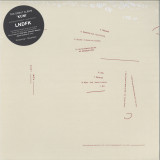
LNDFK (aka Linda Feki) presents her ground-breaking debut album, "Kuni" on Brooklyn-based Bastard Jazz Recordings. Undeniably on the rise after her 2019 breakout performance at Primavera Sound, LNDFK has already caught the attention of Pitchfork, Rolling Stone, Clash Magazine, Noisey, and Brooklyn Vegan (among many others) while being championed by the likes of Gilles Peterson, Tom Ravenscroft, and Jamz Supernova & landing spots on tastemaker playlists like Spotify's "Pollen" and "Fresh Finds."
"Kuni" is a spellbinding exploration of dichotomies: Love & Death (Eros & Thanatos), Flower & Fire, Delicacy & Violence, Poetry & Realism, Purification & Destruction. These opposites are reified in the 10-track LPs multifarious and multifaceted sounds, elegantly meandering through a variety of styles and genres, spearheaded by Linda and features the production wizardry of Darrio Bassolino who co-wrote the album.
"Kuni" opens with "Hana-bi," an ambient instrumental piece that sets the tone for the album. Inspired by the Takeshi Kitano 1997 film of the same name – particularly Joe Hisaishi's stunning soundtrack, as well as Kitano's paintings which appear in the film. "Hana-bi" expresses the dialoguing opposites of flowers and fire, the first of many dichotomous representations throughout the album. "Takeshi" acts as an extension and to "Hana-bi," albeit one of opposing sound, with its driving, highly syncopated drums (which reappear throughout "Kuni") – à la Karriem Riggins, Questlove, or Yussef Dayes – frenetic bass line, and jazz chords. Linda's sultry voice is interspersed, initially jumping around in scat fashion, being triggered as if a sample, before her lyrics come in; her vocals are used like an additional instrument, adding to the song's rich texture. "Kuni" truly hits its stride with the next song, "Smoke – a moon or a button" (its title lifted from the 1959 book by Ruth Krauss and Remy Charlip), which is structured like a jazz standard yet flows into neo-soul territory sonically with those prodigious drums a highlight once again.
LNDFK touches on experimental hip hop in two songs on the record (both of which were released as singles in 2021): "Don't Know I'm Dead or Not (feat. Chester Watson)" – track #4 – and "How Do We Know We're Alive (feat. Pink Siifu)" – track #9. Although they embrace a more hip hop-leaning sound, these songs by no means shy away from the exploratory theme, and feature two of the alt-rap scenes rising stars with Chester Watson and Pink Siifu who offer provocatively impressing verses, combining dense word play with unconventional flows. While these tracks may first appear to be outliers on the album, they are undeniably in tune with "Kuni's" message and sonic palette, acting as testaments to LNDFK's willingness to explore and experiment.
Meanwhile, "Ku" – the third and last single before the album release – furthers the pre-established future soul sound while meandering through nu jazz and left-field electronic. Inspired by the graphic novel and film, "Sin City," and its female assassin protagonist Miho, "Ku" is a musical interpretation of Miho's story, incorporating both her beauty – the first half of the song – and murderous tendencies – the second half – to create a stunning juxtaposition, culminating in an ambient finale that suggests the character's vulnerability and inner peace. The song gracefully bridges the gap between Hiatus Kaiyote-esque songwriting, Dilla's rhythmic syncopation, and Thundercat's instrumental prowess (LNDFK has shared a stage Brainfeeder labelmate Kamasi Washington).
Mixed in throughout "Kuni" are a series of instrumental pieces that function as something akin to an interlude. The aforementioned intro, "Hana-bi," and the album closer "se mi stacco da te, mi strappo tutto:" act as bookends, while "Om" indicates the half-way mark, and "Ktm" sees Jason Lindner add his sound the album. These tracks are the ambient foundation of "Kuni," representing the thematic duality of the work. Clocking in at only 24 minutes, "Kuni" packs an astonishingly diverse array of sounds, styles, and themes, all while showcasing virtuosic musicianship and instrumental prowess.
Appearing on "Hana-bi" and "Ktm," renowned international artists Asa-Chang and Jason Lindner add an additional perspective to "Kuni": Asa-Chang on "Hana-bi," and Jason Lindner on "Ktm." Asa-Chang - famously of the Japanese avant-garde group Asa-Chang & Junray - provides vocals and percussion to an alternate version of the instrumental opener, while the acclaimed keyboardist Jason Lindner offers his synth expertise on "Ktm." These features highlight the spirit of collaboration found in LNDFK's music, always willing to try out new ways of working.
LNDFK is a singer and songwriter, born of two cultures – an Italian mother and Arab father. She grew up in Naples, away from her father, the Sahara, her homeland and traditions, which has helped nourish the desire to rediscover – through art – an engagement to her roots. Her music melts with jazz, neo-soul and hip-hop influences, filtered through her experiences and sensibility.
Her first EP, "Lust Blue," was composed with the artistic production of Dario Bass and released by Feelin' Music; after that she released several singles that saw international radio support (BBC, NTS, Wordwide FM) and gained a massive audience on digital platforms. Together with her band, she toured around Europe, performing alongside such notable artists as Kamasi Washington and Mndsgn, among others. Most recently she toured Italy, and performed at Primavera Sound Festival 2019 in Barcelona.
"Kuni," is due out on NYC label Bastard Jazz Recordings in February, 2022, while the vinyl LP will follow shortly after.
out of Stock
Last delivered 4 years ago available to reorder, subject to availability
Comprising Marco Simioni, Mattero Mazreku, and Francesco Pio Nitti, Qualia are a group of Italian producers who have never met in person. Due to the covid pandemic, they had to colaborate in the cloud, yet the results are impressively coherent.
Having previously released records on Detroit Underground and fellow Utrecht label 030303 between them, they arrive on U-Trax in April 2022 with their eponymous EP of four deep tracks taking influence from a range of genres, including acid-techno, ambient, noise, and beyond.
Leading the release, 'Perception' brings beautiful strings, funky 808 drums and acid tones for a deep and moving opener. The track clearly reveals the inspiration Qualia got for this release from the early Gescom releases. Stretched across the A2 is the ambient bliss of 'VV Cephei A', which brings Boards of Canada-esque drones and tones.
On the flip, the title track 'Qualia' brings a headsy dose of braindance to the mix, recalling the early experiments of Aphex Twin with merciless 303 squelches and distant reverberations. Closing track 'Until I Break Apart' leads with dark, moody strings before a pounding kick introduces a stark tempo shift before deep ambient atmospheres engulf the final minutes.
“Nice EP. Need a proper listen in a dark room with only the speakers and me ;)”
Minus Magnus — Mhost Likely
“Beautiful Ambient soundscapes!”
IDA — Ectotherm, Boiler Room Glasgow
“Excellent release from U-Trax. Perception and Until I break apart are my fav's.”
Drox — Nightimedrama, Crobot Muzik, Analog Cabin, Southern Outpost
“Interview & Premiere”
— Parkett Channel
“The best part is “VV Cephei A”, where a floral intro leads to colliding drone pulses.”
— Terminal 313
out of Stock
Last delivered 4 years ago available to reorder, subject to availability
The West Coast Pop Art Experimental Band make an interesting case for being one of the era's more unclassifiable bands. Vol 3. A Child's Guide To Good And Evil was a great example of this. This album is considered to be the band's most accomplished work and a masterpiece of the psychedelic genre. Released just nine months after Volume 2, the band explores their incredibly creative psychedelic pop song writing with an accomplished mastery of studio technique.
The album cover features iconic original artwork by Jon Van Hamersveld, who also created covers for the Beatles and the Rolling Stones. During their short existence The West Coast Pop Art Experimental Band became known for their strange compositions, sometimes referring to the sound of the Byrds, while at other times exposing the weirdness of Captain Beefheart and Frank Zappa.
‘Wax Limousine’ is the third solo album from London’s Wesley Gonzalez. Set for release on 18th March via Moshi Moshi Records, the record is the follow up to last year’s critically acclaimed ‘Appalling Human’ and finds the indie stalwart delivering his most personal album to date, via a collection of 12 irresistible pop songs. The announcement arrives alongside the title track, which received its first play from Marc Riley on 6Music and its accompanying video, the second to be revealed from the record following ‘Greater Expectations’, released earlier this year. In support of the release, Gonzalez heads out on tour this November, headlining Electrowerkz on 25th and supporting Young Knives across the country (full dates below).
With its truly eclectic range of musical influences drawing on Gonzalez’s ever developing sonic palette, the album’s uplifting sound juxtaposes its themes, documenting the end of a long-term relationship and the overwhelming experience of dealing with a family member’s cancer diagnosis and subsequent treatment. ‘Wax Limousine’ navigates these hurdles with a razor-sharp wit and often brutally perceptive self-awareness, nowhere more so than on the new single. Inspired by both 'Faithless' by Scritti Politti and Aretha Franklin, it is Gonzalez’s version of an 80’s gospel song and, as he explains, written at a crucial point over the last 12 months
“This was written right after the breakup and cancer diagnosis. It was that early stage of a breakup where you can't really understand what went wrong for you or for your ex. There was resentment for the extreme change I had suddenly found myself in, and I was asking what it really was I did wrong. The title Wax Limousine came from old phrases like "as useless as an ashtray on a motorbike". I was trying to express how useless I felt within every situation that had just arrived at my doorstep.”
Wesley Gonzalez first made a name for himself as the leader of Let's Wrestle, whose tuneful and eccentric punk earned critical accolades and a devoted audience with three albums, including 2011’s Steve Albini produced ‘Nursing Home’. Gonzalez wasted little time forging his own path and quickly assembled a live band for his solo work, expanding upon the guitar-driven music of his former band, with an interesting concoction of classic 70’s pop, soul, and indie rock. Gonzalez released his debut solo record ‘Excellent Musician’ in 2017, then the follow up ‘Appalling Human’ in June 2020 through Moshi Moshi Records.
Famed free jazz concert registration of an early New Direction for the Art performance. Recorded in 1971. Old-style Gatefold LP, with rare photographs & extensive liner notes by Alan Cummings.
The performance by Takayanagi Masayuki New Direction for the Art at the Gen’yasai festival on August 14, 1971 was an intense, bruising collision between the radical, anti-establishment politics of the period in Japan and the febrile avant-garde music that had begun to emerge a few years before. The ferocious performance that you can hear here was received with outright hostility by the audience, who responded first with catcalls and later with showers of debris that were hurled at the performers. Takayanagi though described the group’s performance to jazz magazine Swing Journal as a success, “an authentic and realistic depiction of the situation”.
In 1962, Takayanagi, bassist Kanai Hideto and painter Kageyama Isamu went on to form an AACM-style musicians’ collective called the New Century Music Research Institute. Every Friday, members gathered at Gin-Paris, a chanson bar in the fashionable Ginza district of Tokyo, to push the outer limits of jazz creativity.
But the pivotal moment for his music was the creation a new trio version of his New Directions group in August 1969, with the free bassist Yoshizawa Motoharu and a young drummer Toyozumi (Sabu) Yoshisaburō. Experiments eventually led to the creation of two basic frameworks for improvisation that Takayagi referred to as Mass Projection and Gradually Projection.
“La Grima” (tears), the piece that was played at the Gen’yasai festival, is a mass projection and listening to it, you can get a clear sense of what Takayanagi was aiming at. Mass projection involves a dense, speedy and chaotic colouring in of space that destroys the listener’s perception of time, and thus of musical development.
The ferocity of the performance of “La Grima” at the Gen’yasai Festival in Sanrizuka on August 14, 1971 was consciously grounded by Takayanagi in a particular historical moment, ripe with conflict and violence. A month after the festival, on September 16, three policemen would die during struggles at the site. This was the context that the three-day Gen’yasai Festival existed within. The line-up reflected the radical politics of the movement, with leading free jazz musicians like Takayanagi, Abe Kaoru, and Takagi Mototeru appearing alongside radical ur-punkers Zuno Keisatsu, heavy electric blues bands like Blues Creation, and Haino Keiji’s scream-jazz unit Lost Aaraaff.
New Direction for the Arts trio topped the bill on the opening day, playing an aggressive, uncompromising “mass projection” set of polyphonic improvisation. Alongside drummer Hiroshi Yamazaki and saxophonist Kenji Mori, Takayanagi soloed hard and continuously for forty minutes. This was performance as precisely calibrated metaphor: three musicians responding to the demands of the moment with instinctive force and fury, untethered by rules, leaderless yet not rudderless (the direction part of the group’s name was no accident). The piece was entitled La Grima – tears - and the fusion between the palpable anger of the performance and hopeless sadness of its title were also perfectly apt for the situation. This was a fight that the state was always going to win. Yet, by all accounts, the band’s set went down like a fart at a funeral. The band were showered with catcalls and debris throughout, and by chants of “go home” when the music finally came to an end.
However, looking back at the event in the year-end issue of Japan’s leading jazz magazine, Swing Journal, Takayanagi was surprisingly upbeat: New Directions brought a solid political consciousness to our performance and succeeded in an authentic and realistic depiction of the situation. But journalism revealed its superficiality in its inability to penetrate the core of the music. I don’t know much about anyone else, but we at least left behind a competent record.
It’s a fascinating statement in many ways. Perhaps on one-hand it can be read as stubborn, solipsistic and self-justifying, yet in conjunction with his statement in 1971 there are points that guide us towards an understanding of just what Takayanagi intended with his performance at the festival. As Kitazato Yoshiyuki has argued, it becomes an almost religious act, directed at the earth deities of the land. A union of anger, sorrow and malevolence that can be placed nowhere effective, all it can do is find expression and channeling. The forcible land seizures at Narita, the eviction of farmers from land that had been in families for generations, the destruction of communities: none of this can be prevented, not least by an artistic action. All that can be done is an attempt to mark the land itself, to soak it with the combined force of emotions and the volume of the performances, to bury something there that cannot be drowned out, even by the coming roar of jet engines.
Ferocious JP / US free jazz bomb. A rare meeting between the NYC free jazz scene and the Japanese free music scene. Old-style Gatefold LP, with rare photographs & liner notes by Alan Cummings.
Following hot on the heels of the first, mid-sixties generation of Japanese free jazz players like Kaoru Abe, Masayuki Takayanagi, Yōsuke Yamashita, Motoharu Yoshizawa, etc., an exciting second wave of younger players began to emerge in the seventies. Two of its leading members were the saxophonist Kazutoki Umezu and multi-instrumentalist Yoriyuki Harada. Both were post-war babies and immigrants to the city, Umezu from Sendai in the north and Harada from Shimane in the west. They first met as students in the clarinet department at the Kunitachi College of Music, a well-known conservatory in western Tokyo. Harada was already securing sideman gigs on bass with professional jazz groups and was active in student politics, making good use of his connections to set up jazz concerts on campus. It was around this time that the two began to play together in an improvised duo, with Umezu on clarinet and bass clarinet and Harada on piano. They also experimented with graphic scores and prepared piano.
These experiments eventually led to the creation of a trio, with a high-school student called Tetsuya Morimura on drums, that they decided to name Seikatsu Kōjyō Iinkai (Lifestyle Improvement Committee) in joking reference to the Marxist discourse of the student radicals of the time. Around 1973, Umezu and Harada decided to call it a day and go their separate ways. Umezu began playing with the Toshinori Kondo Unit and Harada with the Tadashi Yoshida Quintet. In 1974 Harada formed his own trio and began to play at jazz coffeehouses across Japan.
Then, in September 1974 Umezu travelled alone to New York, where he set about building connections with the loft jazz scene in the city. It was a fortuitous moment to arrive in New York. Rents were cheap in the Lower East Side, possibilities for squatting existed, so many musicians and artists had moved to the area. Umezu soon became known on the scene as Kappo and he started to make connections with some of the young musicians like David Murray, Arthur Blythe, and Oliver Lake. He recalls making the rounds of the lofts every evening, checking out the performances, and getting the chance to sit in with many groups including Juma Sultan’s Aboriginal Music Society and trumpeter Ted Daniel’s orchestra.
Things were going so well that Umezu wrote to Harada and invited him to come to New York. He accepted and arrived in the city in July 1975. Harada and Umezu took the opportunity to resume their artistic collaboration. Their first concert together in over two years took place on July 20th at another loft, Sunrise Studios at 122 2nd Avenue. Umezu remembers Sunrise as an unusually sunny loft with the rarest of things, a grand piano. He invited along Ahmed Abdullah, a trumpeter he had got to know while playing with Ted Daniel. Abdullah led his own group and was a long-term Sun Ra sideman. William Parker, one of the key figures in the loft jazz scene of the period, was on bass. Abdullah also brought along Rashid Sinan on drums. Sinan drummed in Abdullah’s units throughout the seventies, but he had also played on Frank Lowe’s immortal Black Beings album and collaborated with Arthur Doyle, playing on Doyle’s Alabama Feeling album. By all accounts the evening was a huge success, with speed and dynamism of Harada’s piano playing gaining him lots of support.
Since they had managed to save some money from their day jobs, Umezu and Harada decided to set up a recording session with the same line-up on August 11 at Studio We, where there was a well-equipped studio on the third floor. Umezu recalls the session as follows, Of course, we recorded our performances in one take, with zero retakes as far as I remember. On all the tracks we recorded, we moved as one unit, sharp and fast. That was the nature of Lifestyle Improvement Committee, New York Branch.
Umezu and Harada would later become known for the elements of parody and entertainment that they brought to their music, a freewheeling blend of pastiche, humour and on-stage performativity that paralleled the approaches of the Art Ensemble, Sun Ra, and Holland’s ICP. But here, on their first recordings, the humour element is not yet present. Instead, there is a febrile sense of joy in creation and connection. On the Umezu-penned “Kim”, for example, Harada opens the piece with a speedy exploration of the full-range of the keyboard, hitting hard on the bass keys to create a rhythmic bed out of which patterns begin to emerge. Umezu enters at a much slower pace, longer held notes that at first float weightlessly over the urgency of the piano before they begin in splinter and accelerate. When Parker and Sinan kick in, it’s a rollicking tempo with Parker plucking deep and hard and the left-handed Sinan skittering hard across the topside of his kit. Abdullah kicks in a glorious solo twelve minutes in, bright and breathy at once. The piece slows and grows more spacious towards the end, giving Parker a chance to showcase some arco work that shades beautifully into the air against Abdullah’s trumpet.
Just over a decade ago, Japanese indie-pop duo Tenniscoats recorded »Papa's Ear« (2012) and »Tan-Tan Therapy« (2007), two albums made with musical and production help from Swedish post-rock/folk trio Tape. Originally released on Häpna, they are beautiful documents of the exploratory music made by a close-knit collective of musicians, fully at ease with each other, playing songs written by Tenniscoats and arranging them in gentle and generous ways. Released during a particularly productive time for Tenniscoats – during the late ‘00s and early ‘10s, they would also collaborate with Jad Fair, The Pastels, Secai and Pastacas – they have, however, never been available on vinyl. In collaboration with Alien Transistor, Morr Music is now reissuing these albums both digitally and on double vinyl, with extra tracks.
This reissue mini-series starts with »Papa’s Ear«. The second album from this expanded line-up of Tenniscoats, you can hear the musicians are immediately comfortable in each other’s presence, and they’ve almost intuitively understood what they can offer to one another. Saya and Ueno of Tenniscoats bring their magical, gentle folk-pop sensibility, and their winning way with straightforward, yet lush melodies. Johan Berthling, along with fellow Tape member Tomas Hallonsten, plus guests Fredrik Ljungkvist, Lars Skoglund, Andreas Söderstrom and Andreas Werlin, all generous and creative presences in the Swedish jazz underground, shades in the songs with endlessly inventive arrangements, highlighting the warmth and curiosity at the core of the Tenniscoats’ aesthetic – sometimes taking the songs in unexpected directions, other times pillowing the melodies with the softest of brushstrokes and the kindest of tones.
»Papa’s Ear« includes some of Tenniscoats’ most memorable songs. »Papaya« is a lustrous dreamland of a song, with the Swedish musicians singing ‘pa-pa-ya’ as an enchanted tattoo, while Saya’s piano and melodica clank and huff out, further expanding the song’s horizon. It’s followed by the spindly and mysterious »Sappolondon«, where drums and double-bass shuffle and pulse under weeping accordion and bittersweet clarinet. Saya’s voice sighs into the frame while the musicians breathe lungfuls of sweet drones and flick glittering countermelodies across the song’s surface. It reminds a little of the wild kindness of Movietone, or the regal charm of Carla Bley’s compositions.
Elsewhere, you can hear Tape and their friends embracing the freedom offered by the songs of Tenniscoats: see, for example, the glistening electronics in »På floden«, like a keyboard conducting a music box on a distant planet; or the descending phrase for winds on »Sabaku«, dovetailing beautifully into a creek of moon-lit texturology. The double-LP ends with two extra tracks, drawn from the 2008 Tenniscoats/Tape split single, also released by Häpna., »Lutie Lutie« is a sweet delight, driven by a clacking drum machine, the Tenniscoats duo joined by Hallonsten on glockenspiel and synthesizer, and special guest, Japanese indie-pop legend Kazumi Nikaido, as choir. »Come Maddalena« rounds off the set, a brooding cover of an Ennio Morricone tune, the music by Tape, the vocals by Tenniscoats and Nikaido. Open-hearted and full of puckish spirit, »Papa’s Ear« is an album of great tenderness and warm friendship.
The Decades Collected compilations are part of the Collected compilation series, which is a collaboration between Universal Music and Music On Vinyl. The compilations bring together the biggest names of each decade, combined with forgotten hits and less discovered gems, giving the listener an experience of listening to their favourite tunes while uncovering new musical grounds at the same time.
Various Artists - Sixties Collected features Love “Alone Again Or”, Cher “Bang Bang (My Baby Shot Me Down)”, The Who “Pinball Wizard”, Diana Ross & The Supremes “Love Child”, Steppenwolf “Magic Carpet Ride”, The Animals “House Of The Rising Sun”, The Beach Boys “Good Vibrations”, David Bowie “Love You Till Tuesday”, Bob Dylan “Subterranean Homesick Blues”, Tom Jones “It’s Not Unusual”, Nina Simone “I Put A Spell On You”, Rod Stewart “Handbags & Gladrags” a.o.
Various Artists - Sixties Collected is available on black vinyl and includes an insert.
EXTENSIVE COLLECTION OF SIGH'S EARLY DEMOS, EP's & RARITIES,
PRESENTED ON DOUBLE CD FORMAT - INCLUDES INTERVIEW & LINER
NOTES COURTESY OF MAINMAN MIRAI KAWASHIMA ON THE
FORMATIVE YEARS OF THE JAPANESE LEGENDS.Cult Japanese black
metal legends Sigh formed in 1989/90, featuring mainman Mirai
Kawashima, Satoshi Fujinami & Kazuki Ozeki
Following initial demos, Shinichi Ishikawa was brought into the band, & Kazuki
removed from the line- up. It was following this shift that the band set about
recording the masterpiece debut 'Scorn Defeat' for Euronymous' Deathlike Silence
Productions, going on to become one of the country's greatest & most revered
metal exports. With a journey through the strange & the psychedelic,
incorporating a whole eclectic mix of genre styles & experimentation throughout
their career, Sigh has remained a vital creative force in the avantgarde field.
However, at its core, Sigh has always remained true to its roots of old school
metal. 'Eastern Darkness' contains a comprehensive collection of Sigh's early rare
works showing their swift musical evolution as well as the strong utilisation of
keyboards in their compositional process throughout. The collection includes the
band's legendary demo tapes, 'Desolation', & 'Tragedies', plus their EP's & rarities,
as well as contributions to various compilation releases in the mid 1990's.
Considering Sigh's well- known regard for UK legends Venom throughout their
career, 'Eastern Darkness' also contains the band's own tribute to the 1980's black
metal pioneers, in the form of tribute 'To Hell & Back', originally released on tape
in 1995.
This edition of 'Eastern Darkness' is presented on double disc CD format &
includes a 12- page booklet featuring an interview with Mirai Kawashima about
the early years of the band, along with his recollections of the origins of each title
contained within the release, three decades on from Sigh's formation.
Leyla McCalla finds inspiration from her past and present. Whether it is her Haitian heritage or her adopted home of New Orleans, she - a bilingual multi-instrumentalist and alumna of Grammy award-winning African-American string band, the Carolina Chocolate Drops - has risen to produce a distinctive sound that reflects the union of her roots and experience.McCalla has produced a multi-disciplinary music, dance and theatre work, Breaking the Thermometer to Hide the Fever, which follows her personal journey as she uncovers the history of Radio Haiti, the first radio station in Haiti to report news in Haitian Kreyol - the voice of the people. Through this juxtaposition of voices - the personal and political, the anecdotal and the journalistic - McCalla gives expression to the enduring spirit of Haiti's marginalized poor in the face of several centuries of political oppression. Performances of the theatre work are currently scheduled in New Orleans and Philadelphia with more to be announced in soon.The process of creating Breaking the Thermometer to Hide the Fever included listening to countless archival recordings of interviews by Radio Haiti's journalists, and McCalla specifically wrote "Fort Dimanche" after listening to a testimonial interview that Michele Montas - the prominent former journalist and station director at Radio Haiti - had conducted with a survivor of Duvalier's political prison. In the interview, the man outlined his living conditions, the daily terror and torture that these political prisoners were subjected to and the events that led to his arrest.This album is a soundtrack of sorts to the theatre piece, featuring the songs that Leyla McCalla wrote and performs in this work.
Deluxe Reissue of "House With No Home" - Pressed on Clear Blue with
Gray Streaks Colour Vinyl with bonus 7" included
The cover of House with No Home, the second full- length album from Horse
Feathers, a dusty west coast folk duo comprised of Justin Ringle and Peter
Broderick, depicts a wintry farm dusted with snow It's an image that's easily
conjured throughout each of the 11 songs that make up Home, a subtle, nuanced,
and quietly noble collection of Americana-kissed alternative folk that echoes the
work of Bonnie "Prince" Billy, James Yorkston, Iron & Wine, and Bon Iver. Ringle,
who blends Richard Buckner's soft, serpentine delivery with Andrew Bird's "I can't
open my mouth all the way" mumble populates his songs with the kind of
woodsy, heart and soul-broken characters that one would expect to find lurking
between the pines on a frosty Oregon morning in February, but it's Broderick who
provides the chill. His string arrangements are grandiose in their simplicity and
busy without ever interfering with Ringle's poignant, icy prose. From the heady
opener "Curs in the Weeds" to the surging, banjo-led "Working Poor," the two carve
up each track like master craftsman, finding the perfect middle ground between
the sparse, reverb- laden landscapes of the Great Lake Swimmers and the
orchestral, aching beauty of Hem. This deluxe reissue includes a bonus 7" with a
2021 reworking of 'Curs In The Weeds' with a full band as well as 2 songs from a
radio session recorded during the European tour for the original album release.
Stars Are the Light, the luminous seventh album by the American psych explorers Moon Duo, marks a progression into significantly new territory. From a preoccupation with the transcendental and occult that informed Ripley Johnson and Sanae Yamada’s guitar-driven psych rock, and reached its apotheosis in the acclaimed Occult Architecture diptych, Stars Are the Light sees the band synthesize the abstract and metaphysical with the embodied and terrestrial.
Branching out from Occult Architecture Vol. 2, the album has a sonic physicality that is at once propulsive and undulating; it puts dance at the heart of an expansive nexus that connects the body to the stars. These are songs about embodied human experience — love, change, misunderstanding, internal struggle, joy, misery, alienation, discord, harmony, celebration — rendered as a kind of dance of the self, both in relation to other selves and to the eternal dance of the cosmos.
The Decades Collected compilations are part of the new Collected compilation series, which is a collaboration between Universal Music and Music On Vinyl. The compilations bring together the biggest names of each decade, combined with forgotten hits and less discovered gems, giving the listener an experience of listening to their favourite tunes while uncovering new musical grounds at the same time.
Various Artists - Eighties Collected features original hits like Wham! “Wake Me Up Before You Go-Go”, Duran Duran “Hungry Like A Wolf”, A-HA “The Sun Always Shines On TV”, The Cure “In Between Days”, Pat Benatar “Love Is A Batteflield”, Culture Club “The War Song”, Robert Palmer “Pride”, Frankie Goes To Hollywood “Relax”, Simple Minds “Sanctify Yourself”, ABC “When Smokey Sings”, The Human League “(Keep Feeling) Fascination”, UB40 “If It Happens Again” and many more.