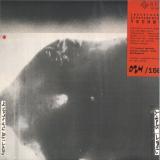
Max In The World & Kroba is a collaboration between producer Max In The World and saxophonist Kroba.
The project began with the release of 2023’s Excursions on Bliss Point, a record that explored the space between club and home listening and became a favorite at many an early morning afters.
On Structures Of Feeling 1, the duo have conjured three cuts of dubby and expansive downtempo: dance music for dreaming, deep house for liminal states, body music awash in the feeling of living now, in these times, in these bodies.
quête:the m f project
“Short Story” is the new album by Restive Plaggona. Eight new tracks of industrial techno beats and raw atmospheres. Over the course of 40 minutes the album takes us through different territories and landscapes of immense bass weight sound, sometimes dark and raw, sometimes droning and minimal, always energic.
Restive Plaggona is the music project of the Corfu-based artist Dimitris Doukas, known for his heavy and deep industrial soundscapes with subtle traces of darker forms of techno music. Dimitris is a particularly productive musician, having released more than a dozen records including his own imprint Several Minor Promises.
Released by Fair Weather Friends Records, "Woven" marks a new chapter for the acclaimed Thessaloniki-based ensemble, featuring special guests Harris Lambrakis on ney and James Wylie on saxophone. Their collaboration expands the trio’s sound with new colors and textures, weaving together tradition and modern expression.
Its cover art is designed by the internationally celebrated and award-winning design studio Beetroot, giving the project a distinctive visual identity that mirrors its sonic depth.
This new quintet formation is a vision that Yako Trio have long aspired to bring to life. The collaboration with Lambrakis and Wylie adds new layers of texture and expression to the band’s music. The mystical, meditative tone of the ney intertwines with the emotive voice of the saxophone, expanding the trio’s sound into new territories. The result is a dialogue full of color, energy, and imagination — connecting tradition with modernism, East with West, and collective memory with contemporary creation.
Mutable Ground is an album created through an exchange of recordings between Anna and Yannis. The project is rooted in the idea of sudden shifts in current events and the ever-growing emotions tied to loss, change, and tension. Each track title is inspired by unstable phenomena and objects, reflecting the potential for unexpected movement and the transitions of both nature and humanity. Repetitive, chaotic drum patterns, vocals that echo sounds of wounded or lost animals, hollow soundscapes reveal a sonic world where creation and destruction coexist—where people dance around fires, caught between fragility and resilience.
In his own time, in his own tone and in his own company.
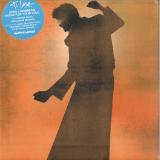
‘Win and lose without losing oneself’’ This line from French rapper Oxmo Puccino greatly accompanied David Walters while composing his fourth studio album. Over the eleven tracks on ‘Ti Love’, David took his time to find the right tone and in turn, tell his truth.
‘Ti Love’, is a French-Creole abbreviation for “petite love”, meaning ‘little love’, evoking that sweet fondness found in those small gestures and little acts of kindness.
Think of things like young kids' brotherly love or a stranger lending you a helping hand, while expecting nothing in return. It’s these motions that allow this album to feel full of real life, carried by beating drums that also pull at our heart strings.
Basing himself in a small village in Martinique, where David had not long since scattered the ashes of his late mother, the multi-instrumentalist decided to remain there and let the writing of Ti Love pour out from deep inside him. Taking influence from around the island, the energy from his makeshift studio set up in Fort de France, allowing a resilient yet grieving man to recount, let go and come to terms with his recent loss.
So embracing these new circumstances, on the rugged coastal Caribbean island of Martinique, David took up an artist’s residency in the island’s capital Fort de France, located near the town’s port is the ‘Manoir des Artistes’, a bustling recording studio space. A place where the walls shake as the latest sounds being created are blasted by locals and visitors alike. Most studio doors are wide open; as music here is a huge part of everyday life, feedback from encouraging neighbouring musicians is on hand and welcomed. A contrast to the isolation often assumed with working in more traditional music studios.
It was here in this stimulating environment that David recorded Ti Love’s initial demos.
With his first collaborator onboard, Neeweed, a 25-year-old producer and gospel expert who David met at the Martinique Jazz Festival.
Of the album’s initial versions of the record David recollects: ‘It took me three years to write it, then I rewrote it, reworked it. In the end I'm really glad I stepped back and listened to myself.’ I found a great ally in GUTS, who ended up being the artistic director of the record”
David surrounded himself with the right people who helped him express himself in the best possible way. He called on other friends and musical comrades; album opener and title track, ‘Ti Love’ features the incomparable Fatoumata Diawara (World Circuit Records / Africa Express) and further along additional production came in from; Izem, Art Of Tones, and GUTS himself, who all added just the right amount of ‘little love’ to this
project. Further helping hands came from Californian producer and DJ Captain Planet, who David was introduced to a few years ago. Closer to home, here in Europe, the German producer Bluestaeb appears on two tracks: the very catchy disco funk ‘Mr Maraboo’ and ‘Kite Koule’, the latter being the first single lifted from the album, where David invited Nigerian guitarist Keziah Jones.
Elsewhere on the album, fellow Heavenly Sweetness recording artist Blundetto contributed two tracks; the reggae ‘Voodoo Love’, which is David's tribute to Studio One, and the very sweet and resilient ‘Bon Voyage’, which closes the album... "It's gold, it doesn't need anything changing.” remarked David - ‘Bon Voyage’ is a goodbye to his mother, whose voice called him from the bottom of the sea one night while he was surfing during the full Moon.
Released almost 20 years after his debut album ‘AWA’ released on French imprint Ya Basta, home to Gotan Project and many others, David boasts a long list of radio supporters including; Gilles Peterson, Cerys Matthews and Don Letts at the BBC, while further field Cosmo Radio in Germany, and KCRW in Los Angeles.
On this new record, David has shown sincerity and vulnerability, while still honouring the infectious groove that he is known for the world over. Despite the upsets, a little love can indeed go a long way.
CREDITS:
Produced by Bluestaeb / Blundetto / Captain Planet / Izem / Art of Tones
A&R : Guts
Mixed by Mr Gib @ Onetwopassit
Except "Bon Voyage” and "Voodoo Love" mixed by Jerome “Blackjoy” Carron
Mastered by Benjamin Joubert @ Biduloscope
Art by Elliott Walters
- A1: Madre Terra
- A2: Destino
- A3: Occhi Fissi Feat. Madbuddy
- A4: Viaggio Nella Musica
- A5: L’attesa (Skit)
- A6: No Drama Feat. Claver Gold
- B1: Sott’ E Sop’
- B2: Sulle Nuvole
- B3: La Multa (Skit)
- B4: Funk4Ass
- B5: Riti Oscuri
- B6: Per La Mia Gente
- B7: L’attimo (Bonus Track)
Joe Allotta's solo project (drummer, composer, and singer) was born from his need for freedom of expression after numerous experiences
as a session musician for artists such as Davide Shorty, Johnny Marsiglia, Funk Shui Project, Mario Biondi, Leburn Maddox, Giles Robson,
Amy True, and Imaani (Incognito).
His compositions embody the desire to make jazz, in its various forms and influences, accessible to the widest possible audience without sacrificing the impact of an engaging and captivating live performance.
Joe Allotta blends hip hop, funk, and drum 'n' bass with contemporary jazz, perfectly blending vocals with his performances. He combines
his rhythmic exploration with a sweet and surprising voice, capable of lending further emotional depth to his music.
"Transition" is a musical journey that reflects a life in constant motion, where everything seems fleeting, fast, and fleeting, immersed in the
frenetic rhythms that surround us every day. The title also encompasses a more intimate dimension: the growth of his artistic identity. Joe is
no longer just a drummer and composer, but also a singer. His intense and surprising voice intertwines with his drumming in a continuous
dialogue, opening up new expressive possibilities and adding further depth to his musical language.
The album was produced in the studios of the Sghetto Club in Bologna, where Joe, together with his producer Jacopo Trapani, spent weeks
researching and experimenting: rehearsing, playing, processing and synthesizing sounds, developing and arranging ideas, thanks also to
the collaboration of extraordinary musicians. The result is a work that blends instinct and research, intimacy and openness, movement and
transformation: exactly what Transition aims to convey.
CREDITS
Giuseppe "Joe" Allotta: Compositions, Vocals, Drums, Bass, Keyboards
Jacopo Trapani: Compositions, Recording, Mixing
Chicco Allotta: Piano (Track 1)
Giovanni Galdo: Bass (Track 1)
Riccardo Dalle Vedove: Trombone (Track 1)
Piergiorgio Perrella: Guitar (Tracks 2, 5, 8, 9)
Elijah Lee Last Jacinto: Piano (Track 6)
Matteo Diego Scarcella: Sax (Track 6) Francesco Brini: Master
- A1: Jah Jah Harmony
- A2: Natty Congo Rides On
- A3: Soulful Times
- A4: Jumping Up
- A5: Freedom Smile
- A6: Taking You Somewhere
- B1: Nanny Skank
- B2: Look At Life
- B3: Hard Times
- B4: Pray To Play
- B5: Too Bad Bull
- B6: No Get Dub Over
Jackie Mittoo, organ and piano maestro, was also one of the founding members of Jamaica's top session band The Skatalites. Musical arranger for Studio One he provided the backbone to so many of Jamaica's finest tunes. The invention of Ska music and the sounds that rode through the Rocksteady and Reggae period all carry his stamp. Whether it be in his various incarnations, the aforementioned Skatalites, The Soul Brothers, Soul Vendors and the Sound Dimension or under his own name, his distinctive organ and piano sound and musical arrangements have all played a major part in Jamaica's musical history.
Jackie Mittoo (born 1948, Kingston, Jamaica) began playing musical instruments at a very early age. Taught piano by his grandmother he was performing live by the age of 10 and recording by the age of 15. Two Kingston bands that he played with the Rivals and the Sheiks brought him to the attention of Studio One's founder Coxsone Dodd. Who at the time was putting a group of musicians together to be his studio band. Impressed by his skills on both the organ and the piano, Jackie was asked to join in what would become Jamaica's foremost band The Skatalites. The fellow band members were Lloyd Brevett (bass), Lloyd Knibbs (drums), Don Drummond (trombone), Tommy McCook, Roland Alphonso and Lester Sterling (Sax), Johnny Moore (trumpet), Jah Jerry (guitar) and Mr Mittoo (piano). This line up ruled the Jamaican scene between 1964 - 1965 as well as inventing the Ska sound, they also performed the backing duties for the other top labels of the time including Duke Reid's Treasure Isle and Justin Yap's Top Deck label.
1965 saw The Skatalites disband and Jackie Mittoo move on to his next musical project The Soul Brothers. Formed with fellow Skatalite Roland Alphonso, this band would back all the hits coming out of Studio One for the next three years with Jackie Mittoo working as band leader and musical arranger. Around this time Jackie also had his own single released, a Ska underground classic called 'Got My Bugaloo'. Rare, as it also features Jackie in the unusual role for him, as lead singer!!!!.
1966 saw the Ska sound evolve into Rocksteady, again with Jackie's band at the helm, and his first hit single the Rocksteady cut 'Ram Jam'. The success of which would lead to a solo career and album releases under his own name such as 'Now', 'Macka Fat', 'Evening Time', 'In London' and 'Keep on Dancing', to name but a few. In1967 the hits at Studio One were still flowing when The Soul Brothers morphed into The Soul Venders and began backing such luminaries as Ken Boothe, Alton Ellis, Delroy Wilson, The Heptones, The Cables, The Wailers and many other of the labels solo artists.
By 1968 Jamaican music was ready for another change and Rocksteady rolled into a slower groove soon to be called Reggae. Jackie Mittoo would be at the forefront with his latest band The Sound Dimension. A line up that included Leroy Sibbles (bass), Roland Alphonso and Cedric Brooks (saxophone), Eric Frater and Ernest Ranglin (guitar) and Bunny Williams (drums). Being the house band at Studio One they backed all the leading names of the time, John Holt, Horace Andy and Alton Ellis, all of Studio One's output carried his sound.
Jackie Mittoo emigrated in the late 60's to Canada, but travelled to Jamaica and London to record with many of the big new names, who were trying to redress Studio One's supremacy and needed his magic touch. Such Producers as Bunny Lee used Jackie Mittoo on many of his sessions, Sugar Minott among others were always glad of his services.
We have captured some fine 1970's cuts that feature Jackies numerous talents, showing his ability to embellish tracks with a feel that few could better, Musical arranger, band leader all round studio ace. We hope you enjoy the set and I'm sure you'll agree with us Jackie Mittoo does indeed Ride On.........
A rising and genre-defying figure in the French electronic scene, Goldie B continues her ascent with Who Says Night’s For Sleeping?, a five-track EP that asserts her distinctive signature: an instinctive blend of club energy, cinematic storytelling and UK rave influences. Conceived as the soundtrack to a night lived in full intensity, the record moves through the fire of the dancefloor, the collective trance, and those suspended moments where one floats between dream and wakefulness.
“I imagined this EP as the soundtrack to a night experienced in its entirety. From the first rush of adrenaline on the dancefloor to that floating walk home, still carried by the music. My influences range from Moby and Air to Floating Points and Joy Orbison, artists who know how to combine power and emotion. I love connecting the raw energy of the club with more dreamlike textures, because you can absolutely dream while dancing. Each track is an instinctive snapshot of my inner world.” Goldie B The EP’s opening act, “The Space Between” blends ethereal pads, organic strings and a steady crescendo, recalling the elegance of Air or Moby. It opens a suspended space, equally suited to inner drift or physical release. “I wanted it to feel like a threshold, a gentle hand pulling you into a trance state.”
On “U Make Me Feel So Good”, a sensual and narrative breakbeat track, a flowing bassline gradually tightens into trancier energy. Seductive female vocals weave through broken rhythms, creating a piece that is as tactile as it is hypnotic. “It’s about contrast, the softness and caress at the start, then a tension that rises and electrifies.”
Instagram | Youtube | TikTok | SoundCloudAt the heart of the project, “Rêve de Rave” channels 90’s breakbeat spirit with old-school samples, an euphoric central break and voices urging to move your feet. Urgent and liberating, it embodies the dreamlike essence of the rave. “It’s how I imagine the rave: a lucid dream where joy and collective energy feel almost unreal.”
Next comes the most incisive cut of the EP, “Purple FX”, driven by a grating central bassline that evolves relentlessly until its explosive drop. Minimalist yet implacable, it captures the sheer force of a peak-time track. “I wanted a track purely designed for the club, where the tension just keeps rising until it explodes.”
Closing in chiaroscuro, “Snake Waves” shifts from breakbeat into a half-house, half-techno 4/4 groove, carried by a sinuous, hypnotic bassline. The track plays on tension and release, with a rich harmonic break before fading like a suspended farewell, where the party recedes but the energy lingers. “It’s a farewell piece that keeps the intoxication alive, like a final vertigo before slipping back into the night.”
Goldie B is a multifaceted force on the French electronic scene. A producer, multi-instrumentalist, singer, MC, DJ, and co-founder of the label Omakase Recordings, her sets blend bass, jungle, UKG, and breakbeat, captivating audiences with their contagious energy. Based in Marseille, she has released music on renowned labels such as D.KO, Banoffee Pies, and YUKU, and has performed on some of the biggest French stages and festivals: Peacock Society, Astropolis, NDK, Marsatac, Delta, Le Bon Air, and even the Festival d’Avignon. In 2024, she was selected by Apple Music for its Women In Electronic series. Her new Who Says Night’s For Sleeping? EP confirms her status as an instinctive and distinctive artist to watch on the French electronic scene.
ince its opening in spring 2021, JUBG, a still young Cologne gallery for contemporary art, has specialized in the broad field of artists and collaborations working along artistic interfaces, especially those between visual art and experimental and/or electronic music. For example, JUBG has already hosted exhibitions by Markus Oehlen, Kim Gordon, Wolfgang Voigt, Matthias and Aksel "Superpitcher" Schaufler, Sven-Åke Johansson, and Emil Schult. Albert Oehlen, who is a kind of mentor and supporter of the gallery, was also a guest at Albertusstraße this summer, where he presented the exhibition D-I-E ORPHEUSMASCHINE together with Michael Wertmüller, Thomas Stammer and the poet Rainald Goetz.
It is only logical that the gallery now expands its sphere of activity to include its own label, on which music appears that comes from similar contexts as the artists listed above already suggest.
As catalog number 1, JUBG is now releasing the official soundtrack to "The Painter" from 2021. The film, German title "Der Maler", is a mixture of feature film and documentary and a collaboration between German director Oliver Hirschbiegel, best known for his Oscar-nominated film "Downfall", and Albert Oehlen, with whom Hirschbiegel has a long friendship, as they both once studied together at the Hochschule der Bildenden Künste in Hamburg.
The docu-fiction shows Oehlen struggling with a painting and pondering the meaning of his work. Oehlen is played by German actor and musician Ben Becker, accompanied by the off-screen voice of Charlotte Rampling. In the film, Becker makes a painting that Oehlen himself creates step by step behind the camera, while the actor improvises the process in front of the camera.
The wonderful music for this film comes from no less than two outstanding personalities whose individual biographies and musical signatures could hardly be better suited to this project. On the A-side it is Gudrun Gut, icon not only of the German electronic music scene since at least the 90's, singer, composer, DJ, label owner (Monika Enterprise) and of course founding member of the legendary 80's New Wave band Malaria. On the B-side it’s the world famous and award winning US avant-garde trumpeter and improvisational musician Nathan "Nate" Wooley, who has played with Fred Frith and John Zorn among others.
Gudrun Gut's tracks bear such beautiful titles as "Bewegung", "Küste" or "Weinen" and she once again pulls out all the stops of her great skills and decades of experience as a producer of the most diverse electronic music genres. These are unusual and much more experimental musical paintings that she creates here than on her recent solo works. Edgy, angular, raw and unpolished, yet always elegant and clever, she subverts the male artist madness depicted extensively in the film in her own unique way.
Nathan Wooley answers with the instrument he has been familiar with since childhood, the trumpet, with which he is able to create a ravishingly virtuosic noise. His pieces are more like sketches, often only 90 seconds or a few minutes long, but in all their abstractness underpin the narrative of the film almost perfectly.
A limited edition of 20 copies in total, painted and signed by Ben Becker, can be purchased directly through JUBG.
JUBG, eine noch junge Kölner Galerie für zeitgenössische Kunst, hat sich seit ihrer Eröffnung im Frühjahr 2021 auf das weite Feld von Künstler:innen und Kollaborationen spezialisiert, die entlang künstlerischer Schnittstellen tätig sind, insbesondere an denen zwischen bildender Kunst und experimenteller und/oder elektronischer Musik. So hat JUBG bereits Ausstellungen von Markus Oehlen, Kim Gordon, Wolfgang Voigt, Matthias und Aksel "Superpitcher" Schaufler, Sven-Åke Johansson und Emil Schult gezeigt. Auch Albert Oehlen, der eine Art Mentor und stiller Unterstützer der Galerie ist, war im Sommer dieses Jahres zu Gast in der Albertusstraße, wo er zusammen mit Michael Wertmüller, Thomas Stammer und dem Dichter Rainald Goetz die Ausstellung D•I•E ORPHEUSMASCHINE präsentierte.
Es ist nur logisch und folgerichtig, dass die Galerie ihren Wirkungskreis nun um ein eigenes Label erweitert, auf dem Musik erscheint, die aus ähnlichen Zusammenhängen und Sphären stammt, wie es die oben aufgezählten Künstler:innen bereits vermuten lassen.
Als Katalog-Nummer 1 veröffentlicht JUBG nun den offiziellen Soundtrack zu "The Painter" aus dem Jahr 2021. Der Film, deutscher Titel “Der Maler”, ist eine Mischung aus Spiel- und Dokumentarfilm und eine Zusammenarbeit zwischen dem deutschen Regisseur Oliver Hirschbiegel, vor allem bekannt für seinen Oscar-nominierten Film "Der Untergang", und Albert Oehlen, mit dem Hirschbiegel eine lange Freundschaft verbindet, studierten sie doch beide zusammen einst an der Hochschule der Bildenden Künste in Hamburg.
Die Doku-Fiktion zeigt Oehlen, wie er mit einem Gemälde kämpft und über die Bedeutung seines Werks nachdenkt. Oehlen wird vom deutschen Schauspieler und Musiker Ben Becker gespielt und von der Stimme von Charlotte Rampling aus dem Off begleitet. Im Film erstellt Becker ein Gemälde, das Oehlen selbst hinter der Kamera Schritt für Schritt anfertigt, während der Schauspieler den Prozess wiederum vor der Kamera improvisiert.
Die wunderbare Musik zu diesem Film kommt von gleich zwei herausragenden Persönlichkeiten, die mit ihren individuellen Biographien und musikalischen Handschriften kaum besser zu diesem Projekt passen könnten. Auf der A-Seite ist dies Gudrun Gut, Ikone nicht nur der deutschen elektronischen Musikszene seit mindestens den 90er Jahren, Sängerin, Komponistin, DJ, Label-Betreiberin (Monika Enterprise) und natürlich Gründungsmitglied der legendären 80er Jahre New Wave-Band Malaria, auf der B-Seite der weltberühmte und Preisgekrönte US-amerikanische Avantgarde-Trompeter und Improvisationsmusiker Nathan “Nate” Wooley, der u.a. mit Fred Frith und John Zorn zusammengespielt hat.
Gudrun Gut’s Tracks tragen so schöne Titeln wie “Bewegung”, “Küste” oder “Weinen” und sie zieht hier einmal alle Register ihres großen Könnens und ihrer jahrzehntelangen Erfahrung als Produzentin der verschiedensten elektronischen Musikspielarten. Es sind ungewöhnliche und sehr viel experimentellere musikalische Gemälde, die sie hier entwirft als auf ihren jüngsten Solo-Werken. Kantig, eckig, roh und ungeschliffen und dabei immer elegant und schlau, unterläuft sie den im Film ausgiebig dargestellten männlichen Künstlerwahnsinn auf ihre ganz eigene Art und Weise.
Nathan Wooley antwortet mit dem ihm seit Kindesbeinen vertrauten Instrument, der Trompete, mit der er in der Lage ist, einen hinreißend virtuosen Lärm zu erzeugen. Seine Stücke sind eher Skizzen, oft nur 90 Sekunden oder ein paar wenige Minuten lang, die in all ihrer Abstraktheit das Narrativ des Films nahezu perfekt untermalen.
Eine auf insgesamt 20 Exemplare limitierte Edition, bemalt und signiert von Ben Becker, ist direkt über die JUBG zu erwerben.
KIK is the new project of two core strategists of sonic enigma HHY & The Macumbas: Jonathan Uliel Saldanha & João Pais Filipe. Ditching acoustic instruments in favour of drum synthetics & tightly controlled sound design, the duo's debut album NIGHTSHIFT focuses on off-kilter club tracks that thwart 4-on-the-floor flavours whilst maintaining trance-inducing extended cycles. If the devil is in the details, this is all about the spectromophology of the details.
Beginning with moving morse code blips in an odd time signature We Can't Dance announces the characteristic unlife of the album's pulse. Once the kick enters, syncopations progressively accumulate into a weave of interacting rhythmic lines. Smoke Machine's groove is reminiscent of the riddims Saldanha explores in his HHY & The Kampala Unit, adding scintillating pads and snippets of blitzed out laughter.
The album's third track, Proff, hearkens back to the initial pulse, displaced and pitched down in register. Here's a more meditative temperament on display, where the regular geometries of the club have been moved into higher-order structures. Segments rise & fall into earshot. Deepening the meditative mood, Back Room explores a short melodic leitmotif anchoring the track's wander- lust.
The rhythmic assault continues in Tactical Gear, bringing further experiments into polyrhythmic contours exacerbated by preci- sion movements of echo & delay. Limping can be heard as a what-if sonic fiction taking Autechre-inspired abstractions through Durbanoid Gqom terrains. The album closes with its longest track, Night Shift, that segments into shifting sound worlds.
Drawing from industrial grit, cybernetic percussion and the eerie fluorescence of after-hours energy, NIGHTSHIFT exists in the liminal space between body music and abstraction——a soundtrack for phantom warehouses and malfunctioning machines. This isn’t just music; it’s an immersive sonic environment, a journey into the heart of deconstructed dancefloors.
For fans of Rian Treanor, Proc Fiskal, Jlin and Lorenzo Senni.
Most recently, HHY has been collaborating with Nyege Nyege through projects such as Kampala Unit and Arsenal Mikebe, performing live with the ensemble alongside Valentina Magaletti, and producing records for artists like Fulu Miziki, as well as collaborations with Phelimucasi, Rey Sapiens, Kingdom Choir and others. He also released Camouflage Vector: Edits From Live Actions 2017–2019 on the label, a live album featuring two tracks with Adrian Sherwood.
Previous collaborations include Tunnel Vision with Badawi (released on Tzadik), the HHY & The Macumbas album Beheaded Totem on House of Mythology, and Fujako (Wordsound, with MC Sensational), along with double-bill shows with acts such as Clipping and Death Grips.
- Two Man Crew
- Zounds
- Pinky Tuskadero (Feat. Kool Keith)
- Sixers & Squires (Feat. Skillz)
- Super Sound (Feat. Breeze Brewin)
- The Rose Bowl (Feat. The Alchemist & Your Old Droog)
- Dubbs Up (Feat. King T)
- Prism (Feat. Large Professor & Tash)
- Mighty’s Big 5 (Live From The Palestra)
- Most In-Outs (Feat. Cage)
- I. Goldberg (Feat. Mc Serch & Sadat X)
- Funk 'O Mart (Feat. Chubb Rock)
- Spaceport (Feat. Chill Rob G & Copywrite)
- Highest Degree (Feat. O.c.)
- Two High Whiteys
- Rap Individuals (Feat. Artifacts)
- Be Excited (Feat. Esoteric)
Cassette[13,87 €]
Iconic hip-hop duo The High & Mighty, composed of rapper Mr. Eon and producer DJ Mighty Mi, make their long-awaited return with Sound of Market, their first studio album in over twenty years. The release marks a powerful comeback for one of underground hip-hop’s most celebrated duos — a project steeped in nostalgia, boom-bap grit, and the timeless energy of East Coast rap.
Named in honor of Sound of Market Street, the legendary Philadelphia record store that served as a hub for crate diggers, DJs, and hip-hop heads for decades, the album pays homage to the culture that shaped The High & Mighty’s sound and identity. Much like the store itself, the record celebrates deep cuts, rare finds, and the shared love of vinyl that connects generations of hip-hop fans.
Across 17 tracks, Sound of Market revives the duo’s trademark wit and sharp lyricism while showcasing an impressive lineup of collaborators, including Kool Keith, The Alchemist, Your Old Droog, Large Professor, O.C., Chubb Rock, King T, Skillz, and many more. The result is a cohesive, sample-driven experience that bridges the classic and contemporary — reaffirming The High & Mighty’s status as true architects of independent hip-hop.
From the opening anthem “Two Man Crew” and the surreal swagger of “Pinky Tuskadero” with Kool Keith, to the cinematic boom of “Mighty’s Big 5 (Live from The Palestra)”, the record moves effortlessly through sharp lyricism, layered production, and a shared reverence for the foundations of the genre. Sound of Market is both a return and a reminder — a record that feels timeless in its authenticity.
- A1: Madre Terra
- A2: Destino
- A3: Occhi Fissi Feat. Madbuddy
- A4: Viaggio Nella Musica
- A5: L’attesa (Skit)
- A6: No Drama Feat. Claver Gold
- B1: Sott’ E Sop’
- B2: Sulle Nuvole
- B3: La Multa (Skit)
- B4: Funk4Ass
- B5: Riti Oscuri
- B6: Per La Mia Gente
- B7: L’attimo (Bonus Track)
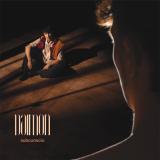
Subconscio left the smallest town in Gargano to begin a new life in uncharted Bologna.
Leaving mother earth, he still retains a strong sense of that distant world, expressed through the senses of his inner child. The Subconscio
project finds its expression in music, where it blends Neo Soul, Hip Hop, and Electronica into a sound deeply influenced by individual experiences. Soft vibrations and relaxed lyrics are the means through which he expresses his devotion to creative freedom, moving with the urgency of someone who has finally found his voice. The word dáimōn originates from Ancient Greek and means divine messenger, a guiding
spirit that hovers in a middle ground, called metaxu, the same place where the soul resides, and acts as a link between God and humanity.*
"Daimon" is Subconscio's debut album, produced by Luzee. It's the intimate vision of a person suspended in his imagination, questioning
the identity of his own memory and how the places that led him to his NOW are actually his future. The present doesn't exist in the narrative.
It exists only in the connection between childhood memories and the adult perspective.
Giulio is his son and also his parent: the Subconscious; the "daimon" is the musical journey that connects these two ways of observing the
same memory. Nostalgic turmoil meets the desire to recognize oneself and fuel the obsession with music, because only this—albeit the least
apparent art—is the only one that can be the voice and bearer of the dimensions of consciousness.
Featuring on the album: Madbuddy and Claver Gold
- 1: Highwayman
- 2: The Last Cowboy Song
- 3: Jim, I Wore A Tie Today
- 4: Big River
- 5: Committed To Parkview
- 6: Desperados Waiting For A Train
- 7: Deportee (Plane Wreck At Los Gatos)
- 8: Welfare Line
- 9: Against The Wind
- 10: The Twentieth Century Is Almost Over
"The Highwaymen were a country music super-group composed of four of the biggest outlaw country artists: Johnny Cash, Waylon Jennings, Willie Nelson, and Kris Kristofferson. The band was active as a group between 1985 and 1995.
In 1984 Glen Campbell first played the song ""Highwayman"" for Johnny Cash. The four were all together in Switzerland doing a television special and decided that they should do a project together. While the four were recording their first album, Marty Stuart again played the song for Cash, saying it would be perfect for them - four verses, four souls, and four of them. The quartet had the name for their new super-group ""The Highwaymen"", the name of their first album, Highwayman, and the name of their first single. It was a perfect name for them because they were always on the road and all four had the image of being outlaws in country music.
Both the album and the single eventually reached the top spot in the country music charts. Their cover of Guy Clark's ""Desperados Waiting for a Train"" reached the Top 20.
Highwayman is part of the Groove Classics collection and now available against a fair, budget-friendly price."
"The Highwaymen were a country music super-group composed of four of the biggest outlaw country artists: Johnny Cash, Waylon Jennings, Willie Nelson, and Kris Kristofferson. The band was active as a group between 1985 and 1995.
In 1984 Glen Campbell first played the song ""Highwayman"" for Johnny Cash. The four were all together in Switzerland doing a television special and decided that they should do a project together. While the four were recording their first album, Marty Stuart again played the song for Cash, saying it would be perfect for them - four verses, four souls, and four of them. The quartet had the name for their new super-group ""The Highwaymen"", the name of their first album, Highwayman, and the name of their first single. It was a perfect name for them because they were always on the road and all four had the image of being outlaws in country music.
Both the album and the single eventually reached the top spot in the country music charts. Their cover of Guy Clark's ""Desperados Waiting for a Train"" reached the Top 20.
Highwayman is part of the Groove Classics collection and now available against a fair, budget-friendly price."
Stoop Kid is the jangly indie rock project of Diest-born Jens Rubens. After Camp Careful (2021) and Mount Cope (2023), Stoop Kid returns with his third full-length album Office Overdue, a ten-song collection that captures the quiet fatigue, flickering humor, and
fragile hope of keeping it together in a world that won't slow down.
'Office Overdue' is a collection of songs Jens made at home in his modest home studio. For this album, he wanted to let go of pressure and expectations more than ever, and only work on music when he genuinely felt like it.No fancy studio, no producer, just walking upstairs and messing around. The result doesn't always sound perfectly polished: the drums are sometimes clumsily programmed and more than a few wrong notes made it onto the record. The guitars were allowed to hit a bit harder this time, with the '90s slacker vibes coming through more prominently. The result is a record that feels raw and honest, and above all, was made purely out of enthusiasm.
Office Overdue explores the attempt to keep functioning in everyday life while the world around us feels on the verge of collapse. The songs move between mental exhaustion and self-reflection, carried by a dry, sometimes bitter humour that helps lighten the weight. The album focuses on repetition and routine, and on the tension between wanting to care for others and being trapped inside one's own head. Themes of anxiety, guilt and dissociation recur throughout, but are always accompanied by small moments of connection, gentle resistance and acceptance. Office Overdue embraces the mess, the doubt and the false notes, without drawing grand conclusions. Not everything is resolved, but the persistence remains.
- Scrape The Pot
- Railroad Avenue
- Victor Charlie
- 4: 99 Special
- Groundhogs Day (Feat. T.f)
- Brazil (Feat. Primo Profit)
- 8: Wings (Feat. Bruiser Wolf)
- Ocean Drive
- Bulletproof Chicken
- Clientele Freestyle
- Fluegame
- Scooby Sweaters
Two of the most respected voices in the underground connect for a heavyweight collaboration that's been a long time coming — BULLETPROOF CHICKEN is out now!
CRIMEAPPLE, the bilingual New Jersey spitter known for razor-sharp wordplay and a steady run of cult-favorite projects like Aguardiente and his collaborations with DJ Muggs, cementing his spot as a force in modern hip-hop.
On the boards, V DON has become a staple for his signature dark, cinematic production style. From Harlem to the world, he’s laced tracks for the likes of Boldy James, Estee Nack, A$AP Rocky, Dave East, Benny The Butcher among several otehrs, while also building his own lane with the underground classics like Omerta and his Deutsche Marks and Blue Note series with Willie The Kid. His beats balance grit and atmosphere, making him one of the most sought-after producers in the underground and beyond.
With BULLETPROOF CHICKEN, the two bring their worlds together — sharp rhymes, moody textures, and guest appearances from T.F, Bruiser Wolf, and Primo Profit only add more weight. This album is a testament to where both artists are right now, rising higher with every drop, carrying the underground to new levels.
- El Regreso
- El Encuentro
- Turbación
- La Mirada
- Sandía
- Indiferencia
- Conversación
- El Beso
- Fama
- Lluvia
- Nocturno
- Golondrinas
- Maga
- Otoño
- En La Esquina
La Margarita (1994) is an unforgettable collaboration between iconic Uruguayan musician Jaime Roos and legendary writer and playwright Mauricio Rosencof. Blending the rich musical traditions of Uruguay-candombe, murga, tango, and milonga-with elements of folk and rock, as he is known for, Roos sets to music a cycle of sonnets that tell a tender, naive love story. These poems were written by Rosencof under harrowing conditions during his imprisonment by the Uruguayan dictatorship in the 1970s. Includes 16-page booklet. Jaime Roos and Mauricio Rosencof are two of Uruguay's most beloved and influential artists. Roos, a groundbreaking musician, redefined Uruguayan music in the 1980s with his signature fusion of deep-rooted local rhythms and cosmopolitan flair. Rosencof, a celebrated writer and playwright who emerged in the early 1960s, was also a prominent figure in the historic Tupamaros guerrilla movement. Their paths converged in 1987, when Roos composed the score for Rosencof's play El Regreso del Gran Tuleque. During this collaboration, Roos discovered a series of sonnets Rosencof had written while imprisoned under Uruguay's brutal dictatorship. Held in solitary confinement for over eleven years, Rosencof composed these poems as a lifeline-scribbled on cigarette papers and hidden in the hems of clothes his family collected for laundering. Against all odds, both the author and his poems survived. The sonnets tell a delicate, moving love story set in 1950s Montevideo. Roos, inspired and captivated, rose to the challenge of transforming them into music. The result was La Margarita-a groundbreaking project in which Roos masterfully fused Uruguay's rich musical traditions-candombe, murga, tango, and milonga-with elements of folk and rock, creating a deeply evocative set of songs as only he could deliver. Beyond its beautiful music, La Margarita stands as a testament to resilience, creativity, and the enduring power of love and art.
- A1: Enter
- A2: Patrice
- A3: Glorious Road Feat. Awon, Dj Craim
- A4: Ghost Dogs
- A5: Neve Feat. Lauryyn
- B1: Hydra
- B2: Never Too Much Feat. Awon
- B3: Vega
- B4: Supervillains Feat. Pasquale Mirra
- B5: Over
Kolosso, a sacrilegious mix of 808, Tap, Drill, and Bastard Jazz.
Founded in 2023 under the guidance of multi-instrumentalist and producer Davide "Kidd" Angelica (who has previously worked with Inoki,
Deda, Voodoo Sound Club, and others), the group brings together some of the most visionary musicians in Bologna's underground scene.
Their music explores the chaos of contemporary life, intertwining urban sounds and jazz languages in a continuous exploration of new sonic
perspectives and narrative horizons. The result is powerful and powerful live performances, complemented by rich, layered, and meticulously
crafted album productions.
OVER is the conclusion of Phase 1 of the Kolosso project: extensive underground work, in the studio and on stage, seeking a point of collision
between jazz and urban sounds, trap, drill, and grime. Worlds seemingly distant but united by a common drive: to transform the chaos of the
present into language.
OVER is an attempt to go beyond: beyond the patterns of composition, beyond the rules of production. A huge sonic puzzle constructed with
patience, instinct, and perseverance.
OVER is the raw power of a musical collective condensed into an album. A tamed energy, yes, but still radioactive, like uranium: unstable,
dense, alive.
Featuring: DJ Craim, Awon, Lauryyn, Pasquale Mirra
CREDITS
Davide Angelica: compositions, guitar, samples
Salvatore Lauriola: bass
Giuseppe Allotta: drums
Gioacchino Allotta: keyboards, synth
Gabriele Polimeni: trumpet
Federico Califano: alto sax
Matteo Diego Scarcella: tenor sax, flute
Jacopo Trapani: compositions, recordings, mixing
Francesco Brini: mastering
- A1: Little Richard - Fabulous Little Richard
- A2: Anthony Newley - Who I Can Turn To
- A3: Ann Peables - I Can’t Stand The Rain
- A4: Ken Nordine & The Fred Katz Group - Word Jazz
- A5: Gerry Mulligan - California Concerts
- A6: Koerner, Ray & Glover - Blues, Rags & Holler
- A7: Stooges - Stooges
- A8: Moondog - Moondog
- A9: Linton Kwesi Johnson Forces Of Victory - Forces Of Victory
- A10: Pixies - Doolittle
- B1: Air - Moon Safari
- B2: Scott Walker - Scott Walker
- B3: Grandaddy - The Sophtware Slump
- B4: Tom Verlaine - Tom Verlaine
- B5: Brian Eno - Another Green World
- B6: Kevin Ayers - Unfairground
- B7: Mother Of Invention - Freak Out
- B8: Roxy Music - Roxy Music
- B9: The Langley Schools Music Project - Innocence & Dispair
- B10: The Polyphonic Spree - Section 8
Which musical artists influenced David Bowie? Which records did he listen to over and over again during his youth and beyond? Who were his favorite songwriters and composers? What were his favorites? And in the case of such an artist, unique in his genre from the beginning to the end of his career, is the term “influences” the right one? As we delved into Bowie’s work, we learned that, even if he was the type to pick and choose from all over the place, he drew most of his inspiration from himself
- Maxambe
- Lekomfere
- Xikweletib
- Chibuku
- Mhamazala
- Ntwanano
Born at the turning point between apartheid and democratic South Africa, the Xitsonga bubblegum-disco duo Chibuku embodies the energy of a time of change,as Nelson Mandela was released from prison and kwaito began to emerge. Althoughthey did not achieve the fame of figures such as Paul Ndlovu or Penny Penny, their only album Maxambe (1992) is now considered a precious time capsule, a raw disco treasure rediscovered by lovers of forgotten music. Behind the project is Dr Joe Shirimani, a guitarist, singer, composer and producer of genius from Tzaneen and Soshanguve, recognised as one of the major architects of South African disco and bubblegum. Long overlooked, Maxambe nevertheless bears witnessto an era and a social perspective: migration ("Lekomfere"), debt and economics ("Xikweleti"), and family relationships ("Mhamazala"). The music is festive in appearance, but deeply rooted in the reality of its time. Released on Tusk/Diamond Music, an iconic label of the 1980s and 1990s bought out by Gallo Record Company, Chibuku is now emerging as a diamond rediscovered from the archives of South African disco. Its name, borrowed from a millet beer popular in several southern African countries, sums up the spirit of the group: popular, sincere and deeply rooted in local culture.