How can one explain the lasting popularity of the bass clarinet in musical circles from Vienna to Brussels? Perhaps because its frequency range articulates an alternative to conventions of popular music, where "bass" is reserved primarily for rhythmic impulses and the very foundation of the music. Viennese bass clarinetist Susanna Gartmayer's playing can by no means be reduced to just this, rather, it scutinizes the entire sound universe: she can do rhythm and drone, not to mention melody and noise, often all at once. Who would be a more fitting collaborator than Stefan Schneider, with his minimalist rhythms and subtle cosmic exploration?
Together, Schneider and Gartmayer form the project So Sner, which owes its existence to a concert in 2015 at the Approximation Festival in Düsseldorf. Gartmayer's bass clarinet polyphonies so impressed Schneider that he quickly suggested a collaboration. That same year, they began recording the album "Reime" in Kraftwerk's former Kling Klang studio, which in 2015 became workspace and concert venue simply called Elektro Müller. The second part was recorded in the summer of 2020 in Düsseldorf-Kaiserswerth at Stammhaus church, whose interior wood paneling facilitated organic acoustics.
Susanna Gartmayer has been active as a musician and composer in various realms between experimental rock music, improvisation and multimedia sound performance since the early 2000s, releasing the album "Smaller Sad" with Christof Kurzmann and "Black Burst Sound Generator" with Brigitta Bödenauer in 2020. In addition to his solo project Mapstation, Düsseldorf-based musician and producer Stefan Schneider has been pursuing new avenues of experimental music in the here and now for over 20 years, in numerous collaborations with Sofia Jernberg, Krautrock pioneer Hans-Joachim Roedelius, or visual artist Katharina Grosse among others.
So Sner's sound is equally oriented towards experiment and tradition, whose roots can be traced back to the UK of the early 80s: an era in which soul and synth, jazz and industrial, avant-garde and polyrhythm were blended with the help of intellectualism and punk attitude in such a way that manifold sketches of possible music emerged which are only being colorized today. Like So Sner - from the very first stomp to the very last drop.
Olaf Karnik, Cologne, October 2021
Suche:the melody man
- A1: 4 33 (A Tribute To John Cage)
- A2: Late
- A3: Berduxa
- A4: Rain Take
- A5: Todo Naded
- A6: Weddinger Walzer
- B1: In The Making
- B2: Further In The Making
- B3: All Numbers End
- B4: The Idea Machine
- B5: Then Aptterns
- B6: Corn
- B7: New Friend
- C1: Nils Has A New Piano
- C2: Acting
- C3: As A Reminder
- C4: Iced Wood
- C5: Strickleiter
- D1: The Chords
- D2: The Chords Broken Down
- D3: Forgetmenot
- D4: Restive
- D5: Old Friend
F.S.Blumm and Nils Frahm have confirmed details of their fourth collaborative album, 2X1=4, which will be released on September 3, 2021, by LEITER, the new label formed by Frahm and his
manager, Felix Grimm. The seven-track album finds the duo unexpectedly exploring a dub influenced universe, though in truth it’s one already familiar to both. F.S.Blumm, for instance, is
co-founder of Quasi Dub Development, whose 2014 album, Little-Twister vs Stiff-Neck, featured Lady Ann and Lee Scratch Perry, while Frahm’s music – not least 2018’s All Melody – has
occasionally betrayed a fondness for the form’s associated studio techniques, though he concedes wryly that his approach has always been “a little bit more German” than his influences.
F.S.Blumm, a revered mainstay of the German underground for over two decades, and Nils Frahm, who’s enjoyed significant success in recent years with his ground-breaking compositions
for piano and synths, first met in the early 2000s. Frahm was a big fan of Blumm’s 2001 album, Mondkuchen – he refers to his fellow Berlin resident admiringly these days as “a vital brick in the
Berlin Wall” – while Blumm was soon dazzled by Frahm’s studio set up. “Compared to mine,” he says, “it was like a space ship!” Soon they were working together on a variety of projects –
including theatre pieces and animated films – and by 2010 they’d released their first collaborative album, Music For Lovers Music Versus Time. A second, Music For Wobbling Music Versus
Gravity, followed in 2013, and a third, Tag Eins Tag Zwei, in 2016.
2X1=4 is very different to its predecessors, but its final track, ‘Neckrub’, first took shape as they wound up work on Tag Eins Tag Zwei. “We had a certain sound in the back of our heads,”
Blumm recalls, “which was influenced by these 80s rhythm machines, and we suddenly discovered a common love for dub.” Most of the new album, therefore, was initially developed in 2016 during improvisation sessions recorded by Frahm to two-track cassette. “It was like we were running a combine harvester,” Blumm laughs, “so we could write our names on a single grain!”
Afterwards, they worked on editing and overdubs in Frahm’s new studio at Berlin’s legendary Funkhaus. “We kept on making new songs out of these sessions and starting over and over again,” Frahm smiles. “It was a process that was time consuming but really fun.” Not that either of them is eager to claim a purist approach. “I love ending up somewhere where I’m surprised by myself or the machine or the person with whom I’m making music,” Blumm concludes, while
Frahm emphasises that, “None of this is too serious. The record is only as much of a dub record as the ones before are jazz records…”
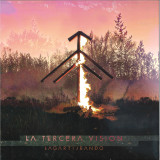
Arriving two years after his last full-length effort ("Jallalla"), Lagartijeando (aka Mati Zundel) once again returns to Wonderwheel with an expansive new album, "La Tercera Vision." A maturation of the Lagartijeando sound, "La Tercera Vision" ("the third vision") sees the Argentinian wade into uncharted, if sonically familiar waters, bridging his Andean inspired electronic-folk with psychedelic ambience, West African instrumentation, and even a few moments of pop melodies. The beauty of Lagartijeando's work is its ability to marry seemingly unrelated styles and sounds to something seamless and wholly original.
"Isla de Sol," the opening track, introduces the album with a taste of Mati's classic sound: Andean pan flute, the familiar chugging rhythm of a cumbia beat, luscious string arrangements, and a sampled vocal. Moving on, "Mano de Fatima" (the project's second single) sees a fusion of traditional Moroccan Gnawa instrumentation with digital cumbia rhythms, featuring the work of Khalil Mounji on vocals and guembri (aka sintir, the three-stringed, skin-covered lute used in Gnawa music). Eva de Marce - a singer-songwriter-producer based in Madrid - takes centre-stage on "Tierra Natal," with her vocals coming through in a rich whisper, singing a melody reminiscent of a lullaby.
At the album's halfway mark, Lagartijeando introduces a new direction for his sound with "Onda," a collaboration with the Brazilian artist Tagua Tagua. An earworm of a melody is sung over a joyous beat that nods to pop sensibilities while being satisfyingly infused with Zundel's sonic DNA. It's a gem of a tune that suggests an exciting new sound for the Argentinian. A few more collaborations close out the album, two with Mexican singer-songwriter Madeleine Bachan Kaur ("Crepúsculo" & "La Montaña Sagrada"), "Magaleña" with Javier Arce, and the album closer "Ware" featuring Sajra. Also included in the album is "Sideral Cumbia," the first single released earlier this Summer, which has seen extensive press and radio support from the likes of Vice / Noisey, Electronic Groove, Sounds And Colours, KCRW ("Today's Top Tune" & "Morning Becomes Eclectic"), and KEXP, as well as landing a spot on Spotify's "Fresh Dance" playlist.
Lagartijeando is the name of producer, musician and DJ Mati Zundel. Strongly influenced by his travels throughout Latin America, Mati's signature psychedelic dance tracks latch onto everything from traditional folk sounds from the Bolivian altiplano to the jungle beats of Brazil. Mati hypnotically fuses his traditional influences (with an emphasis on shaman chant and charango loops) with contemporary electronic beats, creating a sound that once left NPR speechless.
"La Tercera Vision" is due out on Brooklyn's Wonderwheel Recordings October 29th.
- A1: Tyrell (2021 Remaster) 03 42
- A2: Take The Bus (2021 Remaster) 05 14
- A3: Rollen Rink (2021 Remaster) 06 09
- A4: Close, But Not Quien (2021 Remaster) 06 01
- A5: The Official Gm Ski-Wm Theme (2021 Remaster) 01 07
- B1: Temko (2021 Remaster) 05 20
- B2: Boom (2021 Remaster) 06 33
- B3: Madshoes (2021 Remaster) 05 38
- B4: Obvious (2021 Remaster) 03 36
- C1: No Ketting (2021 Remaster) 05 30
- C2: Blob Return (2021 Remaster) 02 12
- C3: Bonden (2021 Remaster) 04 54
- C4: Mimi (2021 Remaster) 01 41
- C5: 11 25 (2021 Remaster) 04:40
- D1: Die Mondlandung (2021 Remaster) 11 00
First time vinyl issue of this 1997 Mego classic. General Magic, the duo of Ramon Bauer and Andi Pieper, who, alongside Pita, first pioneered the classic Mego sound on the Fridge Trax 12” in 1995. The following year proved to be formulative when Mego released Frantz alongside a slew of game changing releases from Farmers Manuel, Pita and Fennesz.
Originally released as MEGO 010 Frantz presented a thrilling digression from what was in vogue in music at the time. This was the advent of portable computing and the Vienna based label was at the forefront of harnessing the potential of audio within this new technology.
At once smart and playful these releases reconfigured once disparate genres such as industrial, techno, glitch and the avant garde, folding them into a bright, audacious and euphoric new system of sound. The music on Frantz (named after the Austrian skier, Franz Klammer) still pushes the boundaries of acceptable audio constructions with it’s startling fried electricity and twisted sensibility. The sense of joy in the audio discovery is palatable as techno laced explorations unfold a variety of unexpected and unprecedented sonic manoeuvres.
Tyrell launches proceedings as schizophrenic stuttering handclaps simultaneously slice into pieces as it propels forward. The bending of the brain is on display with the likes of ‘Obvious’ and ‘Close, But Not Quien’. Temko skewers digital debris in which a ghost melody comes to the fore. Brazen rhythms mobilize the tracks ‘No Ketting’ and ‘Bonden’ whilst the Official GM Ski-WM Theme is a short stab of priceless pop wizardry skittering about a strange exhilarating melody in homage to the finest of winter activities.
This reissue also includes ‘Die Mondlandung’ which was released as a 12” in 1995 (MEGO 002), and has never been released anywhere, physical or digital, since. This track is based on the live German TV coverage of the moon landing. An apt theme for the abundance of exploration contained within this classic release.
--
About Frantz ... and Peter (by Ramon Bauer & Andi Pieper, November 2021):
Listening to the test pressings of the remastered Frantz album for the first time on vinyl, 25 years after the original release on the then still young Mego label in 1997, felt like uncovering an ancient artefact. In those exciting days during the mid-1990s, together with the late Peter Rehberg, we founded a label called Mego to further explore the wonders of electronic music. And that is what we did for the next 10 years until everything became too much with the label in somewhat rough waters. So we dropped out of music business and pursued different things. It was Peter who continued producing and releasing music with the restarted label, now called Editions Mego. Until his unexpected death in July 2021, he developed Editions Mego into the grown-up and much acclaimed outfit for which it is known today. We will forever miss Peter’s inspiring personality and his uncompromising creativity. His legacy will live on in his music and in the vast and rich Mego and eMego catalogues. We are humbled and proud to have played a role in those formative years of the label.
Peter approached us in October 2020 with the idea to do a vinyl reissue of Frantz, just in time for the 25 year anniversary of its release. That came as a complete surprise for us, General Magic had not released any music or performed live for over 15 years. Anyway, we were delighted with the prospect of having that General Magic "classic" remastered (by the exceptional Russell Haswell) and released for the first time on vinyl on Editions Mego.
Frantz is a collection of tracks that we produced in 1995 and 1996 right after recording “Fridge Trax” (with Peter) and “Die Mondlandung” (which comes as a bonus track on this reissue). At that time, we started to migrate our analogue gear to 64 MB RAM computers and used almost every other digital thing that yielded a sound by any means. We even deliberately crashed our then so-called "Powerbooks" and scratched self-produced CD-Rs until they produced previously unheard sounds. Real time audio processing with computers was barely a thing back then (before SuperCollider was released), but cheerful massaging of sound files yielded interesting results and the future looked bright. Listening to Frantz today, with decades of distance, there are some parts that might appear dated by modern standards, but the energy and the general magic of that period is well captured.
All Frantz tracks were produced in Andi's studio in Berlin and at Mego Vienna. The Mego studio/office was a vivid place located in an old factory on the outskirts of Vienna. We shared the place with Tina Frank, who created most of the early Mego covers and videos. Other artists, musicians and friends were hanging out there almost every day. Many ideas on Frantz are a product of that particular environment. “Mimi”, for example, is based on a field recording in the backyard of the factory, where we also shot the video for “Tyrell”. “11.25” contains sounds from the Prague train station we regularly passed through on the night train travelling between Vienna and Berlin. Other sounds were sourced from the early internet and mangled on the computer, carefully preserving those early audio codec artefacts. While working on the Frantz tracks at the Mego Vienna studio, Peter was usually around, as he was literally working and living there. And so, of course, he also made an impact on that album: It might not be widely known but Peter even appeared on Frantz contributing his voice to the choir on “The Official Ski WM Theme”.
Let there be Frantz!
The Slow Show release their fourth studio album, their first for three years, entitled ‘Still Life’,
via PIAS. The four-piece, who first formed in Manchester, will support the release with a
European tour in February and March 2022, culminating in an already sold-out hometown show
at Manchester’s Hallé St Peters on 4th March.
Lead track ‘Blinking’ is a perfect taster to the new direction ‘Still Life’ offers. Same but different
again. “An ode to love and loyalty. The song is a defiant pledge to never giving up on the
people you love. Musically we wanted the song to have impact, a directness and powerful
punch that we’d previously shied away from.” - Robert Goodwin (vocals)
The making of ‘Still Life’ has been quite the ride. Following their breakthrough album, ‘White
Water’, it was clear The Slow Show were not just ‘another band from Manchester’. The legacy
of The Smiths, Joy Division and all those other great predecessors is not something to be trifled
with, but The Slow Show didn't need to wear their address on their sleeve: this was something
else, fully formed, with a mesmerising sound, rich in atmosphere and melody.
With the band’s desire to push each other outside of their respective comfort zones during the
recording process, ‘Still Life’ subsequently offers a more diverse, rich and interesting sound
than previous albums.
“We did develop our sound,” says Rob Goodwin. “We had to try something else. We felt we
owed that to ourselves, and to the people that come and enjoy the music. We explored a lot of
stuff: different sounds, different feelings, different ideas, different processes as well. Some of
them didn’t work at all, but some did. It was difficult and challenging, but it felt good in the end.”
This experimental side to the creative process allowed the band to introduce new elements to
their work. “Some new approaches and sounds crept in,” keyboardist Frederik ‘T Kindt admits.
“Some were far from our older work. For instance: after some initial encouragement from me,
Rob was keen to sing a bit higher on this record. Chris was encouraged to make his drums a
bit more present; some things almost sound like a breakbeat to my ears.”
Recorded remotely over the course of the past year, with Goodwin recording vocals from
Dusseldorf in Germany and the rest of band recording in the UK, ‘Still Life’, as a concept, takes
inspiration from the experiences of lockdown: “Before the virus arrived, I had a busy life;
spending two weeks in Germany with my girlfriend, and then flying to Manchester to work with
Fred or to a gig.” Goodwin remarks: “And then all of a sudden, life came to a halt. It took a little
getting used to, but I actually had a really nice realisation during that time. I understood that the
slower life got, the more I saw. I spent a lot of time in nature, seeing things in a different
perspective. And that's what you need when you're trying to create. You have to really look,
and then you see things happening everywhere.”
The tracks themselves are brimming with emotion and reverence towards the significant
relationships we encounter in life. Stand-out anthem ‘Blinking’ is a defiant pledge to never
giving up on the people you love. Musically the band wanted the song to have impact, a
directness and powerful punch that they’d previously shied away from. Whilst ‘Woven Blue’
deals with the aftermath of uncoupling. The idea that meaningful relationships are very often
woven and complex, making resolve difficult.
These very personal tracks are counterbalanced with the more topical, ‘Breathe’, which
documents some of the unjust and heart-breaking scenes of 2020 with spoken word references
to John Boyega’s emotional rallying cry in support of Black Lives Matter movement in London’s
Hyde Park.
In all, Still Life marks another evolution of a band that have never tried to fit in any particular
box but have inhabited their own unique universe.
LP pressed on white viny
Mimsy describes himself as someone with many interests and few skills, and sure, you can put it that way. But more precisely, he is a seeker and finder who has always felt more at home in the intermediary spaces. Since his first releases on Karaoke Kalk under the names Saucer, Motel and Wunder in 1997, he has mostly been active as Wechsel Garland, working with samples beyond recognition and thus blurring the lines between his own songwriting and the musical material he uses.
In 2011, he ended the project with the album »Dreams Become Things« and is now opening a new chapter as Mimsy with »Ormeology.« The album was ten years in the making and saw the producer work with sounds, voices and text fragments that were gathered over time. The twelve pieces—based on guitar pickings, looped textural sounds, rhythm boxes and shimmering organ sounds—install themselves in the unconscious through sound, melody and subtle rhythmic shifts to send the listener’s perception on a journey into the unknown.
The name Mimsy is a nonce word coined by Lewis Carroll in his famous nonsense poem »Jabberwocky,« a combination of »miserable« and »flimsy,« while the term »Ormeology« refers to the Italian film »Le Orme« (»Footprints on the Moon«), in which the main character is haunted by memories of a fictional film of the same name. While this alone creates a rich thematic frame of references for the album, it does not at all define its themes. Instead, the references are reflected in the methods with which the pieces on »Ormeology« were designed—sound and language orbit freely around one another, images within images are being layered, following their path unconsciously. In »Sans mobile apparent,« the lyrics get to the heart of this: »die Widersprüche aushalten / die Folien übereinanderlegen« (»enduring the contradictions / laying the foils on top of each other.«) Creative frictions emerge not out of binary decision-making patterns, but from additive layering.
Mimsy followed traces forth and back through time and space, collaborating for a few tracks with set designer and musician Lydia Schmidt and letting Wolfram Wire record various lyrics based on automatic writing that were gathered by Mimsy. Furthermore, he asked the photo blogger Lilia Katherine from Brazil and the Canada-based Andrea Hernandez to translate and record his lyrics in their own respective languages. Human global coincidences resulted in collaborations which are presented as discrete and thus make the album as a whole and even more complex meditation on the interplay of the concrete and the abstract. This is best exemplified by the song »Ginster,« throughout which Schmidt and Mimsy’s voices overlap more and more until they enter a sort of call and response pattern, although they never seem to address each other directly.
»Ormeology« is an album that whirrs and flickers, seeking to mediate between the tangible world and the intangible by blurring the boundaries between words and sounds and space. It is an archipelago that is in many ways connected to what surrounds it, while at the same time opening up a space of its own.
Founded by Freddy DeBoe, longtime Charles Bradley and the Extraordinaires saxman and stalwart, D-BO records' inaugural release are two burning, instrumental sides from the man himself.
"Remember the Good Times" breezy, mid-tempo groove and soulful horn melody sends you on a euphoric, Jr. Walker-laced trip through the forgotten corners of your mind. And if greasy, bluesy shakers are your bag, simply flip this platter over and dig "Gato Loco". A must for fans of the Las Vegas Grind compilations.
Mondo, and Jagjaguwar are proud to present a limited edition vinyl pressing of Sharon Van Etten's incredible song 'Let Go,' recorded for the 2020 documentary Feels Good Man, chronicling the emotional journey of comic artist Matt Furie and the discovery that his lovable creation Pepe The Frog had become symbol of the alt-right. A super powerful film about reclamation, artistic expression, and above all else Letting Go.
Featuring the aforementioned original song 'Let Go,' as well as a cover of 'Some Things Last A Long Time' by Texas legend Daniel Johnston as B-Side.
“After watching the documentary, I just followed the feeling of coming to terms with something and tried to evoke peace through my melody and words," says Sharon. "The song and film’s producer, Giorgio Angelini was a great collaborator and communicator and I was given a lot of freedom. That says a lot about the film and the people who made it."
Music by Sharon Van Etten
'The second pressing of Mountain Caller's debut album 'Chronicle I: The Truthseeker' is limited to 500 copies, cream vinyl housed in a single sleeve with printed inner, plus a full download.' Mountain Caller are ready to engage hyper-drive and launch their debut album into the riff time continuum. Mountain Caller are El, Claire and Max and hail from London. They describe themselves as a heavy progressive instrumental three-piece, who are driven to tell stories with music and want listeners to conjure up cinematic scenes in their minds. And that they do … in spades. If one needs a sonic ballpark, think the infectious jamming of Elder and the dynamic cinema-scapes of Mogwai, underpinned by the mantric riffs of Sleep. A rich amalgam of Progressive Rock, Post Metal and Doom. Nevertheless, Mountain Caller do succeed in weaving their own unique spell. The band are already buzzing, pricking up the ears of those in the know, and now after two years honing their chops with a clutch of immersive live performances under their belts (including a slot at Desertfest) Mountain Caller are ready to bring you their debut album. Chronicle I: The Truthseeker. Recorded in January of 2020 at No Studio in Manchester by producer Joe Clayton of Pijn, and mastered by Magnus Lindberg of ‘Cult Of Luna’. For the band, it’s a labour of love; the fruit of three years of jamming, crafting, and conceptualising; a collaborative piece, where each instrument takes centre stage, within a heady mix of chasmic riffs and panoramic, reflective soundscapes. Chronicle I: The Truthseeker is a feminist allegory created in tandem with the music. As the band describe it … In The Truthseeker, we join The Protagonist at the edge of the Twilight Desert, compelled by an indefinable but urgent need to set forth on an Odyssean journey to rediscover her memory and her voice. Over the course of 42 minutes, we travel from barren wastelands to mysterious cities, encountering trials of both body and spirit. It is indeed a 6 track instrumental journey. Full of winding roads, brooding valleys and strange encounters, all vividly evoked by a canny grasp of dynamics, melody and heavy, but hooky riffs, executed with peerless playing. 'Journey Through The Twilight Desert' opens the album in soundtrack mode, and develops in weight and riff (as if Goblin have taken up the baton) and closes in a full wide screen Mogwai trip .... and that's just the opening track. Elsewhere Mountain Caller pushes to noisier, heavier groovier places. Whether it’s the chiming guitars on the Krautrock/post-rock groove of 'I remember Everything' or 'Trial by Combat' and its doom meets Deftones vibe. To album closer 'Dreamspirals' with its melodic hooks and huge earworm riffs, it’s an album that more than stands up to listening on repeat as there plenty to discover.
"We all know what teenagers are like. Bratty little gobshites. Moody shits. Forever toeing the line between cocky arrogance and whiny self-doubt, and to hell with anyone who gets caught in the crossfire. And this old fucker should know; he was really good at all of the above (still keeping on top of the ‘gobshite’ part, you’ll notice). For some reason, the entirety of rock’n’roll is predicated on music made for and about these states of mind - well, I guess if you mix ‘em all together, they can make for one helluva sense of reckless abandon. So it shouldn’t come as a surprise that Melbourne quartet Mr Teenage sound exactly like their name suggests: chaotic, raw, emotionally volatile… and of course they bind all this together with their own brand of heroically melodic garage rock. Produced by Billy Gardener (of Ausmuteants, Smarts, Cereal Killer and god knows how many other vital Aus-punx), this debut EP snarls, spits and swaggers with all the glorious self-belief of a drunken 4am stumble to the petrol station to buy a pack of skins. And the songs are fucking great too. Title track ‘Automatic Love’ expertly showcases the combined sounds of their cited influences (Thin Lizzy, Dictators, Martha Reeves, etc), with frontman Nic Imfeld’s voice at times edging close to the sandpaper soul of their countryman Shogun (ex-Royal Headache). Meanwhile ‘Waste Of Time’ sees him blending their garage licks with Joey Ramone bubblegum, just as ‘The Loser’ fashions a delightfully adolescent chorus of ‘the loser says what?’ from an airy melody that either The Shangri-Las or Del Shannon would be proud of. They wrap things up with another slab of pure punk/pub rock genius called ‘Kids’ that’ll get the hairs on the back of your neck standing on end, as you fight the urge to crank-call your former school teachers and blame the kid who used to take your lunch money. Of course, singing about ‘kids these days’ marks Mr Teenage out as being older than their name suggests, and sure enough their name comes from an old wrestler rather than identifying with an age bracket they’ve outgrown. But with tunes like this… honestly, who gives a fuck what they’re called? This record is perfect." Will Fitzpatrick.
The ninth album in BBE Music's J Jazz Masterclass Series presents ‘At the Room 427’ by Koichi Matsukaze Trio Featuring Ryojiro Furusawa, a rarely heard exemplar of post-modal power bop and free jazz. Delivered by a trio playing with an intensity and energy that draws on classic Eric Dolphy and mid-era Coltrane but definitely with its own particular vibe, At the Room 427 is an exemplar of febrile improvised jazz that could only come from Japan. This deluxe reissue sees a welcome return to the J Jazz Masterclass series for saxophonist Koichi Matsukaze. Originally issued in 1976 on the cult ALM label, At the Room 427 is the debut album from one of the most exciting and forward-thinking instrumentalists to emerge in the mid 1970s. Matsukaze's distinctively angular, deconstructive style adds an unpredictable quality to the session that is balanced by the muscular bass of Koichi Yamazaki and the kinetic drumming of Ryojiro Furusawa, who provides a sound footing for Matuskaze’s fiery solos and free-form chemistry. The album opens with the epic Acoustic Chicken, a 20-minute tour de force of dynamic and explosive interplay. Featured on J Jazz: Deep Modern Jazz From Japan volume 3 and written by Furusawa, Acoustic Chicken's strong melody lines and scorching sax finely mesh with the driving rhythm section. Furusawa’s Elvin Jones-like rolls and batteries of percussion are underpinned by Yamazaki’s driving and rounded bass. At the Room 427 also includes a radical deconstruction of the Billie Holiday classic Lover Man and three more original compositions by Matsukaze. The album was recorded live in November 1975 before a small audience in – as the title states – Room 427, a classroom in Chuo University, the alma mater of both Matsukaze and Furusawa. However, despite the rudimentary surroundings, the recording by Yukio Kojima, founder of ALM, manages to give the listener the feeling of being in the room itself, up close to the band, bristling with an intense energy. This reissue of a long-lost rarity of post-bop/free playing maintains the exceptionally high standard set by the previous releases in the BBE Music J Jazz Masterclass Series. As with all releases in the series, At the Room 427 comes with full reproduction artwork and extra sleeve notes, with artist interviews and biographies. The J Jazz Masterclass Series is curated by Tony Higgins and Mike Peden for BBE Music.
Handpicked by Gilles Peterson from Manchester’s vibrant live music scene, and newly signed to Brownswood, 2021 set to be the main stage for them to breeze on to the scene, as a multi-generational band breathing new life into the classic British street-soul sound, founded by singer/song-writer Kemani Anderson, multi-instrumentalist and song-writer Callum Connell and Manchester music scene stalwart Stuart Whitehead.
Debut track ‘The Sun’ was inspired by a poem written by Callum Connell at the top of Greenwich Park viewpoint looking over the infamous London cityscape as the sun set. At the time the band were writing and arranging separately with Callum & Kemani living in South London while they attended Trinity Laban (following in the footsteps of many of the UK’s young Jazz prodigies). Eventually, they congregated for a fateful recording session at Blueprint studios in Manchester, that would be the amalgamation of their individual processes, to create ‘The Sun’. Inspired by four bass chords flowing like a stream of consciousness, Callum’s poem sprung
to life as the centrepiece of the track, with the melody being polished and refined by Kemani on keys and vocals. The result is an invigorating debut produced by influential music producer and sound engineer Yvonne Ellis (Simply Red & Swing Out Sister). Kemani coins this sound as “spiritual and healing” whilst Callum shares “The Sun’ is a powerful and uplifting song that can take you on a
spiritual journey but also make you reflect on everyday life.”
repressed !
Some people are just not destined to have enough sleep.When you don't sleep enough the world appears to be a different place, compared to the way it is when the mind is fully rested. In such cases very different scenarios may occur.
Starting with a dreamy melody of Roma Zuckerman's 'Sleep not found', which inspired the entire 008 album, and ending with a thirteen minute live recording by a_000, the side project of Alex Backdrop, the entire record has a dreamy and tripped out flow. 008 continues the tradition of gatefold double EPs as conceptual album.All tracks are selected around a particular story, a trip, and presented as a continuous sonic landscape.All tracks are structured in a way that they can be mixed one with another an endless amount of times making a continuous loop, a trip, that needs only end when the party stops. Kraviz works without release dates or deadlines, enabling her to achieve a certain sound bank to shape the story, unmasking the thoughts and unravelling like a dream. A1. Roma Zuckerman - Sleep Not found (North Edit) Apart form the fact that he leaves in Krasnoyarsk in the middle of Russia, very little is known about Roma (short version of the name Roman). But listening to his music and engaging in random short conversations late at night makes it clear that there are really a lot of things going on Romas mind... Minimalistic yet emotionally complex, his music always stands out with it's murkiness and signature moodiness that Roma creates like nobody else.
A2. Deniro - G Deniro continues the record's journey with his new live cut that like pretty much everything he did so far is a beautiful sparse atmospheric groover. He says he wanted it to be angry and it its done with triggering synths from the tr909 and tr808.
B1. Maayan Nidam - Infinite Rattle
Maayan was born in Tel-Aviv. She does not like computers and prefers to record her music live using hardware only. In order to do so she built her incredible studio in Berlin where she recorded "Infinite Rattle'.There is much more to come from Maayan on
B2. Bbbbbb - Prins Polo Caramel milkshake.
Side project by Bjarki-bbbbbb. Like any other normal Icelander, Bjarki really likes ice cream. In Iceland they are absolutely crazy about it.They walk the streets, ice cream in hand, even when its freezing cold outside. But even more than that Icelanders like Milkshakes with all sorts of added cookies and candies. Bjarki's favourite is called Prince Polo after the name of a chocolate bar. He always believed Prins Polo was an Icelandic brand but a couple of months ago somebody proved him wrong.
C1. Exos- dub jazz
In Iceland Exos is a legend. Everybody knows him there. He's been playing incredibly powerful and technically advanced techno sets since the late 90s and releasing delicious dub techno on Icelandic label Thule. Nina always appreciated his subtler, dubbier side, and this short recording a the continuation of it.
C2. Maaayn Nidam - Justice for some
This second live recording was a perfect fit for this album. Maayan has managed to create a particular mysterious night time dreamer here. Sound wise it's even more unique. It took a few times to get the master right, because we wanted to keep the original breathing of the machine that has captured a seriously freaky vibe. Maayan has always been one of Nina's favourite DJs as they share a similar attitude towards music. But after this tune she has also reserved a place in Nina's collective of favourite producers. D1. A_000
This is a side project of Italian native Alessio Meneghello (Alan Backdrop) & Enrico Voltan. . A beautiful 13-minute sonic journey.
It is with undoubted excitement that Stroboscopic Artefacts can present the new release from Irish duo Lakker as SA019.
This comes hot on the heels of Lakker's recent work for the label through the dark trappings of Monad XIV. 'Harbour' could imagine a vessel out to sea, battling a tempest. Heavily distorted rhythms build like the swirl of a storm, a distress signal popping on, radio distortion. As implosion seems near a moment of calm sets in and a less maniacal beat assumes control. But the unpredictable hammers resume once more, thumping above a sheet of glinting and sharp precipitation. The storm eventually ceases, abruptly, and the 'Harbour' is left still. 'eeAea' is a different experience. It is based on surer footing, concrete beneath the limbs. A thump, incessant, pounds in the background, giving clarity to a winding sigh and dissonant percussion. Yet there remains melody in the madness, with beautiful hi ends peeking through the atmosphere and a strut which surges towards conclusion. The conclusion ends (unresolved) at 'Valentina Lane'. It is a street of mystery, set upon a gas of syncopated flashes and airy scrapes. An uncomfortable synthesiser hums in the background, darting high and interjecting low. And it meanders thence, pausing for the odd moment of reflection. It is as deliberate as 'Harbour' is chaotic; it is a tight, cogent finale.
Welcome to the jazz funk world of the late great Mr Weldon Johnathan Irvine. This great man managed to write music that both inspired and in awed 50 years ago, as it still does today. He takes you to another world, with his gentle yet almost crazy energy. He was way ahead of his time producing these monumental, instrumental masterpieces. Mr Irvine was such a calm and kind gentleman, who just oozed music. He sadly passed away in 2002. It is a great honour to be able to release some of his music from his Nodlow music label on to 7” for the first time.
In 1974 Weldon released his “In Harmony” LP. The two tracks we chose are, “Fat Mouth” which, as expected, features the signature Weldon rift. This Clavinet-heavy groove is backed up with the mighty Joe Jones on Hammond organ; and is all held steady with the pumping drums from Napoleon Revels
“Turkish Bath” is a laid-back jazz groove, with Weldon laying down a superb lead Rhodes story and melody. Backed up with Joe Jones on the piano. Weldon’s keyboard echoes throughout his music with such simplicity.
Vice Squad are a UK Punk Rock band who’s first single releases included the classic ‘Last Rockers’ 7” in 1981. This was followed by the landmark albums ‘No Cause For Concern’ in the same year and ‘Stand Strong Stand Proud’ in 1982 which were both released on EMI. Since then Vice Squad have delivered short sharp songs with incisive political lyrics and a dash of humour spat out over a thunderous rhythm and machine gun Rock ’n’ Roll guitars. Their latest releases are the EPs 'Born In A War' and 'Ignored To Death V2' taken from the forthcoming album ‘Battle of Britain’ set for release on their own Last Rockers label in May 2020. The band have become 100% DIY since forming Last Rockers Records in 2009. In keeping with the DIY ethic the previous albums were recorded in the band’s own ‘Sci Fidelity’ studio South London and the new album ‘Battle of Britain’ continues this with the band maintaining full artistic control with the benefit of global distribution via Cargo. Their last album ‘ Cardboard Country’ was launched on the back of a very successful Pledge campaign raising funds for the Shelter homeless charity in line with the album title which was inspired by 'Cardboard City', the name given to the settlement of homeless people living in cardboard boxes near London's Waterloo station. Vice Squad is fronted by raucous voiced singer/guitarist Beki Bondage who was famed for being a teenage champion of Animal rights long before the current popularity of veganism. Vice squad’s song ’Humane’ was one of the first ever Animal Rights songs. Beki has been featured on the front cover of a number of influential music tabloids such at Melody Maker, NME, Sounds, Record Mirror and Smash Hits. After a hiatus, Beki formed a new version of Vice Squad in 1997 featuring longstanding members of her post VS outfit The Bombshells and they have released several quality albums of powerful punk songs that have been very well received across the world. Vice Squad are considered one of the most influential punk rock bands of all time, paving the way for other female Punk and Rock singers and influencing male performers such as Dave Grohl of Nirvana and Foo Fighters fame who was introduced to Vice Squad via his sister’s record collection. The first rule of Punk is there are no rules and Vice Squad ably illustrate this with ‘Battle of Britain’. Written, Recorded and Mixed by Beki Bond and Paul Rooney in their home studio. The 13 track album opens with the blistering ‘Ruination’ which cuts through the bullshit of small time promoters and blaggers with consummate swagger and melody while ‘I Dare To Breathe’ is an amphetamine driven anthem to paranoia. ‘When You Were 17’ is almost-tender and tells of first tattoos and under age booze whilst the more chilling ‘Ignored To Death’ rails against isolation and homelessness. The explosive ‘Born In A War’ rages along like a missile ravaging a third world country and warns ‘See how they treat refugees? That’s how they’ll treat you and me’. Elgar’s ‘Nimrod’ reworked with a pulsating industrial bass segues into title track, 'Battle Of Britain' where Beki's vocals soar like a Spitfire over the crunching de-tuned riff and spit fury over the hypocrisy of putting war memorials before people. The dystopian ‘Poverty Face’ hits you with the opening line ‘Disinheriting the meek, slyly killing off the weak’ and is counter balanced by the more upbeat ‘How The Other Half Lives’. ‘No Evil’ is a relentless attack on the normalisation of the suffering and death of billions of animals for the meat industry. Battle of Britain's hard hitting collection of anger and riffage pulls no punches in covering topics from austerity and factory farming to the pernicious influence of the Mainstream Media - ‘Led by lies lambs to the slaughter, tax exiles say who you vote for’. Brexit, fake patriotism and cognitive dissonance all get a good kicking too. The penultimate track, 'You Can’t Fool All Of The People' mixes baritone guitar with violin and Celtic rhythms climaxing in an epic James Bondesque heavy guitar/orchestral blend and breaks every rule in the Punk Police hand book whilst pleading for unity against a rigged political system. ‘Pulling Teeth’ with its ominous riff and hilariously frustrated lyrics ‘Dithering jibbering solid as jam, is it fair I’m both the woman and the man’ closes the album in manic style
- A1: Orlando Julius & The Afro Sounders - Alo Mi Alo (Parts 1 & 2)
- A2: Segun Bucknor & His Revolution - La La La
- A3: Lijadu Sisters - Orere Elejigbo
- B1: Peter King - Shango
- B2: Sahara All Stars Band Jos - Enjoy Yourse Lf
- C1: Fela Ransome Kuti & The Africa 70 - Jeun Ko Ku (Chop %U2018N%U2019 Quench)
- C2: Tunji Oyelana & The Benders - Ifa
- C3: Ofo The Black Company - Allah Wakbarr
- D1: He Funkees - Dancing Time
- D2: Monomono - Tire Loma Da Nigbehin
- D3: Bala Miller & The Great Music Pirameeds Of Afrika - Ikon Allah
- E1: Sir Victor Uwaifo & His Melody Maestroes - Akuyan Ekassa
- E2: Shina Williams & His African Percussionists - Agboju Logun
- F1: Gasper Lawal - Kita Kita
- F2: Sunny Ade & His African Beats - Ja Fun Mi (Instrumental)
25TH ANNIVERSARY EDITION[31,05 €]
Strut present a definitive vinyl edition of the groundbreaking compilation 'Nigeria 70'. Originally released in 2001, the collection set the benchmark for a new generation of archive labels and releases mining the vaults for rare Afro funk and Afro jazz fusions and helped to paint the wider picture of the 1970s Lagos scene beyond Fela Kuti's catalogue for a legion of soul, funk and dance music enthusiasts. This definitive reissue features the original LP remastered and pressed on 180g triple vinyl in a gatefold sleeve.
Narrated by Wunmi with commentary by the late Nigerian academic "Elder" Steve Rhodes, this one-hour piece is an essential snapshot of the 1970s Lagos scene and the cultural and political context from many of the key players of the time. It includes interviews with Ginger Baker, Fela Kuti, Ebenezer Obey, Segun Bucknor, Joni Haastrup of Monomono and many more.
- 01: *
- 02: I
- 03: Ii
- 04: Iii
- 05: Iiii
- 06: Iiiii
- 07: Iiiii I
- 08: Iiiii Ii
- 09: Iiiii Iii
- 10: Iiiii Iiii
- 11: Iiiii Iiiii
- 12: Iiiii Iiiii I
- 13: Iiiii Iiiii Ii
- 14: Iiiii Iiiii Iii
- 15: Iiiii Iiiii Iiii
- 16: Iiiii Iiiii Iiiii
- 17: Iiiii Iiiii Iiiii I
- 18: Iiiii Iiiii Iiiii Ii
- 19: Iiiii Iiiii Iiiii Iii
- 20: Iiiii Iiiii Iiiii Iiii
- 21: Iiiii Iiiii Iiiii Iiiii
- 22: Iiiii Iiiii Iiiii Iiiii I
- 23: Iiiii Iiiii Iiiii Iiiii Ii
- 24: Iiiii Iiiii Iiiii Iiiii Iii
Chìsake Algonquin: to chant; to conjure; to cast a spell; this generally involves a shake-house, or shaking tent, in which the conjurer goes into a trance; the conjurer then has an out-of-body experience, going into the future to predict coming events, or into the past; as well as going into any locality in the universe to seek out someone or something generally practiced for ancestral divination.
The unaccompanied flute pieces within this album are adaptations of Anishinaabeg shaking tent chants. The Anishinaabeg also known as Anishinaabe are a group of culturally related Indigenous peoples that reside in areas now called Canada and the United States. They include the Odawa, Saulteaux, Ojibwe (including Mississaugas), Potawatomi, Oji-Cree and Algonquin peoples. The word Anishinaabeg translates to "people from whence lowered". The Anishinaabeg origin myths describe their people originating by divine breath.
The shaking tent or conjuring lodge was the setting for a divinatory rite performed by specially trained shamans otherwise known as Chìsakewininì. During the shaking tent ceremony the Chìsakewininì would construct a special cylindrical framework typically of birch or spruce uprights planted in the ground with respective wood hoops to bind it together. This created a tensile structure of which birch bark, deer skin, or cloth was used as a covering. Rattles of caribou and deer hooves, or cups of lead shot, were tied to the frame. The floor was usually softened with freshly cut spruce boughs. The vertical axis of the shaking tent represents the realm of mediating beings, while the horizontal axis the earth or world of humans. The Chìsakewininì would enter the shaking tent at night and once inside would not be visible from onlookers. The singing of chants and drumming would summon the Chìsakewininì's spirit helpers, whose arrival was signified by animal cries and erratic tent shaking. During this transcendent state, the Chìsakewininì could dispatch these spirit helpers or Manidò to distant regions to answer questions from the onlookers about the most auspicious places to hunt, the well-being of a distant relative, and what would happen in the future.
The chants were usually sung using vocables before, during, and after the Chìsakewininì entered the shaking tent. Like many other similar divination ceremonies, singular or collective, the opening chants begin lyrically. They gradually turn to more reductive abstract structures midway and then end in lyrical chants. This symbolizes the performer and listener leaving the external literal world, entering a more abstract state of mind, and then returning. Traditionally all songs were carved on birch bark for record-keeping with mnemonic pictographs or other marks for future use. Tally mark clustering, sometimes used for song-keeping throughout the Anishinaabeg, is used for this album's track titles and numerical sequence.
The album intro begins with the shaking of a necklace of otter penis bone, fish spine, bear teeth, elk teeth and deer hide, gifted from Algonquin Elder Ajawajawesi. It is meant to focus the listener's attention before the flute pieces begin. The warble or multi-phonic oscillation prevalent in the middle tracks traditionally represented the "throat rattling" vocalization of the tonic note or sometimes known as the horizon of which the melody floats off of. Due to the repetition of multi-phonic oscillation the performer will breathe erratically creating an altered state correlating with the Chìsakewininì ceremonial actions. All songs are repeated seven times to signify the seven sacred directions: east, south, west, north, above/sky, below/earth, and center.
Miles Davis Kind of Blue meets Analogue Productions' UHQR, the pinnacle of high-quality vinyl!
Best-selling album in jazz history; mastered from the original master tapes by Bernie Grundman
Pressed at Quality Record Pressings using Clarity Vinyl® on a manual Finebilt press
Purest possible pressing and most visually stunning presentation and packaging!
Dream team of Davis, Adderley, Coltrane, Evans, Kelly, Chambers, Cobb make history.
Legends have a way of sticking around. If there was ever an album awaiting a high-fidelity, custom-pressed vinyl treatment of the level you now hold in your hands, it is Miles Davis' Kind of Blue. The top-selling jazz album of all time, it has been lauded, entered into "Best Of" lists and Halls of Fame, and universally acknowledged as a landmark recording — a five-track masterpiece of melancholy mood and melody.
It continues to be one of the most listened-to and studied recordings of all time, a required primer for many young musicians, and one of the most transcendent pieces of music ever recorded. Davis played trumpet sublime with his ensemble sextet featuring pianist Bill Evans, drummer Jimmy Cobb, bassist Paul Chambers, and saxophonists John Coltrane and Julian "Cannonball" Adderley with Wyton Kelly playing piano on "Freddy the Freeloader."
Now Analogue Productions, together with Quality Record Pressings, is putting Kind of Blue where it belongs: the Ultra High Quality Record (UHQR) pressed on Clarity Vinyl on a manual Finebilt press with attention paid to every single detail of every single record.
The 200-gram records will feature the same flat profile that helped to make the original UHQR so desirable. From the lead-in groove to the run-out groove, there is no pitch to the profile, allowing the customer's stylus to play truly perpendicular to the grooves from edge to center. Clarity Vinyl allows for the purest possible pressing and the most visually stunning presentation. Every UHQR will be hand inspected upon pressing completion, and only the truly flawless will be allowed to go to market. Each UHQR will be packaged in a deluxe box and will include a booklet detailing the entire process of making a UHQR along with a hand-signed certificate of inspection. This will be a truly deluxe, collectible product.
Kind of Blue is more than Miles Davis's most enduring recording, it's a testament to Miles' experimental approach, drastically simplifying modern jazz by returning to melody unlike the chord complexity more often heard at the time. "The music has gotten thick," Davis complained in a 1958 interview for The Jazz Review. "... There will be fewer chords but infinite possibilities as to what to do with them." Kind of Blue is, in a sense, all melody — and atmosphere.
None of the musicians had played any of the tunes before heading into the first of two recording sessions in early spring of 1959. In fact Miles had written out the settings for most of them only a few hours before the session. Miles also stuck to his old recording procedure of having virtually no rehearsal and only one take for each tune.
Miles remained proud of the album, performing at least two of its tracks — "So What" and "All Blues" — for years after, until his musical path took him in a different direction.
History was on the side of Kind of Blue; it was born in 1959, at the peak of the golden age of high-fidelity, featuring innovations in studio equipment (magnetic tape, high-quality condenser microphones), matched by advancements in home audio reproduction (long-player records — LPs; high-end turntables, and other stereo components). Kind of Blue also benefited from Miles' being signed to the leading major record company of the day — Columbia Records, a part of the CBS media conglomerate. Columbia had the means and wisdom to invest in cutting edge recording technology, and their own professional recording studio.
A minor audio complication with Kind of Blue has been addressed with this UHQR edition. The motor on the studio's 3-track master recorder was running slowly the day of the album's first session. This speed issue affected the album's first three tracks, "So What," "Freddie Freeloader" and "Blue in Green," making them a barely perceptible quarter-tone sharp. Before now, it was only addressed in 1995 for the Classic Records edition and by Columbia Records — or their latter-day parent, Sony Music — on a CD reissue in the late '90s.
Sixty years have passed; this LP bridges that time span in the best way possible, struck from the master reel of Kind of Blue, free of speed issues and replete with all the instrumental detail, sonic environment and minimal noise. As we set out to make our UHQR series the world's best-sounding vinyl records, we have also used Clarity Vinyl, which is free of any carbon black pigment which might introduce surface noise. All-in-all this edition of Kind of Blue meets the highest audiophile standards and offers the truest sound for the most enjoyment.