DIG CURATED the infamous four of this EP in an omnivorous fashion, allowing vinyl wizard Louis the 4th to take us on a ride of stylistic adventure between old and new-school techno wickedry.
Olivia Mendez (the curator behind this EP) picked these gems according to the way she would build her sets; each track corresponding to a distinct part of a blazing journey. Each track being a different color on a powerful, vibrant palette, attesting to the versatility of an artist whose emblem is anonymity - remember Detroit? - and reinvention. The man behind the bandana doesn't shy away from paying homage to the old school while at times enveloping us into a computerized sound chaos - classy as it is.
This selection reveals a side of LTF that hasn't been shown before, catching the ears of a great number of peeps, who could easily find their match here.
"Dilatation" is a chugging techno zinger, with a groove that feels minimal yet keeps expanding through punctured breaks and urging synth enveloped into a sustained air- a kind of tool that mounts the energy to near combustible.
"Almost There" decompresses space into a light-weight, energy saver atmosphere, that fleshes out a brand-new compartment in LTF`s music wallet. Threaded through driving rides and a rhythmic zeal, it wobbles gently between sustain and release.
On the flip side, "Kurrikulum Vitae" flexes LTS mechanics, with rascal shifts in a groove that feels simultaneously ancient and totally new, amassing a depth of textures and tones towards a skanking peak.
"999" seals the deal with multilayered distortions enveloped into ghostly undertones and reverbing crunches, half-step of being a techno-artefact and a dazzling sound puzzle, made of a loopy melody edging towards poise.
Words by __ORSHI
Поиск:the melody men
Все
Following a fallow 2023, a rejuvenated Growing Bin return to your turntable with this sublime collaborative LP from Gosha Martynov & Natasha Sinyakova. On their first foray into the physical, the duo expand the spectral ambience and medicated breaks of their earlier work with lithe touches of organic jazz and Cafe Del Mar cool, creating a complex assemblage of dreamy downbeat and emotive electronica that's entirely easy on the ears.
Opener "Pozhaluysta" seduces with smart syncopation and beguiling melody, its flute and fretwork finding ample space to slip around Natasha's voice, equal parts Cocteau operatics and jazz-club coquette, in an expression of a want beyond words. The mood shifting "Osvobodi Menia" sees the solemn, snaking sound of a sampled duduk drift into an optimism of airy pads and escapist mantra, suspended in reverb until the end of time. "Ya Tebia Zhdala" began life as a break-led experiment, gradually evolving into a romantic and naive sketch rich with splashes of piano and dynamic chorus pads. Naturalist hymn "O Dereve" weaves a dark and intimate tale from the point of view of a veteran tree as its buzzsaw guitar loops blossom into multilayered vocals full of emotion.
Awash with sonar sweeps, sumptuous pads and rolling subs, the titular "Imena Rek" channels post-rave bliss into the hypnagogic anthem the contemporary IDM-ographic have been searching for. Infectious hooks and spaced out pads ride the breakbeat rhythm for a dreamy experimental pop banger from another planet. The sombre sway of "Rany", filtered through the fog of a broken cassette recorder, trance djembe and unpredictable bass tones rivals the finest Motion Ward or In:dex releases for crepuscular charm, while "Smeshno" sees serrated drones sink into a slinking rhythm, playing counterpoint to the tender chords and yearning vocals.
"Iskra" closes out the chiasmus with a return to the organic experience of the opener, the flute and acoustic guitar augmented with nuanced hand percussion and a music box refrain. Listening to this album is like a midnight walk through an ancient forest - an experience which both scares and tempts you at the same time. From touching damp moss to feeling the thick fog with your body and watching mushrooms glow in the dark, 'Imena Rek' guides you through the terrain.
Flawlessly arranged and executed, this LP alludes to a long lineage of innovative downbeat, feels absolutely essential in the present and pushes the trip hop revivalists towards a fascinating future - Gosha Martynov & Natasha Sinyakova have created a timeless piece of music,
but what else do you expect from the Bin?
A1. Album track “Isoma Per Sempre” is a hypnotic deep techno track with an eternal melody dedicated to the producer's own record store.The record continues with “Armonia Solare” (A2) techno loop with an almost irregular progression but that mixes with the drums perfectly. On the B side instead opens “Il Visionario Della Periferia” (B1) with a soft techno mood that slowly rises in a mental growing up where minimalism and psychedelia intersect. The EP closes with “Bangerang” (B2) an ambient piece that unfolds in a hypnotic and positive melody.
A sense of destiny hangs over Sentir Que No Sabes, Mabe Fratti’s fourth solo-credited album released in a five year span. Her work has always possessed a finely tuned sense of drama capable of expressing a range of emotional states, and across this new album, she conveys the struggle to process various relationships or situations–and the actions that come next. Sentir Que No Sabes is urgent and clear, poppy, generous and approachable, while showcasing a considerable emotional hinterland. It is also, as Fratti is quick to mention, “groovy.”
Written and recorded with her partner, multi-instrumentalist, and co-composer Héctor Tosta (I.La Católica, Titanic), Sentir Que No Sabes is the result of an intense, detail-oriented process. Fueled by a new confidence gained in their collaborative project, Titanic, and its critically acclaimed 2023 LP, Vidrio, the two hunkered down in the familiarity of their studio (aka Tinho Studios) to bash out the initial sonic coordinates of her new record. “We talked and talked, and discussed ways of playing and recording, until things became inevitable,” Fratti explains. “We recorded a bunch of demos at our home studio and that meant we had a lot of time to re-edit and experiment. We really dug in. We were super focused on detail.” Tosta also took up the controls as producer and arranger-in-chief for all additional instruments. The album was later completed at Willem Twee Studios in Den Bosch in the Netherlands, and Pedro y el Lobo Studios and Soy Sauce Studios, in Mexico City.
For the final studio recordings, the pair were joined by drummer Gibran Andrade and trumpetist Jacob Wick to fill out and expand on Tosta’s percussion and brass arrangements. This small group of friends were able to work quickly and openly, and without fear: a testament to the exhaustive groundwork put in at Tinho Studios. This can be heard in three short, intermediary tracks that also manage to be the most aggressive on the record: “Kitana” (a scratch-laden instrumental that acts as a strange prelude for the last track, “Angel nuevo”) and a pair of two-minute instrumental interludes, “Elastica” I and II. None are throwaway mood pieces; rather they act as emotional cue cards, and hint at the way Fratti and Tosta created the overall atmosphere of Sentir Que No Sabes.
A strong sense of rhythm irrigates the sound from the jump, as heard on the glorious opening track, “Kravitz.” Here, the brilliant plucked cello line acts as a bassline and props up the steady thump of the kick drum. The cello’s growl serves as a conduit for a set of slightly paranoid lyrics that tell us “Quizás haya oídos en el techo” (“maybe there are ears in the ceiling”), while the song also introduces another staple of the record: the clever brass stabs, whistles, parps, and other interjections that paint a canvas of traffic in a city. It’s a postmodern, widescreen sound that for some might recall The Blue Nile’s Hats.
Sentir Que No Sabes is a record full to the brim with a modern pop sensibility, invoked by the sort of magpie spirit that ensnares anything it can find, repositioning sounds for the here and now. The keys and melody on the melancholy “Pantalla azul” (“Blue screen error”) transport us back to the glossy mid-1980s. “Oídos” (“Ears”) is a beautiful slice of contemporary, hybrid pop, in which Fratti’s vocal lines delicately spin themselves around the lean structures erected by the brass and drums, and the descending “plink” of a set of piano chords. Then we have a gloriously strong ending with the swell of “Angel nuevo” (“New angel”), another cinematic track full of gentle, instrument-rich swells and eddies that manages to be almost endless in its range–and yet intensely personal, as Fratti’s voice is close, almost whispering in your ear. A much needed lullaby for our fractious times.
The lyrics, for their part, have a stop-start quality to them, and hint at the small, incremental emotional taxes we pay through just living our lives. They circle around the music like birds waiting to swoop. There is something of the spiritual in all of Fratti’s work that expresses itself in a form of yearning: she looks to new horizons while personal dramas find themselves internalized, contextualized, and then dealt with through metaphor. Here, she was keen to mention Tosta’s constant encouragement in her finding a path to best sing or phrase her words to impart their maximum effect. “Hector was super inquisitive about my lyrics and asked me questions about what I meant, which sometimes is something you don't wonder so much about in isolation,” Fratti explains. “Besides, he is a great poet, and you can see that in what he did on the Titanic record. This made me go deeper into my lyric writing and definitely transformed it into something that I feel super happy about now.”
Take “Enfrente” (“In Front”), a track that initially comes across as a languid, glossy number, with plucked cello strings standing in for a bass line and brittle synth parts. Soon we catch on to a brilliant minor chord switch, which mirrors the fear and doubt expressed in the lyrics as someone “trembles up to the podium” in a “search for meaning.” There’s also the startling introduction of a vocoder in “Quieras o no” (“Whether you want it or not”); it comes precisely at the point Fratti sings “Quieras o no es un desastre” (“Whether you want it or not, it's a disaster”). Moments like these leave room for interpretation and, over time, create a strong bond between the listener and the record.
In fact, across Sentir Que No Sabes, each phrase–whether instrumental or vocal–becomes at some level emblematic of acts and moods that impart deep emotional significance. We see this best on “Intento fallido” (“Failed attempt”), which could be the score to feeling trapped in self-doubt, only to suddenly be sprung free by the song’s gloriously upbeat ending. On “Márgen del índice” (“Index margin”), the quicksilver switch between initial disharmony and a beautiful melody is breathtaking, all augmented by evocative arrangements, textured production, and the slightly playful, gnomic lyrics. The track’s emotional ecosystem allows another brilliant ending, which uses the simple repeated phrase, “Cómo lo va a ver?” (“How are you going to see it?”).
So what to make of Sentir Que No Sabes? High gloss Pastoralism? The sound of a city-bound, post-post modern soulscape? No matter the emotions evoked, it's the work of an artist coming into their own, and creating a benchmark record.
The Concealed Club Manifesto project pays homage to the mid 2000s underground UK club music scene, an era of music which acts as well of inspiration and creativity for the Nouveau Monica, and has no doubt helped shaped his sound. For the French producer, the UK club scene holds a special allure and mystique, especially since he observed this phenomenon from afar, and was idealized as one of the most “pivotal” moments in underground club culture, making it seem intangible, hence concealed. Nouveau Monica’s sound palette is deeply rooted in the UK scene, which he combines with his own personal musical background. This mid 2000s UK club sound is what the producer defines as his “Golden Era” and the genres created during that time are the building blocks of the Concealed Club Manifesto EP.
“See the Light” closes the EP as a triptyque. First with the OG version, cut out to be the straightforward, grimy, clean, and uncluttered bass track the producer always seeks for when going for the uncompromisingly strong raw material.
The second version conducted by Nouveau Monica as an alternate 4/4 version of the same title, harmonizes the repetitive chopped vocals with a technically syncopated drum loop designed for a new mental perspective, an after-hours sensation that blurs the line between euphoria and melancholy.
The last iteration of “See The Light” comes from none other than Hodge himself. A club tailored cut with a heavy groove, pattered with percussive elements, followed by sun drenched melody and sweltering pads that unleash into a a bellowing bass track, perfectly suited for peak sunset hours at a day rave an unforgiving Soundsystem.
- A1: The Indian Sound Of... Black Foot - Smoke Signal
- A2: Hearts Of Soul & Shampoo - We Love The Policeman
- A3: Roland Thyssen - Riff For Peggy
- A4: R. Dero - Soul Melody
- B1: Philip Catherine - Give It Up Or Turn It Aloose
- B2: Skleroptak - Punktowiec
- B3: Etta Cameron - Guess We'd Better Break Up Now
- C1: Selectasound '88 & The Bob Boon Singers - Tabou
- C2: Hugo Raspoet - Spuitje Op, Laat Je Rijden
- C3: Leslie Kent - Inner City Blues
- C4: Patricia Burns - Paddock
- C5: Georges Hayes And His Philarpopic Orchestra - Concerto For Right Foot And Orchestra
- D1: The Free Pop Electronic Concept - Chewing Gum Delirium
- D2: Lieven - Akkerwinde
2024 Repress
2LP gatefold with liner notes, 180gr vinyl. 'Funky Chimes' is a two-hour collection of excellent and unique grooves. It contains 27 of the most interesting yet long forgotten Belgian dance tracks from the seventies.
'Funky Chimes' is a two-hour collection of excellent and unique grooves. It contains 27 of the most interesting yet long forgotten Belgian dance tracks from the seventies, when a generation of extremely gifted and versatile musicians experimented with funk, jazz, latin and other grooves.
'Funky Chimes' is in many ways the logical follow up to 2014's highly acclaimed compilation 'Funky Chicken'. Uncovering a blind spot in Belgium's musical heritage and unearthing a diverse collection of hidden treasures. 'Funky Chicken' has induced a renewed interest in Belgium's rare grooves from the seventies, which until then had never been regarded a genre worth mentioning. Having said that, this second instalment is much more than just a fast sequel or a batch of leftovers. The music's quality matches that of its predecessor, but the treasure hunt was even more adventurous, and the stories behind some of the nuggets even more gripping.
Duo Lucas Brell and Marvin Uhde deliver fire-powered percussion to Osàre! Editions. Longtime friends
and collaborators, they channel a liquid medley of drum menace that flips sideways, swiftly pivoting
between wildly different tempos. As disorientating as it is formidable, Purest State Confusion offers up a
fractal prism of ever-shifting beat patterns – an endlessly warping vortex of guttural, narcotic sounds.
The titular number, a wormhole techno ordeal, builds steadily, layer upon layer. A crystalline dancefloor
pleaser, it subverts classic four-to-the-floor with a delayed kick drum that punctuates every 8th beat. Like
black oil diffusing in water, the bass creeps in menacingly to 'The Disappearer', in hard and fast contrast
with the sharp fluctuations of the amen break. Slamming in mercilessly, 'Channeling Bryn Jones' opens
up the B-side, its fluttering rhythms joining together with an infectious klaxon melody before the IDM
stylings of 'Brain Massage' closes out. Purest State Confusion was recorded at various locations in Leipzig and Berlin.
Final touches and mixing assistance were performed by Mike Bierbach at the WSNWG studios. The pioneering techno producer
inflects the record with his staunch taste for aerobic club rhythmics, teasing out the whirling tempos and
pointillistic harmonics.
A fourth vinyl arrives from Seattle/LA label Rhizome Records. The catalog returns to South America with 2 original productions from Gustavo Fridman of Buenos Aires, Argentina. An impressive up & coming DJ & producer, Gustavo Fridman has already released on underground labels Sous-Vide, Welter, and Tip Tap. Alongside the spacey originals, Romanian maestros Sublee and Ritmico (Emi & Suciu) offer expanded interpretations.
The title track “Dios Habla Hoy” kicks off the ep with cutting edge minimal percussion work and breezy atmospherics partnered with a celestial yet melancholy melody. The techy breakbeat and meandering effects deliver a nostalgic sound reminiscent of Cadenza classics.
Sublee’s remix of “Dios Habla Hoy” deconstructs and resynthesizes the original into a cosmic journey. While tones and texture remain, Sublee adds a massive groove to drive his trancy reinterpretation. Following the breakdown, synths cascade into eternity to create an emotional, dancefloor-tested moment.
“999” opens the record’s second side with a jazzy afterhours vibe. Mysterious and quirky effects add constant intrigue while the melody drifts about the punchy breakbeat.
Trip masterminds Emi & Suciu aka Ritmico are called upon to close out the record with a remix, and the result is a true weapon.Ritmico re-equips the original with powerful drums and an unrelenting groove. An array of unique and mental effects complete this deep space freak.
Ritmico re-equips the original with powerful drums and an unrelenting groove. An array of unique and mental effects complete this deep space freak.
written and produced by Gustavo Fridman in Buenos Aires, remixes by Sublee & Ritmico (Emi & Suciu)
Francesco Sancricca aka Sancra is a new coming very productive Italian artist. Based in Rome he’s recently releasing his music on independent labels or on his imprint Ipso Facto while playing for local and international venues like, The Magick Bar, Coropuna or Starlane in London. Very emotional and complex when both producing and djing for this release he showcases his ability to blend dark and appealing sounds being never boring but always mental and uplifting like for the A1, a masterpiece ready to smash every dance floor with that endless bassline closing perfectly on the straight 4/4 beat with techno electro influences. The A2 powerful and more techno it’s a 90s echo of warehouse parties together with the malefic melody of the B1 while “closing” the ep with a more breaky B2.
Eternal Return is a must-have for fans of techno, electro, new wave driving music and anyone looking for a unique and innovative take on techno. With its mental sound and high-quality production, this EP is sure to become a classic in the world of electronic music.
Mastered in UK at The Fish Tank Studios pressed and distributed by Vinylfuture.
Repress!
Originally released in 1973, Black Pearl’s overall sound is the epitome of cool, orchestral funk / dramatic styles of the 1970s (e.g. “Next Stop LA”, “Collect”, “Oh! Militia”, “Choctaw”, “Black Pearl”, and “Blue Shadow”). Also featured are several more romantic, laid-back, emotive pieces such as “Miraculous Dream”, “Tryst”, “Sunny Monday”, “Melody and Lace”, “Monochrome”, “No Return”. Not to mention a couple of surprise solo honky-tonk piano jaunts – “The Vamp” and “Night of the Garter”.An eclectic mix that is sure to pique anyone’s interest. The album was produced by Alan Parker and Alan Hawkshaw, who is perhaps best-known for composing “The Champ”, which has been widely sampled and emulated by hip hop artists.“Library records are a collection of little one-minute pieces for soundtracks recorded by session musicians for movies, TV, student films, whatever. I don’t actually know the story behind when, why, or where they were made but…there were a bunch of different labels that made them and still probably do, and I was on the hunt for any recorded between 1969 and 1976. They all have random song titles like “Bouncy Strut” with descriptions like “hard-driving beat with percussion.” So imagine how much funky shit is on them. For me, De Wolfe Music was the best.”– Adam “Ad-Rock” Horovitz of the Beastie Boys
Repress.
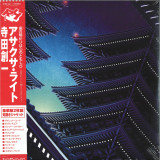
Back in 2015, Japanese DIY house pioneer Soichi Terada stepped back into the limelight courtesy of Rush Hour's 'Sounds From The Far East', a Hunee curated retrospective of material first released on his own Far East Recording label in the 1990s and early 2000s. Buoyed by the positive response and renewed interest in his work, Terada went back into studio to record his first new album of house music for over 25 years, Asakusa Light.
Developed over 18 months, Terada tried to recreate the mental and physical processes that led to the creation of his acclaimed earlier work. Those familiar with Terada’s celebrated, dancefloor-focused sound of the 1990s – a vibrant, atmospheric, and emotive take on deep house powered by the twin attractions of groove and melody – will find much to enjoy on Asakusa Light.
“I tried to recall my feelings 30 years ago, but when I tried it, I found it super difficult,” he explains. “I didn’t even know what I thought about myself five years ago, and the mental metabolic cycle seems to be faster than I thought. I tried different methods, including digging up my old MIDI data and composing by remembering old experiences. With the help of Rush Hour, I found some of the light from my heart that I had 30 years ago. I nicknamed the light I found in my heart, ‘Asakusa Light’.”
Produced using the very same synthesizers and drum machines that powered his 1990s work, the album is a joyous, colourful and life-affirming collection of timeless house music that not only recalls Terada’s own impeccable back catalogue, but also that of similarly celebrated contemporaries such as the Burrell Brothers or Ben Cenac (Dream 2 Science, Sha-Lor).
Terada, who has spent much of the last two decades writing video game music, has always had a gift for combining warm, undulating synthesizer basslines and perfectly programmed machine drums with stirring chords, smile-inducing melodies and mellow musical flourishes. It’s this immersive, sun-kissed and tuneful trademark style that takes centre stage on Asakusa Light, an album for the ages.
The set begins with the alien-sounding chords, soft-touch percussion and dawn-friendly warmth of ‘Silent Chord’ and ends on a high via the bouncing string stabs, starlight chords and thickset grooves of ‘Blinker’; in between, you’ll find a deluge of effortlessly feelgood music that’s the aural equivalent of a dopamine rush at sunrise.
There are subtle variations aplenty throughout the album – see the 8-bit lead lines and pulsing electronic textures of ‘Takusambient’, the vintage Tony Humphries flex of ‘Diving Into Minds’ and the effortlessly funky ‘Marimbau’ – but it’s the uniquely atmospheric, vivid and tactile nature of Terada’s loved-up sound that resonates. After well over 30 years in house music, the light in his heart is shining brighter than ever.
Water Machine is an office romance between Hando Morice (they/them), Flore de Hoog (she/her), Jimmy Gage (he/him) and Goda Ilgauskaitė (she/her). An unassuming supergroup formed out of Glasgow institutions including Goth GF, Passion Pusher, Brenda and Soursob, their sound careens between punk, country and alt-rock underpinned by the unique quality they call “Raw Liquid Power”.
Following last year’s self-titled demo tape on Gold Mold Records, and fresh off of shows with the likes of Holiday Ghosts, The Cool Greenhouse and The Orielles, as well as a rollicking Viagra Boys afterparty, the four-piece will release their highly-anticipated first studio effort ‘Raw Liquid Power’ on Upset The Rhythm on August 4th.
The EP opens with a menacing, modulating synth melody. Gage’s guitar enters with a mighty bend before breaking into the chugging rhythm of ‘Water Machine Pt. 2’. This timely reminder to refill your water bottle - “don’t be late, hydrate!” less a wellness mantra than a threat - builds to a spacey outro with flashes of the art-punk weirdness of Suburban Lawns. ‘Stilettos’ marches on indignantly with a spiky riff punctuated by Ilgauskaitė’s cowbells. Staccato talk-singing tells a playful tale of stray cats following you home, but belies a darker subtext as the breakdown gives way to paranoid duelling guitars evoking The Fire Engines.
The anti-anthem ‘At the Drive In’ skewers joyless DIY crowds, reminiscent of much-missed Glasgow punks Breakfast Muff. Water Machine’s irrepressible sincerity can’t help but shine through in the final moments though, as jibes about “late night trade potential” give way to plaintive vocal harmonies. Morice tears public transport a new one on closer ‘Bussy’, a First Bus diss track bemoaning precarious employment amidst crumbling infrastructure. “That’s why I’m not on time!” they roar over de Hoog’s frantic, pounding bass, bringing the record to a skidding, screeching halt.
Firescope are always on the lookout for new music, searching and sieving with headphones clamped over ears. GGGG, a recent discovery, unveils a stunning debut release. The co-founder of D.Ko Records may be a fresh face when it comes to releasing, but he has a wealth of both experience not to mention talent. His album, Gazé, is testament to this.
A spread of styles and influences coalesce to create GGGG’s unique sound. Ambient. Braindance. Electronica. Techno. All are melted and forged into the new. Processed percussion is the shifting sands from which a swooping melody takes flight, a melody that bends and soars as “K-Robot OG” ascends. Crystalline chords are shaven with fizzing drums in the frenzied elation of “Cas Contact.” And this is what lies at the heart of the collection, a rapturous joy that permeates the entire record. From the complexity and grandeur of “Chien Flûte 5.1” to the considered and subtle “Mudla 2”, the brightness of the audio palette chosen gives tracks an incandescence. This “joi de vivre” glistens and glows in the more playful tones of “Broutine Lamé” and “Cat Intro.” Textures are another area of interest for GGGG. Pieces like “Slowdry” and “Trip 2 Delinc” reshape and ruffle rhythms to bring a counterpoint to form and harmony. Beats are replaced by gentle waves of sound as the twelve-work collection culminates in “Sac Ala Blofel.”
Gazé tracks a course. From the energy and frenetic rhythms of first encounters to the atmospheric embrace of the latter part of the album, there is the sense that GGGG is celebrating the astounding of the ordinary, the amazing that is contained from the routine of dawn to dusk.
repressed !
Some people are just not destined to have enough sleep.When you don't sleep enough the world appears to be a different place, compared to the way it is when the mind is fully rested. In such cases very different scenarios may occur.
Starting with a dreamy melody of Roma Zuckerman's 'Sleep not found', which inspired the entire 008 album, and ending with a thirteen minute live recording by a_000, the side project of Alex Backdrop, the entire record has a dreamy and tripped out flow. 008 continues the tradition of gatefold double EPs as conceptual album.All tracks are selected around a particular story, a trip, and presented as a continuous sonic landscape.All tracks are structured in a way that they can be mixed one with another an endless amount of times making a continuous loop, a trip, that needs only end when the party stops. Kraviz works without release dates or deadlines, enabling her to achieve a certain sound bank to shape the story, unmasking the thoughts and unravelling like a dream. A1. Roma Zuckerman - Sleep Not found (North Edit) Apart form the fact that he leaves in Krasnoyarsk in the middle of Russia, very little is known about Roma (short version of the name Roman). But listening to his music and engaging in random short conversations late at night makes it clear that there are really a lot of things going on Romas mind... Minimalistic yet emotionally complex, his music always stands out with it's murkiness and signature moodiness that Roma creates like nobody else.
A2. Deniro - G Deniro continues the record's journey with his new live cut that like pretty much everything he did so far is a beautiful sparse atmospheric groover. He says he wanted it to be angry and it its done with triggering synths from the tr909 and tr808.
B1. Maayan Nidam - Infinite Rattle
Maayan was born in Tel-Aviv. She does not like computers and prefers to record her music live using hardware only. In order to do so she built her incredible studio in Berlin where she recorded "Infinite Rattle'.There is much more to come from Maayan on
B2. Bbbbbb - Prins Polo Caramel milkshake.
Side project by Bjarki-bbbbbb. Like any other normal Icelander, Bjarki really likes ice cream. In Iceland they are absolutely crazy about it.They walk the streets, ice cream in hand, even when its freezing cold outside. But even more than that Icelanders like Milkshakes with all sorts of added cookies and candies. Bjarki's favourite is called Prince Polo after the name of a chocolate bar. He always believed Prins Polo was an Icelandic brand but a couple of months ago somebody proved him wrong.
C1. Exos- dub jazz
In Iceland Exos is a legend. Everybody knows him there. He's been playing incredibly powerful and technically advanced techno sets since the late 90s and releasing delicious dub techno on Icelandic label Thule. Nina always appreciated his subtler, dubbier side, and this short recording a the continuation of it.
C2. Maaayn Nidam - Justice for some
This second live recording was a perfect fit for this album. Maayan has managed to create a particular mysterious night time dreamer here. Sound wise it's even more unique. It took a few times to get the master right, because we wanted to keep the original breathing of the machine that has captured a seriously freaky vibe. Maayan has always been one of Nina's favourite DJs as they share a similar attitude towards music. But after this tune she has also reserved a place in Nina's collective of favourite producers. D1. A_000
This is a side project of Italian native Alessio Meneghello (Alan Backdrop) & Enrico Voltan. . A beautiful 13-minute sonic journey.
For the first time ever repressed on FullTime Production the iconic disco record "Easy Going" by Easy Going!
That's a brand-new great landmark for the label as "Easy Going" set a milestone in the italian Disco culture.
If at the end of the Seventies you were at Piazza Barberini in Rome at night, you would have come across a small but crowded club half-hidden in the ascent of Via della Purificazione, a trendy gay club with elegant Fassbinderian furniture, but also a night crossroads for many prominent characters of the cultural and artistic life of the eternal city and a regular stop for the most popular national DJs at the time. Easy Going creature was founded by Claudio Simonetti (Goblin), as a homage to the place mentioned above.
The homonymous 33 rpm debut of 1978 is remastered and repressed on a glossy white vinyl and due next December 13th on FullTime Production!
It features the original LP cover highlighting the mosaic of masculine struggle between a sailor and a strictly naked policeman , photographed in the Roman club.
The music explodes with the piece that will define the group par excellence: "Baby I Love You" also released as the first single, sung by a very filtered voice on a hypnotic rug of keyboards and a captivating melody that define a real masterpiece of italian disco and beyond. The same goes for the remaining three tracks of the album, which are also set to set the dance floor on fire: "Do It Again" is pure dance from Studio 54 and on the flip side, Creedence Clearwater Revival's cover "Suzie Q" and the ballad "Little Fairy".
Techno stalwarts Heiko Laux & Joel Mull return to Drumcode for their first outing since 2016.
Friends and collaborators for over a decade, Heiko Laux and Joel Mull continue their fruitful partnership with a searing four-piece work. ‘Centipede’ is a thematic follow-up to ‘Rooter’, their last atmosphere-heavy production that dropped on Laux’s Kanzleramt imprint in 2017. A year earlier they teamed up for the vinyl-only ‘Munch’ EP on Drumcode Limited that explored subterranean techno grooves.
Their latest work was created during an extended stay at Mull’s home in Stockholm while Laux was visiting for a show. The evocative ‘Contour’ brings the EP into focus, as delicate strings set an atmospheric tone. The title track ‘Centipede’ follows, a track tailor-made for deep Sunday afternoon rave explorations as a menacing riff runs throughout. ‘Bullet Ant’ is driven by industrial percussion and brain-bending synth effects that dip in and out throughout the muscular work. ‘Centipede (Morph)' follows on from its namesake, teasing out some space and introducing melody to the palette for a deep late-night impact.
Veerus makes his Drumcode debut, after an impressive contribution to Truesoul's VA EP in 2017.
The Italian has built up an impressive discography over the last decade, dropping records on labels including Terminal M, Octopus, Filth on Acid and his own Le Club imprint. His collaborative with Maxie Devine 'My Train' was a highlight of Solomun's classic Boiler Room in Tulum, which has clocked 37 million views. In late 2017 he linked up with Brits OC & Verde for the fantastic 'Naaki' that featured on Truesoul's first Various Artists EP, ensuring he was an artist well and truly in Adam Beyer's sights.
His maiden outing for Drumcode mines 20 years of history, taking inspiration from classic trance and acid from the '90s, which he distils to create powerful modern techno works. 'Hypnosis' was a huge highlight of Beyer's Awakenings show at Gashouder during ADE. It's characterised by an engrossing call-and-response dynamic Veerus builds between the 303 acid warbles and the melodic stabs that run throughout. A track custom made for big moments. 'Apocalypse', like its name, is more menacing. Veerus constructs the work to mimic the dramatic theatre of a gladiatorial scene in a film, as heart-fluttering chord progressions, a piercing synth line and dystopian melody mark this memorable track.
Layton Giordani steps up for his first solo EP of 2018. In terms of pedigrees, it doesn't get finer than Layton Giordani.
The Brooklyn-born DJ/producer followed up his lauded debut album of 2017, with a collaboration with Danny Tenaglia to close out the year and marked the summer of 2018 with a three-way collaboration with Adam Beyer and Green Velvet, 'Space Date'.
The period has been a big one for Layton personally, also. From humble beginnings in his native NYC as an Output resident, to being thrust into the bustle of the European club and festival circuit, he's enjoyed a stint living in Amsterdam, growing and developing over this time. All these experiences have had a fundamental influence on him and his music.
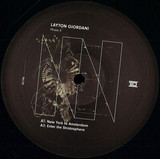
The four-track EP 'Phase II' represents a new chapter for this exciting talent. Beginning with 'New York to Amsterdam', a track that draws inspiration from the Yves Deruyter's classic 'Back To Earth', Layton's work packs a memorable punch as tough acidic undertones and brain scrambling synth effects undulate raising the intensity, making it a perfect opener for Adam Beyer when he played Berghain earlier this year. Following this, 'Enter the Stratosphere' is steely electro-tinged techno paired with atmospheric licks of melody, awhile maintaining the artist's trademark low-end chug. On the B side, 'Body Language' follows, a track written when Layton was scrubbed out of touring for a month courtesy of a shattered elbow from a skating accident. Not wasting the downtime, he's crafted a cut that's sleek, sexy and smart, with a seductive vocal and rousing melodic riff that runs throughout. Closing out the EP, 'Black Mirror', stays true to its dystopic name, a stomping rave cut that pummels dancefloors with a menacing lead synth that's purpose built for the cold months ahead. A classy conclusion to an EP from one of techno's brightest talents.
Are U Mad At Me marks a huge, cowboy boot-wearing step for the Brooklyn-based songwriter. Fields proves that genre is as fluid as sexuality, as the album saunters across country, pop, disco, grunge, and classical with ease. Across 12 tracks, Fields traverses bangers like power pop lead single “Party Girl” and two-stepping second single “Hands Off The Hat” (co-written with Grammy award-winning songwriter Melody Walker) all the way to tragic ballads like “Apalachicola to Tallahassee” (co-written with Karen Pittelman of Karen & The Sorrows) and the closing “Uncle Charlie’s.” He makes light of gender-neutral bathrooms marked with unicorns instead of stick figures in the guitar-driven “Pronoun Meltdown” and calls out a husband cheating on his wife with another man in the tragicomic ballad of “You Should Tell Your Wife.”
Are U Mad At Me arrives at a pivotal time in the roots music scene and the world at large. Fields, who is now rapidly becoming one of New York City’s queer country leaders — through his East Village residency at Lucinda Williams’ new honky tonk and dive bar and through his musical mentorship work through The Recording Academy — has been working tirelessly for this moment for more than a decade. Performing under this moniker since 2013, Fields has released three LPs and two EPs. He’s recorded on queer country pioneers Lavender Country’s 2022 reunion album, Blackberry Rose, and served as the band’s touring pianist. Additionally, his 2023 protest song duet with Mya Byrne, “Burn This Statehouse Down,” made it onto NPR music critic Ann Powers’ list of favorite songs of the year.
- A1: Follow Your Love
- A2: That's In My Head
- A3: The Novel Of Our End
- A4: Mother
- A5: I Don't Wanna Know
- B1: My Feet On The Ground
- B2: Invisible
- B3: Streets Of Rage
- B4: In A Porcelain Shop
- B5: What Is Love
Fifteen years after their first album "Time for a Change", and drawing on the experience of two others ("Elephanz" 2017, and "Rien de personnel" 2023), ELEPHANZ now returns with a fourth album that carries the scent of first loves, the kind you sing from the heart with your hands gripping a guitar.
"Love. Hurt. Repeat." tells, across ten songs, the story of a return to oneself, like coming home after years spent roaming the world, only to realize that everything you needed to understand yourself was already there at the starting line.
To help you understand what this new album makes me feel, I'd like to tell you about my first meeting with Jon and Max in 2009, when I became the band's bassist. Sixteen years ago, I discovered these two young men and set off in their family Kangoo van on my very first tour.
Through our early rehearsals around the piano of their childhood, I discovered their love for pop music in all its breadth, always in search of harmonies and melodies that touch the heart in the simplest way and gently ease your sorrows along the way. With them, I learned to appreciate the mainstream hits I had previously dismissed on principle, and I discovered the demanding art of melody as I listened to them sing about love and friendship through unforgettable catchphrases.
Listening today to some of the songs from their new album, I think back to those two young men with a big-city rock look, shut away in the living room of their family home, talking only about leaving that dull countryside behind to live the big life in the capital (Streets of Rage). What I once took for a kind of revenge against the hostile environment of their adolescence was in fact an almost vital need to find their place among others, to feel understood in order to feel at ease in their own skin.
Today, I find them again with the same guitar and the same inexpensive Juno as back then, but with the confidence shaped by years of concerts, writing, studio encounters, and all kinds of experimentation. The music of this fourth album has never been so close to that of their earliest days, but their voices have been set free. They no longer sing about who they dreamed of becoming, but about who they have always been, their most distant concerns, sometimes even their darkest ones, yet always in search of the light.
It is as if ELEPHANZ had to travel all the way around the world to come face to face with themselves again. There is no longer any shame in being who you are, and it is even the best way to understand yourself, to exist and to heal. To heal from grief and heartbreak, to understand the child you once were and the one who carried them (Mother), to forgive yourself and finally learn to love yourself.
That is what makes this record as sensitive as it is powerful and strikingly truthful. It was written and recorded like a cry, live, in just a few weeks, using the instruments of their beginnings: sharp bass and drums, powerful guitars, and synthesizers that are at times soaring, at times carriers of liberating melodies. The art of ballads remains, as does that of universal pop songs.
There is a beautiful urgency here, the urgency of finding oneself again in order to understand oneself through both pain and beauty, and "Love. Hurt. Repeat." is its most perfect expression.