LWS returns to Parris and Call Super’s can you feel the sun imprint with All Of The Chaos. 4 mutant rollers in his
now-singular style, sharp constructions meticulously designed with club drama and devious rave energy.
A year on from Palloon, and Edinburgh’s LWS has certainly left his mark. His inner metronome ticks differently, ornate
club constructions snarling with hypnotic fervour. His music has been ubiquitous across clubs and festivals over the
past twelve months as a result, and on his second EP for can you feel the sun he proves there’s still plenty left in the
tank.
Opener Many Requests goes galactic, a wide-eyed entanglement of melody and rhythm that gallops tough yet supple
through an ever-shifting landscape; an inevitable deconstruction ensues, before the salivating return sets us back on
course. Gooly shifts darker, a looping roller with sultry swagger that deviously maintains its shuffling delirium with
uncanny nous. Sharkbait on the flip cultivates a jaw-gnawing tension, vibrantly edging towards that ecstatic release
with unrelenting ease. Closer All Of The Chaos goes weirdest, a chromatic safari swivelling on its mechanised 2 step
through a carousel of unhinged sound design to its conclusion; signing off on yet another collection of future-shock
missives from LWS.
Early DJ support from Call Super, Objekt, Pariah, Surusinghe, Ploy, OK WIlliams and Pangaea.
Поиск:the metronom al
Все
- A1: The Street Enters The House
- A2: Overthere Comes Overhere
- A3: A Tunnel With Curves
- A4: Surrounded By Trees
- A5: A Light Moves Across Curtains
- A6: Weightless
- A7: No Longer
- B1: Running In The Dark
- B2: Moving In The Rain
- B3: On A Beach Lost At Sea
- B4: The End Of The Road
- B5: And Fall Asleep
- B6: An Empty Corridor
- B7: Outwards And Across
- B8: Goodnight
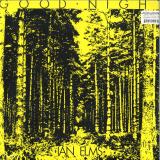
Ian Elms’s cult isolationist synth masterpiece Good Night returns via Dark Entries. Originally released in 1982, Good Night blends Berlin school minimalism and BBC Radiophonic weirdness with the aesthetics of then-nascent DIY punk electronics throughout its fifteen short tracks. According to Elms, these pieces were composed in two broad but interrelated modes: pieces with voice and synthesizer, which are obliquely narrative, and instrumental synthesizer pieces that aspire to capture fleeting emotions. Ian met with producer David Hoser at Octopus Studios and they began constructing pieces using a Polymoog Keyboard 280a, sampled drum tracks, and Elms’s synthesizer. On “The Street Enters the House”, live drums lurch along with skeletal motifs while Elms’s elliptical lyrics evoke domestic discontent. “A Light Moves Across Curtains” features metronomic pummeling and icy strings buttressing the scant cryptic lines from Elms. Instrumental gems like “Goodnight” and “Surrounded by Trees” are built around detuned riffs in round-like structure, both drifting and static like the motion of waves. With original pressings fetching three digits – if you can even find a copy – this reissue is essential listening for fans of John Bender, Transparent Illusion, and the early 80’s DIY cassette scene. Each copy of Good Night comes with a postcard featuring a photograph and notes by Elms. “This record is intended for anyone who by accident or design spends most of their time alone (whether in the body or in the mind).” – Ian Elms.
The Mekanik label, led by the tireless Manu Kenton, returns strongly with a new, strikingly effective EP: "Metronome." Available as a colored vinyl limited edition and in digital format, this project brings together four finely crafted techno productions for clubs and thrill-seekers.
Between explosive buildups, hypnotic grooves, and acidic textures, the "Metronome EP" delivers a concentrated dose of raw energy and sonic mastery. True to his identity, Manu Kenton once again demonstrates his ability to combine power, tension, and efficiency, always with a signature recognizable among thousands.
A key figure of the legendary Lagoa club in Menin, Manu Kenton continues his path here, chaining projects with a consistently strong artistic coherence.
On the visual side, this collector's vinyl stands out with its revamped "Yolk effect" in luminous green tones, adding an original and modern touch to this new chapter of the Mekanik label.
Français
Le label Mekanik, piloté par l’infatigable Manu Kenton, revient en force avec un nouvel EP redoutablement efficace : "Metronome". Disponible en vinyle coloré en édition limitée et en version digitale, ce projet rassemble quatre productions techno ciselées pour les clubs et les amateurs de sensations fortes.
Entre montées explosives, grooves hypnotiques et textures acides, "Metronome EP" offre un concentré d’énergie brute et de maîtrise sonore. Fidèle à son identité, Manu Kenton y affirme une fois de plus sa capacité à allier puissance, tension et efficacité, toujours avec une signature reconnaissable entre mille.
Esencia is beyond proud to share the fourth and final album by Culross Close. Like previous albums it’s both inward and outward facing, something for the individual and the group and ‘Learning To Let Go’ follows this tradition.
Becoming Present is a peaceful refrain, littered with percussion and devotion,encouraging the listener to sit with what is, while Reactive State taps into something else entirely. It’s a hard-hitting ride filled with percussion and decimated drums, woven into a serenading flute that captures the mind for the song’s duration.
The mood changes with Attachments. A tale of two halves, twisting between hypnotic and swirling. Surrender requires time and immersion, as the listener bears witness to an enthralling interaction between drums and keys,eventually drifting into the soul-inflected Grounding.
The magic in Letting Be unfolds naturally. From the majestic string and harp arrangements, to the metronome of the percussion, each musician finds equanimity, place and peace in the composition. Letting Go…well, that speaks for itself.
The album closes with Forward, Only. This is the sound of a group of musicians comfortable in their stride and confident in their thinking. Ready to move with whatever happens.
There’s nothing that brings us greater pleasure at Bordello A Parigi than celebrating the inspirational. Alex Virgo’s debut with us is just that. “The Promise” combines the instrumental elegance of Virgo with the smokey vocals of Olugbenga Adelekan, a musician whose trailblazing work with Metronomy has been beyond influential.
A puttering motor of cow bells, hi-hats and steady kicks are the motor of this double dipped disco delight. Bright melodies support Adelekan’s lyrics, lyrics that promise that “things will come easier” from a track guaranteed to put a smile on faces. Those vocals hand the stage over to the musical composition for the instrumental version, those bold and brilliant bars spilling happiness through speaker cones.
Kicks give way to ascending astral notes in the joy of “Event Horizon”. Key stabs pierce deep sonorous drifts as disco echoes mingle with sci-fi daydreams and the floor in this addictive finale.
"A brittle metronome in a delirious tension landscape, WOMEN'S HOUR are a Glasgow based experimental post-punk duo featuring Contort Yourself head honcho Murray CY and artist Jenny Wicks. Creating noise, harmony and disquiet washed in synth and repetitive guitar, rough beats and distorted vocals, WOMEN'S HOUR are constantly trying to embrace the shouting in their heads."
On this, their debut release, a 12 track lp, a true to form jagged 80s post-punk affair, the two piece bring to life the day to day in the grim North through their music. One can almost feel the chill coming from the brittle window panes of the dank drafty flats, filled with asbestos paint, busted heaters, and no hot water flowing for who knows how long. Desperate, urgent, coming close to falling apart, yet pulling it together to make it through to the next song...this is as "British" as it gets (yes we know Scotland is its own thing guys, don't shoot) The sun hasn't shown its face for many months, wind blows through the deserted streets, change jingles around in your pocket, a hungry dog barks. This is the music of Women's Hour.
Drawing from a strong history of electronic influence, Tomashevsky has created his own underworld of foreboding techno. We enter this EP with Incoherent, which exudes ominous sounds - reminiscent of murky radar blips that may be heard deep underwater in the metallic bowels of a submarine. Bubbling electronic delays remain adjoined to these metronomic blips and oer lateral, spontaneous movement around an otherwise sturdy song structure. Jittery melodies scatter nervously under lead elements, remaining disjointed and resulting in increased energy and a darkened excitement.
As we move through the EP, we face ups and downs, both in tempo and mood. Leading on from the first, Rollback is destabilizing, energetic and mean in all the right ways. Wobbling low ends open into a mood of uncertainty, held in place only by the stability of the drums. Rollback suits a peak-time club atmosphere thanks to the gritty synth leads and fast-paced feel.
Ending with the two tracks on the B-side, Tomashevsky still seeks to surprise. Rejected seems to be a distant relative of the Incoherent, following the synthetic blip structure but allowing snares and other percussions to build more prominently. Finally, we arrive at the closing track which marks itself as more obscure. Leaning on kick drum patterns initially reminiscent of electro/breaks, the use of half-time tempo gives a change of pace and a platform for a slightly different song structure and mixing potential.
Mesmeric and entrancing, these songs give any DJ or listener to chance to turn mind chatter o and lock into a hypnotic groove. Drawing on classically techno foundations, Tomashevsky has tipped his hat to the founders of the genre whilst adding his own flavour and subtle techniques that make this EP shine.
DJ, producer, label boss and soundtrack composer, Hannah Holland has never been one to tie herself to mediums. Now, on her debut studio album Tectonic, released on PRAH Recordings on September 17th, Holland pours her career to date into one outstanding and diverse body of work.
Hannah Holland has long been a mainstay of London’s queer and alternative club scene. Her eclectic DJ sets have taken her from Berlin’s infamous Berghain, NYC with friends The Carry Nation, Glastonbury’s NYC Downlow and legendary parties Adonis and Trailer Trash. She’s remixed the likes of Goldfrapp, The Knife and Metronomy and run her label Batty Bass for over ten years.
- 1: Through Darkened Glass
- 2: Very Heavy Greening
- 3: Wet Skull
- 4: The Magus
- 5: Exodus
- 6: Music For Mandrax
- 7: Return To Earth
- 8: The Middle Way
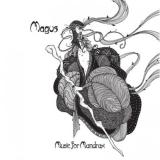
A magus is a wizard…a sorcerer. Magus, the band, is certainly interested in such things (who isn’t), but the name is especially apt due to the band’s approach to alchemy, the blending of rock, gothic, proto metal, and psychedelic styles to create a sound that is, ultimately, unique. Part of that uniqueness comes from the instrumentation. While guitar is often a dominant instrument of the rock oeuvre, the Fender Rhodes generally plays a supportive role. Not so here, where Jessica Weeks’ deft use of the keyboard dovetails with Greg Weeks’ more standard six-string approach. Not standard is the band’s sound. Doomy yet inspirational, dour yet vibrant, the duo’s tunes map sinister realms whose subjects span metaphysical creatures to enigmatic portals. You know, the typical stuff that rubs elbows with a magus.
Formed in late 2024, Magus sprung from a desire by both artists to experiment with darker, heavier sounds. Long enamored of artists like Flower Travelling Band,, Black Sabbath, and Deep Purple, the duo delved deeply into trance like riffs and euphoric solos to create the backbone of what has become their debut album, Music for Mandrax. This thirteenth Language of Stone offering features grounded, metronomic grooves, organic, lugubrious synth lines, and tandem vocals (supplied by both Weekses) that, in total, weave a heavy, trancelike spell sure to entice fans of bands as disparate as Sabbath is to Pink Floyd. Recorded at Weeks’ Hexham Head studio (to analog tape, of course), the band enlisted long-time counterparts Jesse Sparhawk (bass) and Ben McConnell (drums) to round out their sound and lock down the grooves that propel the album.
Mixed by Brian McTear and Amy Morrisey at Miner Street in Philadelphia, the band’s fully realized vision came to fruition, which left only the album art to contemplate. The band, wishing to further the gothic aesthetic of their sound, enlisted fashion designer and artist extraordinaire Hogan McLaughlin (Game of Thrones) to create the starkly beautiful line drawings of the front and back covers. The duo travelled to Salem, MA to complete the package with Courtney Brooke Hall, who shot the moody and evocative photographs that grace the gatefold release’s inner panels.
Ashley Tindall, AKA Skeptical, returns in peak form with Blimp EP — the fourth release on his Rubi Records imprint — delivering four meticulously crafted cuts of uncompromising drum & bass.
Opening with the title track, Blimp sets the tone with a deep, steppy wobbler that nods subtly to the title track from his second Rubi Records release, Capsize EP. All the signature Skeptical hallmarks are here: hypnotic, pared-back metronomic drums and shimmy-inducing, undulating subs that demand movement. Yet this time there's a noticeable shift — warm, underlying melodic pads bring an unexpected emotional depth. It's not dreamy, but it is more introspective than we're used to, showing another layer to his sonic palette.
So Good flips the script entirely. A dark, cinematic growler, it leans into ghosted vocal fragments and a futuristic film-noir aesthetic. Tense, claustrophobic rhythms and sinister textures create an unsettling atmosphere — tailor-made for those lights-out, pressure-heavy dancefloor moments.
Third comes the undeniable monster of the EP, Technology. Trademark "stink-face" Skeppiness is in full effect from the first bar. Disjointed sci-fi stabs and eerie pads collide with clinical, almost militaristic drum programming, all anchored by a devastatingly weighty bassline. Movement isn't optional — this is pure Skeptical, uncompromising and lethal.
Closing the EP is Bad Generation, a sound system–influenced weapon that finds Skeptical operating at his dubwise best. Fusing minimal D&B with heavyweight, roots-inspired rhythms is no easy task, but here it's executed with effortless authority. It's equally suited to shelling down a rave or getting lost in a deep, eyes-closed session.
Four tracks. Four distinct moods. 100% Skeptical.
Blimp EP confirms once again that his sound continues to evolve — sharper, deeper, and more refined with every release.
Support: Ben UFO, Joy Orbison, Gilles Peterson, dBridge, Break, DLR, Doc Scott, Mefjus, Kasra, Kings of the Rollers, Alix Perez, Jubei, Dub Phizix, Flight, Tasha, Loxy, Lens.
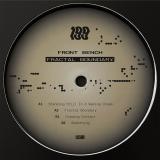
199’s co-founder Front Bench delivers four sparkling dancefloor cuts on ‘Fractal Boundary’, the label’s debut vinyl offering. The London-based producer, who has emerged in glimpses throughout 199’s digital release series, raises hairs from the outset with ‘Standing Still In A Waking Dream’. A thundering kick/clap pattern beats along purposefully under a string-like riff that twangs like an elastic band, the track rising and falling with operatic intensity, before ‘Fractal Boundary’ - the EP’s title track - restores some order. A slight syncopation gives the drums a laidback shrug while looping synth melodies dance in wistful circles.
On the other side, ‘Drawing Contact’ is a rolling cascade of layered synth lines, crashing softly over one another and creating a broody, melancholic tension above warbling bass tones and warm, fuzzy percussion. ‘Something’ brings the EP to a cozy end. A cluster of sparse, crisp drum sounds go to work with a metronomic vocal chop keeping the pace, while an urgent bassline pushes and pulls between lullaby-soft synth hooks.
Placid aka Paul Wise is the operator in chief at ‘We’re Going Deep’ – an online community and record label born out of a lifelong love affair with the many shades of electronic rhythm, and an obsession for collecting records since 1988. With a mission to share and release new music via his We’re Going Deep and We’re Going Back imprints, you’ll find only the best in underground Acid, Electro, IDM, Techno and House for the dance floor and your listening pleasure.
Up next in the label series, We’re Going Deep is excited to welcome 4 tracks of fresh material from pivotal electronic music maker Gerard Hanson, under his much prized E.R.P. alias. Renown for keeping his profile below the radar and letting the machines do all the talking for him. Hanson’s work as a producer has been much coveted since his debut back in the mid 90s as Convextion. Hailing from Dallas, Texas, he has become something of a hero in the underground Electro community. His work as E.R.P. has left a huge impression on labels such as Frustrated Funk, Bleep43 and Semantica over the years. Renown for his distinctive shimmering machine funk aesthetic, he ably summons the outer reaches of deep space listening thanks to his innate mastery of brooding, sci-fi soundscapes that few can equal.
Following releases for Apnea and Synchrophone, Hanson lifts off with a heartfelt tribute to our recently departed friend James Baker on ‘One4ReKab’. Ascending with the pulse of a steady kick drum, precision snares take hold as whispered vocals seep in and out of consciousness. Underpinned by trademark angular bass tones, soaring strings inject a deep sense of foreboding as all the parts fuse with a fierce glow. Stepping things a notch back as the sonic trajectory levels out, ‘Onward’ takes a more contemplative stance in a fusion of hypnotic drum programming that leads the fray whilst subtle arpeggios flow, all whilst wistful melodies wind you in.
Over on the flipside, Hanson revisits his 2008 composition “Multipole Vector” to launch yet another interstellar cruise by mission in the shape of “Multipole Vector II”. Leading with the simplest of bass progressions and metronomic beat programming, twinkling synth elements reach across the void as chords sweep to and fro to powerful effect. Ending out on the uplifting yet almost IDM inflected tones of “Self Unemployed”, this low tempo air rounds the EP off on an equally captivating note filled with playful charm, that makes this collection of music all the more pleasing.
Having transitioned between London, Lisbon and back again as a DJ and producer, as well as across the world as the drummer in beloved pop group, Metronomy, Anna Prior remains an essential and independent force in alternative and electronic music culture. The current epicentre of this creativity is undoubtedly Prior’s own label, Beat Palace. Established in 2021, it has showcased the talent and diversity of FLINTA producers carving an esoteric space within alt-pop and electronic music.
Returning to the imprint for the first time since its inception, Anna Prior utilises this vital platform to refine her own craft across the five-track ‘Firefly’ EP, exploring new moods and styles, balancing playfulness with vulnerability, shadow and light. Prior describes ‘Firefly’ as, “a collection of moments - some fleeting and some stubbornly lingering.... Each track came together almost by accident, but now feels to me like they've always belonged together.”
Lead single ‘True For You’ pulsates with soft euphoria, as Prior weaves softly cascading synths with her own earnest declarations, composing a sensual, sophisticated drama about “letting other people's differing truths sit alongside your own” that nonetheless carries a distinct club energy. In contrast, title track ‘Firefly’, written alongside co-producer Matt Karmil, unfolds as a spoken-word piece, investigating memory, “the tricky mirror that reveals more than it conceals”. Throughout, Prior’s inquisitive, native Yorkshire accent anchors a wide-eyed soundscape that gradually, impressively escalates into the cinematic.
Centerpiece track ‘Silence’ turns this approach inside out, escalating the tempo and revealing a DnB-influenced shade of Prior’s work that is certain to surprise and impress, scattering elegant syllables amongst serious soundsystem pressure as Prior navigates the feeling of being ghosted; by friends, lovers and even her own work. ‘No More Drama’ returns to pop, presenting a bold cover of Mary J. Blige’s classic that inverts the original’s unmatched intensity for a more serene, but no less affecting rendition.
Finally, ‘Beside You’ delivers one last, sublime blend of Prior’s songwriting and sequencing instincts, a simple pop incantation that coaxes dancers into a soft trance while concluding with a reminder from Prior that “amid life’s unanswered calls and fleeting highs, there is always space to feel safe and unjudged.” Concluding this sublime EP, Prior finds new ground to settle into her talents.
Mia Zapata was the greatest rock singer of her time. She may have likely been the greatest blues singer in punk rock history, the woman who married the 78 and the '78. Tragedy did not make this true. Mia Zapata made this true, and the ferocious, spring-loaded shrapnel frame that was built around her by Andy Kessler (guitar: metronomic and furious), Matt Dresdner (bass: fluid, punching, beat-addicted and melodic), and Steve Moriarty (drums: martial and explosive) - who, with Mia, combined to form The Gits - made it true. The Gits were formed at Antioch College in Yellow Springs, Ohio in mid-1986, grabbing and swapping pieces of art, thrash, noise, punk rock, classic rock, and all the sorts of magical silly and bookish jingle bells that an old-school liberal arts education handed you; for the next few years they worked on turning it all into something tough, sensitive, both brutal and kind. Andy, Matt, Mia, and Steve moved to Seattle in middish 1989, landing in a house on Capitol Hill where they (and fellow travelers) wood-shedded and rehearsed for the next few years. The Gits put out three EPs in 1990 and '91 before signing with C/Z Records and releasing their first full-length album, Frenching the Bully. Seattle quickly claimed the quartet as their own and embraced the Gits blend of ferocious fangs and soft heart, the slug/slap of the guitars, and the gorgeous, soft underbelly of the poetic emotions. These qualities not only fit in with the doe-eyed/sharp-clawed grunge ethos but earned the Gits the respect of their peers, including Nirvana, who tapped them to open a major local show in 1990. Then other stuff happened, and their frantic, confessional barbed-heart snowball began rolling up hill very, very fast; the Gits "quickly" (hah! After half a decade learning to implode and explode hearts and stomping their boots on manifold beer-softened, Marlboro-weeded wood stages!) inspired rapture, awe, and the levitation that happened when peak emotion meets peak grindage in front of amps spitting out something that sounded like the mad marriage of Bolan swagger and Dischord tension_ all fronted by a genuinely incomparable woman who held her heart in her mouth and shared it, in all its celebration and fear, without hesitation. The Gits were an angry, inflamed slinky fully in tune with and tuned by the Bessie Patti Smith of her time, truly the only singer who could summon Joplin, Poly Styrene, Sam Cooke, Iggy Pop and Ian MacKaye all in the same goddamn song. In 1993, less than four weeks after accepting an offer from Atlantic Records, Mia died. I leave it at that, because this is not about death; it's about an extraordinary life. I do not say, "You should have been there," I say, "We are lucky so many of us were, and I am so glad we have this extraordinary evidence of the power and gifts of Mia and the Gits that you now can hold in your hands." And I note that Frenching the Bully, this extraordinary testament to the soul, shock, fury and feeling of the Gits, has been long out of print on vinyl and CD, and this new edition - remastered by legendary Seattle engineer Jack Endino - joyfully rectifies that. -Tim Sommer
- A1: Why Don’t You Do Right - Cleo Jons & Dick Reynolds Orchestra
- A2: Fiche Le Camp Jack - Richard Anthony & Les Angels, Dir. Christian Chevallier
- A3: I Pawned Everything - Walter Spriggs & Jesse Stone Orchestra
- A4: Don’t Play No Mambo - The Charioteers & Sid Bass Orchestra
- A5: Mr. Sandman - Chris Powell & The Blue Flames
- A6: Teen Age Rock - Pete Rugolo & His Orchestra
- A7: The Rhinoceros - Osie Johnson & His Orchestra
- B1: Lady Be Good - Knud Jörgensen & The Metronome Singers
- B2: Walk Softly Children - Elizabeth Lands, Orchestra Cond. By Dave Martin
- B3: Timber’s Gotta Roll - The Deep River Boys Feat. Harry Douglass
- B4: Blues In The Closet - The Tritones
- B5: The Baggage Room Blues - Tom Kennedy
- B6: Write Me Baby - The Metrotones
- B7: Rat Race - Little Norman (Norman Kaye)
Auf dem komplett unübersichtlichen Markt der Vinyl-Wiederveröffentlichungen rarer Aufnahmen aus dem im weitesten Sinne Rock & Roll/Rhythm & Blues/Popcorn-Umfeld hat sich die Serie DOWN AT THE UGLY MEN’S LOUNGE mit einer komplett eigenständigen konzeptionellen Farbe etabliert. Das authentische 10“-Format und die Covergestaltung mit obskuren und anonymen Musikerfotos der ersten fünfzig Jahre des 20. Jahrhunderts sind gleichermaßen unverkennbar wie unwiderstehlich.
Das stilistische Spektrum der neuen Auswahl rarer und rarster Trouvaillen aus dem legendären Archiv von Prof. Bop bleibt dem Ursprungskonzept treu: Zwischen Boogie und Mambo, zwischen Blues und Bop, zwischen Exotica und Egozentrik...weniger amateurhaft gespielter Teenager-Rockabilly, eher Rock & Roll etc. von musikalisch versierten und Jazz-geschulten Vollprofis. Allesamt Aufnahmen der goldenen Epoche 1950 – 1962.
Whilst YTM is at home presenting dancefloor focussed material, we see him explore the other side too, with "Memory Is A Clock" like the earlier "Vortix", he ditches the 4x4 for breakbeat territory. Whilst the bass keeps the solid metronome you would expect, "Memory Is A Clock" is a track that takes a few moments, contemplative melody and trademark arpeggios take the lead. When it comes to the other collaborations on the record, the appearance of Brame And Hamo on "Raver's Heart Is A Mess" sees them lean into the Progressive nature both artists love so much. Then Pablo Bozzi lends his own unique outlook to "We Don't Know The Way, We Just Stay" in one of the standout tracks, epitomising Younger Than Me’s ability to create profound experiences.
The album concludes with "Music Will Never Stop, Heartbeat Will Never Fade, Party Will Never End", less of a title and more of a personal philosophy – the perpetual essence of rave culture and its timeless impact on music. A rhythmic belter, juxtaposed with incendiary synth-lines and staple catchy sequence work, finishing the record with one of the true highpoints. In addition the release also features four digital bonus tracks, including "The Other Face Of Loneliness" and a Prog Dance Reshape of one of the records more eclectic cuts "Zarathustra Dance" all offering an extended exploration into the creative landscape YTM inhabits.
Paul Murphy’s Claremont 56 label welcomes a genuine legend of UK music to its roster – Chaz Jankel, the man whose dizzying musicality and love of soul, funk and disco did much to shape the sound of Ian Dury’s Blockheads band in the late 1970s and early ‘80s.
A virtuoso keyboardist with a deep love of Black American music, Jankel’s arrangements and compositional skills were key to the success of their records, the funkiest of which not only became crossover pop hits – see ‘Hit Me With Your Rhythm Stick’ and ‘Reasons To be Cheerful, Part 3’ in particular – but also saw heavy rotation in now iconic New York clubs including the Paradise Garage and Studio 54.
This continued during the formative years of his solo career, with ‘My Occupation’, ‘Questionnaire’ and ‘Glad To Know You’ (later famously re-edited and dubbed out for nu-disco dancefloors by Todd Terje) all becoming club hits. The great Quincy Jones also covered Jankel’s infectious single ‘Ai No Carrida’, while experimental, club-ready synth-jam ‘3,000,000 Synths’ was also influential during the early years of the electro movement.
For his Claremont 56 bow, Jankel has delivered an all-new workout recorded earlier this year, the simply titled ‘Rhumba Jam’. A typically warm, groovy and rolling affair, it features Jankel delivering infectious, stretched-out Rhodes electric piano solos over toasty bass, clipped guitar licks, warm bass, accordion-style synth motifs and a densely layered Rhumba rhythm. While relaxed and sun-soaked, it also has bags of Balearic dancefloor potential.
Murphy remixes under his now familiar Mudd alias, leaning into the track’s languid Balearic vibe while keeping a firm focus on the dancefloor. Beginning with an enticing mix of metronomic drums and jangly acoustic guitars, Murphy slowly layers up key elements of Jankel’s original – think rubbery bass, rhythmic handclaps, mazy synth sounds and those wonderful, stretched-out solos. It’s a version that pays due reverence to the quality of Jankel’s musicianship, production and arrangement while subtly extending it and reframing it for 21st century Balearic dancefloors.
- A1: Off Stage—Med Dark Fade Out (Exit) (Starts Edit)
- A2: On Stage—Strike (Falls) (A) (Vinyl Edit)
- A3: Off Stage—Walk (A) (Vinyl Edit)
- A4: On Stage—Crystal
- B1: Off Stage—Pile & Surfaces (B)
- B2: Off Stage—Leaf K2
- B3: Off Stage—K2 Line (Vinyl Edit)
- B4: Strike Ftx (B) (Vinyl Edit)
- C1: On Stage—Strike Ftx (C)
- C2: Off Stage—Stick & Clap (D1)
- C3: Off Stage—Tree Transition (A)
- C4: Off Stage—Stick Walk (Crystal Approach)
- C5: On Stage—Crystal (Rush)
- D1: Reiy C & Swing Mic (B) (Vinyl Edit)
- D2: Off Stage—Surfaces (All) (Vinyl Edit)
- D3: Off Stage—Leaf K2X
- D4: Alt Stage—Drom (A) (Billy Fulcrum)
- D5: On Stage—Everybody Cycles (Vinyl Edit)
- D6: On Stage—Strike Snx (Vinyl Edit)
- D7: Med Dark Fade Out (Vinyl Edit)
Slip is Paul Abbott’s response to his 3 day residency at OTO in 2023. It’s a continued exploration of the acoustic-digital hybrid drum setup Abbott has been developing for some time, which involves drum kit and synthetic sounds combined closely—through an entanglement of limbs and cables—in an intimate but strange relationship with each other.
Paul Abbott hasn’t had any formal musical training, but has a long history of making music, having collaborated for years with Seymour Wright, Pat Thomas, Michael Speers, Cara Tolmie, Anne Gillis and many others. Eventually, led by a profound suspicion of what is fixed or limited, Abbott began finding other ways to organise sound - or what he calls ‘material’:
“I wanted a way to 'persuade' or guide the possibility of something happening - my activity or the events of an algorithmic composition - for example, but without certainty or formalism. It felt to me, during playing, that certain ideas had a particular sort of shape, but more than the form of a line. I began to write alongside (before/after) playing the drums, and ‘characters’ began to enter the scene as a more wobbly, and therefore appropriate option to notation. Working with these characters allowed me to simultaneously approach body, imagination, language and music: without dividing things up or separating these aspects from each other. It allowed me to leave things messy and entangled, whilst trying to deal with form and specificity: wanting to have some things feel or respond differently to other things at other times.”
In approaching his residency, Abbott developed a fixed cast of characters - crystal, lleaf, reiy.F, reiy.C, strike, nee, qosel, sphu and aahn. They each communicate using different kinds of movement and drum kit/s, and Abbott choreographed them as ‘dances’ based on different feelings, or outlines of behaviours suggestive of ways of moving (body, drums, sounds). He then arranged these characters into ‘compositions’: one for each performance day, with each composition featuring multi-layered activity - options for behaviours, ways to move around the rooms, play drums, develop synthetic sounds, change the lights or re-distribute the sound in the space.
After the performances, Abbott took home 9 hours of recordings split into up to 28 multitrack channels for each day, and re-organised his cast once more into a performance for 2LP, CD and digital. It’s an enormous amount of work - but Abbott is activated by the process. For him, the pleasure of unstable edges, possibilities, slippages, is the vital attraction. Like all living organisms, Abbott’s characters have malleability and responsivity. They stimulate a bundle of possible behaviours, a tendency to act a certain way, a temperament, a boundary of respective limits or affordances.
It’s an affective way of working, inclusive of Roscoe Mitchell, Sun Ra, Nathaniel Mackey and Milford Graves. In ‘Pulseology’(2022), Milford Graves reminds us, ‘Breath varies, so cardiac rhythm never has that (metronomic) tempo. It’s always changing. All the alignments of the heart are determined based on the needs of the cells, specifically tissues and organs. The heart knows if it needs to speed up.’ In Slip, to slip, in a heartbeat, is to descend not into the grid of the even metre accorded to the heartbeat, but into a play of mutability and modality. To change is the condition of the heart.
Two years after making their bow via a fine contribution to the Claremont Editions 3 compilation, Nuremberg’s Neumayer Station are ready to drop their debut full-length excursion, the mesmerising and immersive Crossings.
The brainchild of drummer-turned-producer Michael Kargel, a musician with a bulging CV that includes stints in various German indie-pop and rockabilly bands, Crossings was co-produced and mixed by Frank Mollena (best known to Claremont 56 fans as the man behind the Fürsattl and Bambi Davidson projects), with additional contributions by Alexander Sticht and an impressive roll call of guest musicians plucked from Nuremberg’s vibrant musical underground.
Recorded at different points over the last three years, the eight tracks showcased on Neumayer Station’s inspired debut album draw influence from the hypnotism of classic German ‘kosmische’ recordings, the freewheeling and stoned headiness of CAN, and the gently unfurling beauty of sun soaked Balearica. Kargel, Mollena and their collaborators set the tone with opener ‘Unterführung’, where Sticht’s layered and sonically hazy vocalisations rise above space-rock guitar motifs, droning analogue synth sounds, languid bass and slow-motion drum breaks. With effects aplenty and all manner of melodic electronic flourishes, it’s a deeply psychedelic and mind-expanding affair.
‘Nalut’ follows, with Kargel’s own atmospheric howls and whistles cannily combining with sun-bright tropical guitars, echoing chords and delay-laden saxophone solos riding the dub-flecked, low-slung groove. The collective’s Balearic influences are explored in more sonic detail on ‘A Gentle Flow’, a shuffling and soft-focus affair marked out by emotive piano & jazz guitar, brushed percussion, sunrise-ready synths and pleasingly stretched-out electronic textures. Neumayer Station return to this drifting, morning-fresh and eyes-closed sound later in the LP, via the wonderous ‘Von der Morgenröte’.
The heady influence of spaced-out dub production techniques comes to the fore on ‘Bassrutscher’, an Alexander Sticht co-production rich in Americana-influenced guitar textures, metronomic dub bass, rim-shot heavy drums, mazy organ and orange-hued sundown sounds. It ushers in the more up-tempo shuffle of ‘Zielgerade’, an inner space, out-of-mind affair whose driving but loose-limbed groove provides a platform for exotic, droning and otherworldly guitar, sax and synth sounds. As with all great albums, Crossings gently builds towards a triumphant and memorable conclusion. The spacey Balearic/kosmische crossover of ‘Feeling Forst’, where darting intergalactic synth sounds rub shoulders with gentle acoustic guitars in a hallucinatory soundscape, tees up closing cut ‘Crossings’, the krautrock-rooted, sax-sporting slab of enveloping late-night beauty that first introduced listeners to Neumayer Station back in 2023. It’s a fitting conclusion to a staggeringly good debut album.
Local Action is proud to present Daughters, the debut album by Jennifer Walton.
Walton is a beloved figure across various sectors of the alternative music underground. Outside of her own music and soundtrack work, she has been a live drummer for Kero Kero Bonito, collaborates with Sarah Midori Perry on the pair’s Cryalot project, has remixed Metronomy and worked with Iceboy Violet, BABii and more. She also makes music and DJs with close friends aya and 96 Back under the name Microplastics, and recently contributed to London collective caroline’s acclaimed caroline 2 album.
The first seeds of Walton’s debut album were sowed during touring North America in 2018, where whilst ticking off life-long music goals, Walton’s father was dying of cancer. Grief is a constant presence throughout Daughters, and specifically the surreal nature of having to process it amongst a blur of airports, flight connections, hotel rooms and battles for stolen medication with the American healthcare system. Strip malls, drug deals, panic attacks; the artificiality of downtown American city districts dovetailing with reality in its most brutal form. Miss America for a day while life is changed forever.
Weaving between real life diary entries, travelogue-style storytelling, imagery that ranges from mechanical to religious and a scattering of fiction (though we are obliged to mention that ‘Shelly’ is based on a true story), Daughters climaxes with the staggering run of ‘Saints’, ‘Miss America’ and its title track. Sampling unattended machines harmonising bleeps into the void in a London hospital ward, ‘Saints’ narrates Walton taking her father to and from cancer research trials, “sat, hunched and sick in the concourse as minutes became hours”. And to be very real for a moment, Jen is a friend, and first hearing the ‘Miss America’ demo is up there with the most emotional moments we’ve had in 15 years of running this record label.
Finished in London across the second half of 2024, Daughters features musical contributions from some of the closest friends and collaborators that Walton has made in her time as a musician: aya (who also mixed the album), Daniel S. Evans, Joshua Barfood and Nick Granata (all of Shovel Dance), Alex McKenzie (of caroline and Shovel Dance), Aga Ujma and Bob Lockwood.