Fatsouls is proud to present Trinidadian Deep’s Sonic Vibrations project. The EP is a powerful collection of four independent tracks. With dreamy pads, chants, layered percussion and tubby chords, captivating keys, and a jazz bass line, this package creates a rich, ethereal soundtrack. As you might expect from him, this production is infectious. Take a deep breath and listen!
Cerca:the migh
- A1: Identified Patient – The Female Medical College Of Pennsylvania (Marcel Dettmann Pitched High Version)
- A2: Tocotronic – Bis Uns Das Licht Vertreibt (Marcel Dettman Version 2 Remix)
- A3: Cristian Vogel – Untitled (Marcel Dettmann Cut)
- B1: John Bender – Victims Of Victimless Crimes (Marcel Dettmann Cut)
- B2: Clark – Dirty Pixie (Marcel Dettmann Edit)
- B3: Junior Boys – Work (Marcel Dettmann Remix)
- C1: Mutant Beat Dance - The Human Factor Ft. Naughty Wood (Marcel Dettmann Edit)
- C2: Experimental Products – Who Is Kip Jones (Marcel Dettmann Cut)
- C3: Marcel Dettmann – Water Feat. Ryan Elliott (My Own Shadow Remix)
- D1: Severed Heads – We Come To Bless The House (Marcel Dettmann Edit)
- D2: Albert Kuningas - Astraaliprojektio (Marcel Dettmann Edit)
- D3: K.alexi Shelby – Season Of The Real (Marcel Dettmann Edit)
- E1: Ian North – Sex Lust You (Marcel Dettmann Edit)
- E2: Ford Proco – Expansión Naranja (Feat. Coil) (Marcel Dettmann Edit)
- E3: Nitzer Ebb – Shame (Marcel Dettmann Edit)
- F1: Frank Duval – Ogon (Marcel Dettmann Edit)
- F2: Yello – Limbo (Marcel Dettman Version 2 Remix)
- F3: Conrad Schnitzler – Das Tier (Marcel Dettmann Edit)
Cassette / Tape[16,18 €]
2025 REPRESS
A DJ, producer and significant figure in contemporary electronic music, Marcel Dettmann steps forward to contribute to Running Back’s ongoing Mastermix series. Whereas previous editions of Mastermix have taken an ear to the sound of lapsed, legendary clubs such as Wild Pitch and Front, Dettmann’s curation deftly captures the man himself in ongoing perpetual motion, raiding the vault for his own precision-tooled edits, long-employed on dancefloors to devastating effect. Alongside a continuous mix, this release arrives as a 3LP gatefold, and as a limited edition cassette.
Closely associated with Berlin’s techno landscape, Dettmann was born and raised in the former GDR, then later immersed in the bleary-eyed counter cultural landscape of post-unification Berlin. Initially oriented by post-punk, industrial and new-wave music, Dettmann has been DJing since 1993, always expanding and perfecting his repertoire. He later began working behind the counter at the city’s tastemaking rave boutique Hard Wax, and a decade after he first dropped a needle, became (and remains) resident at notable local nightspot Berghain/Panorama Bar, where his instincts have helped sculpt the signature sound of both main dancefloors.
Of course, you’re probably not asking, “Who is Marcel Dettmann?” More importantly, you might want to know; just what treats has he gifted us here? The trip begins with a simple pitch-shift skywards, transforming Identified Patient’s creeping ‘The Female Medical College of Pennsylvania’ into a peak-time freakout, before an alternate take on Toctronic’s ‘Bis uns das Licht vertreibt’ emerges from the vaults for the first time. Dating from 1995, and one of Dettmann’s all-time favourites, Cristian Vogel’s ‘Untitled’ clambers back into the box with respectable cuts, while John Bender’s ‘Victims of A Victimless Crime’ kicks off the flip sporting a new arrangement, transporting us back to the foundations of a confident, stripped-back sound.
A few subtle edits to Clark’s perilously funky ‘Dirty Pixie’ takes us to Dettmann’s remix of Junior Boys. Produced in 2010, it transposes the Canadian duo’s sophisticated pop with our curator in his minimal prime, and has since become an irresistible prize for high-minded diggers. The same can be said for Experimental Products’ explosive proto-electro anthem ‘Who Is Kip Jones?’, empowered from pricey Discogs purgatory with just the slightest of tweaks. It’s deservedly sandwiched between the guiding influences of Chicago and Detroit in the form of Mutant Beat Dance’s raw ‘The Human Factor’ and a shimmering new version of previous solo production ‘Water’, featuring close friend and Ostgut Ton ally, Ryan Elliot.
The second half of the Mastermix seamlessly connects the mechanical past and digital present of EBM and industrial in the dance, with Dettmann’s instincts as a guiding hand. Severed Heads’ iconic ‘We Have Come To Bless This House’ emerges with mere nips and tucks, while Nitzer Ebb’s ‘Shame’ is significantly reimagined as a highwire act of rhythm and tension, setting up a sensual second take on a 2017 remix of ‘Limbo’ from Swiss synth heroes, Yello.
Core musical memories are shaken and stirred with a context-shifting take on Frank Duval’s emotional classic ‘Ogon’, while Ian North’s ‘Sex Lust You’ and Ford Proco’s notable Coil collaboration ‘Expansion Naranja’ effectively throb with only minor adjustments, respectfully imagined as “shadow versions”. Meanwhile, a simple breakbeat lifts Albert Kuningas’s ‘Astraalprojektio’ in the direction of wide-eyed dancefloors, while a fresh take on K-Alexi Shelby’s ‘Season of The Real’ inexplicably emerges somehow even funkier than before.
The conclusion of the compilation leads back to Das Tier from the prolific experimentalist Conrad Schnitzler, whose swirling synths and hypnotic vocals are duly tightened by Dettmann, but only as he puts it, “in conversation with the original.” Concluding three discs and thirty years of commitment to the dancefloor, this Mastermix not only offers us the opportunity to eavesdrop on this endless exchange, but to gain some sought-after material for our own record collections.
2025 Repress
“UR wonders” What happens to jazz if combined with the current electronic sound tools used to make Detroit techno now?
What might Jazz sound like if the inspirational pioneers of fusion ie; Return to Forever, Astral Pirates or Weather Report had access to the music production technology available now or in the future?
The artform called Jazz was a unique reflection of “The African American experience here in the United States.Unfortunately by the 90″s it had been compromised by major record companies and made “smoother” for mainstream consumption and more profits.
Born in America’s rural black south Rock & Roll had suffered the same fate years earlier. Original artists eventually replaced by well studied clones and corporate mega profits!! Also happening the original artform of jazz appeared to be caught, processed & throughly EXPLAINED by people who sought to intellectualize “struggle & human emotion” into mere words and then benefit immensely financially by being authorities on the subject.
Hmm sound familiar?
As you watch the current intellectual colonization of the urban inner city African American art forms house music, hip-hop, Jungle & Detroit techno get studied, bent, twisted renamed and turned into EDM profit formulas.
There stands records like Nation 2 Nation that defy these definitions and inspire the next generation of Pioneers who continue the undefined exploration of Jazz like Derek Jamerson, Jon Dixon, Raphael Merriweathers, Desean Jones, Timeline, Galaxy 2 Galaxy, Raphael Statin & Ian Finkelstein. Mother to daughter, Father to son,
Nation 2 Nation a work inspired and that inspired what’s next.
Blue Vinyl[24,58 €]
The brilliantly named duo - formed by Adam Morrow and Jamie Sego - might be based in "the hit recording capital of the world", Muscle Shoals, Alabama, but somehow, they have made a concept album about the ancient religious outpost off the coast of northeast England. It's a stunning record that mixes fuzzy guitars with folk horror and fantastic melodies - for fans of Ride, Slowdive, Galaxie 500, Talk Talk, Yo La Tengo and The Clientele. Despite its lyrical inspiration lying thousands of miles away, it comes imbued with the soulfulness of their surroundings - not least because it was recorded in the old Muscle Shoals Sound studio by the Tennessee River, now Portside Sound, which is run by Jamie. "The story of Lindisfarne gave us a framework for what were otherwise very abstract ideas and emotions," explains Adam. "It became a way to make sense of our own moment in history. We really want our lives and societies to always get better, and to be left alone to make that happen. But we are stuck in these cycles of progress and regression, and I think most people are really driven to make sense of it and assign meaning. Lately, we've lived through a global pandemic, a devaluation of truth and reality, and a resurgence of far-right politics into the mainstream. Not really what I expected out of life in 2025." He is keen to point out that, despite the seriousness of its inspirations, the duo had a lot of fun making the album and really want it to be "a living and breathing thing". "We want people to be able to engage with it regardless of whether they care about it as a concept record," he says. "For me, it's just another reason to expand the pedalboard," concludes Jamie. "We hope you enjoy it. Peace, love and reverb from Alabama." Coloured Vinyl LP, and Bonustrack CD available, this version is `Lindisfarne Sky' Blue & White Vinyl and adds a postcard.
- A1: Chic – Le Freak (Edit)
- A2: Sister Sledge – We Are Family (Single Edit)
- A3: Gloria Gaynor - I Will Survive (Single Version)
- A4: Sylvester – You Make Me Feel (Mighty Real)
- A5: Chaka Khan – I'm Every Woman
- A6: Candi Staton – Young Hearts Run Free
- A7: Diana Ross - Upside Down
- A8: Sheila & B. Devotion – Spacer (7'' Edit)
- B1: Amii Stewart – Knock On Wood (7” Edit)
- B2: The Three Degrees - Givin' Up Givin' In
- B3: Eruption - I Can't Stand The Rain
- B4: Boney M. - Daddy Cool
- B5: Village People – Ymca
- B6: Michael Zager Band - Let's All Chant
- B7: Lipps Inc. - Funkytown (Single Version)
- B8: Dee D. Jackson - Automatic Lover
- C1: Donna Summer - Macarthur Park (Single Version)
- C2: Earth, Wind & Fire With The Emotions - Boogie Wonderland
- C3: Mcfadden & Whitehead - Ain't No Stoppin' Us Now (Single Version)
- C4: Marvin Gaye - Got To Give It Up
- C5: Harold Melvin & The Blue Notes Featuring Teddy Pendergrass - The Love I Lost (Single Version)
- C6: George Mccrae – Rock Your Baby
- C7: Tina Charles - I Love To Love
- C8: Andrea True Connection - More, More, More (Single Version)
- D3: A Taste Of Honey - Boogie Oogie Oogie
- D4: Diana Ross - Love Hangover
- D5: Grace Jones - I Need A Man
- D6: Amanda Lear - Follow Me (Single Version)
- D7: Patrick Juvet – I Love America
- D8: Frantique - Strut Your Funky Stuff (Single Version)
- E1: Baccara - Yes Sir, I Can Boogie
- E2: Belle Epoque – Black Is Black
- E3: Alicia Bridges - I Love The Nightlife (Disco 'Round) (Single Version)
- E4: Rose Royce - Car Wash (Single Version)
- E5: The Real Thing – Can You Feel The Force (7” Single Version)
- E6: Kool & The Gang - Ladies Night (Edit)
- E7: Barry White - You See The Trouble With Me (Single Version)
- E8: Yvonne Elliman - If I Can't Have You
- F1: Elton John - Are You Ready For Love ('79 Version Radio Edit)
- F2: Heatwave - Boogie Nights
- F3: The Emotions - Best Of My Love
- F4: Labelle - Lady Marmalade (Single Version)
- F5: Cheryl Lynn - Got To Be Real
- F6: Odyssey - Native New Yorker
- F7: Thelma Houston - Don't Leave Me This Way (Single Version)
- F8: Donna Summer - Last Dance (Single Version)
- D1: Frankie Valli & The Four Seasons – December, 1963 (Oh, What A Night)
- D2: The Trammps – Disco Inferno (Single Edit)
NOW Music proudly presents the next release in our “NOW That’s What I Call An Era” series – NOW That's What I Call An Era - Disco: 1973-1980 – a dazzling celebration of the golden age of disco.
This stunning 3LP set, pressed on blue, violet and pink vinyl, showcases 48 essential tracks that lit up the dancefloors, charts, and airwaves at the height of disco fever — an era when glittering anthems, euphoric grooves, and iconic vocal performances defined nightlife around the world.
LP1 opens in iconic style with Chic’s monumental ‘Le Freak’ followed by Sister Sledge’s equally legendary ‘We Are Family’, and Gloria Gaynor’s empowering #1 ‘I Will Survive’. Anthems follow from Sylvester with ‘You Make Me Feel (Mighty Real)’ and Chaka Khan with ‘I’m Every Woman’, ahead of the timeless ‘Young Hearts Run Free’ by Candi Staton and the first side finishes with production by Chic’s Nile Rodgers and Bernard Edwards on massive hits for Diana Ross with ‘Upside Down’, and Sheila & B. Devotion with ‘Spacer’. Flip the LP over for Amii Stewart’s version of ‘Knock On Wood’ followed by The Three Degrees, Eruption and the first smash from Boney M., ‘Daddy Cool’. The Village People topped the chart with ‘YMCA’ which has become an enduring party favourite, which leads to the infectious ‘Let’s All Chant’ from the Michael Zager Band, Lipps Inc. with ‘Funkytown’ and to close the first LP, sci-fi disco from Dee D. Jackson with ‘Automatic Lover’.
LP2 begins with Donna Summer’s epic version of ‘MacArthur Park’, before Earth, Wind & Fire with The Emotions bring pure euphoria on ‘Boogie Wonderland’, and McFadden & Whitehead with the floor-filling ‘Ain’t No Stoppin’ Us Now’. Great vocals from Marvin Gaye and Harold Melvin & The Blue Notes come ahead of George McCrae’s ‘Rock Your Baby’, one of the collections’ earliest and inspirational moments. UK artist Tina Charles hit the top with ‘I Love To Love’, and Andrea True Connection complete the side with the ear-worm ‘More More More’ whilst over on the other side legends Frankie Valli & The Four Seasons hit dancefloor gold and the #1 spot with ‘December, 1963 (Oh, What A Night)’, ahead of The Trammps with their era-defining ‘Disco Inferno’. A Taste Of Honey, Grace Jones and a second appearance from Diana Ross are up next – before the LP closes with an enduring classic, ‘Follow Me’ from Amanda Lear, Patrick Juvet’s ‘I Love America’, and Frantique with ‘Strut Your Funky Stuff’.
LP3 bursts to life with the international smash and UK #1, ‘Yes Sir, I Can Boogie’ from Baccara, before a huge hit cover from Belle Epoque with ‘Black Is Black’. Next; Alicia Bridges, Rose Royce and UK chart toppers The Real Thing, ahead of funk-infused disco brilliance from Kool & The Gang and Barry White – whilst the side closer is Yvonne Elliman’s ‘If I Can’t Have You’, from the Saturday Night Fever soundtrack and over on the final side there’s a stellar run of Disco nuggets: kicking off with Elton John’s irresistible ‘Are You Ready For Love’, originally released in 1979 and a #1 in 2003 along with ‘Boogie Nights’ from Heatwave, The Emotions with ‘Best Of My Love’, and LaBelle’s influential ‘Lady Marmalade’. The anthemic ‘Got To Be Real’ from Cheryl Lynn is next ahead of the trio of closing tracks: Odyssey with the sublime ‘Native New Yorker’, Thelma Houston’s Grammy-winning ‘Don’t Leave Me This Way’, and fittingly, Donna Summer’s iconic ‘Last Dance’, ending the collection in perfect style.
An unforgettable journey through the songs that defined the dancefloor: NOW That’s What I Call An Era – Disco: 1973-1980 — the definitive celebration of disco’s golden age.
For our ninth offering we have ventured out of our small but fertile swamp in search of another source of magick. Meandering across boggy pastures new, we crossed paths with Steevio, who sat hovering serenely in the fern covered shade of a nearby valley. Instantly recognising the singular vision of this fabled artist, we hastily gathered our nets and cast them under Steevio’s branches, capturing four beautiful offerings as they wriggled towards us. Upon the return to our mulch, it became clear that we could not contain Steevio’s creations, so willful was their vitality. It was therefore all we could do to release them back to the universal dance from whence they came.
The dance germinates with the writhing polyrhythmic ‘Apricity’. Hearing the crunch of frost laden grass beneath our webbed toes, we look above us to search for the sun. Angular beams of light escape over the horizon, as the warmth of Steevio’s machines coalesce. A glistening hi hat breaks through the membrane to bind his creation and anchor its ever shifting arms.
‘Octopus’ glides gracefully through a sun-dappled kelp forest. Sub frequencies rumble up from the shadowy darkness below, rippling along the fronds as they ascend. As the ocean begins to churn, a wriggling melodic tentacle parts the foliage, gleaming with primordial energy. Its joyful visit to the surface realm leaves us with a brief yet powerful reminder of the mystery beneath.
The glow of the midwinter sun warms our bones on ‘Apricity (Sunrise Mix)’. Percussive elements bubble out of the depths, forming intricate cascading patterns as they grow over the perfectly formed kicks. The moog filter tames the brew with Steevio’s intuitive restraint , until he releases its mighty power upon the gleeful forest dwellers, to their rapturous gratitude.
With ‘Adref’ we return home. The sedate tempo provides oceanic space for a melody which inhales and exhales over a familiar landscape of perfectly tuned percussion. With each breath the melody seems to increase its reach, until it’s buried deep within our bones, its memory resonating on long after it’s gone.
Steevio’s music reflects the universal moments where seemingly chaotic and disparate elements are suddenly revealed to be perfectly harmonious. Of course examples of this are always universally present in nature, and have been eternally, but we have to be reminded to appreciate them. In the same way that a wave deposits a perfect line of shells on a beach, dew freezes on grass, or individual strands of mycelial hyphae bind together to form incredible patterns, Steevio’s music is likewise; effortlessly considered. For us, it has more in common with the unrelenting flow of a river than it does with dance music. It is psychedelic music in the same sense that nature is intuitively psychedelic; without ever leaning into any tried tropes of what is culturally considered ‘psychedelic’ music.
2025 Repress!
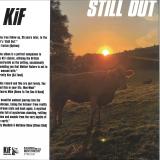
Recorded in a remote cabin on the Devon coast, STILL OUT is an album-length collaboration between musician-filmmakers – and childhood friends – Will Cookson and Tom Haverly. A reflection on friendship, landscape and the passing of time, it inspired a road trip from North Yorkshire to North Devon they took together in the summer of 2024, and forms the soundtrack to a film of the same name which had its premiere screening as part of Stroud Film Festival in March 2025.
Like the film, STILL OUT is also an oblique homage to The KLF’s iconic 1990 album Chill Out, which the Gloucestershire-based pair revisited after it turned up unexpectedly a few years back in Tom’s dad’s record collection. Inspired to create their own recording using a similarly free-spirited process, Will and Tom relocated to the Devon coast in late summer 2023, splicing together a 40-minute mix from their personal archive of recordings and found sounds in a remote cabin with no electricity or mobile reception.
"It came together using cut-and-paste techniques, with ongoing shifts and tweaks,” says Will. “The final result was an audio collage that felt like something legendary hip hop producers The Bomb Squad might make - if ambient music was the only material in their sample library."
Using ‘ambient’ as a starting-point rather than an end in itself, they took inspiration from across the musical spectrum – classic-period Brian Eno, Philip Glass, Bill Evans, plus outliers such as 80s singer-songwriter Virginia Astley and the late DJ-producer Andrew Weatherall. The connections, though, are anything but obvious as the audio shifts seamlessly from field recordings and spoken-word interludes to mood pieces and snatches of vintage pop.
Edited and assembled using freely available open source programs, the source material was often radically altered using tools such as “PaulStretch”, a digital sound-morphing algorithm that allows users to stretch audio files to extreme lengths.
"When we found ourselves in a creative slump or unsure how to navigate a tricky part, we'd say, ‘Let's put some syrup on it and slow it down,’” says Tom. “That always helped us get back on track during late-night recording sessions at the cabin."
Part-soundtrack, part-meditative experiment, STILL OUT is intended as a reflection on the mental and emotional shift that occurs when stepping away from the routine of daily life – an album that forms a celebration of our ever-changing relationship to the world around us and the mystery of what it means to pass through time and space.
“The true follow up, 35 years later, to The KLF’s ‘Chill Out’”.
JD Twitch (Optimo).
An ambient journey reflecting on friendship, the British landscape - and The KLF’s landmark album Chill Out
"This record and film are just lovely. You need this in your life. Moo-Moo!” Balearic Mike (Down To The Sea & Back)
"The album is a perfect companion to the KLF classic, utilising the British countryside as the setting, occasionally reminding you that Mother Nature is not to be messed with.” Strictly Kev (DJ Food)
"A beautiful ambient journey into the landscape, taking the listener from reality to dream state and back again. A mystical realm full of mysterious chanting, rattling trains and sounds from the very depths of the earth."
Lally MacBeth & Matthew Shaw (Stone Club)
Going Up, originally released in 1983, is one of the most curious and enduring records from British studio mavericks The RAH Band. Long out of print, it now sees its first ever vinyl reissue courtesy of Shocking Music and Rush Hour.
Led by super-producer, arranger, and multi-instrumentalist Richard Anthony Hewson, The RAH Band has always existed just outside the mainstream. Blending jazz-funk, sci-fi synth pop, and cosmic lounge, their sound never quite fit the mould. That might explain the cult status they’ve held ever since. Beloved by Balearic heads, rare groove collectors, and adventurous synth diggers, Going Up is perhaps their most influential record.
At the centre of it all is the intro track “Messages From The Stars”, the band’s runaway cosmic hit. A spacey, retro-futurist groove that has become a viral favourite in recent years, it now boasts hundreds of millions of streams, with a new generation discovering it through TikTok and YouTube. But it was originally just one track on this understated 1983 album.
The rest of Going Up is just as compelling, filled with dusty drum machines, off-kilter instrumentals, woozy vocals, and that unmistakable early '80s charm. It is a snapshot of a band in transition, blurring the lines between leftfield pop, sci-fi funk, and home-brewed synth experiments.
Out of print for over 40 years, Going Up finally gets the reissue treatment it deserves. Restored and remastered, and still sounding like nothing else.
- A1: North Face
- A2: Serious Matter
- A3: At First Sight
- A4: Black Sun (Feat. Dennis Walks)
- A5: Steep Gully
- B1: Sound Collapse
- B2: Pothole Invasion (Feat. The Viceroys, Lone Ranger)
- B3: Worldwide Confusion (Feat. The Mighty Gravillons)
- B4: Stars Above (Feat. Cornell Campbell)
- B5: Metamorphism (Feat. The I-Twins)
First chapter of a futuristic dub experiment series by The 18th Parallel. Geneva based collective invites engineer extraordinaire Roberto Sánchez to revisit 10 scorcher riddims from the Fruits Records vault to craft this inventive modern classic. Reminiscent of the greatest dub albums by King Tubby, Scientist, Prince Jammy, or Lee ‘Scratch’ Perry.
Fruits Records presents the first volume of a series of dub albums by Swiss collective The 18th Parallel. Following in the tradition of Jamaican producers who revisited their catalogues in dub versions, such as Bunny Lee and his Aggrovators with King Tubby, Junjo Lawes or Linval Thompson teaming up with Roots Radics and Scientist, or Joe Gibbs and his Professionals with Errol Thompson, Fruits Records is launching a series of dub albums produced by the label's studio band, The 18th Parallel, which will invite different sound engineers to (re)mix the tracks throughout the albums: DUB AVALANCHE. This first volume offers a deep dive into the label's catalogue through ten classic or unreleased riddims revisited by Fruits Records' long-time partner, Spanish sound engineer extraordinaire Roberto Sánchez. The instrumentals are brilliantly performed by The 18th Parallel and punctuated by the voices of legendary artists such as The Viceroys, Lone Ranger, Cornell Campbell, and Dennis Walks, who appear fleetingly before disappearing into clouds of echo. Roberto Sánchez performs ten explosive, creative sound deconstructions, playing with stylistic codes to stimulate our memory and offer a timeless sensory experience.
Like the classics of the genre, the cover art evokes a quirky retro-futuristic imaginary space where, breaking with convention, the talent of Mexican artist Melissa Santamaría is expressed through a striking metaphor of a sonic avalanche.
DUB AVALANCHE VOL. 1 is already establishing itself as a future must-have for fans of uncompromising reggae and dub!
Unchained is the long-standing guitar-based project of Nate Davis, originally from Providence, RI, and based in France for over a decade. In his two most recent LPs—Gabbeh (2024, A Colourful Storm) and Frontalier (2025, Stern Records)—Davis strives to describe a new path for outsider jazz instrumentalism that remains committed to harmonic and rhythmic form while placing greater emphasis on sonic texture through experimental production techniques.
Release Description:
Unchained—a name which at the project's inception or on earlier recordings spoke perhaps to the ecstatic saturation of high gain guitar—has over the past three albums (N.D. Visitor, Pic, and Gabbeh) come to represent more and more an acknowledgement of and sensitive remove from a crashing world. An excuse of oneself from trend towards a siloed artistic development.
On Frontalier, Nate Davis crosses further into this patient personal lexicon of guitar composition, presenting a new set of richly developed songs and leaps in arrangement which may very well shock Unchained fans the world over. The sympathetic geometric guitar themes of the earlier second-period Unchained style are almost entirely absent, making way for a fully realized presentation of the jazz, MPB, and fusion influence present to varying degrees on the previous three albums. Davis's keen sense of melody and songcraft have never been stronger, here landing on music which is at moments evocative of Wes Montgomery, Allan Holdsworth, Jobim, or the jazzier impulses of Lô Borges. Distinct in Davis's music, however, is what these references might belie: an innate tending towards repetition as an affective tool—one which has less to do with the aesthetics of the scene from which the project emerged than it does with devotional prayer. In this way it feels as if Unchained has always been music for living. What was once a maximalist expression of youth has matured into the sound of living with and in the world and an empathic transmuting of all the joy, disappointment, and ambivalence that comes with it. Songs that feel like the sort of thinking one does looking out the window on a long train ride, or the routinism of internal and external life and the breaking out of it. As much as it will be recognized by the fandom as a significant step forward, Frontalier serves also as a perfect gateway for new listeners to the singular music of Unchained.
"The five-year anniversary release of Orion Sun’s Hold Space For Me, pressed on tangerine vinyl. Her story, that of an early 20s woman of color dealing with and learning about life's obstacles and celebrations, is understood best through her song lyrics; citing J Dilla, Nancy Wilson, Jodeci, Kirk Franklin, Hazel Scott and Digable Planets as just some of her many influences. She's a career artist with a long road ahead and her sound defies trends; capitalizing on a velvety and familiar voice with timeless jazz / folk / R&B instrumentals.
“...a pinch-yourself song that steps lightly with the thrill of a love seemingly too good to be true (and the fear that it might be)” – Philadelphia Inquirer on “Ne Me Quitte Pas”
“stark and lightly poetic.” – Pitchfork
“A smooth, serene downbeat groove and a blissed vocal finds Orion Sun singing about sudden and deep connection — “It feels so good to know ya” — and despite the sadness implied in the title, the outlook is positive and pure.” – WXPN/The Key on “Ne Me Quitte Pas”
“While the track shares the same title as covers done by Nina Simone, Regina Spektor, and Wyclef Jean, she presents a completely different vibe, slowing down a flipped sample with smooth guitar loops and resonating drums. Still, with all of the stellar instrumentation, the 23-year-old’s voice cuts through as poignant as ever.” – Refinery 29 on ”Ne Me Quitte Pas”"
- A1: Echoes (03:41)
- A2: Jetplane (02:36)
- A3: Love Posture (03:14)
- A4: Antelope (03:04)
- A5: Candle (03:06)
- A6: Today Might Be The Hit (02:11)
- B1: Life In This Body (04:36)
- B2: Waxwing (03:35)
- B3: Magic (03:32)
- B4: Into The Dark (04:23)
- B5: Jive (04:14)
Black Vinyl[22,56 €]
Das dritte Album der Londoner Band Sorry!
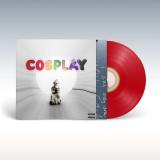
Seit ihrem Debüt "925" 2020 arbeiten Sorry an einer Topografie aus Anspielungen, Zitaten, falschen Fährten. Nun, mit COSPLAY (ab 7. November bei Domino), reißen sie die Landkarte ab, zeichnen alles neu. Ein Album als Maskenball: Jede Figur darf hier auftreten, lebend oder tot, real oder erdacht. Es ist das Werk, das Sorry von sich selbst befreit. Das Album fühlt sich an wie ein Spielzimmer für popkulturelle Geister. Ein Guided by Voices-Song mutiert zur Ballade über die Schmuddelecken des Ruhms, die berühmteste Cartoonfigur der Welt schleicht sich als Sirene ins Bild, theoretische Physik wird zu Rockmusik, die schwerer schlägt als jede Formel. Sorry haben das neue Material bereits live erprobt, erst auf eigener UK-Tour, dann als Support von Fontaines D.C., und man hört die Mischung aus Selbstsicherheit und Übermut, die dabei gewachsen ist.
Das dritte Album der Londoner Band Sorry!
Seit ihrem Debüt "925" 2020 arbeiten Sorry an einer Topografie aus Anspielungen, Zitaten, falschen Fährten. Nun, mit COSPLAY (ab 7. November bei Domino), reißen sie die Landkarte ab, zeichnen alles neu. Ein Album als Maskenball: Jede Figur darf hier auftreten, lebend oder tot, real oder erdacht. Es ist das Werk, das Sorry von sich selbst befreit. Das Album fühlt sich an wie ein Spielzimmer für popkulturelle Geister. Ein Guided by Voices-Song mutiert zur Ballade über die Schmuddelecken des Ruhms, die berühmteste Cartoonfigur der Welt schleicht sich als Sirene ins Bild, theoretische Physik wird zu Rockmusik, die schwerer schlägt als jede Formel. Sorry haben das neue Material bereits live erprobt, erst auf eigener UK-Tour, dann als Support von Fontaines D.C., und man hört die Mischung aus Selbstsicherheit und Übermut, die dabei gewachsen ist.
Acclaimed electronic musicians, producers and sound architects Max Cooper and Rob Clouth team up for a new collaborative EP; a dark, playful four-track dive into ambient, breakbeat and techno’s subconscious flow, featuring a standout vocal performance from South London rapper FLOHIO.
Recorded over a series of spontaneous London sessions, “8 Billion Realities” channels years of creative exchange between two of the genre’s most quietly innovative artists and is a result of a decision between the longtime friends to refrain from conceptual overthinking in favour of instinct and joy.
As long-time admirers of each other’s audio/visual work, Cooper and Clouth collaborated in London together after both emerging from intense, idea-heavy album cycles. What followed was a series of exploratory sessions, half-improvised, half-built around half-formed thoughts.
The result is a club-ready EP that feels alive and human: imperfect and hypnotically rich.
“Rob Clouth has been one of my favourite electronic music producers since I first heard his work in 2011,” says Cooper. “His work is more full of ideas and structure than anyone else.” “We were both coming from extensive conceptual studio albums and both in the mood for simplifying things and having some fun with the music, so that’s what we did”.
For Clouth, no stranger to Max Coopers Mesh label having previously released an array of EP’s plus his 2020 debut album “Zero Point” this record marks a new chapter, both creatively and personally.“Something pretty new for me is collaborating,” he says. “You kind of have to when to stop, because if you develop an idea all the way to its endpoint, the other person has nowhere to jump in.”
The first “A Moment Set Aside” began as a break from another idea, a live, unplanned improvisation based around arps and ambience. “The track was written in about as long as it took to play it,” says Cooper. “It was pulled from a 1 hour recording session, more or less as you hear it… the energy and excitement grew as the unplanned moment bore some magic.”
“The lesson being that sometimes it’s helpful to set aside a moment without forcing results, and let the subconscious have something to say.” What followed was darker, heavier. “Asymptote” is detuned techno. Subversive and euphoric in its descent. “We found a sort of brain mangling, half consonant, half wandering detuned techno pulse, which we started chatting about being a sort of pit of spiralling body parts we were falling into,” says Cooper. “It was a lot of fun to work on and let loose with bigger kicks than I usually ever get to unleash.”
Then came “8 Billion Realities”, featuring a standout rap performance from FLOHIO; an emerging figure in the UK grime and rap scene. The track was inspired by conversations about algorithmic echo chambers and hyper-personalised online worlds. Frantic, direct, and South London to the core, FLOHIO brings this tension to life. Her sharp, intense flow cuts through distortion and rhythm, landing the track somewhere between chaos and control instantly making it one of the most striking moments in either artist’s catalogue. “A different reality for all 8 billion of us,” says Cooper. “We weren’t sure if it would work… but there was something about the energy of the percussive idea and the story which felt like it might fit.” “Then FLOHIO had a play with it and straight off the bat absolutely killed it, not just with the lyrics and energy, but the harmonising too, it was a beautiful process.”
The final piece on the EP “Candeleda” originated from Clouth’s solo experiments with a live rig made entirely of vocals and keys, using his self-developed “cheatbox” system. “He put forward a beautiful stumbling melodic sequence which we bounced back and forth adding harmonies and synth layers,” says Cooper. “It rounds off a collection covering some of the breadth of music that we both love.”
"Love it! Electronic wonkiness at its finest" - Richard Norris (The Grid)
TEA, CAKES AND THE (WO)MAN MACHINE
Curtain Twitcher could only have emerged from Sheffield.
A female electronic duo whose corrupted downtempo post Balearic chug pulses and wobbles, throbs and twitches - full of fat noises and bolshy Moogery.
It's human and appealingly analogue. More Delia Derbyshire's Radiophonic Workshop than DAF, More Tangerine Dream than Depeche Mode. Not your average bloketronica.
Frankly this music doesn't behave itself in any way you might expect. Plugged in post rave pop can be far too orderly. Music should be messy. Even on occasion revealing a tune your mum could hum.
"Leap The Dips" emerged from machine jamming with a creative freedom that only comes from friendship. That friendship is a musical one but it's also real and genuine: "We’ll talk about pretty much owt if you provide the tea and cakes".
The word "amateur" originates from the Latin word "amator," meaning "lover" or "admirer". This Latin term is derived from "amare," which means "to love". The French adopted "amateur" from Latin, and the English then borrowed it from French, initially retaining the sense of someone who loves or is devoted to something. Over time, the English usage of "amateur" also developed a meaning related to a lack of professional skill or experience. How did a word derived from love become a slur? Is love really so defenseless? They say love conquers all, but in reality isn’t love quite ridiculous? It has no intention, no motive, no agenda. How could it possibly prevail? It can’t be bought or sold, or so they say.Its mere existence can't be proven or even measured. What an impossible thing. Trying and failing, time and time again, no wonder cynicism always seems to win. I see “amateurism” as a delighted, even foolish, protest. Protest against everything. Of what’s expected of someone, or expected of someone to desire or strive for. To be elite, to be expert, to be professional, to be a master, to excel and succeed. Where’s the joy in that? I just want to have fun. I want to want. I want to love. And keep doing it, forever. I want to have fun, even when it’s tiring and sometimes even heaven is boring as hell. I want to be bad. I want to do my own thing. “I vant to be alone”. I want to be someone so dedicated to their passion that it starts to seem like there’s something wrong with them. All the way. We can take it all the way, and never get it back. ” - Molly Nilsson Amateur is the 12th studio album by Molly Nilsson. Deep in the teeth of a career that threatens to tip into something resembling a “legacy,” Molly Nilsson celebrates with an album recorded instinctively, quickly and bursting with so many moments of emotional brilliance and clarity it may be her greatest yet. Hers has been a career spent reaching out, perennially powerful in her earnestness, a warrior ridiculously defenceless and armed with a glittering sincerity. Shearing herself of the machinations of the music industry, recording at home, writing direct to the heart. Amateur is a jubilee for losers. A treatise in 13 songs, Amateur states clearly that we should live our life with eternal curiosity, offers us an open hand of comradeship out of the rat race. The songs on the album are both some of the most personal of Nilsson’s career and the most anthemic. First single How Much Is The World asks us to re-evaluate value in the face of a Neo-liberal system squeezing the life out of our loves. Pulsing opener Die Cry Lie satirises the commercialisation of emotion in the form of a shout-along diss-track. With a pounding rhythm track held down by gorgeous chord changes, heartbreaker Valhalla carries the torch for the main themes of the album: never growing up, making mistakes with kindness, moving on. When the drums crash in on the line “It’s going to get better now, you’ll see, going to be much better off without me” there is a world of feeling swirling about in the vocal delivery. One reading of the track might be that it’s a break up song but the subtext is classic Molly Nilsson: by living truthfully, making mistakes, we’re active agents against the myriad oppressions of the world. All The Way takes the theme for a run into the eternal sunset. It’s a manifesto for living fully. “Take it all the way, and never get it back” - it’s the process that’s the important point. The journey not the destination. Big Life, follows on like a part 2: An ode not only to Molly Nilsson’s career of endless gigs, endless connections with people, it’s a massive ode for following your dreams, doing it yourself. Closer The Bitter End is a powerful anthem for friendship, another definition of love infused in Nilsson’s work, A beautifully poignant ode to comradeship til the end, it seems to be the songwriter approaching aging, approaching life’s inevitability with the same vigour and earnestness, the same love of life she enjoyed at the onset of her career. There are moments on Amateur shrouded in reverb, slightly out of focus, forcing the listener to step deeper into the Mollyverse.. Nilsson’s open-armed beseeching to the world permeates every beat, every chord. These are songs exploding with life: the chunky, aggressive bassline on the punker Get A Life can’t hide its massive, catchy chorus. The sweeping Swedish Nightmare might be a tongue-in-cheek self-reference, but at its heart it’s a song about the duality of living life large, what is a dream, what is a nightmare? Molly Nilsson says you can’t have one without the other, and why would you want to? Here’s to making mistakes.
In between the folds of ceremony and commonality lies a perennial spring of musical expression.
A statement along the time continuum, or a testament to the resilient resourcefulness embedded in that truth, forms the philosophical approach of this album – the first outing of Dídac.
Studying an extensive archive of instruments, artifacts, and field recordings at the Musée d’ethnographie de Genève—a space steeped in folkloric gesture – Dídac encountered a cosmos of liturgical music and folk song. Anchored in reverance for tradition and transformation alike, this album navigates the old-world Mediterranean lore through a post-modern ambient lens, threading drone, gentle rhythm, electroacoustic textures and the crude tactility of archival material into one woven tapestry.
Under the guidance of Dr. Madeleine Leclair, Dídac was invited to work within one of the world’s most extensive ethno- musicological archives—L’AIMP. In the saturated basements and tape-lined backrooms of the museum, he submerged himself in the sounds of ritual and rural life: wax cylinders from the Eastern Mediterranean, tapes of liturgical hymn, the worn edges of communal song.
In a makeshift studio on the fourth floor of the museum, he sifted through the hours of material he collected, gradually discovering that the archive was no static source – It did not dictate; rather, it served as a companion—offering not answers, but questions. Not a beaten track, but a cluster of sonic clues and riddles. Samples do appear occasionally, tenderly interwoven into the dialogue of the songs. In Dídac’s self-titled debut, the past is not worn as ornament or kitsch; it is listened to and responded to. The museum, its archives, and the visit to Geneva became a foundational culisse of sorts, igniting a myriad of rough cuts and improvisational outtakes.
Dídac, or Diego Ocejo Muñoz, was born in Madrid in 1994 to a family of both Catalan and Castilian origin.
Brought up in a religious household, the influence of the Catholic Church innately shaped the social fabric, schooling and daily life. This lingering dominance led the adolescent Diego into a path of rejection of everything sacramental, promptly resorting to subversion in the shape of grafitti, skateboarding and underground music. Only later in life, after a rigorous venture as an acid and electro producer, the Church re-emerged before him in new light, invoking a deep fascination for its mysticism, iconography and choral tradition.
Spain in general and Catalonia in particular, has long served as a crossroads of the eastern–western Mediterranean continuum, with many of its cultures sharing aspects of way of life and ceremony. At the MEG, Diego found himself puzzled with this realization, resulting in a sonic amalgamation that reaches farther away from the rugged mountains of Catalonia than you might perceive at first encounter.
The deeply embedded memory of rite and public ceremony, religious hymn and landscape—sieved through the undercurrent of personal re-emergence, forms the emotional topography of this album. The record does not trace this landscape; it inhabits it. Its repetitive mysticism and ambient, wide-eyed gaze could possibly evoke (perhaps redundant) comparisons to artists such as Dimitris Petsetakis, or Popol Vuh’s late 70’s cinema scores.
The delicate lines between the sacred and the secular – between memory and re-invention – serve as a cipher to understanding this album in its entirety. Titles like Malpàs Mines or Pantocrator’s Portal Outro nudge toward a folkloric and devotional bedrock—places where labor and spirituality coexist, where names preserve both dust and veneration.
Nevertheless, this is far from mere nostalgia. It is a reclamation — singing alongside the spirits of the past, nurturing what still hums beneath the soil. It is an intimate reflection on tradition, rebellion, adolescence, ceremony and fantasy – a pastoral contemplation on what once was and what is to be.
An electrified meeting of minds, Candy Girl is a lost 1975 session by jazz pianist Mal Waldron, recorded in Paris with core members of the mighty Lafayette Afro Rock Band, the American funk unit who had made France their home and whose deep grooves would later be mined by generations of hip-hop producers.
By 1975, Waldron was a decade into his self-imposed exile from the United States—a transformed musician who had reassembled his sound in Europe and Japan after a devastating breakdown in the early '60s. His post-1969 output had stripped jazz down to its core elements: modal intensity, locked grooves, and hypnotic repetition. Candy Girl doesn’t interrupt this trajectory—it extends it, wrapping Waldron’s minimalist mantras around the funked-up chassis of the Lafayette rhythm section.
Originally released in microscopic quantities on the Calumet label and long shrouded in obscurity, Candy Girl was recorded spontaneously in the studio of French producer Pierre Jaubert, whose Paris HQ had become the workshop for both avant-garde jazz (Archie Shepp, Art Ensemble of Chicago, Steve Lacy) and psychedelic funk (Lafayette Afro Rock Band AKA Ice). This session finds Waldron jamming freely with bassist Lafayette Hudson, drummer Donny Donable, and keyboardist Frank Abel on clavinet, Moog and more—laying down raw, unfiltered instrumental funk with an experimental edge.
Highlights include the low-slung vamp of “Home Again”, the crisp, break-laden groove of “Red Match Box”, and the mesmeric swirl of the title track “Candy Girl” —a minor-key electric piano waltz with hints of cosmic soul. There's even a deep cut for the crate diggers: the somber yet meditative “Dedication to Brahms”, where Waldron deconstructs the Romantic composer’s third symphony into a sparse jazz reverie.
Unlike his polished sessions for Japanese labels or the avant-garde swing of his earlier Prestige work, Candy Girl feels more spontaneous, even accidental — and that’s part of its power. It’s a document of Waldron as bandleader, collaborator, and explorer, captured in the midst of a vibrant, cross-cultural scene in mid-70s Paris. Never officially issued with a cover and barely released at all, Candy Girl is a rare convergence of two underground traditions: Waldron’s Euro-exile electric jazz and the raw, sampled-future funk of the Lafayette Afro Rock Band. Now finally resurfaced, it deserves its rightful place in both stories.
‘Aurelia’ is another atmospheric masterpiece by Boozoo Bajou.
Deep atmospheric soundscapes have always been a part of Boozoo Bajou during their 27 years as producers. Each of their previous five albums had those almost beatless melancholic beauties as part of the musical presentation.
Since this is a key element, Peter Heider and Florian Seyberth aka Boozoo Bajou decided to dedicate a new six-track album, called ‘Aurelia’, to this genre of music which might be called Ambient but is rather a free flow through their musical minds.
Based on a warm analogue mix, there are various instruments giving guidance to this journey, enriching the overall quality of this new output from Boozoo Bajou.