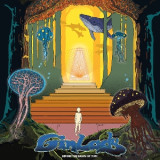
Jesse Hackett returns with another unclassifiable co-mingling of genres, this time made in collaboration with Durban-based gqom trio Phelimuncasi. The group met up in Nyege Nyege's Kampala studio last year, spending three days engineering a sequence of tracks that turned the acts' respective sounds inside out, stretching urgent vocals over mutating backdrops of time stretched electronic drums, saturated noise and unstable synths.We last heard from Hackett on last year's chilling 'Shadow Swamps', a chilly, surrealist blast of disembodied folk and vintage electronics that added a cinematic twist to industrial music. Phelimuncasi meanwhile followed their acclaimed debut with the enormous 'Ama Gogela', asserting their dominance with tight, dancefloor-fwd, hook-led jams produced by some of the scene's most important beatmakers. In collaboration, both Metal Preyers and Phelimuncasi materialized a few worlds outside their comfort zones, with the Durban trio's words frothing from Hackett's marshy productions like echoes from another universe.Opening track 'Gidigidi ka Makhelwane' erupts in a fizz of beatbox percussion that loops noisily alongside Makan Nana, Khera and Malathon's stirring vocals, delivered in their local isiZulu tongue. Hackett's process is relatively restrained, offering Phelimuncasi the space to work their rousing magic unimpeded and adding punctuation where necessary. But when he takes more of a destructive role, it's just as impressive: on 'Gqom slowgen Chant', he corrupts his rhythm into a ritualistic pulse, letting the trio's words melt into metallic clicks and nauseous atmospheres.Elsewhere on 'Mgiligi wableka', Phelimuncasi's words create a rousing rhythm against a low-n-slow gqom thud from Hackett, and on 'Coffin Roller' he brings to mind '80s video nasty soundtracks, toying with analog synth sequences against Makan Nana, Khera and Malathon's distant chants. 'Like A Corpse' might be the album's most hollowed-out banger, turning the beat into a chopped 'n screwed drag that scrapes clamorously against Phelimuncasi's gurgling raps. Needless to say, there's nothing else like this.Jesse Hackett returns with another unclassifiable co-mingling of genres, this time made in collaboration with Durban-based gqom trio Phelimuncasi. The group met up in Nyege Nyege's Kampala studio last year, spending three days engineering a sequence of tracks that turned the acts' respective sounds inside out, stretching urgent vocals over mutating backdrops of time stretched electronic drums, saturated noise and unstable synths.We last heard from Hackett on last year's chilling 'Shadow Swamps', a chilly, surrealist blast of disembodied folk and vintage electronics that added a cinematic twist to industrial music. Phelimuncasi meanwhile followed their acclaimed debut with the enormous 'Ama Gogela', asserting their dominance with tight, dancefloor-fwd, hook-led jams produced by some of the scene's most important beatmakers. In collaboration, both Metal Preyers and Phelimuncasi materialized a few worlds outside their comfort zones, with the Durban trio's words frothing from Hackett's marshy productions like echoes from another universe.Opening track 'Gidigidi ka Makhelwane' erupts in a fizz of beatbox percussion that loops noisily alongside Makan Nana, Khera and Malathon's stirring vocals, delivered in their local isiZulu tongue. Hackett's process is relatively restrained, offering Phelimuncasi the space to work their rousing magic unimpeded and adding punctuation where necessary. But when he takes more of a destructive role, it's just as impressive: on 'Gqom slowgen Chant', he corrupts his rhythm into a ritualistic pulse, letting the trio's words melt into metallic clicks and nauseous atmospheres.Elsewhere on 'Mgiligi wableka', Phelimuncasi's words create a rousing rhythm against a low-n-slow gqom thud from Hackett, and on 'Coffin Roller' he brings to mind '80s video nasty soundtracks, toying with analog synth sequences against Makan Nana, Khera and Malathon's distant chants. 'Like A Corpse' might be the album's most hollowed-out banger, turning the beat into a chopped 'n screwed drag that scrapes clamorously against Phelimuncasi's gurgling raps. Needless to say, there's nothing else like this.
quête:the migh
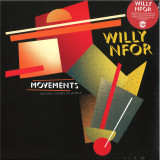
This compilation is more than a selection of songs from Willy Nfor’s solo career in Nigeria—it’s the story of a man’s determination to live his dreams. Known as Willy Ngeh Nfor, he was a founding member of the Mighty Flames. One morning, Willy and his bandmates packed their instruments, grabbed a few clothes, and headed from Cameroon to Nigeria. Crossing the border on foot, they made their way to Onitsha.
“We left Cameroon with no contacts in Nigeria—it was an adventure. We’d heard about the FESTAC Arts Festival and felt we had to be part of it. Our first band in Nigeria was Pentagon Funk Band, sponsored by the 5th Brigade in Port Harcourt. Later, we moved to Onitsha and signed with Right Time Stores, recording Sweet Love (RTLPS 011) as The Mighty Flames. The sessions were at Decca Studios in Lagos, with a 16-track analog system. It was intense—no room for mistakes. We rehearsed endlessly before recording each take.” (Vincent Ekedi, Drummer, Mighty Flames)
Willy’s journey was shaped by his resilience and talent. Losing his mother early and facing family struggles, music became his escape. Inspired by funk and jazz-rock greats like Bootsy Collins, Jaco Pastorius, and Stanley Clarke, he honed his skills on bass and composition, playing with local bands alongside musicians like Vincent Ekedi. Together, they refined their grooves, dreaming of brighter futures.
After his time in Nigeria, Willy moved to Paris, becoming a session bassist for legends such as Manu Dibango, Mory Kanté, Tony Allen, Akendengue, Ray Lema, Jean-Luc Ponty, and Kanté Manfila. Touring extensively, he lived the “Star Life” (Star Life, Cornerstone Records, Feel So Fine, 1981), playing funk grooves with giants in grand venues, fulfilling his dream of the spotlight.
- A1: Progetto Tribale - The Sweep
- A2: Onirico - Echo Giomini
- A3: Open Spaces - Artist In Wonderland
- B1: Alex Neri – The Wizard (Hot Funky Version)
- B2: M C.j. Feat. Sima - To Yourself Be Free - Instrumental Mix Energy Prod
- B3: Mato Grosso - Titanic Expande
- C1: Dreamatic - I Can Feel It (Part 1)
- C2: Carol Bailey - Understand Me Free Your Mind (Dream Piano Remix)
- C3: The True Underground Sound Of Rome - Secret Doctrine
- D1: Don Carlos - Boy
- D2: Lazy Bird – Jazzy Doll (Odyssey Dub)
Vol 2[28,99 €]
Volume 1 of this expertly curated project of 90s Italian House - put together by Don Carlos.
If Paradise was half as nice… by Fabio De Luca.
Googling “paradise house”, the first results to pop up are an endless list of European b&b’s with whitewashed lime façades, all of them promising “…an unmatched travel experience a few steps from the sea”. Next, a little further down, are the institutional websites of a few select semi-luxury retirement homes (no photos shown, but lots of stock images of smiling nurses with reassuring looks). To find the “paradise house” we’re after, we have to scroll even further down. Much further down.
It feels like yesterday, and at the same time it seems like a million years ago. The Eighties had just ended, and it was still unclear what to expect from the Nineties. Mobile phones that were not the size of a briefcase and did not cost as much as a car? A frightening economic crisis? The guitar-rock revival?! Certainly, the best place to observe that moment of transition was the dancefloor. Truly epochal transformations were happening there. From America, within a short distance one from the other, two revolutionary new musical styles had arrived: the first one sounded a bit like an “on a budget” version of the best Seventies disco-music – Philly sound made with a set of piano-bar keyboards! – the other was even more sparse, futuristic and extraterrestrial. It was a music with a quite distinct “physical” component, which at the same time, to be fully grasped, seemed to call for the knotty theories of certain French post-modern philosophers: Gilles Deleuze, Félix Guattari, Paul Virilio... Both those genres – we would learn shortly after – were born in the black communities of Chicago and Detroit, although listening to those vinyl 12” (often wrapped in generic white covers, and with little indication in the label) you could not easily guess whether behind them there was a black boy from somewhere in the Usa, or a girl from Berlin, or a pale kid from a Cornish coastal town.
Quickly, similar sounds began to show up from all corners of Europe. A thousand variations of the same intuition: leaner, less lean, happier, slightly less intoxicated, more broken, slower, faster, much faster... Boom! From the dancefloors – the London ones at least, whose chronicles we eagerly read every month in the pages of The Face and i-D – came tales of a new generation of clubbers who had completely stopped “dressing up” to go dancing; of hot tempered hooligans bursting into tears and hugging everyone under the strobe lights as the notes of Strings of Life rose up through the fumes of dry ice (certain “smiling” pills were also involved, sure). At this point, however, we must move on to Switzerland.
In Switzerland, in the quiet and diligent town of Lugano, between the 1980s and 1990s there was a club called “Morandi”. Its hot night was on Wednesdays, when the audience also came from Milan, Como, Varese and Zurich. Legend goes that, one night, none less than Prince and Sheila E were spotted hiding among the sofas, on a day-off of the Italian dates of the Nude Tour… The Wednesday resident and superstar was an Italian dj with an exotic name: Don Carlos. The soundtrack he devised was a mixture of Chicago, Detroit, the most progressive R&B and certain forgotten classics of old disco music: practically, what the Paradise Garage in New York might have sounded like had it not closed in 1987. In between, Don Carlos also managed to squeeze in some tracks he had worked on in his studio on Lago Maggiore. One in particular: a track that was rather slow compared to the BPM in fashion at the time, but which was a perfect bridge between house and R&B. The title was Alone: Don Carlos would explain years later that it had to be intended both in the English meaning of “by itself” and like the Italian word meaning “halo”. That wasn’t the only double entendre about the song, anyway. Its own very deep nature was, indeed, double. On the one hand, Alone was built around an angelic keyboard pattern and a romantic piano riff that took you straight to heaven; on the other, it showcased enough electronic squelches (plus a sax part that sounded like it had been dissolved by acid rain) to pigeonhole the tune into the “junk modernity” section, aka the hallmark of all the most innovative sounds of the time: music that sounded like it was hand-crafted from the scraps of glittering overground pop.
No one knows who was the first to call it “paradise house”, nor when it happened. Alternative definitions on the same topic one happened to hear included “ambient house”, “dream house”, “Mediterranean progressive”… but of course none were as good (and alluring) as “paradise house”. What is certain is that such inclination for sounds that were in equal measure angelic and neurotic, romantic and unaffective, quickly became the trademark of the second generation of Italian house. Music that seemed shyly equidistant from all the rhythmic and electronic revolutions that had happened up to that moment (“Music perfectly adept at going nowhere slowly” as noted by English journalist Craig McLean in a legendary field report for Blah Blah Blah magazine). Music that to a inattentive ear might have sounded as anonymous as a snapshot of a random group of passers-by at 10AM in the centre of any major city, but perfectly described the (slow) awakening in the real world after the universal love binge of the so-called Second Summer of Love.
For a brief but unforgettable season, in Italy “paradise house” was the official soundtrack of interminable weekends spent inside the car, darting from one club to another, cutting the peninsula from North to centre, from East to West coast in pursuit of the latest after-hours disco, trading kilometres per hour with beats per minute: practically, a new New Year’s Eve every Friday and Saturday night. This too was no small transformation, as well as a shock for an adult Italy that was encountering for the first time – thanks to its sons and daughters – the wild side of industrial modernity. The clubbers of the so-called “fuoriorario” scene were the balls gone mad in the pinball machine most feared by newspapers, magazines and TV pundits. What they did each and every weekend, apart from going crazy to the sound of the current white labels, was linking distant geographical points and non-places (thank you Marc Augé!) – old dance halls, farmhouses and business centres – transformed for one night into house music heaven. As Marco D’Eramo wrote in his 1995 essay on Chicago, Il maiale e il grattacielo: “Four-wheeled capitalism distorts our age-old image of the city, it allows the suburbs to be connected to each other, whereas before they were connected only by the centre (…) It makes possible a metropolitan area without a metropolis, without a city centre, without downtown. The periphery is no longer a periphery of any centre, but is self-centred”.
“Paradise house” perfectly understood all of this and turned it into a sort of cyber-blues that didn’t even need words, and unexpectedly brought back a drop of melancholic (post?)-humanity within a world that by then – as we would wholly realise in the decades to come – was fully inhuman and heartless. A world where we were all alone, and surrounded by a sinister yellowish halo, like a neon at the end of its life cycle. But, for one night at least, happy.
Ginnels never let up. Though it has been, staggeringly, eight long years since the last irresistible jangle pop transmission under the Ginnels moniker, nothing much has changed in Mark Chester's approach when it comes to the practice of music making, even if much everything else for Chester has seen considerable flux – he's now a father of two, and most shockingly of all for an indie popster of his ilk, gainfully employed. "It definitely started the same way all Ginnels stuff starts," Chester explains, "which is just me looking through five years of phone demos and going 'that's a decent song' and 'that's a decent song', and if you keep that up then you have a full album."
The man himself might be coyly committed to making his process sound as pedestrian as possible, but from the moment the delicate chiming introduction of album opener 'The Body Was Gone' goes widescreen – revealing an expanded sonic palette richer in timbre and exponentially wider in scope than anything Chester has let out into the world thus far – it is apparent that "The Picturesque" is poised to be less than parochial in its sonic purview.
From here, "The Picturesque" plays like a gauzy road trip Super 8 footage cutting between scenes of sunset at Monument Valley and B-roll from around middle-Ireland, entirely soundtracked by some enchanted mixtape of heretofore unheard B sides from REM, XTC and The Go-Betweens, unexpected guest appearances from the surprisingly together-sounding ghost of Johnny Thunders and snippets from your coolest friends' unreleased instrumental experiments. All liberally rippled with Chester's unique ear for melody and appetite for the unexpected when it comes to crafting guitar parts. And this, by design, feels like a Guitar Record, above all else.
For all its effortlessly sticky lyrical and melodic twists, "The Picturesque" separates itself within the mighty Ginnels catalogue in both the dexterity in playing and diversity in tone on show across these 12 tracks. And 12, of course as we know, being the optimum number of tracks for any LP to have, so bonus points for that too.
- Dalbane 1:07
- My Hair Will Be Long Until Death 2:14
- Enkel Resa Till Limfabriken 1:31
- Minus Och Minus Blir Minus Och Minus 1:47
- Mosh For Mika (Waddle Waddle) 2:12
- Dying The Dream 3:06
- Life... But How To Leave It? 1:47
- We're Not Gonna Make It 2:07
- Ormer Til Tarmer, Måne På Hodet 2:18
Beaten To Death’s brutal and innovative sound is somewhat melodic, in a strange way, and that’s why their sound is often called ‘melodic grindcore’; an oxymoronic definition, some might even say a moronic definition, but still the definition that best applies to this Norwegian quintet’s music. Beaten To Death consists of members from Insense, Tsjuder, The Cumshots, Gothminister and She Said Destroy and have won fans over globally for their energetic, strangely melodic and innovative approach to grindcore. With their combination of hysterical blast beats, meaty grooves, double guitar twang attack, asshole-of-god-earthquake bass and tongue in cheek lyrical approach to the shittiness of life, Beaten To Death have dug out their very own little niche in the music world. Their new sixth album “Sunrise Over Rigor Mortis” was recorded and mixed by Tommy Hjelm, and the amazing artwork is once again by William Hay. Since their last album from 2021, all the band members have aged horribly, and this is also the theme of the album. The positive thing about getting closer to the grave, is that profound grindcore poetry comes much easier than when the member were still carefree youngster, frolicking in the Norwegian forests…
- The Paramount
- Mighty River
- Tingens Sanna Natur
- The Long Now
- Ways To Cross The Sky
- Turn Back
- Mulberry Bend
- The Universe Vibrant Rings
- The Brain
- Bliss On The Line
- You're A Big Star
Debut studio album by the Irish singer and rapper. Biig Piig is London-based songwriter Jess Smyth, who, since 2017, has made smouldering hip-hop and neo-soul jams with homespun production. Biig Piig is a genuinely unique modern era pop star. Having come of age through musical experimentation, self-exploration and collaboration she started 2023 with the release of her critically acclaimed debut mixtape ‘Bubblegum’ and continues with the release of her upcoming debut studio album, 11:11. Radiating creative might throughout her releases, Biig Piig has seamlessly woven through various genres and languages to deliver stories and songs that speak effortlessly of youth culture. Her unpredictable and excellent discography encompasses tracks with NiNE8, Meronomy, Emotional Oranges, Lava La Rue and her musical versatility, from nonchalant rap to melancholic lament and melody, has garnered attention from Billie Eilish, Bella Hadid, Lil Nas X and the late Virgil Abloh to name a few. Biig Piig has built a nascent global audience for her instantly identifiable sound via world- wide tour dates and promo across platforms such as Triple J, Studio Brussels, 3FM, DLF, Radio 4, KCRW and more. She splits her time between the US and UK having established a support network of creatives and inventive energy that keeps things feeling fresh and fluid. A standard Black, x11 trk LP Vinyl & CD. The Retail exclusive format is a Transparent/Clear LP Vinyl. Extensive promo & marketing activity.
These tracks span a whole decade. bOkOr and Cannibal 2012 were made around the time feroX released the infamous Gargoyles EP on Black Acre, which was hammered by everyone from Skream to Gilles Peterson at the time.
Pulled off a defunct hard drive, resurrected and remastered. Complete with two new tracks the mighty Mondo! Mondo! and Aum, we have another ground-breaking, genre defying EP for 2024. We are proud to have had support on promo from Richie Hawtin and Marcel Dettmann on this release, which speaks volumes for its quality.
Cassette[21,81 €]
Cello player and electronic artist Martina Bertoni returns with her 2nd album for Karl: Hypnagogia delivers six new, masterfully crafted tracks between experimental ambient, drone and modern composition.
Cellist and composer Martina Bertoni started playing the cello at a very young age. Classically trained, her career further developed around experimental and film music, for which her cello has been featured in numerous records, works and soundtracks for films and series. After two EPs and her debut full length All The Ghosts Are Gone (2020), Bertoni joined the Karl roster where she released Music For Empty Flats in January 2021 to critical acclaim (a.o. one of the Top Ten drone albums of 2021).
On her new album Hypnagogia she continues to explore the sonic possibilities of her cello which she uses as primary source for composition and sound processing through reverbs, feedbacks and sub-bass frequencies, thus crafting sonic sculptures, rich of atmospheres and frictions, fed by ambient as much as drone and modern composition.
In the words of Martina Bertoni:
"The six tracks that constitute Hypnagogia have been written during 2021 and partially inspired by the reading of Stanislaw Lem's book Solaris. The title refers to a transitional state of consciousness from wakefulness to sleep, during which one might experience sensorial hallucinations and lucid dreaming, and can tap into the pristine structures of the subconscious. Hypnagogia portraits an imaginary cosmic journey of the Self that crash ends into a blinding sun."
Magic Source is back with an exclusive 2 tracks single filled with their special rootsy cosmic funky touch.
Led by producer & notorious tape operator Björn Wagner (of Mighty Mocambos, Bacao Rhythm & Steel Band and Mocambo Records), the group follows up to the release of their 2nd LP last year, Voyage Spectral. This time again, the German band dives into the Tropical and international aspects of Disco and Funk music, always using 100% organic production and recordings material.
On this 2 tracks single, you’ll first find a blazing and unexpected covers of “Voodoo Ray” the classic acid-house track by A Guy Called Gerald, with special vocals by Mounam & Gizelle Smith. Following up to this already dancefloor classic, comes “Interplanetary Bounce”, a new and exclusive composition from the band also tailored to make you move, with its Boogie touch and heavy breaks.
A new full-length from THE ORB following last year's acclaimed album MOONBUILDING 2703 AD.
An expertly crafted ambient experience from two pioneers at the height of their creativity
180g standard vinyl version comes with download code of the full album
Being pioneers with a new album created in no more than 6 months, THE ORB are bound to be exposed to fan expectations running high, while quizzical questions about little fluffy clouds and the good old times take over. It's especially jarring as the duo of accomplished soundsmiths Alex Paterson and Thomas Fehlmann has become known for its genre-bending curiosity and surprising sonic detours, exploring experimental soundscapes as well as club-friendly beats.
The funny thing is, though, that whatever the context, you know a track from THE ORB when you hear it. Case in point: COW / CHILL OUT, WORLD!, their latest full-length offering - a masterful ambient album that branches out in many directions, but unmistakably sounds like THE ORB in either ear (and probably to your third ear, too).
"The idea was simply to make an ambient album", Dr Paterson explains, "we didn't look back and study earlier recordings, but wanted a more spontaneous approach, a focus on THE ORB today, our vibe in 2016."
In contrast to their much-acclaimed previous full-length MOONBUILDING 2703 AD (KOMPAKT 330 CD 124) - which took years to prepare and finetune -, the new album was produced over the course of only five sessions in six months, directly following the like-minded ALPINE EP (KOMPAKT 339): "it got so spontaneous that a track like 9 ELMS OVER RIVER ENO (CHANNEL 9) consisted only of material collected at North Carolina's Moogfest in May - second-hand records from local stores, field recordings, live samples from gigs that we liked, and of course an excursion to the Eno River, which actually exists. This geographic intimacy and the spontaneity are among the top reasons why we love this album so much."
Herr Fehlmann sees the duo's relentless gigging schedule as a formative influence on the new album: "the countless performances we've played in the last years - probably up to 300 - have brought us closer as a musical unit. The spice of our concerts is improvisation - a fertile process that we've brought to the studio, where we operate with very simple rules of engagement (in this case "ambient") and go wherever the flow takes us." It's an approach that one might expect from traditional acoustic instrumentation, not necessarily an electronic set-up, but for THE ORB it works wonders: "we're quite happy and also a little bit proud that we've reached this level of unscripted levity with purely electronic means. We're finessing ourselves, sort of, always looking for the next sonic surprise that leaves us rubbing our eyes about how the heck we got there."
Once more, THE ORB's trademark playfulness is on full display on COW / CHILL OUT, WORLD!, and it doesn't limit itself to the multi-layered sampling and psychedelic sound composites that the duo has become known for - you'll find it in the album title as well. The simple invitation (or order) to chill out (relax Calm the eff down) is converted into an acronym - and the cow that you might expect to find on a Pink Floyd cover or with iconic UK chill-out/dance pranksters The KLF. It's not so much an obscure trope coming full circle as a perfect example for THE ORB's multitimbral approach to sound and meaning - a compelling, immersive journey to diverse places and impressions.
Each track title is a conceptual work in its own right, playing with multiple references, some of which remain highly personal and mysterious. But the greatest feat of THE ORB's latest outing might just be how all this semantic doodling never gets in the way of the actual listening, at all times directly relating the artists' sonic vitality and cheerful nosiness. Chill out world! and treat yourself to an outstanding new ambient experience from THE ORB.
- 1: Sichtbeton
- 2: Veb 3D
- 3: Dogmatik
- 4: Explosion
- 5: Isolation
- 6: Looking At Him
Six songs that are worth it. Manic electropunk that somehow - consciously or as collateral damage - manages to pack that seventies goblin horror movie vibe (on one track it's also a video game soundtrack) into catchy and contemporary songs that just move forward. Big guitars, big synthesizer, big drum beats and those nasty melodies that can still accelerate demons in 2023. A bit of VOLT could be mentioned as a reference, but the band from mighty, mighty Offenbach (for a world career I would suggest Frankfurt) clearly has its own flair and, despite the home recording, seems so powerful that it hurts. Compared to the Bandcamp stream on vinyl and a decent system, “Havana Syndrome” sounds much more powerful. The almost cheap beatbox is the real icing on the cake, because the guitar, the bass and, above all, that divinely played synthesizer are so amazing that I'm inclined to want a child from a band for the first time. I'll tell you straight away, it won't be pretty, but at least it'll be talented. Exquisite 12”, which especially calls for a second helping! Shortly before the ten points, but there is still something going on.
- Live Again
- In The Panic Room
- I Spoke To Death
- Dull Pain
- Lady Heroin
- I'll Certainly See You In Hell
- Thundercrest
- Solve The Puzzle
- Spread Your Wings
- Lightning In A Bottle
- Walk The Sociopath
- Start The End
- Might Just Wanna Be Your Fool
- Lady Heroin (Pre-Edit Rough Mix)
Normal[23,74 €]
DELUXE EDITION[30,46 €]
AQUA BLUE VINYL[26,01 €]
DEEP PURPLE VINYL[26,01 €]
COLOR IN COLOUR VINYL[26,26 €]
Deluxe Edition, 2LP, Gatefold, alternative Cover. Plus three bonus tracks. Between records like Relentless and Show `Em How, Pentagram have never wanted for self-awareness in terms of album titles. The gauntlet thrown down by Lightning in a Bottle is very much in this tradition. The 10th Pentagram album sees founding frontman and doom figurehead Bobby Liebling leading a new cast of players that includes guitarist/producer Tony Reed (Mos Generator, Big Scenic Nowhere, etc.), drummer Henry Vasquez (Legions of Doom, Saint Vitus, Blood of the Sun, etc.) and bassist Scooter Haslip (Mos Generator, Saltine). It would be hard to overstate the energy the new band brings to songs like "Live Again," "Solve the Puzzle" or "In the Panic Room," but Lightning in a Bottle is unmistakably a Pentagram record, of course in Liebling's unremittingly charismatic performance and the groove conjured to back it. Recorded with Reed at the helm, Lightning in a Bottle recalls the best of what has allowed Pentagram to cast an influence across decades and generations of musicians, bands, and worshippers of Riff, and as just their third studio release in the last 15 years, it's not a moment to neglect as they dig into a cut like "Dull Pain" or "Lady Heroin," the latter of which is a naked reconciliation on the part of Liebling with a lifelong addiction to opiates that's become an inextricable part of the Pentagram story. As he wonders in the lyrics, "Lady Heroin, have I seen the last of you?" it becomes difficult to know whether the separation would be through sobriety or death, and that ambiguity becomes part of what makes the song so striking.
Straight outta Rockaway Beach, Queens, New York City, USA, THE WORLD, Prison is a state of mind, an experience, a loose collective, a band, a jam band and a bunch of psychedelic dudes who aren"t your average bunch of jambanders. All that, all at once, ALL THE TIME. You get what you"re dealing with here? No...you don"t. The only way to REALLY get it is to go to Prison -- and if you"re not from greater NYC and haven"t showed at any of the shows, here"s your best bet: their breakout album, Upstate. And whatta breakout! So high, you can"t get under it; so wide, you can"t get over it! How wide? Every song has two titles, that"s how wide. And almost everybody sings, like, all the time. That wide. Sure, you can break down the numbers -- five guys, five songs and four sides of vinyl in one gatefold sleeve -- but that won"t get you Upstate, either. Prison is the sound of everybody in the room figuring out where to go, individually and collectively. As they go through it, the meaning changes, the destination changes, the words mean something different. It"s meaning and no meaning, rising and falling, sinking and flying on the back of something massive cacophonized by three guitars, four vocals, a bass and drums. A lot of information bouncing around and enough time to really get you out of yourself! Take a look at the titles: each one a dichotomous inquest that the assembled Prison-ers march upon with fervor, glee, vengeance -- a whole spectrum of feels and perspectives woven into the jam for you to see. The Prison population changes with the seasons, and during the season this album was recorded, Sarim Al-Rawi, Mike Fellows, Sam Jayne, Matt Lilly and Paul Major were in Prison. Sarim you might know from Liquor Store, Mike"s made a bunch of scenes and records as Mighty Flashlight, Sam, who passed away in 2020 (R.I.P., brother) was in Love as Laughter -- and Paul Major you know from Endless Boogie, who Matt had roadied for -- and despite being "just a skateboarder who loves music" with no previous experience on the drums, he and Sarim inaugurated the Prison experience, like, seven years ago. Since then, it just fell together and it keeps doing so. A free thing called Prison.
MC[14,08 €]
From his early days signed to Ninjatune as one half of Dynamic Syncopation, Jonny’s love of Hip Hop led to a fruitful collaboration with Atlanta underground legends, Mass Influence, the mighty Chill Rob G, Apathy, EV.ON, Juice Aleem, Phi Life Cypher, Yeshua Da PoEd the list goes on. In 2009 he then went on to form Soundsci with former Mass Influence Emcee Audessey AKA Jack Jones and the Herbaliser’s Ollie Teeba. Soon the crew expanded to include U-George and digger supreme DJ/Emcee Oxygen. The crew released a solid run of LP’s, Ep’s and singles with highlights including Soundsational (Ubiquity Records), the Library sampling ‘My Boosey Weighs a Ton’ (Cavendish Library) and their final LP ‘Walk The Earth’ (Fresh Pressings) with Emcee Supastition joining the roster.
After having helped out his Soundsci crew members U-George, Ollie Teeba and Jack Jones on their solo LPs it is now Jonny’s turn to complete the circle and release his own solo project. ‘The wreckage’ sees Jonny flex his bold yet intricate production style. Carving a new facet into the Hip Hop jewel, expect to hear previously unheard samples and breaks, abrupt breakdowns and exciting rhymes from his circle of friends who lace ‘A’ grade verses over hypnotic drums. The roll call of Emcee’s includes J Scienide, Eddie Meeks from Southern Vangard Radio, Canada’s Ghettosocks and Nilla. NYC stalwart DJ and Emcee Emskee, Jesus Mason and of course his Soundsci brothers: Jack Jones, U-George and Oxygen. The cuts and scratches are provided by DJ Ollie Teeba.
Every track on ‘The Wreckage’ takes the listener on a new sonic adventure and will demand multiple listens to capture the twists and turns Jonny has fed into his diabolical infernal machine, true Hip hop science.
LP[18,45 €]
From his early days signed to Ninjatune as one half of Dynamic Syncopation, Jonny’s love of Hip Hop led to a fruitful collaboration with Atlanta underground legends, Mass Influence, the mighty Chill Rob G, Apathy, EV.ON, Juice Aleem, Phi Life Cypher, Yeshua Da PoEd the list goes on. In 2009 he then went on to form Soundsci with former Mass Influence Emcee Audessey AKA Jack Jones and the Herbaliser’s Ollie Teeba. Soon the crew expanded to include U-George and digger supreme DJ/Emcee Oxygen. The crew released a solid run of LP’s, Ep’s and singles with highlights including Soundsational (Ubiquity Records), the Library sampling ‘My Boosey Weighs a Ton’ (Cavendish Library) and their final LP ‘Walk The Earth’ (Fresh Pressings) with Emcee Supastition joining the roster.
After having helped out his Soundsci crew members U-George, Ollie Teeba and Jack Jones on their solo LPs it is now Jonny’s turn to complete the circle and release his own solo project. ‘The wreckage’ sees Jonny flex his bold yet intricate production style. Carving a new facet into the Hip Hop jewel, expect to hear previously unheard samples and breaks, abrupt breakdowns and exciting rhymes from his circle of friends who lace ‘A’ grade verses over hypnotic drums. The roll call of Emcee’s includes J Scienide, Eddie Meeks from Southern Vangard Radio, Canada’s Ghettosocks and Nilla. NYC stalwart DJ and Emcee Emskee, Jesus Mason and of course his Soundsci brothers: Jack Jones, U-George and Oxygen. The cuts and scratches are provided by DJ Ollie Teeba.
Every track on ‘The Wreckage’ takes the listener on a new sonic adventure and will demand multiple listens to capture the twists and turns Jonny has fed into his diabolical infernal machine, true Hip hop science.
Orange Crush Vinyl[25,17 €]
"Bad Bad Hats are an indie rock trio from Minneapolis, Minnesota. Known for bringing a joyful, exuberant presence to their live shows, touring with The Beths, Margaret Glaspy, The Front Bottoms, Hippo Campus, and Third Eye Blind, the group took specific care to bring their fun-loving spirit to their third LP, Walkman.
Kerry (guitar/vocals), Chris (bass), and Con (drums) let their collective hair down on Walkman, bringing raucous and explosive riffs alongside witty lyrics. Though you might not notice from their indie rock exterior, Bad Bad Hats draws a heavy influence from classic pop songwriting that shines through in their hooky choruses and strong melodic sensibilities.
For this release the band set out to push their capabilities as a trio. Subtle changes in process helped the band achieve this goal, such as shifting Chris from a wider multi-instrumental role to allow him to prioritize his bass playing, having Kerry record the bulk of the guitars instead. “You can hear all of our musical voices a lot better on this record.â€
A carefully crafted studio sound brings the record to life, injecting it with an energetic voice that is unique to Bad Bad Hats. Walkman is the group’s fourth time working with producer Brett Bullion, including their previous two LPs, Psychic Reader and Lightning Round, and the Wide Right EP. Bullion and the band use the studio as an instrument, resulting in their most polished work to date."
Balli - Marraffa - Balli - Marraffa - Balli... is the new code to tune in to the 8 bit-jazz revolution, dial it on every device you might have to start its ringtone made of sax solos counterpointed by Game-Boy melodies. Once inside the Balli - Marraffa - Balli TRIO the trick wil be to identify the many videogames soundtracks hidden in this free-chiptune ep between the wildest reeds butchery and the Game-Boy gabba. Of course 'Super Mario Supreme', 'Grand Theft Auto Jazz Club', 'A kind of Arashi' and more to be detected inside "8 bit-Jazz Furlough" 10" vinyl digital.