Trance Pandemic is back with new full cover EP - masterpiece of Dima Phase designer.
The musicians' solo sound is changing, they continue to search for themselves, thereby releasing without losing the atmosphere and drive in their music.
Komponente takes its rhythm from 707 drum machines and 80s synths, adds a TB 303 and wraps it in long pad melodies in Boston Dynamics.
In Acid Explorer, he builds electro-trance with the sound of a nuclear siren using Elektron machines and packs everything into his favorite voice presets from Korg. New and old music technologies are intertwined into one whole, giving birth to new sounds from the late 20th and early 21st centuries.
Kurilo continues to work with modern sound machines, drawing on the best and creating a smooth, even groove.
If you like trance synthesizers, mysterious melodies, then your choice is Eating Raoul, nothing more, a sound inspired by the New York night where Evgeniy currently lives.
Not From New York carries a different trip, but no less atmospheric, deep bass and acid accents - everything you need for a dense sound on your sound system, be it a club or rave party or a home sound system or headphones.
In general, although the release is different, it is united in one thing: atmosphere and melody.
Suche:the new york
In July 2019, eleven years after Jay-Z became the first hip-hop artist to headline Glastonbury, Stormzy became the first English rapper to follow suit. Wearing a customised stab-proof vest designed by Banksy, the South London rapper delivered an explosive performance and finished by thanking the “legends for paving the way,” name-checking Wiley, Dizzee Rascal, and Giggs. Despite how unlikely it seemed for decades, UK rap was now firmly a part of pop music and the greater hip-hop canon.
Rich, nuanced, and often misunderstood, the history of UK rap is a story of music that refused to stand still. Factoring in socioeconomics, gender, identity, music industry disruption, and innovation, What Do You Call It? charts the artform’s first four decades, beginning when rap landed on our island in the early 1980s. Shaped by sound system culture, inspired by punk, and accelerated by rave, it has evolved from Britcore, UK hip-hop, and trip-hop of the late twentieth century to garage, grime, and drill.
Through cultural theory, historical research, and original interviews with key figures and collaborators in the UK rap scene, from pioneers like Malcolm McLaren, Soul II Soul, Tricky, Roots Manuva, and Roll Deep to modern artists like Dave, CASISDEAD, Little Simz, Loyle Carner, and Skengdo x AM, adds a rich human dimension to the UK rap story — one that helped change British music and culture forever.
“A long overdue exploration of rap music in the UK and its longstanding – albeit overlooked – legacy and influence. In an era when UK rappers dominate the charts, star in major movies and TV shows and front huge advertising campaigns for multi-national corporations, Kane traces back the arduous journey from maligned sub-culture to celebrated mascot of neoliberal capitalism.” Jehst
“David Kane writes with a deft touch and possesses a disarming and deeply insightful interview style. Sparking life, humour, and sorrow across every page of more than three decades of UK rap history.” Charlie Dark MBE
“Kane builds bridges in a rich musical universe full of heroes and villains—and plot twists. With an inimitable style, he merges culture high and low to bring new meaning to the music. What Do You Call It? is a landmark tome for UK rap music.” Brian DiGenti, Wax Poetics
“A mind rich in ideas” Stanley Ledbetter, The New Yorker
If ever a producer could be hailed as the true heir to New York's storied house music throne, it's undoubtedly Mike Terra—and his new, seriously weighty Rhythm of Love EP on Nat Wendell's Depths imprint is a testament to that in strides.
The EP begins with the peak-time infectiousness of A1 "7th & C," setting the commanding tone for what's to come. The fittingly Big Apple-titled A2 "27th Street (Dub Mix)" follows, a rollicking shuffler whose fat kicks, stabbing synths, and snapping cymbals recall Johnick's steamier cuts. New York in the 90’s is indeed the frame of reference for this EP, and the B-side finds Terra doing what he does best: creating bumping, stomping, and uplifting must-have workouts for the floor. Whether you prefer the swarthy slapping, Todd Terry-esque groove of title track B1 "Rhythm of Love" or the conga-driven, deep-padded chunk of late-night house that is
B2 "City Got You Trippin'," a late-night jam crafted for those still standing, both tracks are bound to find their places in the record bags of DJs—and heads—worldwide.
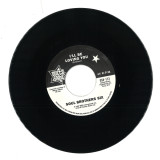
THE SOUL BROTHERS SIX hailed from Rochester, New York and have played a part on the Northern Soul scene for over 50 years. Their first recording, for 'Lyndell' Records in 1966, is now a 3-figure rarity, but it is their debut disc for Atlantic, I'll Be Loving You', that first graced the decks at the Twisted Wheel, The Pendulum et al and has become a perennial Northern Soul favourite. At the time of release tt was the B-side to Some kind Of Wonderful' which took the disc to No.91 on the R&B charts.
WILLIE TEE has also been a familiar figure on the rare soul scene since the early Mod clubs with his architypal New Orleans mid tempo soul sound. His early recordings on 'Gatur' rank as some of the most collectable 45s to emanate from the Crescent City. Here we feature his club classic from 1964, the anthemic Walkin' Up A One Way Street'.
To celebrate the 40th anniversary of George Michael's iconic hit 'Careless Whisper,' it is now releases as a single once again. The record features a previously unreleased live recording from his memorable Madison Square Garden concert on July 23, 2008. This performance marked his reunion with the New York audience after a 17-year hiatus, part of his monumental 25Live tour that captivated over 1.3 million fans worldwide. This special edition also includes newly mastered versions of the original single, extended mix and an instrumental. Written by George Michael and Wham! bandmate Andrew Ridgeley, it topped charts in 25 countries in 1984. It is certified 7x Platinum in the US and has sold over 1.5 million copies in the UK, with Platinum and Diamond certifications in 20 other countries. This timeless classic, written when Michael was just 17, continues to be celebrated for its masterful songwriting and enduring legacy.
The Allergies return to their 100% sample-heavy roots, with a reworked slice of dancefloor friendly Southern soul on 'Knock Me Off My Feet'. Flipping a much sought-after 45 from the late-sixties, they take an already pumping Motown-influenced arrangement and bolt on fat drums, beefy bass, percussion and horns, taking it further than the OG band could ever imagine.
'Let Me Hear You Say' on the b-side takes us way back to New York club scene of the early 80s. Re-working old school MC chants over strutting disco loops, this finger-snapping slice of retro realness is packed with sleek and slinky grooves, and a beat that won't quit.
Audrey Powne's eagerly anticipated debut album has been met with widespread acclaim from a host of tastemakers and musicians. Garnering over 500 plays on UK radio, her music has reached an audience exceeding 2 million listeners. Many have touted her work as a strong contender for Jazz Album of the Year—a remarkable achievement for a debut release. This exceptional remix pack features a soulful interpretation from the illustrious DJ and producer Joe Claussell, profoundly inspired by the album cut "Souled Out." Claussell unveils three exquisite and spiritual remixes, each highlighting unique elements of Audrey's original production. Joaquin's Deep Version is quintessential Claussell, merging the bassy textures of a vintage King Tubby dub with vibrant percussion and dance-inducing beats. The "Sacred Rhythm Mix" is an essential for the dancefloor, weaving a seamless progression of expertly crafted sonic layers that culminate in a boogie-style crescendo, destined to be a summer anthem for DJs. The Cosmic Arts Interpretation Mix completes the trinity expertly with an enchanting downtempo mix expertly seasoned with orchestral and percussive elements which breathes even more magic into Audrey’s incredible vocal display on this track. True to Claussell's renowned craftsmanship, these remixes speak for themselves—listen and be transported. Adding to the allure of this remix pack are the superb renditions of "Feed The Fire'' by the legendary deep house producer Atjazz and the dynamic New York duo musclecars. Both remixes have garnered critical acclaim, elevating this package to an unprecedented level of excellence. Available for the first time on vinyl, these mixes are presented by BBE Music in a double pack, ensuring unparalleled sound quality that is spread out for maximum audio fidelity—a must-have for discerning DJs and vinyl aficionados who prize top-tier music pressed on wax. This release is not just a collection of tracks but a treasure trove of sonic brilliance, making it indispensable for enthusiasts of high-quality, heartfelt music.
- A1: Flore
- B1: John Iii
- B2: Us
- C1: Just-Test
- D1: We The Blessed
- E1: Mother Africa
- F1: Sweet Evil Miss" Kisianga
- F2: Virginia
- G1: C Marianne Alicia
- G2: Dr Oliver W. Lancaster
- H1: Palm Sunday
- H2: Prima - Mr A.a
- I1: Keno - Exactement
- I2: Providence Baptiste Church
- J1: Just Test
- J2: Work And Pray
- J3: Rib Crib I
- K1: Rib Crib Ii
- K2: Loving Kindness
- K3: Dogtown
- L1: Love Always
Souffle Continu records presents Byard Lancaster – The Complete Palm Recordings 1973-1974, the definitive package of Philadelphia-born jazz wizard Byard Lancaster including his 4 legendary albums released on Jef Gilson’s Palm Records in the 1970s, Us, Mother Africa, Exactement and Funny Funky Rib Crib, along with the first ever standalone edition of Love Always, a fifteen minute modal jazz beauty plus a 20 page booklet with rare photos and in-depth article about Byard Lancaster’s Parisian years by Pierre Crépon.
At the beginning of the 1960s, at the Berklee College of Music, Byard Lancaster met some feisty friends: Sonny Sharrock, Dave Burrell and Ted Daniel. It is easy to see why he rapidly became involved in free jazz. Once he was settled in New York, he appeared on Sunny Murray Quintet, recorded under the leadership of the drum crazy colleague of Albert Ayler.
In 1968, the saxophonist and flutist recorded his first album under his own name: It’s Not Up To Us. The following year he came to Paris in the wake of... Sunny Murray. He would come back to France in 1971 (again with Murray) and in 1973 (without Murray for a change). This is when he met Jef Gilson, the pianist and producer who encouraged him to record under his own name again. On Palm Records (Gilson’s label), he would release four albums: Us, Mother Africa, Exactement and Funny Funky Rib Crib.
“Us”, the first of the four records was recorded on November 24th, 1973 with Sylvin Marc on electric bass (a Fender... Lancaster?) and the evergreen Steve McCall on drums.
On the album, the trio works from the John Coltrane model; free jazz shook up by the timely contributions of the bassist, followed by a mesmerizing atmospheric music. Then, Lancaster delivers a sinuous solo path, which is a reminder of his unique tone. On the album’s companion single, the trio launches into great black music of a different genre which would lead the clairvoyant François Tusques to claim that Byard Lancaster is an “authentic representative of soul/free jazz”, to sum up this is Great Black Music! A few months after recording “Us”, Lancaster recorded “Mother Africa” along with Clint Jackson III, a trumpeter, partner of Khan Jamal or Noah Howard on other recordings.
On march 8th, 1974, Lancaster and Jackson headed up a group composed of Jean-François Catoire (electric and double bass), Keno Speller (percussion) and Jonathan Dickinson (drums). Together, they create an immediate impression. From the first seconds of “We The Blessed”, they develop a free jazz which rapidly abandons any virulence under the effect of blues and soul based interventions. When Gilson’s composition “Mother Africa” begins, listeners are transported into the studio, listening to the musicians setting up: chatting and joking... Then comes the melody: a dozen or so notes of a repeated theme which is accelerated and deformed according to their whims... The jazz played by the association Byard Lancaster / Clint Jackson III is rare: creative AND recreational. “We the blessed”, is apt listening to this again today!
The recording of “Exactement” required two sessions in the studio: February 1st and May 18th 1974 – in between the two dates, Lancaster recorded, alongside Clint Jackson, the excellent Mother Africa.
Two names appear on the cover of “Exactement”: Lancaster (Byard) and Speller (Keno). Byard Lancaster wanted to be precise, moving regularly from one instrument to another: first on piano, which was the first instrument he learned. On “Sweet Evil Miss Kisianga”, his inspiration is first and foremost Coltrane (even if leaning more towards Alice than John), this announces the storm to follow.
It is Lancaster’s horn-playing which really stands out: on alto (the sound of which is transformed by an octavoice on one track, "Dr. Oliver W. Lancaster") or soprano saxophones, as well as on flute or bass clarinet, the musician walks a tightrope making the most of all the risks he takes. Using the full register of his instruments, he has fun with the possibilities.
Then, Lancaster invokes or evokes Ornette Coleman, Eric Dolphy and even Prokofiev, before going into a danse alongside Keno Speller on percussion. Above all, he has a unique sound. Byard Lancaster, on whatever instrument he plays and by continually seeking, always ends up hitting the right note... ends up by playing exactement the note he had to play.
“Funny Funky Rib Crib” is an unforgettable recording (made up of several sessions dating from the middle of 1974) of creative jazz overwhelmed by funk and soul. If Lancaster had already made successful albums in the same genre – notably New Horizons, under the name Sounds Of Liberation which he co-led with Khan Jamal –, this one is an homage to James Brown and Sammy Davis enjoying the company of a host of guests including François Tusques (electric piano), Clint Jackson III (trumpet), François Nyombo (guitar), Joseph Traindl (trombone)...
Funny Funky Rib Crib’s cover is a three-quarter profile portrait of the saxophonist (who can also be heard on flute, piano and even vocals), however, on the record, it is the whole group, inspired and frenetic, that tests the melodies of “Just Test”, “Dogtown” or “Rib Crib” – the two versions of which display leader Lancaster’s art of nuance. On both sides of the album, the group also moves into a calmer groove, infused by blues and soul, “Work And Pray” and “Loving Kindness” are meditative tracks where listeners can lay back and relax before asking for more: Funny Funky Rib Crib!
The magnificent “Love Always” was originally released on the fourth (and last) volume of the Jef Gilson Anthology series released in 1975.
Recorded on 8th March 1974, it is a beautiful 15-minute-long modal jazz piece. Four notes from the bass (the relentless Jean-François Catoire, who makes up the rhythm section alongside drummer Jonathan Dickinson and percussionist Keno Speller), and the group is up and running!
On piano, Gilson shows the subtle tact of a sideman, leaving the lions’ share of the place to the horns. This allows us to hear the trumpet of Clint Jackson III and the alto (which sometimes sounds almost flute-like) of Byard Lancaster each staking their claim in a long hallucinatory march which moves from moments of direct exaltation to profoundly sensitive collective playing. And if further proof was required of the confidence that Byard Lancaster and Jef Gilson inspire, “Love Always” provides it on this one sided release exclusive to the box set.
We pressed this vinyl for the club sound lovers.
Lots of percussion and catchy harmonies with influences from New York, Detroit and a touch of English style.
You will be listening to the real underground house.
On the "a" side we feature one of our residents and creators of Mostly Records Bs As deep, which includes a track with his alias System T.
On the "b" side from Italy we present for the first time a great friend and artist Nicola Brusegan, who really knows how to make music for the dance floor.
- A1: Shout You Down
- A2: See Through Glasses
- A3: On The Floor (Noise Ny Version)
- A4: Can't Believe It's Me
- A5: Oblivious
- A6: King Of Spain
- B1: Jerome
- B2: Song In 3
- B3: Crazy
- B4: I Wanna Live
- B5: I Will Walk
- B6: Cold Night
- B7: Ceremony
- C1: Never Get To Heaven
- C2: Maracas Song
- C3: Victory Garden
- C4: Blue Thunder (W/Sax)
- C5: Cheese And Onions
- C6: Fourth Of July (Video Mix)
- D1: Cactus
- D2: Moonshot
- D3: Them
- D4: Final Day
- D5: Here She Comes Now
Black Vinyl[28,15 €]
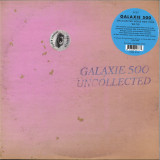
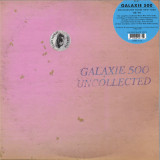
The complete uncollected Noise New York studio recordings of Galaxie 500. A twenty-four track chronological journey through rarities and outtakes including never-before-heard songs, from the start of their incendiary career to their final studio session. Uncollected Noise New York ’88-’90 marks Galaxie 500’s first release of new archival material in nearly thirty years and their most comprehensive collection of unreleased and rare material ever. Produced and engineered by Kramer at Noise New York 1988-1990. • Complete uncollected Noise New York studio recordings of iconic indie band • Features rarities and outtakes, plus first release of new archival material in nearly thirty years • Historical photos and liner notes by the band
- A1: Shout You Down
- A2: See Through Glasses
- A3: On The Floor (Noise Ny Version)
- A4: Can't Believe It's Me
- A5: Oblivious
- A6: King Of Spain
- B1: Jerome
- B2: Song In 3
- B3: Crazy
- B4: I Wanna Live
- B5: I Will Walk
- B6: Cold Night
- B7: Ceremony
- C1: Never Get To Heaven
- C2: Maracas Song
- C3: Victory Garden
- C4: Blue Thunder (W/Sax)
- C5: Cheese And Onions
- C6: Fourth Of July (Video Mix)
- D1: Cactus
- D2: Moonshot
- D3: Them
- D4: Final Day
- D5: Here She Comes Now
Colored Vinyl[33,82 €]
The complete uncollected Noise New York studio recordings of Galaxie 500. A twenty-four track chronological journey through rarities and outtakes including never-before-heard songs, from the start of their incendiary career to their final studio session. Uncollected Noise New York ’88-’90 marks Galaxie 500’s first release of new archival material in nearly thirty years and their most comprehensive collection of unreleased and rare material ever. Produced and engineered by Kramer at Noise New York 1988-1990. • Complete uncollected Noise New York studio recordings of iconic indie band • Features rarities and outtakes, plus first release of new archival material in nearly thirty years • Historical photos and liner notes by the band
- A1: The Rickie Clark Company - Time To Throw Down (6 32)
- A2: The Troids - Boogie Troids (5 49)
- A3: The Packman - I'm The Packman (6 37)
- B1: Pretty Tony - Fix It In The Mix (5 57)
- B2: Jazaq - All Systems Go (5 26)
- B3: Rich Cason - Killer Groove (4 07)
- C1: The Jonzun Crew - We Are The Jonzun Crew (6 24)
- C2: Ozone Layer - Planetary Deterioration (Electro Mix) (4 53)
- C3: Bill Williams And Bileo - Robot People (3 31)
- C4: Extra T's - E T. Boogie (5.28)
- D1: Planet Detroit - Invasion From The Planet Detroit (4 21)
- D2: Professor X - Professor X (Saga) (4 24)
- D3: Mo-Jo - Jump, Stomp And Twist (Instrumental) (6 07)
Soul Jazz Records’ new collection, ‘Electro Throwdown - Sci-Fi Inter-Planetary Electro Attack on Planet Earth 1982-89’, is a journey into the outer reaches of electro, a galactic roller-coaster ride of turbo-charged sci-fi grooveology.
The album is comprised of mainly private-press and independent label electro jams of the highest calibre (with some as rare as space ships landing on Mars) all created in the 1980s, at a time when a vocoder, a Roland TR-808 drum machine and a groove was all that was needed to get the party started.
With a few notable exceptions (Michael Jonzun’s Jonzun Crew and The Packman) the album features mainly under-the-radar killer tracks from a host of one-off artists and back-room electronic pioneers – including Pretty Tony, Planet Detroit (James McCauley, aka Maggotron) and Rich Cason – who together helped shape the sound of electro across the USA from Miami to New York, Los Angeles and beyond during the 1980s.
This album is released on super-loud double vinyl, packaged in a gatefold sleeve complete with full sleeve notes (from Derek Walmsley of The Wire), plus download code and digital.
Auf ihrem neuestem Album mit dem Titel "13" Frank Beltrame Italian Stiletto with Bison Horn Grips" liefern Xiu Xiu einige ihrer bis dato faszinierendsten Songs ab. Gemischt von John Congleton (Chelsea Wolfe, Swans, Lana Del Rey), ist die LP anders als alles, was das Duo jemals zuvor aufgenommen hat, inspiriert von der Zerstörung früherer ästhetischer Vorstellungen sowie dem kürzlichen Umzug von Los Angeles nach Berlin.
Im Laufe der letzten zwei Jahrzehnte war Xiu Xius produktiver Output von Alben und Kollaborationen durchweg beeindruckend. Sie veröffentlichten 17 LPs, die in Medien wie The New Yorker, The Wire, Rolling Stone, The Guardian oder NME hochgelobt wurden. Sie tourten unermüdlich um die Welt und traten an Orten auf, die so abgelegen sind wie Kasachstan und der Libanon und an institutionell wichtigen Orten wie dem Guggenheim Museum und dem Centre Pompidou.
During the early 1980s, “I Specialize In Love” by the American singer Sharon Brown, who happens to be the niece of the songwriter Phil Medley, gained popularity as a club hit. The track was officially released in March 1982 by the prominent Profile Records label based in New York City. Notably, the song marked the debut production of Eddie O Loughlin, who later went on to establish the renowned Next Plateau label. “I Specialize In Love” achieved a remarkable feat by spending three weeks at number two on the US Hot Dance Club Play chart. Its success extended globally as it also charted on the UK Singles Chart and secured a position in the Dutch Top 15, solidifying its status as an international club hit. Moving on from Ben Liebrand’s Classic Rework and his more club-oriented DJ Mix of the track, it’s now time to unleash the Ben Liebrand Le Disco Mixes. You just know from the filtered kick intro, and the funky, ass-shaking bassline to expect an awesome, authentic, disco-fied party jam for today: six and a half minutes of dancefloor delight. all other singles, extended versions only.
- A1: Jake Muir - Mirage
- A2: Pent & Dylan Kerr - Incoherences
- A3: Flora Yin Wong - Oath
- A4: Qwqwqwqwa - Shadow (Ft. Sop.io)
- A5: Ex Wiish & Dorothy Carlos - Assimilation
- A6: Nexcyia & Mu Tate - Sans Titre
- A7: Tati Au Miel - House Of Gold
- B1: Kamran Sadeghi - Formula Fiction
- B2: A... ...Cha.... A... I Feel Like A Ghost Uh
- B3: Eric Frye - Plague Chain
- B4: Maxwell Sterling - Xiahe Tears
- B5: Muein - Creep
- B6: James K - Sketch 4
29 Speedway is a record label and performance series based in Brooklyn, NY featuring forward-thinking improvisational music and live multimedia. Founded in 2020 by Ben Shirken a.k.a. Ex Wiish (‘Shards Of Axel’, Incienso 2023), 29S serves as a platform for artists exploring the fringes of interdisciplinary art and music. Hosting D.I.Y-guerrilla style sound and performance art concerts at Pioneer Works (NYC), Public Records, and in Europe in partnership with Index Records, they have worked with artists such as James Hoff, J. Albert, Yolabmi, Robert Aiki Aubrey Lowe, AceMo, Flora Yin Wong, Nexcyia, Young Boy Dancing Group, UMFANG, Color Plus, Poncili Creación, Special Guest DJ, Arushi Jain, Drumloop, Isabella Koen, Ben Bondy, Kamran Sadeghi, Yawning Portal, James K., Syndey Spann, Debit, Pent and many others.
Resident Advisor called their most recent compilation record ‘Channel Plus’ “one of the most stunning documents of the ‘modern ambient-techno movement pioneered by labels such as Motion Ward and West Mineral’, with a focus on New York as well as a global outreach that encompasses chilled-out trap, electro, downtempo and even early '00s electroacoustic music”. Their debut solo artist release from J. Albert and Will August Park, entitled “Flat Earth” (2023), was based on free improvisation and ambient jazz, receiving praise from Philip Sherburne, Shawn Reynaldo, and was included in RYMs top EPs of the year. 29S has been written about on ID, Bandcamp Daily: Best Ambient, Boomkat, Paper Mag, Artnet, Dazed, Clot Mag, Nina Protocol, and Document Journal.
The newest release from 29 Speedway, UltraBody, is a compilation record featuring the music of Jake Muir, Pent & Dylan Kerr, Nexcyia & Mu Tate, James K, Flora Yin-Wong, Ex Wiish & Dorothy Carlos, Kamran Sadeghi, Tati au Miel, James Hoff, Eric Frye, Muein and Maxwell Sterling. The record is emblematic of the artists who have performed at 29 Speedway shows in New York and Europe during the past two years, and is the third in a series released by the label.
The record was born out of a desire to investiage how the self, spirituality, and language are intertwined with the intervention of subjectivity by new technologies. With increasingly sophisticated tech, and the supposed ability to remake the world and ourselves, what differentiates our individual discretion from the will imposed upon us by software? Quoting Walter Chaw from his piece on David Cronenberg’s Videodrome, “Decades of rampant, unregulated and ill-considered technological leaps have begun to evolve, to mutate, humans at a biological level”. This haphazard acceleration towards a techno-utopic transformation of humanity has faulted, and as William Gibson put it, is leading us to live in a “half assed singularity”. In this reality, artistic processes are influenced by excessive access to computational tools and assistance, but not utterly controlled.
This in-between state of dominion is explored in 29 Speedway: UltraBody. “Incoherences” samples the utterances of Dylan Kerr’s voice processed between Pent’s percolated glazes, muddying the gulf between vaporous ambient and reflexive sound design. The voice on James Hoff’s “A... ...Cha.... A... I feel l” was created by trying to get voice cloning technology to sing a gps data stream, the music an extrapolation from an earworm he got stuck in his head while shopping in Kyoto. On “Plogue Chain”, Eric Frye’s most speculative sci-fi observations spiral into a glazed pool of digital cacophony, while Kamran Sadeghi’s “Formula Fiction” is an experiment in (un)controlled generativity. Incorporating minimal pings from a 3D simulation scene based on gravitational interaction, cello bits evolve on “Assimilation”, a collaboration between Ex Wiish & Dorothy Carlos.
On UltraBody, sound has no separate existence from space.
- A1: Blue Beach - Welcome To Your Beach
- A2: Never Find A Girl (To Love Me Like You Do)
- A3: By The Pool
- A4: Roll Over, Beethoven - Out Of The Beach
- A5: In The Shade
- A6: Looking Across The Street
- A7: Long Distance Look
- B1: Hot Afternoon
- B2: Crying In The Sun
- B3: The Next Time
- B4: Miss B B. Walks Away
- B5: Sleep Walk
- B6: Standing There
For the first time since its inception 36 years ago, Steve Hiett’s elusive Down On The Road By The Beach is finally made available outside of Japan. Most recognized in the fashion sphere as an English photographer and graphic designer, Hiett‘s transportive audio portraits amplify his serpentine guitar to the infinite blue, recorded across Paris, Tokyo and New York with no coastline in sight. Now widely celebrated as a desert island disc, very little is actually known of its unfathomable genesis.
A career devotee of Brian Wilson’s ground breaking harmonies, Hiett shot The Beach Boys for Rolling Stone - as well as The Doors, Miles Davis and Jimi Hendrix (in one of his final performances at the 1970 Isle Of Wight Festival) - while establishing himself as a fashion photographer. Decamping to Paris in 1972, he began what would become 20-year collaborations with Vogue Paris and Marie Claire, printing his signature warm, saturated and vibrantly hued snapshots.
In 1982, representatives from Tokyo’s Galerie Watari visited him to propose a solo exhibition. Asking if he could insert a 7” of original music into the back of the exhibition catalogue, Hiett laid down ‘Blue Beach - Welcome To Your Beach’ in a Parisian radio station, playing all of the instruments himself, and two more cuts in New York with Yoko Ono, The Doobie Brothers and Steely Dan hired-gun Elliot Randall. Once dispatched, the phone began ringing off the hook with requests for him to fly to Tokyo. Assuming these long-distance callers were wanting him to check proofs for the book, it wasn’t until he arrived that he discovered CBS/Sony had facilitated an entire album. Heitt hastily gripped some petty cash, bought a guitar and retreated to his hotel room to start writing.
Entering the studio the following day, he was further surprised by a waiting room of session players known as Moonriders - one of Japan’s most acclaimed rock bands of the 1980s. Intimidated by their indecipherable sheet music, Hiett suggested Randall join them and with money being no object for major labels at the time, his wingman was on the next plane out of New York to finalise the high production indulgence. Near-ambient arrangements that float in a space between The Durutti Column, Steve Cropper and Ashra, Down On The Road By The Beach also crowns Hiett the master of recontextualization with his zero-gravity blues visions of Roll Over Beethoven, Santo & Johnny’s Sleep Walk and the 1967 Eddie Floyd soul hit Never Found A Girl.
Produced in coordination between Be With, Efficient Space and the artist, this definitive reissue is restored from original masters with vivid reproductions of the Down On The Road By The Beach exhibition catalogue, intended to accompany its original release, and extensive liner notes penned by fellow Steve Hiett obsessive Mikey IQ Jones.
- A1: All Rights Resevered
- A2: God Factory
- A3: Hawaii / Torso / 97 Cigarettes
- A4: Acid Fur
- A5: Dance
- A6: New York Is A Lonely Town
- A7: (This Track Doesn't Exist)
- B1: Much About Bones
- B2: Scat
- B3: Pander To The Natives
- B4: For Garry 5
- B5: The Monkey Is Safe
- B6: 1-2-3 A Baby Buggy
- C1: Walking Best Friend
- C2: Untitled 1
- C3: Untitled 2
- C4: Now This Is God's Son 1
- C5: Acid Fur (Demo)
- C6: Now This Is God's Son 2
- C7: Hello Donald, Merry Christmas
- C8: Pinstripe Bus
- D1: The Man Of My Dreams
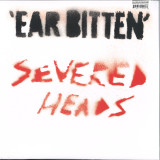
Dark Entries picks up Severed Heads yet again for Ear Bitten, a double LP reissue of some of the band’s earliest material. As originary Aussie industrial legends - although founder Tom Ellard would balk at being branded as such - Severed Heads shaped the continental subcultural sound with their kitchen electronics, chaotic tape loops, and quietly infectious nursery-rhyme-esque melodies. In 1979 Ellard, Richard Fielding, and Andrew Wright abandoned the moniker Mr. and Mrs. No Smoking Sign and adopted the edgier name Severed Heads “to pretend to be an industrial band such as Surgical Penis Klinik & Throbbing Gristle.” Noise-rockers Rhythmx Chymx had placed an advertisement in a local shop looking for a band to share the costs of pressing an LP. The Heads set about recording a Dadaist racket on a pair of open reel dictaphones and a cassette deck using a TRS-80 computer, Kawai Synthesizer 100F and Korg Mini Pops drum machine. Ear Bitten was released in 1980; original copies now fetch obscene sums, in part due to most of Severed Heads’ copies perishing in a fire at Richard’s home. The band’s next endeavor was a cassette titled Side 2, a collection of free-form experiments fashioned as Ear Bitten’s second side. For this reissue, Dark Entries has collected both Ear Bitten and Side 2 on the first disc, presenting the album in its full form. Disc two includes the original first version of Ear Bitten, which was only unreleased because it was recorded in a format not suitable for pressing. The album comes in a gatefold sleeve designed by Eloise Leigh and includes photos, liner notes, and reproductions of the original Xerox inserts from the 1980 issue. Ear Bitten delivers 22 tracks of pain you can dance to!
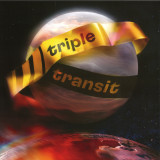
Full of bounce and experimentation in equal measure, ‘Triple Transit,’ Braille’s new album for Hotflush is about leaving his Sepalcure project (with Machinedrum) in the rear mirror, moving back to New York and using its energy to fuel new moves, confronting our hyper layered world and overcoming personal difficulties by being creative.
Focused squarely on utilising modular synthesis in sprawling studio sessions, the album covers a wide stylistic range and draws on the artist’s formidable battery of experience to craft a body of work that packs real emotional punch as well as a dancefloor sensibility.
We had a quick chat with him to wet your appetite…
Praveen Sharma aka Braille:
Moving on from Sepalcure
“That period of time when Sepalcure was at its peak was really inspiring. I’m still really in awe and humbled by the fans. It’s always amazing to hear about how music you’ve made has brightened up other people’s lives in some way, but ‘Triple Transit’ is really about transitioning from that period to something new. I’m intentionally not using many vocal samples on this album. That became quite a crutch for Sepalcure and I wanted to try and find ways to evoke those emotions and connect with the audience in other ways.”
The roots of his Bounce
‘Sour Patch Kiss’ and ‘While We’re Free’ are inspired by classic house and some early Detroit stuff. Songs like ‘Big Fun’ (Inner City), ‘I Wanna Be there’ (Model 500) and slowed down ‘Sex on The Beach’ (DJ Assault) have stuck with me since the beginning. I used to listen to this slowed down and doubled version of ‘Sex on The Beach’ on an early Juan Atkins mix cd on REPEAT when I was in high school.
Getting ambient
Triple Transit slows down and transitions through a bit of sadness and eventually acceptance at the end of the album. A lot of the music I’m making these days is trying to recreate that manic feeling so many of us have in 2024. Between social media, ridiculous hustle culture expectations and depressing global and national political events, it’s hard to not feel overwhelmed. I feel like Triple Transit is kind of a parabolic curve from mania to joy to a sober realization that yeah, actually the world is just fucked but somehow we carry on.
We are proud to welcome Myungho Choi to the family of Sakskøbing for our twenty-third release. Residing in the big apple New York and baptised in the early 90’s of the warehouses of the Midwest we can safely say the man has seen and experienced the music first hand. Boss of Transit records with the first official vinyl release dating to 1999, Myungho has acquired a ton of knowledge through the years of digging and listening to the music on any medium it came on. Having an opportunity to witness his heroes and get inspired by them sufficiently to create his own story within the sound frequencies.
The EP is a boat of smooth sailing but with the turbo jets attached to it, to get to any needed destination as comfortable as possible. Heavy influenced by the sounds of Detroit and Chicago, having grew up with an abundance of the music that comes from there resulted in JET, the formation of the artist’s skill and knowledge which has been executed on the canvas that is a beautiful to look at and pleasure to listen - the 12” vinyl record we are beholding today.
- A1: Cabo Verde Band - Bo Terra Cabo Verde
- A2: Americo Brito & Djarama - Rapaz Novo E Malandro
- A3: Cabo Verde Show - Terra Longe
- B1: Elisio Vieira - Tchon Di Somada
- B2: Vlu - Rua D'lisboa
- B3: Galaxia 2000 - Coracao Dum Criola
- C1: Mendes & Mendes - Mitamiyo
- C2: Danny Carvalho - Roncanbai
- C3: Mendes & Mendes - Walkman
- D1: Jose Casimiro - La Mamai Ta Bem
- D2: Elisio Vieira - Bem Di Fora
- D3: Zeca & Zeze Di Nha Reinalda - Mocinhos
Arp Frique returns with a brand new release on his imprint Colorful World Records in collaboration with Rush Hour. A compilation of 12 Cape Verdean gems assembled with the help and knowledge of Americo Brito, there is a very special story behind it. Americo Brito, who features on Arp Frique’s original Nos Magia, is a proud and important member of the Cape Verdean community in Rotterdam. His story reveals the historical connections between radio, vinyl, Cabo Verde and Rotterdam’s international music scene in the 70s and 80s. Cape Verdean insiders say “we export all they have to other countries, only to import it back again”. Cape Verdeans have migrated all over the world, mainly to cities with big harbours, like New York, Boston and Rotterdam (Holland). Rotterdam became one of the main destinations (next to Portugal) on the European mainland. When Americo, like many of his friends and relatives moved to Rotterdam, he quickly became infected with the music virus. Surrounded on a daily basis by Cape Verdean music in Portuguese pensions and small hotels, this was where sailors ingested a dose of “sodade” through the interpretations of their beloved music by the local Cape Verdean artists. Americo took to the stage with his band Djarama in the 70s and 80s. The live music scene was buzzing and the Cape Verdean community had their own infrastructure for arranging shows, often in nightclubs where the band had to bring their own soundsystem. Interestingly, Americo didn’t stick to performing and recording music. He found another way to help spread the Cape Verdean magical secret of music across Rotterdam, Holland and beyond: “There was this spot in Rotterdam where all foreign radio stations were housed, all these different nationalities together, Surinam, Cape Verdean, Hindustani…Guy Ramos and some of my other friends made radio in the 80s there. I got involved in their radio activities. Later on I started to work as a technician and eventually as producer and radio DJ for “Radio Voz De Cabo Verde”. Radio became bigger and there were around 4 different Cape Verdean stations active at one point in Rotterdam. instrumental in the development of this was the attic of a Dutch friend, where “Radio Babalu” came to life. Radio has always held a special place in my heart.” Americo’s music collection stems from this era, also aided by his many travels across Europe to cities with Cape Verdean communities. Alongside Rotterdam local, Arp Frique, Americo unveils some of these songs: dancefloor hits and beloved radio gems known in the Cape Verdean scene by younger and older generations alike, and so far undiscovered by a “bigger” audience. The compilation showcases the worldly view of Cape Verdean music, incorporating knowledge from their travels in their compositions. It ranges from the obvious funana and coladeira, to the more unexpected influences of deep disco, new wave, uptempo reggae, jazz-funk and Brazilian pop music; demonstrating just the tip of the iceberg, but what an amazing t(r)ip it is!