Metallic Life Review is the sound of two people who have collected field recordings of metal objects from around the world for years of their lives together, collaging their magpie hoard into rhythmic patterns, sometimes writing melodies and basslines, but sometimes just letting sound be sound. Patient gathering yields to ADHD editing. Painstakingly made but blink and you"ll miss it. Is it music or is it noise? It is without a doubt exceptionally beautiful music wrought from metal detritus. Metallic Life Review features Susan Alcorn"s pedal steel, Owen Gardner"s glockenspiel, Thor Harris" drumming, Jason Willett"s (Half Japanese) guitar, and Jeff Carey"s aluminum cans, which were melted, molded into custom aluminum rods, and then bowed and struck. The most dramatic difference from any previous Matmos album is that side two was recorded "live in the studio", ala Throbbing Gristle"s Heathen Earth. For the first time on recording, Matmos capture the evolving, shifting, slithering dynamic that happens when they play live and let patterns emerge out of chaos and then collapse and then re-form. Their playful blend of compositional brilliance and improvisational playfulness meld perfectly, truly capturing ecstatic moments in a way that can only happen live.
Cerca:the noise
- 1: Madara
- 2: Tydow
- 3: Niramu
- 4: Gyafooon
- 5: Onshinfutsuu
- 6: Uyamuya
- 7: Moshi-Moshi
- 8: Ideyo
- 9: Miz-Kicaz-Iwaz
- 10: Izanai
- 11: Hijousen
DIEMAJIN is the duo of Berlin-based producer DJ DIE SOON (Daisuke Imamura) and Tokyo-based vocalist MA. Their self-titled debut is equal parts scrambled hip-hop, simmering noise and spectral Tokusatsu soundtrack. A set of cursed beats and possessed raps inspired by Japanese sci-fi and supernatural-horror films from the 1960s.
The pair, both originally from Japan, first collaborated live at an event in Berlin organised by Morphine Records in 2019. But the eleven tracks on their self-titled debut were made by swapping beats, sounds and acapellas across the internet. Editing, arranging and degrading them into the collection presented here.
- 1: Near Death Fail Comp (Must Watch Until End)
- 2: Sponsor Me Tape
- 3: Glamorous
- 4: I Left My Towel At My Friend's House And Then They Moved
- PT 1:
- 5: Pt 2
- 6: Season 9 Ep 2-3
- 7: You Can't Eat Cats, Kevin
- 8: Jon Bong Jovi
- 9: Pickle Bart
- 10: Now This Is Podracing
Salt N Pepper Vinyl. New pressing of Mom Jeans. 2018 album, Puppy Love. The Berkeley, CA quartet is lauded for stream-of-consciousness lyrics and energetic performances that prompt audiences to shred their worries and simply bounce along. By trading the sappy for heartfelt and the melodramic for truthful, Mom Jeans have created a brand of emo that's self-aware but not self-indulgent. 2018's Puppy Love follows up 2016's Best Buds and oers up more of that sweet noise that fans of bands like Modern Baseball and The Front Bottoms, will love. Recorded by Ryan Ellery. Mastered by James Trevascus.
- A1: Carnal (2 00)
- A2: House On Sand (3 33)
- A3: If It Doesn't Hurt (2 59)
- A4: Angel Song (3 05)
- A5: Freefall (3 43)
- B1: Blame It On The Drugs (3 18)
- B2: Head (2 35)
- B3: Existential Dread (2 30)
- B4: Heart (3 42)
- B5: Down The River (3 04)
- C1: Give It Time (3 36)
- C2: Sight (1 12)
- C3: Stuck (3 29)
- C4: Run For Your Life (3 32)
- C5: Sound (2 53)
- D1: We're All Gonna Die (3 05)
- D2: Freefall (3 47)
- D3: Angel Song (3 24)
- D4: House On Sand (3 01)
- D5: Angel Song (3 48)
- A1: A Thought, Written-By – The Earth
- A2: And Let It In, Voice – Darla Eno
- A3: Who Are We
- A4: Crystal Light, Keyboards – Peter Chilvers
- A5: Inclusion, Violin, Viola – Marina Moore
- B1: Bells Above
- B2: Cheri
- B3: Hardly Me
- B4: Small Noise, Keyboards, Written-By – Jon Hopkins
- B5: Silence
- A1: In Stars We Drown
- A2: Kaleidoscopic Waves
- A3: Labyrinth Of Stone
- A4: The Crystalline Veil
- B1: Step Through The Portal And Breathe
- B2: A Parasitic Dream
- B3: The Obsidian Architect
- B4: Xenotaph
Personified, reinvigorated, and re-imagined!
Tech-metal outfit FALLUJAH expand horizons and solidify their position as one of America’s most exciting artists on their new album, Xenotaph, through Nuclear Blast. The Bay Area-based quintet’s confidence in the lineup that made their previous album, Empyrean (2022), such a resounding success—earning high marks from Metal Injection, New Noise, and Guitar World—has been reconfigured slightly, with guitarist Sam Mooradian (INHALE EXISTENCE, SAM MOORADIAN) and drummer Kevin Alexander (DISEMBODIED TYRANT. BROUGHT BY PAIN) bringing their jaw-dropping musical proficiency to the fold, as vocalist Kyle Schaefer, guitarist Scott Carstairs, and bassist Evan Brewer enter a new chapter with FALLUJAH. Moored by singles ‘Kaleidoscopic Waves,’ ‘Labyrinth of Stone,’ and ‘Step Through the Portal and Breathe,’ Xenotaph is FALLUJAH personified, reinvigorated, and re-imagined.
As a details-oriented record Xenotaph benefits from moments of low tension, atmospheric delight, and Schaefer’s winged clean vocals. This
dynamic isn’t particularly new to Fallujah, but the group spent considerable time honing what each song needed—from blast-laden speed runs and jazz-fusion solos to vocal restraint and brutality—which resulted in a brighter, more exhilarating experience. Musically, it truly feels like the listener is embroiled in the album’s sci-fi concept and Peter Mohrbacher’s stunning cosmogonic cover art, which is aesthetically in line with his previous covers (Dreamless and Empyrean) for FALLUJAH. Close encounters with ‘Step Through the Portal and Breathe’, ‘Labyrinth of Stone,’ and ‘Kaleidoscopic Waves’ spark wonder and stimulate the soul.
Under the right conditions, half-remembered dreams can meld seamlessly into hazy present moments. Time spent alone can be an emotional blank canvas, and an opportunity to deconstruct sense and feeling; a patchwork of snippets both rooted in memory and abstracted from reality. The title of ‘quilted lament’ perfectly captures the way Gretchen Korsmo and claire rousay’s overlapping missions come together to do just this. Worn polaroid melodies and snatched everyday noises seem overheard through windows onto the street. They feel emotionally twinned, claire and Gretchen, it’s not always possible to tell where one ends and the other begins. Their musical thoughts and DNA are sewn together into a mini symphony of warmly embracing movements.
Built remotely between pre-existing friends in the underground music scene, the duo layered ideas onto audio files, and sent them back (and forth). And these luscious instrumentals truly do feel assembled by intuition, casually crafted with little need for guidance. “claire and I are both emo,” explains Korsmo. “We are both former texas-dwellers too and relate over both the woes and beauties of being in the American DIY experimental music scene.” Buoyant piano keys and hushed layer vocals tracks sit alongside a humming field-recorded scrapbook; a neighbour caught in a moment of private inspiration while street noise elevates; a private hymnal in the bathroom while the washing machine ends its cycle. Both artists take field sounds from a wealth of Zoom and Tascam recordings made in the last half-decade in Santa Fe, San Antonio, Los Angeles, Kamakura, Japan and elsewhere – from a baseball game announcer in Santa Fe, to the sound of a friend eating a juicy peach. At times, the bedroom walls seem to grow thin amid atmospheric creaks and disembodied whispers. Despite its very emo core, this is a recording engulfed in an intense sense of bliss, more at peace than we’ve heard either artist before.
Debut album from Lou Venturini, limited edition run of 200, full sleeve & label artwork by Ciaran Birch.
In Lou Venturini's inaugural album, it finds the perfect grey area between janky noise and flawlessly manipulated sound design, with his vocals a constant throughout. The result is a constant bubble of blown out and imaginative productions with warped mutters and wheezed out vocal chords. A truly personal and deep dive into the world of Lou, it's been over six years in the making, and boy was it worth the wait.
The Ottawa composer/performer and head of Black Bough Records plays every instrument on his CST debut: an accessibly avant-garde work of dark/ambient modern chamber music. Mark Molnar has been a linchpin of the Ottawa experimental music scene for over two decades, spanning contemporary classical, electroacoustic, industrial/noise, and improv. As a string player in a wide range of projects, an organizer and curator of innumerable shows, and via his own avantgarde label Black Bough Records, Molnar's unflagging contributions to independent music culture in Canada's capital city have been significant. EXO is his Constellation debut: a remarkable and bracing suite of post-classical composition on which Molnar plays every instrument. Meticulously self-recorded, primarily with strings, harp, and piano, EXO balances thematic melodicism, polytonality, and dissonance across three elegiac pieces of exquisitely expressive dynamism. This is exacting modern chamber music that blends formal and harmonic complexity with a solemn emotive sensibility accessible to a broad audience. Listeners that yearn for some edge and disquietude in a landscape of often all-too-approachable post-classical music should find EXO eminently worth their time and attention. While Molnar is a highly trained string player, and studied music under Aubrey Wolfe, microtonality with James Tenney, and composition with R. Murray Schafer, his trajectory has been entirely and intentionally outside the academy, signalling a socio-artistic commitment to DIY culture, forged from an early passion for the sonic worlds of post-hardcore, post-punk, no-wave, free improv, power electronics, and other independent/underground musics. His classically-informed works have been described as "tense currents of musical modernism invigorated with punk's raw vitality." EXO carries an undercurrent influenced by dark industrial and ambient metal in particular, with microphones purposely placed to pick up the low-end frequencies of the piano body, and of a bass drum positioned as a resonant skin in the acoustic space; an electroacoustic strategy organically meshed to the crisply defined and pristinely recorded pointillisms and polychords of strings, harp, and piano, which feed into this noisefloor of crepuscular sub-bass disquietude and decay. It's a production aesthetic that lends EXO a distinct undertow of tension and feeling, a sort of roiling maximalism where the chamber instrumentation traces arcs and waves of form and flow as if drawn from a dark, impervious ocean below. It also reinforces the profound hermeticism of Molnar's process, as a forbiddingly solitary creative act of immersion and navigation. The album artwork, featuring semiabstract stills of the sea by British photographer Ed Allen, further reifies this metaphor. The album's opening piece 'Sub Luna' (and its shortest at 8 minutes) showcases Molnar's adeptness at naturalistic and flowing complexity: tight cascades of climbing and descending chordal clusters hold their polytonal densities for various durations, yielding to more clarified harmonic suspensions and motifs, as melodic themes led primarily by violins in the higher registers provide a fractured lyricism. Molnar says: "the opening and closing figures of this piece act as opposing shorelines; the shorelines provide a reliable expression of range and key signature, and the tides come in and swallow them up, the motion of a body that addresses the relationship between states of lucidity and melodic figures." On 'Terre Sacer' everything happens in soupier waters, as a slow and doleful theme, anchored by grinding bass notes, circles in a gyre of dark resonances, until glistening strings gradually ascend to enrobe a plaintive and gently harrowing single-voiced ostinato over the composition's final third. Molnar's drone, ambient, minimalist, and goth-industrial influences are on display here. Side Two of EXO features the 18-minute multi-movement 'pallida Mors' (pale death): a waterfall of heterophony introduces dense chordal movements where strings are recorded and mixed to evoke pipe organ, in the album's most overtly dissonant and (anti)liturgical sequence. This gives way to ever more open and fragile spaces, before a resurgence of dark clusters and noise treatments introduces a final repeating piano coda, shrouded in devastated bass resonance, settling into what Molnar calls "a meditative hollow." Constellation is honoured to release this work by Mark Molnar, a longtime fellow-traveler whose selfless and boundlessly generous activities as an independent arts enabler sometimes obscure his own accomplished and uncompromising artistry. We trust EXO can help shed some much deserved light on this fine composer. Thanks for listening.
Carrying on from recent archival releases from masters of Indian classical tradition such as Kamalesh Maitra and the Dagar Brothers, Black Truffle is pleased to present a previously unheard recording of a concert by Pakistani vocalist Salamat Ali Khan. Born to a musician family in Hoshiarpur in the northwestern state of Punjab, Khan moved with his family to Lahore in Pakistan after the 1947 partition of India, becoming a child musical prodigy. Khan was a master of the kyhal form of Hindustani classical vocal music, a style integrating influences from Middle Eastern musical traditions that gives the singer a great deal of improvisational freedom. Travelling widely across the globe from the 1960s until his death in 2001, Khan approached ragas performed in the kyhal style as expressive forums for risk-taking improvisation, enlivened by ceaseless ornamental invention.
This remarkable recording was captured by Michael Hönig (of krautrock legends Agitation Free) in concert at Berlin’s Neue Nationalgalerie as part of the MetaMusik festival in 1974 (which also featured Nico, Tangerine Dream, and Roberto Laneri’s Prima Materia, among many others). Khan, who is also heard accompanying himself on a specially tuned alpine zither (in place of the traditional swarmandal, an Indian style of zither), is joined by Shaukat Hussein Khan on tabla and Hussein Bux Khan on harmonium. The lack of a familiar underlying tanpura drone gives this performance a weightless, floating quality, with all three of the musicians playing masterfully with the interaction between silence and the pulse propelling each section of the raag.
As Khan explains in his opening remarks, this performance of the rainy season Raag Megh is divided into three parts, each with its own tempo and rhythmic scheme (tala). The opening vilambit, in a twelve-beat tala, stretches out for over twenty minutes, lingering for a long time in a space of meditative calm, Khan lightly strumming the zither while exploring the lower end of his range in languorously extended notes. Virtuoso tabla interjections at first barely state the tempo, and the interplay between musicians is so spacious that we hear scraps of audience noise and the squeak of the harmonium’s mechanism in between the notes. Gradually picking up rhythmic definition and melodic complexity, after around fifteen minutes the music builds dramatically, with Khan letting out emotive yelps and swooping scalar shapes ranging across his full vocal range. This flows seamlessly into the following jhaptal, at a faster tempo in ten beats, which then makes way for the concluding teental, very fast in sixteen beats, which becomes a frantic improvisational exchange of daring rhythmic disruptions from the tabla, flowing harmonium melodies, and a stunning variety of vocal approaches from Khan, ranging from rapid-fire staccato consonants to guttural growls.
Accompanied by stunning black and white concert photographs, the LP also contains a moving and entertaining recollection from acclaimed German musicologist Peter Pannke, looking back on his experience assisting Khan and his musicians in Berlin at the Metamusik festival (including a mouth-watering description of a feast cooked by the maestro himself). As Pannke describes in his account of attending the concert, the beauty and spiritual intensity of this music leaves the listener speechless.
I must admit to being a sucker for two-guitar bands. Ok, Hendrix pulled off a trio. But I don’t care what anybody says: The Yardbirds were a better band than anything that came out of them (Ok, maybe not Zep. But Cream?).
Maybe the reason I go back so far in my references is that, within the two-guitar band format, original new roles are difficult and rare. There’s the classic (socially problematic and often boring) “rhythm/lead” solution. There’s the JB’s or Nile Rodgers’ chicken pickin’ vs comping solution (which avoids chordal clashes by relegating one of the guitars to the role of single-note percussion instrument). There’s Ornette’s Prime Time division between Bern Nix’s rolled-off “jazz” tone and Charles Ellerbee’s trebly wah. Almost everything else is a variation on one of these.
In Ches Smith’s record Clone Row, each piece is built around a different concept for guitar interaction. The delightful and gifted weirdness of Mary Halvorson’s playing is counterpointed, contrasted, unisoned with, played off, juxtaposed (that is to say, enters every relationship possible) with Liberty Ellman’s equally amazing sound palette, chops, and imagination. This definitely ain’t your father’s guitar band.
The overall vibe of the record—despite Halvorson’s occasional noise outbursts or Ellman’s distorted guitar lines (see Mixed Fridge) is neither punk/funk, nor Zorn-ish metal—and certainly not the looser parameters of Ornette’s improvised harmolodics. Smith’s vibraphone playing, Halvorson’s guitar tone (whammy pedal squiggles aside), the brilliant electronics, and (most of all) the compositions themselves are somehow strangely West Coast cool. It’s as if I’m hearing a Jim Hall concert in which one of us did a lot of mushrooms, or (dare I write this?) some post-punk post-Dave Brubeck post-trip-hop experiment with classical form.
This recording is, most of all, about Ches as composer. He’s picked up a lot on his long, strange trip of the last few decades. The Haitian funkiness of his work with We All Break is audible—but deeply buried, encoded in the polyrhythms (check out Heart Breakthrough). His long-running side musician collaborations with John Zorn and Tim Berne are also evident but sublimated here into something new.
Not that improvising is absent. Check out the compelling collective statements in Sustained Nightmare and Ready Beat. Check out the brilliant interplay and bass soloing on Abrade With Me (a Weather Report for the age of extreme weather?) Nick Dunston is my favorite bassist of the new generation, and he plays brilliantly throughout. And Ches’ drumming here has all the groove, energy, and incredible range that have kept him in demand from Saturday night Vodou services to jazz and new music recording sessions (…the thinking man’s rock barbarian?).
The sus chords in Abrade With Me do build, for a moment, towards a fusion type of climax...but just at the moment I was gritting my teeth in anticipated defense against some horrible synth solo, the drums drop out, and we’re transported to the ambient lounge at the rave, and we suddenly understand we’re in the hands of a composer with the power to transport us just about anywhere.
So, this is a composer’s record most of all; a composer’s record performed by musicians who happen to be great improvisers. Ches Smith builds here on his reputation as a gifted new voice with an important vision, while showcasing some of the most creative musicians of our time.
- Selfishness Of Man
- Just A Closer Walk With Thee
- When They Ring Them Golden Bells
- Rock Of Ages
- Bedside Of A Neighbor
- Tramp On The Street
- Ezekiel Saw The Wheel
- Soldier Of The Cross
- Long Ago, Far Away
- Thy Burden Is Greater Than Mine
Thy Burdens is a natural evolution of the Drunken Prayer catalog. The album is an homage to the fiery, sublime music of the church that means so much to the musicians who worked on it. Musically it's hard country-soul with horns, shouting and a lot of groove. The songs vary between the evergreen and the obscure. Represented here are tributes across the landscape: Thomas Dorsey, Martha Carson, Snooks Eaglin, Ralph Stanley, The Zion Travellers, Leon Payne, The Dixie Hummingbirds, Hank Williams, Odetta, Dylan, and traditionals that are too old to credit. The project was spearheaded by Drive-By Truckers' bassist Bobby Matt Patton who cut his teeth playing in fiery Pentecostal church bands around north Alabama, and Morgan Geer (Drunken Prayer) who learned a lot of the hymns they recorded from his great grandmother and father in Mobile, AL. This all started when Bobby Matt met Morgan at a shared gig in Chapel Hill, NC, where they found themselves instant friends and kindred spirits. After talking for a while the idea for this album was born. The inspiration, other than purely rocking the hell out, was a pull to get to the core values of the old songs. The incontrovertibly true and inconceivably vast principles of kindness, right and wrong, and social justice: Cosmic Gospel. Morgan started using the moniker "Drunken Prayer" after a chance conversation with Tom Waits on the importance of gospel music, regardless of religious beliefs. There are a handful of Drunken Prayer albums, all with semi-religious overtones and imagery, but this one is the first that's all gospel - a prophecy revealed. Thy Burdens was recorded at Dial Back Sound, Patton's studio in Water Valley, MS. There may be some ghosts but there's nothing haunted about this music. It's a joyful noise
- Year Of The Ox
- Take A Seat
- The Lights Were Not Familiar
- Dear Phantom
- Goes Fast
- Memories Of Road
- Hospital Chips
- We Bring Power
- The Bridge
- The Shape Of The Fire
- Motions
- Deep Living
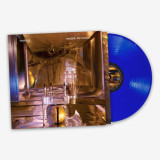
Lower Slaughter, die Krawallmacher aus Sussex, haben mehrere Jahre lang hinter verschlossenen Türen gebrodelt und sich neu formiert. Auf ihrem brandneuen Album "Deep Living", aufgenommen/gemischt von Wayne Adams (Petbrick/Big Lad) und gemastert von Sam Grant (Pigsx7/Rubber Oh), läuft die Band auf Hochtouren. Der bisherige "taumelnde Noise-Rock" (The Quietus) steht im Kontrast zu einer selbstbewussteren und raumgreifenderen Dynamik. 10% der gesamten Verkaufserlöse der limitierten "Deluxe Deep Blue EcoMix Vinyl" Auflage gehen an die Wohltätigkeitsorganisation The PANDAs Foundation, einer vertrauenswürdigen Einrichtung zur Unterstützung von Familien mit perinatalen psychischen Erkrankungen.
The Understated Debut That Launched a Peerless Career: Bob Dylan Is the Clearest Connection to the Singer-Songwriter's Folk Roots
Pressed on MoFi SuperVinyl for Reference Playback: Mobile Fidelity 33RPM SuperVinyl Mono LP Features the Direct Sound Dylan Intended
1/4" / 15 IPS analogue mono master to DSD 256 to analogue console to lathe
Bob Dylan's self-titled 1962 debut is as understated of an entrance as any significant musician as ever made. Well-versed in American roots music, Dylan simultaneously pays homage to tradition and extends it by putting his own stamp on classic material that metaphorically functions as the soil of contemporary songs and styles. Free of ego, and performed with masterful conviction, Bob Dylan ranks with the initial efforts of giants like Elvis Presley and the Rolling Stones.
Nodding to Woody Guthrie and re-imagining Blind Lemon Jefferson's "See That My Grave Is Kept Clean," Dylan straddles the past and future. He authoritatively displays the ability to handle weighty topics such as death, sorrow, and lamentation with the vaudeville flair, bluesy mannerisms, and poignant command of an artist three times his then-20-year-old age.
Sourced from the original master tapes, housed in a Stoughton jacket, and pressed on MoFi SuperVinyl at Fidelity Record Pressing, Mobile Fidelity's numbered-edition 180g 33RPM mono SuperVinyl LP brings the contents of this seminal release as close as they've ever come to live-in-the-studio quality. Transparent to the source, Dylan's voice, acoustic guitar, and harmonica come across with exceptional realism — the "husk and bark" to which Robert Shelton referred in his legendary New York Times review of a Dylan appearance at Gerde's Folk City — courtesy of the format’s nearly non-existent noise floor, groove definition, and quiet surfaces.
Heard in the original mono configuration, Dylan’s vocals are in the heart of the musical action and as one with the accompaniment. This reissue paints an incredibly accurate portrait of the concrete mass of sound that features no artificial panning and offers a straight-ahead immersion into the music producer John Hammond recorded in just two days in November 1961.
Though much has been made of the commercial indifference that greeted the album upon its low-key release, focusing on sales figures and the reaction of a public not yet hip to Dylan's name miss the forest for the trees. Distinguished from the era's other folk efforts by way of the singer-songwriter’s determination, brazenness, and lived-through-this worldliness, Bob Dylan lays the groundwork for the path he'd soon trailblaze and everyone else would follow.
As Dylan scholar and pop-culture critic Greil Marcus observed in 2010: "Everybody knew Joan Baez and the Kingston Trio; if you knew Bob Dylan, you knew something other people didn't, something that soon enough everybody had to know. Within a year, an album could put an adjective in front of the singer's name as if it were already common coin."
Mono is how almost everyone first heard Dylan’s opening salvo. A career like none other starts here.
MoFi SuperVinyl:
Developed by NEOTECH and RTI, MoFi SuperVinyl is the most exacting-to-specification vinyl compound ever devised. Analog lovers have never seen (or heard) anything like it. Extraordinarily expensive and extremely painstaking to produce, the special proprietary compound addresses two specific areas of improvement: noise floor reduction and enhanced groove definition. The vinyl composition features a new carbonless dye (hold the disc up to the light and see) and produces the world's quietest surfaces. This high-definition formula also allows for the creation of cleaner grooves that are virtually indistinguishable from the original lacquer. MoFi SuperVinyl provides the closest approximation of what the label's engineers hear in the mastering lab.
Pierre Bastien and Michel Banabila return with Nuits Sans Nuit, their second collaboration following their Baba Soirée debut from 2023. Recorded as an intuitive exchange between Rotterdam and Valencia, the album emerged from a simple ping-pong process: Banabila sculpted sounds and atmospheres, to which Bastien responded with his distinctive instrumental palette: flute-augmented cornet, mechanised log drum, and more. Mixed by Banabila, the result is a raw yet immersive work that resonates with a somnambulant, wide-awake presence. Nuits Sans Nuit unfolds through shifting shades of melancholy. "I don"t know how to describe the feeling of these crazy times we live in," says Banabila. "Les plus désespérés sont les chants les plus beaux," Bastien quotes De Musset. Wordless yet deeply expressive, the album invites listeners into a space of contemplation, where meaning emerges through immersion - like ritual music carrying an unspoken message. Echoes of saudade, blues, fado, and soleá surface in the duo"s playful noise, reimagined through their singular vocabulary.
With over 2 decades of formal exploration and exhilarating abstraction Get On is, somewhat surprisingly, only the fourth solo Pita full length. Peter Rehberg has always been vouched for pushing the very limits of the technology du jour, be it software or in recent years a complex modular set. Rehberg’s motives are one of unbridled exploration often resulting in extreme and exhilarating audio works.
Having spearheaded the contemporary electronic sound with his uncompromising explorations of noise, rhythm and extreme computer music, he has also worked with numerous experimental musicians in collaboration. Rehberg stands in the wake of a sonic revolution, once fringe, which transformed over time into the sound of a generation of experimental geeks and club freaks worldwide.
Get On follows on from the 2016 release Get In. As with other titles in his ‘Get’ series we have an unwieldy blend of noise, abstraction, gnarled rhythm and blurred melody. Both analogue and digital tools are deployed as a means of expressing something outside of everyday electronics. ‘AMFM’ launches proceedings with some delightfully disorientating ricocheting electronics setting off a subversive sonic spectrum. ‘Frozen Jumper’ presents some ugly skittering electronics which rotate into exquisitely mangled forms before launching into an unsettling euphoria. The last piece ‘Motivation’ is a towering sensitive work, simultaneously haunted and emotionally moving. Get On marks another monumental work in the ongoing evolution from one of the ground zero pioneers of contemporary radical electronic music. As uncompromising as ever this is Pita in his prime. Emotion rung from the most twisted of frames.
Federsen’s Alt Dub continues with its third release this May, the ‘Artist Series’ focused VA features cuts from cv313, Taction, Hidden Sequence and Fletcher.
Based out of San Francisco, Federsen and his Alt Dub imprint are known as purveyors of all things raw and intricate in the world of Dub Techno, holding the beacon and championing the sound, introducing new artists and featuring highly respected figures from the scene also. This new various artist package promotes exactly that.
Taking the lead is the widely revered cv313, the Detroit based dub powerhouse delivers his signature sound with ‘Spectral Vector’ via hazy field recordings, textural noise, modulating percussion and spiralling dub echoes all subtly nuanced throughout its nine minute duration. Sydney’s Taction then offers up ‘Caesious’, employing trickling water sounds, ethereal, expansive pads, pulsating subs and reduced percussion.
Opening the B-Side is Hidden Sequence’s ‘Azteca’, picking up the energy levels courtesy of swinging organic percussion, bubbling echoes, reverberated stab sequencing and oscillating resonant synth flutters. Fletcher’s ‘A Distant Place’ then rounds out the release, an eight and a half minute excursion through soft, dream like chimes, twitchy synth tones, a heavily swung rhythm section and subtly nuanced structure.
Harvey McKay delivers a powerful edit of Daniel Avery’s classic Drone Logic, raising the tempo and expanding on the original’s psychedelia with his own distinct aesthetic of soulful, slamming techno. A secret weapon in the DJ sets of both artists in recent months, as well as for Erol Alkan, this much-requested track is now pressed by Phantasy in a run of 500. Noise flies high!
- 1: The Heartwood Institute - The Moon Never Beams
- 2: The Heartwood Institute - A Kingdom By The Sea
- 3: Dream Division - The Raven
- 4: Dream Division - For My Mother
- 5: Everyday Dust - The Bells
- 6: Everyday Dust - The City In The Sea
- 7: Garden Gate - Spirits Of The Dead
- 8: Garden Gate - Dream Within A Dream
- 9: Ivan The Tolerable - Dream Land
- 10: Ivan The Tolerable - Valley Of Unrest
- 11: Hologram Teen - El Dorado
- 12: Hologram Teen - The Haunted Palace
- 13: Klaus Morlock - The Sleeper
- 14: Klaus Morlock - Bridal Ballad
Library of the Occult Records unviels ‘Music to Accompany the Poems of Edgar Allan Poe’ a haunting double LP that threads the legendary poet’s dark romanticism through the minds of some of the most evocative contemporary electronic artists.
The Library’s ever-expanding circle now united as the Library of the Occult Electronic Orchestra, bring their own haunted visions to Poe’s bleak and beautiful world. Ivan The Tolerable stretches krautrock pulses and experimental noise into something hypnotic and strange, while The Heartwood Institute channels vintage occult nostalgia. Sermons by the Devil drapes everything in a ritualistic haze and Klaus Morlock, ever the maestro of unease, paints in slow-moving shadows, melancholic, cinematic, and tinged with the surreal. It’s a record for twilight listening, flickering candles, and the spaces between.