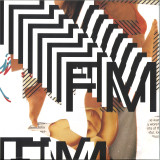
Das nordische Heavy-Noise-Rock-Duo Barren Womb, bekannt als „eines der seltsamsten und feinsten Duos Norwegens“, wird sein fünftes Album 'Chemical Tardigrade' über Blues For The Red Sun veröffentlichen. Wieder präsentieren sie eine rohe, bombastische Platte aus Noise-Rock, zerbrochen in 11 verschiedene Tracks, die alle ebenso aus den Fugen geraten wie unorthodox sind. Wuchtige Rhythmen und sengende Melodien werden mit Barren Wombs charakteristischem Doppelstimmangriff kombiniert, um die seltsamen Haken zu schaffen, an denen sie ihre bissigen, dystopischen Bilder von Flucht, Ungleichheit und Zerstörung aufhängen.
Поиск:the noise
Все
- Mar Vista - Visions Part 1 Her Eyes Are Closed
- Kennlisch - Kennlisch
- Crystal Eyes - Crystalzed
- Warlus - Girl Like You
- Gerard Alfonsi - Fana Stickle
- Geoffroy - Viking
- Amphyrite - Symphonie Pour 3 Oeufs Brouilles
- Eole - Friendship
- Capucine - Les Elephants
- Rictus - Flashes
- Inscir Transit Express
- Polaris - Polaris
- Joel Boutolleau - Force
- Spotch Forcey - Frustre
- Demon Wizard - Black Witch
- Temple Sun - Voyage Sans Retour
- Chantal Weber - Ballade Aux Chataignes Tombees
- Jean-Claude Zemour - X Kmh
- Rhodes Co - Baoum
- Guidon Edmond Et Clafoutis - Stormy Sunday
"For a long time, I'd come across these discs without really understanding what connected them, apart from a button and that famous logo designed by René Dessirier. Then, with a little more digging, I discovered the "self-production" link. For choirs, schools, folk singers, young pop groups, popular homes and even great composers who engraved unique copies of certain recording sessions...
The French equivalent of the English "Derby Service", the Kiosque d'Orphée, formerly at 7 Rue Grégoire de Tours in the 6th arrondissement, was taken over by Georges Batard in 1967 and moved to 20 Rue des Tournelles in the 4th arrondissement of Paris. The adventure lasted until 1991. Georges Batard was a sound engineer who used a Neumann tube engraver to engrave acetates from the tapes he received, before printing the precious vinyls in the press factories of the day, where he was able to produce very small runs of between 50 and 500 copies.
Of course, there were other structures for releasing his records, such as Voxigrave or, later, FLVM, but none of them had so many records in their catalog. Le Kiosque d'Orphée was neither a label nor a publisher, but a structure that allowed you to press your own vinyl, at a time when it was quite an adventure to get your first 45 rpm or 33 rpm album released!
Georges Batard was described as passionate and conscientious. His son, bassist Didier Batard, wrote of him:
"Georges was passionate about recording and reproducing the stereo sound of his great passion, music. He paid close attention to distortion rates, signal-to-noise ratios, response curves, rise times and other damping factors in audio equipment. He was looking for the exact reproduction of concert hall sound in his living room (with the same sound level, if possible...). In the late '50s/early '60s, he found other sound enthusiasts in AFDERS (Association Française pour le Développement de l'Enregistrement et de la Reproduction Sonores). He became its honorary president. Every Saturday afternoon, its members met to test au- dio equipment. Their opinions were published in the monthly Revue du Son.
All you had to do was send in your tapes and choose the number of record copies you'd like to take home with you, so you could finally share your creations and, in a way, exist. You could opt for a generic sleeve, available in several colors, directly customizable with your name and credits, or you could design your dream sleeve yourself in your living room or at a printer's.
This "Do It Yourself" temple gave birth to some superb pouches. Stencilled, hand-written, illustrated with paintings, drawings, illustrations by friends or girlfriends of the time, photo prints hastily stuck in the middle of a blank, white sleeve, on which the traces of time would leave their imprints, so that collectors and the curious would come and buy them decades later, with the promise of a musical discovery, unfortunately not always fulfilled...
What most of these records have in common is the youth of their songwriters, whether or not they've had a career. Stories of buddies, of getting by and dreams of glory made up this catalog. Most of them were amateur productions, both in terms of the level of the musicians and the quality of the recordings, made on a two-track or, the ultimate luxury, a 4-track in a teenager's bedroom or parents' living room.
It was the beginning of the home studio, thanks to the advent of the Revox portable tape recorder. A bit of a shaky DIY system, but, in return, the luxury of setting no limits: one-sided tracks, no outside censorship, no artistic director, no manager, no Barclay or EMI/Pathé Marconi logos...
When you finally had your own record, you could give it away or sell it to friends, family or after concerts. You could also drop it off at the nearest record shop, with undisguised pride.
It was also a calling card that could be sent to radio stations or music labels, in the hope of launching a career...
Many of the protagonists in this story tried to sign with labels, but in those days, bridges were not so easy to build between one's hometown, or even one's village, and the major or more specialized label that might have released these records. At the time, the advertisements published in the press by the Kiosque d'Orphée opened up the field of possibilities for provincial composers. It was now possible to make their own record, without having to go through the process of signing with a label.
Some of the composers who have gone on to make a career have used this channel to release their first record or parallel projects (Claude Engel, Dominique A, Andy Emler, Michel Deneuve, Claude Mairet, Mick Piellard, Tristan Mu- rail...) and sometimes even single or very limited pressings of work or promotional copies (Bernard Parmegiani, Jef Gilson...).
This album is the conclusion of a long investigation, begun six years ago. It took a long time to find the records, scattered all over the place, in the homes of collectors and sometimes the musicians themselves, and then to listen to them, sometimes painstakingly, to unearth these moments of grace.
From this work, 23 tracks remain, but there are dozens of others that could have been included, so we had to choose, and the choice had to be as universal as possible. This selection is obviously not objective, but I hope you'll like it.
Today's music is raw, touching and powerful. "
Jean-Baptiste Guillot - Born Bad Records
Miles Davis created just one studio album with his original sextet: Milestones. And he made every moment count. Pairing with Cannonball Adderley, John Coltrane, Red Garland, Paul Chambers, and Philly Joe Jones, Davis not only laid the groundwork for the modalism that immediately followed but tailored a genuine modern-jazz masterwork laden with performances among the most explosive of his distinguished career. Sandwiched between the more famous 'Round About Midnight and the epochal Kind of Blue, Milestones remains a seminal work of art.
Sourced from the original master tapes and pressed on dead-quiet SuperVinyl, Mobile Fidelity's numbered-edition 180g LP grants each musician their own space amid broad soundstages. Afforded the benefits of a nearly non-existent noise floor and supreme groove definition, this vinyl reissue doubles as a time machine back to the February-March 1958 recording sessions.
Colors, shapes, and dimensions appear in the manner that resembles what you'd glean from behind a studio control room's window. Davis' burnished trumpet is rendered in three-dimensional perspective and seemingly coaxes the band to play with unburdened zest. Coltrane's trademark saxophone teems with lifelike tonality and images with specificity; his solos work in tandem with and against the driving rhythms. Garland's swaggering piano lines? Visualize the keys as he hits full stride, the chords and fills slithering around skeletal frameworks.
Inducted into the Grammy Hall of Fame and selected as a "Core Collection" record by the Penguin Guide to Jazz, Milestones is as famous for its title track – widely considered ground zero for modalism and bolstered by Jones' hallmark "Philly Lick" rim shot – as the players that produced it. The launching pad for many of Davis' improvisational flights, the album teases the explorations Coltrane would soon chase. Davis' own solo work broaches territories that far exceed what he had done in his bop-rooted past. Every song is a highlight.
Take the bravado "Dr. Jackle," featuring a hot-foot pace and bebop strains, or "Sid's Ahead," which continues the album's blues theme while juggling edgy harmonics and inside-out structures. On "Billy Boy," distinguished with an arco bass solo from Chambers, Garland gets a turn in the spotlight and channels the openness practised by one of his heroes, Ahmad Jamal. Even more instructive is the band's reading of Dizzy Gillespie's "Two Bass Hit." Three years removed from the version Davis and company recorded for the trumpeter's Columbia debut, this interpretation demonstrates the extent to which the group had jelled in a relatively short amount of time.
Then there's "Straight, No Chaser," the definitive rendition of Thelonious Monk's signature piece. Coltrane's marbled playing pulls at the tune's borders, Adderley takes liberty with solos, and Davis dances around his mates, at one point quoting "When the Saints Go Marching In" while demonstrating his knowledge of tradition and casting an eye towards the future.
About that future. Garland already had one foot out the door during the Milestones sessions to the extent Davis spells him on "Sid's Ahead." Jones would stick around for a bit longer but soon plot his exit. History proves Davis navigated the changes with visionary aplomb. Yet the chemistry, excitement, and beauty the sextet achieves on Milestones cannot be overstated. This reissue helps put the album in proper perspective – and presents the music the fidelity it deserves.
Miles Davis' A Tribute to Jack Johnson is the best jazz-rock record ever made. Equally inspired by the leader's desire to assemble the "greatest rock and roll band you have ever heard,” his adoration of Johnson, and Black Power politics, Davis created a hard-hitting set that surges with excitement, intensity, majesty, and power. Bridging the electric fusion he'd pursued on earlier efforts with a funkier, dirtier rhythmic approach, Davis zeroes in on concepts of spontaneity, freedom, and identity seldom achieved in the studio — and just as infrequently accepted by the mainstream.
Sourced from the original analog master tapes, pressed on MoFi SuperVinyl, and housed in a Stoughton jacket, Mobile Fidelity's 180g LP reissue brings it all to fore with startling realism. Benefitting from SuperVinyl’s nearly inaudible noise floor, superb groove definition, and clean, ultra-quiet surfaces, this 180g LP showcases everything — from the bold tonality of the headliner's white-hot trumpet solos to the decay of crashing cymbals, carry of wiry guitar notes, and echoes of the studio — in reference fashion.
Bristling with exuberance, Davis' high-register passages explode with authority and commanding presence. Around him, a barrage of urgent backbeats, knifing riffs, and supple bass lines emerge amidst black backgrounds. One of the most prominent differences long-time fans will notice is how much more aggressive, immediate, and vibrant the music sounds, with those aspects central to the composer's original desires.
Utilizing wah-wah and distortion, the go-to instrumentalist of the performances— guitarist John McLaughlin — attacks with a nasty edge, slashing style, and vicious streak that allows A Tribute to Jack Johnson< cross the until-then-impenetrable divide between rock and jazz. Davis puts both feet in the former camp and erases any gap. The stories of the record’s creation are nearly as legendary as the sounds within: Two sessions, multiple jams, different sets of musicians (several uncredited), and near-miraculous production perfectionism that made it all appear cohesive.
The least-well-known masterpiece of Davis' career, the 1971 record — seamlessly assembled and spliced together by producer Teo Macero — was a victim of limited record-label promotion. Audiences also didn’t immediately know what to make of its original cover art — faithfully replicated here. In addition, the powers that be at Columbia Records were directing the public’s attention to Miles at Fillmore, a completely different kind of album guided by two keyboardists. A Tribute to Jack Johnson practically lives in a different universe, one from the future. To many listeners who did manage to hear it — among them critic/musician Robert Quine, Stooges leader Iggy Pop, and renowned critic Robert Christgau — it surpassed everything that came before.
Indeed, Davis treated it as a personal manifesto: An opportunity to salute the Black championship boxer admired for his threatening image to the establishment and impeccable taste in clothes, cars, women and music. Davis explains in the liner notes his affinity for Johnson — a stance mirrored by the defiant music, which hits with a prize fighter's force and reflects the graceful elegance with which a pugilist navigates the ring — and closes the album with a Johnson quote read by Brock Peters.
Inspired not only by Johnson but by Jimi Hendrix and Sly Stone, Davis changed his approach and his band. He surrounds himself with a cadre of musicians in their 20s and, in the case of bassist Michael Henderson, a 19-year-old fresh from touring with Stevie Wonder. Henderson gives Davis what he requested: boogie-based grooves that don’t lose shape or direction. Soprano saxophonist Steve Grossman, drummer Billy Cobham, and organist Herbie Hancock adhere to a similar aesthetic that prizes brazenness, innovation, and energy.
In that vein, during a portion of “Yesternow,” Davis segues into a separate performance (which became known in its entirety as “Willie Nelson”) played by guitarists McLaughlin and Sonny Sharrock, bass clarinetist Bernie Maupin, keyboardist Chick Corea, bassist Dave Holland, and drummer Jack DeJohnette. Dig it!
Talking with jazz scholar Bill Milkowski — who himself noted how McLaughlin’s unrestrained style, decibel-forward volumes, and rapid-fire power chords engendered himself to the rock crowd at the same time that his harmonics and syncopation still definitely made him a jazz player — guitarist Henry Kaiser summed up part of the appeal of A Tribute to Jack Johnson as well as anyone, saying: “It’s a jazz record that way way more open than other jazz records at the time, but still not free jazz. McLaughlin’s rhythm guitar playing on ‘Right Off’ — the use of different chords in a rock shuffle than what anybody had used before — was revolutionary.”
And to think that’s just one aspect of a record that contains multitudes. “Never let them forget it.” Indeed.
The lost tapes have surfaced, bringing with them a walloping new stereo mix! A sonic cocktail of acid garage, blues & psych rock from one of Detroit’s finest – featuring Ted Nugent! Dominated by gritty head-swirlers and heavy, fuzz guitar licks, their debut is considered to be an early innovator of heavy metal. Their five and a half minute version of “Baby Please Don’t Go” is an absolute acid garage classic with some fantastic feedback and great guitar sustain. Nugent creates some serious guitar noise on this number and shows off his brilliant chops. The album closes with another garage classic, “Gimme Love.” This song has some laser fuzz guitar riffs and angry Mike Drake vocals. In between these two garage monsters are many other great compositions. There are a few covers, two work really well (the splendidly bluesy “Let’s Go Get Stoned” and the gritty Who cover “It’s Not True”). They also hit real hard with “Colors,” a furious acid rock song with some sinister soloing. “Phillip’s Escalator” is very Syd Barrett era Pink Floyd with brit vocals, clanging chords and first class guitar scrape. It’s a true classic on this exceptional outing. The guitar freakouts, Who-like energy and great songs make this debut a prime slice of early Detroit rock. – The Rising Storm
Introducing "Solace", a captivating 6-track EP by dubstep virtuoso Bukkha.
Crafted amidst the stillness of 2020's turmoil, far from all the noise pollution of everyday life, each track is like an unique demonstration of Bukkha's emotional state throughout these tumultuous times. "What came out was not forced and was just a very natural and fluid process" said Bukkha about working on this EP.
"Solace" also features an exclusive collaboration with soulful Drum & Bass artist Redeyes.
Embark on this heartfelt musical journey where Bukkha's passion and authenticity resonate through every note. As Bukkha eloquently puts it, ''I have always found comfort in music. I hope that the people listening to this record will find solace in it as well.''
Am 31. Dezember 1973 spielten AC/DC ihre erste Show im Chequers Nightclub in Sydney. Heute, 50 Jahre nach diesem Gig, sind sie veritable Rocklegenden, die Millionen von Tonträgern verkauft haben, aber nicht im Entferntesten daran denken, sich aufs Altenteil zurückzuziehen. Erst vor kurzem hat die Band ihre unzähligen Fans mit der Ankündigung der ‘POWER UP’-Tour, die sie im Sommer 2024 durch Europa führen wird, wieder in einen Freudentaumel versetzt.
Um das 50-jährige Thronjubiläum der Rock’n’Roll-Könige angemessen zu feiern, veröffentlicht Columbia Records/Legacy Recordings den Backkatalog der Band in wahrlich royaler Ausstattung: als goldene, limitierte Vinyl-Edition. Jeder LP dieser Sonderedition liegt ein Druck (30cm*30 cm) mit brandneuem AC/DC-Jubiläums-Artwork bei.
BACK IN BLACK ist das meistverkaufte von einer Band eingespielte Studioalbum aller Zeiten. Es featurt die Songs ‘You Shook Me All Night Long’, ‘Shoot To Thrill’ und natürlich den legendären Titeltrack.
Am 31. Dezember 1973 spielten AC/DC ihre erste Show im Chequers Nightclub in Sydney. Heute, 50 Jahre nach diesem Gig, sind sie veritable Rocklegenden, die Millionen von Tonträgern verkauft haben, aber nicht im Entferntesten daran denken, sich aufs Altenteil zurückzuziehen. Erst vor kurzem hat die Band ihre unzähligen Fans mit der Ankündigung der ‘POWER UP’-Tour, die sie im Sommer 2024 durch Europa führen wird, wieder in einen Freudentaumel versetzt.
Um das 50-jährige Thronjubiläum der Rock’n’Roll-Könige angemessen zu feiern, veröffentlicht Columbia Records/Legacy Recordings den Backkatalog der Band in wahrlich royaler Ausstattung: als goldene, limitierte Vinyl-Edition. Jeder LP dieser Sonderedition liegt ein Druck (30cm*30 cm) mit brandneuem AC/DC-Jubiläums-Artwork bei.
BACK IN BLACK ist das meistverkaufte von einer Band eingespielte Studioalbum aller Zeiten. Es featurt die Songs ‘You Shook Me All Night Long’, ‘Shoot To Thrill’ und natürlich den legendären Titeltrack.
Desert Dictionary navigates sonic territories oscillating between language and landscape, between notation and noise. Voices responding and contributing to a complementary narrative, connecting personal memories, political considerations and psychological effects of a landscape seemingly empty and quiet. Adjacent, beneath and intertwined a modular synthesizer score based on field notes – a synthesized soundscape appearing as imaginary field recordings, at the same time resembling and unalike the place in question.
The twelve contributions presented on the LP were recorded in South Africa over a period of three months in 2020 and 2021. These recordings occurred in various locations in Kimberley, Bloemfontein, Richmond / Northern Cape, Cape Town, Grassy Park, Krugersdorp and Johannesburg.
The Desert Dictionary appears in four iterations – a situation as part of Modern Art Projects South Africa’s collection, a radio play (commissioned by Deutschlandfunk Kultur), a book edition (published by MAPSA), and the present LP.
The LP version is based on the radio play and features the voices of Richard John Forbes, Maja Marx, Phala Ookeditse Phala, Victoria Wigzell, Tubatsi Mpochmoloi, Liza Grobler, Nkosinathi Gumede, Karlien van Rooyen, Mongezi Ncombo, Ivan Messelaar, Gerhard Marx and Lindiwe Matshikiza.
The synthesized field recordings – translations of fieldnotes taken in the desert – were recorded in Johannesburg and Berlin.
Written and produced by Boris Baltschun, 2021-2022. Mastered and cut by Kassian Troyer at D&M, Berlin. Photo & map by Boris Baltschun. Graphic design by Joe Gilmore.
Twin giant towers of amps grinding out minimal beat bloop, the transient sound molecules smell of burning gear and the floor of the pit—this is organic, electronic music at its finest. Dance? Why not. Freak out? For sure. Brothers from a different mother (Bjorn Copeland and Aaron Warren) à la two-thirds of Black Dice have come together with this fantastic debut Flaccid Mojo for us. These are mean beat vipers, spitting and tumescent on the abattoir floor.
I would call it drug music, but I’m not sure what drugs these humans consume. Stem cell and adrenal gland cocktails I’m guessing. Futuristic and primal it is, beats from the Thunder-Dome, fight music for fuckers. I’ve seen them on two separate occasions blow the power for an entire building. Baller move, boys. Produced perfectly by Chris Coady (look him up to be impressed). This record is a burning car in a field and I love it.
For fans of Black Dice, Container, Whitehouse, Negativland, Ralph Records, minimal beats à la Profan, vintage Japanese noise, Severed Heads, windburn and chapped lips. (John Dwyer)
Back in print on vinyl! Deerhoof debuts their new guitarist John Dieterich and achieves widespread critical acclaim for the first time. 2002's Reveille is a defiant expression of artistic rebirth, spilling over with madcap exuberance, apocalyptic imagery, newfound technical confidence belying their no-budget DIY recording methods, and jarring stylistic about-faces in which no two songs sound alike. The contrast of Satomi's ever-catchy, ever-charming melodiousness with John and Greg's noisy, cinematic bombast still has the power to thrill and tickle and upset, more than 20 years after its initial release. Includes reimagined cover art with the faint morning glow the band had always envisioned, pressed on clear sun-colored vinyl. Complete lyrics included for the first time, written by Satomi on the center labels.
Moor Mother is an American musician, poet, and interdisciplinary artist known for her avant-garde and experimental work. The Great Bailout is an expansive meditation that acts as a non-linear word map about colonialism, slavery, and commerce in Great Britain. Featuring guest contributions from Lonnie Holley, Angel Bat Dawid & Sistas of the Nitty Gritty, Vijay Iyer, Mary Lattimore, and more, it"s Moor Mother"s most uncompromising vision to date. Moor Mother has gained recognition for her unique blend of spoken word, noise, and electronic music, addressing themes of race, gender, and socio-political issues. She hails from Philadelphia and has been an influential figure in the city"s vibrant arts and music scene. She has received critical acclaim for her albums, with reviewers praising her fearless approach to sound and her thought-provoking lyrical content on albums like "Jazz Codes" and "Analog Fluids of Sonic Black Holes", showcasing her boundary-pushing sonic experiments.
Recommended If You Like: OOIOO, Blonde Redhead, Guerilla Toss, Rolling Stones, Liars, Marnie Stern, Yoko Ono, Battles. Clear Sun Vinyl. Reissue of Deerhoof’s 2002 album Reveille. First Deerhoof album with guitarist John Dieterich. Back in print on vinyl! Deerhoof debuts their new guitarist John Dieterich and achieves widespread critical acclaim for the first time. 2002’s Reveille is a defiant expression of artistic rebirth, spilling over with madcap exuberance, apocalyptic imagery, newfound technical confidence belying their no-budget DIY recording methods, and jarring stylistic about-faces in which no two songs sound alike. The contrast of Satomi’s ever-catchy, ever-charming melodiousness with John and Greg’s noisy, cinematic bombast still has the power to thrill and tickle and upset, more than 20 years after its initial release. Includes reimagined cover art with the faint morning glow the band had always envisioned, pressed on clear sun-colored vinyl. Complete lyrics included for the first time, written by Satomi on the center labels.
Die in Montréal lebende schwedische Sängerin und Komponistin hat in den letzten 20 Jahren sechzehn unabhängig produzierte Alben vorzuweisen und ist zahllose Kollaborationen eingegangen. Sie ist eine poetische und kühne Kraft in der Musik, die sich dem Genre entzieht. Ihre Stimme wurde als "eine führende Präsenz" (Exclaim) beschrieben, die "den Unterschied zwischen dem Göttlichen und dem Dämonischen aufspaltet, gekonnt aus den Angeln hebt" (Under The Radar) und "neben den größten Indie-Künstlerinnen steht, die vor nichts Angst haben" (Le Devoir). Aufgewachsen auf einer Insel an der schwedischen Westküste, begann ihre musikalische Laufbahn, als sie 2004 nach Stockholm zog und Mitglied des renommierten Kollektiv-Labels und Veranstaltungsortes Fylkingen wurde (die älteste Organisation in Europa für experimentelle Musik und Kunst, gegründet 1933). Seit ihrem Umzug nach Montréal im Jahr 2012 erstreckt sich ihre Karriere über zwei Jahrzehnte und ist geprägt von einem unerschrockenen Streben nach Originalität, einem unerschöpflichen Wunsch, Genres zu überschreiten, und einem Engagement für künstlerische Zusammenarbeit. Angell verschmilzt musikalische Bereiche von Klassik, Folk, Rock und Pop bis hin zu Jazz, Elektronik, freier Improvisation und Avantgarde. Bekannt ist sie vor allem für ihr unkonventionelles künstlerisches Schaffen mit der gefeierten und für den Polaris nominierten Avant-Rock-Band Thus Owls, die sie seit 2007 gemeinsam mit ihrem Mann Simon Angell leitet. Zu ihren früheren Ensembles gehören das schwedische Vokal-Bass-Duo Josef & Erika und die elektronische Noise-Gruppe The Moth. Zur Unterstützung dieser und anderer Projekte unternahm sie ausgedehnte Welttourneen, bei denen Daníel Bjarnason (Ben Frost, Sigur Rós), Liam O'Neill (SUUNS), Karl Lemieux (Godspeed You! Black Emperor), Lisen Rylander Löve (Midaircondo) und Anders Jormin (ECM) zu ihren zahlreichen Partnern zählten. Ihre unverwechselbare und virtuose Stimme hat Aufnahmen und Live-Auftritte mit einem breiten Spektrum von Künstlern geziert, darunter Loney Dear, Patrick Watson, Leonard Cohen, Kim Myhr, Arve Henriksen, Land Of Kush, Wildbirds and Peacedrums, La Force und The Besnard Lakes, um nur einige zu nennen. Kürzlich gründete Angell zusammen mit Róisín Adams und Peggy Lee das Neue-Musik-Trio Beatings Are In The Body und vollendete ein Solo-Debütalbum mit uneingeschränkter stimmlicher Erkundung und expressionistischen avant-elektronischen Kompositionen, das Anfang 2024 auf Constellation erscheinen soll.
The debut album from Groningen scene stalwarts Real Farmer arrives, sprouting fully formed punk - equally melodic and breezy, and urgent and abrasive - evocative of a hybrid of The Jesus and Mary Chain and MC5. However, the band instil their addictively melodic noise with as much present-day influences and originality as there nods to The Stooges.
Hardcore chaos !
Etched limited 100 copies.
First track is an industrial pityless underground pearl, chaotik and noisy, with a solid antigroove feeling... The second track, more regular for the dancefloor is still quiet industrial... Starting a bit hardtek and minimal which is quiet DJ friendly, it soon turns into a hardcore noise sound... This record plays 33 but bass are so loud that you can dare a 45 for a maximum speedcore experience...
The record B side is Etched lazer !
All copies are hand Numbered from 01 to 100.
Noch vor Klez.e und And The Golden Choir gab es bereits Delbo mit Tobias Siebert. Das dritte Album aus dem Jahr 2006 des damaligen Trios jetzt wieder erhältlich. Havarien sind Unfälle mit großen Folgeschäden. Bei Delbo davon betroffen: das Leben, die Liebe, das Finden der eigenen Identität. Mit dem dritten Album hat das Trio neue Wege gefunden, um dem Daseinsschmerz zu begegnen. Jetzt gibt es kein Verstecken mehr hinter Lärm und Wut, "Havarien" destilliert, was vom Noiserock bleibt, wenn dem Zusammenspiel von Gitarre-Bass-Schlagzeug der Krach genommen wird. Unglaublich, wieviel Schönheit sie freiräumen, ohne die Strukturen zu verändern. Deutscher Gitarrenpop funktioniert also auch ohne große Gesten und egomane Nabelschau. Ihre poetisch-abstrakten Texte haben Delbo dabei aus der Vergangenheit herübergerettet. Wann immer Bassist Daniel Spindler mit Sprechgesang seine Alltagsdämonen bannt, betreibt er auch bei uns Schadensbegrenzung.
- A1: Got A Fire In My Socket
- A2: Matter Vs Matter
- A3 10: 000 Monkeys + An Argument With Time
- A4: No One Wants To Hear It
- A5: Gotta Cold Feeling
- A6: Entangled Entropy
- B1: Call My City, Don't Call My Telephone
- B2: Josephine Says Explode
- B3: Schrödinger's Apocalypse
- B4: The Elasticity Of Knowing
- B5: A Billion Voices Screaming, Hello Void!
Dez Dare ventures further into the void than ever before on his 4th album and the 1st to be released via God Unknown Records, ‘A Billion Goats. A Billion Sparks. Fin.’. On past records Dare has fought beasts and beats alike, waging a fuzz war and tackling the biggest topics the world has to face; Doom scrolling, capitalist demagogues, a passionate dislike of the beach in summer. On this record he leaves the sardonic frustration behind for sarcastic existentialism, zeroing in on the big philosophical questions, and the pedantic shards of nonsense that make up our existence. Piling up the synths, noise boxes and guitar pedals, Dez set about building a soundscape of noise and ideas around the nature of reality, time, and how we interact with them. From the music you would play in your last moments, to the reverse Darwinism of modern society, to arguing with time itself, and very boring people talking at you, all is covered here for the aspiring existentialist. The self-produced Australian has spent over 3 decades producing music, releasing and touring bands, and doing live sound for z-grade metal bands. Growing up in the coastal town of Geelong (Djilang) in Australia, he was introduced to the DIY punk and rock scene at 15 and this community and the ideas rooted in the underground music scene have guided his output and ethics throughout his career. This year Dez will be joining forces with label titans God Unknown (Cassels / Duke Garwood / James Johnston + Steve Gullick / KLÄMP / Oneida / Oneida / Laura Loriga / Monster Magnet / Wellwater Conspiracy Soundgarden + Monster Magnet) and will be producing a deluxe version of the release that will include a 12 page comic illustrated by long time collaborator Mike Keane. Across the drone of noise and washed out guitars of the final track, ‘A Billion Voices Screaming, Hello Void!’, the chant repeats “We all return to where we begun...” which encapsulates the message that Dare delivers. We are all made from the same stardust and we all return to the universe that spat us out, we just need to enjoy the many shards of nonsense on that swift descent into the void...with wizards painted on the side." MAXIMUM ROCKNROLL "Early 90s-inspired take on DEVO punk... high energy sucker punches on your ear." Weirdo Shrine "Sludgey-grungey-fuzzed psychedelic-noiserock... I like the fact that despite all the edgy complexity, catchy songs emerge again and again."
“Though seeing they do not see, though hearing they do not hear or understand.”
NYC-based producer/visual artist Nathaniel Young returns with the sophomore 12” under their techno-focused alias, Guilt Attendant. “A Flower Wilts Under The Heat Of The Son” is cut from the same cloth as 2020’s “Suburban Scum” where Young delves into overtly religious motifs and ideological critique of their cult-like upbringing. Here, though, Young challenges themself and the listener to seek hope and resolve rather than hatred and contempt.
Considering its sometimes-monolithic sound palette, the timeless sub-genre of dub techno has long stood as a versatile vehicle for exploring and expressing a wide range of emotions. From mourning those we’ve lost, to somber reflection, to hope and celebration–all united by warmth, soul, and perhaps most importantly, groove. This versatility has underpinned Young’s affinity for the dub techno framework, and this collection of tracks is the culmination of material that they’ve long aspired to manifest. Atop this foundation, Young explores the place of acceptance and understanding that they’ve ultimately had to reach in relation to their religious upbringing and the inherent dualities that plague dogmatic religious circles and our beloved dance-floor communities alike.
“A Flower Wilts Under The Heat Of The Son” places a heavy emphasis on groove and swing while attempting to stretch the limits of classic dub techno tropes. Through creative melodic layering, swung low-end, and syncopation, these tracks hope to offer a fresh take on the sound while remaining solely devoted to the dancefloor.
Through their design work for Dais Records and Hospital Productions, Young had the pleasure of crossing paths with the recently departed Juan Mendez (Silent Servant), who graciously contributed a striking, cacophonous, and noise-laden remix. Given Mendez’s expansive and diverse body of work, as well as his own affinity for dub techno, Juan’s contribution could not be more harmonious. A singular talent and an extremely kind, generous soul, Juan will be dearly missed.
Rest in peace Juan Mendez, 1977-2024