Collaboration is key to the practices of both musicians. Both Rimbaud and De Waard exhibit long histories of collaborating with others from very different fields. They both understand that the ability to exchange and share ideas is crucial, and how these collaborations allow both parties to work as both negatives and positives of each other, recognising spaces within the work fields and ideas. It teaches the respect of space and the relevance of context and extension of one to the other.
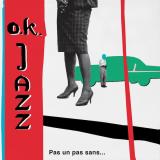
'This compilation Pas Un Pas Sans… The Boleros of O.K. Jazz 1957-77 is a selection of songs from what is one of the most unique and passionate music genres on earth, the Congolese bolero.
'Of all Congolese bands venturing into the bolero, the O.K. Jazz orchestra is by far the king of this musical style which originated in the late 19th century in Cuba. In its nearly forty years of existence, the illustrious band released dozens of boleros, with beautiful compositions, mainly by Franco and Vicky, and occasionally from Kwamy, Edo, Simaro and Mujos among others. The slow form of the bolero allowed Franco, who said in various interviews that he loved all forms of ‘slow music’, to express his most profound soul stirrings and create a style of his own. With the suave voice of Vicky and the breathtaking and dramatic guitar touch of Franco, O.K. Jazz was able to capture the true essence of the bolero.
'The favorite theme in the bolero songs of O.K. Jazz was, without doubt, the joy and pain of love, but it also touches on friendship, city life in Kinshasa, laments, politics and even advertising for a shoe brand like the remarkable song ‘Pas Un Pas Sans Bata’ featured on this compilation.
'All of the songs, except one, were restored and remastered from the original 45 rpm or 78 rpm release. The selection chronologically presented here consists – as always – for a good part of songs never reproduced after their original release.'
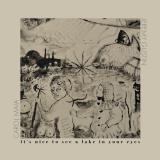
"Carol Maia & Jeremy Gustin’s haunting collaborative album is the result of a long distance partnership during which tracks were traded back and forth across thousands of miles, Jeremy working from his home studio in Brooklyn and Carol from hers in Rio De Janeiro. Later they enlisted support from a number of key players in the Rio scene, Frederico Heliodoro, Paulo Emmery, Ricardo Dias Gomes, and from Brooklyn’s musical community, Will Graefe and Ryan Dugre, to shape this understated masterpiece of sophisticated global pop and quiet experimentalism.
"It's hard to describe what Carol, Jeremy and their guests have achieved on 'it's nice to see a lake in your eyes', a kind of pop music that stands outside of time and is neither Brazilian, American or of any other recognisable place. Maybe it's risen out of the lake they imagined into being? Maybe it's formed like rain in the thousands of miles of air between Rio and New York? Whatever happened was certainly alchemical as you will hear.
"Carol told me her writing on this record was greatly influenced by her reading of Marcelo Ariel's poetry book A água veio do sol, disse o breu so maybe the best thing to do to describe this music is to let you read one of his poems:
A luz do ser é como a água
também veio do Sol
onde todos os planetas querem entrar
Dentro do Sol
O ser é imóvel
como a gratuidade de um êxtase
parecido com a respiração
Fora do Sol
o ser é móvel
Tempo eternidade
e tempo cronológico
The light of being is like water
it also came from the Sun
where all the planets want to enter
Within the Sun
Being is immobile
like the gratuitousness of an ecstasy
similar to breathing
Outside the Sun
Being is mobile
Time eternal
and chronological time
"Jeremy Gustin is an unorthodox drummer, percussionist and songwriter who has toured and recorded with Joan as Policewoman, Iggy Pop, David Byrne, Marc Ribot, Delicate Steve, and Norah Jones. If you follow Hive Mind then you probably know him best from his amazing work on Ricardo Dias Gomes' Muito Sol. Jeremy is also in the experimental pop bands Star Rover and Blurry the Explorer.
"Carol Maia is one of Rio's new generation of singers and musicians currently lighting up the city's vibrant music scene. She also featured heavily on Wolfgang Pérez's album Só Ouço, which was released on Hive Mind in 2025."
Maybe it was inevitable that Vilhelm Bromander and Fredrik Rasten would find each other. A symbiotic musical alliance of suggestive combinatory magic that stretches back to the interstitial two day space that separates their dates of birth and manifests here as the movement between ‘perfect’ or ‘just’ intonation and the ragged, psychoactive energy of the slippages from and towards that togetherness that render otherwise simple patterns or generally understood repetitions as wildly other and alive.
Astral Twins shares ‘twin’ works by each composer. The patiently unfolding real time retuning of Fredrik Rasten’s guitars on the a-side’s Sojourns and Vilhelm Bromander’s quickened steps and spry looping melodies on the flip’s Partially Dancing.
Both artists have history of going deep into the aesthetic and acoustic impact of intonation (how you think about what is ‘in tune’). Where their first LP (...for some reason that escapes us, 2019, Differ Records) shared a gorgeous set of sustained tone colour fields, this time they lean more explicitly into the folk music traditions of Scandinavia and further afield, whilst echoing the zoned minimalist atmosphere of Arthur Russell’s classic Instrumentals.
Recorded up close and in real time at Fylkingen’s soon-to-be-abandoned temporary location in Stockholm’s southern suburb of Bredäng, Astral Twins sings with the possibility that one plus one can equal more than two.
Fredrik Rasten: Sojourns explores the live retuning of guitar and double bass in a sequence of just intonation harmonies. A guitar ostinato runs throughout the piece where the retuning becomes an integral part of the composition. The slow pace reveals every detail in the transition from one harmonic arpeggio to another — how interfering waves emerge and disappear as the tonal interactions settle in electric clarity. The double bass shadows the guitar's process and comments with occasional pizzicato tones and register jumps, at times providing a low foundation for the sound and sometimes soaring together with the guitar. This is music that is deeply listening; experimental and at the same time humbly inviting many kinds of being with sound.
Vilhelm Bromander: As the title suggests, this song has a partially dancing character. The title also has a double meaning with reference to the partials and harmonics that dance together. The basic idea was to write music in just intonation that instead of being drone-based is reminiscent of a lightly dancing folk music, where the joyous feeling of just being in the music — “musicking" — is allowed to lead the way.
The double bass plays repeated overtone double stops in an open harmonic progression with subtle modulations that is inspired in equal parts by Steve Lacy's persistent repetition of phrases as east-asian khaen music. The guitars and mandolin have a freer role, with plucked retuned strings that enhance the bass's modulations and provide forward movement. The music invites to both melodic and spectral listening, suddenly halting so that other focal points can reveal themselves. For example, a chord sequence suddenly transitions to a more spectral part where Fredrik is playing a bowed guitar with a chain, several plucking guitars, voices, and pitch pipes. I wanted to make something ‘orchestral’ with just two people and no overdubs: a dance of overtones and open resonant strings, where we seamlessly take turns standing in the foreground.
There are two versions of the record - classic black vinyl and transparent green limited edition (100 numbered copies) - both 180g with printed inner sleeve.
"PORTRETY" (Portraits) is a one-of-a-kind series – it focuses on artists known for their strong connection to the drums. Each person invited to the project is given freedom in their work. Ultimately, the track created for the album must be signed with the real names of our protagonists – that's our sole criterion.
This is how a kaleidoscope of sounds and eight original perspectives on music emerges.
LINER NOTES by Bartek Chaciński:"For part III of the compilation series focusing on Polish drummers, I’d like to start, as per usual, with a one liner…
There are three types of drummers: Those that can count, and those that… can’t.
Ok, but looking past the punchline, it turns out that there is, in fact, a third type: Drummers who can count, and pretty well too, but still struggle with triple rhythms. Amongst those who have ascended the heights of triple rhythm perfection you will certainly find, Piotr Gwader. One of the leaders of the movement, we could call an “Oberek Revival. He even proposed a new form: Footberk - splicing of Polish Folk dance and Chicago Footwork. He performed live with the OG of Footwork - RP Boo (Arpebu), but equally, he could successfully form a footberk duo with Jacek Prościnski, another protagonist from “Portraits 3”. Prościnski has been deeply immersed in the world of electronic dance music for years and offers us yet more proof of those interests here.
Triplets are also no stranger to Ola Rzepca (synonymous with the Drekoty Trio), in whose music there is no shortage of rhythmical complications and tempo changes. The same can be said of the improv-friendly contemporary jazz presented by Patrycja Wybrańczyk. These two Polish drummers show how versatile this discipline is on the Polish jazz scene. These qualities have already been well documented by Marcin „Groh” Grośkiewicz, but never so strongly as here.
Szymon „Pimpon” Gąsiorek is a musician who has made unconventionality the foundation of his individual style. Yet even in the piece by Jan Pieniążek (a dynamic and equally versatile drummer), we find an element of surprise in its melancholic atmosphere and construction, which introduces a triple rhythm while pushing the drum parts into the background. Portraits, on the other hand, does the complete opposite with its protagonists - it positions them in the foreground as the creators of specially commissioned original works. From this perspective, perhaps the most familiar names here may be Emade and Albert Karch, who are known as outstanding music producers and among the most interesting in Poland. “Portraits III” has presumably given them a momentary break from producing other artists, while for the music industry, it’s also a pleasant break in the rhythm and a shift of emphasis."
There are two versions of the record - classic black vinyl and transparent green limited edition (100 numbered copies) - both 180g with printed inner sleeve.
"PORTRETY" (Portraits) is a one-of-a-kind series – it focuses on artists known for their strong connection to the drums. Each person invited to the project is given freedom in their work. Ultimately, the track created for the album must be signed with the real names of our protagonists – that's our sole criterion.
This is how a kaleidoscope of sounds and eight original perspectives on music emerges.
LINER NOTES by Bartek Chaciński:"For part III of the compilation series focusing on Polish drummers, I’d like to start, as per usual, with a one liner…
There are three types of drummers: Those that can count, and those that… can’t.
Ok, but looking past the punchline, it turns out that there is, in fact, a third type: Drummers who can count, and pretty well too, but still struggle with triple rhythms. Amongst those who have ascended the heights of triple rhythm perfection you will certainly find, Piotr Gwader. One of the leaders of the movement, we could call an “Oberek Revival. He even proposed a new form: Footberk - splicing of Polish Folk dance and Chicago Footwork. He performed live with the OG of Footwork - RP Boo (Arpebu), but equally, he could successfully form a footberk duo with Jacek Prościnski, another protagonist from “Portraits 3”. Prościnski has been deeply immersed in the world of electronic dance music for years and offers us yet more proof of those interests here.
Triplets are also no stranger to Ola Rzepca (synonymous with the Drekoty Trio), in whose music there is no shortage of rhythmical complications and tempo changes. The same can be said of the improv-friendly contemporary jazz presented by Patrycja Wybrańczyk. These two Polish drummers show how versatile this discipline is on the Polish jazz scene. These qualities have already been well documented by Marcin „Groh” Grośkiewicz, but never so strongly as here.
Szymon „Pimpon” Gąsiorek is a musician who has made unconventionality the foundation of his individual style. Yet even in the piece by Jan Pieniążek (a dynamic and equally versatile drummer), we find an element of surprise in its melancholic atmosphere and construction, which introduces a triple rhythm while pushing the drum parts into the background. Portraits, on the other hand, does the complete opposite with its protagonists - it positions them in the foreground as the creators of specially commissioned original works. From this perspective, perhaps the most familiar names here may be Emade and Albert Karch, who are known as outstanding music producers and among the most interesting in Poland. “Portraits III” has presumably given them a momentary break from producing other artists, while for the music industry, it’s also a pleasant break in the rhythm and a shift of emphasis."
The Beths occupy a warm, energetic sonic space between joyful hooks, sun-soaked harmonies, and acerbic lyrics. Their debut album Future Me Hates Me, forthcoming on Carpark Records, delivers an astonishment of roadtrip-ready pleasures, each song hitting your ears with an exhilarating endorphin rush like the first time you heard Slanted and Enchanted or 'Cannonball.'
Front and center on these ten infectious tracks is lead singer and primary songwriter Elizabeth Stokes. Stokes has previously worked in other genres within Auckland's rich and varied music scene, recently playing in a folk outfit, but it was in exploring the angst-ridden sounds of her youth that she found her place. 'Fronting this kind of band was a new experience for me,' says Stokes. 'I never thought I had the right voice for it.'
From the irresistible title track to future singles 'Happy Unhappy' and 'You Wouldn't Like Me,' Stokes commands a vocal range that spans from the brash confidence of Joan Jett to the disarming vulnerability of Jenny Lewis. Further honeying Future Me Hates Me's dark lyrics that explore complex topics like being newly alone and the self-defeating anticipation of impending regret, ecstatic vocal harmonies bubble up like in the greatest pop and R+B of the '60s, while inverting the trope of the 'sad dude singer accompanied by a homogenous girl-sound.'
All four members of The Beths studied jazz at university, resulting in a toolkit of deft instrumental chops and tricked-out arrangements that operate on a level rarely found in guitar-pop. Beths guitarist and studio guru Jonathan Pearce (whose other acts as producer include recent Captured Tracks signing Wax Chattels) brings it all home with an approach that's equal parts seasoned perfectionist and D.I.Y.
'There's a lot of sad sincerity in the lyrics,' she continues, 'that relies on the music having a light heart and sense of humor to keep it from being too earnest.' Channeling their stew of personal-canon heroes while drawing inspiration from contemporaries like Alvvays and Courtney Barnett, The Beths serve up deeply emotional lyrics packaged within heavenly sounds that delight in probing the limits of the pop form. 'That's another New Zealand thing,' Stokes concludes with a laugh. 'We're putting our hearts on our sleeves—and then apologizing for it.'
In the culinary arts, it’s easy to overcomplicate the final product. Theme, presentation, texture…they’re important but should work to complement the raison d'etre of any food. At the end of cooking a dish, it should taste good and feed people. Some dishes, like barbeque or provoleta, resist the tendency towards hollow showmanship. One of their expressions can be more or less aesthetic, but the first purpose is to be simple and tasteful. Argentinian provoleta goes so far as to blur the line between ingredient and dish. It relies on the inherent flavor of provolone being heated at the right speed for the perfect amount of time. You can add garlic or chives or red pepper to the slice, but ultimately they serve to bring out an essence that’s already there.
Los Angeles’ Cousin Feo has developed his rapping acumen in the five years since releasing Provoleta, but returning to the project today shows that he always had the penmanship, grit and delivery that christens an emcee worthy of remembrance. Like the bubbles rising up in the appetizer that is the album’s namesake, Feo showed that true profundity is found in the simple gestures.
Since dropping the project in 2019, Cousin Feo has expanded his vision of a world where hip-hop and football, two proletarian art forms, mingle in creative and compelling ways. He has collaborated across multiple continents, chronicled football histories, aided in canonizing legends, kept the flames high in age-old rivalries and constantly forced his audience to search for the last time they heard bars this hard. In anyone else’s hands it would be too great a task.
The maturity he showed on Provoleta wasn’t nascent, it was an inherent quality forcing itself to the surface. The songs refract his experience as a working class Angeleno through the archetypes of Argentinian football legends. The kernel that unites the two worlds is hustle. When Feo was coming up, missteps had greater consequences than crashing out in the group stage and street deals had the weight of a Boca-River Plate match.
Each track uses slightly different ingredients to let Feo’s underlying talent shine. “Maradona” feels salvific, fitting for a football legend canonized from the Andes to the Alps and a Los Angeles rapper looking to inspire similar hope in the neighborhoods that raised him. On “Di Stefano” Feo massages the instrumental with the same composure of the late forward, until he pierces through the headphones like one of Di Stefano’s arrows. It’s also refreshing to hear a song celebrating Messi before his meme-ification, focusing on the universal truths contained in his footballing talent instead of using number 10 as a stand-in to make a point in a fruitless argument. And he still finds space to show deference to Batistuta, Kempes and other members of the Argentinian pantheon who’ve been erased from the popular imagination by the national team's contemporary success.
Real ones know that true players, true rappers, and true artists will always stand the attacks of time and consensus. In Provoleta’s first verse, Cousin Feo says he moves with the hand of God. Maybe one day he’ll tell the whole truth and let us know how he was able to wrestle the pen away too. Limited edition of 300 hand-numbered copies.
Toronto’s Ducks Ltd. (formerly Ducks Unlimited), the bright jangle-pop duo of Tom McGreevy (lead vocal, guitar, bass, keyboards) and Evan Lewis (guitar, bass, drum programming), accomplish the impossible. The pair craft songs that play to very specific inspirations without drowning underneath them—immediately evidenced on their critically acclaimed EP, Get Bleak, and sharpened on Modern Fiction, their debut LP. “The Servants, The Clean, The Chills, The Bats, Television Personalities, Felt,” Evan rattles off. “Look Blue Go Purple is one I reference a lot with our production.” Echoes of ‘80s indiepop abound, but they never overwhelm. This is not a nostalgic record, after all, nor is it a derivative one. Instead, across 10 cheery-sounding songs, Ducks Ltd. explore contemporary society in decline, examining large scale human disaster through personal turmoil (hence the title, taken from a university course called Gnosticism and Nihilism in Modern Fiction, influenced by Graham Greene novels. Bookish indie fans, look no further.)
Writing the album was intimate. Tom drafted the nucleus of a song on an unplugged electric guitar and brought it over to Evan’s apartment, where the pair sat in his bedroom, placing percussive beats from a drum machine under nascent melodies, passing a bass back and forth, adding organs and bridges where necessary. “It’s computer music trying extremely hard not to sound like computer music,” Tom jokes. Fearful that limited and expensive studio time would kneecap the project creatively, eroding their charming naivete, the pair re-recorded the album in a storage space owned by Evan’s boss. Ornamentation through collaboration followed: there’s Aaron Goldstein on Pedal Steel in the Go-Betweens’ “Cattle and Cane”-channeling interlude “Patience Wearing Thin,” Eliza Niemi on cello (“18 Cigarettes,” a song loosely inspired by a 1997 Oasis performance of “Don’t Go Away”), and backing harmonies from Carpark labelmates The Beths (on an ode to friendship at a distance, “How Lonely Are You?,” “Always There,” and on the sped-up Syd Barrett stylings of “Under The Rolling Moon.”) While in his native Australia due to covid-19, Evan worked closely with producer James Cecil (The Goon Sax, Architecture in Helsinki) on Modern Fiction’s finishing touches—at one point, in the mountains of the Macedon Ranges in Victoria, recorded a string quartet (featured on “Fit to Burst,” “Always There,” “Sullen Leering Hope,” “Twere Ever Thus,” “Grand Final Day.”)
It’s danceable, depressive fun, with some relief: in “Always There” and “Sullen Leering Hope,” Modern Fiction’s faithful heart. “There’s a tendency in my writing, because of my world view, to be very bleak.” Tom explains. “A quality I don’t always see in myself and really appreciate in others is the courage to go on.” And yet, the record manages resiliency—enough for pop fans to fall in love with.
Reissued! Transcendence through repetition beamed via an aesthetic vision steeped in mystery: welcome to the world of Newcastle-Upon-Tyne's Smote, an entity opening up uncanny new psychic pathways. `Genog' - the outfit's second release on Rocket Recordings following 2021's eerie transmission `Drommon' - shows that Smote's elliptical casting of bleak magick is only growing more powerful as it gathers momentum. The brainchild of Daniel Foggin, Smote has evolved seemingly of its own volition. "I had the idea for years" he relates, "I love Pärson Sound, Träd, Gräs Och Stenar, Traditional Irish Folk and all sorts of different Drone and Folk music. It was simply finding the opportunity to sit down and get recording. A very heavy influence that affects Smote is fantasy as a genre, and the atmosphere that can be created via story-telling." The musical approach of Smote may have started out as a resolutely DIY one, yet from the humble origins of bedroom and rehearsal room recordings, the band has now become a full-fledged and powerful live band, whose appearances at festivals like Roadburn, Le Guess Who and Brave Exhibitions have already caused a considerable stir.The five vivid extrapolations on Genog conjure differing spiritual realms, yet combine and coalesce to offer one unified vision, building furious momentum in a manner that unites the pastoral with the arcane and otherworldy. Earthy, ritualistic and richly cinematic in aspect, Genog is an avatar guiding the listener to dark and beguiling imaginary landscapes. 2026 bone colour vinyl repress
New album of one of the biggest Reggae/Dub french soundsystem starring MacGyver, Rooty Step & Pupajim (who worked with Alpha Steppa, Biga Ranx, High Tone, Mungo's Hi-Fi ...).
Since their inception at start of the 2000s, Stand High Patrol have rocked sound systems to their own riddim, assimilating and re-purposing the codes of the genre in their own unique style. From tiny bars in Brittany to huge festival stages, on independent radio or across national airwaves, the crew have quietly trod their own path, never compromising their core value of independence. Connoisseurs have long recognised Stand High’s credentials both as a dub group and a leading sound system, but they stand out from the crowd because of their ability to deliver the unexpected, whether live or on record. Their ability to draw such a diverse audience is testament to this atypical approach to making music.
In 2020, almost 20 years since their humble beginnings, the collective presents their fifth album, “Our Own Way”. As with their first two albums “Midnight Walkers” and “Matter Of Scale”, now considered as classics in their genre, this new opus asserts itself as the latest representation of the crew’s versatile approach to crafting sound. Their music, a blend of its own known as “Dubadub”, has always borrowed influences from multiple sources, and over the course of their career their roots in dub and reggae have intertwined with hip-hop, jazz, new wave, trip-hop and numerous other genres. The ‘Dubadub Musketeers’ have never ceased experimenting, forever seeking to increase the sonic territory they cover, day after day. Both live and recorded, they’ve made it a point of honour to never offer up the same thing twice. Any resemblance that “Our Own Way” might bear to those first two albums is a consequence of this obvious creative continuity, rather than of going “back to basics”.
In contrast to the last two Stand High Patrol records, the hip-hop inspired “The Shift”, or the Bristol indebted “Summer On Mars”, “Our Own Way” doesn’t have a unifying concept or theme. Rather than being limited to a single aesthetic, the LP pays respect to the entire canon of Jamaican music, all unified under Stand High’s inimitable production values. With the wealth of experience gained during the recording of their last two records, the collective decided to aim for a freer project, letting themselves be guided by their own music and their own instincts. The end result is a musical portrait of what Stand High Patrol is in the present moment.
The tracks that make up the new LP burst out of the studio, each born out of unbridled, impulsive creativity. Previously unheard compositions and specially re-tooled dub plates have been assembled into a tracklist that shifts and moves like a classic Dubadub Musketeer live set. Each step of the process has been refined by years of practice : composition, effects, and the final mix. Throughout “On Our Way”, the brutal dub stepper, though still a favourite for sound system sessions, is noticeable by its absence. Instead, it’s the full weight of the crew’s reggae heritage that’s expressed in the mix. It's not just the depth and weight of each tune that strikes the listener, but also the spaces heard between the notes that grab and hold their attention.. The sense of a trip, whether musical, internal or geographic, is omnipresent throughout the LP, linking each track to those before and after. “Our Own Way” finds Stand High Patrol exploring as usual, yet also narrating their journey as they’ve rarely done before.
out of Stock
Last delivered 4 years ago available to reorder, subject to availability
Miles Davis's Kind of Blue was the number-one jazz album in history. It totaled five songs. There are four more songs from that same historic group, recorded in the same time period and at the same studio. And here they are. These songs deserve to stand on their own with artwork to highlight the quality of the music and that matches the time period of the recording. This is a rare opportunity to have a smash follow-up to what many consider the greatest jazz record ever!
Through the years, these four remarkable performances — all from a single recording session in 1958 and all exemplary of the sound of Miles Davis' legend-loaded sextet of that year — have not been served well. They have been largely treated as add-ons for other compilations. Now, for the first time, Analogue Productions, the audiophile in-house reissue label of Acoustic Sounds, Inc., together with Quality Record Prssings, has deservedly given these tracks a stellar stand-alone release for jazz fans to savor!
The once-in-a-generation lineup that recorded these tunes is the very same that would be immortalized for the enduring classic they would record almost a year later, Kind of Blue. Davis played trumpet sublime with his ensemble sextet featuring pianist Bill Evans, drummer Jimmy Cobb, bassist Paul Chambers, and saxophonists John Coltrane and Julian "Cannonball" Adderley.
Undervalued since their recording, the tunes on this album reflect historial and musical significance. They offer early glimpses into the modal jazz that Kind of Blue would bring to the forefront. Using modes common in modern classical music, rather than the chords of popular songs, Miles had begun to experiment with the new approach on the Milestones recording sessions previously.
Analogue Productions is proud to present Birth of the Blue in an exclusive first-of-its-kind stand-alone release that reflects our reputation for meticulous production, capturing authentic sound with clarity, depth and fidelity that exceeds the audiophile standard. 180-gram 45 RPM double LP pressed at Quality Record Pressings.
Features:
• Pioneering Ensemble: Captured the same rare and short-lived alignment of jazz legends including Miles Davis, John Coltrane, Cannonball Adderley, Bill Evans, Paul Chambers, and Jimmy Cobb, as heard on the historic Kind of Blue.
• Innovative Sound: The session represented a crucial transition in jazz, blending elements of hard bop with early modal jazz influences, showcasing the ensemble's experimentation and forward-thinking approach.
• Undervalued Legacy: Despite its historical and musical significance, the session's recordings have been historically overlooked, often relegated to being add-ons in compilations rather than recognized as standalone masterpieces.
• Modal Jazz Precursor: Offered early glimpses into the modal jazz that would later be fully realized in Davis's groundbreaking album "Kind of Blue," laying the groundwork for future jazz innovation.
• Impact on Artists: Served as a critical point of development and confidence for the musicians involved, particularly Bill Evans, who noted the significant impact of this experience on his own identity and style.
• Historical Context: Occurred at a peak moment in Miles Davis's career, following his signing with Columbia Records and his critical and commercial successes with albums such as ‘Round About Midnight and Miles Ahead.
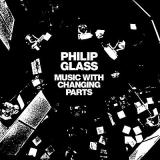
Philip Glass, the great American composer, was already in his mid-30s before his first album appeared, and then only because he produced the double LP himself. Music With Changing Parts was the inaugural release on his own Chatham Square imprint in 1971.
At this point, Einstein on the Beach, Glass' first opera, was still five years away. Yet in Changing Parts, one can already hear much of his vocabulary in full bloom: the buoyant arpeggios, the melding of electronic and acoustic instruments, the elongated drones of human voice, the primary emphasis on pulse (an interest he shared with fellow composer Steve Reich) and the ecstatic potential inherent in repetition.
The album features the original Philip Glass Ensemble – the composer himself, along with Jon Gibson, Dickie Landry, Art Murphy, Steve Chambers and Robert Prado – playing Farfisa organs and woodwinds as well as Barbara Benary on electric violin.
As Glass describes in his memoir Words Without Music, he secured a $500 interest-free loan for the recordings' initial release from the Hebrew Free Loan Society – an organization intended to help immigrants from the Old World upon arrival in the US. Though Glass was merely the grandson of immigrants, the venture wasn't far off the society's charter as Changing Parts helped usher in a new world of sound that would become known as Minimalism.
Chatham Square went on to release albums by other composers in Glass' circle, including Gibson and Landry. The label was named after the Manhattan intersection where Landry had a studio and the ensemble rehearsed.
Born in Baltimore in 1937, Glass first moved to New York to attend Juilliard at just nineteen, having already graduated from the University of Chicago. A staple of the Downtown scene, he can perhaps be appreciated as akin to the likes of sculptor Richard Serra or filmmaker Jim Jarmusch: mavericks who became major cultural figures entirely on their own terms.
This first-time vinyl reissue reproduces the original side-breaks and gatefold sleeve.
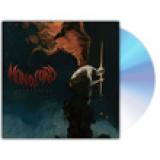
For well over a decade, MONOLORD have caused mass riff hypnosis with longform epics steeped in repetition, volume, and heaviness. One of heavy music’s most consistent and beloved bands, MONOLORD are gearing up for their next chapter with a new album titled Neverending. In looking for a new take on the genre, MONOLORD approached the legendary producer Sylvia Massy, known for her work with Tool, System of a Down, and Johnny Cash, among many more. The payoff from this new process is undeniable. Neverending feels like the culmination of 13 years of heavy, molten music, with a keen eye towards creating a sharper album. “The recording of this album is an example of the spirit of MONOLORD’s camaraderie,” says bassist Mika Häkki. “We’ve looked back and seen for the first time how much we have done as a band collectively, and realized what an intense 13 years it has been.” "The lyrics on this album are more personal than before because I went through some major life changes in the last couple of years,” guitarist/vocalist Thomas Jäger says. “I usually write about religion and how people are superstitious, but this record is more about relationships between people. But it’s not all about me. Sometimes I’m writing from another person’s perspective.” Neverending’s lead single “You Bastard” offers listeners a sharp contrast: A propulsive groove offset by lyrics about suicide. There’s two sides to suicide,” Jäger points out. “There’s the person who commits suicide and the people who gets left behind...The choruses represent the person left behind, and that person is calling the other a bastard—but it’s not pointing fingers or saying, ‘You suck.’ It’s more like, ‘You left me here with all the bullshit.’ It’s an understanding that life is not easy." Though it might not be immediately obvious, album opener “Iodine” was inspired by 70's rock epics like Lynyrd Skynyrd’s “Free Bird,” The Eagles’ “Hotel California,” and Led Zeppelin’s “No Quarter." Elsewhere, album closer “It’s Neverending” is the first MONOLORD song that Jäger doesn’t sing on. Instead, the death-metal style vocals are performed by former Entombed bassist Jörgen Sandström, (also of Grave, Domedagen and Firespawn.) 13 years on, MONOLORD’s path takes a new turn, and Neverending becomes the band’s most befitting album title. “It's been a wild ride and still is,” says drummer Esben Willems. “I've spent a quarter of my life in this band. Looking back, I'm incredibly proud of what we've accomplished along the way, and in many ways, this album feels like the essence of everything we've done so far. My mindset is the same it's always been, to be the absolute best the three of us can be.”
ounded in 1992 by the larger than life, Scottish punk-rock poet laureate, Mr Paul McKenzie, this merry band of miscreants has spent more than three decades circumnavigating the globe to bring the McKenzies gospel to an ever-expanding throng of rebels, scallywags and ne'er do wells. There's not many bands that can boast of a 30+ year career as staggeringly adventurous, wildly tempestuous and utterly death-defying as The Real McKenzies. It would be a serious mistake to write them off as just another Celtic punk band (they’ve been around longer than the Dropkick Murphys after all). They are an unstoppable juggernaut of touring mayhem. A ferocious troupe of insanely talented minstrels, storytellers and entertainers melding traditional acoustic and electric instruments to create a sound like no other. Their list of accolades is long. From sharing the stage with the likes of NOFX, Rancid, Flogging Molly, Metallica and Shane McGowan to appearing in film, books and video games to early releases with the almighty Fat Wreck Chords, their legendary status only continues to grow. On Yer Bike is an absolute beast of an album. A newly revitalized and laser-focused Paul McKenzie has never sounded better and his longtime bandmates have never been tighter. Boasting thirteen epic tracks, including the Sawney Bean trilogy (a trio of songs about Scotland's most infamous cannibal highwayman), the songs rage across topics including but not limited to love, literacy, historical sagas, eating sardines with your mother and, of course, cannibalism. Soaring bagpipes, heart pounding percussion and ultra melodic shoutalong Celtic punk rock are the orders of the day and are delivered piping hot from one of the most respected and adored pioneers of the genre.
A unique collaboration between Industrial Breakbeat pioneers Meat Beat Manifesto (Jack Dangers) and the undisputed king of Japanese noise, Merzbow (Masami Akita). "We may not speak the same language, but in the vortex of sound, there's a raw, primal understanding that transcends words. Noise can be art, a visual representation could maybe be Jackson Pollock's No 5, a plexus of chaos redefining what music can and could be. Pushing boundaries with Masami wasn't just a musical adventure, it was a masterclass in sonic anarchy"
(Jack Dangers, January 2024). 'Extinct' sees the duo take listeners on a transcendental journey, focusing on the dismantling of beat and structure and recycling the result through layers of beautifully crafted noise and feedback loops, giving birth to new rhythms buried deep in the dirt. The 20 minute opener 'FLAKKA' takes constantly evolving breakbeats which are gradually broken down over time, driven through a filter of harsh noise, destroying the old to give birth to the new. Raw and unforgiving, the track is a behemoth that blends mutant forms of broken beats and hints of dub, creating rhythmic noise of the highest calibre in the process. 'Burner' takes the record to its ultimate conclusion, the initial drum beat broken down so that it is barely recognisable. Pulsating distortion and high end audio fragments bleed into each other as the track lumbers forth and destroys everything in its path before slowly unravelling, degrading and falling apart. A harrowing yet somewhat cathartic trip through walls of harsh industrial noise and audio degradation, 'Extinct' is a masterful pairing of artists who have delivered something truly unique yet totally relevant. Don't sleep on this one! (Todd Robinson / Subunit) Composed, recorded and produced November 2023 - January 2024 by Jack Dangers and Masami Akita.
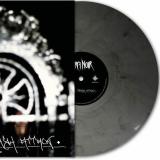
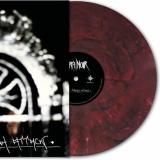
Norway's Aura Noir was formed in 1993 by Aggressor & Apollyon in pursuit of a more thrash-based form of black metal than much of what was coming out at the time - particularly in their homeland - citing bands such as Slayer, Sodom & Kreator as inspirations along with purveyors of the scene such as Venom, for a dirtier, stripped down, violent black/thrash metal sound. Their first official release was the 'Dreams Like Deserts' EP on Hot Records, & from there-on the band became a truly cult act, releasing a string of albums among ongoing live performances over the subsequent decades.
'Black Thrash Attack' was Aura Noir's debut full length album, originally recorded & released in 1996, & was a continuation of the intense thrash riffing displayed on 'Dreams Like Deserts'. This edition of 'Black Thrash Attack' includes a cover of the venom classic 'Heavens on Fire', from the cult 'Black Metal' album. All members of Aura Noir have had illustrious careers to date, with Carl-Michael Eide (Aggressor) notable for his work in Ved Buens Ende, Dødheimsgard, Virus, & Fleurety, as well as being part of other scene icons such as Ulver & Satyricon in their formative years. Apollyon, currently also seen in Coffin Storm with Darkthrone's Fenriz, previously featured in Dødheimsgard, as well as Lamented Souls & Immortal. Completing the trio is Blasphemer, formerly of fellow Norwegian legends Mayhem, as well as being current mainman in his recently established band, RUiM.
This edition of 'Black Thrash Attack' marks the 30th anniversary of the release, & is presented on limited marble vinyl, following the layout of the original.
Norway's Aura Noir was formed in 1993 by Aggressor & Apollyon in pursuit of a more thrash-based form of black metal than much of what was coming out at the time - particularly in their homeland - citing bands such as Slayer, Sodom & Kreator as inspirations along with purveyors of the scene such as Venom, for a dirtier, stripped down, violent black/thrash metal sound. Their first official release was the 'Dreams Like Deserts' EP on Hot Records, & from there-on the band became a truly cult act, releasing a string of albums among ongoing live performances over the subsequent decades.
'Black Thrash Attack' was Aura Noir's debut full length album, originally recorded & released in 1996, & was a continuation of the intense thrash riffing displayed on 'Dreams Like Deserts'. This edition of 'Black Thrash Attack' includes a cover of the venom classic 'Heavens on Fire', from the cult 'Black Metal' album. All members of Aura Noir have had illustrious careers to date, with Carl-Michael Eide (Aggressor) notable for his work in Ved Buens Ende, Dødheimsgard, Virus, & Fleurety, as well as being part of other scene icons such as Ulver & Satyricon in their formative years. Apollyon, currently also seen in Coffin Storm with Darkthrone's Fenriz, previously featured in Dødheimsgard, as well as Lamented Souls & Immortal. Completing the trio is Blasphemer, formerly of fellow Norwegian legends Mayhem, as well as being current mainman in his recently established band, RUiM.
This edition of 'Black Thrash Attack' marks the 30th anniversary of the release, & is presented on limited marble vinyl, following the layout of the original.
Get Over it, Underdog is an 11 song collection about the duality of the American underdog. The characters within these tunes are exotic dancers, cringe white guys, historic world explorers, ultra wealthy people playing God, baby Jesus, eccentric women who have done life their own way, and dreamers. The album is a rich tapestry that weaves together all of these tales into one enchanting piece. Through the lyrics in these songs we learn how the underdog character can embody any of the best and/or worst characteristics of humanity. The underdog may be a noble hero or an evil villain either of whom is able to pull off surprising or unexpected victories which good or bad in nature can often times lead to an underdog's ultimate downfall. Each song takes an honest look at what it means to be some kind of underdog all coming from a songwriter who has been called an underdog by others and who has at times identified himself in this way only to realize that in the end, every human being contains multitudes beyond the limited capacity we have to observe and truly know ourselves and each other.
It’s rare that a certain sound is entirely an artist’s own. Although undeniably a stew of impeccable influences – from blues to folk to Latin to dusty funk, soul and hip-hop – one cannot hear a Tommy Guerrero song without immediately recognising it as his - and his only.
The cult skater from San Francisco is globally renowned as one of the original members of the legendary “Bones Brigade” team. And as an accomplished multi-instrumentalist, his laid-back soul is beloved by all who’ve basked in its blissful glow.
There’s something elemental about this music that really stirs the soul. Strikingly beautiful and instantly addictive, it’s a kind of funk-fuelled, melody-driven, groove-based magic. There’s a serenity and heart in the playing that radiates warmth and splendour, as if crafted for endless sunsets. His albums that surfaced on Mo Wax at the turn of the century have been treasured since their release and it’s two of his most vital LPs that we’re honoured to reintroduce.
The originals were quietly pressed on to a single piece of vinyl so we’ve worked closely with Tommy this year to bring you these fresh, limited editions. They have been lovingly remastered, cut nice and loud on to heavyweight double vinyl and presented in deluxe gatefold jackets.
Soul Food Taqueria continued Guerrero’s guitar soul but represented a step forward with its polished production and greater complexity of instrumentation. Denied the promotion it deserved upon release, it flew under the radar. It is now the most wanted record of his wondrous back catalogue.
Guerrero’s atmospheric touch and subtle guitar provide lush, glimmering pieces of musical texture. Within his spacious compositions, uniquely arranged instruments flourish alongside each other to create a languid soundtrack for halcyon days.
As ever, the diversity on display is beguiling. From bossa nova, samba and cumbia rhythms to understated folk, funk and soul grooves, this is another exotic set of mellow gold; perfectly represented by ESPO’s memorable artwork. Furthermore, the title’s hybridity reflects the intoxicating sweep of stylistic flavours served up, reminding us that, however tricky it is to categorise Guerrero’s special blend, it’s always a pleasure to indulge in something so creative and adventurous.
Dubby, bass-heavy instrumentals give way to moody folk-soul – witness “It Gets Heavy”, featuring melancholic vocals from Gresham Taylor – whilst “Thank You MK” is a gentle ode to the tropics, featuring ethereal instrumentation, bright bass and warm, jazzy guitars. The second half in particular contains a number of stunning ambient tracks – check “Lost Unfound”, “Another Brother Gone” and “Broken Blood” - built around minimalist, laid-back grooves and detailed guitar orchestrations which wouldn’t be out of place on the latest Jonny Nash release.
Guerrero closes this flawless set with a moment of true beauty. Restrained and graceful, “Falling Awake” is a pared back piece containing meditative guitar melodies set against melancholic piano arrangements. It brings proceedings to the most peaceful close. Seductively good, it reminds you just how great simplicity can sound.
out of Stock
Last delivered 4 months ago available to reorder, subject to availability
Following their 2024 debut „La Grande Accumulation“ Anadol (Gözen Atila) and Marie Klock return with „Manivelles“.
Hailed by The Quietus as a duo that pushes each other to "greater heights of oddness" the pair produces an undefinable mix of folk, kraut, and pop nested inside expansive organ-based arrangements. The album‘s nine tracks emerged from intensive improvisations in Paris and Istanbul, brought to life with an odd mix of tools: from Prophet-5 and Jupiter-6 synths to mechanical Pianet clatter and even a salad spinner repurposed as a drone.
Klock‘s French lyrics navigate the miniature and the cosmic, exploring the small tragedies of everyday life - botched holiday gatherings, lingering heartbreak or the absence of a loved one.
Born from a moment of catharsis during an Istanbul earthquake that ended a period of writer‘s block, the record draws its material from lived experience and a lasting friendship.
Its title „Manivelles“ - meaning "cranks" - hints at the musical partners creative penchant for generating songs through friction and playful contradictions. From the shouted pastiche of "Symposium" to the sparse synth pulses of "Une Grande Tragédie Polonaise", it‘s an album with a wonderfully wonky heart that sounds like faint signals from a beautifully failing transmitter.
out of Stock
Last delivered 4 months ago available to reorder, subject to availability
Recorded between the iconic Abbey Road and Polish Radio studios, Hania Rani"s original music for Joachim Trier"s Cannes and Golden Globe winning, Oscar and Bafta nominated "Sentimental Value" is a deeply intuitive collaboration, composed before a single frame was edited. For Hania Rani composing for the most recent film by Joachim Trier was nothing less than a true joy and a real artistic adventure. As she explains: "It doesn"t happen often that I"m asked to work on a film by a director whose work I know so well and which resonates with me so naturally. What I understood while working with such an intriguing mind and intelligent artist as Joachim is that the role of a film composer is to wander along with the director, hand in hand, rather than follow one another. The collaboration should be a partnership - evenly balanced and able to invigorate people on both ends - otherwise it will always feel superficial, imposed, and timid".
out of Stock
Last delivered 86 days ago available to reorder, subject to availability
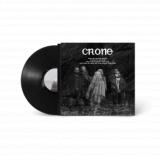
Irish drone-doom-folk act One Leg One Eye, the project of founding Lankum member Ian Lynch and veteran noise monger George Brennan, announce their new album, CRONE, out on 1 May on AD 93.
Today the group share the first track on the album, ‘Many are my Names Besides’, on which they are joined by the elemental force that is legendary actor, performer, writer and director Olwen Fouéré (Operating Theatre) contributing vocals.
Olwen Fouéré comments:
“When Ian and George first approached me to work with them, they were already creating the Crone album as a sonic invocation of the ‘sovereignty goddess’, who personifies the land and the legitimacy to rule it, in her darkest and most terrifying form. As we spoke, the triple goddess figure of the Morrigan entered my mind, reinforced by a marked presence of crows every time we met. The Morrigan is essentially a war goddess, frequently appearing as a crow in a battlefield, a death prophet, a guardian of sovereignty, and a very powerful figure in Irish Mythology.
So I invoked her energy as a starting point, using text extracts that Ian sent me from the Ulster Cycle and other sources. The voice recording was done in one day, improvising the source material while the already composed music occupied my psyche through headphones.
Listening back, at this time in our world, I can only wonder at how much blood and war the Crone/ Crow of sovereignty is preparing to unleash now. Watch out.”
CRONE is the second album from Lynch and Brennan, following on from 2022’s slowburn slab of ambient grit, …And Take The Black Worm With Me. Bewildering, psychedelic and ultimately transcendental, the four tracks of One Leg One Eye’s CRONE shapeshift and morph endlessly in a coarse miasma. Traditional song structures and vocal melody are eschewed, instead the trio directly channel energies from the rich seams of mythological significance submerged below the Irish psyche. The anger, rage and beauty of the sovereignty goddess burn a consistent and deliberate line through the album in the form of obscure incantations and dire pronouncements, the gnarled sinews that bind it all together.
Just as the subject matter of the tracks delve deeper into Irish myth and the remote past, the temporal reality of the album reaches back into the bands prehistory, with the majority of it the material being recorded by Lynch and Brennan in 2021 before One Leg One Eye was conceived of as an entity with Brennan working on the CRONE project while Lynch worked on …And Take The Black Worm With Me.
When they were there they saw a lone woman coming to the door of the Hostel, after sunset, and seeking to be let in. As long as a weaver’s beam was each of her two shins, and they were as dark as the back of a stag-beetle. A greyish, wooly mantle she wore. Her lower hair used to reach as far as her knee. Her lips were on one side of her head.
She came and put one of her shoulders against the door-post of the house, casting the evil eye on the king and the youths who surrounded him in the Hostel. He himself addressed her from within.
"Well, O woman," says Conaire, "if thou art a wizard, what seest thou for us?"
"Truly I see for thee," she answers, "that neither fell nor flesh of thine shall escape from the place into which thou hast come, save what birds will bear away in their claws."
"It was not an evil omen we foreboded, O woman," saith he: "it is not thou that always augurs for us. What is thy name, O woman?"
Radhika Meera Dade: “Ever since I entered this realm, music has surrounded me in every way possible. The sounds of magic have been nourishing my soul since birth, the first memories I have as a young child are listening to my dad’s eclectic vinyl collection. I feel so lucky to have been exposed to such a range of music at a really young age: artists from Alice Coltrane to The Go-Betweens, all of these musicians have subconsciously and consciously inspired me musically in many different ways”.
Glass Modern is very proud to present the debut album by Radhika Meera Dade. Cine-Pop is a collection of songs that flow gently and easily in and out of each other - a suite, a short film, everything an album should be. Coming in at 33.3 minutes, it’s the perfect length for an album, it doesn’t short change you, it doesn’t stay too long - it’s designed to be played in one sitting. It’s like being in a friend’s house and noticing the things that are most important in their life - objects, family portraits, records, musical equipment, their curated accumulation. It reflects so many things - culture, community, fandom and the incredible bond between Radhika and her father, Sushil, the Future Pilot AKA. The record spans generations and continents but its home is always Radhika and the family jams she made with Sushil in various garages, bedrooms and garden dens - her soaring voice and love of all kinds of music from Bollywood to Goth Pop to The Glasgow School. The songs are collected from memory and the immediacy of time - one goes all the way back to her 10 year old self penning Future Me, an eco anthem. In different moments other musicians appear - most notably key collaborator, Eric MacDonald, on hazy synth and keys, and Radhika’s mother Vinita, who has a gorgeous voice too. The Glasgow School is very present - Mitch Mitchell (The Pastels) , Gerard Love (Lightships/ ex-Teenage Fanclub) and Tracyanne Campbell (Camera Obscura) all bring their casual magic to the table. Cine-Pop, mostly made in Glasgow at La Chunky Studio with the excellent Colin McGeogh (who also contributes flute, keys and electronics) is a one-off. It’s unrepeatable - there, gone. It’s the world through the eyes of a dazzling young Indo-Scottish woman. Everything she is has gone into it, is part of it and is there for a reason. Following on from the first single, Starry Eyes, which was played multiple times on BBC 6Music and other stations, other singles to be released from the album include Feline Bandits plus a version of the Strawberry Switchblade classic Since Yesterday. Radhika will also be collaborating with Glasgow-based film maker, Laura Meek, on promos and the plan is to play live throughout the year.
Tajemnica is a transgression—too gentle for dancing, too euphoric for standing still. Sparse, scarce, and subtle, the new album by Polish performance artist, musician, and poet Wojciech Kosma, aka spalarnia, eagerly explores modern dance genres, experimental production, and nostalgic electronics to surrender to what is truest—essential song forms, melodies, harmonic and rhythmic basics, the most resonant feelings.
Sung in spalarnia’s trademark soft, low, almost tactile voice, the eight hypnotic songs tell stories of closeness and love, and their favored companions—pain and heartbreak. In “Bliżej” he sings “I love not loving you / I want to be a part of you.” And in “Jedyna”—the album's single—he states: “You are the only one / there is no other me / only the one for whom you are the only one.”
Contrary to the meaning of its Polish title (Tajemnica translates to “secret”), the album that moves between ghostly ambient pop, languid R’n’B, and Eastern European folk doesn’t reveal anything outright—the music only points to where the secrets might lie. One can choose whether to hear them or not.
Marvin Gaye always dreamed of being a smooth crooner, “sitting on a stool, possibly behind a piano,” delivering velvety songs like Nat King Cole. But Motown had other plans. Pushed between raw R&B and polished pop, Gaye fought to find his own voice, eventually rising to become one of the greatest soul singers in history.
Motown Records released the first Marvin Gaye record in 1961 "(I'm Afraid) The Masquerade Is Over", a single intended for (radio) promotion from the singer's debut album. This was followed up by the officially released "Let Your Conscience Be Your Guide" a week later. Gaye scored his first real hit with "Stubborn Kind of Fellow" in 1962, which he had co-written himself, joking about his alleged stubbornness. He found his own unique style with the single released at the end of the year: "Hitch Hike". The foundations were now laid for an enormous series of chart successes: "Pride And Joy", "Can I Get A Witness", "How Sweet It Is (To Be Loved By You)" and "Ain't That Peculiar" are all Motown classics from 1963-1965 which are still being regularly played today after all these years. The duets he recorded with Kim Weston ("It Takes Two"), especially Tammi Terrell and Diana Ross were certainly at least as good.
He scored his biggest ever hit with "I Heard It Through The Grapevine" in 1968. "What's Going On" from the same titled album became a number 1 hit in the USA. The album was received as a masterpiece and is regarded as one of the most important records in pop history. In 1973, the artistically and commercially very successful, "Let's Get It On" album was mainly a musical ode to Marvin's love for his new muse Janis Hunter. His journey continued after a turbulent relationship, addiction and a dramatic creative rebirth in Belgium, where he crafted the global hit “Sexual Healing in 1982.
Marvin Gaye left behind timeless hits, groundbreaking albums, and a legacy that shaped the sound of modern soul. His story, from ambition to artistry, from struggle to brilliance, remains as powerful as the music he created.
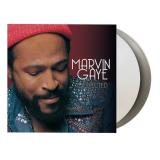
Music On Vinyl proudly presents a special coloured vinyl edition of the Marvin Gaye Collected album which is available as a limited edition of 10.000 individually numbered copies on white (LP1) and silver coloured vinyl (LP2) and includes a booklet with liner notes.
Phonica welcomes Mattias El Mansouri, a Swedish-born DJ and producer of Moroccan/Chilean descent who has been behind some of our favourite releases over the past few years on labels such as Aniara and Nous'klaer.
On the 'Sense Data' 12", El Mansouri expands on his atmospheric House and Techno explorations with three deep yet dancefloor primed pieces that hold personal resonance for him.
El Mansouri, who holds a degree in Theoretical Philosophy, explains:
"'Sense Data' are the immediate elements of perception; what is directly given to the senses before any judgment or interpretation. In vision, these appear as colored, shaped patches; in other senses, as sounds, tastes, smells, or tactile qualities. For example, seeing a brown table with a white coaster involves sense data of a brown patch and a white roundish patch, from which one infers the presence of a table and coaster."
On the record's flip, we have the beautiful "Cielo Vacío' and 'Ouzo Hallon' dub version of 'Sense Data'. El Mansouri continues:
"Cielo Vacío translates to “empty sky” in Spanish. The track serves as a eulogy for my brother, who passed away in December 2023. I chose this title because it resonates with the sonic and emotional atmosphere of the piece. Its ambiguity is intentional, carrying both the weight of grief that lingers after losing someone you love, and a strange, fragile peace you extend toward the departed. It reflects the hope that, wherever they are, whether or not one believes in an afterlife, they have found rest.
Ouzo Hallon translates to Ouzo (the Greek liquor)+Hallon (Raspberry). It’s a long drink that my (Greek) ex came up with last summer, mixing ouzo, raspberry syrup/raspberry juice and ice. It became a thing in our little friend group, consisting of mostly Greeks, and every time we all hang out we would all just drink ouzo hallon until we couldn’t stand straight. I always wanted to name a track Ouzo Hallon, just for the fun of it, and what better way to get the chance than now!"
out of Stock
Last delivered 83 days ago available to reorder, subject to availability
Rashad and Confidence announce the vinyl reissue of their debut album “The Element Of Surprise”. Though originally released in 2011, the melange of soul samples, classic breaks and favoring of lyrical storytelling / conceptual joints could easily have been released in the 90’s.
The 2xLP vinyl edition includes the 2019’s single “Desires” as well as two never before heard tracks from the 2011 sessions entitled “Non Stop” and “Feel It.” All tracks on the 2026 vinyl version are remastered!
Rashad, a Brooklyn NY emcee who sports a nimble and rapid flow excels at making anthemic choruses interspersed with highly detailed bars. Examples of album topics include a vivid picture of the hood while making a cautionary tale of its pitfalls (“The City”), his personal emcee origin story (“Days Of My Youth”), and the results of low motivation (“Pass Me By”) among others.
Boston based producer Confidence has made a career of sample chopping and analog warm heaters. He also tends to favor the one emcee/one producer line-up of the golden years. This extends to his recent collaborative LP's on Below System Records including “Library Of Sound” with M-Dot and “Kool Moe Dese” with Big Dese.
“Come On In My Kitchen” remains one of Johnson’s most covered and celebrated songs. Said to draw inspiration from the Mississippi Sheiks’ hit “Sitting On
Top Of The World,” the song’s repeating guitar phrases create an unmistakable sense of melancholy and depth.
“They’re Red Hot,” on the other hand, stands out as one of Johnson’s most unusual recordings, performed in a lively hokum style. Featuring brisk, jive-inflected
guitar and Johnson’s rapid-fire vocal delivery, the track has even been described as a possible precursor to early rap music.
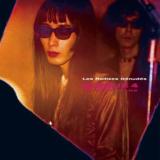
Les Rallizes Dénudés returns with Disque 4 -’76 Studio et Live-, the latest in the ongoing series of official archival releases from the celebrated Japanese underground band.
In 1991, Les Rallizes Dénudés released what would become the only official albums issued during the band’s lifetime: ’67-’69 STUDIO et LIVE, MIZUTANI / Les Rallizes Dénudés, and ’77 LIVE. What no one knew at the time was that Takashi Mizutani was already deep into preparing another record.
Disque 4 reconstructs the track list Mizutani had put together for that fourth album. This includes the single “White Awakening," recorded in 1976 at the studio in Takadanobaba BIG BOX as part of the sessions that would become known among collectors as the “Virgin Demos.” Production and mastering of this archival release were handled once again by Makoto Kubota, assembling the album from the masters left behind by Mizutani, utilizing newly discovered tapes as additional sources.
Prepared by Mizutani using a variety of formats, including U-Matic, open reel, and DAT, the tracks were originally labeled with working titles such as “Disque 4” and “Record No. 4,” indicating that Mizutani intended them for inclusion on a possible fourth album. The recordings were taken primarily from studio sessions that all seemed to have taken place around 1976, which aligns with the claim that Mizutani himself once made that “there exists an album of studio recordings made with the same members as ‘77 LIVE.” His notes also suggest an attempt to sequence the tracks as a vinyl LP, splitting them into A and B sides. It's not hard to imagine that in the era of CDs in the early 1990s, an album on analog LP would have been an extremely difficult sell. Thus, the “Fourth Album” had become another lost piece of the intricate Rallizes myth.
Les Rallizes Dénudés may be notorious for the colossal volume and extended song lengths in their live settings. But this work, centered around studio recordings and condensed onto a single LP record, transcends the common impression of the band’s aggressive flood of noise. Instead, the “lyricism” at its core emerges with striking clarity. And needless to say, this is precisely the charm of the Rallizes that continues to captivate fans worldwide today.
out of Stock
Last delivered 4 months ago available to reorder, subject to availability
Francis Ford Coppola’s coming-of-age drama The Outsiders (1983) adapted S.E. Hinton’s successful 1967 novel of the same name, using a young cast of rising stars (C. Thomas Howell, Tom Cruise, Matt Dillon, Rob Lowe, Emilio Estevez, Patrick Swayze, Ralph Macchio and Diane Lane) many of whom came to be known as the Brat Pack, defining a genre of 80’s films. The plot focuses on the rivalry between two gangs of teenagers in Tulsa, Oklahoma, one poor (Greasers), the other wealthier (Socs).
Coppola’s ambition was to achieve the widescreen scope ‘of a teen Gone with the Wind’, and he asked his father, Carmine Coppola, to score the soundtrack. The result is epic and romantic, a return to a golden age of Hollywood film composing which suits the stylised and epic cinematography, becoming darker as the characters fulfil their tragic destinies. Stevie Wonder co-wrote and performed the song that plays over the credits, ‘Stay Gold’, which is included on this release.
The inner sleeves feature extensive notes by Daniel Schweiger on the history of the film, the soundtrack and an insight into the Coppola father and son partnership.
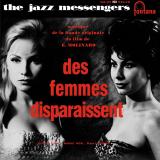
Art Blakey was the new hero on the Paris jazz scene, thanks to his Olympia concert on November 22nd 1958, and his subsequent appearances at the Club St. Germain. People swore by his 'Blues March' and 'Moanin', so why not get him to do the soundtrack for the film Molinaro just finished? The only problem, albeit a major one, was that time was short, so an original score was out of the question: the Jazz Messengers would have to preach the good word by other means. Fortunately, the band's tenor and arranger, Benny Golson, had become an expeet in the art of making somrthing new out of somrthing old, and he did it with equal talent and intelligence.Except for three originals, the musical sequences of the film are actually fragments from the Messengers' book, but in adapted versions; 'Whisper Not', for example, can be discerned underneath 'Ne Chuchote Pas'. It was an extremely hazardous process...but the result turned out to be remarkable!!!
Originally released in 2014 on cassette and digital only, Till Human Voices Wake Us was the first album by the Iranian artist on Umor Rex. It became a key work in our catalog, and now, 12 years later, it is available on vinyl for the first time. This is the first in a series of four special, limited reissues to be released in 2026 to mark the 20th anniversary of Umor Rex.
Till Human Voices Wake Us comprises ten tracks with a clear and carefully structured script, based on poems by T.S. Eliot, highlighting Siavash Amini’s work as a composer for theater, film, and art exhibitions. His music deliberately leans toward ambient expressions, at times recalling Morricone’s Western film scores. The interplay between synthetic and digital elements, together with multilayered, soul-healing electric guitar passages, creates an opulent sonic texture that moves between dramatic and melancholic moments with a finely constructed, fluid dynamism.
There is an emotional depth in each piece, guided by tonal variations and shifting textures that turn the music into a mental journey, with landscapes, a sense of cold resolution, and the quiet inevitability of an ending. Till Human Voices Wake Us was Amini’s first album on a non-Iranian label. Following this release, he has also published work, in addition to Umor Rex, on labels such as Room40, Hallow Ground, and Opal Tapes, among others, and is now considered one of the most prominent figures in Iran’s experimental music scene.
All music by Siavash Amini. Original master by Nicholas Szczepanik. Remastered for vinyl by Rafael Anton Irisarri. Artwork by Daniel Castrejón.
"Already established within Iran’s music scene, Siavash Amini has crafted a powerful signature sound that blends meticulously assembled ambient synthesis with languid electric guitar melodies, recalling Lanois and Eno’s classic Apollo." — THE QUIETUS (Tristan Bath)
"Slime Wave 2" is the highly anticipated sequel to Hus Kingpin's 2019 album, immersing listeners into the gritty, yet hypnotic world of one of the waviest MC’s in underground hip-hop. Building upon the foundation laid by its predecessor, this album pushes boundaries, blending intricate lyricism with captivating production to create an auditory journey like no other.
Backed by an array of talented producers, the album's beats range from soulful and jazz-infused to hard-hitting and gritty, providing the perfect backdrop for Hus Kingpin's lyrical prowess. Each track is a sonic masterpiece, meticulously crafted to evoke a range of emotions and keep listeners captivated from start to finish.
"Slime Wave 2" features a killer lineup of guest appearances, adding layers of depth and diversity to the album's sonic landscape, with Bala No Judas, Shyheim, Supreme Cerebral, Skrilla and Tritty joingin Hus on this journey.
Behind the boards, a stellar lineup of producers brings their A-game to "Slime Wave 2," ensuring a diverse and immersive listening experience. From the legendary Madlib's signature soulful soundscapes to the gritty, boom-bap vibes of Macapella, Owltree, and Manny Megz, each producer leaves their indelible mark on the album, creating a rich tapestry of beats that perfectly complement Hus Kingpin's lavish lyricism.
out of Stock
Last delivered 4 months ago available to reorder, subject to availability
Our very first release on the label back in 2018. We are always being asked if we will repress it again, and now we have. But this time it's slightly different to our first pressings - for this repress we took the original DAT rips to Dapz at Compound Audio for him to master. And then those masters were shipped to Beau at Ten Eight Seven Mastering. So now this release is audibly similar to our other releases over the past 8 years - and in turn the label has been updated. So for those collector headz out there, it'll always be apparent which pressing this one is.
out of Stock
Last delivered 3 months ago available to reorder, subject to availability










![COIL - SIZE M T-SHIRT [SKULL]](https://www.deejay.de/images/l2/9/1/1227091.jpg)
![COIL - SIZE S T-SHIRT [SKULL]](https://www.deejay.de/images/l2/9/7/1227097.jpg)
![COIL - SIZE L T-SHIRT [SKULL]](https://www.deejay.de/images/l2/0/0/1227100.jpg)
![COIL - SIZE XL T-SHIRT [SKULL]](https://www.deejay.de/images/l2/0/3/1227103.jpg)
![COIL - SIZE XL T-SHIRT [SKULL]](https://www.deejay.de/images/l2/0/6/1227106.jpg)