
Поиск:the p
Стили
Все


- A1: The Whip Hand
- A2: Aegis
- A3: Dyslexicon
- B1: Empty Vessels Make The Loudest Sound
- B2: The Malkin Jewel
- B3: Lapochka
- C1: In Absentia
- C2: Imago
- C3: Molochwalker
- C4: Trinkets Pale Of Moon
- D1: Vedamalady
- D2: Noctourniquet
- D3: Zed And Two Naughts
Noctourniquet And then everything went black, at least for a while, at least for The Mars Volta. In the months and years following their fifth full-length, Octahedron, Omar kept on at his usual fearsome creative pace. In fact, he ramped up his output considerably, starting up his own Rodriguez Lopez Productions label and releasing a slew of solo albums. It was a practice he’d begun shortly after De-Loused’s release, with his solo debut A Manual Dexterity: Soundtrack Volume One, but as the decade reached its close, Omar grew to rely upon his solo recordings as an outlet for his prolific creativity, these albums often exploring musical pastures far beyond even The Mars Volta’s wide-ranging parameters. Before choosing to release music under his own name, Omar would always play it to Cedric first, to see if the frontman thought it had potential to become Mars Volta music. Shortly after Octahedron’s completion, Cedric flagged one batch of tracks Omar had cut with Deantoni Parks, a brilliant drummer and composer who’d briefly occupied the Mars Volta drumstool in-between Jon Theodore and Thomas Pridgen’s tenures, and whose volcanic creativity and unique, unpredictable approach to rhythm and composition had quickly made him one of Omar’s favourite artistic foils.
As with the music that made up Octahedron, the new tracks Cedric had optioned for The Mars Volta often veered far from the riotous, Grand Guignol visions of their earlier releases. It possessed the punchy, song-based focus of Octahedron, though this was a considerably darker, more menacing strain of pop, with synthesisers figuring heavily in the productions. Cedric took the tracks in 2009 and set about writing songs to the music. But no more new Mars Volta music would be heard until 2012. The years that passed in-between were nonetheless momentous, and busy, witnessing an unexpected reunion of the members of At The Drive-In, and Cedric joining his own side-project, Anywhere. But there wasn’t any sign of life within the Mars Volta until Omar, Cedric and their bandmates took to the road for a series of live shows in the spring of 2011, billed as The Omar Rodriguez-Lopez Group, debuting the songs that would become Noctourniquet. The album followed the next year, and it remains one of The Mars Volta’s finest, its electronic textures staking out unfamiliar but fertile new ground.
An unsettling, subtly turbulent listen, Noctourniquet found Cedric sketching out a story about “some sort of device that stops the darkness from bleeding”, drawing influence variously from the nursery rhyme Solomon Grundy, the Greek myth of Hyacinthus and the song Birth, School, Work, Death by British underground rockers The Godfathers. It was an album of dystopian futurism, signalled by the paranoid cyber-rock of opener The Whip Hand and its unnerving chorus, “That’s when I disconnect from you”. But it was also an album of inspired, unexpected moves and uncanny invention, like how Dyslexicon seemed to eerily evoke Blondie’s Rapture, before rushing headlong into its bruising chorus, tempos shifting restlessly throughout like quaking earth beneath the listener’s feet, or how Aegis put a brave new spin on The Mars Volta’s trademark rewiring of salsa’s overdriven passions, or how Cedric had never sounded as scary as he did on The Malkin Jewel’s mutant burlesque shuffle. Tracks like Molochwalker were sleek and concise in a way The Mars Volta had never really attempted before – which was all part of Omar’s plan.
“It had all been guitar, guitar, guitar, overdubs, everything fighting for space in the same frequency,” he explains. “So for Noctourniquet, it was all about subtracting elements, of sticking to how I made demos.” Deantoni’s presence helped revivify the group, playing against cliché and expectation, and taking each song in unexpected directions. “I’d beatbox a rhythm for him to play, to go with my guitar part, and he’d come back with three or four alternate options. It was so great.” Similarly, Cedric had never sung better than on Noctourniquet, staking out a fearsome spectrum from the chilling Tom Waitsian growl of The Malkin Jewel to the keening, beautiful vocalisation on Vedamalady, rising to match some of Omar’s most deft, most immediately effective and melodic songs yet. Indeed, Noctourniquet is the sound of a band discovering new ways to do familiar things, renewing their commitment to their mission, finding fresh inspiration a decade in, and shaking off any complacency that might have come with ten years of acclaim and success.

- 1: Better With You
- 2: I'm Not The One
- 3: I'll Be There
- 4: You Won't Fool Me
- 5: Open Your Eyes
- 6: Won't Quit You
- 7: Flippin' Stomp
- 8: I Like It
- 9: Stung
- 10: Time Will Tell
- 11: I'll Wait
- 12: Play With You
также имеющийся в продаже
Cream White Vinyl[25,17 €]
Although they emerged from Melbourne bayside outer suburbs onto the local live scene with their fresh and spirited indie-rock update of the garage-beat sounds of The Easybeats, Kinks and early Beatles only a year or so ago, Gnome actually started out as a bedroom solo project for teenaged singer/songwriter/ guitarist Jay Millar a few years back. Jay, playing everything himself, started recording and releasing a steady succession of material - quite a few albums' worth - on his own Goblin Records label via Bandcamp. Realizing he needed a band to start playing out, Jay approached some like minded players from Frankston's rehearsal hub Singing Bird, and with Jay on lead vocals and lead guitar, Ned Capp on guitar, Olly Katsianis on bass, and Ethan Robins on drums, Gnome became a band.
Early in 2025, the last solo Jay recordings released under the Gnome name caused something of an international underground sensation when the Bandcamp only I Like It EP - four songs of kranked up Kinks-style mono riffage - was posted by a Spanish garage-punk YouTube page and quickly clocked up over 50,000 views.
At the same time, the band quickly began gaining attention on the thriving Frankston scene and around Melbourne. They started breaking out, sharing bills with the likes of Drunk Mums, Skegss, Split System, The Prize, The Unknowns, Cosmic Psychos, Hockey Dad, Guitar Wolf, The 5.6.7.8's, The Breadmakers, Loose Lips, fellow Frankstoners/Singing Bird alumni The Belair Lip Bombs, and, on a quick trip to Sydney, Cammy Cautious & The Wrestlers.
And now, finally, we have The Gnomes' debut album. Twelve killer tracks that combine the best of the '60s with the best of today. Twelve killer tracks that show off assertive and accomplished songwriting, singing and playing and an explosive and authentic swinging group sound. Twelve killers slices of raw rock'n'roll running the gamut from the savage Rhythm & Blues of "Play With You" and “Better With You” to the vibrant beat pop of "I'll Be There" and "I'm Not The One", with forays into the heavy reverb psych of "Stung", the Cavern/Star Club stylings of "Flippin' Stomp" and the first flyte jangle of "Time Will Tell" along the way. There’s more of course, including a new version of that Kinks-style kranker “I Like It” for good measure.
Frankston’s Fab Four are taking their sound to the world. Join them for the ride!

- 1: Nart Shabatynoqo - Tizhin Gup
- 2: Ritmik Improvizasiya - Kamran Kərimov, Yusif Əzizov
- 3: Sivrin Dun - Tatiana Dordzhieva, Maria Beltsykova
- 4: Qartuli Dance - Arkady Kagramyan, Arseniy Kagramyan
- 5: Abredj Nuh - Mutat And Ilyas From Ulyap
- 6: Barkhallal Dawdi - Balkhar Ensemble
- 7: Nart Shabatynoqo - Zamudin Guchev
- 8: Zazu Daxe - Tizhin Gup
- 9: Arazbari - Şirzad Fətəliyev, Arazbarı Balaban Qrupu
- 10: Perizada - Bagdagyul Ramazanova
- 11: Cəngi - Şirzad Fətəliyev, Arazbarı Balaban Qrupu
- 12: Yali - Bagdagyul Ramazanova
- 13: Hüseyni - Aşıq Altay
- 14: Humayun - Mirjavid Cəfərov
- 15: Si Woreyda - Nayil Quoshi
15
The label ORED Recordings was founded in 2013 by Circassian friends and fellow musicians Bulat Khalilov and Timur Kodzoko, in order to start an activity which is dedicated to documenting and preserving the traditional and post-traditional music of the North Caucasus. Khalilov and Kodzoko, were just as excited about this music as it sounded like a force that transcends borders and in which time dissolves and community becomes the only compass.
Through hundreds of field recordings, which have been made at communal gatherings, local festivities or family meetings, the label has captured a wide range of individual voices and their unique acoustic manifestations. All recordings on this album capture the raw expressiveness of the mountainside villages. Music performances being played by people who dedicate their love to music and an additional willingness to share intimate emotions.
Whereas most academic ethnomusicologists travel around the world in order to study foreign cultures, Bulat Khalilov and Timur Kodzoko were fascinated by what they just heard in the familiar regions of their then home town Nalchik. In resolute contrast to Russian academic circles, they soon developed a DIY Punk ethos for their far reaching work, beginning to formulate their own language in the field of ethnomusicology and to push the traditions forward.
However, the label’s work goes far beyond mere preservation. »We started traveling around the North Caucasus and did recordings with people from many different ethnic groups. In the North Caucasus, our work had a political dimension because there used to be (and still are) a lot of conflicts between different ethnic groups. We quickly understood that our work is not just about music and art,« states Bulat Khalilov.
The work of the label aims to reflect not only the great music of the Caucasus and its various communities but also to tell the stories behind it. They are stories of struggle, of independence, of working with historical memory in the present times of the 21st century.
Since Bulat Khalilov and Timur Kodzoko are now based at the University of Göttingen, we were able to meet each other many times and to eventually exchange ideas which resulted in the release of this collection of recordings. The compilation »Music from the Caucasus« provides a first introduction to the comprehensive work of ORED Recordings. For this collaborative release on TAL the recordings are being made accessible for the first time ever on vinyl, CD and various digital formats, all coming with extensive liner notes and yet unpublished photographs.
Bulat Khalilov and Stefan Schneider, November 2025

- Tempelschlaf
- Day Of The Poacher
- Cathedral Of Bleeding
- Statues
- Alpha Fluids
- Babel, You Scarlet Queen!
- Last Theatre Of The Sea
- The Carrion Cocoon
также имеющийся в продаже
Black Vinyl[34,03 €]
The Ruins Of Beverast narrate fables of the darkest secrets in human history and present. ‘Tempelschlaf’ is The Ruins Of Beverast’s seventh full-length output and sees the band continue with their sonic morbidity, noises and melodies of a human habitat in its sunset era, while maintaining and refining the widescreen low end that has been sustaining their sound from the beginning. On the instrumental side, ‘Tempelschlaf’ is stripped of some fat, forging the songs with a reduction in length and layers, cautiously leaning towards the stage part of things. While synths and samples have always played an adamant role in The Ruins Of Beverast’s sound, they reach yet another level of psychedelia and insanity on ‘Tempelschlaf’. The Ruins Of Beverast were formed in early 2003 and named after the most bloodcurdling occasion of the collapse of the giant bridge Bifröst. This incident bears analogy to the musical aura of The Ruins Of Beverast, which builds a sonic landscape of massive, surreal, barren mountain formations. Seven full-length albums and several EPs, splits and compilation releases have been published through Ván Records so far. As a live act, The Ruins Of Beverast became a strong force after Roadburn 2013, a festival the band have played again since with exclusive shows. The Ruins Of Beverast have embarked on several European tours with acts like 1349, Grave Miasma and King Dude, as well as a highly acclaimed US tour that eventually concluded with an iconic show at Fire In The Mountains festival. The band have played such well-established club shows and festivals as Hellfest, Inferno, Incubate, Party.San Open Air and Beyond The Gates, to name just a few.
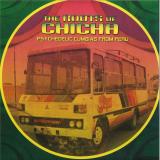
- A1: Los Mirlos - Sonido Amazonico
- A2: Juaneco Y Su Combo - Linda Nena
- A3: Los Hijos Del Sol - Carinito
- A4: Los Destellos - Patricia
- A5: Los Diablos Rojos - Sacalo Sacalo
- A6: Los Riberenos - Silbando
- B1: Compay Quinto - Diablo
- B2: Los Destellos - Elsa
- B3: Ranil Y Su Conjunto Tropical - Mala Mujer
- B4: Manzanita Y Su Conjunto - Agua
- B5: Los Destellos - Para Elisa
- B6: Juaneco Y Su Combo - Ya Se Ha Muerto Mi Abuelo
- C1: Los Ilusionistas - Colegiala
- C2: Los Diablos Rojos - El Guapo
- C3: Manzanita Y Su Conjunto - El Hueleguiso
- C4: Juaneco Y Su Combo - Vacilando Con Ayahuasca
- C5: Los Hijos Del Sol - Linda Munequita
- D1: Grupo Celeste - Como Un Ave
- D2: Los Destellos - Constelacion
- D3: Los Wembler's De Iquitos - La Danza Del Petrolero
- D4: Chacalon Y La Nueva Crema - A Trabajar
- D5: Los Shapis - El Aguajal
- D6: Los Mirlos - La Danza De Los Mirlos
23
The Roots of Chicha, compiled by Barbès Records, was originally released in 2007 and became the first recording to popularize psychedelic cumbia around the world.
From the late 60's through the 80's, Peruvians invented a new popular musical hybrid inspired by music from the Americas. In 1968, Enrique Delgado released his first record on Odeon with his new group, Los Destellos, single-handedly creating Peruvian cumbia. He codified the genre early on by using the electric guitar as the primary melodic instrument, and mixing cumbia rhythms with folkloric huaynos, criollo voicings, Cuban guarachas and guajiras, rock, boogaloo, surf, psychedelia, oriental music, classical music, and bits and pieces from Brazil, France, Chile... All Peruvian cumbia bands for the next thirty years would end up drawing from the exact same sources (Grupo Celeste, Los Mirlos, Juaneco Y Su Combo, Manzanita Y Su Conjunto...).
This new wave of Peruvian cumbia came to be known as chicha. Chicha is originally the name of an alcoholic drink, made of fermented maize, which the Incas were especially fond of. In the past thirty years, however, the word has taken on a pejorative connotation. Peruvian cumbia started being called chicha in the late 70s, around the same time that the music came to be viewed as the expression of the slums – the pueblos jovenes. Little by little, the word became an adjective, and people now talk of chicha culture, chicha press, chicha architecture, even of a chicha president, and none if it – you guessed right – is meant as a compliment. Chicha suggests corruption, shady deals, and cholos – a derogatory term for a person of Andean heritage that, of late, is being reclaimed and worn as a badge of honor by the very cholos it was supposed to demean in the first place.

- 1: The Rule Of Three
- 2: Egglet
- 3: Kurt Angle
- 4: Lush Life
- 5: Nowhere
- 6: Sheriff Elvin
- 7: Ghosts
- 8: Do Not Forsake Me O My Darling
Building logically on the natural development of their two previous collections, this time the fearless threesome can be heard roaming further than ever before into the uncharted hinterlands where the deep jazz tradition of the classic tenor trio format, laden with melody and swing, ventures into the untamed regions of free improvisation. At the heart of the band is the unmistakable beat of drummer Spike Wells, who this year celebrates his 80th birthday and the 65th year of his extraordinary career at the forefront of jazz in the UK, providing the driving force behind everyone from homegrown heroes Tubby Hayes to Bobby Wellins to visitors like Stan Getz and Roland Kirk and countless others. Riding at his side to represent the current Londonbased millennial cohort is saxophonist Riley Stone- Lonergan , whose intriguing compositions and boundless creative imagination as an improvisor continue to add to his burgeoning reputation.
Representing the diversity of tastes and interests and uncompromising creative stance typical of Gen X, big- toned bassist Eddie Myer rounds up the posse. The trio initially got together through their mutual love of Sonny Rollins' touring pianoless trios of the late 50s and early 60s, but soon found themselves expanding their repertoire to explore the rich and varied territory opened up by their unique combination of individual tastes. This album is their most coherent, wide-ranging and adventurous set of recordings yet. From Ayler to Strayhorn, from be-bop to calypso, from cowboy movie to free-jazz shootout, there's a surprise at every turn, but always delivered with total sincerity and conviction and a driving desire to bring the audience with them every step of the way. 'The Rule of Three' is a bold and confident statement of intent from a real long-term project that's as invested in the music's future as it is inspired by and reverent of its past.

10
Technological agitation. Narcissism fatigue. A galaxy of isolation. These are the new norms keeping Weyes Blood (aka Natalie Mering) up at night and the themes at the heart of her latest release, And in the Darkness, Hearts Aglow. The celestial-influenced folk album is her follow-up to the acclaimed Titanic Rising. (Pitchfork, NPR, and The Guardian admiringly named it one of 2019's best.) While Titanic Rising was an observation of doom to come, And in the Darkness, Hearts Aglow is about being in the thick of it: a search for an escape hatch to liberate us from algorithms and ideological chaos. "We're in a fully functional shit show," Mering says. "My heart is a glow stick that's been cracked, lighting up my chest in an explosion of earnestness." And in the Darkness, Hearts Aglow opens with the wistful, winsome "It's Not Just Me, It's Everybody," a song about the interconnectivity of all beings, despite the fraying of society around us. "I was asking a lot of questions while writing these songs. Hyper-isolation kept coming up," Mering says. "Our culture relies less and less on people. Something is off, and even though the feeling appears differently for each individual, it is universal." Other tracks follow in kind. The lullaby-like "Grapevine" chronicles the splintering of a human connection. The otherworldly dirge "God Turn Me into a Flower" serves as allegory about our collective hubris. "The Worst Is Done" is an ominous warning, set against a deceivingly breezy pop melody. "Chaos is natural. But so is negentropy, or the tendency for things to fall into order," she says. "These songs may not be manifestos or solutions, but I know they shed light on the meaning of our contemporary disillusionment."

- 1: Downtown
- 2: The Shadow
- 3: Good Intentions
- 4: Gerima
- 5: See The Light
- 6: Hang On
- 7: Summer Rain
- 8: Forgotten Dream
- 9: Ojijican
Continued Sound is proud to present The Shadow by Ojiji.
In 1979, Rupert “Ojiji” Harvey put out one of the most distinctly original albums of a generation. Combining progressive jazz-fusion arrangements with soul, funk, and reggae from his native Jamaica, Ojiji’s The Shadow is an album only he could create.
Ojiji, along with his brother Carl, were performing in nightclubs before they were old enough to legally enter. At just 15, Ojiji was tapped by reggae keyboard legend Jackie Mittoo to join his band The Cougars. Not long after, the Harvey brothers teamed up with other Cougars members to form the funk band Crack of Dawn. This union proved to be groundbreaking, not just in the soul/funk genre, but for Canadian music as a whole. In 1975, they were signed to a major label, Columbia Records, the first Black Canadian band in history to do so. Tracks like “It’s Alright” and “Keep the Faith” still echo in the halls of Canadian funk history.
Personal and industry differences caused Crack of Dawn to break up in 1977, and a young Rupert Harvey was without a band for the first time. However, the creative mind never rests. Outside of the band, Ojiji had been writing and composing his own personal songs since age 17. These songs were a fusion of the sounds and styles he’d soaked up during his time with his musical mentors mixed with new emerging musical influences he was hearing every day.
With the help of his brother Carl and some Crack of Dawn bandmates, he began recording his debut solo album The Shadow. The band's tightness heard in the intricate arrangements are a testament to their interwoven musicianship at the time. Many tracks were recorded in only one-take. Each song in The Shadow’s eclectic glory paints a picture of a young man's singular lived experience through music. Regaling us with where he’s been. Inviting us to where he’s going.
12
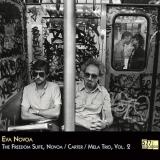
"Brooklyn-based pianist Eva Novoa returns with The Freedom Suite: Novoa / Carter / Mela Trio, Vol. 2 — the second radiant release from her compelling trio with saxophone icon Daniel Carter and celebrated drummer Francisco Mela. This marks Novoa’s sixth album with 577 Records. The trio first came together live in 2021, followed by a series of performances, including appearances in Cambridge (Boston) and later at the Brooklyn edition of the NY Forward Festival.
"The Freedom Suite is an homage to jazz titan Duke Ellington — particularly his masterful big band suites and legendary orchestra featuring Johnny Hodges and other luminaries who helped define an era of jazz greatness. In contrast, Novoa presents her Suite in a more intimate format: the piano trio. The album comprises twelve pieces — mostly brief — with a few extended tracks such as Free to Be Free and Cyborgs.
"For this recording, Novoa also steps in as a vocalist on several tracks, including Mainstream Media, Big Grande, Global, Free to Be Free, Dream, and Cyborgs. These pieces often feature a vocal dialogue between Novoa and Mela, whose expressive, word-infused style draws from rich Cuban traditions.
'Words are powerful,' says Novoa. 'They define who we are, where we come from, and who we hope to become. Without words, there is no conversation — and without conversation, there is no real sense of time, space, or connection.'
The Freedom Suite emerged from deep philosophical and creative conversations — spoken, written, and improvised — between Novoa, Carter, and Mela. In the studio, Novoa introduced printed texts that served as thematic foundations for spontaneous, in-the-moment musical interpretation. The result is an urgent and organic interplay, where instruments speak to one another in a language as fluid as it is fearless.
"Standout track Cyborgs begins with Novoa’s percussive piano, exemplifying the trio’s dynamic, conversational energy. Creative Destruction features Novoa on electric harpsichord in a wild, electric exchange. While Free to Be Free stands out as the album’s leading single, it also captures the essence and message of the entire Suite.
"Recorded in 2021 at New York City’s legendary Sear Sound Studio, the album captures a creative explosion of sound and spirit. Novoa dazzles on piano, Fender Rhodes, electric harpsichord, Chinese gongs — even whistle — showcasing her expansive sonic palette. Together, the trio embodies the power of free improvisation and emotional storytelling.
"Originally from Barcelona, Spain, Eva Novoa has been cultivating her distinctive voice since childhood. Now a staple of the New York creative music scene, she has performed across the globe and collaborated with some of the most adventurous voices in jazz and beyond."

- A1: Poison Vine*
- A2: Don’t Look Away
- A3: Calling Out Your Name
- A4: Free Love
- A5: Say Something New
- B1: The Way It’s Gotta Be (Oh Yeah)
- B2: Devil And The Deep
- B3: Weight Of The World
- B4: Teardrops
- B5: Birds Heading South
также имеющийся в продаже
Black Vinyl[22,90 €]
Clear Vinyl[24,79 €]
Cornetto Vinyl[26,01 €]
Picture Disc[28,99 €]
“Yeah Yeah Yeah just arrived out of the blue. I just took a chance. I had some ideas for a new album I’d been working on, but we weren’t planning on recording until the year after. It all happened very fast. There was a window of opportunity- youth was free, the studio was free, and the band were free- and I thought, let providence prevail. No one had heard the songs apart from myself and Alan McGee, but we both thought that we had something. You could feel it, even though none of the songs were really finished, and so we decided to roll with it and go and record them. I think with Yeah Yeah Yeah it was more than just trying to capture a vibe- it was about trying to record something majestic, which is how youth describes the record. There are gospels and strings on tracks like Free Love and don’t look away, which have kind of turned into these massive anthems. It has P.P. Arnold as a featured vocalist on a couple of tracks- the first, the single poison vine, which has a groove and a blistering chorus. She’s also on another song that’s a psychedelic funk track: the way it’s gotta be (oh yeah). Songs like Teardrops or Birds Heading South- we’ve tried to capture that classic, slightly
Wistful theme- whereas the weight of the world just rocks out. There’s also a little acoustic track to break it all up called the devil and the deep, which is a favourite of mine. We recorded the album over in Spain at space mountain, Youth’s studio, way up in the mountains, just as the almond trees were in blossom- which I took as a good omen for the session”.

- A1: Poison Vine*
- A2: Don’t Look Away
- A3: Calling Out Your Name
- A4: Free Love
- A5: Say Something New
- B1: The Way It’s Gotta Be (Oh Yeah)
- B2: Devil And The Deep
- B3: Weight Of The World
- B4: Teardrops
- B5: Birds Heading South
также имеющийся в продаже
Black Vinyl[22,90 €]
Clear Vinyl[24,79 €]
Cornetto Vinyl[26,01 €]
Tape[14,92 €]
“Yeah Yeah Yeah just arrived out of the blue. I just took a chance. I had some ideas for a new album I’d been working on, but we weren’t planning on recording until the year after. It all happened very fast. There was a window of opportunity- youth was free, the studio was free, and the band were free- and I thought, let providence prevail. No one had heard the songs apart from myself and Alan McGee, but we both thought that we had something. You could feel it, even though none of the songs were really finished, and so we decided to roll with it and go and record them. I think with Yeah Yeah Yeah it was more than just trying to capture a vibe- it was about trying to record something majestic, which is how youth describes the record. There are gospels and strings on tracks like Free Love and don’t look away, which have kind of turned into these massive anthems. It has P.P. Arnold as a featured vocalist on a couple of tracks- the first, the single poison vine, which has a groove and a blistering chorus. She’s also on another song that’s a psychedelic funk track: the way it’s gotta be (oh yeah). Songs like Teardrops or Birds Heading South- we’ve tried to capture that classic, slightly
Wistful theme- whereas the weight of the world just rocks out. There’s also a little acoustic track to break it all up called the devil and the deep, which is a favourite of mine. We recorded the album over in Spain at space mountain, Youth’s studio, way up in the mountains, just as the almond trees were in blossom- which I took as a good omen for the session”.

- A1: Concerning Hobbits" (The Fellowship Of The Ring) 2:51
- A2: The Fellowship" (The Fellowship Of The Ring) 5:45
- A3: The Bridge Of Khazad Dum" (The Fellowship Of The Ring) 5:53
- A4: May It Be" (Feat Tara Scammell - The Fellowship Of The Ring) 4:40
- B1: The Riders Of Rohan" (The Two Towers) 3:48
- B2: Evenstar" (The Two Towers) 3:38
- B3: Forth Eorlingas/Isengard Unleashed" (The Two Towers) 5:41
- B4: Hope & Memory/Minas Tirith" (The Return Of The King) 2:43
- B5: Into The West" (Feat Helen Hobson - The Return Of The King) 7:17

- Side A. Stack Wave Feat. Stuts
- Side B. On The Edge Of The Wate
A miraculous collaboration comes to life! DJ Mitsu the Beats, a globally active member of the Sendai-based hip-hop crew GAGLE, joins forces with beatmaker and
producer STUTS for the new track "Stack Wave" now released as a 7-inch single.
The track features DJ Mitsu the Beats’ gently swaying, looped beats and layered choruses, combined with STUTS’ sophisticated multi-layered instrumentation.
The result is a delicate, immersive sound that evokes the quiet stillness of a seaside setting while capturing the beautiful yet fleeting reverberation of the vast ocean.
Included is the instrumental track "On the edge of the water" from the original album "New Horizon" scheduled for release in November 2025. With jazz-infused beats
and electric piano, the track reflects the theme of sea and chill, creating a relaxed, timeless atmosphere.
The jacket artwork is a collaborative design featuring ocean photography by Yasuma Miura, a photographer based in Shonan and Kamakura who travels the world while
surfing, and design by So Iguchi (soiguchi design), known for his work on outdoor brand catalogs and lookbooks.

8
After Differently (released in 2024), The Tighters (Roots Reggae) are back with a
new showcase album: Lovely Love — a celebration of unity, spirituality, love, and
freedom.
Side A brings together the vocal versions, while Side B features the dubs. The album was mixed and dubbed by Roberto Sánchez at A-Lone Ark Muzik Studio (Spain) and mastered on tape by Dr Charty at Bat Records Studio (France).
Recorded at Jah Jazz Studio with Julien “Yout” Barker, Lovely Love captures all
the spontaneity and strength of the band.
The album unfolds like a spiritual and emotional journey: from the meditative
Countryside to the love song Lovely Love, and the radiant Worship the Sun. The high point comes with Africa Will Rise, a true freedom anthem performed by the legendary Jamaican duo Keith & Tex (on the Lovely Love riddim).
After their acclaimed collaborations with Oku Onuora (Balance) and Jah Myhrakle
(He is Haile) in 2025, The Tighters continue their path with this new opus, asserting
their identity within the international reggae scene.
A sincere album, blending rich musicality with a powerful, deeply relevant message.

- 1: Anaemia ( 04:36 )
- 2: Triesteitaliana ( 04:53 )
- 3: Cobalt Of March ( 06:01 )
- 4: Bluecracy ( 06:07 )
- 5: Architheme ( 04:1 )
- 6: Nascence ( 04:33 )
- 7: Iridescence ( 05:12 )
- 8: Sound Odyssey ( 05:32 )
- 9: Argentic ( 05:28 )
- 10: Deorbit ( 06:24 )
Then known as Catacomb, their early recordings of unusual gothic doom metal were to quickly gain the band interest. It was around 1993 that the brothers decided that a name change was in order & Novembre was born. Following swiftly on the back of 2006's 'Materia' release - Novembre's first album for their then new label, Peaceville - & in the wake of the great acclaim the band was receiving at the time for its highly captivating blend of atmospheric, emotional & progressive rock/metal, arrived the follow-up opus, 'The Blue', in 2007.
Featuring among the band's strongest compositions to date & with twists of doom/ gothic which brought to mind classic bands such as Opeth, 'The Blue' was a flawlessly executed opus of soaring majestic anthems in the unmistakable Novembre style. 'The Blue' was recorded at Outersound Studios, Italy, by the band & mixed at Finnvox Studios in Finland (Nightwish, Finntroll, HIM). Artwork was created by Travis Smith (Katatonia, Opeth). Following the recent release of the band's stellar 'Words Of Indigo' album, this edition of 'The Blue' is presented on black vinyl with printed inner sleeve featuring lyrics & arrives on the vinyl format for the first time.

Bert At the BBC is a comprehensive collection of Jansch’s appearances at the BBC, featuring over eight hours of rare and unreleased recordings, including live-on-air spots, studio sessions and full concerts straight from the BBC vaults, delving further into this legendary performer’s canon. Bert Jansch was the very essence of folk music, providing inspiration for everyone from Paul Simon and Neil Young to Led Zeppelin and countless folk revivalists. This unparalleled limited-edition compendium is available as a 4xLP and 8xCD set, housed in a coffee-table book set with a lavish 40-page book tracing the recordings from Bert’s earliest moments at the BBC. It includes interviews and insights from Lauren Laverne, Jools Holland, Johnny Marr, Jacqui McShee, Bob Harris, Bernard Butler, Mark Radcliffe and many more. Twenty broadcasters, producers and collaborators contribute at length to the booklet, with great affection for this gentle, maverick genius. Bert’s BBC legacy remains the most significant and exciting untapped reservoir of his music. The undeniable advantage of recordings made for broadcast is that they were, by their nature, created for public consumption and, barring live-on-air appearances – which might go well or go badly, but were going out either way – were explicitly signed-off by the artist as representations of his art that were good enough to be heard. The set is compiled by Colin Harper, author of Dazzling Stranger: Bert Jansch and the British folk and blues revival (Bloomsbury, 2000), who contributes detailed liner notes to the package. The release is mastered by IFTA award-winning engineer Cormac O’Kane. The vinyl release features 48 tracks on LP and is accompanied by a download card with over six hours of extras spanning 1966–2009, including BBC4’s St Luke’s concert (2003), and a complete Queen’s Hall, Edinburgh concert (2004) for BBC Radio Scotland. It is also available as a special 8xCD set containing all 147 tracks and encased within a coffee-table book. Bert Jansch At The BBC is an epic and enduring trail, 45 years in the making. “He was that rarity, a musician who really did deserve to be regarded as a legend.” The Guardian // “As a guitar player there was no one like him. He was jazz and blues and folk but there was a whole world in there that was just him, esoteric”
