
High Roller Records, reissue 2023, halloween orange vinyl, ltd 300, lyric sheet printed on uncoated paper, poster, bonus tracks Demo 1983, remastered & restored by Patrick W. Engel at Temple of Disharmony
High Roller Records, reissue 2023, halloween orange vinyl, ltd 300, lyric sheet printed on uncoated paper, poster, bonus tracks Demo 1983, remastered & restored by Patrick W. Engel at Temple of Disharmony

Ltd Coloured Vinyl - Indies Only!
Die Punkrock- und Metal-Superhelden MUTOID MAN - bestehend aus CAVE IN-Sänger/Gitarrist Steven Brodsky, CONVERGE-Schlagzeuger Ben Koller und dem neu hinzugekommenen HIGH ON FIRE-Bassisten Jeff Matz - haben ihr neues Album angekündigt: "Mutants", erscheint am 28. Juli via Sargent House! Brodsky und Koller, die eine fast telepathische Chemie besitzen, haben sich schon immer dadurch ausgezeichnet, dass sie ihre eigene, einzigartige Art von rasendem, hyperfokussiertem, dynamischem und exzessivem Griffbrett-versiertem Metal kreieren. Wenn man zwei Musiker nimmt, die in der Hardcore-Welt aufgewachsen sind und schnell die technischen Anforderungen übertrafen, um selbst die anspruchsvolleren Varianten dieses Sounds zu spielen, und sie dann dazu bringt, sich gegenseitig spielerisch in unverschämte und eingängige Gefilde zu drängen, erhält man eine grobe Annäherung an den MUTOID MAN-Sound. Aber mit dem neuen Bassisten Jeff Matz im Schlepptau hat man nun ein Dreiergespann von Prog-Level-Spielern, die sich dem Metal mit punkiger Respektlosigkeit nähern, auf "Mutants", einem Album, das ihre bisher gelungenste und verblüffendste Leistung darstellt. Nach dem Erfolg ihrer Debüt-EP "Helium Head" (2013) legte die Band in den nächsten vier Jahren eine manische Arbeitsmoral an den Tag, brachte die beiden Alben "Bleeder" (2015) und "War Moans" (2017) heraus, tourte unermüdlich durch die USA und Europa und wurde nebenbei so etwas wie eine De-facto-Hausband des angesagten New Yorker Metal-Clubs Saint Vitus. Mit Tourdaten im Vorprogramm von Acts wie MASTODON und DANZIG schien es, als sei MUTOID MANs Eintritt in die Oberliga der Heavy Metal-Helden unvermeidlich. Doch zwischen Besetzungswechseln, einem Exodus aus Brooklyn, einer Reihe anderer musikalischer Projekte und einer Pandemie wurde die Band inmitten ihres Aufstiegs auf Eis gelegt. Aber nach einer sechsjährigen Aufnahmepause sind MUTOID MAN zurück, um mit "Mutants" ihren Thron zurückzuerobern

Ced Gee & Kool Keith, both members of the legendary Ultramagnetic MC's, regroup for a new Ultramagnetic MC's record. The resurgence of classic Hip hop moves strong into 2022 with new release from Ultramagnetic MC's "Kool Keith x Ced Gee." Arising from the Boogie Down Bronx in the mid-'80s as a far-flung hip hop trio with a heap of new ideas to try out, Ultramagnetics Kool Keith, Ced Gee, and DJ Moe Love occupy something of a singular place in the old-school pantheon. Combining funk-heavy tracks with jeep-rocking beats and obscure lyrical references, Ultramagnetic MCs have a list of firsts to their credit: the first rap group to employ a sampler as an instrument, the first to feature extensive use of live instrumentation, the first to feature a former psychiatric patient (Kool Keith) on the mic. Early singles like "Something Else" and "Space Groove" were block-party staples and created waves in the underground, eventually landing the group on the disco-dominated Next Plateau label, where they released their underappreciated debut. The following years found the group shuffling from label to label, releasing albums on Mercury and Wild Pitch before splitting to pursue various projects. This special event will feature Kool Keith and Ced Gee performing classic Ultramagnetic MCs songs and sharing stories and history about the making of their iconoclastic catalogue.


Western Massachusetts band Landowner play abrasively clean minimalist-punk. Singer Dan Shaw began Landowner in 2016, writing and recording Impressive Almanac with a practice amp and a laptop drum machine. Those available tools would inform the band’s unapologetic sound—clean, confrontational, and absurdly stark. With a stated goal to sound like “Antelope playing Discharge”, Landowner’s diamond hard structures, repetitious instrumentals and caricatured hardcore make space for lyrics that reflect on the global systems our lives are tangled in and the dark absurdities we take for granted.
Landowner’s fourth Born Yesterday full length Escape the Compound focuses on the powerful grips manipulators and reality-deniers have on their victims, examining the social, political and interpersonal damage of cult-like influence and control. “A lot of the lyrics focus on cult manipulators and narcissists: falling victim to their toxic dynamics, and the difficulty of escaping their grip” says Shaw. From climate change deniers and conspiracy theorists to deceptive narcissists and actual cult leaders, Landowner explores the ubiquity of modern unreality through evocative imagery and a keen sense of awareness. The band’s plain instrumentation sheds and subverts hardcore punk’s noisy veil in favor of a direct, unswerving examination of these themes.
Written and recorded following the release of 2020’s Consultant, Escape the Compound finds Landowner leaning into the studio through deeper experimentation with a wider palette of sounds. The group’s lineup of Josh Owsley (bass), Elliot Hughes (guitar), Jeff Gilmartin (guitar), Josh Daniel (drums) and Dan Shaw played often since coming together in 2017. But with pandemic restrictions in place, the making of Escape the Compound became a much more insular pursuit, one where the mixing and mastering process helped turn the band’s most varied batch of material into a cohesive, thematic collection of songs.
Album opener “Witch Museum” is a collage of dark Massachusetts historical imagery. The song evokes a kind of cult dynamic travelling like a shadow through time, where dark absurdities are taken for granted, toxic behaviours are excused, and normalcy begins to shift. The line “Gail's behaviour has changed” casts fictional “Gail” as the dark manipulator, whose whim we’re at the mercy of. She sheds her toxic behaviour and the crisis finally ends - “and peace returns to the Commonwealth”- an absurdity, given that cult leaders and narcissists rarely seem to change.
By considering the past, Landowner sheds light on the present. The band challenges egomaniacs reluctant to accept an uncomfortable reality with both cynicism and concern. The literal landowner described in “Heat Stroke” collapses in exhaustion, cooked by a suffocating bass line and sizzling hi-hats. “You'd rather die of heat stroke than to let anybody see you change your mind,” Shaw gasps, later pleading with the character in “Floodwatch” to “please reconsider” their brazen stubbornness as they plunge through the rising waters of a flooded road.
The character in “Swimmer of Note” refuses to admit their miscalculations, instead doubling down on an ever-growing and increasingly-unsteady tower of lies. The sneering “Damning Evidence” sets a scene all too familiar: a smoking gun scenario with zero consequences. Shaw’s exaggerated vocal refrains and sarcastic inflections mock false hope: “how will they be expected to keep their minds intact, at the shock of simply hearing such damning evidence?”
“Beyond the Darkened Library” creaks open a secret passageway into a dimly lit, endless labyrinth of conspiracy theories, in which the character becomes hopelessly lost. “Aftermath” sounds the alarms: “stare so long that you start getting used to it; one glance says you should never get used to it.” The pair of “Tactics” tracks express what Shaw calls “an interpersonal microcosm of the album’s themes.”
Perhaps the most ambitious arc on Escape the Compound loosely begins with the title track. The subject in “Escape the Compound” gradually recognizes their own victimhood and plans a calculated flight from the “captivating shepherd” – hop the fence, flee, and regain autonomy. As the narrator escapes their stifling and abusive cult microcosm, a much grander existential timeline begins to appear. “Thousands of Years in Fast Forward” narrates a psychedelic surrender to the shared human experience through space and time, an ego-death adjacent to our ancestry, our own existence, and the before and after. “At the site of the crater, molecular hands unclasp molecular hands as you lose conditioning,” Shaw sings on the title track, “Your grandmother's garden. Your grandmother's kitchen. Your grandmother's primordial ocean.” It’s a profound actualizing glimpse into a true, forgotten reality and a startling reconnection with the self.

Western Massachusetts band Landowner play abrasively clean minimalist-punk. Singer Dan Shaw began Landowner in 2016, writing and recording Impressive Almanac with a practice amp and a laptop drum machine. Those available tools would inform the band’s unapologetic sound—clean, confrontational, and absurdly stark. With a stated goal to sound like “Antelope playing Discharge”, Landowner’s diamond hard structures, repetitious instrumentals and caricatured hardcore make space for lyrics that reflect on the global systems our lives are tangled in and the dark absurdities we take for granted.
Landowner’s fourth Born Yesterday full length Escape the Compound focuses on the powerful grips manipulators and reality-deniers have on their victims, examining the social, political and interpersonal damage of cult-like influence and control. “A lot of the lyrics focus on cult manipulators and narcissists: falling victim to their toxic dynamics, and the difficulty of escaping their grip” says Shaw. From climate change deniers and conspiracy theorists to deceptive narcissists and actual cult leaders, Landowner explores the ubiquity of modern unreality through evocative imagery and a keen sense of awareness. The band’s plain instrumentation sheds and subverts hardcore punk’s noisy veil in favor of a direct, unswerving examination of these themes.
Written and recorded following the release of 2020’s Consultant, Escape the Compound finds Landowner leaning into the studio through deeper experimentation with a wider palette of sounds. The group’s lineup of Josh Owsley (bass), Elliot Hughes (guitar), Jeff Gilmartin (guitar), Josh Daniel (drums) and Dan Shaw played often since coming together in 2017. But with pandemic restrictions in place, the making of Escape the Compound became a much more insular pursuit, one where the mixing and mastering process helped turn the band’s most varied batch of material into a cohesive, thematic collection of songs.
Album opener “Witch Museum” is a collage of dark Massachusetts historical imagery. The song evokes a kind of cult dynamic traveling like a shadow through time, where dark absurdities are taken for granted, toxic behaviors are excused, and normalcy begins to shift. The line “Gail's behavior has changed” casts fictional “Gail” as the dark manipulator, whose whim we’re at the mercy of. She sheds her toxic behavior and the crisis finally ends - “and peace returns to the Commonwealth”- an absurdity, given that cult leaders and narcissists rarely seem to change.
By considering the past, Landowner sheds light on the present. The band challenges egomaniacs reluctant to accept an uncomfortable reality with both cynicism and concern. The literal landowner described in “Heat Stroke” collapses in exhaustion, cooked by a suffocating bass line and sizzling hi-hats. “You'd rather die of heat stroke than to let anybody see you change your mind,” Shaw gasps, later pleading with the character in “Floodwatch” to “please reconsider” their brazen stubbornness as they plunge through the rising waters of a flooded road.
The character in “Swimmer of Note” refuses to admit their miscalculations, instead doubling down on an ever-growing and increasingly-unsteady tower of lies. The sneering “Damning Evidence” sets a scene all too familiar: a smoking gun scenario with zero consequences. Shaw’s exaggerated vocal refrains and sarcastic inflections mock false hope: “how will they be expected to keep their minds intact, at the shock of simply hearing such damning evidence?”
“Beyond the Darkened Library” creaks open a secret passageway into a dimly lit, endless labyrinth of conspiracy theories, in which the character becomes hopelessly lost. “Aftermath” sounds the alarms: “stare so long that you start getting used to it; one glance says you should never get used to it.” The pair of “Tactics” tracks express what Shaw calls “an interpersonal microcosm of the album’s themes.”
Perhaps the most ambitious arc on Escape the Compound loosely begins with the title track. The subject in “Escape the Compound” gradually recognizes their own victimhood and plans a calculated flight from the “captivating shepherd” – hop the fence, flee, and regain autonomy. As the narrator escapes their stifling and abusive cult microcosm, a much grander existential timeline begins to appear. “Thousands of Years in Fast Forward” narrates a psychedelic surrender to the shared human experience through space and time, an ego-death adjacent to our ancestry, our own existence, and the before and after. “At the site of the crater, molecular hands unclasp molecular hands as you lose conditioning,” Shaw sings on the title track, “Your grandmother's garden. Your grandmother's kitchen. Your grandmother's primordial ocean.” It’s a profound actualizing glimpse into a true, forgotten reality and a startling reconnection with the self.

Throughout 2022, The Wedding Present’s ‘24 Songs’ series saw the legendary indie band release two new tracks a month as double A sided 7”s, ultimately creating a much-sought-after box set. David Gedge has now re-curated full-length versions of all twenty-four tracks for a new compilation album that will also comprise five bonus recordings including one featuring The Wedding Present’s first guitarist, Peter Solowka.
‘24 Songs’ was a doff of the cap to The Wedding Present’s ‘Hit Parade’ project of 30 years previous. That series proved to be a real milestone for the band with them becoming only the second-ever artist to achieve twelve Official UK Top 40 hits in a calendar year – at the time something that only Elvis had achieved!
David Gedge says: “When it came to compiling the ‘24 Songs’ album, I decided not to sequence the tracks in chronological order. With six sides of vinyl, you have six ‘beginnings’ and six ‘ends’ to play with, and I felt that the opportunity to build some kind of a musical journey was too good to miss! Listening back to this collection, I have to say that I genuinely believe that, for this project, The Wedding Present have recorded some of the best tracks in our history. I loved releasing the singles, but it’s satisfying to have them all rounded up together.”
“The idea of releasing another collection of twenty-four tracks did initially seem quite daunting,” admits David Gedge in the deluxe-CD sleeve notes but, with Jon Stewart (also of Sleeper) having joined the band at the end of 2019 and their subsequent writing partnership flourishing, he began to feel confident that they would be able to produce a year’s worth of music. And, with one of the UK’s most influential independent record labels by their side in Clue, a key partner to EMI North who will be distributing the record - there was no looking back.
[xa] 27. Jump In, The Water’s Fine [Japanese Edit]
[xb] 28. We All Came From The Sea [Utah Saints Remix]

Futurismo are proud to present a first time reissue of the killer 1985 album: Just A Million Dreams by the uncompromising Alan Vega.
The remastered version of this LP comes with two unreleased bonus tracks produced by Liz Lamere and Jared Artaud of The Vacant Lots. It is packaged in a gloss laminated sleeve with a huge fold-out poster and contains new liner notes by Henry Rollins.
Presented in a remastered deluxe vinyl package, Just A Million Dreams, produced by Ric Ocasek and Chris Lord-Alge, takes Vega on an expedition into new territory. As an artist Vega had a crucial drive, but having a hit record was never a motive, neither was pandering to expectations, which is why Just a Million Dreams is perhaps a perfect statement for that moment, bettering the then bastions of MTV rock without even trying, an exercise in subversion that still has Vega’s unique artistry at its core. Would you expect anything less from one half of NYC legends Suicide? Perhaps not, but the hows and whys to Vega landing himself in such a mainstream position are perhaps just as fascinating as the record itself.
Here Alan Vega’s vocals sound better than ever, full of emotion and brooding honesty. Lyrics painting images of dystopian love might be a sideways move away from the intense nihilism of his past, but it’s still the real deal. Alan Vega could not be anything else. Listen to tracks like ‘Creation’ and you still get that raw emotion he spent his career honing. Set against the grandeur of mid 80’s production: big processed drums, runaway guitar solos, we get a rare peak into what Vega would sound like if he was allowed to be a rock star drenched in the sonic excesses of the era. It was a brave and unfairly misunderstood move, but the components come together to form an incredible anti-commercial, commercial album. Just A Million Dreams is the sound of Alan Vega taking on the 1980’s and winning.
With help of the official Vega Vault, two never before heard tracks have been unearthed from the 1985 JAMD recording sessions and brought to life by long time collaborator Liz Lamere and Jared Artaud of The Vacant Lots, adding a new insight to the recordings. Henry Rollins also lends a new written perspective, making this release a vital addition to the collections of Alan Vega and Suicide fans. It has been said that Alan Vega is forever, his unwavering artistic approach can be witnessed throughout his career, whether as part of Suicide or as a solo songwriter, poet or sculptor. Just a Million Dreams is just another example

"The Queen Is Not Dead" ist kein "durchschnittliches" SPIRITUAL FRONT Album, aber welche Veröffentlichung der Suicide Pop Band aus Italien ist das schon? Das achte Studioalbum der Römer ist vielmehr "eine Hommage an die legendären, wundervollen Hymnen von Morrissey und Johnny Marr", wie Simone Salvatori schreibt. Der Bandgründer und Frontmann von SPIRITUAL FRONT bezeichnet THE SMITHS als eine der wichtigsten musikalischen Inspirationen für jedes Mitglied der Band. Die Italiener nahmen das Album mit dem erklärten Ziel auf, eine respektvolle Hommage zu erschaffen, ohne dass dabei ein Klon entstehen sollte. Bei den fünfzehn Coversongs, die für viele Musikfreunde heilig sind, blieben die Römer den Originalaufnahmen zwar treu, sie führen die Songs jedoch näher an die Klangwelt von SPIRITUAL FRONT heran - beispielsweise indem sie klassische Instrumente hinzufügen. Zu Salvatori und seinen Bandkollegen, dem Gitarristen Francesco Conte und Andrea Freda am Schlagzeug, gesellen sich der Bassist Daniele Raggi, ein Streichsextett und ein Bläser sowie eine Fülle von Beiträgen befreundeter Musiker: Darunter befinden sich die Sängerin Durga McBroom (PINK FLOYD, BLUE PEARL), Riccardo Galati, Filippo Marcheggiani (BANCO DEL MUTUO SOCCORSO), Michal Stepien (MGLA), Jairo Zavala (CALEXICO), King Dude, Traci Danielle (MY LIFE WITH THE THRILL KILL KULT), Riccardo Spilli (IL BALLETTO DI BRONZO) und Sasha Boole (ME AND THAT MAN). SPIRITUAL FRONT wurden 1999 als Soloprojekt von Salvatori gegründet und haben seitdem zahlreiche Alben, Singles, EPs und Kollaborationen veröffentlicht. Die Italiener beschreiben ihren Sound als "eingängige Balladen für herzzerreißende nihilistische Jugendliche". Textlich beschäftigen sich SPIRITUAL FRONT mit Themen wie der Suche nach einer eigenen Identität, Sexualität, harte Realitäten und wütende Trennungen, die oft von triefendem Sarkasmus, Nihilismus sowie einem beißenden Sinn für Humor eingefärbt sind. Darüber hinaus haben die Italiener mit namhaften Künstlern wie LYDIA LUNCH, ORDO ROSARIUS EQUILIBRIO und vielen anderen zusammengearbeitet sowie an den Soundtracks der Fernsehserie "Las Vegas", des Kinofilms "Saw 2" und an weiteren Independent-Filmen, Theaterproduktionen und modernem Ballett mitgewirkt. SPIRITUAL FRONT zollen THE SMITHS, die für die Italiener zufällig den Soundtrack ihres Lebens komponiert haben mit "The Queen Is Not Dead" ihren aufrichtigen Tribut.

Ramona Lisa is the current alias of Chairlift's Caroline Polachek. Her new album Arcadia is Polachek’s first self-produced solo record and the first release by Pannonica, part of the Bella Union family. Completely composed in MIDI, it is a concept album of love songs that are nature allegories, and vice versa, which Polachek calls "Pastoral Electronic Music". The making of Arcadia was a year¬long process that began and ended in an empty studio in Rome's Villa Medici and while on tour with her band, Chairlift. The record was made entirely on a laptop without instruments or external microphones - all vocals were sung directly into the computer, making use of hotel closets, quiet airport gates, and spare dressing rooms. Although the album was created on a laptop, the result is a lush and uncannily tangible world of warm textures, reminiscent of analog tape processes rather than a hard drive. Virtual oboes and organs interweave with synthetic insects and quivering sine waves, animated by Polachek's vocal at it's most delirious and intimate yet.

Laughter ist das dritte Studioalbum von Ian Dury and The Blockheads; es wurde 1980 veröffentlicht und war das letzte Studioalbum, das Dury für Stiff Records machte, und das letzte Studioalbum mit den Blockheads bis zum 1998 erschienenen "Mr. Love Pants", obwohl 1991 ein Livealbum "Warts 'n' Audience" produziert wurde.
Am 21. Juli 2023 wird "Laughter" zum ersten Mal auf transparentem, sonnengelbem Vinyl mit überarbeitetem Artwork wiederveröffentlicht.

Analog Africa is back with another of its eye-opening and mind-altering trips into musical wonderment here as the 20+ year-old label digs deep into the Andean city of Quito. It's the Ecuadorian capital and home to the music which maykes up this vital collection and which owes so much to Polibio Mayorga.
He spent much of his musical career trying to - and succeeding in - modernise the ancient rhythms of his region, namely Huaynito, Sanjuanito and Albazo. He did so with cutting-edge - at the time - electronic equipment and a trusty Moog and the result of his effort was that he is now regarded as a pioneer of tropical psychedelia. Dig in deep to hear how that happened across these superb 16 sounds.

Indonesian City Sound: Panbers’ Psychedelic Rock and Funk 1971-1974
The Pandjaitan Brothers or Panbers came from the North Sumatra minority Christian group, the Bataks, whose ancestry traces back to an island at the center of Lake Toba. As a minority group within Indonesia's Muslim-dominated society, this ethnic minority has produced top military generals, celebrity lawyers, and a legion of pop and rock superstars.
Suffice to say, some of the biggest names in the country's pop history were Bataks. Panbers fit the bill perfectly.
The band's strong Christianity belief looms heavily in the music they produce. The prominent use of the Hammond organ in their early materials is evocative of church music the band members have been around in their whole life. Bandleader Benny Pandjaitan's fills his characteristic wail with existential dread, with many utterances of the word "mengapa" (why).
Guilt is another central theme Pandjaitan repeatedly comes back to in his lyrics. But they balance it with joy, on songs such as "Come on You Dance" "Let's Dance Together" or "Haai" (a play on the word high), where references to recreational substances are plentiful.
Although they modeled themselves after the era's rock bands Beatles and fellow countrymen Koes Plus, Panbers had a unique aversion to the electric guitar. In "Jakarta City Sound," a fiery three-note guitar solo is laid so far down in the mix that they are barely audible. In "Haai" they modify the guitar to sound like a jungle instrument playing traditional North Sumatran music. In "Rock and the Sea," arguably their most well-known song globally, they decided to ditch electric guitar altogether and replace it with a sitar.
In the absence of an electric guitar, Panbers had to rely on Doan's inventive bass playing and Asido's drum works to do the heavy lifting - and boy, do they deliver (Their 1971 debut "Volume 1" saw plenty of drum breaks). In this compilation, listeners will hear recordings from Panbers' fertile four-year period - a time that produced in some of the grooviest and hardest-sounding psychedelic music in Indonesia's rock history.
For those uninitiated on the glory Panbers, consider this compilation an introduction to some of earliest and heaviest rock sound to come out of Indonesia.

There is a wealth of talent on show on the third EP from the Fusion Sequence label which has put together this six-track deep house sizzler. The Variable Club' 'Biorhythms' is perfectly warm and dynamic for cosy backroom moments and Alpine DJ then brings an old school piano feel to 'Pepe Nony' before A Vision Of Panorama zones you out on lush chords and reverential keys on 'Kissing The Sun.' The flipside offers the more dark and heads-down 'Many Stories' while the blissed-out and feel-good grooves return with Common Mode's 'Bassface.' Body Corp shuts down with the slower, seductive sounds of 'Take It Or Leave It' which rounds out a top-class EP.
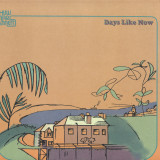
On the new album, Days Like Now, Bennett takes direct inspiration from the music of Wales.
The songs draw heavily on acoustic folk sounds and melodies. During the pandemic Huw sat and wrote a lot of material just with his bass and acoustic guitars and that low key atmosphere is very present throughout the new record.
Drums are lo-fi and fuzzy, and the palette of sounds draws from many folk cultures around the world, but this time round has a distinctly Welsh influence.

Five years after the release of ‘Luyando’, Zimbabwe’s most celebrated music export returns with their long-awaited follow-up album ‘Tusona: Tracings in the Sand’. The six musicians from Victoria Falls are refining their unique sound: infectious Afro grooves deeply connected to Zimbabwe’s cultural DNA. ‘Tusana’ is their most danceable album to date, a DIY production recorded in Zimbabwe. It features horns by Ghanaian highlife outfit Santrofi.
Every Sunday, there is a gathering in the sweltering heat on grounds of an old local beer hall in the Chinotimba township in Mosi-o-Tunya (Victoria Falls). Entertainment is provided by various traditional groups including the Luvale Makisi masquerade. It is a day full of singing, drumming, dancing and storytelling. Mokoomba’s lead vocalist Mathias Muzaza can often be found here singing with a voice both soaring and vulnerable. In the course of the afternoon the other band members - guitarist Trustworth Samende, bass player Abundance Mutori, keyboard player Phathisani Moyo, percussionist Miti Mugande and drummer Ndaba Coster Moyo - often join in with singing. The drum driven song “Bakalubale” featured on their new album invites you to this gathering.
Mokoomba recorded ‘Tusona: Tracings in the Sand’, the follow-up album to ‘Luyando’ (2017, Outhere), in Zimbabwe during the pandemic. Instead of working with outside producers like Manou Gallo or Steve Dyer as they have in the past, this album was entirely recorded in a DIY fashion by Mokoomba. The collective from Zimbabwe put in all the experiences made over the previous years and have forged their music into a unique Zimbabwean sound. On popular demand from their fans in Zimbabwe they have even re-recorded three songs from their last more acoustic album ‘Luyando’ turning them into dancehall bangers (featured on the CD and digital versions of the album). In short, this album is more Mokoomba than any of the ones before.
On the album Mokoomba are singing about love, loss, courage in a changing society. The first single “Nzara Hapana” means “no money” in Shona. The song talks about a man who wants to ensure the future of his wife and family and is trying to protect them against the greed of his relatives. The danceable up-tempo song “Nyansola” praises the goddess of harvest and asks her for rain. “Makisi” is sung in Luvale. It celebrates the beauty of the initiation ceremony for which the whole community comes together. “Manina” is a song about losing a loved one. It was written during the pandemic and features the young singer Ulethu from Harare. Mokoomba sing in many different local languages. Their songs are in Tonga, Luvale, Shona, Nyanja and even Lingala used in “Makolo” when they team up with Congolese singer Desolo B. (The album also features horns by Nobert Wonkyi Arthur (trumpet), Bernard Gyamfi (trombone) and Emmanuel Arthur (sax) from Ghanaian highlife outfit Santrofi.)
The title of the album is a nod towards their immense respect for tradition. ‘Tusona’ refers to an ancient system of signs and symbols, drawn in the sand and used for instruction during initiation ceremonies by the Luvale in Southern Africa. Another important part of the Mukanda initiation ceremony is the incredible Makisi masquerade. Since 2008 the Makisi dances are on the UNESCO list of intangible heritage. The Makisi are masked characters, representing the spirit of deceased ancestors. During the yearly initiation ceremony the Makisi return to the living world to teach the young children to become responsible adults among the Lubale people of Southern Africa. In the last decade the interest - especially among the young people – has faded and the Makisi dances have nearly died out.
“Our inspiration comes from these gatherings”, Trustworth Samende explains, “from listening to and playing pure traditional music with everyone in the township. We then add influences from music that we listened to in our homes growing up and the sounds we experience travelling around the world.” It is the connection with the cultures around them that gives Mokoomba’s music its spiritual power. When you hear Mathias Muzaza singing and you watch closely, you will see the music carrying him away to a different sphere, a place where he is singing with the ancestors. Only a split second later though Trust Samende’s sparkling guitar riffs kick in, blending Congolese influences from neighbouring Kasai with Zamrock and Mbira inspired Chimurenga music, making you want to hit the dancefloor. It is this unique blend of local musical styles with contemporary dance music that is at the heart of Mokoomba’s music. The strong reference to tradition is also reflected in the cover illustration by young Zimbabwean visual artist Lomedy Mhako.
It has been nearly 10 years since this young energetic band from Zimbabwe has exploded onto the international music scene. Since then they have shared their music with fans all over the world: Mokoomba have performed in over 40 countries, rocking audiences in places like Roskilde festival (Denmark), WOMAD festival (UK), Sziget festival (Hungary), SXSW (USA), Apollo Theatre (New York) to name but a few.
Like anywhere in the world Africa’s musical output has become more and more producer based. Mokoomba are the living proof that Africa’s great guitar band heritage is well alive and ready to set any dancefloor on fire. Most important though is that deep below the surface of Mokoomba’s sound - flowing like the Zambezi River - you can still hear the heartbeat and the rhythm of a community connected by its music. Like ‘Tusona’, it is a source of rejuvenation, resilience and strength in these changing times. May the tracings in the sand not fade.

This new album compiles several songs made in the years following Black To Comm's classic "Alphabet 1968" album. Originally released on the seminal Type label in 2009 (and to be reissued on Cellule 75 this year) "Alphabet 1968" combined the sound of vintage shellac and vinyl loops with broken electronics and field recordings, the press release mentioning disparate influences "ranging from Moondog to Basic Channel by way of Bernard Herrmann". In a beautiful one-page review in The Wire magazine (later reprinted in his book Ghosts Of My Life) Mark Fisher compared Richter's music to JF Sebastian’s miniature automata in Blade Runner ("with their bizarre mixture of the clockwork and the computerised, the antique and the ultramodern, the playful and the sinister"), ETA Hoffmann's inventor-magicians and Auguste Villiers de l'Isle-Adam's 1886 tale of Thomas Edison's (fictitious) construction of an artificial human.
Now titled "Coh Bâle" (inspired by a strange dream) these recordings were supposed to become a follow-up to said album but for reasons unknown it never materialized and the album seemed forever lost. At the time Richter started to dive deeper into several strains of (so-called) world music aka the folk music of Southeast Asia and Eastern Europe as well as liturgical and medieval music, the Kraut-Electronica of Harmonia and several certain Mediterranean experimentalists from the 1980's who started to merge their mostly electronic and field recording based compositions with traditional musics from all over the world by way of new sampling technology.
Many of the songs for the album were recorded while travelling and at various residencies around Europe: a detuned piano in a Thessaloniki basement (Richter played at a children's birthday party there), vintage synthesizers in the GRM studios in Paris, decaying acoustic instruments found in an old Black Forest mansion, childrens' voices at a workshop in Karlsruhe's ZKM Institute; then mixed on headphones in the ICE trains running between these places and his hometown Hamburg.
"Coh Bâle" is taking inspirations from old Nonesuch Explorer and Ocora LP's, Crammed Records, 80s Mediterranean Ambient (Nuno Canavarro, Roberto Musci) combined with the DIY spirit of Deux Filles and Flaming Tunes and the playfulness of Asa Chang & Junray. The songs are both mysterious and transparent, intricate and frugal, vibrant and patient. One of the album's unexpected climaxes is a gorgeous (artificial) berimbau version of the Welsh traditional "Iechyd o Gylch".
No two songs feature the same instrumentation and many acoustic sources (pianos, flutes, wood percussion, viola, tablas, autoharp) were disassembled and later coalesced into new configurations or used as virtual instruments; later combined with samples, field recordings, electronics and (on a few tracks) autotuned vocals reminding of recent works by the likes of Claire Rousay or More Eaze.
We had to wait for a worldwide pandemic for Richter to dig deep into the vaults and finally bring these recordings to light. This is the 2nd release from his archives after the "Diode, Triode" LP which presented Musique Concrète/Acousmatic recordings made at INA/GRM and ZKM. Another massive Double-CD (MM∞XX Vol. 1 & 2) was released last year featuring collaborations with 33 artists such as Andrew Pekler, Richard Youngs, Eric Chenaux, Maja Ratkje, Radwan Ghazi Moumneh of Jerusalem In my Heart, GRM boss François Bonnet (Kassel Jaeger), Felix Kubin, Timo van Luijk (In Camera, Af Ursin), Luke Fowler and many others, showing Richter's versatility and his willingness to reinvent himself for every new release.
Marc Richter is widely known under his Black To Comm moniker, having released (at least) 12 albums under this alias in the last 20 years. He is currently signed to the Thrill Jockey label. Richter composes soundtracks for film and has worked with visual artists such as Mike Kelley and Ho Tzu Nyen. He also records as Jemh Circs and Mouchoir Étanche for his own Cellule 75 label (named in tribute to the late Luc Ferrari).

S Transporter is Izaak S and Ryan Spencer, a pan-American duo of exact origins unknown. With roots spanning from Detroit to San Francisco, the project is somewhere around four years old, though no one remembers exactly when it started. The songs were initially demoed in Ryan's bedroom and promptly forgotten about in the chaotic whirl of both members’ efforts in other music projects, DJing, and party-throwing ventures until Ryan played them at his weekly, Monday Is The New Monday (co-founded with PGS' Ben & Zach). Immediately, the songs burst with new life into our ears, and we excitedly requested to hear more. In a tale every creative can relate to, Ryan simply didn't know if they were any good. We found them extraordinary.
What followed were several months of additional recording sessions in a collective effort to finalize the tracks, done at Ryan's apartment in Southwest Detroit, Izaak's in SF, and the Portage Garage in Hamtramck. Bay area DIY underground luminary Anya Ghiorzi joined the group and contributed her vocal talents to the songs, which began to exhibit a sound representative of the genre-collisions featured at MITNM– from krautrock and boogie to trance, acid, and house– in a way other PGS releases have hinted at, but have not fully expressed until now.
S Transporter is the name of the EP, the project, and all four songs. A maximalist sound with a minimalist presentation, naming the songs - so many years after their inception - would, perhaps, take away from the feeling that struck all three of us the first time we heard them on a club-grade sound system.
Izaak S and Anya Ghiorzi are San Francisco residents, musicians, and DJs in the Loveshadow dance collective.
Ryan Spencer is a Detroit resident, DJ, co-founder of Monday Is The New Monday, and is a member of Freakish Pleasures.
"S Transporter 1"
Uptempo, backspin-laden electro/acid with a winding 303 bassline that reveals itself slowly over the pulsing breakbeat backbone. Immersive, haunting and enchanting.
"S Transporter 2"
Downtempo electro. Slap bass. Heavy boogie. Sensual vocals reminiscent of early Chris N Cosey carry you through this industrial funk heater. Heavy synth lines and rhythmic grooving guitar that is club-ready for dance floors of all kinds.
"S Transporter 3"
A fast paced, percussion forward adventure with balaphone melodies and bending synth pads. Spoken words guide the journey, arriving at a movement inducing Juno ascension that dances into a calm end.
"S Transporter 4"
Encompassing the seemingly disjointed, individualistic styles of S Transporter 1-3, ‘4’ combines elements of the entire release into one final gesture. ‘4’ could be Byrne/Eno ("Regiment"), but it's something else - the product of decades of dance music history, distilled by two musicians & DJs into one song.
credits
releases July 19, 2019
PGS 010
S Transporter
"S Transporter"
EP
2015-2019
Written, Mixed and Produced by Izaak S & Ryan Spencer
Vocals by Anya
Bass on “2” by Lucas De Leon Turner
Percussion & additional production on "3" by Shigeto
Percussion on “3” by Julian Spradlin
Mastered by Josh Bonati at Bonati Mastering
Recorded at Izaak's apartment in San Francisco, Ryan's apartment in Southwest Detroit and the Portage Garage
Records Pressed at Archer Record Pressing, Detroit, MI
Design by Will
MMXVIX

"Bills past due, what you gon do?"
2lanes is part of the latest resurgence in Detroit's techno underground whose infamy is built via amorphous live appearances / DJ sets, collaborations with contemporaries like AceMo and John F.M., and a steady, hilarious and blunt presence on Twitter. PGS is proud to present 2lane’s 2nd piece of wax, the AA side "Baby's Born To Fish'' / "Impish Desires'' following the "Giving & Receiving" EP on NYC's Ceramic Records, February 2020.
2 Lanes first appeared in Detroit ~six years ago and quickly made a name for himself in the local scene, promoting shows with international artists and friends from NYC, all while making an effort to respect the city's unique musical identity and history. He carries the tradition of Detroit's electronic pioneers who pursued new ideas in production and gear, bringing perfection to the craft, and developing unique twists in his process.
Participating in the contemporary electronic music world required splitting your time between 2 places at once: Online, always-on, in constant engagement with friends + foe alike; In Real Life, physically traveling city to city, DJing and collaborating, all while maintaining a sense of self. And now, all that's different.
"Lately, I've been, going, going through some changes"
Releasing a club-ready 12" in the midst of a global pandemic? That's the 2 Lanes. We heard an earlier version of "Baby's Born 2 Fish" what feels like 10 years ago, rinsing "Impish Desires" when there were still gigs. Do you remember the Apollo Masters plant fire in early February? How long were pressing plants closed, again? How long have we been living in this new reality? 2lanes hopes that the messages of this music; fear, isolation, friendship, love and how we exist at this intersection comes through for the listener.
"Baby's Born To Fish" / "Impish Desires" is a heavy hitting AA side, rejuvenating, explosive, off your face. They're ready for the eventual return 2 the dance floor, and sooner for your streaming DJ set. We don't know when we can see you IRL, but we know it'll be in mixes for decades to come.
"You’re gonna cast your reel out and you don’t know if you’re gonna get a fish that day, but you’re still gonna cast it out." - 2 Lanes

Death metal overlords DYING FETUS once again raise the bar of sonic extremity with their 8th studio album and first new material in over 5 years, Wrong One To Fuck With. The seasoned veterans manage to further stretch their creative and technical boundaries across 10 complex tracks of pulverizing death metal, filled with more dynamic intricacies, brutal breakdowns and varied vocal patterns than ever before. Now over 25 years into their distinguished career, DYING FETUS cement their legacy with Wrong One To Fuck With and uphold their position as the most dominant force in death metal today.
