Mario Biondi is a singer and composer, born in Catania, Italy. In 1988 he had an important opportunity as support act to Ray Charles' Italian dates. His love for soul music helped shape his particular vocal styling that takes its cue from great vocalists like Lou Rawls, Al Jarreau and Isacc Hayes. His first big break came in 2004 with the original release of the single "This Is What You Are". Originally planned for release only in Japan, the cool and irresistible song gets noticed by European radio.
Well-known DJ, Norman Jay begins to feature the song on his BBC1 show playlist and Mario's incredible voice crosses the European continent ahead of the artist himself. His album "If shot up the charts and went triple - platinum. 'This Is What You Are' is one of the most important and iconic Italian jazz vocal tracks of the last decade
Cerca:the plan
Nuno Costa AKA VIL is blessing the label with a powerful four tracker titled 'Reviver EP'. The release showcases VIL's forward-thinking approach and signature originality, well aligned with the label's aesthetic. Across four cuts, he crafts an immersive journey through driving rhythms, deep atmospheres, intricate break samples, and sharp leads. This release is clearly built for the dance floor's many characteristics.
Otto Taimela returns with his second album for London ambient free divers SWIMS, following 2024's celebrated "Inner Beauty".
"Uncommon & Fragile" departs from Otto's meadowed, ivory-centric introspections, reaching further into binaural sound design, trance pointillism, and groundswells of angular percussion. This is less a club record, more something to soothe post-rave tinnitus on the bus home.
For fans of Lorenzo Senni, Lusine ICL, Huerco S., Shinichi Atobe...
Early support from Timo Maas, Paco Osuna, Ilario Alicante, Just Her, Adriatique, and more. Igor Vicente joins forces with Dka for the ‘Ecstatic’ EP this November, released via Belgian imprint Move Recordings, including a remix from Gregor Tresher.
Move Recordings is a Belgian electronic music label founded and helmed by veteran DJ/producer End-Jy (Jérôme Naujoks), known for his roots in the 1990s techno scene of Tournai and major collaborations with acts like Marco Bailey. Now reborn in 2025, the label returns with more powerful electronic music for the modern-day discerning listener. This time, it welcomes fellow Belgian DJ and producer Igor Vicente, renowned for his genre-blending style and releases on labels such as Mobilee, Hot Creations, and Visionquest, once again in collaboration with fellow Belgian DkA, who’s racked up releases on labels like Get Physical, Constant State, and Mau5trap Recordings—a striking sign of his ability to explore a variety of genres and styles.
The original version of ‘Ecstatic’ leads, featuring subtly blooming atmospherics, a nuanced synth hook, oscillating percussion, and raw drums, all building towards a climatic breakdown and a powerful drop in the latter stages. Gregor Tresher reshapes the original with his signature twist, extracting fragments of the track and fusing them with elongated bass grooves, heavily shuffled, crunchy drums, and intricately intertwined melodious elements.
‘Planets’ opens the B-side, a nine-minute excursion through squelchy acid bass notes, cinematic pads, robust drums, and chuggy arpeggio synth lines. The ‘Ecstatic (Dub Mix)’ then concludes the EP, shifting focus solely onto the raw groove and hypnotic melody of the original composition, as the name suggests.
- 2025 repress
We are very proud and honoured to present our next release from one of the scene's most respected artists. Seba blesses Inperspective Records with 2 slices from his diverse repertoire and they do not disappoint.
'No One Dies' harks back to an earlier time in Seba's catalogue. A simple, effective amen rinse out with atmospherics that lend themselves to a dystopian sci-fi epic is truly sublime and has been smashing down dances across the planet.
'Island Dub', the more subtle of the 2 tracks is blissed out lo fi underground jungle of the highest order and something of a departure for both artist and label, however still maintaining the integral ethos of Inperspective Records.
Fast At Work returns with another statement EP, this time from the label’s own Carré and her closest collaborator, Danny Goliger. Navigating through textured atmospheres, rhythmic explorations, and immersive landscapes, they allowed their music to unfold naturally—an organic process shaped by curiosity and intuition. Each track was born from sampling its predecessor, creating a recursive dialogue that guided the creative flow. A commitment to a tension-building groove in ‘Up Too Late’, the warped dub throughlines of ‘Tricky One’, the intricate, delicate uptempo delight that is ‘Exit Plan ’, and the bridge between all four tracks ‘Don’t Keep Me In Suspense’ — each reflects different moments in this journey. An expert in textural exploration, the Dutch DJ and producer Konduku brought out the true hypnotic potential of the title track. Their influences ripple outward, yet the sound remains inherently theirs—fluid, unbound by singular genre or label.
- A1: X&B - Strobocop
- A2: Yanamaste - Hunter
- A3: Temudo - Cohorus
- B1: Ignez - Rudimental
- B2: Dextro - Buck Rogers
- B3: Flug - In Control
- C1: Klint - Quad
- C2: Dj Plant Texture - Reesolution
- C3: Petter B - Replicated
- D1: Backbone - From 0
- D2: Mathys Lenne - Mutant
- D3: Norbak - Americana
- E1: Ribe & Roll Dann - El Transito
- E2: Red Rooms - Debris
- E3: Sciahri - Pushing
- F1: Kameliia - Parallel Realities
- F2: Jancen - Sensation
- F3: Againstme - Ob Dub
- G1: Blenk - Shader
- G2: Marcal - Intertwined
- G3: Hyden - Reverie
- H1: Blanka - I Choose You
- H2: Developer - Have It All
- H3: Claudio Prc - Torque
SHDW presents 'Federation Of Rytm IV': a bumper 30-track collection spanning the past, present, and future of techno.
Offering powerful standalone club cuts and a cohesive deep-dive, the expansive VA lands on 24th October 2025.
The fourth edition of SHDW's flagship 'Federation Of Rytm' VA series has been carefully curated by the DJ/ producer and head honcho over more than a year, with close attention to detail given to sequencing. It is a balance of label regulars and debutants that represents the past, present, and future, both sonically and through the generational diversity of the artists involved. There are plenty of surprises along the way while always remaining true to the Mutual Rytm ethos and reflecting the journey of the night from start to finish, whether that's in intimate, sweaty clubs or on big festival stages.
Across 30 tracks in the digital collection and 24 on four sides of wax, the release explores the full breadth of the Mutual Rytm sound. Driving grooves and relentless percussion set the pace, gradually unfolding into hypnotic and atmospheric passages that invite deeper immersion. Pulsating low-end power alternates with eerie minimalism, while bursts of futuristic energy and cavernous kick drums keep the tension high. Elsewhere, dub textures and moments of introspection provide balance, creating a narrative arc that moves fluidly between intensity and release, atmosphere and tension, darkness and light.
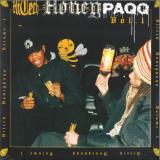
Brown Angel descends upon Dark Entries with Pure Brown Energy, an EP featuring 6 tracks of gloom-laced electro-funk and retro house. Pure Brown Energy was born when San Francisco-based producer and Hard French collective member Brown Angel was faced with a gift and a loss: an original Roland TR-808 was given to them around the same time that their father passed away. To process their grief, they set about making an album that showcased the many facets of their being, in their words: “my gay tío side, my Latin goth side, my cruising down the boulevard side, and most of all my soft vulnerable side.” From slamming vogue/ballroom house to cumbia-inflected freestyle, Pure Brown Energy channels club sounds both contemporary and timeless, while centering the most eternal electronic instrument of all: the TR-808. Opener “Miel” grooves with the effortlessness of peak-era Masters at Work or vintage Kevin Saunderson, while “Dame Más” dials up the energy even further. The influences of Miami bass and West Coast electro shine through on “Maya” and “Love Me Right,” which pair razor-sharp beats with a flurry of samples culled from Brown Angel’s record collection. “PBE” and “En Movimiento” take the Planet Rock vibes to another level, combining influences from contemporary cumbia and reggaeton sounds with Brown Angel’s Latin goth flair. Each copy comes in a sleeve designed by Ricardo Diseño featuring illustrations inspired by Teen Angels, a popular 1980’s Chicano magazine. Pure Brown Energy brings a sense of urgency to the dancefloor, unreluctantly examining the crossover between creation and loss, between celebration and sorrow. But don’t forget: these cuts also slap.
- A1: Intro
- A2: Take Yo Panties Off Ft. George Riley
- A3: Norf Cold 304'S
- A4: New Jazz Schmell
- A5: Drop The Loc Ft. Debby Friday & Obie Iyoha
- A6: Spank!
- A7: Empty Bus Stop Ft. Lovefoxy
- B1: Adultswim Doctor Etrange
- B2: Queenbootyathenaaphrodite Ft. Vayda, Na-Kel Smith, Milifie, Planet Kaia
- B3: Girl U So Fine Ft. Rob Apollo
- B4: Shadowrealm Ft Zelooperz
- B5: Eager Saucy Black Man At Zorbas Meets Busty Uninterested Lady Via Phone Call
- B6: Freak In Full Effeck Ft. Obie Iyoha
- B7: Audishawty Ft. Milfie
Following a breakout year that saw them torch the Sonora Stage at Coachella, storm Europe on the HONEYPAQQ TOUR, and rack up co-signs from Carl Craig, LSDXOXO, Jamie xx, Crystalmess, SHERELLE, TELFAR, Tinashe, Smino, Nia Archives, Earl Sweatshirt, and Denzel Curry, HONEYPAQQ VOL. 1 captures HiTech at their most ambitious: unfiltered, explosive, and impossible to pin down.
Across a stacked track list, the trio bring together the raw DNA of Detroit techno, Chicago house, rap, and punk, honouring the roots of Black electronic music while taking the scene to new global heights. Features include boundary-pushing collaborators like George Riley, ZelooperZ, and Na-Kel Smith, adding warped soul, razor-edge bars, and unruly energy to the HiTech universe and demonstrating how HiTech are the only act straddling underground chaos and mainstage euphoria while unifying global scenes across electronic, rap, and rock in one breathless body of work.
Triple Five Sol drop 75 Racks on Dark Entries, an EP featuring 5 cuts of raw and jacking house music. San Francisco-based producers/DJs Johnny Five and Vin Sol linked up during a trip to New Orleans, and they began hatching plans to collaborate. After setting up a new home studio in Vin Sol’s abode, jam sessions ensued, and soon the duo had cemented their sound. Their analog house tracks harken back to the roughshod and unembellished vibes on 80s Chicago and New York labels like Nu Groove or Gherkin Records, influences they wear with pride. “Boxxx that Rocks,” “Just a Freak,” and “Everybody Loves Triple Five Sol” deploy chunky beats with sprees of minimalist bleeps, sounding like Chip E retuned for the 22nd century. It’s not all jagged drums and acidic squelch on 75 Racks, though; “Gonna Get Out” and “Halfway Home” saunter with the confidence of a New Dance Show participant, soulful and grooving with a dash of garage. 75 Racks comes in a sleeve designed by Primo Pitino featuring bold retro primary colors. Triple Five Sol brings us timeless dance music: deep, real, and weird.
On Now Claims My Timid Heart, Harris and Hedrick continue the experiment started on Swann and Odette, crafting closed systems that promote a hushed correspondence between their sonic (Basic Channel, drone metal) and literary influences (Kafka, Sebald, Pynchon).
On this album (their first record since 2017 as well as their first release on NYC’s Quiet Time Tapes), Harris and Hedrick eliminated much of music’s normal dependence on physical space, instead creating hermetically sealed sonic ‘rooms’ where the songs can live by sending samples and loops through convolution reverb. Each of the eight tracks on Timid Heart is fundamentally, thus, a field recording from an inaccessible world.
Repress 2025
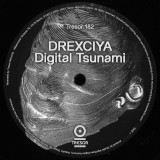
Classic Drexciyan dance floor moment like 'Digital Tsunami' is considered as the signature track of the 'Harnessed the Storm' album. It is accompanied here by three titles that are not present on the 2LP vinyl version of the album.
Originally released in 2002, 'Harnessed the Storm' was conceived as the opening chapter of the legendary seven Storms - a series of seven albums created within a single year and released via several labels under different names.
'Harnessed the Storm' was the sole one in the series credited under the main Drexciya project.
This 12' also includes 'Aquatic Cataclysm' which ranks with the most abstract, alien and stark in their catalogue.
Another masterful lesson in futurist dance music from one of its strongest forces.
Bringing together the elder statesman of the Zulu guitar Madala Kunene and internationally acclaimed Sibusile Xaba, kwaNTU pulls two generations of South African guitar mastery into a single point of focus. Under-represented on recordings outside of South Africa, Madala Kunene (b. 1951), the ‘King of the Zulu Guitar’, is revered as the greatest living master of the Zulu guitar tradition. Sibusile Xaba, whose collaboration with Mushroom Hour Half Hour reaches back to his first recording in 2017 (Open Letter To Adoniah/Unlearning), has garnered international acclaim for his unique voice and virtuoso guitar stylings, which bring together multiple South African guitar lineages in an original, spiritualised fusion. Collaborating with Mushroom Hour and New Soil for kwaNTU, the two players come together to weave a filigree sonic fabric which reaches down to the heartwood of Zulu guitar music but moves resolutely outward, building on the past to create a deeply rooted statement about present conditions and future travels. kwaNTU – which can be roughly translated ‘the place of the life-spirit’ – is also conclave of teacher and student, as Xaba has been taught by Kunene for the last decade. Meditative, rich and sonically sui generis, kwaNTU finds these two musicians linking up within the inimitable space of sound and spirit that they share through Kunene’s teaching.
The great masters of South African music have not all had equal exposure. For many years the generation of musicians who were exiled during apartheid took centre stage, as the regime made it very difficult for those at home to be heard. More recently, a new cohort of important voices, especially in jazz, has broken through to international consciousness. But for the generation of musicians in between – those who shone like beacons in the most difficult final years of apartheid and immediately afterward – international recognition has been slow in coming.
Madala Kunene, ‘the King of the Zulu Guitar’, is among this number. A revered figure for current generations of South African musicians, Kunene began his recording career in 1990, at the bitter end of apartheid, with a now classic self-titled LP for David Marks’ storied Third Ear imprint. Born in 1951 in Cato Manor, near Durban, he had determined to be a musician from early childhood, and by the time he first entered a recording studio he had already had a long career as a popular performer. His virtuoso absorption and transformation of the venerable Zulu maskanda guitar tradition and his richly spiritualised approach to music immediately marked him out as someone special, and in the years that followed, Kunene cemented his position as one of South Africa’s musical elders. He is without doubt the grand master of the Zulu guitar tradition, but his sound and sensibility ranges far beyond it into varied sonic terrain, and he has collaborated with a wide range of musicians both at home and abroad. Now in his mid-seventies, he remains a shining light for those that are making music in contemporary South Africa.
‘He is really an amazing person,’ says the guitarist Sibusile Xaba, who has been mentored by Kunene for over a decade, and now invites a collaboration with him on kwaNTU. ‘As a mentor, he's really powerful in showing us the way. For us to have this opportunity to make music together and have a project together is really a blessing to me.’
Xaba himself grew up in Newcastle, KwaZulu-Natal, where his mother had been in a band and his father sang in a church choir, and from early childhood Xaba played homemade tin guitars. He only later realised that music was his calling. ‘I just loved music. I was fortunate. My parents loved music. And when it was time for me to leave home and go to study outside Newcastle, I knew that music was what I wanted to do. There was no second option. It was just music.’ Moving to Pretoria to study music formally, Xaba committed himself to his craft, developing a unique style that draws on both US jazz masters such as Wes Montgomery and Jim Hall, and the rich and varied heritage of the South African guitar, from inspirational jazz players such as Allen Kwela and Enoch Mthalane, to the music of the Malombo groups and Dr. Philip Tabane (Xaba has previously collaborated with Dr. Tabane’s late son, Thabang), and the Zulu guitar tradition embodied by Kunene.
‘I was really in love with the jazz guitar, I really admired it, and I was digging a lot in that direction,’ says Xaba, recalling his first encounter with Kunene’s music, over a decade ago. ‘And then one day on my timeline, Kunene popped up, and I was like – “What's this sound?” I was so connected to it. It really touched me deep. I started checking out his records, and then I found out he's from the same region as I am, which is Zululand.’ After Kunene played a show at the Afrikan Freedom Station in Johannesburg, Xaba make contact with him, and visited him at home in Durban. They struck up a friendship, and Xaba became the elder’s student, as Kunene began to pass on his knowledge and his inimitable way of playing.
kwaNTU is a tribute to this relationship and the deep learning that has defined it. The album was recorded in Zululand in the town of Utrecht, at a cultural centre called Kwantu Village, which gives its name to the album. ‘It's such a broad word,’ Xaba says, ‘but the elders teach us that Ntu is basically an energy, almost chi, an energy, a force that all living beings have within them. It's a living energy, so kwaNTU is like, almost the place of this energy.’ The two men sequestered themselves for five days of jamming, improvising and planning, and then the session was recorded in one take over a single night, with Gontse Makhene joining on percussion and backing vocals and Fakazile on vocals. Other voices and overdubs were later added in the studio in Johannesburg.
The result is a rich and meditative recording that finds two generations in a deeply engaged dialogue. Teaching and passing on his knowledge, the elder Kunene has brought Xaba into a space of sound and knowledge that they now share; Xaba’s own practice of deep communion with nature and his dedication to his musical craft make him the perfect interlocutor for Kunene. The result is an album that foregrounds the two musicians engaged at the highest levels of responsive listening, sympathetic unity, and collaborative concentration. Bringing an elder statesman of South African music to an international listening audience for the first time in decades by pairing him with one of South Africa’s most important new voices, kwaNTU is a meeting of generations and a powerful demonstration of musical lineage and continuity.
‘Before music, there is sound,’ Xaba observes, speaking of Kunene’s unique approach to music. ‘And sound is like a common compartment…it's not restricted to particular people or particular geographic places, you know what I mean? It's sound. Everybody can hear it. So when he constructs that sound into music, I think everybody resonates with the energy behind his construction of sound into song. Here at home, we really love him for preserving our history through the guitar, through his stories as well the music, the songs that he writes. We really, really admire him.’
This exciting new collaboration between Cara Tolmie and Rian Treanor is a highly kinetic and playful endeavour. Body-centric vocal explorations merge with intricate rhythmic systems forming a deliciously disorientating, hypersurreal space of semantic modulations, concrete poetry, cut-up beats and mimicked samples. Their sound is singular and tactile: dissociative dance music that reassembles contorting vocal lines and knotting biomechanics in an explorative network of unstable forms. It's a blur of bodily fragility and ecstatic disruption, where swells of meaning rise and fall through clouds of synthetic buzz, fleeting breath, and stream-of-consciousness imagery.The duo first performed together when Counterflows Festival paired them for a new commission at the historic Arches venue in 2023. Glasgow-born, Stockholm-based vocalist and performance artist Cara Tolmie brought her hypnotic vocal technique, Internal Singing _ an intimate practice using breath, movement, and touch that explores the subtle binds between voice and body in an unsettling, engrossing sonic space. Treanor's richly innovative work provided a compounding counterpart: radical, rave-infused structures that bent and contorted around Tolmie's incantation.Growing out of a series of charged, improvisational performances, Body Lapse was recorded between Stockholm and Rotherham in 2024. Echoes of their live energy run throughout _ a voice shaking through the body, responding to touch and physical modulation, translating performance into something tactile and immediate. Body Lapse marks their debut release together, it conjures a sound of unsettling beauty and frictional intensity _ a playful, physical mesh of computer music, voice, and speculative storytelling. In this gnawing, dreamlike space, breath and body become sites of both connection and disruption, sparking thrilling encounters with the unexpected, the playful, and the decisively weird
Leeds based IMAGINARIUM announce their record label delivering a four track EP featuring music from residents Pete Melba (Planet Orange), Phil Warner (Plant & Deck / Pic N’ Mix), and Roya Brehl (Creatures of the night / Last days of Rome). Joining the crew is rising star and one half of duo Le Frequency, James Geeson.
Pete Melba kicks things off in his signature style of groovy tech house with skipping percussion, twinkling melodies and a touch of darkness. Phil Warner takes the A2 into techno leaning tech house territory sporting spacey pads, acid licks and spooky vocal snippets. On the B1, Roya Brehl moves into darker realms utilising cascading synths, eerie vocals and jangling percussion. Closing out the EP James Geeson continues the dark theme of the B-side warping the classic moonraker vocal into a deep dance floor chugger.
A well-rounded EP for cultured diggers bound to scintillate dance floors and after parties across the globe.
After a lengthy time of careful planning, the first Bünker Bliss release finally comes to life, and it couldn’t be in better hands. TBILISI-based producer DJ Astrobee steps forward with a record that reaffirms his status as one of Georgia’s underground pillars.
The music itself moves fluidly from razor-edged, body-jolting rhythms to shadowy synth-driven journeys - always carried by a tension that feels both immediate and entrancing. DJ ASTROBEE channels that energy into Bünker Bliss, setting a defining tone for everything that follows
A Place In My Memory Is All I Have To Claim is the new album by Australian atmospheric pop trio Hydroplane, the storied 'offshoot' formed by three quarters of independent pop group, The Cat's Miaow. On this, their first music after two decades plus of radio silence, Andrew Withycombe, Kerrie Bolton and Bart Cummings return to the gentle, close-quarters musical world they shared around the turn of the century.
Recorded during 2024 in Melbourne and Ballarat, A Place In My Memory… picks up the thread Hydroplane set down with its precursor, 2001's The Sound Of Changing Places, though you can hear echoes of their other releases, too, with Withycombe noting a through-line from the group's 1998 "Failed Adventure" single. There's little quite like A Place In My Memory…, then or now, though. Maybe you can draw some connections between Hydroplane and their sister group, The Cat's Miaow, while fellow travellers might include Empress, The Ah Club, and further back, Young Marble Giants, Veronique Vincent (the muffled, ticking drum machine also makes me think of Robin Gibb's Robin's Reign).
There's also an umbilical to the bedroom-crafted electronica doing the rounds in the late nineties and early noughties. Hydroplane hint at this through their approach to songwriting, which often builds creatively around loops as structural devices. Through all this, the trio achieve an effortless, organic weightlessness across these nine lovely songs. Many feature Bolton's clear singing voice, drifting along, while guitars, keyboards, drum machines and loops tickertape away. The constituent parts fit together, but they also have a curiously detached quality - think of abstract cloud formations sharing the same sky.
Hydroplane and The Cat's Miaow often dealt in emotional ambiguity and uncertainty, and the uncertainty of the nostalgic. This was always one of the most appealing facets of their music, and A Place In My Memory… is thus named perfectly. I couldn't dream up a better title for the album and its reflections on history, lived experience, and the inevitable tangle between these two phenomena. These reflections variously address such concerns as human cruelty, flight, space travel, adventurism and spiritualism. There's also "To the Lighthouse", not a direct reference to the Virginia Woolf book, but a great title, nonetheless. (They've always had excellent titles, often borrowed, for songs and albums.)
A beautiful collection of drowsy, sleepy pop, humble and quiet, but resolute in its craft, A Place In My Memory Is All I Have To Claim is dream work in practice; a lovely reintroduction. Welcome back, then.