Deluxe 180gram vinyl edition comes in a foil-embossed and die-cut cardstock jacket with printed inner sleeve and additional 12x12 art cards featuring the collages of Maciek Szczerbowski. All the art interacts with the die-cut jacket framing. Edition of 300. Rooted in a distinct and immediately identifiable sound_with the cello of Rebecca Foon (Saltland, Set Fire To Flames, Thee Silver Mt Zion) and the marimba of ex-Godspeed You! Black Emperor percussionist Bruce Cawdron at its core_Esmerine has long embroidered emotive chamber works using threads of post-classical, post-rock, Minimalism, neo-Baroque, jazz, pop and a wide array of folk traditions. Multi-instrumentalist Brian Sanderson, who joined the group in 2012, has furthered Esmerine's melodic and ethnomusicological sensibility ever since, expanding the ensemble's palette as its third core member with guitars, ngoni, ekonting, hulusi, brass horns of all sorts, and more. Since 2003, six stately and filmic instrumental albums have inscribed compositional landscapes through epigrammatic miniatures, longform multi-movement chronicles, and all manner of evocative musical prosody between. Marked by an inimitably turbid yet tempered pastoralism, alternately lit by dappled dawn and disquieted dusk, Esmerine's musical narratives balance asceticism and romanticism, melancholy and hope, stillness and wanderlust. Esmerine now shares Everything Was Forever Until It Was No More, its seventh full-length album and first in five years. The band surprise-dropped the full album digitally on 06 May 2022, with the CD and Deluxe 180gram LP editions hitting stores on official release date 26 August 2022. Following an acclaimed run of mid-career records on Constellation through the 2010s_the last three of which have all been finalists or winners of Juno Awards for Instrumental Album of the Year and/or Album Packaging of the Year_Esmerine began working on new music at decade's end. Under the auspices of a grant from the Canada Council for the Arts, and a summer 2019 residency at Le Château de Monthelon (an artist commune in France where the band has cherished long-standing spiritual, creative, and personal connections), compositional seeds were planted_and then pandemic rooted everyone in place. In between lockdown waves, at the respective rural Québec homesteads of Cawdron and Foon, longtime co-producer Jace Lasek (The Bernard Lakes) began capturing the band in various stripped-down configurations with spartan remote equipment. More fulsome arrangement and overdub sessions at Foon's converted barn during the summer of 2021 brought the album to full fruition_where a notable increase in the use of acoustic piano also poured forth, with just about every band member having a go. The record also signals the definitive integration of bassist Philippe Charbonneau_having joined Esmerine as a touring member pre-pandemic, he plays throughout the album on upright and electric bass, with turns on piano and synth, as well as sound design contributions via tape echo and other processing. Everything Was Forever Until It Was No More grapples with the existential tensions between atmosphere and airlessness, seclusion and claustrophobia, forbearance and coalescence. In many ways it is one of Esmerine's most restrained records. Only a few passages are driven by full percussion. There is palpably less Sturm and Drang or overt crescendos compared to its recent predecessors. The new album roils with a different sort of dynamic intensity, where instrumental densities ebb and flow within an overtonal centre, melding into each other with gauzy timbral warmth, sometimes tracing fleeting tendrils outwards, but always rotating around a saturnine gravitational force. Everything Was Forever Until It Was No More is like a dark forest lit by a closely-orbiting opalescent planet; it could be the alternate score to Von Trier's Melancholia or Cormac McCarthy's The Road.
Cerca:the plan
(Cargo Collective Title) RIYL: Silver Mt Zion, Rachel’s, Grails & Do Make Say Think. 180g LP, custom window-cut letterpress jacket with artworked 300gsm inner + DL. Esmerine presents Everything Was Forever Until It Was No More, its first album in five years, following a celebrated run of Juno Award winning and nominated records throughout the preceding decade. Founded by ex-Godspeed You! Black Emperor percussionist Bruce Cawdron and cellist Rebecca Foon (Saltland, Silver Mt Zion, Set Fire To Flames), the acclaimed instrumental music ensemble and has long embroidered emotive chamber works using threads of post-classical, post-rock, Minimalism, neo-Baroque, jazz, pop and a wide array of folk traditions. Esmerine conjures a distinctive and immediately identifiable sound that consistently defies the trappings of “fusion”, forging emotive cinematic soundtracks under the overriding sonic sensibilities of postpunk grit, Wall-of-Sound, drone and dark ambient. Recorded by longtime co-producer Jace Lasek (The Besnard Lakes), the new album manifestly carries on in this fine tradition. Everything Was Forever Until It Was No More completes Esmerine’s “Anthropocene” triptych: a series of album-length meditations that began in 2015. The album title itself has minor meme status in eco-artistic circles, appropriated from its original context Alex Yurchak’s 2005 book about the collapse of Soviet Russia by several exhibitions and works interrogating artistic production in the age of environmental crisis. (Foon is also well-known for her climate activism as co-founder of Pathway To Paris.) The album grapples with existential tensions between atmosphere and airlessness, seclusion and claustrophobia, forbearance and satiation, scarcity and abundance; it is one of Esmerine’s most restrained and wistful works. Instrumental densities ebb and flow, melding into each other with gauzy timbral warmth, sometimes tracing fleeting tendrils outwards, but always rotating around the saturnine gravitational force of a darkly glowing sonic center. Everything Was Forever Until It Was No More is like a somber forest lit by a closely-orbiting opalescent planet; it could be the alternate score to Von Trier’s Melancholia or Cormac McCarthy’s The Road.Esmerine planted these compositional seeds before pandemic rooted everyone in place, under the auspices of a grant from the Canada Council for the Arts and a 2019 residency at Le Château de Monthelon in France. Lasek then began documenting the band between lockdowns in various stripped-down configurations with spartan remote equipment at the rural Québec homesteads of Cawdron and Foon, culminating in final sessions at Foon’s converted barn in summer/fall 2021, notably with extensive use of the barn’s resonant acoustic piano. Brian Sanderson appears on his fourth Esmerine album since joining in 2012, continuing to expand the ensemble’s ethnomusicological sensibility and melodic sound palette with guitars, ngoni, ekonting, hulusi, and brass horns of all sorts. Everything Was Forever… also signals the full integration of bassist Philippe Charbonneau, who joined Esmerine as a touring member pre-pandemic and plays throughout the new album, along with sound design contributions via synth, tape echo and other processing. Everything Was Forever Until It Was No More features the pandemic collage artwork of Maciek Sczcerbowksi, in a second Esmerine album art collaboration following their Juno award for Album Package of the Year for Lost Voices in 2015.
- 1: Out Cont (Out Conte) Chaplin 03:47
- 1: 2 5 A.m. トクマルシューゴ / Shugo Tokumaru 05:48
- 1: 3 July F.l.y. 03:20
- 1: 4 あきのつばめ / Aki No Tsubame わすれろ草 / Wasurerogusa 04:24
- 1: 5 人が生まれる / Hito Ga Umareru ジョナサン・コンディショナー / Jonathan Conditioner 05:39
- 1: 6 或る夕べ / An Evening Litany 中村祐子 / Yuko Nakamura 02:02
- 1: 7 Wedding Song Kama Aina 05:30
- 1: 8 Ginger Yuko Kono 03:52
- 1: 9 つけも / Tsukemo ジョンのサン / Jon No Son 0:0
- 1: 0 ゆうたいりだつ / Yūtai-Ridatsu 森山ふとし / Futoshi Moriyama 06:9
- 1: Blue Mmm 05:9
- 1: 2 夜 / Night てんしんくん / Tenshinkun 0:42
- 2: 1 Origami Daisuke Tanabe 03:1
- 2: 不夜城 / Fuyajo その他の短編ズ / Sonotanotanpenz 01:36
- 2: 3 水 / Water んミィ / Nnmie 0:5
- 2: 4 君のような目にいつかなりたい / Wanna Be Like Your Eyes Someday わびさびくらぶ / Wabisabi Club 03:19
- 2: 5 スミヨシ / Sumiyoshi かきつばた / Kakitubata 07:43
- 2: 6 野球 / Baseball Hose 0:31
- 2: 7 グッモーニン / Good Morning ブラジル / Brazil 0:59
- 2: 8 わんわんのテーマ / The Theme Of Oneone わんわん / Oneone 04:38
- 2: 9 アルペジオ / Arpeggio 王舟 / Oh Shu 01:30
- 2: 10 少年少女 / Boys & Girls 惑星のかぞえかた / How To Count Planets 03:50
- 2: 11 雪がや / Yukiga Ya コントノボ / Contonovo 0:5
- 2: 1 夢が叶った / Yumega Kanatta / My Dream Has Come True 狩生健志 / Kariu Kenji 03:15
- 2: 13 話し方 / How To Speak Fuji||||||||||Ta 04:53
- 2: 14 染め / Dye (Some) 沼田佳命子 / Kanako Numata 03:11
Following the »Minna Miteru« compilation, released in 2020, Morr Music announces a sequel, dedicated to Japanese indie music, overflowing with surprises and welcome discoveries. Like its predecessor, »Minna Miteru 2« is compiled by Saya of Tenniscoats, with the support of Markus Acher (The Notwist). It’s also another part of the Minna Miteru universe, alongside retrospective albums by The Andersens (»There Is A Sound«, 2020) and yumbo (»The Fruit Of Errata«, 2021). Taken together, these albums suggest a scene in rude health, sharing a unique vibration.
If its predecessor circled around Tenniscoats and their close friends, the second volume, though featuring a collaboration between Tenniscoats and Deerhoof as oneone, reaches far further afield, drawing from music old and new, far and wide. Consistent across »Minna Miteru 2« is a sense of wonder and a cheerful unpredictability: you never quite know what you’ll hear next. There are some gorgeous indie pop songs here, like Yuko Kono’s »Ginger« or HOSE’s »Baseball«, but there are other sounds too, like Kariu Kenji’s blue-hued electro-pop, or the wheezing pipe-organ ambient of FUJI||||||||||TA: »Minna Miteru 2« hints at new kinds of beauty.
Some of the more widely known names here contribute typically gorgeous melodies – Kama Aina’s »Wedding Song«, from 2005’s »Hawaii Hawaii« CD, is a reflective tune that combines a country-ish lilt with hints of slack-key guitar. Shugo Tokumaru’s »5 A.M.« is a delirious psychedelic pop mantra, drawn from his excellent 2005 album, »L.S.T.«. Many of the revelations, though, come from artists and groups relatively unknown outside Japan. The lovely, disorienting glitch-folk of Wasurerogusa features Aki Tsuyuko, perhaps best known for her albums on Thrill Jockey and Jim O’Rourke’s Moikai label, collaborating with psych-folk legends Eddie Marcon.
There’s also the delightful synth-pop of Jonathan Conditioner; the electronic dreamscape of Chaplin, whose opening »Out Cont« runs along several parallel paths at once; the twinkling, acoustic jangle at the heart of mmm’s luscious »Blue«; and a curious collection of miniatures, from acts like tenshinkun, Daisuke Tanabe and NNMIE, that embrace a childlike curiosity, essaying a kind of toytown pop-tronica.
The twenty-six songs on »Minna Miteru 2« repeatedly catch you unawares, upending your expectations and signaling both the breadth and depth of the Japanese indie underground. It’s a compilation of play and pleasure, but also of bold experiment smuggled into the everyday through pop music’s welcoming moods, magically creating a new world for the listener, spun out of the air and woven in between your ears.
- Delirious Eyes
- Parish (Overworld Theme)
- Grainer To Chicago
- Fourth Flood
- Endless Eve
- Troy Story
- Perilloux & Sons Llc
- Disorientation Is Normal
- Trinkets
- Behind The Fenceline
- Last House In Dimes
- Ditch Man's Curse
- Planner Will Hide
- Your Pawpaw
- Refinery Fight
- Apocryphon Of Kenner John
- Here Comes The Scum
- True Padu
- The Long Road
- Corrupted Sanctum
- Forgive Me, Father
- Virtual Death
- Homunculus
- View Of A Burning City
Red Vinyl[35,25 €]
Baton Rouge sludge band Thou have released over a dozen LPs worth of music, collaborated with divergent artists like Emma Ruth Rundle and The Body and released covers that run the full gamut of genres. Continuing their practice of bucking typical metal tradition, their latest record, a split release with composer Gewgawly I, is a soundtrack created for the highly anticipated new video game NORCO.
Gewgawly I has created a master work of ambiance, not only reminiscent of some of the best game soundtracks from the 80s and 90s but also a stunning work of contemporary experimental music pushing the genre forward in exciting ways. Thou have rounded out the game’s grit with a wash of downtuned doom and drone. The band has previously been described as “For fans of: alienation, absurdity, boredom, futility, decay, the tyranny of history, the vulgarities of change, awareness as agony, reason as disease,” and these themes
come to life vividly in Thou’s collaboration with the richly illustrated world of NORCO.
“Thou represents an aspect of Louisiana that’s close to my heart. The members know the suburbs of New Orleans and Baton Rouge well. They capture a kind of strange irreverence in their sound and visuals that’s specific to the region and has influenced the game NORCO,” says Yuts from Geography of Robots. ”We’ve been trying to collaborate for a while, and I’m just stoked it’s finally happening!”
- Delirious Eyes
- Parish (Overworld Theme)
- Grainer To Chicago
- Fourth Flood
- Endless Eve
- Troy Story
- Perilloux & Sons Llc
- Disorientation Is Normal
- Trinkets
- Behind The Fenceline
- Last House In Dimes
- Ditch Man's Curse
- Planner Will Hide
- Your Pawpaw
- Refinery Fight
- Apocryphon Of Kenner John
- Here Comes The Scum
- True Padu
- The Long Road
- Corrupted Sanctum
- Forgive Me, Father
- Virtual Death
- Homunculus
- View Of A Burning City
Black Vinyl[33,57 €]
Baton Rouge sludge band Thou have released over a dozen LPs worth of music, collaborated with divergent artists like Emma Ruth Rundle and The Body and released covers that run the full gamut of genres. Continuing their practice of bucking typical metal tradition, their latest record, a split release with composer Gewgawly I, is a soundtrack created for the highly anticipated new video game NORCO.
Gewgawly I has created a master work of ambiance, not only reminiscent of some of the best game soundtracks from the 80s and 90s but also a stunning work of contemporary experimental music pushing the genre forward in exciting ways. Thou have rounded out the game’s grit with a wash of downtuned doom and drone. The band has previously been described as “For fans of: alienation, absurdity, boredom, futility, decay, the tyranny of history, the vulgarities of change, awareness as agony, reason as disease,” and these themes
come to life vividly in Thou’s collaboration with the richly illustrated world of NORCO.
“Thou represents an aspect of Louisiana that’s close to my heart. The members know the suburbs of New Orleans and Baton Rouge well. They capture a kind of strange irreverence in their sound and visuals that’s specific to the region and has influenced the game NORCO,” says Yuts from Geography of Robots. ”We’ve been trying to collaborate for a while, and I’m just stoked it’s finally happening!”
How Do I Get That Star is Zannie Owens' debut record under their own
name, as well as the first release with Kill Rock Stars
Previously, they performed as Potted Plant and they co-helmed the band Really
Big Pinecone alongside Michael Buishas (0 Stars, .michael). This latest effort is
self- produced, and features contributions from friends in New York, as well as
zannie's brother Sam, who plays bass and also mixed the record. Made over the
course of four years, the record deals with feelings of pining for the unknown, the
mystical, and the mundane. To paraphrase zannie, the record was produced
mitotically from their mind. The resulting 11 songs (picked precisely because of
the number's magical, symmetrical qualities), are warm to the touch. To listen to
How Do I Get That Star is to immerse oneself in a sound bath or look up at the
stars on a summer night in the middle of nowhere.
Red Vinyl[27,10 €]
The iconic US blues-rock guitarist Walter Trout is set to release his 30th
solo album, Ride on 19 August via Provogue/Mascot Label Group.
However fast or far a man travels, he can never truly outrun his past
On his new album he found himself eyeing the horizon and the green shoots of
his triumphant late career. There was a new record deal with Mascot/Provogue. A
move from California to Denmark with his beloved family. Even now, aged 70,
Trout was still writing fresh chapters of his life story.
The last time we saw Trout stepping out, he was on the road in support of 2020's
Ordinary Madness. The campaign ended in frustration, when Covid rendered live
work too dangerous, both for this liver- transplant survivor and his fans,
condemning Trout to an enforced downtime in Denmark that he hadn't known in a
half- century. "I've been at this since '69, when I started out in the New Jersey
bars," he reflects. "Suddenly, I'm sat on my ass for sixteen months, although I did
still practice guitar every day. My wife and manager Marie knew I needed to make
music. So her present to me for my 70th birthday was a brand-new record deal
she had negotiated. My producer, Eric Corne, scoped out a new studio in LA, and
my plan was to fly home to make a new album."
The result is Ride, providing an emotional release-valve – both for its creator and
his loyal listeners – perhaps this veteran artist can reconcile with his past, accept
his future and live in the present as it unfolds. "I think you can interpret this album
title a few different ways," he concludes. "I mean, this album is definitely a
musical ride and I certainly tried to cover a lot of ground. But, really, life is kind of
a ride too, isn't it? And I want to live mine to the fullest."
Black Vinyl[27,10 €]
The iconic US blues-rock guitarist Walter Trout is set to release his 30th
solo album, Ride on 19 August via Provogue/Mascot Label Group.
However fast or far a man travels, he can never truly outrun his past
On his new album he found himself eyeing the horizon and the green shoots of
his triumphant late career. There was a new record deal with Mascot/Provogue. A
move from California to Denmark with his beloved family. Even now, aged 70,
Trout was still writing fresh chapters of his life story.
The last time we saw Trout stepping out, he was on the road in support of 2020's
Ordinary Madness. The campaign ended in frustration, when Covid rendered live
work too dangerous, both for this liver- transplant survivor and his fans,
condemning Trout to an enforced downtime in Denmark that he hadn't known in a
half- century. "I've been at this since '69, when I started out in the New Jersey
bars," he reflects. "Suddenly, I'm sat on my ass for sixteen months, although I did
still practice guitar every day. My wife and manager Marie knew I needed to make
music. So her present to me for my 70th birthday was a brand-new record deal
she had negotiated. My producer, Eric Corne, scoped out a new studio in LA, and
my plan was to fly home to make a new album."
The result is Ride, providing an emotional release-valve – both for its creator and
his loyal listeners – perhaps this veteran artist can reconcile with his past, accept
his future and live in the present as it unfolds. "I think you can interpret this album
title a few different ways," he concludes. "I mean, this album is definitely a
musical ride and I certainly tried to cover a lot of ground. But, really, life is kind of
a ride too, isn't it? And I want to live mine to the fullest."
Produced mainly by Jerry Corbetta (Sugarloaf) and Dolenz, “Demoiselle” features solo recordings
made between 1981-1992 and includes previously unreleased material. Originally planned for release
in the early 1990s, the album never received a record deal for a number for reasons. Dolenz privately
released nine of the recordings in 1998, but they were only available for a short period of time via mail
order. This new and definitive version of Demoiselle has been remastered from the original master
tapes. It includes 3 previously unreleased bonus tracks and presents the material in a different
sequence. Available on CD and Vinyl, the CD comes in a deluxe digisleeve and features a big 32 page
CD booklet with extensive liner notes, lyrics and previously unseen photos. The LP version comes in a
gatefold sleeve and is pressed on 180g Red Vinyl.
- 1: Roar The Lions (Feat. Dj Grazzhoppa)
- 2: Pageants (Feat. Ras Kass)
- 3: Leave It Alone
- 4: Aladdin (Feat. H3Ro)
- 5: Rubber Match
- 6: Eagle Talents (Feat. Phase One & Bobbyj From Rockaway)
- 7: Chromed Out (Feat. Ras Kass & Planet Asia)
- 8: Nothing To Lose (Feat. Killah Priest & Lana Shea)
- 9: Avirex (Feat. Innocent? & King Magnetic)
- 10: Beautiful Distaster (Feat. Georgette)
Following several tragedies in his personal life, New York rapper El Gant had a decision to make—face those losses head on or bury them deep within. Luckily for us, he chose the former. The result is O.S.L.O., the emcee’s most gripping and personal project yet. It’s also his most relatable, because it shows what we’re all capable of when we’re equipped with the right tools to cope and, in El Gant’s case, transform that tragedy into something powerful.
The album arrives nearly a decade after his previous solo effort, 2014’s great Beast Academy, and after several years spent touring and recording with his group, Jamo Gang, with Ras Kass and J57. Despite the highs associated with that time, El Gant also experienced major personal losses. In particular, he lost three close friends—The Last Original, Bones, and Jim Misa—all of whom had a major impact on his life and career. In fact, the album’s title, O.S.L.O., references the Last Original, because it’s an acronym for “Our Sun the Last Original.”
But it wouldn’t be an El Gant project without some straight-up dope hip-hop, too. Tracks like “Avirex (feat. Innocent? & King Magnetic)” and “Chromed Out (feat. Ras Kass & Planet Asia)” are absolute bangers filled with shape-shifting flows and crazy wordplay.
There’s a reason for these tonal shifts, too; El Gant didn’t want to simply create a linear album. “I want to take the listener on a few ups and downs, just like life does for most of us,” the emcee says. It’s those qualities that make O.S.L.O. so immediately satisfying, and why it’s his most accomplished work to date.
Stemming from a great legacy of poetry, Quintal de Clorofila was a duo from the south of Brazil composed by two musician brothers, Dimitri and Negendre Arbo, who turned their dad's poetry into music. In the album O Mistério dos Quintais, the two brothers presented a Brazilian Hippie Folk full of psychedelic touches a times with flanger effects, reverb and synthesizers, a times totally raw with medieval melodies, flutes and strings. The record goes with the original artwork, insert with lyrics plus unreleased photos including the one of the debut album O Mistério dos Quintais featuring the bird (a canary) that sang on stage with its own microphone. O Mistério dos Quintais was released originally in 1983 via a some sort of crowdfunding, before the term itself and even the existence of internet. Supporters who invested in the project had their names in the acknowledgements on the first edition insert. Given the fact that it was released independently, the purity and innocence of the Arbo brothers came to light and set them free to grace the listeners with sounds of nature, mysticism, influences from the Peru Andes and even some madness such as taking the family's bird (that was used to singing along with the brothers at their rehearsals at home) to then record in the studio. When the record was ready, the band realized that the record RPM was wrong. The songs were a bit faster, slightly 1/2 a pitch higher. However, it was too late, nothing else could've been done. Because they were a small band, the manufacturing plant refused to repress the records and they had to endure this. Almost 40 years later, Fatiado Discos present the first version of O Mistério dos Quintais in its original rotation speed, the right one.
The newest psychedelic space ranger Cumbia band from Bogotá's infamous DIY scene have been sent to earth to save the party! Los Cotopla Boyz make the walls sweat, they set fire to your feet on the dance floor. It all started in Bogotá, which you might say is the tropicanibal venue par excellence, a place that has brought life to acts like Frente Cumbiero, Los Meridian Brothers, Romperayo, Chúpame el dedo, Dub de Gaita, Los Pirañas, Onda trópica and León Pardo, among other eccentricities that have taken the world and stand out not only for their virtuosity but also the connection that lives between that salvaging of traditional folklore and lysergic futurism that expands hypnotically around the world. From this musical hotbed that emerged in the second decade of the new millennium, there is now a new generation to continue the tropicanibal scene, with groups such as La Sonora Mazurén, La Tromba Bacalao, Los Yoryis, El Conjunto Media Luna and, of course, Los Cotopla Boyz, a five-piece that formed in Bogotá in 2018 but inhabit a post-pandemic dystopian multiverse where their mission is to save the party. So their live performances have that illusion of frantic Power Rangers singing about their adventures, as if these were epic chants, except instead of heroic feats they sing with humor about their everyday lives. Mamarron, Vol. 1 consists of seven millennial cannon shots inspired by Los Mirlos, Los Hechizeros Band, Anan, Wendy Sulca, La Sonora Cordobesa, Bad Bunny, Yandel and Los Corraleros de Majagual. The tracks were laid down on their debut record that saw the light in 2020 in the middle of the pandemic and are now re-released in 2022 by ZZK Records imprint AYA records and being pressed on vinyl. The vinyl album also will include the bonus track "El Peruanito" remixed by Colombian producer Santiago Navas. Los Cotopla Boyz are a sweaty, schizophrenic cumbia experience that has been witnessed by emerging Bogotá clubs like Matik-Matik, Boogaloop, El Chamán, Tejo Turmequé, Videoclub and the festival Hermoso Ruido, providing nights of wild abandon to the beat of an outrageous big cumbia sound, a ritual of release giving those present a maximum catharsis that has no compare, not even the most animalistic moves of any metaller shaking his powerful mane. Los Cotopla make the walls sweat, they set fire to your feet on the dancefloor, drawing amorphous moves from their fans on exquisite nights.
- 1: Duende (Feat. Katie Melua)
- 2: Bank Of Wildflowers (Feat. Georgia)
- 3: I Paint What I See (Feat. Beth Orton)
- 4: William Orbit & Hukwe Zawose - Heshima Kwa Hukwe
- 5: Nuestra Situación (Feat. Lido Pimienta)
- 6: The Diver (Feat. Natalie Walker)
- 7: William Orbit & Polly Scattergood - Colours Colliding
- 8: Gold Coast
- 9: Second Moon
- 10: Promethean Lies (Feat. Ali Love)
- 11: Planet Sunrise
- 12: No Other World (Feat. Beth Orton)
- 13: Free Glo (Feat. Gloria Kaba And Laurie Mayer)
Repress !
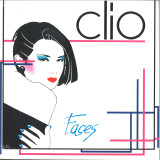
Worthy italo re-issue (in a newly mastered version) of this early Roberto Ferrante's project. Roberto started his career being part of various electronic music groups in Naples around the early 80s! His career took off when he made his first deal with Best Record by Claudio Casalini for ''Come On Closer'' by Pineapples which obtained worldwide success and was played at the legendary Chicago Radio Station WBMX by the mythological DJ's collective, Hot Mix 5. In 1985 it was time for another classic named â??Facesâ?Â�, a simple but direct and honest song with an irresistible rhythm and lyrics that tends to move away from that typical dark sound in other Italo-Disco songs of that era. This song is a triumph for synthesizers and electronic drums as it's fully electronic, something still a rarity in those days! The beautiful melody and spiritual essence of ''Faces'' represent the revolution of a new beginning of the Italian pop of the 80s with a perfect arrangement by Roberto Ferrante, a bouncing bassline, and strong and clear vocal. The sweet and sensual voice, full of personality and charm is by Clio (Maria Chiara Perugini). The graphics are by Patrizio Squeglia and all together it made this groundbreaking release which is one of the best Italo-Disco songs ever made.
Bassist and composer Milo Fitzpatrick (Portico Quartet) launches new collaborative project with saxophonist Jordan Smart (Mammal Hands)
Vega Trails is a new project from double-bassist and composer Milo Fitzpatrick, a founder member of Portico Quartet, who has also performed with the likes of Nick Mulvey and Jono McCleary and features saxophonist Jordan Smart (Mammal Hands, Sunda Arc) in a richly powerful duo bringing together two powerfully charismatic musicians. The project which takes its name from Carl Sagan's science fiction novel 'Contact' (a book about signals of new life detected from the Vega system) andwas born out of a desire to bring the elements of bass and melody to the foreground in their rawest form and Fitzpatrick explains that he deliberatelychose the stripped back approach.
"There is so much in just one musician's sound; the emotional, the intellectual, the vulnerability and power of their character. But often these delicate nuances can be submerged in the quest for a group sound. In Vega Trails I wanted to grant the musicians space to breathe and be heard and for the listener to witness the intimacy and depth of a conversation between two voices, bass and melody. I was also interested in how the limitations would guide both the composition and performance and to push us both to places close to the limits of what we could play, and it is in this place where I believe the character of a musician blossoms and comes forward".
Tremors in the Static was composed during Lockdown as Fitzpatrick immersed himself in music that had space and sparseness such as Swedish fiddle music and Indian Classical music. Jan Johansson's legendary 'Jazz på Svenska' (jazz versions of Swedish folk songs) was another influence, as was a collection of ancient lullabies by Spanish soprano singer Montserrat Figueras. Through exploring the harmonic and textural possibilities on the bass, Fitzpatrick would cycle riffs and motifs whilst singing melodies, and he began to create the music debuted here. However, it was only after listening to Charlie Haden's album of duets, 'Closeness', that the project would come into focus as a duo, and Fitzpatrick immediately knew that the second musician had to be Jordan Smart.
"I saw Jordan play at two Gondwana Records events – in Berlin and Tokyo. Both times I was mesmerised by the intensity and conviction of his playing. His commitment to the cause of transcending himself and the listener made a lasting impression on me. When I began writing this record, I knew I needed a strong player who had equal conviction in their playing as me, but also someone who understood the importance of melody"
It was an inspired idea as Smart brought an openness and positivity which allowed the music to be both experimental and bold. Smart's ability to play tenor and soprano saxophone with equal command, as well as bass clarinet and Ney flute, allowed them to open up the pallet of sound and pull the melodies into varying emotional landscapes.The final piece of the puzzle was the performance space. Fitzpatrick knew that he wanted the two players to react off of a third element. The music was written for an ambient space which interacted with the notes: decaying and disintegrating them into silence. They found the perfect space in a church in Fitzpatrick's local neighbourhood of Stamford Hill.
"The recording space is the canvas on which the sound interacts and flows, it is the frame in which notes can live, breathe and die and is as important as the other elements. A resonant recording space, like a church, allows this stripped back sound to resonate, echo and linger, enough to create images and landscapes in which stories can play out".
This then is Vega Trails, a project that brings together two open-mined and communicative musicians for the first time, to tell beautiful winding stories together and to create something soulful and new.Something bigger than both of them and something that leaves us all richer for hearing it. Enjoy!
- A1: Main In The Zone Radio (Intro)
- A2: Pitfall Music (Feat Flee Lord & Dj Revolution)
- A3: Lil Jon's Weed Stash
- A4: Wavez, Micro
- A5: Ew Mcnasty's Revenge
- B1: That Gas (Interlude)
- B2: Selfcare Welfare
- B3: Cherry Red Elephant (Feat Stevie Crooks)
- B4: Disobey Your Thirst
- B5: Pitfall Music (Feat Flee Lord & Recognize Ali - Reprise)
Brown / White Vinyl[35,08 €]
Chicago-meets-Philly when Vic Spencer and Small Professor connect on Mudslide, the incredible new album from this pairing of raw talents. Coalmine Records is proud to share this project with the world, and it marks Small Pro’s third collaborative release on the label after he previously linked with Guilty Simpson and the late Sean Price.
For the producer, it was an exciting new opportunity to team up with an emcee who’s gruff-voiced, hilarious, and can out-rap anyone on the planet. “Plus, my past Coalmine projects have their own neo/prog-boom-bap vibe, and ‘Mudslide’ continues that particular sonic blueprint,” Small Pro said.
And for fans of that sound, you’re not going to find a better example of that sound than this album. It’s just as experimental as it is steeped in the traditions of rap thanks to Vic’s boundary-pushing rhymes and Small Pro’s immensely satisfying instrumentals.
Tracks like “Lil Jon’s Weed Stash,” “Ew McNasty’s Revenge,” and “Selfcare Welfare” marry psychedelic vibes with grounded and clever lyricism. Another immediate standout is the lead focus track “Pitfall Music,” which features a mean-mugging guest verse from Flee Lord with cuts supplied by acclaimed turntablist, DJ Revolution.
Mudslide will be available digitally, as well as on CD, cassette and vinyl in three configurations; classic black, brown w/ white color-in-color, and a limited Ghostly Brown vinyl edition.
Rose City Band is celebrated guitarist Ripley Johnson. A prolific songwriter, Johnson started Rose City Band to have an outlet to explore songwriting styles apart from Wooden Shjips and Moon Duo, where he is often not the lead songwriter. Rose City Band allowed him to follow his musical muses as they greet him and not be bound by the schedule of bandmates and demands of a touring group. Stepping out from behind the psychedelic haze that envelops his other output, Rose City Band"s lean yet richly textured arrangements lay bare the beauty of his songcraft. On Earth Trip, Johnson reveals more of himself than ever before, coloring the project"s country-rock twang with a melancholic, wistful undertone. It charts a journey of personal growth and introspection with surprising honesty, from pining for summers spent with friends to meditations on space, stillness and the splendor of the natural world. It continues Rose City Band"s celebration of summer warmth and the great outdoors, seen from a new vantage point, and with newfound appreciation for the freedom and joy that nature provides. Earth Trip was written during a period of sudden shocks and drastic lifestyle changes for Johnson. Forced to cancel extensive touring plans for 2020, the guitarist found himself home for an extended period for the first time in years. No longer in constant motion, he was able to experience and enjoy the simple pleasures of home life, of being in one place: hikes in nature, bathing outside, and waking with the dawn. Forming new connections to his surroundings, from tending to a garden to sleeping out under the stars, Johnson found hope and healing in a more mindful relationship with the natural world. Themes of recalibration and finding personal space are equally mirrored in Earth Trip"s lean production. Recorded at his home studio in Portland and mixed by Cooper Crain (Bitchin" Bajas, Cave), Johnson makes deft use of space while experimenting with new sonics. Shimmering pedal steel, woozy harmonica melodies, and stately piano enhance the album"s introspective tone without ever clouding arrangements. Psychedelic elements that nod to Johnson"s other projects and influences still appear throughout, but hover at the edge of perception, a subtle halo adding colour and texture to Johnson"s songwriting rather than taking centrer-stage. He elaborates: "I told Cooper I was trying to capture that feeling when you take psychedelics and they just start coming on - maybe objects start buzzing in the edges of your vision, you start seeing slight trails, maybe the characteristics of sound change subtly. But you"re not fully tripping yet. He got the idea right away and his mix really captures that feeling." Johnson"s lithe guitar playing throughout treads a fine line between country and cosmic, taut melodies spiralling out into long reverb trails or free-form solos buoyed by a breeze, radiating summer warmth. Through its daring honesty and masteful arrangements, Earth Trip cements Johnson"s place as a singular songwriter of inimitable skill. It"s message of mindfulness and our interconnectedness to the environment expands on a long country and blues music tradition that draws a symbiotic relationship between storyteller and the land, capturing the beauty of the natural world while also emphasising our responsibility in preserving it for future generations
Ever Crashing, the second LP by Kennedy Ashlyn aka SRSQ pronounced ‘seer-skew’, is the summation of a nearly three-year journey of soul searching, songwriting, and self-discovery: “I became myself in the process of making this record.” From the first choral swells of opener “It Always Rains,” it’s clear this collection exists on an ascendant plane, capturing an artist in super bloom. Every song hits like a single, heaving with guitar, synth, strings, live drums, and oceans of Ashlyn’s astounding voice, balletic and illuminated. The tracks gleam with detail, often assembled from as many as 100 separate tracks, all of which were written and played solely by Ashlyn – a feat of world-building as daunting as it is devastating.
For her, however, the process is intrinsic and intuitive – even a matter of survival. Her 2018 solo debut emerged in response to the tragic Ghost Ship fire in Oakland, which took the life of her bandmate and best friend Cash Askew. Similarly, Ever Crashing began materializing in the wake of an ADHD and bipolar disorder diagnosis, prompting a profound personal overhaul. Ashlyn cites such periods of turmoil as a muse of sorts, when “songs begin to echo within me,” gradually reverberating clearer and more vividly. As melodies and arrangements come into focus, the songs act like containers, vessels in which to externalize and exorcise tumultuous emotions, a transformation she memorializes in the climax of “Élan Vital:” “Reeling in and out of deep despair / I am saved by song.”
From swooning end credits balladry (“Dead Loss”) to orchestral slow-burn torch songs (“Abyss”) to dizzying shoegaze heavens (“Someday I Will Bask In The Sun”), the album exudes a sense of aching grandeur and bewildered joy, rich with triumphs hard won and lost loves never forgotten. Melodies pirouette and crescendo in dazzling, elevated acrobatics, somewhere between Kate Bush and The Sundays, threaded with ethereal undercurrents of shimmering shadow. Riffs brood and sparkle over crystalline synths, buoyant bass, and patient percussion, steadily building to holy moments of tidal power, finessed to perfection by producer Chris Coady (Beach House, Slowdive, Zola Jesus). Ashlyn’s is a dream-pop of questing catharsis, vulnerable but orchestral, as dense with hooks as heartbreak.
The album’s title refers to Ashlyn’s recurring sensation of being trapped in the crest of a wave, turned and churned in the surf, mirroring the cycles of self-flagellation and surrender that she battles being bipolar. But as the poetic raptures of these songs attest, her creative process thrives at transmuting trauma into potent music of arresting beauty and hidden divinity. Ever Crashing is an aching, rare work, shaded with gradients of reverie and regret, loss and letting go, “mourning the person I thought I should be, mourning the person I never was.” But even in its pain, Ashlyn’s voice exerts a redemptive gravity, yearning to transform and transcend: “Even on the inside / I’m bracing for impact / I’m waiting to destroy my life / To become sunlight.”