Tartelet has a knack for uncovering virtuosic, off-kilter electronic music. Max Graef—born, bred and still holding it down in Berlin's Prenzlauer Berg—is their latest artist in this mold. Though adventurous dance music is thick on the ground in the German capital, Graef's 2013 run of singles, cropping up on Graef's own Box aus Holz, plus Melbourne Deepcast, The Gym, Heist and Tartelet, continually surprised, infusing worn-in house with manic energy and acrobatic elasticity. Where many of his peers make languid, self-consciously laid-back tunes, Graef makes brilliantly restless ones. Dropping the needle on one of his EPs, you nearly expect it to pop right off again.
Rivers of the Red Planet, Graef's first full-length and Tartelet's latest album project, takes all that wildness and refines, expands, updates and scrambles it. It's as ambitious and deviously entertaining a record as you'll hear in 2014, the fulfillment of Graef's desire to make anything but another contemporary house music album. At any given moment, Rivers of the Red Planet feels like it could have been recorded through the smoke at a jazz club in the booth at a techno club 30 years from now or inside an MPC stocked with crusty dollar-bin samples. (We'd guess the staff at Graef's beloved OYE Records in Berlin will have a difficult time settling on which section to file it in.) If it sounds sampled, it's a testament to Graef's natural musicianship and production prowess —the record is heavy on sounds he played himself, from drums and Rhodes to fat synth melodies wrung out of an old Crumar Performer water-damaged to perfection. For vocals, Graef enlisted Nigerian singer Wayne Snow, whose rugged soulfulness makes him a natural pairing. On cuts like "Drums Of Death" and "Speed Metal Jesus," the club- readiness of his EPs lives on. But Rivers of the Red Planet may be most at home in your living room, with a good bottle of red and a roaring fire's crackles mixing with the pops and hiss of the vinyl—a playful listen that sinks in, burrowing deep and getting you all warm and gooey on the inside.
Suche:the plan
- A1: Italia: Ultimo Atto? Seq 1
- A2: Italia: Ultimo Atto? Seq 2
- A3: Italia: Ultimo Atto? Seq 3
- A4: Italia: Ultimo Atto? Seq 4
- A5: Italia: Ultimo Atto? Seq 5
- B1: Italia: Ultimo Atto? Seq 6
- B2: Italia: Ultimo Atto? Seq 7
- B3: Italia: Ultimo Atto? Seq 8
- B4: Italia: Ultimo Atto? Seq 9
- B5: Italia: Ultimo Atto? Seq 10
In 1977, in the midst of a period of political turmoil and social unrest that went down in Italian history as "years of lead", screenwriter and director Massimo Pirri made a film no one else had the courage to make: Italia: ultimo atto? (Could It Happen Here?). Here, Pirri explores the controversial (and, in the 70s, very current) topic of left-wing armed struggle. He does so through a storyline that is almost prophetic: in the film, a mysterious ultra-leftwing armed group plans and executes the killing of the Ministry of the Interior; in 1978 Christian Democrat leader and former premier Aldo Moro was kidnapped and killed by the Marxist-Leninist Red Brigades).
The violence of Pirri's storyline is fully captured by the score composed by Lallo Gori, who uses obscure synths, analog keyboards, and dry-sounding acoustic drums to create an extremely tense and frenzied soundscape of electronic textures.
The result is an album that combines dark, haunting jazz-funk with ambient atmospheres and suspenseful electronic sounds, and which ends up sounding like an instrumental proto-hip hop record where Moog synths take the lead together with drums.
At the time, this must have seemed like a low-budget, ramshackle soundtrack – essentially, a B-movie soundtrack. Indeed, the extensive use of electronic sounds was meant to compensate for the lack of acoustic instruments, such as the bass or (alas!) brass, which were replaced by keyboards and MiniMoog synths. Today, however, Lallo Gori's odd and minimalistic style of arranging makes this score sound unexpected, avant-garde, and innovative. In short, modern and contemporary.
Previously unreleased in any format, all tracks have been remastered from the original master tapes.
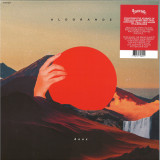
Favorite Recordings proudly presents Deux, second album of French Jazz-Funk quartet Aldorande. In this new chapter, the four explorers pursue their interstellar trip on the Aldorande
planet, deploying their ever deeper love for the 70's Jazz-Funk & Fusion scene. Extending their first
visions of this new world, the bigger-than-life arrangements of this second album reflect again their
high attention to dramatic narrative schemes, breezy Brazilian vibes, tempestuous funky grooves and
strong cosmic melodies from outer space. Classic and contemporary at the same time, Deux is built
for the like-minded souls still looking for the perfect beat.
Twisting time and space but never forcing the groove, the band dives more profoundly into the
Cortex influence of their compositions, with intense female back vocals fitting perfectly into their
cinematographic vision. Like a cry in space, could these esoteric incantations be heard by Aldorande's
divinities? Or will they be more impressed by the super-tight rhythm section with its bangin' basslines
or an irresistible blend of drums and percussion? In the end, they probably would have to surrender
after hearing the infinite echoes of the synthesizers and horns reflecting in the atmosphere. Deep and
thoughtful, the travel has only begun but it seems that so much has already been experienced.
Breaking the code, they opened the gates to a rebirth. One that could be only accomplished by finding
the “Pierre des Mondes”, deeply buried somewhere on Aldorande - the only key to solve the riddle of
the groove. Mission accepted.
You'll find in Aldorande some of the best French jazzmen including bandleader and founder Virgile
Raffaëlli on bass (Setenta & Joe Bataan, Camarão Orkestra), Florian Pellissier on keys (Iggy Pop,
Setenta, Cotonete & Di Melo, …), Mathieu Edouard on drums (Chassol, De La Soul) and Erwan
Loeffel on percussion (Camarão Orkestra, 10LEC6). On this album, they took the initiative to invite
two guests on some tracks: AOR singer Al Sunny and killer guitarist Laurent Guillet (Le Soldat Rose,
Setenta).eir ever deeper love for the 70's Jazz-Funk & Fusion scene. Classic and contemporary at the same time, Deux is built for the like-minded souls still looking for the perfect beat.
Available on November 19th 2021 as Tip-On Vinyl LP & CD.
- A1: Summer (Feat. Matt Blaque & Rydah J Klyde)
- A2: Just A Celebrity (Feat. Sky Balla)
- A3: Glamorous Lifestyle (Feat. Andre Nickatina)
- A4: Greatest Alive (Feat. E-40, Mitchy Slick & Jynx)
- A5: They Don't Know (Feat. Freeway)
- B1: Dream (Feat. Ampichino & Zion I)
- B2: Won't Be Right (Feat. Cellski)
- B3: Keep Callin' (Feat. Devin The Dude)
- B4: Girls
- B5: Scared Money (Feat. Krondon & Ap.9)
- C1: Get It In (Feat. Paul Wall & Masspike Miles)
- C2: What's Your Zodiac (Feat. Phil Da Agony)
- C3: Dopest Forreal
- C4: Callin' My Name (Feat. Mistah F.a.b.)
- C5: What Happened To The World
- D1: The Movement (Feat. Planet Asia)
- D2: Storm (Feat. Cormega)
- D3: Our Heroes (Feat. Dubb 20 & J. Stalin)And "Glamorous Lifestyles Feat. Andre Nickatina
Released in 2009, Tear Gas is the fourth and arguably most notable studio album from The Jacka. Peaking at #93 on the Billboard Top 200, the 19-track album is packed with features from both Bay Area and national legends, such as Andre Nickatina, Matt Blaque, E-40, Mistah F.A.B., Cellski, Zion I, AP.9, Dubb 20, J. Stalin, Devin The Dude, Paul Wall, Masspike Miles, Planet Asia, Cormega, Ampichino, and Freeway. The album features the hit singles, "All Over Me feat. Matt Blaque," and "Glamorous Lifestyles feat. Andre Nickatina"
Gábor Lázár's colourful discography extends from sound art to his more recent dancefloor detonations. From his first release on Lorenzo Senni's Presto! label to his collaborations with Russell Haswell and his popular 'seizure inducing' team-up with Mark Fell entitled 'The Neurobiology of Moral Decision Making' to his last album 'Unfold' on The Death of Rave, where he balanced relentless, snappy rhythms and wonky melodic tones against more measured chords to create a deliciously fruity futurism.Gábor has now signed to Planet Mu for his new album 'Source' which moves forward with the dance music direction he started to formulate with 'Unfold'. Gábor first fell in love with electronic music simultaneously through dance music and it's IDM offspring, and also with harsher, noisier computer music on labels such as Editions Mego. This collection, which develops slowly over 8 tracks, works its way through his own take on these influences, moving across themes and loops as if each track is a different stage in a process. All these tracks sound incredible on a club sound system. The listener can hear nods to hoover bass and 2-step in 'Phase', or trance techno in ‘Excite', the dive-bombing bass of dubstep in 'Effort ' or the frantic techno influence of 'Route', emulated in the minimal forms Gábor has created with a sound artist's precision and a strict adherence to his vacuum-like grids. Gábor bends his sounds, abstracts them and re-contextualises them; basslines fire out of the grid at strange angles and squirm as if they've come alive, shards of melody shoot off at wild angles, attacking with drama and a thrilling sense of energy
With governments finally admitting that UFOs do in fact exist, and humanity attempting to heal from a state of recent crisis, the timing couldn’t be more appropriate for the newest addition to the HYPOCRISY catalog: WORSHIP, due to be released Fall 2021 via Nuclear Blast Records. Aptly titled, the album cover shows a mass of humans reaching up mindlessly to the sky as glowing spaceships shaped like the HYPOCRISY crosses sigil beam down to descend upon earthen civilizations and Mayan temples. Designed by artist Blake Armstrong (Kataklysm, In Flames, Carnifex, etc.), WORSHIP’s artwork speaks to the history of the relationship between humanity and extraterrestrials. “They’re coming back to collect,” explains founder and HYPOCRISY mastermind Peter Tägtgren.
A track entitled CHEMICAL WHORE breaches the subject of pharmaceutical addiction, and those who engineer it. “We are all chemical whores. We regularly consume prescriptions and drugs because we think we need it; we use one pill to heal the damage done by another medicine... it’s a vicious cycle.” Musically, it’s the only song that was written by all 3 core members of the band and translates into a recognizable, mid-tempo HYPOCRISY sound much like ERASER or FRACTURED MILLENIUM. Traveling from Sweden to Russia, the band also shot an official music video for CHEMICAL WHORE.
The DEAD WORLD music was written by Peter Tägtgren’s son, Sebastian. “We actually started to write an album together, something like 11 or 12 songs, but we never put any vocals in there and we just sort of set it aside. Then when I started writing HYPOCRISY I realized I really liked the song… it feels fresh. I think my kid got some new blood in there.” While the song comes equipped with a modern feel, the writing is still old fashioned at its core. Going into detail about the illuminati and black ops government, the lyrics examine how miserable these figureheads and theories can make us. “Call it fantasy, call it sci-fi, there are plenty of conspiracies in the world but I find these ones interesting,” explains Tägtgren.
GREEDY BASTARDS is another track outlined by simplicity and catchiness. Chugging riffs encapsulate a sound that almost verges on the realms of thrash while still keeping its feet firmly planted in the world of death metal. The lyrics touch on the greed and methods of control that we see various governments around the world today; how they manipulate people against one another and abuse the masses.
For Tägtgren, the inspiration to write new HYPOCRISY comes in waves. “I believe we were out on tour for another project and I began to get hungry again. I started spitting out some new riffs and when I had 7-8 songs done, I invited the rest of the guys to join me and contribute, and from there we started putting everything together. We had a break for a few months, continued recording, went back on tour… it never stops. There was a lot of jumping back and forth, and then COVID came and things got really weird.”
Tägtgren was one of the many musically inclined who was forced into sudden isolation upon the onset of COVID 19, only for Tägtgren, this is common practice when creating new songs. “A lot of things in the world stopped, and it was time to finish everything I hadn’t finished.” As usual, all recording and mixing took place at Tägtgren’s home studio in Sweden.
It has been 8 long years since the last record, and HYPOCRISY fans can feel the itch. WORSHIP is 11 tracks of precise, ferocious musicianship. Commonly inspired by the fusion of the modern and the ancient, HYPOCRISY has once more found a way to combine innovative ideas with classic sound in order to deliver something metalheads can enjoyably consume with awe and brutal vigor. HYPOCRISY is Peter Tägtgren (Lead Guitar & Vocals), Mikael Hedlund (Bass Guitar), and Reidar “Horgh” Horghagen (Drums).
In November 1976, Jef Gilson’s phone rang. What a surprise! It was Serge Rahoerson, one of the musicians he had met in Madagascar at the end of the 60s and who had played on his first album “Malagasy”. Rahoerson announced that he was in Paris for a few days.
Immediately, Jef wanted to organise a recording session, starting the next day. He thought of a trio including Serge, Eddy Louiss on organ and cellist Jean-Charles Capon, who had also been on one of the trips to Tananarive and so had also known Rahoerson there. Unfortunately, Eddy Louiss –who had already played with Gilson and Capon on the album “Bill Coleman Sings And Plays 12 Negro Spirituals” in 1968- had to drop out at the last minute: he was delayed by a session with Claude Nougaro. Jean-Charles Capon had also become a sought-after studio musician since his trip to Madagascar in 1969. He appeared on several key albums on the Saravah label including the now famous “Comme À La Radio” by Brigitte Fontaine, “Un Beau Matin” by Areski and “Chorus” by Michel Roques, without mentioning the album by his own Baroque Jazz Trio. He was also to be found with Jef Gilson for his album on Vogue with the ex-drummer from Miles Davis’ first great quintet, Philly Joe Jones, or also in the orchestra led by Jean-Claude Vannier for the album “Nino Ferrer & Leggs”. He also played regularly on albums by Georges Moustaki.
Jean-Charles Capon and Serge Rahoerson found themselves thus in the studio, with Jef at the controls. He had decided to record the rhythmic structure right away. He would find the soloists later, that didn’t worry him. Serge Rahoerson was on drums. Though a saxophonist by training, Jef remembered that Serge was also capable of great things behind a drum kit: he was the improvised drummer on their cover of “The Creator Has A Master Plan” on the album “Malagasy”... The great memories came flooding back (the nod on the title “Orly - Ivato”), and the old magic worked again.
Brought in momentarily from Europamerica, Gilson’s new big band, in which JC Capon also played, the saxophonists Philippe Maté, from France (another Saravah stablemate) and the American Butch Morris (soon to be a key member of David Murray’s band) were invited to record their parts later and Gilson mixed it all as if it had been one single session (as he had already done on other albums, with the tracks by Christian Vander recorded before the creation and success of Magma).
The album would not appear until 1977, on Palm, Jef’s own label, and was dedicated to the memory of Georges Rahoerson, Serge’s father, who had also played on the album “Malagasy” and who had died prematurely at the age of 51 in 1974.
“I only received my own copy of the album in 1981 when I came to live in France definitively”, a still-moved Serge Rahoerson told us in 2013. “I was playing in a club one night and Jef turned up by surprise with a copy of the album for me, I was so pleased to see him again. When I arrived in France, I told everyone that I had played with Jef Gilson a few years previously, and I was surprised to learn that so few people knew of him. For us, he was of one of the great jazz visionaries.” (Jérôme "Kalcha" Simonneau)
Tape
SectorSept’s ‘954’ is a boldly original record, one which announces the arrival of a singular musical mind. Its creator states that he crafted this EP by trying to make tracks that were ‘a representation of how I believe music would sound in some distant land in the future’. On ‘954’ this vision takes flight in the form of eight multifaceted, genre-defying electronic productions.
To unpack this record one must first understand the myriad influences which feed into SectorSept’s style. The producer grew up between the UK and Florida - indeed, the record’s title references the area code he had while in the USA. His formative years were spent soaking in the dancehall sounds he heard around him in his Jamaican household as well as techno, jazz, Miami bass and the city’s ‘Love 94 Smooth Jazz’ radio station.
All of this and more can be heard in the fabric of ‘954’. The drum programming alone reveals SectorSept to be someone with extremely wide-ranging musical tastes. Cuts such as ‘Get Ready For The Programme’ and ‘Be There’ are powered by deft beats that have Miami bass, Jersey Club, juke and more in their make-up. Drexciya-adjacent machine-funk creeps into the mix in ‘954’s mid-section, ‘Golden Third Eye’ touches on trap, and closing duo ‘Tropic Universe’ and ‘Prize’ bring dancehall dembows to the fore.
The productions of ‘954’ are simultaneously driving and chilled, coasting nicely yet still plumbed with enough bite to do damage on the dancefloor. It’s a feeling which is heightened by SectorSept’s gorgeous textural work. Several of the tracks here soften up collages of vocal clips with wistful, dreamy synths - see the way that club-caller snippets orbit Boards Of Canada-esque keys on ‘Get Ready For The Programme’ or how closing cut ‘Prize’ works both the classic Warp/Planet Mu sound and the pitched-down stylings of DJ Screw. It’s a rich and fully-formed artistic aesthetic, something which is all the more impressive when you consider that ‘954’ is SectorSept’s first official release.
That said, while the overall flavour of ‘954’ is SectorSept’s and SectorSept’s alone, one also finds links to Gobstopper’s previous output here. Those dancehall influences on ‘Tropic Universe’ and ‘Prize’ line the record up with Gobstopper drops like Otik’s ‘Thousand Year Stare’ while the emotive, soulful synth work that has long been a Gobstopper calling card is also in evidence here. Perhaps the thing about ‘954’ which makes it feel most at home on Mr. Mitch’s label is SectorSept’s imaginative futurism. SectorSept is a keen scholar of anime composers Kenji Kawai and Joe Hisaishi, and as such it is no surprise that there is a slightly fantastical quality to ‘954’. This is most boldly expressed on ‘Intuition Segment’, a magic-realist vignette which looks to Oneohtrix Point Never.
Blending ethereal textures with hybrid electronic grooves, SectorSept’s ‘954’ EP uses the sounds, influences and cultural experiences that have shaped its creator in order to build a vibrant vision of the future.
Witness the ever-changing, ever-mutating threat that is reality.
Perception is under duress; sensibility is bending everyday
under the barrage of nonsense. One must make note of whom
one is and what one has become: look into the mirror of the
planet-killers—psychic cannibals infiltrate and contaminate
once familiar and seemingly secure territories… formidable
foes indeed! What powers these beasts? What fuels discord
and hatred? The behemoth of a “civil” society? What are the
weapons at one’s disposal? Generosity is the aegis against greed,
empathy is the armor to deflect apathy, love is the club to abate
hate…the fog is lifting and humans are opening their eyes.
And so Castle Face offers this field recording, the Osees
Protean Threat, from the pits as a quick booster between protein
pills and recycled sweat beverage anthems to assist the listener
to not worship at the altar of violence and greed, to not offer
oneself up for free, to stand up and be vigilant! Truth will not
be found in the speeches and photo ops of the overlords— stand
strong and together under the gaze of the oppressors.
Stand vigilant, united with those who don’t have the same
privileges. Demand respect and a peaceful life for all.
This recording is at the apogee of scuzz—punk anthem
amulets for the ears and heart, a battery for one’s core. Be
strong. Be human. Be love.
GENRE: Modern Classical, Experimental, Ambient Metal. RIYL: György Ligeti, Sarah Davachi, Stars Of The Lid. 180g LP pressed at Optimal, 350gsm jacket, inner & DL card. Jessica Moss Also Known For Her Tenure In Thee Silver Mt. Zion (2002-2015), Black Ox Orkestar (2002-2007), Recordings By Vic Chesnutt, Carla Bozulich, Arcade Fire, Basia Bulat, Roy Montgomery, Sarah Davachi, Big Brave & More. A phosphene is “the phenomenon of seeing light without light entering the eye.” The title of the heart-rending and resolute new album by composer/violinist Jessica Moss could not be better chosen. Moss is by now a seasoned practitioner of immersive isolation music; across three previously acclaimed solo records of minimal and maximal post-classicism, her acoustic, amplified, and electronically-shifted violin is the raw material for deeply expressive, palpably haunted, wholly committed compositions. But Phosphenes inscribes fleeting halos of refracted ghostly light out of a prevailing darkness with especially plangent determination and intensity. This is the most overtly searching, mournful and inexorable music Moss has made to date. The pieces on Phosphenes exquisitely navigate consonance and dissonance, building patiently from single notes to multiple voicings, harmonic stacks and clusters. These compositions channel themselves like slow-moving water in a dark cave, finding small eddies and catching glints of luminescence from within. Signal processing is kept to a minimum in the three-movement “Contemplation” suite on Side One, where Moss deploys amplification chiefly in the service of activating overtones and pitch-shifts, thickening and widening the sonics, carving out her unique timbral space. Based on a four-note sequence that sets whole tones against one another, “Contemplation” is a bona fide requiem that finds Moss at her most instrumentally naturalistic, measured, and modern. Side Two unfolds in a more foreboding vein: “Let Down” is marked by cavernous octave-dropped arco and pizzicato, providing a gothically-inflected substratum upon which hauntingly wordless vocal invocations and cumulative gyres of violin melody unfurl. “Distortion Harbour” grinds with noisier grit and a more harrowing complexion, highlighting Moss’s ambient-metal sensibility and her distinctive palette of industrial-inflected power electronics a reminder of why she’s also been a go-to player on albums by the likes of Big Brave, Oiseaux-Tempête and Zu in recent years. These two songs also feature upright bass from old friend and former bandmate Thierry Amar (Godspeed You! Black Emperor, Thee Silver Mt. Zion, Black Ox Orkestar). Album closer “Memorizing & Forgetting” is inarguably the most tender and beautiful song in Jessica’s oeuvre: a keening lullabye of sorts, on which she plays piano, violin and guitar, joined by her partner Julius Levy in a lustrous ambient vocal duet. Everyone has been trying to find a way through and out of pandemic, lockdown, social isolation and often darkened hope and for many musicians, the absence of touring, of live performance, live sound, live audiences, and a living. For Moss, it’s also been “like when you press your fists hard against your eyes and eventually there is fireworks.” The light gets in where it can, even or maybe especially as imaginative sensory simulacra (if/when we shut down our screens and are left to our own devices). Phosphenes is a stoic, acutely sensitive, superlative musical statement from Moss
- A1: Isabelle Mayereau - Jeux De Regards
- A2: Nemo - Jungle Jim
- A3: Erik Tagg - Got To Be Lovin' You
- B1: Achim Kück & Friends - Wind
- B2: The Mike Nock Underground - Wax Planet
- B3: Horace Silver & The L.a. Modern String Orchestra - Scott Joplin
- C1: Carmen Lundy - Have A Little Faith
- C2: Embryo - Knast-Funk
- C3: Siegfried Kessler & Serge Bringolf - Sigi Dance
- D1: Gustav Brom Orchestra - Calling Up The Rain
- D2: Frederic Rabold Crew - Ride On
- D3: Stan Kenton & His Orchestra - Samba Dehaps
- D4: Larry Rose Band - The Sand
DJ Cam & sommelier Frédéric Beneix present Wine4Melomanes, an eclectic and unique
compilation album concept, matching fine wines with rare pieces of music produced in the
same year.
Connecting the complexity, sensuality, liveliness of a drink with the harmony, arrangements,
voice, orchestration, rhythm and melody of a song, Wine4Melomanes tours France,
Germany, Holland, the USA and even Slovakia in search of only the finest musical flavours.
Ranging from jazz, to pop-rock, to blue-eyed soul from the early 70s right through to 2016,
Wine4Melomanes is defined by its sense of musical opulence, with warm rich tones and
understated quality evident throughout. DJ Cam is known for his pioneering abstract hip-hop musical
compositions, his virtuoso use of technology and his fascination for acoustic jazz gaining him
international acclaim.
Keep training!
The Berlin Jazz duo Max Andrzejewski and Johannes Schleiermacher a.k.a. TRAINING and John Dieterich (of Deerhoof) in virtual vastness...
The Corona crisis has presented musicians with difficult tasks over the past year and a half. From album recordings to tour planning. From emergency aid programmes to improvised streaming concerts. There were few musicians who dealt with the difficult situation as playfully as the two jazz musicians Max Andrzejewski and Johannes Schleiermacher from Berlin.
Both have known each other very well for a long time and play together in different outfits. Max as a drummer and Johannes as a saxophonist. Both also like to play synthesizers or samplers. Preferably all at the same time. That's why in the Corona spring of 2020
- A1: The Sunset
- A2: There I Am
- A3: Everything I Like
- A4: Maria
- A5: Alas My Love
- B1: Taxidream
- B2: Favourite
- B3: Losing Gravity
- B4: Visitor
- B5: Adrift
- B6: My Invasions
- C1: Losing Slow (Demo)
- C2: Valley On A Planet (Demo)
- C3: The Sunset (Demo)
- C4: Favourite (Demo)
- C5: Maria (Demo)
- C6: Losing Gravity (Live)
- D1: Alas My Love (Demo)
- D2: Taxidream (Demo)
- D3: The Land Of The Bony King Of Nowhere (Demo)
- D4: Visitor (Demo)
- D5: There I Am (Demo)
- D6: My Invasions (Demo)
- D7: Losing Backwards (Demo)
Debut album (2014) from Metal supergroup featuring members of Soulfly (Max Cavalera), Mastodon (Troy Sanders) and Dillinger Escape Plan (Greg Puciato).
- A1: Offering - Valgeir Sigurdsson
- A2: Witness (Selfless Rework) - Colin Self
- A3: Constructs Of Still - Kmru
- A4: Tendril (Midnight Peach Rework) - Hudson Mohawke
- B1: Returnless - Kara-Lis Coverdale
- B2: Tendril (Germinative Rework) - Caterina Barbieri
- B3: Fountain (Ars Amatoria) - Vessel
- C1: Sugarcube Revelations - Eris Drew
- C2: Everything Is Beautiful & Alive - Eris Drew
- C3: Cradle (Patience Rework) - Ben Frost
- C4: Kaca Bulan Baru - Gabber Modus Operandi
- D1: Gossip (Catalyst Rework) - Heaven In Stereo
- D2: New Moon (Distant Shores Rework) - Nailah Hunter
- D3: New Moon (In Pisces Rework) - Tygapaw
LIMITED ICE BLUE VINYL
On Delta, a dozen artists across four continents freely interpret Fountain across a double LP, again featuring Donna Huanca’s surreal artwork, and the unearthly graphic manipulations of Nufolklore Studios. Remaining faithful to Fountain’s presentation, Lyra’s curation reflects her commitment to stylistic diversity, with the old guard and the next wave alongside each other. Where some artists chose to rework existing works, others composed new material from fragments found across the record. The results showcase the very themes of wordless identity conflict and technological concerns that Lyra and her foremothers have projected.
the limitless highs of Sigur Ros and the steady pulse of The Knife. KMRU cloaks Lyra in a hazy film, soundtracking the depths of space embedded within the ghosts of jungle past. Gabber Modus Operandi expose the realities of artificial nature in a multicoloured rave dystopia. Eris Drew’s double opus takes the tenets of her philosophies into both ambient and peaktime expressions of the trip, the things that lead to the decision before, and the portals that can open up after.
Ben Frost dissolves Cradle’s deep and tremulous hymn in analogue warble, distressed tape spooling out of control and breaking up over the heavens, while remaining oddly serene. Heaven In Stereo conjures up post-rock with trap drums out of Gossip, buried in bass weight and dub space. Nailah Hunter and Tygapaw transform New Moon into an earthbound ode to nature and a pounding trance state induction, while Caterina Barbieri and Hudson Mohawke extract and amplify Tendril’s mind and soul. Vessel takes what feels like the entire album and builds it up to a frantic climax before subsuming into Enoesque pastoralia.
Alongside Delta, Lyra has collaborated with Spitfire Audio to develop Siren Songs, a free plug-in for their LABS series made from playable samples from Fountain, able to work across DAWs in multiple formats. By removing barriers to access, the listener can craft their own responses to the album’s themes, or use its language to express their innermost feelings in their own works.
Life and society emerge where water tessellates over land and provides fertile soil. The chances of evolution that made them interact as they did could have had meaningful environmental consequences had things developed differently. For Lyra Pramuk, that fertile geology provides the ground for her albums. Fountain was that burst of water and swell of energy that propelled her to critical acclaim. Delta is a new take on a traditional remix album, centred on transgenerational dialogue and global storytelling, and will be released again via Iceland’s Bedroom Community label. Projecting Fountain through prisms, wordless songs fractalize into lush creations that blossom with new life.
The ability to have such sheer diversity of material in one place is thanks to the global increase in accessible technologies, fueling an explosion of creativity and genre exploration that was thought of as unthinkable in our lifetimes. Like its namesake, Delta is a point where creative flows meet and triangulate, where global and personal folk histories are presented in novel ways, where transcultural collaboration is celebrated, where many worlds emerge from the depths below.
RIYL: The Knife, Spacetime Continuum, Lorenzo Senni, the soundtrack to Planete Sauvage, 3:45 AM by the front left speaker, 7:45 AM as light pours in and everything winds down.
Long-standing FUSE mainstay Rich NxT makes a long-awaited return to Hot Creations this October with the Vibewise EP. The three-tracker marks his debut solo release on the label, having featured as remixer on the imprint previously.
The A-side sets off with Roll On and the title signifies the exact nature of the track. A chuggy, groove-paced creeper, borrowing a unique vocal hook from UK hip hop protagonist Einstein. Rich’s hallmark style leaves few prisoners in its wake, as swinging bass tones open into the techy sounds of Papermill. Gritty basslines meld into whirring synth pulses before the title track brings things to a close, with stripped-back percussion residing next to loopy kick-hat combos throughout.
As one of FUSE’s original residents, Rich NxT played a major part in the brand’s evolution, helping take it from a free afterparty to one of the most respected event brands and labels on the planet. Elsewhere, the DJ / producer draws on his strongly identifiable sound to run two vinyl imprints, NxT Records and What NxT.
‘Eighteen Movements’ is a collection of recordings captured at live performances between 2017 – 2019. The record’s rich textures combine ambient, tribal rhythms, field recordings, ritualistic vibes, and a meditative feeling that runs through the entire LP. Đ.K. is in full flight mode, illustrating the project’s aptitude for deep transcendence.
Đ.K. is a DJ, composer & producer based in Paris, France. A versatile and prolific artist, D.K. has cultivated an eclectic body of work in recent years, with acclaimed output on renowned labels including Antinote, Melody As Truth, 12th Isle, Good Morning Tapes, Music From Memory’s Second Circle imprint, and L.I.E.S. (as 45 ACP).
Luminous and mesmeric, D.K.’s work combines finetuned traces of house, synth pop, ambient, balearic, minimalism, and fourth world music, creating energies and soundscapes which aim to invoke elevated forms of consciousness.
Prismatic tones exchange space with devotional drums on ‘Clarity’ and ‘Echo Chamber’, as Đ.K. hits a hypnotic stride somewhere between Jon Hassell, HTRK & a Folkways percussion ensemble. With ‘Full Consciousness’ meditation bells ring out across a progression of gleaming new age emanations, conjuring an entrancing spell. Movements of pulse and ether.
On ‘Mirror’, sonorous, elaborate percussive phrases are interwoven with drifting ambient vapours, while ‘The Other Side’ veers into broad, rolling blasts of dub and Antipodean drone, a cavernous trance evoking the early roots of Ras Michael and Yabby You, pared back to resolute drum sequences and infused with esoteric chimes and sultry synthesis.
The finale of ‘Eighteen Movements’ represents one of Đ.K..’s most ambitious recordings. ‘Awakening’ is an epic tone poem of aqueous, outer planetary resonance that completes this mercurial cycle with a poignant, euphoric fadeout. Chronicled in the moment, alternating between rhythm and repose, momentum and aviation, 'Eighteen Movements' sees Đ.K. voyaging further, into vast, uncharted outskirts of sound. A collection of movements for heightened states and new diversions.
Mastered by Jose Guerrero at Plataforma Continental. Graphic Design by Javi Tortosa.
Red Vinyl
nown for her delicate compositions, soaked in dream-like surrealism, Icelandic musician Sóley has attracted a huge following since launching her solo career back in 2010. Her 2012 single ‘Pretty Face’ went on to generate an enormous amount of buzz, and quickly became a viral sensation. Now, with three solo LPs under her belt, Sóley is preparing to debut a completely new sound via the release of her new concept album, Mother Melancholia, on October 22nd.
Described by the artist as "Nosferatu meets Thelma and Louise in a vampire church under the watchful eye of David Lynch", Mother Melancholia is the soundtrack to the end of the world as we know it. As a self-confessed news addict, Sóley became obsessed with the idea that the world is ending. Having surrounded herself with real-life stories of global warming and patriarchal politics she couldn’t shake the feeling that she was going to die. This feeling was so all encompassing that it sparked the idea for a new project. Could there be a soundtrack for the last days of humans on earth? How would that sound?
“I read books about possible dystopian worlds and started writing poems about irrational and in love characters who live in gray and cold imaginary loneliness. In each other’s burning arms. Walking in circles with no way out” she explains. “After all, the album reflects our life here and now. Our life and reality is a kind of dystopian world.”
Whilst writing the album, which serves as a tongue-in-cheek eulogy to our planet, Sóley began reading about ecofeminism, a branch of feminism which uses the concept of gender to analyse the relationship between humans and the natural world. Ecofeminism emphasizes that both women and nature must be respected but also separated. Since the beginning of time, the natural world has been synonymous with female identity, phrases like Mother Nature are commonplace. “The patriarchy views women as volatile and hysterical. Earth and women are either our saviours or our destroyers,” explains Sóley. “It’s so easy to abuse the earth, like the patriarchy has abused women since the dawn of time, then ask for forgiveness afterwards and promise they´ll never do it again”.
The new album sees Sóley move away from the indie-pop of her previous releases. She began by experimenting with writing songs on the accordion, allowing her a new sense of freedom in her writing. The process allowed her to broaden her horizons even further and experiment with a whole range of new and exciting sounds. “I bought myself a theremin as I was really excited about the unpitched sound and there is no perfect pitch during the end of days,” she laughs. “I also bought a mellotron, my first moog and a cello and taught myself how to play each of them. All of these new instruments are particularly suitable for the kinds of aesthetic inconveniences which I have learned to embrace.”
Album opener ‘Sunrise Skulls’, one of the most cinematic moments on the album, was inspired by the Me Too and SlutWalk movements and tells the story of a group of women who rise up and fight the patriarchy. ‘Blows Up’, a track that would be at home on any horror soundtrack, is a sarcastic love letter from the Earth to humans. Standout track ‘Desert’ is an incredibly moving song dedicated to the next generation. “It’s about the guilt you feel, as a mother, for having children and leaving them on the frontline. My daughter, for example, will take over this inevitable war” explains Sóley.
In true soundtrack style, the album flows through the end of the world in chronological order, closing with the Earth’s final moments. ‘Sundown’ is a dark piano ballad detailing human kind’s final day on Earth. “And everyday, I dig my own grave, and as I dive in you´ll hold my hand” she sings, over twinkling piano and swirling synths. We then hear the world end on ‘XXX’, a dark and swirling soundscape that swells before fading to silence. On ‘Elegía’ the silence then turns to the sound of the ocean, as we hear the Earth, like a woman finally free from a violent relationship, healing on her own.
Mother Melancholia is the mark of an artist confidently striding into more experimental territory. With a lengthy and successful career behind her, Sóley felt compelled to try something new and express the real her. The music might be shrouded in darkness but it’s a move that fills her with joy and freedom. “I hope that people not only enjoy the new sound, but also that Mother Melancholia might raise some questions in people, particularly women,” she says. “I’m under no illusions that this album will change the world but I hope that people can connect with the idea”.