The Advent (Cisco Ferreira) delivers his first full-length Electro album in 17 years. Released this May on Sync 24's burgeoning Cultivated Electronics label, 'Life Cycles' finds the past meeting the future. Because, to get a truer feel for this new long-player, we should head back even further to a 1995 classic - The Advent's debut album, 'Elements Of Life'. In fact, fans will recognise a nod to the original artwork of that seminal release, as 'Life Cycles' takes us full circle, containing unreleased Electro gems from the '90s, available for the first time.
"I have been making electro music for nearly 3 decades now and excited to see that it is in demand with this new wave of talented producers out there. 'Life Cycles' is an album where I explore my older past and connect with the future, 2020 and this new electro generation," says Cisco. Ever since Cisco Ferreira discovered Acid House in the London clubs he frequented, his journey has been about making his mark on the electronic music scene.
Fresh from college he landed a job as assistant sound-engineer in several recording studios where he learned the art of translating feelings to frequencies, recording high profile artists from the world of Rock, Pop, Dance and Reggae. When acid label, Jack Trax moved in next-door, Cisco started recording for the likes of Adonis, Fingers Inc, Marshall Jefferson and Derrick May.
These rendezvous sparked the inspiration for his first EPs on R&S and Fragile. By 1994 Ferreira had signed a record deal for 12 EPs and 3 albums together with Colin McBean. This was the beginning of an era during which the duo set a worldwide standard for high quality underground Electro and Techno.
They hit the world with a refreshing sound, both as The Advent, and G Flame (Cisco) and Mr G (the alias Colin still uses today). Nowadays The Advent is a solo project for Cisco as he bombards crowds around the world with his trademark raw, energetic sound.
As much as The Advent is known for uncompromising Techno, so his Electro has been a huge influence for a lot of young Electro artists today (including his own son and sometime Electro collaborator, Zein) and when you listen to 'Life Cycles' you'll understand why. From the moment the beats kick in on track 1, 'Music Is Life' we're met with full on Advent power. The album explores classic old-school Electro vibes from the tough machine funk of tracks like 'This Is Not' and 'Vast' to the acid excursions on 'Panda', via some the ghetto boogie of 'L.U.' or 'Stasis V2'. And lest we forget what an amazing live performer The Advent is, there's even the deeply hypnotic 'Live@Motor 1998'.
Cerca:the player
- A1: Fists Of Fury
- A2: Can You Hear Him
- B3: Hub-Tones
- B4: Connections
- C5: Tiffakonkae
- C6: The Invincible Youth
- D7: Testify
- D8: One Of One
- E1: The Space Travelers Lullaby
- E2: Vi Lua Vi Sol
- F1: Street Fighter Mas
- F2: Song For The Fallen
- G1: Journey
- G2: The Psalmnist
- H1: Show Us The Way
- H2: Will You Sing
- I1: The Secret Of Jinsinson
- I2: Will You Love Me Tomorrow
- J1: My Family
- J2: Agents Of Multiverse
- J3: Ooh Child
Kamasi Washington's wide-reaching double album Heaven & Earth arrives on Young Turks. Much like his previous releases, Heaven & Earth once again finds Kamasi setting out to expand the minds and horizons of all who encounter his music. Recorded as a double album, this expanded canvas gives his trademark tones the opportunity to offer a wider than ever before selection of fully immersive, freestyling psychedelic jazz that carries a distinctly spiritual edge.In an instant, Heaven and Earth really burrows deeper into the external cosmos that we were left circling around the edge of with his debut long-player, The Epic (released in 2015 via Flying Lotus's Brainfeeder label), yet it also carries us further into the distance of the deeply cinematic overtones that his debut Young Turks EP, Harmony of Difference pointed us in the direction of. While it is both instantly recognisable as a Kamasi Washington recording, Heaven and Earth's luxurious running time matched with a searching narrative sees Kamasi breaking out of any sounds or scenes he may be associated with, smoothly transcending into new, dynamic and sonically experimental levels and counterpoints of his now widely praised signature sound.
Washington convened his band, The Next Step, as well as members of the long running collective The West Coast Get Down at Henson Studios in Los Angeles to record the 16 tracks on Heaven & Earth. The music was composed, written and arranged by Washington, with new arrangements of jazz and bebop legend Freddie Hubbard's 'Hubtones' and iconic kung fu film theme 'Fists of Fury,' as well as one song by bandmate Ryan Porter. Thundercat, Terrace Martin, Ronald Bruner, Jr., Cameron Graves, Brandon Coleman, Miles Mosley, Patrice Quinn, Tony Austin and many more contribute to the album.Stretching out at two and a half hours of entirely newly recorded music, Kamasi Washington paints a vision of Heaven and Earth that is spread across two sections with eight movements apiece. It sees him wrestling with and attempting to make sense of the meaning of both Heaven and Earth within his mind and his place within the wider universe as a whole, with the Heaven side representing the world Kamasi sees inwardly, the world that is a part of him, while the Earth side represents the world he sees outwardly, the world that he is a part of. An existential experiment with saxophones that's set to take you on a journey that is as widely thrilling as it is deeply searching.
Studio Mule drops “Anthologia”, the final chapter of a close look on the work of the Tokyo born DJ and producer Takayuki Shiraishi, a jack of all trades, that sways through Tokyo’s vast music scene since the late 70’s, a time when post punk grooves called the tune. As part of the band BGM he released in 1980 the album “Back Ground Music” on the legendary Osaka based underground label Vanity. Last October Studio Mule reissued BGM’s no wave, free funk mini-mal treasure. A few Month earlier Studio Mule already published “Missing Link”, a thrilling retrospect on Takayuki Shiraishi's unreleased material from the late 1980s, a creative period of which only a little ever saw the light of the day.
And now “Anthologia”, a record that is dedicated to his work during the years 1990 to 1996, a time span, in which Shiraishi moved on to produce house, downbeat and playful electronica. In 1995 he released the ambient/techno 12inch “Spectral Colours” on the R&S sublabel Apollo under the alias Planetoid. Two years later he manifested his techno leaning creativity under his given name on the album “Photon”, a record that helped launching Japan’s techno scene. It was followed by two more long players, that display his wide musical taste with ambient, house, breakbeat and other genre blending styles. Besides producing, Shiraishi was also a prominent figure of Tokyo’s club nightlife, DJing alongside Jeff Mills as well as Krautrock icons like Holger Czukay.
“Anthologia” features three unreleased tunes of this lapse of time, as well as highlights some work Shiraishi produced together with his friend Jun Sonohara as Musica Nova and a hidden gem he tuned in for the “Isolated Audio Players 1” compilation, published by the Tokyo based Pickin' Mushroom Recordings label in 2000.
The three unreleased tracks display his love for diversification. “Distant Thunder” is a drone driven ambient voyage, that slowly melds into a gentle rhythmic sensation driven by loose hi-hat patterns and a soft chord crescendo. On the opposite, “Lapis Lazuli” comes around as a mellow melodic downbeat trip enlarged with twisted rhythms and cosmic infiniteness. “A Voy-age” shows his love for house music with a grooving arrangement that comes close to the kinky house gems of contemporary producers like Lowtec. Also, the already known “Isolated Audio Players 1” compilation tune “Flicker” is located in the house spheres, delivering nervous jacking minimal vibes emerging from a precise produced dance of melodies, grooves and sound effects.
In comparison, the four Musica Nova tracks show again another side of Takayuki Shiraishi’s many musical talents. “Birds in Paradise” is an elegant triphop tranquilizer, while tunes like “Nocturnal Tribes” and “Green on Green” express his passion for electronic arrangements that think out of the box with airy melodies, slow-motion big beat rhythms, jazz particles and an overall cosmic sound complexion. The tune “Shifting Sand” goes the same direction, while adding esoteric reverberations and a touch of Drum and bass.
Together the eight tracks turn “Anthologia” into something more than just an anthology of Takayuki Shiraishi’s work. In association, all compositions work like an album that overwhelms with a reasoned story-arc, who slowly rises to a hypnotizing peak, from where all downswings to a calm finish, that makes you want to start all over again.
Lonnie’s 1975 jazz-funk masterpiece is released on 180g black vinyl in a nice thick card gatefold sleeve. Former Miles Davis and Pharoah Sanders keyboardist Lonnie Liston Smith saw all his musical ideas coming together for this, his third album. The title track is one of the best-known jazz funk classics; its influence on several generations of clubbers cannot be underestimated. It is a glorious amalgamation of jazz players and the tenor voice of Lonnie’s brother Donald. However, the track’s success has resulted in the album becoming rather overlooked and its other six pieces underappreciated. ‘Desert Nights’ and ‘Voodoo Woman’ give vent to Lonnie’s improvisational skills over a modal base. ‘Summer Days’ and ‘My Love’ are based around Latin rhythms, with the latter proving another great vehicle for Donald Smith’s voice. Donald is also the singer on an inspired take on Horace Silver’s ‘Peace’. “One of dance music’s most significant records” – Gilles Peterson.
Unglued’s reputation for producing serious bassweight across the D+B spectrum continues in 2020 with his ‘Zen’ EP. He spans through silky smooth sounds on ‘Zen’ ft. Cimone, bouncy funk on ‘Mic Strangler’ with the legendary MC GQ, sharp-edged grizzle on GLXY collaboration ‘Algorithm’, and tearout heat on the soundsystem slayer ‘Datafile’. Setting things in motion is the lyrical weapon ‘Mic Strangler’, with OG host and MC extraordinaire GQ, who’s spent three decades leading the game. Unglued deals out damage on the beat with MC GQ’s playful twists, wrapped up in a big bruiser of a bassline.
Title track ‘Zen’ is a mesmeric stream of atmospherics, rolled out in perfect tandem with the angelic vocals of rising singer/songwriter, Cimone. GLXY joins the fold for ‘Algorithm’ - a techy rattler that’s stripped back in design but packs a punch. Rounding off the EP is the darkest addition, ‘Datafile’, Unglued takes no prisoners as he unleashes this lethal stepper. Unglued has had a steep and steady rise in drum & bass after signing to Hospital Records and releasing his sought after solo material, as well as his iconic remix of High Contrast’s anthem ‘If We Ever’.
This infamous rewiring caught the attention of major players, from Andy C to Annie Mac - who also selected his track ‘Born In ‘94’ as her Hottest Record in 2019 on BBC Radio 1. Unglued’s jungle knowledge has him in regular international demand, in 2019 alone he tore up sets at Glastonbury, Rampage, Boomtown, Let It Roll, ADE and on Med School’s final tour across Australia and New Zealand. He’s showing no signs of slowing down in 2020 with back-to-back bookings, including support at Wilkinson’s London headline show, Kings Of The Rollers’ Printworks Royal Rumble showdown and Hospitality On The Beach 2020.
OKTEMBER is the second EP release under Wolfgang Voigt’s mythical GAS project. Originally released in 1999 on the iconic Frankfurt imprint Mille Plateaux, and then reissued in 2016 as a part of GAS “BOX”, OKTEMBER is now released on his own label KOMPAKT on 180 gram LP vinyl in its original artwork. This reissue features the single “Tal ‘90“ – originally released as a part of the Pop Ambient 2002 collection.
This two-track long player starts with A-Side “Tal 90”. Sampled strings and guitars soundtrack a more uplifting side to what is typically accustomed to being the sound of GAS. The title track “Oktember” is a dense, hypnotic affair that conjures a unique vision of dub techno that few have been able to replicate.
A monumental soundtrack to uncertain times.
Who put the dance into Factory Records?”
Be With would like to refer you to FAC 59.
Working with founding member Tony Henry, we’re honoured to present the reissue of 52nd Street’s crucial debut single “Look Into My Eyes”, backed with “Express”. Originally released on Factory Records in Summer 1982, this ultra-rare 12" is a double-sider in the truest sense. Unrivalled Manchester jazz-funk-boogie-soul.
Both “Look Into My Eyes” and “Express” came out of a five day recording session in the spring of 1982 at Revolution Studios in Cheadle Hulme, just outside Manchester. Rob Gretton had just signed the band to Factory, snatching them from under the noses of RCA and WEA Records who had been sniffing around and seemingly ignoring Tony Wilson’s concerns that Factory might not be the right home for a black soul act. Rob clearly thought different.
The band of Tony Henry on guitar and vocals, bass player Derek Johnson, drummer Tony Thompson, lead vocalist Beverley McDonald and John Dennison on keyboards were put in the studio with A Certain Ratio’s drummer Donald Johnson producing the sessions. The band also found themselves with an interesting new member.
The back cover of the finished record credits synth F/X to a mysterious “Be Music”. Turns out that’s Bernard Sumner. Yes, that one. Tony Henry explains that bringing Bernard in was another part of Rob Gretton’s plan, “Barney was a real soul boy at heart and had always wanted to produce and work with black artists… with 52nd Street, he was an honorary member”. The results suggest he fit right in.
“Look Into My Eyes” squeezes so much aural pleasure into one side of a 12" single. A strutting, rich, soul-gliding funk with bass and guitar high in the mix above twisted, bubbling synths. Like Nile and Barney drenched outside the Haçienda that first summer. How can something be this liquid loose whilst sounding so, so tight? The hypnotic, naïve-cum-insouciant vocals from McDonald, backed by her fellas, only add to the track’s charm. Put simply, it sounds like nothing else.
On the flip, “Express” is sheer drama on wax. Tony’s opening lesson in good manners (“Excuse me miss, is this seat taken?”) sees us strapped in for a wild, chaotic, rhythmic ride. All bold keys, synth brass blasts, insistent bells and a galloping groove giving *that rush* atop a bassline to die for. No surprise it was a Frankie Knuckles favourite. Blistering heat.
The 12" was Paul Morley’s single of the week in the NME but his approval did little to get daytime radio play or to sell the record when it was released. It probably didn’t help that, in Tony Henry’s words, Factory were a label “notorious for not promoting their bands, not wanting any communications with the written press and not answering their office phones.” It came and went with none of the fuss that music this good deserved.
But in the near-40 years since they were released, these two tracks have gone on to become cult underground hits for those in the know. Of course that means those original 12"s have gotten rare and pricey. So here’s your chance to own this particular piece of post punk Factory Records funk.
But this record isn’t just a vital slice of Manchester soul history. Tony’s not shy about just how important he thinks the collaboration between 52nd Street and Bernard Sumner was: “this worked out quite well for us in the band but even better for New Order and Factory Records as Sumner studied grooves, rhythms and how to write and construct funk and dance music from 52nd Street and producer Donald Johnson”. You just have to listen to Blue Monday to hear what Bernard did when he started putting what he’d learnt into practice.
“Look Into My Eyes” and “Express” come from a chapter of the history of Factory Records that no-one seems to have gotten around to writing. Working with Tony to reissue the original 12" is the start of putting that right. The story of 52nd Street is more than just a footnote.
We are elated to collaborate with cult soul man Dutch Robinson, one of the original lead singers of The Ohio Players, and known for the modern soul anthem ‘Can’t Get Along Without You’.
For this 7” single we present two scintillating songs from 2013:
‘Can’t Say Goodbye’ and ‘Ego’.
Dutch is blessed with an incredible five octave vocal range, and along with his songwriter / producer partner Aaron Hamblin, they create magical music overflowing with thought provoking lyrics and real instruments! Ltd. Edition of 300 Copies.
Available from w/c 17th April.
Soundcloud links if preferred to MP3's.
Pressed On Limited Edition Black And White Vinyl! Available on 2LP, with the look of a silk-screened jacket we are excited to bring to you these Liquid Swords Instrumentals. There are many reasons why Wu-Tang Clan rapper GZA's second solo album Liquid Swords is considered one of the greatest hip-hop records of all time. Critics and historians point to GZA's raw, and starkly poetic lyrics which featured references to chess, crime and philosophy, as well as superb guest performances from his Wu-Tang Clan contemporaries. One can't comment on Liquid Swords' brilliance however without touching upon the production, courtesy of Wu-Tang's own mastermind RZA. Behind a hazy and murky backdrop of rare samples and classic boom-bap beats, RZA crafted a bleak atmosphere of urban dystopia for GZA's esoteric rhymes to flourish in,cribbing from a wide panoply of sources ranging from the dusty soul of The Bar-Kays and Ohio Players, the nostalgic jazz of Cannonball Adderley and Willie Mitchell, and even the experimental weirdness of Mothers Of Invention. In a retrospective 5-star AllMusic review of Liquid Swords, writer Steve Huey said of RZA’s production: “The Genius' eerie calm is a great match for RZA's atmospheric production, which is tremendously effective in this context; the kung fu dialogue here is among the creepiest he's put on record, and he experiments quite a bit with stranger sounds and more layered tracks.” These instrumentals, peppered with frequent interludes of dialogue from the classic samurai flick Shogun Assassin, became the core of the GZA’s acclaimed sophomore LP. The full Liquid Swords instrumentals are now available in a white and black vinyl pressing, a nod to the chessboard art synonymous with the album’s cover art. All tracks have been restored, with re-mastered audio from the original source tapes.
In 2016, talented artist Paul Cut released his first vinyl with Popcorn Records: the Basement Jam EP.
This album foresaw the rise of the young producer, who has since piled up project on top of project, and record on top of record. One of the driving forces behind the D.KO label, and a (literal) key player of the Secret Value Orchestra band, Paul has also thrived on collaborations. Whether with Chez Damier, Jef K, Flabaire… They all fall under the spell of the young pianist’s skill, who has become in just a few years one of the leading figures of French house.
In 2019, Paul joined house legend Larry Heard for his world tour, and multiplied appearances at famed festivals such as Glastonbury, Dimensions, DGTL or Printworks. In 2020 Popcorn Records is turning 10. And to mark the occasion, Paul is coming back to his beloved label to unveil his first album. More than a year of thought and work went into “Le Bal des Douaniers”. An album composed of 10 titles, which all reflect fragments of Paul Cut’s influences.
Limited to 800 copies Red Vinyl
Includes postcard and poster
The Die Young EP was released on the group’s own Cafeteria label, released early 1987. Michael Fury was inspired by James Joyce’s short story The Dead. Only previously available on a 4 track12” .This 7” version comprises 3 of those 4 tracks
Metro Trinity were a short lived Manchester based indie band that included Jon Male, later of Soul Family Sensation and Republica fame. Drummer Colin Rocks, bass player Tim Whiteley and Doves guitarist Jez Williams.
Metro Trinity only other release came on a split with the Inspiral Carpets on Dave Haslam’s Debris fanzine. Which featured the track “Stupid Friends”.
Andy Williams of Doves joined the band later on, but does not feature on this EP. The band split up shortly after.
Coastlines is the self-titled long player from the new Japanese production unit of DJ and producer Masanori Ikeda and solo artist, session musician and Cro-Magnon keyboard player Takumi Kaneko.
Masanori and Takumi have been part of the Japanese dance music scene for years and Coastlines was born out of their working together on soundtracks for video projects. The pair wanted to make laid-back listening music for now, laying Takumi’s playful keys over Masanori’s widescreen balearic jazz-fusion to conjure beautiful and breathtaking “coastlines”.
A couple of two-track 7"s put out in late 2018 and early 2019 on Japanese house music label Flower Records soon sold out. Those four tracks were expanded to a full album of music, “a joyous, relaxing, summery soundtrack for everyone’s after hours wind down” that was released just in time for summer. It soundtracked many a Be With BBQ in 2019.
The album opens in the horizontal with the sophisticated, cocktails-by-the-pool groove of “Sunset Reflection”. A lush, beatless wonder. Their re-imagining of Ralph MacDonald’s “East Dry River” removes all the original’s bells and whistles (quite literally) and re-gears it with a subtle balearic chug. The result is a percussive gem.
“Coastline” is a beach-jazz noodle. “Drifting Ice” is as chilled and glacial as its title would suggest, yet Masanori’s head-nod slo-mo house beats throb not far below the surface. “My Fire” is another soft killer, all swelling, swirling organ over muted kicks and snares. An elegant boom-bap.
A pair of insistent tunes of the deeply balearic variety raise the tempo, but not by too much of course. On “Woods And My Guitar” a half-heard vocal refrain breathes life into the synthetic xylophone and guitar. Deft piano-work turns “Half Moon Shadow” into lounge-house for the sophisticated beach bum. A classy duo.
The self-assured re-work of Azymuth’s “Last Summer In Rio” is arguably the album’s centrepiece. Ten minutes of casually propulsive slapped bass, steel pans and slick 80s soul beats. Cue the steel drum interlude of “Maracas Bay” before album closer “Down Town” transitions us one with a shuffling, string-hinted hit of ethereal, euphoric piano bliss. Gentle disco for the new decade.
As former Test Pressing scribe Dr. Rob observed on his ever-reliable Ban Ban Ton Ton blog, the Coastlines fusion is very much in conversation with their 80s counterparts, both at home and along the coastlines of different continents. So among the nods to revered Japanese artists like Hiroshi Sato, Sakamoto and Casiopea, there are also hints of Marcos Valle and Mtume, of the aforementioned Azymuth. “The production though is very much now, not then. Not retro, just proper”. We couldn’t put it better ourselves.
Coastlines was originally a CD release only available in Japan, with HMV putting out a super-limited vinyl version a few months later for Japanese Record Store Day. But this music is just too good, so when Be With was asked via Ken Hidaka to take care of a vinyl version for the rest of the world it wasn’t a tough decision.
Mastered by Simon Francis and cut by Pete Norman, just 500 copies of this double LP have been pressed by the good people at Record Industry.
Following on from an excellent debut in 2019, with ‘Karoussel’, Mow Records unveils its second album. A further exploration of label head Mowgan’s penchant for house music and authentic African sounds, ‘Soya’ features percussion and vocals from Solo Sanou, an artist whose roots lie in Burkina Faso - though he’s based in Toulouse, where the album was recorded.
Comprised seven Afro house cuts that utilise organic instrumentation and Solo’s raw, emotive voice, the album is the second installment in a series of five long-players recorded by Mowgan in the space of a year. This new LP goes deep into the heart of Africa’s rich musical culture, delivering contagious rhythms, rousing atmospherics and a pure, organic, unadulterated sound that has been cultivated through electrifying jam sessions at Mowgan’s studio. Also featured on ‘Soya’ are Yoan Hernandez and Yaya Dembele who play guitar, Gauthier Djalate on bass, alongside Mamadou ‘Madou’ Dembele, a multi-instrumentalist who plays flute and ngoni, while also handling backing vocals with Adama Coulibaly aka Demsi and teaming up for a duet with Solo on ‘Badenya’. Another vocalist, Fanta, was intrinsic to this LP. The granddaughter of renowned Malian performer Kandia Kouyaté, Fanta appears on ‘Fatanya’ and is a crucial component of the album’s conception…
The story goes that Mowgan was making an album with Fanta when he realised he needed a percussionist. Fanta brought in Solo Sanou, who was very timid to begin with. Mowgan liked his style and decided to work on some music with Solo separately. As the relationship blossomed, and they recorded more music, Solo brought more and more instruments to Mowgan’s studio. During those sessions Mowgan gently encouraged Solo to try using his voice, eventually he did and, when he heard how good it sounded, ended up singing across the whole LP. So, the beauty of this album, beyond the wonderful instrumentation, is the fact that you’re hearing Solo Sanou sing for the very first time.
With all the songs recorded in his native languages, Bobo and Bambara, ‘Soya’ is an exhilarating blend of electronic production and African influences that emanates a feeling of authenticity throughout. From the opening cut ‘Adamine’, which is about Solo’s first meeting with Mowgan, to ‘Badenya’ which refers to family bonds - “There may be quarrels, but it will never catch fire,” Solo says.
There is social commentary, such as that featured on ‘Fantaya’, which is about poverty - “While some people worry about what they will eat at night, others have fun without worrying about them,” he says.
A soul-nourishing, vibrant and utterly contagious collection of raw, authentic Afro house, ‘Soya’ marks another step forward for Mow Records and a triumph for all the artists involved. Look out for further installments…
- A1: Calm And Agitation (Title)
- A2: Calm And Agitation - Short Version - (30 Sec. Title)
- A3: The Twelve Challengers (Player Select)
- A4: The Way (Map)
- A5: Honor's Melody - Day (Haohmaru)
- A6: Honor's Melody - Night (Ukyo Tachibana)
- A7: Drum Roll I (Amakusa Demo)
- A8: Bambuseae (Jubei Yagyu)
- A9: Shadow (Hanzo Hattori)
- A10: Infortune (Four Wins Demo)
- B1: Tuna (Galford)
- B2: Banquet Of Nature (Nakoruru)
- B3: Indigenous (Tam Tam)
- B4: Diligence (Bonus Stage)
- B5: Exotic Lady (Charlotte)
- C1: Evil (Gen-An Shiranui)
- C2: Magatama (Kyoshiro Senryo)
- C3: Gaïa (Earthquake)
- C4: Wan Fu (Wan Fu)
- C5: Victory (Victory Demo)
- C6: Drum Roll Ii (Final Demo)
- D1: Heartbeat (Shiro Tokisada Amakusa 1)
- D2: Flames (Conversion)
- D3: Darkness (Shiro Tokisada Amakusa 2)
- D6: Revolutionary Lady (Charlotte Ending)
- D7: Celebration (Staff Roll)
- D8: Request For An Encore (Continue) - The Curtain Falls (Game Over)
- D4: Scream (Ending 1)
- D5: Harmony (Ending 2)
Brave Wave’s first 3-LP vinyls colored (Red, Black and White) set , Samurai Shodown The Definitive Soundtrack will come in a box set featuring three LP sleeves decorated with artwork from the game, with the box set featuring the original iconic Japanese cover drawn by famed illustrator Shinkiro. Both 3LP and 2CD version includes booklet.
SNK and Brave Wave Productions are proud to reveal their fourth collaboration, Generation Series 010: Samurai Shodown for both CD and vinyl.
Known as Samurai Spirits in Japan and originally released for NEOGEO in 1993, Samurai Shodown is one of SNK’s most classic and timeless 2D fighting games, featuring fast-paced gameplay, beautiful graphics and catchy music.
The soundtrack, composed by Norio Tate, achieves the difficult task of producing traditional Japanese sound comprised of instruments such as the shamisen and shachihata while maintaining a distinct NEOGEO vibe. The result is a beloved soundtrack that is simultaneous timeless, yet historical.
There are two variations of the soundtrack: an AES version and a NEOGEO CD arranged version. Samurai Shodown The Definitive Soundtrack will include both versions, featuring the entirety of the original soundtracks remastered and restored to the highest possible quality, in collaboration and consultation with SNK.
The CD and vinyl editions will feature a booklet containing artwork from the SNK archives, in addition to in-depth liner notes written by some of the original creators of the game, including series creator Yasushi Adachi, as well as Tate. In addition, the booklet will feature an in-depth essay by Greg Kasavin of Supergiant Games on the impact of Samurai Shodown on video game culture and history.
In 2017 Brooklyn's Bryce Hackford spent a week at the PRAH Foundation in Margate (UK) recording rhythmic foundations and the environment around him. After his residency, eleven musician friends contributed their performances to what would become Safe (Exits). All of these contributions, however, were made in isolation and the task of mixing them together became the crux of the production.
Bryce's records largely explore improvisation with electronics, using recording as the compositional medium, and feature the occasional contributing musician. Eleven make Safe (Exits) more of a chance ensemble record, with players in unlikely combinations, from disparate backgrounds both personal and musical, pushing a collage aesthetic beyond sampling. The poetics of these sounds is the focus of this album.
Safe (Exits) attempts to create a rare space where rhythms get propulsive enough to make one dance yet become subtle enough to make them nod into the serene vistas of distant, contemplative waves.
Safe (Exits) is Bryce's first album since 2015 and second release with Spring Theory.
Featuring: Gabi AsFOUR, Brian Close, Matt Evans, Adrian Knight, Kiki Kudo, David Lackner, Frank Lyon, Camilla Padgitt-Coles, Bernardo Risquez, Viktor Timofeev and Justin Tripp
"Small Worlds" (2004) a is 42-minute composition for improvising sextet by Austrian double bassist, composer and improviser Werner Dafeldecker. The score is written for any instrument and divides the players into two virtual trios whose constellations change every 3 minutes. No restrictions are made regarding material or playing techniques, the only specification is that in each 3-minute trio, one player has the role of the "dynamic leader" which means that no other player within the trio should play louder than the one on that leading position. Apart from that, the only other restriction concerns how pauses are to be made when two players interchange their positions within the trios.
According to Dafeldecker, the object of the piece is to provide a structure that doesn't curtail the qualities of the musicians, yet forces them to listen very closely to each other and make focused decisions about parameters that are often overlooked in completely free improvisation. Especially, the given structure avoids the emergence of certain clichés that are often present in Free Improvisation, while retaining a very high level of openness with regard to how the piece is performed.
The first published recording of "Small Worlds", by Australian ensemble Quiver, was released in 2017 on CDr by Tone List. This LP contains a recording made in 2004 at Taktlos Festival in Basel, Switzerland, that features the line-up that Dafeldecker originally had in mind when he wrote the piece: Burkhard Beins (percussion), Martin Brandlmayr (percussion), Werner Dafeldecker (double bass), Klaus Lang (organ), Michael Moser (cello), and John Tilbury (piano). Partly, this constellation later also played together in the long-running avant-garde group Polwechsel.
Edition of 300 in regular sleeve with three inserts: two featuring an extensive conversation between Werner Dafeldecker and Matthias Haenisch discussing "Small Worlds", Polwechsel and Free Improvisation in general (German and English), the third reproducing the score of the piece.
Scottish trumpeter Malcolm Strachan is a founder member of top UK funk/jazz-funk band The Haggis Horns as well as being one of the busiest session musicians in the UK today. In a professional career spanning 20 years, he's recorded with the likes of Mark Ronson, Amy WineHouse, Corinne Bailey Rae, Jamiroquai, Martha Reeves and The Vandellas, Jesse Glynne, The Craig Charles Fantasy Funk Band, Black Honey, The New Mastersounds and Blue Note saxophone legend Lou Donaldson. Now he's finally releasing his first solo album, aptly titled "About Time", on Haggis Records and he's going back to his original roots... Jazz.
The album is a collection of original compositions, all written and arranged by Malcolm, which are firmly rooted in the classic acoustic modern jazz style typified by the great 60's and 70's recordings on the legendary Blue Note Records label. A nice variation of themes and tempos feature throughout the album. From full-on latin vibes to beautiful ballads, soul jazz grooves to cinematic soundtrack flavours, all woven together by a great group of experienced musicians.
Malcolm's core quartet is himself on trumpet/flugelhorn, fellow Haggis Horns members George Cooper (piano) and Erroll Rollins (drums), plus Courtny Tomas on double bass. Featured guests are Atholl Ransome on tenor sax (The Haggis Horns), Rob Mitchell on baritone sax (Abstract Orchestra) and Danny Barley on Trombone. Strings are courtesy of Richard Curran and the percussionist is one of the finest session players in Europe, Karl Vanden Bossche (Incognito, Robert Palmer, Joss Stone, The Gorillaz, Sade, Blur - He and Malcolm met while touring with Mark Ronson)
Malcolm's love of jazz comes from his parents. Aged 7, his jazz musician father gave him a trumpet. From then on, jazz was his life. His musical education came via music teachers, youth jazz orchestras and jazz summer schools but mostly from his dad's record collection listening to Art Blakey and Dizzy Gillespie records and learning to improvise and solo by ear. At 18, he enrolled at Leeds College of Music and quickly immersed himself in the city's vibrant acid jazz, funk and soul scene and from making his recording debut in 1999 with The New Mastersounds, jazz was his musical passion but took a back seat to funk/soul/pop which were the day job. Until now.
Jazz is back. The wait is over. It really is "About Time" for Malcolm Strachan.
Entitled ‘My Heart Is Hungry And The Days Go By So Quickly’ Danish singer and songwriter Jacob Bellens presents his fifth solo album. Thanks to his unique voice and his talent for heartfelt melodies, over the years Jacob, also known as frontman of I Got You On Tape and Murder, has become one of the most distinctive figures on the Scandinavian music scene. Slightly darker in tone than its predecessors ‘Trail Of Intuition’ (2018) or ‘Polyester Skin’ (2016), the new album lets us see the world through Jacob’s eyes.
Somewhere between left-field pop and a classical singer/songwriter approach, the songs were recorded in two sessions with producer Mads Brinch, drummer Tobias Laust, bass player Jonas Westergaard, keyboardist Malthe Rostrup and guitarist Tobias Fuglsang. “So many good friends and amazing instrumentalists have contributed to the sound“, explained Jacob. “And mostly, people were playing what they felt the song needed, which was an incredibly inspiring way of just letting the process develop naturally, and take on a life of its own.” As such, the recordings give off a distinct light-footed and organic feel. Rich in metaphors, the lyrics deal with personal perceptions based on everyday life occurrences that at the same time hint at the meaning of life in general - or at least suggest a higher perspective. The sonical expression is timeless but also modernistic and the lyrical point of view is refreshingly diverse, never just black or white. The sad songs have uplifting, often surreal qualities, and the lighter, uptempo songs also invite to a certain darkness. A flower basket full of difficult emotions, sprinkled with magical fairy dust that somehow makes everything worthwhile.
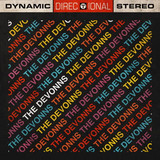
The Devonns dust off the golden age of 70's Chicago Soul with their self-titled debut album on Record Kicks. Straight from the streets of Chicago, Illinois, The Devonns (pronounced "De vaughns") are the brand new soul outfit and the latest addition of the Record Kicks' family, whose self-titled debut album that drops April 03, is an assortment of influences taking us back to the heyday of soul.
Drawing influences from bands such as The Dramatics, The Isley Brothers and Leroy Hutson, yet bringing in their own unique modern twist, influenced by artists such as Jamie Lidell and Raphael Saadiq; singer Mat Ajjarapu explains how unintentionally, the rich heritage of Chicago's history with soul music influenced him.
"The city was at the epicentre of a lot of good music back in the 50's all the way to the 80's, a lot of the labels specialising in soul were based in the Chicago and we even had our own sound known as "Chicago soul". Through several years of crate digging it surprised me how many songs I loved were recorded in this city, for example one of my favourites is this great little song by The Natural Four, produced by Leroy Hutson 'Can This Be Real', and released via Curtom Records."
The band started in 2016 after multi-instrumentalist and songwriter Mathew Ajjarapu dropped out of med school and found himself unemployed and drifting. Listening to music constantly at the time, he found inspired to put a band together and create his own music. Pairing up with some of the best musicians Chicago has to offer, he founded The Devonns: the rhythm duty is entrusted to Khalyle Hagood (bass), Ari Lindo (guitar) and Khori Wilson (drums).
Originally he wanted to focus on 50s style doo-wop, similar to The Flamingos; rich in reverb and vocal harmonies, but in the first initial practise they had it was evident the band clicked on their love of soul music from the 70s, so their music took a natural turn towards that sound, with tracks such as the Wilson Pickett-esque single 'Tell Me'.
The release took almost two years to complete as Mat explains "I am a perfectionist, I had a very specific vision in my head about how it should sound and I wasn't going to rest until I achieved it."
"This is a definitely a throwback soul record, as well as being drawn to lush and intricate arrangements of Motown, I was also inspired by the more lo-fi works of smaller labels such as Chess and Capsoul, and I wanted to capture the magic they had in those recordings in our record, as everything feels too precise nowadays" clarifies Mat.
It was thanks to his engineer Mike Hagler, who introduced him to Paul Von Mertons (Mavis Staples, Paul McCartney, Elton John) who arranges and conducts for Brian Wilson's live touring show and after a 45 minute phone conversation about what Mat wasn't keen on, on the album, he realised Paul totally understood where he was coming from.
After a few months wait for Paul to get back from touring they entered the studio with "Paul's players" and as soon as they hit record, Mat explains "I was getting chills up my neck, it was one of the happiest days of my life, and finally we had nailed it!"
Tracks such as 'Come Back; which Mat wrote in ten minutes on a $300 Daneelectro Singlecut guitar initially, came to life, with Paul's rich string arrangements and features guitarist and percussionist Ken Stringfellow (R.E.M.).
It still took a few months to get the recording process finished but finally after a torturous nineteen months they album was finally finished.
The result is an album filled with lavish arrangements and catchy melodies which take us on a nostalgic musical journey inspired by chic 70s soul, yet the band don't hesitate to add their own unique and elegant contemporary stamp to the record.
You learned that there are genres. Everything separated into categories with their own canon and rules: Major, minor, 4/4, 6/8, highs, lows, high head, butt end. Techno here, Disco there. You learned that art and music are two different things. Visually auditory, audio-visual, optically acoustic, not to mention the surface feel. Listen to me, look at me, touch me. But everything in that order please! You have learned that understanding takes you further. Night / life, rhythm / dancing, substance / excess, water / holding out, sleep / rest, headache / not good. But what would it be if all of that wasn't just right? If all of our knowledge is based on the mistake of having to put everything in relation? To classify it, to make it responsive. What do we do with something that doesn't follow the rules of this logic? That is not based on 0 and 1 and therefore not bound to our binary systems? Is this all at once? After all, what if the whole thing has no limits?
Jens-Uwe Beyer recently released the Yellow Book with Albert Oehlen on Gagosian and on his own label Magazine. He also runs PNN and Schalen. His 4th album „Horizons“ as Popnoname is the very first long player to be released on Cologne based label Feines Tier.