Search:the poetic painter m

Styles
All
  • 1
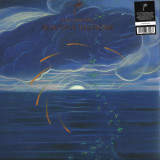
Various - Tchic Tchic: French Bossa Nova 1963-1974  Colored Edition LP 2x12"
  • A1: Les Masques - Il Faut Tenir (1969)
  • A2: Isabelle Aubret - Casa Forte (1971)
  • A3: Christianne Legrand - Hlm Et Ciné Roman (1972)
  • A4: Jean Constantin - Pas Tant D'chichi Ponpon (1972)
  • A5: Billy Nencioli & Baden Powell - Si Rien Ne Va (1969)
  • B1-: Marpessa Dawn - Le Petit Cuica (1963)
  • B2: Jean-Pierre Sabar - Vai Vai (1974)
  • B3: Sophia Loren - De Jour En Jour (1963)
  • B4: Isabelle - Jusqu’à La Tombée Du Jour (1969)
  • B5: Sylvia Fels - Corto Maltesse (1974)
  • C1: Frank Gérard - Comme Une Samba (1972)
  • C2: Ann Sorel - La Poupée Des Favellas (1971)
  • C3: Charles Level - Un Enfant Café Au Lait (1971)
  • C4: Andrea Parisy - Les Mains Qui Font Du Bien (1970)
  • C5: Audrey Arno - Quand Jean-Paul Rentrera (1969)
  • C6: Aldo Frank - T’as Vu Ce Printemps (1970)
  • D1: Christianne Legrand - Cent Mille Poissons Dans Ton Filet (1972)
  • D2: Clarinha - Lemenja (1970)
  • D3: Hit Parade Des Enfants - Aquarela (1976)
  • D4: Jean-Pierre Lang - Tendresse (1965)
  • D5: Magalie Noël - Une Énorme Samba (1970)
  • D6: Françoise Legrand - La Lune

Ever since the late 1950s bossa-nova revolution, Brazil’s influence on French music has been undeniable. Pierre Barouh, Georges Moustaki and a vast array of lesser known artists, all made the Musica Popular Brasileira (MPB) an axis of promotion at the service of a cool and metaphysical, modern and mixed Brazilian lifestyle. Some were seduced by the poetic languors of the bossa, some were looking for fun, and others just loved the American hybridization of jazz-bossa, jazz-samba.


What is bossa nova? One of its creators, Joao Gilberto said: "Its style, cadence, everything is samba. At the very start, we didn't call it bossa nova, we sang a little samba made up of a single note - Samba de uma nota so .... The discussion around the origins of bossa nova is therefore useless”. It is nevertheless useful to remember that these magnificent Brazilian songs, which the guitarist describes as samba, were shifted and balanced around improbable chords. "I like things that lean, the in-betweens that limp with grace," said Pierre Barrouh, quoting Jean Cocteau.


With emotion, arrangements for violin and supple guitar licks, bossa nova rapidly changed. A transformation that can be heard in the Tchic, tchic, French Bossa Nova 1963-1974 compilation, the result of a cultural reappropriation, which traveled through the United States and supplemented itself in France.

A musical revolution that has remained significant, bossa nova was born in Rio. From 1956 to 1961, Brazil lived through its golden years. In five years, the country had invented its modernist style. Elected president in 1956, Juscelino Kubitschek de Oliveira, an elegant man with a broad forehead, brandished a promising slogan: "Fifty years of progress in five years". He quickly got to work. Not worried about increasing debt, he launched the project for a new federal capital, Brasilia, designed by the communist architect Oscar Niemeyer. Volkswagen opened state-of-the-art factories and created the “fusquinha”, the Beetle. In Rio, the Vespa made its first appearance. The Arpoador Surf Club crew run into the “girl” from Ipanema, Helô Pinheiro - the tanned garota ("chick"), between a flower and mermaid, who at 17 walked by the Veloso bar, where the fiery author and composer, Tom Jobim and Vinicius de Moraes, were getting drunk on whiskey. From then on, bossa symbolized cool.

In 1958, Joao Gilberto recorded Chega de Saudade, which the directors of Philips denied, calling it "music for fagots". The marketing director, who believed in it, secretly pressed 3000 78-inch vinyls and distributed them at schools around Rio, creating a tidal wave.

American jazzmen then took over. In particular, trumpeter Dizzy Gillespie and guitarist Charlie Byrd. In November 1962, the Brazilian Ministry of Foreign Affairs funded a "Bossa-Nova" concert at Carnegie Hall in New York, inviting the genre’s pioneers. Unprepared, the show soon turned to disaster. But the troupe was invited to the White House by Jackie Kennedy. The first lady loved "the new beat" and in particular Maria Ninguem, a song by Carlos Lyra, later covered by Brigitte Bardot.

In Brazil, the 1964 military coup quickly ended this euphoria. The destructive atmosphere that ensued pushed many Brazilian musicians to leave, if not to exile. Thus, Tom Jobim, Sergio Mendes and Joao Gilberto arrived to the United States. In New York, Joao Gilberto met saxophonist Stan Getz. At the time, he was married to the Bahianese Astrud Weinert Gilberto, who had a German father. She had never sung before, but she knew how to speak English. Getz therefore asked her to replace her husband on The Girl From Ipanema. The Getz/Gilberto record with Tom Jobim on piano, was released in March 1964. Phil Ramone, the "pope of pop" was in charge of sound.

Bossa nova arrived in Paris through the classic “guitar-voice” channel (Pierre Barouh, Baden Powell, Moustaki…) But France loved jazz and Paris had already welcomed its American contributors. All these good people were to pass through Saint-Germain-des-Prés. The cabaret l'Escale became the Mecca of Latin American sound where one could find Pierre Barrouh and his friends, such as the Camara Trio, samba-jazz aces, whose only record was published by the Saravah label. With a band strangely called Les Masques (a band that included Nicole Croisille and Pierre Vassiliu, among others), the Camara Trio recorded an interesting Brazilian Sound, including the track Il faut tenir which is present on this tasty compilation of rarities.

Other enlightened musicians can also be found on the compilation, such as Jean-Pierre Sabar (songwriter for Hardy, Auffray, Leforestier ...) and the French pop rock organist Balthazar. In 1975, Sabar recorded Aurinkoinen Musiikkimatka on a Finnish label, which featured the crazy Vai, Vai, included on this record. We are now following the footsteps of Brazilian electronic musicians such as Sergio Mendes, Eumir Deodato or Marcos Valle who created funk and disco sounds on their keyboards and synthesizers. A style that influenced Véronique Sanson when she wrote Jusqu’à la Tombée de la nuit in 1969 for Isabelle de Funès, the niece of Louis and a great friend of Michel Berger - Sanson did end up singing this track on her 1992 Sans Regret record.


The pinnacle of exoticism and travel, Sylvia Fels’ Corto Maltese includes bongos, sea mist and ocean sounds. The title was taken from Jacky Chalard’s concept album written in 1974, Je suis vivant, mais j’ai peur (I am alive, but I am scared), based on Gilbert Deflez’s science fiction novel.


However, bossa nova extended the scope of popularity. "In the 1970s, I was a fan of Sergio Mendes, Getz / Gilberto. I fell in love with this music that I knew because I had been an orchestral singer, " explained Isabelle Aubret, who in 1971 delivered a composite record of covers by the very funky Jorge Ben, Orfeu Negro, Tom Jobim, Vinicius de Morais and Jean Ferrat. "I recorded this album for Meys Records in Paris, far from Brazil, with wonderful musicians, François Raubert, Roland Vincent, Alain Goraguer...". The latter wrote the arrangements for Casa Forte, a very percussive title borrowed from Edu Lobo, one of the initiators of the bossa who spent time in California. "Jazz and bossa came together and produced very rhythmic music. I love singing, it allows me to dream, to have fun, to feel a high on stage, and these songs brought me joy, made me swing, my singing felt like a dance.”


The world tours of French singers and their desire for the tropics, often brought them to Rio with its hills, forests, caipirinhas and tanned bodies. There are surprises though, like this Iemenja (Iemenja is the goddess of the sea in the Afro-Brazilian candomblé religion). Not unlike the composer and musician Jean-Pierre Lang, based in Sao Paulo, Claire Chevalier taught Brazil to Brazil. In 1970, the singer and painter published a 45-inch vinyl, Mon mari et mes amants (My husband and my lovers), under the improbable pseudonym of Clarinha (little Claire). She was then living in Rio, with her husband, Joël Leibovitz, who founded a band called Azimuth, and who owned a record label specialized in "sambas enredos" songs for samba school parades.


For its B side, she asked Pierre Perret to come up with lyrics for a song composed by Carlos Imperial: "Oh goddess of the sea, o goddess Iemenja, I bring a white rose to adorn your long hair ..." . "Perret came to see us, and we had fun, remembers Joël Leibovitz. We wrote Lemenja for fun, we recorded it at the Havaí studio, behind the Central do Brasil the central station. Erlon Chaves, the arranger who worked with Elis Regina, joined us" adding his share of Afro-Brazilian percussions and funky brass to the mix.

There is a common misunderstanding in Franco-Brazilian history: that bossa, admittedly hedonistic, is perceived as funny, even though the poets who wrote the texts are often philosophizing on the human condition. Its French interpreters pull it towards a carnival inspired universe, far removed from its fundamental essence. Thus, Jean Constantin covered the famous Samba da minha terra, an ode to the art of samba written by the classic Bahian composer Dorival Caymmi, renaming it with the enticing title of Pas tant de tchi tchi pompon: "On your pier there is no tchi tchi / when you arch your back, you know everything is alright ”(lyrics by Gérard Calvi). This expedited bossa aims for the absurd, but retains a certain elegance.

Indeed, Jean Constantin was not an idiot, the rather large man had a huge mustache and liked fantasy, (Les pantoufles à papa, Le pacha, inspired by cha-cha-cha-cha, salsa and jazz) but he was also the lyricist of Mon manège à moi interpreted by Edith Piaf, the composer of Mon Truc en plume by Zizi Jeanmaire and the soundtrack of François Truffaut’s 400 Blows. Le Poulpe, published in 1970, from which this bossa is extract, was arranged by Jean-Claude Vannier, an accomplice of Serge Gainsbourg’s Melody Nelson. In short: "There is enough of samba / By looking at the parasol / Because my poor cabeza / Is going to die in the sun".

Even the American actress Marpessa Down, who was at the heart of the bossa nova revolution with her role as Euridyce in Marcel Camus’ film Orfeu Negro, winner of the 1959 Cannes Palme d'or, fed the clichée with Je voudrais parler au petit cuica - "Tell me how you manage to always make people want to dance / It's true, I must admit that I cannot resist your magic" - in consequence, once can hear the cuica, a little drum inherited from the Bantu.


But bossa nova had many angles. Societal, of course, pushing actresses who were symbols of women's liberation like Brigitte Bardot, Jeanne Moreau, or Sophia Loren to engage in the exercise of accelerated bossa. In February of 1963, Sophia Loren made a record in French in Rome, Je ne t'aime plus, featuring the song De jour en jour, a bossa written by two Italians, Armando Trovajoli and Tino Fornai, which was released a little later by Barclay. Bossa accompanied the 1960s, a decade of moral liberation. Ann Sorel, who interpreted La Poupée des favellas, caused a sensation with L’amour à plusieurs, a provocative song written by Frédéric Bottom and Jean-Claude Vannier. As for the actress Andrea Parisy, she displayed her bourgeois cheekiness in Marcel Carné's Les Tricheurs before interpreting Les mains qui font du bien. And Magalie Noël, the friend of Boris Vian, who sung Johnny fais-moi mal, was hired to sing Une énorme Samba, composed by Alain Goraguer (arranger to Gainsbourg, Bobby Lapointe and Jean Ferrat) with lyrics by Frédéric Botton.

But in the end, of what wood is bossa nova made of? The answer is given by Christianne Legrand, daughter of Raymond the conductor, and sister to Michel the composer: "With me, with jà" - jà means "immediately" in Portuguese. In 1972, the singer, an expert in vocal jazz and a member of the Double Six, published Le Brésil de Christianne Legrand. Two songs included on the Tchic Tchic compilation that demonstrate how bossa, jazz, funk, rock, etc. work like a swiss army knife: the music is used to denounce broken systems, or miracles, HLM et ciné roman, Cent mille poissons dans ton filet, two songs from the O Cafona soundtrack, a successful telenovela broadcast, at the time in black and white, on TV Globo. The first was adapted in French by the fighter and friend of the Legrand tribe, Agnès Varda. The second is content with a play on words, jostling them into a summer fun.


Véronique Mortaigne

pre-order now17.04.2026

expected to be published on 17.04.2026

27,31
HONOUR - ALAAFIA LP

HONOUR

ALAAFIA LP

12inchPANLPC1121
PAN RECORDS
24.09.2025

Honour's debut album is a ligament stretching from Lagos to London and to New York, curling across the diaspora and brushing the darker hues of blues, hip-hop, free jazz, ambient, gospel with Christian mythology and Yoruba folklore. As cinematic as it is painterly, Alàáfíà is a meditation on themes of life, death and love that pulls inspiration from the unexpected poetic profundity of casual conversations, field recordings, literature, ephemera, or personal archives. The result is an impressionistic vision in Black and Blur that both exhausts and implicates language_substantiating a mythos proposed by Fred Moten that sublimates boundaries between everywhere and nowhere; history and the present; the individual and the universal. Alàáfíà delineates a gothic landscape cut by overdriven beats, swooping orchestral blasts, choral bursts and ear- splitting fuzz, where the fleshly and spiritual realms commune. Dedicated to Honour's late grandmother, the title track began to take form after their last embrace and remains steeped in her influence and spirit_a tape-saturated composition that starts in Lagos and ends in London's smoke-stained cityscape, the song's dream-like quality developed out of the artist's grief and PTSD coping with this loss. Beneath the stretched guitar drones and stuttering loops, their grandmother's shared faith bubbles to the surface. "When Angels Speak of Love," borrows its title from two works by Sun Ra and bell hooks, respectively. Sculpting echoes of praise music into disorienting spirals perforated with syrupy DJ Screw-inspired breaks and sharp splinters of melancholic guitar, "When Angels Speak of Love" engages a conceptual dialogue with the spirits of both late thinkers, folding them into Honour's pantheon of ancestral guides. The album's ninth track, "Giz Aard ($uckets)," is a dirge of regimented drums which anchor this somber melody as it whirls into a blizzard of heartache, uncertain if its consequence will be death or eternal joy. The album's sole lyrical offering, "Pistol Poem (Lead Belly)," begins with a darkly humorous bar, "He went thru hell and back/ came back/ 2 get the strap," that swells into a haunting allegory based on the life of Philip "Hot Sauce" Champion. A modern take on the Blues, Honour's lyrics reify the artist's status as a student of both literature and popular culture, crossbreeding the artist's clever wordplay with additional references to Richard Pryor, Robert Johnson, Kelly Rowland & Bryon Gysin. Setting core principles of hip-hop, R&B, jazz and gospel music to atemporal soundscapes and compositions, Honour crafts a record that marinates in its own knotty contradictions. The ghosts that sit on the artist's shoulders have never been more tangible than with this emotive debut.

out of Stock

Order now and we will order the item for you at our supplier.

27,52

Last In: 7 months ago
TOR LUNDVALL - BEAUTIFUL ILLUSIONS

LTD. CLEAR BLUE VINYL

New York painter and musician exploratory industrialist Tor Lundvall initially envisioned his 14th album, Beautiful Illusions, as an entirely instrumental affair, "inspired by memories of sitting in a church or cathedral watching the shifting sunlight through stained glass." Although he ultimately chose to wreath the majority of the tracks with hushed, poetic vocals, his original muse still resonates. These are certainly songs of shadowplay and vaulted skies, the quiet grandeur of dusk deepening on the horizon. Lundvall characterizes the lyrical subject matter, too, in ways both specific and surreal, exploring "the doubts, the anxieties and even the bleak fantasies the mind spirals into during moments of isolation, separation and distance." Tricks of the eye, mind, and ear, magnified by silence and the looming long winter. Shivering pulses and muted bass lines tread the twilight while icicle synths and wiry guitar map the melody until the voice enters, narrating oblique moods of essence and absence, tenderness and truth. Glimpses of dark humor flicker in the wordplay but the greater sonic landscape is one of falling leaves and failing light, small gestures rendered as revelation, cloaked in reverb and spatial fog. Lundvall's mastery of nuance and negative space continues to heighten, whispered brushstrokes of the invisible and the unsaid, what lies beneath and what lies beyond: "Behind the shields and false fronts is usually a sadness. The heartbreaking reflections of what might have been."

out of Stock

Order now and we will order the item for you at our supplier.

22,27

Last In: 8 months ago
Night Crickets - How It Ends (?)

Night Crickets

How It Ends (?)

12inchLAB51020LP
Label 51
01.11.2024
  • 1: Red Mist White Knuckles
  • 2: The Story Of War
  • 3: Should Be Heaven
  • 4: Don’t Be Afraid
  • 5: Where’s The One?
  • 6: Like An Avalanche
  • 7: I Am Dead
  • 8: What Is This Love?
  • 9: Sunflowers And Starlight
  • 10: The World I See Is Not The World I Want

On How It Ends (?), slinky melodies snake through nocturnal atmospherics, drawing you into a world built on poetic, painterly lyricism. Night Crickets, a long-distance groove affair that materialized during the drawn-out days of lockdown, has emerged once again to soundtrack our waking dreams.

David J (Bauhaus, Love & Rockets), Victor DeLorenzo (Violent Femmes) and multi-instrumentalist Darwin Meiners spearhead a loose collective of like-minded creative souls whom, through sheer tenacity and a burning desire to collaborate and create, transcend the restrictions of space and time. Audio files shared from Los Angeles to Milwaukee, from London to the San Francisco Bay, and the ghosts of Candlestick Park shimmer through the fog, coalescing in a glorious ‘gesamtkunstwerk’ that draws from the past, the present and the imagined future.

Declaring Bauhaus, Love And Rockets, and Violent Femmes iconic, foundational bands in the history of alternative music would receive little pushback from those in the know. San Francisco born artist Darwin Meiners is a fan of all three. A chance meeting with David J grew into a friendship, and Darwin not only became a bandmate, but his manager. After reaching out to Victor DeLorenzo through e-mail, Darwin met the Violent Femmes drummer after their set at Coachella. Soon, after the three collaborated on Darwin’s 2014 release Souvenir.

As the pandemic took hold, Darwin was looking for a new project to occupy the lock down time and approached Victor, who was keen to proceed and suggested that David join as well. The musical trust established between these three was immediate and Night Crickets were born. Within weeks a global process was initiated between them, the recordings eventually forming the album, A Free Society.

Following that release, inspired by how well – and quickly – they all worked together, the trio kept up their collaboration. “We are each free to discover musical connections that could only exist in an ideal creative setting” explains Victor. “We are very lucky to have three musicians who write, sing and play various instruments in one trio… our egos seem to melt into one when we face musical decisions, so our expeditions are always filled with pure discovery, humor and drive!”

How It Ends (?) was crafted with the same collaborative spirit as A Free Society. Each member contributed contributed unique elements to spur their collective creativity—whether a drum pattern, a lyrical concept, or a musical idea—and together, they expanded these initial sparks into the finished work. True to their approach, much of what you hear was captured in the first take, reflecting a genuine, unfiltered moment.

The music on the How It Ends (?) is a true evolution of the debut album. It is deeper and darker. Having said that, the dark tone is alleviated by a healthy measure of the buoyant, bouncy and melodic. “Much of the new material is very psychedelic and the contrast between this heavy, dark psychedelia and the more uplifting pop elements puts me in mind of The Beatles’ ‘Revolver’ album to some degree,” tells David J. “The recording process for the new album was exactly the same as the first in that we all recorded remotely, taking turns to share files and reacting spontaneously to the previous track, overdubbing then passing on once again until we all felt that the track was done.”

“While we didn’t start with a specific theme, the album emerged as a contemplative exploration of endings” says Darwin. “It touches on the loss of individuals, the shifting of ideas, and the fragility of systems. Beneath this sense of darkness and finality, however, there are threads of beauty and glimpses of hope. We invite you to immerse yourself in the album and experience the journey we’ve embarked upon.”

pre-order now01.11.2024

expected to be published on 01.11.2024

29,20
HONOUR - ALAAFIA LP

Honour

ALAAFIA LP

12inchPANLPV2121
PAN RECORDS
10.09.2024

Honour's debut album is a ligament stretching from Lagos to London and to New York, curling across the diaspora and brushing the darker hues of blues, hip-hop, free jazz, ambient, gospel with Christian mythology and Yoruba folklore. As cinematic as it is painterly, Alàáfíà is a meditation on themes of life, death and love that pulls inspiration from the unexpected poetic profundity of casual conversations, field recordings, literature, ephemera, or personal archives. The result is an impressionistic vision in Black and Blur that both exhausts and implicates language_substantiating a mythos proposed by Fred Moten that sublimates boundaries between everywhere and nowhere; history and the present; the individual and the universal. Alàáfíà delineates a gothic landscape cut by overdriven beats, swooping orchestral blasts, choral bursts and ear- splitting fuzz, where the fleshly and spiritual realms commune. Dedicated to Honour's late grandmother, the title track began to take form after their last embrace and remains steeped in her influence and spirit_a tape-saturated composition that starts in Lagos and ends in London's smoke-stained cityscape, the song's dream-like quality developed out of the artist's grief and PTSD coping with this loss. Beneath the stretched guitar drones and stuttering loops, their grandmother's shared faith bubbles to the surface. "When Angels Speak of Love," borrows its title from two works by Sun Ra and bell hooks, respectively. Sculpting echoes of praise music into disorienting spirals perforated with syrupy DJ Screw-inspired breaks and sharp splinters of melancholic guitar, "When Angels Speak of Love" engages a conceptual dialogue with the spirits of both late thinkers, folding them into Honour's pantheon of ancestral guides. The album's ninth track, "Giz Aard ($uckets)," is a dirge of regimented drums which anchor this somber melody as it whirls into a blizzard of heartache, uncertain if its consequence will be death or eternal joy. The album's sole lyrical offering, "Pistol Poem (Lead Belly)," begins with a darkly humorous bar, "He went thru hell and back/ came back/ 2 get the strap," that swells into a haunting allegory based on the life of Philip "Hot Sauce" Champion. A modern take on the Blues, Honour's lyrics reify the artist's status as a student of both literature and popular culture, crossbreeding the artist's clever wordplay with additional references to Richard Pryor, Robert Johnson, Kelly Rowland & Bryon Gysin. Setting core principles of hip-hop, R&B, jazz and gospel music to atemporal soundscapes and compositions, Honour crafts a record that marinates in its own knotty contradictions. The ghosts that sit on the artist's shoulders have never been more tangible than with this emotive debut.

out of Stock

Order now and we will order the item for you at our supplier.

27,52

Last In: 19 months ago
Chassol - Chassol Plays Basquiat

A year ago, the Philharmonie de Paris invited French musician extraordinaire Christophe Chassol to write a musical piece as part of the Basquiat Soundtracks exhibition. Chassol took on this commission to offer a poetic and unique work around the painter and his creative gesture. From his research were born seven daring compositions, which we find here on a magnificent limited edition vinyl, as, captured live in the prestigious concert hall.

pre-order now28.06.2024

expected to be published on 28.06.2024

23,49
Félicia Atkinson / Richard Chartier - Ni envers ni endroit que cette roche brûlante (Pour Georgia O’Keeffe) / Recurrence.Expansion

Félicia Atkinson: »Ni envers ni endroit que cette roche brûlante (Pour Georgia O’Keeffe)« (2021)

Félicia Atkinson’s Ni envers ni endroit que cette roche brûlante (Pour Georgia O’Keeffe) is approached as a meditation, not as meditative music, but as a reflection on the art of creation: how to inhabit one’s creation, how to convey it, domesticate it and live with it. Drawing inspiration from the artist Georgia O’ Keeffe, both in her work as a painter and in the houses in which she lived in New Mexico, and even in the landscapes that surround them, Félicia Atkinson has composed a piece that evokes and celebrates, in a poetic and holistic way, the mystery of art, the somnambulic oscillation that accompanies the act of creating. Blending fragmentary voices, islands of piano, electronic textures and patterns, and field recordings, Félicia Atkinson’s music is sincere and inspired, a meditation, then, but also a lesson we sometimes forget: being an artist is not an activity, even less a profession, it’s a singular way of approaching the world and, in so doing, densifying it.

Richard Chartier: »Recurrence.Expansion« (2020)

Richard Chartier’s music takes up residence at the frontiers of the audible, on the edge where sound diffracts into an inter-dimensionality where sounds, space, listening and silence recombine in an arborescence of becomings that present themselves to us and then disappear. The space-time in which Richard Chartier’s music unfolds is a stretched space-time, barely emerging in the world of sound. The delicacy, precision and accuracy of the composition Recurrence. Expansion lies precisely in this dialogue between a shape that is exposed and developed in an inspired and masterful way, and the sonic biotope in which this shape develops. It is from such an encounter that the singularity of Richard Chartier’s music emerges, music of attentive listening, but also sensitive, inhabited music, a music of discreet metamorphosis.

out of Stock

Order now and we will order the item for you at our supplier.

19,12

Last In: 2 years ago
Wren Hinds - Don’t Die In The Bundu LP

A fresh chapter takes soft, sure shape for Cape Town-based singer songwriter Wren Hinds on his new album. Released through Bella Union, ‘Don’t Die In The Bundu’ follows Bella Union’s vinyl releases of Wren’s first three Bandcamp LPs. A gleaming set of gently dappled and poetic songs about fatherhood and fortitude, the album roots its restrained strength in an innate understanding of what matters most to us.
Wren’s own life began on the southeast coast of Kwazulu-Natal, South Africa. His father was a musician, his mother a landscape painter. While his dad inspired Wren to record whenever and wherever he could, his mother’s artform coloured his approach to songwriting: “painting with sound” is Wren’s description, a methodology illustrated by his use of light, shade and space to communicate powerful impressions and feelings.

pre-order now01.07.2023

expected to be published on 01.07.2023

28,36
SQÜRL - SILVER HAZE LP

Sqürl

SILVER HAZE LP

12inchSBRLPC3316
Sacred Bones Records
05.05.2023

SQÜRL was formed by Jim Jarmusch and Carter Logan in 2009 to score Jarmusch's movie The Limits of Control. Over a decade later and with numerous EPs and film scores under their belt, SQÜRL are set to release their very first full length record. Silver Haze was produced by Randall Dunn, who has also worked with the likes of Sunn O))), Boris, Earth, Zola Jesus, and Marissa Nadler, all of whom are artists that SQÜRL cite as inspirations. The album enlists Charlotte Gainsbourg, Anika, and Mark Ribot as collaborators, resulting in a communal offering that shares an energetic lineage with the New York School of Poets, a school they nod to on the track "John Ashbery Takes a Walk," which features Gainsbourg and turns two early Ashbery poems into an irresistible melodic siren's song. Silver Haze expands on SQÜRL's passion for creating rich textural sounds, finessed by a keen ear for production. The band is known for playing with everything from analogue synths to broken radios and pulling inspiration from painters, writers, and birds on the street. Silver Haze is a poetic journey of spoken words, dynamic instrumentals, drone riffs and distorted effects, one that features tubular bells and a cello in addition to their signature stacks of delay, encircling the listener in a warm oscillation both delicate and devastating.

pre-order now05.05.2023

expected to be published on 05.05.2023

22,06
Sqürl - Silver Haze

Sqürl

Silver Haze

12inchSBR316LPC3
Sacred Bones Records
05.05.2023

SQÜRL, the duo of filmmaker Jim Jarmusch and Carter Logan, have announced their debut album, Silver Haze, out May 5th via Sacred Bones.

‘SilverHaze’ was produced by Randall Dunn, who has also worked with the likes of Sunn O))), Boris, Earth, Zola Jesus, and Marissa Nadler, all of whom are artists that SQÜRL cite as inspirations. The album enlists Charlotte Gainsbourg, Anika, and Mark Ribot as collaborators, resulting in a communal offering that shares an energetic lineage with the New York School of Poets.


‘SilverHaze’ expands on SQÜRL’s passion for creating rich textural sounds, finessed by a keen ear for production. The band is known for playing with everything from analogue synths to broken radios and pulling inspiration from painters, writers, and birds on the street. ‘Silver Haze’ is a poetic journey of spoken words, dynamic instrumentals, drone riffs and distorted effects, one that features tubular bells and a cello in addition to their signature stacks of delay, encircling the listener in a warm oscillation both delicate and devastating.


The announcement of ‘Silver Haze’ comes on the back of sold out live shows across Europe. Originally intended to happen in 2020, the rescheduled dates saw Jarmusch and Logan perform an original live score to four films by Man Ray. More live dates will follow in due course.

pre-order now05.05.2023

expected to be published on 05.05.2023

24,79
TOR LUNDVALL - BEAUTIFUL ILLUSIONS LP

New York painter and musician exploratory industrialist Tor Lundvall initially envisioned his 14th album, Beautiful Illusions, as an entirely instrumental affair, "inspired by memories of sitting in a church or cathedral watching the shifting sunlight through stained glass." Although he ultimately chose to wreath the majority of the tracks with hushed, poetic vocals, his original muse still resonates. These are certainly songs of shadowplay and vaulted skies, the quiet grandeur of dusk deepening on the horizon. Lundvall characterizes the lyrical subject matter, too, in ways both specific and surreal, exploring "the doubts, the anxieties and even the bleak fantasies the mind spirals into during moments of isolation, separation and distance." Tricks of the eye, mind, and ear, magnified by silence and the looming long winter. Shivering pulses and muted bass lines tread the twilight while icicle synths and wiry guitar map the melody until the voice enters, narrating oblique moods of essence and absence, tenderness and truth. Glimpses of dark humor flicker in the wordplay but the greater sonic landscape is one of falling leaves and failing light, small gestures rendered as revelation, cloaked in reverb and spatial fog. Lundvall's mastery of nuance and negative space continues to heighten, whispered brushstrokes of the invisible and the unsaid, what lies beneath and what lies beyond: "Behind the shields and false fronts is usually a sadness. The heartbreaking reflections of what might have been."

out of Stock

Order now and we will order the item for you at our supplier.

22,82

Last In: 3 years ago
CHRISTIAN DEATH - ONLY THEATRE OF PAIN - 2LP+BOOK+POSTER-BOXSET(SLIPCASE)

CHRISTIAN DEATH was formed by Rozz Williams in Los Angeles, California in 1979. Williams was eventually joined by guitarist/songwriter Rikk Agnew of ADOLESCENTS, James McGearty on bass and George Belanger on drums. This CHRISTIAN DEATH line-up was responsible for recording the band's iconic 1982 debut, ONLY THEATRE OF PAIN, widely regarded as the #1 American goth album of all-time. This exclusive double-LP version of OTOP commemorates its 40th anniversary- the first disc is the digitally remastered, original version of the album while the second disc is comprised of "Dogs" from HELL COMES TO YOUR HOUSE, four pre-Frontier demos, two studio demos made for a second Frontier Records' LP that never happened and two alternate studio mixes from OTOP. The gatefold LP jacket is printed in its original its black and metallic gold, includes a Colver collage poster and a hardcover copy of the photo book, ONLY THEATRE OF PAIN and all come in a hard slipcase. The oversized 12" x 12" book features rare and never-before-seen photos of CHRISTIAN DEATH as well as new interviews with photographer Edward C. Colver, the surviving band members, Frontier's Lisa Fancher and others. Colver befriended the band and followed them around in late 1981 and early 1982 at more than a dozen concerts as well as photo shoots in Rozz Williams' family home (used on the back cover and insert of ONLY THEATRE OF PAIN) and a session of now famous images at a Pomona CA cemetery. Info: Just as the theatrically-minded LA punk scene was beginning to give rise to such morbidly themed outfits as 45 Grave and the Flesh Eaters, an androgynous teenaged street performer named Rozz Williams (né Roger Painter) founded CHRISTIAN DEATH, one of the most prolific, enduring, and beloved gothic acts of all time. Williams' otherworldly groan can make "Only Theatre of Pain" difficult going for those that aren't the gothic faithful, but the loud/not-too-fast music (courtesy of ex-ADOLESCENTS guitarist Rikk Agnew and the walking-dead rhythm section of bassist James McGearty and drummer George Belanger) is appropriately doom 'n' gloomy, with inventive arrangements and clear sound - thanks to Frontier Records' go-to punk production legend, Thom Wilson- capturing the mood in full B-movie fidelity. The lyrics sacriligiously address horror topics and religion: they're overwrought (the backwards masking of 'Mysterium Iniquitatis' being one clever exception) but easy to overlook in the wash of inspired rock noise. The original lineup's recorded debut is a gem. Artists inspired by CHRISTIAN DEATH include Danzig, Craddle of Filth, Paradise Lost, Korn, Type O Negative, Nine Inch Nails, Marilyn Manson and Jane's Addiction. Press: "A depraved masterpiece, this was punk rock made poetic, subversive, and gracefully savage."- AV Club "The Gothic album to out-gothic all others" - Melody Maker "Only Theatre of Pain's influence should not be underestimated" - Record Collector Limited availability!

pre-order now20.01.2023

expected to be published on 20.01.2023

80,63
RAPHAEL GIMENES - TONGUE FULL OF SUNS LP

In the musical universe of the Brazilian singer-songwriter Raphael Gimenes, wild landscapes are metaphors for unspoken feelings. The Copenhagen-based artist writes hauntingly visual, and poetically surrealistic stories, in which he can be hunted by sun-kissing jaguars, chased by thirsty horizons, become a kaleidoscope of butterflies, or turn into dream-singing birds. His 2016 debut album, "Raphael Gimenes & As Montanhas de Som", was elected the best Brazilian album of 2016 by the Dutch website Written in Music, received 5 stars on Jazzism, and was hailed as a "conceptual masterpiece" by the Japanese magazine Latina. His sophomore release, "A tongue full of suns", is co-produced by the Faroese singer-songwriter Teitur, who also features on synths. On this new album, Gimenes explores his non-Brazilian influences and his life outside of Brazil. The songs are sung in English, a language that he learned when he lived in the United States as a boy. The lyrics are inspired by the mountainous landscapes of Jotunheimen, Norway, where he goes trekking on a yearly basis. The production and the arrangements draw heavily on sounds he heard on vintage European prog rock bands, particularly Yes and PFM. The music itself does not stray far from the universe of his debut album, but the songs do take more symphonic, progressive forms, while the Brazilian rhythms are substituted by the more meditative, minimalistic tabla played by the German musician Jan Kadereit. "A tongue full of suns" also features two guitar virtuosos from Argentina and the Netherlands: Matias Arriazu and Tim Panman. The fictitious story behind the concept album is presented as a poetic short text written by Gimenes himself: "These are the last songs written by The Painter, a broken-hearted sorcerer who disappeared on a journey of self-discovery in the vast canvas of the great wild. They were found floating above the silence of an ageless rock, in a valley of slumbering glaciers. It is said that on his odyssey, he learned the hypnotic dialects of the trees, and deciphered the translucent poetry of the moon; that he unearthed ancient vestiges of rhymeless metaphors, and mastered the alchemy of cosmic verbs. It is believed that The Painter could enter the memories of rivers, interpret the dreams of birds, and that his sun-gilded tongue carried melodies that filled entire horizons. Legend says that he is now a wanderer of the infinite; a sacred secret, revealed only by the colors of the solstice alpenglow on inaccessible, rugged peaks."

pre-order now19.08.2022

expected to be published on 19.08.2022

23,07
Fleck E.S.C - Rough Silk

For more than a decade now, Fleck E.S.C. has marked himself out as one of the most playful and prolific producers in the electro game. Across dozens of releases for labels including Bass Agenda and Science Cult, the France-born, Japan-based artist has made his name through a production style which balances limber beats with exploratory textural work.

Fleck E.S.C. debuted on Central Processing Unit in 2018 with the Discrete Opinion EP. Now, after stopping by the Sheffield label last year on a Silicon Scally remix job, Fleck E.S.C. delivers his second EP for CPU in the form of Rough Silk. The record's intriguing title proves an apt introduction to this four-track affair. These cuts are at once sleek and abrasive, anchored by robotechnic machine-funk grooves yet also full of strange, shifting shapes.

The opening title-track expertly sets out Rough Silk's stall. Heralded by gurgling synths and all manner of whirring percussive tones, 'Rough Silk' blossoms around the minute mark with the introduction of a wickedly buoyant lead synth. This is music at once visceral and full of mystery, the sound of wending through the back alleys, and the feeling carries through to the following cut 'Hat in the Cat' - as the synth pads spool out overhead, the machine-funk snap of the beat has an almost aquatic quality that links it back to Drexciya.

Much like 'Rough Silk', the record's first B-side 'Faking Sweet' also shifts gears. The opening strains of the track seem to be preparing for another insistent, expansive broken-beat pulse, but it stiffens its neck around ninety seconds in. Programmed drums whirr around a jittery machine-gun bass while discordant synths pull at the edges of the track, all of which brings a strong dystopian energy that increases further as the percussion sounds become increasingly bug-eyed.

After so much excitement, 'Digger Play' closes out the EP with a softer touch. There's still plenty of low-slung bounce to the beat, but the track runs a little slower, and there's a warm wistfulness in the synths which gives 'Digger Play' a painterly, almost poetic feel. However, while it may take its foot off the gas, the production here is as deft as it is everywhere else on Rough Silk.

With new EP Rough Silk, electro whizz Fleck E.S.C. brings the sort of casual mastery to proceedings that has characterised his career to date.

RIYL: Silicon Scally, Jensen Interceptor, Annie Hall

out of Stock

Order now and we will order the item for you at our supplier.

9,45

Last In: 3 years ago
Hideki Umezawa & Andrew Pekler - Two Views Of Amami Oshima (TAPE)

In 1958 the painter Isson Tanaka (22 July 1908 – 11 September 1977) moved to Amami Ōshima, an island in the Ryukyus. There, in self-chosen isolation, he committed himself exclusively to his art until his sudden passing in 1977. In 2018 Seiha Kurosawa, Kanako Azuma and Hideki Umezawa visited Amami Ōshima to create a video installation about Tanaka’s insular life. The work, entitled “Dokkyaku” (tr. The Lone Visitor), shifts between the texture and materiality of Tanaka’s paintings in relation to the natural world of Amami Ōshima and its people. The video invites viewers to understand—poetically—the artist’s sensitivity to nature and the expressivity of his works.

During his stay on Amami Ōshima, Hideki Umezawa recorded a lot of natural sounds to recreate a sort of simulated ecology of Tanaka’s mind – or: of the painter’s mind. On this long playing record these recordings are blended with electronically generated sounds. Next, Andrew Pekler, who has never actually visited Amami Ōshima, upon hearing Umezawa’s field recordings creates - in the spirit of Isson Tanaka - a complementary dreamscape of the island’s phenomena. Of what could be.

This is a work that doubts between site specific and creative imagination. With sounds echoing between the anecdotic and the imaginary. It is a sensitive and highly stylized interpretation of a world that Isson Tanaka had also carefully studied. A painter at work; a way of seeing. So, after Christophe Piette’s ‘Six Tableaux de Quelpaert’, released by Edições CN in 2019, we again moore an island in the nautical footsteps of a painter. While Piette drew a story through – among other things - recording dialogues at his island home, at the restaurant table, et al. Pekler and Umezawa paint their pictures in a more musical fashion. Where natural sounds evaporate into electronic clouds of imagination.

Hideki Umezawa (b.1986, Gunma) is Japanese artist / composer. He won 1st prize at Luc Ferrari’s international competition – Presque Rien Prize 2015 (France), and the Contemporary Computer Music Concert 2015 (Japan). “Dokkyaku” was originally created for "Fukami – Une plongée dans l'esthétique japonaise", an exhibition at Hôtel Salomon de Rothschild in Paris, France as part of ‘Japanismes 2018’.

Andrew Pekler (b. 1973, Samarkand) works with techniques of digital sampling and analog synthesis to re– contextualize found sounds and archival musical materials. In addition to numerous album releases, Pekler has also produced a number of video, installation and web-based works, as well as music for theater, dance, and film.

out of Stock

Order now and we will order the item for you at our supplier.

11,13

Last In: 4 years ago
Observatories (Ian Hawgood & Craig Tattersall) + Miho Kajioka - Flowers Bloom, Butterflies Come

"Flowers Bloom, Butterflies Come" is the result of a dialog between the stunning Japanese photographer and artist Miho Kajioka and the wonderful UK musicians and composers Ian Hawgood and Craig Tattersall (The Humble Bee), initiated by IIKKI, between August 2019 and January 2021.

Born in the United Kingdom, Ian Hawgood spent most of his adult life living in Japan, Italy and Poland. Currently he calls Peacehaven (on the south coast, near Brighton) his home. Since 2009, he’s well-known with his work as the curator of the Home Normal label. He makes music using an array of reel-to-reel and tape machines in his studio by the sea, where he also master works for many labels and artists alike. You could often catch him on the coast with his faithful Nagra recorder, hydrophone and field microphones. These days his focus of music is on decayed ambient works using old synths and reels mostly, alongside his childhood piano. (site)

Craig Tattersall is a former member of The Remote Viewer and Famous Boyfriend bandmate Andrew Johnson. Tattersall's music can be found these days more often under his alias The Humble Bee; as a founder member of The Boats; and in his collaborative works with the likes of Bill Seaman in The Seaman And The Tattered Sail. He has run the wonderful label Cotton Goods from 2008 to 2015 and since 2009 he has recorded 12 albums on his moniker The Humble Bee.

Miho Kajioka (b. 1973, Japan, lives in Kyoto) is an artist and a photographer since 2011. Kajioka’s work has been exhibited in Spain, Italy, France, the Netherlands, the USA, Germany, Belgium, Portugal and the United Kingdom. Kajioka’s latest book ‘so it goes’ won Prix Nadar in October 2019. "Kajioka's artistic practice is in principal snapshot based; she carries her camera everywhere and intuitively takes photos of whatever she finds interesting. These collected images serve as the basic material for her work in the darkroom where she creates her poetic and suggestive image-objects through elaborate, alternative printing methods. Kajioka regards herself more as a painter/drawer than as a photographer. She feels that photographic techniques help her to create works that fully express her artistic vision. Her images evoke a sense of mystery in her constant search for beauty. The focused, creative and respectful way in which she uses the medium of photography to creating her works seems to fit in the tradition of Japanese art that is characterized by the specifically Japanese sense of beauty, wabi sabi. (…) According to her, photography captures moments and freezes them; printing impressions is like playing with the sense of time and getting lost in its timeline." (Ibasho Gallery)

out of Stock

Order now and we will order the item for you at our supplier.

20,80

Last In: 5 years ago
Observatories (Ian Hawgood & Craig Tattersall) + Miho Kajioka - Flowers Bloom, Butterflies Come

"Flowers Bloom, Butterflies Come" is the result of a dialog between the stunning Japanese photographer and artist Miho Kajioka and the wonderful UK musicians and composers Ian Hawgood and Craig Tattersall (The Humble Bee), initiated by IIKKI, between August 2019 and January 2021.

Born in the United Kingdom, Ian Hawgood spent most of his adult life living in Japan, Italy and Poland. Currently he calls Peacehaven (on the south coast, near Brighton) his home. Since 2009, he’s well-known with his work as the curator of the Home Normal label. He makes music using an array of reel-to-reel and tape machines in his studio by the sea, where he also master works for many labels and artists alike. You could often catch him on the coast with his faithful Nagra recorder, hydrophone and field microphones. These days his focus of music is on decayed ambient works using old synths and reels mostly, alongside his childhood piano. (site)

Craig Tattersall is a former member of The Remote Viewer and Famous Boyfriend bandmate Andrew Johnson. Tattersall's music can be found these days more often under his alias The Humble Bee; as a founder member of The Boats; and in his collaborative works with the likes of Bill Seaman in The Seaman And The Tattered Sail. He has run the wonderful label Cotton Goods from 2008 to 2015 and since 2009 he has recorded 12 albums on his moniker The Humble Bee.

Miho Kajioka (b. 1973, Japan, lives in Kyoto) is an artist and a photographer since 2011. Kajioka’s work has been exhibited in Spain, Italy, France, the Netherlands, the USA, Germany, Belgium, Portugal and the United Kingdom. Kajioka’s latest book ‘so it goes’ won Prix Nadar in October 2019. "Kajioka's artistic practice is in principal snapshot based; she carries her camera everywhere and intuitively takes photos of whatever she finds interesting. These collected images serve as the basic material for her work in the darkroom where she creates her poetic and suggestive image-objects through elaborate, alternative printing methods. Kajioka regards herself more as a painter/drawer than as a photographer. She feels that photographic techniques help her to create works that fully express her artistic vision. Her images evoke a sense of mystery in her constant search for beauty. The focused, creative and respectful way in which she uses the medium of photography to creating her works seems to fit in the tradition of Japanese art that is characterized by the specifically Japanese sense of beauty, wabi sabi. (…) According to her, photography captures moments and freezes them; printing impressions is like playing with the sense of time and getting lost in its timeline." (Ibasho Gallery)

pre-order now26.03.2021

expected to be published on 26.03.2021

40,29
Jabu - Sweet Company

Jabu

Sweet Company

12inchDYHP003
Do You Have Peace?
07.01.2021

Bristol-based trip hop trio Jabu this week announced details of their second album. ‘Sweet Company’ will be released on November 20th via the group’s own do you have peace? imprint.

Sweet Company is the second album by Jabu. Where their first LP, Sleep Heavy, was an unflinching exploration of grief, dark and disembodied, Sweet Company’s deep, sedative soul feels like more of a lovers’ outing: optimistic, becalmed, looking outwards as well as inwards, and longing for the kind of human connections where ego and self-consciousness might dissolve. It is perhaps also an exhortation to love and accept yourself, to recover a lost innocence and peace – that paradise which has always been lost. Released via their own do you have peace? label, Sweet Company is on the one hand a very intimate and private-sounding work - the sound of life played out in a room, a bubble, a home, a head. The rhythms of everyday domesticity: listening to the plants, cars in the street, voices through the wall…. going to work, not going to work, sleeping heavy or not sleeping at all. Wavering on the brink of a revelation, of something just beyond the material world, while you wait for the kettle to boil. The core Jabu trio of producer Amos Childs and vocalists Jasmine Butt and Alex Rendall is present and correct. Sweet Company has theexhilarating sweep and confidence of a collaboration between people who trust and understand each other implicitly, and, secure in that knowledge, are able to give the absolute best of themselves to us. As before, Jasmine’s voice is a textural, painterly instrument, layered and blurred into abstraction, resisting the limits of language; the songs she sings on are portals into vast internal landscapes where the normal rules of gravity are suspended, every sound is smothered in a cathedral-like resonance, and you're both fearful and hopeful that you might never find your way back out again. Alex takes a more narrative, confessional and no less engaging pop tack: as on the gauzy, decelerated 2-step of ‘Lately’, with his masochistic, self-mocking entreaties to “be cruel to me … I like it when you make a fool of me”. Childs has a true hip-hop fiend's ear for a striking sample, and how to loop it to most hypnotic and rapturous effect, but here takes things to ever more powerfully uncanny and auteurish places, drawing inspiration from the voidal bliss-outs of shoegaze (AR Kane’s amniotic dream-pop epic 69 is one influence cited) and the space-time disturbances of dub, commanding both a raindrops-on-cobwebs delicacy and an immense, oceanic pressure. His productions seem to resist linear progression - instead they move by a kind of unstoppable diffusion, like weeds reclaiming an unkempt garden, or alien flora patterning the sea-floor and coral-caves of the subaquatic level of a computer game which may exist only in your, or his, imagination. Perhaps it's Daniela Dyson, the British-Afro-Colombian artist who contributes her vivid, energising poetic mysticism to two tracks, who best sums up Sweet Company's ambition and effect: “Me quiero perder en los momentos tan puros en su esencia que Las Horas mismas se detienen para ser testigo de nuestro amor” (I want to lose myself in the moments so pure in their essence / that The Hours themselves stop to bear witness to our love…). For a precious half an hour, we're invited to celebrate the smallness of our lives - and the limitless grandeur which that smallness contains. When it ends, we step back from the brink but things aren’t quite the same anymore: we’re haunted by what we briefly almost knew.

out of Stock

Order now and we will order the item for you at our supplier.

19,29

Last In: 4 years ago
JATINDER SINGH DURHAILAY & DAVID EDREN - TEA NOTES

Jatinder Singh Durhailay and David Edren released Tea Notes as a cassette back in April of 2018. London-based Jatinder Singh Durhailay is a painter and student of Indian Classical music. He has trained in both the sitar and the Hindi singing technique, Dhrupad. He also plays two traditional Sikh instruments; the bowed, stringed Dilruba and Taus. Poetic Pastel Press issued his solo debut, The Last Ballad Of Mardana, in 2017. David Edren`s expertise lies with machines and modular synthesis. His Kosmische and New Age-Inspired electronics have featured on numerous cassettes, and compilations, produced for imprints from the current Belgian underground, such as Jj Funhouse, Social Harmony, and Ultra Eczema. These recordings appearing, since the turn of the millennium, either under his own name, or the moniker DSR Lines. Jatinder and David’s collaboration, Tea Notes, is a celebration, a meditation, on both the beverage, and the communal time shared imbibing. The coming together to partake in its ritual. Each of the six tracks represents a different infusion. The opening piece is a tribute to semi-oxidised Oolong, from China`s Wuyi Mountains, with hammered dulcimer-like glissando. Gongs shimmering, gently crashing, as if signaling a change in the weather. A calm of thin, stretched synths and Ai angels introduces Tulsi from India. The Holy Basil of Hinduism, used in the worship of Vishnu, Krishna, and Rama. A traditional herb of Ayurveda and Siddha medicine. Automated arpeggiated sequences raising a vibrating wall of hallucinatory sound. Pairing swooning strings with a racing robot heart. Ceylon is a modern twist on the classical raga. Serving to tell the story of a tea smuggled into Sri Lanka in the 19th century. Plants stolen from South West China, where the brew had been enjoyed since the days of the Shang Dynasty (1766 to 1122 BC). The contraband founding fresh industry in its new home when the indigenous coffee crops failed. Muted organ and sleepy, treated sine wave microtones describe Kava, the Polynesian fireweed root, whose extract serves as both sedative and euphoriant.Shincha are the first young leaves of the season. Picked in Southern Japan and steamed to prevent oxidization, retain their flavour and green / gold colour. Their musical counterpart finds Edren establishing an ecclesiastical drone, while Durhailay`s strings chart an ancient romantic ache. Sonic stars shine. Singing out to the infinite, the universe, before dissolving into knots of Radiophonic Workshop noise.Melodies treated with subtle sustain and delay denote Pu-Ehr, from the Yunnan province. The only truly fermented black tea - made distinctive by the action of bacteria, moulds, and yeasts. Its musical themes hovering in the vapour trails, the atmospheres, they themselves create. Spiraling, soaring, reaching for the heavens, while pretty music box glitches - tiny chimes turned in on themselves. Catching, reflecting, like light at play on fresh running water. (words: Robert Harris)

out of Stock

Order now and we will order the item for you at our supplier.

17,44

Last In: 6 years ago
Ligovskoi - Esam

Ligovskoi

Esam

12inchFIELD028
Field
30.11.2018

French duo Ligovskoi are to release Esam, their second artist album and first on Field Records. It features eight expertly crafted tracks that take the listener on a spacey and hypnotic journey towards inner bliss. Formed by Nikolai Azonov and Valerio Selig in 2010, Ligovskoi once again draw on a sound palette that includes samples, synths, vocals, feedback, guitar and field recordings that merge in a painterly and romantic form of music. It recalls vast landscapes, abstract patterns and poetic movement. The title 'Esam' refers to a small, isolated mountain located on the moon, and the album is a journey to a similarly otherworldly landscape absent of human life. It features free improvisations, repetitive patterns and experimental materials that convey a wide range of emotions and styles from weightless shiny atmospheres to dark, heavy and swarming textures, leading the listener to deep contemplation. 'We spend a lot of time exchanging thoughts and feelings about the experiences we had while creating and listening, like old friends looking at clouds and discussing the shapes they see. By publishing our music, we hope that listeners will recognise their own feelings and that they will understand or feel something in common with us.' From sombre musical landscapes made from lingering drones to more uplifting, light emitting tracks, this is a slow burning but high impact album. Tracks like 'Behaim' suspend you in comforting sound, the title track prompts inward reflection and the likes of 'Cortage' is the sound of being listen to the heavens. Esam is a transportive, thoughtful album that takes you deep into a unique musical world.

out of Stock

Order now and we will order the item for you at our supplier.

12,90

Last In: 7 years ago
Mary Lattimore - Hundreds of Days

"It was the most beautiful summer of my life."

Memories — places, vacancies, allusions — are fundamental characters in Mary Lattimore's evocative craft. Inside her music, wordless narratives, indenite travelogues, and braided events skew into something enchantingly new. The Los Angeles-based harpist recorded her breakout 2016 album, At The Dam, during stops along a road trip across America, letting the serene landscapes of Joshua Tree and Marfa, Texas color her compositions. In 2017, she presented Collected Pieces, a tape compiling sounds from her past life in Philadelphia: odes to the east coast, burning motels, and beach town convenience stores. In 2018, from a restorative station — a redwood barn, nestled in the hills above San Francisco's Golden Gate Bridge — emanates Hundreds of Days, her second full-length LP with Ghostly International. The record sojourns between silences and speech, between microcosmic daily scenes and macrocosmic universal understandings, between being alien in promising new places and feeling torn from old native havens. It's an expansive new chapter in Lattimore's story, and an expression of mystied gratitude. A study in how ordinary components helix together to create an extraordinary world.

Awarded a residency at the Headlands Center for the Arts, Lattimore spent two summer months living with 15 fellow artists — writers, playwrights, musicians, poets, painters, activists, curators — in a cluster of old Victorian military buildings on the Northern Pacic Coast. Days offered solitude, Lattimore set up in a spacious barn, able to arrange her instruments at will. Nights welcomed new perspectives. "Hanging out with a lot of accomplished artists with poetic ways of looking at the world was really inspiring. My heart was in a bit of a tangle after leaving Philadelphia. I was holding onto things instead of moving forward. My time there was a nostalgia detox, a way to press reset in a healthy way. Also breathing in the freshest air in America, straight off of the ocean, felt good."

Throughout the shifting locales there is one consistent companion Lattimore engages: a 47-string Lyon and Healy harp. The instrument wires directly into her psyche. Pitchfork's Marc Masters posits, "she can practically talk through it at this point, she's created a language." The space and stillness of the Headlands afforded Lattimore freedom to her expand her vocabulary, to stretch out and experiment with layers of keyboard, guitar, theremin, and grand piano. Lattimore's voice sweeps beneath the plucks and washes of opener It Feels Like Floating,' enraptured by the winding current, and reappearing in the second minute of the immense "Never Saw Him Again." The track elevates towards a shimmering apex of static and percussion before organ drone yields to signature halcyon utters. As with much of Lattimore's work, the track titles are telling, "Baltic Birch" is a somber windswept march that sways gracefully out of step, a remembrance of a recent trip to Latvia where she was struck by the abandoned resort towns along the Baltic Sea. Hello From The Edge of The Earth' is an earnest reection of Lattimore's love of the natural world, recognizing the thresholds of varying terrains.

The album's fth track borrows its name from Lattimore's favorite line in Denis Johnson's short story Emergency' from Jesus' Son. A character, lost in a blizzard, reassesses a disjointed universe, a clash between curtains of snow and angels descending out of a brilliant blue summer: it isn't an apocalypse, it is a drive-in movie, with stars hovering above the lot, off the screen, in the throes of the Midwestern storm. This mix-up is disorienting and existentially tragic, Lattimore's darkly strummed piece is a melancholic parallel, mimicking Johnson's elegant suture attaching two remarkably discontinuous spaces.

Micro-revelations, not quite as bright as torn skies but nonetheless enlightening, were everyday occurrences during Lattimore's residency. Living small days with small tasks — feeling little dramas within the arcadian universe of a national park — rendered her the sense that disjointed spaces can be interconnected no matter the enormity that divides them. It's in this elastic scale of perception that something as simultaneously simple and intricate as Hundreds of Days can ourish.

- Second solo album for Ghostly, past releases on Thrill Jockey
- Recently toured w/ Sharon Van Etten, Jarvis Cocker, Kurt Vile, Steve Gunn, Julia Holter, Iceage
- Mary Lattimore has been featured on Pitchfork, NPR, The Wire Magazine, and more

out of Stock

Order now and we will order the item for you at our supplier.

22,65

Last In: 7 years ago
  • 1
Items per Page:
N/ABPM
Vinyl