quête:the pretty wild

Genres
Tout
Bernard Butler - Good Grief LP
  • A1: Camber Sands
  • A2: Deep Emotions
  • A3: Living The Dream
  • A4: Preaching To The Choir
  • A5: Pretty D
  • B1: The Forty Foot
  • B2: London Snow
  • B3: Clean
  • B4: The Wind
également disponible

Ltd. Silver Vinyl[30,46 €]


"Good Grief" ist das erste neue Soloalbum seit 25 Jahren von Bernard Butler, Gitarrist und Songschreiber der Brit-Pop-Kultband Suede. Butler entwickelte sich zum mehrfach ausgezeichneten Songwriter und Produzenten (u.a. BRIT Award 2009 als Best Producer), zu dessen Referenzen zwei bahnbrechende Alben mit dem Folk-Musiker Sam Lee, ein für den Mercury Prize nominiertes Projekt mit Schauspielerin Jessie Buckley, Kollaborationen mit Bert Jansch, Ben Watt (Everything But The Girl), The Libertines und Tricky sowie das mit dem Grammy ausgezeichnete, millionenfach verkaufte Debütalbum von Duffy zählen.

Round-Circle-Shows mit seinen Freunden Norman Blake und James Grant in Schottland brachten Butler auf den Geschmack, sich wieder auf die Bühne zu wagen. Abseits der Sicherheit seiner Gitarre schrieb er Worte auf, bevor er die Melodien um die Zeilen herum schnitzte. "Good Grief" trifft auf einen Bernard Butler mit über drei Jahrzehnten Arbeit, frei um wieder aufzutreten, gestützt von wild kontrastierenden Erfahrungen von Verlust, Freude und Verwirrung. Das Album ist eine Reise von der Stadt zur Küste und zurück und dazwischen ein gesamtes Spektrum menschlicher Emotionen.

pré-commande31.05.2024

il devrait être publié sur 31.05.2024

17,61

Last In: 2026 years ago
Bernard Butler - Good Grief LP

"Good Grief" ist das erste neue Soloalbum seit 25 Jahren von Bernard Butler, Gitarrist und Songschreiber der Brit-Pop-Kultband Suede. Butler entwickelte sich zum mehrfach ausgezeichneten Songwriter und Produzenten (u.a. BRIT Award 2009 als Best Producer), zu dessen Referenzen zwei bahnbrechende Alben mit dem Folk-Musiker Sam Lee, ein für den Mercury Prize nominiertes Projekt mit Schauspielerin Jessie Buckley, Kollaborationen mit Bert Jansch, Ben Watt (Everything But The Girl), The Libertines und Tricky sowie das mit dem Grammy ausgezeichnete, millionenfach verkaufte Debütalbum von Duffy zählen.

Round-Circle-Shows mit seinen Freunden Norman Blake und James Grant in Schottland brachten Butler auf den Geschmack, sich wieder auf die Bühne zu wagen. Abseits der Sicherheit seiner Gitarre schrieb er Worte auf, bevor er die Melodien um die Zeilen herum schnitzte. "Good Grief" trifft auf einen Bernard Butler mit über drei Jahrzehnten Arbeit, frei um wieder aufzutreten, gestützt von wild kontrastierenden Erfahrungen von Verlust, Freude und Verwirrung. Das Album ist eine Reise von der Stadt zur Küste und zurück und dazwischen ein gesamtes Spektrum menschlicher Emotionen.

pré-commande31.05.2024

il devrait être publié sur 31.05.2024

30,46

Last In: 2026 years ago
Son Mieux - Faire De Son Mieux LP

Son Mieux is a collective formed around Dutch singer, songwriter & producer Camiel Meiresonne. Once the keyboard player in Soul Sister Dance Revolution and in his young years frontman of All Missing Pieces. After playing in bands since he was eleven years old, he is now a grown young man, ready to invite the world into his own. Son Mieux writes his songs in the after hours, which make his songs both intimate & alive. By combining folk, indie and electronic music, he manages to create a unique sound and to process the expressions of his personality in his music.

The past two years have been an accumulation of highlights for Son Mieux. Single 'Even' became 3FM Megahit, debut EP 'Vice Versa' (2016) was streamed more than 6 million times and the song 'Easy' was used under major advertising campaigns from ING, McDonalds and Deezer. The band toured the country with sold-out club shows, festivals such as Zwarte Cross and Where The Wild Things Are.

In 2017 and 2018 they took their time to write the debut album. With singles 'Hiding', 'Everyday' and 'Old Love', the debut album Faire de Son Mieux makes a more mature and fuller sound. Together with producer Thijs van der Klugt (Douwe Bob, Sue the Night), a deepening was sought without losing the characteristic Son Mieux sound.

Faire de Son Mieux is available as a limited first pressing of 500 individually numbered copies on white vinyl. The package includes 5 exclusive inserts with song lyrics and photos.

pré-commande14.05.2024

il devrait être publié sur 14.05.2024

31,51

Last In: 2026 years ago
Cedar Walton - Mobius

Cedar Walton

Mobius

12inchBEWITH150LP
Be With Records
22.04.2024

Don't judge a book by its cover. Judge a record by its cover.

And, perhaps, its title.

Cedar Walton's Mobius is as outrageously, disorientatingly brilliant as the stunning jacket design, featuring the legendary jazz pianist morphing into a mobius strip, set against a beautiful sky filled with cumulus clouds. A proper jazz-funk fusion slapfest, Mobius is a stellar electric set from - essentially - one *hell* of a SUPERBAND.

Yes, in addition to Walton's Fender Rhodes wizardry, Mobius is elevated by Ryo Kawasaki's stinging electric guitar, pristinely clear vocals by Adrienne Albert and Lani Groves, rootsy percussion by Ray Mantilla and Omar Clay, alto and baritone from Charles Davis, trumpet from Roy Burrowes, Gordon Edwards on bass and Frank Foster's tenor sax. Oh and did we mention STEVE GADD ON DRUMS?!?!

Gem after gem of looping, bliss-inducing gold, it's an incredibly revelatory album. It presents a thrilling synthesis of R&B, funk, blues and hard bop (with a hint of rock), all driven by an idiosyncratic electronic keyboard. Walton, a giant in the jazz world, got quite the workout every time he played, from piano to arp synthesizer to clarinet to electric piano to mini-moog and back again.

Mobius was Cedar Walton's debut for RCA in 1975. The versatile artist confirmed his abilities as a player, composer, interpreter and arranger with this stunning record, and his own bright compositions offered a springboard for the improvisations of the different soloists. Coltrane's "Blue Trane" is the first classic to be given the funkafied Mobius treatment, Ryo Kawasaki let loose all over neck-snapping Gadd-drum gold before the horns take a fiery turn and subsequently give way to Cedar's virtuosity. A sparkling b-boy break version of Thelonious Monk's "Off Minor" (featuring an absolutely *fire* solo from Walton) really sets proceedings alight. Of the three original pieces, the shuffling, percussive power of "Soho" is just absolutely mind bending Latin-influenced jazzy soul whilst the mellow vibes of "The Maestro" bring elegant, sumptuous soul. And then there's the effortlessly funky "Road Island Red". Just too, too good.

Cedar Walton was born in Dallas, Texas, on January 17, 1934 and began his professional career in 1959 when he began touring for several years with the J.J. Johnson Quintet. He later joined the Art Farmer-Benny Golson Jazztet and then Art Blakey's Jazz Messengers. Pretty solid credentials, right? While based in New York City, Cedar played with such luminaries as Donald Byrd, Eddie Harris, Blue Mitchell, Kenny Dorham, Lee Morgan, Freddie Hubbard, Jimmy Heath and Milt Jackson. Without question, he was one of the most complete and gifted musicians of his time and Mobius provides proof of that. The fresh, danceable tracks, all firmly rooted in the living tradition of blues and gospel, are skilfully presented by a master who enjoyed keeping abreast of contemporary tastes and was always keen to renew his language.

As the album notes state: “Mobius, which is the theoretical shape of the infinite universe, makes use of the most modern recording techniques and synthesizers. We mastered and mixed so that it’s hotter than the competition, which should help radio play and in-store demonstration.” Indeed. Mobius is really gorgeous mid-70s fusion, ranging from the funky to the ecstatic. It's an absolute MONSTER that will completely blow you away; and, yes, it's as wild and hypnotic as the cover. The audio for Mobius has been carefully remastered by Be With regular Simon Francis, ensuring it sounds better than ever. Cicely Balston's expert skills have made sure nothing is lost in the cut whilst the records have been pressed to the highest possible standard at Record Industry in Holland. The original, iconic sleeve has been restored here at Be With HQ as the finishing touch to this long overdue re-issue.

pas en stock

Commandez maintenant et nous commanderons l'article pour vous chez notre fournisseur.

24,79

Last In: 23 months ago
HOUSE OF ALL - CONTINUUM LP

What a difference a year makes, right? HOUSE Of ALL's follow-up to their self-titled debut came about at some risk to band and label . . . so absolutely sure of their debut, Martin Bramah asked for an advance on recording costs for the follow-up before their self-titled album had even been released. Needless to say, things went pretty well with the debut, which led to a few sold-out tours, wildly enthusiastic press and great sales. Follow-ups do come with perils, but perhaps Bramah's presumption was the very thing which has allowed CONTINUUM to escape the dread second album syndrome, because . . . it's fantastic! Whatever initial re-establishment of synaptic connection was needed to get things grooving on their debut, after many years since they'd last played together (excepting Peter Greenway, whose genuine bravery in joining four former members of The Fall whom he alone had never played with before) is history now. The grooves are bigger, the lyrics brilliant, Tomos Williams' production is top-notch and the necessity sitting on this album while the first one kept on rolling offered the advantage of allowing Dave Trumfio (of The Mekons and Pulsars) time to fine-tune the mixing and mastering . . . and it sounds HOT.

pré-commande05.04.2024

il devrait être publié sur 05.04.2024

25,00

Last In: 2026 years ago
MELANIE - STONEGROUND WORDS LP 2x12"

Originally rumoured to be a double album the plan was shot down - Dave Thompson in conversation with Melanie managed to work out what it would look like and here we present all newly mastered the deluxe version. Woodstock and Glastonbury Fayre icon Melanie had been working with Easy Action on the deluxe vinyl and CD rerelease of one of the most legendary albums in her long catalogue prior to her very sad passing. In 1972, Melanie and her producer and husband Peter Schekeryk began work on what she intended to be her most ambitious album yet. Stoneground Words was to be a double album - the first such statement from any female rock artist. It would also be the first worldwide release on Neighborhood Records, the label she and Schekeryk established in 1971 - another first, as she entered territory into which only The Beatles, The Stones and The Moody Blues had previously stepped. Even more crucially, however, it was her personal response to the enormous success, earlier in the year, of the hit "Brand New Key" - "the bicycle song," as so many people recall it. Stoneground Words returned to the drawing board. Ten songs were selected; the remainder were placed to one side; and the album was released to generally positive reviews which included Melody Maker's assertion that it was "the most sophisticated she's made. The naiveté of the past has been replaced by deeper, more comprehensive methods of expression." She is the first to admit that the new edition of Stoneground Words is not a true facsimile of the original. The paperwork for all three projects, after all, disappeared long ago, as did the tapes ("who knows where?"). Stoneground Words will be released in March 2024 by Easy Action/Neighbourhood Records o Issued for the very first time as a double LP o Completely remastered. o Limited pressing on Pink Vinyl, CD Presented in large deluxe gatefold sleeve with full colour booklet o Brand new artwork o Originally recorded in New York in 1972 and released on Melanie's own Neighbourhood Records label.

pré-commande29.03.2024

il devrait être publié sur 29.03.2024

28,53

Last In: 2026 years ago
Annie Anxiety - Barbed Wire Halo

Punk pioneers Crass continue their vinyl reissue series, re-pressing their limited releases by adjacent artists through Crass Records, in association with One Little Independent. The series, including over twenty bands and solo artists recorded at the legendary Southern Studios and produced by Penny Rimbaud, continues with two more historic pieces from the Crass Records catalogue; ‘Barbed Wire Halo’ by Annie Anxiety and ‘Neu Smell’ by Flux of Pink Indians.

They follow records from the likes of Captain Sensible, Omega Tribe, Honey Bane, Jane Gregory, Lack of Knowledge, Sleeping Dogs, Rudimentary Peni and Zounds. First released on 7” vinyl, limiting the sound, the new series has been remastered for 12” by Alex Gordon at Abbey Road Studios, allowing them to be heard as never before. This, plus enlarged replicas of the original covers, brings new gusto to their already radical sound.

New York City musical maverick and performance artist Annie Anxiety, aka Little Annie aka Annie Bandez, began her illustrious career (including work with Adrian Sherwood, Coil, Current 93, and Lee ‘Scratch’ Perry) with Crass. They released her first solo single, 1981’s ‘Barbed Wire Halo’ alongside ‘Cyanide Tears’, an extraordinarily prescient piece of jagged electronics, samples, and skeletal rhythms, led by Annie’s nightmarish vocals.

She tells us; “When creating this single with Penny I hadn’t heard the word ‘avant-guard’ nor could I spell it – I only got explained ‘concretism’ via an interview I did in Berlin regarding some of my work three years ago – My father was a printer so I grew up with sound of printing press and subway train beats and always heard melodies and cross rhythms within those beats – I was just making dance music / disco tunes to my mind and Pen heard those same tunes I was hearing – my first recording, in retrospect I guess, was pretty ‘out there’ at its release, but to us it was dance floor for a club yet to be invented- one day”.

Penny Rimbaud expands; “Annie Anxiety is a total enigma, a passionate voice in the wilderness of consensual reason. Dada in instinct, Monroe in affection, Rambo in inflection, Annie rams it home with divine thunder. An instigator and innovator, she’s the bonkers angel of Yonkers, NYC. With no time to spare, Annie takes to the road with complete conviction, overtaking Kerouac halfway down 5th Avenue. Catch her if you can”.

pré-commande15.03.2024

il devrait être publié sur 15.03.2024

25,00

Last In: 2026 years ago
Meltheads - Decent Sex LP

Meltheads

Decent Sex LP

12inchMAYWAYLP045
MAYWAY RECORDS
09.02.2024

Meltheads have been spreading wildfire on stages in Belgium and The Netherlands for a good while now, driven by the metronomically tight rhythm section of Tim Pensaert (bass) and Simon de Geus (drums), and fuelled by the razor-sharp and skilful guitar of Yunas de Proost. And then there’s frontman Sietse Willems, a man born to be on stage, like Morrison, Plant and Iggy Pop in one brutal and gnarly package. On 9 February they will be releasing the long-awaited debut album ‘Decent Sex’. The album kicks off with the title track, linking Stooges to The Doors, and not beating about the bush: it’s going to be at breakneck speed, and it’s going to be loud. Just 30 minutes later, once the final notes of fever dream Melvin have died out, ‘Decent Sex’ leaves you knocked out on the floor after an insane trip along blaring post punk, visceral noise, sweeping psych and good old rock ‘n’ roll. Part of the world is already turning its head, as renowned radio stations like KEXP and Radio X Manchester are picking up songs like I Want It All and Theodore, and fellow Antwerp based rock legends dEUS took them on tour, even as far as London’s Electric Brixton. Influential music magazines like Visions (DE), Clash and DIY (UK) dug up superlatives – and comparisons to The Birthday Party – for Theodore, a song about looking for (self) love, but also about the mess drug use can lead to. All not very uplifting, and most themes return in several songs, like the dark side to relationships and sex (White Lies, Decent Sex), or toxic masculinity (Vegan Leather Boots, Theodore again) and even politics (No One Is Innocent, Arbeit). Pretty heavy stuff, but wrapped in the highly infectious and piercing guitar rock Meltheads are serving, it’s going like a bomb. Decent Sex is out on 9 February, followed by release shows in Belgium, The Netherlands and Paris. At the end of January, Meltheads will vigorously kick off the year with a show at the highly influential ESNS showcase festival, where the part of the world that is still in blissful ignorance will get to know the brute force of Meltheads.

Decent Sex by Meltheads, released 9 February 2024, includes the following tracks: "Vegan Leather Boots ", "White Lies ", "No One Is Innocent ", "Gear " and more.

pré-commande09.02.2024

il devrait être publié sur 09.02.2024

27,69

Last In: 2026 years ago
Kazi & Madlib - Blackmarket Seminar

Repress!

"Blackmarket Seminar", an album by Kazi and it's entirely produced by Madlib. Guest features by Madlib, MED, Wildchild, Declaime (Dudley Perkins) and Oh No. The album was recorded in 1996, remastered in 2016 and now available on CD and all digital platforms.

Message from Kazi:
We recorded this album in the wee hours at CDP studios back in '96. It was pretty much me, Madlib and Declaime in the lab when this album was recorded.

I learned so much from Lib cadence, rhyme patterns, timing and how to dig for records. What some people don't know is this cat actually took the time to show me how to make beats. I must say working with Lib was an amazing experience. The "Blackmarket Seminar" is a very raw and dark album. We came up with "Black Market" because at the time we were doing Hip Hop that nobody else was doing and to us you could only get it on the "Black Market". When you first play the album you'll hear characters on a skit in search of the black market seminar. We really tried to make it seem like the characters were outside walking around looking for it.

We recorded a new video for the song "To Be Lost" as it is about MCs selling out to remain in the game and still makes perfect sense in the present day.

pré-commande02.02.2024

il devrait être publié sur 02.02.2024

28,53

Last In: 2026 years ago
Smithereens - Lost Album LP

Previously Unreleased Album. In the Fall of 1993, between contracts with Capitol and RCA, The Smithereens ventured into Crystal Sound Studios NYC to write and record a new album for their own label. The results of those one month marathon recording sessions is this album, unheard by the outside world until now, and appropriately titled “Lost Album”. The Smithereens’ take no prisoners sound, reflecting their Garden State roots, has resonated with fans worldwide over the course of 17 albums and 2500+ live shows. They've also inspired generations of musicians, including Kurt Cobain, who counted The Smithereens as a major influence. Founded in New Jersey in 1980, The Smithereens have been creating electrifying, original rock’n’roll for 41 years. Jim Babjak (guitar) Dennis Diken (drums) and Mike Mesaros (bass) grew up together in Carteret and lead singer, the late Pat DiNizio, hailed from Scotch Plains. The Smithereens’ fame escalated, they were in heavy rotation on MTV and appeared on The Tonight Show, Conan O'Brien, and Saturday Night Live.

pré-commande26.01.2024

il devrait être publié sur 26.01.2024

37,61

Last In: 2026 years ago
Birthmark - Birth Of Omni LP

Birthmark

Birth Of Omni LP

12inchPRC489LP
Polyvinyl
26.01.2024

Der New Yorker Songwriter und Multiinstrumentalist Nate Kinsella aka Birthmark liefert mit 'Birth Of Omni' sein bislang dynamischstes und experimentellstes Album ab. Im Laufe von 10 Songs nimmt er den Hörer mit auf eine wilde Fahrt voller Emotionen und innerer Gedanken zu den Themen Identität, Dualität, Sexualität, Verantwortung als Elternteil, Feminismus und Angst vor Männern. Kinsella, selber noch Mitglied bei American Football und LIES, holt sich dabei auch die Vocal-Unterstützung von Craig Wedren (Think). Goldrutenfarbiges Vinyl im Gatefold samt 24x12inch Einlage & DL-Code.

pré-commande26.01.2024

il devrait être publié sur 26.01.2024

30,21

Last In: 2026 years ago
East Village - Drop Out LP

East Village

Drop Out LP

12inchHVNLP3X
Heavenly
12.01.2024

An autumnal treasure, East Village’s Drop Out has spent the past thirty years finding new ears to bewitch and new hearts to melt. The only album from this British four-piece, recorded and released in the early nineties, it’s long been considered one of the hidden jewels of its time, and is talked of with hushed reverence by people who know. Bob Stanley of Saint Etienne once called it “an elegy for a particular brand of eighties guitar music, sweet minor chords and Dylanesque lyrics”, which captures what makes it so special; in summarising its era, though, it also effortlessly transcends it.

Like all great guitar gangs, East Village fell together as a four-piece; having relocated from High Wycombe to London in mid ‘80s, brothers Martin and Paul Kelly on bass and guitar, set on forming a group together, were joined by John Wood (guitar) and Spencer Smith (drums). Wood and the Kellys shared writing and vocal duties; it was an ideal combination, and one of the many charms of East Village is their various song writing voices, a tip of the hat, seemingly, to the 60s folk-rock groups who influenced them.

Originally influenced by garage-rock and freakbeat, the band eventually came through via the same scene as groups like Felt, The Go-Betweens, The Weather Prophets, and Primal Scream. They’d formed as Episode Four, releasing an EP, Strike Up Matches, in 1986, which has gone on to become one of most sought after releases of the C86 era. Their first two singles as East Village, ‘Cubans In The Bluefields’ (1987) and ‘Back Between Places’ (1988), were released on Jeff Barrett’s Sub Aqua label.

When it came time to record Drop Out, East Village found a supporter in Bob Stanley, who bankrolled the album sessions until Barrett re-signed the band to his new imprint Heavenly Recordings in 1990. The album that took shape is dusky, heartfelt, lamplit, full of chiming minor chords, close harmonies, rattling organs, all buoyed by a rhythm section that moves as one, steady and elegant. There’s melancholy here, certainly, on songs like ‘What Kind Of Friend Is This’, but also pleasure and freedom, on ‘When I Wake Tomorrow’ and ‘Silver Train’. The group were obsessed with Dylan’s Eat The Document at the time, and the album’s rich with references to the film; Drop Out’s character is also somehow close to the thin wild mercury sound of Blonde On Blonde, and the lambent light of the Byrds’ Notorious Byrd Brothers.

In one of life’s gentler surprises, ‘Silver Train’ became an unexpected radio hit in Australia when released there as a single in 1993. The story of East Village seems marked by such unexpected turns and surprising events. None was more surprising for their fans at the time, though, than their onstage split in 1991, leaving an unreleased album in the can. Encouraged by Jeff Barrett the band revisited the tapes two years on and while mixing the album for its posthumous release in 1993 invited Debsey Wykes (Dolly Mixture, Coming Up Roses, Saint Etienne, Birdie) to sing the quietly devastating album closer, “Everybody Knows”, a perfect, sad-eyed sign-off.

Listening now to Drop Out, its timelessness is clear. It could have been recorded by young folk-pop hopefuls in the late sixties, taking their shot at the big time; but it could just as easily have been recorded yesterday, by a group that’s both reverent to music’s past, but forward looking in spirit and temperament. It’s that kind of album. Drop Out’s pop poetry is fully formed, with a singular charm that takes in wistfulness, romance, and good times, and a clutch of deeply moving songs that are overflowing with melody and gracefulness. It’s pretty much everything you’d want from a guitar pop record.

It's also an album that’s slowly accrued its own legend. From its stunning cover art, photographed by Juergen Teller originally for a Katherine Hammett campaign, to the ten perfectly formed songs within, Drop Out’s significance in the scheme of things is such that, a decade ago, it was given a rare 10/10 rating in Uncut magazine, who called the album “the lost classic of its era”. Drop Out comes round every decade or so, each edition introducing new fans to its understated beauty, and this latest reissue is its most elegant and deluxe yet.

The 30th anniversary edition of Drop Out lands in two formats: an LP with tip-on style jacket and four-page insert, designed to partner with the 2019 vinyl reissue of their singles and rarities compilation, Hot Rod Hotel; and a double CD, featuring an extra disc compiling the group’s early singles and alternative versions. This CD edition previously has only been available in Japan, though it now features a new, superior mix of their second single, ‘Back Between Places’. Both feature new, typically eloquent liner notes from writer Jon Savage.

The members of East Village have all gone on to do inspired things: Martin Kelly joined Jeff Barrett at Heavenly and has managed label mainstays Saint Etienne since 1993; Paul Kelly formed Birdie with Debsey Wykes, and is now a renowned film director and graphic designer; both Paul and Spencer Smith played in Saint Etienne’s live band; John Wood moved to China to teach, and released a lovely, understated folk album, Quiet Storm, in Japan in 2006. But with the hazy perfection of Drop Out, they’ve all already etched their names in the firmament.

pré-commande12.01.2024

il devrait être publié sur 12.01.2024

31,89

Last In: 2026 years ago
THE ROYAL HANGMEN - PARANOID NIGHTMARES

The Royal hangmen are exited to announce the release of our third full-lenght album "Paranoid Nightmares" on Foggy Notion Records. Swiss garage heroes The Royal Hangmen are back with their third album. Imagine fuzz-driven guitars, a grinding Vox organ, a stompin' backbeat and some high energy screaming vocals, mix that with some real dedicated sixties attitude and you dig what the The Royal Hangmen were all about. These swiss wildmen play vintage instruments with a sound reminiscent of The Sonics, 13th Floor Elevators and Small Faces but with a style and energy all of their own."Paranoid Nightmares" is an adventurous and eclectic trip through the glorious sixties. 12 tracks that lead you fromfuzz-driven Beat to Surf, from Folk-Jangle to R'n'B and Soul. Always authentic and raw, the band's sound is a lovely combination of shredding vocals, nasty guitars and organ sounds with strong melodies and hooks on top. For fans of The Sonics, The Pretty Things, The Fuzztones, The Chesterfield Kings. The very limited coloured vinyl comes as violet/black marbled LP (DLC included)!

pré-commande08.12.2023

il devrait être publié sur 08.12.2023

26,85

Last In: 2026 years ago
THE ROYAL HANGMEN - PARANOID NIGHTMARES

The Royal hangmen are exited to announce the release of our third full-lenght album "Paranoid Nightmares" on Foggy Notion Records. Swiss garage heroes The Royal Hangmen are back with their third album. Imagine fuzz-driven guitars, a grinding Vox organ, a stompin' backbeat and some high energy screaming vocals, mix that with some real dedicated sixties attitude and you dig what the The Royal Hangmen were all about. These swiss wildmen play vintage instruments with a sound reminiscent of The Sonics, 13th Floor Elevators and Small Faces but with a style and energy all of their own."Paranoid Nightmares" is an adventurous and eclectic trip through the glorious sixties. 12 tracks that lead you fromfuzz-driven Beat to Surf, from Folk-Jangle to R'n'B and Soul. Always authentic and raw, the band's sound is a lovely combination of shredding vocals, nasty guitars and organ sounds with strong melodies and hooks on top. For fans of The Sonics, The Pretty Things, The Fuzztones, The Chesterfield Kings. The very limited coloured vinyl comes as violet/black marbled LP (DLC included)!

pré-commande08.12.2023

il devrait être publié sur 08.12.2023

26,85

Last In: 2026 years ago
TROGGS - Wild Thing LP

TROGGS

Wild Thing LP

12inchCARO001
The Carolean
24.11.2023
  • Wild Thing (2.45)
  • I Can’t Control Myself (3.10)
  • Any Way That You Want Me (2.57) Love Is All Around (3.22)
  • I Love You Baby (4.32)
  • With A Girl Like You (2.15)
  • Hot Days (3.03)
  • Strange Movies (3.05
  • Widge You (4.01)
  • Black Bottom (2.58)
  • I Do Do (2.54)
  • Little Pretty Thing (3.06
  • Feels Like A Woman (3.26)
  • Last Night (3.06)

Rare and previously unreleased tracks on vinyl

pré-commande24.11.2023

il devrait être publié sur 24.11.2023

23,74

Last In: 2026 years ago
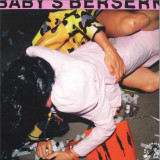
Baby's Berserk - Baby's Berserk LP

Toy Tonics going New Wave Disco with Baby’s Berserk’s self-titled debut album (to be released on 29 September).

There are many shades of funk in dance music. Berlin’s Toy Tonics label brings up artists that reflect many of these different aspects in dance music. Now the label comes up with a band! A band that is inspired by 1980ies New Wave as well as the Y2K Indie dance scene. Two guys and 2 girls from Amsterdam and Montreal called Baby’s Berserk.

Baby’s Berserk is about taking the freedom to be who you want to be, about being comfortable. Having played in all-girl punk bands since the age of 14, the bands singer Lieselot is an expert on female empowerment. “Dress like a girl and act like a boy,” is a catchphrase she lives up to every day and it clearly is a message that resonates with the band’s wild fans.

In the great tradition of Roxy Music, Throbbing Gristle and Malcolm McLaren, Baby’s Berserk is not just about the edgy music, but also about a very strong own visual style. They readily blend their sounds with underground fashion. What you see is what you get and seeing Baby’s Berserk is feeling right at home. Lieselot is a visionary when it comes to stage presence. Have you always wanted to see an electronic band with a punk attitude perform wearing a mix of haute couture and Flintstone-style rags? Look no further, it’s Baby’s Berserk.

Following on the critically acclaimed singles ‘What I Mean’ (2020) and ‘Toxic Kisses’ (2022), Baby Berserk’s highly anticipated self-titled full-length is now finally about to see the light on Berlin’s Toy Tonics records. Sonically designed for gritty rock venues as well as up-to-date edgy dance clubs, Mano’s lush compositions smoothly intertwine with the highly associative lyrics written by Puggy and Lieselot. Poets and literary addicts may think they’ve just discovered the rock & roll equivalents of Sylvia Plath, Kurt Vonnegut and Allen Ginsberg. To tell you the truth: their wild guess is pretty accurate as the works by these greats lie scattered around the Baby’s Berserk studio for inspiration.
The band was born in a laboratory back in 2019. Tired of being in bands with unruly and unpredictable humans, Mano Hollestelle set out to create a group of high precision robots to create the post-punk sound he had in mind. His outdated technology of floppy disks and cassette tapes worked well to program the androids, until one day a 90s rave mixtape was mistakenly entered into his computer. House music is a feeling and the punk bots instantly got hooked on it upon hearing it for the first time. They could never be reset to factory settings again. Mano worked tirelessly with his androids, currently known by their humanoid names of Lieselot Elzinga, Puggy Beales and Eva Wijnbergen, to fulfil his evil plan to make the rockers dance and the dancers rock. Baby’s Berserk is the fiendish extension of this plot. Beware, the band’s bass driven grooves and computerized beats have been known to cast a spell upon all within earshot.

So what do the songs on ‘Baby’s Berserk’ tell you? That it’s totally fine to have lots of fun in life! To have a boyfriend as an accessory (‘Accessories’), to get inspired by Sponge Bob (‘Dancing with the Fish’) and to blend your spirits with mixers whenever the hell you feel like it (‘Rum ‘n’ Kola’).

Baby’s Berserk member Puggy Beales on ‘Limousine’: “Decant the wine from my tip jar to yours. Soon we'll be on easy street, chauffeured home from the rat race each evening. Is it everything you'd hoped it would be?”

Check not only the debut album but also the forthcoming Remix EP with remixes by Each Other, Niklas Wandt, Sam Ruffillo, Kris Baha and Nicolini.

pas en stock

Commandez maintenant et nous commanderons l'article pour vous chez notre fournisseur.

15,55

Last In: 2 years ago
Various - Disco Discharge Presents Box Of Sin (4x12")
 
24
également disponible

Box 2[78,19 €]


The influence that 80s gay nightlife had on electronic music, pop music in general and the evolution of clubbing for
subsequent generations is pretty much incalculable. In spite of the shadow of AIDs and reactionary political and media
forces both at home and in the USA, the period 1980 – 1990 bore witness to a dazzling explosion of dance music that
artfully drew a line from the peak of late-70s disco to the emergence of house and its 90s glory days. The art of the
12” single, the thrill of the remix, the rise of the superclub, the electronic spark of chart pop, the challenging of gender
barriers… all had their origin in the gay clubs. It’s not unreasonable to make the claim that by the end of the 80s,
virtually ALL chart pop music sounded like it had its origins on the dancefloors of Heaven nightclub!
Over 4LPs and 24 tracks, ‘Box Of Sin’ strives to tell the story of that decade, and to tease apart the strands of 80s gay
clubbing to show a period of unrivalled creativity and disco diversity. Via the box’s themed discs it shows how highenergy became house, how gender-bending synth bands took over the pop charts, how pop stars the whole world
over found a route to fame via the gay clubs, and how the era’s biggest producers aimed their masterworks purely at
the dancefloor. High energy, deep house, Eurobeat, synthpop, divas, acid house… all combine to paint a picture of a
rich and vibrant lifestyle. Along the way, ‘Box Of Sin’ unearths some overlooked gems rarely compiled today:
meanwhile some of the decade’s biggest names in club music gather to get into the picture – from Whitney Houston
to Dead Or Alive, Bananarama to Bronski Beat, Aretha Franklin to Inner City.
Based on the actual club charts at the time and with a stunning design package inspired by the small ads section of
80s gay press, ‘ Box Of Sin’ comes fully annotated and with an introduction by renowned gay author Paul Burston.
Throughout, it’s illustrated with photography documenting 80s gay clubbers in action, provided for Demon by The
Bishopsgate Institute, the UK’s LGBTQ+ archive. The project also resurrects the much-loved brand ‘Disco Discharge’, a
recognisable hallmark of quality among collectors and aficionados of club music heritage.

pas en stock

Commandez maintenant et nous commanderons l'article pour vous chez notre fournisseur.

96,01

Last In: 11 months ago
The Bites - Squeeze

The Bites

Squeeze

12inch1056682ECR
Edel Records
15.09.2023

Hollywoods neuester HardRock-Kracher The Bites sind wild entschlossen, mit atemberaubendem, raketenartigem Rock und ihrem hippen, charmanten Debüt-Album "Squeeze" die Party in den Rock'n'Roll zurückzubringen.

Das Album lässt den Stil und Schwung des 70’er R'n'R aufleben, mit der No-Nonsense-Attitüde von The Hives und der Hair-Metal Power von Mötley Crüe. Fans der neuen Rock-Generation Greta Van Fleet, Dirty Honey und The Struts werden auch begeistert abgeholt.

pré-commande15.09.2023

il devrait être publié sur 15.09.2023

27,52

Last In: 2026 years ago
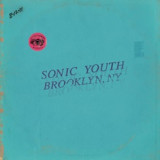
SONIC YOUTH - LIVE IN BROOKLYN 2011 (2x12")

The final U.S. show, a triumphant and blistering bookend to the storied career of one of the most influential bands in rock music, featuring a unique and expansive eighty-five minute set list that spans Sonic Youth’s nearly three decade catalog. Mixed from multitrack by longtime live engineer Aaron Mullan and mastered and cut by Carl Saff. On August 12, 2011 Sonic Youth played their final US show on an outdoor stage overlooking the East River at the Williamsburg Waterfront in Brooklyn. Fitting that their storied career would bookend with a panoramic view of New York City where it all began 30 years before, having left in their wake one of one of the most powerfully influential careers in rock music. Following incredible sets from Kurt Vile and Wild Flag, the band took the stage. As the sun went down over the city, Sonic Youth ripped through a 17 song set that spanned from deep cuts off their first studio album and highlighting many other albums all the way through to their last, like a band with everything to prove. Or as Brooklyn Vegan’s Andrew Sacher said at the time: “While most bands who are thirty years into their career are either fading away or living off of the nostalgia of their older material, Sonic Youth continue to sound and perform as fresh as ever.” Steve Shelley explains the uniquely career spanning set list of Live in Brooklyn 2011 and how it came to be, as well as the importance of outdoor NYC summer shows in Sonic Youth’s legacy: “This show was a culmination of a run of really special outdoor summertime shows in New York City for us, starting in ’92 with Summerstage in Central Park when we played with Sun Ra. For the Williamsburg Waterfront show I wrote out the set list to present to the band and it was a lot of material we hadn’t played in a while, a lot of deep cuts, so I wasn’t sure if everybody would feel like doing it. After worrying about which songs the band might say yes or no to, I threw those concerns out the window and I just made a list of songs that I thought would be a great set. We practiced the week of the show at our space in Hoboken and put the set together. First we’d try and make sure we had a guitar in the song’s tuning, then we’d try to remember the arrangement and try and put it together, sometimes re-learning bar by bar. In the end I think the whole song list made it through. Even as early as ’86 and ’87 we stopped playing ‘Death Valley 69’ and ‘Brave Men Run’ with any regularity. We’d just get excited about new material coming into the set and songs would get ‘retired’ and wouldn’t get played again for years. So on this particular night in Brooklyn a lot of those retired songs and deep cuts got dusted off and played for this show. It turned out to be a pretty special event with a really special song list.” The band would go on to fulfill a contracted festival run in South America a few months later but, by then, the group’s center was severed beyond repair and the festival appearances didn’t hold the same kind of weight. “The stage was facing the East River from the Williamsburg, Brooklyn waterfront, and I recall the sun going down in the west during our set. It was a pretty magical, if kinda weird day. Fitting, somehow, that our ‘last show’ should be in New York City, our home and where it all began…” Lee Ranaldo The Williamsburg Waterfront show would fondly become referred to as ‘The Last Show’ by fans and band alike, equally for its triumphant high energy performance, its unique and expansive set list and locale. Newly remixed and remastered, Live in Brooklyn 2011 is presented for the first time on 2xLP, 2Xcd, August 18, 2023.

pré-commande31.08.2023

il devrait être publié sur 31.08.2023

48,70

Last In: 2026 years ago
Zeke - Live and Uncensored LP 2x12"

First time on vinyl ever, remastered in 2023. Zeke- Live Tracks Uncensored LP. This LP shows Zeke live ... raw, wild, untamed and uncensored. If you’ve seen Zeke before, you know that these guys can be a total beast on stage. This LP offers a bunch of killer live recordings to make it sound like the band is playing in your kitchen: loud, fast and furious. You know that Zeke are the real purveyors of speed rock and roll and that can’t be better heard than here. The LP includes some of their best songs including tracks from ‘Super Sound Racing’, ‘Flat Tracker’, ‘Kicked in the Teeth’, ‘Dirty Sanchez’ and ‘Death Alley’ recorded in different venues from Seattle to Las Vegas to Minneapolis. One of the other special treats this LP offers is it includes two very rare studio tracks that are pretty hard to find. 26 tracks in all with top notch production. Genre: Alternative / Rock n Roll / Pun

pré-commande28.07.2023

il devrait être publié sur 28.07.2023

44,12

Last In: 2026 years ago
Zeke - Live and Uncensored LP 2x12"

First time on vinyl ever, remastered in 2023. Zeke- Live Tracks Uncensored LP. This LP shows Zeke live ... raw, wild, untamed and uncensored. If you’ve seen Zeke before, you know that these guys can be a total beast on stage. This LP offers a bunch of killer live recordings to make it sound like the band is playing in your kitchen: loud, fast and furious. You know that Zeke are the real purveyors of speed rock and roll and that can’t be better heard than here. The LP includes some of their best songs including tracks from ‘Super Sound Racing’, ‘Flat Tracker’, ‘Kicked in the Teeth’, ‘Dirty Sanchez’ and ‘Death Alley’ recorded in different venues from Seattle to Las Vegas to Minneapolis. One of the other special treats this LP offers is it includes two very rare studio tracks that are pretty hard to find. 26 tracks in all with top notch production. Genre: Alternative / Rock n Roll / Pun

pré-commande28.07.2023

il devrait être publié sur 28.07.2023

49,37

Last In: 2026 years ago
MARTIN FRAWLEY - THE WANNABE

BABY BLUE VINYL

"Workin' all day, trying to forget about the old me." Like most of us, Martin Frawley is busy trying to work himself out. He lives alongside the long shadow of his late dad, musician and songwriter Maurice Frawley, a cultural icon of the Australian underground and collaborator of Paul Kelly, Tex Perkins and Mick Thomas. Most of Martin's 20s were spent writing and playing songs in locally beloved Melbourne band Twerps - a collection of pals who were on the forefront of the city's jangle pop renaissance. A few albums, US tours and band rotations under its belt, Twerps split up in 2018 and Martin turned his compass towards a solo project. His first album, Undone at 31 (2019), was a bit of a reckoning; a wild ride through the wreckage of both a band and longterm romantic break up. His new album The Wannabe is a personal, cheeky and, at times, self-depreiciating collection of songs unpacking the reality of finding his way as an adult without his dad around, and ultimately falling back in love with life, music and someone new. Martin and his band - friends Dan Luscombe (The Drones), Steph Hughes (Boomgates, Dick Diver), Nik Imfeld (Tyrannaman) and Dan Kelly - had heaps of fun recording The Wannabe in Melbourne. The title track is a particularly spicy take on an entertainment industry that seems to give more shits about marketing than music. The album is a bit of an emotional tour, from anger and derision, through to comedy, through to deep and honest love. It's positive with a lot of sadness. Not unlike Martin himself. As well as the guitar, Martin had some fun playing the piano on this record. The technical term is `multiinstrumentalist' but Martin's more of a musical explorer of sorts. No one is exactly sure how these things work - if Martin was born into music or if it was born into him, but it doesn't really matter. Music is what he loves. It's what he does. It's not about the industry or about success - not anymore. It's about the freedom of creating songs on his own terms, and trying to let go of the feeling he has something to prove: to his dad, to his critics, and to himself. And while he's not sure he'll ever fully shake that feeling, he's at least relaxing and having a bit of fun doing it. Like his dad, Martin has a reputation as a `musician's musician'. He hosts a pretty sporadic podcast Dive For Your Memory, where he has fast and loose chats with musicians while doing a deep dive into their musical inspirations and canon. He and his fiancé Lauren also make wine under the label El'More Wines, named after the farm and small town where his dad grew up. It's all come a bit full circle, really.

pré-commande23.06.2023

il devrait être publié sur 23.06.2023

20,80

Last In: 2026 years ago
The Toads - In The Wilderness LP

“Are we having fun yet? Living in the grey zone”? The Toads ask the question and already know the answer. There’s many a wry smile, often packed with gallows humour, shared on the Melbourne groups’ debut album “In the Wilderness” (out June 9th on Anti Fade and Upset The Rhythm). Navigating the dross of modern life, whilst keeping one foot in a dream is the key to their nervy post-punk scuffle. Featuring members of The Shifters, The Living Eyes and Parsnip you’d be forgiven for guessing what The Toads sound like, but their mordant step and minor-key enchantment makes for an intriguing parry.
The Toads hatched after a short period of domestic readjustment mid-2021. Billy Gardner (guitar) found himself in need of a roof after his home was consumed by fire, and was kindly hosted by friend Stella Rennex (bass). Elsie Retter (drums) was a regular visitor to the house and after seeing Miles Jansen (vocals) tear it up with his other band at the local bowls club, they invited him along to sprinkle his deadpan musings across their fledgling sound. Pretty quickly they hit on their direction; a savvy, snappy lo-fi pop as openhearted as it is brooding.
After playing some formative shows, including a debut at Jerkfest in 2022, The Toads set about recording five songs mid-year for a tentative EP. Realising the songs were too long to fit on a 7”, they booked in another recording session the following September to extend the EP to 12”. Two tracks’ chords structures were fleshed out with new melodies and arrangements, and by this point The Toads were surprised to find they had an album’s worth of material. ‘In The Wilderness’ is a beguiling record, full of twists and turns. It’s arch, resilient, thoughtful and straight-at-your-head catchy to boot.

It’s fitting that the title track “In The Wilderness” draws this record to a close, being the peak of their invention so far. Drums pound and tumbling bass-lines sprint among the crisply stabbing guitar phrases and soaring horns outro. It’s a survivalist epic of hard-worn wisdom, ambling and restless. “I open up the door trying to get all of us through” sings Miles, becoming progressively more dizzy and despondent. There is a sense of toughing it out that never falters though and this is the essence of what The Toads do best. They push onwards into the darkness and keep their appetite, pulling us all into the light.

pré-commande09.06.2023

il devrait être publié sur 09.06.2023

15,34

Last In: 2026 years ago
Wild Carnation - Tricycle

While the hook line for this new local trio would have to be that bassist/leader Brenda Sauter used to be a member of the later-'80s incarnation of the famous Feelies (and it's notable offshoot, The Trypes), even if you didn't worship at the altar of that group (and especially if you did!), Wild Carnation is a revelation. While
the persistent, pumping beat and hard-played jangle guitars of most of the tracks here emanate from her previous band and from their forerunners, the Velvets (especially), Television,and the Byrds - Sauter's beguiling voice is perfect for the ultra-appealing pop hooks the group writes as well as the thoughtful lyrics she composes.

Way back in the 1990s, a young Delmore stumbled into now defunct NYC nightclub Wetlands (during the sadly also now defunct, NYU Independent Music Festival), just as WILD CARNATION were about to begin their set.

Having lived in NYC / Brooklyn / Hoboken the previous decade, where countless mesmerizing gigs by THE FEELIES, YUNG WU, TRYPES, and SPEED THE PLOUGH had been experienced, it was the chance to see Brenda Sauter fronting her new group that drew Delmore in. A few songs into their set, it was apparent, however, that this trio was more than a Feelies offshoot project, despite melodic similarities, and Brenda's cool vocals / presence.

WILD CARNATION played raw, loud and fast (and occasionally out of control), with Richard Barnes distorted, jangly guitar lines perfectly colliding with Brenda's propelling bass notes, while Chris O'Donovan
kept it together, while pounding the living hell out of his drums. It was a garagey, indie rock mess, more reminiscent of Hib-Tone / Chronic Town era REM, and emergent New Zealand bands like The Bats and The Clean, than The Feelies.

Delmore was smitten, and determined to sign them, despite the fact that the Delmore label did not yet exist.
In 1993, Wild Carnation's debut 7", "Dodger Blue" b/w "The Lights Are On (But No One's Home)", taken from raw home demos recorded the previous year, became the second Delmore release. A full length album was then commissioned, and an evolving Wild Carnation holed up at Mix-O-Lydian recording studios with engineer Don Sternecker (The Feelies, Speed The Plough, Wake Ooloo) to record their debut full length, Tricycle, released in 1994.

On Tricycle, the pastoral quality of their most beautiful ballads was captured perfectly, while retaining enough of the rawness of the live experience. Waves of critical acclaim followed, from now defunct publications (CMJ Jackpot! Raygun, Trouser Press) followed, including this one by Jack Rabid of The Big Takeover, written for All Music Guide:
"While the hook line for this new local trio would have to be that bassist/leader Brenda Sauter used to be a member of the later-'80s incarnation of the famous Feelies (and it's notable offshoot, The Trypes), even if you didn't worship at the altar of that group (and especially if you did!), Wild Carnation is a revelation. While the persistent, pumping beat and hard-played jangle guitars of most of the tracks here emanate from her previous band and from their forerunners, the Velvets (especially), Television,and the Byrds - Sauter's beguiling voice is perfect for the ultra-appealing pop hooks the group writes as well as the thoughtful lyrics she composes.

Trading the occasional Feelies drone for sugar-sweet melodies (yes!) and utilizing the pretty ring of the guitars to maximum effect, songs such as Wings are the perfect pop confectionery, too honeyed and
delightful to miss capturing your bending heart and too consistently insistent and edgy to be wimpy, kind of like Reckoning-era R.E.M. It's all so well captured with pristine production, with balls to match the heart, too!

And though the 12 tracks are largely cut from a similar mode, all seem special just the same on their own.
A truly shining, first-rate effort, along with Lotion's and Nyack's early EPs and the last Flower LP, the best release to come out of a New York group this decade, and exceptionally crafted at that! Do not miss."

pré-commande02.06.2023

il devrait être publié sur 02.06.2023

31,89

Last In: 2026 years ago
Culture - Two Sevens Clash LP

ESSENTIAL laut The Rough Guide To Reggae! Das berühmteste Album der Band von 1977 wird jetzt offiziel als LP im Original-Coverartwork wiederveröffentlicht! Hier handelt es sich um einen echten Klassiker der in keiner Vinyl-Abteilung fehlen darf.

pré-commande12.05.2023

il devrait être publié sur 12.05.2023

21,89

Last In: 2026 years ago
Eden Ahbez - Wild Boy: The Lost Songs Of Eden Ahbez LP

“Wild Boy …” is a reissue of the well-known 2016 release curated by Brian Chidester, renowned researcher and biographer of Eden Ahbez. Especially for this album, Brian wrote an interesting text about Abi’s life, which definitely became the decoration of the release.
With the new 2020 re-release, we went a little further and kept what is commonly referred to as studio cuts. It’s a few more minutes in the studio with ahbez himself, full of emotion and life. In addition, to the delight of fans, the edition includes an additional composition Nature Boy (Mantovani Orchestra).
Especially, it is worth noting the outstanding mastering prepared from practically decomposed tapes by the Grammy-nominated Jessica Thompson, which guarantees the deepest and warmth possible sound. Jessica a huge ahbez fan and we’re highly appreciated for what she has done to save his music for the future.
Eden Ahbez is definitely at the origin of psychedelic music and this release can be taken as further proof. Over the past twenty years, the iconic figure of the world’s first hippie Eden ahbez has become famous primarily for his 1948 song “Nature Boy”, praising universal love, and his amazingly solo album from the 1960s called “Eden’s Island” – one from the first concept albums in the history of music and probably the first psychedelic music album. “Wild Boy: The Lost Songs Of Eden Ahbez” deepens understanding of the origins of the psychedelic movement in the 1950s.
The disc contains a musical selection of works by Eden ahbez himself, written by him in the period after Nature Boy. The inclusion of songs such as “Palm Springs” – Ray Anthony Orchestra and “Hey Jacques” by Erta Kitt gives the listener the chance to discover for the first time the little-known recordings of world-famous artists composed by Eden ahbez. Through “Wild Boy” and “Surfer John” you can hear the author’s handling of absurd rock and exotic experimentation, as well as sweet psychedelic pop like Monterey (with Paul Horn on flute). Overall, Wild Boy: The Lost Songs Of Eden Ahbez offers an overview of the lost works of 1949-1971 with seven unpublished recordings and eight rare singles.
If in 2020 you are missing the hallucinogenic content in Eden Ahbez, it amazingly makes up for that deficiency with simple chords, expansive arrangements, and lyrics about travel, relaxation, free love, and spirituality. Thus creating the standard of psychedelic music. Eden Ahbez’s songs weren’t only fantasy and his personal philosophy was the real thing that he lived.

reviews:

“This carefully and extensively researched compilation culls covers by top notch mainstream artists juxtaposed with unreleased Eden recordings. What might sound like a mixed bag is actually more like a chronological, musical non-fiction novel about Eden Ahbez. While Eden was writing hundreds of songs and performing live and making recordings in various styles, his songs were also being picked up by popular artists like Nat King Cole and Eartha Kitt who recorded with a more polished mainstream style. There are also some early rock n roll style recordings here. Eden’s professionally recordings often end up as Novelty Pop records such as “Child of Nature” and “The Clam Man” but if you read between the lines and listen to the lyrics it is pretty eye-opening that he is singing about Eastern-religion-style and pre-hippie philosophies about being at one with the planet Earth.
All of this is explained in the lengthy liner notes inside the lp along with a few choice photos that establish Eden as a founding father of Southern California mystic/psychedelic music.” – Tiki_News
“Eden Ahbez’s life philosophy was summed up in the lyrics of his most famous song, “Nature Boy,” a 1948 hit for Nat King Cole: the song describes a “strange enchanted boy” who wanders the world in search of truth. “The greatest thing you’ll ever learn,” he concludes, “is to love and be loved in return.” Ahbez was a pre-cursor of California’s beatniks and hippies, and an exalted icon of ex-otica via his rare 1960 album Eden’s Island. Beyond “Nature Boy” and Eden’s Island, though, there were nu-merous lesser-known Ahbez record-ings. Ahbez biographer Brian Chidester has been doing an exemplary job of archiving and documenting that catalog of work. The Exotic World of Eden Ahbez (reviewed in UT#38) appeared a few years ago, gathering together 14 Ahbez-related rarities” – Ugly Things

pré-commande31.03.2023

il devrait être publié sur 31.03.2023

26,85

Last In: 2026 years ago
Various - This Is Flying Dutchman

• Bob Thiele is one of the great producers. For his work with John Coltrane alone, where he gave free reign to the saxophone great's wildest musical visions including “A Love Supreme”, ignoring the usual cost consciousness of a major label, he deserves to be lauded. In addition to this, his eight years at Impulse! saw him recording seminal works by scores of musicians including late-blooming masterpieces by Duke Ellington and Johnny Hodges, and a whole wave of 'new thing' jazzers such as Archie Shepp and Pharoah Sanders. He didn't stop there and when he launched his own label, Flying Dutchman in 1969, he continued to innovate and record music that reflected its times, but that also resonates down through the ages. It is to Flying Dutchman that we are paying tribute on this compilation.

• Gil Scott-Heron's recordings for the label ran to three records, which sold well but not spectacularly at the time. They have since taken on a resonance that makes the album "Pieces Of A Man" in particular one of the most important recordings of the last century, and its opening track 'The Revolution Will Not Be Televised' an anthem. Pianist Lonnie Liston Smith had been on Thiele's final important Impulse! Recording, Pharoah Sanders’ "Karma", and continued to appear on Flying Dutchman, first as a sideman and then as a leader. His 1975 album "Expansions" was the perfect encapsulation of his 'cosmic jazz' and the title track is a moment of near perfection which has become one of the foundation pieces of modern dance music.

• Flying Dutchman's other great discoveries are here. Vocalist Leon Thomas found a new route for jazz vocals in the early 70s, which made him a star and earned him a place in Santana. Gato Barbieri became one of the major saxophone stars of the era, after Thiele enabled him to meld his free jazz leanings to the rhythms of South America. The label also made important recordings with Tom Scott (featured on Thiele's own 'Head Start'), Ornette Coleman and Oliver Nelson, whilst interesting records appeared by Esther Marrow, Harold Alexander and many more.

• This is Flying Dutchman is a considered tribute to the label, and features in depth and fully illustrated sleeve notes. In the year when Bob Thiele's son is gearing up to release the first new music on the label since 1976, it is an apt and timely reminder of the power of the music.

pré-commande31.03.2023

il devrait être publié sur 31.03.2023

26,01

Last In: 2026 years ago
David Bowie - Moonage Daydream 3x12"

David Bowie

Moonage Daydream 3x12"

3x12inch5054197284007
PLG Uk
31.03.2023
  • A1: Time? One Of The Most Complex Expressions?
  • A2: Ian Fish U.k. Heir (Moonage Daydream Mix 1)
  • A3: Hallo Spaceboy (Remix Moonage Daydream Edit)
  • A4: Medley: Wild Eyed Boy From Freecloud
  • A5: All The Young Dudes
  • A6: Oh! You Pretty Things (Live)
  • A7: Life On Mars? (2016 Mix - Moonage Daydream Edit)
  • A8: Moonage Daydream (Live)
  • B1: Medley: The Jean Genie / Love Me Do / The Jean Genie (Featuring Jeff Beck)
  • B2: The Light (Excerpt)
  • B3: Warszawa (Live Moonage Daydream Edit)
  • B4: Quicksand (2021 Mix - Early Version)
  • B5: Medley: Future Legend / Diamonds Dogs Intro / Cracked Actor
  • C1: Rock ?N' Roll With Me (Live)
  • C2: Aladdin Sane (Moonage Daydream Edit)
  • C3: Subterraneans
  • C4: Space Oddity (Moonage Daydream Mix)
  • C5: V-2 Schneider
  • D1: Sound And Vision (Moonage Daydream Mix)
  • D2: A New Career In A New Town (Moonage Daydream Mix)
  • D3: Word On A Wing (Moonage Daydream Excerpt)
  • D4: Heroes? (Live Moonage Daydream Edit)
  • D5: J. (Moonage Daydream Mix)
  • D6: Ashes To Ashes (Moonage Daydream Mix)
  • E1: Cygnet Committee/Lazarus (Moonage Daydream Mix)
  • E2: Memory Of A Free Festival (Harmonium Edit)
  • E3: Modern Love (Moonage Daydream Mix)
  • E4: Let's Dance (Live Moonage Daydream Edit)
  • E5: The Mysteries (Moonage Daydream Mix)
  • E6: Rock ?N' Roll Suicide (Live Moonage Daydream Edit)
  • E7: Ian Fish U.k. Heir (Moonage Daydream Mix 2)
  • F1: Word On A Wing (Moonage Daydream Mix)
  • F2: Hallo Spaceboy (Live Moonage Daydream Mix)
  • F3: I Have Not Been To Oxford Town (Moonage Daydream A Cappella Mix Edit)
  • F4: Heroes": Iv. Sons Of The Silent Age (Excerpt)
  • F5: ? (Moonage Daydream Mix Edit)
  • F6: Ian Fish U.k. Heir (Moonage Daydream Mix Excerpt)
  • F7: Memory Of A Free Festival (Moonage Daydream Mix Edit)
  • F8: Starman
  • F9: You're Aware Of A Deeper Existence?
  • F10: Changes
  • F11: Let Me Tell You One Thing?
  • F12: Well You Know What This Has Been An Incredible Pleasure?
  • D7: Move On (Moonage Daydream A Cappella Mix Edit)
  • D8: Moss Garden (Moonage Daydream Edit)

Nach der Veröffentlichung der 2CD-Version des Albums Moonage Daydream im letzten Jahr, wird der Soundtrack nun am 31. März als 3LP Vinyl veröffentlicht.

"Moonage Daydream" beleuchtet das Leben und Genie von David Bowie, einem der produktivsten und einflussreichsten Künstler der jüngeren Musikgeschichte.
Auf Spielfilmlänge nimmt uns Brett Morgen mit in die Welt Bowies, erforscht anhand von großartigem, vielfältigem und nie zuvor gesehenem Filmmaterial, Live-Auftritten und Musik (Morgen sichtete vier Jahre die Archive des David Bowie Estates) seine kreative, musikalische und spirituelle Reise.
Durch den Film führt uns dabei die Erzählerstimme von David Bowie selbst.
Das Begleitalbum zu "Moonage Dream" enthält Songs aus Bowies gesamter Karriere, darunter bisher ungehörtes Material, speziell für den Film und dieses Album angefertigte Mixe und Gesprächspassagen Bowies.

Zu den Highlights des Tracklistings zählen ein bisher unveröffentlichtes Live-Medley von "The Jean Genie / Love Me Do / The Jean Genie", aufgenommen beim berühmt-berüchtigten letzten Ziggy-Stardust-Konzert im Londoner Hammersmith Odeon 1973 und mit Jeff Beck an der Gitarre. Weitere Raritäten sind eine frühe Version
des Hunky-Dory-Favoriten "Quicksand" und eine bisher unveröffentlichte Live-Version von "Rock 'n' Roll With Me", mitgeschnitten bei der legendären "Soul Tour" 1974.

pré-commande31.03.2023

il devrait être publié sur 31.03.2023

74,75

Last In: 2026 years ago
QUASI - BREAKING THE BALLS OF HISTORY

Erstpressung auf pinkem Vinyl. "Breaking The Balls Of History" ist das insgesamt zehnte Album von QUASI, das am zehnten Februar, zehn Jahre nach ihrer letzten Platte, erscheint. Drei Zehner, was sich mit den dreißig Jahren deckt, die sie zusammenspielen. Sam Coomes und Janet Weiss sind zu Ikonen des pazifischen Nordwestens geworden, und QUASI hat sich immer so beständig angefühlt - ihre dauerhafte Freundschaft so generativ, ihre Energie unendlich, jedes Album rauer und eingängiger und wilder und lustiger als das letzte. Aber wir haben uns geirrt, QUASI jemals für selbstverständlich zu halten. Eine Zeit lang dachten sie, dass das komplizierte "Mole City" von 2013 ihr letztes Album sein könnte. Sie würden mit einem großartigen Album abtreten und weiterziehen. Dann, im August 2019, krachte ein Auto in Janets Haus und brach ihr beide Beine und das Schlüsselbein. Dann kam ein tödlicher Virus über uns, und niemand wusste, wann oder ob Live-Musik, wie wir sie kannten, jemals wieder würde stattfinden können. "There's no investing in the future anymore", erkannte Janet. "The future is now. Do it now if you want to do it. Don't put it off. All those things you only realize when it's almost too late. It could be gone in a second." Während des Lockdowns standen die Straßen von Portland still, Flugzeuge verschwanden, wilde Tiere tauchten auf. Und mit der ausgelöschten Normalität kam ein unerwartetes Geschenk: ununterbrochene Zeit, Stunden am Tag, um Kunst zu machen. QUASI konnten nicht auf Tournee gehen, also hatten sie eine Idee: Sie taten so, als wären sie auf Tournee und spielten jeden Tag zusammen. Jeden Nachmittag verschanzten sich Sam und Janet in ihrem winzigen Übungsraum und kanalisierten die Verwirrung und Absurdität dieser fremden neuen Welt in Songs. Sie beschlossen, dass sie die Songs live und gemeinsam aufnehmen würden, um einen Moment einzufangen. Das unglaubliche Ergebnis dieser Sessions ist "Breaking The Balls Of History", aufgenommen in fünf Tagen und produziert von John Goodmanson. Hier sind zwei Künstler*innen in ihrer Blütezeit, jede*r ein menschlicher Fundus an musikalischem Wissen und Erfahrung, völlig unverwechselbar in ihrem Songwriting und Sound. In der QUASI-Form wird die Band alchemistisch noch größer als die Summe ihrer Teile. Mitten in einem katastrophalen sozialen und politischen Moment haben sie exquisite, melodische Songs geschaffen, die vor Wut, wildem Humor und Intelligenz nur so sprühen, angetrieben von einem großen, zerschundenen, pochenden Herzen. "A last long laugh at the edge of death", singt Sam zu Beginn des Albums, und dieser fröhliche Trotz - der genauso gut der Logbuch-Eintrag unserer Gegenwart sein könnte - gibt den Ton für die kommenden Songs an. Es klingt düster, und das ist es auch, weil es sich dem Moment stellt. Aber es ist auch eine Platte, die vor Energie, Vergnügen und Freude nur so strotzt.

pré-commande12.02.2023

il devrait être publié sur 12.02.2023

25,00

Last In: 2026 years ago
Quasi - Breaking the Balls of History

Breaking the Balls of History, recorded in five days and produced by John Goodmanson at the legendary Robert Lang Studios in Shoreline, WA. Here are two artists at their prime, each a human library of musical knowledge and experience, entirely distinctive in their songcraft and sound. In Quasi-form, the band becomes alchemically even greater than the sum of its parts: Janet’s galloping drums and Sam’s punk-symphonic Rocksichord and their intertwining vocals make something gigantic, anthemic. In the thick of a cataclysmic social and political moment, they’ve crafted exquisitely melodic songs that glitter with rage and wild humor and intelligence, driven by a big bruised pounding heart.

pré-commande10.02.2023

il devrait être publié sur 10.02.2023

26,85

Last In: 2026 years ago
Scene Queen - BIMBOCORE LP

Scene Queen

BIMBOCORE LP

12inchHR6616-1
Hopeless
07.02.2023

It’s not often that an artist creates something so unique
and unpredictable that an entire genre is created
because of it, but here we are, Scene Queen and
‘BIMBOCORE’ have arrived.

 Fed up with a genre of music filled with gatekeepers
and judgmental hard rock purists, Scene Queen has
unleashed the most daring, provocative, indefinable
music the world has ever seen.

 Songs like ‘Pink Rover’ and ‘Pink Panther’ are as
daring and raunchy as they are inclusive and
community building.

 In Scene Queen’s world, one can wear pink and like
‘girly things’ while gutturally screaming relatable lyrics
over a metal riff.

 Blending metal, hard rock, and explosive pop, Scene
Queen is making music for a genreless TikTok
generation - the alt kids, the misfits, and the ones that
don't fit in.

 With a heavy following on TikTok and a wildly
entertaining live show that is an experience of a
lifetime, ‘BIMBOCORE’ is the debut of a young scene
kid emerging into the leader of a movement.

 For fans of Ashnikko, Bring Me The Horizon, Poppy.
 Recently performed at Reading & Leeds Festival and
The Great Escape. Upcoming touring with Palaye
Royale (US) and Wargasm (UK).

pas en stock

Commandez maintenant et nous commanderons l'article pour vous chez notre fournisseur.

22,27

Last In: 3 years ago
Elektro Nova - Elektro Nova 2x12"

Like a rediscovered Viking burial ship, Electro Nova compiles near-mythical drone recordings produced in 1998 and described by Helge Sten aka Deathprod as some of the most important music to ever come out of Norway. It's the work of Kåre Dehlie Thorstad and compiles two of the earliest releases on Smalltown Supersound, back when it was basically no more than a bedroom operation. It’s taken over two decades, but finally the label have given the material a first ever proper release on vinyl, complete with mixing and mastering by Deathprod. If you’re into the ice cold swells of anyone from Thomas Köner to Harley Gaber, Biosphere, Kali Malone or, of course, Deathprod - this one's as essential as they come.

Kaare Dehlie Thorstad's Elektro Nova produced just two releases during the late ‘90s that have since slipped into drone lore - Trans-Inter-Ference and Elektro Nova/Electro Nova. Admired not only by Deathprod and Joakim Haugland of Smalltown, but also by his contemporaries Lasse Marhaug and Biosphere, his work has evaded pretty much any attention outside of Norway these last two decades. Following a chance meeting with Thorstad at Oslo airport a few years back, Smalltown were prompted to give the recordings a second wind, presenting what is essentially a captivating new release, and crucial addition to the Norsk drone canon.

As the story goes, Thorstad was studying photography in the late 90’s in Scotland, but instead of delivering a photo for his final exam he made a record - a double album (2CDs) and a 10” to be precise. That should provide some idea of the textural synaesthetic and landscaping qualities evoked by his music, which he ended up sending to a then-young Smalltown label, who were mostly issuing tapes at the time. With no proper distribution the records largely bypassed wider attention, and become a personal favourite of Smalltown’s Joakim Haugland, as well as avowed fan Helge Sten (Deathprod), who helped render its diaphanous scale in mix down, and Lasse Marhaug who describes them as "two perfect records that deserved much bigger attention”.

Between its jaw-dropping opener; the post-apocalyptic vision of its untitled part; and the cinematic white-out of the 10” tracks; Thorstad comes as close as we’ve ever heard to evoking the inhospitable nature and stark beauty of the wild far north. We can hear those landscapes palpably internalised and alchemically transmuted into its coarse grained textural swells and a reverberating multi-dimensionality, variously sustained to extents that evoke an abandonment of the senses, or likewise squashed and isolated to imply the relative anxiety relief of atmospheric flux, where a few degrees temperature rise or a drop in the wind speed can make the difference between life and death.

Impressively, Thorstad realised after the release of Elektro Nova and just two live shows that he couldn’t really follow up the work and instead pursued a career as professional cyclist, eventually combining his visual skills to become a pro cycling photographer. In that sense, he’s a bit like composer-turned-tennis coach Harley Gaber, whose almighty ‘The Winds Rise In The North’ (1976) is in some ways richly prescient of this work. Like Gaber, Thorstad can remain safe in the knowledge that his contribution to the drone sphere will endure for the ages, especially with this important, impressive new edition.

pas en stock

Commandez maintenant et nous commanderons l'article pour vous chez notre fournisseur.

32,56

Last In: 3 years ago
Lee Tracy & Isaac Manning - Is it What You Want

As the sun sets on a quaint East Nashville house, a young man bares a piece of his soul. Facing the camera, sporting a silky suit jacket/shirt/slacks/fingerless gloves ensemble that announces "singer" before he's even opened his mouth, Lee Tracy Johnson settles onto his stage, the front yard. He sways to the dirge-like drum machine pulse of a synth-soaked slow jam, extends his arms as if gaining his balance, and croons in affecting, fragile earnest, "I need your love… oh baby…"

Dogs in the yard next door begin barking. A mysterious cardboard robot figure, beamed in from galaxies unknown and affixed to a tree, is less vocal. Lee doesn't acknowledge either's presence. He's busy feeling it, arms and hands gesticulating. His voice rises in falsetto over the now-quiet dogs, over the ambient noise from the street that seeps into the handheld camcorder's microphone, over the recording of his own voice played back from a boombox off-camera. After six minutes the single, continuous shot ends. In this intimate creative universe there are no re-takes. There are many more music videos to shoot, and as Lee later puts it, "The first time you do it is actually the best. Because you can never get that again. You expressing yourself from within."

"I Need Your Love" dates from a lost heyday. From some time in the '80s or early '90s, when Lee Tracy (as he was known in performance) and his music partner/producer/manager Isaac Manning committed hours upon hours of their sonic and visual ideas to tape. Embracing drum machines and synthesizers – electronics that made their personal futurism palpable – they recorded exclusively at home, live in a room into a simple cassette deck. Soul, funk, electro and new wave informed their songs, yet Lee and Isaac eschewed the confinement of conventional categories and genres, preferring to let experimentation guide them.

"Anytime somebody put out a new record they had the same instruments or the same sound," explains Isaac. "So I basically wanted to find something that's really gonna stand out away from all of the rest of 'em." Their ethos meant that every idea they came up with was at least worth trying: echoed out half-rapped exhortations over frantic techno-style beats, gospel synth soul, modal electro-funk, oddball pop reinterpretations, emo AOR balladry, nods to Prince and the Fat Boys, or arrangements that might collapse mid-song into a mess of arcade game-ish blips before rallying to reach the finish line. All of it conjoined by consistent tape hiss, and most vitally, Lee's chameleonic voice, which managed to wildly shape shift and still evoke something sincere – whether toggling between falsetto and tenor exalting Jesus's return, or punctuating a melismatic romantic adlib with a succinct, "We all know how it feels to be alone."

"People think we went to a studio," says Isaac derisively. "We never went to no studio. We didn't have the money to go to no studio! We did this stuff at home. I shot videos in my front yard with whatever we could to get things together." Sometimes Isaac would just put on an instrumental record, be it "Planet Rock" or "Don't Cry For Me Argentina" (from Evita), press "record," and let Lee improvise over it, yielding peculiar love songs, would-be patriotic anthems, or Elvis Presley or Marilyn Monroe tributes. Technical limitations and a lack of professional polish never dissuaded them. They believed they were onto something.

"That struggle," Isaac says, "made that sound sound good to me."

In the parlance of modern music criticism Lee and Isaac's dizzying DIY efforts would inevitably be described as "outsider." But "outsider" carries the burden of untold additional layers of meaning if you're Black and from the South, creating on a budget, and trying to get someone, anyone within the country music capital of the world to take your vision seriously. "What category should we put it in?" Isaac asks rhetorically. "I don't know. All I know is feeling. I ain't gonna name it nothing. It's music. If it grabs your soul and touch your heart that's what it basically is supposed to do."

=

Born in 1963, the baby boy of nine siblings, Lee Tracy spent his earliest years living amidst the shotgun houses on Nashville's south side. "We was poor, man!" he says, recalling the outhouse his family used for a bathroom and the blocks of ice they kept in the kitchen to chill perishables. "But I actually don't think I really realized I was in poverty until I got grown and started thinking about it." Lee's mom worked at the Holiday Inn; his dad did whatever he had to do, from selling fruit from a horse drawn cart to bootlegging. "We didn't have much," Lee continues, "but my mother and my father got us the things we needed, the clothes on our back." By the end of the decade with the city's urban renewal programs razing entire neighborhoods to accommodate construction of the Interstate, the family moved to Edgehill Projects. Lee remembers music and art as a constant source of inspiration for he and his brothers and sisters – especially after seeing the Jackson 5 perform on Ed Sullivan. "As a small child I just knew that was what I wanted to do."

His older brother Don began musically mentoring him, introducing Lee to a variety of instruments and sounds. "He would never play one particular type of music, like R&B," says Lee. "I was surrounded by jazz, hard rock and roll, easy listening, gospel, reggae, country music; I mean I was a sponge absorbing all of that." Lee taught himself to play drums by beating on cardboard boxes, gaining a rep around the way for his timekeeping, and his singing voice. Emulating his favorites, Earth Wind & Fire and Cameo, he formed groups with other kids with era-evocative band names like Concept and TNT Connection, and emerged as the leader of disciplined rehearsals. "I made them practice," says Lee. "We practiced and practiced and practiced. Because I wanted that perfection." By high school the most accomplished of these bands would take top prize in a prominent local talent show. It was a big moment for Lee, and he felt ready to take things to the next level. But his band-mates had other ideas.

"I don't know what happened," he says, still miffed at the memory. "It must have blew they mind after we won and people started showing notice, because it's like everybody quit! I was like, where the hell did everybody go?" Lee had always made a point of interrogating prospective musicians about their intentions before joining his groups: were they really serious or just looking for a way to pick up girls? Now he understood even more the importance of finding a collaborator just as committed to the music as he was.

=

Isaac Manning had spent much of his life immersed in music and the arts – singing in the church choir with his family on Nashville's north side, writing, painting, dancing, and working various gigs within the entertainment industry. After serving in the armed forces, in the early '70s he ran The Teenage Place, a music and performance venue that catered to the local youth. But he was forced out of town when word of one of his recreational routines created a stir beyond the safe haven of his bohemian circles.

"I was growing marijuana," Isaac explains. "It wasn't no business, I was smoking it myself… I would put marijuana in scrambled eggs, cornbread and stuff." His weed use originated as a form of self-medication to combat severe tooth pain. But when he began sharing it with some of the other young people he hung out with, some of who just so happened to be the kids of Nashville politicians, the cops came calling. "When I got busted," he remembers, "they were talking about how they were gonna get rid of me because they didn't want me saying nothing about they children because of the politics and stuff. So I got my family, took two raggedy cars, and left Nashville and went to Vegas."

Out in the desert, Isaac happened to meet Chubby Checker of "The Twist" fame while the singer was gigging at The Flamingo. Impressed by Isaac's zeal, Checker invited him to go on the road with him as his tour manager/roadie/valet. The experience gave Isaac a window into a part of the entertainment world he'd never encountered – a glimpse of what a true pop act's audience looked like. "Chubby Checker, none of his shows were played for Black folks," he remembers. "All his gigs were done at high-class white people areas." Returning home after a few years with Chubby, Isaac was properly motivated to make it in Music City. He began writing songs and scouting around Nashville for local talent anywhere he could find it with an expressed goal: "Find someone who can deliver your songs the way you want 'em delivered and make people feel what you want them to feel."

One day while walking through Edgehill Projects Isaac heard someone playing the drums in a way that made him stop and take notice. "The music was so tight, just the drums made me feel like, oh I'm-a find this person," he recalls. "So I circled through the projects until I found who it was.

"That's how I met him – Lee Tracy. When I found him and he started singing and stuff, I said, ohhh, this is somebody different."

=

Theirs was a true complementary partnership: young Lee possessed the raw talent, the older Isaac the belief. "He's really the only one besides my brother and my family that really seen the potential in me," says Lee. "He made me see that I could do it."

Isaac long being a night owl, his house also made for a fertile collaborative environment – a space where there always seemed to be a new piece of his visual art on display: paintings, illustrations, and dolls and figures (including an enigmatic cardboard robot). Lee and Issac would hang out together and talk, listen to music, conjure ideas, and smoke the herb Isaac had resumed growing in his yard. "It got to where I could trust him, he could trust me," Isaac says of their bond. They also worked together for hours on drawings, spreading larges rolls of paper on the walls and sketching faces with abstract patterns and imagery: alien-like beings, tri-horned horse heads, inverted Janus-like characters where one visage blurred into the other.

Soon it became apparent that they didn't need other collaborators; self-sufficiency was the natural way forward. At Isaac's behest Lee, already fed up with dealing with band musicians, began playing around with a poly-sonic Yamaha keyboard at the local music store. "It had everything on it – trumpet, bass, drums, organ," remembers Lee. "And that's when I started recording my own stuff."

The technology afforded Lee the flexibility and independence he craved, setting him on a path other bedroom musicians and producers around the world were simultaneously following through the '80s into the early '90s. Saving up money from day jobs, he eventually supplemented the Yamaha Isaac had gotten him with Roland and Casio drum machines and a Moog. Lee was living in an apartment in Hillside at that point caring for his dad, who'd been partially paralyzed since early in life. In the evenings up in his second floor room, the music put him in a zone where he could tune out everything and lose himself in his ideas.

"Oh I loved it," he recalls. "I would really experiment with the instruments and use a lot of different sound effects. I was looking for something nobody else had. I wanted something totally different. And once I found the sound I was looking for, I would just smoke me a good joint and just let it go, hit the record button." More potent a creative stimulant than even Isaac's weed was the holistic flow and spontaneity of recording. Between sessions at Isaac's place and Lee's apartment, their volume of output quickly ballooned.

"We was always recording," says Lee. "That's why we have so much music. Even when I went to Isaac's and we start creating, I get home, my mind is racing, I gotta start creating, creating, creating. I remember there were times when I took a 90-minute tape from front to back and just filled it up."

"We never practiced," says Isaac. "See, that was just so odd about the whole thing. I could relate to him, and tell him about the songs I had ideas for and everything and stuff. And then he would bring it back or whatever, and we'd get together and put it down." Once the taskmaster hell bent on rehearsing, Lee had flipped a full 180. Perfection was no longer an aspiration, but the enemy of inspiration.

"I seen where practicing and practicing got me," says Lee. "A lot of musicians you get to playing and they gotta stop, they have to analyze the music. But while you analyzing you losing a lot of the greatness of what you creating. Stop analyzing what you play, just play! And it'll all take shape."

=

"I hope you understood the beginning of the record because this was invented from a dream I had today… (You tell me, I'll tell you, we'll figure it out together)" – Lee Tracy and Isaac Manning, "Hope You Understand"

Lee lets loose a maniacal cackle when he acknowledges that the material that he and Isaac recorded was by anyone's estimation pretty out there. It's the same laugh that commences "Hope You Understand" – a chaotic transmission that encapsulates the duality at the heart of their music: a stated desire to reach people and a compulsion to go as leftfield as they saw fit.

"We just did it," says Lee. "We cut the music on and cut loose. I don't sit around and write. I do it by listening, get a feeling, play the music, and the lyrics and stuff just come out of me."

The approach proved adaptable to interpreting other artists' material. While recording a cover of Whitney Houston's pop ballad "Saving All My Love For You," Lee played Whitney's version in his headphones as he laid down his own vocals – partially following the lyrics, partially using them as a departure point. The end result is barely recognizable compared with the original, Lee and Isaac having switched up the time signature and reinvented the melody along the way towards morphing a slick mainstream radio standard into something that sounds solely their own.

"I really used that song to get me started," says Lee. "Then I said, well I need something else, something is missing. Something just came over me. That's when I came up with 'Is It What You Want.'"

The song would become the centerpiece of Lee and Isaac's repertoire. Pushed along by a percolating metronomic Rhythm King style beat somewhere between a military march and a samba, "Is It What You Want" finds Lee pleading the sincerity of his commitment to a potential love interest embellished by vocal tics and hiccups subtlely reminiscent of his childhood hero MJ. Absent chord changes, only synth riffs gliding in and out like apparitions, the song achieves a lingering lo-fi power that leaves you feeling like it's still playing, somewhere, even after the fade out.

"I don't know, it's like a real spiritual song," Lee reflects. "But it's not just spiritual. To me the more I listen to it it's like about everything that you do in your everyday life, period. Is it what you want? Do you want a car or you don't want a car? Do you want Jesus or do you want the Devil? It's basically asking you the question. Can't nobody answer the question but you yourself."

In 1989 Lee won a lawsuit stemming from injuries sustained from a fight he'd gotten into. He took part of the settlement money and with Isaac pressed up "Saving All My Love For You" b/w "Is It What You Want" as a 45 single. Isaac christened the label One Chance Records. "Because that's all we wanted," he says with a laugh, "one chance."

Isaac sent the record out to radio stations and major labels, hoping for it to make enough noise to get picked up nationally. But the response he and Lee were hoping for never materialized. According to Isaac the closest the single got to getting played on the radio is when a disk jock from a local station made a highly unusual announcement on air: "The dude said on the radio, 107.5 – 'We are not gonna play 'Is It What You Want.' We cracked up! Wow, that's deep.

"It was a whole racist thing that was going on," he reflects. "So we just looked over and kept on going. That was it. That was about the way it goes… If you were Black and you were living in Nashville and stuff, that's the way you got treated." Isaac already knew as much from all the times he'd brought he and Lee's tapes (even their cache of country music tunes) over to Music Row to try to drum up interest to no avail.

"Isaac, he really worked his ass off," says Lee. "He probably been to every record place down on Music Row." Nashville's famed recording and music business corridor wasn't but a few blocks from where Lee grew up. Close enough, he remembers, for him to ride his bike along its back alleys and stumble upon the occasional random treasure, like a discarded box of harmonicas. Getting in through the front door, however, still felt a world away.

"I just don't think at the time our music fell into a category for them," he concedes. "It was before its time."

=

Lee stopped making music some time in the latter part of the '90s, around the time his mom passed away and life became increasingly tough to manage. "When my mother died I had a nervous breakdown," he says, "So I shut down for a long time. I was in such a sadness frame of mind. That's why nobody seen me. I had just disappeared off the map." He fell out of touch with Isaac, and in an indication of just how bad things had gotten for him, lost track of all the recordings they'd made together. Music became a distant memory.

Fortunately, Isaac kept the faith. In a self-published collection of his poetry – paeans to some of his favorite entertainment and public figures entitled Friends and Dick Clark – he'd written that he believed "music has a life of its own." But his prescience and presence of mind were truly manifested in the fact that he kept an archive of he and Lee's work. As perfectly imperfect as "Is It What You Want" now sounds in a post-Personal Space world, Lee and Isaac's lone official release was in fact just a taste. The bulk of the Is It What You Want album is culled from the pair's essentially unheard home recordings – complete songs, half-realized experiments, Isaac's blue monologues and pronouncements et al – compiled, mixed and programmed in the loose and impulsive creative spirit of their regular get-togethers from decades ago. The rest of us, it seems, may have finally caught up to them.

On the prospect of at long last reaching a wider audience, Isaac says simply, "I been trying for a long time, it feels good." Ever the survivor, he adds, "The only way I know how to make it to the top is to keep climbing. If one leg break on the ladder, hey, you gotta fix it and keep on going… That's where I be at. I'll kill death to make it out there."

For Lee it all feels akin to a personal resurrection: "It's like I was in a tomb and the tomb was opened and I'm back… Man, it feels so great. I feel like I'm gonna jump out of my skin." Success at this stage of his life, he realizes, probably means something different than what it did back when he was singing and dancing in Isaac's front yard. "What I really mean by 'making it,'" he explains isn't just the music being heard but, "the story being told."

Occasionally Lee will pull up "Is It What You Want" on YouTube on his phone, put on his headphones, and listen. He remembers the first time he heard his recorded voice. How surreal it was, how he thought to himself, "Is that really me?" What would he say to that younger version of himself now?

"I would probably tell myself, hang in there, don't give up. Keep striving for the goal. And everything will work out."

Despite what's printed on the record label, sometimes you do get more than one chance.

pas en stock

Commandez maintenant et nous commanderons l'article pour vous chez notre fournisseur.

11,72

Last In: 3 years ago
Ralph White - Something About Dreaming

Here’s artist Max Kuhn on hearing the new Ralph White recordings for the first time: “I was driving a familiar round trip across the high desert when I first put it on. It immediately spoke to me. In the lyrics there's a familiar geography for me, a familiar emotional landscape for all of us. And maybe it was driving an almost 40 year old truck on sun baked & cracked asphalt in July, but it's like you can hear his songs coming apart- the cadence, the rhymes stumbling & defying expectations, consistency but they just keep moving. You have no choice but to go with it. Probably a good lesson for how to live in this era we're in, cracking up but keeping it all running somehow, trying to make something pretty with the time.” Recorded in Austin, Texas in March of 2020, just days before the city and the rest of the world shut down, Ralph White spent two days with producer, Jerry David DeCicca (Will Beeley, Ed Askew) and recording engineer, Don Cento, capturing a raw and wild set of performances. Ralph, having recently converted his van into a mobile living and touring quarters equipped with a wood-burning stove, left Austin, the city where he was born 70 years ago, and retreated to an Arizona commune where he began building a new house in the desert hills to escape the virus and insanity of daily living. Ralph takes us on a journey through his myriad of travels: from Dock Boggs to Syd Barrett to William Faulkner to Stella Chiweshe to Blind Uncle Gaspard…scratching banjo, rasping train whistle hollers, rolling kalimba, rousing accordion, taut shimmers of guitar, caustic fiddle and lyrics - that could have been hidden amongst the dusty inner groove of a lost Harry Smith 78 - weaving in and out of streams of consciousness, time and place. In addition to his solo work, White has recorded or performed with a diverse group of folk and avant-garde musicians: Thurston Moore of Sonic Youth, Jandek, Jack Rose, Eugene Chadbourne, Michelle Shocked, Sir Richard Bishop, and Michael Hurley. “This is what Ralph White really sounds like. It’s what time passing really sounds like. It’s what a look really feels like. This record is someone touching you all over!” --Bill Callahan “Striking, electrifying acoustic music from an underappreciated legend of the American Southwest. Here, tight song structures meet open, unadorned instrumentation: guitar, banjo, kalimba, accordion, fiddle, and White's elastic voice, unspooling pitches and syllables. White draws listeners in on his terms. Lyrics wind and twist and pull back: "Motel 6, Motel 6, Altoona, Altoona; missing you, missing you so, great big hole in my--..." Brave, beautiful, a high point in White's long career. And this is just Volume 1!” - Eli Winter. "What Ralph White puts on albums and onstage is so mind-boggling and vast, it forces those of us in the description business down a treacherous path." --Darcie Stevens, Austin Chronicle. “White was a member of well-loved punk bluegrass outfit Bad Livers, but his solo work is possessed of a much more lonesome spark, exaggerating the implied drone at the heart of the music of Dock Boggs and The Stanley Brothers…White plays wooden six-string banjo, violin, button accordion and kalimba and his voice has a high, eerie quality to it…extremely psychedelic.” --David Keenan, The Wire Tracklisting: 1. Gun Barrel Polka 2. Misinformation Shuffle 3. El Golfo 4. Something About Dreaming 5. Rye Straw 6. The Stovepipe Blues 7. No Stranger 8. Morning Sickness 9. Lord Franklin

pré-commande29.09.2022

il devrait être publié sur 29.09.2022

23,95

Last In: 2026 years ago
Lee Tracy & Isaac Manning - Is it What You Want LP

As the sun sets on a quaint East Nashville house, a young man bares a piece of his soul. Facing the camera, sporting a silky suit jacket/shirt/slacks/fingerless gloves ensemble that announces "singer" before he's even opened his mouth, Lee Tracy Johnson settles onto his stage, the front yard. He sways to the dirge-like drum machine pulse of a synth-soaked slow jam, extends his arms as if gaining his balance, and croons in affecting, fragile earnest, "I need your love… oh baby…"

Dogs in the yard next door begin barking. A mysterious cardboard robot figure, beamed in from galaxies unknown and affixed to a tree, is less vocal. Lee doesn't acknowledge either's presence. He's busy feeling it, arms and hands gesticulating. His voice rises in falsetto over the now-quiet dogs, over the ambient noise from the street that seeps into the handheld camcorder's microphone, over the recording of his own voice played back from a boombox off-camera. After six minutes the single, continuous shot ends. In this intimate creative universe there are no re-takes. There are many more music videos to shoot, and as Lee later puts it, "The first time you do it is actually the best. Because you can never get that again. You expressing yourself from within."

"I Need Your Love" dates from a lost heyday. From some time in the '80s or early '90s, when Lee Tracy (as he was known in performance) and his music partner/producer/manager Isaac Manning committed hours upon hours of their sonic and visual ideas to tape. Embracing drum machines and synthesizers – electronics that made their personal futurism palpable – they recorded exclusively at home, live in a room into a simple cassette deck. Soul, funk, electro and new wave informed their songs, yet Lee and Isaac eschewed the confinement of conventional categories and genres, preferring to let experimentation guide them.

"Anytime somebody put out a new record they had the same instruments or the same sound," explains Isaac. "So I basically wanted to find something that's really gonna stand out away from all of the rest of 'em." Their ethos meant that every idea they came up with was at least worth trying: echoed out half-rapped exhortations over frantic techno-style beats, gospel synth soul, modal electro-funk, oddball pop reinterpretations, emo AOR balladry, nods to Prince and the Fat Boys, or arrangements that might collapse mid-song into a mess of arcade game-ish blips before rallying to reach the finish line. All of it conjoined by consistent tape hiss, and most vitally, Lee's chameleonic voice, which managed to wildly shape shift and still evoke something sincere – whether toggling between falsetto and tenor exalting Jesus's return, or punctuating a melismatic romantic adlib with a succinct, "We all know how it feels to be alone."

"People think we went to a studio," says Isaac derisively. "We never went to no studio. We didn't have the money to go to no studio! We did this stuff at home. I shot videos in my front yard with whatever we could to get things together." Sometimes Isaac would just put on an instrumental record, be it "Planet Rock" or "Don't Cry For Me Argentina" (from Evita), press "record," and let Lee improvise over it, yielding peculiar love songs, would-be patriotic anthems, or Elvis Presley or Marilyn Monroe tributes. Technical limitations and a lack of professional polish never dissuaded them. They believed they were onto something.

"That struggle," Isaac says, "made that sound sound good to me."

In the parlance of modern music criticism Lee and Isaac's dizzying DIY efforts would inevitably be described as "outsider." But "outsider" carries the burden of untold additional layers of meaning if you're Black and from the South, creating on a budget, and trying to get someone, anyone within the country music capital of the world to take your vision seriously. "What category should we put it in?" Isaac asks rhetorically. "I don't know. All I know is feeling. I ain't gonna name it nothing. It's music. If it grabs your soul and touch your heart that's what it basically is supposed to do."

=

Born in 1963, the baby boy of nine siblings, Lee Tracy spent his earliest years living amidst the shotgun houses on Nashville's south side. "We was poor, man!" he says, recalling the outhouse his family used for a bathroom and the blocks of ice they kept in the kitchen to chill perishables. "But I actually don't think I really realized I was in poverty until I got grown and started thinking about it." Lee's mom worked at the Holiday Inn; his dad did whatever he had to do, from selling fruit from a horse drawn cart to bootlegging. "We didn't have much," Lee continues, "but my mother and my father got us the things we needed, the clothes on our back." By the end of the decade with the city's urban renewal programs razing entire neighborhoods to accommodate construction of the Interstate, the family moved to Edgehill Projects. Lee remembers music and art as a constant source of inspiration for he and his brothers and sisters – especially after seeing the Jackson 5 perform on Ed Sullivan. "As a small child I just knew that was what I wanted to do."

His older brother Don began musically mentoring him, introducing Lee to a variety of instruments and sounds. "He would never play one particular type of music, like R&B," says Lee. "I was surrounded by jazz, hard rock and roll, easy listening, gospel, reggae, country music; I mean I was a sponge absorbing all of that." Lee taught himself to play drums by beating on cardboard boxes, gaining a rep around the way for his timekeeping, and his singing voice. Emulating his favorites, Earth Wind & Fire and Cameo, he formed groups with other kids with era-evocative band names like Concept and TNT Connection, and emerged as the leader of disciplined rehearsals. "I made them practice," says Lee. "We practiced and practiced and practiced. Because I wanted that perfection." By high school the most accomplished of these bands would take top prize in a prominent local talent show. It was a big moment for Lee, and he felt ready to take things to the next level. But his band-mates had other ideas.

"I don't know what happened," he says, still miffed at the memory. "It must have blew they mind after we won and people started showing notice, because it's like everybody quit! I was like, where the hell did everybody go?" Lee had always made a point of interrogating prospective musicians about their intentions before joining his groups: were they really serious or just looking for a way to pick up girls? Now he understood even more the importance of finding a collaborator just as committed to the music as he was.

=

Isaac Manning had spent much of his life immersed in music and the arts – singing in the church choir with his family on Nashville's north side, writing, painting, dancing, and working various gigs within the entertainment industry. After serving in the armed forces, in the early '70s he ran The Teenage Place, a music and performance venue that catered to the local youth. But he was forced out of town when word of one of his recreational routines created a stir beyond the safe haven of his bohemian circles.

"I was growing marijuana," Isaac explains. "It wasn't no business, I was smoking it myself… I would put marijuana in scrambled eggs, cornbread and stuff." His weed use originated as a form of self-medication to combat severe tooth pain. But when he began sharing it with some of the other young people he hung out with, some of who just so happened to be the kids of Nashville politicians, the cops came calling. "When I got busted," he remembers, "they were talking about how they were gonna get rid of me because they didn't want me saying nothing about they children because of the politics and stuff. So I got my family, took two raggedy cars, and left Nashville and went to Vegas."

Out in the desert, Isaac happened to meet Chubby Checker of "The Twist" fame while the singer was gigging at The Flamingo. Impressed by Isaac's zeal, Checker invited him to go on the road with him as his tour manager/roadie/valet. The experience gave Isaac a window into a part of the entertainment world he'd never encountered – a glimpse of what a true pop act's audience looked like. "Chubby Checker, none of his shows were played for Black folks," he remembers. "All his gigs were done at high-class white people areas." Returning home after a few years with Chubby, Isaac was properly motivated to make it in Music City. He began writing songs and scouting around Nashville for local talent anywhere he could find it with an expressed goal: "Find someone who can deliver your songs the way you want 'em delivered and make people feel what you want them to feel."

One day while walking through Edgehill Projects Isaac heard someone playing the drums in a way that made him stop and take notice. "The music was so tight, just the drums made me feel like, oh I'm-a find this person," he recalls. "So I circled through the projects until I found who it was.

"That's how I met him – Lee Tracy. When I found him and he started singing and stuff, I said, ohhh, this is somebody different."

=

Theirs was a true complementary partnership: young Lee possessed the raw talent, the older Isaac the belief. "He's really the only one besides my brother and my family that really seen the potential in me," says Lee. "He made me see that I could do it."

Isaac long being a night owl, his house also made for a fertile collaborative environment – a space where there always seemed to be a new piece of his visual art on display: paintings, illustrations, and dolls and figures (including an enigmatic cardboard robot). Lee and Issac would hang out together and talk, listen to music, conjure ideas, and smoke the herb Isaac had resumed growing in his yard. "It got to where I could trust him, he could trust me," Isaac says of their bond. They also worked together for hours on drawings, spreading larges rolls of paper on the walls and sketching faces with abstract patterns and imagery: alien-like beings, tri-horned horse heads, inverted Janus-like characters where one visage blurred into the other.

Soon it became apparent that they didn't need other collaborators; self-sufficiency was the natural way forward. At Isaac's behest Lee, already fed up with dealing with band musicians, began playing around with a poly-sonic Yamaha keyboard at the local music store. "It had everything on it – trumpet, bass, drums, organ," remembers Lee. "And that's when I started recording my own stuff."

The technology afforded Lee the flexibility and independence he craved, setting him on a path other bedroom musicians and producers around the world were simultaneously following through the '80s into the early '90s. Saving up money from day jobs, he eventually supplemented the Yamaha Isaac had gotten him with Roland and Casio drum machines and a Moog. Lee was living in an apartment in Hillside at that point caring for his dad, who'd been partially paralyzed since early in life. In the evenings up in his second floor room, the music put him in a zone where he could tune out everything and lose himself in his ideas.

"Oh I loved it," he recalls. "I would really experiment with the instruments and use a lot of different sound effects. I was looking for something nobody else had. I wanted something totally different. And once I found the sound I was looking for, I would just smoke me a good joint and just let it go, hit the record button." More potent a creative stimulant than even Isaac's weed was the holistic flow and spontaneity of recording. Between sessions at Isaac's place and Lee's apartment, their volume of output quickly ballooned.

"We was always recording," says Lee. "That's why we have so much music. Even when I went to Isaac's and we start creating, I get home, my mind is racing, I gotta start creating, creating, creating. I remember there were times when I took a 90-minute tape from front to back and just filled it up."

"We never practiced," says Isaac. "See, that was just so odd about the whole thing. I could relate to him, and tell him about the songs I had ideas for and everything and stuff. And then he would bring it back or whatever, and we'd get together and put it down." Once the taskmaster hell bent on rehearsing, Lee had flipped a full 180. Perfection was no longer an aspiration, but the enemy of inspiration.

"I seen where practicing and practicing got me," says Lee. "A lot of musicians you get to playing and they gotta stop, they have to analyze the music. But while you analyzing you losing a lot of the greatness of what you creating. Stop analyzing what you play, just play! And it'll all take shape."

=

"I hope you understood the beginning of the record because this was invented from a dream I had today… (You tell me, I'll tell you, we'll figure it out together)" – Lee Tracy and Isaac Manning, "Hope You Understand"

Lee lets loose a maniacal cackle when he acknowledges that the material that he and Isaac recorded was by anyone's estimation pretty out there. It's the same laugh that commences "Hope You Understand" – a chaotic transmission that encapsulates the duality at the heart of their music: a stated desire to reach people and a compulsion to go as leftfield as they saw fit.

"We just did it," says Lee. "We cut the music on and cut loose. I don't sit around and write. I do it by listening, get a feeling, play the music, and the lyrics and stuff just come out of me."

The approach proved adaptable to interpreting other artists' material. While recording a cover of Whitney Houston's pop ballad "Saving All My Love For You," Lee played Whitney's version in his headphones as he laid down his own vocals – partially following the lyrics, partially using them as a departure point. The end result is barely recognizable compared with the original, Lee and Isaac having switched up the time signature and reinvented the melody along the way towards morphing a slick mainstream radio standard into something that sounds solely their own.

"I really used that song to get me started," says Lee. "Then I said, well I need something else, something is missing. Something just came over me. That's when I came up with 'Is It What You Want.'"

The song would become the centerpiece of Lee and Isaac's repertoire. Pushed along by a percolating metronomic Rhythm King style beat somewhere between a military march and a samba, "Is It What You Want" finds Lee pleading the sincerity of his commitment to a potential love interest embellished by vocal tics and hiccups subtlely reminiscent of his childhood hero MJ. Absent chord changes, only synth riffs gliding in and out like apparitions, the song achieves a lingering lo-fi power that leaves you feeling like it's still playing, somewhere, even after the fade out.

"I don't know, it's like a real spiritual song," Lee reflects. "But it's not just spiritual. To me the more I listen to it it's like about everything that you do in your everyday life, period. Is it what you want? Do you want a car or you don't want a car? Do you want Jesus or do you want the Devil? It's basically asking you the question. Can't nobody answer the question but you yourself."

In 1989 Lee won a lawsuit stemming from injuries sustained from a fight he'd gotten into. He took part of the settlement money and with Isaac pressed up "Saving All My Love For You" b/w "Is It What You Want" as a 45 single. Isaac christened the label One Chance Records. "Because that's all we wanted," he says with a laugh, "one chance."

Isaac sent the record out to radio stations and major labels, hoping for it to make enough noise to get picked up nationally. But the response he and Lee were hoping for never materialized. According to Isaac the closest the single got to getting played on the radio is when a disk jock from a local station made a highly unusual announcement on air: "The dude said on the radio, 107.5 – 'We are not gonna play 'Is It What You Want.' We cracked up! Wow, that's deep.

"It was a whole racist thing that was going on," he reflects. "So we just looked over and kept on going. That was it. That was about the way it goes… If you were Black and you were living in Nashville and stuff, that's the way you got treated." Isaac already knew as much from all the times he'd brought he and Lee's tapes (even their cache of country music tunes) over to Music Row to try to drum up interest to no avail.

"Isaac, he really worked his ass off," says Lee. "He probably been to every record place down on Music Row." Nashville's famed recording and music business corridor wasn't but a few blocks from where Lee grew up. Close enough, he remembers, for him to ride his bike along its back alleys and stumble upon the occasional random treasure, like a discarded box of harmonicas. Getting in through the front door, however, still felt a world away.

"I just don't think at the time our music fell into a category for them," he concedes. "It was before its time."

=

Lee stopped making music some time in the latter part of the '90s, around the time his mom passed away and life became increasingly tough to manage. "When my mother died I had a nervous breakdown," he says, "So I shut down for a long time. I was in such a sadness frame of mind. That's why nobody seen me. I had just disappeared off the map." He fell out of touch with Isaac, and in an indication of just how bad things had gotten for him, lost track of all the recordings they'd made together. Music became a distant memory.

Fortunately, Isaac kept the faith. In a self-published collection of his poetry – paeans to some of his favorite entertainment and public figures entitled Friends and Dick Clark – he'd written that he believed "music has a life of its own." But his prescience and presence of mind were truly manifested in the fact that he kept an archive of he and Lee's work. As perfectly imperfect as "Is It What You Want" now sounds in a post-Personal Space world, Lee and Isaac's lone official release was in fact just a taste. The bulk of the Is It What You Want album is culled from the pair's essentially unheard home recordings – complete songs, half-realized experiments, Isaac's blue monologues and pronouncements et al – compiled, mixed and programmed in the loose and impulsive creative spirit of their regular get-togethers from decades ago. The rest of us, it seems, may have finally caught up to them.

On the prospect of at long last reaching a wider audience, Isaac says simply, "I been trying for a long time, it feels good." Ever the survivor, he adds, "The only way I know how to make it to the top is to keep climbing. If one leg break on the ladder, hey, you gotta fix it and keep on going… That's where I be at. I'll kill death to make it out there."

For Lee it all feels akin to a personal resurrection: "It's like I was in a tomb and the tomb was opened and I'm back… Man, it feels so great. I feel like I'm gonna jump out of my skin." Success at this stage of his life, he realizes, probably means something different than what it did back when he was singing and dancing in Isaac's front yard. "What I really mean by 'making it,'" he explains isn't just the music being heard but, "the story being told."

Occasionally Lee will pull up "Is It What You Want" on YouTube on his phone, put on his headphones, and listen. He remembers the first time he heard his recorded voice. How surreal it was, how he thought to himself, "Is that really me?" What would he say to that younger version of himself now?

"I would probably tell myself, hang in there, don't give up. Keep striving for the goal. And everything will work out."

Despite what's printed on the record label, sometimes you do get more than one chance.

pas en stock

Commandez maintenant et nous commanderons l'article pour vous chez notre fournisseur.

23,49

Last In: 3 years ago
Mentalist - Empires Falling LP 2x12"

140gm gold vinyl in gatefold. MENTALIST, the Saarbrücken Germany based Melodic Metal group, like maybe no other recently new band has managed to leave big, positive marks in the Power Metal scene! After the big success of the debut album ‘Freedom Of Speech’ (2020), the German/ Swedish foursome consisting of Peter Moog (guitars), Thomen Stauch (dr., ex BLIND GUARDIAN), Kai Stringer (guitars) and Swedish exceptional singer Rob Lundgren just scraped past the German official media control album charts with their 2021 effort ‘A Journey Into The Unknown’ (trend charts: #63)! On iTunes, MENTALIST reached an impressive #2 as highest position at the Metal charts, and the fans of the Facebook group ‘Power Metal’ with 110K followers voted ‘A Journey Into The Unknown’ as best Power Metal release of the year 2021. ‘Empires Falling’, the third full length by the German/Swedish outfit, now continues where its predecessors have stopped! Oliver Palotai (keys, Kamelot) und Mike LePond (b., Symphony X) again joined MENTALIST as energetic guests on keyboards and bass. On this release, outstanding musicianship teams up with fabulous melodies and fine, subtle arrangements as parts of epic, stirring and energy-driven songs which reinforce the high quality of MENTALIST. The front cover artwork again was designed by Andreas Marschall (Blind Guardian, Running Wild), the mix & the mastering once more was handled by Jacob Hansen (Volbeat, Amaranthe, Pretty Maids etc.). ‘Empires Falling’ will be released on September 16th, 2022 on CD, digital, and as gold vinyl 2-LP. A tour for Autumn 2022 is currently in preparation. Track listing: Solution Revolution; Stairs Of Ragusa; Tears Within A Paradise; Empires Falling; If You Really Want; Columbus; Noah’s Ark; Generation’s Legacy; Heavy Metal Leia; Out Of The Dark; Years Of Slavery; Forbidden Fruits (Bonus Track); Bumblebee (Bonus Track)

pré-commande16.09.2022

il devrait être publié sur 16.09.2022

30,21

Last In: 2026 years ago
Alvin Curran - Drumming Up Trouble

Black Truffle is thrilled to announce Drumming Up Trouble, the first release of previously unissued music by Alvin Curran on the label. Collecting works recorded between 2018-2021 and a side-long epic dating back to the early 80s, as the title suggests, Drumming Up Trouble focuses on a hitherto almost unknown aspect of Curran’s encyclopaedic and omnivorous musical world: his experiments with sampled and synthesised percussion. As Curran’s wonderful, wildly sweeping liner notes make clear, his fascination with drumming belongs to the radical investigation of music’s fundamental elements that has marked his output since the beginnings of MEV, who aimed (as he says in a recent interview) to return ‘in some collective way to a non-existent start time in the history of human music’. Whatever kind of music our proto-human ancestors played, he writes, ‘drums were front and centre in the mix. Drums rule!’

In a paradox typical of Curran’s approach, Drumming Up Trouble interrogates this most ancient dimension of music with contemporary technology. On the first side, we hear recent pieces performed using the sampling software and full-size MIDI keyboard setup Curran has refined since the 1980s. Two of them are wild real-time improvisations, primarily utilising an enormous bank of hip-hop samples. Building from polyrhythmic layers of drum machine fragments to wild cacophonies of clashing vocal samples, scratching, and frantic pitch shifting, these energetic and at times hilarious pieces occupy a space somewhere between John Oswald’s Plunderphonics, Pat Thomas and Matt Wand in the Tony Oxley Quartet, and the propulsive Kudoro/Grime fusion of Lisbon’s Príncipe label. They are improvisations are accompanied by two austere, minimal compositions realised in collaboration with Angelo Maria Fallo: ‘End Zone’ for orchestral bass drum and high oscillator, and ‘Rollings’, where a snare roll is gradually stretched and filtered by digital means into ‘floating electronic gossamer’.

The incredible breadth of Curran’s output makes it pretty unlikely that a listener familiar with his work would be surprised to find it branching out in a new direction. But no degree of familiarity with his work can really prepare for side B’s epic and bizarre ‘Field it More’. It’s perhaps best to let the maestro describe this unhinged and infectious offering in his own words: ‘It features an 8 bar funky minimal riff à la James Brown, played on synth and an-out-of-tune piano, synced to a pre-paid patch on the Roland drum machine. Over this is laid a heavily processed track of the voices of dancer Yoshiko Chuma and movie-maker Jacob Burckhardt discussing an upcoming performance of theirs at the Venice film festival, capped by a track of my playing an increasingly out of control blues over the top of all of the above’. Only Pekka Airaksinen’s Buddhas of the Golden Light comes to mind as a reference point that might even vaguely compare to this wild home-brew of drum-machine funk, mad improvisation and squelching electronics, which eventually dissolved into a massive, layered cluster. Ancient and modern, synthetic and human, hysterical and rigorous, Drumming up Trouble is 100% Curran.

pas en stock

Commandez maintenant et nous commanderons l'article pour vous chez notre fournisseur.

21,72

Last In: 2 years ago
Oog Bogo - Plastic LP

Oog Bogo

Plastic LP

12inchGOD023
God?
01.07.2022

The wiggy wanderings of Oog Bogo wind up on the same island of lost joys all at once, manufacturing a virtual jukebox of singles and side flips that won’t unplug, and just keeps reeling and raging on instead. A bright metallurgy of guitar pop, psych, post-punk and apocalypse disco embosses the sleek, multicoloured flash of ‘Plastic’.

 Oog Bogo are a four-piece rock band from Los Angeles and their new album is ‘Plastic’, an electrifying set of songs and sounds that just don’t stop, working like a machine that makes joy and endless flips and repetitions, whether in front of the turntable or out in the real world.
 In the past several years, Oog Bogo dropped two records that previewed this explosion in wildly divergent ways: 2019’s ‘Oogbogo’ EP, with wigged-out production, its contorted fun house mirror images pulling punk, psych and new wave in and out of focus in a chaotic procession of mutant tunes. 2021’s ‘EP2’ radiates a starkly different vibe, as chilled-out guitar-pop tunes conjure a flowing medley of plaintive echoes and atmospheres in a mellow mist of hiss.

 Kevin Boog recorded these records in a largely hermetic state: at home on 4-track, playing all the parts, slowly drawing out the sounds. The songs for ‘Plastic’ were demoed this way too, as a starting point for a group interpretation - but when, for obvious reasons, logistics prevented everyone from getting in the same room to even rehearse, the planned recording session at Ty Segall’s Harmonizer Studios took on a different shape.

 Starting off with only drummer Thomas Alvarez (Audacity) to accompany him, Kevin
realized that any obstacles to getting the record made were also opportunities, for
something else that was also right to happen. Rather than reach for the design of the
demos, he kept himself in the present moment, approaching every passage as fluidly
as possible, playing what he needed to play, staying open to what he needed to
know. It didn’t hurt that the laptop with all his songs crashed right after he walked into
the studio! There was no way possible but forward.
 The direction was right on with the guys at Harmonizer - Ty Segall’s sense of
imagination made him the ideal production counterpart to walk together with Kevin
into this world, psyched to experiment and ready to get weird at any time. Ty and
engineer Matt Littlejohn met all requests and requirements in the form of sounds, with
gear and approaches that amazed and delighted, and an eternally ebullient spirit.
 As this was Oog Bogo’s first time recording away from home, Kevin was a kid in a
candy store - where the store owner turns out to be a Wonka-esque philanthropist.
As band members Mike Kreibel (Dirty & His Fists) and Shelby Jacobson (Shannon
Lay) joined the session, there was a synchronicity and community with everyone
involved, finding an unexpected road to realizing the songs, with all the colours and
hues they added making everything pop that much harder.
 Fluidity was key: ‘Plastic’’s tunes depict a polymorphic cast of characters. As in life,
they leap avidly from style to style; from pretty psych rock to new wave apocalypse
disco and harsh post punk bleakness, sometimes in a verse and a half. Corkscrewing
over and over like a riff-driven space-coaster, morphing in and out of each
successive moment with increasing momentum and gravity, ‘Plastic’ defines and
redefines Oog Bogo, with sweet tunes, barely-controlled intensity and sharp
production moves - a killer first album and an equally killer evolving state of mind.

pré-commande01.07.2022

il devrait être publié sur 01.07.2022

30,21

Last In: 2026 years ago
Oog Bogo - Plastic LP

Oog Bogo

Plastic LP

CassetteGOD023C
God?
01.07.2022

The wiggy wanderings of Oog Bogo wind up on the same island of lost joys all at once, manufacturing a virtual jukebox of singles and side flips that won’t unplug, and just keeps reeling and raging on instead. A bright metallurgy of guitar pop, psych, post-punk and apocalypse disco embosses the sleek, multicoloured flash of ‘Plastic’.

 Oog Bogo are a four-piece rock band from Los Angeles and their new album is ‘Plastic’, an electrifying set of songs and sounds that just don’t stop, working like a machine that makes joy and endless flips and repetitions, whether in front of the turntable or out in the real world.
 In the past several years, Oog Bogo dropped two records that previewed this explosion in wildly divergent ways: 2019’s ‘Oogbogo’ EP, with wigged-out production, its contorted fun house mirror images pulling punk, psych and new wave in and out of focus in a chaotic procession of mutant tunes. 2021’s ‘EP2’ radiates a starkly different vibe, as chilled-out guitar-pop tunes conjure a flowing medley of plaintive echoes and atmospheres in a mellow mist of hiss.

 Kevin Boog recorded these records in a largely hermetic state: at home on 4-track, playing all the parts, slowly drawing out the sounds. The songs for ‘Plastic’ were demoed this way too, as a starting point for a group interpretation - but when, for obvious reasons, logistics prevented everyone from getting in the same room to even rehearse, the planned recording session at Ty Segall’s Harmonizer Studios took on a different shape.

 Starting off with only drummer Thomas Alvarez (Audacity) to accompany him, Kevin
realized that any obstacles to getting the record made were also opportunities, for
something else that was also right to happen. Rather than reach for the design of the
demos, he kept himself in the present moment, approaching every passage as fluidly
as possible, playing what he needed to play, staying open to what he needed to
know. It didn’t hurt that the laptop with all his songs crashed right after he walked into
the studio! There was no way possible but forward.
 The direction was right on with the guys at Harmonizer - Ty Segall’s sense of
imagination made him the ideal production counterpart to walk together with Kevin
into this world, psyched to experiment and ready to get weird at any time. Ty and
engineer Matt Littlejohn met all requests and requirements in the form of sounds, with
gear and approaches that amazed and delighted, and an eternally ebullient spirit.
 As this was Oog Bogo’s first time recording away from home, Kevin was a kid in a
candy store - where the store owner turns out to be a Wonka-esque philanthropist.
As band members Mike Kreibel (Dirty & His Fists) and Shelby Jacobson (Shannon
Lay) joined the session, there was a synchronicity and community with everyone
involved, finding an unexpected road to realizing the songs, with all the colours and
hues they added making everything pop that much harder.
 Fluidity was key: ‘Plastic’’s tunes depict a polymorphic cast of characters. As in life,
they leap avidly from style to style; from pretty psych rock to new wave apocalypse
disco and harsh post punk bleakness, sometimes in a verse and a half. Corkscrewing
over and over like a riff-driven space-coaster, morphing in and out of each
successive moment with increasing momentum and gravity, ‘Plastic’ defines and
redefines Oog Bogo, with sweet tunes, barely-controlled intensity and sharp
production moves - a killer first album and an equally killer evolving state of mind.

pré-commande01.07.2022

il devrait être publié sur 01.07.2022

30,21

Last In: 2026 years ago
Articles par page:
N/ABPM
Vinyl