lim. 2025 remastered Reissue!
Thirty years ago, LA producer Aaron Paar realized his dream of launching a label with the debut of Worldship Music, dropping the now cult classic Planet Eater EP in the late summer of 1995. Crafted on his newly acquired SP1200 and refined with mix engineer extraordinaire Greg “Ski” Royal, the record became the label’s very first release and a true vanguard single. Overflowing with the raw swing and deep grooves of classic US house, these tracks still radiate the timeless energy of the mid-90s underground. Now carefully remastered and reissued in a strictly limited edition, Planet Eater EP returns as an essential piece of house history for DJs, collectors, and true heads alike.
Suche:the producer
Having established himself as one of the most exciting contemporary dance producers with a string of stellar releases, Japanese producer boys be kko returns triumphantly with the Nagasawa EP, four floor cuts bursting with emotion, shimmering in Tokyo technicolor, and perfectly at home on Bliss Point.
Nagasawa kicks off with a bang. “ChuKii” is a peak time heater: breaks, chopped vocals and punchy toms sear over a low end groove that proves body music can funk. Melodic acid explodes like a firework mid-track, taking the dance floor to psychedelic new heights.
The club psychedelia continues with “Mold Mold”, a minimal, subterranean system roller adorned with swells, bells, and deep, guttural growls dubbed to the vanishing point.
“Sant Esteve (kko Edit)” is melancholic and contemplative jazz house, eschewing cliché and twinging with nostalgia for that moment you felt most free.
“Humor is an important part of my music”, boys be kko reflected over lunch as Izakaya smoke billowed past his face. “Oignon”, the fourth and final track on Nagasawa, is an airy and joyful slice of sampledelia that makes good on this promise. An enormous smile of a track sending listeners off with a slice of sonic sunshine and, dare we say, hope.
Album First Released 1980 Now Available On 180 Gram Vinyl And Cd. All Songs Are Performed By Byron Lee's Allstars. Featuring Ken Lazarus, Jo-jo, Keith Lynn, Smokey 007, Hubert Lee And Cecil Barker. All The Tracks Originally
Recorded In The Mid-sixties, Were Produced By Alty East, One Of The First Producers Of Ska In Jamaica. Dvertising In Riddim, Black Echoes And Record Collector Magazine
Four Framed Music is back with their second label release, featuring the talented Buenos Aires-based Colombian producer Diego Ruiz, also known as DFRA.
The EP, titled ‘Soul to Soul’, showcases four exceptional house tracks that beautifully blend DFRA’s own unique sound with strong influences from Detroit and Chicago house music of the 90s and early 2000s. His production skills are on full display throughout the EP, as he expertly weaves together a diverse range of musical styles to create a truly captivating and one-of-a-kind listening experience.
Get ready to be transported on a musical journey that is sure to move your soul as DFRA’s infectious beats and grooves take over.
- 1: Waterfalls (Feat. Syndee Winters)
- 2: Doubles (Feat. B Valentine)
- 3: Came To Move (Feat. Syndee Winters)
- 4: Handlebar Breakfast (Feat. Syndee Winters)
- 5: Coarse Chop (Feat. Jeremiah Jae)
- 6: Piano Club (Feat. Lafille (Emmaharu + Million Miles))
- 7: Packin Heavy (Feat. Dina Moursi & Dave Aju. Lyrics + Additional Production By Dave Aju)
- 8: Sunset Starboard
- 9: Dropping Off Tiffany (Feat. Dave Aju)
- 10: Sel Gris (Feat. Syndee Winters)
- 11: Lust (Outro)
Gil Tamazyan Unveils a Timeless Downtempo Journey with His Latest Album
Los Angeles-based producer and multi-instrumentalist Gil Tamazyan returns with his latest release—an evocative fusion of live and electronic soundscapes that transports listeners through a lush, jazzy journey. Featuring authentic compositions performed with live analog instrumentation, the album delivers a warm, organic depth rarely heard in today’s electronic music scene.
The project features an impressive lineup of vocal collaborators, including Dave Aju, Dina Moursi, Syndee Winters, B. Valentine, Jeremiah Jae, and more. Together, they bring life and emotion to 11 handcrafted tracks that flow seamlessly between genres—bridging jazz, downtempo, and electronic textures into a cohesive, immersive experience.
Designed as a soundtrack for calm, everyday moments, Tamazyan’s latest work invites listeners to slow down, breathe, and reconnect with the beauty of the present. With its timeless tone and meticulous attention to detail, this release stands as a testament to the power of real musicianship in modern electronic music.
Swan Song
The vinyl LP at the heart of this éthiopiques 31 tracks 2 to 11 was one of the very last vinyl records ever released in Ethiopia. But above all it represents, we felt, the absolute masterpiece of the Ethiopian Groove – the Swan Song of Swinging Addis. The album leaves a clear idea for posterity of the level of sophistication and mastery that modern Ethiopian music had achieved, before being crushed under the Stalino-military heel of the Derg – as the bloody revolution that was unfolding came to be called.
Ethiopia1976.
The Revolution that broke out in February 1974 rolled on in a ruthless march. The whole of Ethiopian society was utterly stunned. The bouquets of flowers handed joyfully to the first tanks of the coup d'état were to wilt very rapidly. From September 1976 to February 1978, 18 months of Red Terror (the name given by the junta itself) spilled blood throughout the country. This fratricidal conflict took its heaviest toll among students and youth. The shift from feudalism to a cruel and primitive Stalinism left the country's citizens deeply traumatised, and snuffed out any pretence of activism, whatever the sector of society. This ice age was to last for seventeen long years.
ሙሉቀን፡መለሰ Mulukèn Mellèssè Muluqän Mälläsä
It was three tracks by Muluken that served as the opener for éthiopiques-1 more than 25 years ago. Seven more tracks appeared on éthiopiques-3 and 13, all accompanied by The Equators, which was soon to become the Dahlak Band.
The first track, Hédètch alu, also the very first piece that Muluken ever recorded, left audiences both unsettled and amazed. Reflecting the singer's extremely young age (he was just 17 at the time), this angelic voice mystified many, who thought they were in fact listening to a feminine voice. He was not yet 22 when he released his last vinyl record in 1976 with Kaifa Records (KF 39LP), one of the very last to be issued in Ethiopia, before the cassette tape became the dominant medium for music distribution – and before the new revolutionary regime put a stop to all independent musical life, via an unspeakable barrage of prohibitions and other persecutions.
Mulu qèn, literally, “A well filled day”. This tender maternal intention wasn't enough to ward off the cruelty of fate. His mother's premature death drove Muluken to leave his native Godjam, in northeast Ethiopia, to live with an uncle in Addis Ababa. Born Muluken Tamer, he took his uncle's last name – Mèllèssè.
The spelling Muluken appeared in his administrative records. Transcription of Amharic to the Latin alphabet, both in Ethiopia and for scholars, gives rise to controversies and quibbles that can never be neatly settled. French allows for a closer approximation of the original pronunciation, thanks to its battery of accent marks, confusing as they may be to anglophones.
Between rather accommodating administrative record-keepers and the various versions that pop up in interviews given by the artist, Muluken's year of birth oscillates between 1953 and 1955…
1954? One thing is certain: the artist's talent made itself known very early indeed, because he got his start in 1966-67, at the age of 13 or 14. Photos from the period attest to his extreme youth. It's a strange sort of initiation for a very young teenager to become a sensation in the heart of Addis's nightlife at the time, Woubé Bèrèha – the Wilds of Woubé. And what's more, in the club of the Queen of the Night, the Godjamé Assègèdètch Alamrèw herself, the very same that was portrayed by Sebhat Guèbrè-Egziabhér in his novel-memoir Les Nuits d’Addis Abeba2… The legendary female club owner who is remembered to this day by the capital's ageing boomers.
Muluken first tried his hand at the drums, before he grabbed the microphone. He emigrated briefly to the Zula Club, across the street from the old Addis Post Office, one of the ground-breaking bars of the burgeoning musical scene, before joining the Second Police Band in 1968, for around three years. He spent a few months with the short-lived Blue Nile Band founded by saxophonist Besrat Tammènè. As the musical scene grew increasingly successful, and pulled slowly but decisively away from its institutional ties, Muluken released his first 45rpm single in February 1972 (Amha Records AE 440). It was included in two LP Ethiopian Hit Parade compilation albums in September of the same year. All in all, Muluken released eight two-track 45s and the same number of original cassette tapes between February 1972 and 1984, the year that he departed for permanent exile in the USA. After converting to Pentecostalism in 1980, Muluken gradually abandoned all secular musical activity. In 1985, at the end of a concert in Philadelphia, he decided to quit concerts and recording for good. Mèlakè Gèbré, the historic bass player from the Walias band who was playing with him that night, recalls that everything appeared so irredeemably diabolical in Muluken's eyes, that it was to be the end of his contribution to Ethiopian Groove.
The end of the story, the beginning of a legend.
Dahlak Band, forgotten by History
Aside from his personal history and vocal talents, it must be remembered that Muluken Mèllèssè was one of the biggest names in the musical innovations that marked the end of the imperial period. These éthiopiques aim to convince those who are just discovering this hidden gem... As for Ethiopians themselves, they are to this day captivated by this singular and atypical figure in the Abyssinian pop landscape – even though he withdrew from public life some 40 years ago. Incorrigible devotees of poetic twists, of more or less hidden meanings, Ethiopians appreciate above all the care Muluken took in choosing his lyrics and the writers who penned them, such as Feqerte Haylou, Alemtsehay Wodajo and, here, Shewalul Mengistu (1944-1977). Love songs, written by women, a far cry from the conventional drivel that pleases sappy sentimentalists.
Muluken is equally acclaimed for his perfectionism when it came to music, the opposite of the overly casual approach that is all too common. He remained a faithful partner of musicians who came from a lineage that borrowed from several inventive and pioneering bands (Venus, Equators, Dahlak). Amongst them were certain artists who began their musical lives with Nersès Nalbandian at the Haile Sellassie Theatre and who come of age in around 1973 – at just the wrong time, you might say. Among them were the pillars Shimèlis Bèyènè (trumpet), Dawit Yifru (keyboards) and Tilayé Gèbrè (sax & flute). Most notably Tilayé Gèbrè, certainly one of the most important musicians, composers and arrangers of his generation, of the end of the imperial era, and of the early years of the Derg.
It was only in 1981 that a miraculous opportunity arose for Tilayé to escape the Stalinist paradise of the dictator Menguistou Haylè-Maryam. Once again it was Amha Eshèté (1946-2021) who provided a solution. The spirited and courageous producer, who had been in exile in Washington since 1975, succeeded, thanks to his incredible perseverence, in bringing the Walias Band to the USA. It was, in fact an extended Walias Band comprising ten musicians3, six of whom chose to slip away after a few concerts and the recording of an LP (The Best of Walias, WRS 100). Tilayé Gèbrè was one of these. He has been living in the USA ever since. There he joined the then-nascent Ethiopian diaspora, which lived largely unto itself, and was making only very modest headway in the American musical market. It seems unfair that Tilayé Gèbrè and the Dahlak Band were not able to benefit earlier from the public recognition that they do deserve.
A similar draining away of the top-rate talents would lead to the reorganization of the major groups of the “Derg Time”. The remaining artists spread themselves around between Ibex Band (renamed Roha Band), Ethio Star Band and a remodeled Walias Band. That spelled the end of the Dahlak Band.
With this record, produced by the essential Ali Abdella Kaifa a.k.a. Ali Tango, we can appreciate everything that the Derg not only destroyed, but also prevented from flourishing. This gem of Ethiopian-style afrobeat came out in 1976 (and, by way of a parenthesis, before the FESTAC 1977 in Lagos, which was attended by an impressive delegation of Ethiopian musicians — although Fela was already personna non grata in his own country). Despite everything that might distinguish this ethio-groove from Fela’s music – no colonial axe to grind, no question of political confrontation with the authorities, no claims to negritude or Africanism for the Ethiopian musicians, and less extrovertion! –, this LP fits beautifully into the saga of intense and electrified soul of the new “African” groove that Fela and Manu Dibango embodied so well from that point onwards.
In restoring this record to its place in the afrobeat epic, it can be seen that, if nothing else, the timeline bestows a legitimate pedigree and a historical primacy to works that had no international impact when they were originally released.
Warning! Masterpiece!
Editions Mego is proud to release the new album by Australian producer Jasmine Guffond. Developed over a two year period, Microphone Permission is an unsettling musical journey utilising contemporary tools of communication to display Guffond's ongoing research into online surveillance and sound as a method of investigation.
Source material on Microphone Permission are from various projects Guffond has been working on; a commission to sonify the data of the city of Melbourne, a dance performance about the future sounds of an extinct forest, an installation that sonifies Twitter meta data in real time, a job as a composer for a theatre work about music and feminism by five young female identifying performers in Western Sydney and a site specific installation at the Linachtalsperre dam that employed the harmonic frequencies of electric currents.
The results are a stark, brooding, disorientating journey into a paranoid musical field that sits somewhere between ambient club music and a dystopian soundtrack. Elements of techno, classical music and sound art form a dark intriguing masterwork that questions the nature of invasive, algorithmic and computational listening practices.
For example Microphone Permission refers to the consent we routinely give when installing various apps. onto our smart devices. Inspired by a 2018 scandal in which fans of Spain's most popular soccer team were effectively turned into unwitting spies by granting the La Liga application microphone permission. No matter which make or model, all smart devices are built with a microphone that is by default, forever listening. Listening in these situations often takes on an algorithmic form that enables tech developers to bypass public response to what is intuitively considered invasive practice, that is, traditional modes of eavesdropping such as using the microphone to listen and record audio.
- A1: The Leper Affinity
- A2: Bleak
- B1: Harvest
- B2: The Drapery Falls
- C1: Dirge For November
- C2: The Funeral Portrait
- C3: Patterns In The Navy
- D1: Blackwater Park
- D2: The Leper Affinity (Live)
Opeth’s fifth album is widely considered to be not only the Swedish group’s best work but also simultaneously one of the greatest metal albums and one of the best progressive rock albums ever made. Issued in March 2001, it was the first of several collaborations with co-producer Steven Wilson and something of a commercial breakthrough for the band as well as a critical success. This vinyl pressing is based on the definitive 20th anniversary version, which was issued on seven different vinyl colours, but not on ‘classic’ black.
Mexican DJ and producer Hotmood indeed brings the heat on his new EP for the Blur Records gang. It is a fine fusion of disco and house music with rich instrumentals, nice organic sound and plenty of smart samples. Opener 'Disco Power' is a funky and upbeat cut with a powerful bassline and big vocal stabs. Things get more deep and laidback with 'Malandro' which has big sax energy and sunny chords then 'To The Beat Y'all' rounds out the EP with real disco energy. The drums hit hard, big guitar riffs brighten up the mix and subtle filters and FX also pump things to the next level.
Spanish producer Pedro Vian and Japanese noise icon Merzbow reunite for A Wheel of Mani, out June 20, 2025, on 12” vinyl via Modern Obscure Music. Building on their previous collaboration, the album fuses hypnotic atmospheres with extreme noise, blending spirituality and digital experimentation. Vian’s ethereal pads meet Merzbow’s blistering textures, dissolving boundaries between harmony and chaos.
US ambient powerhouse and Past Inside the Present label head Zake is one of the most prolific producers in the game. He puts out new music more often than most of us put out wheelie bins. That doesn't stop him from revising what has come before, as he does here. Wash Away was made with Lucy Gooch and Black Brunswicker back in 2020 and now gets a series of subtle edits before being dropped on heavyweight wax. It is a mirage of vocal whispers, soft drones, and mindless (in a good way) musical daydreaming marbled with acoustic strings and backed with signature tape hiss. Yet another crucial work from Zake and co.
Raffaele Arcella, known under the moniker Whodamanny, is a hyper-prolific producer and remixer who has been active for many years within the independent underground electronic scene and beyond. Closely associated with the Neapolitan label Periodica Records, he has released and co-produced numerous projects, and since 2023 he has been curating his own imprint, Biloba, conceived as a platform to carry forward the legacy of the Latin Italo-Disco trend that marked many Italian productions from the late 1980s through the 1990s. Onda Biloba stands as a kind of album–compilation, bringing together the results of Arcella’s ongoing exploration in recent years — both in stylistic development and studio experimentation. The record offers a diverse and vibrant selection, shifting between potential “hit-not-hit” dancefloor bangers and more laid-back, downbeat digressions for blue-hour moments.
London based experimental producer and composer "Leifur James" announces his return with news of a six date EU tour and the release ‘Wise Old Man’. The first single taken from his highly anticipated second album ‘Angel in Disguise’, which is due for release on the
24th April 2020 via "Night Time Stories" - Sister label to the coveted ‘LateNightTales’.
Driving, melancholic electronica, ‘Wise Old Man’ is a nod to what can be expected of James’ second album, Angel In Disguise, showcasing a more experimental side to his production. Traversing through musicality, progressive synths and introspection, this first single unveils the producer’s distinct sound with disorientated vocals; speaking of the interplay between reason and emotion, the lyrics repeat “Wise old man in my brain, soul bursting through my veins”, opening the gates to this captivating electronically steered opus.
This news comes after an incredible few years for the artist. In 2018 saw James release his esteemed debut album A Louder Silence on Night Time Stories and follow up remix EP that championed upcoming electronic talent including Bruce, FaltyDL and Whities producer, Coby Sey, on rework duties; projects which captured the attention of key tastemakers including Resident Advisor, Pitchfork, Mixmag, Electronic Sound and Future Music UK.
An aesthetically driven artist dedicated to marrying powerful visual backdrops with sonic explorations, James teamed up with Hungarian director, Balázs Simon; producing the critically acclaimed, ‘Wurlitzer’ project which saw widespread support from the likes of Boiler Room, CLASH, Directors’ Notes, Motionographer, the UK and Berlin Music Video Awards, the London Short Film Festival, Dublin International Film Festival and more.
Angel In Disguise promises to explore the themes of love and loss through a masterful blend of harmonic vocals from James himself, nuanced electronic soundscapes and vibrant percussion -
punctuated by bespoke visuals, directed by Balázs Simon.
This exciting project is expected to make waves and see James
step up, exhibiting his discerning ear and painstakingly honed production craft on aseminal label.
Groovin Recordings proudly announce the forthcoming release of "Back From Paradise", a track co-produced by the legendary Italian DJ Costantino “MixMaster” Padovano and renowned South Italian producer Antony Reale.
This record is a dedication to the enduring legacy of Costantino MixMaster Padovano. Originally produced in the late 90's but never officially released, this collaborative piece is finally seeing the light of day as a powerful celebration and tribute.
Costantino MixMaster Padovano needs no introduction to house music aficionados. He was one of the first Italian DJs to achieve deep respect in the 90s US house scene, regularly sharing the decks with titans like Frankie Knuckles, Kenny Dope Gonzalez, Louie Vega, and Todd Terry. His studio influence was massive, including official remixes for legends such as Marvin Gaye, Diana Ross, Gloria Gaynor, Chaka Khan, Mary J. Blige and many more.
Antony Reale is an established Italian DJ and producer with a large discography spanning the last two decades. He has produced and remixed a roster of top artists, including Chaka Khan, Mary J. Blige, Ultra Naté, and RuPaul.
"Back From Paradise": Originally created by Antony and Costantino during their creative prime in the late 90's, Antony has now decided to finally release the track. It serves as a beautiful and fitting monument to the memory and fantastic career of this iconic Italian DJ and producer who helped define the 90's house scene.
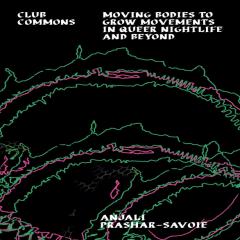
Queer communities have long transformed parties into something powerful: spaces where care flourishes, injustice gets challenged, and new worlds are danced into being. But today, DJs command huge fees while behind-the-scenes workers earn below minimum wage. Corporations profit from our culture while communities that created these spaces are displaced. As venues shut and workers burn out, it’s clear that something has gone deeply wrong.
Club Commons: Moving Bodies to Grow Movements in Queer Nightlife & Beyond by Anjali Prashar-Savoie takes you inside hidden stories of resistance and reinvention. We meet the people reshaping nightlife from below: abolitionist security teams creating safety without police, sober raves doubling as mental health support, radical childcare at parties, venues becoming worker cooperatives, and free party crews reclaiming public space. Through their work, we see how party-throwing skills build movements, how refusing to play changes everything, and why protecting queer nightlife means transforming who owns it.
Quotes
“When Anjali shines her perceptive light on dancefloor culture, everything is better illuminated. I can’t wait to read this book. It’s one we need.” Emma Warren (author of Dance Your Way Home/Up the Youth Club)
“Anjali’s one of the most exciting and insightful voices writing about dance music today, bringing fresh perspectives, intellectual rigour and emotive power to a conversation that’s too often homogenous, superficial or cynically commercial. Club Commons promises to be an essential and overdue book: a chance to reexamine the queer history of club culture, celebrate and critique its present, and map out radical possibilities for its future.” Ed Gillett (author of Party Lines)
“Beautifully written and unique, Anjali Prashar-Savoie’s behind-the-scenes journey through queer nightlife is as thorough as it is fascinating. Documenting a world that commercial interests are rapidly destroying, Club Commons is proof that queer culture holds the key to a better future for the dancefloor and beyond.” Professor Sam Parsley (author of Minor Keys, coach, DJ and founder of In the Key, a directory and platform championing the careers of women, trans and non-binary electronic music producers)
“Club Commons: Moving Bodies to Grow Movements in Queer Nightlife & Beyond is a vital reminder of how important the dance floor is to connect, unfurl and envision new futures. The text highlights the historic and existing care work entangled with the club space, particularly in providing temporary sites of refuge and embodied joy for Black and LGBTQIA+ communities. This is juxtaposed with research on the corporate and carceral commodification of nightlife in recent years, which exposes the false premise that club spaces are always radical. This book affirms my belief that the non-commercial nightlife ecosystem is an essential part of our social change infrastructure, rather than a luxury. Club Commons is a call to action to reclaim this space on our own terms and revive the underground.” Camille Sapara Barton, (author of Tending Grief: An Embodied Guide to Being with Grief Individually and in Community)
- Dragging Dirt
- Shadow
- Echo
- Tiber Creek
- Nothing
- Voice In Headphones
- Context
- God Knows
- Underwater
- Context Ii
Lillian King's debut album In Your Long Shadow is out October 24th. It is about letting the wind in, Lake Michigan in the winter, and the silence of a long summer evening. And really it's about the grief of losing her dad, Neil King Jr. When her dad died in September 2024, grief permeated every facet of Lillian's life. The loss is felt in everything, but especially when doing the things her dad loved the most -- the simple everyday good things that make life worth living: cooking, walking the longer way to work, swimming in cold water. In the throes of grief it feels impossible to find anything that doesn't just make you sadder, but when Lillian did find those things, she grabbed onto them. Soon it was clear that the best coping mechanisms weren't gin and tonics, but talking to her mom and sister as much as possible, and producing an album. The album arrangement came together in a couple of weeks as Lillian brought bandmates and friends Robert Salazar and Nick DePrey new and old songs to build on. Robert played the drums, while Nick played keys (with a smattering of bass and guitar). The process was collaborative and intimate, and only got better when Jack Henry (producer of albums by Friko and Free Range) joined to record and mix it. Some of the songs on this album are years old, including "Underwater", which Lillian wrote one late night in Montreal a decade ago. However, most came together in the months approaching recording."Dragging Dirt" was written just a week before getting into the studio. Despite the bummer material, the recording process was spontaneous and light hearted. The song "Echo" came together unexpectedly during a break between songs. In the midst of recording In Your Long Shadow, Lillian had concerns about making a "grief album." Her sister Frances, as usual, had the right advice: "Every album from now on is going to be a grief album." In Your Long Shadow is about loss as much as it is about living with it. Take it outside on a walk.
- 1: Stay Away
- 2: Call Me
- 3: A New Type Of Grey
- 4: Blood For Blood
- 5: Say That You Hate Me
- 6: Dark Clouds
- 7: Salt Lines
Calling All Captains have built a reputation for turning personal struggle into explosive, emotionally charged punk rock. Blending post-hardcore grit with the melodic urgency of pop-punk and alt-rock, the Edmonton-based band delivers music that’s as volatile as it is vulnerable. Their upcoming EP, The Things That I’ve Lost (out January 9, 2026 via New Damage Records), is their most personal and sonically refined work to date. Recorded at The Audio Department in Edmonton, Alberta with longtime collaborator and producer Quinn Cyrankiewicz, the seven-track release features a standout co-write on “Blood for Blood” with world-acclaimed songwriter Tom Denney (A Day to Remember, Pierce the Veil, Neck Deep, etc.) Mastered by Stuart McKillop at Rain City Recorders, the EP explores burnout, grief, and the quiet collapse of identity; capturing a band reckoning with itself in real time: honest, raw, and entirely unfiltered. “This is the most personal release we’ve ever put out,” says Gauthier. “These songs came from a place of reflecting on everything we’ve been through, personally and as a band. It’s raw, but it’s real. And I think people will feel that.”
- K-Now Intro (Featuring Ali Shaheed Muhammad)
- Time Stopped
- Womack's Lament (Featuring Busta Rhymes)
- Panic Struck
- K-Now Interlude #1 (Featuring Ali Shaheed Muhammad)
- Another Part Of You (Featuring William Hart)
- All You Got Is Your Word
- There Is Only Now (Featuring Snoop Dogg)
- Meeting Of The Minds
- K-Now Interlude #2 (Featuring Ali Shaheed Muhammad)
- Miriam Got A Mickey
- Stone Cold (Featuring Scarub)
- The Synopsis
- Ghetto Superhero
- K-Now Reprise (Featuring Ali Shaheed Muhammad)
- Narrow Escape
- Finally Back
- The Last Act
- K-Now Outro (Featuring Ali Shaheed Muhammad)
The sixth album from legendary hip-hop group Souls of Mischief, There Is Only Now, is a unique cinematic 90s crime tale of love, loss, and revenge. A conceptual collaboration with producer Adrian Younge and the first release on his freshly launched Linear Labs Records label, There Is Only Now gets its inspiration from a near fatal incident involving group members A-Plus, Opio, Tajai, and Phesto early in their careers. Set in 1994, There Is Only Now serves as a bookend to two decades of music since the release of their seminal debut album, `93 Til Infinity. Souls of Mischief and Adrian Younge have created a hip-hop album like no other. The result of a special moment for all involved, There Is Only Now proves that after two decades in the rap game hip-hop's Fab Four remains committed to the expansion of their legacy as hip-hop innovators and pioneers. Enthält unbegrenztes Streaming von There Is Only Now über die kostenlose Bandcamp-App und außerdem den hochwertigen Download als MP3, FLAC und mehr.
- A1: Original
- B1: Instrumental
Large Professor’s classic cut “The Man” arrives on vinyl for the first time as a limited-edition 7-inch. Pulled from his 1st Class era, the track finds the Extra P in peak form—flipping the haunting “Sugar Man” sample into a warm, soulful groove while delivering razor-sharp bars.
This special pressing features custom artwork and is essential for collectors, DJs, and true-school hip-hop fans. A timeless snapshot of Large Professor’s unmatched producer/MC chemistry.
New EP from Polish label Kooky is a challenging and ambitious one. Jay Tripwire, Canada's finest DJ and producer, offers a solid set of 3 minimal (techno) tracks, crafted with a unique passion for detail, raw energy and dark soundscapes. Every track differs in intensity and dynamics, but all of them are a feast for the ears to demanding music lovers. If you are searching for the true beauty of minimal and want to escape from modern dance music that is unfortunately more and more generic these days, this release is just for you.