Search:the pulse projects

Styles
All
Naajet - The Night Starts Now EP

A rising artist of the French electronic scene, Naajet asserts her identity with The Night Starts Now, a four-track EP that celebrates the freedom and intensity of the night. Co-founder of the Bande de Filles collective and known for her explosive universe blending House, Hardgroove and Breaks, as well as for the unique energy inherited from her dance background, Naajet delivers here a sonic manifesto conceived as an ode to club culture and to the present moment.

“I imagined this EP as an anthem to the world of the night. The night offers us unparalleled freedom, an outlet that allows us to be ourselves, to create, to love. The Night Starts Now captures this celebration of the present moment and this declaration of independence.” Naajet Opening the EP, “Ready To Shine” unfolds radiant House nourished by Pop and 90’s sounds. With a clear and ascending rhythm, the track combines euphoria and introspection. “I composed this track as a joyful and introspective journey that prepares us to embrace the night. For me, it is a call to accept our wounds, to transform them into light and strength, so that we may shine brighter when we enter the club,” explains Naajet. Between ethereal vocal lines and shimmering pads, the track acts as a ritual of entering the night, inviting us to turn wounds into strength and to shine on the dancefloor. The second track of the EP, “Sugar”, embodies the effervescence of the club. Carried by a hypnotic voice and an effervescent rhythm, the track celebrates the communion of bodies and the liberating energy of dance. “It is an ode to dance and to bodies coming together. This track speaks of those moments when, on the dancefloor, boundaries fall: we sweat together, we free ourselves together, and energy flows from one body to another,” says Naajet. A true concentrate of intensity, “Sugar” captures the moment when sweat, rhythm and abandon merge into a collective movement towards freedom.

With “I Can Be Anything”, Naajet changes register and flirts with deeper, even techno textures. Built on a throbbing pulse and sharp synths, this track is meant as a manifesto of identity. “I really wanted to propose a track that claims our right to free and plural expression and sexuality. I Can Be Anything is about our multiple identities, our ability to reinvent ourselves and to refuse any form of formatting,” she says. Between club intensity and political resonance, “I Can Be Anything” questions our multiple facets and embodies the assertion of an elusive and free self. Closing the EP on an euphoric note, “May It Never End” stands out with its broken rhythms and powerful synths. The track conveys the transcendent energy of the end of the night, when dawn arrives but we refuse to leave the collective trance. “I wanted to put into music this feeling of infinite energy, when time is suspended and the party seems to never have to stop. It is this euphoric vertigo that connects us all in the same breath, this utopia of a night that would never end,” says Naajet. A true apotheosis, this track embodies the utopia of an eternal night.

DJ, producer and co-founder of the Bande de Filles collective, Naajet has established herself with a singular universe where House, Hardgroove and Breaks blend, nourished by her background as a dancer and an instinctive sense of groove. For the past three years, she has performed on French and European stages – from Berlin to Amsterdam, via Geneva and Oslo – and has made her mark in clubs such as Rex Club, Le Sucre and Badaboum, as well as festivals like Nuits Sonores and Kolorz. On the production side, she has released several acclaimed EPs on renowned labels such as Shall Not Fade and Monki & Friends. In 2025, she takes a new step with the launch of her label SWEAT Records and a residency at Le Sacré in Paris, affirming her role as an ambassador of a free and intense club culture. She also collaborates with the waacking company MADOKI, for which she composes and mixes projects at the crossroads of dance and music. With The Night Starts Now, Naajet confirms her status as an essential artist of the new electronic generation1

In Stock

On Stock and ready to ship

15,92
Scam Dust - Gastric Pulse

Scam Dust

Gastric Pulse

12inchPARAISO018
Paraíso
03.02.2026

Two Lisbon mainstays from contiguous generations join forces as Scam Dust for the new Paraiso record: Tiago, Lux Fragil resident, world-renowned DJ's DJ and all-round music whizz plus Shcuro, Paraiso's co-founder, scene documenter and impeccable selector & producer. Funnily enough they also live in contiguous beach towns in the outskirts of the capital, Parede and Carcavelos. That's where they zig-zagged amid home-studios and, four hands in various machines, concocted this refreshingly to-the-bone record. Like a non-local entanglement between Lisbon, Sheffield, The Hague and somewhere in the American Midwest, 'Gastric Pulse' EP opens with a saturated, modulated acid line over a tight, industrial-tinged techno beat, peppered with sonic dirt of the highest order. It sounds like music projects like Downwards and Mathematics would put out. 'Enzyme Breaks' follows suit with a comparably raw spirit, adding some mysterious atmospheric scintillation and drum variations. A certain recluse techno (is that a thing?) comes to mind (and heart), Unit Moebius style. Toms abound in 'Pepsin Drive' - always a promising sign in our book - and the playfulness continues in the cheeky bassline and the intricate clap work. Soulful stabs give the tune extra magic via the mantra-like structuring power of repetition. The final track in the record comes from Pacific North-West transplant Doc Sleep and her collaborator Elias FS step in for remix responsibilities and flip the B1 into a hypnotic, dubby - and yes, jazzy - piece complete with a dive into glitchy, sonic sculpture territories towards the end of the arrangement. Quite the brilliant take. Music still counts (and always will), after all is said and done - and nothing like two hard-working music-makers to remind us of that.

In Stock

On Stock and ready to ship

13,24
Voices From The Lake - II (LP 2x12")

2026 Repress

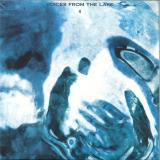
Thirteen years after their landmark debut, Italian duo Voices From The Lake (Donato Dozzy & Neel) return with their much-anticipated second album, 'II' (two) on their own Spazio Disponibile.The record marks a new chapter in one of electronic music's most revered projects. Born from a friendship and a singular musical vision, Voices From The Lake first emerged as a one-off live performance in the Japanese Alps, later distilled into their self-titled 2012 album. That record has since become a touchstone in ambient techno, reshaping the global landscape of hypnotic and atmospheric electronic music. In the years since, the duo have performed worldwide, released a handful of EPs, worked on installations, and founded record labels, all while continuing to refine the project's unique identity. Yet the core of Voices From The Lake has always been its deep, aqueous approach to sound, a sensibility that returns in full force on II. "The project was never meant to become what it did," the duo reflect. "At one point, we even paused it. Only to later embrace it in all its forms. II is both a continuation and a reinvention." True to that spirit, Voices From The Lake have explored extremes in recent years, from high-tempo live sets to seated listening concerts, while remaining anchored in the meditative pulse of ambient techno. II extends this lineage, carrying forward the immersive sound design and boundary-pushing vision that has defined their work from the beginning.

ships from30.05.2026

The item is already on it's way to us and is expected to be shipped from 30.05.2026.

27,44
Richie Weeks - The Love Magician Archives. Boogie & Post Disco. NYC 1980 – 1983 Vol.3 LP 2x12"

A Treasure Trove of NYC Post-Disco Gems from 1980–1983

New York City, early 1980s. Post-Disco and Boogie Funk pulse through the streets, clubs, and studios—and Richie Weeks stands at the heart of it all. A true force in the scene, Richie had just dropped the now-classic “Rock Your World” in 1981. Signed to the iconic Salsoul Records, he was riding high: performing at legendary venues like Paradise Garage, Studio 54, Roseland, and Bond International, touring Europe, and recording tirelessly with top-tier vocalists and musicians in studios across the city.

With his projects The Jammers and Weeks & Co. storming the charts both in the U.S. and abroad, Richie was unstoppable. Fueled by a relentless creative drive, he spent countless hours in the studio—writing, arranging, and producing a massive catalog of dancefloor anthems, many of which never saw release. Until now.

Jerome Derradji and Past Due Records are proud to present Richie Weeks – The Love Magician Archives: Boogie & Post Disco. NYC 1980–1983 Vol. 3, the third installment from Richie’s personal archive. Spanning 1980 to 1983, this collection features eight electrifying, previously unreleased tracks from The Jammers and Weeks & Co., as well as the futuristic grooves of Kaviar and Hot Cargo. Richie shines through the entire record—his writing, production, vocals, and arrangements are absolute killers.

Housed in a deluxe double LP package with an insert featuring the second chapter of Richie’s musical journey—penned by Jerome Derradji—this volume is a vital piece of New York’s post-disco history.

Essential for fans of Salsoul, Prelude, and deep crate-digging dancefloor gold diggers.

In Stock

On Stock and ready to ship

28,15
Edictum - A Cosmic Scale

The album’s title deftly gestures to the sheer vastness of astronomical dimensions, while simultaneously capturing the musical breadth within, where the eight planets are imagined as the eight notes of an octave. The work draws inspiration not only from earlier compositions —most notably Gustav Holst’s The Planets—but also from the rich astronomical and cultural contexts surrounding these celestial bodies. Here, the focus transcends direct citation of melodic motifs, instead embracing an intriguing conceptual approach on a meta level, unfolding in a series of vividly contrasting soundscapes. These contrasts shape a sweeping sonic journey, one that fully embraces the album format with both arms, inviting the listener to venture into realms both strange and wondrous, feeling the immensity of the interstellar space that lies between them. Contrast, after all, is the brushstroke that enriches our world.

Embarking on an auditory voyage, "Astral Guide" establishes the sonic framework that propels us into the boundless expanses of the cosmos. Its ethereal tones evoke the vastness of space, crafting a mood ripe for exploration within the realms of sci-fi. The subsequent tracks unfold like constellations, weaving a rich tapestry of sound that seamlessly marries cinematic soundscapes with pulsating, club-oriented rhythms. This album invites listeners to traverse its immersive landscapes, whether nestled in the comfort of home or dancing under the starlit sky, each note a guide through the transcendent experience of a nocturnal journey.

"Solar Flares" draws its inspiration from the awe-inspiring expanse of solar phenomena, capturing the majestic power of the sun as it reaches into the cosmos. This track resonates with the idea that energy, while vital, can also be a force of destruction when unleashed with overwhelming intensity. The composition beautifully mirrors the sun’s duality, where brilliance and devastation coexist, inviting listeners to reflect on the delicate balance between creation and annihilation. Through its rich textures and dynamic shifts, "Solar Flares" serves as both a homage to the celestial and a poignant reminder of nature's formidable power.

"Mercury – The Winged Messenger" embodies a meticulously crafted soundscape where artistry meets astronomy. The tempo of 173.6 BPM, derived from precise astronomical data, propels the composition into a vibrant realm that resonates with cosmic energy. Synthwave sound design intertwines seamlessly with the fluid rhythms of Drum’n’Bass, imbuing the piece with an uplifting dynamism that evokes the ethereal grace of Mercury itself. In this sonic exploration, listeners are invited to ascend on wings of sound, navigating the celestial tapestry of the universe with each invigorating beat.

"Venus, The Bringer of Peace" strikes a decidedly cozy note, presenting a poignant contrast to the more tempestuous themes often found in cosmic narratives. This composition evokes a nostalgic vision of an optimistic era, one in which humanity transcended borders and embraced the infinite possibilities of space exploration, where no destination felt too distant. The dense, languid atmosphere envelops the listener, creating a tangible sense of serenity that unfolds gradually, allowing for a meditative journey through sound. Each note serves as an invitation to linger in this tranquil embrace, reflecting on the harmonious potential of our collective aspirations and the beauty of connection in a vast universe.

The central theme of „Gaia, The Bringer of Life“ —originally not part of the planetary cycle— is the profound enabler of life on Earth. The arrangement delicately mirrors the slow, tentative unfolding of this potential, marked by an initially sparse orchestration that gradually builds in momentum. This progression crescendos, embodying the explosive dynamism of the Cambrian burst of life, ultimately culminating in a euphoric fanfare—a triumphant, celebratory flourish echoing life’s victorious emergence.

"Blue Moon" unfolds as a contemplative reverie on the tranquil clarity of a night sky, now seldom glimpsed in its natural purity, unclouded by the relentless haze of urban light. The listener is drawn into the vast embrace of the star-strewn firmament, a journey that sways between euphoric awe at nature’s sublime beauty and a profound melancholy for its fragile and imperiled state. Musically, this duality finds expression in the delicate interplay of modal mixtures, while an ever-shifting triplet groove, poised at the intersection of Outrun and melodic house, lends a pulse that is both nostalgic and forward-looking—echoing the beauty and transience of a world on the brink.

Rather than replicating the original composition of „Mars, The Bringer of War“, this interpretation seeks to evoke its profound, foreboding atmosphere. Cyberpunk emerges here as an ideal genre, channeling the dark, relentless march synonymous with Mars, the ancient god of war. The piece reverberates with intensity, as distorted vocalizations rise, embodying the anguish and visceral torment that shadow war’s violent crescendo. This auditory descent into conflict captures the relentless pulse of warfare, where sound itself becomes an embodiment of suffering and fury.

Majestically, "Jupiter, the Bringer of Jollity" emerges on the celestial stage, sweeping away the somber tones with its radiant vigor. Drawing inspiration from the triumphant strains of the original, and borrowing a melodic motif in the refrain, the piece expresses joy and buoyancy through a shift to a major key and the lilting sway of a danceable 12/8 meter. Spirited and exuberant, it leaps boldly from major to minor and back again, playfully shifting time signatures to capture a mood of unbridled festivity and jollity.

Here, a more conciliatory concept is chosen than in the original inspiration. „Saturn“ aligns with the number six, being the sixth planet from the Sun and bearing the iconic hexagonal pattern at its northern pole. What, then, could be more fitting than to render this piece in a 6/8 time signature? The arrangement unfolds with a multifaceted richness, mirroring the countless stones and ice fragments that form the foundations of Saturn’s majestic rings.

„Uranus“ adopts the theme of a light-footed, dancing instrumentation, giving the impression of perpetual motion, never quite settling. This musical choice harmonizes with the planet’s own orbit, as it spins with breathtaking velocity, teetering and swaying, seemingly unable to attain rest or stability.

The chill and vastness of the cosmos find expression in „Neptune, The Mystic“. At its core, an electronic soundscape envelops a classical arrangement, its unreachability intensified by an ethereal, otherworldly choir. Hovering at the outermost boundaries of the solar system, where warmth is but a distant memory, the composition lingers in a slow, contemplative tempo, evoking a realm where space for speculation stretches wide and silence reigns supreme.

Though Pluto may have lost its planetary status, and its companion Charon never achieved one, this shift in classification subtly aligns with the cosmic scale invoked here—one that mirrors the musical tradition of an eight-note sequence. Fittingly, the album closes with „Kuiper Belt“, a composition emblematic of the turbulence and vitality of countless smaller

celestial bodies that, though diminutive, find their rightful place within the vast architecture of the solar system.

They say nature is the greatest composer, shaping the universe with a symphony of chaos and order, beauty and danger. It is this duality that fuels the artistic vision of Edictum—a producer who, armed with a doctorate in chemistry, delves as deeply into the mysteries of molecules as he does into the depths of sound. In the tension between the vastness of the cosmos and the microscopic processes that dictate life’s rhythm, Edictum creates sonic landscapes that dissolve the boundaries between science and art.

His music is a story of contrasts—a sonic tale where the raw forces of nature clash with the intricate structures of human culture. Opposites intertwine to form a harmonious whole: the primal rhythms of the earth meet the celestial melodies of the cosmos, the rigid laws of physics blend with the boundless freedom of art. Edictum explores these polarities with meticulous devotion, each composition an expedition into uncharted soundscapes—a quest to give voice to the unfathomable.

With over 20 years immersed in the realms of electronic music, Edictum has honed a keen sense for rhythm and movement. His driving beats compel both body and mind into a hypnotic flow. Yet beyond the pulse of dance lies a complex framework of conceptual thought. Today, his creative focus revolves around holistic album projects—self-contained worlds with overarching narratives that embrace contrast and complexity. Each track stands alone as a fragment of the whole, but together, they weave a cohesive tapestry, much like the chapters of a novel that guide the listener on an emotional and sonic journey.

Edictum’s distinctive musical signature has earned him international recognition. With over 150 releases, many on prestigious platforms like the iconic *NewRetroWave* label, and collaborations with artists such as Jan Johnston, Azumi Inoue, Powernerd, and Turbo Knight, he has solidified his place in the global electronic music scene. His latest work, *A Cosmic Scale*, marks his seventh vinyl album and is released under his own label, *Echoes of Expanse*. The label’s name is no coincidence—it captures the essence of his art: echoes of infinity, the vibrations of the universe distilled into a singular sonic experience that carries the listener ever further into the boundless expanse of sound and space.

In Stock

On Stock and ready to ship

22,90
MDCIII - DRAWN IN DUSK LP

Mdciii

DRAWN IN DUSK LP

12inchWERF206LP
DE W.E.R.F.
19.05.2023

Since Interstellar Space, John Coltrane's posthumously released duo album with Rashied Ali, the combination of sax and drums has received an aura of sublime spiritual ambition. It is where tireless truth seekers come together to aim for something transcendental. Something too big for words. Of course, a lot has happened in the meantime.

The available options - philosophically, stylistically, temperamentally - are endless. Musicians are aware of those historical turning points, yet they also try to add their own twists and interpretations. Some of them succeed. One of reed player Mattias De Craene's many projects - MDC III - is a project involving drums and saxophone. A striking difference: De Craene invited two drummers (Simon Segers, Lennert Jacobs), that have been active in the worlds of jazz, pop, free improvisation and experimental music. They are the ideal foil for De Craene's vision, which seems to exclude no opposites. While the use of a recorder, electronics and percussion steers the music beyond the classic acoustic limitations, the result becomes strikingly rich with contrasts. What is abstract and introspective the first moment can switch - gradually or abruptly - to moments of fierce ecstasy the next.

The music feels free (free from limitations, free to choose its own logic), but also invites. Shifting moods and textures are combined with intricate rhythmical patterns, as the drummers lock together in dense, complex and/or ritualistic grooves. A minimal pulse, accompanied by murmuring hisses of brushes and a serenading sax is contrasted with moments of exuberance. The result is many things at once, but despite these wildly varying colors, sounds, textures, rhythms and moods, they are all linked, part of a generous, iridescent whole.

The trance-inducing trio MDCIII is back. And that equals yet another delicious load of modular drums, wildly processed saxophone sounds, improvisation & pulsating grooves.

After their first EP, MDCIII ft. Sylvie Kreusch, and their subsequent first (internationally) acclaimed album 'Dreamhatcher', the 'double drums' saxophone trio with Mattias De Craene, Simon Segers & Lennert Jacobs is all set to show what angle rock 'n roll can really come from. On their new album 'Drawn In Dusk' (release: end of September via W.E.R.F records) the trio delivers a whole new palette of sounds that are just as mystical, energetic and wild as 'Dreamhatcher'.

In Stock

On Stock and ready to ship

17,27
Slipknot - Vol. 3: The Subliminal Verses LP 2x12"

After their monumental rise from mask-sporting weirdos to forefathers of a new generation of mainstream metal, many wondered how or if Slipknot would manage to top their blistering self-titled debut, and its malevolent follow-up, 'Iowa.'

Hindsight paints doubts in curious colours, as 'Vol 3: The Subliminal Verses' is now regarded as one of the nine's most expansive, dynamic, and universally acclaimed works.

From the caustic anthem, 'Duality' to the surprisingly accessible 'Before I Forget', the collective managed the impressive feat of honing their craft to appeal to a wider audience while sacrificing little of the unbridled angst of their earlier projects.

Hearing frontman Corey Taylor let his guard down for gentle and hypnotic cuts like 'Circle' and 'Vermillion, Pt. 2', offered entirely new insights into a group known for their brutal intensity and little else. There's still plenty of that on display, with the venomous ode to their fanbase, 'Pulse Of The Maggots', ringing true with its abrasive composition.

Finally reissued alongside its predecessors, there's never been a more ideal time to finally lock down this seminal trilogy that would introduce, shock and cement Slipknot as legends of their own kind for decades to come.

In Stock

On Stock and ready to ship

41,98
KIK - Nightshift

KIK

Nightshift

12inchHV005
Horror Vector
13.02.2026

KIK is the new project of two core strategists of sonic enigma HHY & The Macumbas: Jonathan Uliel Saldanha & João Pais Filipe. Ditching acoustic instruments in favour of drum synthetics & tightly controlled sound design, the duo's debut album NIGHTSHIFT focuses on off-kilter club tracks that thwart 4-on-the-floor flavours whilst maintaining trance-inducing extended cycles. If the devil is in the details, this is all about the spectromophology of the details.
Beginning with moving morse code blips in an odd time signature We Can't Dance announces the characteristic unlife of the album's pulse. Once the kick enters, syncopations progressively accumulate into a weave of interacting rhythmic lines. Smoke Machine's groove is reminiscent of the riddims Saldanha explores in his HHY & The Kampala Unit, adding scintillating pads and snippets of blitzed out laughter.

The album's third track, Proff, hearkens back to the initial pulse, displaced and pitched down in register. Here's a more meditative temperament on display, where the regular geometries of the club have been moved into higher-order structures. Segments rise & fall into earshot. Deepening the meditative mood, Back Room explores a short melodic leitmotif anchoring the track's wander- lust.

The rhythmic assault continues in Tactical Gear, bringing further experiments into polyrhythmic contours exacerbated by preci- sion movements of echo & delay. Limping can be heard as a what-if sonic fiction taking Autechre-inspired abstractions through Durbanoid Gqom terrains. The album closes with its longest track, Night Shift, that segments into shifting sound worlds.

Drawing from industrial grit, cybernetic percussion and the eerie fluorescence of after-hours energy, NIGHTSHIFT exists in the liminal space between body music and abstraction——a soundtrack for phantom warehouses and malfunctioning machines. This isn’t just music; it’s an immersive sonic environment, a journey into the heart of deconstructed dancefloors.
For fans of Rian Treanor, Proc Fiskal, Jlin and Lorenzo Senni.

Most recently, HHY has been collaborating with Nyege Nyege through projects such as Kampala Unit and Arsenal Mikebe, performing live with the ensemble alongside Valentina Magaletti, and producing records for artists like Fulu Miziki, as well as collaborations with Phelimucasi, Rey Sapiens, Kingdom Choir and others. He also released Camouflage Vector: Edits From Live Actions 2017–2019 on the label, a live album featuring two tracks with Adrian Sherwood.

Previous collaborations include Tunnel Vision with Badawi (released on Tzadik), the HHY & The Macumbas album Beheaded Totem on House of Mythology, and Fujako (Wordsound, with MC Sensational), along with double-bill shows with acts such as Clipping and Death Grips.

pre-order now13.02.2026

expected to be published on 13.02.2026

19,12

Last In: 2026 years ago
Afternoon Bike Ride - Running With Scissors LP
  • 1: 20 Season
  • 2: Otherworld
  • 3: See Me Old
  • 4: Beautiful & Treacherous
  • 5: Reincarnated
  • 6: Abigail
  • 7: Couch Interlude
  • 8: Oh No!
  • 9: New Bliss
  • 10: Miss Universe
  • 11: Feel Through
  • 12: Aurora
  • 13: Running With Scissors

Running with Scissors is a cathartic heart ache and, ultimately, a therapeutic exploration of what it means to be alive—to love, to grieve, to regret, and to grow. It pulses with rawness and authenticity, sincerity and honesty, offering both solace and strength to anyone navigating their own emotional journey.

Running with Scissors is the third full-length album from Canadian trio Afternoon Bike Ride. Residing in Montreal, the group is made up of Lia (vocals, guitar, programming), David (vocals, guitar, drums, programming), and Éloi (vocals, keys, drums, programming). Since their formation in 2019, the band has released numerous projects where indie rock blends with acoustic pop, ambient field recordings, and lofi folk.

With each track on the new album, the three artists explore the rollercoaster ride of life’s most profound lessons—falling in and out of love, embracing grief, and navigating the complex spectrum of human emotion. The album feels like a series of journal entries, capturing moments of vulnerability, self-discovery, and personal growth. A lot has changed since their formation in 2019 but their hearts are still in the right place. Lead singer and songwriter Lia reflects on the bittersweet realization that life is an ongoing journey and we’ll never have all the answers, but we can still find meaning through love, meaningful connection, and the lessons that shape us. If life is one big lesson, then according to Lia, "I guess these songs are some classes I've taken."

The twelve song soundscape blends raw, emotional acoustic elements with subtle electronic layers and indie rock grunge, creating a textured blend that feels as vast and intimate as the album’s themes. It’s an immersive record that shifts perspectives, from the micro to the macro, zooming out to explore the universe and zooming in on the personal experiences that define our lives. Throughout the album, ABR explores the beauty of feeling deeply while embracing both the intensity of emotion and the struggles of finding purpose. "I'm finding my way through this world now," says Lia, "with the comfort of knowing I'll never know it all.”

pre-order now19.09.2025

expected to be published on 19.09.2025

23,32

Last In: 2026 years ago
Daniel O’Sullivan - Eros (LP)

WOW. Daniel O'Sullivan's transcendent new album, Eros, is one of the greatest things we've ever heard. A simply stunning song cycle of hypnotic, experimental contemporary chamber music composed for a 14-piece ensemble. Combining minimalism, complex syncopation, detailed acoustic textures, weird intervals and samurai precision, this record will elegantly blow your mind. When Daniel first sent us this, he pitched it as “Liquid Swords meets Michael Nyman”. Trust us, he wasn't wrong. A "unique hybrid orchestral music", it presents a confluence of Daniel's longstanding fixations; indeed, there's elements of Nyman, Antonio Carlos Jobim, Magma, Aaron Copland and RZA. But this is wholly O'Sullivan's. Originally commissioned for the Sonoton Music Library in Munich, Eros now receives a deluxe vinyl release courtesy of Be With Records, bringing this meticulously crafted work to a wider audience. Limited to just 500 copies for the world, these are gonna fly.

An English composer and multi-instrumentalist, Daniel O'Sullivan’s career has been marked by versatility and innovation. In addition to his work with Sonoton, he has composed extensively for the legendary KPM music library, contributing to its storied legacy of production music. As a deep virtuoso and collaborator, O'Sullivan has also played in a number of influential projects, including Ulver, Sunn O))), This Is Not This Heat, Grumbling Fur and Miracle (with Steve Moore), leaving an indelible mark on the contemporary experimental music landscape.

O’Sullivan’s first foray into classically informed chamber music, Eros is a culmination of his long-standing fixations and expansive musical influences. The album features arrangements that are as detailed as they are emotionally resonant, showcasing his unparalleled ear for intervals and mastery of counterpoint. The music brims with complex rhythmic syncopation and a sensitivity to texture and space, resulting in a soundscape that is both intoxicating and dauntingly precise.

Recorded June 2023 and February 2024, in Brussels, London and Carmarthenshire, Wales, Eros features members of Echo Collective (Neil Leiter and Margaret Hermant), Thighpaulsandra (from seminal post-industrial band Coil), and jazz pioneer Oren Marshall. Daniel's sonic weapons of choice, in his own inimitable words, were "Big Bad Drum, Pee Anne Oh, Low End Brass, Willowy Winds & Samurai Strings." You get the picture. As a cyclical suite, this is a record that really needs to be heard in its entitreity, from start to finish, to truly appreciate the genius at work here.

A jaw-dropping statement of intent, the minimalist "Golden Verses" sets the tone with its complex cue which has your neck snapping right when it feels like it needs to. Listen and you'll understand. A syncopated tangle of sharp strings, crunchy bass, drums percussion and bright piano and mallets vie for position with French horn and woodwind melody in the most compelling and unexpected ways. Quite simply, it's one of the finest album openers I've ever heard. It's followed by the atmospheric rippling minimalism of "Lyre Lyre", a gorgeous gem with shimmering chimes, bright melody, human percussion and syncopated pizzicato strings. It kinda comes on like a less-abstract Boards Of Canada, bursting with typical wonderment. The piano and string-drenched "Dolorous Stroke" effortlessly builds its warm, pastoral orchestration with flowing piano arpeggio, steadfast drums, expressive string quartet, rich low brass, woodwind and lyrical flute. Just sublime.

The insistent frenetic propulsion of "Plain Paper" is utterly beguiling, featuring a determined string motif, urgent drums and percussion, driving low brass and breathless, energetic flute. The haunting, interweaving string arpeggios that propel "Grapes Draped" presents a claustrophobic minimalism for chaos and darkness, with growling low woodwind and brass, spiky harpsichord, skittering flutes and tight drums. Up next, "Xanix Annum" is a stately minimalist waltz with expressive lyrical string quartet and delicate woodwind, anchored by drums and percussion. "Painting Rose" is a bouncy stop-start track with angular syncopated strings and a piano pulse underneath bright harpsichord and flutes. "Rotunda Garden" presents ethereal textural minimalism for landscapes and reflection with flowing string arpeggios, warm, low woodwind drones, floating choir and cymbal swells. Closing out this extraordinary side of music, the glowing, flowing minimalism of "Flowry Orb" features urgent organ, piano and woodwind arpeggios, half-time drums with shimmering cymbals, a soaring, beautiful violin solo and hypnotic vocal chant.

Side 2 opens with "Theia Mania" a determinedly off-kilter, angular track featuring low wind, brass and drum stomp in dialogue with lively string trio, woodwind and solo horn. The light, airy minimalism of "Painting Percy" is built around an interplay of rhythmic motifs for piano, low brass, bassoon, fluttering flutes, urgent strings, drums and percussion whilst "For Archetypes" is a delicate, gently syncopated chamber cue for nostalgia, nature, reflection and moments of calm, with steady piano motif, intimate woodwind and French horn, and warm, graceful strings. The urgent Ars Memoriae is a propulsive march for progress, processes and industry, underpinned by driving tuba, with determined strings, resolute drums, and vivid, expressive flute, clarinet and French horn.

The syncopated energetic minimalism of "Mirrored Seven" presents layers of melodic and cyclical piano, drums, low brass, harp, flute and strings. "Pure Ornament" follows, a slowly evolving chamber cue with flowing clarinet, string and harp arpeggio, plodding tuba and percussion, fluttering flute and graceful, lyrical solos. Stunning! Up next, "Brave Boy" moves from its tender, warm, lullaby-like intro with lyrical flute, clarinet and strings before opening into a playful backend driven by a bouncy tuba riff and syncopated piano, woodwind, string trio, and drums and percussion. Rounding out this astonishing piece, "Waxen Waned" is a warm, pastoral chamber cue with light lyrical woodwind, tender French horn and subtly pulsing string trio.

The album's title is a reference to Plato’s conception of Eros, which is more than romantic or physical desire. It is a dynamic and creative force that drives individuals to seek perfection whether in art, relationships, philosophy or the pursuit of truth. Wholly appropriate, here, we think. When asked what his influences were in making this astounding record, he answered thusly: "Non-musical: Householding, Pythagoras, Goethe, Grail romances, Hermeticism, Doctrine of Signatures (Parcelsus, Bohme, Pliny), Eric Rohmer, John Stezaker, Yasujiro Ozu. Musical: Duke Ellington (late suites), Smile-era Brian, early RZA, Wagner (Parsifal Overture), Magma, Mancini, Axelrod, YMO, Hildegard, Nyman, Penguin Cafe Orchestra, Jobim (Stone Flower), Alessandro Alessandroni, Tavener, Moondog, Orthodox Music, Secular Music." That's some pretty deep shit. Makes you want to dive in, no?

Mastering for this vinyl edition was overseen by Be With regular Simon Francis, and it was cut by the esteemed Cicely Balston at Abbey Road Studios to be pressed in the Netherlands by Record Industry. Truly, Eros is a work of extraordinary depth and sophistication. It invites listeners to immerse themselves in its intricate layers, to lose themselves in its hypnotic rhythms, and to marvel at the precision of its execution. With this release, O’Sullivan reaffirms his position as one of the most inventive and uncompromising voices in contemporary music. Do. Not. Sleep.

pre-order now23.05.2025

expected to be published on 23.05.2025

26,85

Last In: 2026 years ago
Blue Lake - Weft (LP)

Blue Lake

Weft (LP)

12inchTU011LP-2025RP
Tonal Union
17.01.2025

- 2025 Repress
- Black Bio vinyl
- Cut at 45RPM for optimum sound
- Printed on heavyweight board outer sleeve
- Vinyl comes in black poly-lined protective bag
- Housed in a heavyweight PVC protective outer sleeve
- Hype front sticker

Blue Lake's new offering 'Weft' sees its creator Jason Dungan unearth new musical terrain
with a mini-album which presents the projects evolution. Finding inspiration in the craft of weaving and embracing a collective spirit as a band leader, all while readying a new studio album expected later in 2025.

It follows the lauded album 'Sun Arcs' (2023) with Pitchfork naming it (Best New Music, 8.3), amongst numerous other accolades. Blue Lake is the ongoing musical project of American born, Copenhagen based musician Jason Dungan which serves as his artistic platform as composer and collaborator. Developed over the period of 2024 and witnessed at live performances across a swath of European cosmopolitan cities and festivals, the project stands at a new creative juncture. The earthy title track 'Weft' emerges with a sense of ease and familiarity as looping guitar riffs in open tunings bed in around a warm cello pulse that provides the essential heartbeat. These interlinking parts align to create his most explicit version yet of an American writing country music in Scandinavia. Dungan named the release 'Weft' as a reference to the weaving practice of his partner, Danish visual artist Maria Zahle, whose work "Torso" is featured on the album's cover. With her works providing a constant source of inspiration to his music and practice as an instrument-builder, Dungan found a symbiotic connection between their mediums, which is reflected in the music on 'Weft'.

'Weft' is a collection of new works that casts a net into new sound territories with distinctive timbres yet always channelled through the refined lens of Dungan's prism. Infused with an ongoing connection to nature, it furthermore expands his unique meld of off-kilter folk, jazz, country and left-field experimental ambience. 'Weft' then is an accomplishment of growth, of bolder objectives and of collaboration with like minds. The Blue Lake project takes a dynamic step forward venturing into new creative spaces while leaving some clues along the way.

pre-order now17.01.2025

expected to be published on 17.01.2025

22,27

Last In: 2026 years ago
Tarwater - Nuts of Ay

Tarwater

Nuts of Ay

12inchMORR204-LP
Morr Music
22.11.2024

»Nuts of Ay«, the thirteenth album by the Berlin-based electronic pop duo Tarwater (Ronald Lippok and Bernd Jestram), is their first in a decade, since 2014’s »Adrift«. Beautifully poised and smartly dressed, it's an album that draws Tarwater’s various pasts into a high-definition present, while bringing the duo, yet again, into productive dialogue with all kinds of fellow travellers.

Tarwater’s music has always been marked by a hypnotic pop-ness, but that’s particularly evident on »Nuts of Ay«, where a song like »Hideous Kiss« weaves together jangling guitar, pastoral flute, and flittering electronics into a gem-like construction. While the lyrics of »Hideous Kiss« are written by the duo, »Nuts of Ay« also continues a longstanding Tarwater tradition of recasting the words of others in their own mould. This time, their remit is broad: poetry from Derek Jarman (»All Nuns«) and Millner Place (»Trapdoor Spider«); lyrics from Jean Kenbrovin (»I’m Forever Blowing Bubbles«), the late Shane MacGowan (»USA«) and, again, John Lennon (»Everybody Had a Hard Year«).

This cast of found and borrowed lyricists also finds collaborative echo in the guest musicians dotted throughout »Nuts of Ay«. Schneider TM turns up on the lovely, Felt-like »Spirit of Flux«, where guitars channel the tangled reveries of Vini Reilly and Maurice Deebank into lush pop. Carsten Nicolai joins, as Alva Noto, dappling »On Waves and Years« with intimate glitching textures; he also provides the album cover art. Elsewhere, Masha Qrella appears on »Down Comes the Goose«, and actor Lars Rudolph pitches in for »USA«.

It may have been ten years since the album's predecessor, but Lippok and Jestram have kept active with other projects. They’ve collaborated with Masha Qrella, Immersion, and Iggy Pop; worked on radio plays with Kai Grehn, some based on the writing of Nick Cave (»The Sick Bag Song«, featuring Tilda Swinton, Paula Beer and Alexander Fehling) and William S. Burroughs (»The Cat Inside«); and made music for several radio-tatorts (radio plays based on »Tatort«, a long-running German police TV series) by playwright Tom Peuckert.

Both voracious and committed in their creative energies, Jestram and Lippok report back from these experiments with »Nuts of Ay«, one of their most compelling, deeply lustrous, dreamlike albums yet. They say there was no concept for the album, which is surprising, perhaps, given its holistic mood, explaining it »grew together like a coral reef in the studio over a period of several years«. There’s something to be said for letting an album gather and mutate naturally, without an overarching framework in place, and »Nuts of Ay« certainly feels like an unforced collection of material that nonetheless inhabits a similar space, one where guitars twist like driftwood next to amorphous, aqueous electronics, Lippok’s droll yet completely convincing vocal delivery riding songs that pulse and plume with curious, unpredictable rhythms.

But you can also hear elements – submerged but still present – of other music that’s inspired the duo: they’ve drawn some connections for us with psychedelic folk, Bowie in Berlin, Burial, and the film music of Popol Vuh and Krzysztof Komeda. This music shares a strong sense of place – whether in the world, or the mind – and the twelve songs on »Nuts of Ay« have such similar presence; a shared mood, a shared world, a shared sense of the possibilities of what electronic pop music could, and should, be. A bold and brave pop experiment.

Artwork by Carsten Nicolai
Mastering by Bo Kondren, Calyx Berlin

»Trapdoor Spider«, »On Waves and Years« & »Breaking Day«: lyrics by Milner Place
»All Nuns«: lyrics by Derek Jarman
»USA«: lyrics by Shane MacGowan
»Down Comes the Goose«: lyrics from a traditional song
»Forever Blowing Bubbles«: lyrics by Jaan Kenbrovin
»Everybody Had a Hard Year«: lyrics by John Lennon

out of Stock

Order now and we will order the item for you at our supplier.

27,94

Last In: 17 months ago
Robert Stillman - Something About Living

Something About Livingis an album of live recordings by experimental jazz composer/multi-instrumentalist Robert Stillman. The music was captured over the course of Stillman's time as the solo support act for The Smile (Thom Yorke, Jonny Greenwood, Tom Skinner). The album weaves excerpts from various theater and arena shows along the tour's North American routing into a seamless whole, creating a 40-minute program that represents an expanded version of Stillman's ever-transforming live set.

Something About Livingis the product of a steady, on-stage evolution that happened over the course of the nearly 60 shows opening for the Smile across the EU, UK, US, Canada and Mexico. However, the creative origins of the set began in relative isolation during the pandemic, through Stillman's work on projects like his multi-media installationUnseen Forcesand his monthly broadcast for Margate Radio, both of which drew upon solo improvisation using saxophone, cassettes, Yamaha DX7 synthesizer, and effects.

"At the time The Smile asked whether I'd like to open for them on their first tour, I felt like I'd already been preparing without really knowing it," says Stillman. "I'd been doing this music constantly, but always for a hypothetical audience" During the pandemic, Stillman's solo set-up served as the research lab where he worked on all the concepts he was interested in: solo improvisation, creating and manipulating cassettes, FM synthesis, analogue delays chains, no-input mixing, and non-metric rhythmic pulses. So when he was offered the first Smile tour, the idea was to bring "the lab" onto the stage.

What Stillman could not have prepared for was the experience of playing in venues with capacities of up to ten thousand listeners. "The first tour was in summer 2022, so not that long after the worst of the pandemic, when I had pretty much made peace with the idea that I might never be able to perform for an audience again. Then all of a sudden I found myself in front of huge numbers of people, and felt the massive responsibility of being with an audience, of this thing I'd done alone for so longactually being witnessed, and it was completely overwhelming!" On the flip-side, Stillman also recalls, was a new appreciation of how powerful the live performance was as a social phenomenon. "It's a cliche, but also true: the moment of making and hearing music in a shared time and space has a very specific meaning and power; there was a sense that everyone in the venue was necessary to make it real, regardless of what they were doing, or how they felt about it. There was an inevitability about it that I'd never fully appreciated."

Over the course of the tours that followed, Stillman transformed this appreciation of the shared moment into an ethic of spontaneity that guided the development of his live set. "An important reference for this set has always been an Animal Collective show I saw when I first moved to New York, probably in 2001 or so, that has always set the high-water mark for what I wanted to do live- they were improvising a lot, and out of what would seem to be absolute chaos they'd find their way to something structured, and then back out again into the unknown. It was so thrilling to witness".

ThoughSomething About Livingcompiles recordings from different dates along the tour, Stillman has edited and mixed them into a work that seeks to reflect the ebb and flow between 'chaos and control' that characterizes his live set. Among the compositions featured are some from previous album releases ("Time of Waves", "What I Owe", "What Does it Mean to Be American") as well as some new compositions ("The Dream of Waking", "Renaissance 2.0," and the title track, "Something About Living").

The album/track title "Something About Living" is a reference to a line from Stillman's favorite film,My Dinner With André: "André Gregory is explaining the value of life experiences that, as he says, are'to do with living'.That really struck me, the way he articulated it. I strongly believe live music situations can ask these kinds of questions, for performers and audiences. I hope that's reflected in this music."

[a] 01: Time of Waves (Live in Miami FL) [Live]
[b] 02: What Does It Mean to Be American (Live in Forest Hills NY) [Live]
[c] 03: The Dream of Waking (Live in St Augustine FL) [Live]
[d] 04: Something About Living (Live in Richmond VA) [Live]
[e] 05: What I Owe (Live in Chesterfield MO) [Live]
[f] 06: Renaissance 2.0 (Live in Chesterfield MO) [Live]

pre-order now25.10.2024

expected to be published on 25.10.2024

21,81

Last In: 2026 years ago
Haunted Plasma - I LP

Haunted Plasma

I LP

12inchSVART481LP
Svart Records
31.05.2024

The phenomenal three-piece band includes members of Oranssi Pazuzu, K-X-P, Grave Pleasures and Aavikko


Svart Records is proud to release the debut album, I, from Haunted Plasma, a powerhouse of futuristic synth in symbiosis with the super violent atmospherics of kosmische Black Metal. Haunted Plasma is “man meets machine” in a cybernetic wasteland, set to a conceptual backdrop of William Gibson and Phillip K. Dick style mind-melt. The highly evolved creatives at the heart of Haunted Plasma’s sound, cite Terry Riley, Massive Attack, a contemporary take on Krautrock hypnosis, psychedelic Black Metal and 90s Techno, resulting in an orgy of mutant sound.


The phantoms at the beating nucleus of this unearthly machine are Juho Vanhanen (Oranssi Pazuzu, Grave Pleasures), Timo Kaukolampi (K-X-P, Op:l Bastards) and Tomi Leppänen (Circle, Aavikko, K-X-P), transmitting a music form evolved from a life of redefining sonic boundaries in their respective projects. Also featuring guest vocals from Mat McNerney (Hexvessel, Carpenter Brut, Grave Pleasures/Beastmilk), Pauliina Lindell (Vuono, Dust Mountain) and Ringa Manner (Ruusut, The Hearing). Haunted Plasma promises an extraterrestrial experience from some of the foremost contemporary musicians at the heart of the Finnish heavy and avant-garde musical underworld.


Haunted Plasma reveals:

“We are liberated futurists, embracing free-form and natural composition, mirroring the merciless forces of cosmic creation. We have a motto to stay true to our feelings, to spawn a sound that’s never been heard before. Servants of music. Energizing, radical and pure”


The first single from Haunted Plasma’s cascading debut, Reverse Engineer, is a creepy, slowly erupting, synthetic nightmare, of a downloaded being waking up in the wrong future. Ghostly vocals demand the listener to “give us what we want” in an Orwellian glimpse into the current dystopia we live in, where information is controlled, and thoughts are bought and sold. As McNerney intones the words “technology of power” he describes the threat of a malevolent and omnipresent artificial intelligence, as much as describing the oppressive and electromagnetic sonar pulse of Haunted Plasma’s sound itself. Psychedelic guitar hypnosis from Vanhanen snakes around Kaukolampi’s molten and morphing synths, while Leppänen’s uncanny man/machine rhythms pull our strings and animate their other-worldly mechanisms. Have a look at the official visualiser of "Reverse Engineer" on the Svart YouTube channel here


Culminating in the full-blown fast Krautrock of the final self-titled track, oozing with blistering noise elements and enigmatic vocals from Ringa Manner, the album's journey reaches its zenith, taking you to unknown territories on a Kubrikian space trip. I is a rare record of talented musicians coming together to create a completely new sound, which is entirely their own, boldly glowing, where no light has shone before. From the dreamy psychedelia of Echoes to the discombobulated Spectral Embrace, Haunted Plasma is a willful force of deliberate sound contortion.


Whether you want to give in to Haunted Plasma’s sound or not, you are being watched, you are being recorded and your every move is monitored. Haunted Plasma will enter your system on the 31st of May 2024. Turn on your phantom circuits and be prepared for an interdimensional excursion into Haunted Plasma’s alien dreams.

The debut album from Haunted Plasma will be packaged in a beautiful tip-on sleeve, swirling fog artwork, complete with 12” booklet and pressed on 3 exclusive vinyl colours: 300 copies on Standard Black Wax, 500 copies in Amber + Black Smoke and 200 copies of Svart exclusive Turquoise/Black Marble. The album will also be available on CD and digital platforms.

pre-order now31.05.2024

expected to be published on 31.05.2024

25,17

Last In: 2026 years ago
NEHAN - AN EVENING WITH NEHAN LP

nehan is a Japanese free improvisation & avant-garde rock quintet formed in August 2022. Their performances are initiated by a 9hz brain wave emitted from a testee who has been brought into a deep meditative state via either hypnosis or acupuncture - a very relaxed but very alert state. nehan doesn"t begin until the testee has gotten into the state of "nothingness." It is only then that the improvisation can begin. The role of improvisation has been key to all the musical projects of Masaki Batoh. In 2010, as Batoh was winding down the activity of his long-standing "heavy chamber folk" group, Ghost, he became involved in the design of a machine to generate sonic data based on brain waves. An acupuncturist as well as a musician by trade, his interest was spurred by the rhythms of the body and the brain, and a desire to access the "pulses" of brain waves to initiate improvisations. Following the release of Brain Pulse Music, Batoh toured Japan, the US and Europe, making demonstrations of his process using a local volunteer and guest performers, when available. Today, nehan arrive at their performance space prepared with a Brain Pulse testee, bringing a wide array of instruments including gongs, timpani, tabla and other drums and percussion, Crumhorn, bagpipes, mellotron, oscillators and additional sound effects. Their performance is a transformative electro-acoustic display that passes through the prism of music styles, from east to west, from traditional folk and classical to rock, jazz, and avant electronic. While nehan"s performance presentation invokes a sense of ritual, they understand their process as being far removed from any type of spiritual endeavor - it has nothing to do with eastern thinking or any kind of religious ceremony - this is an action of improvisation, occurring in reality between the five musicians on stage, in response to the brain waves of an individual. For the personnel of nehan, Masaki Batoh asked players with whom he had good previous experiences in improvisation: Futoshi Okano (Ghost, Acid Mothers Temple, The Silence), Haruo Kondo (Espvall & Batoh) and Junzo Tateiwa (Ghost), along with female Brain Pulse testee Gozen on oscillators. The performance here, recorded live in August of 2022 at GOK SOUND in Tokyo, demonstrates their communal dedication to the improvisation. The players act as listeners and musicians simultaneously, inspired to make extended pieces of music out of the "nothingness" of brain waves. The possibilities of nehans"s chosen approach are almost infinite; an evening with nehan is only the beginning of their journey.

pre-order now26.01.2024

expected to be published on 26.01.2024

33,82

Last In: 2026 years ago
Brontez Purnell - Confirmed Bachelor

Brontez Purnell has been making music since the ‘90s. The Southern-raised, Oakland-based American musician and writer has centered his queerness and Blackness in projects Gravy Train!!! and Younger Lovers as well as in his award-winning books ‘100 Boyfriends’ and ‘Since I Laid My Burden Down’. He is also a dancer, film maker and choreographer.
CRYSTAL CLEAR VINYL.
Hot on the heels of recent 7” singles for Sub Pop, PPM and his first solo electronic record ‘No Jack Swing’ (Dark Entries / Papi Juice), Brontez returns in DIY-punk band formation for a new album entitled ‘Confirmed Bachelor’, out Sept 15th on Upset The Rhythm. These twelve songs presented are of the no-time-wasted variety. Fuzzed-out pop songs, hotly delivered from the heart, often sassy, sometimes sappy, always snappy! Brontez’s band includes the multifaceted talents of Vice Cooler (who also produced and mixed the album), Sean Teves (of Younger Lovers) on drums, Kevin Preston (Prima Donna, Green Day) on guitar, Aaron Minton (Prima Donna) on piano and saxophone, and Laena Myers-Ionita on violin. The album was recorded in Los Angeles at The VCR earlier this year.
‘Bachelors Theme’ opens ‘Confirmed Bachelor’ and sets the scene perfectly with the heady, rush along swoon “That's when I heard the doctor singing to me, "Son; you got all those boys in love, I wish I knew what you were saying to them. Their storming castles are coming for you!” It’s a tour de force of bop and bravado. This is what the album does so well, it sweeps you off your feet first, making its lyrical disclosures all the more affecting.
‘Rude Life’ begins in lilting, measured contemplation. “You're the rudest boy I know, and I've a real rude life” confesses Brontez as the violin laces through his vocal. This is all shook up at the halfway mark though when the adrenaline kicks in and the drums pummel. ‘Sky Opens Up’ similarly dials up the tumbling, careening clamour and energy buzz. ‘Hellish Banger’ is more of slow dance meets grunge reverie. The album also boasts an amazing spiraling auto-tuned cover of The Amps ‘Bragging Party’. ‘No Cigarettes / Stay Monkey’ is pulse-grabbing rally of unadorned declarations split into two fleeting sketches.
‘Hey Boy’ and ‘Boy With Butterfly Wings’ are more reflective in intent, both yearning and unapologetically poetic. In fact the little details observed in the lyrics across the whole album are quietly elegiac; winter nights, electric bills, ticking clocks and many allusions to hauntings only lending pathos to the love-drunk / lovelorn axis of the record. ‘Confirmed Bachelor’ is a hot wonder, upbeat, witty and ever-lively only with a forlorn core, a resolute focus and defiant honesty. It’s a rare triumph, a record you can dance your Friday night away to, whilst the songs’ subtly work on your emotions from the inside out.
of it all. Jagged riffs, bubblegum bounce and Brontez’s vocal effortlessly racing to dizzying effect.

pre-order now10.11.2023

expected to be published on 10.11.2023

14,24

Last In: 2026 years ago
The Album Leaf - Future Falling 2x12"

Jimmy LaValle’s The Album Leaf has spun from solo outlet to full band and back in its nearly 25 years. His acclaimed catalog spans releases for labels such as Sub Pop, City Slang, Relapse, and others. He also composes music for film and television, scoring over 20 projects (narrative features, documentaries, and TV series) since 2009. The cinematic sensibilities of The Album Leaf were present from the beginning. His 1999 debut introduced the start of a signature sound: melodic and meditative electro-organic soundscapes constructed with guitar, percussion, Rhodes, and field recordings.

His seventh full-length LP, and first since 2016, arrives in 2023 via Vancouver’s Nettwerk Records. FUTURE FALLING finds LaValle working with an array of musicians, shaping slightly darker, more spacious, and synth-driven songs with contributions from Bat For Lashes, Kimbra, and many others.
The music registers a shade darker and more synth-driven than most moments in his acclaimed catalog, a bridge between shadowy, cerebral terrain and dreamy precision pop, where softly percussive frameworks meet shimmering sound design and emotive instrumentation.
LaValle sees the construction of FUTURE FALLING as less conventional than past work. Contributions were done remotely with a “throw everything at it” mindset, making LaValle the arranger of layers from all over: drums, synths, horns, violins, voice, and more. LaValle created a pastiche of these layers and elements; in some cases even moving vocal takes to new tracks entirely. Without the in-the-room dynamics, he had more time to experiment, adding and subtracting ad infinitum.
The album opens on “PROLOGUE,” an evocative, slow-building instrumental that rides a pattern into a symphonic sea of static. Keys and horns glide atop the rhythmic pulse of “DUST COLLECTS,” setting the contemplative scene for “AFTERGLOW,” the record’s most pop-minded performance. Here Kimbra, the Grammy-winning New Zealand singer-songwriter, renders a striking recollection of past love as percussive elements shimmer and swirl.
A plaintive piano line moves throughout “Cycles 19.9” encircled by light ambient washes, both a valley between two peaks and a powerful composition in its own right. “Future Falling” follows; with origins tracing back to 2015, the track embodies the full sonic journey LaValle has taken. All the hallmarks of The Album Leaf — melodic builds, vivid sprawl, tonal shape-shifting — assemble to a blissful finish.

For the next stretch, “Cycles” begins with a uneasy Rhodes loop that builds and erupts into a wall of texture paving its way into “Give In,” where LaValle models a movement that begins subtle and measured before curving up with skyward, percussive bursts (“Stride”) and settling back down to the album’s back-half centerpiece, “Near” featuring the acclaimed English artist Natasha Khan aka Bat For Lashes. “Do you feel me near?” she sings into a mist of widescreen synths and soothing, distant drum beats as if searching through the dark.

out of Stock

Order now and we will order the item for you at our supplier.

25,17

Last In: 2 years ago
M.Sage - Paradise Prick LP

Like a winding system of trails and paths cutting through a digital forest-scape, M. Sage's Paradise Crick is shaped by time. Full of wonder and charm, designed patiently and from a rich, curious mulch of synthesized and acoustic sound, the versatile American artist and magic realist's new suite of music is an imaginary destination and a pastoral fantasy that envisions the natural and fabricated worlds as one. Matthew Sage is a musician, intermedia artist, recording engineer and producer, publisher, teacher, partner, and parent. Assembling a sprawling and idiosyncratic catalog of experimental studio music between Colorado and Chicago since the early 2010s, recent highlights include The Wind of Things (Geographic North, 2021), an ensemble-recorded expression of bow-splashed nostalgia, and the four seasonal albums of Fuubutsushi, the improvisatory ambient jazz quartet he formed with friends from afar in 2020. Sage renders projects with nuanced velocity and a completist sensibility _ when it's finished, it's done _ which is what makes Paradise Crick, his debut for RVNG Intl., a compelling outlier. Sage first staked his tent in Crick's conceptual campground five years ago from his home studio in Chicago (he's since returned to Colorado, home to the mountains and prairies often personified in his work). He had just read Richard Brautigan's Trout Fishing in America, a kaleidoscopic reflection of pastoral America's shifting identity by way of magical fishing sojourns. Inspired by that feeling, of getting lost but finding oneself in through the outdoors, he amassed over seventy demos documenting a fictional soundtrack for camping. Pull up to this park, and the sign might read, "Welcome to Paradise Crick. Fire Danger Is Low." The sequence, pruned down to thirteen tracks, courses the dewy mornings, afternoon hikes, and firelit nights of a weekend expedition. While Sage is not a filmmaker, he views the method of making this album as a similar form of world-building via structure, narrative, formal elements, and editorial refinement. Contrasted with his collaborative craft, here he is a sole auteur reclined in total autonomy, able to improvise scenes and implement special effects at will. A parallel precedent for such unchecked imagination in the M. Sage canon is A Singular Continent, his 2014 album that tilted its compass to a faraway land. Where Continent built its world layering samples as composition, Paradise Crick deploys a balance of accessible song structures with experimental instrumentation and sound design. Speckled with harmonica, autoharp, chimes, penny whistle, voice, hand percussion, and other mysteries, Crick's texture is treated as a sensorial adventure; the swamps gurgle, the lakes glisten, and the valleys breathe in robust HD. The rhythms are loose and buoyant, bursting with a few `kick and snare' moments shaped by Sage's lifelong love for drumming and headphone prone electronic music. Crick bumps more than most anything he's done before; crackling static pulses and lush vibrations reveal an intrinsic groove, a hidden beat map. In the landscapes of Paradise Crick, science and magic co-exist, 5k boulders and midi frogs share the frame with real-life memories of Midwest camping trips and the desire to feel extra human in a digitized space. Sage strived for "nature in the holodeck" but couldn't help leaving fingerprints in the simulation, and it's these traces of spirit and character that give Paradise Crick its strange allure. The album's bubbling sense of play, melody, and timbre takes cues from left-field electronic lineage; synth pioneers like Tomita and Raymond Scott up through the more expressive pop tendencies of Woo, Stereolab and the Cocteau Twins, and into contemporary composers like Sam Prekop. The album's vocabulary is uncomplicated; the gestures are sweet and inviting, intended to lull the listener. As much as Sage continues to be an experimentalist by nature in his work, with Paradise Crick, he spins a narrative. Not necessarily a concept album, but rather an invitation to take off for a weekend. That's the modus operandi down here in the Crick, we stretch out. M. Sage's Paradise Crick will be released May 26, 2023 in LP, CD, and digital editions. A portion of the proceeds from this release will benefit Earthjustice, the premier nonprofit public interest environmental law organization.

pre-order now26.05.2023

expected to be published on 26.05.2023

21,22

Last In: 2026 years ago
Terry - Call Me Terry

Terry

Call Me Terry

12inchUTR154V
Upset the Rhythm
14.04.2023

“Shambly Television Personalities/Swell Maps style earworm indie rock.” Brooklyn Vegan

“RIPPER! Melbourne’s TERRY return to complete a hat trick of three albums in three years (TERRYilogy?) that leaves the piss streak that is the rest of indie pop in 2018 dribbling down its own leg in the dust.” 8/10 CLASH

Call me Terry! It’s been a hot minute since we last heard from Terry, what’s he been up to? Five years on from their last album, ‘I’m Terry’, the Australian post-punk quartet proudly present their new record, ‘Call Me Terry’, for release on April 14th 2023.
Terry is made up of pairs Amy Hill & Al Montfort, and Xanthe Waite & Zephyr Pavey who started playing together for the fun of it in 2016. Seven years, four albums and three EP’s later, Terry is ready to pick up the phone again. Over the past few years Terry have kept themselves busy - but not only with Terry things. On top of numerous releases with alternating side projects (Constant Mongrel, The UV Race, Primo!, Sleeper & Snake, Chateau, Rocky, the list goes on… ) members of Terry have moved interstate, undertaken studies, had children and started new fields of work.
Terry began sharing the demos for ‘Call Me Terry’ online with each other in 2020 - as we all did - before getting together in 2021 at their trusty rehearsal space to record the beds. Overdubs were completed at Terry’s homes over the following year. Lyrically, in true Terry fashion, the record wastes no time in scrutinising Australia’s corrupt, colonial history. They sing it loud and sprawl it across the jacket of this record, highlighting the greed, privilege and entitlement of white, wealthy “Australia” which they won’t stand a second for.
Musically, ‘Call Me Terry’ still has the classic Terry sound; the four vocals singing as one gang, sharp guitars and quirky, burbling synths, the rolling bass and drums, all amidst their clever, dancey pop songs. Since day dot it’s been hard to reference a band that really sounds like Terry, which is always amazing. Truly a sound of their own!
But the sugar on top here may just be some of their finest horn, string and piano performances to date - all of which never feel crowded, cluttered or over-involved. More just excellent, necessary melodies. Rest assured Al still gives his famed Fuzz Factory a workout - and throws his tremolo into the pedal chain. It goes off. Tremolo is the order of the day for Amy and Xanthe too who also embrace the wobble, whilst Zephyr keeps the pulse of their politico-pop anchored.
Terry isn’t afraid to call the shots and Terry isn’t afraid to point the finger. Listen to what Terry has to say.

pre-order now14.04.2023

expected to be published on 14.04.2023

15,08

Last In: 2026 years ago
Terry - Call Me Terry

Terry

Call Me Terry

12inchUTR154S
Upset the Rhythm
14.04.2023

Red Vinyl

“Shambly Television Personalities/Swell Maps style earworm indie rock.” Brooklyn Vegan

“RIPPER! Melbourne’s TERRY return to complete a hat trick of three albums in three years (TERRYilogy?) that leaves the piss streak that is the rest of indie pop in 2018 dribbling down its own leg in the dust.” 8/10 CLASH

Call me Terry! It’s been a hot minute since we last heard from Terry, what’s he been up to? Five years on from their last album, ‘I’m Terry’, the Australian post-punk quartet proudly present their new record, ‘Call Me Terry’, for release on April 14th 2023.
Terry is made up of pairs Amy Hill & Al Montfort, and Xanthe Waite & Zephyr Pavey who started playing together for the fun of it in 2016. Seven years, four albums and three EP’s later, Terry is ready to pick up the phone again. Over the past few years Terry have kept themselves busy - but not only with Terry things. On top of numerous releases with alternating side projects (Constant Mongrel, The UV Race, Primo!, Sleeper & Snake, Chateau, Rocky, the list goes on… ) members of Terry have moved interstate, undertaken studies, had children and started new fields of work.
Terry began sharing the demos for ‘Call Me Terry’ online with each other in 2020 - as we all did - before getting together in 2021 at their trusty rehearsal space to record the beds. Overdubs were completed at Terry’s homes over the following year. Lyrically, in true Terry fashion, the record wastes no time in scrutinising Australia’s corrupt, colonial history. They sing it loud and sprawl it across the jacket of this record, highlighting the greed, privilege and entitlement of white, wealthy “Australia” which they won’t stand a second for.
Musically, ‘Call Me Terry’ still has the classic Terry sound; the four vocals singing as one gang, sharp guitars and quirky, burbling synths, the rolling bass and drums, all amidst their clever, dancey pop songs. Since day dot it’s been hard to reference a band that really sounds like Terry, which is always amazing. Truly a sound of their own!
But the sugar on top here may just be some of their finest horn, string and piano performances to date - all of which never feel crowded, cluttered or over-involved. More just excellent, necessary melodies. Rest assured Al still gives his famed Fuzz Factory a workout - and throws his tremolo into the pedal chain. It goes off. Tremolo is the order of the day for Amy and Xanthe too who also embrace the wobble, whilst Zephyr keeps the pulse of their politico-pop anchored.
Terry isn’t afraid to call the shots and Terry isn’t afraid to point the finger. Listen to what Terry has to say.

pre-order now14.04.2023

expected to be published on 14.04.2023

16,77

Last In: 2026 years ago
Felicity Mangan - Train Tracks Recorded And Edited By Felicity Mangan

Felicity is an Australian sound artist, composer and educator based in Berlin and her latest effort "Train Tracks Recorded And Edited By Felicity Mangan" will be out world wide on tape and digital December 9.

"Train Tracks Recorded And Edited By Felicity Mangan" composed of field recordings was made during a Green Tour, while traveling only by train and ferry through Denmark, Sweden, Finland and Norway in June 2022.

For this release Felicity utilised raw and sampled field recordings to create a sense of slow travel by train, train networks, train delays and the moments in between waiting for trains or missed train connection in cities and small towns.

Felicity has presented projects in many different settings from galleries, gardens, clubs, festivals and online platforms throughout Europe, including National Gallery Denmark, Technosphärenklänge CTM/HKW, Sonic Acts Academy, RIVERSSSOUNDS.org and recently sound design for 100 Climate Conversations , Powerhouse Museum, Sydney, Australia.

““Stations In Between” establishes a pulse early, recreating the initial excitement that turns to tedium. Four minutes in, the drums disappear, swept away by chimes; no longer stuck, the passenger is moving forward again. The station comes to life: another radio, a street musician, a bicycle, a cough ~ the last sound bearing a reminder of the last two years.”
Richard Allen — A Closer Listen

“the elements of sound are manipulated for effect, and the performance nature of Mangan’ work tends to be an effects driven construction of collated and improvised sounds.”
INNERVERSITYSOUND — Cyclic Defrost

“Throughout the album, it sounds rather as if Mangan had written elaborate electronic music permeated by discreet rhythms and pulsating drones equipped with a whole range of devices. The fact that this is not the case is as impressive as the actual music itself.”
— Fieldnotes Berlin

pre-order now13.01.2023

expected to be published on 13.01.2023

10,71

Last In: 2026 years ago
ONYX - VERSUS EVERYBODY

Hailing from Queens, NY, the original members of Onyx were discovered by the legendary Jam Master Jay of Run-D.M.C Onyx released their ninth studio album, Onyx Versus Everybody. Almost 30 years since their debut, Onyx still have raw energy, undeniable boldness and their pulse on the culture. The 10-track LP is a cohesive body of work that is full of street tales featuring appearances by Big Twin, Ricky Bats, Harrd Luck and Termanology. If you're a diehard fan of Onyx, this is one of the group's best projects in their legendary career. According to Sticky Fingaz, the album was completed in just two weeks thanks, in part, to the group's new songwriting process. "We didn't really write anything," he recalls. "We wrote a little bit but you know, we got a new technique where we just vibe and get on it. We recorded everything in the Batcave. That's Fredro's studio." Fredro says their classic "Last Dayz" from their sophomore album, was the inspiration behind the production on their new album. "'Last Dayz' is a Hip Hop classic beat you know? It was in 8 Mile and that made it even more legendary so I wanted to get the vibe on the album," he says. "I know what I know when it comes to making beats and my style never changed. That's why it sounds like 1996 because I didn't change the way I make my beats. When it comes to producing, Fredro claims to have the hardest tracks in the game and he brought that same energy to the new album. "I don't get nothing from a beat machine," he added. "I don't even use a hi-hat. I got my own drums. I play my own drums. My shit is dirty. I need it to be dirty. My shit is filthy. I got the nastiest, grimest, beats in Hip Hop." With their signature hardcore lyricism and gritty production, Onyx Vs Everybody makes a strong case for being named among the best albums of 2022 so far, but that isn't the recognition they seek. "Onyx Vs Everybody is the hottest, grimmest, dirtiest album of the year," Sticky Fingaz boasts. "I don't want the best album of the year. They can have that. This is the grimmest album of the year." Coming off a Versuz beating Cypress Hill at the forum in LA and now on a international tour, for fans of Cypress Hill, Public Enemy, Run DMC

pre-order now16.12.2022

expected to be published on 16.12.2022

34,75

Last In: 2026 years ago
Nyx Nott - hemes From…

Nyx Nott

hemes From…

12inchMELO133LP
Melodic
02.12.2022

“A rather gorgeous and engrossing collection, that borrows stealthily from a rich history of sound effect and soundtrack to build a tender poem to the night time.” - CLASH
“The plan was to make twenty 90-second tracks designed as TV themes,” says Arab Strap’s Aidan Moffat, of the initial thought behind his new instrumental album as Nyx Nótt “But it wasn't a satisfying listen, it was too gimmicky and silly.”
So instead, Moffat decided to stretch the idea out, plunge deeper, and expand the music into full tracks, “making some of them quite long and dramatic, with the odd swift turn here and there.” In fleshing these tracks out into more fully realised songs he began sourcing samples from professional TV and film music libraries. “The focus then turned to making a proper album out of these modern library sounds,” he says. “I decided to stick with the Themes From title and named the tracks after the sorts of shows they made me think of when I listened back.”
The result is a record that explores genre themes such as: ‘Thriller, ‘Porno’, ‘Caper’ and Swashbuckler’, and acts as an audio equivalent of channel hopping through a unique TV station programmed by Moffat. “I still wasn't sure about all this until I did the album cover, which brought it all together,” he says, of the artwork that places an old smashed TV unit front and centre with a woman perched on top. “It has echoes of old TV compilations but is pretty cheeky and slightly sexy in that old 70s compilation style. I wanted this one to look a bit more fun than the last one, as well as hopefully sound a bit more fun too.”
Aside from being a fun experience, it is also a stirring and immersive listen, one that allows the listener to imagine their own accompanying visual scenarios to each musical theme. The opening ‘Docudrama’ marries a gently creeping beat with strings that glide from tense to sweeping, while ‘Porno’ is all seedy smoky jazz that feels plucked right out of Travis Bickle’s late night trips to porn cinemas in Taxi Driver.
Touches of jazz pop up in other places too, on ‘Hardboiled’ this merges with subtle pulses and gargles of electronics that build to a rousing crescendo of horns and bleeps, and on ‘Caper’ there’s a vivacious full jazz band skip to the lively swinging rhythms. “There's a few more jazzy elements here,” Moffat says. “Although I'm not quite sure where that came from. Although, like everyone else, I've had plenty of time to be introspective recently, so I decided the next Nyx Nótt album should be more upbeat and encourage some occasional foot-tapping.”
However, what becomes apparent, the longer you spend in the world of Themes From, is how singular and unique the tone of each composition is. “Each track has its own individual feel,” says Moffat. “The idea was to sound like a different composer and band throughout.” It’s a stylistic leap that continues Nyx Nótt’s trajectory as one that shares no direct link to Moffat’s other projects. “I approach them in completely different ways and with a different purpose in mind,” says Moffat. “I don't think Nyx has ever heard of Arab Strap, and certainly doesn't own any of their albums.” It’s also a notable shift from the debut album under this moniker, and suitably given the theme, Moffat has created a visual comparison between these two sonic worlds. “If the first Nyx Nótt album was like looking out on dark prairies before dawn, this is more like a walk through a neon Soho after a few cocktails.”

pre-order now02.12.2022

expected to be published on 02.12.2022

23,74

Last In: 2026 years ago
Lee Tracy & Isaac Manning - Is it What You Want

As the sun sets on a quaint East Nashville house, a young man bares a piece of his soul. Facing the camera, sporting a silky suit jacket/shirt/slacks/fingerless gloves ensemble that announces "singer" before he's even opened his mouth, Lee Tracy Johnson settles onto his stage, the front yard. He sways to the dirge-like drum machine pulse of a synth-soaked slow jam, extends his arms as if gaining his balance, and croons in affecting, fragile earnest, "I need your love… oh baby…"

Dogs in the yard next door begin barking. A mysterious cardboard robot figure, beamed in from galaxies unknown and affixed to a tree, is less vocal. Lee doesn't acknowledge either's presence. He's busy feeling it, arms and hands gesticulating. His voice rises in falsetto over the now-quiet dogs, over the ambient noise from the street that seeps into the handheld camcorder's microphone, over the recording of his own voice played back from a boombox off-camera. After six minutes the single, continuous shot ends. In this intimate creative universe there are no re-takes. There are many more music videos to shoot, and as Lee later puts it, "The first time you do it is actually the best. Because you can never get that again. You expressing yourself from within."

"I Need Your Love" dates from a lost heyday. From some time in the '80s or early '90s, when Lee Tracy (as he was known in performance) and his music partner/producer/manager Isaac Manning committed hours upon hours of their sonic and visual ideas to tape. Embracing drum machines and synthesizers – electronics that made their personal futurism palpable – they recorded exclusively at home, live in a room into a simple cassette deck. Soul, funk, electro and new wave informed their songs, yet Lee and Isaac eschewed the confinement of conventional categories and genres, preferring to let experimentation guide them.

"Anytime somebody put out a new record they had the same instruments or the same sound," explains Isaac. "So I basically wanted to find something that's really gonna stand out away from all of the rest of 'em." Their ethos meant that every idea they came up with was at least worth trying: echoed out half-rapped exhortations over frantic techno-style beats, gospel synth soul, modal electro-funk, oddball pop reinterpretations, emo AOR balladry, nods to Prince and the Fat Boys, or arrangements that might collapse mid-song into a mess of arcade game-ish blips before rallying to reach the finish line. All of it conjoined by consistent tape hiss, and most vitally, Lee's chameleonic voice, which managed to wildly shape shift and still evoke something sincere – whether toggling between falsetto and tenor exalting Jesus's return, or punctuating a melismatic romantic adlib with a succinct, "We all know how it feels to be alone."

"People think we went to a studio," says Isaac derisively. "We never went to no studio. We didn't have the money to go to no studio! We did this stuff at home. I shot videos in my front yard with whatever we could to get things together." Sometimes Isaac would just put on an instrumental record, be it "Planet Rock" or "Don't Cry For Me Argentina" (from Evita), press "record," and let Lee improvise over it, yielding peculiar love songs, would-be patriotic anthems, or Elvis Presley or Marilyn Monroe tributes. Technical limitations and a lack of professional polish never dissuaded them. They believed they were onto something.

"That struggle," Isaac says, "made that sound sound good to me."

In the parlance of modern music criticism Lee and Isaac's dizzying DIY efforts would inevitably be described as "outsider." But "outsider" carries the burden of untold additional layers of meaning if you're Black and from the South, creating on a budget, and trying to get someone, anyone within the country music capital of the world to take your vision seriously. "What category should we put it in?" Isaac asks rhetorically. "I don't know. All I know is feeling. I ain't gonna name it nothing. It's music. If it grabs your soul and touch your heart that's what it basically is supposed to do."

=

Born in 1963, the baby boy of nine siblings, Lee Tracy spent his earliest years living amidst the shotgun houses on Nashville's south side. "We was poor, man!" he says, recalling the outhouse his family used for a bathroom and the blocks of ice they kept in the kitchen to chill perishables. "But I actually don't think I really realized I was in poverty until I got grown and started thinking about it." Lee's mom worked at the Holiday Inn; his dad did whatever he had to do, from selling fruit from a horse drawn cart to bootlegging. "We didn't have much," Lee continues, "but my mother and my father got us the things we needed, the clothes on our back." By the end of the decade with the city's urban renewal programs razing entire neighborhoods to accommodate construction of the Interstate, the family moved to Edgehill Projects. Lee remembers music and art as a constant source of inspiration for he and his brothers and sisters – especially after seeing the Jackson 5 perform on Ed Sullivan. "As a small child I just knew that was what I wanted to do."

His older brother Don began musically mentoring him, introducing Lee to a variety of instruments and sounds. "He would never play one particular type of music, like R&B," says Lee. "I was surrounded by jazz, hard rock and roll, easy listening, gospel, reggae, country music; I mean I was a sponge absorbing all of that." Lee taught himself to play drums by beating on cardboard boxes, gaining a rep around the way for his timekeeping, and his singing voice. Emulating his favorites, Earth Wind & Fire and Cameo, he formed groups with other kids with era-evocative band names like Concept and TNT Connection, and emerged as the leader of disciplined rehearsals. "I made them practice," says Lee. "We practiced and practiced and practiced. Because I wanted that perfection." By high school the most accomplished of these bands would take top prize in a prominent local talent show. It was a big moment for Lee, and he felt ready to take things to the next level. But his band-mates had other ideas.

"I don't know what happened," he says, still miffed at the memory. "It must have blew they mind after we won and people started showing notice, because it's like everybody quit! I was like, where the hell did everybody go?" Lee had always made a point of interrogating prospective musicians about their intentions before joining his groups: were they really serious or just looking for a way to pick up girls? Now he understood even more the importance of finding a collaborator just as committed to the music as he was.

=

Isaac Manning had spent much of his life immersed in music and the arts – singing in the church choir with his family on Nashville's north side, writing, painting, dancing, and working various gigs within the entertainment industry. After serving in the armed forces, in the early '70s he ran The Teenage Place, a music and performance venue that catered to the local youth. But he was forced out of town when word of one of his recreational routines created a stir beyond the safe haven of his bohemian circles.

"I was growing marijuana," Isaac explains. "It wasn't no business, I was smoking it myself… I would put marijuana in scrambled eggs, cornbread and stuff." His weed use originated as a form of self-medication to combat severe tooth pain. But when he began sharing it with some of the other young people he hung out with, some of who just so happened to be the kids of Nashville politicians, the cops came calling. "When I got busted," he remembers, "they were talking about how they were gonna get rid of me because they didn't want me saying nothing about they children because of the politics and stuff. So I got my family, took two raggedy cars, and left Nashville and went to Vegas."

Out in the desert, Isaac happened to meet Chubby Checker of "The Twist" fame while the singer was gigging at The Flamingo. Impressed by Isaac's zeal, Checker invited him to go on the road with him as his tour manager/roadie/valet. The experience gave Isaac a window into a part of the entertainment world he'd never encountered – a glimpse of what a true pop act's audience looked like. "Chubby Checker, none of his shows were played for Black folks," he remembers. "All his gigs were done at high-class white people areas." Returning home after a few years with Chubby, Isaac was properly motivated to make it in Music City. He began writing songs and scouting around Nashville for local talent anywhere he could find it with an expressed goal: "Find someone who can deliver your songs the way you want 'em delivered and make people feel what you want them to feel."

One day while walking through Edgehill Projects Isaac heard someone playing the drums in a way that made him stop and take notice. "The music was so tight, just the drums made me feel like, oh I'm-a find this person," he recalls. "So I circled through the projects until I found who it was.

"That's how I met him – Lee Tracy. When I found him and he started singing and stuff, I said, ohhh, this is somebody different."

=

Theirs was a true complementary partnership: young Lee possessed the raw talent, the older Isaac the belief. "He's really the only one besides my brother and my family that really seen the potential in me," says Lee. "He made me see that I could do it."

Isaac long being a night owl, his house also made for a fertile collaborative environment – a space where there always seemed to be a new piece of his visual art on display: paintings, illustrations, and dolls and figures (including an enigmatic cardboard robot). Lee and Issac would hang out together and talk, listen to music, conjure ideas, and smoke the herb Isaac had resumed growing in his yard. "It got to where I could trust him, he could trust me," Isaac says of their bond. They also worked together for hours on drawings, spreading larges rolls of paper on the walls and sketching faces with abstract patterns and imagery: alien-like beings, tri-horned horse heads, inverted Janus-like characters where one visage blurred into the other.

Soon it became apparent that they didn't need other collaborators; self-sufficiency was the natural way forward. At Isaac's behest Lee, already fed up with dealing with band musicians, began playing around with a poly-sonic Yamaha keyboard at the local music store. "It had everything on it – trumpet, bass, drums, organ," remembers Lee. "And that's when I started recording my own stuff."

The technology afforded Lee the flexibility and independence he craved, setting him on a path other bedroom musicians and producers around the world were simultaneously following through the '80s into the early '90s. Saving up money from day jobs, he eventually supplemented the Yamaha Isaac had gotten him with Roland and Casio drum machines and a Moog. Lee was living in an apartment in Hillside at that point caring for his dad, who'd been partially paralyzed since early in life. In the evenings up in his second floor room, the music put him in a zone where he could tune out everything and lose himself in his ideas.

"Oh I loved it," he recalls. "I would really experiment with the instruments and use a lot of different sound effects. I was looking for something nobody else had. I wanted something totally different. And once I found the sound I was looking for, I would just smoke me a good joint and just let it go, hit the record button." More potent a creative stimulant than even Isaac's weed was the holistic flow and spontaneity of recording. Between sessions at Isaac's place and Lee's apartment, their volume of output quickly ballooned.

"We was always recording," says Lee. "That's why we have so much music. Even when I went to Isaac's and we start creating, I get home, my mind is racing, I gotta start creating, creating, creating. I remember there were times when I took a 90-minute tape from front to back and just filled it up."

"We never practiced," says Isaac. "See, that was just so odd about the whole thing. I could relate to him, and tell him about the songs I had ideas for and everything and stuff. And then he would bring it back or whatever, and we'd get together and put it down." Once the taskmaster hell bent on rehearsing, Lee had flipped a full 180. Perfection was no longer an aspiration, but the enemy of inspiration.

"I seen where practicing and practicing got me," says Lee. "A lot of musicians you get to playing and they gotta stop, they have to analyze the music. But while you analyzing you losing a lot of the greatness of what you creating. Stop analyzing what you play, just play! And it'll all take shape."

=

"I hope you understood the beginning of the record because this was invented from a dream I had today… (You tell me, I'll tell you, we'll figure it out together)" – Lee Tracy and Isaac Manning, "Hope You Understand"

Lee lets loose a maniacal cackle when he acknowledges that the material that he and Isaac recorded was by anyone's estimation pretty out there. It's the same laugh that commences "Hope You Understand" – a chaotic transmission that encapsulates the duality at the heart of their music: a stated desire to reach people and a compulsion to go as leftfield as they saw fit.

"We just did it," says Lee. "We cut the music on and cut loose. I don't sit around and write. I do it by listening, get a feeling, play the music, and the lyrics and stuff just come out of me."

The approach proved adaptable to interpreting other artists' material. While recording a cover of Whitney Houston's pop ballad "Saving All My Love For You," Lee played Whitney's version in his headphones as he laid down his own vocals – partially following the lyrics, partially using them as a departure point. The end result is barely recognizable compared with the original, Lee and Isaac having switched up the time signature and reinvented the melody along the way towards morphing a slick mainstream radio standard into something that sounds solely their own.

"I really used that song to get me started," says Lee. "Then I said, well I need something else, something is missing. Something just came over me. That's when I came up with 'Is It What You Want.'"

The song would become the centerpiece of Lee and Isaac's repertoire. Pushed along by a percolating metronomic Rhythm King style beat somewhere between a military march and a samba, "Is It What You Want" finds Lee pleading the sincerity of his commitment to a potential love interest embellished by vocal tics and hiccups subtlely reminiscent of his childhood hero MJ. Absent chord changes, only synth riffs gliding in and out like apparitions, the song achieves a lingering lo-fi power that leaves you feeling like it's still playing, somewhere, even after the fade out.

"I don't know, it's like a real spiritual song," Lee reflects. "But it's not just spiritual. To me the more I listen to it it's like about everything that you do in your everyday life, period. Is it what you want? Do you want a car or you don't want a car? Do you want Jesus or do you want the Devil? It's basically asking you the question. Can't nobody answer the question but you yourself."

In 1989 Lee won a lawsuit stemming from injuries sustained from a fight he'd gotten into. He took part of the settlement money and with Isaac pressed up "Saving All My Love For You" b/w "Is It What You Want" as a 45 single. Isaac christened the label One Chance Records. "Because that's all we wanted," he says with a laugh, "one chance."

Isaac sent the record out to radio stations and major labels, hoping for it to make enough noise to get picked up nationally. But the response he and Lee were hoping for never materialized. According to Isaac the closest the single got to getting played on the radio is when a disk jock from a local station made a highly unusual announcement on air: "The dude said on the radio, 107.5 – 'We are not gonna play 'Is It What You Want.' We cracked up! Wow, that's deep.

"It was a whole racist thing that was going on," he reflects. "So we just looked over and kept on going. That was it. That was about the way it goes… If you were Black and you were living in Nashville and stuff, that's the way you got treated." Isaac already knew as much from all the times he'd brought he and Lee's tapes (even their cache of country music tunes) over to Music Row to try to drum up interest to no avail.

"Isaac, he really worked his ass off," says Lee. "He probably been to every record place down on Music Row." Nashville's famed recording and music business corridor wasn't but a few blocks from where Lee grew up. Close enough, he remembers, for him to ride his bike along its back alleys and stumble upon the occasional random treasure, like a discarded box of harmonicas. Getting in through the front door, however, still felt a world away.

"I just don't think at the time our music fell into a category for them," he concedes. "It was before its time."

=

Lee stopped making music some time in the latter part of the '90s, around the time his mom passed away and life became increasingly tough to manage. "When my mother died I had a nervous breakdown," he says, "So I shut down for a long time. I was in such a sadness frame of mind. That's why nobody seen me. I had just disappeared off the map." He fell out of touch with Isaac, and in an indication of just how bad things had gotten for him, lost track of all the recordings they'd made together. Music became a distant memory.

Fortunately, Isaac kept the faith. In a self-published collection of his poetry – paeans to some of his favorite entertainment and public figures entitled Friends and Dick Clark – he'd written that he believed "music has a life of its own." But his prescience and presence of mind were truly manifested in the fact that he kept an archive of he and Lee's work. As perfectly imperfect as "Is It What You Want" now sounds in a post-Personal Space world, Lee and Isaac's lone official release was in fact just a taste. The bulk of the Is It What You Want album is culled from the pair's essentially unheard home recordings – complete songs, half-realized experiments, Isaac's blue monologues and pronouncements et al – compiled, mixed and programmed in the loose and impulsive creative spirit of their regular get-togethers from decades ago. The rest of us, it seems, may have finally caught up to them.

On the prospect of at long last reaching a wider audience, Isaac says simply, "I been trying for a long time, it feels good." Ever the survivor, he adds, "The only way I know how to make it to the top is to keep climbing. If one leg break on the ladder, hey, you gotta fix it and keep on going… That's where I be at. I'll kill death to make it out there."

For Lee it all feels akin to a personal resurrection: "It's like I was in a tomb and the tomb was opened and I'm back… Man, it feels so great. I feel like I'm gonna jump out of my skin." Success at this stage of his life, he realizes, probably means something different than what it did back when he was singing and dancing in Isaac's front yard. "What I really mean by 'making it,'" he explains isn't just the music being heard but, "the story being told."

Occasionally Lee will pull up "Is It What You Want" on YouTube on his phone, put on his headphones, and listen. He remembers the first time he heard his recorded voice. How surreal it was, how he thought to himself, "Is that really me?" What would he say to that younger version of himself now?

"I would probably tell myself, hang in there, don't give up. Keep striving for the goal. And everything will work out."

Despite what's printed on the record label, sometimes you do get more than one chance.

out of Stock

Order now and we will order the item for you at our supplier.

11,72

Last In: 3 years ago
Feel Fly - Syrius 2x12"

Feel Fly

Syrius 2x12"

2x12inchINTLP007
Internasjonal
10.10.2022

2022 Repress

Feel Fly is the alter ego of Daniele Tomassini: DJ and producer, composer of sound for theater and cinema, member of multiple hybrid projects, both live and studio. Based in Perugia (IT), the co-founder of the monthly party Afro Templum, has been for years an active organizer of musical and cultural events in the underground city scene. Raised between the walls of the historical and transversal Norman Club, he is currently a resident of the Tangram and Numbers parties at Perugia’s Urban Club, which led him to share the console with many important national and international artists. An avid collector of synths, keyboards and any noisy toy he can lay his hand on, after appearances on on “Roots Underground” and his own"Too Romantic” it’s now time for his first full length release “Syrius” on “Internasjonal” co-produced and mixed by Prins Thomas. “In the mystical crescendo of soft cosmic-melodic carpets and expansive Balearic pulses, Feel Fly tinges his sounds with Neo Disco, House, Synth-pop and Italo incursions. A slow pilgrimage permeated by immersive and dreamy beats that envelop you .” Prins Thomas , April 2019

out of Stock

Order now and we will order the item for you at our supplier.

19,79

Last In: 3 years ago
Lee Tracy & Isaac Manning - Is it What You Want LP

As the sun sets on a quaint East Nashville house, a young man bares a piece of his soul. Facing the camera, sporting a silky suit jacket/shirt/slacks/fingerless gloves ensemble that announces "singer" before he's even opened his mouth, Lee Tracy Johnson settles onto his stage, the front yard. He sways to the dirge-like drum machine pulse of a synth-soaked slow jam, extends his arms as if gaining his balance, and croons in affecting, fragile earnest, "I need your love… oh baby…"

Dogs in the yard next door begin barking. A mysterious cardboard robot figure, beamed in from galaxies unknown and affixed to a tree, is less vocal. Lee doesn't acknowledge either's presence. He's busy feeling it, arms and hands gesticulating. His voice rises in falsetto over the now-quiet dogs, over the ambient noise from the street that seeps into the handheld camcorder's microphone, over the recording of his own voice played back from a boombox off-camera. After six minutes the single, continuous shot ends. In this intimate creative universe there are no re-takes. There are many more music videos to shoot, and as Lee later puts it, "The first time you do it is actually the best. Because you can never get that again. You expressing yourself from within."

"I Need Your Love" dates from a lost heyday. From some time in the '80s or early '90s, when Lee Tracy (as he was known in performance) and his music partner/producer/manager Isaac Manning committed hours upon hours of their sonic and visual ideas to tape. Embracing drum machines and synthesizers – electronics that made their personal futurism palpable – they recorded exclusively at home, live in a room into a simple cassette deck. Soul, funk, electro and new wave informed their songs, yet Lee and Isaac eschewed the confinement of conventional categories and genres, preferring to let experimentation guide them.

"Anytime somebody put out a new record they had the same instruments or the same sound," explains Isaac. "So I basically wanted to find something that's really gonna stand out away from all of the rest of 'em." Their ethos meant that every idea they came up with was at least worth trying: echoed out half-rapped exhortations over frantic techno-style beats, gospel synth soul, modal electro-funk, oddball pop reinterpretations, emo AOR balladry, nods to Prince and the Fat Boys, or arrangements that might collapse mid-song into a mess of arcade game-ish blips before rallying to reach the finish line. All of it conjoined by consistent tape hiss, and most vitally, Lee's chameleonic voice, which managed to wildly shape shift and still evoke something sincere – whether toggling between falsetto and tenor exalting Jesus's return, or punctuating a melismatic romantic adlib with a succinct, "We all know how it feels to be alone."

"People think we went to a studio," says Isaac derisively. "We never went to no studio. We didn't have the money to go to no studio! We did this stuff at home. I shot videos in my front yard with whatever we could to get things together." Sometimes Isaac would just put on an instrumental record, be it "Planet Rock" or "Don't Cry For Me Argentina" (from Evita), press "record," and let Lee improvise over it, yielding peculiar love songs, would-be patriotic anthems, or Elvis Presley or Marilyn Monroe tributes. Technical limitations and a lack of professional polish never dissuaded them. They believed they were onto something.

"That struggle," Isaac says, "made that sound sound good to me."

In the parlance of modern music criticism Lee and Isaac's dizzying DIY efforts would inevitably be described as "outsider." But "outsider" carries the burden of untold additional layers of meaning if you're Black and from the South, creating on a budget, and trying to get someone, anyone within the country music capital of the world to take your vision seriously. "What category should we put it in?" Isaac asks rhetorically. "I don't know. All I know is feeling. I ain't gonna name it nothing. It's music. If it grabs your soul and touch your heart that's what it basically is supposed to do."

=

Born in 1963, the baby boy of nine siblings, Lee Tracy spent his earliest years living amidst the shotgun houses on Nashville's south side. "We was poor, man!" he says, recalling the outhouse his family used for a bathroom and the blocks of ice they kept in the kitchen to chill perishables. "But I actually don't think I really realized I was in poverty until I got grown and started thinking about it." Lee's mom worked at the Holiday Inn; his dad did whatever he had to do, from selling fruit from a horse drawn cart to bootlegging. "We didn't have much," Lee continues, "but my mother and my father got us the things we needed, the clothes on our back." By the end of the decade with the city's urban renewal programs razing entire neighborhoods to accommodate construction of the Interstate, the family moved to Edgehill Projects. Lee remembers music and art as a constant source of inspiration for he and his brothers and sisters – especially after seeing the Jackson 5 perform on Ed Sullivan. "As a small child I just knew that was what I wanted to do."

His older brother Don began musically mentoring him, introducing Lee to a variety of instruments and sounds. "He would never play one particular type of music, like R&B," says Lee. "I was surrounded by jazz, hard rock and roll, easy listening, gospel, reggae, country music; I mean I was a sponge absorbing all of that." Lee taught himself to play drums by beating on cardboard boxes, gaining a rep around the way for his timekeeping, and his singing voice. Emulating his favorites, Earth Wind & Fire and Cameo, he formed groups with other kids with era-evocative band names like Concept and TNT Connection, and emerged as the leader of disciplined rehearsals. "I made them practice," says Lee. "We practiced and practiced and practiced. Because I wanted that perfection." By high school the most accomplished of these bands would take top prize in a prominent local talent show. It was a big moment for Lee, and he felt ready to take things to the next level. But his band-mates had other ideas.

"I don't know what happened," he says, still miffed at the memory. "It must have blew they mind after we won and people started showing notice, because it's like everybody quit! I was like, where the hell did everybody go?" Lee had always made a point of interrogating prospective musicians about their intentions before joining his groups: were they really serious or just looking for a way to pick up girls? Now he understood even more the importance of finding a collaborator just as committed to the music as he was.

=

Isaac Manning had spent much of his life immersed in music and the arts – singing in the church choir with his family on Nashville's north side, writing, painting, dancing, and working various gigs within the entertainment industry. After serving in the armed forces, in the early '70s he ran The Teenage Place, a music and performance venue that catered to the local youth. But he was forced out of town when word of one of his recreational routines created a stir beyond the safe haven of his bohemian circles.

"I was growing marijuana," Isaac explains. "It wasn't no business, I was smoking it myself… I would put marijuana in scrambled eggs, cornbread and stuff." His weed use originated as a form of self-medication to combat severe tooth pain. But when he began sharing it with some of the other young people he hung out with, some of who just so happened to be the kids of Nashville politicians, the cops came calling. "When I got busted," he remembers, "they were talking about how they were gonna get rid of me because they didn't want me saying nothing about they children because of the politics and stuff. So I got my family, took two raggedy cars, and left Nashville and went to Vegas."

Out in the desert, Isaac happened to meet Chubby Checker of "The Twist" fame while the singer was gigging at The Flamingo. Impressed by Isaac's zeal, Checker invited him to go on the road with him as his tour manager/roadie/valet. The experience gave Isaac a window into a part of the entertainment world he'd never encountered – a glimpse of what a true pop act's audience looked like. "Chubby Checker, none of his shows were played for Black folks," he remembers. "All his gigs were done at high-class white people areas." Returning home after a few years with Chubby, Isaac was properly motivated to make it in Music City. He began writing songs and scouting around Nashville for local talent anywhere he could find it with an expressed goal: "Find someone who can deliver your songs the way you want 'em delivered and make people feel what you want them to feel."

One day while walking through Edgehill Projects Isaac heard someone playing the drums in a way that made him stop and take notice. "The music was so tight, just the drums made me feel like, oh I'm-a find this person," he recalls. "So I circled through the projects until I found who it was.

"That's how I met him – Lee Tracy. When I found him and he started singing and stuff, I said, ohhh, this is somebody different."

=

Theirs was a true complementary partnership: young Lee possessed the raw talent, the older Isaac the belief. "He's really the only one besides my brother and my family that really seen the potential in me," says Lee. "He made me see that I could do it."

Isaac long being a night owl, his house also made for a fertile collaborative environment – a space where there always seemed to be a new piece of his visual art on display: paintings, illustrations, and dolls and figures (including an enigmatic cardboard robot). Lee and Issac would hang out together and talk, listen to music, conjure ideas, and smoke the herb Isaac had resumed growing in his yard. "It got to where I could trust him, he could trust me," Isaac says of their bond. They also worked together for hours on drawings, spreading larges rolls of paper on the walls and sketching faces with abstract patterns and imagery: alien-like beings, tri-horned horse heads, inverted Janus-like characters where one visage blurred into the other.

Soon it became apparent that they didn't need other collaborators; self-sufficiency was the natural way forward. At Isaac's behest Lee, already fed up with dealing with band musicians, began playing around with a poly-sonic Yamaha keyboard at the local music store. "It had everything on it – trumpet, bass, drums, organ," remembers Lee. "And that's when I started recording my own stuff."

The technology afforded Lee the flexibility and independence he craved, setting him on a path other bedroom musicians and producers around the world were simultaneously following through the '80s into the early '90s. Saving up money from day jobs, he eventually supplemented the Yamaha Isaac had gotten him with Roland and Casio drum machines and a Moog. Lee was living in an apartment in Hillside at that point caring for his dad, who'd been partially paralyzed since early in life. In the evenings up in his second floor room, the music put him in a zone where he could tune out everything and lose himself in his ideas.

"Oh I loved it," he recalls. "I would really experiment with the instruments and use a lot of different sound effects. I was looking for something nobody else had. I wanted something totally different. And once I found the sound I was looking for, I would just smoke me a good joint and just let it go, hit the record button." More potent a creative stimulant than even Isaac's weed was the holistic flow and spontaneity of recording. Between sessions at Isaac's place and Lee's apartment, their volume of output quickly ballooned.

"We was always recording," says Lee. "That's why we have so much music. Even when I went to Isaac's and we start creating, I get home, my mind is racing, I gotta start creating, creating, creating. I remember there were times when I took a 90-minute tape from front to back and just filled it up."

"We never practiced," says Isaac. "See, that was just so odd about the whole thing. I could relate to him, and tell him about the songs I had ideas for and everything and stuff. And then he would bring it back or whatever, and we'd get together and put it down." Once the taskmaster hell bent on rehearsing, Lee had flipped a full 180. Perfection was no longer an aspiration, but the enemy of inspiration.

"I seen where practicing and practicing got me," says Lee. "A lot of musicians you get to playing and they gotta stop, they have to analyze the music. But while you analyzing you losing a lot of the greatness of what you creating. Stop analyzing what you play, just play! And it'll all take shape."

=

"I hope you understood the beginning of the record because this was invented from a dream I had today… (You tell me, I'll tell you, we'll figure it out together)" – Lee Tracy and Isaac Manning, "Hope You Understand"

Lee lets loose a maniacal cackle when he acknowledges that the material that he and Isaac recorded was by anyone's estimation pretty out there. It's the same laugh that commences "Hope You Understand" – a chaotic transmission that encapsulates the duality at the heart of their music: a stated desire to reach people and a compulsion to go as leftfield as they saw fit.

"We just did it," says Lee. "We cut the music on and cut loose. I don't sit around and write. I do it by listening, get a feeling, play the music, and the lyrics and stuff just come out of me."

The approach proved adaptable to interpreting other artists' material. While recording a cover of Whitney Houston's pop ballad "Saving All My Love For You," Lee played Whitney's version in his headphones as he laid down his own vocals – partially following the lyrics, partially using them as a departure point. The end result is barely recognizable compared with the original, Lee and Isaac having switched up the time signature and reinvented the melody along the way towards morphing a slick mainstream radio standard into something that sounds solely their own.

"I really used that song to get me started," says Lee. "Then I said, well I need something else, something is missing. Something just came over me. That's when I came up with 'Is It What You Want.'"

The song would become the centerpiece of Lee and Isaac's repertoire. Pushed along by a percolating metronomic Rhythm King style beat somewhere between a military march and a samba, "Is It What You Want" finds Lee pleading the sincerity of his commitment to a potential love interest embellished by vocal tics and hiccups subtlely reminiscent of his childhood hero MJ. Absent chord changes, only synth riffs gliding in and out like apparitions, the song achieves a lingering lo-fi power that leaves you feeling like it's still playing, somewhere, even after the fade out.

"I don't know, it's like a real spiritual song," Lee reflects. "But it's not just spiritual. To me the more I listen to it it's like about everything that you do in your everyday life, period. Is it what you want? Do you want a car or you don't want a car? Do you want Jesus or do you want the Devil? It's basically asking you the question. Can't nobody answer the question but you yourself."

In 1989 Lee won a lawsuit stemming from injuries sustained from a fight he'd gotten into. He took part of the settlement money and with Isaac pressed up "Saving All My Love For You" b/w "Is It What You Want" as a 45 single. Isaac christened the label One Chance Records. "Because that's all we wanted," he says with a laugh, "one chance."

Isaac sent the record out to radio stations and major labels, hoping for it to make enough noise to get picked up nationally. But the response he and Lee were hoping for never materialized. According to Isaac the closest the single got to getting played on the radio is when a disk jock from a local station made a highly unusual announcement on air: "The dude said on the radio, 107.5 – 'We are not gonna play 'Is It What You Want.' We cracked up! Wow, that's deep.

"It was a whole racist thing that was going on," he reflects. "So we just looked over and kept on going. That was it. That was about the way it goes… If you were Black and you were living in Nashville and stuff, that's the way you got treated." Isaac already knew as much from all the times he'd brought he and Lee's tapes (even their cache of country music tunes) over to Music Row to try to drum up interest to no avail.

"Isaac, he really worked his ass off," says Lee. "He probably been to every record place down on Music Row." Nashville's famed recording and music business corridor wasn't but a few blocks from where Lee grew up. Close enough, he remembers, for him to ride his bike along its back alleys and stumble upon the occasional random treasure, like a discarded box of harmonicas. Getting in through the front door, however, still felt a world away.

"I just don't think at the time our music fell into a category for them," he concedes. "It was before its time."

=

Lee stopped making music some time in the latter part of the '90s, around the time his mom passed away and life became increasingly tough to manage. "When my mother died I had a nervous breakdown," he says, "So I shut down for a long time. I was in such a sadness frame of mind. That's why nobody seen me. I had just disappeared off the map." He fell out of touch with Isaac, and in an indication of just how bad things had gotten for him, lost track of all the recordings they'd made together. Music became a distant memory.

Fortunately, Isaac kept the faith. In a self-published collection of his poetry – paeans to some of his favorite entertainment and public figures entitled Friends and Dick Clark – he'd written that he believed "music has a life of its own." But his prescience and presence of mind were truly manifested in the fact that he kept an archive of he and Lee's work. As perfectly imperfect as "Is It What You Want" now sounds in a post-Personal Space world, Lee and Isaac's lone official release was in fact just a taste. The bulk of the Is It What You Want album is culled from the pair's essentially unheard home recordings – complete songs, half-realized experiments, Isaac's blue monologues and pronouncements et al – compiled, mixed and programmed in the loose and impulsive creative spirit of their regular get-togethers from decades ago. The rest of us, it seems, may have finally caught up to them.

On the prospect of at long last reaching a wider audience, Isaac says simply, "I been trying for a long time, it feels good." Ever the survivor, he adds, "The only way I know how to make it to the top is to keep climbing. If one leg break on the ladder, hey, you gotta fix it and keep on going… That's where I be at. I'll kill death to make it out there."

For Lee it all feels akin to a personal resurrection: "It's like I was in a tomb and the tomb was opened and I'm back… Man, it feels so great. I feel like I'm gonna jump out of my skin." Success at this stage of his life, he realizes, probably means something different than what it did back when he was singing and dancing in Isaac's front yard. "What I really mean by 'making it,'" he explains isn't just the music being heard but, "the story being told."

Occasionally Lee will pull up "Is It What You Want" on YouTube on his phone, put on his headphones, and listen. He remembers the first time he heard his recorded voice. How surreal it was, how he thought to himself, "Is that really me?" What would he say to that younger version of himself now?

"I would probably tell myself, hang in there, don't give up. Keep striving for the goal. And everything will work out."

Despite what's printed on the record label, sometimes you do get more than one chance.

out of Stock

Order now and we will order the item for you at our supplier.

23,49

Last In: 3 years ago
ACT! - Strange Bounty / About Life

Toronto-based musician and producer David Psutka aka ACT! (fka Egyptrixx / Anamai / Ceramic TL) will release his latest project ‘Strange Bounty / About Life’ for his own Halocline Trance imprint.

‘Strange Bounty / About Life’ is Psutka’s debut album proper as ACT! following the release of the “sonic mixtape” ‘Universalist’ in 2018 and the augmented reality soundtrack ‘Grey Matter AR’ in 2021; a series of Snapchat filters created by artist Karen Vanderborght and soundtracked by ACT! which explored the poetic and existential potential of AR and social media.

The new album represents a refinement of aesthetic and compositional ideas that exist across Psutka’s various projects and collaborations. It is a bold blend of new psychedelia braided with ecstatic groove. It’s a collage of physical sound, composition and freeform electronics that is simultaneously original, bold, and balmy whilst retaining a certain timeless familiarity and the obvious, indelible hallmarks of Psutka’s creative vision.

“‘Strange Bounty / About Life’ is in some ways my most refined record. The previous period of solo material was quite experimental and spontaneous, whereas this was written slowly and with more intentionality, and as a result, feels very clarified. Robin Dann of Bernice, and Alanna Stuart of Bonjay both contributed lovely vocal work to the record and it was written and performed primarily on guitar. I think it is fair to call this an 'experimental guitar record'.” David Psutka (ACT!)

On opener ‘Oblivion Shuffle’ synths trickle and squelch beneath vintage arcade bleeps, an off-kilter rhythm and mournful vocals. The palette of faintly dystopian electronics, unnerving ambience and scorched, wonky rhythmic pulses reoccur across the album on tracks like ‘Separation Code Is Togetherness Meta’, ’50 Million Motives For Making’, ‘Peace Javelin Heaven Bound’ and ‘Street Racer’.

Elsewhere on the record the guitar is more obviously prominent, and its presence allows the thematic subtleties of ACT’s music to flourish. It becomes clear after numerous listens that there is a push and pull at play across the whole project; one of optimism vs existentialism, of anxiety vs hope - a consistent theme of Psutka’s back catalogue. The track titles themselves even begin to reveal juxtaposition contained within and a deeper inspection of the lyrics reveals more.

‘Lotto’ and ‘Rebuild Your Body’ and title track, ‘Strange Bounty / About Life’ all feature slick classic soul hooks, silky vocals and smooth Balearic guitar licks over the idiosyncratic beats and distinctive electronic instrumentation. A perfect melding of the two seemingly disparate stylistic directions on the album. A real testament to the refinement promised by Psutka on this project.

In addition to ACT!, Psutka has released music with numerous projects including Anamai, Egyptrixx and Ceramic TL, he has collaborated widely with artists such as Junior Boys, Ipek Gorgun, and Kuedo as well as Jessy Lanza (2016) and an official remix for Massive Attack’s ‘Hymn of the Big Wheel (2012). The contributions on this album, from Robin Dann and Alanna Stuart, reflect the deeply collaborative nature of the Halocline Trance label and the Toronto creative scene more broadly.

Many of Psutka’s releases have received critical acclaim from media outlets such as Pitchfork, Exclaim, The Quietus and Resident Advisor. As a live performer, he has toured extensively including performing at Sonar Festival, Roskilde, Mutek, MOMA PS1 Warm-UP and CTM Festival. He’s also presented sound installations at various institutions such as Galeria Civica Commune di Modena, and Art Gallery of Ontario (AGO).

In 2015, Psutka launched Halocline Trance as a home for his various sound projects, events and collaborations. Now a creative collective and label, it has grown to include a diverse array of artists including Casey MQ, Xuan Ye, Myst Milano, Colin Fisher and others. The label is described as “genre-agnostic” and conceptually open, supporting work across a wide spectrum of creative fields including soundtrack recording, AR design and traditional artist albums. Their impeccable roster also includes, theorist/improviser Eldritch Priest, and AR/VR artist Karen Vanderborght. In recent years, Halocline Trance has established itself as a platform that facilitates many of Canada’s most exciting creative music projects. Many of the releases have received critical acclaim from outlets including Pitchfork, Exclaim, Bandcamp and Resident Advisor.

out of Stock

Order now and we will order the item for you at our supplier.

12,56

Last In: 3 years ago
FREDERIK CROENE - SOLASTALGIA EP

Frederik Croene

SOLASTALGIA EP

12inchCORTIZONA016
CORTIZONA
16.09.2022

Vessels promise an escape from responsibilities towards the landscape, they facilitate our avoidance of conscientiously feeling our attachment to the mainland. The visual nothingness of deep water and clean horizons fools the brain and delivers a treacherous feeling of independence.

We ignore the truths expressed by landscapes, so we mould them into urban projects for our strange desires. We clean up the irrationalities by which nature constructs itself. Then we look up to the skies, where the abstractions we have to draw in our minds should reside and inspire us.

We peer into the various shades of blue above the waters, the emptiness guarantees possibilities of our abstractions becoming realities. The apathetic stare into neat, straight horizons transforms our ancestral landscape into dirt and danger, when looking back to it.

To be on a ship under quarantine, is an upside down experience, for the promised escape has turned into a forced paralysis. The Lima flag (? - ? ?, in morse code), presented on the outer sleeve of this record, indirectly demands of all passengers to stay aboard and contemplate their escape from the land they now desire to return to.

These four piano pieces could be considered as a classical sonata (allegroadagio-scherzo-rondo). In a recital they are accompanied by four video pieces by artist Karl Van Welden. We picked the videos out of his extensive archive, choosing images intuitively while listening to the piano music. The theme of ships relating to quarantine thus came unannounced but of course, we were in the middle of the pandemic at the time.

Solastalgia was already waiting as a title for the new album before march 2020. I first came across the word in Underland, a book by Robert Macfarlane (2019). He defines the word as "The unhappiness of people whose landscapes are being transformed about them by forces beyond their control". These forces and this unhappiness are, I believe, what constitutes the modern human. Solastalgia, about the music We haven't found them yet, the words to talk to each other about the worrying signs of climate change. Feeling worried when walking on autumn leaves in the beginning of August should be completely normal. But how do we communicate about it? We don't want to be just the next hysterical doomer.

With this music I try to focus on the climate pain itself, gently inviting the listener to investigate their latent feelings of unease and growing concerns about the environment. As in real life, we circumvent the real issues because they are just too big, there are no words, no expressions yet.

This album tries, in four different attempts, to carve out a path towards communicating about a deeper pain that eventually will connect us all. My general method is to start with a comforting melody, full of fake nostalgia, which, after changing gear to autodestruct mode, morphs into a painful question mark.

The first part sets off with an idyllic melody, accompanied by repeated notes, as a far, muted echo of an alarm. The melody starts to explain itself painfully into a dissonant whirlwind in the high register, sounding not unlike Ravel's Gaspard de la Nuit bravura. In the second piece a warm Beatles like melody (And I love her) gets confronted with the weird hippie mantra of a later Lennon song War is over, if you want it. Sentences get reduced to syllables and result in lonely notes that crash and shiver under the burden of too much meaning. Like Shostakovich's latest work, the Sonata for viola and piano.

The descending melody of Bach's Erbarme dich, Mein Gott is echoed in the upper and lower voicings of the third piece, juxtaposed to a typical, threatening Ennio Morricone Western dotted rhythm accompaniment. This rhythm eventually evolves into citing the 1972 Captain Beefheart early ecological warning song Blabber and Smoke (there's a big pane/pain in your window, it's gonna hang you all,... dangle you all). Towards the middle of the piece, the music explodes and the three layers get dispersed all over the keyboard in a virtuosic maelstrom towards another painful question mark. The bitter answer is going back to business with a barely noticeable citation of the first notes of the RZA's Liquid Swords album.

The final piece is some kind of mantra, the same 7/4 pulse all throughout the piece. The dampers of all A's and B's on the keyboard are released by the middle pedal, thus sustaining an ever present resonance. Melodic cells alternate in shifting quantifications with small, bell like percussive cluster playing. While composing this piece an image crept up: walking out of the church on Sunday morning, tolling bells enthusiastically moderating the churchgoers' small talk in the local dialect. Apparently I have tried to evoke this kind of conversation, but injecting it with fictitious alarming conversation topics, the contemporary.
Frederik Croene (August '22)

pre-order now16.09.2022

expected to be published on 16.09.2022

21,39

Last In: 2026 years ago
Ensemble intercontemporain - Steve Reich: Reich/Richter

‘Reich’s music expands from minimalist austerity to more full-bodied passages and back again. Reminiscent of his earliest work, it is very beautiful.’ – Financial Times

‘The music has tender energy, and an undercurrent of melancholy. Its droning tones sometimes seem to be pulling apart – like taffy, or like Richter’s stretching spaghetti stripes of color.’ – New York Times

Nonesuch Records releases the first recording of Steve Reich’s Reich/Richter, performed by Ensemble intercontemporain and conducted by George Jackson. The composition was originally written to be performed with German visual artist Gerhard Richter and Corinna Belz’s film Moving Picture (946-3).

Reich describes Richter’s book Patterns, which served as source material for the film: “It starts with one of his abstract paintings from the ’90s. He scanned a photo of the painting into a computer and then cut the scan in half and took each half, cut that in half and two of the four quarters he reversed into mirror images. He then repeated this process of ‘divide, mirror, repeat’ from half to quarter, eighth, sixteenth, thirty-second, all the way up to 4096th. The net effect is to go from an abstract painting to a series of gradually smaller anthropomorphic ‘creatures’ (since the mirroring produces bilateral symmetry) to still smaller very fine stripes.

“Belz described the film in terms of ‘pixels’. It begins with two-‘pixel’ stripes and the music begins with a two-sixteenth note oscillating pattern. When the film moves to four ‘pixels’, the music moves to a four-sixteenth note pattern, then to eight, and sixteen,” the composer continues. “After that, I began introducing longer note values – initially eighth notes, and later to quarter notes. By the middle of the film, when the images move from 512 to 1064 pixels, the music really slows to dotted half notes. Finally, as the ‘pixel’ count begins to diminish, the music moves back into more rapid eighths and then ending with the most intense rapid sixteenth movement.”

After more than one hundred performances of Reich/Richter at The Shed in New York in 2019, it was performed in London at the Barbican by the Britten Sinfonia conducted by Colin Currie and then in Paris at the Philharmonie, where this recording was made. The Austrian ensemble Windkraft Tirol, led by Kasper de Roo, will perform Reich/Richter on September 8 at Szentrum, Silbersaal in Schwaz, and the LA Phil New Music Group, led by Brad Lubman, performs the piece, accompanied by Richter and Belz’s film, at Walt Disney Concert Hall in Los Angeles on April 1, 2023.

Nonesuch has recorded every new piece of music by Steve Reich since 1985, beginning with The Desert Music and continuing through 2018’s Pulse/Quartet, resulting in twenty-two albums and the two box sets Phases in 2006 and Works: 1965-1995 in 1997. The label will put out a collection of his complete works in 2023.

Reich released a book last month, Conversations, that includes dialogues with past collaborators, fellow composers, musicians, and visual artists who have been influenced by his work, including: David Lang, Brian Eno, Richard Serra, Michael Gordon, Michael Tilson Thomas, Russell Hartenberger, Robert Hurwitz, Stephen Sondheim, Jonny Greenwood, David Harrington, Elizabeth Lim-Dutton, David Robertson, Micaela Haslam, Anne Teresa de Keersmaeker, Julia Wolfe, Nico Muhly, Beryl Korot, Colin Currie, and Brad Lubman. Booklist said in its review, ‘Iconoclastic American composer Steve Reich is singular in his own right, and when he is in conversation with other equally iconoclastic composers, conductors, sculptors, musicians, percussionists, and video artists, sparks not only fly, they sparkle. Reich and his colleagues conduct lovely give-and-takes during which they share stories, creative approaches, and viewpoints. Reich's Conversations is the best kind of eavesdropping.’

Steve Reich has been called ‘America’s greatest living composer’ (Village Voice), ‘the most original musical thinker of our time’ (New Yorker), and ‘among the great composers of the century’ (New York Times). His music has influenced composers and mainstream musicians all over the world. Music for 18 Musicians and Different Trains have earned him two Grammy Awards, and in 2009, his Double Sextet won the Pulitzer Prize. Reich’s documentary video opera works – The Cave and Three Tales, done in collaboration with video artist Beryl Korot – have been performed on four continents. His recent work Quartet, for percussionist Colin Currie, sold out two consecutive concerts at Queen Elizabeth Hall in London shortly after tens of thousands at the Glastonbury Festival heard Jonny Greenwood (of Radiohead) perform Electric Counterpoint followed by the London Sinfonietta performing his Music for 18 Musicians.

In 2012, Reich was awarded the Gold Medal in Music by the American Academy of Arts and Letters. He has additionally received the Praemium Imperiale in Tokyo, the Polar Music Prize in Stockholm, the BBVA Award in Madrid, and the Golden Lion at the Venice Biennale. He has been named Commandeur de l’Ordre des Arts et des Lettres and has been awarded honorary doctorates by the Royal College of Music in London, The Juilliard School, and the Liszt Academy in Budapest, among others. ‘There’s just a handful of living composers who can legitimately claim to have altered the direction of musical history and Steve Reich is one of them’, states the Guardian.

Pierre Boulez founded the Ensemble intercontemporain in 1976 with the support of Michel Guy (who was France’s Minister of Culture at the time) and the collaboration of Nicholas Snowman. The Ensemble’s thirty-one soloists share a passion for twentieth and twenty-first century music. Under the artistic direction of Matthias Pintscher, the musicians work in close collaboration with composers, exploring instrumental techniques and developing projects that interweave music, dance, theater, film, video and visual arts. In collaboration with IRCAM (Institut de Recherche et Coordination Acoustique/Musique), the Ensemble intercontemporain is also active in the field of synthetic sound generation. New pieces are commissioned and performed on a regular basis. Resident of the Cité de la musique – Philharmonie de Paris, the Ensemble performs and records in France and abroad, taking part in major festivals worldwide.

George Jackson, winner of the 2015 Aspen Conducting Prize, came to attention after stepping in at short notice with Orchestre de Paris, where he stepped in for Daniel Harding. Recent highlights include leading Ensemble intercontemporain at Festival Romaeuropa, the Rainy Days Festival in Luxembourg, and Festival D’Automne in Paris, as well as conducting the RTÉ National Symphony Orchestra, the orchestra of Opéra de Rouen and the world premiere of Tscho Theissing’s Genia with Theater an der Wien. His varied operatic experience includes performances at Opera North, Hamburg State Opera and Opera Holland Park, as well as conducting a new production of Hänsel und Gretel at Grange Park Opera.

out of Stock

Order now and we will order the item for you at our supplier.

27,69

Last In: 3 years ago
Brown Fang - Sherwood Pines LP

To a degree, all musicians are a product of their environment, the places they record and the venues they play. For proof, check out the alumni of the n-wave era CBGBs venue in New York, Cabaret Voltaire’s Western Works studio in Sheffield or more recently London’s Total Refreshment Centre.

We can now add to that list the Constellations Workshop in Colwick, Nottingham, a project that provides employment through making studio furniture, for out-of-work musicians. It was here, after-hours, that the music on Brown Fang’s impressive and ear-catching debut album took shape.

Both members of Brown Fang, bassist John Thompson and guitarist Henry Scott AKA Henry Claude, have a long association with the Constellations Workshop. Though their musical projects are manifold – Thompson having toured with the likes of The Nectarine No9 and The Selecter, with Scott being both a mainstay of Nottingham jazz circuit and recording ambient music as Fang Jr – the work provided by the community-minded project has kept their heads above water and allowed them a space to record in when the shutters go down and the bandsaws get switched off.

Yet the music showcased on Sherwood Pines is more morning-fresh and sun-kissed than industrial and sawdust-sprinkled. Combining the pair’s brilliant musicianship – think languid bass guitars and Pat Martino-esque jazz guitar licks – with saucer-eyed electronics, occasional downtempo drum machine rhythms and plenty of glistening special effects, the set’s eight tracks are as blissful and becalmed as an early morning saunter through Sherwood Forest on a misty autumn morning.

For proof, check epic opener ‘Tracing Paper’, a slow-build ambient soundscape in which bubbly electronic lead lines and colourful chords sashay around Scott’s sparkling, laidback guitars, and the beguiling ‘That’s All You Can Think’, a subtle tribute to Steve Reich masterpiece ‘Electric Counterpoint’ in which slow-burn, stretched out synthesizer sounds wave in and out of a gradually evolving cycle of delay-laden electric guitar motifs.

The band’s love of classic American minimalism – as well as a shared love of the Duratti Column and Robert Fripp – comes to the fore on ‘HDMI I Love You’, which boasts a deliciously dubby bassline, Tangerine Dream style synths and the deepest of ambient chords, while ‘I Nearly Married a Human’ and ‘Fridgewords’ balance bespoke electronics – languid, dewy eyed and comforting – with Scott’s gorgeously laidback, slow-release guitars.

Every great album needs a triumphant conclusion, and Sherwood Pines is no different. You can hear everything that makes Brown Fang great on ‘Goodbye Donkey Jacket’, from the pin sharp, effects laden jazziness of Scott’s guitars and the fluid dexterity of Thompson’s bass, to the pleasingly spacey pulse of the synths and the gentle rhythms of the soft-focus machine drums. It’s a confident, ear-catching conclusion to a debut album that’s been years in the making.

out of Stock

Order now and we will order the item for you at our supplier.

18,45

Last In: 3 years ago
Pack Rat - Glad to be Forgotten LP

Pack Rat

Glad to be Forgotten LP

12inchDRUNKENSAILOR145
Drunken Sailor
01.04.2022

Back in May 2019, Vancouver trio Corner Boys released their sole album… and promptly split a few months later. In retrospect, they couldn’t have known that the album’s title (‘Waiting For 2020’) would soon seem grimly ironic - and we all know why, right? No reason to go over all that shit again. But while the past two years have at least seen drummer/songwriter Patrick McEachnie staying active across two essential records with hardcore heroes Chain Whip, lockdown saw him switching roles. Basically, he bought a guitar and made an excellent record all on his lonesome, and as followers of his other projects will have come to expect, it’s fucking excellent. ‘Glad To Be Forgotten’ is the debut album by Pack Rat - in some ways you can see some level of crossover with Corner Boys in its manic energy and dedication to hooks (cuts like ‘Next Time Hit Me’ and ‘My Own Reality’ are so damn catchy, you could be forgiven for thinking you’ve already been listening to ‘em on repeat for the past 20 years). Familiar reference points show up (the melodies of the Pointed Sticks; the garage-slanted rifferama of Rudi or The Undertones) while a tinny budget synth keeps things ticking along nicely, just to remind you that this is a homespun DIY project. But honestly, this has the feel of a fully fleshed-out project and leaves you desperate for another fix of its sweet’n’sour tang. For anyone who loves the collision point between ‘New Rose’, powerpop sunshine and sheer rock’n’roll exuberance, this is essential. For everyone else, this is surely the gateway to all of that good stuff. You want to hear the tunes that’ll star on future generations’ equivalents to the Killed By Death comps? That’ll set your pulse soaring and your pogo muscles into overdrive? That’ll remind you of why this punk rock business still feels worth dedicating your life to, even after all this time? Hey, Pack Rat’s got ‘em. Now do your part

pre-order now01.04.2022

expected to be published on 01.04.2022

19,54

Last In: 2026 years ago
Medline - Old Souls Carnival LP

Old Souls Carnival is the most accomplished Medline's album so far, presenting his new direction in composition and his multi-instrumentalist approach. The project is driven by a strong spiritual background with a deep 70's soul jazz fusion influence, raised into a movie soundtrack dimension.

Each piece reveals a facet of Medline's music, origins, tastes and character. Playing with shamanic and exotic harmonies, hybridized with distorded psych funk sound and solidely pulsed by unique polyrythmic drum beats.

The natural flows of his expression speaks deeply and truely to the senses, traducing 6 months of gathering emotions, traducing feelings, during meditative recordings sessions on the world evolution and reality. The entire album was produced, mixed and mastered by Medline at the family's house, in Messac, offering a perfect immersion in his spiritual and material universe.

The fabulous and mysterious handmade drawings of Stéphane Carricondo, are the perfect rendition of Medline's mestized artwork. Rich with a wide variety of colors and influences, channeled by Medline's own hands, this first 12" record released on his label My Bags lives up to expectation. This French-Chilean producer always works outside of boundaries and styles frames, and with this LP shows that extraordinary projects can be expected from him for years to come.

out of Stock

Order now and we will order the item for you at our supplier.

14,71

Last In: 11 months ago
Oren Ambarchi - Sagittarian Domain

10th anniversary reissue of this rhythmically churning one-man-band monster of an album, recorded in a single inspired studio session & originally released in 2012 on Editions Mego.

From the original Editions Mego press release:

“For anyone who still associates Oren Ambarchi exclusively with the clipped, bass-heavy tones of solo electric guitar works such as Suspension, this rhythmically churning one-man-band monster of an album-length piece might seem to come out of nowhere. However, listeners who have followed the breadth of his work for the last few years (solo and in projects with collaborators from Jim O’Rourke to Stephen O’Malley and Keith Rowe to Keiji Haino) will have noted how Ambarchi has allowed increasingly clear traces of his enthusiasms as a music listener (for classic rock, minimal techno and 70’s fusion, among other areas) to surface in his performances and recordings, all the time filtering them through his signature long-form structures and psychoacoustic sonics.

Recorded in a single inspired studio session, Sagittarian Domain displaces Ambarchi’s trademark guitar sound from the centre of the mix, its presence felt only as an occasional ghostly reverberated shimmer. Endlessly pulsating guitar and bass lines sit alongside electronic percussion and thundering motorik drumming (familiar from his work with Keiji Haino) at the core of the piece, locking into a voodoo groove like Faust covering a 70’s cop show theme. The work is founded on hypnotic almost-repetition, the accents of the drum hits and interlocking bass and guitar lines shifting almost imperceptibly back and forwards over the beat as they undergo gradual transformations of timbre. Cut-up and phase-shifted strings enter around the half-way mark like an abstracted memory of the eastern-tinged fusion of the Mahavishnu Orchestra’s classic Visions of the Emerald Beyond, before returning for an extended, stark yet affecting come-down coda, equal parts Gavin Bryars and Purple Rain.

While Sagittarian Domain contains traces of a diversity of influences, it mines all of them to uncover something that is clearly an extension of Ambarchi’s own investigations up to this point, exhibiting the same care for micro-detail and surrender to the physicality of sound that are present in all of his work, extending them in new ways to repetition, pulse and rhythm”.

out of Stock

Order now and we will order the item for you at our supplier.

21,64

Last In: 4 years ago
Frédéric D. Oberland & Gaël Bonnefon - Même Soleil

"Même Soleil" is the result of a dialog between the French photographer Gaël Bonnefon and the French musician Frédéric D. Oberland initiated by IIKKI, between December 2019 and June 2021.

Self-taught multi-instrumentalist & photographer, Frédéric D. Oberland finds himself at the crossroads of image and sound, favoring a synesthetic approach. He articulates different modes of narration, combining the raw character of the documentary form with the transfigured reality of myth and poetry, allowing him to question notions such as the sacred, the monstrous, the fraternity, while at the same time returning to the political news of the present. Attentive to the pulse of the body, his work is willingly itinerant, modulating between the ripples of dreams, watching the points of incandescence and the bursts of electricity that act as revelations of our presence in the world, here and now. He’s the co-founder of leading bands such as Oiseaux-Tempête, FOUDRE!, Le Réveil des Tropiques, FareWell Poetry and is co-curating the label NAHAL Recordings.

"Fueled by travels and their emanations, Frédéric D. Oberland’s music had to build new horizons this year, outlined by the curves of semi-modular synthesizers, the avalanches of effect pedals and the zigzagging paths of electric circuits. Même Soleil, his third solo album, manages to merge mystical visions of the unconscious and the absurdity of an apocalyptic present in a sensory whirlwind, operating an astonishing mutation with tones still unexplored in his previous releases. A visual as well as a musical journey that takes shape in a book and a record of the same title, Même Soleil is the result of a collaboration with the photographer Gaël Bonnefon. Seeking the tension between the blinding light of day and the glittering visions of saturated night skies, the two pieces in dialogue transcend reality to deliver their own truth, as bright as the first light of the sought-after morning." (Alice Butterlin)

Gaël Bonnefon graduated with highest honours from the Fine Arts School of Toulouse (Isdat) in 2008. He has exhibited at Villa Pérochon, at the Eté photographique in Lectoure, at the 104 in Paris during Jeune Création 2012, at Rencontres Internationales de la Photographie d’Arles and at PhotoEspaña, at the Abattoirs Museum in Toulouse in 2014, at the Château d’Eau Gallery in 2012 and 2019 and in the Vitrine of Frac Île-de-France in 2020. His work is part of the collections of Frac Midi-Pyrénées, Château d'Eau gallery, Kulturamt in Dusseldorf and Kiyosato Museum in Japan ; he participated in Temps Zero projects Berlin, Braga, Rome, Bucarest, Groningen and Thessaloniki. He has also been granted artist’s residencies in Germany, France and Israel. His first book Elegy for the Mundane was published by La Main Donne in 2019. He continues his intimate and dense journey and presents his second publishing, Même Soleil with photographic works from 2009 to 2021.

"At first brutal and declining, the substance of Gaël Bonnefon's photography is just like a gaze that fears being one day extinguished and that is always looking to be born again. In photography as in love, recoil and desire, tension and easement, repetition, wandering and rest, flight and pursuit. Here photography allows itself to be traversed by flashes of life, renewed forces, echoes of far-off kindnesses and lost joys. It sings silently, lover of a thousand faces from which the thread of a single and same image is born, followed without relent, from the snowy peaks of childhood to the lost worlds of the present." (Michaël Soyez)

out of Stock

Order now and we will order the item for you at our supplier.

20,80

Last In: 4 years ago
Oren Ambarchi - Live Hubris

Black Truffle is pleased to announce Live Hubris, documenting the hypnotic and electrifying live performance of Oren Ambarchi’s 2016 LP Hubris by a fifteen-strong band at London’s Café Oto. Over three days in May 2019, Oto toasted Oren Ambarchi at 50/Black Truffle at 10 with Ambarchi and a large group of close friends and collaborators in a series of performances that interspersed existing projects with new collective endeavours, culminating with this: fourteen members of the extended Black Truffle family together on stage, joined by one special virtual guest, to translate the intricately studio-constructed layers of Hubris into a muscular live band workout.

Operating with only the bare minimum of pre-gig preparation after the planned afternoon rehearsal had to be wrapped up prematurely due to noise complaints, the gargantuan group lurches into motion with a 21-minute rendition of ‘Hubris Part 1’, powered by the pulsating electronics of Konrad Sprenger (the ‘ringmaster’ at the ensemble’s core) and no less than seven electric guitars spinning a web of intricately interlocking palm-muted polyrhythms. The layers of closely related but metrically distinct lines create ripples of shifting accents, flickering changes in emphasis that ricochet along the endless central pulse. Gradually building in density, this motorik continuum becomes the backdrop for the haunting tones of Eiko Ishibashi’s processed flute and an extended feature from long-distance guest Jim O’Rourke on guitar synth.

After the brief interlude of the second part, where Albert Marcoeur-esque guitar arpeggios accompany a halting attempt at phone conversation, the full ensemble gears up for the epic side-long rendition of ‘Hubris Part 3’. Now joined by the astonishing triple drum line-up of Joe Talia, Will Guthrie and Andreas Werliin, the layered pulse of the opening piece becomes a burning funk-fusion groove. Beginning on a medium simmer, the ensemble initially stick to its pulsating one-note mantra, over which Ambarchi unfurls a beautiful example of his signature shimmering Leslie-toned guitar harmonics, eventually joined by Ishibashi’s flute and some brooding, distorted dissonance from Julia Reidy’s guitar. Building steadily for the first nine minutes, the heat then rises dramatically with a first, gloriously loose chord change: with the all drummers now rolling and tumbling like a twice-cloned Jack DeJohnette circa 1970, Mats Gustafsson enters on baritone, his tortured roars and shrieks driving the band to peaks of insane intensity. Finally, the exhausted ensemble drops out, leaving only the jagged, skittering fuzz of Ambarchi’s guitar, brought to an abrupt conclusion at the command of crys cole. Arriving on hot pink vinyl with artwork by Lasse Marhaug and an extensive selection of live photos by Ivan Weiss and Fabio Lugaro, Live Hubris brings this ambitious and outrageous evening of music to the safety of the home stereo.

out of Stock

Order now and we will order the item for you at our supplier.

18,95

Last In: 4 years ago
Xopher Davidson - Lux Perpetua

Electronic musician Xopher Davidson will release ‘Lux Perpetua’ this year via Daydream Library Series. A noted protége of Maryanne Amacher, Xopher recorded these two tracks in 2020 utilizing vintage synths within the beloved music studios of Mills College in Oakland, California. Xopher builds his experiments in electronic sound from a basis in painting, photography, and film, and through an interest in electronic circuits going back to building radios and homemade circuits as a kid. He has built and explored the sound world of a homebrew modular synthesizer comprised of surplus laboratory equipment: various oscillators, pulse generators, filters and an 'analog computer. He has released 4 albums as ANTIMATTER : ‘Transfixion’, ‘Antimatter Vs. Antimatter’, ‘Our Lady of the Skies’, and ‘Reset’. As an audio engineer, Davidson has worked on projects composed / performed by: the League of Automatic Composers, John Cage, Marcel Duchamp, Subtropic, Diamanda Galas, Kid 606, DJ Rupture, Darwin's Bitch, Once 11, Mix MasterMike, Hans Grusel, Phoenecia, Jonah Sharp, We, Zbigniew Karkowski, and Iannis Xenakis

pre-order now19.11.2021

expected to be published on 19.11.2021

25,50

Last In: 2026 years ago
Frédéric D. Oberland & Gaël Bonnefon - Même Soleil

Fine Art Book, Ltd. to 400 copies:
Hardcover book printed on Munken Print White 115g/m2 // 108 pages, 24cm x 22cm, 65 photos // Logo, slot and circle embossed // Matt laminate + selective varnish // Hand-numbered, hand-stamped

"Même Soleil" is the result of a dialog between the French photographer Gaël Bonnefon and the French musician Frédéric D. Oberland initiated by IIKKI, between December 2019 and June 2021.

Self-taught multi-instrumentalist & photographer, Frédéric D. Oberland finds himself at the crossroads of image and sound, favoring a synesthetic approach. He articulates different modes of narration, combining the raw character of the documentary form with the transfigured reality of myth and poetry, allowing him to question notions such as the sacred, the monstrous, the fraternity, while at the same time returning to the political news of the present. Attentive to the pulse of the body, his work is willingly itinerant, modulating between the ripples of dreams, watching the points of incandescence and the bursts of electricity that act as revelations of our presence in the world, here and now. He’s the co-founder of leading bands such as Oiseaux-Tempête, FOUDRE!, Le Réveil des Tropiques, FareWell Poetry and is co-curating the label NAHAL Recordings.

"Fueled by travels and their emanations, Frédéric D. Oberland’s music had to build new horizons this year, outlined by the curves of semi-modular synthesizers, the avalanches of effect pedals and the zigzagging paths of electric circuits. Même Soleil, his third solo album, manages to merge mystical visions of the unconscious and the absurdity of an apocalyptic present in a sensory whirlwind, operating an astonishing mutation with tones still unexplored in his previous releases. A visual as well as a musical journey that takes shape in a book and a record of the same title, Même Soleil is the result of a collaboration with the photographer Gaël Bonnefon. Seeking the tension between the blinding light of day and the glittering visions of saturated night skies, the two pieces in dialogue transcend reality to deliver their own truth, as bright as the first light of the sought-after morning." (Alice Butterlin)

Gaël Bonnefon graduated with highest honours from the Fine Arts School of Toulouse (Isdat) in 2008. He has exhibited at Villa Pérochon, at the Eté photographique in Lectoure, at the 104 in Paris during Jeune Création 2012, at Rencontres Internationales de la Photographie d’Arles and at PhotoEspaña, at the Abattoirs Museum in Toulouse in 2014, at the Château d’Eau Gallery in 2012 and 2019 and in the Vitrine of Frac Île-de-France in 2020. His work is part of the collections of Frac Midi-Pyrénées, Château d'Eau gallery, Kulturamt in Dusseldorf and Kiyosato Museum in Japan ; he participated in Temps Zero projects Berlin, Braga, Rome, Bucarest, Groningen and Thessaloniki. He has also been granted artist’s residencies in Germany, France and Israel. His first book Elegy for the Mundane was published by La Main Donne in 2019. He continues his intimate and dense journey and presents his second publishing, Même Soleil with photographic works from 2009 to 2021.

"At first brutal and declining, the substance of Gaël Bonnefon's photography is just like a gaze that fears being one day extinguished and that is always looking to be born again. In photography as in love, recoil and desire, tension and easement, repetition, wandering and rest, flight and pursuit. Here photography allows itself to be traversed by flashes of life, renewed forces, echoes of far-off kindnesses and lost joys. It sings silently, lover of a thousand faces from which the thread of a single and same image is born, followed without relent, from the snowy peaks of childhood to the lost worlds of the present." (Michaël Soyez)

pre-order now23.07.2021

expected to be published on 23.07.2021

40,80

Last In: 2026 years ago
Messer & Toto Belmont - No Future Dubs

There’s something new under the sun. If you look at it closely,
something new is only (and always) created at crossroads –
when different and signi¦cant traditions are connected and
combined. On their own, these traditions have often existed
for a while. However, in this new form they have never
appeared together. The latest manifestation of something
new can now be found on the album “No Future Dubs”, the
interpretations of “No Future Days” – the most recent album
by German band Messer – by Finnish producer and old
friend of the group Kimmo Saastamoinen aka Toto Belmont.
The intentional traditions that merge on this grand and
digni¦ed album are post-punk, dub and techno. A new
chapter in the culturally constant narrative of dub is written
here. Through their past and parallel activities in hardcore
and post-punk bands, Messer drummer Philipp Wulf met and
befriended Kimmo, originally a drummer too. In their
continuous dialogue discussing their musical journey, Philipp
and Kimmo over the years more and more immersed
themselves in the aesthetic possibilities of dub and reggae.
Indeed, lots of musicians do not listen to the type of music at
home that they write and play in their respective projects
(Take me as an example: House is the music that I produce
and put on as a DJ. On my own, I listen to various stuff,
music by Monk and Messer for example). The same applies
to the protagonists involved here. By discussing dub und
through Toto Belmont’s steadily increasing producingexpertise, the idea of creating dub versions of selected
Messer tracks was born. The Messer album “No Future
Days”, released in 2020, proved to contain the perfect raw
material as the songs on this album are already produced in
a much more transparent way than on previous LPs – and
are hence more suitable for dub. Still, it’s a giant leap from
the originals to the dubs. These add a third dimension to the
described character of the post-punk/dub amalgam: techno.
The result is a sound that hasn’t existed before, especially
not with German lyrics (which scarcely, however, carry
meaning or messages here. Hendrik Otremba’s voice is used
more like an instrument, as if he was the ghostly ¦gure which
he often sings about and which now §oats and screams
through the sound space). The history of mutual contact and
in§uence of (post-)punk and dub (reggae), which Messer
have kept on writing, is glorious and reaches back far in
musical history. Still, it has always been a rather marginal
chapter not only in punk but also in dub history. But already
in the beginnings of punk (the British version, less the
American one), the presence and in§uence of reggae was
obvious in many places as both are united in their resolute
attitude as rebel music. This is how the two genres
recognized each other – especially the punks regarded
reggae as rebellious. As is known, already Johnny Rotten
mainly listened to dub in private. By using the name John
Lydon, he then – together with bass player Jah Wobble –
established the group PiL as one of the most exemplary
bands at the crossroads of dub and punk. The Slits, Pop
Group, Killing Joke, The Ruts and last but not least The Clash
along with the Mick Jones offshoot Big Audio Dynamite –
the thriving British music scene in the early 80s was full of
dub-in§uenced acts. The echoes meandered everywhere. In
the USA, it took longer until the in§uence of dub became
noticeable and it has never been as distinctive as in the UK.
The history of US hardcore, however, cannot be told without
bands like Bad Brains from Washington D.C. who on their
albums occasionally inserted conscious reggae and dub
tracks between breakneck hardcore tracks. Another
important group is Blind Idiot God who similarly included
dub tracks on their LPs – the contrast between densely
droning rock tunes and widely breathing dub versions can be
experienced very vividly here. In the 90s, dub’s in§uence on
post-punk decreased while turning up even more distinctively
somewhere else: Techno was in many respects susceptible
to dub, to say nothing of the music from the so-called British
hardcore continuum (jungle, drum & bass etc.), which directlydeveloped from dub and reggae. But also “pure” techno –
meaning techno without breakbeats – discovered its a¨nity
for the possibilities of dub at an early stage, in England for
instance in projects like Left¦eld or The Orb. In addition, the
project Rhythm & Sound was established in Berlin with close
ties to the Hardwax record store. With regard to this project,
you can’t really say where dub ends and where techno begins
(or vice versa) because of the interconnection of the two
genres here – everything is based on the steppers pulse
which links the two styles like a common DNA. With dub
techno a new genre was created. Until the present day, there
are producers who don’t produce anything else and DJs who
don’t put on any other music. The Messer dubs are
characterized by a grand majestic manner and force that
presumably someone like Mad Professor is able to produce
and that is also inherent in many Scandinavian productions
of the last 15 years; a crystal-clear aesthetic which locates
itself far away from Kingston or Brixton, but features a pulse
referring clearly to Berlin and Helsinki. The songs appear in a
completely new and deconstructed form, the instruments are
exclusively used as particles and raw material, not as riffs;
merely glaring guitar textures ¦ll the wide dub space. There
are many new elements that were added by Toto Belmont,
especially synthesizer sounds and drums. The ¦nal result
creates an enormous aesthetic power and dignity, and an
atmosphere you don’t want to leave anymore. “No Future” is
a well-chosen title as a reference to the protagonists’ punk
association; as a main thrust of the album, however, a
comma between these two words is imaginable as well.

out of Stock

Order now and we will order the item for you at our supplier.

14,08

Last In: 4 years ago
Calum Gunn - Addenda

Calum Gunn

Addenda

12inchCPU01010100
CENTRAL PROCESSING UNIT
25.02.2020

Calum Gunn has spent the past few years becoming a key figure in the European electronic avant-garde. As well as releasing his own music through labels like Entr'acte, FLUF and Tsuku Boshi, the Berlin-based Gunn also helms Conditional Records, one of the most forward-thinking computer-music imprints to emerge in recent times.

Gunn's Addenda EP, his debut drop for Central Processing Unit, contains some of his most dynamic work to date. While his commitment to experimentalism remains, these four tracks represent a clear shift in focus for Gunn - namely that, for perhaps the first time in his career, he is making music that is club-friendly. A whole host of dancefloor innovators are recalled when listening to Addenda - particularly Autechre, Analord-era AFX and several of Mark Pritchard's projects as well as Gunn's contemporaries Rian Treanor and Renick Bell.

These tracks never sit still, their rhythms constantly evolving and turning themselves over. Addenda's first two cuts use metronomic hi-hats to keep these ever-changing grooves in check. With its thwacking kicks and snares, opener 'Esephony' enters the fray with the heft of an early Wiley riddim. Atop these drums we find squeaky half-melodies interlocking and breaking apart, meaning that the overall effect is not dissimilar to the tweaking beats that Pritchard came up with as part of Africa Hitech. 'Esephony' is followed by 'Moebu', another track that harks to grime through its fluttering lead synth. The way that this single-note line snakes above a slow, steady drum pulse pitches 'Moebu' halfway between Last Japan and rRoxymore.

Gunn increases the tempo in Addenda's second half. 'Ternenmarz' introduces itself with more blarts of bass, but whereas these were steady on 'Esephony' they now jump around unexpectedly. Gunn holds the erratic kicks in place with twittering hats and snares - indeed, when you factor in its gnarly synth lines, 'Ternenmarz' steers closer than any other cut here to the high-grade electro drops that CPU has made its name with. Closer 'Pins' supercharges the snap of 'Esephony' to 145 bpm before Gunn softens up the track with reverb-drenched synths that nod to the sombre post-grime of Mr. Mitch's Gobstopper Records.

With the Addenda EP, Calum Gunn has achieved something that proves elusive to so many producers - making club tracks that are at once innovative and immediate, their experimental tendencies serving to elevate their dancefloor impact.

RIYL: Rian Treanor, Africa Hitech, Autechre, Renick Bell, Brainwaltzera

out of Stock

Order now and we will order the item for you at our supplier.

9,20

Last In: 5 years ago
Various - V/A Point A

Various

V/A Point A

12inchOB.M03
On Board Music
09.12.2019

The On Board Music imprint returns with its third release this October, a five- track various artist package featuring material from Lanoche, Yugen, Serena Butler, Estrato Aurora and Vera Logdanidi.

Laura BCR’s On Board Music delivers its third release here, following two mini LP projects from Healing Force Project and Mesak. The ‘Point A’ project marks the beginning of a series of VA’s coming on the imprint focusing on both established and up and coming talents from different origins, stylistically ranging from ambient to techno and all meeting together on the dance floor. French painter Natacha Mankowski provided the artwork once again, and mastering was taken care of by Carsten Dämbkes.

Taking the lead is Lanoche’s ‘Love Fall’, an ethereal opener fuelled by hypnotic pads, wandering bass tones and heavily reverberated, shuffled percussion before Yugen’s ‘Phantom’ lays focus on pulsating arpeggios, choppy bass stabs and swirling atmospherics. Serena Butler’s ‘Fertile Fancy’ follows next, a cinematic four minute ambient cut employing subtly nuanced pads and bright voice like tones throughout.

Estrato Aurora’s ‘Icnita’ opens the flips side with murky, oscillating bass tones, gritty, off-kilter drums and an ever-present underlying tension before Vera Logdanini’s ‘VPlanet’ rounds out the package perfectly, delivering a reduced Techno cut fuelled by cavernous atmospherics, arpeggio bleeps and swirling low-end pulses.

out of Stock

Order now and we will order the item for you at our supplier.

8,78

Last In: 6 years ago
Items per Page:
N/ABPM
Vinyl