All killer no filler on the new Legendary Sound Research release! We've got a split double A-side EP from The Saint Petersburg Disco Spin Club and head researcher of the label, The Legendary 1979 Orchestra.
SPDSC's 'Nightdriving' sounds like the soundtrack to an early 80s exploitation movie featuring crazy driving stunts! JKriv, of Deep & Disco fame, flips the track into a mid tempo piano driven stomper adding even more action to the scenes.
On the flip side, The Legendary 1979 Orchestra's 'Love Triangle Theme' is the actual soundtrack to the opening scene of the short horror film 'Matasari'. The track is moody and tensed but somehow liberating with its groovyness. Taking care of remix duties is analog veteran Ruf Dug. His take is reverby, atmospheric, sounding straight off a lost proto house tape.
Give the tracks a spin with the sun in your face or in a dark basement, you'll hear what they're meant for!
Search:the q orchestra
Gap Mangione's monumentally influential Diana In The Autumn Wind. AKA BEWITH200LP. And, without question, Be With's White Whale.
They said it could never be done. And with good reason.
We've spent the past 12 years trying to license this legendary 1968 recording from Gap and, after much work, it's finally here. Remarkably, this is the first ever vinyl reissue of Gap Mangione's Diana In The Autumn Wind, produced with the full and extensive participation of Gap. An exceedingly rare album, it's been coveted by funk, soul, jazz and hip-hop sample fiends for decades.
It's unarguably *the* most sought after album for J Dilla / Madlib sample collectors. It has also been brilliantly sampled by A Tribe Called Quest, Large Professor, Ghostface Killah, Kendrick Lamar and Talib Kweli.
But this record is so much more than a sample-spotters curio. It's solid gold throughout. Bursting with killer funky-jazz grooves and tracks adorned with warm electric piano, the release is notable for featuring some extremely significant players at the very outset of their careers; Tony Levin, at 21, whose superb playing on both acoustic and electric bass was the harmonic mainstay of the trio and Steve Gadd, at 23, one of the greatest drummers of his generation.
With acceptable copies of this holy grail changing hands for $400, to call this reissue "much-needed" underplays just how vital it is. Gap's story is told in his words alongside rare photos across a sumptuously designed 2-page insert and, to augment this deluxe edition further, its all wrapped up in a beautiful, no-expense-spared luxury tip-on sleeve, as per the original hens-teeth release. And, while we're talking packaging, just take a look at that cover - a work of art in and of itself.
The tracks are short but complex, with that extraordinary rhythm section backing the beautiful piano, organ and electric piano work of Gap. It's like the best ever library funk breaks record you never heard - but all your favourite golden age rap producers were all over it, long ago. It's a stunning blend of the vibrant, driving music of the Gap Mangione Trio coupled with the sensitive composition and superb orchestration of Gap's legendary brother, Chuck Mangione, who helmed an amalgam of seemingly disparate elements – rock, big band jazz, solo improvisation and "classical" music - into a spectacularly cohesive whole that has aged wonderfully well. As Gap himself notes in the liners, "with this group I was able to explore and add new and exciting elements from rock, Brazilian and then-current pop music."
Opener "Boy With Toys" triumphantly swaggers out the gate, all big band horns, flutes and dextrous organ work. The synthesis of everything going on is nothing short of stunning. When one wise YouTube commentator called this tune "old school superhero music", Gap agreed. Rap luminaries did, too, amongst them Talib Kweli, who rapped over DJ Scratch's chopped up intro for "Shock Body" on his Quality album back in 2002.
You've barely recovered from that incredibly affecting opener when you get hit over the head with the exquisite title-track. And now you see how two of the greatest beats of all time emerged from one single track produced nearly 50 years earlier. Unforgettably utilised by Dilla for Slum Village's heartbreakingly good "Fall In Love" and then Madlib for his "Official" beat for Dilla to rap over, on the Jaylib record. Regardless of the records it went on to spawn, this is just a staggering tune in its own right. Be beguiled by the flutes and the flutter tonguing, the counter-melody from the trombones, the soprano sax solo. All of it. Simply beautiful.
The questing organ and horn workout "Long Hair Soulful" deserves a lot more attention, overshadowed somewhat by the opening two monsters but no less fantastic. It swings, it grooves and Gadd and Levin truly cook. Up next, Gap's wonderfully percussive, mellifluously piano-heavy cover of "Yesterday" by some fellas called The Beatles. It's a subtly arresting gem. "The XIth Commandment" is damn fine, with thick, gorgeous electric piano and snappy drum work underpinning chaotic soundtracky horns. To close out the side, "St. Thomas" showcases the "fourth" member of the Gap Mangione Trio, conga drummer Dhui Mandingo. Having performed with the Trio since 1965, Dhui‘s African-based and jazz-latin-influenced style amazed listeners and its way to hear why.
Opening the B-Side, standard "You're Nobody Till Somebody Loves You" breezes along in the late-night jazz club fashion before things get super deep with the outstanding and - up to now - un-sampled "Pond With Swans". It's simply heavenly, and how its moody, melancholic intro has yet to be pilfered is anybody's guess. It oscillates between gentle, sombre movements and bombastic grooves, equally hypnotic and joyous. The rendition of "You Are My Sunshine" is yet another showcase for Gap's virtuoso playing and Gadd's mastery of the pocket. Indeed Gadd's drumming on "Free Again" is nothing short of neck-SNAPPING! Ghostface took it for not one but two "Iron's Theme" tracks across his seminal Supreme Clientele. It's got that Galt MacDermot "Coffee Cold" feel. Suuuuuper cool. The frantic "Dream On Little Dreamer" hurtles along and must've surely had the whole room absolutely swinging from the chandeliers back in Rochester in the late 60s. The album closes with the magnificent Graduate Medley, featuring memorable renditions of "Scarborough Fair", "The Sounds of Silence" and "Mrs. Robinson". The warm electric piano lines of the former were sampled by The Ummah (Dilla again!) for Tribe's "Pad & Pen" from their reappraised final album, The Love Movement, as well as by Large Professor on his much-loved "The LP (For My People)".
Under the watchful eye - and extremely attentive ears - of Gap Mangione himself, the audio for Diana In The Autumn Wind has been carefully remastered by Be With regular Simon Francis, with a few much needed tweaks here and there, according to the artist's wishes. At the prestigious Abbey Road Studios, Cicely Balston's expert skills have made sure nothing is lost in the cut whilst the records have been pressed to the highest possible standard at the always stellar Record Industry in Holland. The artwork restoration has taken place here at Be With HQ and has that drop-dead gorgeous cover artwork popping like new. Buy on sight!
- 1: Gravity
- 2: What Was I Made For?
- 3: One Bright Star
- 4: That Pleasure
- 5: From The Floorboards Up
- 6: Woo Sé Mama
- 1: Pieces Of A Dream
- 2: Time Of The Season
- 3: That Dangerous Age
- 4: Start!
- 5: Shout To The Top
- 6: Going My Way
- 1: Rise Up Singing
- 2: No Tears To Cry
- 3: Flying Fish
- 4: Wake Up The Nation
- 5: Village
- 6: The Cranes Are Back
- 1: Fat Pop
- 2: Dragonfly
- 3: Around The Lake
- 4: Foot Of The Mountain
- 5: Have You Made Up Your Mind
- 6: The Attic
- 3: Sea Spray
- 4: Days
- 5: Say You Don’t Mind
- 1: I Woke Up
- 2: Burn Out
- 3: Long Time
- 4: These City Streets
- 5: Wild Wood
- 1: Rip The Pages Up
- 2: Cosmic Fringes
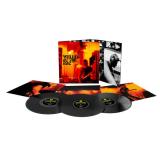
Paul Weller releases Weller At The BBC (Vol.2) on Friday 24th April.
This second BBC outing gathers live session and live in concert performances, including intimate stripped back acoustic versions and re-workings of tracks across The Jam, The Style Council and Paul’s extensive solo career.
From timeless classics such as Start!, Shout To The Top and Wild Wood, to deep cuts and covers, like The Zombies’ Time Of The Season and Billie Eilish’s What Was I Made For?
The album also features some beautifully orchestrated tracks with the London Metropolitan Orchestra, arranged and conducted by Hannah Peel, including Aspects, Boy About Town and Have You Ever Had It Blue.
Hey! Cabrera is back at Bordello. Following on from Italo Void, this time he arrives with two friends and fellow countrymen in tow: Marta Paradise, the duo of Paolo Ancona and Davide Pozzovivo. A shared passion for the analogue riches of the 1980s cements this new partnership, a passion fully captured in the bold synth‑lines and heady grooves of Go By Night. Bodies swirl in the fog of “Stasera No.” Glittering melodies float above clean beats, shifts swooping and tucking before the unmistakable vocals of Fred Ventura smoulder. The mood drops from disco to basement as “Go Ahead” takes hold. Those addictive hooks remain central, but now they’re teased by breathy samples, orchestral rinses and thick basslines.
Whistle blasts and cowbell rumbles introduce the flip. Bright and luminous, vocoder verses carry this late‑night rave straight into sunrise. Tempos fall for the close. Fragile drum patterns form a base from which machined and spoken words intertwine with bubbling 303 lines. A record that captures every moment of the night.
- 1: Kellen
- 2: Owerri Disco
- 3: Tourist
- 4: Okra Bilalli (Feat. Bilalli)
- 5: Oluwasam
- 6: Stutter
- 7: Daughters Always Listening I
- 8: Niger River
- 9: Daughter's Always Listening Ii
- 10: Struggle For Kasawa
- 11: Realised
- 12: Yellow Trumpet
A fiery blend of cinematic soul, psychedelia, and Afrobeat exploring the in-betweens of identity, music, and culture in the 21st century—Owelu Dreamhouse’s debut LP is a deeply orchestrated journey through memory and imagination, led by ex-Saskwatch bandmates Nkechi Anele and Nic Ryan-Glenie, and produced by Henry Jenkins (Surprise Chef).
The band's namesake is a play on Nkechi’s grandmother's village—Owaelu—in Nigeria. Growing up as a woman of color in a predominantly white Australia, Nkechi had fear and hesitation around expressing her Africanness and Nigerianess, and this album is about her journey. Both archival and contemporary, the album’s DNA is laced with musical and historic references as well as a cohesive vision of the present.
This isn’t a compilation—it’s a vinyl conversation between cities, generations, and musical bloodlines. This inaugural release embodies the spirit of collaboration, community, and cross-generational artistry that defines each artist’s deep musical legacy.
A statement on wax bringing together Glenn Underground, Coflo, Jon Dixon, Kevin Reynolds and sillygirlcarmen, this four-song project documents the shared language of five Artists through deep house, jazz roots, and forward-looking soul. Though these artists have shared DJ booths and dance floors around the world, this release marks a rare moment where their creative voices intertwine on wax. Each track stands on its own, but together they form a continuum—past, present, and future etched into wax. Pressed with intention and made for real systems, this release exists for the heads, the selectors, and anyone who still believes vinyl is where the story lives. Meant to be played—not archived. The kind of tracks that feel alive in the room and grow every time you hear them.
‘Ease’ EP tracks:
Glenn Underground ‘Dive (Into The Deep)’; the Chicago legend & Strictly Jaz Unit co-founder combines deep house, freeform jazz & soul, here in a jazz-infused, laid-back, hypnotic melange of house beat, synth chord riff, rippling arps, with a whisper of disco in the bassline and 80’s electro in the high, singing strings.
Coflo x sillygirlcarmen ‘Never Forget (That Feelin’)’; East Bay CA-based Coflo combines Hawaiian & Portugese roots with a global reach. A collaborative skipping house beat, pattering percussion & melodic jazz synth piano embrace sillygirlcarmen’s soulful voice and heartfelt lyrics. This collaboration marks a merging of emotional storytelling and percussive sophistication.
Jon Dixon ‘Saturday At Northland’; Detroit’s modern jazz & techno fusionist, rooted in long study and prestigious performance of classical & jazz piano both in orchestral and electronic contexts, employs his keyboard virtuosity in a thrilling wave of melodic piano improvisation & complex lively percussion, combining sheer craft with spiritual heft.
Kevin Reynolds ‘I Got Music’; from an Irish/US Detroit family, producer/live artist Reynolds blends techno, jazz, soul, from influences as diverse as 90s underground techno, Kraftwerk & John Coltrane, and roles/performances in multiple prestigious venues & positions. Here, a stealthy beat & Kraftwerk-evoking robotic electro synth theme are joined by a dual vocal used as a riff, while clusters of piano chords flower into jazz motifs.
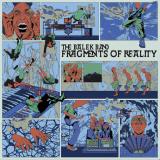
Some grooves don’t rush to the dancefloor — they crawl there, slow and heavy, like smoke wrapping around a bassline. With Fragments of Reality, The Balek Band sculpt an electronic funk that lives between shadow and light — an end-of-the-world fever dream, a Barjavel-style Ravage where chaos turns nihilistic.
No sequencer grid here — just four musicians sharing the same room, shaping air and tension together: drums locked tight with a slap bass, a guitar dripping with echo and heat, and a one-man orchestra behind his machines, weaving acid lines and synth arpeggios while mixing the band live — drenching it in delay, reverb, and saturation, like a dub producer in a Kingston studio, Lee Scratch Perry or King Tubby conjuring ghosts through smoke.
This isn’t fusion — it’s friction. A living ritual where the TB-303 hums, and machines don’t dominate but converse with the human pulse. Each track feels like a night that refuses to end — that humid in-between where trance slips into languor, and the body starts to think for itself.
The record recalls the cosmic jazz of Alain Mion or Eddy Louiss meeting the fiery energy of West African afrobeat musicians freshly arrived in a smoky Belleville basement in the mid-’80s. When The Balek Band summon ghosts, it’s only to reshape them — bending the past into something futuristic, alive, and strangely refreshing. Both disciplined and delirious, Fragments of Reality feels like a promise at dawn: dark funk for the late hours, slow acid for warm blood.
This EP isn’t nostalgic, though it remembers. It’s a transmission from a parallel past — a moment when jazz players met drum machines and decided never to stop playing. Each note sweats, each rhythm breathes. You can almost see the light cutting through the haze, faces half-awake, half-possessed.
The Balek Band aren’t recreating a moment — they’re keeping it alive.
Flesh and cables. Impulse and patience.
A band, not a loop.
A trip, not a format.
- As Time Goes By
- Skyfall
- Brucia La Terra
- Can You Feel The Love Tonight (Feat. Gay Men’s Chorus Of Los Angeles)
- When You Wish Upon A Star
- Unchained Melody (Feat. Jennifer Hudson)
- Remember Me
- Moon River (Feat. Jack Groban)
- Against All Odds (Take A Look At Me Now)
- Stand By Me
Mit seinem neuen Studioalbum „Cinematic“ widmet sich der Multi-Platin-Vokalist Josh Groban den großen Momenten der Filmgeschichte.
Die Auswahl reicht von Oscar-prämierten Klassikern wie „Can You Feel the Love Tonight“ (Der König der Löwen) und „Skyfall“ (James Bond) bis hin zu zeitlosen Standards wie „As Time Goes By“ (Casablanca) und „Moon River“ (Frühstück bei Tiffany).
Hochkarätige Kollaborationen: Ein besonderes Augenmerk liegt auf dem Duett „Unchained Melody“ mit Jennifer Hudson sowie einer persönlichen Interpretation von „Moon River“ zusammen mit seinem Bruder Jack Groban.
Orchestrale Inszenierung: Produziert von Greg Wells (u. a. The Greatest Showman), besticht das Album durch opulente orchestrale Arrangements, die in Los Angeles und London aufgenommen wurden.
- A1: Passage I (Small, Soft Feet Running Across Wooden Floors In The Morning)
- A2: Passage Ii (Listening To Lullabies While Holding Hands)
- A3: Passage Iii (Slow Days Of Togetherness)
- A4: Passage Iv (Watching You Quietly Eat An Apple In The Shade)
- B1: Passage V (Sounds From Your Rituals Playing In The Garden Near The Old Tree Which Has Witnessed Your Childhood)
- B2: Passage Vi (While You Slept, The Thought Of Not Yet Knowing How To Braid Your Hair Brought Quiet Tears)
- B3: Passage Vii (When You Learned To Stand In Your Own Light)
- B4: Passage Viii (Fifteen Years Passed And A Full Circle Moment Surrounded Us, Where The Ocean Meets The Mountains)
Passages in Time, the third album from Kasper Bjørke Quartet, traces the contours of a blend of spiritual jazz reverence and the calming grandeur of '80s ambient. Inspired by Christopher Nolan's observation that "time is the most fundamental part of our human experience," the compositions are approached as fragments of time and memory. Meditations on the elusive nature of time form the heart of the work, merging freeform jazz improvisations with cyclical synthesizer patterns that mirror its quiet undulations.
Dreamy synths intertwine with guitar, harp, trumpet, flugelhorn, saxophone, and flute, creating a spacious environment for contemplation. The music invites reflection on the choices that shape our lives and the lives of those closest to us, and on the quiet weight of our priorities within the brief span we call life on this planet. Each passage unfolds as a fleeting moment suspended in time. The subtitles hint at fragments from someone's diary, tender observations of love, parenthood, and connection. Together, the passages form a musical memoir of sorts, where memory and emotion are gently woven into the compositions.
Passages in Time does not impose structure or meaning, it reflects them, offering an open space as the instruments drift in and out of focus, tracing time's subtle rhythms and inviting the listener to infuse their own memories and meaning into these passages.
The album also marks a transformation for the Quartet project itself. Langstrakt (Claus Noreen), part of the original ensemble, continues to operate the synthesizers alongside Bjørke, while the wider constellation of contributing musicians has evolved. Strings and piano give way to flute and saxophone by Oilly Wallace, guitars by Danish ambient composer Anna Roemer, trumpet and flugelhorn by Malthe Kaptain, and cascading orchestral harp by Katie Buckley, principal harpist with the Icelandic Symphony Orchestra.
The cover painting is by American artist Marcus Leslie Singleton, courtesy of V1 Gallery, and reflects the meditative and timeless atmosphere of the music.
Passages in Time is released on Bjørke's own imprint, Sensitive Records, following the two previous Quartet albums released on Kompakt Records: The Fifty Eleven Project (2018), a debut that introduced Bjørke's ambient and neoclassical explorations, and Mother (2022), which expanded the ensemble's sound with emotive choir compositions and guest appearance by Sofie Birch (Unsound / Stroom). Together, these three albums trace a journey of artistic growth, from introspective experimentation to a fully realized, contemplative expression of time, memory, and human connection.
Primordial Mind forms the mysteries and intensity of inner life into eight mandalic instrumentals where Mas Aya and Khôra, artists who share 15 years of music making, orchestrate an inspired, prismatic palette of percussive and melodic sources. Each composition presented stages a vigorous meshwork of colours and textures, contrasting riveting polyrhythms with towering arrangements for flutes, synths, and processed acoustic instruments. Tendencies which the artists trace in their solo practices are amplified, blended, and refracted sublimely in unison, serving as energetic portals to the collective awareness.
Combining trans-ethnic scaling alongside a heady brew of rhythmic influences and advanced electronic processing, the recordings on this album operate with a tactility that vaults between free jazz, dub, raga, ambient, and ritual music. Assimilated powers of primal drum patterning and psychoactive, ceremonial melodies, invoke fourth world adjacencies with the work of Don Cherry, Jon Hassell, Popol Vuh et al. There is an alchemical, Buddhist/Taoist/Hindu inflection that guides the record’s narrative, formed through dialogue between the artists over lifelong shared interest in spiritual modalities generally and the tantric approaches of the global east in particular. The album title is derived from an unexcelled esoteric work known as the Kalachakra (Wheel of Time)Tantra and its associated commentary the Ornament of Stainless Light which detail forms of inner and outer transubstantiation within its complex cosmology and metaphysiology.
Mas Aya is the moniker of Brandon Miguel Valdivia, acclaimed Nicaraguan-Canadian composer, producer, and musician whose electronic and jazz inspired works creatively interlace Colombian, Cuban, and a wide array of traditional music. Khôra is the name of the occult entity that uses multi-instrumentalist, producer, and writer Matthew Ramolo to pronounce itself. Returning to Marionette following 2024's monumental Gestures of Perception, Primordial Mind reinforces the rigorous and magical approach to creation which defines Khôra’s two decades of sonic output. Brandon and Matthew met back in 2011 and the pair toured around eastern Europe with Toronto band Picastro in 2013, also performing as a duo with Brandon contributing drums to Khôra's opening sets. After a short spate composing and playing in the ensemble Bespoken together, they continued to discover shared inspiration in psych/art rock, jazz, experimental and electronic music, providing a fertile soil for friendship and collaboration resulting in their collaged, lo-fi album Tangled Roots in 2017. Mythic and talismanic, the duo's Marionette debut weaves a luminous tapestry of organic pulses, offering itself as a support for resonant meditation and a motor for lucid action and intuition.
Brandon Miguel Valdivia: Percussion, Flutes, Log Drum, Korg Lambda, Angklung, Tambor Alegre, Udu
Matthew Ramolo: Modular Synth, Archival Samples, Angklung, Guitar, Duduk, Bass, Percussion, Arrangements and Mix
- A1: Gente
- A2: Preciso Aprender A Ser Sò?
- A3: Seu Encanto
- A4: Passa Por Mim
- A5: Samba De Verão
- A6: A Resposta
- B1: Deus Brasileiro
- B2: Dorme Profundo
- B3: Vem
- B4: Mais Amor
- B5: Perdão
- B6: Não Pode Ser
Marcos Valle is one of those artists you simply can’t overlook if you have even a passing interest in Brazilian music. Whether your taste leans toward bossa jazz, samba, psychedelic folk, or modern soul, Valle has surely recorded a great album for you.
By the late 1960s he had already released enough outstanding records to secure a place among the greatest Brazilian artists of all time, but fortunately his career didn’t stop there. He has continued recording fabulous albums over the following decades, right up to the present day.
This second album by Marcos Valle (1965) is one of the foundational works of bossa nova. In fact, the record includes one of the most widely heard and covered Brazilian songs in history: ‘Samba de Verão.’ In addition to his work as a composer—alongside his brother Paulo Sergio—Marcos Valle also begins to reveal himself here as a great singer, with a soft, almost fragile voice, while his acoustic guitar recreates the same intimacy of the nighttime atmosphere in which he composed most of the songs.
The arrangements were co-written with Eumir Deodato, with the participation of other renowned Brazilian musicians, and they surround Valle’s compositions with elegant string orchestrations, bossa rhythms, and jazzy touches of swing. Highlights include the sophisticated beauty of songs like ‘Preciso Aprender a Ser Só,’ the rhythmic 3/4 feel of tracks such as ‘Seu Encanto,’ and the powerful ‘Deus Brasileiro.’
First vinyl reissue in over 50 years!
- A1: John Lennon, The Plastic Ono Band, Yoko Ono & The Harlem Community Choir - Happy Xmas (War Is Over)
- A2: Rod Stewart - You Wear It Well
- A3: Don Mclean - American Pie
- A4: America - A Horse With No Name
- A5: Simon & Garfunkel - America
- A6: Harry Nilsson - Without You
- A7: Bob Dylan - If Not For You
- A8: Paul Mccartney & Wings - Mary Had A Little Lamb
- B1: Bread - Baby I'm-A Want You
- B2: Carly Simon - Anticipation
- B3: Neil Diamond - Song Sung Blue
- B4: Gilbert O'sullivan - Clair
- B5: Colin Blunstone - Say You Don't Mind
- B6: Cat Stevens - Morning Has Broken
- B7: Michael Jackson - Got To Be There
- B8: Labi Siffre - It Must Be Love
- B9: Johnny Nash - I Can See Clearly Now
- C1: Alice Cooper - School's Out
- C2: Roxy Music - Virginia Plain
- C3: Mott The Hoople - All The Young Dudes
- C4: Sweet - Wig Wam Bam
- C5: Slade - Mama Weer All Crazee Now
- C6: Elton John - Crocodile Rock
- C7: Chicory Tip - Son Of My Father
- C8: Jeff Beck - Hi Ho Silver Lining
- D1: The Stylistics - Betcha By Golly, Wow
- D2: Bill Withers - Lean On Me
- D3: Love Unlimited - Walkin' In The Rain With The One I Love
- D4: Sly & The Family Stone - Family Affair
- D5: The O'jays - Back Stabbers
- D6: The Supremes - Floy Joy
- D7: Michael Jackson - Ben
- D8: Melanie - Brand New Key
- D9: The New Seekers - I'd Like To Teach The World To Sing (In Perfect Harmony)
- E1: Elton John - Rocket Man (I Think It's Going To Be A Long Long Time)
- E2: Python Lee Jackson Featuring Rod Stewart - In A Broken Dream
- E3: Slade - Take Me Bak 'Ome
- E4: Electric Light Orchestra - 10538 Overture
- E5: Hawkwind - Silver Machine
- A1: Los Nickelos - Emilie Cha Cha
- A2: Lembe Carlos - Koko
- A3: Yeye National - Eldorado
- A4: Los Nickelos - Endende
- A5: Ebuka Ebuka - Poso Na Yo Egilite
- A6: Afro Negro - Si Me Quierre
- B1: Ba Bolingo - Mi Mambito
- B2: Ebuka Ebuka - Merengue Soucouss
- B3: Afro Negro - Princessia Nono
- B4: Los Nickelos - Guarache Fredo
- B5: Ebuka Ebuka - Mpenzi Niambiye
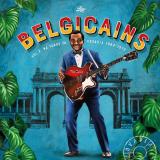
Following the sold-out first volume, the Belgian label Covadia presents a second chapter of Les Belgicains, focusing on the European rumba created by Congolese students in Belgium during the 1960s.
Volume 2 includes 11 rare tracks originally issued on 45 rpm singles or never released before. Highlights include the dancefloor favourite “Guaracha Fredo” by LOS NICKELOS and previously unreleased recordings by the orchestra EBUKA EBUKA, like the swinging “Merengue Soucouss” and the emotional “Mpenzi Niambiye”. The songs unmistakably express a longing for recognition and for a rightful place for a new nation.
San Francisco Symphony, Seiji Ozawa
Dvořák: Symphony No.9 ”From the New World”; Carnival Overture...
Seiji Ozawas Antritt als Musikdirektor des San Francisco Symphony Orchestra im Jahr 1970 wurde später
von Barack Obama anschaulich beschrieben: „Mit seinem Mop-Haarschnitt, seinen Rollkragenpullovern
und seinen Liebesperlen sah er fast aus wie ein Beatle“. Diese Aufnahme von Dvořáks Sinfonie „Aus der
Neuen Welt“ aus dem Mai 1975 war eine der letzten, die von Philips in Quadrophonie aufgenommen und
speziell für diese Neuauflage neu abgemischt wurde.
Die neue audiophile Vinyl-Reihe DECCA PURE ANALOGUE präsentiert legendäre Aufnahmen aus den
Archiven von Decca und Philips in einer völlig neuen Klangqualität. Die renommierten Emil Berliner Studios haben diese in 100 % analoger Qualität (AAA) mit speziell für diese Reihe entwickelten Technologien
neu gemastert.
Jede Veröffentlichung der Serie wird auf 180 g schweren Virgin-Vinyl-Schallplatten gepresst und in einer
luxuriösen Gatefold-Edition präsentiert, mit Original-Artwork und Liner Notes, zusätzlichen Fotos und
Faksimiles der Bandboxen und Aufnahmedokumentation. Darüber hinaus enthält jede handnummerierte
Limited Edition neue Liner Notes, in denen die Geschichte der Aufnahme sowie der technische Prozess der
Neu-Veröffentlichung detailliert beschrieben werden.
Matthias Wolf & Tilman Sillescu & Alex Röder & Arm
Anno 117: Pax Romana (Original Soundtrack) (LP 2x12")
- A1: Latium Side A Terra Cognita
- A2: Dolphins Of The Azure
- A3: Umbrae
- A4: The Manacles Of Syrah
- A5: All Roads Lead From Rome
- A6: Mare Nostrum
- A7: While Rome Burns
- A8: Impostors
- B1: Bay Of Laurels
- B2: Child Of Morning
- B3: Lavender And Laurels
- B4: The Families
- B5: Mansions Of The Proud
- B6: Tyrrhenian Sunset
- B7: Necropolitans
- B8: Drum And Signum
- B9: Sic Itur Ad Astra
- C1: Albion Side A What Might Have Been
- C2: Terra Incognita
- C3: Chalk Horses
- C4: Carraig Mhor
- C5: Falling Skies
- C6: The Rook Of Whitecliff
- C7: The Way Of The Spear
- C8: The Plebs Are Revolting!
- C9: The Fall
- D1: High-Stepping Ponies
- D2: A Braided River
- D3: The Celt Within Lives On
- D4: Foreign Currencies
- D5: Glade Of Cernunnos
- D6: The Reedfolk
- D7: Lugh's Bounty
- D8: One Sneeze Starts It All
- D9: Ambushed!
Ubisoft and Laced Records have forged a new trade alliance, expanding their economic tree to bring the lavish music of Anno 117: Pax Romana to glorious vinyl.
This vinyl set celebrates the ornate score for Ubisoft's richly detailed city builder, capturing the spirit and splendour of the Roman Empire at its peak. From the beautiful heartland of Latium to the mysterious Celtic wetlands of Albion (where no civilized Roman wants to be), every musical cue is steeped in world-building and crafted with remarkable care.
The outer sleeve features striking landscape art from the game, while the inner sleeves present detailed track lists framed with ornate motifs inspired by Roman architecture and pattern work. The result is a set that feels like a treasure from the imperial archives.
The soundtrack charts a journey across the empire, weaving together atmospheric strings, ancient-inspired instrumentation, and sweeping orchestral cues that capture both the serenity of prosperous provinces and the political tensions throughout. The music reflects every choice you, the governor, must make. Diplomacy or domination, tradition or transformation. An emotionally rich and immersive soundtrack worthy of Rome itself.
Death Is Not The End collaborate with Uzbek label Maqom Soul to deliver an LP counterpart to last year's mixtape of the same title, compiling specially picked & fully licensed individual belters from the ex-soviet studios of Central Asian republics between 1978 and 1989 - incl. Uzbek, Tajik, Kurdish & Uyghur artists pulling traditional folk motifs together with pop & rock and psych elements.
"These recordings do not form a smooth or coherent history. They feel more like a sequence of discoveries made at different moments and in different circumstances. Songs and instrumental pieces that once lived inside specific contexts radio broadcasts, philharmonic programs, touring routes now sit side by side, revealing hidden connections as well as clear fractures between them.
Nasiba Abdullaeva appears here as a voice from the end of an era. Trained within a conservatory system, she worked inside the format of the Soviet pop song while filling it with melodic logic that did not come from Moscow or Leningrad. Her voice is soft and sustained, shaped by Eastern melisma, and it never functions as decoration. Even in tightly structured songs there is a sense of resistance, an effort to preserve a musical language rooted in Uzbek tradition rather than fully adapted to an all Union standard.
The ensemble Sintez, later renamed Navo, represents a different path. Beginning as a student rock group, the band was gradually absorbed into the official VIA system with all its limitations and compromises. Yet it was precisely within those boundaries that Sintez and Navo developed a recognizable sound. Electric guitars and jazz rock harmonies do not overpower the folk material but remain in tension with it. Their recordings feel like negotiations between what the musicians wanted to play and what they were allowed to perform.
The Tajik ensemble Gulshan reflects an institutional approach carried to a high professional level. Formed under television and radio structures, the group treated folk material almost as a written score. Carefully constructed arrangements, close attention to orchestration, and restrained use of pop techniques define their sound. There is less spontaneity here, but a strong sense of discipline and structure, where national melody becomes part of a carefully controlled sonic framework.
Koma Wetan occupies a very different space. Formed in the 1970s, this Kurdish rock group approached poetry and folklore as tools of cultural assertion. Their psychedelic rock never feels like a stylistic borrowing. Instead it functions as a contemporary vessel for language and themes that might otherwise have remained unheard. Even today these recordings sound fragile and stubborn at the same time.
The Uyghur ensemble Yashlik, closely connected to a musical drama theatre, operated somewhere between stage performance and popular music. Their songs are built on folk melodies but shaped for wide audiences. What emerges is a constant attempt to preserve the recognizability of Uyghur musical identity without freezing it in a folkloric frame. Yashlik's music exists in a state of balance between representation and development.
Digging Central Asia does not attempt to establish hierarchies or offer a single wayof listening. Names and dates matter less than the sound itself. Tape noise, abrupt transitions, and unexpected timbres remain part of the material rather than flaws to be corrected. This music existed at the crossroads of multiple routes geographic, cultural, and ideological. Heard today in a new context, it no longer feels peripheral. Instead it stands as a reminder that the history of popular music is far more fragmented, layered, and polyphonic than it is usually allowed to be."
Nitai Hershkovits and Daniel Dor return with Found & Found, their second collaborative album and a natural continuation of the musical dialogue initiated with The Garden Suite.
Born out of pure curiosity - "there was more to say, more to explore," explains Dor - the album expands the duo's sonic language beyond the synth-only framework of their previous work. While the Moog remains central, Found & Found introduces clarinet and acoustic guitar, gently dissolving the boundaries between electronic and acoustic sound.
Each composition unfolds through interlocking, mantra-like patterns. Repetition becomes a space for transformation: melodies circle, textures shift, and subtle harmonic movements invite the listener inward. The music is structured with care, yet it feels open and fluid. intimate, spacious and quietly immersive. If their previous record explored orchestral depth through synthesizers, this new chapter embraces air and clarity. Acoustic gestures emerge within electronic landscapes, creating a sound world that is both grounded and weightless.
Nitai Hershkovits brings with his fellow partner Daniel Dor a refined harmonic sensitivity shaped by both jazz and classical traditions. Together they continue to refine a shared language that moves between structure and freedom, precision and emotion.
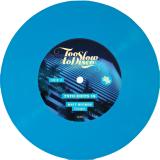
We here at TSTD are longtime fans of UK producer/musician/Label maker MATT HUGHES. For a few years he is delivering tasteful, deep, dubbed reworks for Too Slow To Disco, some in Edit form, but also his 2 official remixes for Goodvibes Sound on The Sunset Manifesto 2.
Both new TSTD Edits on this 7 inch are slow disco masterworks, he is giving the originals his trademark deep, warm versions. Who is the guy….?
Matt Hughes is a music producer from the north of England. A purveyor of all things funk, soul, disco, jazz and house! Most recent releases have been with Outcross Records, Bubblegum Pop, Editorial and Too Slow To Disco. A large number of Matt's works have been released under the MAM project with Miguel Campbell remixing the likesof the Climbers, Deadmau5 and Flight Facilities, as well as putting out releases via Wolf+Lamb, Future Classic, Hot Creations, Outcross Records, BPitch Control and Editorial Records to name a few.
Among his most notable collaborations are works with Derrick McKenzie, drummer of Jamiroquai; Drop Out Orchestra, Art Of Tones, amongst others. Each of these collaborations has allowed him to explore new musical dimensions, enriching his characteristic sound with diverse and fresh influences.
With a musical style deeply rooted in disco, funk and jazz, Monsieur Van Pratt combines classical elements with contemporary touches, creating a sound experience that is both nostalgic and innovative. His work not only stands out for its technical quality, but also for its ability to connect emotionally with the listener, making him a central figure in the evolution of modern dance sound.
Disco-house fusionist Risk Assessment rounds off another successful year with a third and final EP of 2025. Braithwaite deals a near perfect hand on 'Play Your Cards', where excerpts from a Loleatta Holloway/Salsoul Orchestra style maximalist disco hit rise above a chunky, bass-heavy groove, before reaching for elements from a jaunty, piano-heavy disco number on the rolling and ear-catching 'Juicy Smollett'. Elsewhere, 'Testing Testing' is a gargantuan disco-house extravaganza full of sampled horns, rubbery bass, stellar orchestration and urgent male vocals, while 'Baby Call Me' sees him re-imagine a smooth and colourful 80s soul jam as a tactile and funky house workout.
“Lonesome for a Storm” is the result of a felt sense in the summer of 2024.
A fleeting feeling in the body meditated on and played through a restrained pallette of instruments and found sound . LFAS is Gustav Kemps’s first solo album under his own name, but he’s been a frequent behind the scenes coll- aborator in various other bands (if you can connect the dots, there’s a lot to find). Mystery can be fun, but this album of his feels tender and generous in what it conveys.
RIYL: Empress, Loren Connors, Penguin Cafe Orchestra, The Humble Bee, Yo La Tengo, Taku Sugimoto...


![San Francisco Symphony, Seiji Ozawa - Dvořák: Symphony No.9 ”From the New World”; Carnival Overture [Decca Pure Analogue]](https://www.deejay.de/images/l/1/6/1234816.jpg)